·News
Remembering Marian Goodman (1928-2026)
The gallerist’s support of conceptually challenging artists helped nurture today’s expanded art world
The gallerist’s support of conceptually challenging artists helped nurture today’s expanded art world
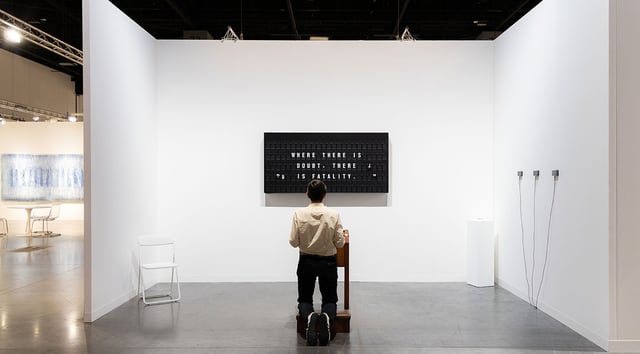
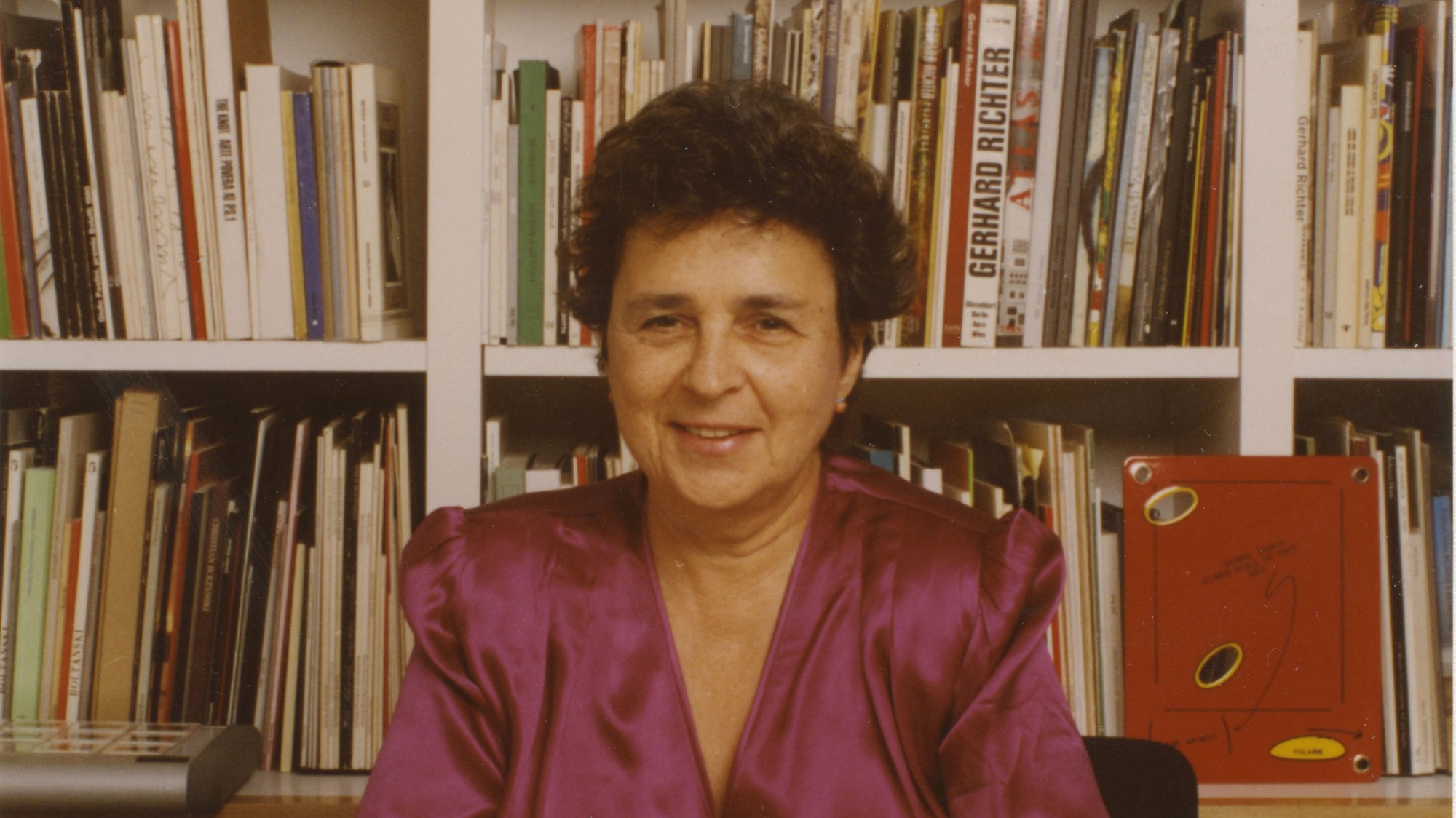
Marian Goodman was one of the most consequential gallerists of her generation. With spaces in her native New York, and in Paris, Los Angeles, and for some years in London, she worked unstintingly to build institutional careers, and fair systems of reward, for a remarkable roster of artists over a near half-century at the helm of Marian Goodman Gallery. They included Nairy Baghramian, Maurizio Cattelan, Tony Cragg, Tacita Dean, Nan Goldin, Pierre Huyghe, William Kentridge, Anselm Kiefer, Steve McQueen, Julie Mehretu, Gerhard Richter, and Thomas Struth.
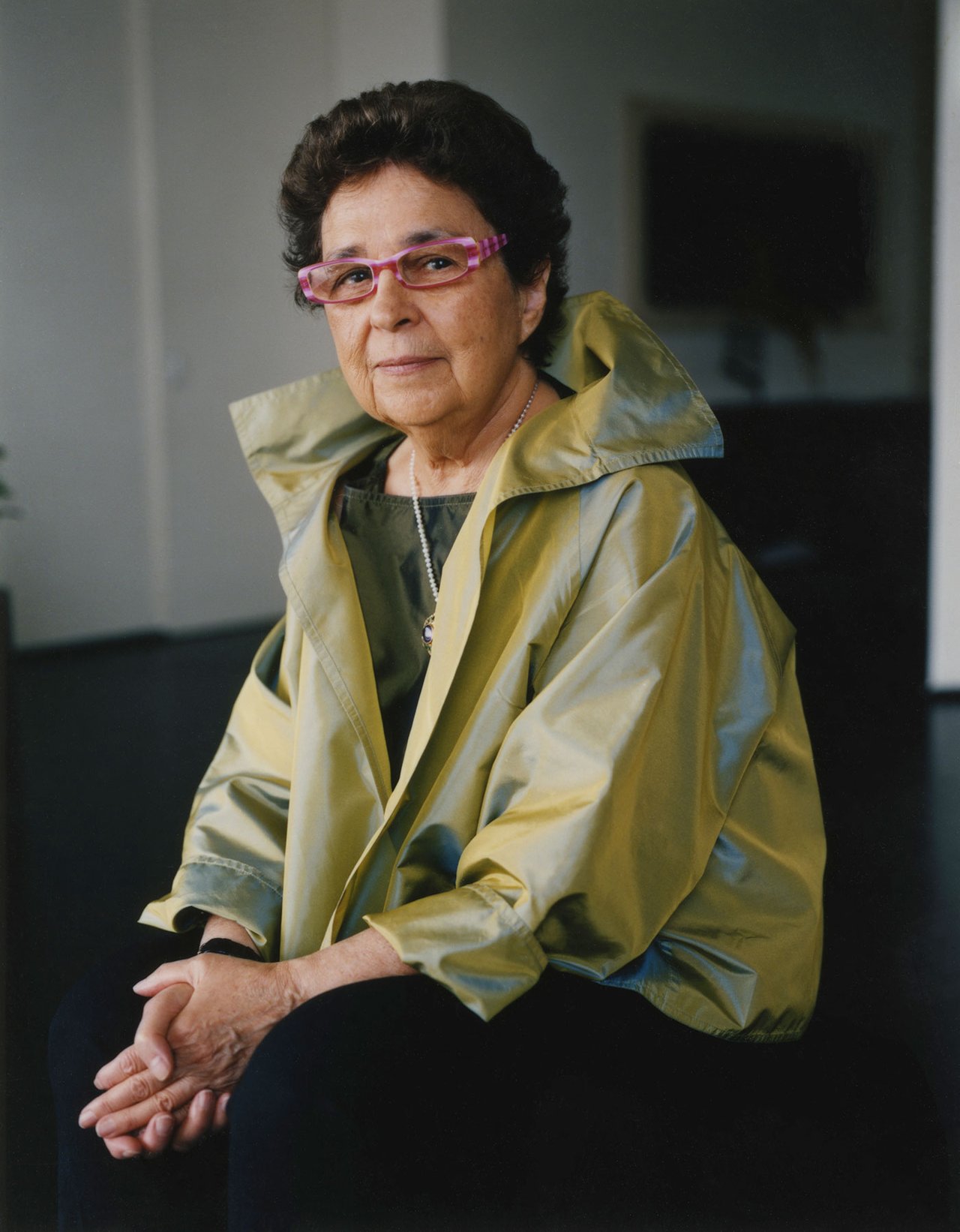
In a 2004 profile article by Peter Schjeldahl, the inimitable art critic of The New Yorker, a meeting of two agile minds, Goodman described how she thought her art-world peers would describe her: “Serious. Responsible. A passionate advocate for my artists. Batting average pretty good. More wise than unwise.” To Schjeldahl then she was likely “the most respected contemporary dealer in New York, for her taste, standards, and loyalty to her artists”. It was a reputation that she only built on in the succeeding decades.
Christophe Cherix, director of the Museum of Modern Art (MoMA), New York, told The New York Times following Goodman’s death that he was “consistently struck by the depth of her relationships with artists whose work is often regarded as among the most challenging to interpret."
Among the most challenging in this cadre, and also the most influential on future generations, was the Belgian poet turned artist Marcel Broodthaers. By her own account, Goodman felt driven to open her own gallery in New York, in 1977, in order to show Broodthaers’s art. She had encountered his work at Documenta art fair in Kassel, West Germany, in 1972, and on returning to New York added Broodthaers and the German artists Joseph Beuys and Blinky Palermo to the artists whose work was issued by Multiples Inc., a print publisher and gallery she had co-founded with four friends in 1965, and that she ran until 1975.
Broodthaers — whose fictional museums presented as immersive décors give imaginative material form to language, and test the meaning of art and the lexicon used to describe it — was struggling to find a gallery in the United States in the mid-1970s. Goodman planned a one-man show for the artist as the first exhibition in her new space in East 57th Street. As fate would have it, Broodthaers died not long before the gallery’s opening, but the show went ahead, one of multiple solo shows at the gallery over the past half-century — including a 20th anniversary exhibition in 1997 — and over 40 institutional collaborations that Goodman managed for the artist’s estate.
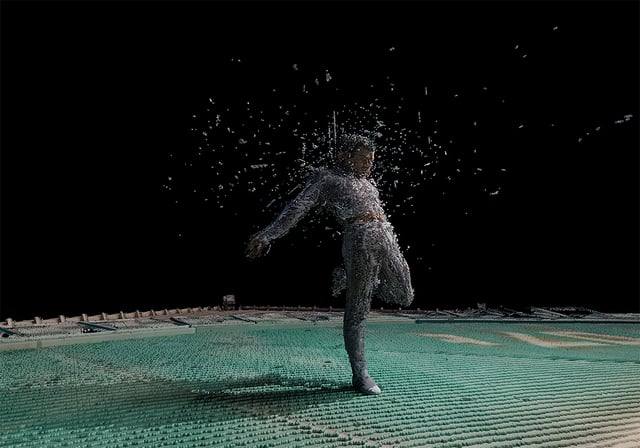
The importance of Broodthaers, and by extension that of Goodman’s championing of the artist, is captured in Rosalind Krauss’s seminal essay “A Voyage on the North Sea | Art in the Age of the Post-Medium Condition” (1999). Writing on the eve of a new millennium, Krauss identifies a “new Academy” that traces its lineage to Broodthaers, including his four-year sequence of works: “Museum of Modern Art, Eagles Department”. “Whether it calls itself installation art or institutional critique, the international spread of the mixed-media installation has become ubiquitous. Triumphantly declaring that we now inhabit a post-medium age.” It is a lineage and logic of expansion (where eagles dare) in which artists in 2026 are seen working in hybrid ways at the borders of the digital and the physical; the human and the non-human.
An in memoriam post on the Marian Goodman gallery website quotes a credo of Goodman’s that underpinned her championing of ties between the European and US art worlds for over six decades, starting with the showing of US artists at European fairs with Multiples print editions (a set of Andy Warhol’s Mao series was a particular success) and bringing her own enthusiasm for the rising stars of Kassel and Düsseldorf, London and Paris, back to New York, the art capital of the world’s biggest art market.
“It is among the artists whose work I like that I have found the qualities I value from my own experience,” Goodman said, “a humanistic concern, a culture-critical sense of our way of life, a dialectical approach to reality, and an artistic vision about civic life.”
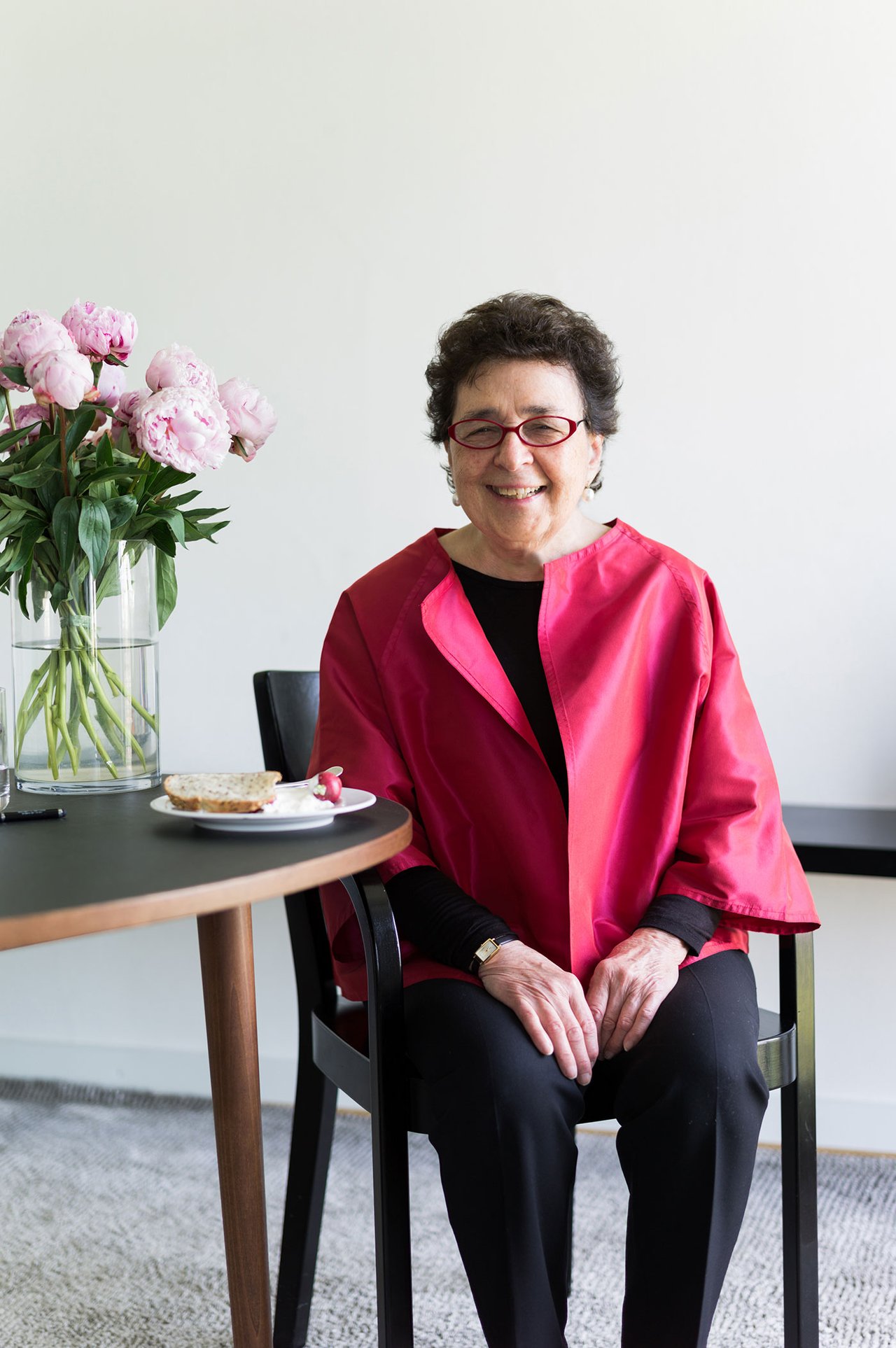
Goodman was born in New York in 1928 and enjoyed childhood visits to MoMA and to the family of the gallerist Sidney Janis, neighbours in the family’s apartment building in the Upper West Side, where she played with the Janis children in front of Henri Rousseau’s celebrated work The Dream (1910) — a picture acquired by Nelson Rockefeller from Janis in 1953 as a gift for MoMA, where it remains a cornerstone of the collection.
Goodman started Multiples with funds from the sale of one of the 40 works by the US modernist Milton Avery, assembled by her accountant father, who collected no other artist. She grew up in a male-dominated New York art world — in which she particularly admired the work of the arch kingmaker Leo Castelli, and the support he gave his artists.
She was one of a remarkable group of change-making women gallerists in Manhattan, her contemporaries give or take a decade; among them Paula Cooper (born 1938), and the late Ileana Sonnabend (1914-2007), Virginia Dwan (1931-2022), and Barbara Gladstone (1935-2024).
In her early 90s, Goodman moved to California, to be near her son Michael Goodman, at which time she appointed a new management team, who brought the New York gallery from its second home, in West 57th Street — where Goodman particularly valued the physical and spiritual proximity of MoMA — downtown to Tribeca, the city’s beating heart of contemporary art in the 2020s.
All that Goodman achieved, for her artists and for their institutional and scholarly reception, was done with a soft-spoken but indomitable determination. And with a self-avowed, intellectually measured, enthusiasm; her “culture-critical sense of our way of life”. It was an approach that caused Schjeldahl to say of her shows in 2004 that, “if they erred, [they] did so on the side of high-minded rigor”.
Marian Ruth Geller, born New York City June 15, 1928; married William Goodman (one daughter, one son; marriage dissolved 1968); died Los Angeles January 22, 2026.
Louis Jebb is Managing Editor at Right Click Save.
No comments yet. Be the first to share your thoughts.
Mentioned in this article
People: Marian Goodman, Marcel Broodthaers, Michael Goodman, Peter Schjeldahl, Thomas Struth|Organizations: Marian Goodman Gallery, Multiples Inc., Museum of Modern Art|