“David Hockney: A Year in Normandie and Some Other Thoughts about Painting” is at Serpentine North, London, until August 23, 2026. It is curated by Hans Ulrich Obrist, Artistic Director of Serpentine Galleries, and Claude Adjil, Curator at Large, with Liz Stumpf, Assistant Exhibitions Curator.
The exhibition, which unites one of contemporary art’s leading curators with David Hockney, the best-known and one of the most influential artists in the world, has been “20 years in the making, but then a year and a half more intensely”. Obrist is describing his 20-year conversation with Hockney that started soon after the Swiss-born curator arrived at Serpentine in April 2006, as Co-director of Exhibitions and Programmes and Director of International Projects. Hockney and Obrist discussed how it would be “a dream to one day do a show [...] at the Serpentine,” Obrist says. “He always said that when he had the idea, and the right project, he would be happy to do so.”
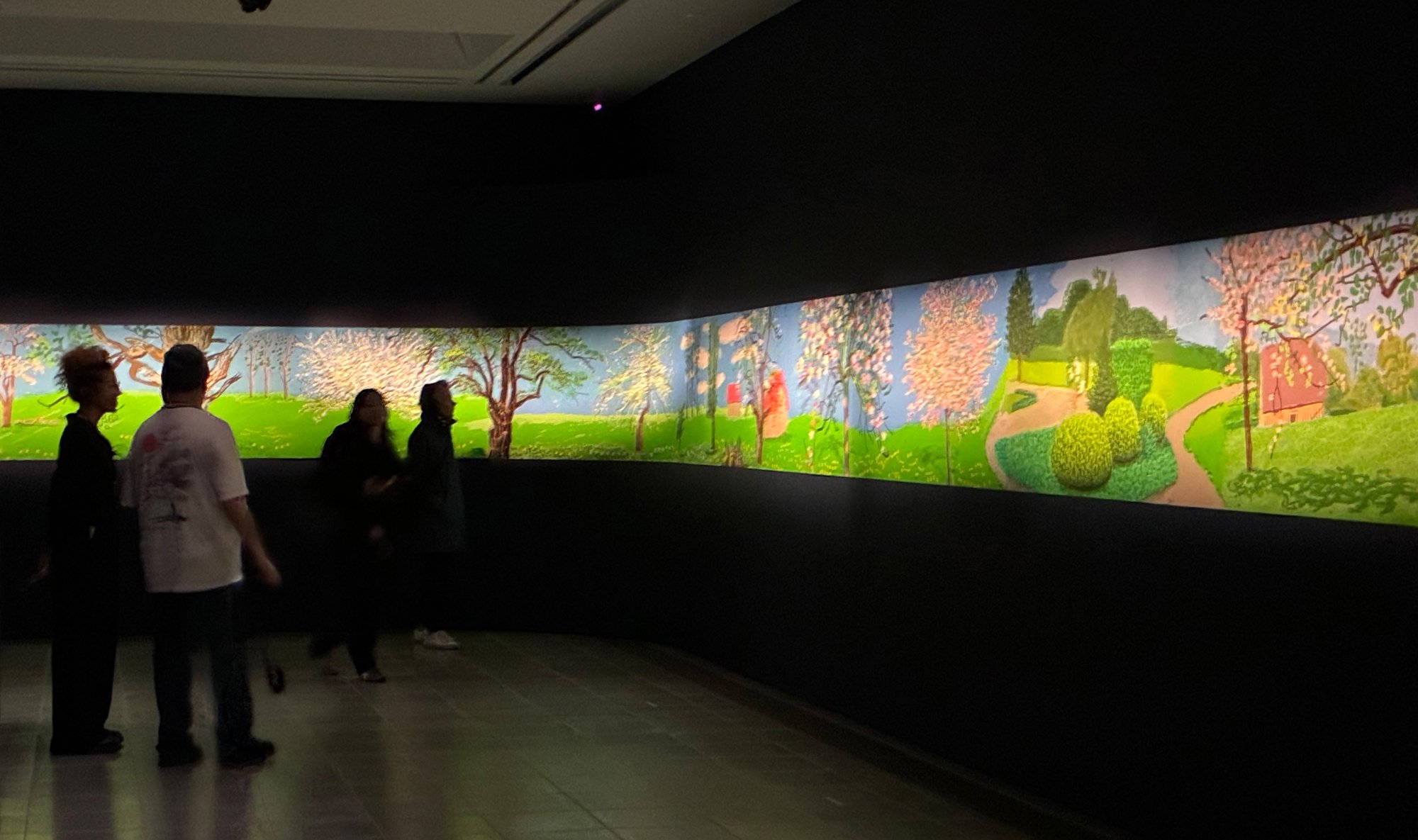
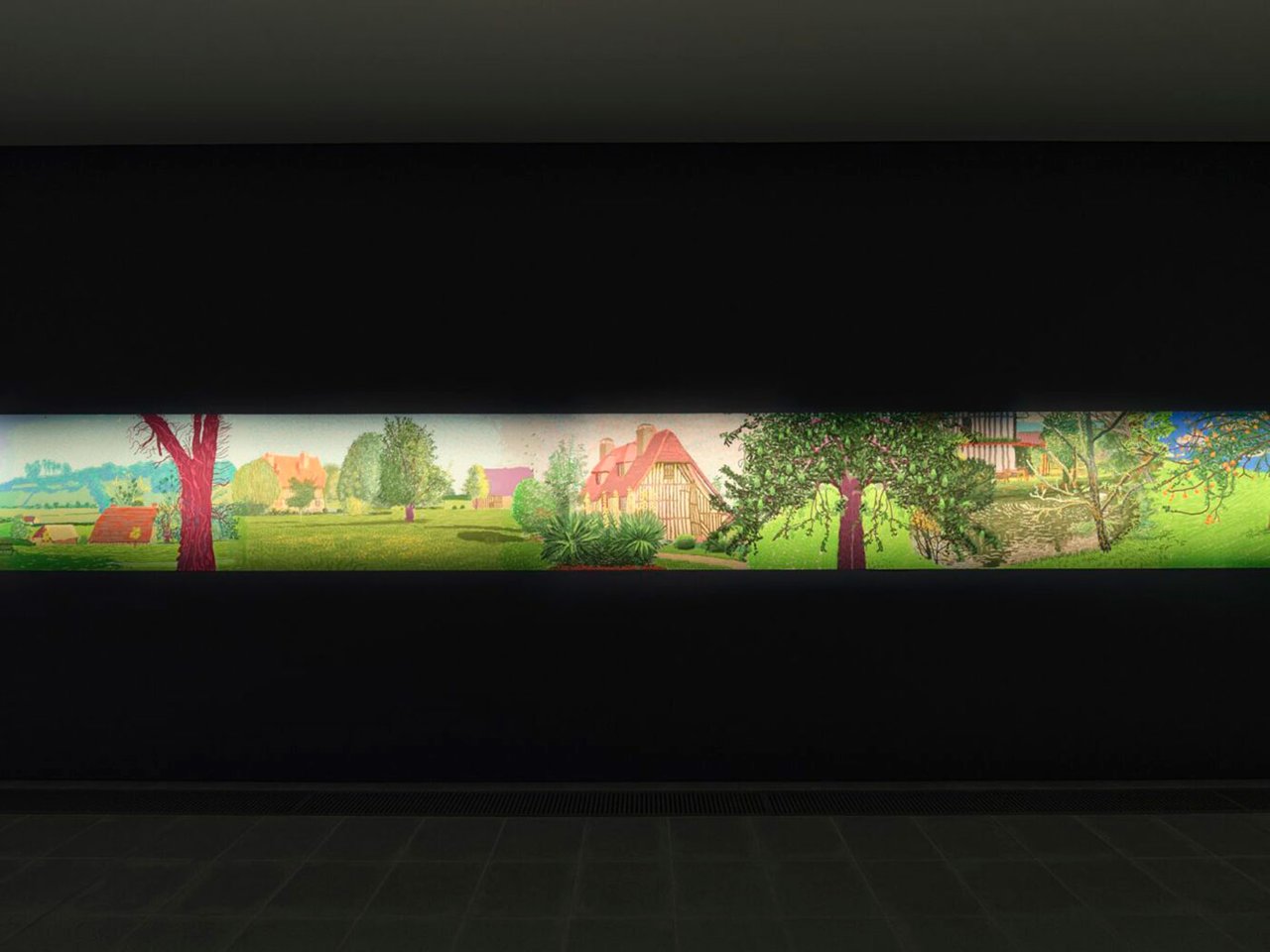
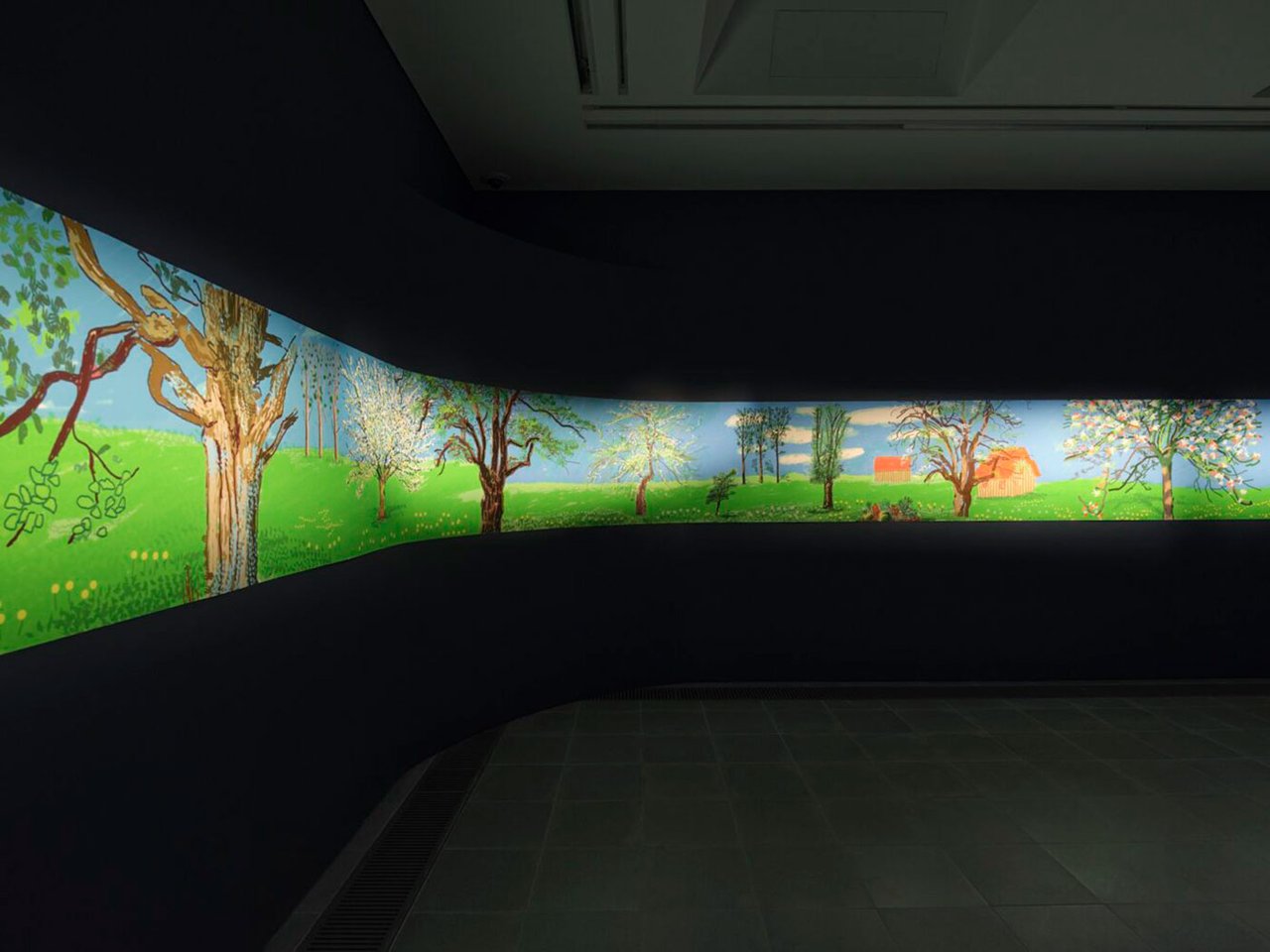
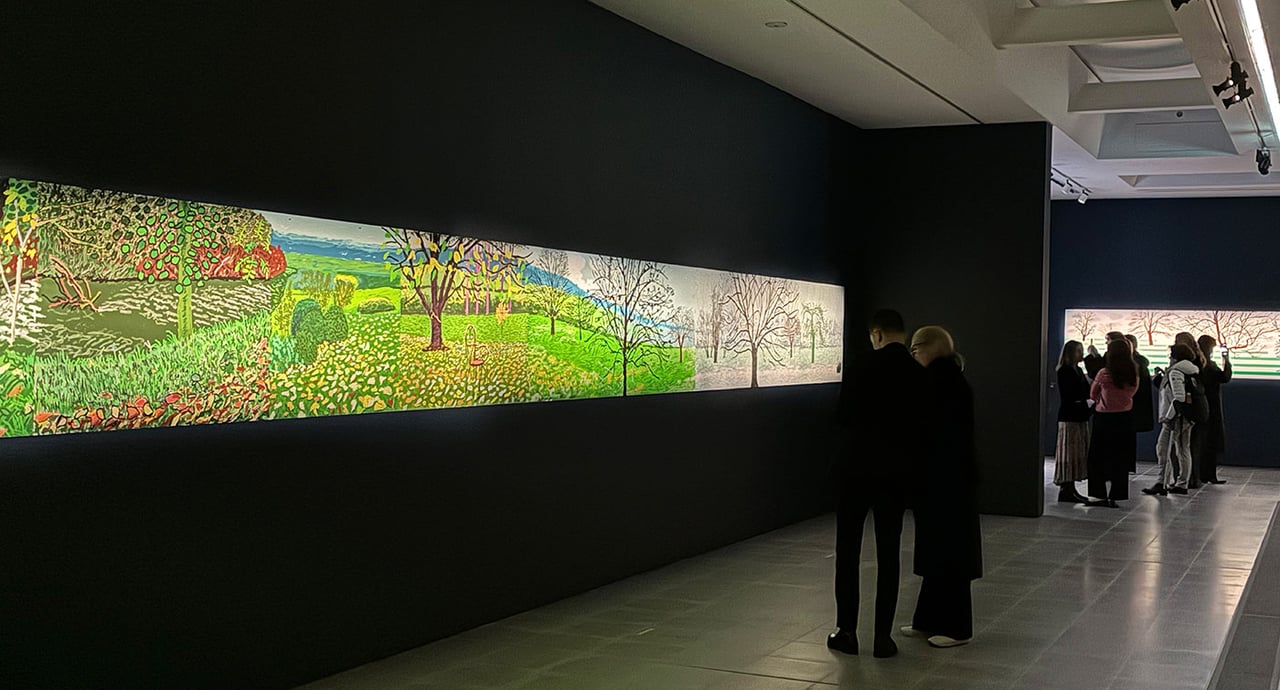
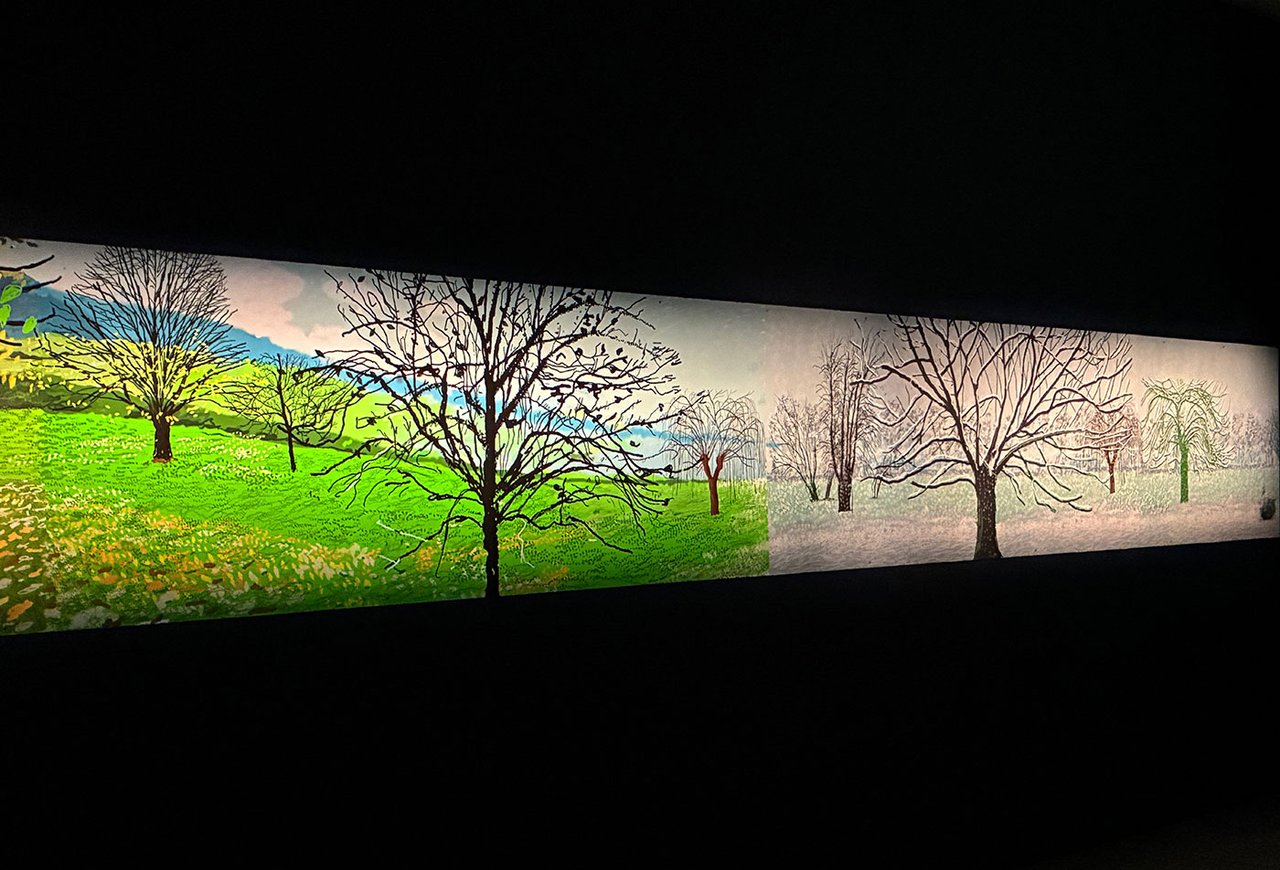
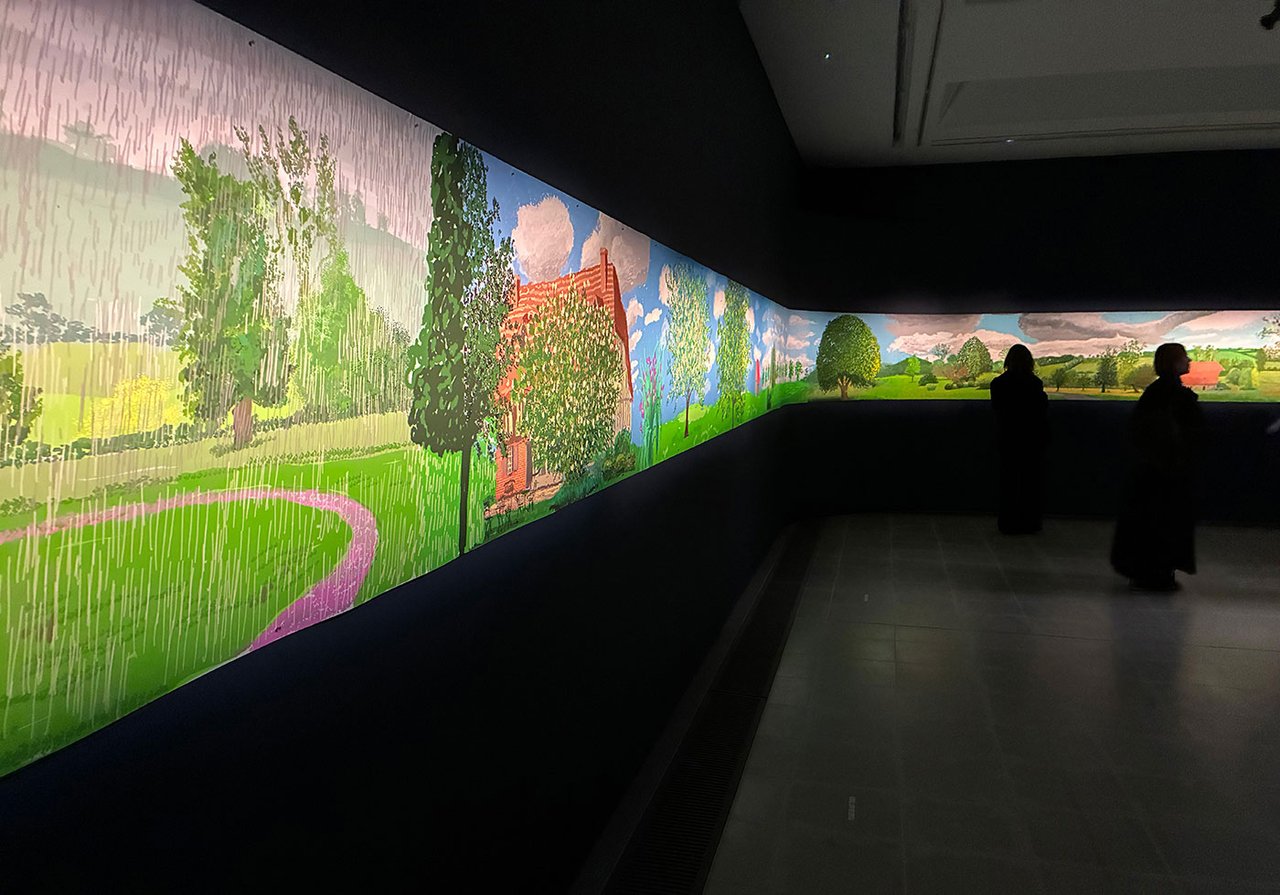
That project is A Year in Normandie (2020-21), a 70-metre-long frieze printed on paper and assembled from some 100 of over 200 iPad drawings that Hockney made en plein air during the Covid-19 lockdown at the studio home he has owned since 2019 at Beuvron-en-Auge, south-west of Deauville. The complete frieze was shown for the first time at Musée de l'Orangerie, Paris, in an 80-metre-long version, in 2021-22. The work has also been shown in 90-metre-long prints in a dedicated space in Salt’s Mill, in Hockney’s native Yorkshire, in 2022-24, and at Museum Würth 2 in Künzelsau, south central Germany, in 2023.
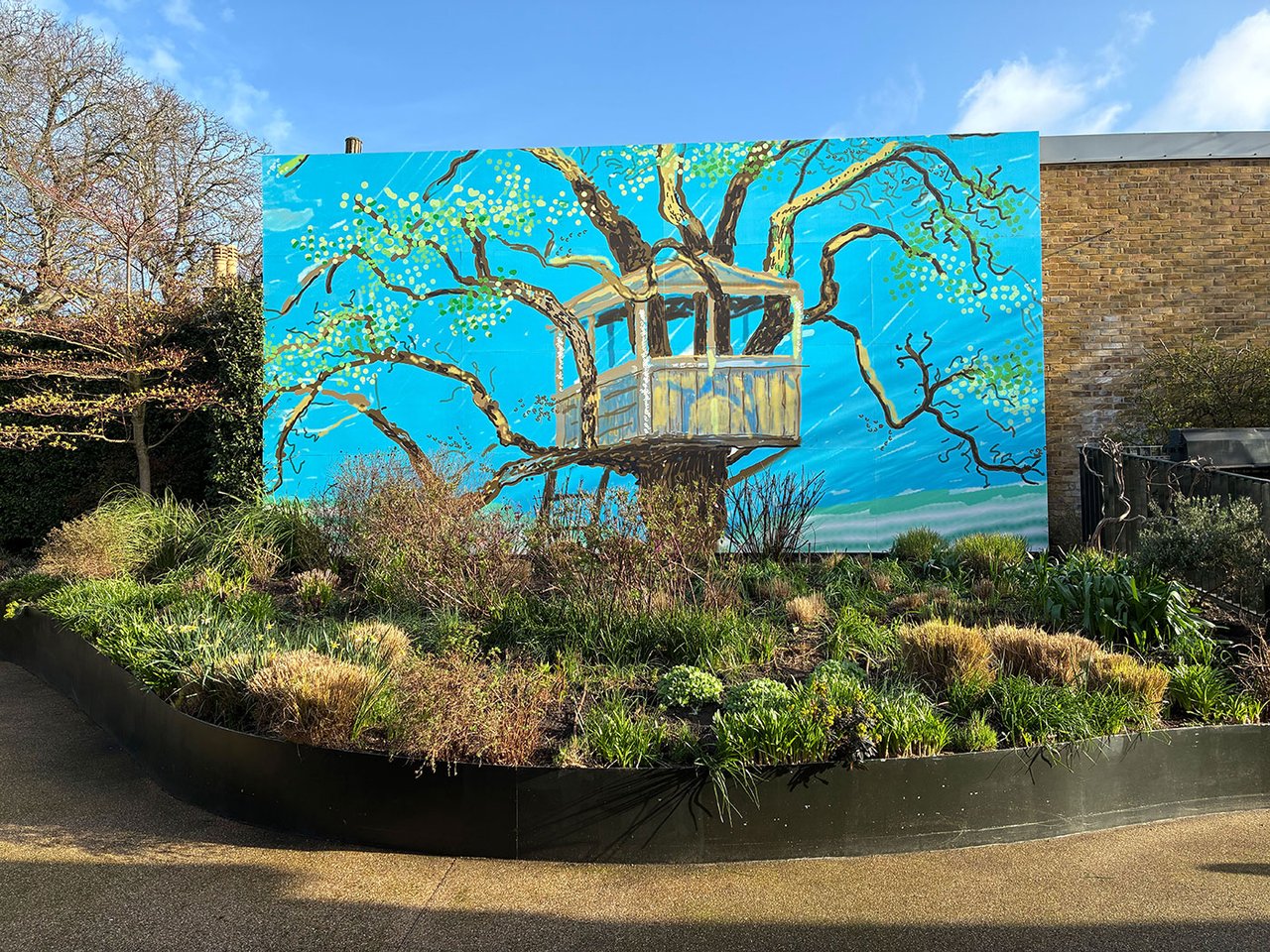
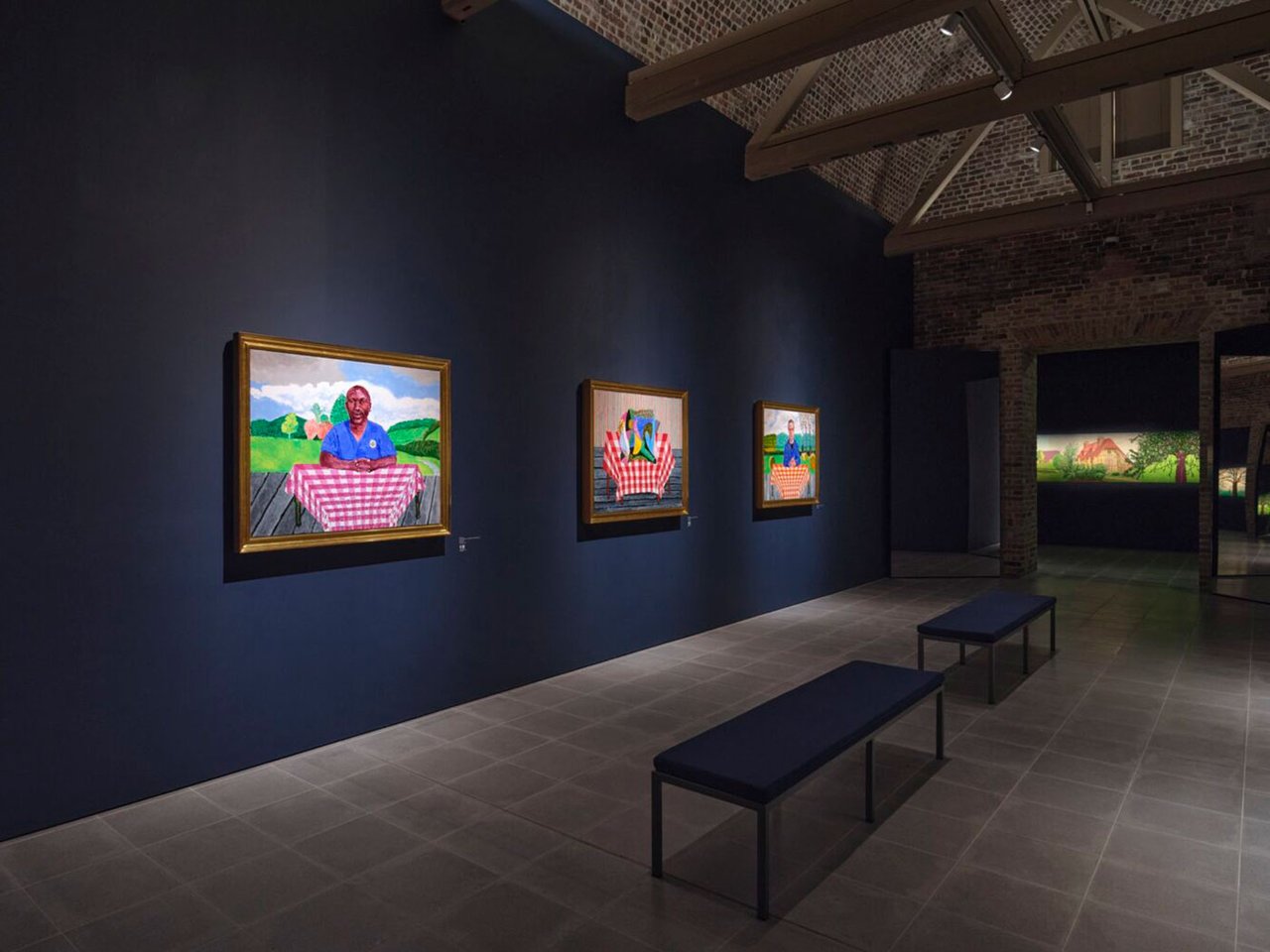
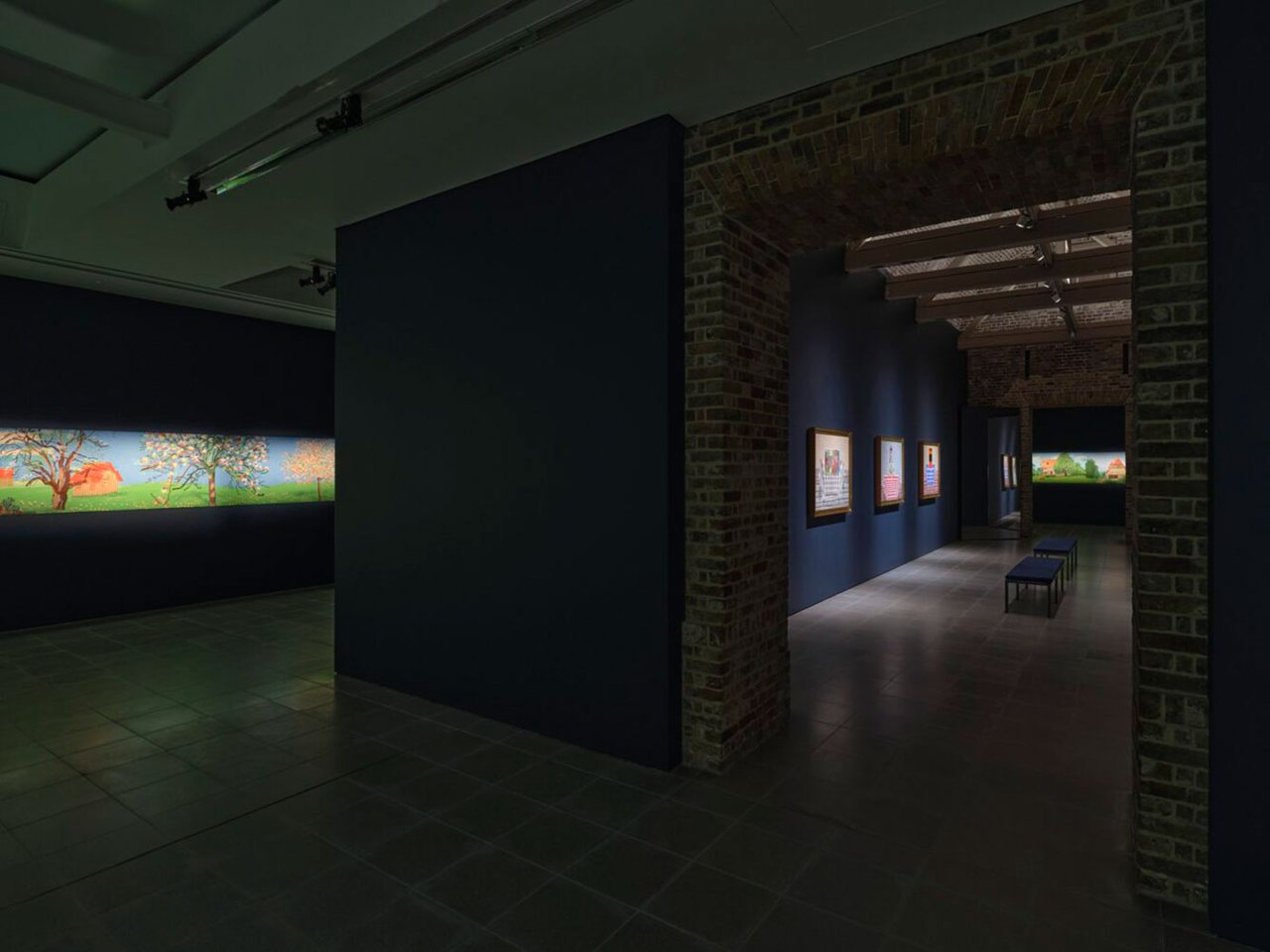
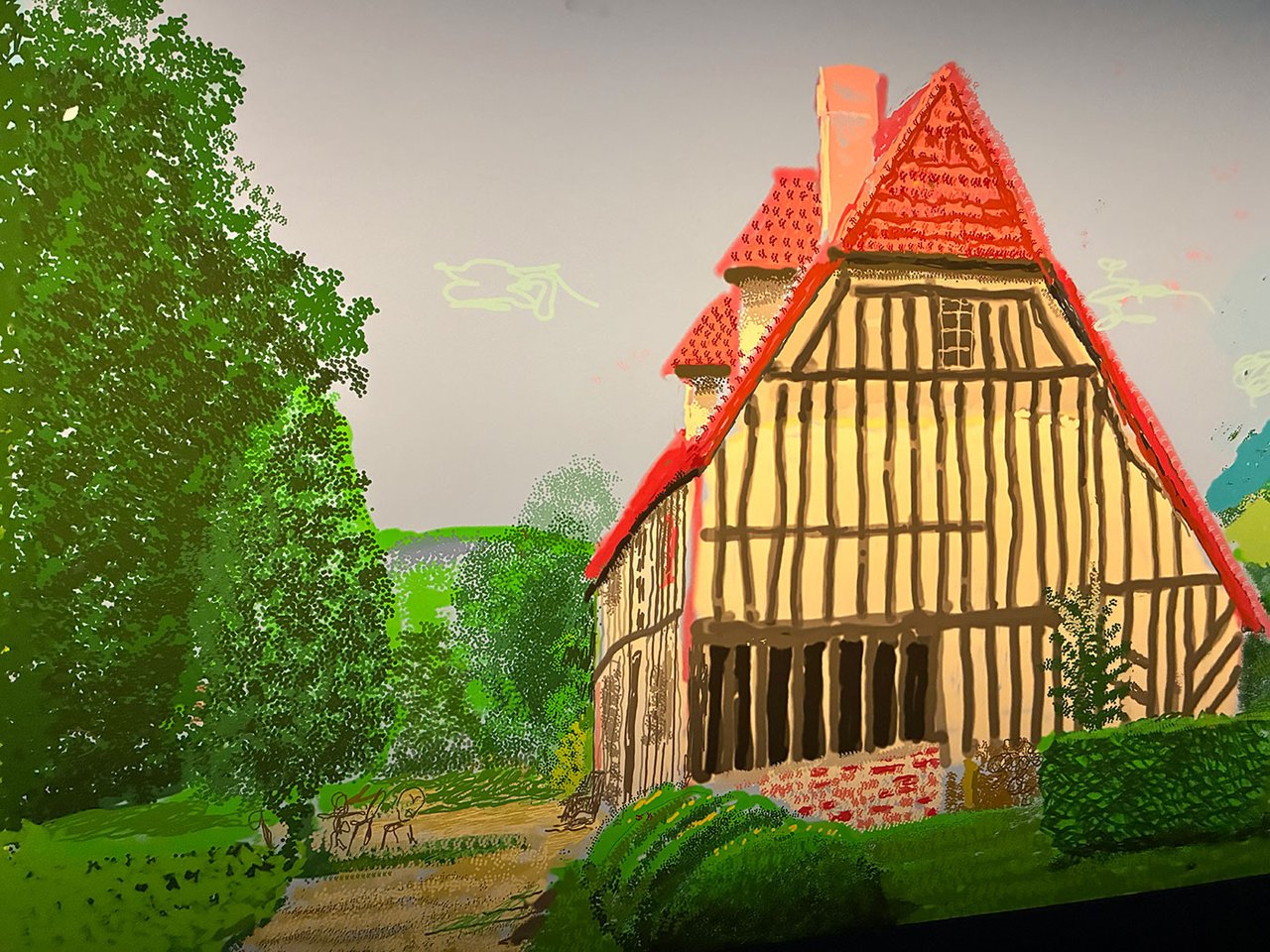
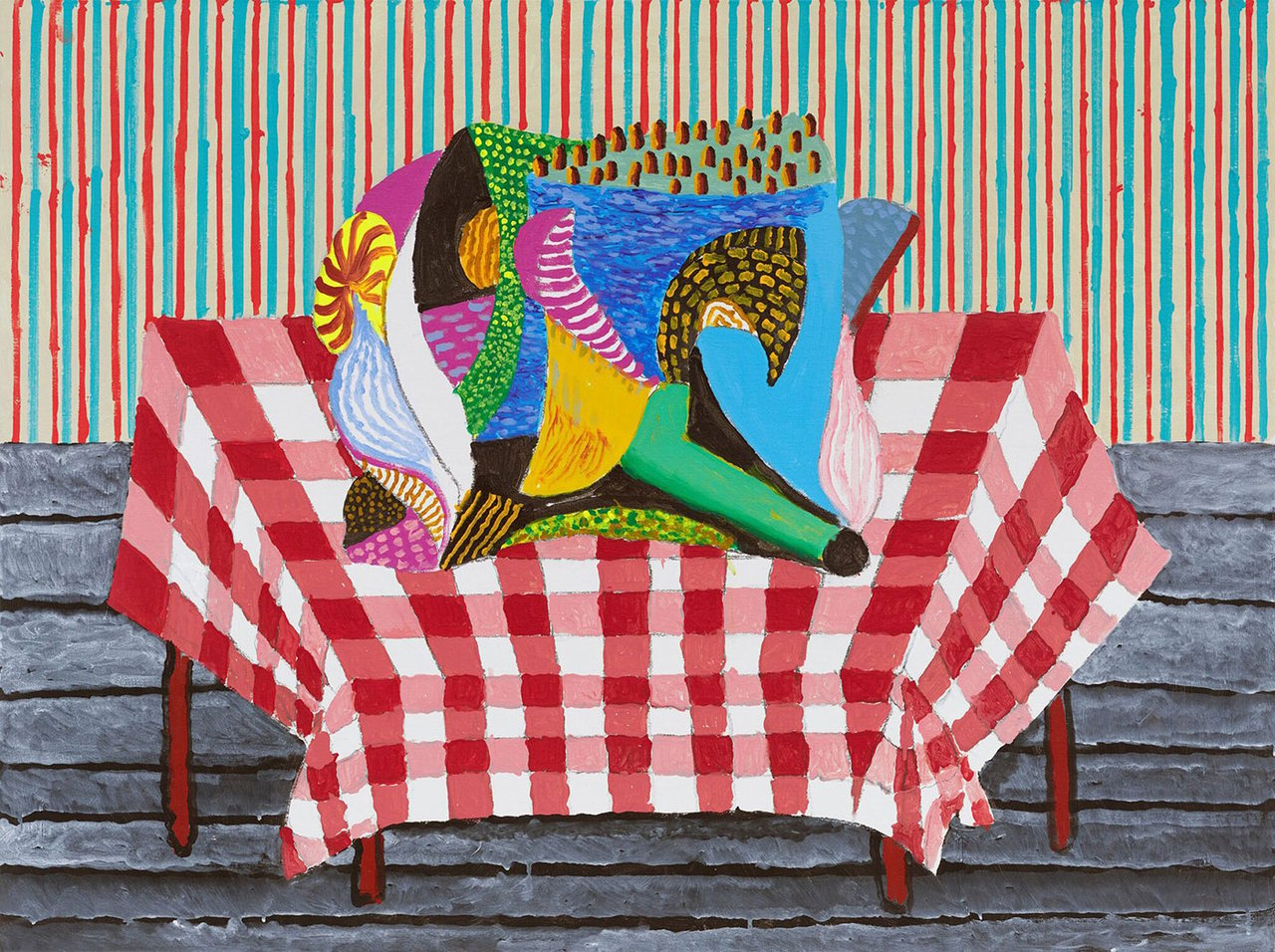
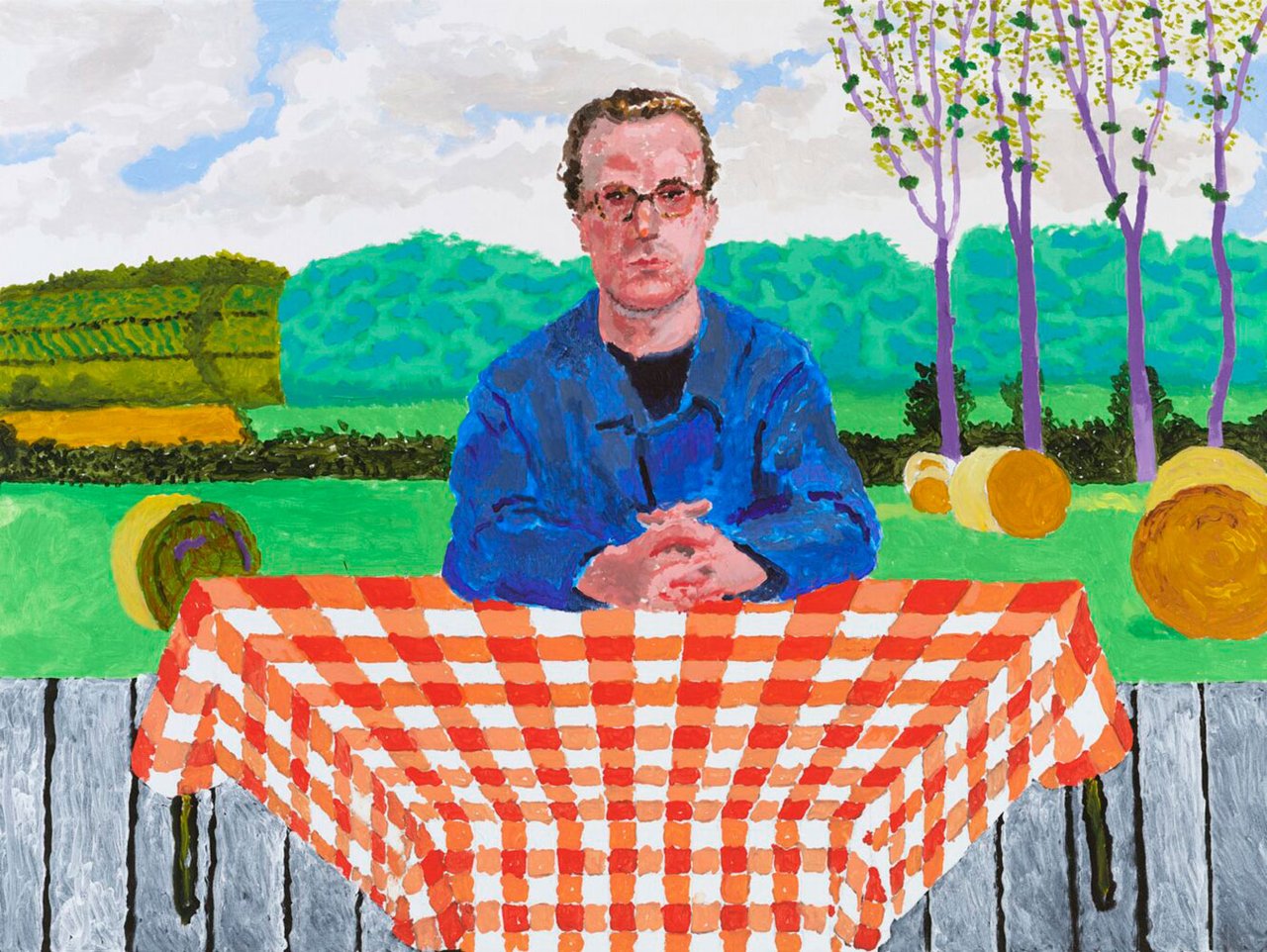
Hockney suggested A Year in Normandie, Obrist says, because he knew it would fit well on the four internal perimeter walls of Serpentine North, a building that is square in plan, and where the exhibition’s fourth and final wall is a temporary partition set laterally in front of the gallery’s main entrance. The exhibition also includes ten new paintings by the artist: five portraits, of his partner, Jean-Pierre Gonçalves de Lima, and his London team; and five abstract works based on gingham check tablecloths. The artist was inspired to make the new work, Obrist says, following the success of “Hockney 25”, at Fondation Cartier, in Paris, the largest exhibition of his work ever mounted. Outside, a detail from the frieze, showing a tree house in the artist’s Normandy garden, has been blown up to large scale by Hockney to be shown on the wall at the back of the gallery’s garden. It is clearly visible as a sun-catching backdrop as visitors enter under the swooping, tent-like, roof of the Magazine café, which was designed in 2013 by the late architect Zaha Hadid.
There is an extra force to having the work of Hockney, who has experimented with technologies old and new for more than four decades, at Serpentine, where Obrist has overseen a ground-breaking program of research into art made with technology. While still a student, Hockney decided that he would be a worker, dismayed as he was by the dilettante approach of some of his fellow students at the Royal College of Art, London, in the late 1950s.
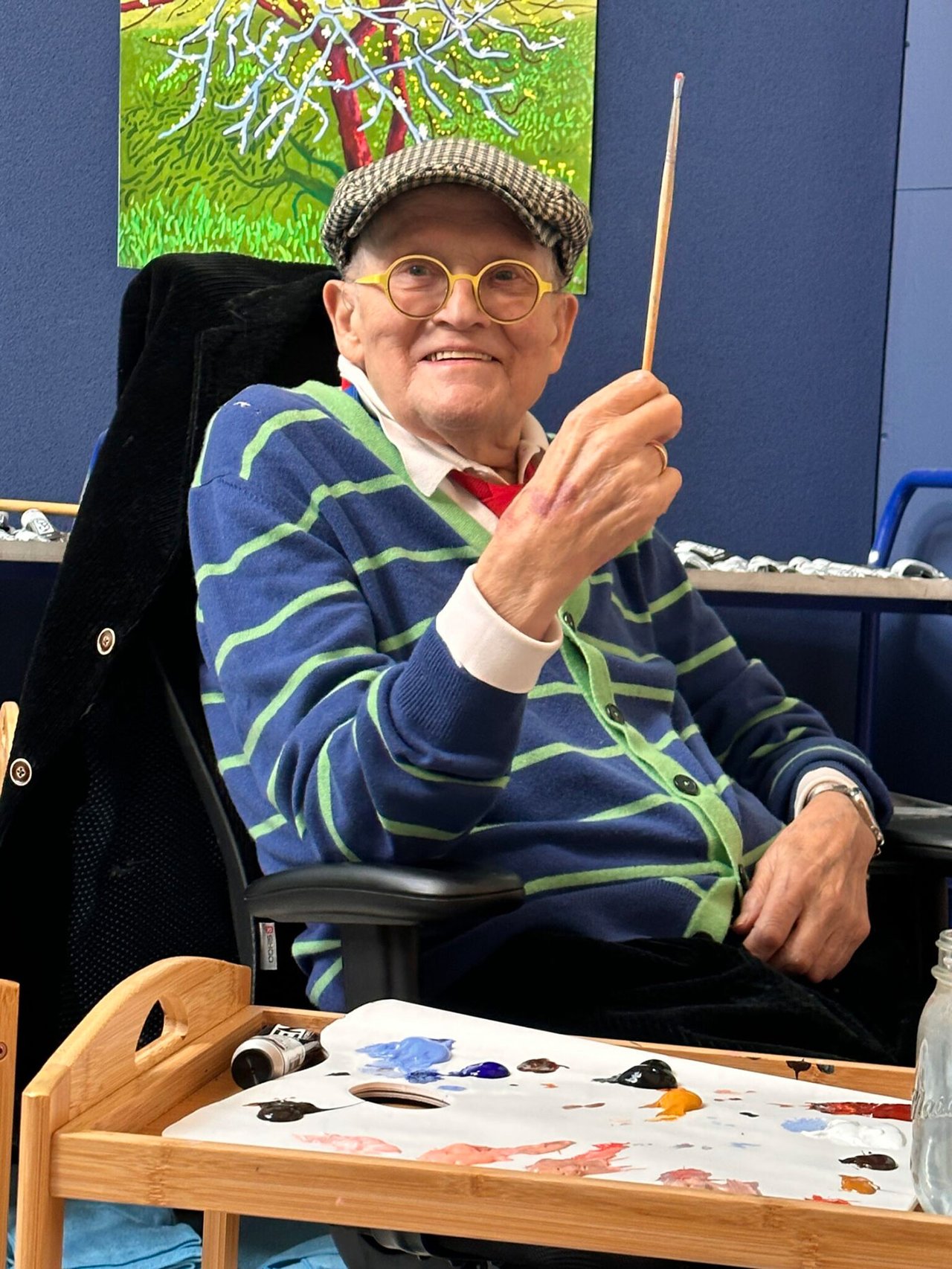
That work ethic, which saw Hockney do a series of 18-hour days in the studio to finish one of his best-known works, Portrait of an Artist (Pool with Two Figures) (1972) in time for its first exhibition, has fuelled his inquiring persistence in mastering new technologies — not for their own sake but as tools for composition or spurs to artistic imagination.
A 1987 BBC documentary series Painting with Light featured Hockney as one of the artists testing the Quantel Paintbox, an early digital art tool which helped shape pop culture in the 1980s. The Hockney episode is a clear demonstration of the artist’s inquiring experimentation with a new technology.
In archive footage on YouTube, Hockney is seen declaring “I don’t know what I’m doing” before revelling in the direct transfer between the movement of the stylus in his hand and the painting on screen, as well as the ability to change brush widths and mix and layer colours.
Hockney used photography as a compositional tool for his great double portraits and swimming pool paintings of the 1960s and ’70s; Polaroid cameras as a spur to experiment with multi-focus, multi-temporal photomontages in the ’80s; the photocopier and the fax machine to make and distribute multi-frame images; the Paintbox; computer design software from Apple Oasis onwards; the historic camera lucida (1999); the iPhone (2007), and the iPad and stylus (2010) as portable, light, and climate-agnostic sketchbooks. He has also used Polaroid and photography composites as time-based, multi-focus, works, extending that principle to multi-aspect videos and 3D photogrammetry.
Hockney’s interdisciplinary practice has included designs for opera where, through a discovery of the fundamental importance of lighting, he has transformed the scope of his work from the Hogarthian charm of his flats and costumes for Stravinsky’s The Rake’s Progress at Glyndebourne Festival Opera in the 1970s to moments of existential grandeur in his designs for a 1987 production in Los Angeles of Wagner’s music drama, Tristan und Isolde.
Hockney’s persistence with acquiring skill in painting on an iPad is seen to great effect in A Year in Normandie at Serpentine. The frieze, beautifully lit, has a warmer, more mysterious and sophisticated patina than can be suggested by on-screen jpegs of the constituent iPad drawings; and close study of the frieze reveals a work of arresting, painterly, quality.
Of the artist’s popularity, Obrist describes Hockney as an artist’s artist who is regularly cited to him as an influence by younger artists, but also “beloved by the masses”. Last October, the prominent generative artist William Mapan told Right Click Save’s newsletter that “Hockney 25” had been his most memorable recent artistic experience, observing how Hockney has always sought to understand new technologies as tools to allow the imagination of the artist full play. “I have always believed that an artist’s career is not linear, but this was proper proof that it can be,” Mapan said.
“[Hockney] has evolved through painting, oil, and then acrylic, iPad, digital, and animation. He travels generations of art. I think he is very interested in just sitting in the moment where he is in nature, always on the go but observing the world, trying to see it from a different angle.” (William Mapan)
Obrist spoke to Right Click Save about the intersection of art with everyday life in Hockney’s works; the artist’s curiosity, and work ethic; his hope that visitors to the show will “look with both eyes”; an insight into one of Hockney’s rare “unrealized projects”; and why, with Hockney, there is “no end to experiment”. That final mantra, Obrist says, was a gift to Serpentine from Hadid, who died ten years ago and who, like Hockney, was a pioneer of working with technology.
Right Click Save: What is the origin story of “David Hockney: A Year in Normandie and Some Other Thoughts about Painting”?
Hans Ulrich Obrist: I moved to London in 2006 and joined the Serpentine. [Hockney and I] have been in touch many times since then and had long conversations which have led to a book, The Hockney Interviews (2025). Over the years we kept discussing that it would be a dream to one day do a show at the Serpentine. He said that when he had the idea, and the right project, he would be happy to do so.
We continued, we were persistent, and then, all of a sudden, about a year and a half ago, the dialogue intensified and David came up with this wonderful idea of showing this panorama painting, A Year in Normandie (2020-21), which he created during the Covid-19 lockdown [at his house in] Normandy.
He created more than 200 iPad works about the garden and the landscape [...] that led to this very complex piece, which is for the first time receiving a show in London.
He was inspired by the Bayeux tapestry. He knew the tapestry as a child through books and then as a young artist he went [to see it in Bayeux in 1967]. Once he lived in Normandy [from 2019] he returned again. And the multi-temporal aspect of this 11th-century work, which you experience while walking, was something which inspired him. It had already inspired his photo composites in the 1980s. It was always somehow “there”, but it became very relevant once Hockney moved [to France], and led to A Year in Normandie.
And then we have the powder rooms [through the center of Serpentine North]. Once it was clear that [A Year in Normandie] would go on the perimeter, we were hopeful that David might create new work [or] maybe also show existing work.
Then he had the “Hockney 25” exhibition in Paris, which had more than 900,000 visitors at the Fondation Louis Vuitton. That created such incredibly positive energy that he felt energized to do new work. And so we have all these new paintings in the powder rooms.
RCS: Over the past 20 years, you’ve established a record at Serpentine for breakout research into art and technology. I wonder what it means to be showing Hockney, an artist who has experimented so thoroughly with technologies new and old, as tools of the artist’s imagination.
HUO: There is a deep connection. In the late 1980s, alongside Keith Haring and others, Hockney was part of the Quantel Paintbox program, where they had early possibilities to draw and paint on a computer. [Then there was] the fax machine. I was friends in the 1980s with Alighiero Boetti [who] said one should [...] have a fax agency where an artist could fax artworks all over the world — pre-internet. So that was Boetti’s unrealized fax agency. And of course, Hockney did it. He sent friends by fax these extraordinary drawings. There is a very beautiful book on Hockney’s fax drawings from the late 1980s [David Hockney: FAX Dibujos/ FAX Cuadros (1990)].
Once the digital technology became faster and more accessible, without restrictions on color and speed, Hockney started to work with the computer as a tool. And [then with the iPhone and then the iPad], he started to do these extraordinary flowers. The most magical emails I’ve ever received were these flower emails, which he sent to friends and acquaintances.
RCS: I’m very interested in what you say about speed. Hockney has found, with the iPhone then the iPad, the ability to capture fugitive moments of light and color when out in the country, whether it is Yorkshire, the Yosemite, or Normandy. As he says, when working on paper, you muddy the colors if you have too many layers. But with these tools, he can maintain the purity of color and light while improving his ability to capture the moment. Could you talk about how Hockney has used new technologies to give him compositional tools in the studio, but also to drive his imagination?
HUO: Absolutely. Monet, of course, is important in relation to this. Monet saw many springs, summers, autumns, and winters in Giverny and the passing of the seasons, and A Year in Normandie is connected to [the example of] Monet. In her biography of Monet, The Restless Vision (2023), Jackie Wullschlager writes that Monet, she believes, was excited every day of his life, and painted that way. I think there is this [same] excitement when Hockney works. You feel it in A Year in Normandie: an incredible excitement; an incredible moment of energy.
And working with the iPad, Hockney can be outside, not only during the day but also at night. We had long conversations for the exhibition catalog, from July to November 2025. We talked about Monet, and about the Impressionists.
David was talking about the moon, and he said, “You know, ultimately, I can just sit outside with the iPad and paint the moon”. The impressionists could not have done that. So it’s not only that [working with an iPad] is faster, it also allows him to go where they could not have gone.
RCS:Could we discuss A Year in Normandie as a time-based work, as well as the influence of the Bayeux Tapestry and Chinese scroll-painting — both multi-temporal in concept — on Hockney’s own work. I think of his photo composites of the 1980s as well as Waldgate Woods, Winter (2010) where he drives an array of nine video cameras at walking pace through the Yorkshire landscape, always playing with time and focus.
HUO: Yes, that’s very important. From the first he never wanted the viewer to see [A Year in Normandie] all at once. So that you only see it [as far as the next] corner and then you see the next part. And that's why the Serpentine North Gallery [with its four walls] is the perfect space for this work. [As] with the Bayeux Tapestry, you need to explore it over time.
And [there’s] a paradox because we spoke before about the speed, the velocity that this technology allows. When David got his first iPad and began landscape drawing of the seasons, it took him months to learn the technique, he told us. But he really wanted it and he realized that it is a superb medium. Monet, he says, would have loved it; and Turner, because you can be so subtle with transparent layerings.
It took him a long time to learn this new technique. But he has the curiosity always to learn: old techniques and new techniques — from the camera lucida to the iPad. It is his incredible curiosity, and openness, which is so special.
RCS: To critics such as Andy Grundberg of The New York Times, Hockney’s photocollage works of the 1980s, such as the bravura Pearblossom Highway 11-18th April 1986, #1 (1986), were clearly Cubist in conception, highlighting “the intersection of painting issues with photographic ones, and the intersection of art with everyday life.” While, in 1996, John Russell Taylor of the London Timesdescribed Hockney as “as much a conceptual artist as any who claim loudly to be so. It is just that he sees before he thinks, and what he thinks is always at the service of what he sees.” Have you and Hockney discussed the Serpentine show in conceptual terms?
HUO: Yes, particularly the Cubist references. He would talk about late Picasso a lot, and about Fellini’s And a Ship Sails On (1983). If you think about that almost multi-perspective, multi-dimensional boat in Fellini’s film [where the Italian director created what he called a deliberate feeling of artificiality on set with the sea made from polyethylene and a painted sunset], Hockney is very interested by that.
We talked about the late Picasso, we talked about Fellini, about Chinese scrolls, and about time. A lot of different temporalities come together in his work, and the future is also often invented with the past. And in the show, there are references to his own past, to his own work.
He uses these new tools but he doesn’t give up the old tools. It’s fascinating [to consider] his extraordinary oeuvre, which includes digital works, his immersive space, Bigger and Closer (2023). Films, photography, designs for opera, and books, of course, with Secret Knowledge: Rediscovering the Lost Techniques of the Old Masters (2021) as an example. And literature also,
We just made a studio visit in Los Angeles with Don Bachardy, the partner of the late Christopher Isherwood. It was fascinating to see amazing traces of the friendship between Isherwood, Bachardy, and Hockney there and to see how deeply Hockney over the years connected to literature.
RCS: You see Hockney, as you say, venturing all these experiments, working with opera, working with new technology. And then he goes back to his core practice. I think of the portraits made when he was working with the camera lucida, inspired by the magical pencil drawings he had seen in “Portraits by Ingres: Image of an Epoch” at the National Gallery, London, in early 1999. A drawing of his artist friend Lindy Dufferin from that year is remarkable for the way it captures both her frank expression and her watchful, listening, gaze, which I believe she developed after losing her hearing. Then there is a striking 25-part series of charcoal drawings The Arrival of Spring in 2013 (twenty thirteen) (2013), made when he returned to work after being seriously ill. How do you see it when Hockney steps back, at scale, to the core competency of drawing that brought him to global attention in the 1960s?
HUO: Yes. It’s always there. I think it’s got to do with what we discussed before, the energy. And it seems to be very energizing for him to have these different parallel realities. There is no end to experimentation in his work, and he connects different temporalities.
A few months ago, I was in his studio. He wanted to talk for an entire hour about some drawings of Turner. And then another time he wanted to talk only about a series of paintings by the very late Picasso, from the ’60s. And in the book of conversations, there is never repetition. Each of these conversations deals with a completely different topic.
RCS: Can we talk about having the exhibition in Hyde Park, near the Royal College of Art, where Hockney studied, close to his London studio? He used Kensington Gardens to photograph his former partner Peter Schlesinger, to act as the standing figure in Portrait of an Artist (Pool with Two Figures) (1972).
HUO: It’s an absolute dream come true that this exhibition can happen. And obviously we are almost neighbors with David because [his studio is] 10 minutes away from the galleries. It was the shortest transport we’ve ever had, because everything came from Kensington to Kensington. It is also an exhibition which deeply connects to the park, to the changing seasons.
But there is also something which came to my mind when we talked about technology. When Tim Berners-Lee invented the World Wide Web in 1989, he famously said, “This is for everyone”. And one of the Serpentine’s mantras is that it is “for everyone”. So we really hope that this exhibition of David Hockney, with free admission, is for everyone.
RCS: In recent years, the world has witnessed a series of gigantic Hockney exhibitions and studies, many of them playing on the title of his celebrated painting, A Bigger Splash (1967). We have had A Bigger Picture (Royal Academy of Art, 2012); the sumo-sized, A Bigger Book (2016), from Taschen; David Hockney, a full survey at Tate in 2017; the Bigger and Closer immersive experience (London and Manchester, 2023); and the monumental “Hockney 25” (2025) at Fondation Cartier, Paris. What is it like for you to be working now with Hockney at Serpentine North, a medium-sized space, and with a very particular focus?
HUO: That’s a very interesting question. We never do surveys or retrospectives at Serpentine, We do not have the space for that. But the advantage is that the artist can take over the building; can almost create a Gesamtkunstwerk, as Peter Doig did a few months ago with “The House of Music” [in Serpentine South Gallery].
In the case of David, he had had retrospectives in London; major shows at the Royal Academy, and at the Tate. So it needed to be an exhibition which was precise and which was exciting for us and for him. And it’s very exciting that we can finally show A Year in Normandie in London. People can spend a lot of time with it.
[We were] installing for five days. And each day I discovered something else. It is an invitation to spend time and it is a monumental work. It is not a “small” show. No artist has ever made the space [feel] bigger. It’s almost infinite.
And then the idea of micro-macro is interesting. He does these works on the iPad and then it becomes the 70-meter-long painting and then it actually becomes, outside, a gigantic wall. [That] little bird house, a little tree house in A Year in Normandie, all of a sudden appears monumental outside, as if it was in a tree in the park. There are a lot of micro-macro games that the viewer can play with.
And then the thing which couldn’t be planned [for] is that David was so inspired after Paris and by [the prospect of] this show at Serpentine that he was excited to do a lot of new work. And, we’re very excited that in the two powder rooms we have the world premiere of these two new bodies of work. One is a continuation of his portrait series. But an intimate series [as it shows] his collaborator, the team he is with every day. It’s a portrait of who surrounds him in London.
But then the second series, which are these five abstract paintings on a tablecloth, initially without background, which is interesting; I mean, initially with a monochrome background. And then with a background from a year in Normandy and then with a background of Bruegel’s Tower of Babel [1563].
We are also excited to have a whole store with merchandise. There are going to be 42 unlimited merchandise objects, so very accessible. And for that, he handwrote in digital handwriting [...] “Look with both eyes”. We’re going to have that as a motto for the exhibition because he really wants visitors to look with both eyes.
RCS: How would you summarize Hockney’s importance to public appreciation of art over what is now six decades?
HUO: He’s globally one of the most popular, beloved, artists far beyond the art world. At the same time, when I go to studios and ask younger artists, “Who are artists who inspire you?” Hockney is very often mentioned. It is very rare that an artist has this influence. He is an artist’s artist, but is also beloved by the masses. It’s “both and” instead of “either or”.
One of the ultimate measures of influence is if younger artists love an artist. That’s how art travels. We can see that also in the digital realm now. All the young artists talk about Rebecca Allen.
RCS: Have you and Hockney discussed his unrealized projects?
HUO: We did address it a couple of times in our conversations. There are certain moments and something is not yet realized; and then it happens. If he wants to do something, he does it. But in our conversations — The Hockney Interviews (2025) — he did say “I’ll have to write a new book to convince the art historians that what I said about shadows and reflections in European paintings coming from lenses is true.”
RCS: What do you hope visitors will take away from the exhibition?
HUO: I hope that, for many, this exhibition will radiate the energy of David Hockney. I hope it will give hope to the world in these difficult times. I think it’s an exhibition which gives a lot of hope and energy. I hope that people will also “look with both eyes”.
Hans Ulrich Obrist is a world-renowned curator and Artistic Director of the Serpentine in London. He was born in Zurich in May 1968 and joined the Serpentine Gallery as Co-director of Exhibitions and Programmes and Director of International Projects in April 2006. Before joining Serpentine he had been Curator of the Musée d'Art Moderne de la Ville de Paris from 2000, as well as Curator of museum in progress, Vienna, from 1993 to 2000. Alongside his curatorial practice, Obrist has written extensively on and around contemporary art, with a particular interest in the interview format.
Louis Jebb is Managing Editor at Right Click Save.