·News
Remembering Frank Gehry (1929-2025)
The development of the architect’s hybrid process paralleled that of his artist peers
The development of the architect’s hybrid process paralleled that of his artist peers
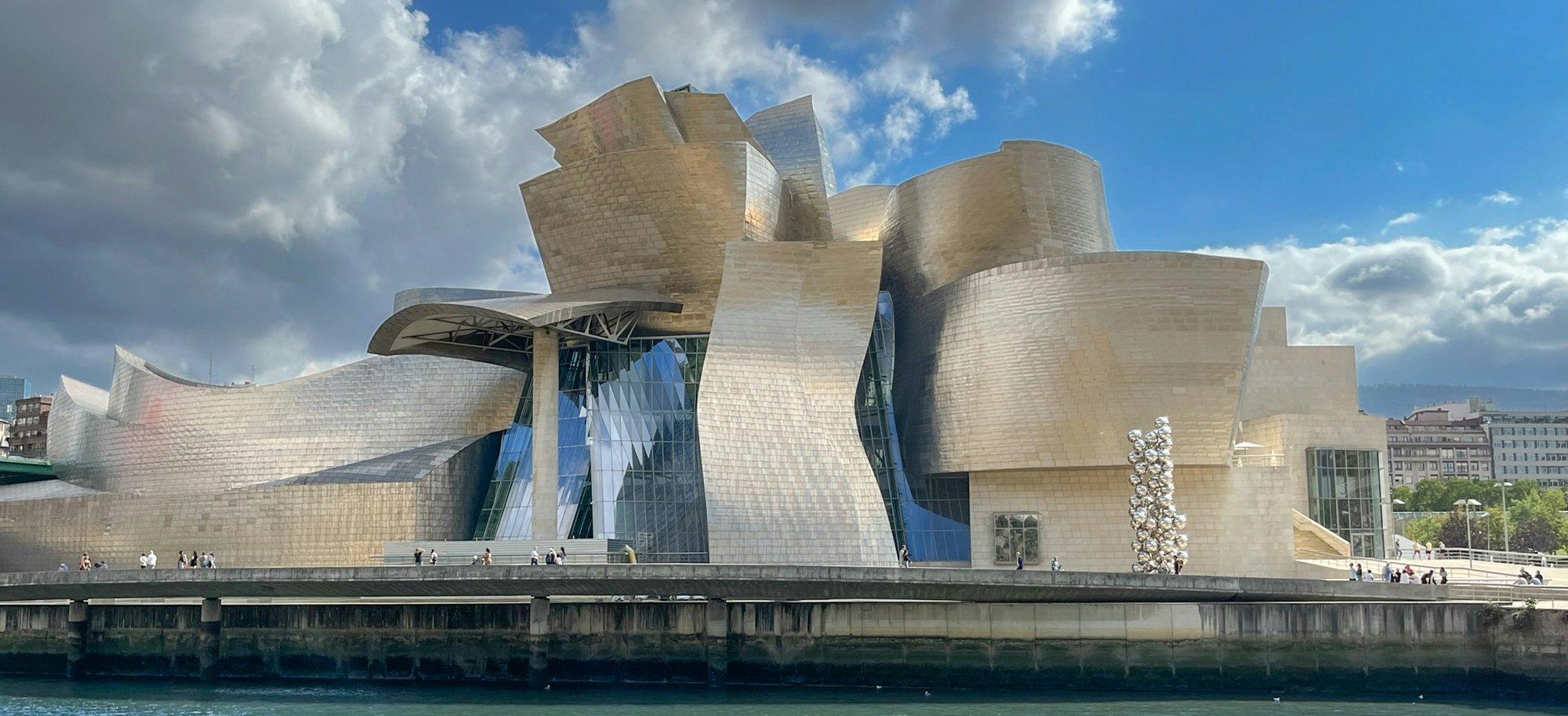
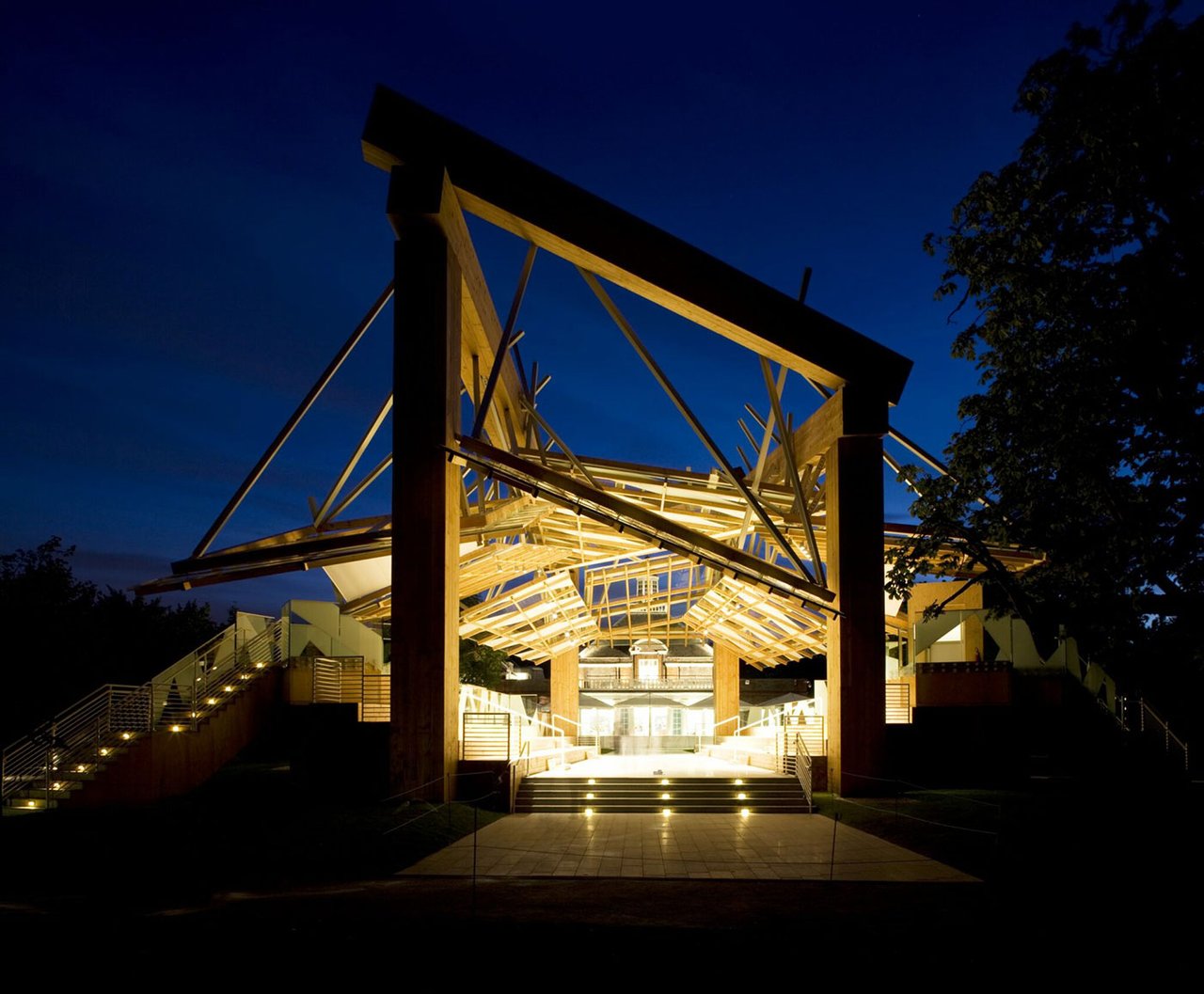
At the time of his death, the architect Frank Gehry was 96. He had been practising for more than 70 years, for the last six decades at the head of his own firm in Santa Monica, California. Since the opening in 1997 of the immensely popular Guggenheim Museum Bilbao, with its dramatically sweeping, fish-shaped, curves sheathed in titanium, Gehry had been a figure of global renown, and his visionary museum design credited with transforming the image, and financial fortunes, of the north Spanish city.
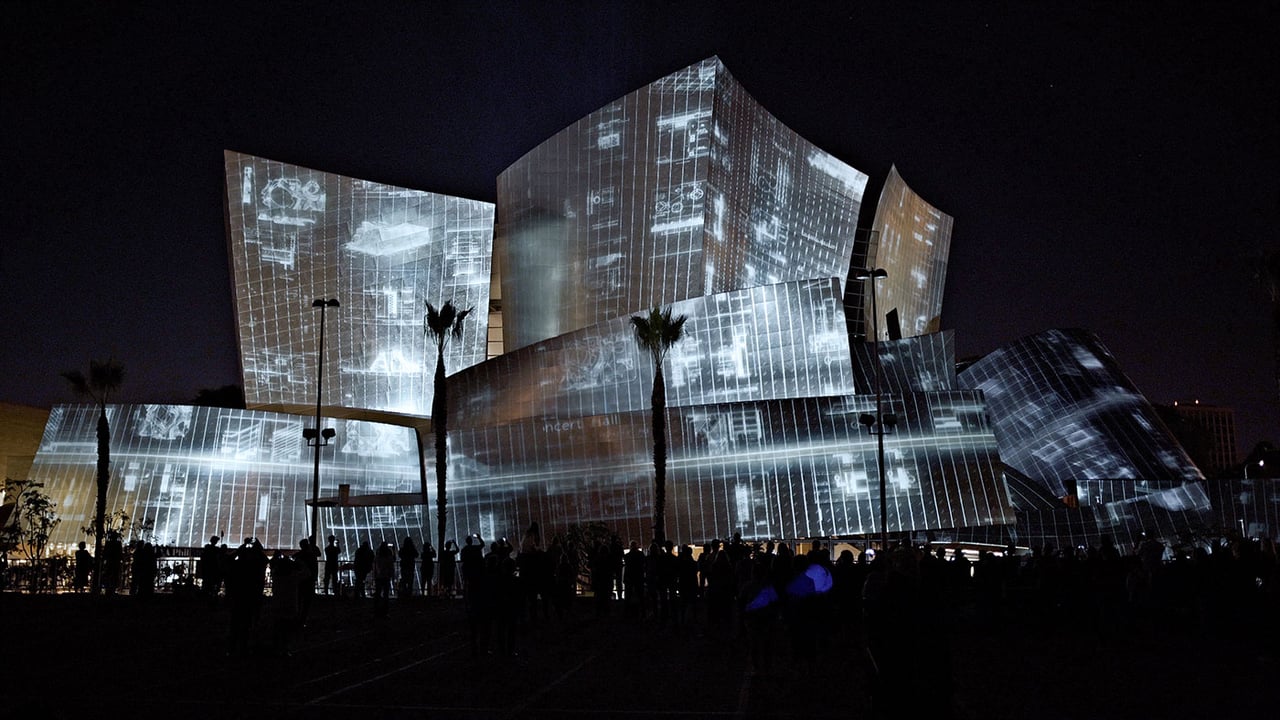
The opening in 2003 of Gehry’s Walt Disney Concert Hall, a building of similar character, compositional rhythm and cultural ambition, a design developed at the same time as that for the Guggenheim but delayed by funding issues, gave a similar transformative lift to the streetscape and cultural energy of downtown Los Angeles.
Gehry had grown up in the city from the age of 17, after his family moved there from Toronto, for his father's health. He studied first ceramics and then architecture, and was a friend, collaborator or mentor for three generations of artists from Robert Irwin, Sol LeWitt and Ed Ruscha, to Refik Anadol. Some of them were his neighbours in the beach cities of Los Angeles, where Gehry became a creator in the 1960s of artists’ houses, inspired by the democratic informality with which artists such as Charles Arnoldi, Larry Bell, and Billy Al Bengston had made use of light industrial buildings.
Gehry was of the same generation as the early computer art pioneers Harold Cohen (one year his senior) and Vera Molnar (born five years before Gehry). The temporal span of Gehry’s career, and the elemental, informal, seemingly randomised architecture that he developed — as well as his pioneering adoption of aerospace design software in the 1990s both to render his complex designs and to systematise their project delivery — makes his development as an architect a valuable prism through which to view the parallel development of algorithmic generative art in the hands of artists including Molnar, Cohen, Casey Reas, Manfred Mohr, and Erick Calderon and the Art Blocks artists.
Gehry used his 3D modelling software, Digital Project, to develop large-scale animalian sculptures, in the form of fish or a horse’s head, later rendered in physical form. The best-known is Fish (1992), 56 metres long and 35 metres high, which was installed on the seafront at Barcelona when that city hosted the summer Olympic Games.
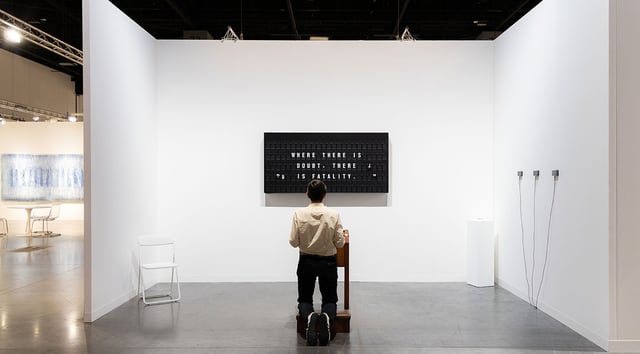
That process of computer modelling followed by physical crafting has clear parallels in the digital and physical pairs, or twins, that leading generative artists show today, as was noticeable on a number of stands at the Zero 10 section of Art Basel Miami Beach 2025.
Gehry first came to public attention in 1972 when he released a series of “Easy Edges” furniture made up of glued layers of corrugated cardboard running in alternating directions. The systematic, low-cost, series included the Wiggle Stool and Wiggle Side Chair which carry a happy pre-echo of the conceptual logic and visual delight of Erick Calderon’s generative work Chromie Squiggle (2020). The demand for the furniture was enormous but, showing a clear sense of purpose, and anxious not to be distracted from his architectural practice, Gehry shut down production of “Easy Edges” after three months, only later licensing the designs to the Vitra company in the 1980s.
Gehry also worked on hybrid productions with artist friends, including Claes Oldenburg and Coosje van Bruggen, sculptors of oversized everyday objects. In 1985, Gehry, Oldenburg, van Bruggen and the writer and curator Germano Celant collaborated on Il Corso del Cotello (“The Course of the Knife”) on a Venice canal. This artistic succès d’estime told the story of an absurdist quest using large-scale sculptural works centred on a gigantic “Knife Ship” on the canal.
Oldenburg and van Bruggen collaborated with Gehry again on another oversized visual jest, the 44ft-tall pair of binoculars that serves as the entrance to Gehry’s headquarters building for the advertising agency Chiat/Day (1991-2001) in Venice Beach, California.
After 15 years of running his own practice, Gehry caught the attention of the architectural world with the completion in 1978 of the first stage of the remodelling of the two-storey Dutch colonial house that he and his second wife, Berta Aguilera, had bought in Santa Monica the previous year.
The house had been systematically, but often randomly, reiterated by Gehry with extensions made of chain-link fencing, glass and corrugated iron. Gehry added additional layers and extrusions, using the same everyday materials, over the next 15 years, and the house was one of the exhibits celebrated by Philip Johnson in the exhibition Deconstructivist Architecture (1988) at the Museum of Modern Art. (The following year Gehry was awarded the Pritzker Prize, the “Nobel Prize” of architecture.)
Johnson and his co-curator Mark Wigley did not see “Deconstructivism” as a style, more as “a confluence of architects' work since 1980 with similar forms, not a creed or movement”.
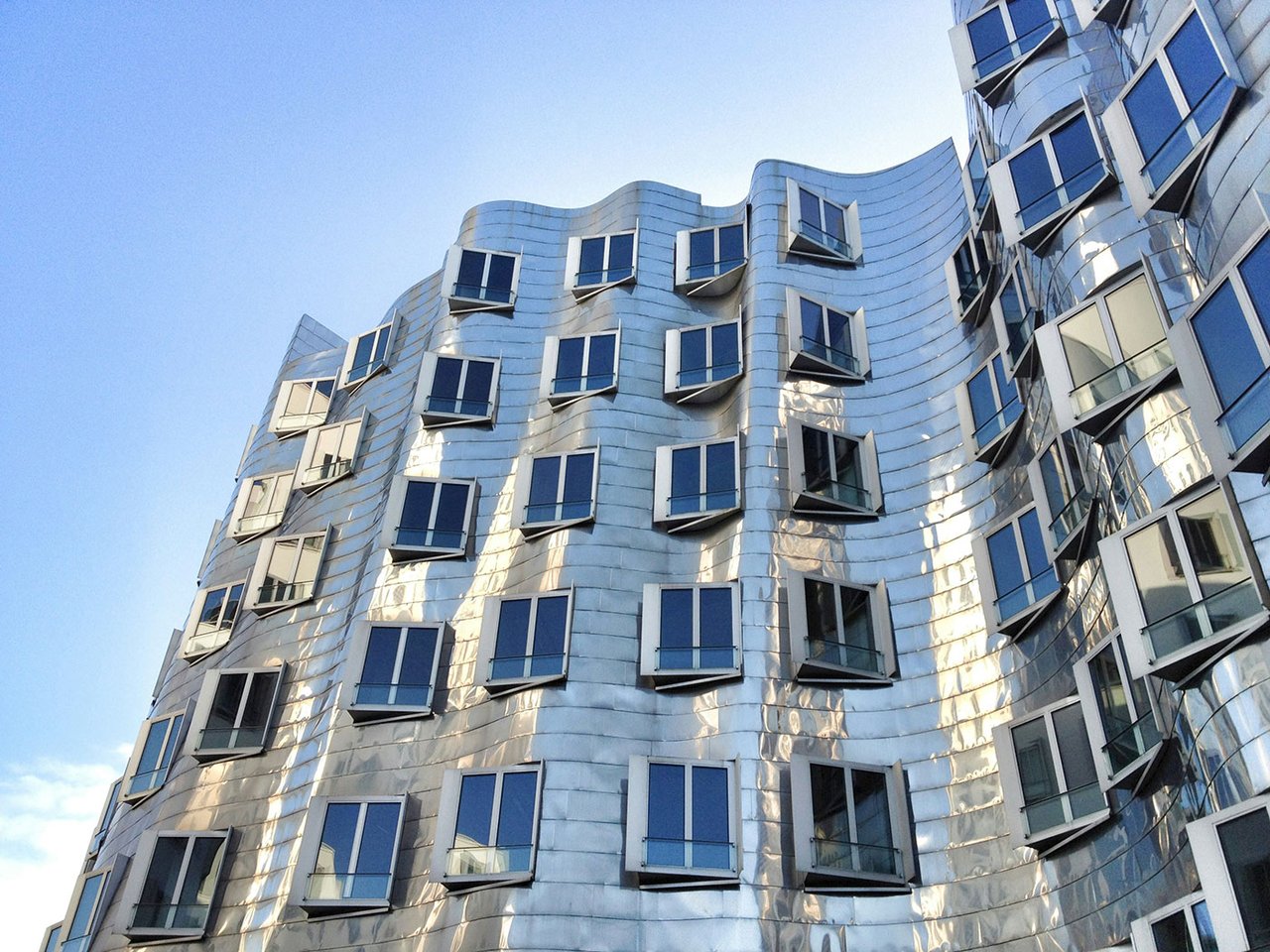
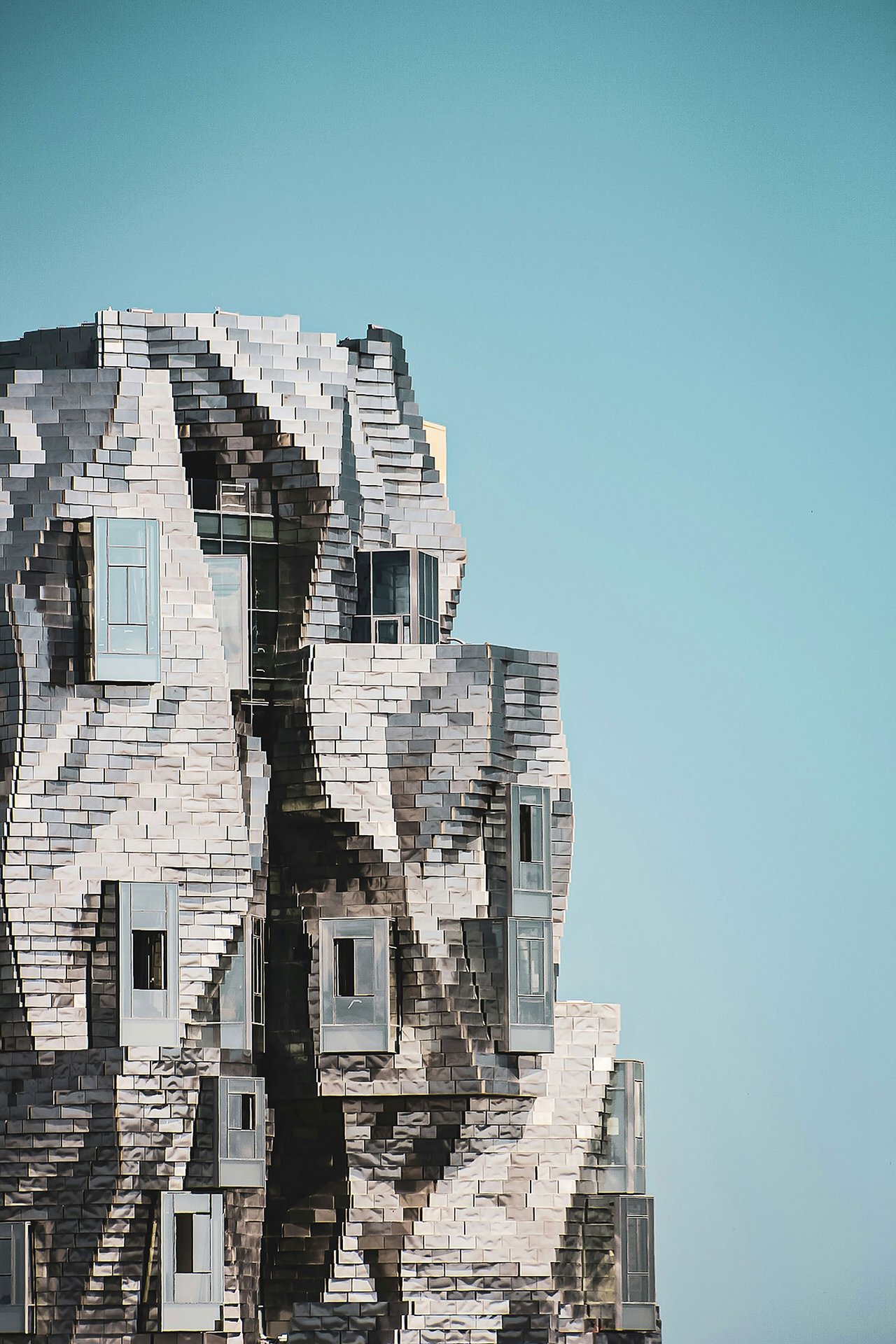
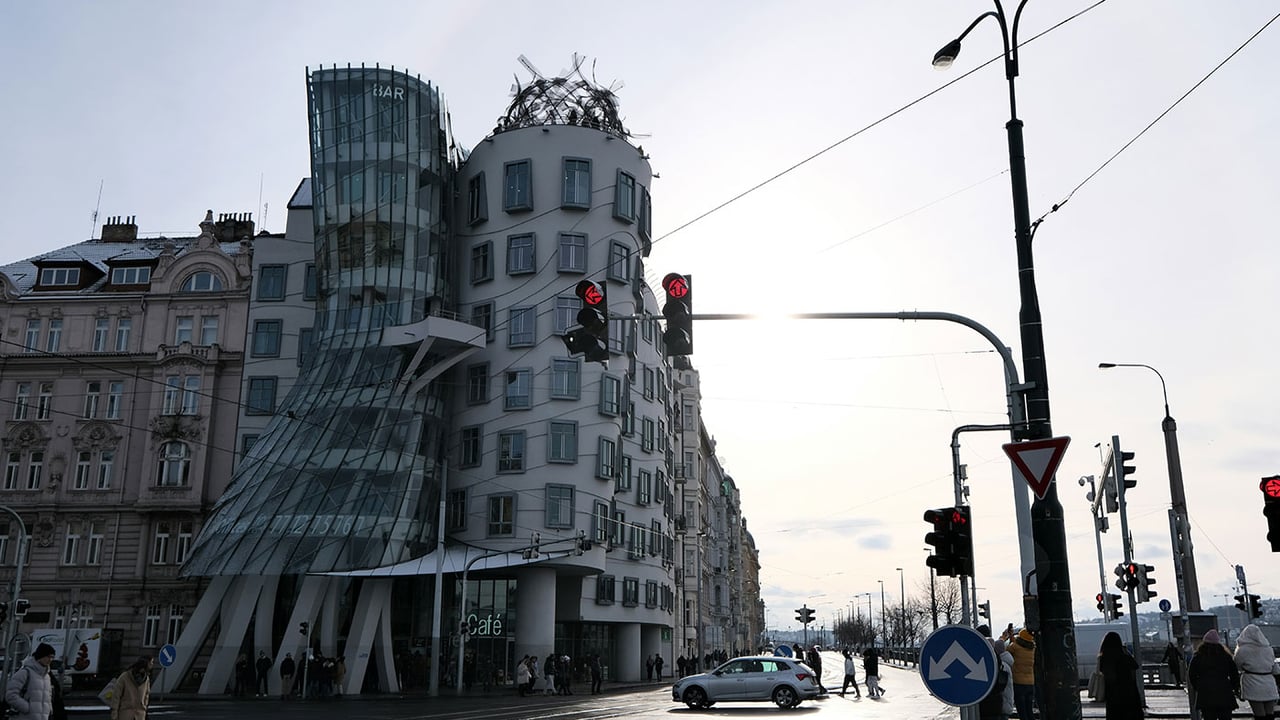
The random element in Gehry's mature style might manifest in the crumpling or leaning in of some elements, or a window out of kilter with the rest. It was an approach, coming in "at an angle", that he sometimes likened to jazz. The fenestration of a project liked the Neuer Zollhof apartment buildings (1998), Düsseldorf, has the randomised feel of a work like Molnar’s 1952 Untitled, in the collection of MoMA, with its grid of nine squares, eight in alignment, and one slightly rotated, at an angle to the rest. As does the Dancing House (1996) in Prague, with one conical element leaning into another, like dance partners mid-waltz.
The other architects featured in the exhibition were Zaha Hadid, Rem Koolhaas, Daniel Libeskind, Peter Eisenman, Coop Himmelblau, and Bernard Tschumi. Hadid, 21 years Gehry’s junior, is an architect often compared with Gehry, for the sweep and ambition of her work. After her untimely death in 2015, Gehry gave an account of her to Time magazine that shows his appreciation for her talents. “I was part of a group,” he said, “that helped Zaha get one of her first [built] commissions, the Vitra Fire Station [1993] in Germany. She did an extraordinary job with it — everybody was impressed, and she took off."
"She created a language that’s unique to her. I suppose it will be copied, but never the way she did it. The kind of architecture Zaha did was not sought after a lot, and then she made it sought after. She created the niche.” (Frank Gehry)
In those concluding phrases he might have been writing about himself: making work sought after; creating "the niche". He finishes by talking of how Hadid’s Aquatics Centre for the 2012 London Olympica had “really knocked my socks off”. He had attended with her. “We sat together and took it all in, form and function. I told her it was so beautiful and fit so nicely, and I thought it was right on the money, perfect."
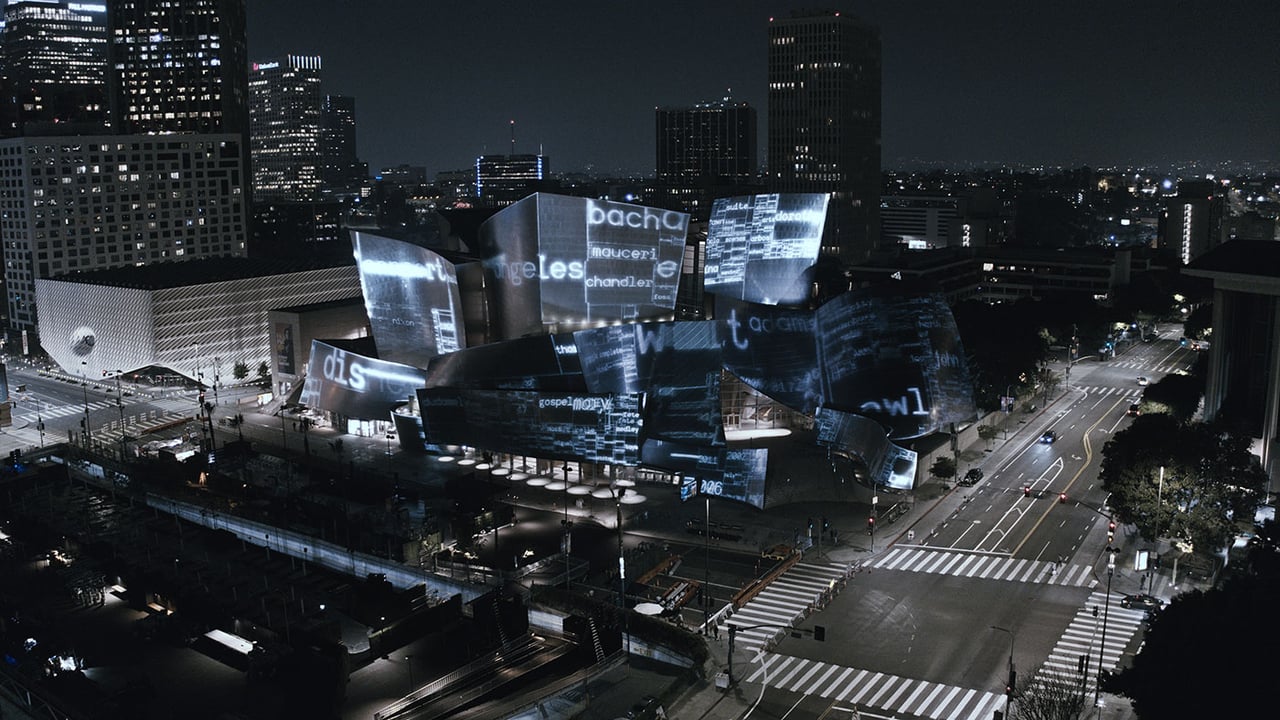
In the course of 2025, Gehry’s appreciation of another creator, the media artist Refik Anadol, has borne fruit in two striking ways. Anadol’s career as an artist had gone to a new level in 2018 when he made WDCH Dreams, using machine learning on the LA Phil orchestra’s digital archives, and projecting the resulting visual narrative on to the “sails” of Gehry’s Walt Disney Concert Hall.
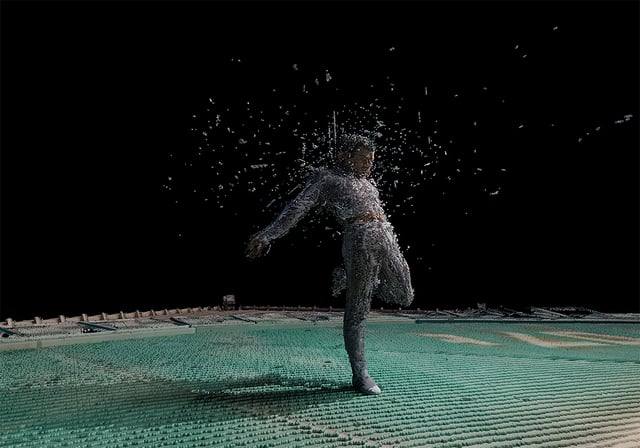
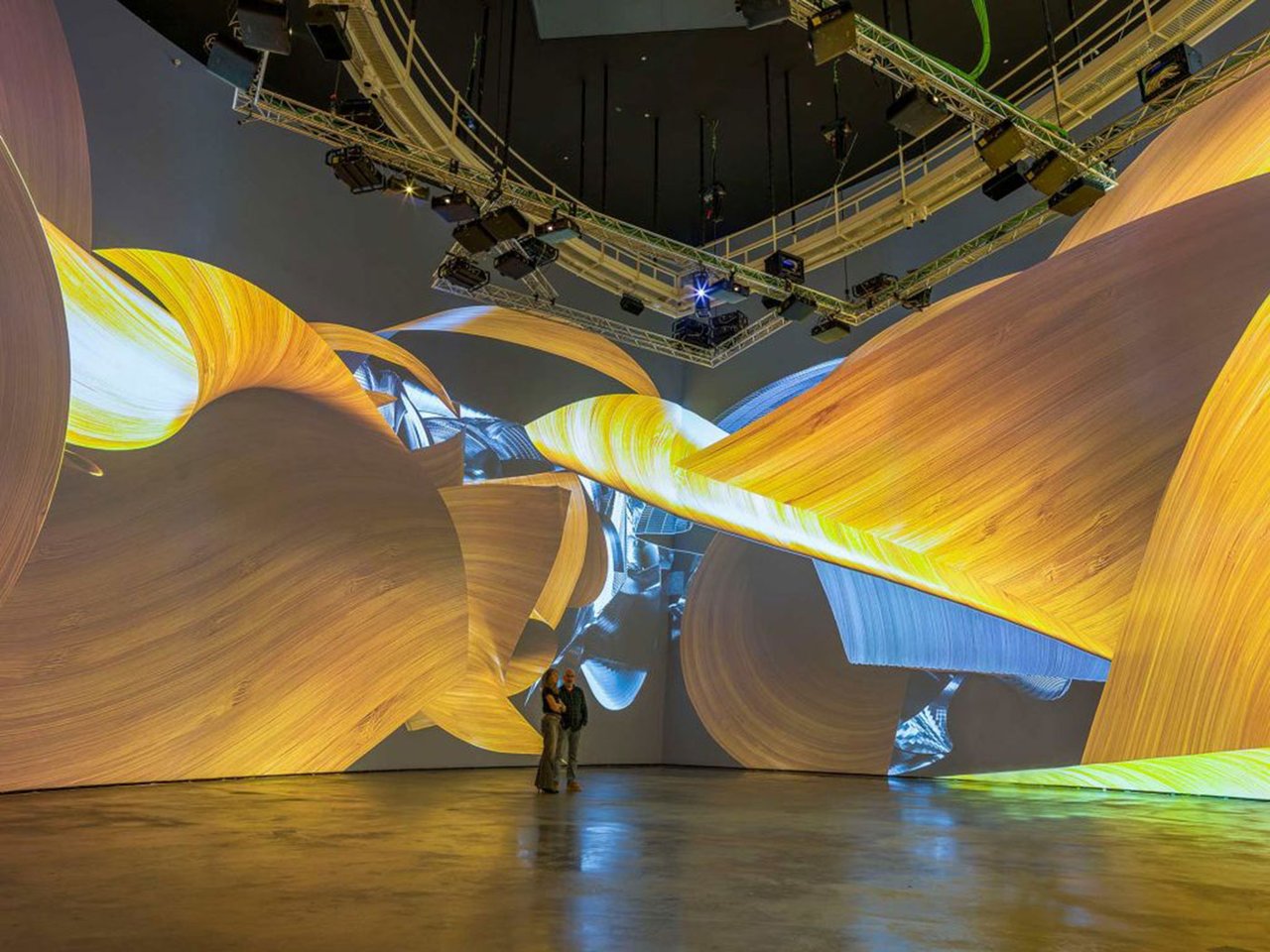
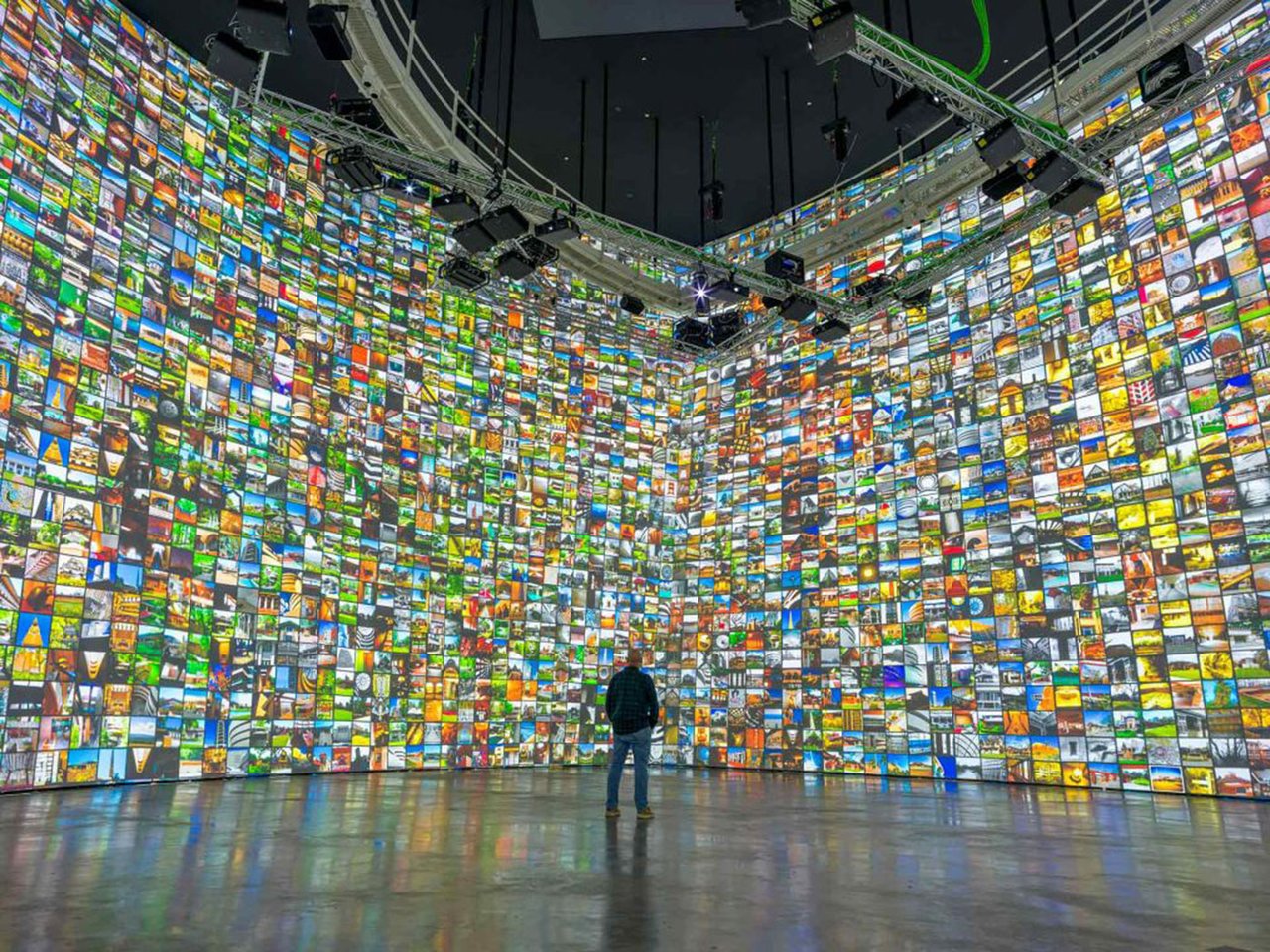
Seven years later, Anadol released the result of another collaboration with the architect: Living Architecture: Gehry (2025), part of the exhibition “in situ: Refik Anadol”, shown at the Guggenheim Museum Bilbao, projected on the towering interior walls of the museum’s largest gallery. It is a piece that uses machine learning, a large architecture model, to riff on the Gehry practice archives, in a reminder of the history of architects’ visionary dreams. It also brings to mind what a natural historian of architecture Gehry was, as much at home with the contemplation of the work of Giovanni Battista Piranesi or Alvar Aalto as he was with the designs of Hadid or Renzo Piano.
In 2026, Anadol is due to open Dataland, his museum of AI art in another Gehry building, the Grand LA, across the road from the Walt Disney Concert Hall.
In 1984 Gehry had expressed to Celant the inbuilt randomness of even the most “orderly” architecture:
“Serious architecture is also determined by such incongruous factors as economic and social conditions, building codes, traditions, and available construction methods, the end result of any building project is to a large degree accidental.” (Frank Gehry)
The “available construction methods” goes to the heart of what was remarkable in the timing and execution of Gehry's Guggenheim Bilbao. At a time when many practices were gradually moving to architectural software in order to enable them to run big projects, Gehry, in his mid-sixties, had gone much further, investing time and enormous financial resources in adapting aeronautical design software to his purposes so that a technically demanding, visionary, design such as the Guggenheim Bilbao could be crafted and completed to a tight schedule, to deliver something that caught the public imagination.
The “Bilbao effect”, and the difference that one structure could make to the global image of a city, is sometimes spoken of as something created by Gehry and the Guggenheim Bilbao. What makes the “effect” more interesting still is to see it not in isolation but in the context of two earlier 20th-century projects — Edwin Lutyens’s Cenotaph (1919), in Whitehall, London, and Jørn Utzon’s Sydney Opera House (1959-73) — that stretched the technology of the day and sometimes generated whole new ways of working while delivering structures that transformed the visual signature and cultural memory of their host cities.
In the case of the Cenotaph, Lutyens engaged in pages of calculations to a tight deadline to rediscover a visual device created by the Ancient Greeks: to work out the “entasis” that would create an imperceptible curve in the elevations of the Cenotaph — a rectangular pylon-shaped structure to the memory of the UK’s war dead which has become a focus of national mourning — such that they would meet 1,000 feet above ground, while making an optical illusion of perfectly straight lines such as had been used by the architects of the Parthenon 2,500 years before. In the case of the Sydney Opera House, the structural engineers Ove Arup had to devise completely new ways of building in order to execute the celebrated billowing “sails” of the opera house. The resulting building transformed the image not just of Sydney but of all Australia.
Gehry, with the Guggenhem Bilbao, was building on a grand tradition of innovation , produced under pressing circumstances, to deliver architectural progress and delight.
The intervention of “economic and social conditions” that Gehry mentioned to Celant were part of the reason that Gehry, like countless architects before him, left many unbuilt projects. The most important conceptually was a house for the billionaire insurance magnate Peter Lewis, a project Gehry worked on for eight years in the 1980s and 1990s and which was the subject of a monograph show at Philadelphia Museum of Art. It was scheme in which he worked out many of the ideas that bore fruit in the Guggenheim Bilbao and the Walt Disney Concert Hall.
Gehry's largest unbuilt project was a scheme for a new Guggenheim museum on the Lower East Side of Manhattan, a twisting, titanium, cloud-castle embracing the East River at the base of a 40-storey tower. After $250 million of the projected $1 billion had been pledged, the project was dropped in 2003 when additional funds were not forthcoming from other donors. Gehry did not live to see the completion (due in 2026) of his massive Guggenheim Abu Dhabi on the Saadiyat Island museum complex.
When the Venice Biennale gave Gehry a lifetime achievement award in 2008 it was notably for “inspiring generations of architects, artists, and citizens”; an audience far broader than architects and architecture students.
Gehry likely relished the thought of inspiring citizens and visual artists in general, but, a man known for his sometimes blunt mode of address, had a characteristic reply when he was one of the cultural leaders asked by The Art Newspaper in early 2000 “What will, or should be, the purpose of art in this new century?”
The academic and film critic Camille Paglia gave a considered response: “Art alone can integrate nature and technology, sensual experience and abstract thought in a single contemplative moment, unifying the sacred and profane.” Paglia was perhaps anticipating the hybrid forms of art practised in 2025. Gehry was characteristically brief, dry, and self-deprecating in his reply: “Will the art of the future look anything like my buildings? I hope not.”
—
Frank Owen Goldberg (Frank Gehry), born Toronto February 28, 1929; Pritzker Prize for Architecture 1989, Praemium Imperiale award in architecture 1992, RIBA Gold Medal 2000, Golden Lion for Lifetime Achievement, Venice Biennale 2008, Harvard Arts Medal 2016, Presidential Medal of Freedom 2016; married first Anita Snyder (one daughter, and one daughter deceased, marriage dissolved); secondly 1975 Berta Aguilera (two sons); died Santa Monica, California, December 5, 2025
Louis Jebb is Managing Editor at Right Click Save.
No comments yet. Be the first to share your thoughts.
Mentioned in this article
People: Frank Gehry, Refik Anadol, Claes Oldenburg, Coosje van Bruggen, Erick Calderon (Snowfro), Germano Celant, Philip Johnson, Zaha Hadid|Works: Cenotaph|Organizations: Guggenheim Museum Bilbao|