Tokyo Sets Stage for Exhibition of Media Ecologies
The curators of “Patterns of Entanglement” at NEORT++ introduce ten artists exploring human-nonhuman relations
The curators of “Patterns of Entanglement” at NEORT++ introduce ten artists exploring human-nonhuman relations
The Anthropocene forces humans to understand their interconnectedness with nonhuman ecosystems. Where the human world is increasingly characterized, in this accelerated era of financialized capitalism, by logics of expansion, exploitation, and extraction, those logics are also intertwined with a living world marked by slower, generative processes.
At a time when the organic and the prosthetic are collapsing the human into a carbon-silicon hybrid, artists can help to make sense of this newly layered existence.
In their book, Bleak Joys: Aesthetics of Ecology and Impossibility (2019), the cultural and media theorists Matthew Fuller and Olga Goriunova make the point that both ecology and economy, which share the prefix “eco-”, have their root in the ancient Greek word oikos (οἶκος) meaning “house, property, and family.”¹ Numerous artists have since called attention to the ways human identities — and bodies — are commodified and reconfigured according to economic imperatives inscribed within social media software. In turn, other cultural practitioners continue to highlight the symbiotic nature of virtual and “real” worlds as well as the ways the former might “reworld” the latter.
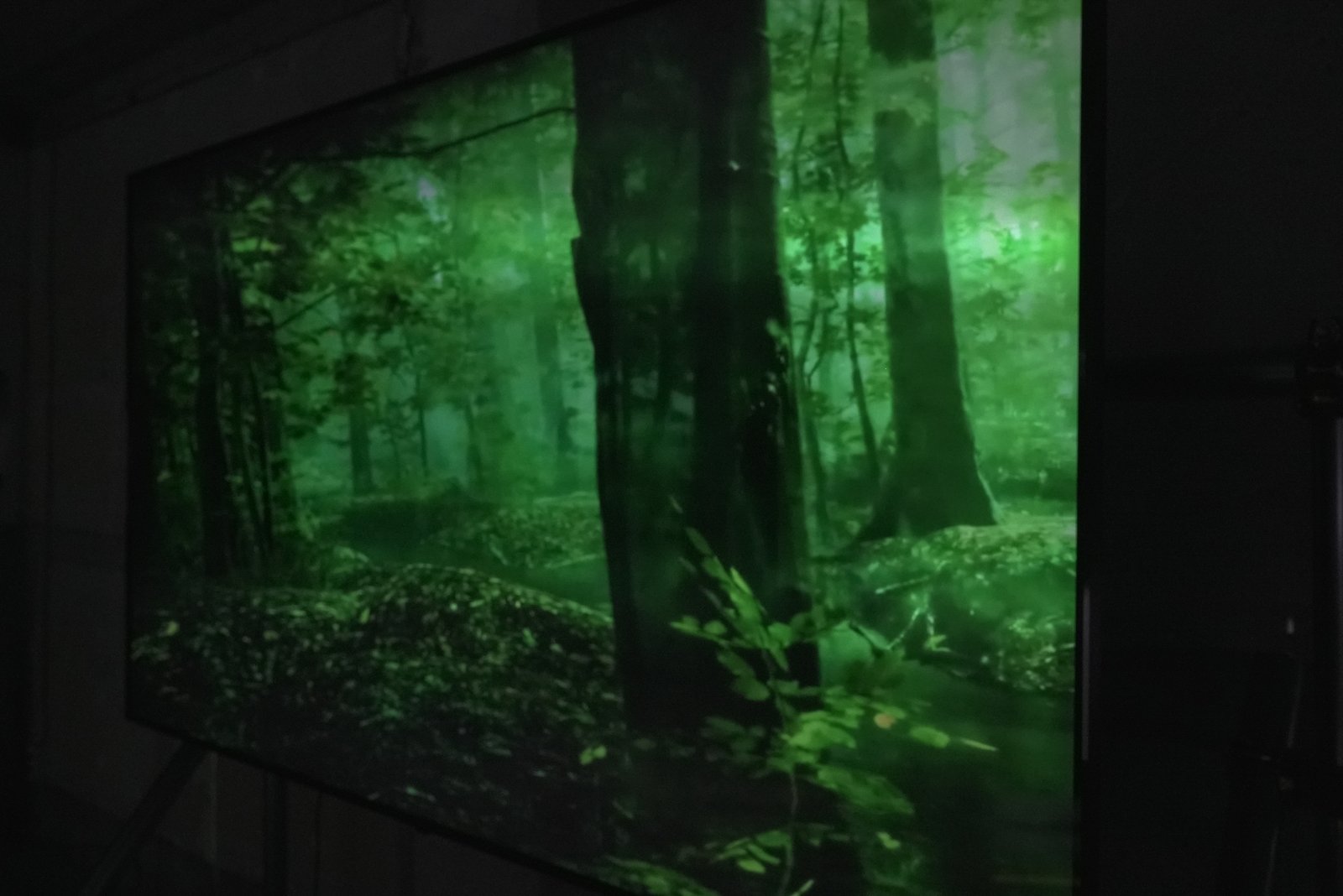
It was Matthew Fuller who, in 2005, adopted the term “media ecology” to address the “reality-forming nature of a media” as well as its situation within vast networks of “beings and things, patterns and matter.”²
In the process, Fuller altered how we think about objects — including digital objects and artworks — at a time when they were becoming “informational as much as physical but without losing any of their fundamental materiality.”³
In 2025, it is hard to find an artist who doesn’t involve both analog and digital media in their practice in some form. For scholar and cultural practitioner Ashley Lee Wong, this new age of hybrids is a prompt “to look at artistic practices [sic] in situated contexts” and “to think of cultural ecologies as the relationships that connect us with other living and nonliving things”.⁴ This approach is suited to addressing a group of artists that adopts a spectrum of creative practices.
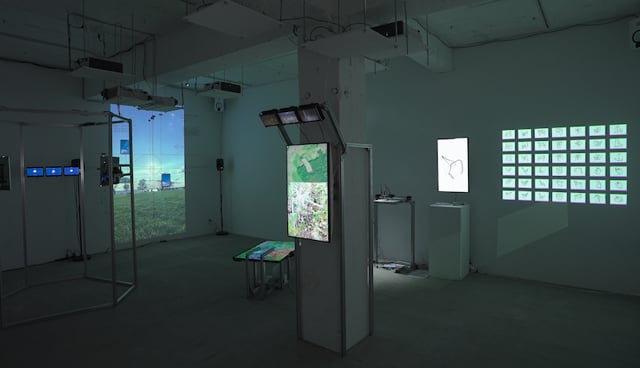
Like the concept of a media ecology, the artists participating in this exhibition invite one to perceive the world as a space of mediated ethical, ecological, social, and political processes, one that is continuously regenerating, transforming, and transmitting messages between synthetic and biological territory and human and nonhuman agents. In doing so, they offer avenues to rethink media as less a vehicle for creation, communication, or surveillance than a means of entangling the neoliberal “reality” in alternative ecologies.
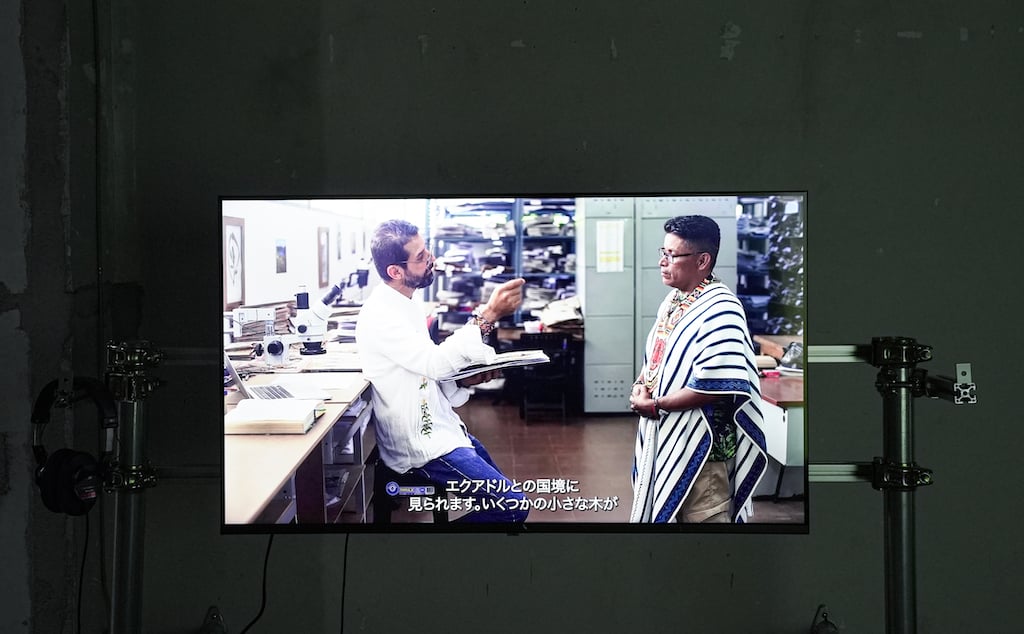
Patterns of Entanglement
[E]cology comprises the study of patterns of entanglement, connectivity, interaction and symbiosis between agents ranging in scale from individuals to ecosystems, exploring how different parts of the global household relate to one another.⁵ (Sy Taffel)
In his book Digital Media Ecologies (2019), the scholar Sy Taffel argues that one of the advantages of the word “ecology” over “environment” is that it doesn’t presume an external reality into which humans aren’t already embedded. Channeling the feminist philosopher of science, Karen River Barad, and social anthropologist, Tim Ingold, Taffel weaves together the concept of ecology with that of entanglement in order to fortify media ecologies against old binary oppositions between subject and object, nature and culture, and representation and reality. One of our participating artists, Libby Heaney, explores a particular kind of entanglement in her practice:
Quantum entanglement is more radical than the complex of meanings often inferred from the word “entanglement”, describing a nonlocal layering of shared realities between multiple entities, such as atoms or photons. “Patterns of Entanglement” acknowledges the multiple patterns and paths through this contested and shapeshifting conversation. (Libby Heaney)
As a former quantum information scientist, Heaney’s hybrid literacy allows her to generate the kinds of uncanny and emergent outcomes that are only possible through cross-pollination.
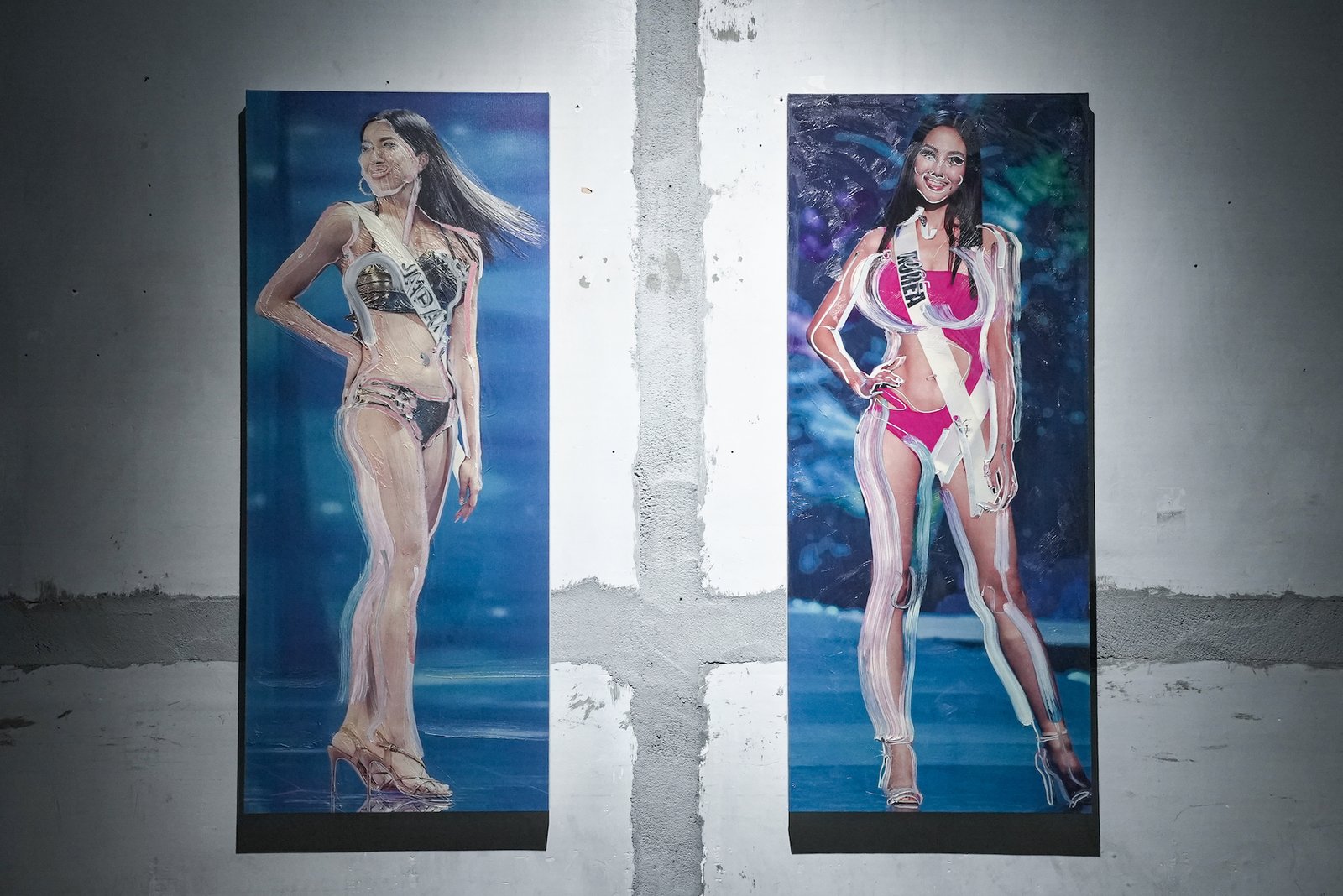
Our other participating artists bring their own unique literacies to the conversation around media ecologies. These include:
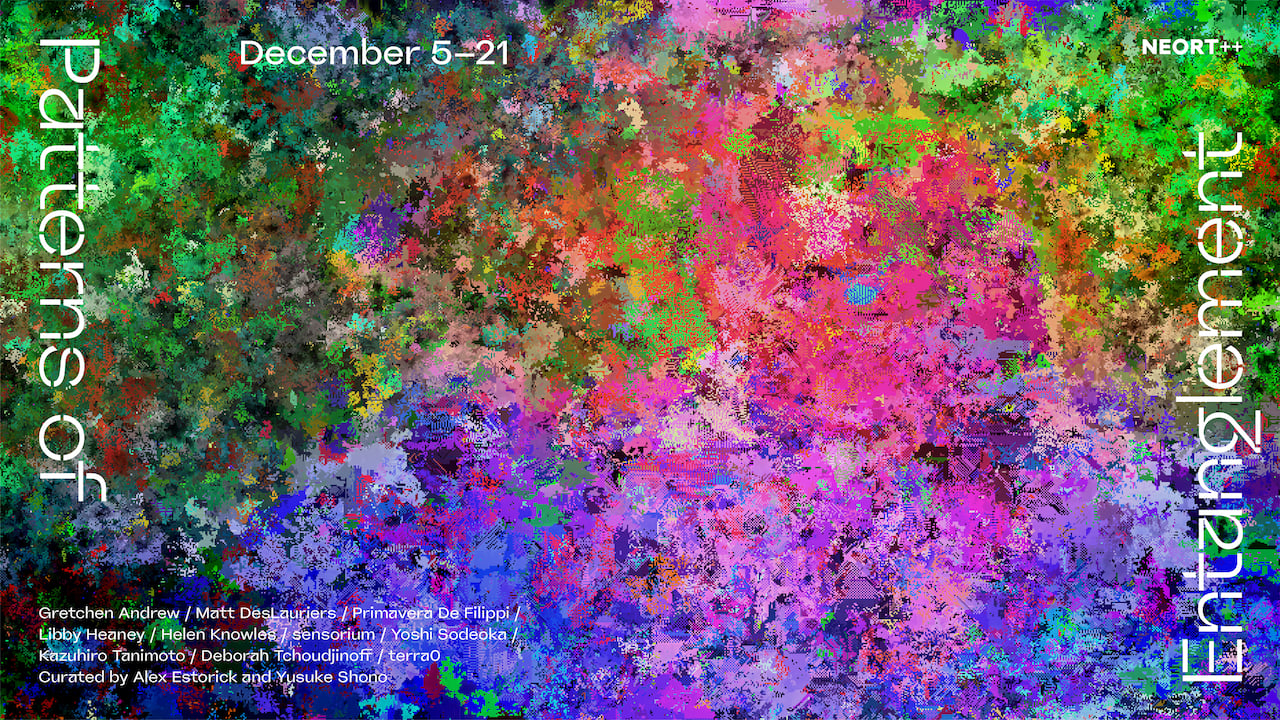
Gretchen Andrew, whose time working in Silicon Valley has fueled a practice that makes legible the operations of hegemonic algorithms; Matt DesLauriers, whose own algorithms imagine alternative forms of nature generated through code; sensorium, a pioneering media art collective that explores the internet “as a circuit for sensing the living world”; Primavera De Filippi, who has spent a decade nourishing blockchain-based life forms; terra0, whose work uses tokenization to give forests their own economic agency; Yoshi Sodeoka, who combines particle systems with vector graphics and AI-generated images to map digital experiences onto natural phenomena; Deborah Tchoudjinoff, whose virtual worlds consider the ways technology both constructs and erases the stories of past and future ecologies; Helen Knowles, who considers the ethics of emerging technologies as well as the ways humans document and interact with non- and more-than-human entities; and Kazuhiro Tanimoto, whose double life as a chemist and generative artist allows him to create audio-visual expressions that fuse physical and digital material.⁶
Tanimoto’s presence within the group ties this show to its informal pendant, “Patterns of Flow” (2024), also at NEORT++, which displayed works by ten Japanese generative artists alongside those of pioneer Hiroshi Kawano. If that exhibition started a conversation about Japan’s role in the history of experimental aesthetics, this show spotlights a global group of artists to make legible the relations between humans and nonhumans — always already entangled in different ways — without aestheticizing technology or nature.
Through this exhibition, we invite visitors to explore the intersections between digital and natural ecosystems and to consider pathways toward alternative realities beyond anthropocentrism.
Alex Estorick is a writer, editor, and curator based in London. As Editor-in-Chief of Right Click Save, he seeks to develop critical and inclusive approaches to emerging technologies. He has developed some of the first academic courses on AI and blockchain for Sotheby’s Institute of Art and the Berlin Art Institute while guest lecturing at NYU, USC, Imperial College London, the Royal College of Art, UCL, and across the University of the Arts. He is also a Visiting Research Fellow in the Department of Computing at Goldsmiths, University of London. He writes for various publications, from Artforum to the Financial Times, and was lead author of the first aesthetics of crypto art. His edited volume, Right Click Save: The New Digital Art Community (2024), is published by Vetro Editions. In 2025, he was included in the Monopol Top 100, a list of the most important people in the art world.
Yusuke Shono is the publisher of MASSAGE MAGAZINE, an independent publication that highlights grassroots culture from Japan and abroad. Alongside his work in media production, he has curated numerous exhibitions. His curatorial projects include “Computational Poetry”, “Patterns of Flow”, and “Web as a Medium” at NEORT++; “Machine-Made Aura” at K Art Gallery (2024); “Proof of X — Blockchain As A New Medium For Art” held in Daikanyama (2023); and “PHENOMENON: RGB” Exhibition at Laforet Harajuku (2019). He continues to explore and share the diverse cultures that emerge and circulate within the online world.
¹ M Fuller and O Goriunova, Bleak Joys: Aesthetics of Ecology and Impossibility, Minneapolis, MN: University of Minnesota Press, 2019, 148.
² M Fuller, Media Ecologies: Materialist Energies in Art and Technoculture, Cambridge, MA: MIT Press, 2005, 2.
³ Ibid., 2.
⁴ AL Wong, Ecologies of Artistic Practice: Rethinking Cultural Economies through Art and Technology, Cambridge, MA: MIT Press, 2025, 3.
⁵ S Taffel, Digital Media Ecologies: Entanglements of Content, Code and Hardware, London: Bloomsbury, 2019, 1.
⁶ sensorium, Night and Day, 1998. https://www.artthrob.co.za/sept98/project.htm (Accessed 4 November, 2025).
No comments yet. Be the first to share your thoughts.
Mentioned in this article
People: Gretchen Andrew, Helen Knowles, Kazuhiro Tanimoto, Libby Heaney, Matthew Fuller, Sy Taffel|Events: Patterns of Entanglement, Patterns of Flow|Organizations: NEORT++, NEORT|