Altered Image | Nancy Burson
The trailblazing artist behind facial morphing technology discusses her Quantum Entanglement Paintings with Jeni Fulton
The trailblazing artist behind facial morphing technology discusses her Quantum Entanglement Paintings with Jeni Fulton
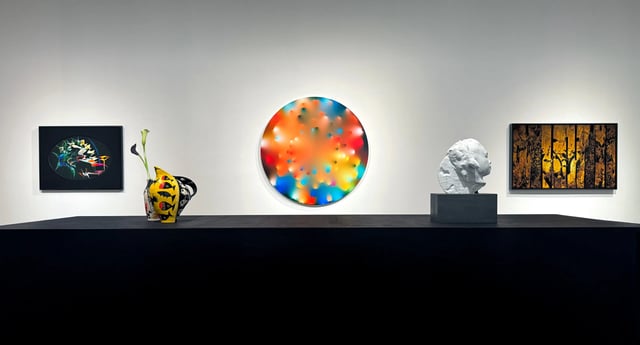
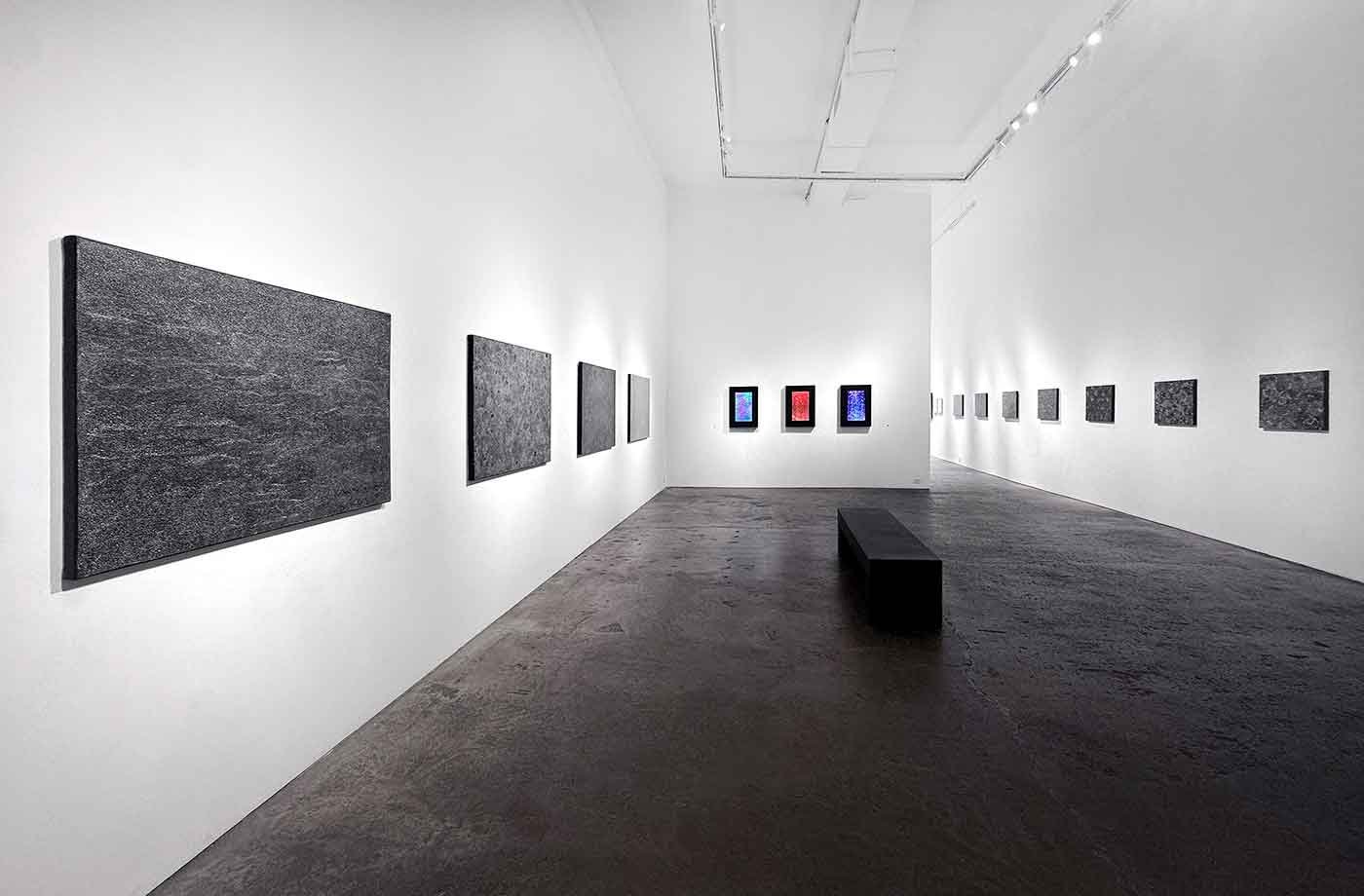
From patenting digital manipulation technology that underpins contemporary AI platforms to recording quantum shifts in energy states, Nancy Burson has cut a swathe across culture and industry for five decades. Her art has featured everywhere, from milk cartons as part of the missing-children project in the mid-1980s — to London’s Millenium Dome, and the cover of Time magazine. On the occasion of her new show, “Light Matter”, at Heft Gallery, the artist sat down with Jeni Fulton to discuss her new Quantum Entanglement Paintings.
Jeni Fulton: Your work with facial morphing technologies has informed contemporary AI image-generating systems and surveillance technology. How do you reflect on that legacy now?
Nancy Burson: It’s heavy. I was certainly naive about what it would become.
I started making art in New York in 1968, and heard about E.A.T. (Experiments in Art and Technology) and got in touch with them. They directed me to Carl Machover, an early computer graphics person, and he said that I needed to wait for technology to catch up to my idea of making photographic composites — I started making those in 1978. He was the one who connected me to Nicholas Negroponte, the founder of MIT Media Lab, where I started working on my photographic composites.
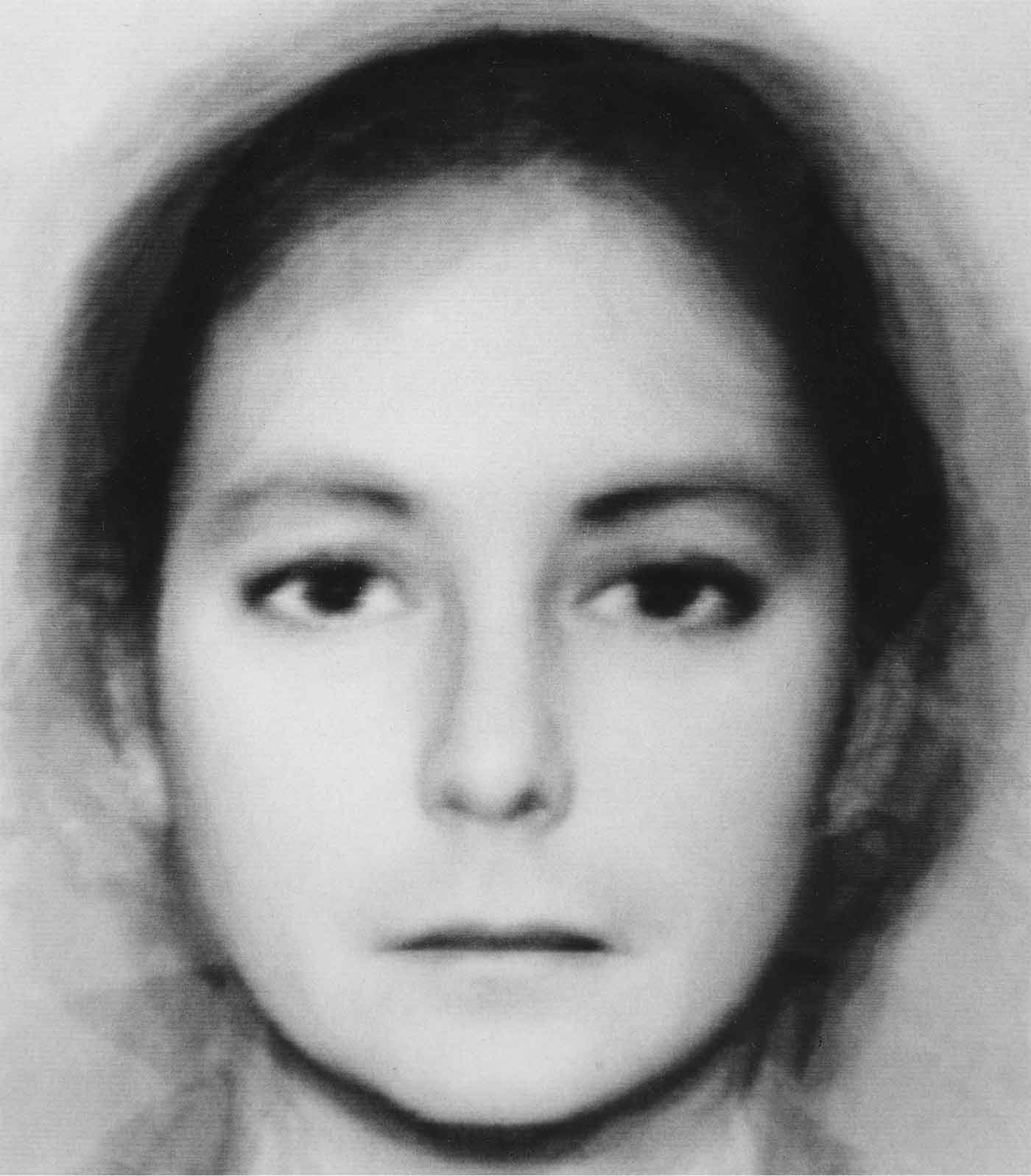
At the Architecture Machine Group at MIT in the 1970s — the early days of computer graphics — we were focused on special effects and recreating actors after their death. It was very much about cinema. I got permission from Negroponte to apply for a patent for my facial morphing technology, and the system we developed, a triangular grid, still underpins technology today: from Snapchat filters to advanced AI systems. I never imagined that it would lead to anything like fake people online.
The missing children project was a real, practical application. We worked with the FBI, and there were cases where kids were found very quickly after age-progressed images were broadcast on television. That was extraordinary. We sold a version of the software to the FBI, and they are still using it today.
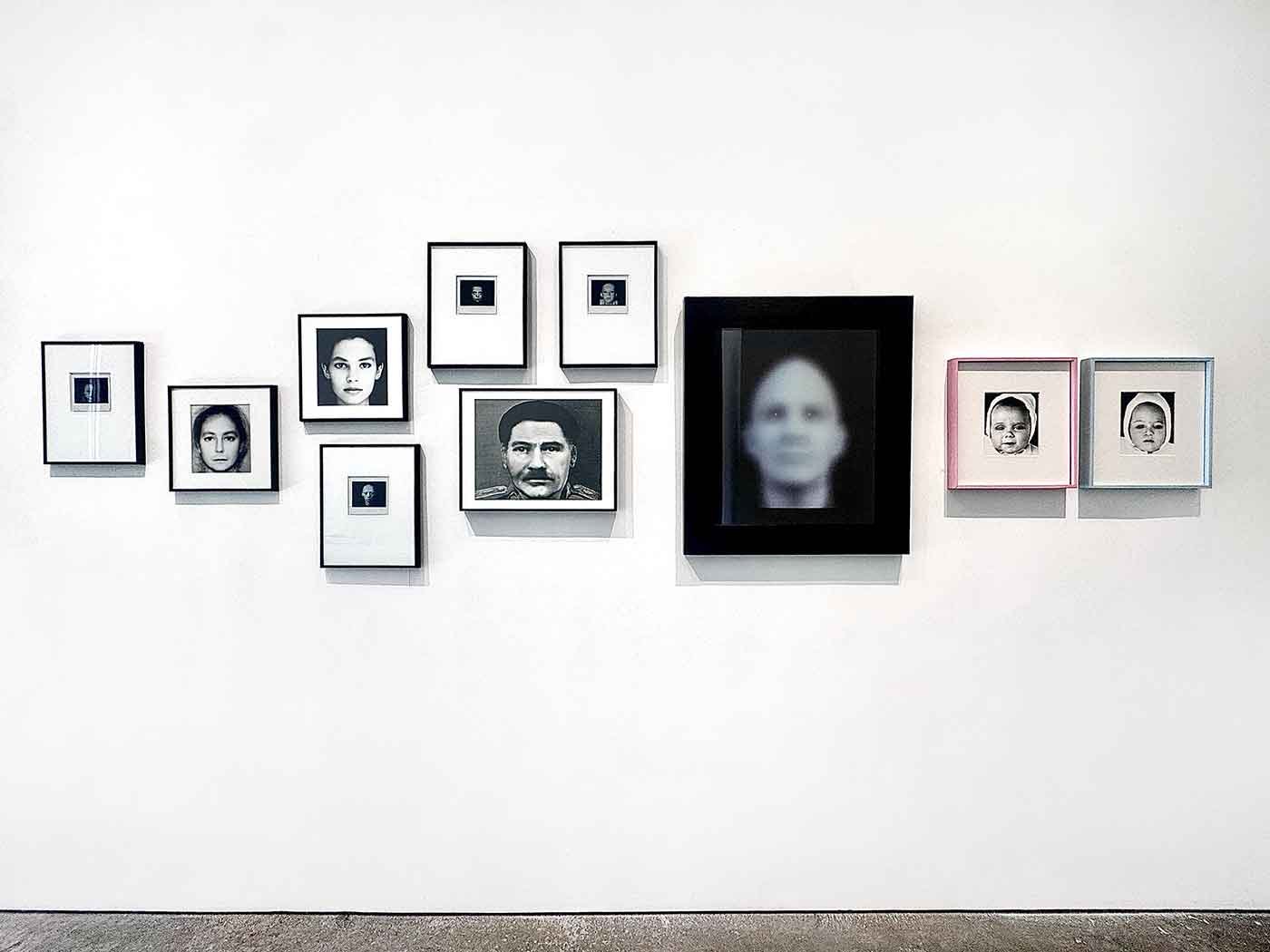
DARPA (Defense Advanced Research Projects), part of the US government, funded the lab, which I didn’t realize at first. When my patent was issued in 1981 I got a call from DARPA, who said: “How did you do this? We think you better come down to Washington and explain it to us.”
JF: Your recent work feels like a significant shift: from constructing images to interrogating perception itself. How did that transition happen?
NB: I’ve always thought in terms of composites — my first works were photographic composites of people.
Over the past decades I’ve embraced a theory of compositology that we’re all composites — of our parents, our ancestry, even ancient DNA, and parts of stars. It really is about oneness and the fact that we’re all living in this constantly changing stew of molecules.
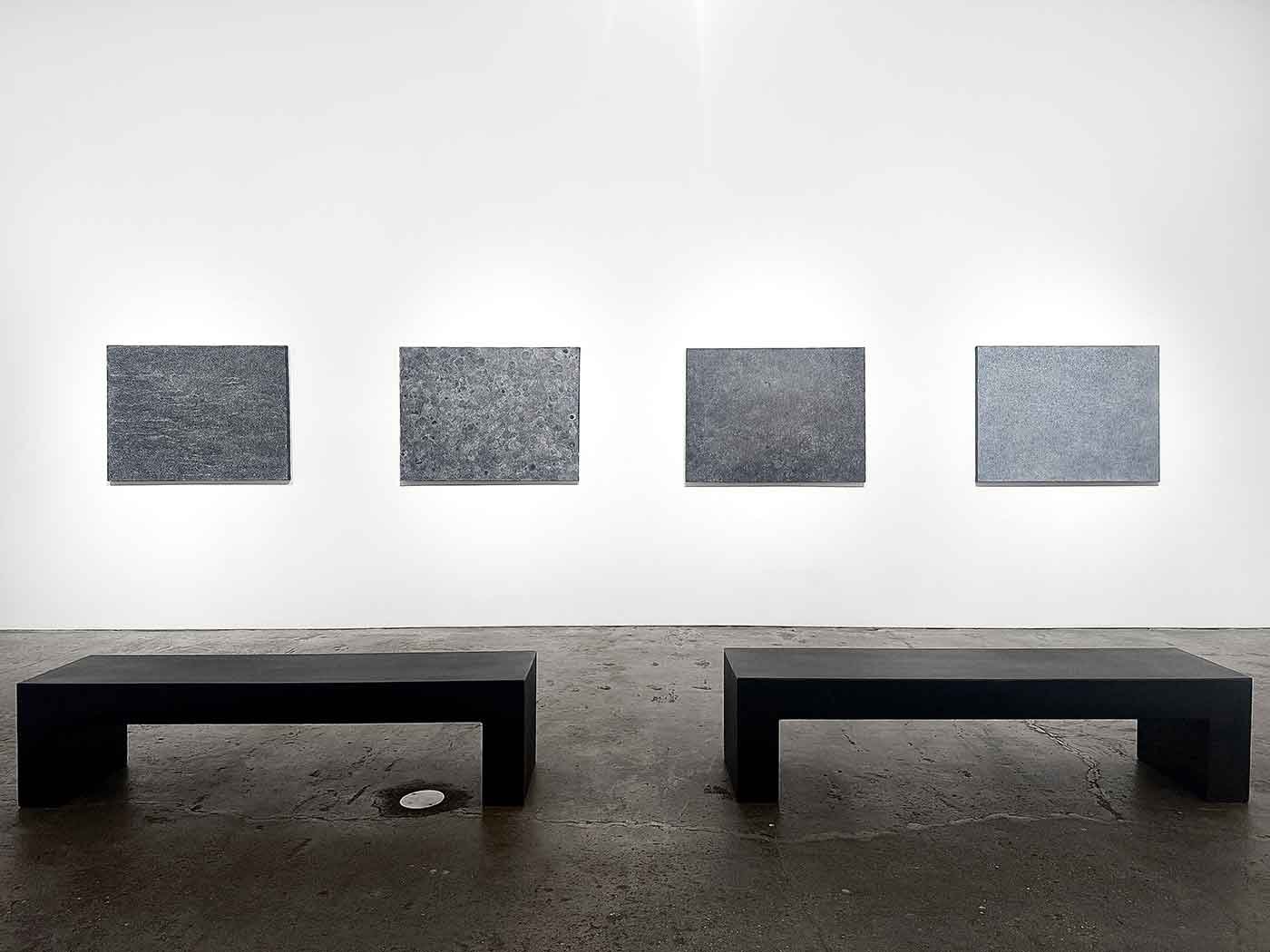
JF: Your current work revolves around what you call “photonography”. What does that mean?
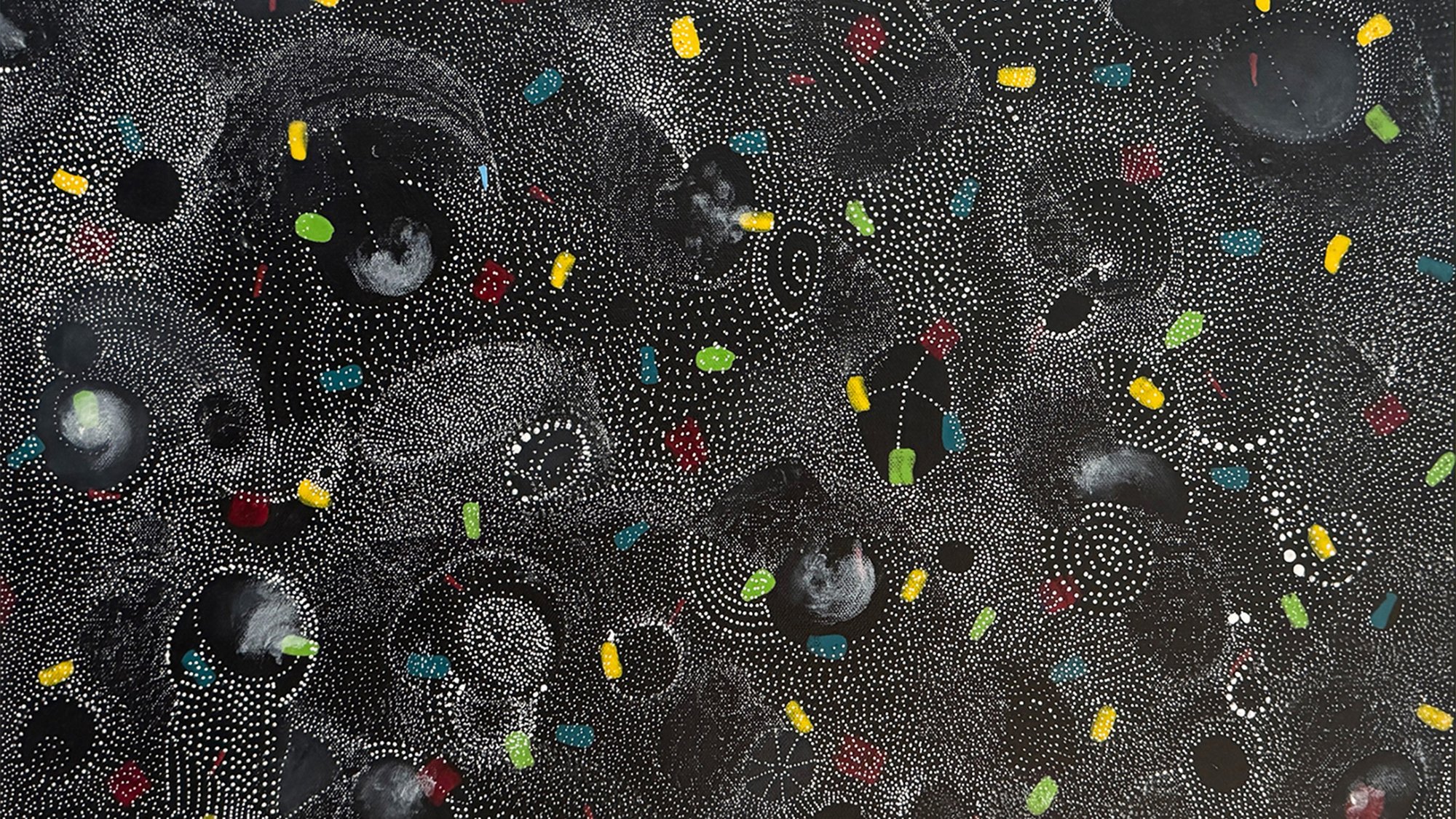
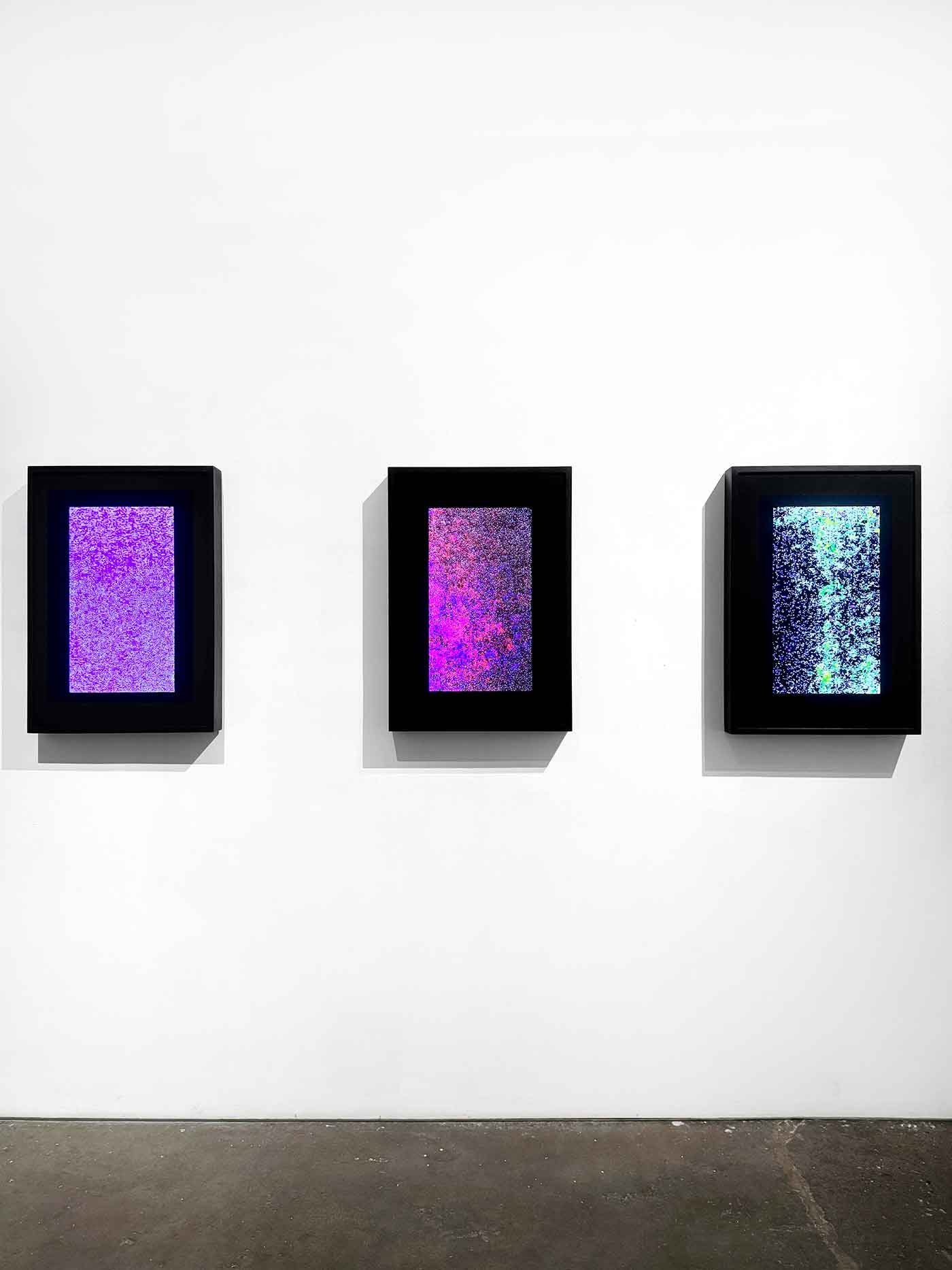
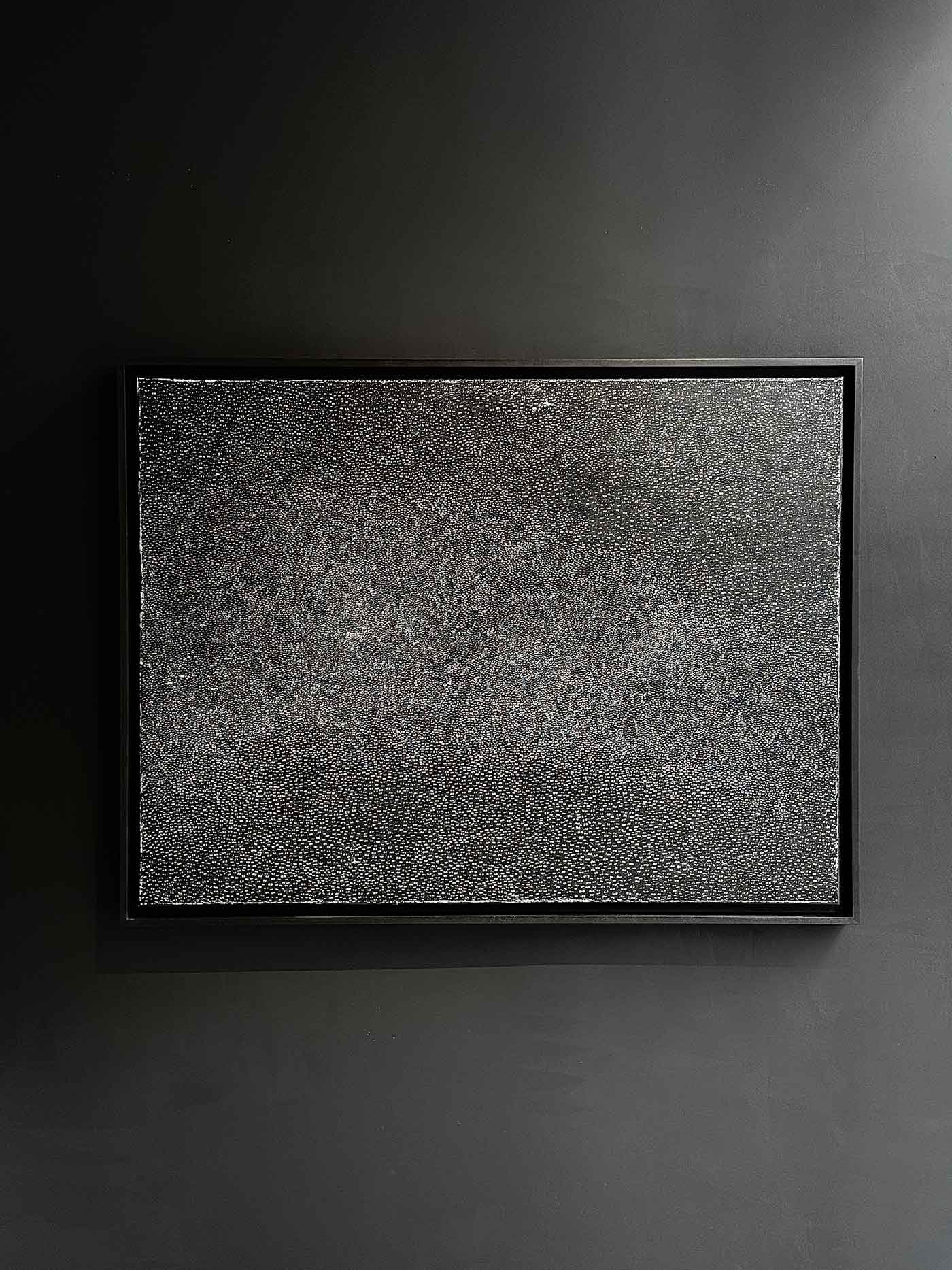
NB: The paintings are structured around the concept of quantum entanglement: two light particles, photons, interacting. What I call photonography comes out of that. When the paintings are photographed, people can see something happening — points of light shifting and changing colors. It seems to relate to the photons changing state, behaving both as a wave and a particle. They pulse, especially when you photograph them in the dark. The paintings are characterized by a behavioral grid that emerges based on a simple pattern of two up, two down that I use to depict photon interactions.
JF: You’re describing something that sits between perception and measurement. How do you navigate that line between scientific phenomena and perceptual interpretation?
NB: I’ve been making videos of the [photon shifts] for years, but only recently has the technology caught up in a way that lets me really work with them. People see the phenomenon and they can photograph or film it [...] viewers are doing a lot of filming at the gallery, which I’m promoting, so that they see the phenomena for themselves.
JF: The exhibition also includes a performance element, Mary and the Quantum Spheres. What happens in that environment?
NB: There’s a separate room with a sculpture of Mother Mary and two interlocking spheres. When people first enter, Mary appears very luminous, while the spheres are dark. Over time, there is this transfer of luminosity from Mary to the spheres.
For me, Mary represents faith and motherhood. When her light is pulled to the quantum spheres, it represents faith moving forward into science and physics. People are really having experiences of this phenomenon, which is the most important part.
JF: You’ve been making these videos for years, but only recently started releasing them as NFTs. Why now?
NB: I’ve been filming these photon shifts for a long time, but the technology has improved to the point where the results are much clearer, more detailed. Many of the earlier videos feature Mother Mary, who’s been part of my practice since around 2005, alongside newer pieces. And interestingly, they all sold before they were officially released. There’s clearly an appetite for this kind of work.
JF: Your early work was concerned with the machine as a way of seeing — constructing faces and identities. Now it feels more like the machine is revealing something beyond visibility. How would you describe that shift?
NB: [Quantum] physics is such a strange framework. You both know (about a state of matter) and don’t know.
When I started getting the effects of photon energy, of quantum entanglement on film, I understood that it was always there; it just had to be uncovered. It seems to be my mission to teach others to see that as well.
JF: Are you making a critique of AI-generated images and synthetic media?
NB: It’s not a critique of anybody else’s work. AI is just a new tool and it’s going to be used by young artists. Some of it is great, some of it isn’t — [just like] all the art that’s been made through the ages. I don’t think that anybody else has made interactive paintings that change and can be recorded.
JF: You’ve also engaged with politics at various moments — your Trump/Putin composite, for example, which was featured on the cover of Time magazine in 2016. How do you think about that work today?
NB: It came from a very specific moment: the time in Trump’s first term that Putin and he were being a little more than friendly.
It was the shocking realization that we were going to be in a new paradigm. That translated to the cover of a composite of Trump and Putin. Kate Vass Galerie sold a few of them as NFTs.
JF: Going back further, when did you first decide you wanted to be an artist?
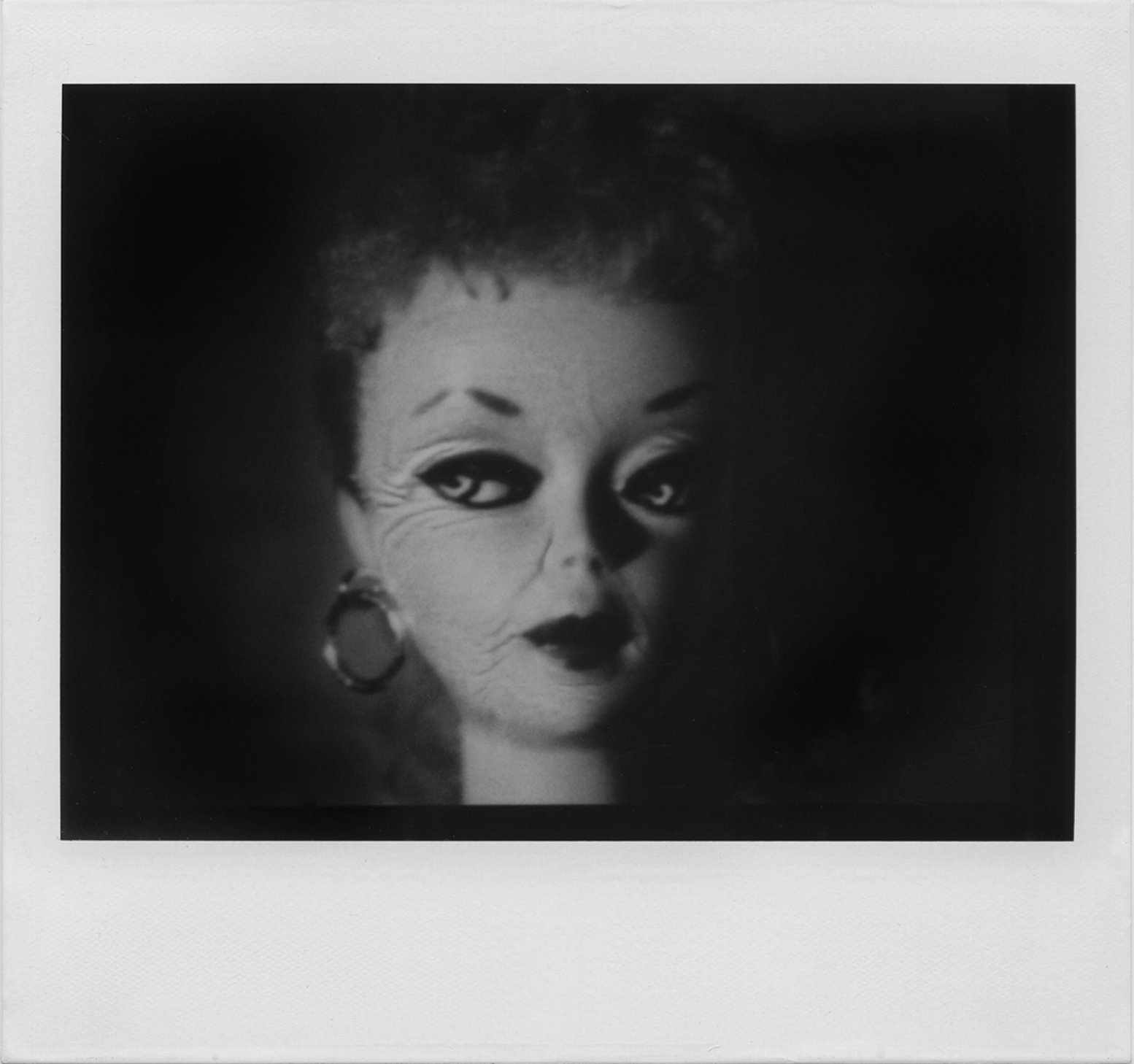
NB: Very early; I think I was about two. I was drawing on the walls of our house and my mother didn’t stop me. She was a lab technician, so I also spent time doing fake experiments with real blood, playing around with test tubes.
I remember sitting by the window and watching streams of light come through the window and thinking that there must be something in there other than dust. That stayed with me.
For many years in the 1970s I didn’t know what to paint, [but] I had some friends: Julian Schnabel was one of them, Robert Ryman too. I was close friends with their wives and stayed in their homes after I had broken up with my husband. When I didn’t know what to paint, I [would go to] their studios and watch them.
I was waiting for a system. It was all pretty much photography at the beginning, and then after that came the composites. I spent seven years photographing facial deformities [that were] due to genetic issues and birth defects. I spent a lot of time doing portraits. I did my first NFT portrait of my face in the dark.
JF: Do you see a contemporary equivalent to the MIT Media Lab in the 1970s, where artists and technologists are shaping the future without fully realizing it?
NB: I don’t know. I actually heard from them recently, they’re celebrating an anniversary and suggested we should get back together. Sometimes you have to go back in order to move forward. I’m curious to see what that might look like now.
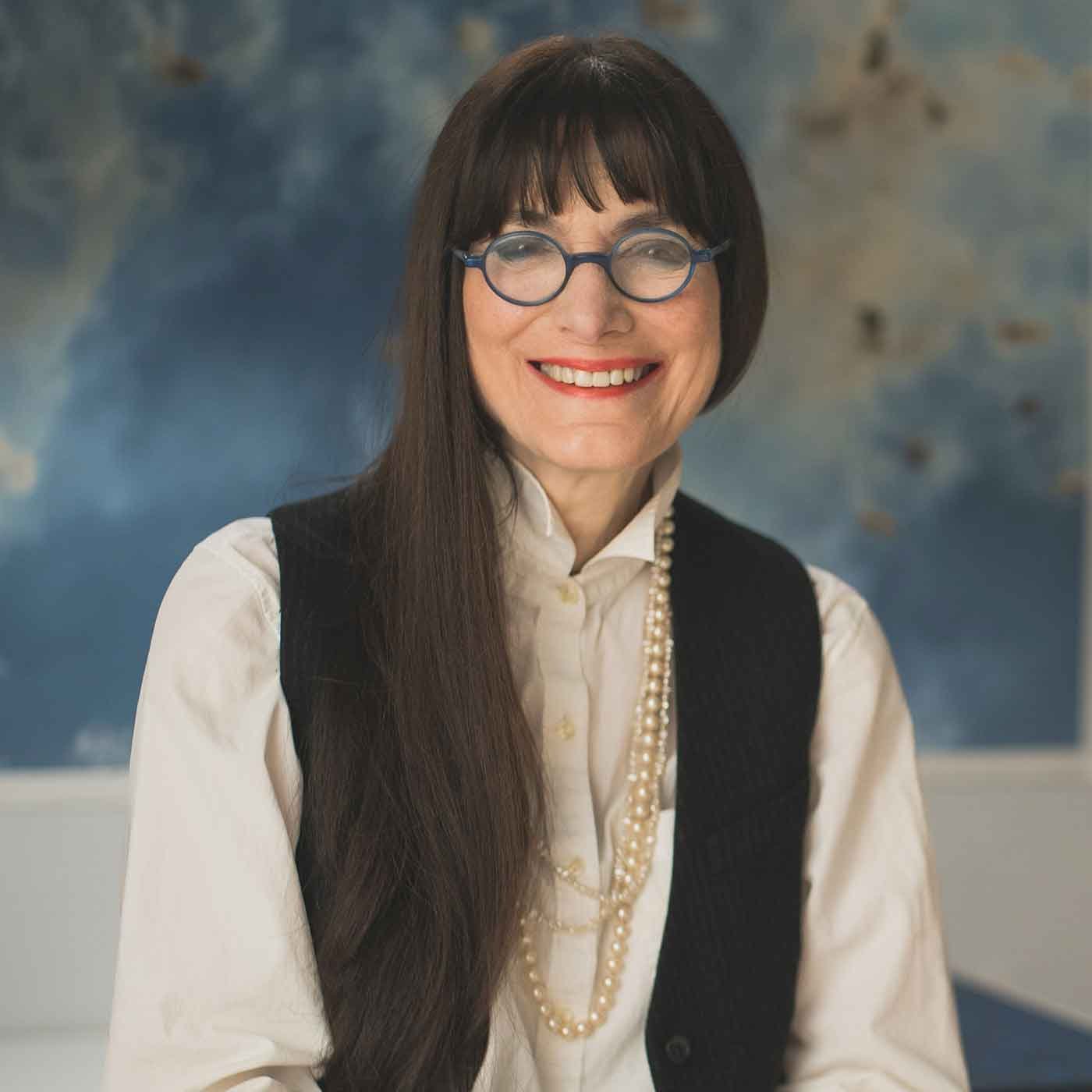
Nancy Burson is an artist/photographer whose work combining art and innovation challenged photographic truth at the birth of digital manipulation. She is best known for her breakthrough work in morphing technologies which age enhance the human face and still enable law enforcement officials to locate missing children and adults. Her Human Race Machine, commissioned by Zaha Hadid for London’s Millennium Dome, was used for over a decade as a diversity tool that provided viewers with the visual experience of being another race. Her work is shown in museums and galleries internationally. She has served as a visiting professor at Harvard and was a member of the adjunct photography faculty at New York University’s Tisch School of the Arts for five years. Burson currently produces the New York Film Academy Photography Guest Speaker Series and also teaches Portfolio Development there.
Burson’s work is held in museums worldwide including MoMA, The Metropolitan Museum of Art, and the Whitney Museum of American Art, New York; V&A, London; Centre Pompidou, Paris; LACMA and the Getty Museum, Los Angeles; SFMOMA; the Museum of Fine Arts, Houston; and the Smithsonian Museum, Washington, D.C.; as well as many others. The artist’s TogetherAllOne concepts and designs promote the concept of global unity and encompass everything from interactive children’s books to projected lighting installations and public sculptures. Her fine art is available through Heft Gallery in New York and Kate Vass Galerie in Zurich.
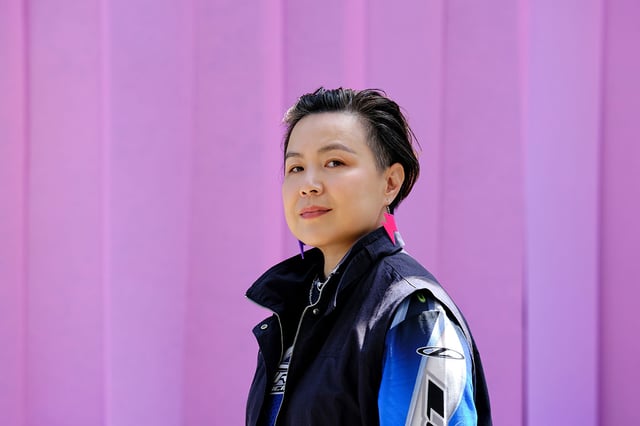
Dr Jeni Fulton is a writer, editor, and academic working across contemporary art, the art market, and the evolution of digital art. She was the founding editor of Art Basel Magazine, and the curator of Digital Dialogues, Art Basel’s talks program dedicated to digital art. Prior to this, she was Editor-in-Chief of Sleek Magazine in Berlin, and contributed to Spike, Frieze, Apollo and many other arts publications. Based in Zurich, she teaches at the Zurich University of the Arts (ZHdK) and the University of Zurich.
No comments yet. Be the first to share your thoughts.
Mentioned in this article
People: Jeni Fulton, Nancy Burson, Nicholas Negroponte|Works: Quantum Entanglement Paintings|Events: Light Matter|Organizations: Heft Gallery, Kate Vass Galerie, MIT Media Lab, TIME Magazine|