The views, opinions, and statements expressed by interviewees are solely their own and do not necessarily represent or reflect the views of Right Click Save, its editors, staff, or publishers.
T. J. Demos is an art historian, theorist, and professor at the University of California, Santa Cruz, whose research focuses on the intersections between contemporary art, political ecology, and decolonial struggle.
In Radical Futurisms, he posed a number of urgent questions, including: “What might life look like beyond the many ends portrayed in popular culture, dystopian sci-fi, climate science, and more?” And “how can we play a role more than mere witnesses to this cascading of catastrophes?”
For Demos, addressing such existential problems “requires politicizing time itself, disrupting its naturalizations and seeming inevitability.” Right Click Save is pleased to bring together T. J. Demos with the artist Kalie Granier, whose own practice combines research conducted with scientists with collaboration with Indigenous communities. Drawing on the concepts of radical futurism and abolition ecology, their conversation explores the ways contemporary artistic practices can foster more just and sustainable worlds.
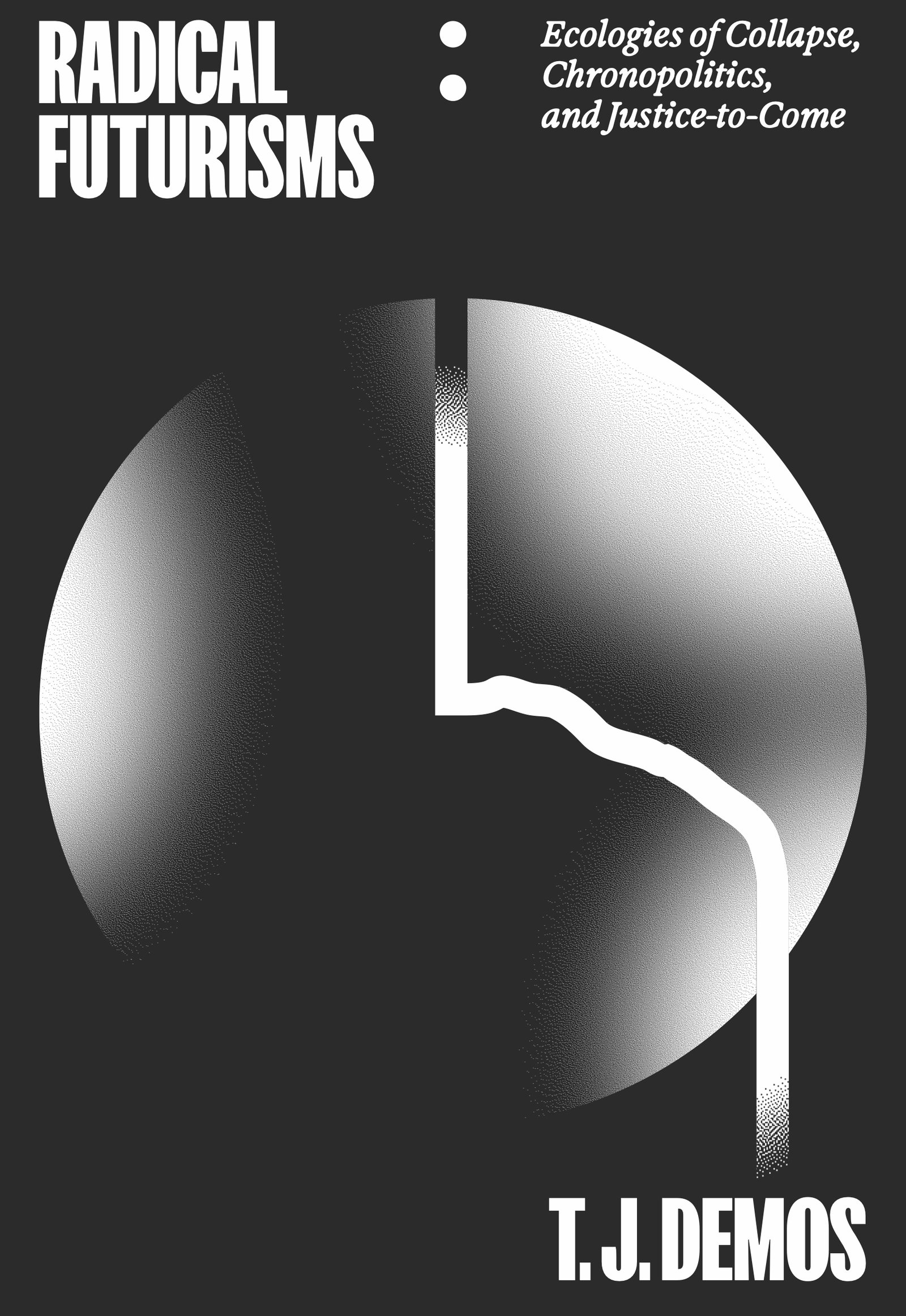
T. J. Demos, Radical Futurisms: Ecologies of Collapse, Chronopolitics, and Justice to Come, Berlin: Sternberg Press, 2023.
Kalie Granier: How would you define the concept of “radical futurism”?
T. J. Demos: In my book Radical Futurisms, the term names a multiplicity of experimental contemporary art practices that are inventing creative forms to imagine emancipatory coming worlds. “Radical” in this sense is quite specific, connecting first to radical politics, as in anti-capitalist leftist internationalism. The meaning also grows from the term’s etymological foundation, which relates to roots, suggesting a political ecology (as in radical environmentalism), as well as a political economy (going to the roots of things, as in their structural conditions).
These meanings also build on earlier formations of radical politics, including the movement for Black liberation that’s been part of what’s called the Black Radical Tradition (extending from folks like W. E. B Du Bois and C. L. R. James, to Malcolm X, Angela Davis, and more), and also Black Marxism (including Cedric Robinson, Walter Rodney, and more recently Charisse Burden-Stelly), which is so important to the criticism of racial capitalism, where radicalism takes on a Black liberationist cast.
Futurism or futurisms, as I want to stress its multiplicity, names art practices that, in my view, are creatively building on (less differing from) earlier practices like Afrofuturism, Indigenous futurism, and more; really a nexus of intersecting futurisms that resist attempts by dominant culture to defuture whole peoples according to ethno-nationalist logics (as in past Indigenous genocides, or the present anti-Palestinian genocide).
Current artistic collectives, such as Black Quantum Futurism and The Otolith Group, or Indigenous artistic models including T. J. Cuthand and Super Futures Haunt Qollective — and there are many more — are all contributing amazing worldbuilding projects in video-making, performance, images, and sound, that engage in speculative imagination of possible futures.
These radical practices move beyond the constraints of what some call “colonial racial capitalism” and envision emancipatory stories of post-capitalist social liberation, ecologies of just sustainability, and worlds of non-domination, building from the traditions of the oppressed, which provide much needed antidotes to our dark present, where futurism has largely been colonized by neoreactionary technofuturisms (by the likes of Musk, Thiel, and Altman).
I examine these practices in the book and they help to define in greater specificity, for me, what “radical futurisms” ultimately mean, where the plurality of futurisms indicates their provisional basis: the fact that they are speculative, without full definition, and invite collaborative energy in further expression and (with hope through struggle) realization.
KG: In your work, you emphasize the importance of extended and non-linear temporalities. How does attending to deep time reshape our understanding of the future as well as artistic modes of production and regimes of visibility?
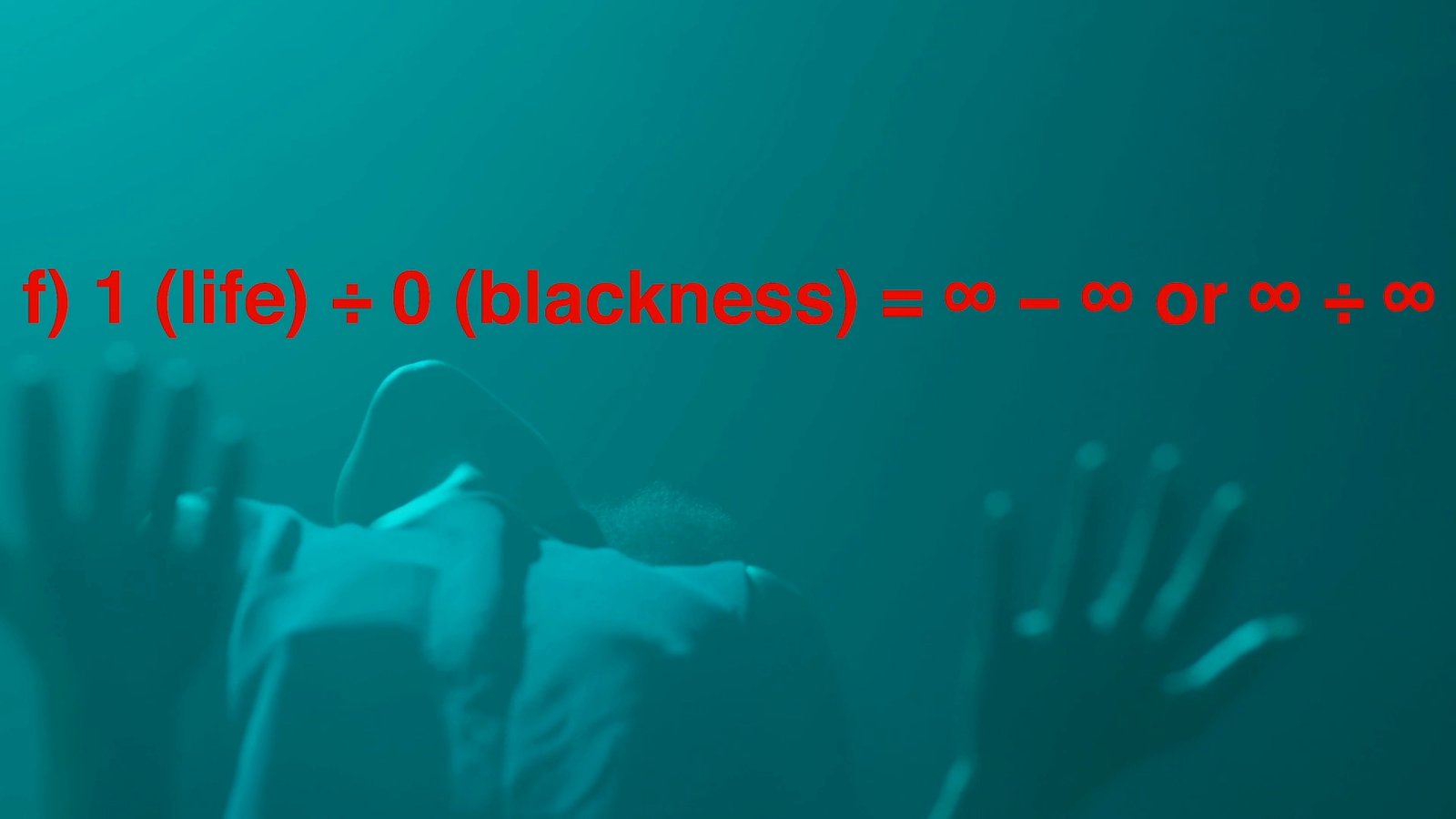
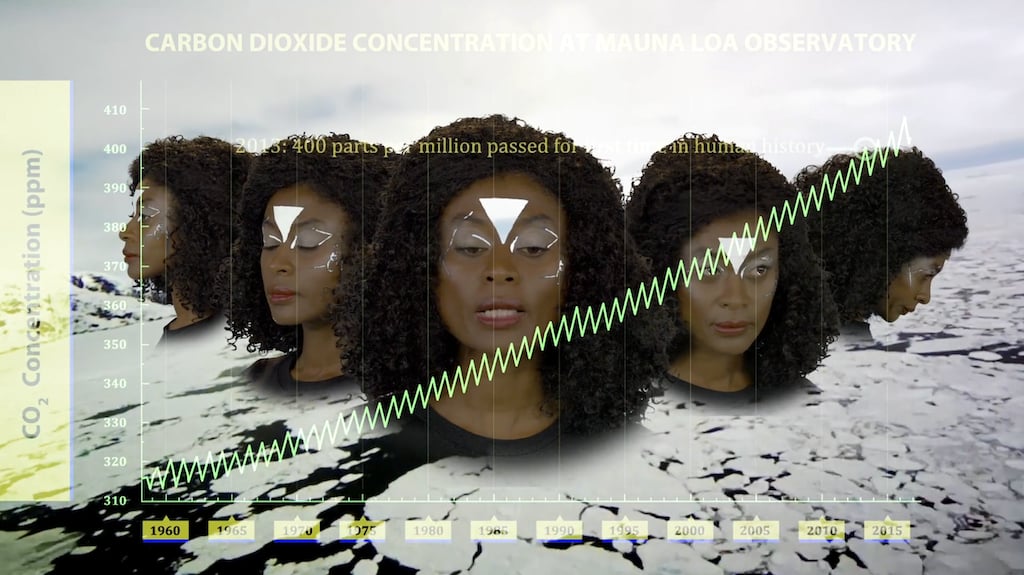
TJD: The Otolith Group’s Infinity Minus Infinity (2019) — a nearly hour-long experimental video by the British-based collective — views catastrophe as indissociable from the deep history of colonial racial capitalism, examining the present conjunction through a thick web of key theoretical references in voice-over and text, together with portrayals of experimental dance, performance, music, and digital animation (what the artists term an audiovisual experiment in “choreopoetics,” an interdisciplinary aesthetic experience, echoing the formative 1970s Black Arts Movement work of artist Ntozake Shange).
The piece does a deep dive into what geographer Kathryn Yusoff calls the “Black Anthropocene” — designating the centuries-long geological era when colonial and racializing social forces irreversibly intervened in the earth’s natural systems, an intervention that is marked by a number of key dates that appear throughout the film.
1610 references the year of the Orbis Spike, when a significant dip in atmospheric carbon expressed the genocidal loss of Indigenous life (some 50 million lives!), and resultant reforestation brought about by conquest in the Americas; 1833 refers to the Slavery Abolition Act, understood as a “non-event” in the persistent afterlife of slavery (which continued long after its supposed formal conclusion); 1948 saw the arrival of the Empire Windrush from the Caribbean, marking the Windrush generation’s migration to Britain; and 2030 previews the date set by the IPCC for the reduction in global climate changing emissions.
These dates are understood not so much chronologically, but as topologically recombinative, the one read through the other, backwards and forwards in time, revealing how 2018 — the year of the film’s making — is actually shaped by these various dates. These entangled histories have already written a certain future, too, even if there are still elements of indeterminacy that remain in the not-yet.
More than something to see once and simply enjoy, this is a momentous piece to think with, study deeply, and appreciate conceptually and formally for its attempts at offering experiments in non-linear genealogies — where events operate multidirectionally, prefiguratively (ramifying subsequent developments), and “retro-causally” (revealing hidden latency in the past, changing its appearance), the latter a term of the LA-based arts collective Black Quantum Futurism.
In Infinity Minus Infinity, visibility is radically transformed both through the vision of deep histories (and “past potential futures,” as the artists term them) opened by geological time, by retro-causal logics of representation, and through the future not-yets of imagined coming worlds (as well as speculative memories of what’s to come), all cultivated in experimental arts projects.
T. J. Cuthand, Reclamation, 2018. Courtesy of the artist
KG: Many contemporary artistic practices, including my own, unfold over extended periods of time and involve research, collaboration with scientists, local communities, and situated knowledge. Can these practices be understood not merely as projections toward the future, but as already existing forms of radical futurism?
TJD: Absolutely. Take T. J. Cuthand’s Reclamation (2018), a video by the Toronto-based Indigi-queer artist that models a near-future worldbuilding exercise grounded in present practice and traditional Indigenous knowledges. The short piece appears as a realistic series of (often funny) interviews with Indigenous survivors of a coming mass exodus as colonial settler people abandon earth for Mars, leaving behind an environmentally devastated planet after centuries of colonial racial capitalism.
The interviewees talk about their efforts reclaiming their land [as part of] a speculative project of land-back decolonization — of returning land and sovereignty to Indigenous peoples. They’ve had to clean up spoiled urban and rural environments, restore landscapes to their life-giving capacities through gardening and botanical caretaking, and free themselves of the toxic social afterlives of colonial violence, including queerphobia, racism, and the exploitative relations of the money-based economy.
These futurist principles are grounded in situated knowledges, specifically the remnants of Indigenous “right relations,” still extant in modes of “survivance” (an Indigenous term of Gerald Vizenor that joins survival to resistance) that represent an ethico-political framework for human and multispecies life worlds.
It’s a beautiful, wonderfully experimental, and searchingly speculative film—simple and lo-fi but amazingly ambitious—that shows how futurist imagination (built on research and collaboration) not only has the capacity to envision potential worlds, but is itself materially grounded in anticipatory practices of the present, which are themselves shaped by past traditions (including past colonial violence). Imagination, in other words, has real prefigurative power — it makes speculative futures all the more possible through its work that begins to actually materialize them. Radical futurisms are thus thickly chronopolitical — intervening creatively in the politics of time — drawing multiple times creatively reimagined and strategically reinvented into alignment.
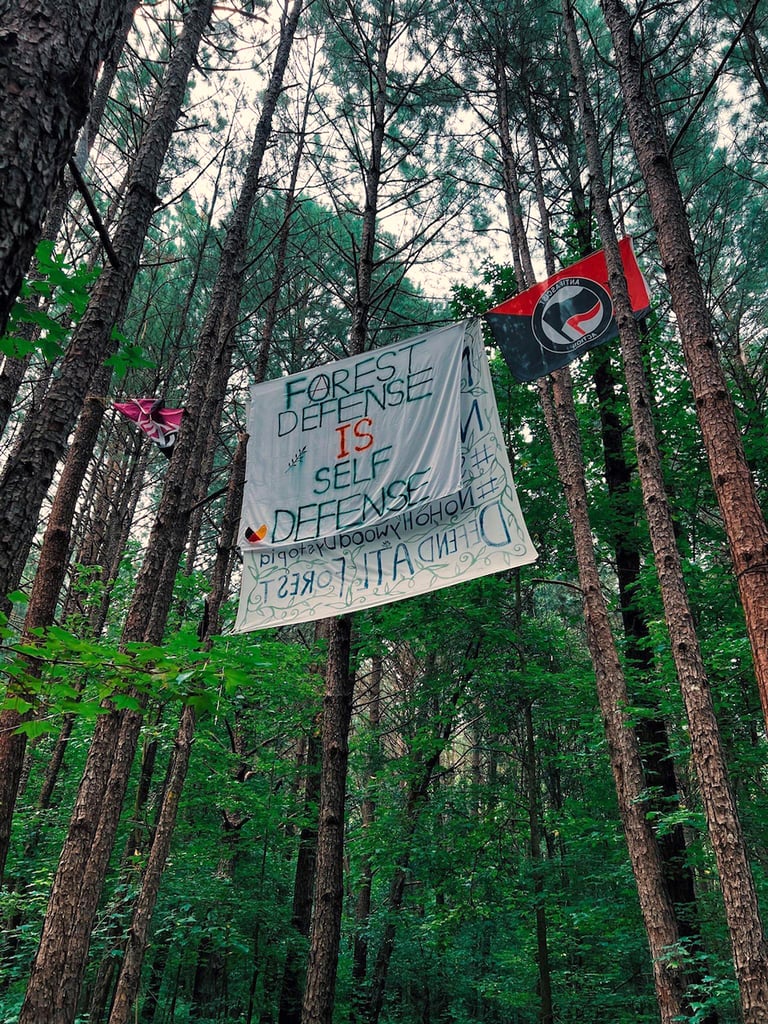
A hand-painted banner in the Weelaunee Forest says “Forest Defense is Self Defense,” Cop City Atlanta, 2022. Courtesy of T. J. Demos
KG: In some of your recent work, you’ve used the term “abolition ecology.” How would you define it, and in what ways does it call for a transformation not only of artistic practices but also of the institutional structures that support them?
TJD: While others have coined this term, I developed the concept of abolition ecology further in relation to, for instance, the so-called “Cop City” protests in Atlanta against the multimillion-dollar expansion of a police training facility in the city’s forest, one of the largest urban forests in the US.
[...] In opposition to the securitization of nature, the concept of abolition ecology supports nature’s emancipation. Abolition ecology extends an environmentalist lens to the anti-racist economic justice envisioned by W. E. B. Du Bois’s concept of “abolition democracy”, and builds on Ruth Wilson Gilmore’s “abolition geography,” which calls for the liberation of space from racialized regimes of policing and incarceration. Both frameworks are deeply entangled with the histories of settler colonialism and racial capitalism.
Abolition ecology — particularly as articulated in movements like Stop Cop City through a whole array of visual culture, direct action tactics, and creative agitprop — intensifies this analysis by focusing on the emancipation of environments, land use, and multispecies lifeworlds from the securitized property relations that structure colonial racial capitalism.
For me, the movement, even if it hasn’t obtained its goals, is an amazing and inspirational model — intersectionalist, cross-racial, including Black anti-gentrification and abolitionist organizations, Indigenous decolonial groups, and environmental justice activists and artists — of what it looks like to wage a fight for a future beyond the catastrophe of the colonized present.
Installation view of Radha D'Souza and Jonas Staal, Court for Intergenerational Climate Crimes (CICC) — The British East India Company on Trial at Ambika P3, London, 2025. Photography by Matthias Kispert
KG: What alternative cultural institutions might emerge to sustain such practices, and how can we rethink modes of production, funding, and dissemination beyond dominant extractivist and capitalist frameworks?
TJD: There are plenty of roadmaps toward ecologically sustainable futures that are available to us, from worker-prioritizing Green New Deals, to the Indigenous decolonial Red Deal, from Pacto Ecosocial del Sur and buen vivirin Latin America, to new proposals for eco-populism (for instance, of the Climate and Community Institute, or of the UK’s Green Party) that draw environmental justice and economic justice into alliance for the majority.
Diverse artistic practices across the globe are attempting to enact elements of these principles at the level of imagination, representation, and collective participation. One prominent example is the Court for Intergenerational Climate Crimes (CICC) (2021) by Radha D'Souza and Jonas Staal, recently hosted by Serpentine Galleries in London. Over three days, the project staged an experimental tribunal that placed The British East India Company on trial for centuries of violence against communities and ecosystems under colonial rule.
Expert testimony addressed labor exploitation, environmental destruction, forced migration, and imperial violence, while audience members serving as the jury ultimately found the Company guilty on all counts, including for helping shape the corporate-state-military nexus and the liberal legal order that continues to structure global power today. Effectively, the project placed the law itself on trial. Although the CICC has no executive authority to enforce its rulings, it operates as a prefigurative juridico-political space that models possible trajectories toward a post-extractivist, post-capitalist future grounded in multispecies justice and ecological sustainability.
The CICC functions less as a court than as an imaginative infrastructure for worldbuilding. It makes such transformations thinkable — and therefore more politically attainable — since any break from capitalist realism begins with the capacity to imagine otherwise.
Among the testimonies presented were accounts of Indigenous agricultural systems in India that had sustained communities for generations before being dismantled by the Company and replaced by an extractive and violent economy. These histories of pre-colonial systems are not invoked as objects of nostalgia, but as repositories of practical ecological knowledge — resources for reorienting contemporary technological, economic, and infrastructural systems toward collective well-being, community governance, and multispecies flourishing.
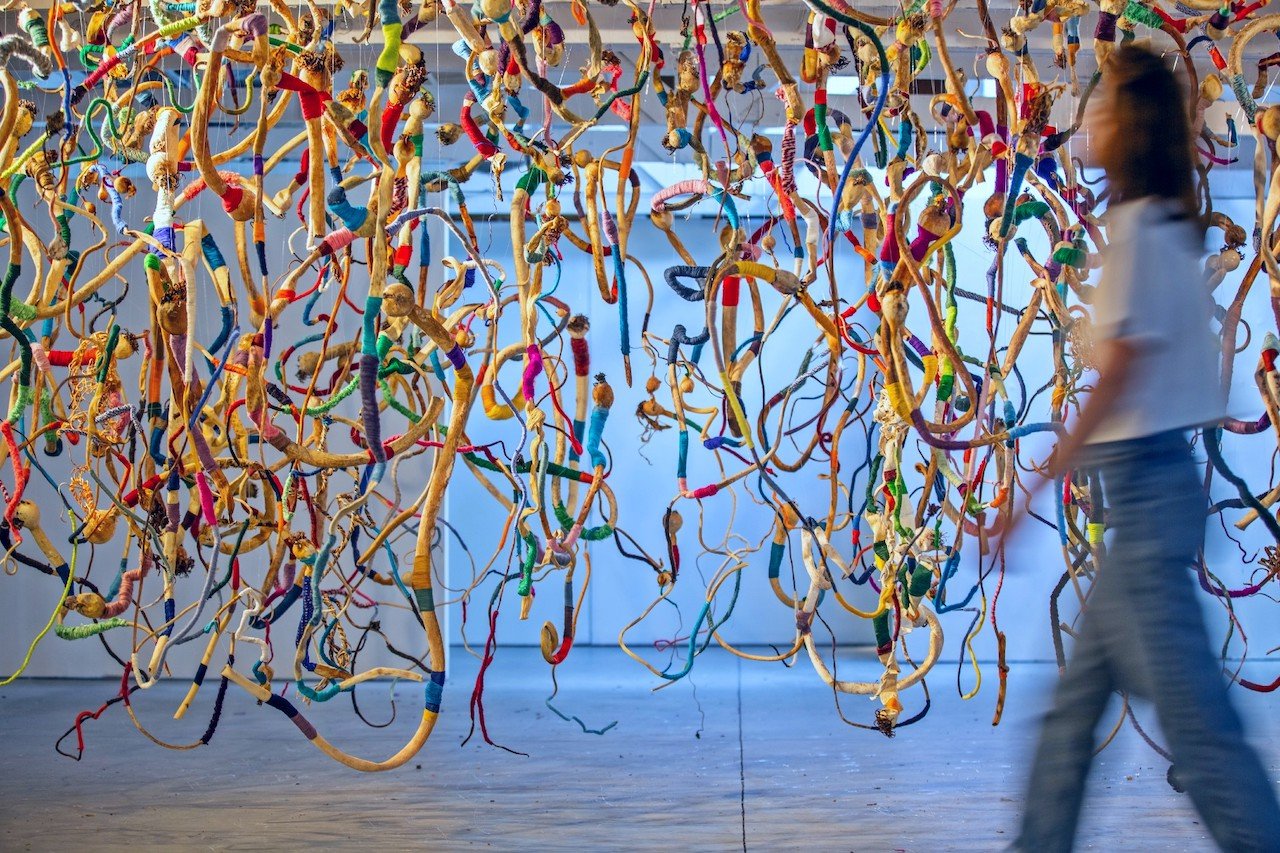
Kalie Granier, Lungs of the Sea Forest, 2024. Photography by Crystal Birns. Courtesy of the artist
KG: Can technologies be mobilized within a radical futurist framework without reproducing the extractivist and colonial logics historically embedded in their development? How might we instead imagine technological practices that foster relationships of care, reciprocity, and attentiveness toward the living world?
TJD:Kim Stanley Robinson has suggested that justice can be understood as a kind of technology. Taken seriously, this opens a way of reimagining technology itself as something that can be oriented away from extractivism and colonial domination, since these formations, historically bound up with violence and dispossession, stand in direct opposition to any meaningful conception of justice. Of course, justice is not a stable or uncontested term. Colonial and extractivist projects have long been justified in its name, including through Enlightenment traditions that paired universalist language with imperial expansion.
Yet if one adopts a universalist, anti-imperialist understanding of justice grounded in non-domination, equality, and socio-ecological wellbeing — closely aligned with ecosocialist commitments, which is ultimately what I fight for — then the central question becomes how technological systems might be redesigned to materially support those aims rather than undermine them.
Such visions are not singular. They resonate with Indigenous decolonial thought associated with The Red Nation, the anti-imperialist internationalism of the Progressive International, and the Black Radical Tradition’s long struggle for emancipation and collective life beyond racial capitalism.
My own research works at the intersection of these frameworks, insisting on retaining justice as a critical category even as liberal juridical forms reveal their internal collapse under historical contradiction, which is the subject of my current book project, Art After Justice. Methodologically, this involves placing such expanded conceptions of justice in dialogue with critical aesthetic practices — those that generate images, sounds, narratives, and speculative worlds capable of giving justice not only theoretical definition, but sensory and imaginative form in the present, perhaps even as a portal to a more livable future.
T. J. Demos is Professor and Chair in the Department of the History of Art and Visual Culture at University of California, Santa Cruz, and founding Director of its Center for Creative Ecologies. He is also Distinguished Visiting Professor in the VIAD Research Centre at the University of Johannesburg, and a research associate both at NICHE Centre for Environmental Humanities at Università Ca' Foscari Venezia and Freie Universität Berlin.
Demos writes about contemporary art, social movement aesthetics, global politics, and political ecology, and is the author of numerous books, including Radical Futurisms: Ecologies of Collapse, Chronopolitics, and Justice-to-Come (Sternberg Press, 2023), Against the Anthropocene: Visual Culture and Environment Today (Sternberg Press, 2017); Decolonizing Nature: Contemporary Art and the Politics of Ecology (Sternberg Press, 2016); and The Migrant Image: The Art and Politics of Documentary During Global Crisis (Duke University Press, 2013). He is currently working on a new book for MIT Press, provisionally titled: Art After Justice: Contemporary Artists Respond to Environmental Violence.
Kalie Granier is a French interdisciplinary artist based in Santa Cruz, California, on the unceded territory of the Awaswas-speaking Uypi Tribe. Her practice explores the relationships between human and more-than-human worlds, weaving together ecology, memory, and speculative futures through video, installation, raw pigments, and locally sourced coastal materials. Working at the intersection of art, science, and activism, she collaborates with scientists, environmentalists, and Indigenous communities to investigate interconnected ecosystems, collective care, and regenerative imaginaries. Kalie is the co-founder of Loud Spring, a European-American art collective and 501(c)(3) organization in the San Francisco Bay Area. She has an MA from ESAG Penninghen School of Visual Art in Paris. Her work has been exhibited internationally across the United States, Europe, and Argentina, and she lectures regularly at institutions including UC Santa Cruz, Santa Clara University, and Stanford University.