·News
PLEASE RESPOND | Generative Art’s Exquisite Corpse
Tyler Hobbs starts a chain reaction with ten artists evolving the same algorithm over ten consecutive days
Tyler Hobbs starts a chain reaction with ten artists evolving the same algorithm over ten consecutive days
“Please Respond” is released on Shape — a platform for on-chain generative art — once per day over ten days beginning on May 6, 2026. Collecting opens each morning at 11am ET / 8am PT.
Paris, 1925. Yves Tanguy, Jacques Prévert, André Breton, and Marcel Duchamp are sitting together, playing a game they have just invented: the cadavre exquis, or exquisite corpse. You start at the head, fold over the paper, pass it on to the next player. They add the neck, pass it on, torso and arms follow, and so on until you reach the feet. Voilà, a new, collaborative, artwork emerges.
Although Surrealism and algorithmic art may not, at first blush, appear to have much in common, this parlor game lies at the heart of a collaborative artwork, “Please Respond”, initiated by the artist Tyler Hobbs.
“There was absolutely crossover with the exquisite corpse,” Hobbs says, speaking to Right Click Save from his studio on a rainy morning in Austin, Texas. “Setting up this interesting environment to, first of all, have fun and make new work. It gets you into a different headspace, and makes the results less predictable.”
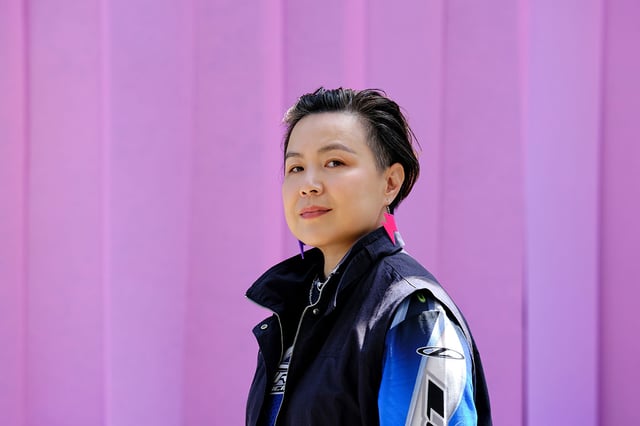
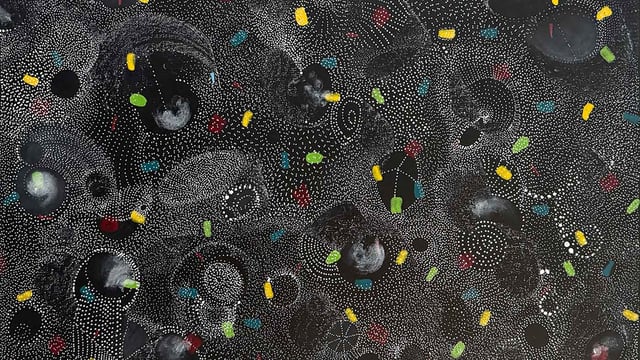
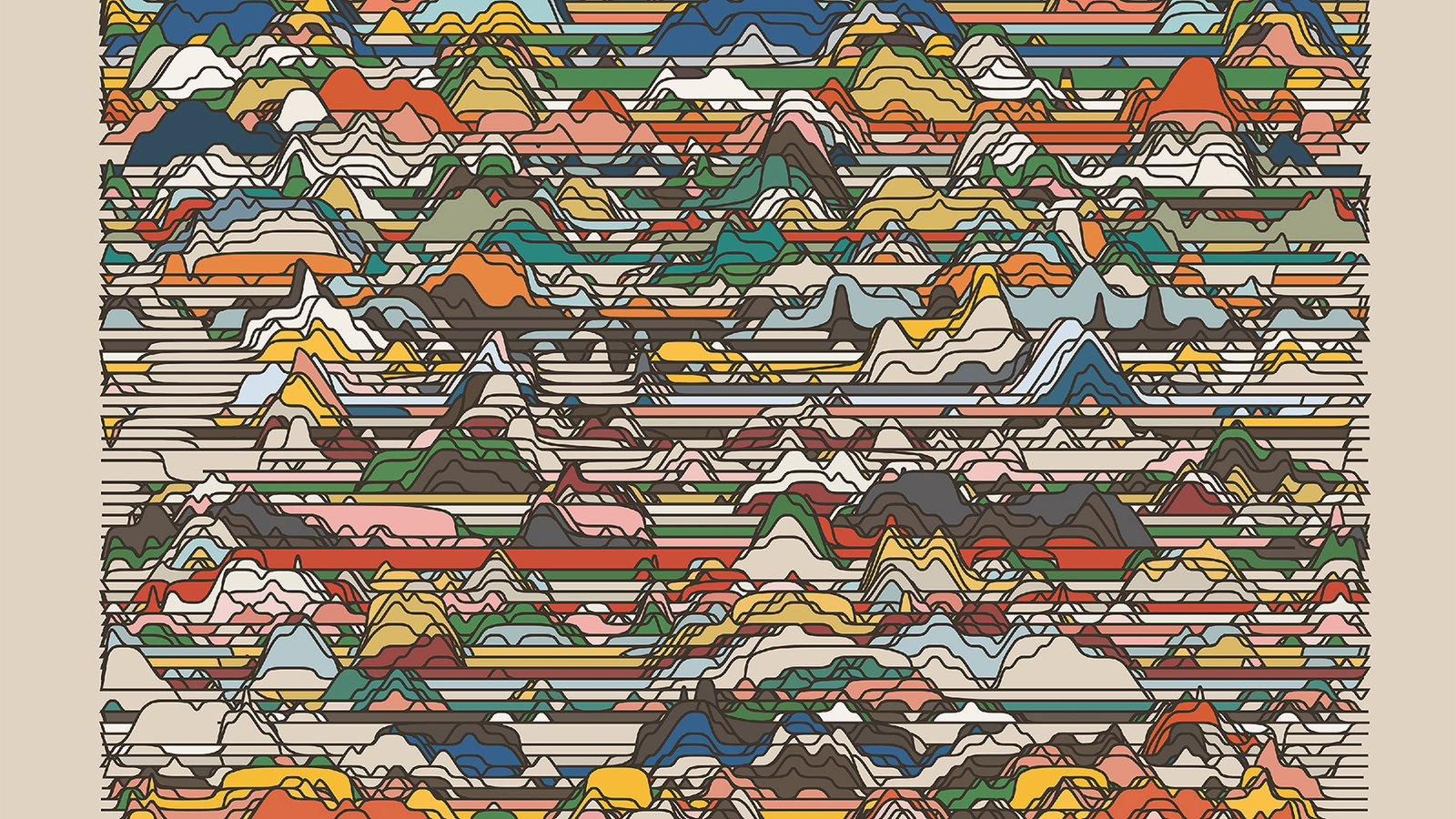
“Please Respond” is a collaborative generative art exhibition conceived by Hobbs, structured as a chain of ten algorithmic artists who each respond to the work of the artist before them. The distinctive mechanic is that each artist doesn’t just see the previous artist’s finished image; they receive the actual code used to make it, and can use as little or as much of it as they like, modifying, extending or combining it with their own. “Each of us is an established artist that already has a recognizable style. We managed to maintain that,” says Aleksandra Jovanić, speaking from Belgrade.
“Each piece in the chain looks like a solid, complete work, but it’s also visible that there is continuity between them. When you look at the details, you can see what the connections are between each of the pieces.” (Aleksandra Jovanić)
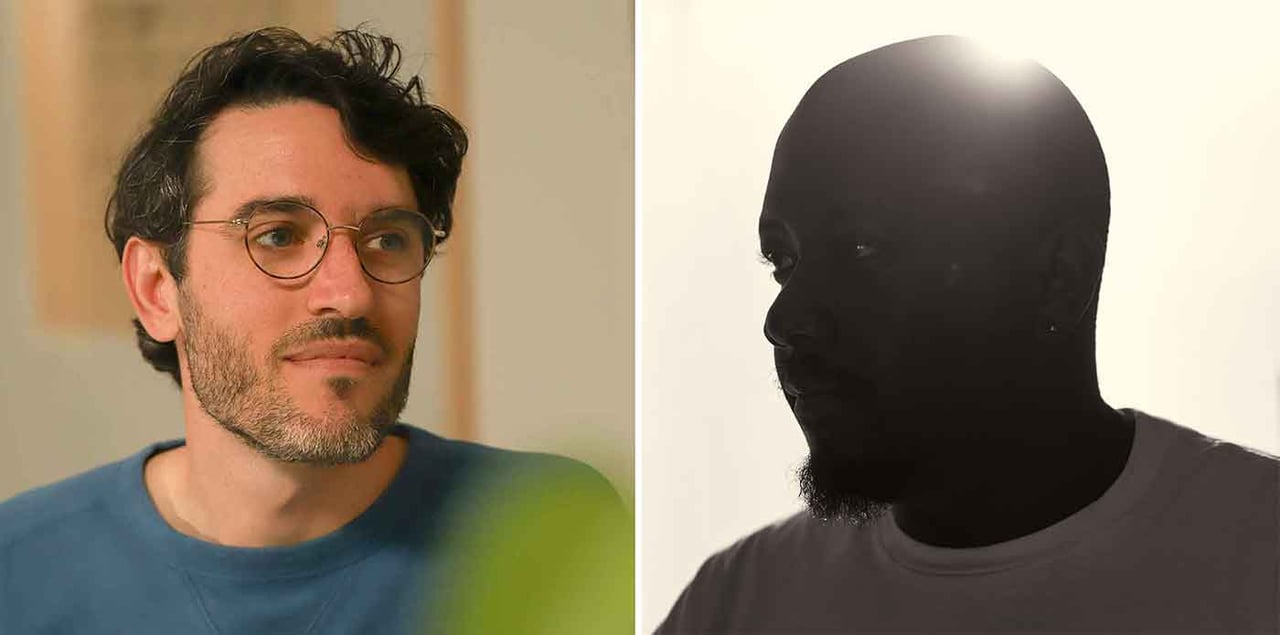
Hobbs opens the chain, with Michaël Zancan closing it. The eight artists in between — fingacode, Mathias Isaksen, mpkoz, Kjetil Golid, Juan Pedro Vallejo, Licia He, Juan Rodríguez García, and Jovanić — each inherited the visual and coded DNA of the artist before them and made something entirely their own with it. “I was interested to see if you continue a conversation across multiple artists, how does the visual language evolve?” Hobbs muses. He likens the method to jazz improvisation, where different instruments take turns improvising a melodic or rhythmic idea, with each building on the predecessor’s motif. The ambiguity allowed by the digital form — the work can always be augmented, shifted, mutated, performed upon, not final — permits this shapeshifting and blurring of artistic identity.
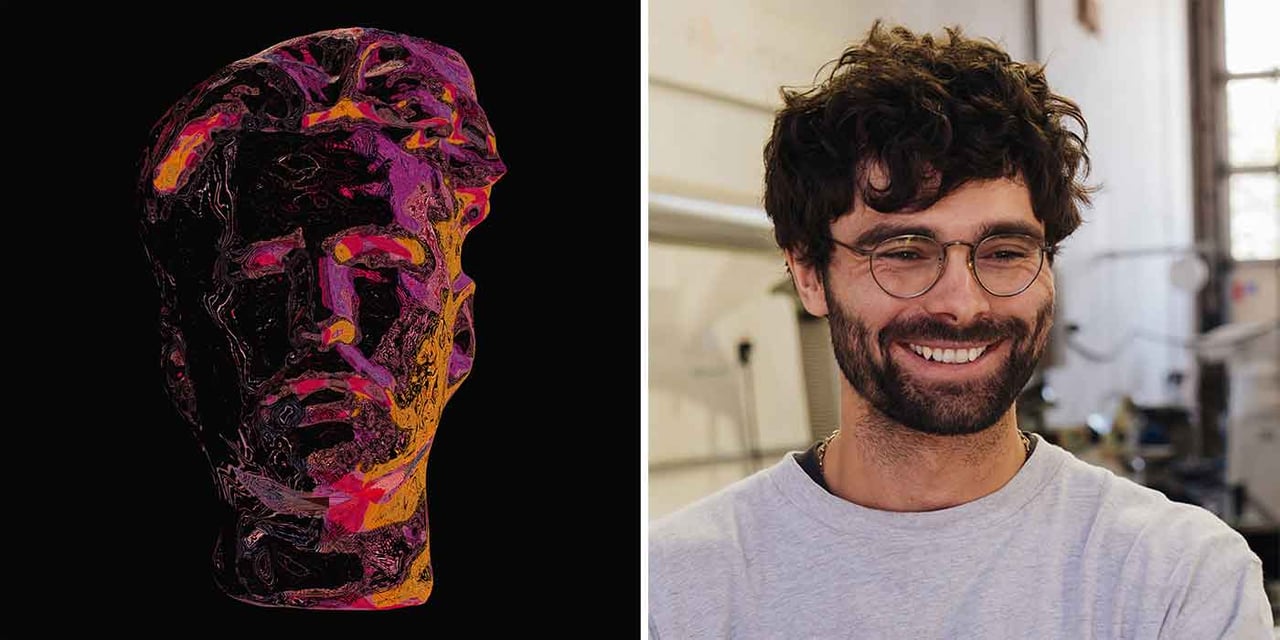
“You only get the input from one person behind you, and in that sense it’s kind of your time to have the piano solo, riffing on the same beat underneath.” (Kjetil Golid)
“But you choose how much you want to use from the last person,” Golid says, “you could keep the color palette, you could keep some underlying structure, or you could go even deeper and look at some of the algorithms used and make something entirely new, but keeping that algorithm that just made some decisions very deep down in the code. Tyler could have also done this in a more active way, like a band lead. But I think this was really the right balance to strike.”
Hobbs initiated the chain, setting the genetic material for everything that follows, balancing his immediate artistic impulse with the need to create a canvas that would allow the subsequent artists enough space to improvise on. “I’m always going to make a piece of work that speaks to me in that moment,” he says. “I’m also very much aware that whatever decisions I make are going to have a ripple effect on the artists that come behind me. Maybe they might be interested in what kind of colors I’m working with, or textures or patterns — but whether I choose to go minimal or maximal, flat versus three-dimensional, abstract versus representational, all those things felt like choices that might play a role in shaping the chain.”
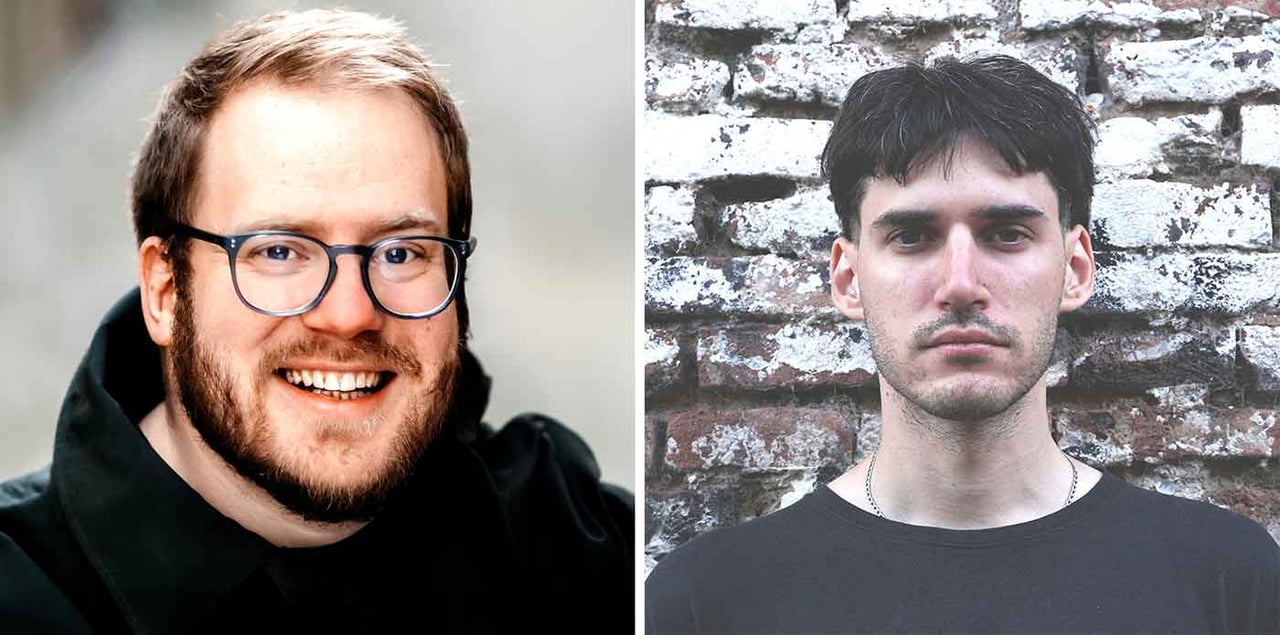
“I realized that there are ways we are composing each of our pieces,” Jovanić adds. “Sometimes we are looking at the composition as a global macro image, and sometimes we are looking at the micro details. Juan’s work, before mine, was widening the view on the narrative, and then I was focusing on a detail — a personal narrative, like looking for clues inside of the piece. There are so many different narratives inside all ten pieces as a chain.” She was not without anxiety: “I felt like I had to pay respect to the artist before me, but also give my best to complement it with the next step. I was afraid I wouldn’t understand what the artist before me was doing, or that it would be difficult for me to continue.”
Asked about the challenges of the project, Hobbs notes that these were technical: “Some artists used really sophisticated programming techniques, and I knew I would have had an interesting challenge trying to come after those. But they’re all professionals, and they knocked it out of the park.”
Upon receiving mpkoz’s shader code, Golid says, “The first thing I noticed was that he is writing shader programs, which I have no experience with. A shader is a program where you write a formula for how each individual pixel should look on its own, which has great advantages because you can run it on the GPU and it generally runs much faster. But you get some restrictions. I spent a day just going through his code line by line in order to understand the technique underneath. I didn’t keep any of the shader code, because although I could read it at the end, I couldn’t really write my own. So I wrote it from scratch using my own way of working. But a lot of the DNA from that code, I think, lives on in mine. The thing that is evolving throughout this project is really the ideas behind. If you looked at the code for each person, they will probably be rather different from person to person.”
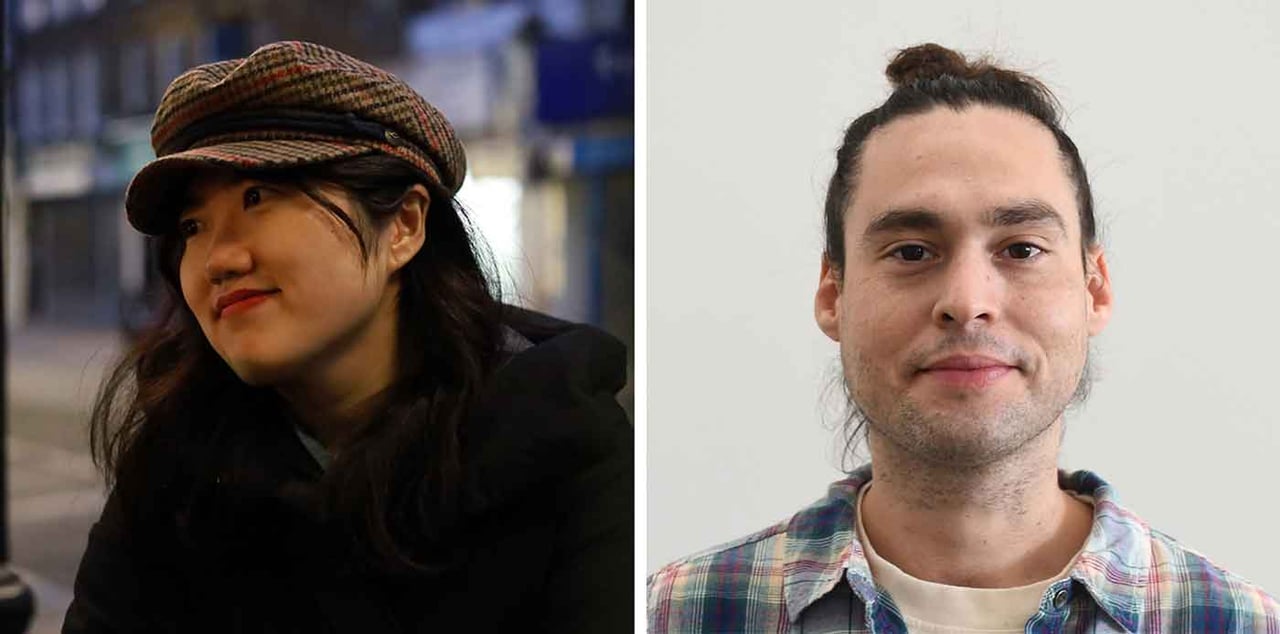
In the project, Hobbs is acting as an artist-curator: an ambiguous identity where artistic identity subsumes the curatorial impulse. “In some ways it felt like making a work myself. The ten individual works are there, but it’s also a singular, collective work.” A key requirement for the project was for the artists to be coders, sufficiently capable of adapting to one another’s code. Visual cohesion was also important. And finally, personal taste:
“I’m a big fan of all the artists in this group. It was an opportunity for me to work with artists whom I admire and see what they could make.”(Tyler Hobbs)
Artist-led exhibition-making is nothing new: since the Impressionists, artists putting on group shows with their friends is heavily linked to avant-garde practices. The artists initiate, then the galleries, curators, and collectors follow. “I didn’t have any galleries approaching me with a cool project like this, so I made it happen myself,” Hobbs says. “It was an opportunity for me to set these other artists up with a great reason to make interesting new work.” Hobbs and Zancan are perhaps the best known artists in the group, and the project offers the opportunity to bring other voices to a larger audience.
Following the boom-and-bust of digital art in 2021-22, Hobbs is very conscious of stewardship, of encouraging sustainable collecting. Fifty editions of the work are available per artist, with a Season Pass model giving committed collectors access to all ten works with a buy-in price of 0.7 ETH, and individual releases available at a lower price point. A set of open-edition prints follows the full release, available to anyone.

The Season Pass model values all artworks equally, and ensures the work remains complete. “You want your work to end up in the hands of folks that are passionate collectors, that are long-term holders of your work, not looking to quickly flip it,” Hobbs says, “I think it’s a lesson that some of us had to learn the hard way — that while we might really value egalitarianism and openness, there is a downside anytime that there’s financials involved. As much as possible, we want people to be collecting this work for the appreciation of the arts,” Hobbs explains.
Increasingly, engineers are losing their jobs to evermore capable AI agents. Where does this leave the generative artist? Asked about vibe coding as a challenge to his practice, Hobbs remains sanguine.
“Writing the code is not the hard part. Vibe coding makes the coding easier, but it doesn’t make the art any easier. The challenge of making the art is identifying all of those open questions and making strong decisions. And that ability comes out of years of artistic practice. Could you replicate some of my existing work with vibe coding? Yes. But could you make a new work that really felt like my work just through vibe coding? I am very skeptical of that.” (Tyler Hobbs)
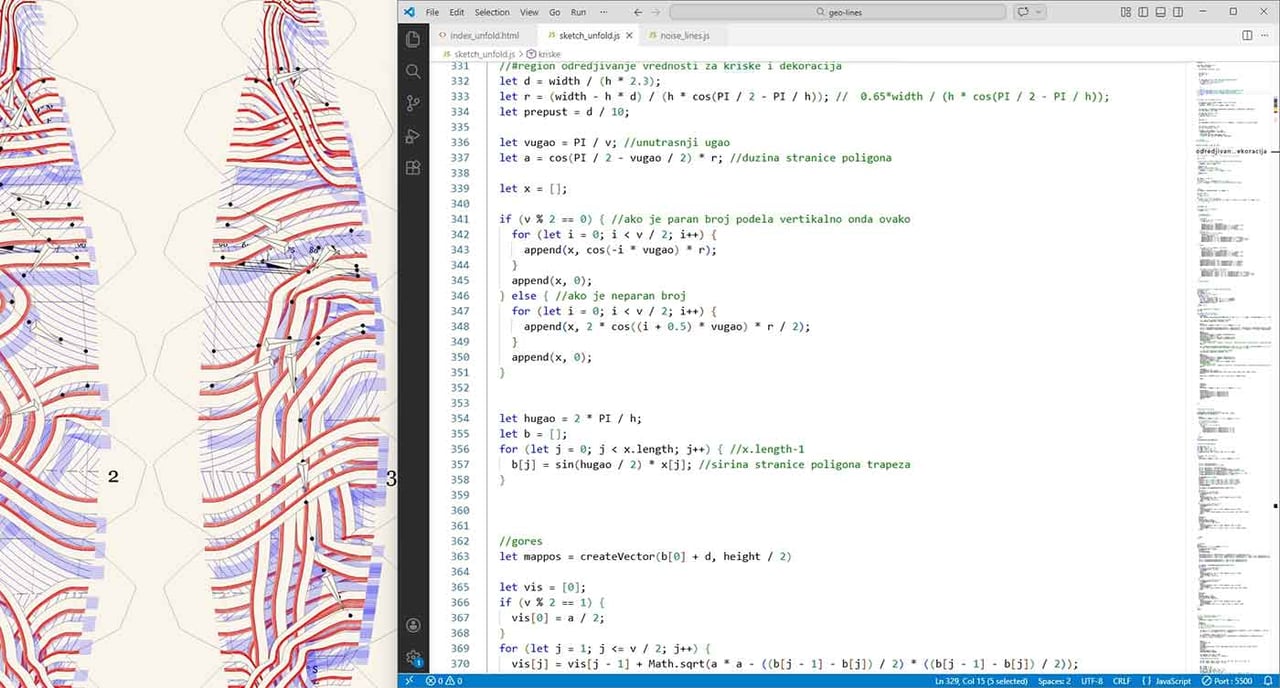
“You can’t say ‘make me a feature movie’ — you actually have to have some vision, and then it can help you,” Jovanić says. Artistic interiority remains unpromptable, for now. Hobbs is enthusiastic, however, about vibe coding as an entryway to digital art for artists lacking technical training; a way of lowering the barrier to participation.
Golid has a subtly different take: “On the coding side, it has really been embraced by almost every programmer in the world. They think it’s a great tool that kind of replaces Googling and looking up how to do specific things — now you can just ask and get the answer.”
I think that is a very productive and very OK way to do things, especially when you do something as unharmful as making art. On the art and design side, where you basically ask for visuals and images straight up, I think it’s much more problematic. It needs to be regulated a lot more than it is today. Anyone can go in and write a single sentence and get something out that maybe they shouldn’t have the ability to sign their name on. If everyone starts to just ask AI how to do things, you get this weird self-referential thing after a while, and suddenly there’s no new information getting added to the mixture.”
Digital and generative art have historically occupied a liminal space — sitting outside of the broader artistic canon, with its own museums, shows, and academic and historical anchoring. This is slowly shifting: the NFT boom of 2021 brought in a wave of new collectors not just to contemporary artists but also to historical positions. After the subsequent bust, this interest remained. As Hobbs notes: “All of the artists that were present in 2021-22 are still here, making work.”
Slowly, institutions are desegregating digital artists: Massimiliano Gioni’s gargantuan show “New Humanss” at the New Museum includes digital artists in its narrative.
The post-medium condition posits digital art as just another medium, with the 2026 Venice Biennale increasingly moving across categories.
After all, as Hobbs notes: “It does frustrate me when digital art gets put into a little box or given its own sort of special play area. It’s a medium, in the same way as all other forms of artistic media. And if anything, it’s arguably some of the most important tools that artists could be working with today — these are the materials that are shaping our lives. Art that’s not working with those tools or thinking about those impacts is, in some ways, running a risk of not addressing some of the most relevant concerns today.”
Dr Jeni Fulton is a writer, editor, and academic working across contemporary art, the art market, and the evolution of digital art. She was the founding editor of Art Basel Magazine and the curator of Digital Dialogues, Art Basel’s talks program dedicated to digital art. Prior to that, she was Editor-in-Chief of Sleek Magazine in Berlin, and contributed to Spike, Frieze, Apollo, and many other arts publications. Based in Zurich, she teaches at the Zurich University of the Arts (ZHdK) and the University of Zurich.
No comments yet. Be the first to share your thoughts.
Mentioned in this article
People: Aleksandra Jovanić, Kjetil Golid, Tyler Hobbs, Juan Pedro Vallejo, Juan Rodríguez García, Junior Ngoma, Licia He, Mathias Isaksen, Michael Kozlowski|Works: Please Respond|