·News
Artmaxxing | The New Bad Image
Brian Droitcour on artists who understand what the algorithm wants and push until it breaks
Brian Droitcour on artists who understand what the algorithm wants and push until it breaks
The group show “New Bad Image”, curated by sssluke, goes live on verse.works on May 4, 2026.
Consensus has formed around what makes an NFT collection good. It has to be organized around a familiar form — the contour of a PFP, or a distinctive arrangement of pixels and lines in generative art. Each image must declare its affiliation with the system that produced it, while maintaining a tension of similarity and difference across the whole. Five years ago, artists were working through principles that are now taken for granted. Tyler Hobbs wrote about “long-form generative art” — how an algorithm run by the collector must eliminate weak outputs while cultivating surprise amid consistency, so you don’t get bored scrolling through hundreds of instances. Before releasing MiladyMaker in 2021, Remilia posted to their blog about the ideal physiognomy for PFP legibility on social media, and the value of the rare trait — like the BAYC laser eyes — that breaks the mold and achieves instant recognizability. For the holder, that’s a big flex.
Is this the lot of the artist now — to play by the rules? To aspire to legibility for the systems that confer visibility? Sounds bleak. There is the alternative that MFA programs still offer: log off, make things that make sense only within the rarified contexts of art history, paint quietly tasteful things that look good in the well-appointed home. So that’s another option. But there’s a secret third thing — to identify what the algorithm wants and do too much of it. To notice how it works, and push until it breaks. To ape in so hard you achieve a state that is sub-human and not machine-readable.
This is the “new bad image”. Optimization reduces friction; the new bad image adds friction back through excess. It’s artmaxxing. It appreciates how the rules work in order to be doing it wrong.
We live in a time of operational images, technical images, rhetorical images. Images don’t just represent things. They tell you what to do and how to feel. On YouTube you can’t avoid MrBeast, who developed his signature rictus soyface grin — eyes stuck open, jaw slack, thin lips underlined with scruff — in dialogue with the algorithm. MrBeast abstracts his face into a sigil of rapt attention and wowed surprise, to model the face you should make as you watch him give away a million dollars.
Picture a frictionless Instagram post of an influencer girl whose surgery and filters make her fungible with every other influencer girl. What sets Kylie Jenner apart from her mid-tier peers is the metadata around her images — the likes, shares, and comments. The numbers that measure how an image travels also measure its value. Numbers confer the distinction that the image itself cannot.
Then there is the deep-fried meme, where it’s not numbers that tell you how many times the image has been shared, but the accumulation of compression artifacts from repeated screenshotting and posting. You know it has to be good because the pixelated patina tells you how much it has been loved and laughed at.
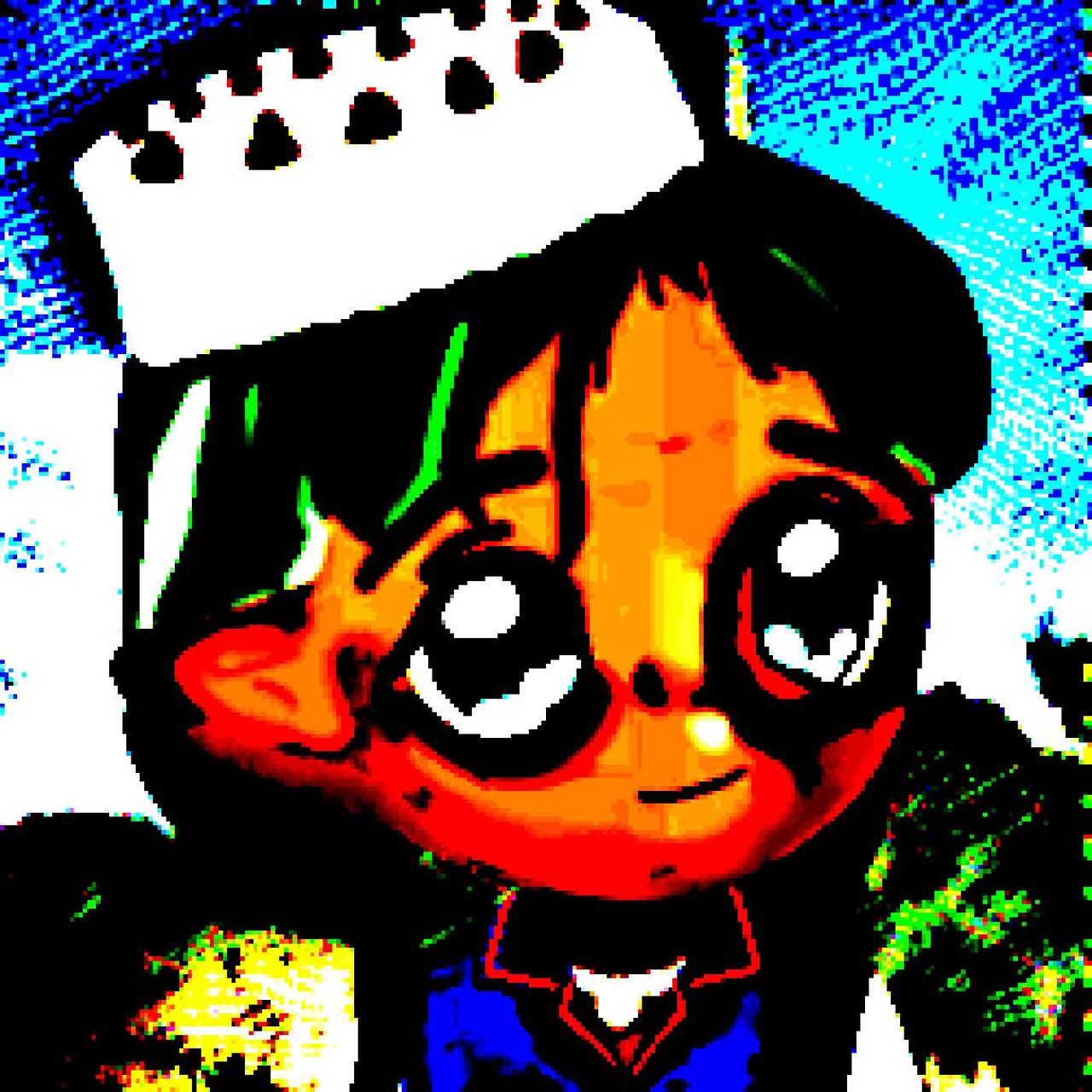
Optimization reduces friction. The new bad image produces more of it. If a good image exaggerates the face’s shape or expression to garner maximum attention, the new bad image exaggerates it further, until it’s no longer a model but something to look at and think about. This is what Mifella did with Mifella (2022), the eponymous NFT collection that hollowed the face of MiladyMaker into a semi-human skull, then filled it with digital effects and distortions. In Deep-Fried Milady, Mifella compresses Milady into a glyph, where the basic shapes of hair, eyes, and cheeks are rendered in saturated striations, to signify a cute face with a scant 16 kilobytes. It’s a tribute to Milady, but also a tribute to its own derivative flimsiness.
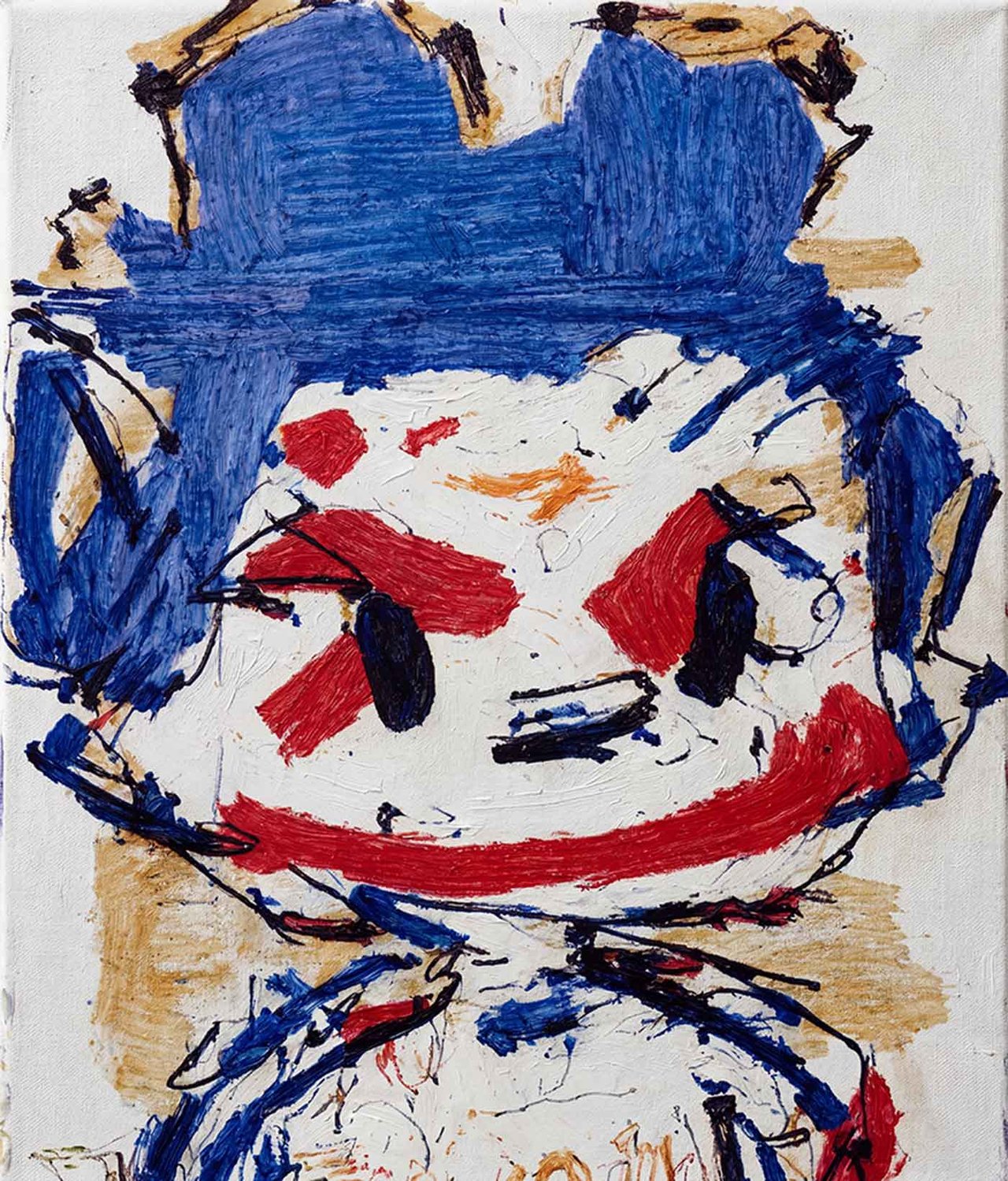
Luhfella’s cartoon portraits work differently, returning the digitally optimized drawing of the PFP to the handmade gesture. Scribbled lines express the energy of a try-hard hand, the frustration of someone straining to express something that the format always smooths away. And Luhfella escalates this struggle into melodrama with the hi-res cheese of generative AI video.
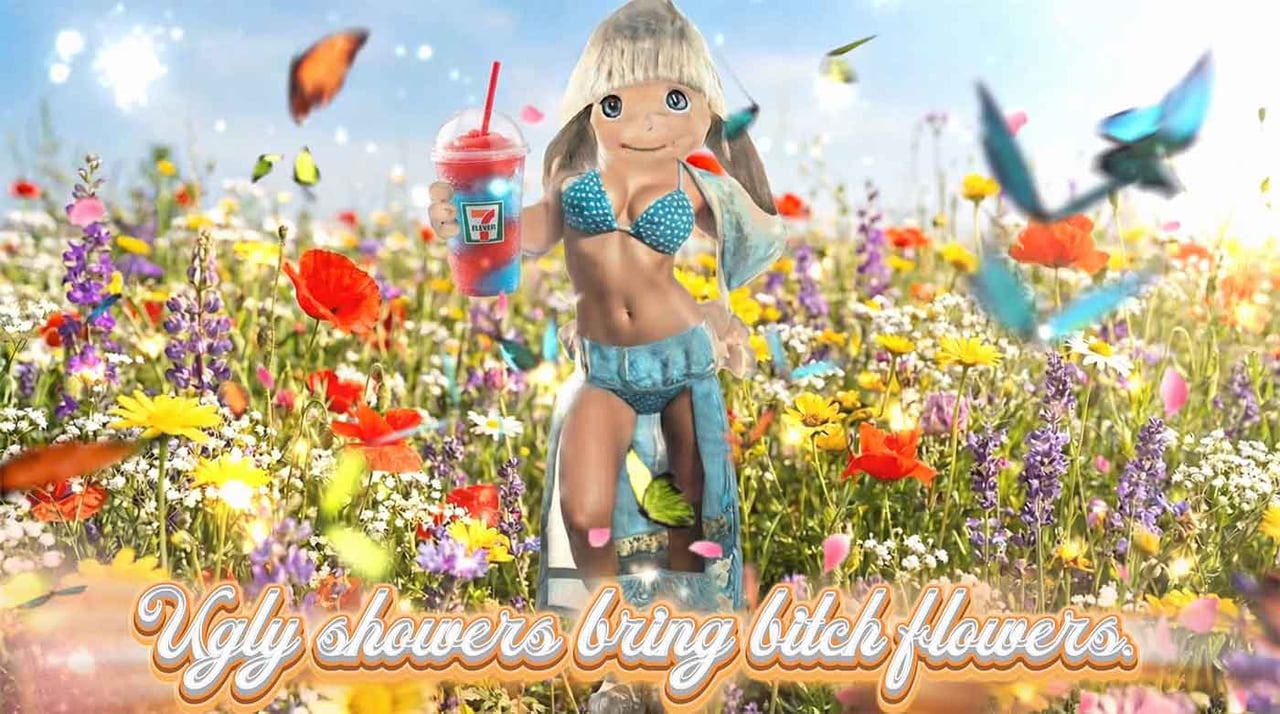
The PFP face models dull complacency where it could model feeling. What Mifella and Luhfella are doing is restoring some kind of feeling to the digital image — while also laughing at the impossibility of doing so. Ann Hirsch and Maya Man’s Ugly Bitches (2023) took a similar tack.
They took comments on influencer photos, twisted them into insults, and stuck them on GAN-generated dolls posed in Dall-E-generated influencer backdrops. They recognized the transformation of femininity into optimized systems, by Instagram and by doll manufacturers, and broke both systems by running them in tandem, too many times.
Their new work, New Year, New Bitches (2026), is a throwback to the 20th-century swimsuit calendar, where the misshapen dolls have been sexed up with an AI undressing app. Page by page, these ugly bitches count down our descent into the future.
Consider the trading card game. Magic: The Gathering cards are images that effect actions. These cards hold value because of their rarity and what they do — two things entwined together. NFTs inherited some of that logic but only captured the rarity. An NFT rarely does anything beyond holding (or, more often, losing) value. Art can happen in the gap between image as action and image as token.
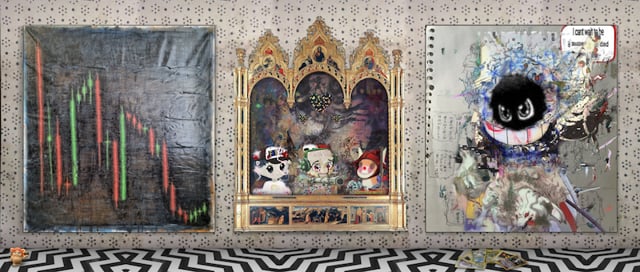
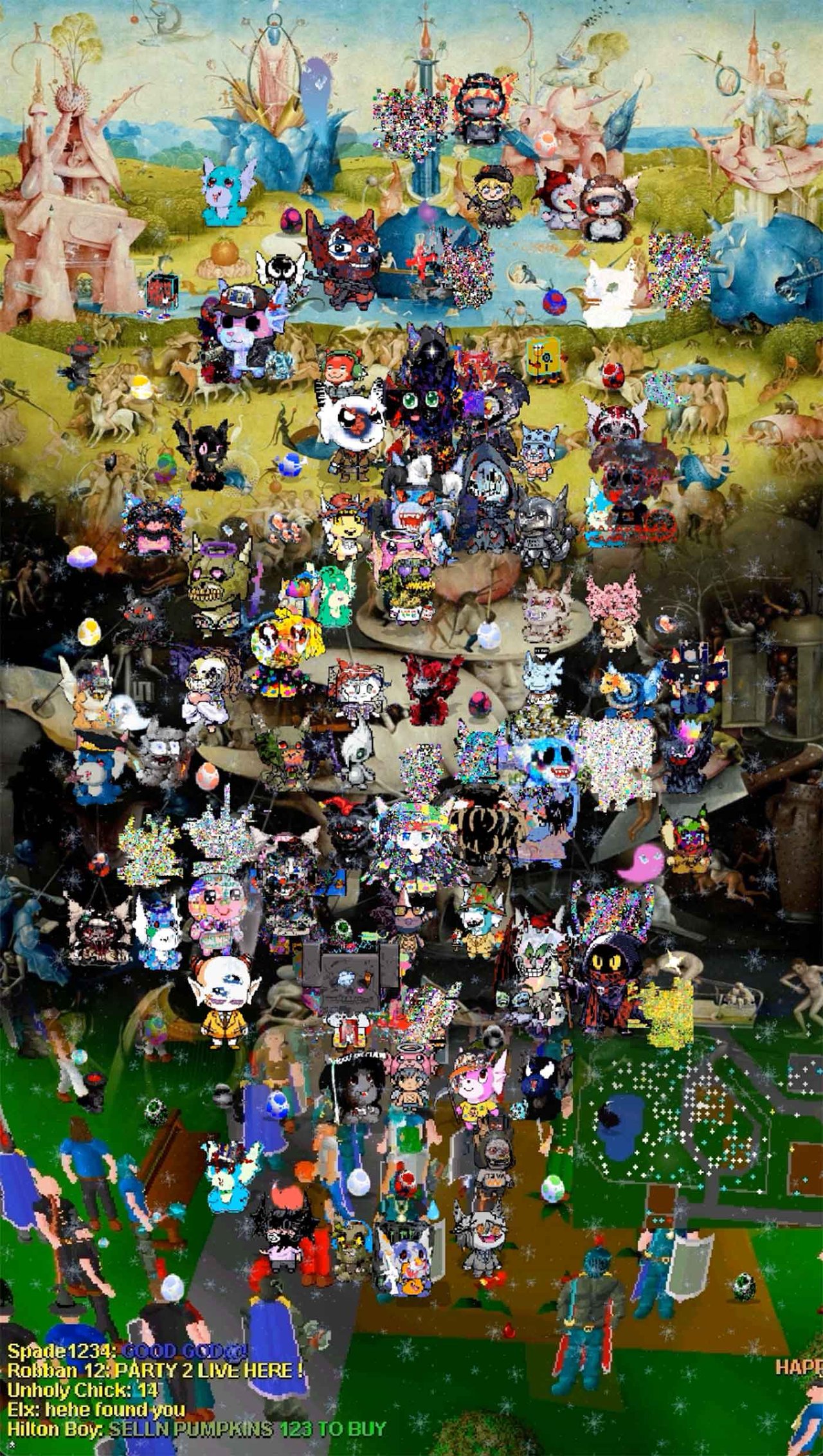
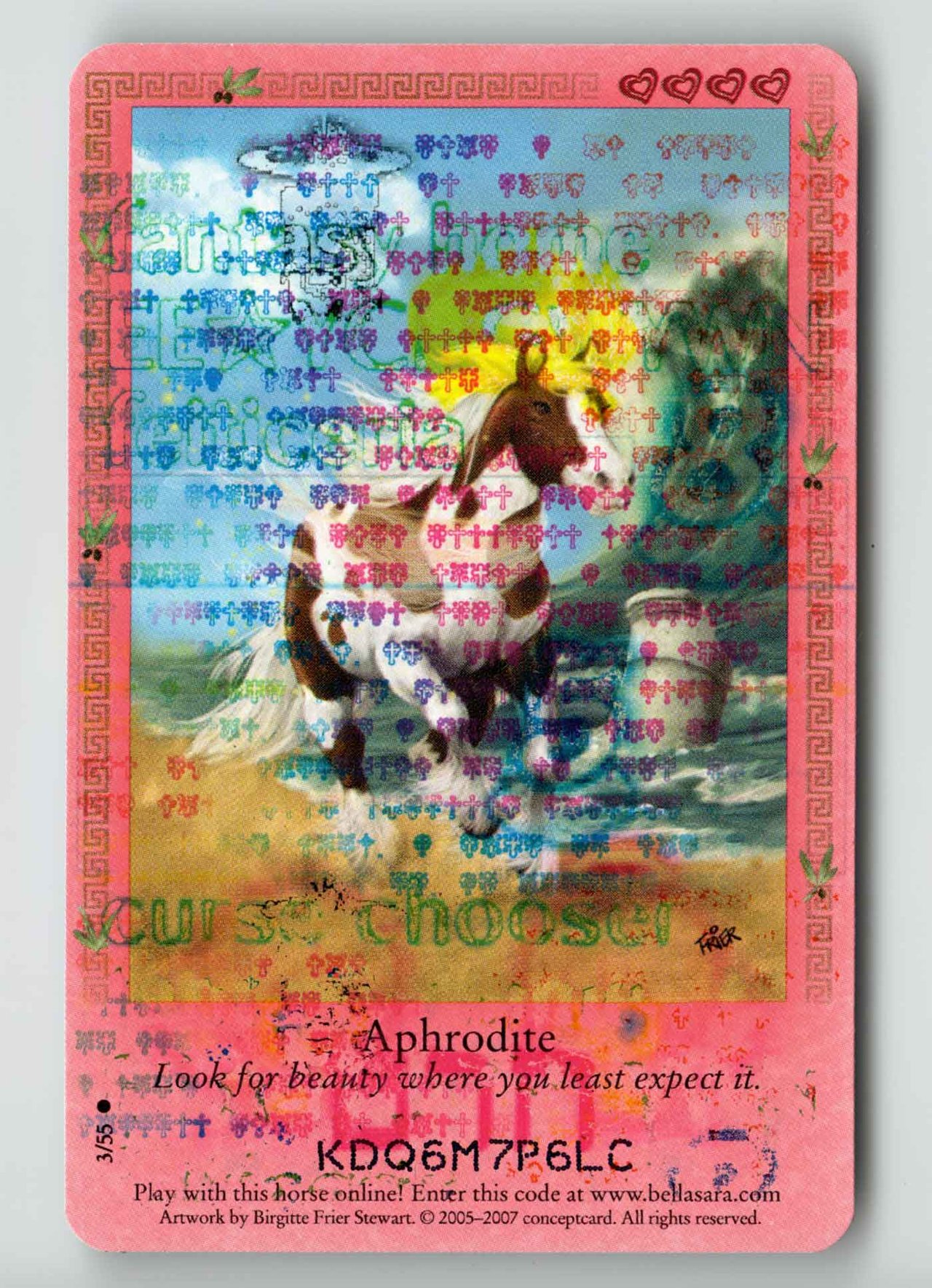
The artist Terrorism’s digital paintings take the trading card format and layer it with imagery from devotional paintings and Renaissance masterworks. The card format implies that the image can be activated, but whatever potency it might have is simultaneously drained. Filters and edits leave a ghost of the promised action. Evil Biscuit also works with trading-card aesthetics, and in his new series he constructs collages that use reproductions of paintings as backdrops for animated sprites. Where Terrorism’s cards are rich with depletion, Evil Biscuit's feel charged with another kind of energy — characters lifted from trading card games reanimate the structural logic of painting by playing with scale and texture.
Both artists work between the image as something inert that you look at and the image as something that acts on the world. The new bad image exists at this threshold: it’s not fully either thing that an image ought to be.
The artists in “New Bad Image” have lived their lives with the internet — all their adult lives, and in some cases their childhoods. In the beginning, social media was a free-for-all, an experimental playground where likes and reblogs worked for the benefit of creative play. Do something cool, funny, or weird, and you’d find like-minded people. You could make friends with other artists, Twitter poets, alt comedians. Social media offered a way around gatekept institutions, and sometimes a path inside them, aided by the relationships and attention that built up there.
But social media is now institutionalized in its own way, calcified by increasingly extractive terms of service, enshittified. It’s no longer the town square. It’s Times Square, every surface plastered with ads. Some interesting people still lurk in the alleyways, though a lot of them are interesting in the way that a screaming sidewalk prophet is interesting.
I want to say “New Bad Image” is intergenerational, because it includes artists who have been making work online since the late aughts alongside artists who appeared more recently. But I can’t say what generation artists like Mifella, Luhfella, and Terrorism belong to. They could be elder millennials, with the same experience of traversing social media’s childhood and senescence that Ann Hirsch, Petra Cortright, and Parker Ito have. With anonymous artists, any kind of biographical interpretation is fraught, or impossible. But the personas they work under are of this moment. Net artists used to work under their own names. That was how you built an art career, but it was also the pursuit of the millennial ambition “to be yourself”. Self-expression was the purpose of being online.
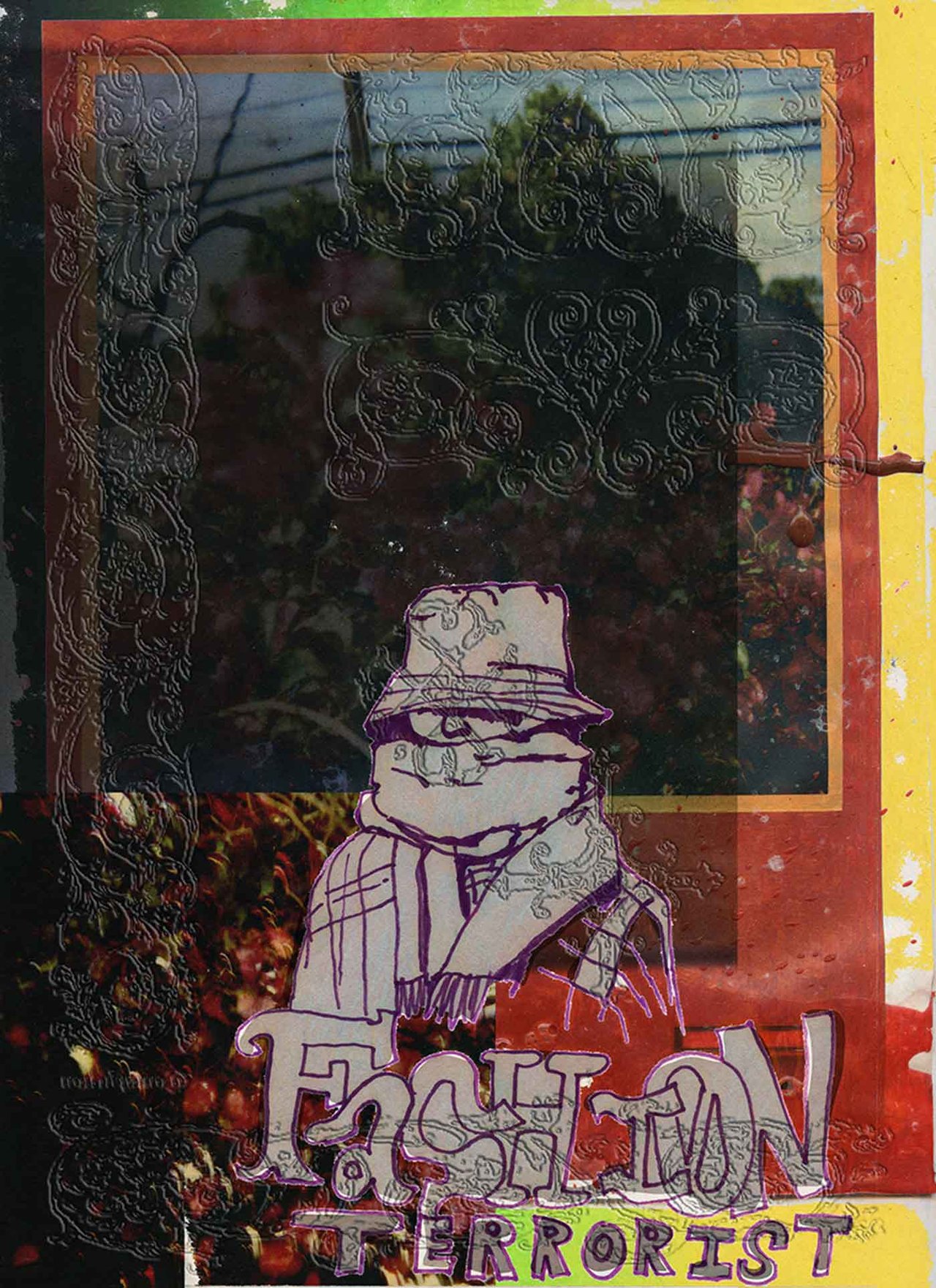
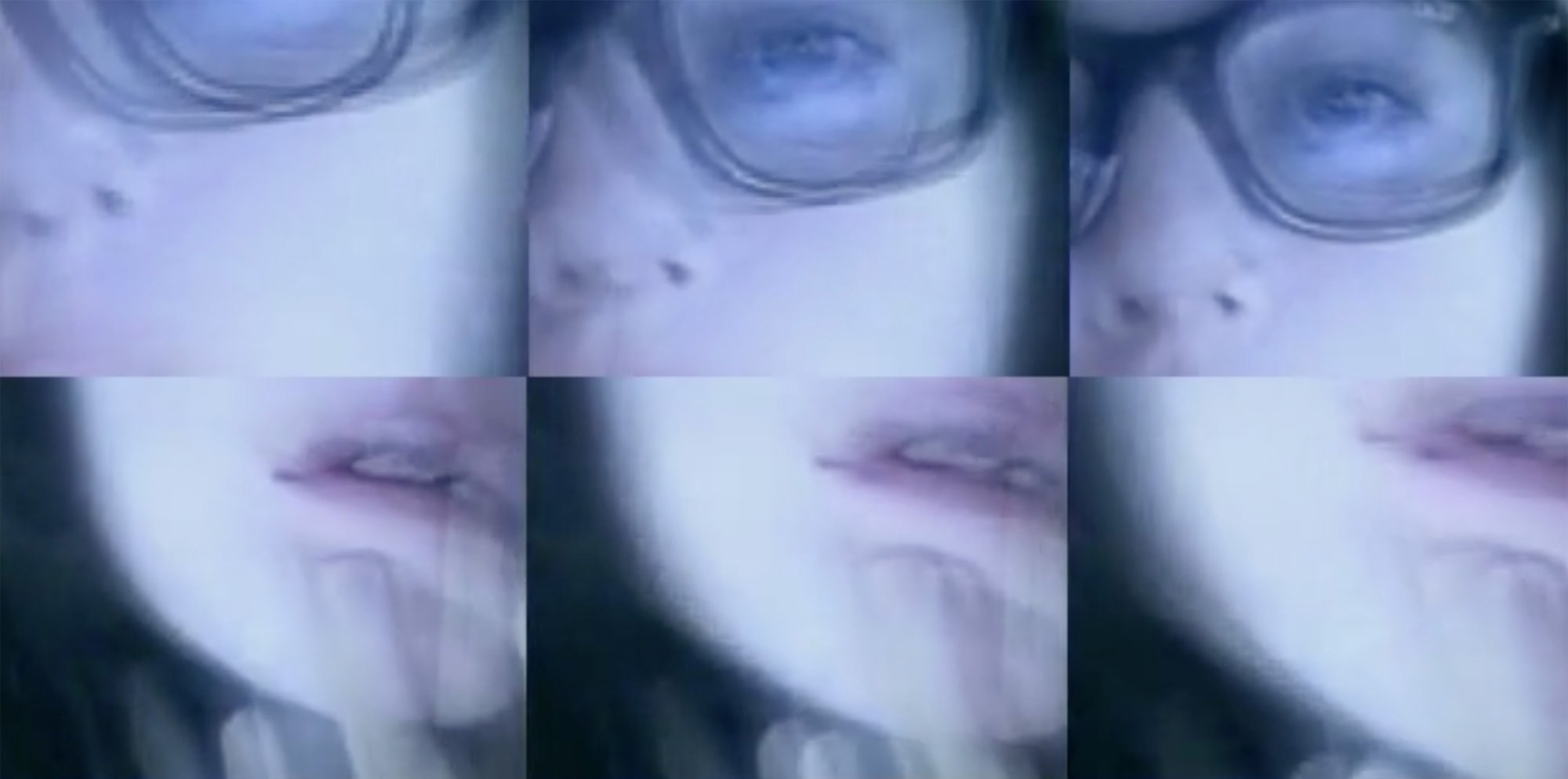
The internet opened a window onto the self. “New Bad Image” is about the closure of that window. Petra Cortright returns to the webcam, a tool she favored in her early work, and the webcams she uses are old and janky. Her work now is not about the default structure and effects of webcam-mediated communication but the feedback and bugs that cloud the picture.
The new bad image isn’t transparent or confessional. It layers in opacity as protection against being read by the machine, and to make transparent how the machine reads.
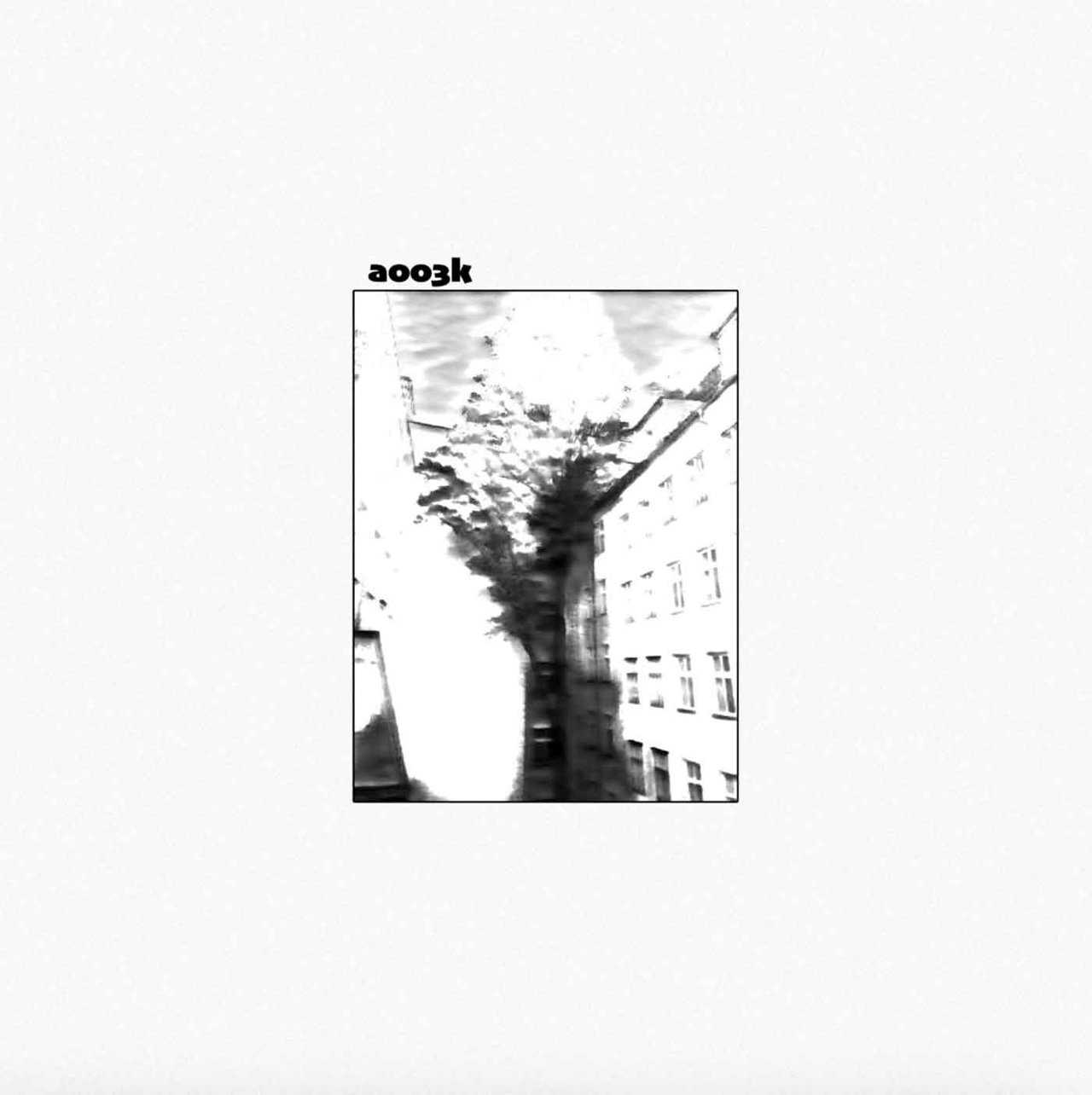
Parker Ito and Tojiba Brand Manager pile natively digital and photographed analog textures into high-density collages and collections of images. They’re sensitive to the associations carried by different visual registers and material surfaces. These are minor images, sourced far from the For You page. They invite contemplation. They leave you tracing the wake of the artist’s surfing without arriving anywhere.
The most interesting art of any time gets made at the margins, by hybridizing weird and normal ways of seeing and feeling. It’s made with an openness to error, to risk, without the fear of bad taste. The new bad image isn’t a model, the way a good image is. It’s an icon that signifies what the good image is supposed to do, and how it fails. It acknowledges the systems of good images and how they work. It plays their games in their own way. And in doing so it generates something no algorithm can.
Brian Droitcour is the director of Outland, a nonprofit supporting initiatives in publishing and education about digital art.
No comments yet. Be the first to share your thoughts.
Mentioned in this article
People: Ann Hirsch, Brian Droitcour, Evil Biscuit, Luhfella, Maya Man, Mifella, Parker Ito, Petra Cortright, Terrorism|Events: New Bad Image|