·News
Change of Protocol | Digital Art at the Venice Biennale
Exhibitions spotlighting sound, social media, and the non-human situate Italy at the heart of contemporary art in 2026
Exhibitions spotlighting sound, social media, and the non-human situate Italy at the heart of contemporary art in 2026
The 61st edition of the Venice Biennale, the longest-running contemporary art biennial, runs from May 9 to November 22, 2026, with previews opening on May 4.
The Venice Biennale’s principal International Art Exhibition, “In Minor Keys”, curated by the late Koyo Kouoh and managed by her collaborators since her death in May 2025, involves 100 national pavilions and 31 collateral events. There are also numerous exhibitions mounted beyond the Biennale by museums and foundations across palaces, churches, and islands in the city, known as “La Serenissima”, an historic cradle of visual art and architecture.
Right Click Save looks at a selection of shows that spotlight the relation of art and technology, from calming engagements with sound at the pavilion of the Holy See, to Eva and Franco Mattes’s examination of online “Rage Bait”. It is telling that three of the exhibitions have been curated by Hans Ulrich Obrist, Artistic Director of Serpentine Galleries, London. Obrist is one of the defining contemporary art curators of his generation and a long-standing champion of Arts Technologies.
Two exhibitions in particular highlight Italy’s place in the post-medium ecosystem, where hybrid practices that intersect the analog with the digital are increasingly defining contemporary art.
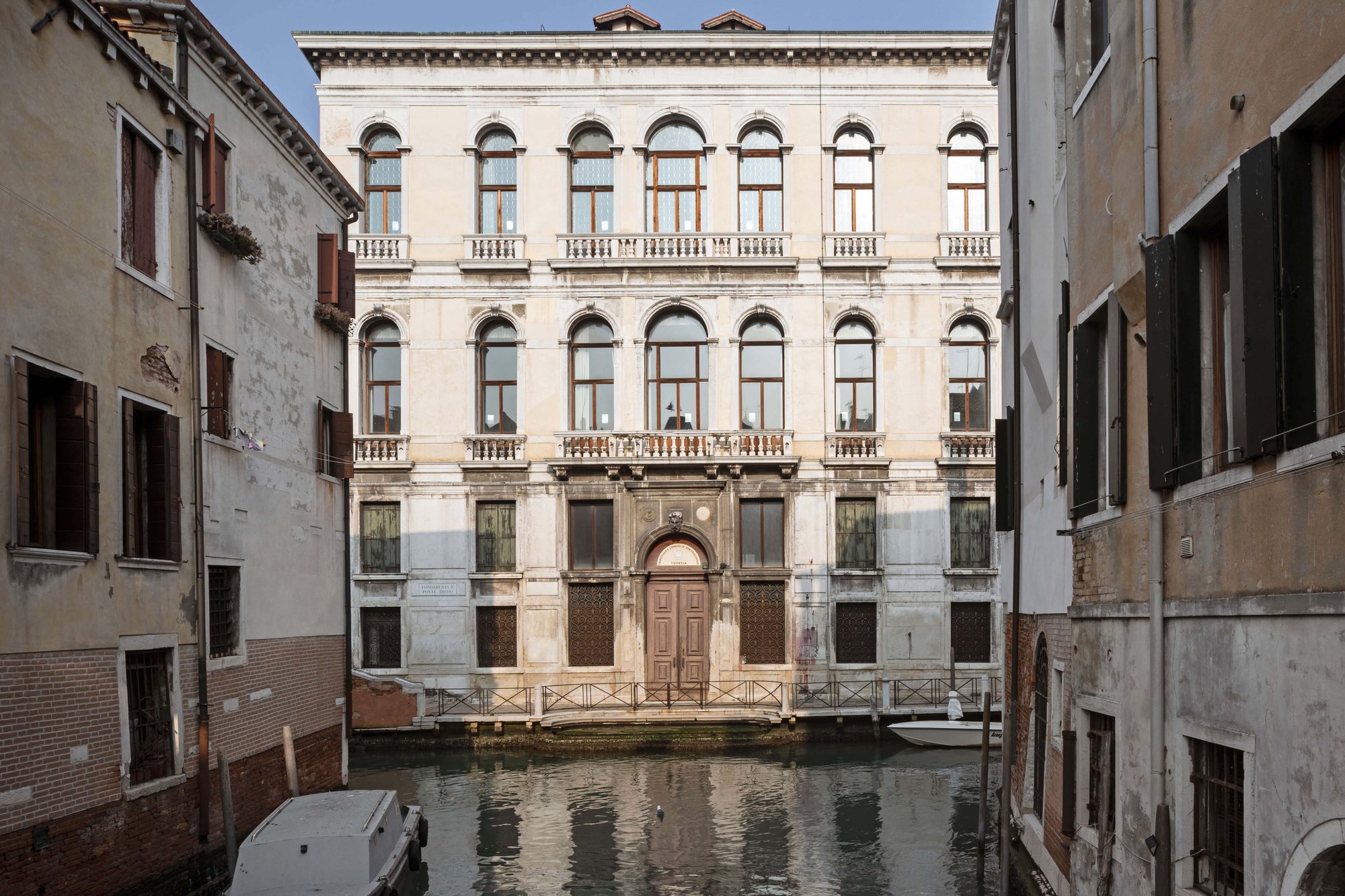
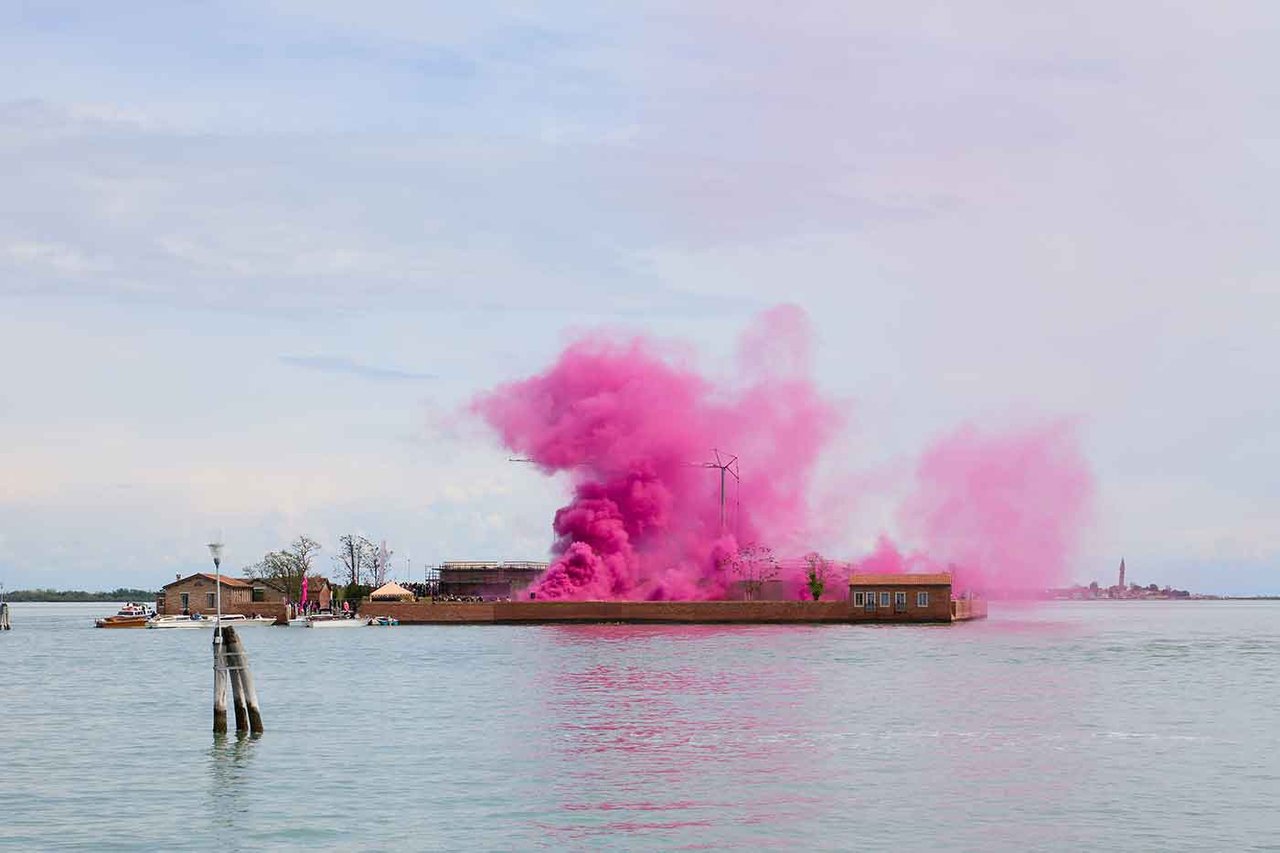
“Strange Rules” at Palazzo Diedo, home to Berggruen Arts & Culture, curated by the artists Holly Herndon and Mat Dryhurst together with Obrist and Adriana Rispoli, imagines the palazzo as the locus of an evolving conversation around process-based “protocol art”, as well as the rules that govern it. After six years of restoration, the island of San Giacomo in the Venetian lagoon, opens on May 7, 2026, as the third venue of the Turin-based Fondazione Sandretto Re Rebaudengo (FSRR), one of the most consequential forces in the development of international contemporary art since its foundation in 1995.
The opening of the foundation’s island haven serves as a geographical reminder that Venice is one node in a rich corridor of contemporary art across northern Italy — taking in other ground-breaking institutions in both Turin and Milan — one that is easily explored from Venice on Italy’s fast and affordable train service.
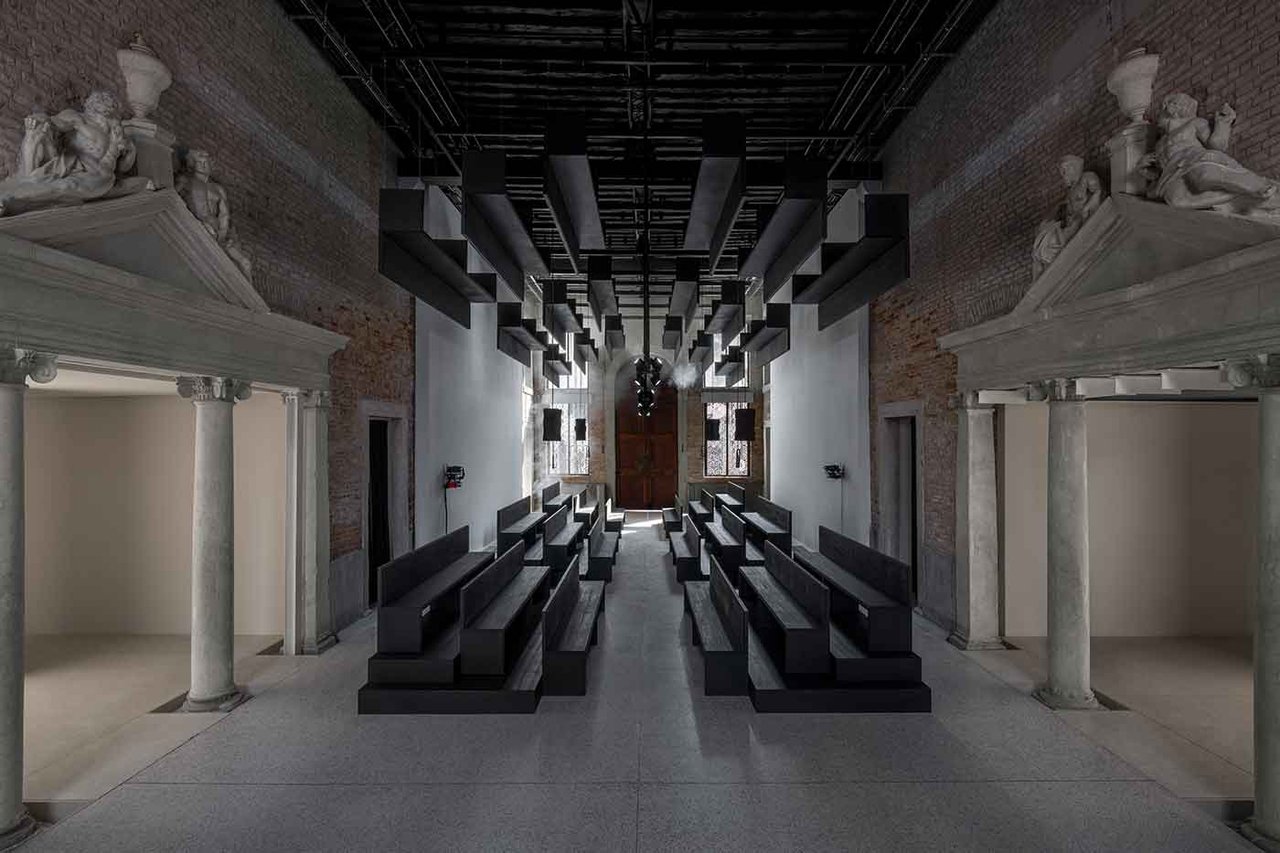
“Strange Rules”
Curated by Mat Dryhurst, Holly Herndon, and Hans Ulrich Obrist, with Adriana Rispoli at Berggruen Arts & Culture, Palazzo Diedo, May 4 to November 22, 2026.
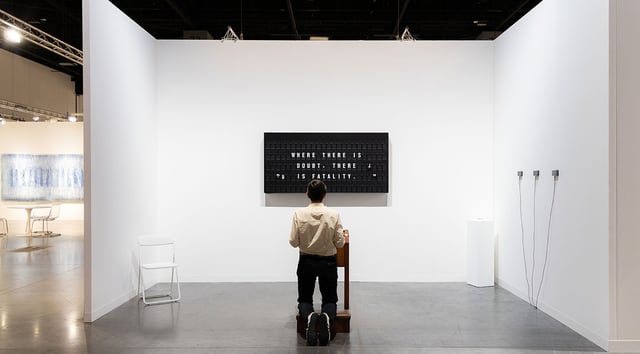
“Strange Rules” is a new interdisciplinary project, focused on protocol art, a practice championed by the artists Mat Dryhurst and Holly Herndon, and designed to shape the rules of media and technology before they influence culture. As Dryhurst put it at a conference in January 2025, “If artists are going to have any agency in the future, they need to stop reacting to technology and start shaping it.”
The Berlin-based duo conceived “Strange Rules” with Hans Ulrich Obrist, who hosted their first solo show, “The Call”, at Serpentine in 2024. That exhibition — in which community choirs created AI datasets that were owned collectively through data trusts — involved the development of a protocol, or set of rules, that could be carried on by others.
In the course of “Strange Rules”, the curators will oversee a series of talks and presentations in order to develop a book on protocol art.
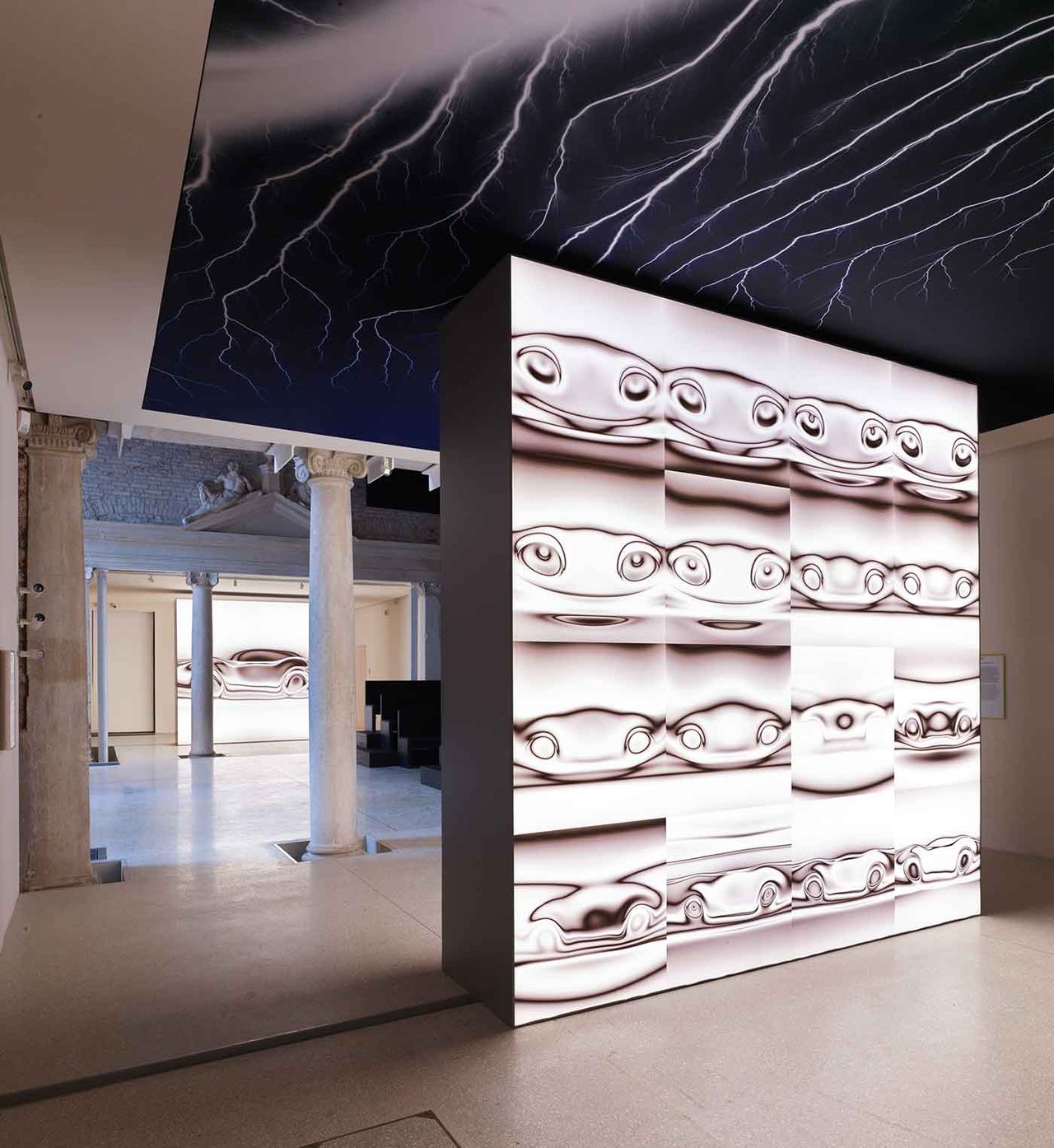
The exhibition is held at Palazzo Diedo, in the Cannaregio area of Venice, a once-abandoned 4,000 sq m palace which has been the subject of an extraordinary conservation program over the past four years following its acquisition by the German-US philanthropist Nicolas Berggruen to become the home of Berggruen Arts & Culture. The palace was opened, with some areas still closed for conservation work, for the 2024 Biennale, with a temporary exhibition and a raft of Berggruen’s collection and site-specific commissions in place, including Urs Fischer’s magical installation in hand-blown mirrored glass, Omen (2024), and Carsten Holler’s pleasingly befuddling Scala del dubbio/Doubt Staircase (2024).
Palazzo Diedo’s continuing renovation — including the conversion of its atmospheric attic floor, a space like a scene from Lampedusa’s novel Il Gattopardo (1958), as accommodation for resident artists — has been overseen by the architect Silvio Fassi, and the palace’s Venetian-born director, Mario Codognato, who once studied in the palace when it was used as a local school.
The launch of “Strange Rules” inaugurates Palazzo Diedo as what Berggruen Arts & Culture describes in a press statement as “the first space in Italy to foster a curatorial and theoretical reflection on Protocol Art, positioning itself at the forefront of the debate regarding the relationship between art and technology”. “In the age of AI, what is the active role of art and artists?” Nicolas Berggruen said in a launch statement. “Palazzo Diedo, together with Mat Dryhurst, Holly Herndon, Hans Ulrich Obrist, and Adriana Rispoli, are trying to tackle this question.”
Herndon and Dryhurst are creating a new installation on the palace’s ground floor — the focus for talks and screenings during the exhibition — in collaboration with the Berlin-based design team Sub, who also worked with the artists to create evocative user interfaces for “The Call”. On the first floor, the curators have brought together contributions from a further score of artists working in the field. They include Joshua Citarella, Agnieszka Kurant, Trevor Paglen, Ho Tzu Nyen, Simon Denny, Stephanie Dinkins, Primavera De Filippi, Ayoung Kim, and Lynn Hershman Leeson.
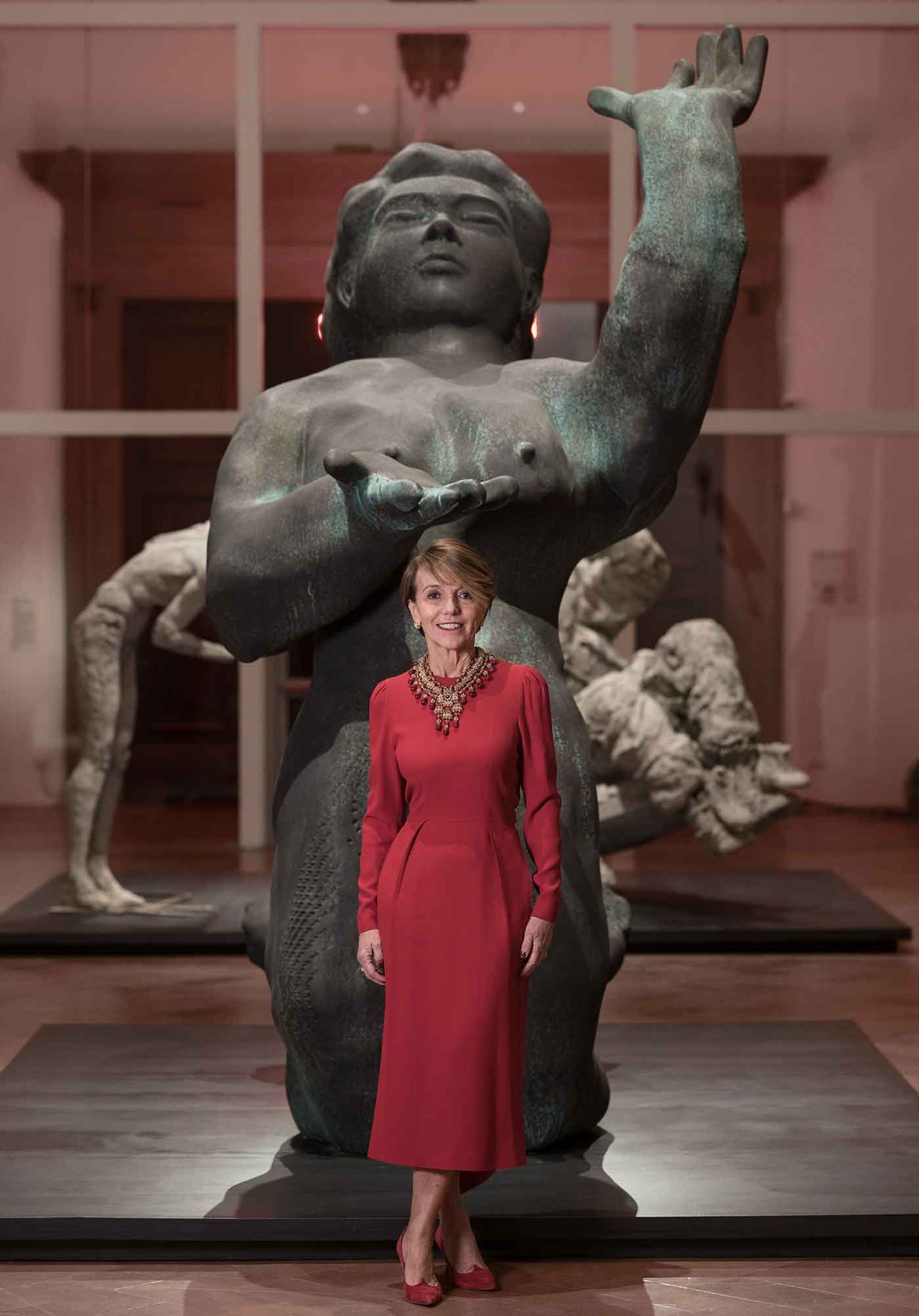
“Don’t have hope, be hope!”
Works from the Sandretto Re Rebaudengo Collection at Isola di San Giacomo, Polveriare Ovest, May 7 to September 12, 2026.
The opening of a new venue in Venice for the Fondazione Sandretto Re Rebaudengo (FSRR) is big news in the art world. Demand is high among the Biennale cognoscenti to be included in the limited number of spaces for the opening day events on the island of San Giacomo, in the Venetian lagoon, between Murano and Burano, on May 7, 2026.
FSRR was set up by the collectors Patrizia Sandretto Re Rebaudengo and Agostino Re Rebaudengo in 1995, and has set a template in the years since for how a foundation can help define the narrative of contemporary art, internationally, through its collecting, commissioning and exhibiting of new work. It has three existing exhibition locations: at its headquarters in Turin, opened in 2002 in a former industrial area of the city; at Palazzo Re Rebaudengo and its Art Park at Guarene, southeast of the city; and what it calls an “itinerant presence” in Spain, putting on exhibitions in the country’s capital through the Fundación Sandretto Re Rebaudengo Madrid.
The Sandretto Re Rebaudengo family acquired Isola di San Giacomo in 2018 and in the past four years have completed the restoration of the long-abandoned military buildings that Napoleon Bonaparte put up on the small, square-shaped, island at the end of the 18th century. “In this strip of land surrounded by water,” Patrizia Sandretto Re Rebaudengo, president of FSRR, said in a statement, “I immediately recognized a special place, suited to hosting exhibitions, artworks, and residencies — perfect for accommodating the slower pace of artistic research and fostering dialogue and encounters among artists, theorists, and scholars from all disciplines.” San Giacomo is now ready for its official opening, after hosting special events during the Biennales of 2022 and 2024.
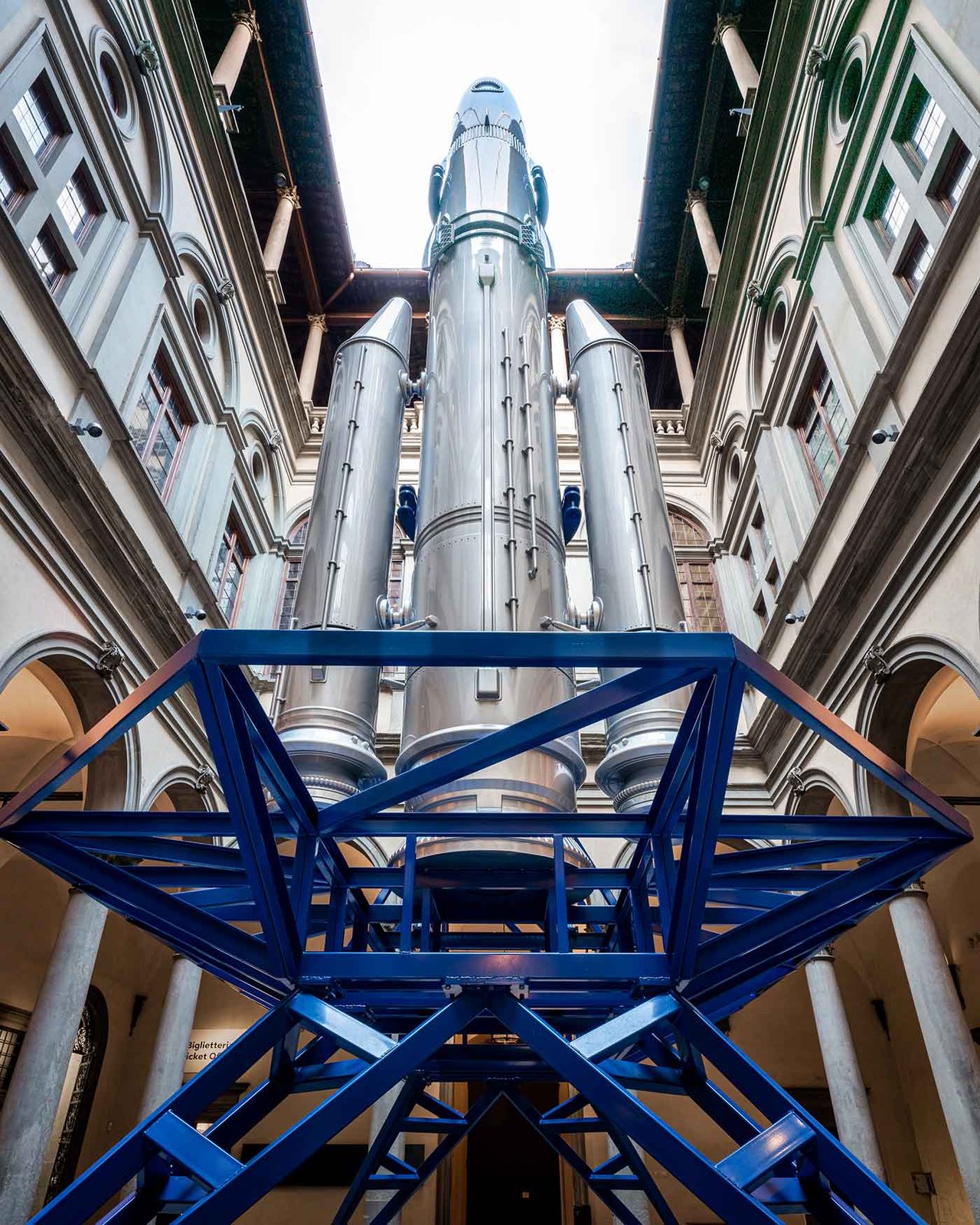
Some larger pieces from the Sandretto Re Rebaudengo Collection have been installed on the island on permanent show. They include an eye-catching Huff and Puff (2026), a tilted chapel by the US artist Hugh Hayden, conceived and created for San Giacomo, and the unmissable giant rocket sculpture GONOGO (2023) by the Polish artist Goshka Macuga, whose title raises the question of whether people should leave for another planet or stay and fight to save the Earth.
The exhibition “Don’t have hope, be hope!” — housed in a former powder magazine on the west side of the island — presents pieces from the FSRR collection by some 38 artists, including Anish Kapoor, Cecily Brown, Matthew Barney, Maurizio Cattelan, and Albert Oehlen. Works by Ian Cheng, Josh Kline, and Avery Singer, the foundation says in a press statement, will “explore the technological and social implications of the present, questioning notions of identity, labor, and reality”.
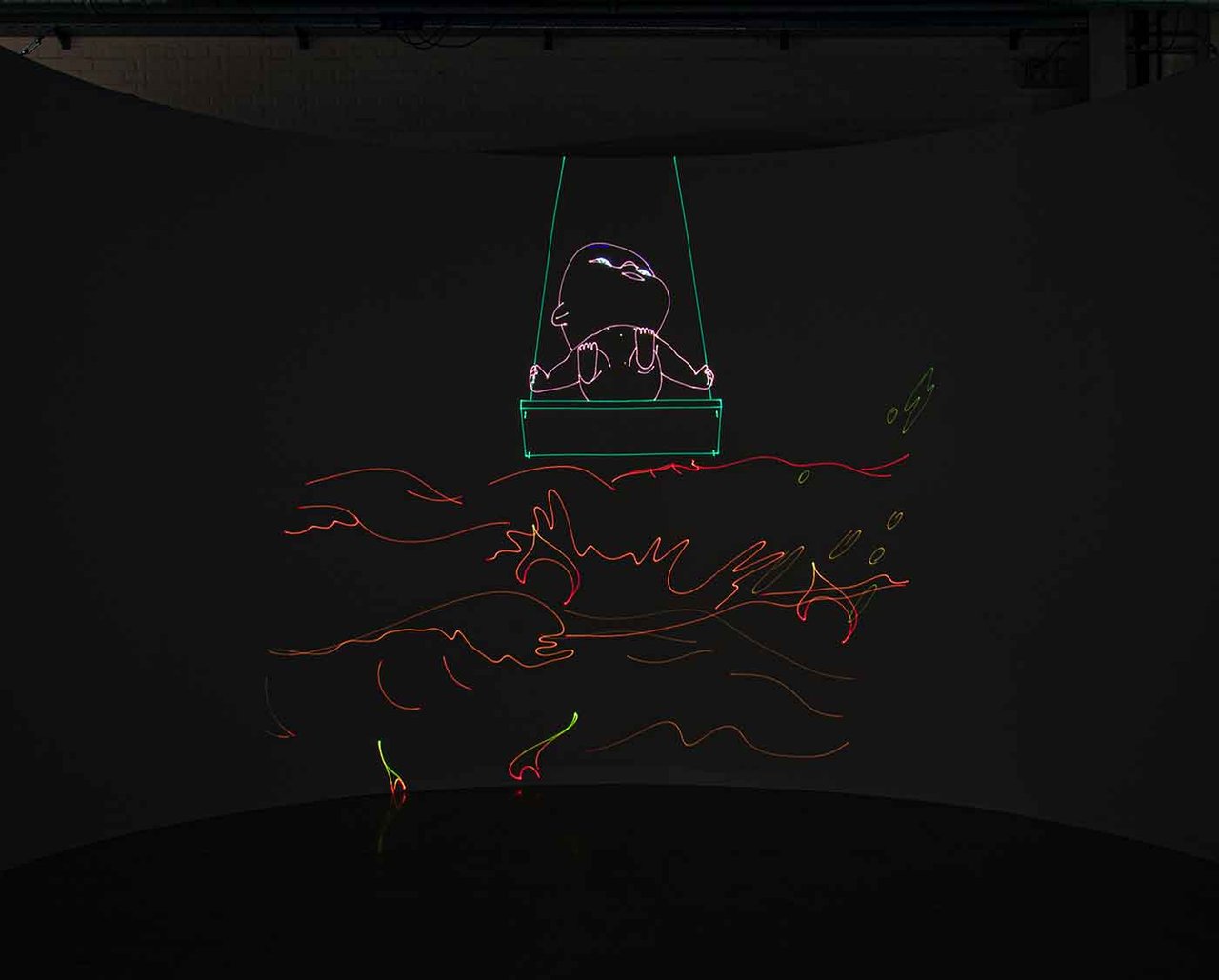
Matt Copson, “Fanfare/Lament”
Music composed by Oliver Leith. Curated by Hans Ulrich Obrist at Fondazione Sandretto Re Rebaudengo, Isola di San Giacomo, Polveriera Est, May 7 to September 12, 2026.
Inside the powder magazine on the east side of San Giacomo, for his multidimensional, site-specific, installation “Fanfare/Lament”, the British multimedia artist Matt Copson has installed four of his trademark spectral laser animations. They move across the building’s interior walls, following a choreography that commences outside with a pair of airborne sculptures, one of which depicts a series of disembodied eyes that gaze down at the public and the lagoon.
Inside, the walls are coated with a phosphorescent paint that absorbs light and re-emits it with a delay, so that the laser animations leave ghostly luminous trails behind them. The combined work, the foundation says in a statement, represents “a non-human agent that, within a broader choreography spanning the island and its forces, exerts power over us and directs our attention”.
The island, according to the foundation, “has been reimagined to cultivate and develop ecological awareness and practices”. All of the island’s energy is produced on-site using renewable resources via a photovoltaic system integrated into the architecture. While, for the restoration of the foundation’s historic complex, 30,000 bricks were cleaned by hand and have been reused.
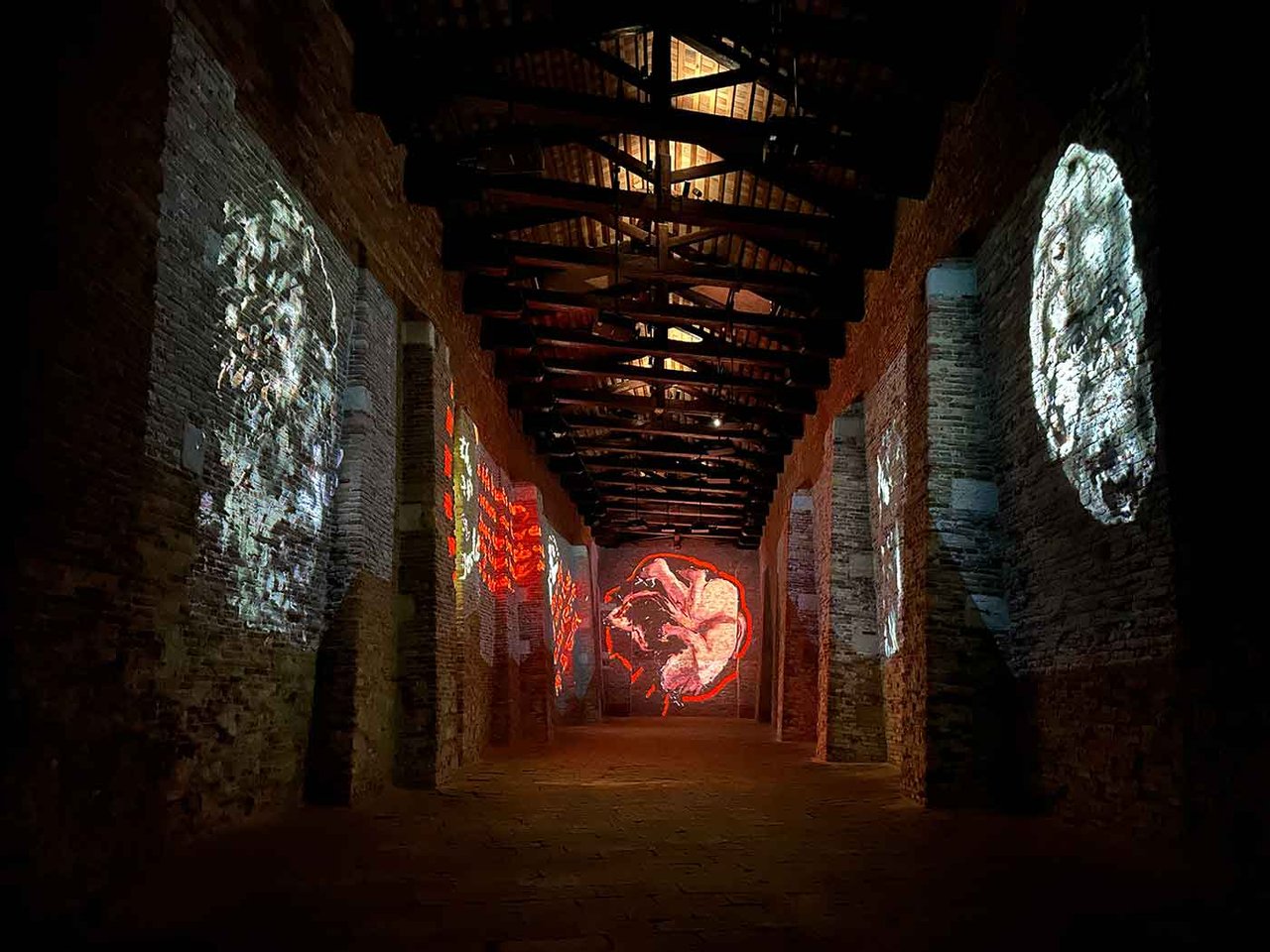
Nalini Malani, “Of Woman Born”
Curated by Roobina Karode, Artistic Director and Chief Curator of the Kiran Nadar Museum of Art (KNMA), Delhi, at Magazzini del Sale, May 9 to November 22, 2026.
Nalini Malani’s “Of Woman Born”, comprising 67 animations and a soundscape, transforms the Magazzini del Sale, a cavernous example of the city’s historic salt warehouses, into a continually evolving “thought chamber” on women, myth, and global conflict. The animations are made from more than 30,000 of the artist’s iPad drawings, and projected using nine video channels.
Malani, the Karachi-born, Mumbai-based, video artist, has built an outstanding corpus of work around the experience of migration following the partition of India in 1947. In “Of Woman Born”, Malani addresses the Ancient Greek myth of Orestes and how he was spared by the goddess Athena after murdering his mother Clytemnestra and her lover Aegisthus to avenge their slaying of his father King Agamemnon.
Malani finds resonance between the impunity of Orestes and present-day wars, where accountability is an anomaly and women continue to bear the brunt of violence.
The exhibition is an official collateral event of the Biennale, presented by Kiran Nadar Museum of Art (KNMA), Delhi, a future-facing institution founded and chaired by the collector Kiran Nadar, and India’s largest private museum.
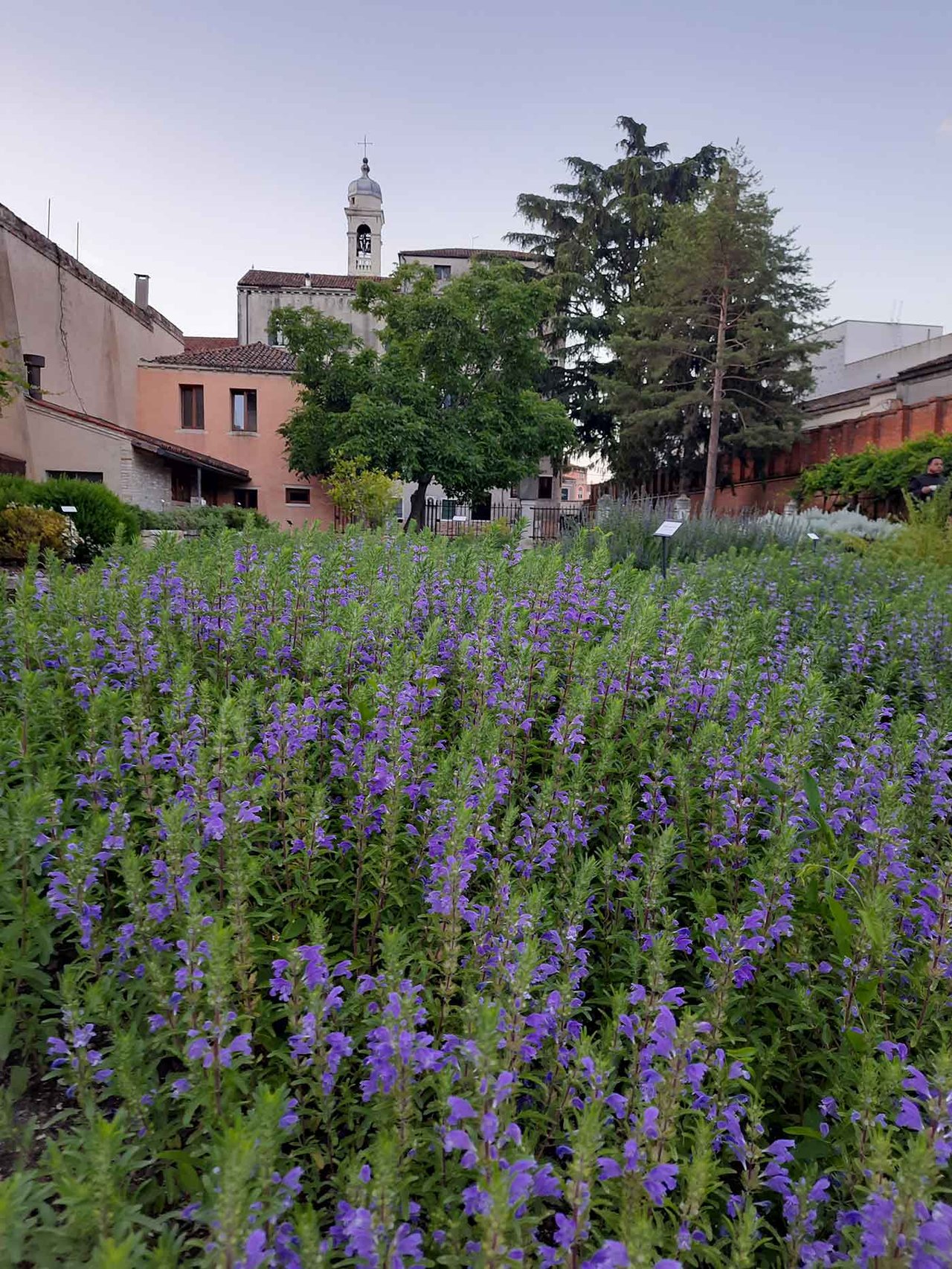
“The Ear is the Eye of the Soul”
Curated by Hans Ulrich Obrist and Ben Vickers in collaboration with Soundwalk Collective (Stephan Crasneanscki and Simone Merli) for The Pavilion of the Holy See at the Mystical Garden of the Discalced Carmelites, Cannaregio, and the Santa Maria Ausiliatrice Complex, Castello, May 7 to November 22, 2026.
The pavilion of the Holy See (the government of the Catholic Church based in the Vatican) is spread across two locations for “The Ear is the Eye of the Soul”.
The pavilion hosts a two-part exhibition that amounts to a call to the contemplative act of listening, featuring new commissions by 24 artists inspired by the life and legacy of the 12th-century mystic, artist, and composer, St Hildegard of Bingen.
The show features audio works by 20 artists, including Precious Okoyomon, and the musicians Patti Smith and Brian Eno, in the garden of the Discalced Carmelites in Cannaregio, north of the Grand Canal, as well as the final work of the late film-maker and author Alexander Kluge: a twelve-station film and image installation across three rooms at the former church of Santa Maria Ausiliatrice, Castello, close to the Arsenale and Giardini areas of the city that host the main Biennale exhibition.
The show’s curators, Hans Ulrich Obrist and Ben Vickers, who founded the Arts Technologies department at Serpentine, have worked with Soundwalk Collective to create an instrument that “listens” to the garden of the Discalced Carmelites. The instrument translates electromagnetic activity, biophotonic data, and the micro-acoustics of wind, water, wood, insects, and soil into an evolving cross-species composition.
The pavilion’s organisers said in a press statement that the exhibition was devised “in response to Koyo Kouoh’s curatorial proposition for Biennale Arte 2026 to slow down and attune to a quieter register”. They also referred to a remark made by Pope Leo XIV in November 2025 that “the logic of algorithms tends to repeat what ‘works’, but art opens up what is possible. Not everything has to be immediate or predictable.”
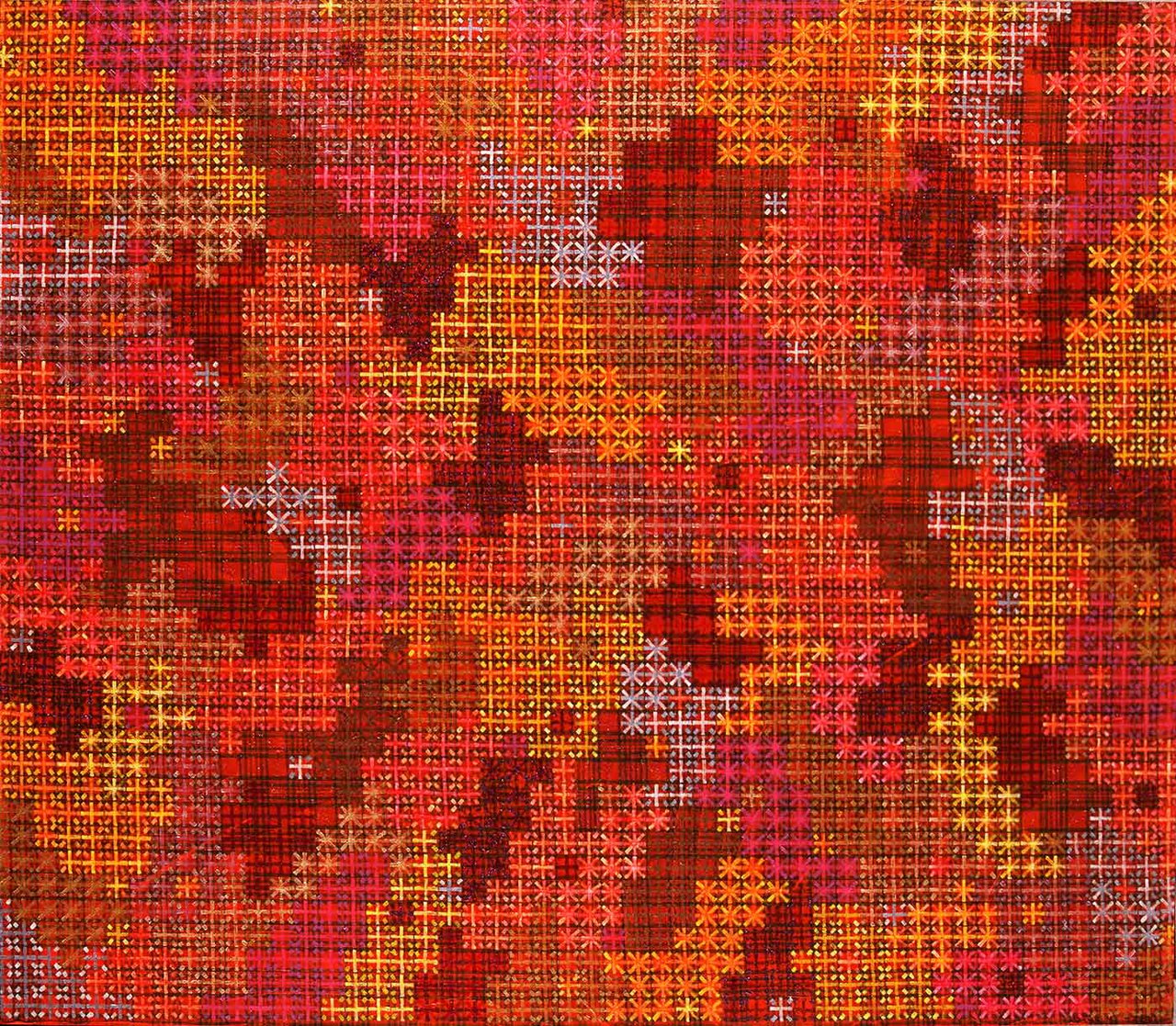
Ding Yi, “Cosmotechnics: Ding Yi as a Planetary Code”
Curated by Alfredo Cramerotti and Auronda Scalera at Fondazione Querini Stampalia, May 9 to November 22, 2026
The Shanghai-based artist Ding Yi is showing work at the Venice Biennale for the first time since participating in the inaugural exhibition of Chinese art in 1993, curated by Achille Bonito Oliva.
The artist’s austere but painterly monochrome grids, which combine the cross figure “+” with the character “x”, would sit well in a survey of contemporary generative art. Ding Yi’s mesmerising take on the grid, including the “Appearance of Crosses” series which he has been developing since 1988, chimes with the work of abstract graphic pioneers such as Josef and Anni Albers and the foundational conceptualist Sol LeWitt.
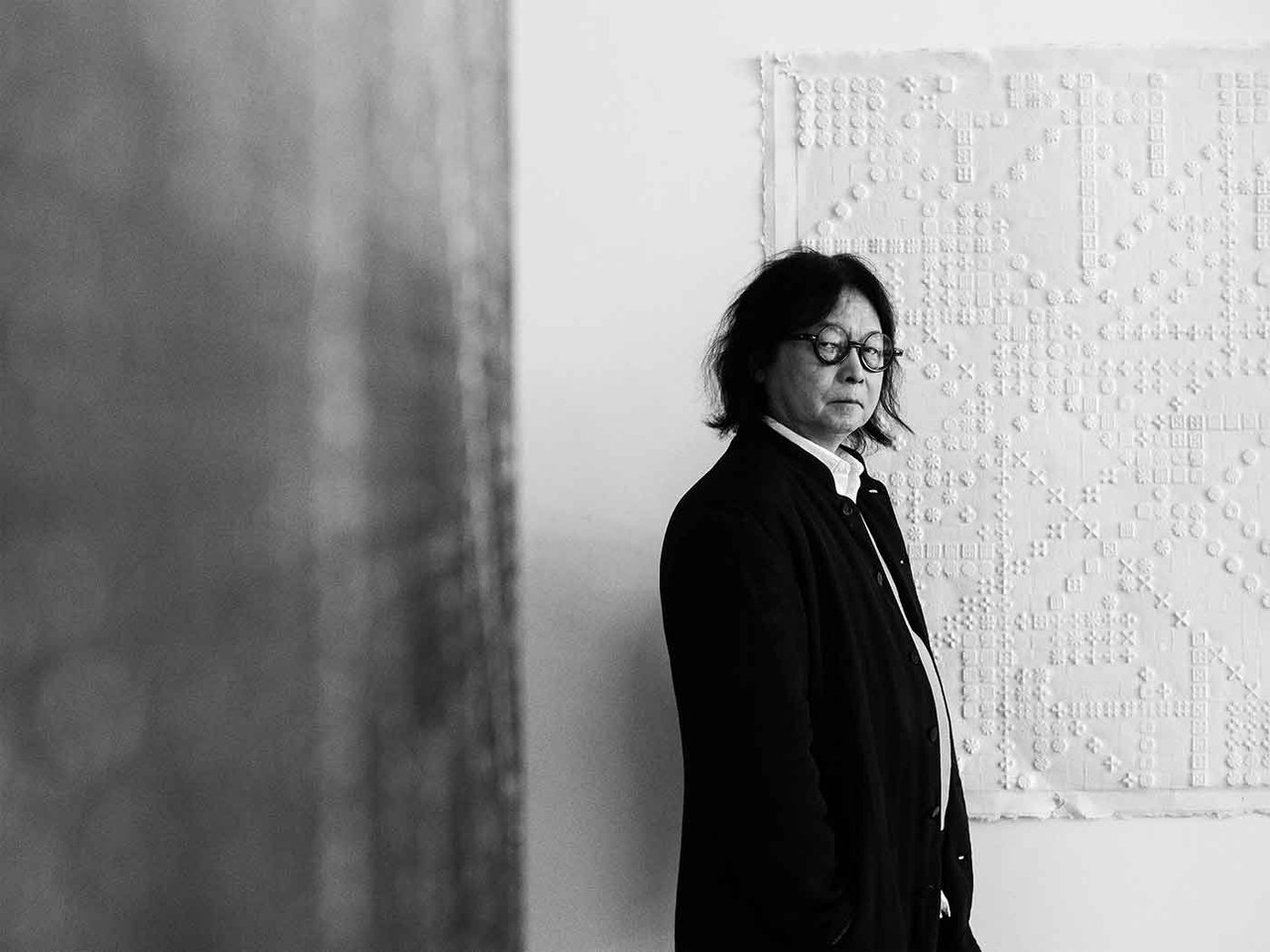
The show’s curators, Alfredo Cramerotti and Auronda Scalera, have assembled both new and historic examples of Ding Yi’s work to show at the Fondazione Querini Stampalia, with a “forest of the artist’s panels” situated in a part of the complex designed by the modernist architect Carlo Scarpa.
They see the panels as drawing on a range of references from “classical Chinese ink traditions and memories of industrial Shanghai, to anticipations of the role of technology in our future.”
Cramerotti and Scalera are also curating a show of works, titled “Body Machine (Meridians)”, by Chinese-Canadian artist Sougwen Chung: a large-scale immersive installation on the giant LED screen, at Palazzo Citterio, Milan, the National Museum of Digital Art (until August 2026). Over the past decade, Chung has trained robotic systems on their own drawing movements, creating live performances in which the human and the machine respond to one another in real time, most recently at the Zero 10 section of Art Basel Hong Kong.
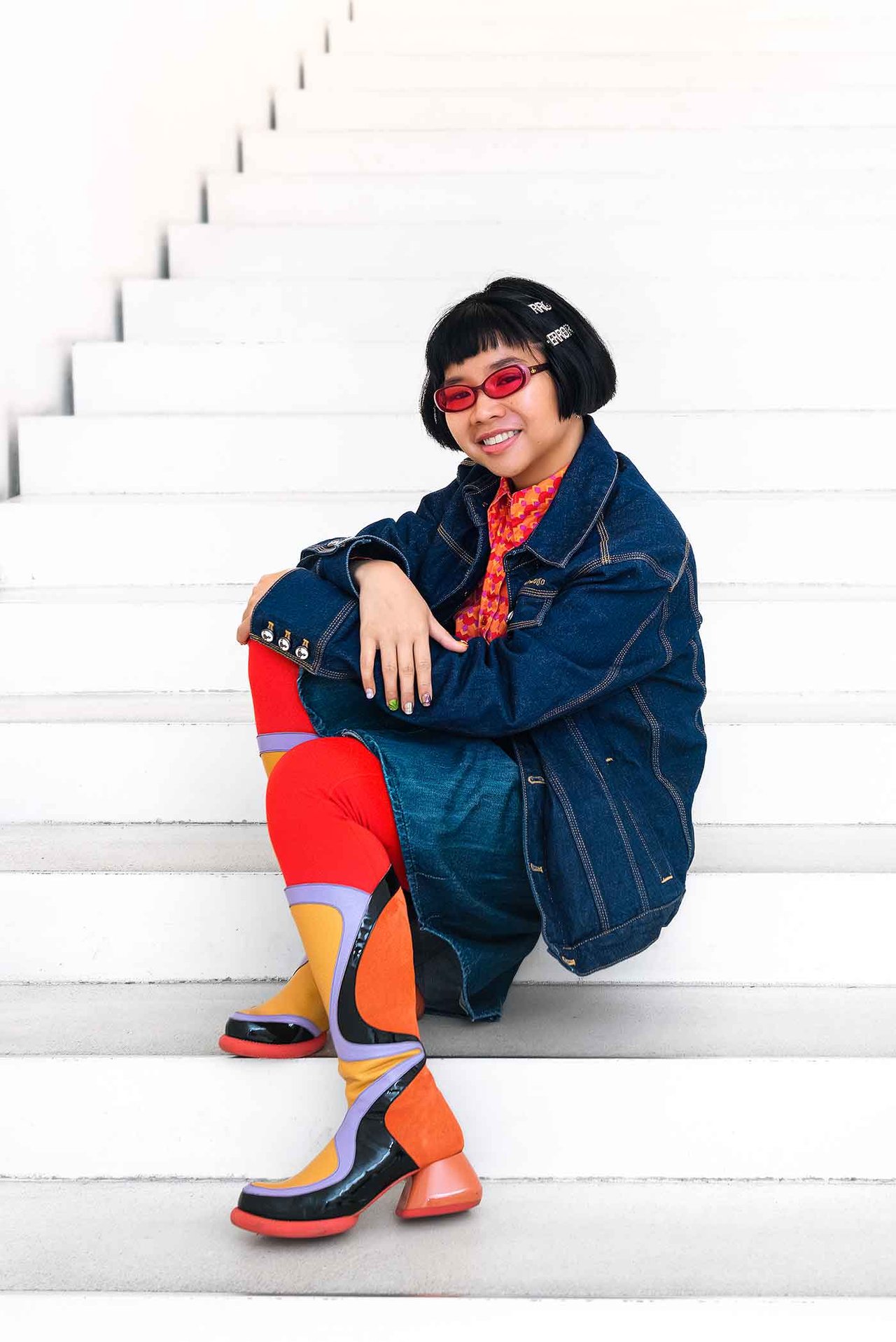
Natasha Tontey, “The Phantom Combatants and the Metabolism of Disobedient Organs”
Commissioned by LAS Art Foundation (Berlin) and Amos Rex (Helsinki) for Ateneo Veneto, May 9 to October 25, 2026
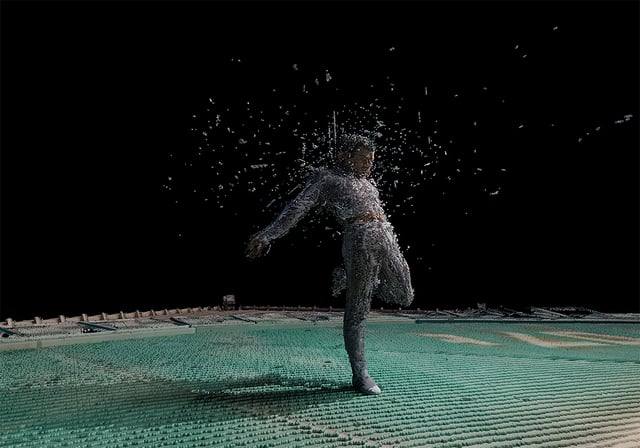
In “The Phantom Combatants and the Metabolism of Disobedient Organs”, the Jakarta-based artist Natasha Tontey explores the sovereignty of bodies, cultures, and land; military imaging; and cultural symbolism. Her most ambitious exhibition to date, it makes use of a mix of DIY and CGI effects, as well as LiDAR, 3D photogrammetry, thermal cameras, and quantum ghost imaging (using photons to produce images). The work was co-commissioned by two institutions, LAS Art Foundation (Berlin) and Amos Rex (Helsinki), that are dedicated to supporting new artistic practices involving technology.
At the center of the installation, at Ateneo Veneto, Venice’s historic academy of science, literature, and the arts, Tontey’s video reimagines the story of Len Karamoy, a combatant in Permesta, a political movement in North Sulawesi that fought the centralized rule of the Indonesian government in 1957-61. Karamoy, like Tontey, is a member of the Minahasan, an Indigenous group from North Sulawesi whose identity includes both Christian and animist beliefs.
The artist plays with the concept of purgatory, part of the Minahasan belief system, by using a red wash to illuminate the coffered ceiling of the Ateneo Veneto, painted by Jacopo Palma il Giovane in 1600, which reflects the liminal, purgatorial, state of unresolved political struggle examined by Tontey in “The Phantom Combatants”.
Eva & Franco Mattes, “Rage Bait”
Curated by Nadim Samman and Luisa Haustein for Autotelic Foundation at Palazzo Franchetti, May 6 to June 30, 2026, and Le Cabanon, May 6 to 31, 2026
The New York and Milan-based duo Eva & Franco Mattes have tracked the vagaries of networked life for over two decades. Their exhibition, whose name, “Rage Bait”, refers to deliberately provocative online content, makes use of installation, video, and generative AI, to examine how online outrage becomes an inevitable output when platforms are optimised for engagement.
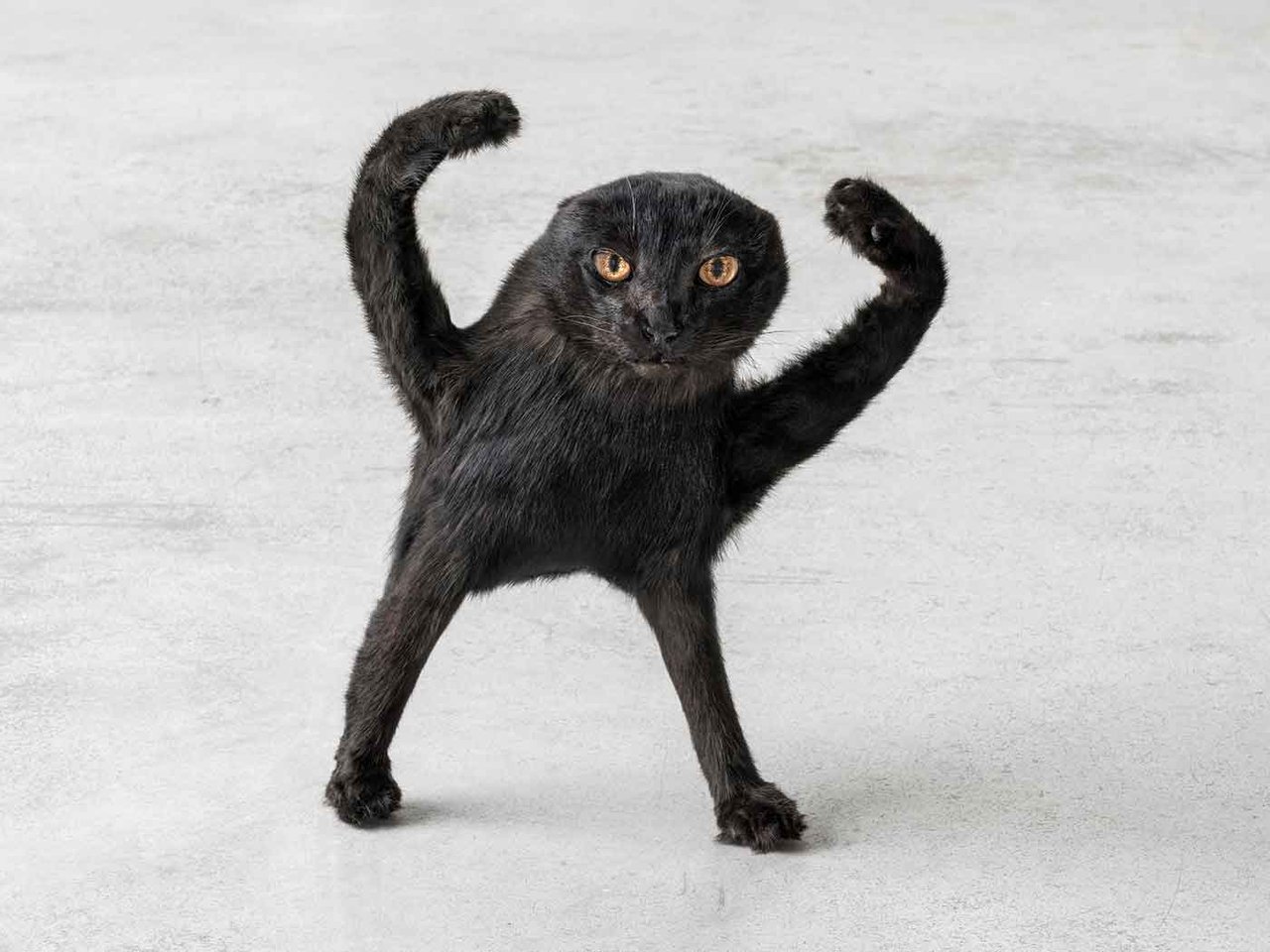
In one of their installations, Cursed Cat (in the Dataset) (2025), at the show’s first location, Palazzo Franchetti, the artists have a computer running a large language model that has been trained only on images of a sculpture of a frozen-faced black, earless, stuffed cat — a physical manifestation of the internet meme “Cursed Cat”.
At the second location, Le Cabanon, a swimming pool next to the church of Il Redentore — the artists have created a site-specific video installation But I Love Human (2025), with the pool capturing the reflection of moving images generated by a massive LED screen suspended over the water. The video features performers who mimic the mechanical gestures of “non-player characters” (NPCs) on live-streamed video games. “There is an eerie fascination,” the artists say in a press statement, in watching the NPCs “enact these repetitive routines, as if trapped in an endless loop”.
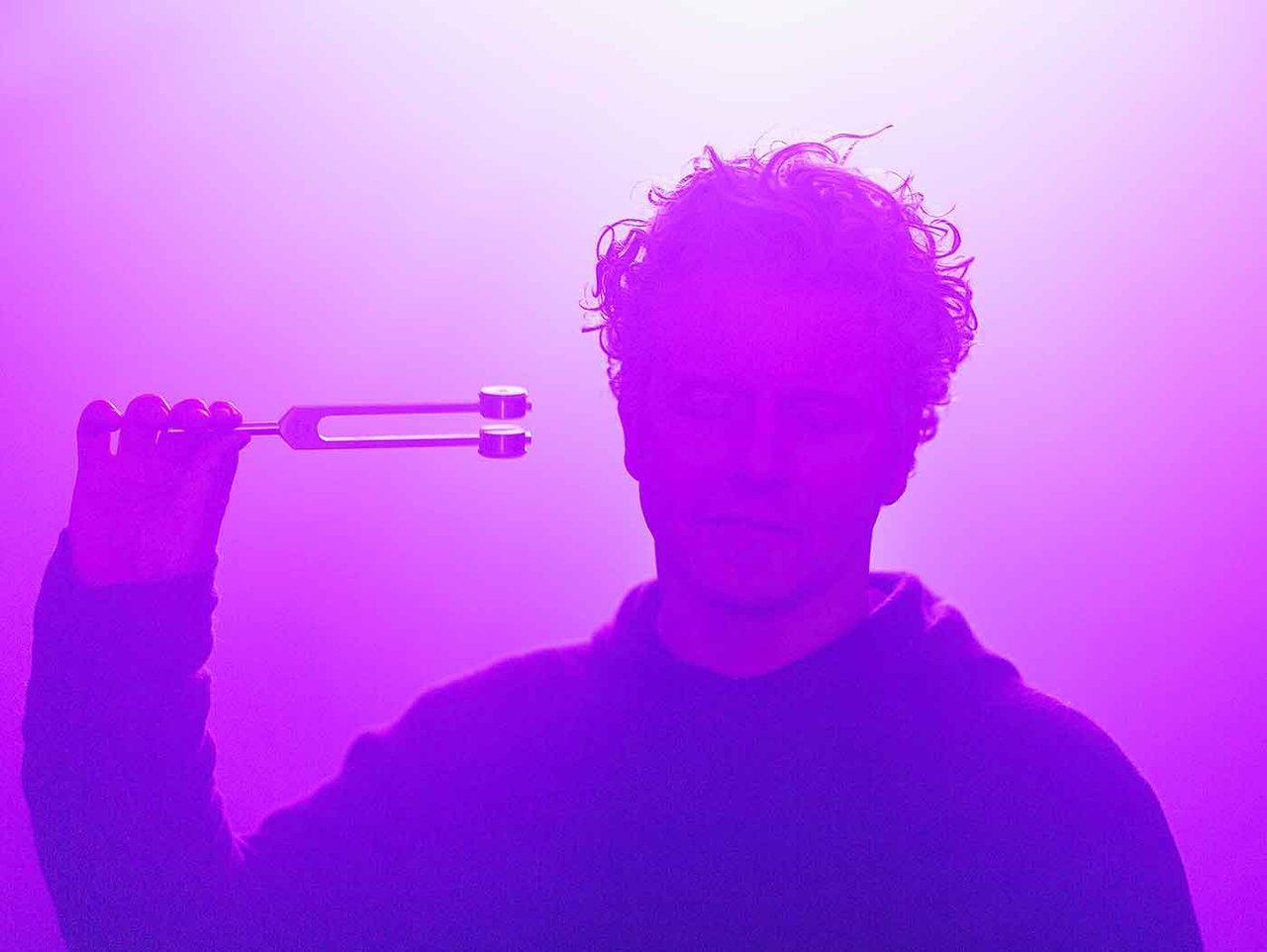
Chris Levine, “Higher Power”
San Clemente Palace Hotel, opening May 4, 2026
The artist Chris Levine will unveil a new site-specific laser installation, “Higher Power”, during the opening week of the Biennale. It will illuminate the sky above the San Clemente Palace Hotel on an island in the Venetian lagoon south of the Giudecca and west of the Lido.
Levine, who is known for his light-infused portrait of Queen Elizabeth II, Lightness of Being (2008), and a monumental installation “528 HZ Love Frequency”, shown at Houghton Hall, Norfolk, in 2021, has an exhibition, “Light — Selected Works”, at Gazelli Art House, London, until May 16.
Louis Jebb is Managing Editor at Right Click Save.
No comments yet. Be the first to share your thoughts.
Mentioned in this article
People: Hans Ulrich Obrist, Adriana Rispoli, Alexander Kluge, Alfredo Cramerotti, Auronda Scalera, Ben Vickers|Events: Strange Rules, Venice Biennale|Organizations: Fondazione Sandretto Re Rebaudengo, Palazzo Diedo|