Life with Assets | NPCs as Infrastructure
The curator Nora O’ Murchú on how contemporary artists mobilize non-player characters to unsettle logics of power
The curator Nora O’ Murchú on how contemporary artists mobilize non-player characters to unsettle logics of power
NPC — background character, quest giver, disposable enemy, political insult, meme. In games, they populate environments, filling streets, shops, and landscapes. In culture, the figure has drifted into shorthand for automation, conformity, even dehumanisation. Always secondary, always scripted, the NPC is defined by what it is not: not the player, not the protagonist, not the one with agency.
Yet precisely because they appear trivial, NPCs reveal something crucial. They are infrastructure: routines that stabilise the world, organise behaviour, and make digital environments feel coherent and alive.
To think of NPCs infrastructurally is to shift perspective from what they represent to what they do. NPCs operate less as visible characters than as background conditions, regulating tempo, reproducing hierarchies, and tying play to economies of repetition. Media theorists remind us that infrastructures shape how things hold together,¹ scaffolding perception and experience² while quietly organising social and technical life.³ ⁴ NPC gestures, whether walking, clustering, or idling, fade into ambience, registering only as the texture of a functioning world.
Crowds crossing streets in Grand Theft Auto or villagers tending routines in Skyrim create the impression of a city that works, a community that breathes. Such loops echo infrastructures of traffic systems, marketplaces, and queues: the logistical rhythms that make environments legible as lived-in. Once absorbed as routine, they disappear from notice, yet still instruct players in what counts as normal behaviour: which gestures recur, which categories hold, which actions remain peripheral. NPCs naturalise order through habit, repetition that makes worlds feel natural and lived-in.
Artists who isolate the NPC extend this logic outward, making visible how these figures structure gameplay and echo wider processes of organisation and control. In their work,
NPCs appear as coded routines and economic units that embed relations of power, defining who is active and who is passive, who belongs at the centre and who remains peripheral, and which hierarchies are enforced or ignored.
This essay considers how contemporary artists mobilise the NPC to unsettle these logics. Their works treat NPCs as figures of atmosphere, labour, repetition, and miscategorisation – pushing them until they falter, break down, or expose the limits of the categories they are meant to secure. Taken together, these practices reveal NPCs as critical figures: infrastructures that naturalise relations in games and beyond, and through which other ways of modelling life might be imagined.
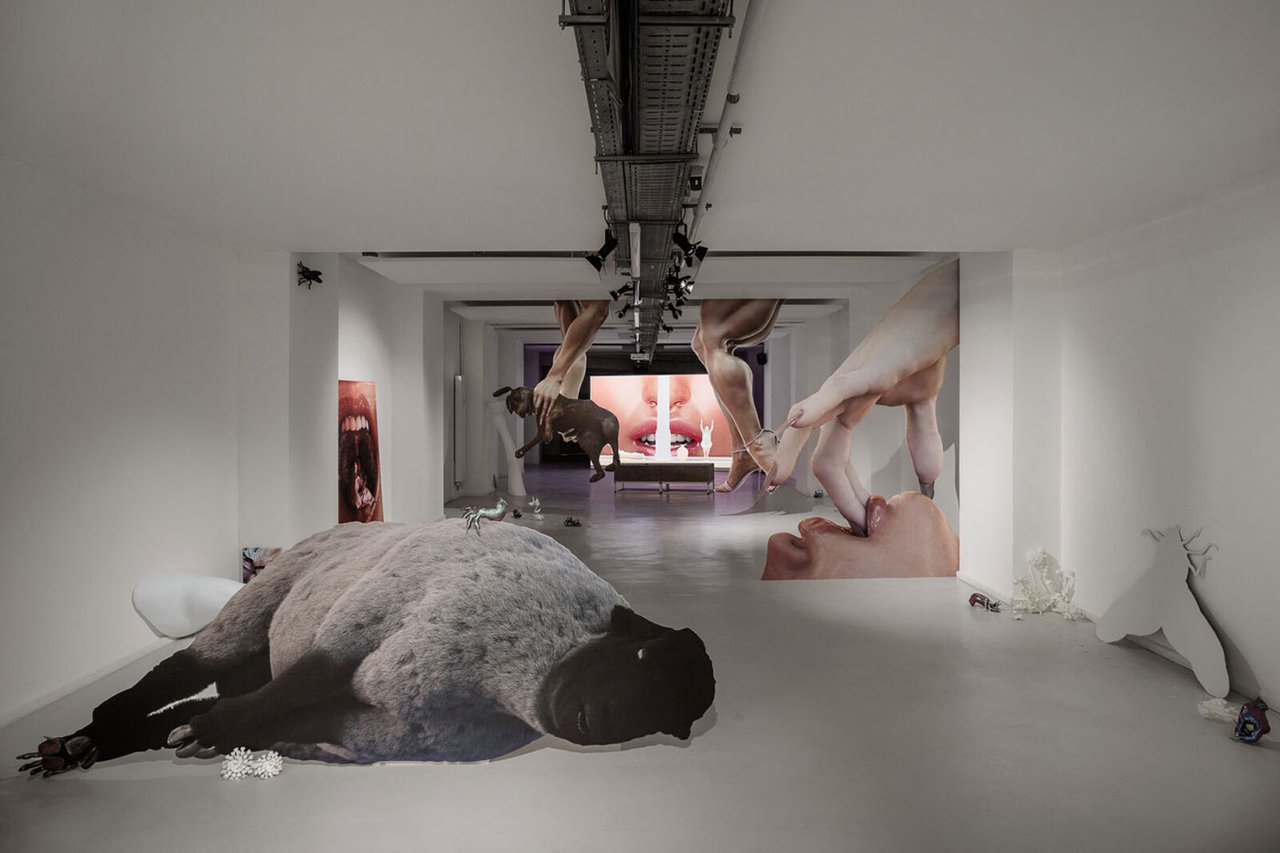
In their film Uncensored Lilac, Bassam Issa Al-Sabah and Jennifer Mehigan focus on a group of goddesses and their assembly of familiars, pets, servants, and technologies. They reside in a synthetic, hallucinatory island landscape irreversibly altered by climate collapse. In their world, heat, both environmental and emotional, circulates everywhere, yet it fails to unite the figures. Estranged from one another, they share a land but not a common ground. Throughout the film each delivers a monologue directly to the camera, presenting plotlines of desire, revenge, or boredom, confessing their fantasies and bickering. As their bodies morph and shimmer, they fill the screen saturating the world with atmosphere through their presence.
These figures begin from the grammar of the NPC — the stock assets of game engines, starter avatars, and looping routines designed to stabilise the background of a world. Issa Al-Sabah and Mehigan take these defaults and exaggerate them, stretching them beyond their categorisation.
By layering hyper-feminine walks, hyper-masculine stances, and ornamental textures adorned with pearls and flowers, the artists give the NPC a new excess that makes them lush, unstable, and strange.
Where the conventional NPC is restricted to a single looping line that anchors a scene in place, here those scripts are stretched into extended monologues, delivered directly to the camera with intensity. This expansion transforms the NPC from a functional placeholder into a figure. The default is amplified, taking centre stage as an affective presence rather than background ambience. Exaggerated in this way, it is revealed as a normative script that can be reworked and queered.
In Uncensored Lilac, the exaggeration of the stock figure can be understood as a form of what [José Esteban] Muñoz calls disidentification, a way of reworking dominant forms, performing them to excess, without rejecting them outright. As Muñoz explains, disidentification is “a strategy that works on and against dominant ideology. Instead of simply resisting dominant ideology, the subject who disidentifies negotiates such structures and works to transform them.”⁵
The NPC, designed as the most generic of game assets, becomes a site of queer excess, its defaults inflated until their normative coding is revealed as artifice.
The result is a disidentification with the stock form, a queering of the templates that make digital worlds appear natural. This reworking also engages the NPC’s cultural life beyond games. As a meme and insult, the NPC has circulated widely online and in media, used as a shorthand for social conformity and for people deemed incapable of thinking for themselves. Issa Al-Sabah and Mehigan work with this cultural coding as much as with the technical asset. In doing so, they practice the same disidentificatory move that Muñoz describes: rather than rejecting the NPC as a figure of conformity, they amplify it until what is coded as generic and non-agential becomes excessive, unstable, and visibly central.
By queering the NPC, Issa Al-Sabah and Mehigan also unsettle its infrastructural function, exposing how they organise atmosphere, belonging, and the sense of a “natural” world. This reveals the NPC as a normative infrastructure that can be reworked and shifted from a looping background routine into a central affective presence.

As Brian Larkin argues, infrastructures are not only technical systems but also aesthetic and affective forms. They “create the ambient conditions of everyday life”, embedding moods and rhythms so deeply that they appear natural.⁶ Uncensored Lilac stages this directly. Its avatars replace narrative and relation with a mode of worlding built from atmosphere, ornament, and excess. The film demonstrates that a world can feel full, inhabited, and even “natural” without characters ever interacting or stories progressing. Here, atmosphere becomes the infrastructure: presence, mood, and density do the work of holding things together. In this way, Issa Al-Sabah and Mehigan reveal NPCs not as marginal background but as the means by which worlds are organised and sustained.
As infrastructures, NPCs are never neutral. They encode normative orders of who can appear, how they are recognised, and who is excluded.
Like stock images or AI-generated figures that reproduce classed and racialised tropes, NPCs secure worlds through categories of belonging. To queer the NPC is to show that what appears generic is already political: an infrastructure that sorts and values life. Uncensored Lilac enacts this directly, amplifying its excess and strangeness, unsettling the politics of recognition embedded in even the most ordinary figures.

Turning to another aspect of the NPC’s infrastructural role, Alan Butler’s Down and Out in Los Santos highlights how they sustain worlds through programmed routines. Using Grand Theft Auto V’s in-built camera system, Butler photographs NPCs coded as the city’s most disposable inhabitants: the homeless. He presents the resulting screenshots in the style of documentary or street photography, echoing traditions of social realism. The images depict scenes of precarity and marginality within the game’s world: bodies slumped on benches, figures curled up in alleyways, groups gathered around trash fires. By treating these algorithmically generated characters as photographic subjects, Butler reveals them as infrastructural workers whose tasks include wandering streets, filling pavements, and absorbing player violence, reproducing the social order of Los Santos. Their gestures embody precarity so that the city’s wealth, violence, and glamour feel more convincing.
Rather than extracting assets or staging new sequences, Butler documents NPCs in their native environment, observing how they persist within the coded life of Los Santos. This act of in-game observation foregrounds the protocols that govern their routines.
As Alexander Galloway argues, protocol is the logic of control in digital systems: “a language that regulates flow, directs netspace, codes relationships, and connects life-forms.”⁷ It sustains worlds through the quiet enforcement of rules, loops, and permissions. Butler’s photographs show how NPC behaviour is governed by these protocols and maintain the city’s realism. Crucially, this realism depends on inequality. NPCs coded as homeless make poverty and disposability appear as natural features of urban life. Protocol, here, is political. It embeds hierarchies of value into the very conditions of play.
To see NPCs in this way is to understand them as infrastructure: coded routines that organise worlds by scripting social order itself. This disposability can also be read through Sylvia Wynter’s account of how cultural systems organise life into categories of value and non-value, distinguishing between lives that count and those rendered expendable.⁸ While Wynter describes this in relation to the overrepresentation of ‘Man’ as the human, her account of genre helps illuminate the NPC. The homeless NPC is structurally necessary to Los Santos, functioning solely as a figure of abandonment. They persist as protocols of precarity, endlessly repeating gestures of poverty that allow the city to cohere around their exclusion.
Through Butler, the NPC emerges as an infrastructural figure whose routines reinforce digital worlds by naturalising inequality and disposability as the background conditions of play.
If Butler makes visible the inequalities embedded in NPC protocols, [Ryotaro] Sato turns to their fragility, the temporal scripts that hold worlds together. In Outlet, he shifts attention from NPCs as characters to NPCs as routines. Placed into suburban and logistical landscapes, they continue to run their behaviours — pathing, clustering, colliding, seeking goals — but without the design logics or storylines that once made those actions cohere. Stripped of that framing, the NPCs register less as personalities than as procedures. Soldiers, shoppers, and drivers remain recognisable, but their movements collapse into loops or freeze mid-action.
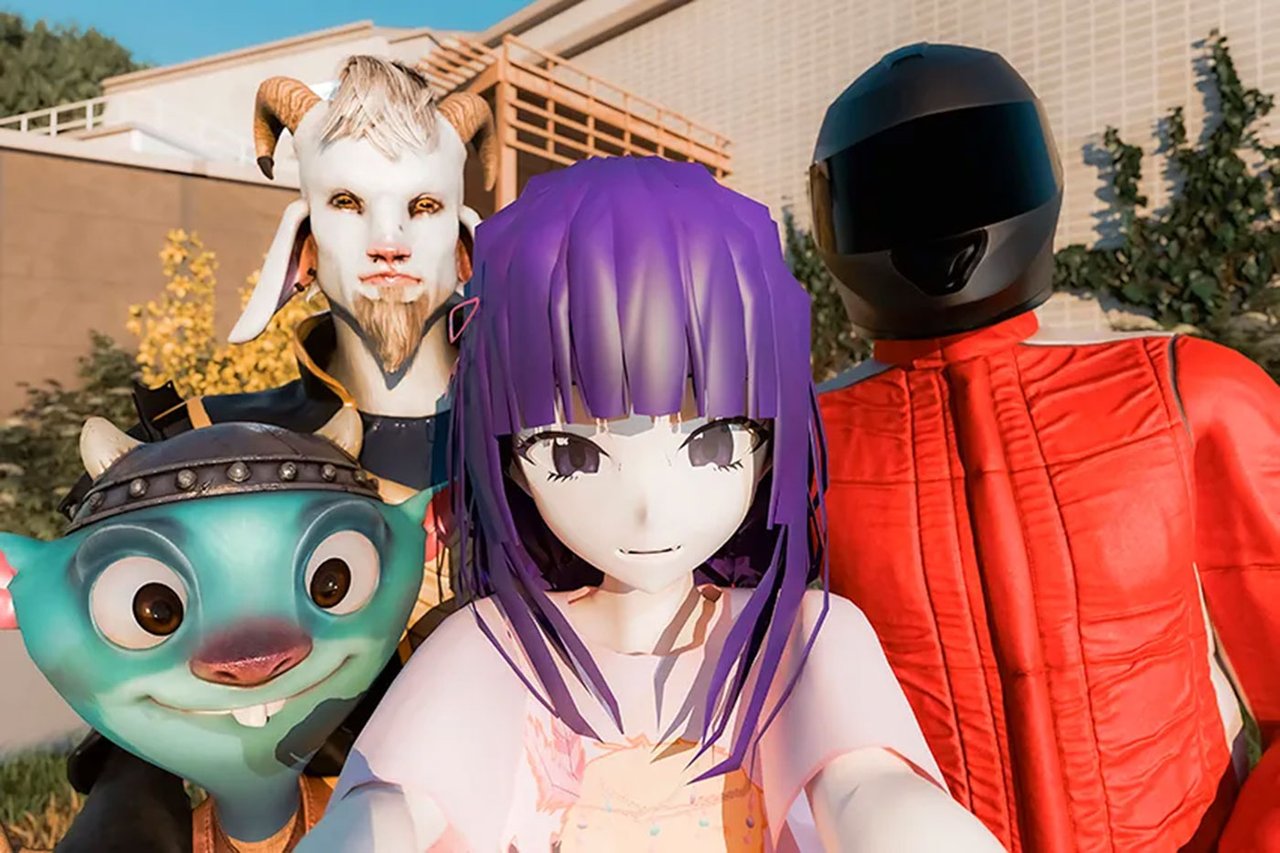
In most games these routines stay in the background, shoring up the world without drawing attention to themselves. Sato brings them forward, showing repetition as the mechanism that lends the simulation its coherence. Pushed until they break down, the scripts reveal what usually remains unseen: NPCs function less as characters than as infrastructural figures, their gestures simulating the impression that a world is running. They occupy an ambiguous zone — neither fully characters nor entirely absent — ambient figures whose routines anchor the scene and affirm the player’s position within it. Yet these background types are not neutral. They are coded into hierarchies of soldier, shopper, aggressor, and victim, roles that reproduce existing social categories. In Outlet, those categories collapse under strain, stretched beyond their limits until their emptiness as types is exposed.
Outlet also makes clear that NPCs belong to a wider economy of circulation. Their value lies less in what they represent than in their endless reproducibility: stock figures licensed, resold, and slotted into new contexts. Repeated to exhaustion, their gestures lose symbolic force and reveal themselves as empty procedures.
In this sense, Sato shows the NPC as a figure of capitalist production itself, a type whose authority comes only from circulation, and whose breakdown exposes the fragility of the systems it is meant to secure.
Driven to their limits, these scripts reveal how quickly such categories unravel. The soldier or shopper no longer signals order but instead discloses the hollowness of the type itself. Sato shows the NPC as a temporal infrastructure, with its looping routines holding worlds together while simultaneously revealing how quickly those categories fall apart when repetition comes into view.
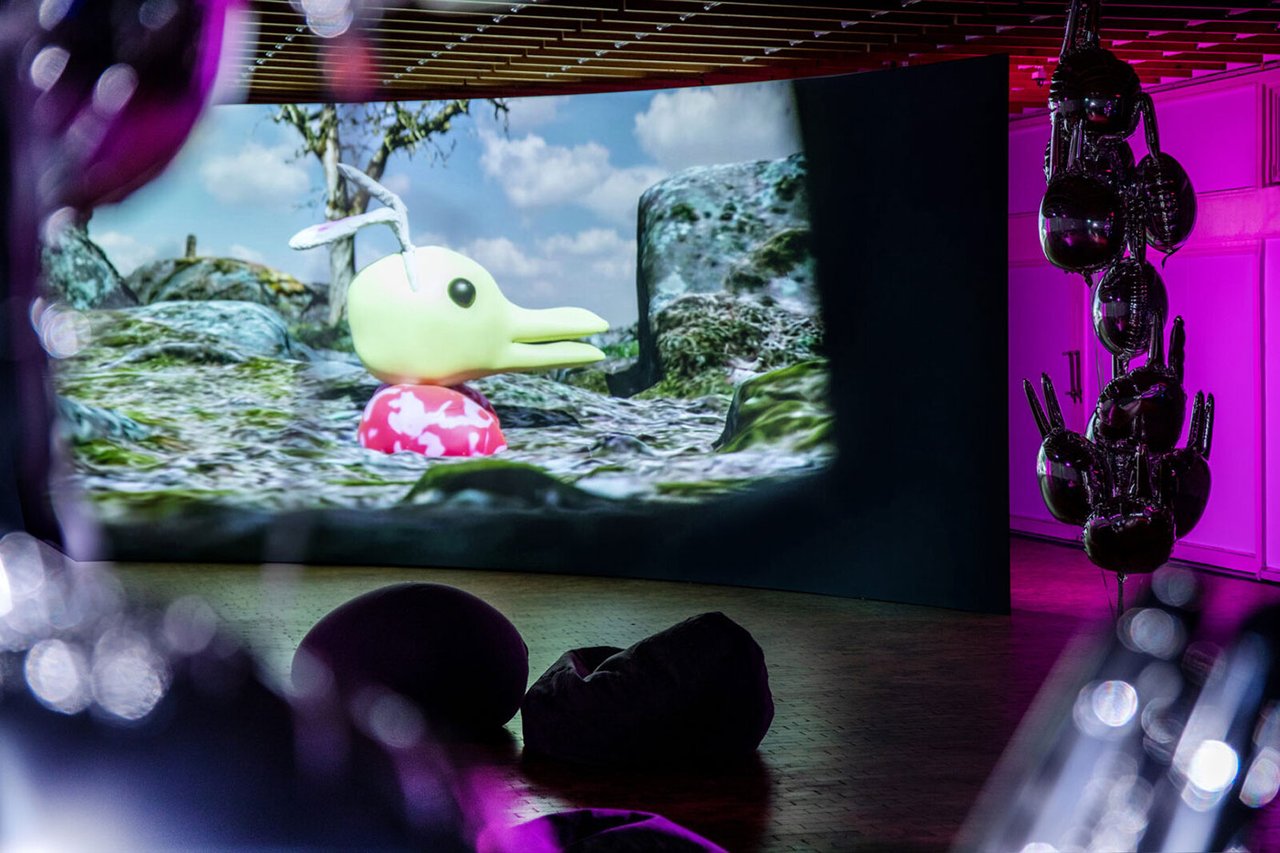
These questions of repetition and circulation open onto a wider terrain: the infrastructures of computational vision, where datasets and categories shape how bodies are rendered and recognised. In duckrabbit.tv, Simone C. Niquille asks what happens when the NPC is no longer a background character in a game world but becomes the very infrastructure of vision.
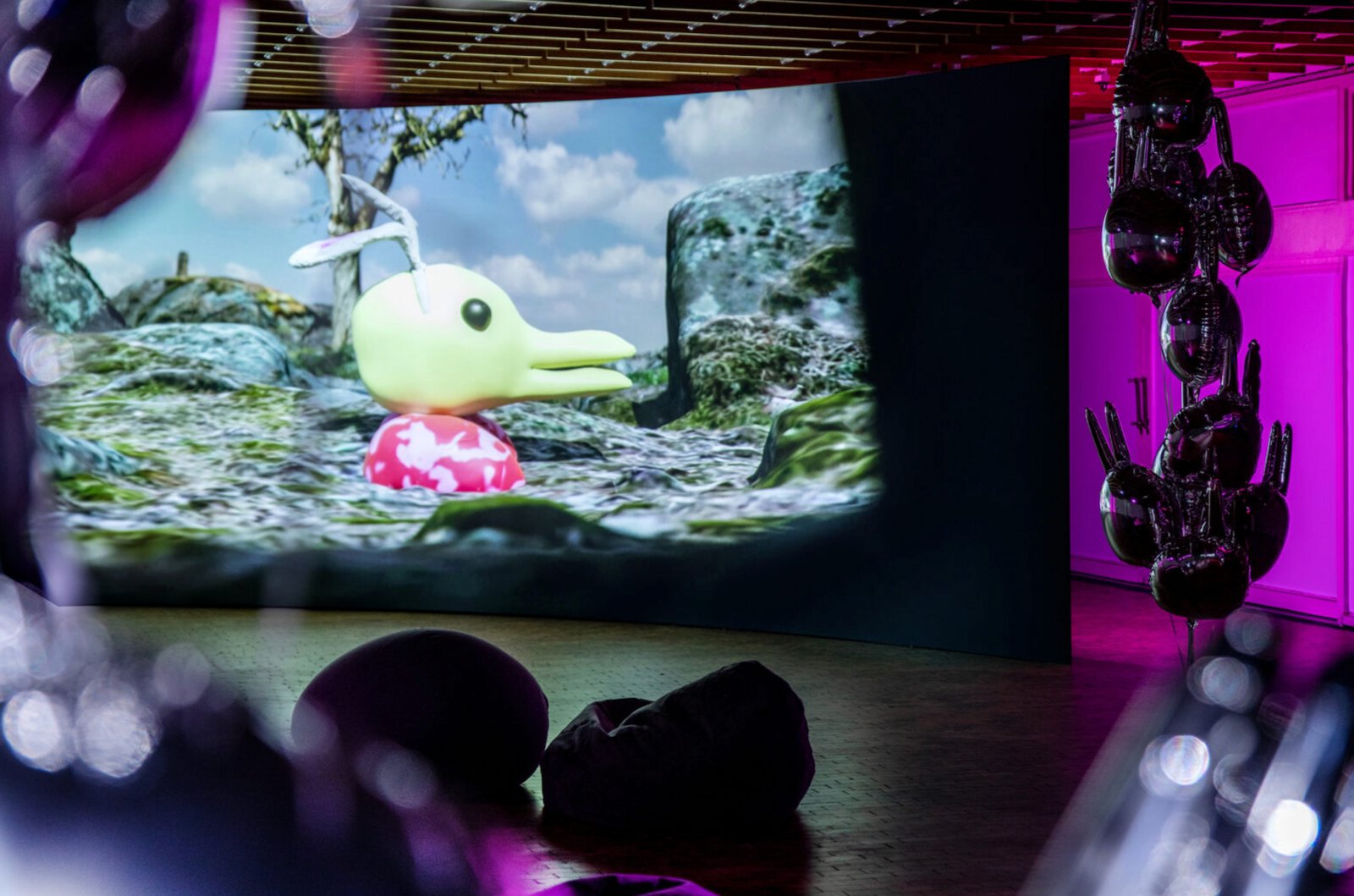
Her synthetic figure, duckrabbit, borrowed from Joseph Jastrow’s famous optical illusion, appears across seven short videos where the same form is staged in different technical situations — a balloon, a shadow, a chrome object, a traffic sign, a meme.
Moving through calibration spheres, Cornell Boxes, planetary models, and rendering pipelines, duckrabbit functions less as a character than as a workflow: a unit built to circulate across infrastructures of recognition. The figure keeps reappearing, instantly recognisable yet never fully resolved, exposing the labour required to make legibility appear natural.
In duckrabbit.tv, calibration environments appear as part of an image economy: a system where images circulate as commodities and tools, valued less for what they represent than for how they standardise, process, and enable other images. Rather than disappearing into the background, they operate as stages for recognition itself. The Cornell Box, the chrome sphere, and the planetary model, each a benchmark for testing light, colour, and scale in CGI, circulate as images that package technical standardisation in an aesthetic of clarity and order.
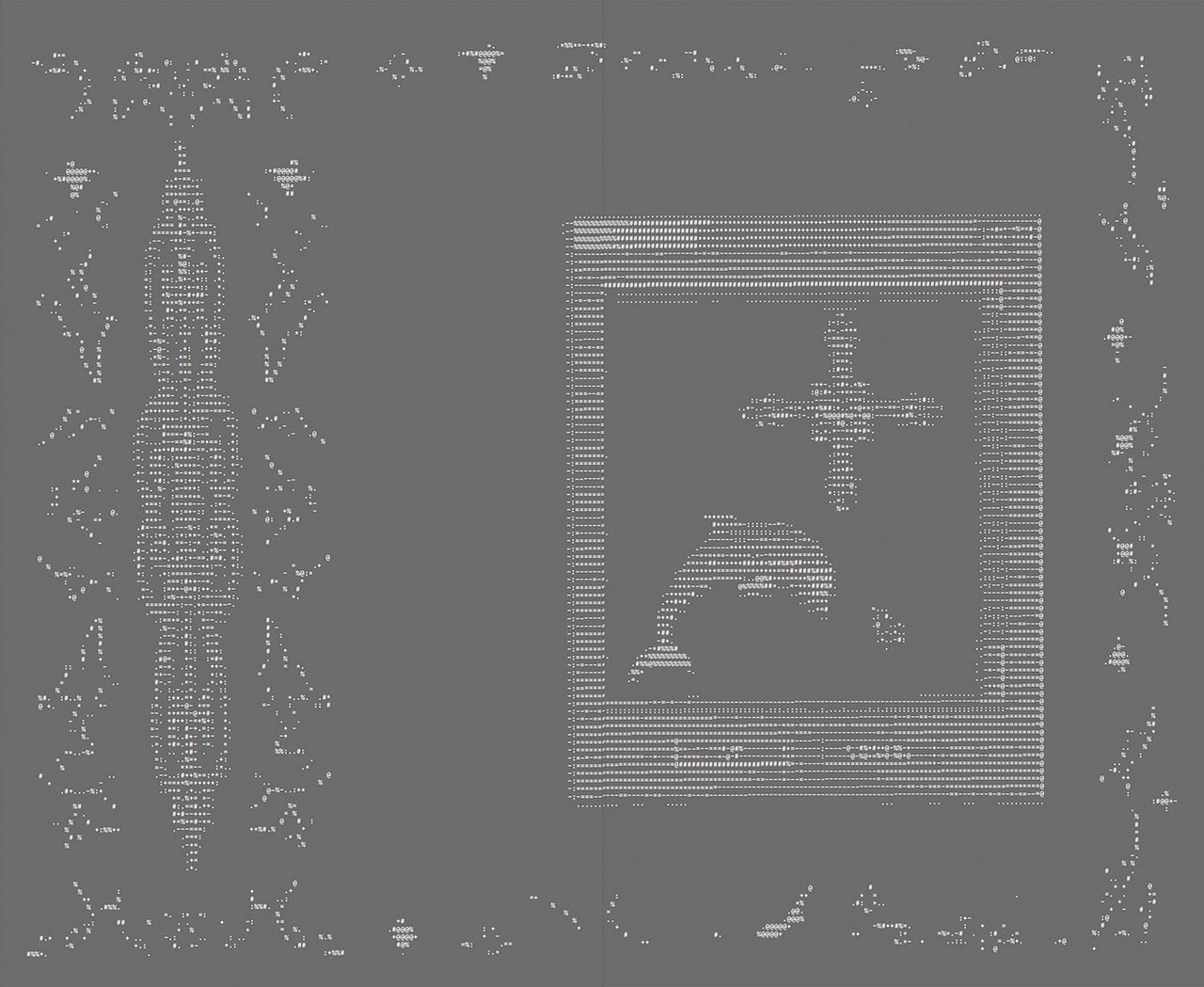
Jacob Gaboury describes such forms as “image-objects”: images that collapse representation and operation, functioning as units of code, data, or geometry within a system as much as depictions for the eye.⁹ The calibration environments Niquille stages are precisely such objects, operating within vision systems while presenting themselves as images. Duckrabbit embodies this logic. Its recognisability is secured not by narrative or identity but by its ability to circulate through calibration worlds, passing as both an object to be looked at and a component optimised for processing.
Niquille approaches computational vision as a “category land”, where objects and bodies are flattened into predefined types and distributed like flatpack kits, engineered to travel smoothly through infrastructures.¹⁰ Duckrabbit takes up this role of the NPC: infrastructure built for legibility, yet pulled into centre stage in a world where it cannot fit. Each scene stages the figure within systems of vision — datasets, classification, CGI calibration tools — where it is always recognised but never securely categorised. Recognition here produces friction instead of function. In doing so, it unsettles from within, insisting on presence while denying service and making the work of infrastructure perceptible. Seen this way, it also resonates with how queer and minority figures are framed in society, positioned as peripheral or excessive, yet subject to intense systems of surveillance and control.
What appears marginal is often where governance is most actively enforced. As Audra Simpson argues, refusal is not simply resistance but a stance that unsettles the terms of recognition and refigures relation itself.¹¹
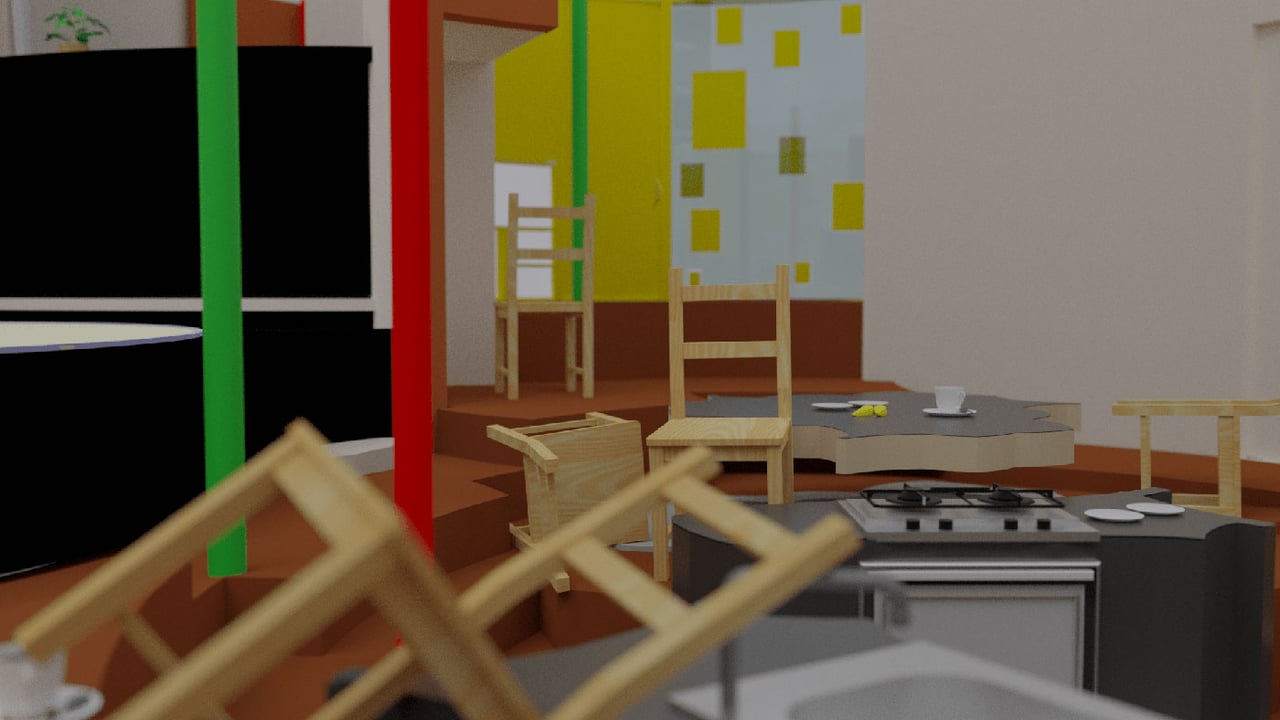
Read through this lens, duckrabbit makes visible the paradox of the NPC as infrastructure: a figure cast as trivial or disposable yet central to how computational systems classify, govern, and control life. NPCs ordinarily sustain worlds through compliance and circulation; duckrabbit shows a refusal of that role, interrupting recognition and exposing how even the most trivial figures can unsettle the ways computational systems organise life.
Taken together, the works of Bassam Issa Al-Sabah and Jennifer Mehigan, Alan Butler, Sato Ryotaro, and Simone C. Niquille make clear that the NPC is not a marginal extra but a working part of infrastructure, a routine, a default, a unit that holds systems together. By foregrounding NPCs, these artists expose how computational systems organise worlds through repetition, smoothing, and packaging — and how fragile that stability is. Bassam and Mehigan amplify default avatars into atmospheric protagonists, carriers of affect and belonging. Butler spotlights how NPCs coded as homeless embody precarity as an infrastructure, naturalising inequality and making digital worlds feel more ‘real.’ Sato pushes logistical figures until their categories collapse, exposing circulation as an empty procedure. Niquille pulls the default to centre stage, where it refuses stability from within.
Across these variations, the NPC emerges as the point where infrastructures show themselves. What appears trivial, whether the filler character, the dataset body, or the endlessly repeated routine, is in fact a mechanism of governance, encoding defaults that decide who or what counts.
To read NPCs as infrastructure is to see how computational worlds are built and naturalised; to track their collapse, their protagonism, or their refusal is to glimpse how those worlds can be unsettled. The NPC is where infrastructures enforce order — and where that order begins to fray.
Nora O’ Murchú is a curator and researcher whose work explores how digital infrastructures shape culture and politics. Her practice examines the ontology of computation — how technical systems organise power, extract value, and condition collective life. Tracing the infrastructures and interfaces that mediate relations between people, images, and technology, her work asks how these systems produce new material, social, and affective realities. From 2020 to 2024, she served as Artistic Director of transmediale in Berlin, where she developed a curatorial framework spanning exhibitions, publications, and public programmes. She is currently Professor at the University of Limerick and is developing How to Read an Image, an international exhibition and research project exploring contemporary image cultures for FACT Liverpool.
¹ SL Star, “The Ethnography of Infrastructure”, American Behavioral Scientist 43, No. 3. 1999, 377-91.
² WHK Chun, Programmed Visions: Software and Memory, Cambridge, MA: MIT Press, 2011.
³ AR Galloway, Gaming: Essays on Algorithmic Culture, Minneapolis: University of Minnesota Press, 2006.
⁴ B Larkin, “The Politics and Poetics of Infrastructure”, Annual Review of Anthropology 42. 2013, 327-43.
⁵ JE Muñoz, Disidentifications: Queers of Color and the Performance of Politics. Minneapolis: University of Minnesota Press. 1999.
⁶ B Larkin, “Politics and Poetics of Infrastructure”, 330.
⁷ AR Galloway, Protocol: How Control Exists After Decentralization, Cambridge, MA: MIT Press. 2004. 15.
⁸ S Wynter, “Unsettling the Coloniality of Being/Power/Truth/Freedom”, The New Centennial Review 3, No. 3, 2003. 260.
⁹ J Gaboury, Image Objects: An Archaeology of Computer Graphics. Cambridge, MA: MIT Press, 2021.
¹⁰ SC Niquille, “On Flatpack Furniture and Zip Folders”, Canadian Centre for Architecture, A Social Reset, 2020.
¹¹ A Simpson, Mohawk Interruptus: Political Life Across the Borders of Settler States. Durham: Duke University Press, 2014.
No comments yet. Be the first to share your thoughts.
Mentioned in this article
People: Bassam Issa Al-Sabah, Jennifer Mehigan, Alan Butler, Benoit Palop, LAN Party, Nora O' Murchú, Ruby Bailey, Sato Ryotaro, Simone C. Niquille, Vienna Kim|