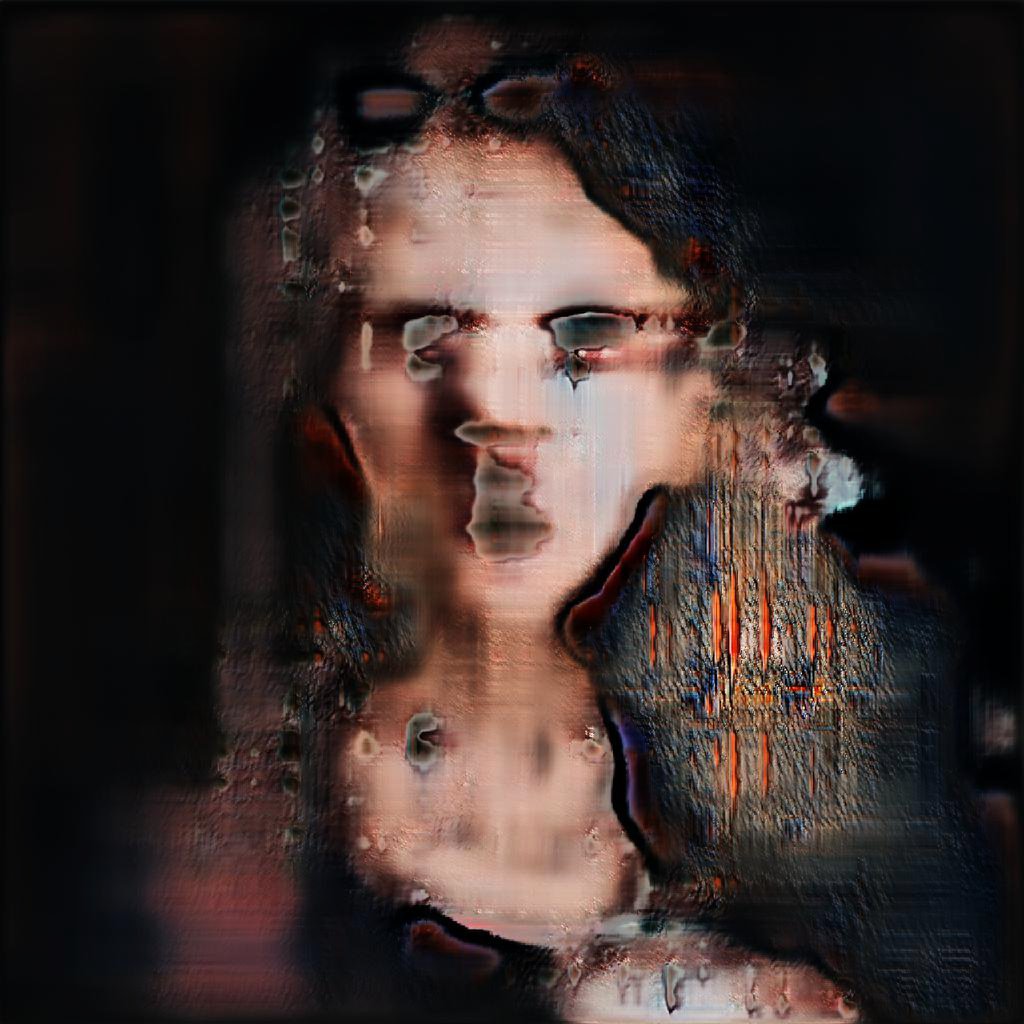
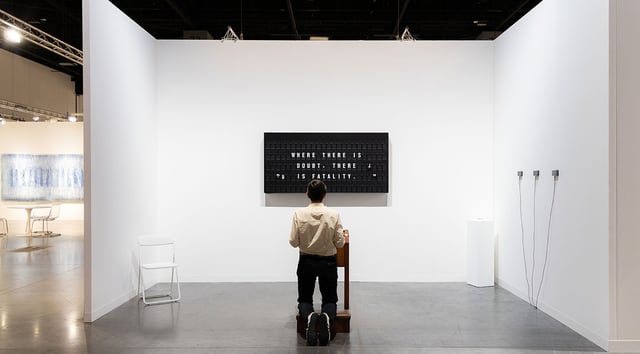
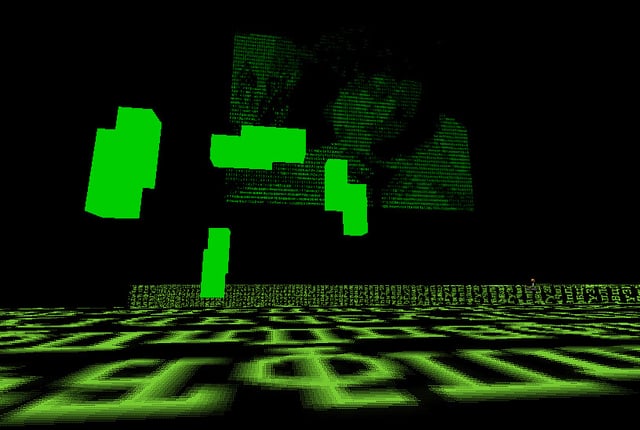
The following panel discussion was curated by Diane Drubay and presented as part of The Digital Art Mile, founded by Roger Haas and Georg Bak.
The Canons of Digital Art - Right Click Save
At Right Click Save, we have always sought to understand the consequences of new art forms that destabilize pre-existing categories, as well as the new generation of creative entrepreneurs that often creates, collects, and curates all at once.
At a time when so many prominent contemporary artists are either trained in non-art disciplines, including speculative design, or else operate at the border of fine and commercial art, the old divisions between creative disciplines and their markets feel inadequate when coming to terms with hybrid practitioners who evade categorization. One of the positive consequences of the blockchain economy is that artists from around the world who have often been excluded from traditional histories of art have finally been able to build careers for themselves without needing to be routed through global northern galleries and institutions.
This situation poses all sorts of questions for scholars and museum curators, as well as artists and journalists, about how to make sense of a world where legacy structures, and knowledge regimes, are currently being upended by emerging technology. As a sense-making enterprise, Right Click Save seeks to bring together the clearest thinkers both online and in physical space. To this end, we supported Museums & Digital Art Day at the most recent Digital Art Mile in Basel, where the magazine’s Editor-in-Chief, Alex Estorick, asked three of the world’s leading curators — Melanie Lenz of the V&A, Marcella Lista of Centre Pompidou, and Christiane Paul from the Whitney Museum of American Art — about how they approach canonization together with one of the world’s leading artists, Kevin Abosch. Given the historical focus of their conversation, Right Click Save is pleased to publish it on the occasion of the magazine’s fourth birthday.
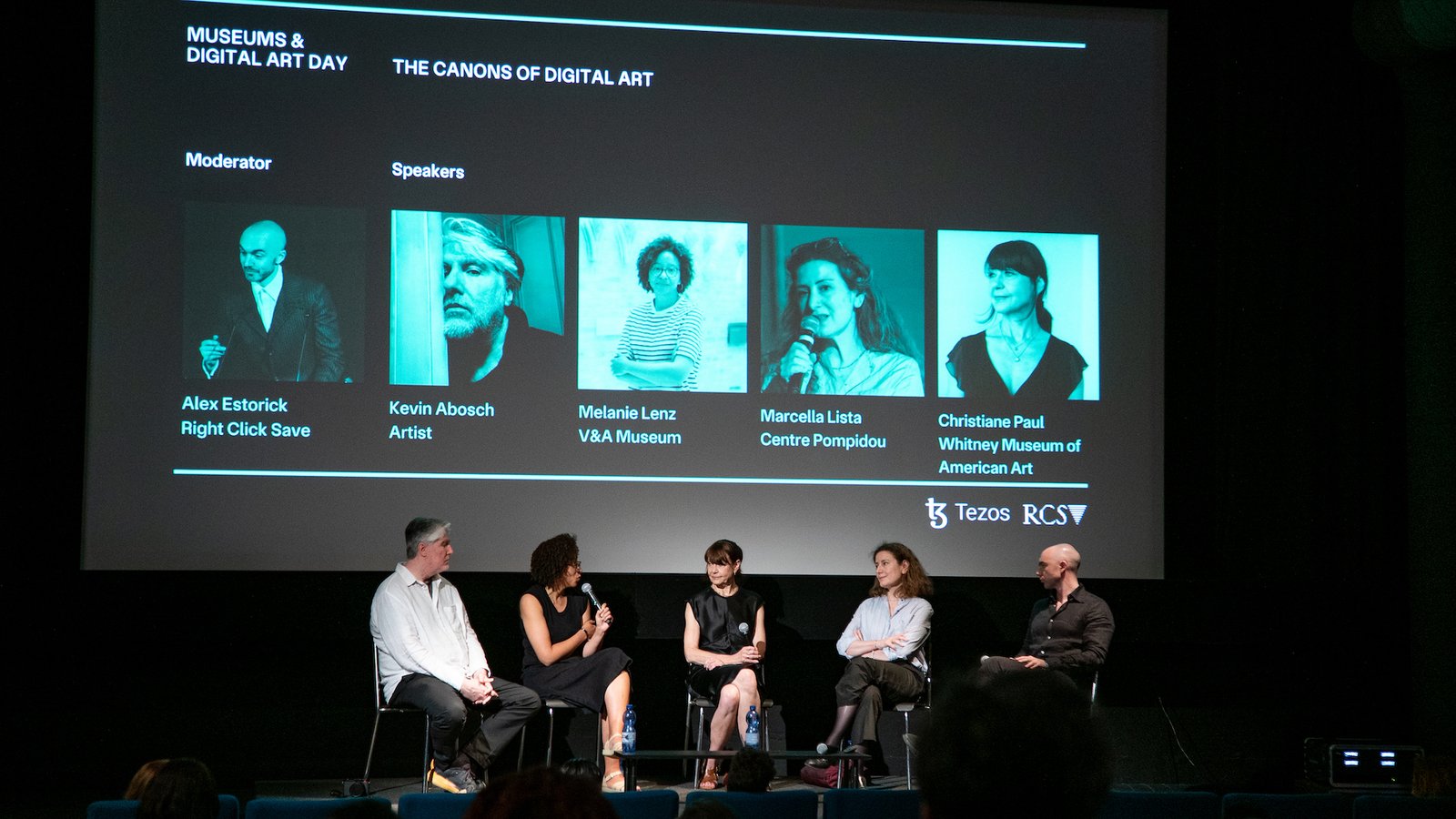
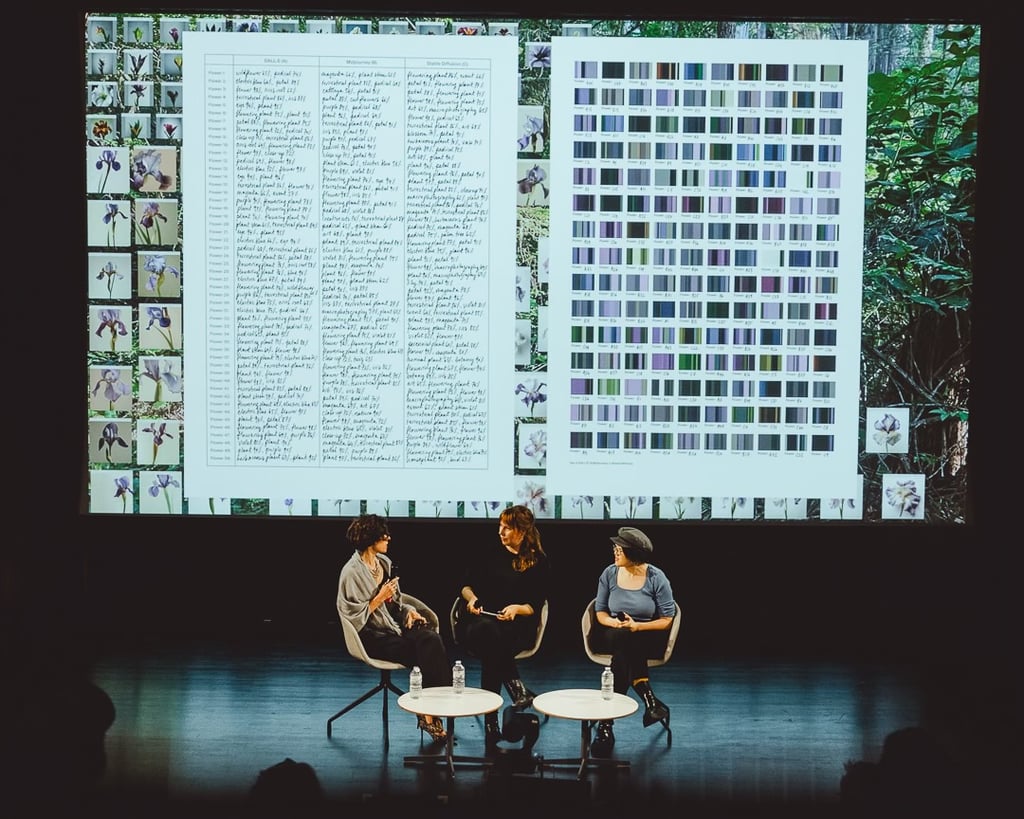
Panel discussion on “The Canons of Digital Art” at The Digital Art Mile, Basel, 2025, with speakers (from left) Kevin Abosch, Melanie Lenz, Christiane Paul, and Marcella Lista, moderated by Alex Estorick. Courtesy of ArtMeta
Alex Estorick: As an editor, I obviously think a lot about language, and it seems important to me when considering hybrid artists such as Kevin [Abosch], who works across multiple fields and also collects, to acknowledge the plurality of that practice in a way that is legible to the public. I regard museum curators as vital sense-makers in an attention economy where complex phenomena, and plural practices, are often processed into reductive narratives. Christiane, you’ve been documenting digital art for a long time. How has the process of canonization — of listening to language as well as introducing your own — evolved over the last 30 years?
Christiane Paul: It has evolved tremendously. The terminology for the medium has changed so much, and even my title at the Whitney Museum was adjusted — originally I was the Curator of New Media Arts, which became Curator of Digital Art. I recall many juries I’ve served on, from Ars Electronica to other festivals, where we proposed new language since we felt that the categories for classifying the art weren’t appropriate anymore. A large group of people in this field has continuously been involved in changing the vocabulary, which also poses challenges for canonization.
Digital art practice tends to be very hybrid. In the 1990s, for example, we saw artists who were devoted exclusively to net art; in the early 2000s artists using the internet branched out into many different practices and did not stick with one medium. This hybridity also characterizes the work digital artists do right now, particularly when it comes to the use of AI; the final work often manifests as print, as something physical.
Creating classifications and taxonomies that are fluid and open to change is incredibly important for the evolution of digital art. And you don’t simply come up with a term. Creating vocabulary really is dialogue, a back and forth with artists, with institutions, with art critics. (Christiane Paul)
I recall creating the theme for one of my shows, “CODeDOC” (2002), which explored code as the back end of digital art, together with the artists. The curatorial concept really was a collaboration.
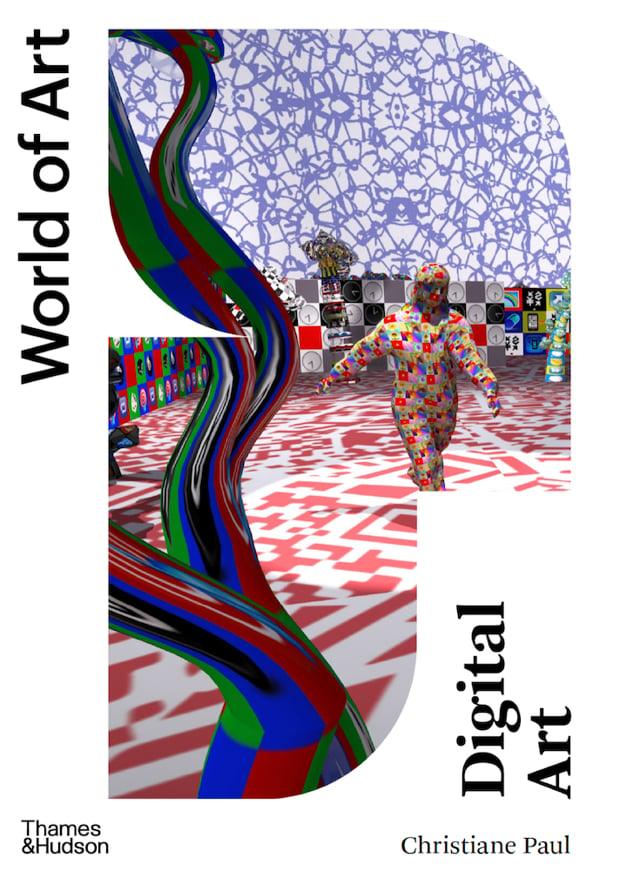
Christiane Paul, Digital Art, London: Thames and Hudson, 2003, 2008, 2015, 4th ed. 2023.
Marcella Lista: The term “New Media” is a historical one, covering all media that came after film; so we now also talk about “old new media” when referring to video and early computer art.
What we’ve adopted at Centre Pompidou, not as an official name, is the notion of variable or unstable media, which reflects the ephemeral and often precarious nature of those media in terms of conservation. (Marcella Lista)
That’s part of the discussion when you talk about canonization [because] when museums collect this type of art it is a serious responsibility in the long run and we do know in advance that the artwork we acquire will have to migrate and adapt to new operative systems and display tools. It is interesting, in this regard, that all the very large-scale exhibitions of digital art actually start with electronic art. The question of hybridization is key to understanding that experimentation with technology cannot be confined to specific technologies but is embedded in ever evolving technical ecosystems.
Melanie Lenz: The first line of our book, Digital Art: 1960s to Now (2024), [sought] to unpack the terminology of digital, and I still see it as a broad umbrella. I’m not too fixed or hung up on it [and] I understand that it can encompass many different things.
It’s incredibly important when acquiring works for the collection that I talk with an artist about how they want their work to be understood, and what labels they do and do not want — it’s not one model fits all. (Melanie Lenz)
Words are super powerful. The best example I can think of right now is the concept of “pioneers,” which is a label I’ve worked on shows with, but is a term that I no longer particularly use because of negative connotations around what a pioneer is. Do we really want to think about digital art [in terms of] colonization? I think the answer has to be no. We have agency in the words we choose to use.
Alex Estorick: Kevin, there are presumably benefits to having skills in multiple media, but do you worry that your work gets flattened or simplified?
Kevin Abosch: At this point, I’m not too worried.
When I was younger, I tried to bury the fact that I had worked with photography for years — people called me a photographer, but I always rejected that label and made a point of trying to get people to forget it. Now that I’m known for my synthetic photography, people say to me, “you’re undermining the value of real photography; you should learn something about real photography,” which is amusing. (Kevin Abosch)
Realizing that some of the work I’m making leverages emergent technology and hasn’t really found its position or settled nomenclature yet, it’s in my best interest to move that conversation in the right direction. Crypto art was strange because it was a catch-all for something that spoke to the crypto zeitgeist. You’d have an artist painting an Ethereum logo — crypto art; someone who worked with blockchain as a method — crypto art; someone with a background in cryptography — crypto art; someone who made a painting, took a photo of it, and minted an NFT — crypto art. That’s absolutely confusing and a bit lazy, I think, and yet it’s a thing.
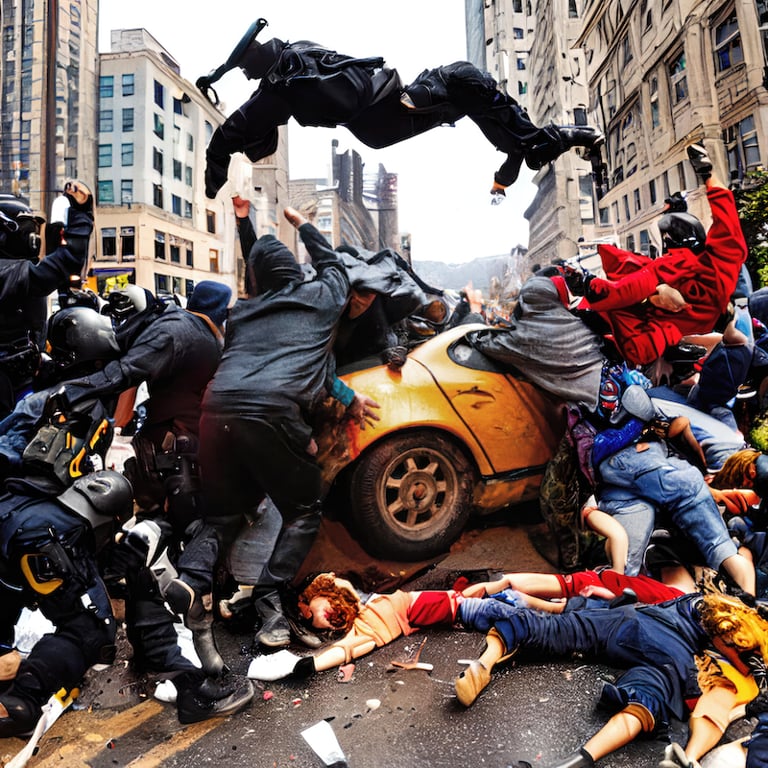
Kevin Abosch, CIVICS: Pittsburgh, 2023. Synthetic photograph. Courtesy of the artist
Alex Estorick: I’m going to fight the corner of the crypto art community, which was also an identifiable moment and movement where people who previously hadn’t been able to participate were able to make careers without needing to ask permission. I notice that the crypto art movement is conspicuous by its absence when digital art is being canonized. Maybe it’s because the practices involved are so varied that they demand greater specificity. I’d like to ask the curators about how they think about inclusivity.
Christiane Paul: I think we are still in the early stages of canonizing “crypto art” or NFT art. The Whitney now has more than 30 NFTs in its collection. I’ve followed blockchain-based art or NFT art, since I saw Kevin McCoy and Anil Dash presenting their idea for “monegraphs,” essentially proto-NFTs, at Rhizome’s 7x7 at the New Museum in 2014. At the time I thought, “Oh, this is going to explode,” but it took a long time until that happened. The CryptoPunks (2017) came fairly early in the NFT evolution and there were also publications such as the one by Furtherfield — but there’s a lot of historicization to do.
The whole discourse around crypto art was very similar to the one around net art when it came to imagining an alternative art practice. However, I think that net art was a more unified field, with leading artists pushing it, while in the whole NFT and crypto art space, you saw a broad range in terms of aesthetic expression.
I want to be very careful with judgements here — creative expression in any way is fantastic. That doesn’t mean that museums need to collect all of it. There are distinctions to be made. (Christiane Paul)
I always point out that NFTs and crypto art are truly an awkward medium for museums to collect, because what we do is transfer the tokens immediately from a hot wallet into a cold wallet, so we’re putting them under a vitrine; they’re not part of the market anymore, and, to me, that’s slightly problematic. I think we need to pay attention and collect the art, but we’re not part of the “natural environment” in which the art lives.
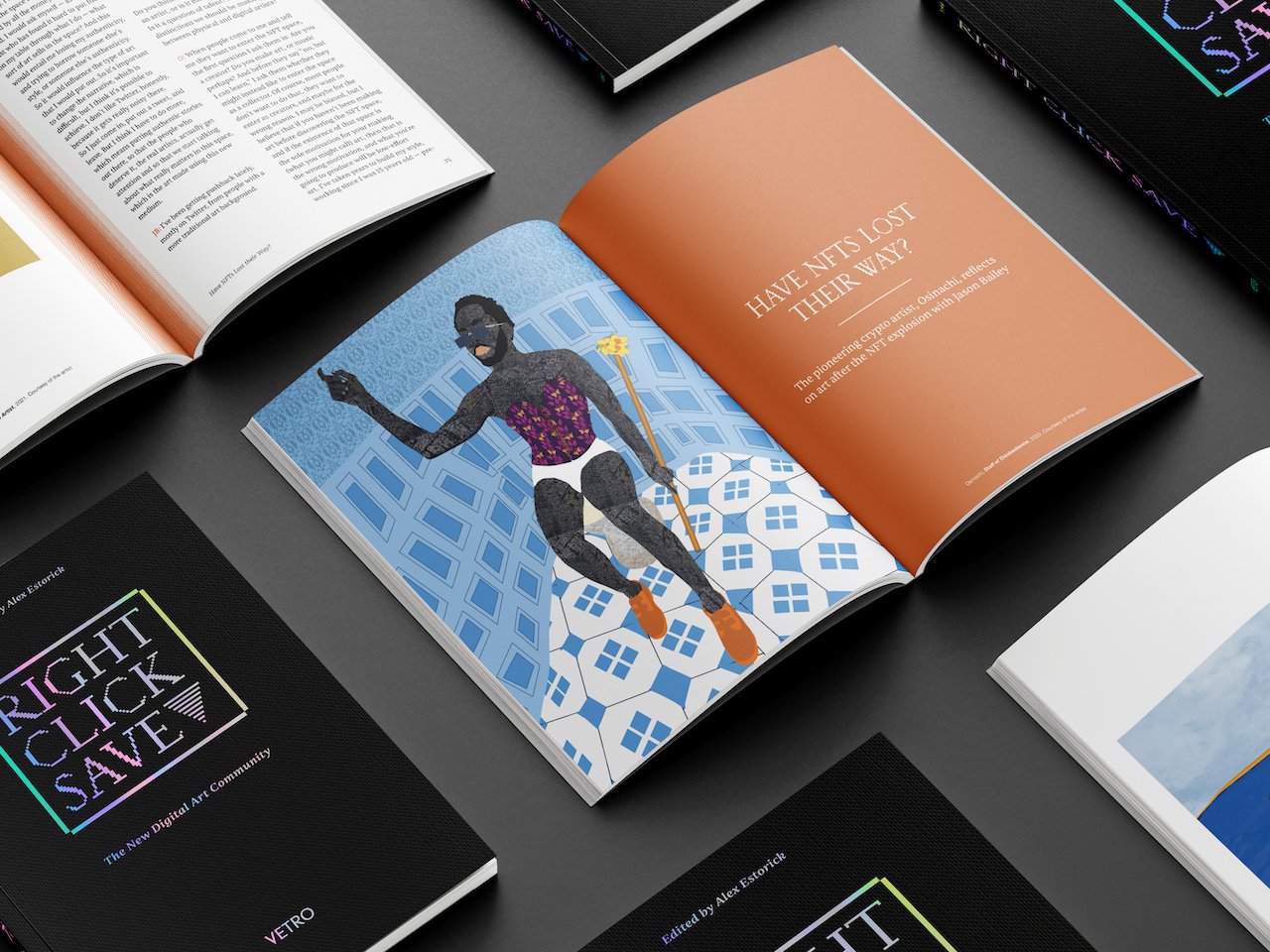
Alex Estorick (ed.), Right Click Save: The New Digital Art Community, Berlin: Vetro Editions, 2024.
Marcella Lista: Blockchain technology was invented to trace the circulation of digital artworks from one owner to the next. This purpose is interrupted when blockchain art enters public museums, as they cannot resell any artwork from their collection. In France, it is not even legal for a public museum to own a hot wallet and there is this very fine line where you need to convince not only the Ministry of Culture but also the Ministry of Finances that what you want to acquire for the museum collection is artwork and that it would no longer operate as a financial asset. The regime of the artwork and the context of its experience by the audience are definitively modified.
The task belongs to the curators, in dialogue with the artists, to decide whether the artistic worth can transcend these changes and resonate with a wider historical perspective — just like most of the art that is kept in museums today and was created to relate to very different contexts.
NFTs give museums the opportunity to open up the criteria of what we imagine could become a significant contribution to art history. What captivated us at the Centre Pompidou is the wide range of players in this field, redefining the game. (Marcella Lista)
Every time a new medium appears, you see trained artists taking interesting side roads, and untrained artists contributing something new from very diverse backgrounds. How does an artwork resonate with topics or experiments that were addressed before? How do we account for what is really new in the blockchain technology, in the automated smart contract, and in the entanglements between copyright, online circulation, and what has been called the “Digital Renaissance”? As a museum, we are interested in mapping these questions and exploring what is specific to the medium and its “moment” without setting preconceived boundaries about what could be relevant to the museum.
Melanie Lenz: Of course, being part of a permanent collection says something about value, but it’s not the be-all and end-all. The V&A does not have NFTs in its collection, which are very problematic for UK institutions, but that doesn’t mean that we’re not interested in engaging in the subject. That might be through artist talks and symposiums, inviting people in to explore and exchange. A lot of those discussions currently happen behind closed doors, but some of those conversations, such as the fabulous FEMG3N discussion that happened last year as part of the V&A’s Digital Art Season, are public.
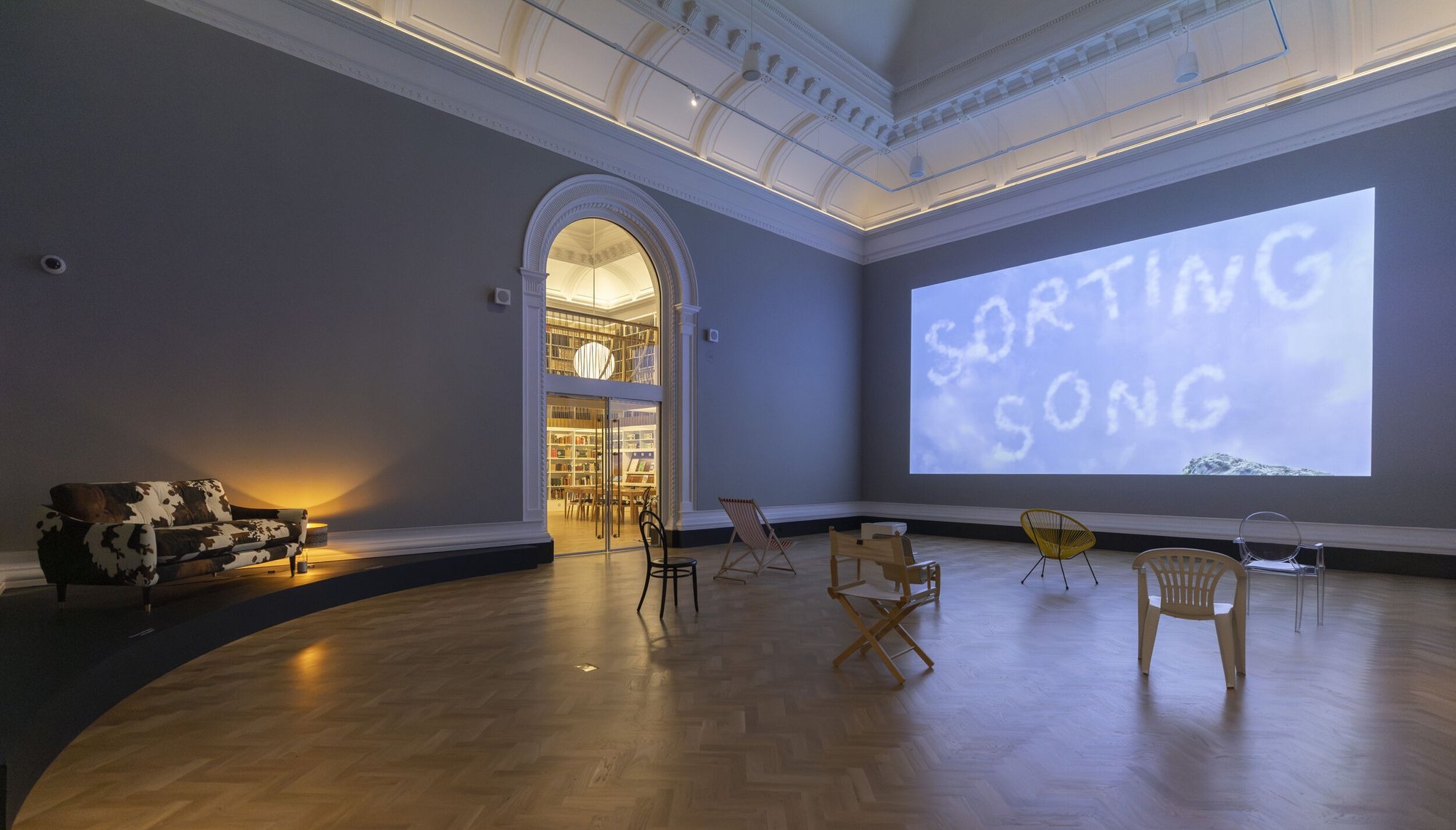
Scholar Charlotte Kent in conversation with artists Anna Ridler and Licia He at “FEMG3N: Expanding the Art World with New Digital Practices” as part of Digital Art Season at V&A, South Kensington, 2024. Photography by Perry Gibson
Kevin Abosch: Since the custodial implications of NFTs have been brought up three times, might I suggest — and this is the first time I’ve done so in public, and I’ve been waiting for years — that since you’re all institutions that don’t divest yourself of artworks due to anti-deaccession rules, why not do a little ceremony where you acquire the work, or it gets donated, and the artist sends the NFT to the burn address, and it sits there beautifully, elegantly, in perpetuity?
Why should an institution that isn’t going to resell the work be worried about this thing called ownership that most humans are obsessed with? (Kevin Abosch)
Christiane Paul: That was one of the first things we considered. From the start, I was vehemently against sending work to a burn address because, to me, that changes the work conceptually.
Kevin Abosch: Is that because “burn” sounds so negative — it could be the resting or sleeping wallet.
Christiane Paul: But within the living environment of that art form, it’s a very different status, and it signifies something. Going to that signifier was what we didn’t want.
Kevin Abosch: Is this an immovable position? You can inscribe in the transaction where you send it to the resting, “Sleeping Beauty”, wallet; you can say that this has been hereby donated to this institution, and the work has not been changed conceptually.
Christiane Paul: It becomes problematic when you have works that are more generative and evolve over time. I don’t want to say that every work forever sits in a cold wallet. We have collected Ian Cheng’s 3FACE (2022), which we need to transfer over to the hot wallet for the work to read the statistics of the Whitney wallet and change accordingly; the overall evolution of a work such as 3FACE also needs to be considered, and who knows in what direction an artist will take a relatively open work.
Kevin Abosch: I don’t see it like that. I see [the burn wallet] as this beautiful, peaceful place where it sits so everybody can go to the institution to see it on a screen or even a print.
Christiane Paul: Conceptually, it’s the coffin for me.
Marcella Lista: As soon as an NFT enters the museum, it becomes something else. The conversation we have with the artists is: in their opinion, does it become a documentation of the work? What does it mean to have it on a screen or in a white-cube space that is already totally contra nature? Each case is specific and this is why some works can relate to the museum space as a lively, critical historical space, whereas others lose their raison d’être.
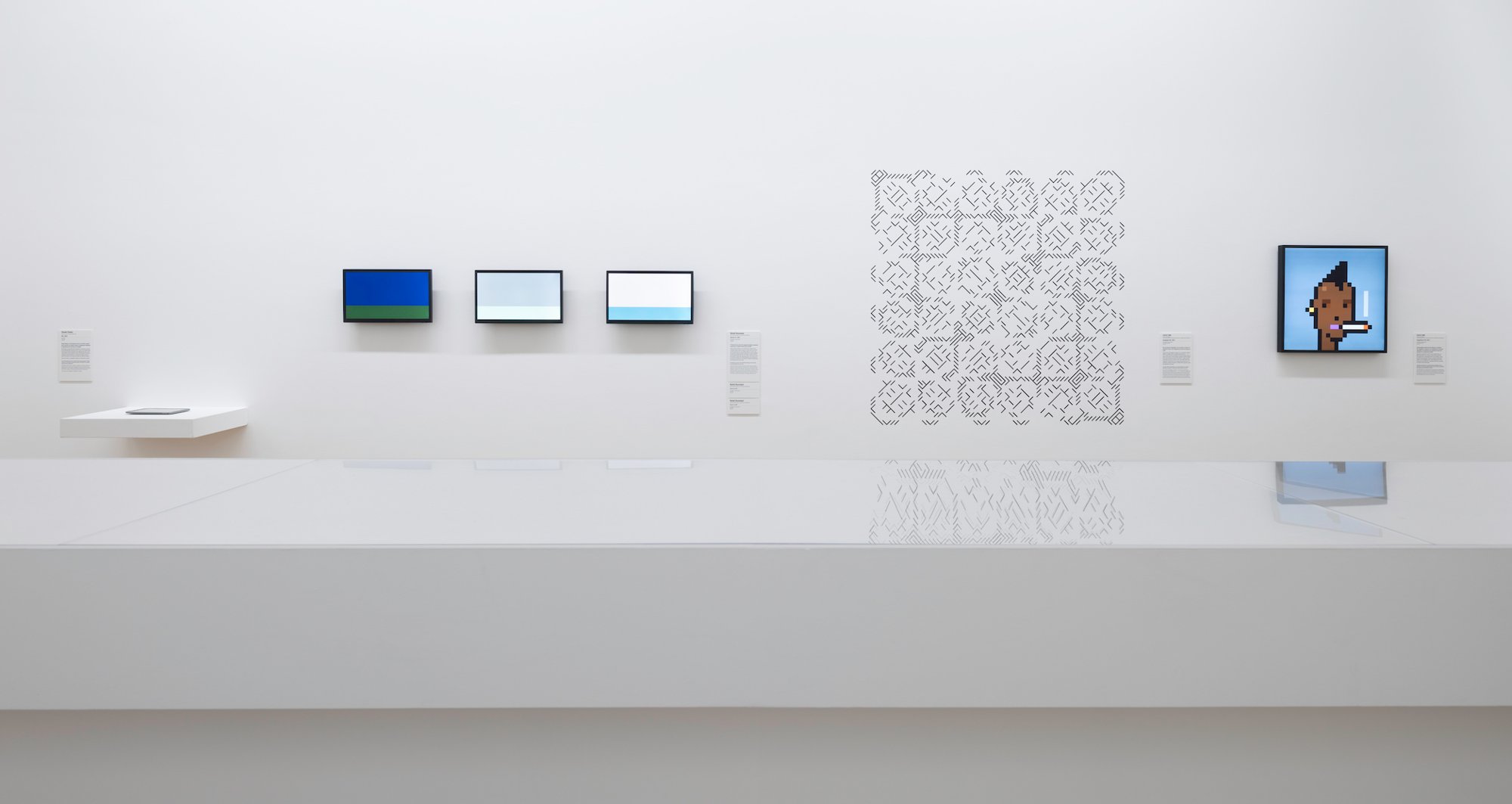
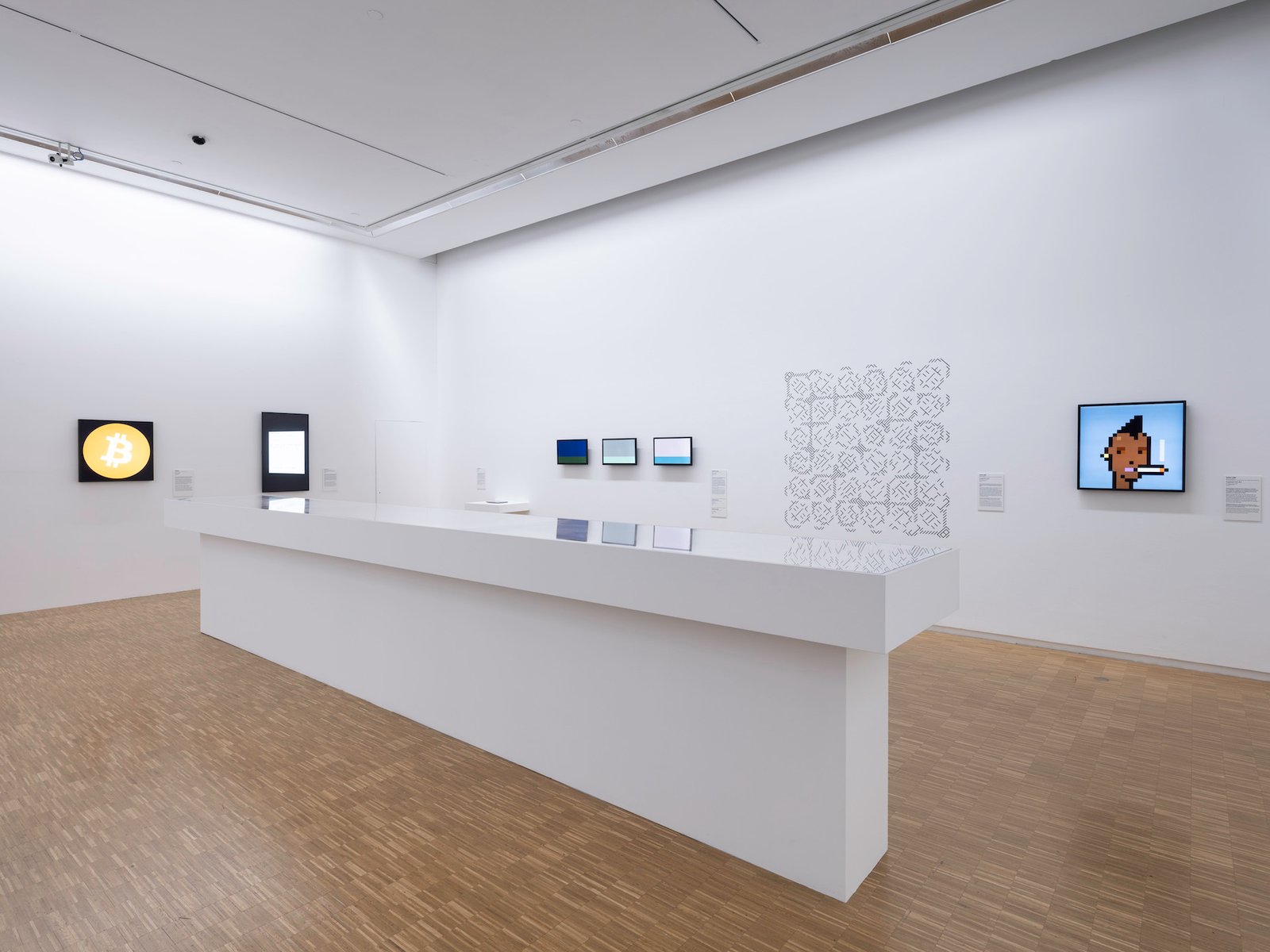
In the case of Larva Labs’ Autoglyphs (2019), the artists said to us “well, you can either display the work on a screen, but you also print it, and exhibit it in the form of a wall drawing.” There’s a new life to the work once it crosses the border of the museum, a new set of possibilities and encounters with audiences IRL, as well as with artworks from other traditions. (Marcella Lista)
Alex Estorick: Let’s talk about collection building, because the curators here represent quite different institutions. Melanie, when I go into the V&A, I feel like I’m inhabiting an expanded art world rather than a golden cage or white cube. Could you say something about how the collection of the V&A emerged and how it’s evolving now?
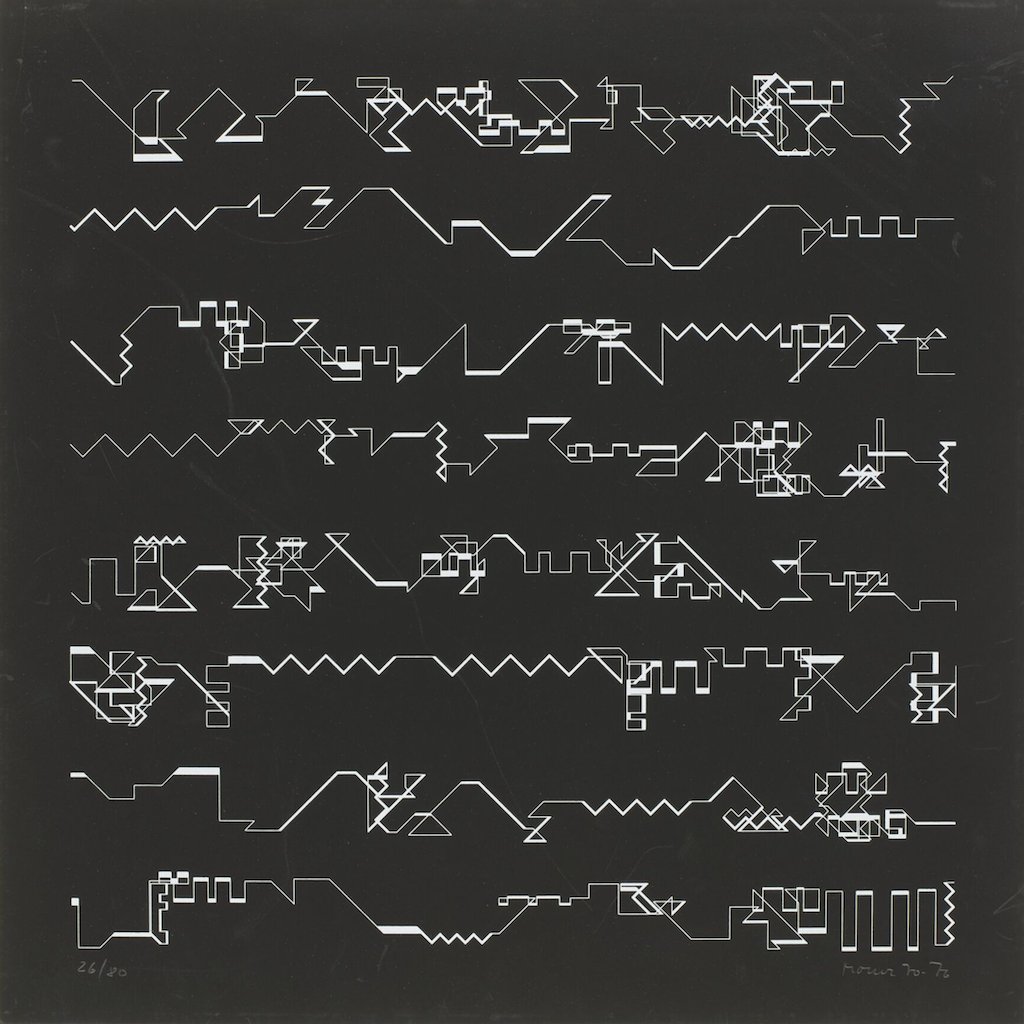
Melanie Lenz: Like many museum collections, computer-generated art came into the museum in the guise of prints. There are fabulous pieces by Manfred Mohr or Vera Molnar, acquired in the late 1970s and early 1980s, in the collection where there is no mention whatsoever of a computer being used. I think it is still true to a certain extent that a lot of the output that exists in museums are works on paper, and there’s no discussion about how these works are made. But we’re no longer bound by the same constraints that work needs to be on paper.
The direction that the collection is moving in is very much about addressing some of those gaps — who’s not in there? Why are they not in there? It’s not bound by certain constraints in terms of the media. (Melanie Lenz)
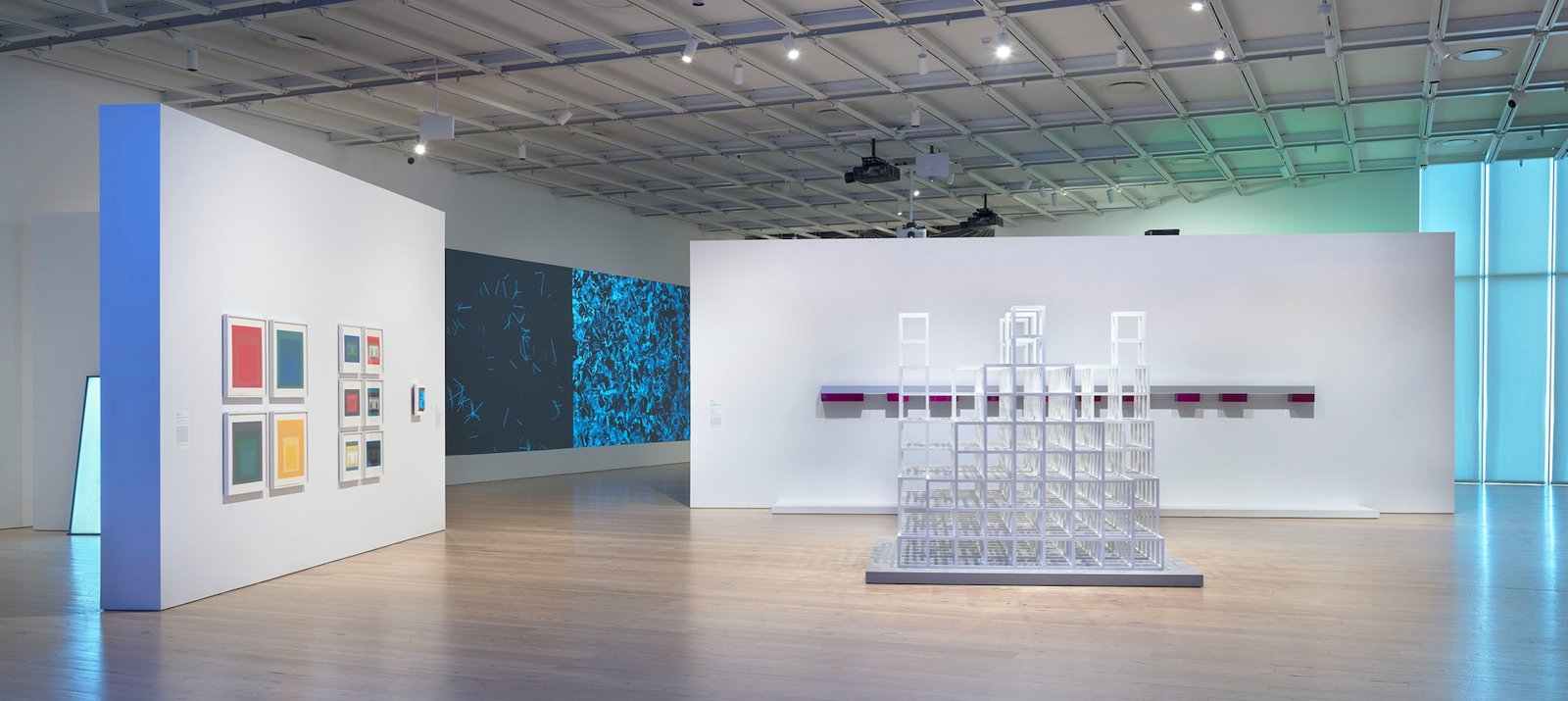
Installation view of “Programmed: Rules, Codes, and Choreographies in Art, 1965-2018” at Whitney Museum of American Art, New York, September 28, 2018-April 14, 2019, with works (from left to right, top to bottom): Ian Cheng, Baby feat. Ikaria, 2013; Josef Albers, Homage to the Square V, 1967; Josef Albers, Homage to the Square IX, 1967; Josef Albers, Homage to the Square XII, 1967; Josef Albers, Homage to the Square X, 1967; Josef Albers, Variant V, 1966; Josef Albers, Variant VI, 1966; Josef Albers, Variant X, 1966; Josef Albers, Variant IV, 1966; Josef Albers, Variant II, 1966; Josef Albers, Variant VII, 1966; John F. Simon Jr., Color Panel v1.0, 1999; Casey Reas, {Software} Structure #003 A, 2004 and 2016; Casey Reas, {Software} Structure #003 B, 2004 and 2016; Donald Judd, Untitled, 1965; Sol LeWitt, Five Towers, 1986. Photography by Ron Amstutz
Alex Estorick: Christiane, how do you go about exhibiting work that seems to sit at an intersection between art and technology, or art and science, or art and design?
Christiane Paul: Classification is a very difficult area: when does a work become design per se, in which case we wouldn’t acquire it? We do have work by Martin Wattenberg in the collection that, as a kind of data visualization, clearly has design elements, yet also is a distinctive form of earlier net art. That threshold really has to be navigated.
One needs to make a distinction between design, in this case data visualization that falls more into the category of graphic representation, no matter how beautiful, and data visualization that becomes a metanarrative about cultural beliefs and knowledge. That, to me, would push it more into the art corner, but ultimately, we make those decisions on a case-by-case basis. (Christiane Paul)
Melanie Lenz: This is where our superpower comes in as a national museum of art, design, and performance. We have Danielle Brathwaite-Shirley and Simone C. Niquille, whose works were both collected as part of the museum’s digital design holdings but could equally be digital art. Just because something is made in a digital way doesn’t mean that it needs to come into the digital art collection. I’m really pushing for all curatorial departments to have the ability to acquire these different works of art or design.
Marcella Lista: I would say the same for Centre Pompidou. Many departments, including design, as well as architecture, acquired artworks made with computers as early as the 1960s. In fact, we try not to categorize.
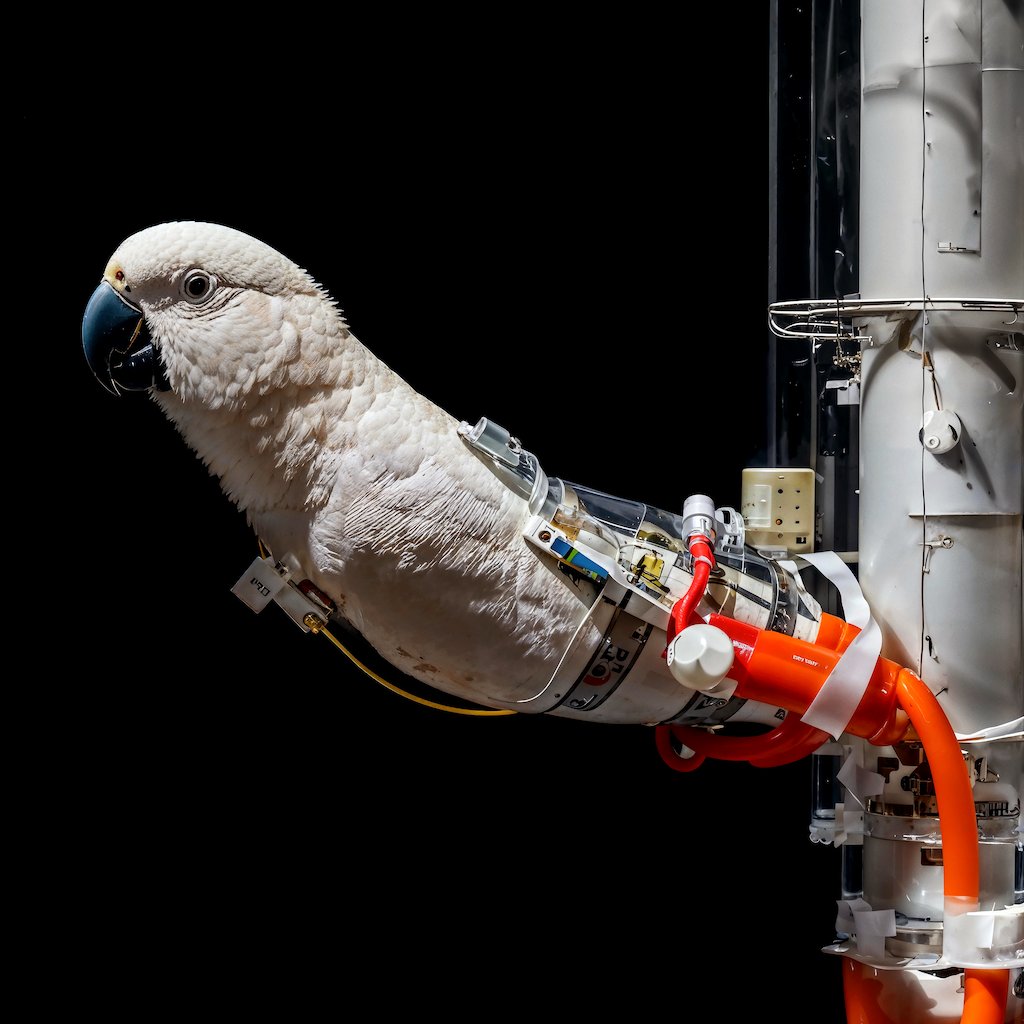
Kevin Abosch, Freedom, 2025. Synthetic photograph. Courtesy of the artist
Alex Estorick: Thinking about the canon from the perspective of artists, there is a politics and a hierarchy that seems to determine how artists position themselves. I can think of one artist who has chosen to align themself with the history of painting who I consider to be a generative artist. If an artist wants to make it big or maintain a certain market value, they might choose to align themselves with Sol LeWitt even if perhaps Frieder Nake might be a rather more deserving prototype. Kevin, do you have any thoughts on this problem?
Kevin Abosch: I think a number of artists are hanging their hat on the legacy of other artists, as if it’s some kind of surefire branding mechanism.
I would like to start lobbying curators of museum photography departments not to characterize my synthetic photography as this awful thing called “post-photography” but in the continuum of photography. As I see it, it’s a natural extension [and] an evolution — I would love to see it collected into photography collections even though I’m not a photographer.
Christiane Paul: I would add that it’s always a very cheap move to align oneself with established artists, and it usually doesn’t work.
Alex Estorick: At a moment when photography, painting, and film are all flowing into the latent space of a deep learning algorithm, I’m wondering what is going to happen to the canons of these different media. How can we preserve the legibility of these histories at a moment when the domain of human vision is being given over to a rather uncertain domain of nonhuman vision?
Christiane Paul: I would argue that AI art has to conceptually and practically engage with the technologies in critical ways. Most of the artists I’ve been working with — and Kevin also does this — operate on a meta-level of exposing mechanisms and thinking through these issues and do not just contribute to absorbing or feeding AI’s visual culture. What I’m worried about is a certain lack of literacy when it comes to these processes; people do not necessarily understand how to classify and look at AI-generated imagery. There’s a lot more work to be done on that front.
Marcella Lista: As Holly Herndon and Mat Dryhurst have stated, “All media is training data.” Such an awareness is interesting in their art practice — that whatever you put out on the internet is going to train AI systems and, therefore, be part of an endless chain of information that is constantly reformulating itself. In latent space, however, a thing only exists if it is labeled through language, which represents a limitation compared to other forms of knowledge; so you are right in saying that what is at stake is the preservation of vision itself.
Kevin Abosch, Portrait of a Remarkable Person, 2018. GAN/synthetic photograph. Courtesy of the artist
Alex Estorick: Do you feel that the museum’s role going forward is to maintain critical literacies for images that are unstable and synthetic and maybe dangerous?
Christiane Paul: Yes, absolutely. One of the reasons I organized the Harold Cohen show at the Whitney Museum last year was to contrast text-to-image and diffusion models with very different ways of approaching AI and to raise literacy. It was just amazing how many people walked in and asked “Oh, what has AARON been trained on?” and were completely surprised when we said, “Nothing, no training data here.”
Melanie Lenz: I think that this is what museums can excel at. At the end of the day, the V&A is a public institution where we encourage or help facilitate critical conversations and invite the public in to explore with us what the meanings of works are. I think that the museum is a fantastic site where we can have those conversations in a kind of free and open and critical way.
Kevin Abosch: I love museums, but I hate myself for craving validation from them.
Kevin Abosch is an artist whose work explores identity, value, and the human condition through photography, film, painting, and generative systems. His projects have been exhibited internationally at museums and biennials including the National Gallery of Ireland, the Hermitage Museum, St Petersburg; the National Museum of China, Beijing; Jeu de Paume, Paris; ZKM Karlsruhe; and the Venice Biennale. His recent work investigates synthetic photography and artificial intelligence as means of interrogating ethics. He lives and works in Paris, and teaches at the University of Applied Arts Vienna.
Melanie Lenz is curator of Digital Art at the Victoria and Albert Museum where she is responsible for developing the V&A’s digital art collection. She has organized multiple exhibitions, most recently co-curating “Patric Prince: Digital Art Visionary” (2023-2024). She co-edited the book Digital Art: 1960s to Now (2024) and the forthcoming publication Emergence: Art and Generative Systems. She has also published on diverse topics including generative art (2024), early computer art in Latin America (2018), gender, art, and technology (2014), and collecting and conserving digital art (2011). Based in London, she is a judge for The Lumen Prize for Art and Technology and is a panel expert for the National Archives.
Marcella Lista is the Head Curator for the New Media Collection at Centre Pompidou.
Christiane Paul is Curator of Digital Art at the Whitney Museum of American Art and Professor Emerita at The New School. She is the recipient of 2023 MediaArtHistories International Award and the Thoma Foundation’s 2016 Arts Writing Award in Digital Art. Her latest books are Digital Art (4th ed., 2023) and A Companion to Digital Art (Blackwell-Wiley, 2016). At the Whitney Museum she curated exhibitions including “Parting Worlds / Hyundai Terrace Commission: Marina Zurkow” (2025), “Harold Cohen: AARON” (2024), “Refigured” (2023), and “Programmed: Rules, Codes, and Choreographies in Art 1965-2018” (2018/19), and is responsible for artport, the museum’s portal to Internet art. Other curatorial work includes “Chain Reaction” (2023), “DiMoDA 4.0 Dis/Locatio” (2021-23), and “The Question of Intelligence” (Kellen Gallery, The New School, New York, 2020).
Alex Estorick is Editor-in-Chief at Right Click Save.
This is an edited version of a conversation hosted by ArtMeta at The Digital Art Mile, Basel on June 18, 2025.
With thanks to Diane Drubay, Roger Haas, and Georg Bak.