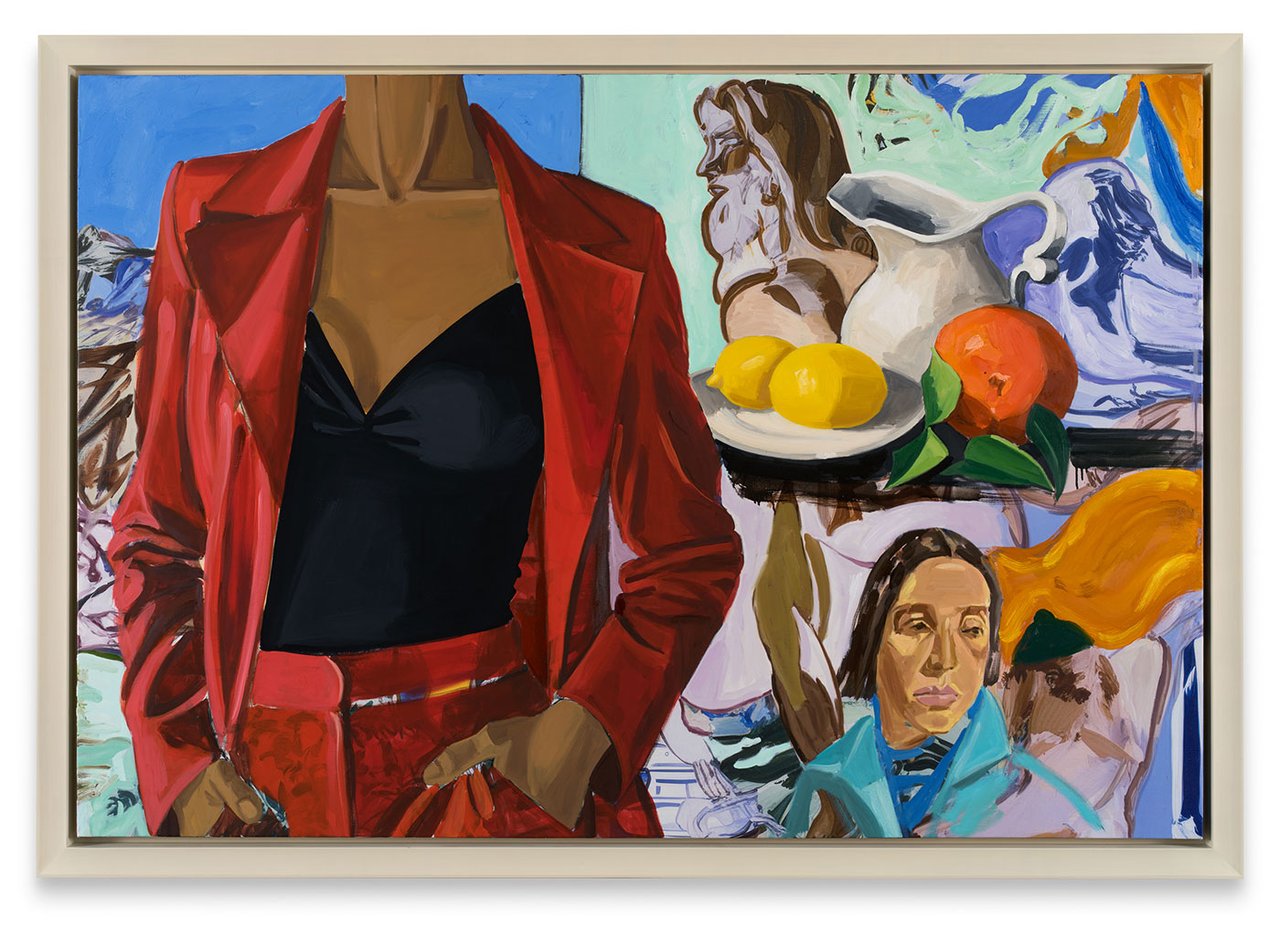
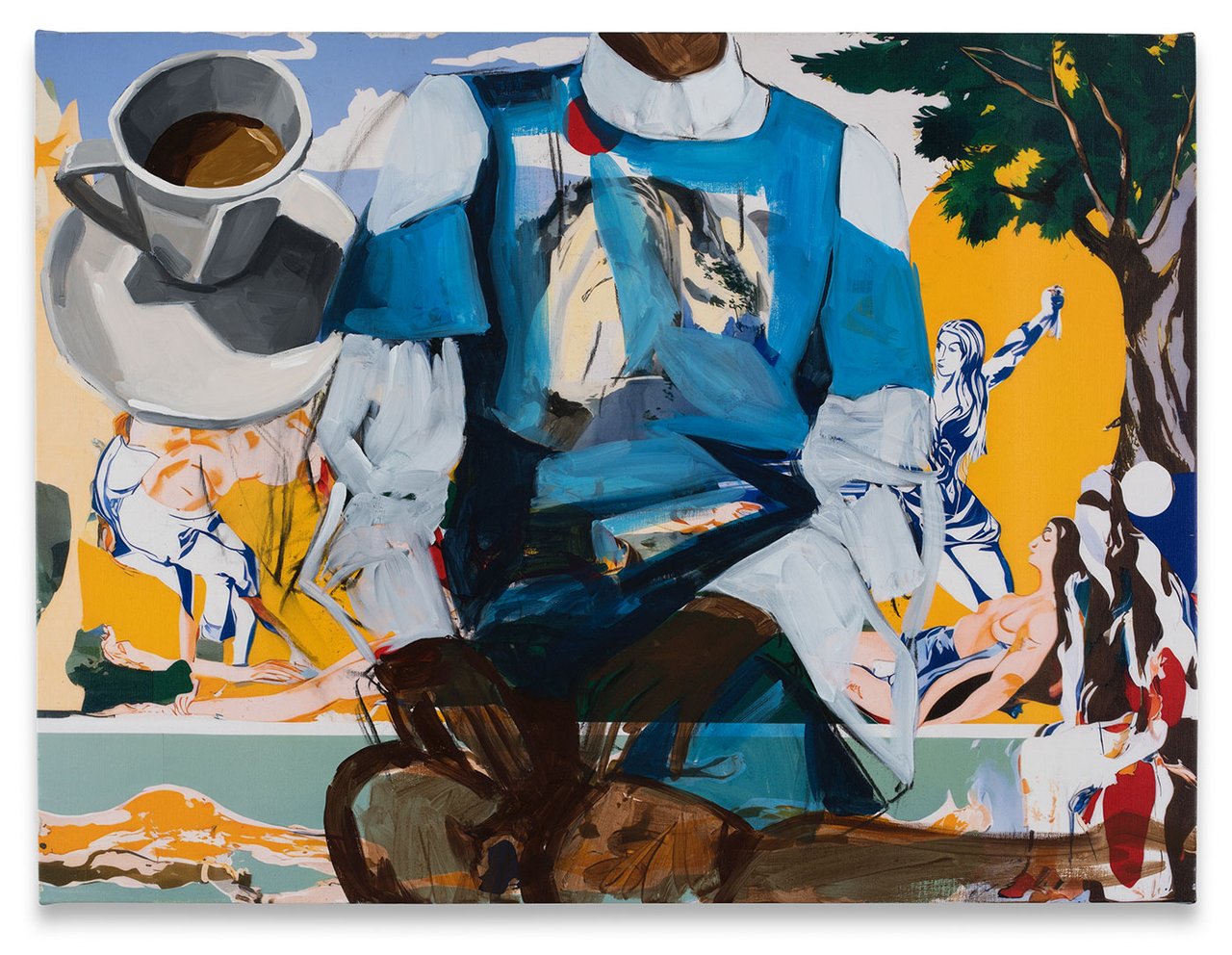
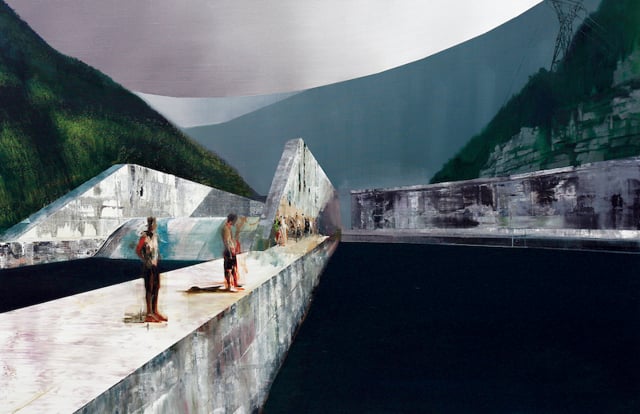
David Salle’s exhibition of new paintings, “My Frankenstein”, is at Sprüth Magers, Los Angeles, until April 18, 2026.
“My Frankenstein” is the New York-based Salle’s third recent show of work created using his proprietary AI model as a visualization tool. The sequence of exhibitions — “New Pastorals” at Gladstone Gallery, New York (September 26 to November 2, 2024), “Some Versions of Pastoral”, at Thaddaeus Ropac, London (10 April to June 8, 2025), and “My Frankenstein” — offers Salle, and those following his work, data points for what the integration of machine learning has meant both to the artist and to his work. (A separate set of paintings, created alongside the “My Frankenstein” works in Salle’s studio in East Hampton, Long Island, will be shown during the Venice Biennale. “Present-Tense Painting” opens at the Palazzo Cini Gallery on May 5, 2026.)
Salle spoke to Right Click Save in the lead-up to “My Frankenstein”, in a follow-up to a 2025 conversation for The Art Newspaper about “Some Versions of Pastoral”. In 2026, as in 2025, it is clear that working with what he calls his “monster” continues to excite Salle and his artistic imagination.
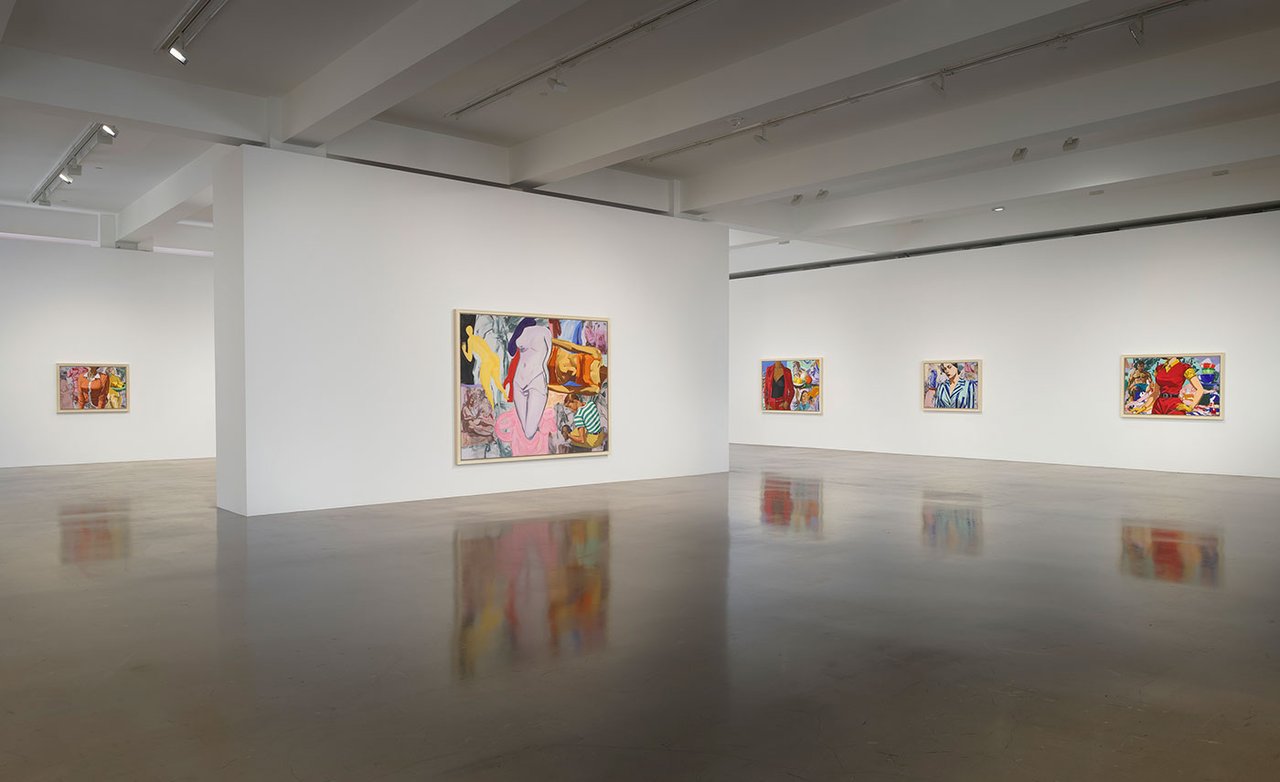
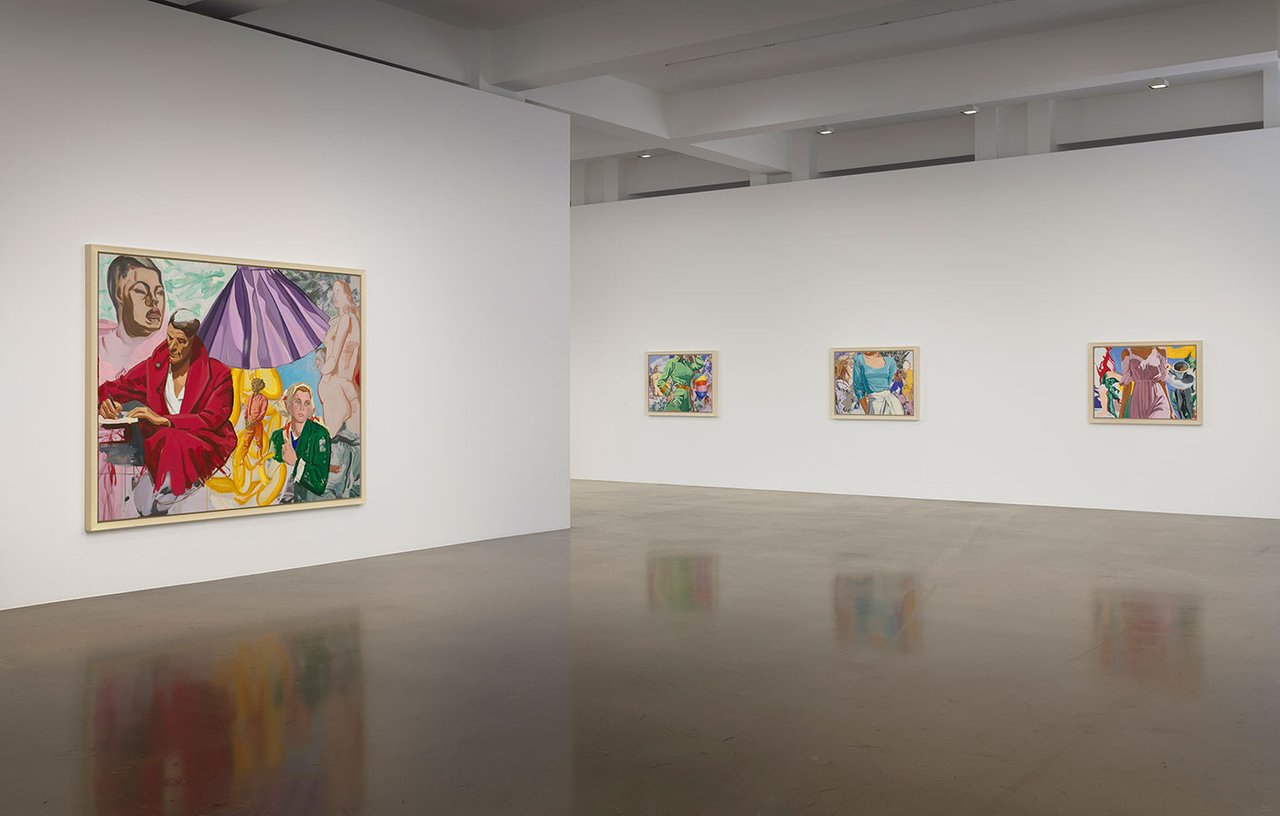
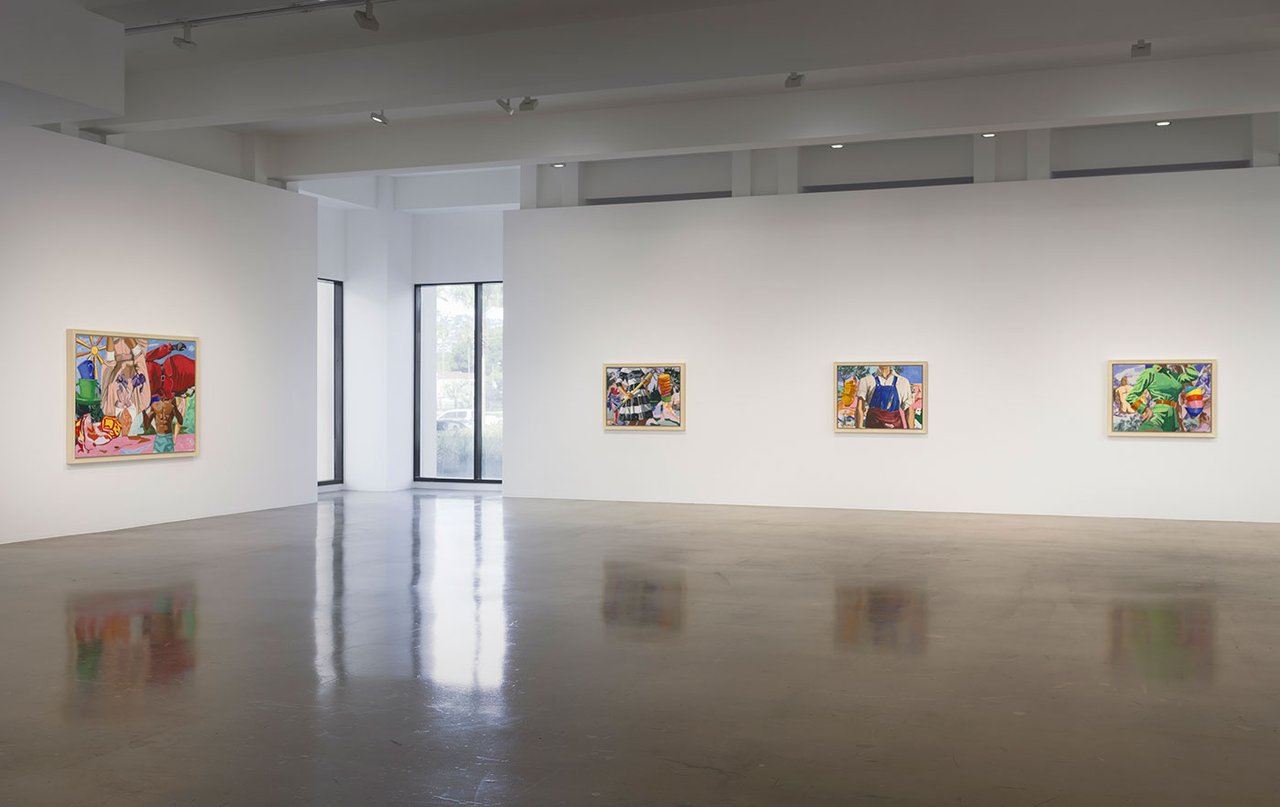
Installation view of “David Salle: My Frankenstein” at Sprüth Magers, Los Angeles, 2026. Courtesy of the artist and Sprüth Magers. Photography by Robert Wedemeyer
Salle has been a leading postmodernist figure on the New York art scene since the early 1980s when his practice transitioned from early installation work to paintings featuring paired spaces and striking juxtapositions — an approach aimed at matching the fluid nature of film montage. He characterized that process in a 2003 interview with Artforum as “two things in the right sequence [that] make a third thing or, rather, allow the mind to make a new thing”.
In 2023, he started work with an engineer, Grant Davis, on a new approach to composing mises-en scène, training a custom version of the text-to-image AI model Stable Diffusion, using training sets of Salle’s existing work. The AI is used as a compositional tool to generate background images — deconstructing Salle’s paintings from the 1980s and 1990s — that the artist then prints on linen and transforms by painting both “with” and “against” the AI’s image outputs, to make new canvases.
That training process, Salle said in 2025, was “hit-and-miss”, especially in the early stages of sending the AI “to art school” to understand the principles of an edge. The breakthrough came when Salle and Davis fed “thick-brush sketches of figures in space and domestic settings of household objects” into the AI, as markers of a painterly edge. “The machine started to apply the translation effect that comes into play when a painter picks up a brush,” Salle said.
“So all of a sudden we had edges that were meaningful. We had edges that were translated into brushstrokes. And the brushstrokes describe forms.”
Once the AI algorithm had been taught painterly technique, Salle and Davis fed in the first training set of the artist’s work: the “Pastorals” (1999-2000). When working with machine learning to generate backdrop images, text prompts are not used. Davis instead devised a lever to select an output in a “similar” or “dissimilar” mode to the training data. The results, Salle said in 2025, “will either be very close to what you’ve fed the machine or it will be wildly divergent. And you just move that lever until you find the right balance point of similar and dissimilar”.
One of the most striking “data points” to emerge in discussing Salle’s three “AI” exhibitions to date is how, after working with his AI since 2023, Salle feels that the experience has served to enhance his critical focus. The process has also caused him to reflect on his critical discourse with older artists including Jasper Johns, Alex Katz, and the late John Baldessari.
Salle’s critical take on his experience with AI is particularly valuable as he is noted for his lucid, accessible, and involving writings on contemporary art.
He has published essays for The New York Review of Books over the past decade, and a volume of his collected writings: How to See: Looking, Talking, and Thinking about Art (2016). Salle is especially eloquent on how artists make marks, as evidenced in a 2017 essay on Louise Bourgeois.
“You feel that Bourgeois wants to dig down to the basic fiber of form itself en route to creating an image; it’s what drawing can do, after all,” Salle writes. “A subset of the marks that she uses, especially those made with a brush and ink, have the length and start-and-stop quality of a stitch of thread or embroidery: graphic stitches, which are bundled together and become in turn the building blocks for many of her images. [...] The equivalency that Bourgeois draws between hair or yarn and muscle fibers or tissue is one of her principal inventions.”
Salle has named his Los Angeles exhibition “My Frankenstein” in a deliberate misdirection, well aware that Frankenstein is the creator, the artist, in Mary Shelley’s foundational horror story, and the sutured creation is merely “the Monster”, his creator’s sometimes unpredictable tool.
“I’m calling the AI my Frankenstein,” Salle tells Right Click Save. “I’ve created this monster and now I’m kind of dealing with it.”
Looking back on three years’ work with AI, he sees this tool as “a compositional sledgehammer, essentially, that smashes everything to bits and then recombines it. Whether the source material is the ‘Pastorals’ or ... or some other body of work or something else entirely, that’s what I’ve found it’s heart and soul to be.”
The AI, he says, is “a tool for visualization. But if one is a painter making paintings, as opposed to simply making images which could take different forms, the [act of] painting will always be the final arbiter of whatever the machine contributed.”
A sharpened perspective
Working with AI over three exhibitions has “sharpened the perspective” Salle has on his own work, he tells Right Click Save, on what his friend Alex Katz describes as the "mechanics" of composing a painting, and the “style” presented on its surface. “So what you see is the style,” Salle says. “But what you see is a result of the under-structure and the interrelationships of the painting that are either made visible or are buried or submerged or made partly visible [...] but you’re not actually aware of them. If [the artist] has a compositional train of mind.”
The under-structure of a painting, and Salle’s relationship to it, is what the AI background print-outs both represent and address, where the training sets of the artist’s earlier work is, as Salle puts it, “decomposed and then recomposed, deconstructed, reconstructed.”
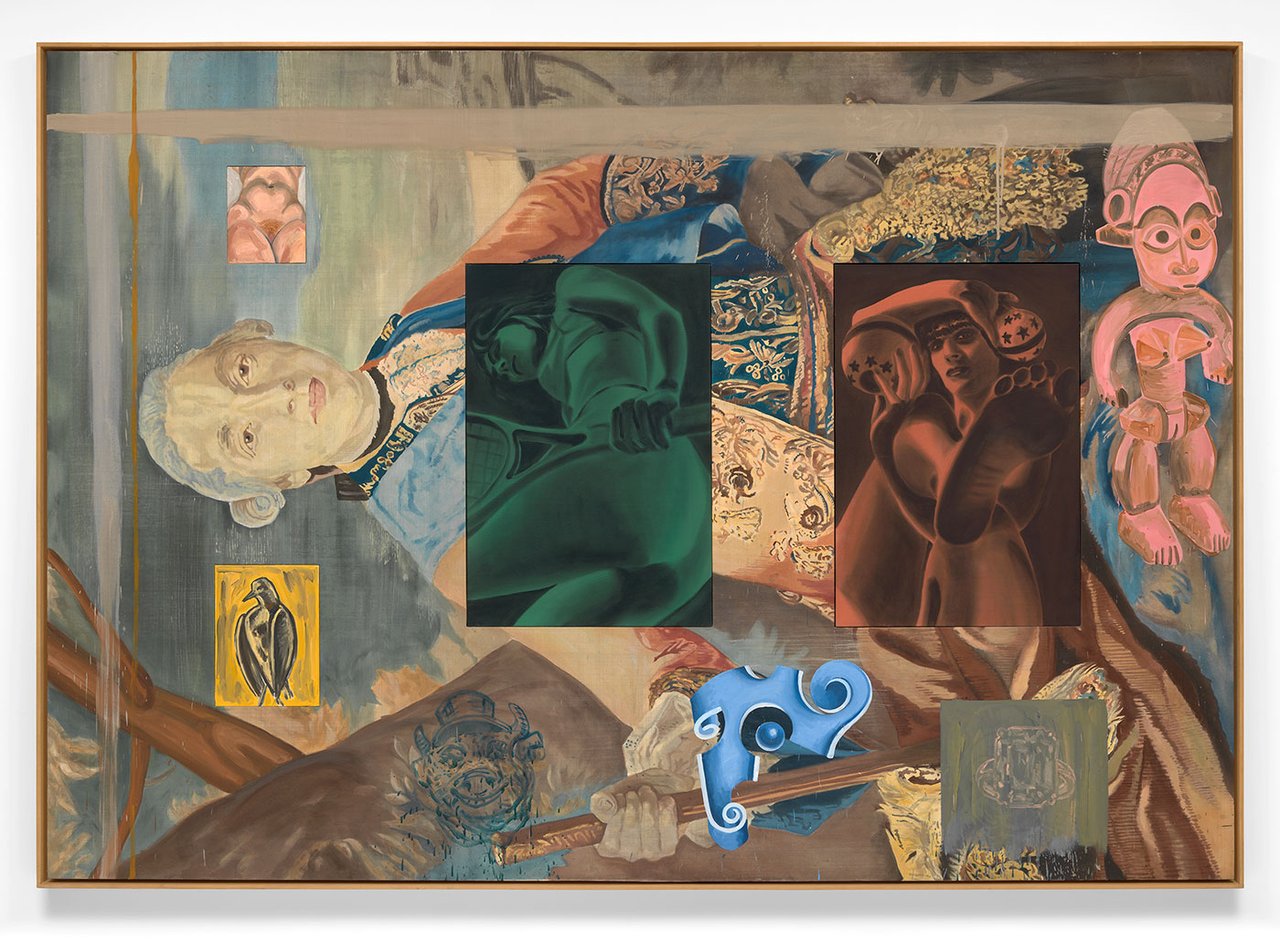
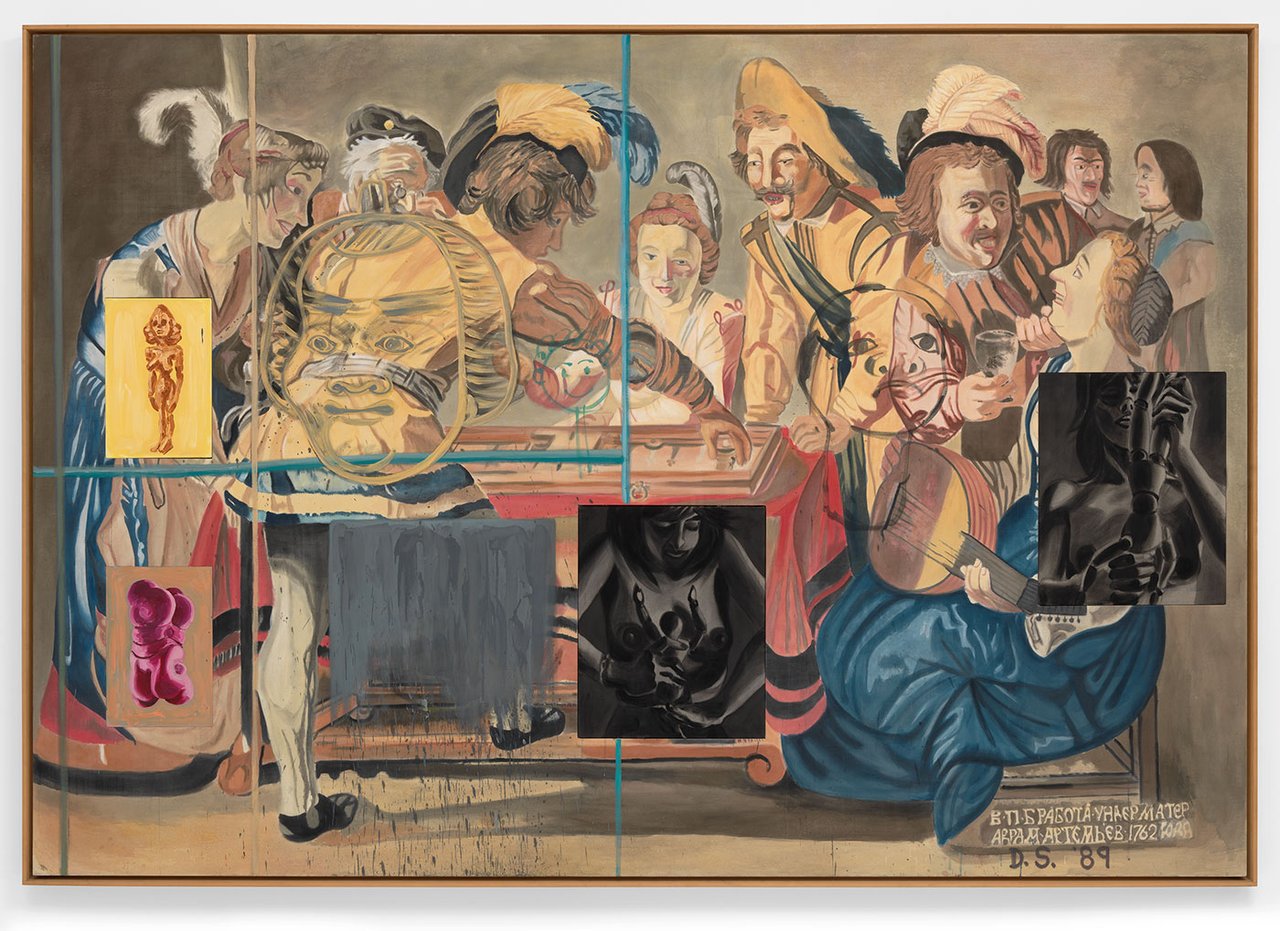
While the backgrounds to the paintings for Salle’s 2024 and 2025 shows were made using his “Pastorals” paintings as a training set, the “My Frankenstein” backgrounds use his earlier “Tapestry” paintings (1989-92) as training data.
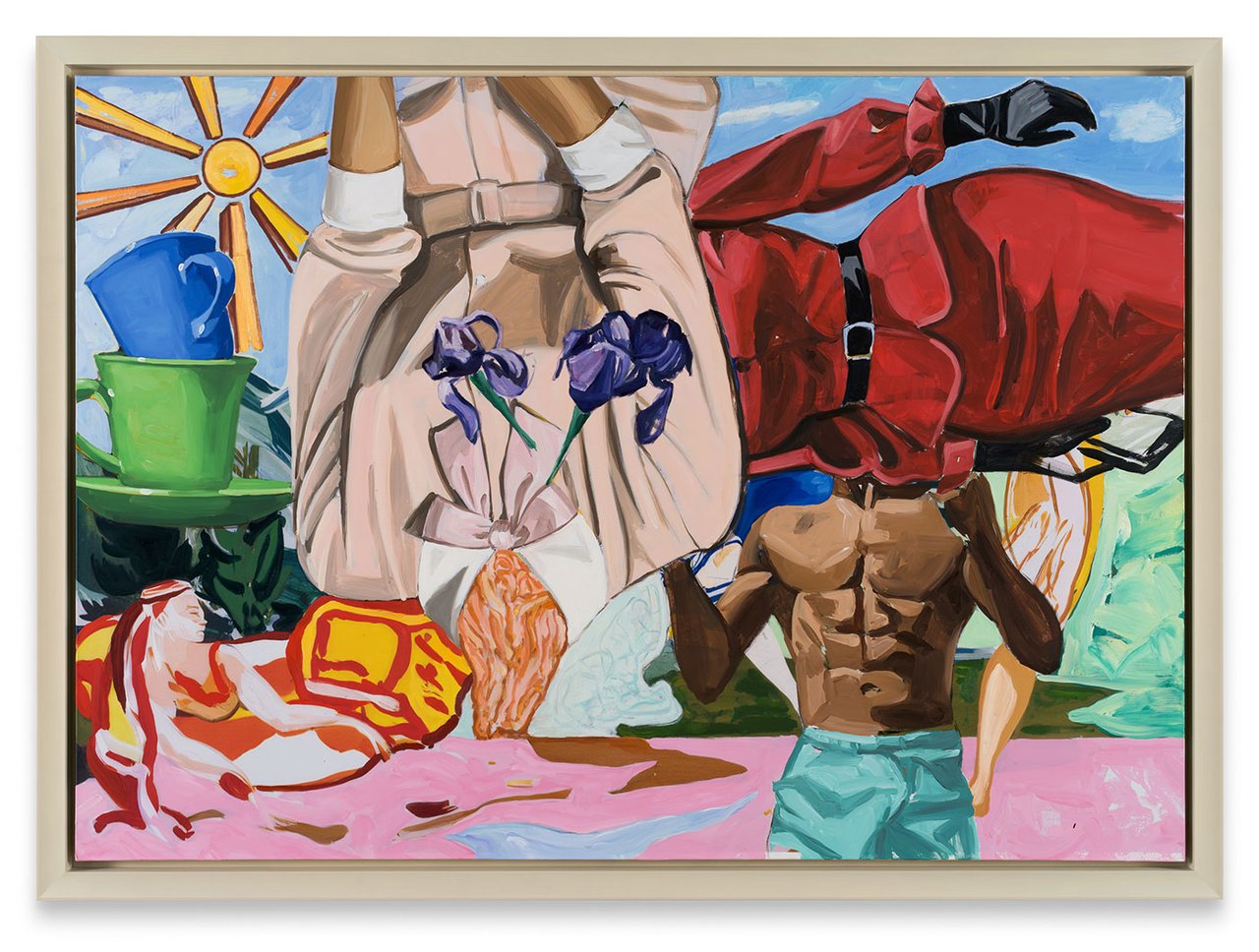
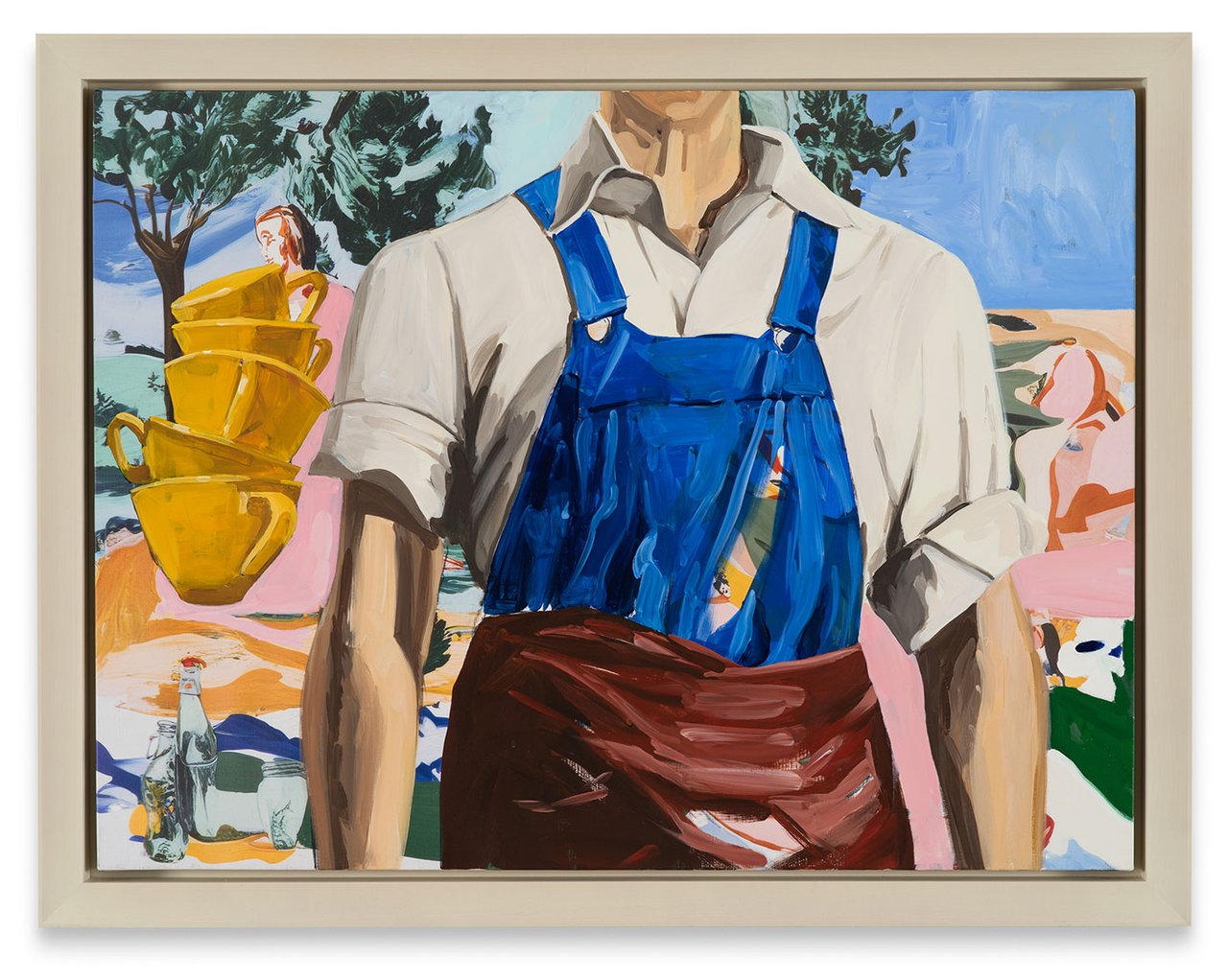
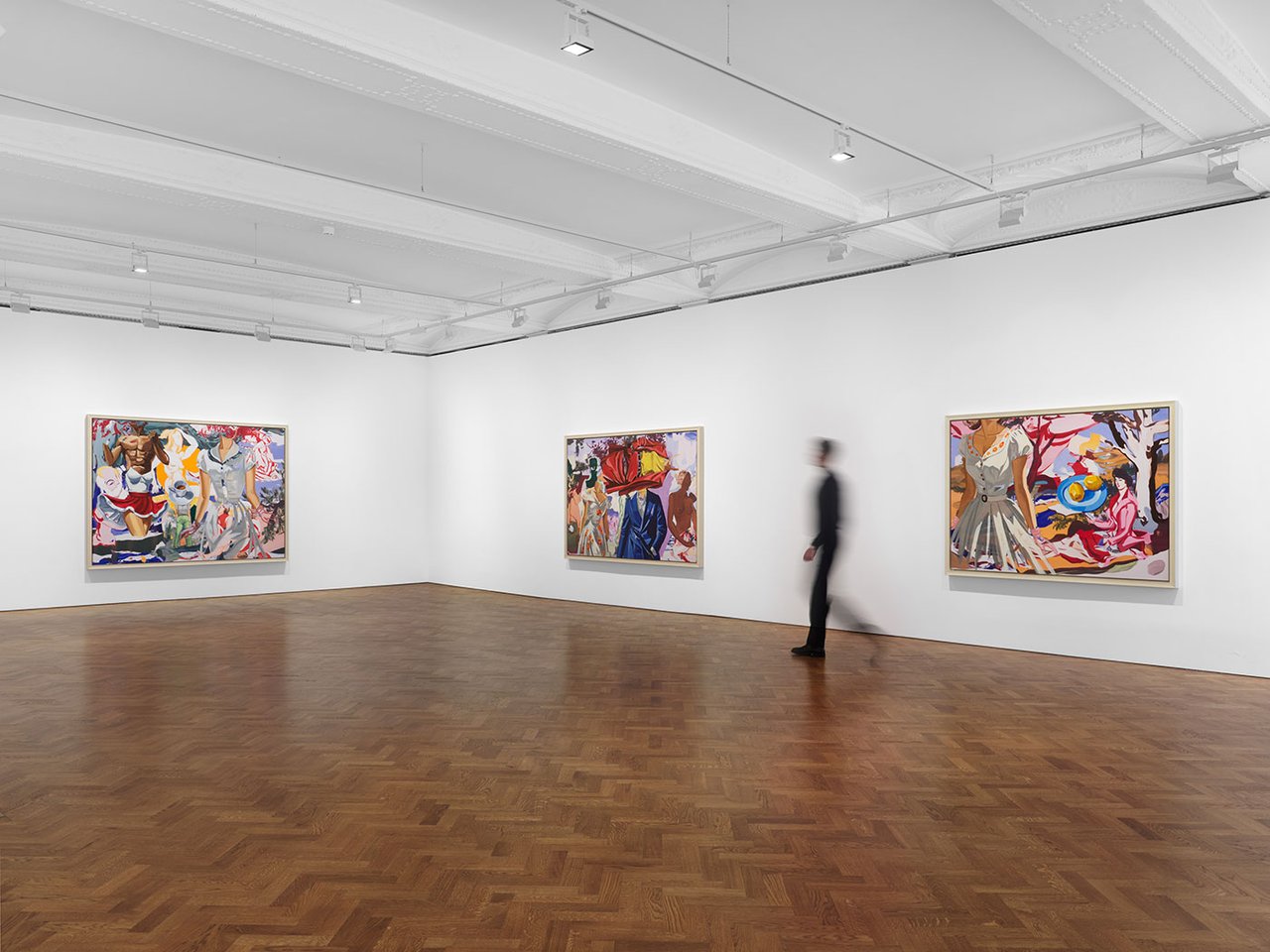
The paintings shown in Los Angeles have many elements in common with those from 2024 and 2025. The collaged everyday objects feel familiar: cups and saucers; fragmented figures, male and female, shirtless or suited, in bathing suits or sun dresses. But they also have striking differences in attitude and color palette, reflecting the different training set employed and the more robust attitude Salle took to his AI in the “My Frankenstein” works.
Salle’s trademark ambiguity and lurking social anomie — the knowing take on a mid-century advertising executive’s American Dream — are more pronounced in the new works. “They’re tougher paintings altogether,” Salle says. “I think there’s lot of factors at work. One simple factor is familiarity with the process. Three years in, it’s also probably the reason I gave the show the title of ‘My Frankenstein’.”
“Having created this monster, now I really have to kick it around. have to get very tough with it sometimes to keep it in line.”
Installation view of “David Salle: My Frankenstein” at Sprüth Magers, Los Angeles, 2026. Courtesy of the artist and Sprüth Magers. Photography by Robert Wedemeyer
Salle also feels more freedom in his dealings with his AI. “I know it’s there for me and it provides not just a starting point, but a kind of baseline of imagistic intrigue. But I feel very free and confident within that, with what the thing has offered up as a starting point.”
“The process is the same,” he says, “I’m responding to something in real time intuitively, not working from a prior composition. But now I’m perhaps freer. I’m treating the AI more cavalierly. I’m really kicking it around but I’m also treating it as more of an equal partner. If it does something great, I’m just saying, ‘Oh, that’s pretty great; let’s just leave that in.’”
“Maybe the first iteration of things in London was some kind of tango with the machine. And this feels more like a staging of a variety show. And, if somebody can bring in a good joke, we’ll leave it in the show.”
Installation view of “David Salle: Some Versions of Pastoral" at Thaddaeus Ropac London, April 2025. Courtesy of Thaddaeus Ropac gallery, London ·Paris · Salzburg · Milan · Seoul. Photography by Eva Herzog
“I felt pretty free and confident in the London pictures also,” Salle says, “but every painting has its own kind of internal logic, even if they are part of a series and follow a similar pattern.” “Every painting makes its own rules and creates its own set of demands,” he says, “and things that have to be resolved. And what worked in the previous version might not work in this one. So it’s not that you don’t learn anything going forward, but the challenges are always fresh.”
A Jasper Johns “prompt” for the “Tapestry” series
The “Tapestry” paintings used as training data for “My Frankenstein” were created after Salle had seen a large tranche of Francesco Goya’s “Tapestry” paintings in the Museo del Prado, Madrid, over 60 cartoons painted or the royal tapestry works in 1775-92, but never realised as textiles.
“They’re great things.” Salle says of the Spanish master’s cartoons. “They’re very satirical, tongue-in-cheek depictions of the nascent middle class in Madrid at that time, at the end of the 18th century.”
“They have always exemplified for me a certain way that depicting realism can be harnessed. It’s also about the way they’re painted, in high-key colors, where the palette is relatively high contrast so they have a brightness and overall luminosity.”
Talking of the “Tapestry” paintings, completed nearly 35 years ago, reminds Salle of a consequential conversation he had with Jasper Johns when he returned to New York in 1989 and told Johns about the Goya cartoons.
“Jasper’s eyes narrowed. He can be [...] a very [doubt-filled] interlocutor. And he said, ‘I don’t know those paintings. But one thing I know for sure is I hate tapestries.’ And I said, ‘Sure, everyone hates tapestries. We all know that.’ But afterwards, I thought, ‘Why do we hate tapestry? What’s wrong with it?’”
“I thought, if Jasper hates them so much, that’s some information I should use. So I started looking at [tapestries]. And I did something even more perverse, which was to make paintings that mimic the woof and warp, the weave, of tapestry fabric.” These paintings are inspired by Russian tapestries, based in turn on earlier Venetian paintings, and consist of backgrounds on top of which Salle added “insets and overpainting and drawing” to create the “Tapestry” series first shown at Gagosian, New York, in 1991.
The “Tapestry” works “have a totally different palette” to the original “Pastorals” series, Salle says. “They’re darker gray and brown. They’re much more close in value; so the overall aspect [of his “My Frankenstein” paintings] is more severe, more compressed. There’s no horizon line. They’re [made with] the same process with very different results.”
Salle reflects on what it means to be showing his work in Los Angeles, a city where he studied at CalArts in the 1970s with John Baldessari, his mentor and friend.
“I was influenced by him enormously,” Salle says of Baldessari, “although for years [...] it’s not that I denied it. I would be happy to embrace it, but I couldn’t see it. First off, I’m making paintings; John renounced painting. So I’m in a fundamentally different universe. [But] the longer I’m doing this, I start to feel John’s influence. I know he’s here in the work, in some way."
"On one level, AI was just made for John Baldessari. And it’s just a pity that he didn’t live long enough. He would have jumped in with both feet. He would have been the AI artist, par excellence. And there would be an AI Baldessari. He would have just let the thing take over and do everything. It would have been hilarious.”
“I feel John’s presence in a way, which I haven’t in a while. But I’m feeling the fullness of what he gave us, not in any surface similarity of appearance, but in the spirit of how to approach this thing.”
Installation view of “David Salle: My Frankenstein” at Sprüth Magers, Los Angeles, 2026. Courtesy of the artist and Sprüth Magers. Photography by Robert Wedemeyer
The conversation around his AI paintings, Salle says, has confirmed what he “always knew to be the case”, that “however we arrive at these things, the surface of the painting is actually all anyone has to go on. What the thing looks like in a way is all that matters.” He is also pleased that critical reaction to the use of an AI tool has, in the past two years, moved on from the “can’t believe that a dog could stand on its hind legs or talk like that” approach. “We are hopefully now over that part,” he says. “And now it’s just like it’s a given. This is the tool that we use, and you can [use it too]. It doesn’t do everything. And that takes us back to the painting as it has itself.”
In this way, Salle’s experience with his model offers an artist’s prism through which to see the challenge of working with AI, both practically and as a metaphor for societal challenges of the day.
Practically, it is in the way he has used his own images to train his “monster”, like a parallel example for a writer or business leader training Claude or Gemini in the art of writing or argument.
In finding metaphors for the human condition today, the artist has learnt to be more brutal with his model’s outputs. Realising, as he wrote in the Financial Times in May 2025, that the “thinking” part of his machine, “the algorithm, does seem to have a drive to break pictures down and recombine their component parts,to scramble their spatial orientation but preserve and even amplify their emotional subtext. What could be more expressive of this moment?”
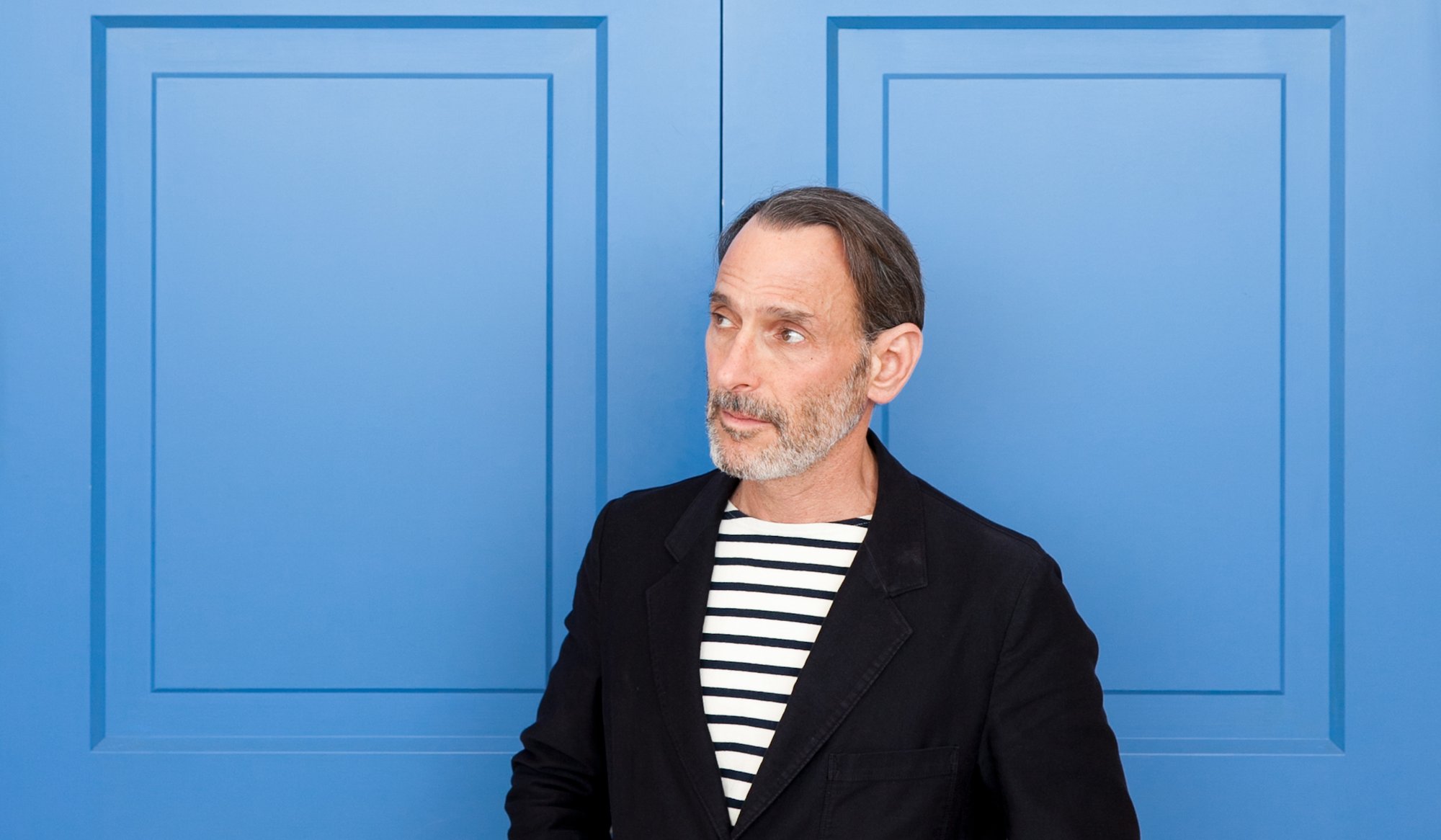
David Salle lives and works in New York. Solo exhibitions include Edward Hopper Museum, New York (2024), Centro de Arte Contemporáneo de Málaga (2016), Museo de Arte Contemporaneo de Monterrey, Mexico (2000), Haags Gemeentemuseum, The Hague (1992), The Tel Aviv Museum of Art, Bayerische Staatsgemäldesammlungen München, Munich (both 1989), Museum of Contemporary Art, Chicago, Whitney Museum of American Art, New York (both 1987), and a major retrospective at Stedelijk Museum, Amsterdam (1999, traveled to Museum Moderner Kunst Stiftung Ludwig, Vienna; Museo d'Arte Contemporanea Castello di Rivoli, Turin; Guggenheim Museum, Bilbao). Group shows include Hill Art Foundation, New York (2023), Whitney Museum of American Art, New York (2017, 2015), Museum of Contemporary Art, Chicago (2012), Metropolitan Museum of Art, New York (2009), La Biennale di Venezia (1993, 1982), Whitney Biennial (1991, 1985, 1983), Carnegie International, Pittsburgh (1985), and Documenta 7 (1982).
Louis Jebb is Managing Editor at Right Click Save.