The New Museum Goes Back to the Future - Right Click Save
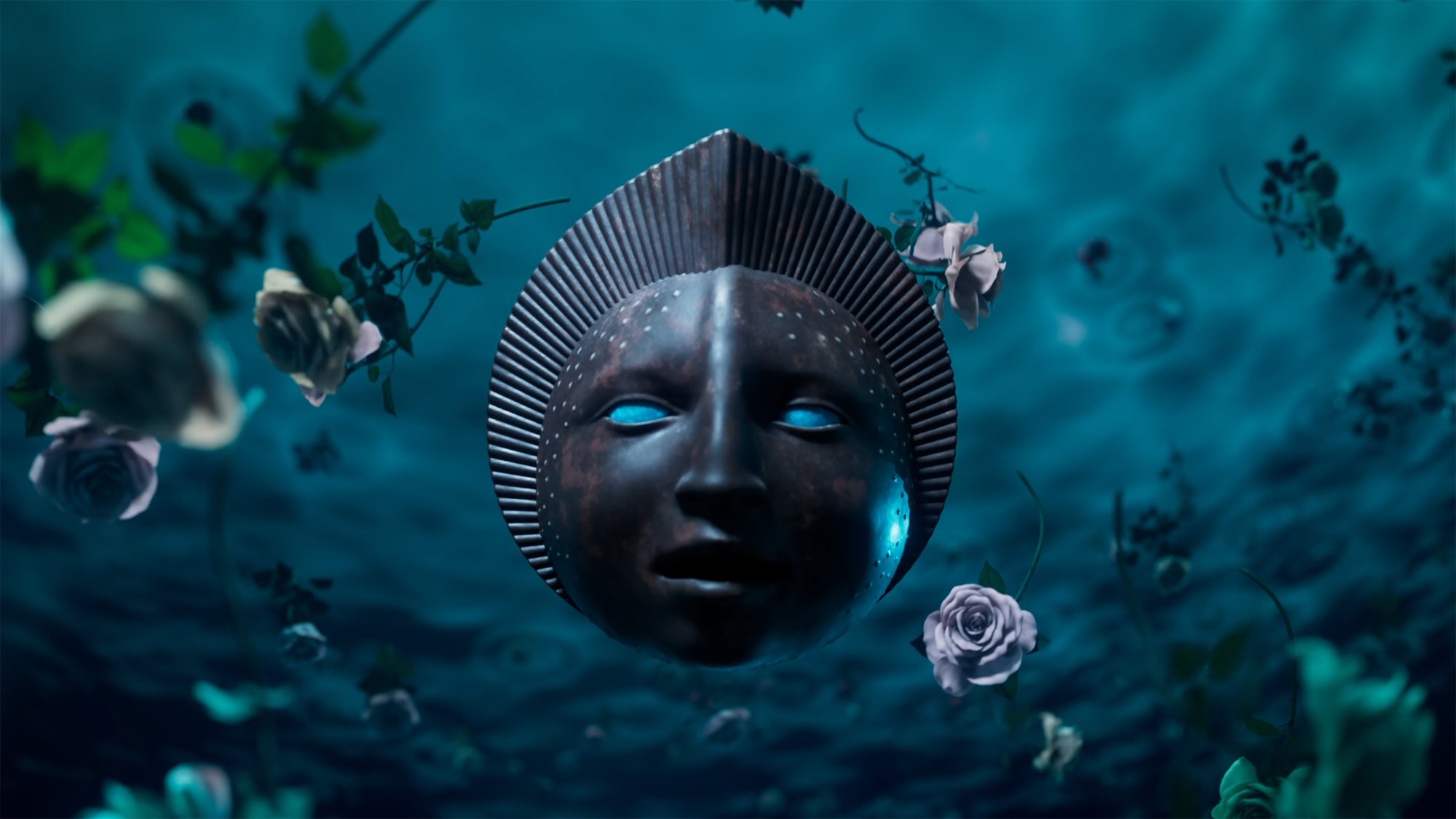
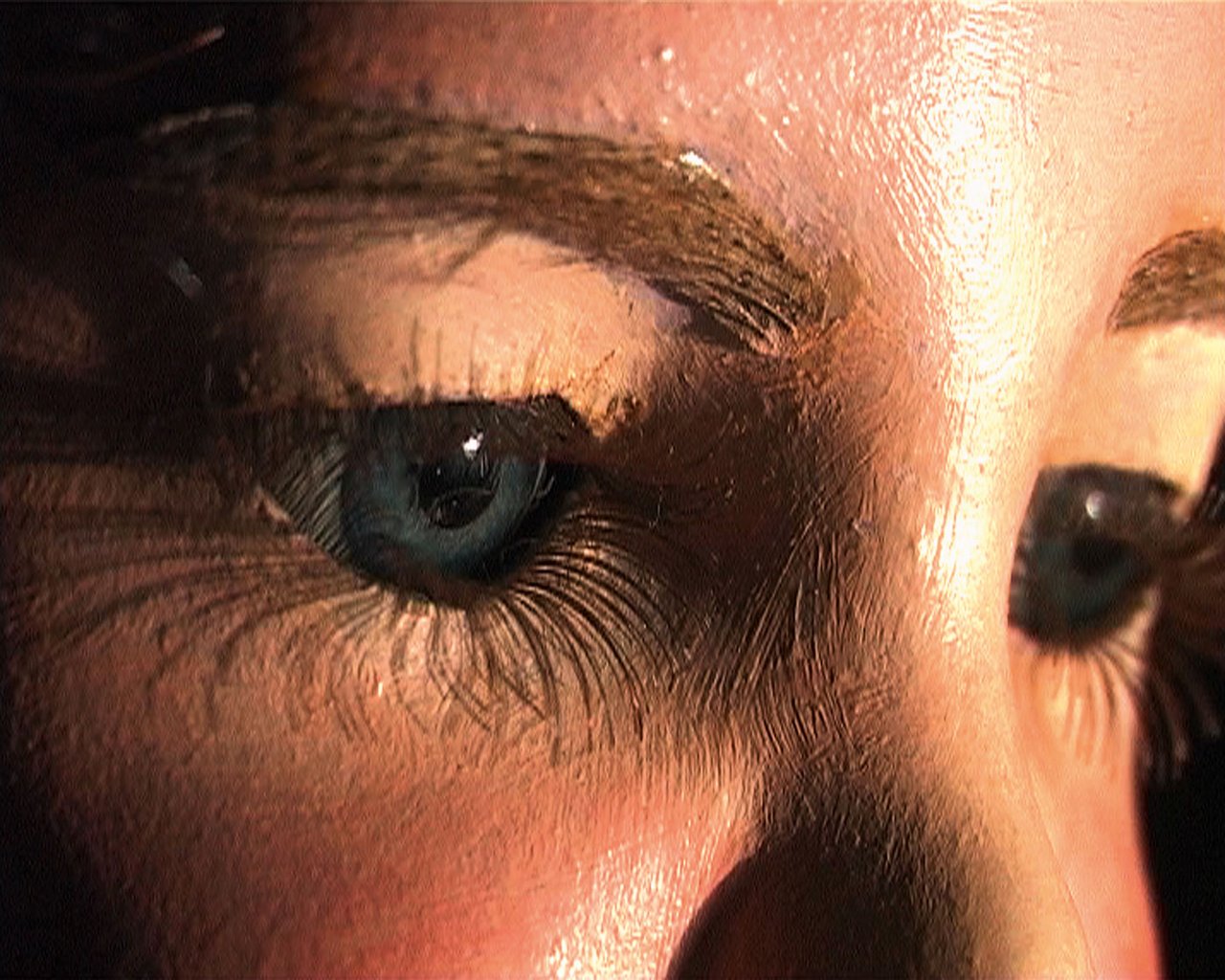
Julien Creuzet, (Still from) ZUMBI ZUMBI ETERNO, 2023. A work included in “New Humans | Memories of the Future”, New Museum, New York, 2026. Courtesy of the artist and Andrew Kreps Gallery, New York
The New Museum, New York, reopens on March 21, 2026, after a two-year $82 million rebuilding program that has doubled the contemporary art museum’s exhibition capacity. The enlarged institution’s first thematic exhibition, “New Humans | Memories of the Future”, explores artists’ concern with what it means to be human in the face of technological change. The show is curated by Massimiliano Gioni, the Edlis Neeson Artistic Director at the museum; Gary Carrion-Murayari, Kraus Family Senior Curator; Vivian Crockett, Allen and Lola Goldring Curator; and Madeline Weisburg, Senior Assistant Curator; with Calvin Wang, Curatorial Assistant.
The New Museum, founded in 1977, has built a reputation over five decades as a nimble, experimental, home to contemporary art. It is a kunsthalle, with no permanent collection, that mounts single-artist survey exhibitions and ambitious themed shows covering topics with societal resonance beyond the confines of an art museum. It has also developed important entities in education and research, including Rhizome, the museum’s digital arm since 2003, and New Inc, its incubator for art, design, and technology, launched in 2014.
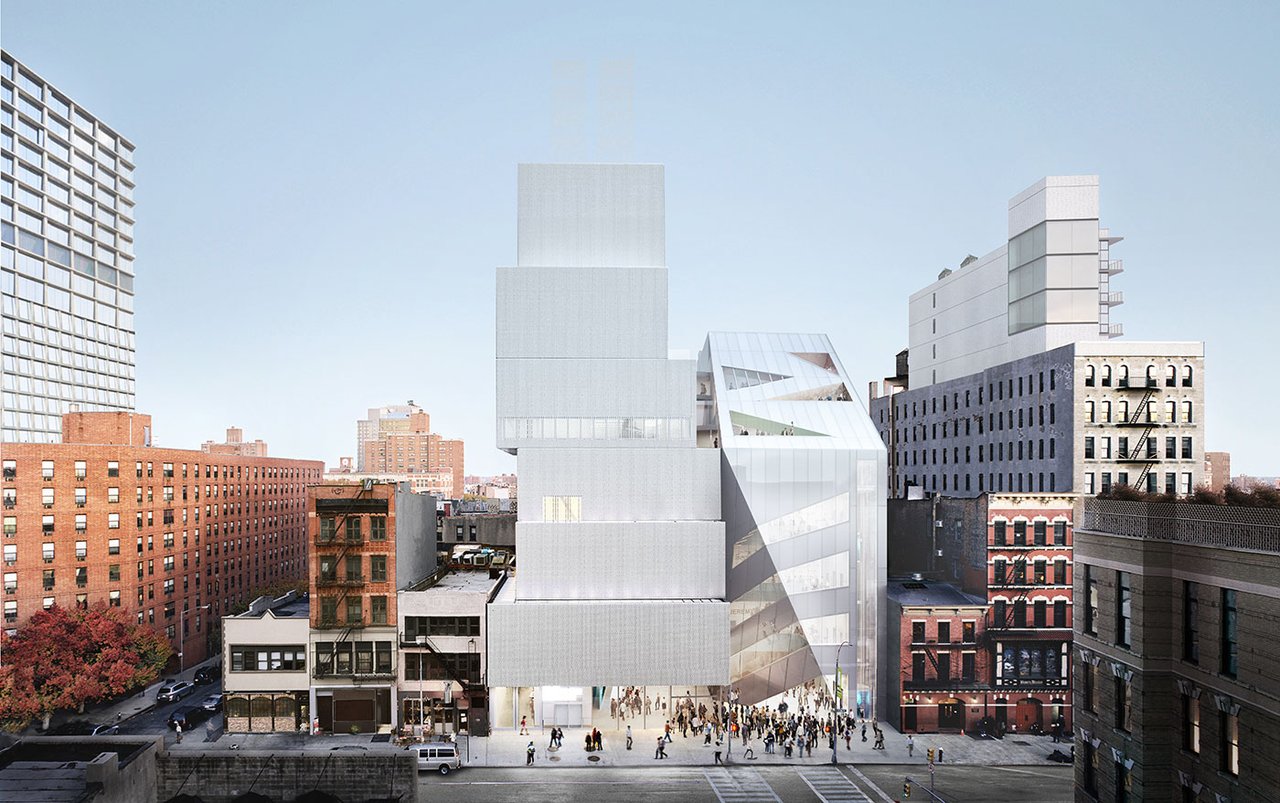
In spring 2024, the museum’s home, in the Bowery district of Manhattan’s Lower East Side, designed by the SANAA practice in 2007, was closed for construction work. A seven-storey extension, designed by OMA’s Shohei Shigematsu and Rem Koolhaas has been added to the south. When the new, extended, building opens in March it will offer the museum considerably more office accommodation — including permanent homes for Rhizome and New Inc — as well as an additional 10,000 square feet of exhibition space.
Rendering of the expanded New Museum, New York, showing the 2007 structure by SANAA (left) and the new extension, designed by OMA. Courtesy of OMA/bloomimages.de
“New Humans | Memories of the Future” will be shown across both parts of the enlarged building, and will include the work of some 200 artists, historical, modern and contemporary, including 15 exhibition commissions from artists such as Ryan Gander, Camille Henrot, Jamian Juliano-Villani, Wangechi Mutu, Hito Steyerl, Alice Wang, and Santiago Yahuarcani. There are also three longer-term commissions that will be on show for two years before being returned to the artists: a Tschabalala Self work on the museum’s façade; a Sarah Lucas piece in the entrance plaza; and a large-scale sculpture by Klára Hosnedlová in the atrium. A new interactive work by Ian Cheng is planned for the restaurant.
The exhibition will include works by contemporary artists such as Rebecca Allen, Thomas Bayrle, Meriem Bennani, Pierre Huyghe, Tau Lewis, Precious Okoyomon, Pamela Rosenkranz, and Anicka Yi, as well as pieces by canonical figures such as Francis Bacon, Salvador Dalí, Alberto Giacometti, H.R. Giger, Eva Hesse, Hannah Höch, Tatsuo Ikeda, Kiki Kogelnik, and El Lissitzky.
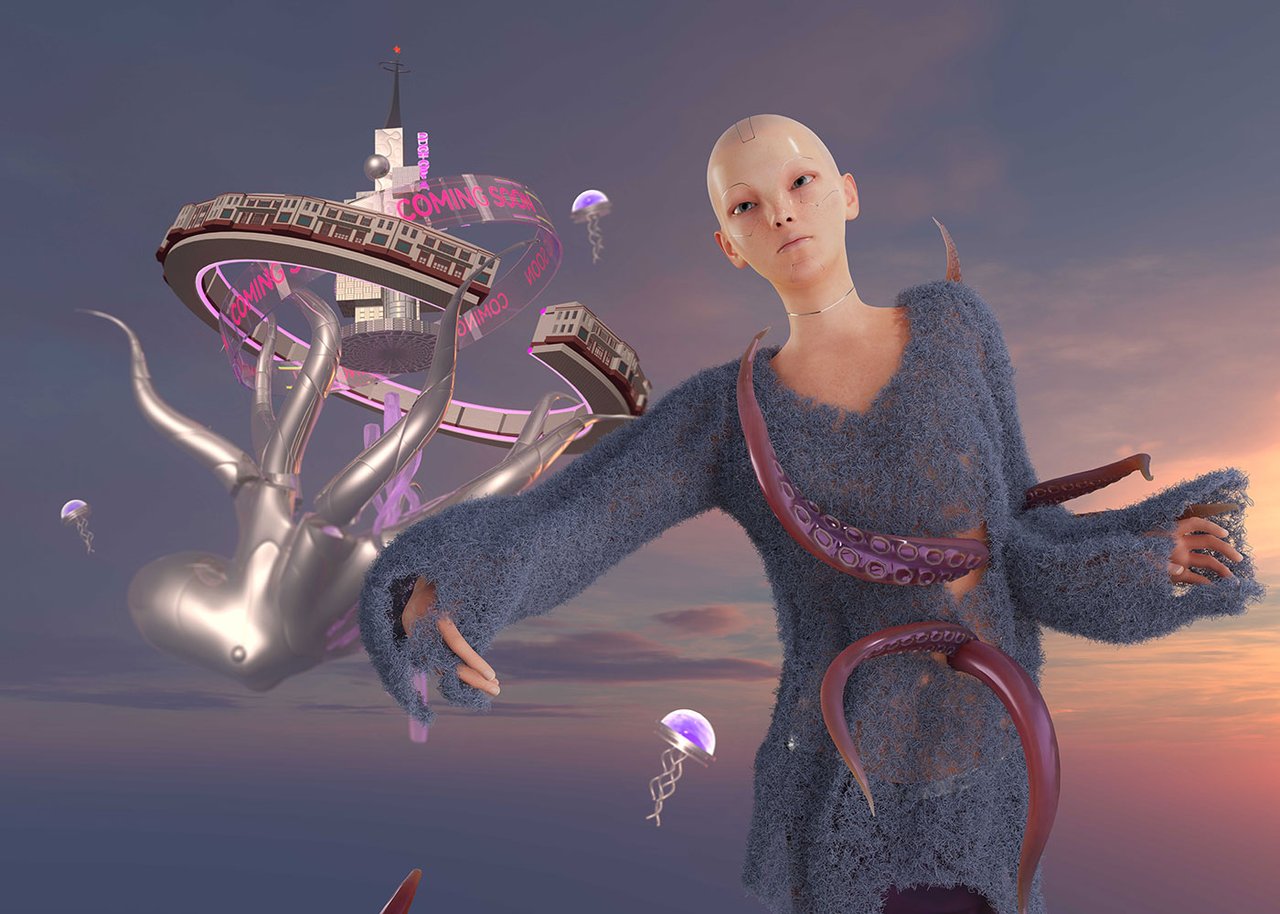
A number of artists, including Julien Creuzet, Jaider Esbell, Jana Euler, Christopher Kulendran Thomas, Tau Lewis, and Portia Zvavahera, will show work reimagining what the museum describes in a statement as “speculative universes in which the definitions of the human are constantly renegotiated with both the animal and the natural world”.
Gioni spoke to Right Click Save, in the context of “New Humans”, about how definitions of the human shift under the impact of new technologies; the tension in the dialogue between the machine and the human; how, in moments of existential threat, people revert to myth; and the ability of artists both to debunk and imagine new myths around these existential subjects.
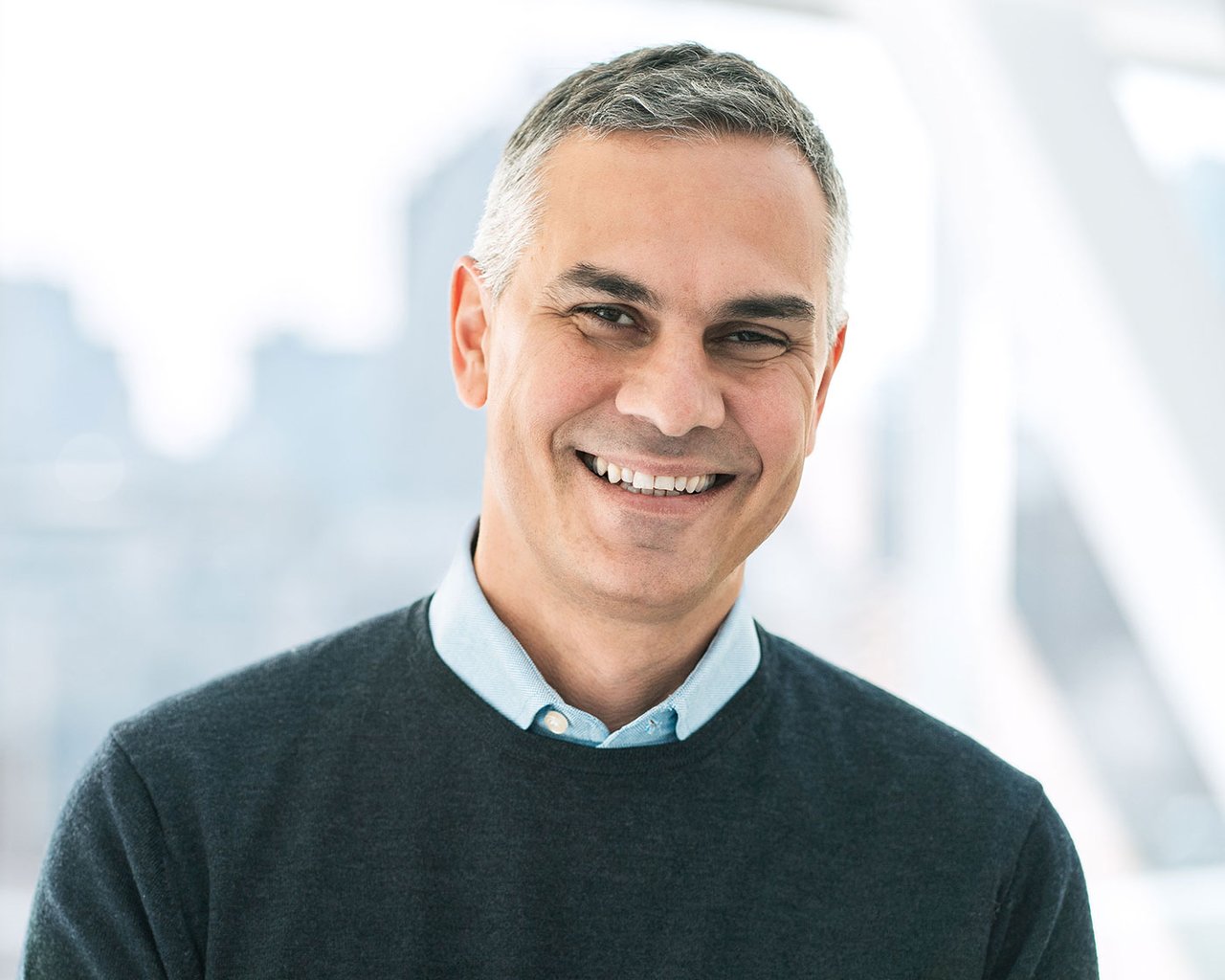
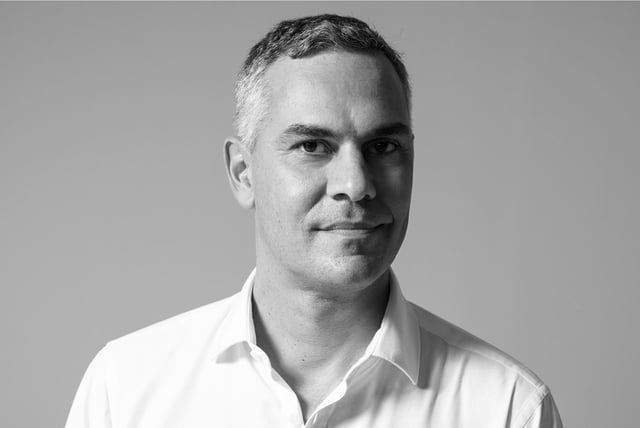
Massimiliano Gioni. Photography by Christine Rivera. Courtesy of New Museum
Louis Jebb: Back in 2019, when the plans to enlarge the New Museum were first announced, and before the Covid-19 lockdowns of 2020-21 imposed a delay on the project, you spoke to The New York Times about how you hoped the new building would have a transformational impact on the museum, in part from doubling the exhibition space. With the upcoming reopening of the museum, how do you reflect now on that hope, both for the museum’s exhibition program and for its education and innovation initiatives?
Massimilano Gioni: Growth and expansion looked very different in 2019 [to how they appear] in 2026; and that has to do with external factors, mainly the effects of the Covid lockdown.
From the beginning, and more so after 2020, we wanted this expansion to feel and to be truly necessary. We felt the need for this expansion because we were already using the building next door [which was demolished to make way for the OMA-designed extension] for many purposes. We had offices; we were programming the ground floor. We felt we could embark on an expansion because there was a true need for it.
We also wanted to make sure that [in] doubling the [exhibition] space, we remained an extremely flexible, experimental, nimble institution. That's still the case. So we are not renouncing our ethos or our DNA but we have many opportunities to do more things or different things.
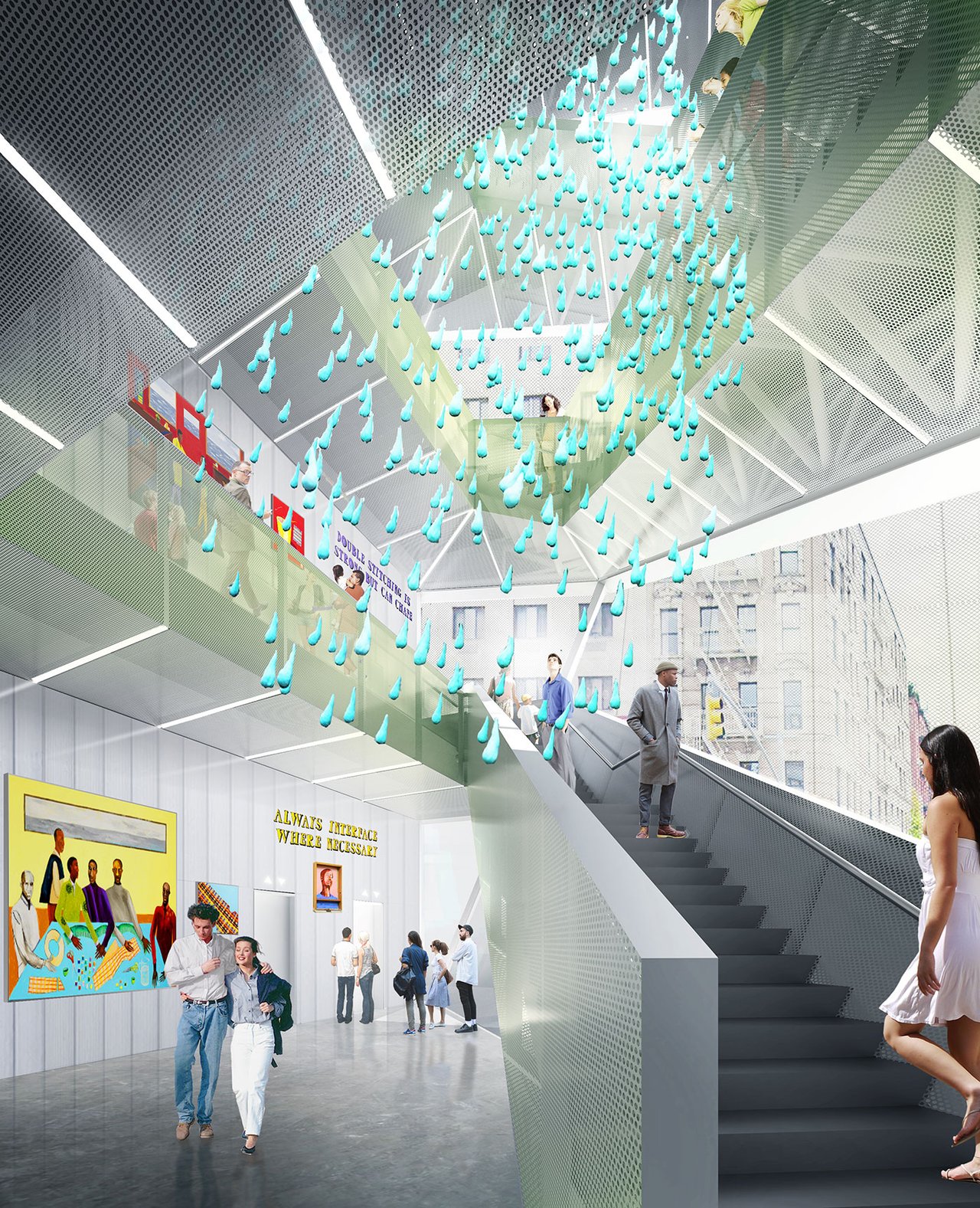
Rendering of the expanded New Museum. The Atrium Stair. Courtesy OMA/bloomimages.de
Having more exhibition space allows us to do three things better. First, the New Museum is not a collecting institution, so a lot of the energy that others put into preservation we put into production. This new building allows us to do that, because we have more space but also because we have activated a series of partnerships internationally to commission [and] realize new works. In the opening program we have three major commissions: from Sarah Lucas, Tschabalala Self and Klára Hosnedlová. These are commissions with different partners and foundations. They will be on view for two years and at the end of those two years they will return to the artists. In the case of Sarah Lucas and Tschabalala Self, because those are sculptural works, they can also make multiple editions.
Our mission is to produce the work and we are happy when the work has a life that extends beyond our presentation. Because we don't acquire the work, [it] can take on a life of its own, and often these works continue their life exhibited elsewhere or being bought by others. We have some 15 new commissions that were realized specifically for the inaugural exhibition.
The second aspect is a house specialty of the New Museum: [giving] the first solo shows to artists in New York [across] a very wide spectrum [from] very young artists [to] more established ones like Judy Chicago [in 2023-24] or Theaster Gates [in 2024]; artists who, for differing reasons, had not [previously] received the recognition they deserve.
We will continue to do that but now we have the [space] to have simultaneous presentations. The first big solo show after the round of inaugural shows is Arthur Jafa [later in 2026]. And at the same time, we [will be able to show] new productions by younger artists.
Cao Fei, (Still from) Oz, 2022. Courtesy Sprüth Magers and Vitamin Creative Space
The third area, which connects us to the inaugural show, is another house specialty: big thematic group shows, of which there is less and less in New York City. We feel it’s a niche that we really own [and part of] the history of the New Museum. [The thematic exhibitions] tackle contemporary art, but we look at them as a way to understand topics that are central, well beyond the world of art.
This is the case in point with “New Humans”. It is an exhibition about art and technology and more broadly about how definitions of the human shift under the impact of new technologies.
These [thematic] exhibitions are strongly focused on contemporary art but they also wander off into the past because we think that a true experimental contemporary museum, as it defines the present and the future, also needs to revisit, to be ambitious, and also to rewrite the past a little bit. “New Humans” takes a vantage point of today to look back at different moments in history in which different definitions, different technological innovations, have transformed the way in which we understand the human.
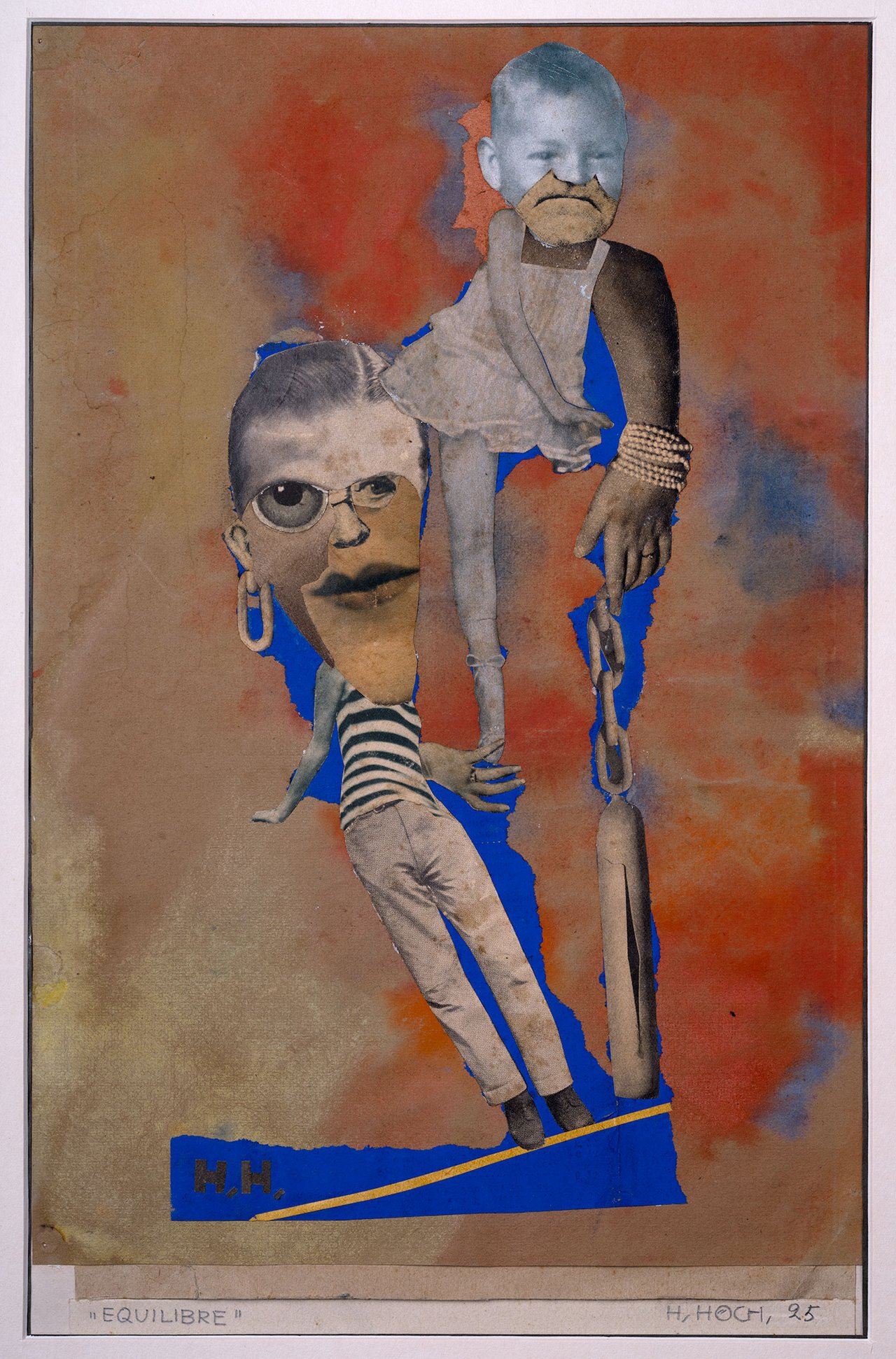
Hannah Hõch, Equilibre [Balance], 1925. Courtesy of Ifa (Institut für Auslandsbeziehungen), Stuttgart, Germany
LJ: You have mentioned that you will have more space for your initiatives that support education research and art design technology.
MG: There are a lot of components of what we do which remained a little invisible before, maybe for lack of space; what we call our discursive platforms. We have two affiliates in house: Rhizome and New Inc. Rhizome is our digital arm and New Inc is our incubator for art design technology. These two will come in-house, thanks to the new building, and their activities and programs will be a more apparent presence, together with our education program which is very strong and has grown stronger. They will have a more visible manifestation in the new building.
The new building is structured as a triangle. If you look at it from the side, the lower floors are all exhibitions. The top floors are discursive, or more programmatic spaces, and there is a new theater. We have a full floor dedicated to New Inc and Rhizome. So their presence is more manifest. And we have a new [education] team program that brings 100 teens every year to work with artists at the museum. While with New Inc we have 100 members who work on site.
Education is also very present in our community, in our neighborhood. We give classes in the [public] housing in the neighborhood of the Lower East Side. With New Inc and Rhizome we are present locally, internationally and digitally.
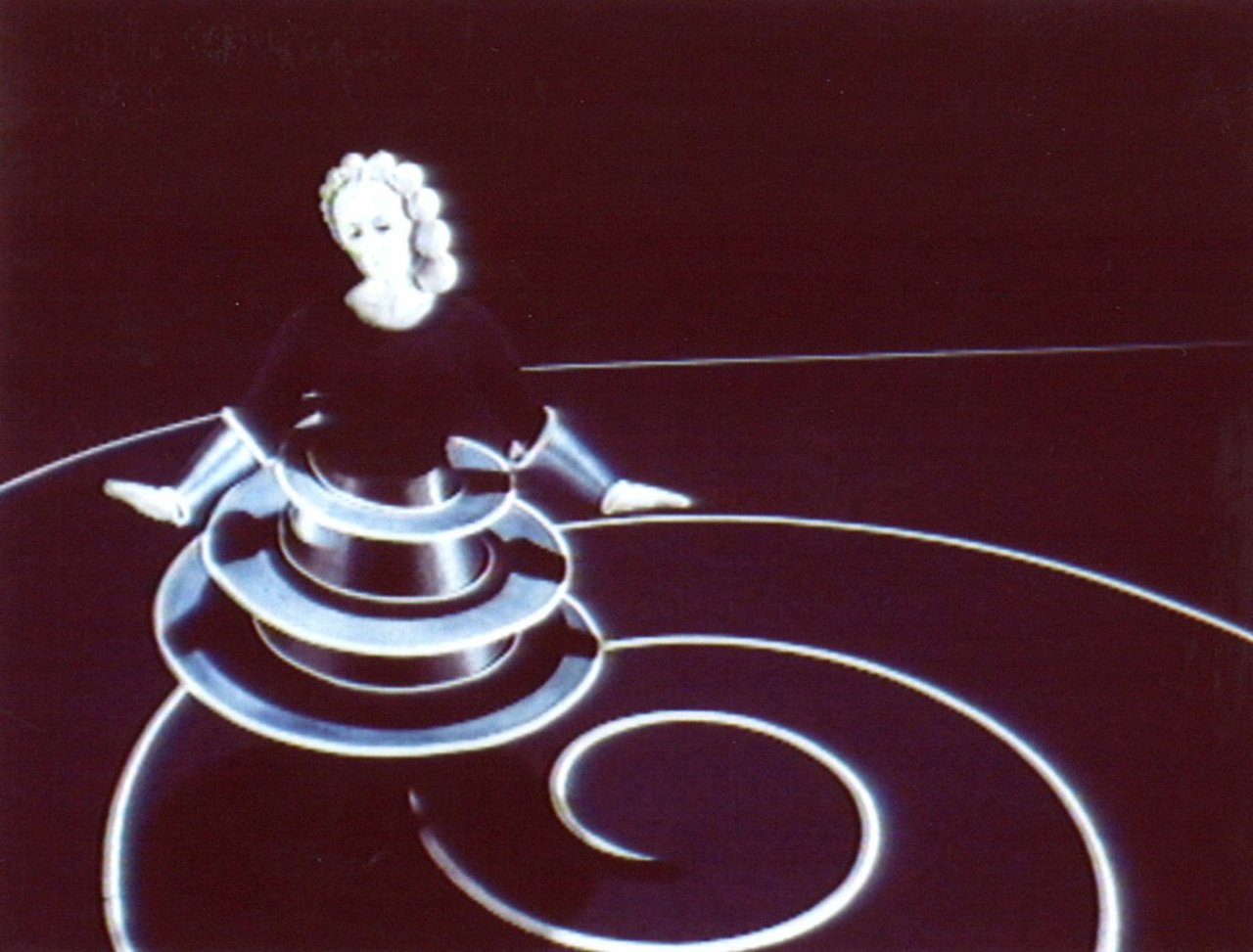
Oskar Schlemmer, Das triadische Ballett [The Triadic Ballet], 1922 (restaged 1970). Still. Courtesy Bavaria Media GmbH
LJ: How does “New Humans | Memories of the Future” offer a prism on how artists see, and have seen, humanity’s relationship with technology?
MG: The show is very large, but then the topic sustains it. It is about how representation, perception and definition of the human have changed and continue to change under the pressure of new technologies. It’s a show that in a way looks [back to the past through] an inverted telescope. It starts off from today but establishes a symmetry [with history], particularly with the 1920s. I hope it's not a fateful symmetry.
[One hundred years ago] humans were confronted with similar technological revolutions. [The show makes the point] that the word robot, which now takes on so much space in our imagination, was created in the 1920 play Rossum’s Universal Robots, by Karel Čapek.
It was a moment in which fantasies and fears of automation were [abroad] in Europe, America and many other places, [as were] aspirations for a future where labor will be automated and we will dedicate ourselves to play. [These aspirations] were very present in the 1920s as they are today. They are both moments of technological upheaval and social change and in some cases dramatic social change.
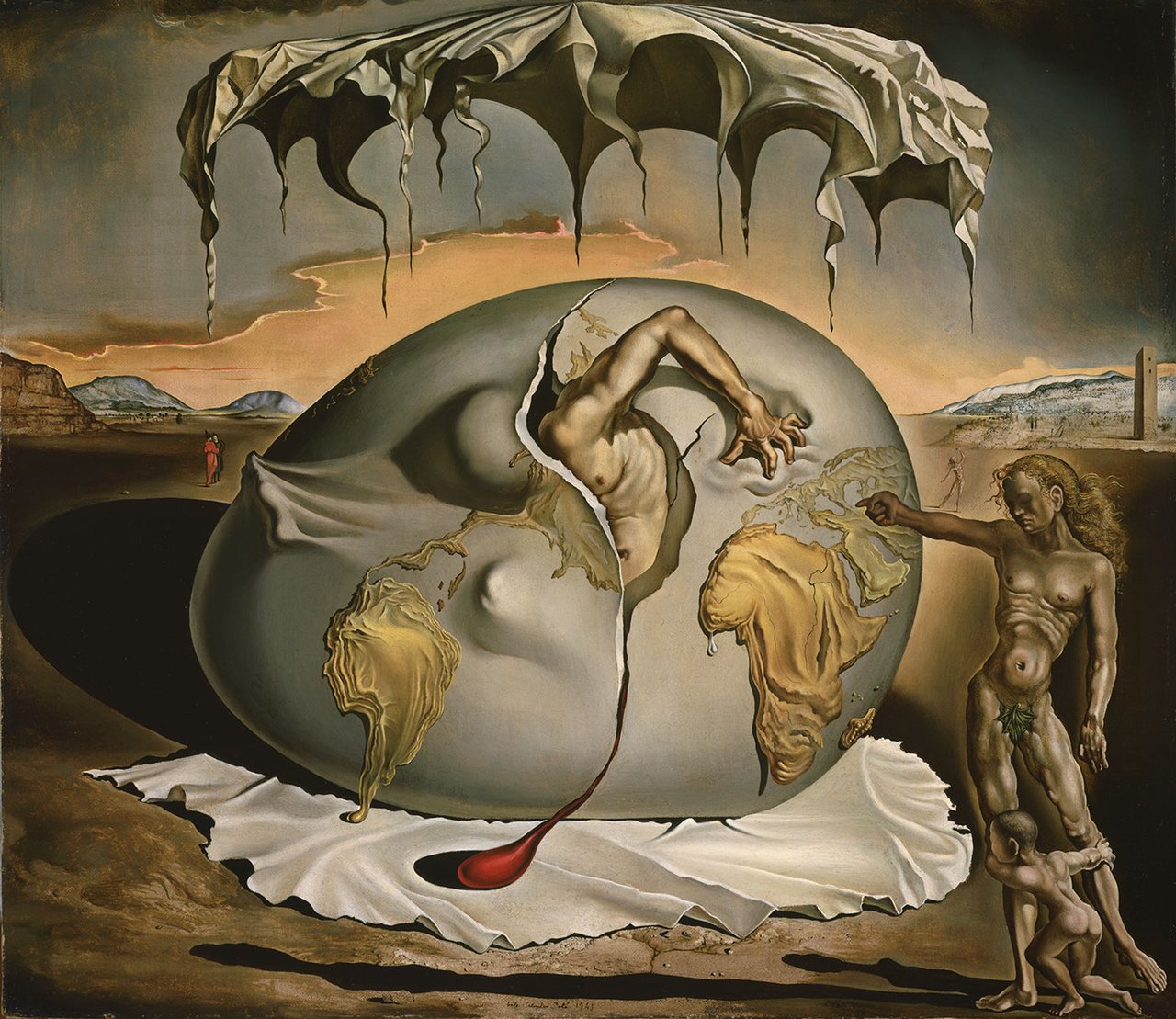
Salvador Dalí, Geopoliticus Child Watching the Birth of the New Man, 1943. Courtesy of The Dalí Museum, St. Petersburg, FL. Gift of A. Reynolds & Eleanor Morse
The exhibition also looks at the conflation of totalitarian regimes and technologies. The use of propaganda and misinformation [a century ago] and today; with sadly many similitudes in the way in which technology allows for propaganda. My hope is that by looking through a series of case studies with an emphasis on the symmetry between the 1920s and today [...], by looking at this dialogue across time, there is a sense that we have been faced with dramatic changes in the past and [...] that we have survived them and have adapted in ways that suggest that we can also face what we're going through today. That is one of the premises of the show.
The exhibition [also addresses] new technologies and how they revisit, or force us to reconsider, what is human. More deeply it’s about the myth of giving life which intersects a lot with ideas around technology. You can go all the way back to Hephaestus and his first robots [in 2500BC] and tell the history of a myth that has less to do with technology and more to do with a desire to give life.
It’s probably a misplaced desire, but it’s one that is also very close to the act of making art.
Philippe Parreno, (Still from) The Writer, 2007. Courtesy of the artist and Gladstone Gallery
It’s a show that looks at new technologies, but it looks at them as a place where this perennial idea of humans creating life is revisited. It is a theme that is charged with many dangerous ideas; [where] at the beginning of the 2020s, as in the 1920s, certain guys are dreaming of usurping the right of making life from women. There is a whole sub-theme to the historical avant-garde — the Surrealist, the Dadaist, and the Futurist — [which is] frighteningly dreaming of making babies. They fantasized about a society where women won't be the only ones who can [give birth].
I hope as the exhibition gets deeper and denser some of these questions will appear to be even more fundamental than the question of technology; around the myth and the fantasy of giving life.
LJ: How do case studies in the exhibition address these fantasies: from Classical myth, through Modernist provocations, and the works you have commissioned for “New Humans”?
MG: The historical avant-garde, futurist or realist fantasies around machines are very present. Francis Picabia writes a book of poems, Daughter Born Without a Mother (1918), [which is made up of 18] drawings of machines. He has this fantasy of reproduction as a mechanical construct that doesn’t need sexual reproduction. And that's a fantasy that recurs in many of the historical avant-gardes.
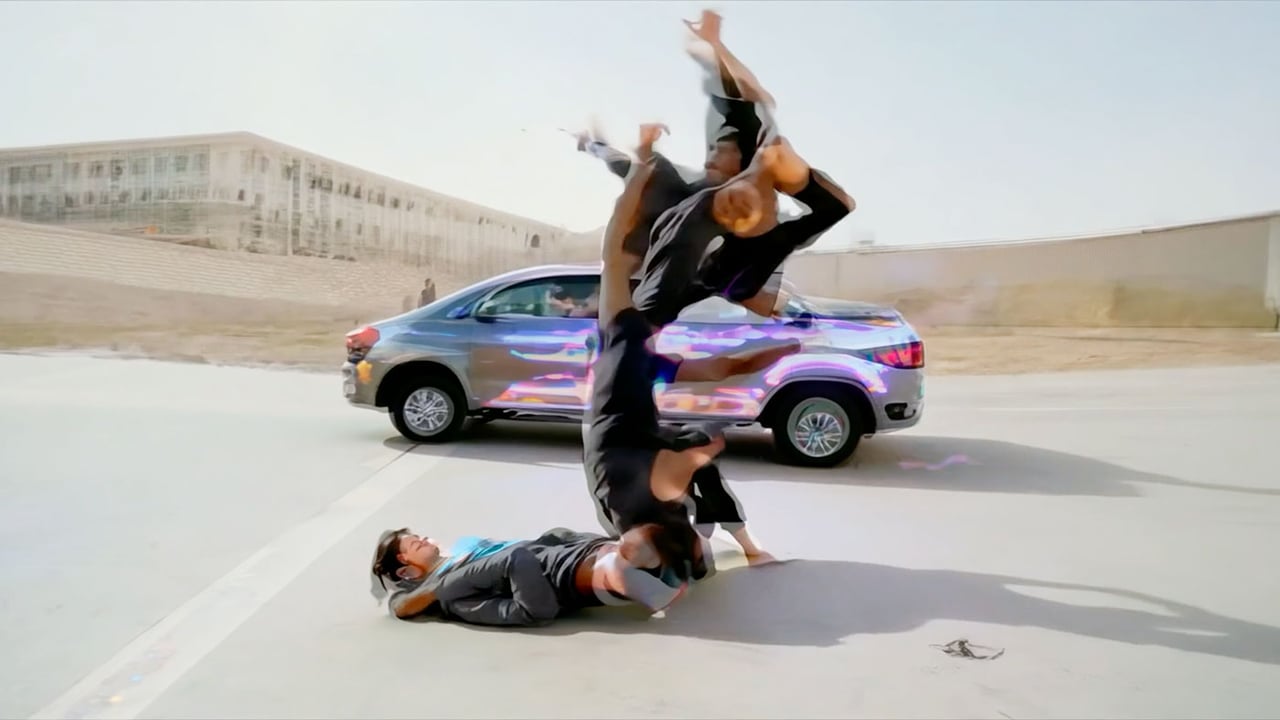
Hito Steyerl, Mechanical Kurds, 2025. Still. Courtesy of the artist and Andrew Kreps, New York. Commissioned by the Jeu de Paume, Paris, and the New Museum, New York
It's also a classic locus of science fiction. Wangechi Mutu is one of the artists making new work for the show. She made a beautiful series of drawings inspired by Octavia Butler’s “Bloodchild” (1995), an amazing story of a future where humans become hosts for an alien civilization that uses humans as surrogates for their offspring. We have Hito Steyerl, an artist who has done a lot of work about technology and she takes a very interesting spin by looking at the physical labor of AI [in Mechanical Kurds, 2025]. She goes to a refugee camp in Kurdistan where people are hired to [help an] AI to identify images, so that the AI can learn image recognition.
And the irony, which is typical of Hito’s work — she’s an artist who embraces new technology and the piece uses new technology — [is that] she reveals the very physical human and infrastructure that supports new technologies.
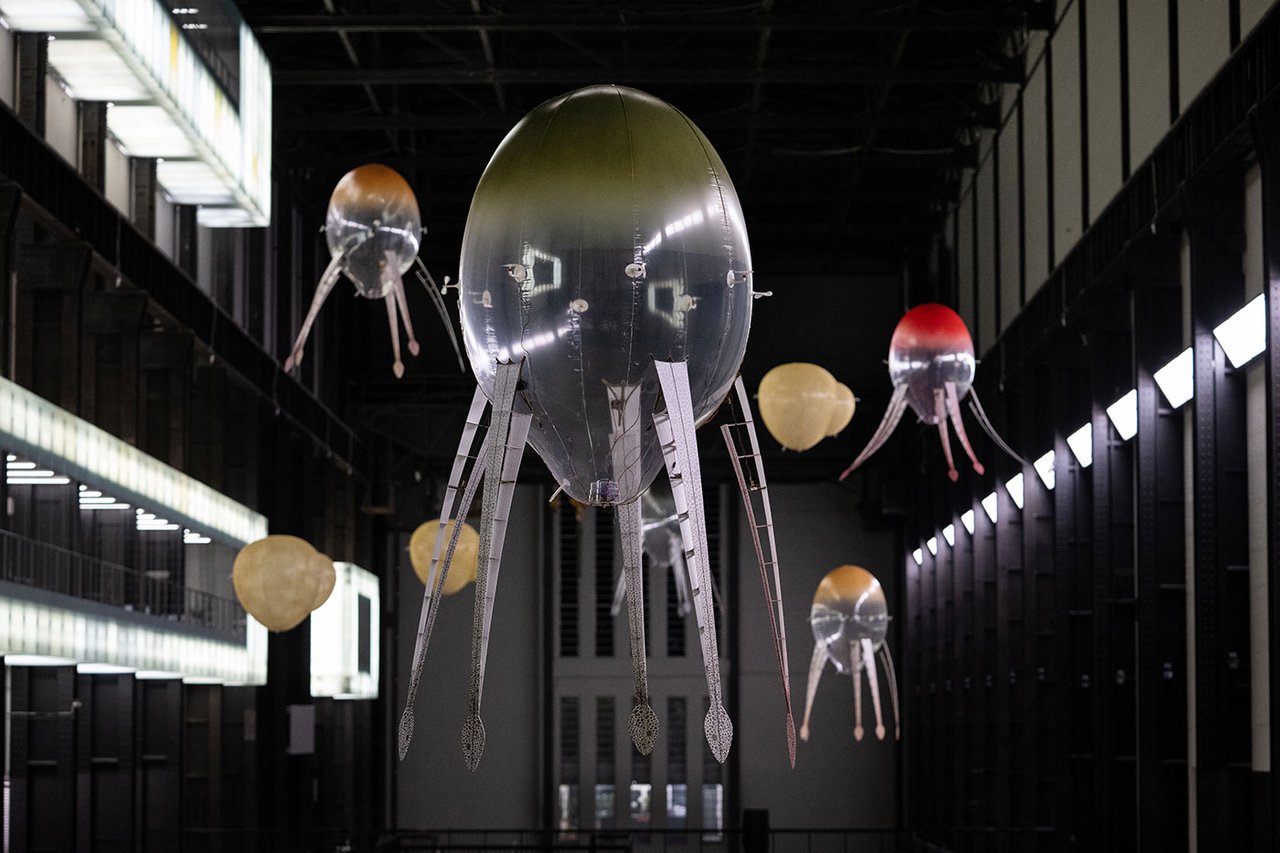
We have an artist like Christopher Kulendran Thomas who uses deep fake. So, we’ll have “Kim Kardashian” speaking about globalization and labor and delocalization. And we have a series of flying vehicles by Anicka Yi [In Love with the World, 2021/2025] which are in a section of the exhibition that looks at fantasies of future cities and we have automated vehicles or drones flying above the galleries.There is a hall of robots, combining contemporary art, historical works and popular culture. In this hall of robots we will have the prototype for ET [1981], designed by Carlo Rambaldi, and the prototype for the [biomechanical Necronom], made famous in the film Alien (1979) and designed by H.R. Giger.
Anicka Yi, In Love with the World, 2021/2025. Courtesy of the artist and Gladstone Gallery
The exhibition is based on the idea that artists can both debunk and create new myths around these subjects; [but also] on the idea that these subjects are so crucial that we also have to look at visual culture at large, not just to art itself. So it includes scientific drawings, actual robots, robots designed by artists, and robots from the world of science fiction.
LJ: How does the exhibition address the ways artists are approaching the existential unknowns of AI, whether “embodied” in robots or not?
MG: The show takes as a starting point a quotation from Karel Čapek, in Ross Universal Robots, [where a] character says “there is nothing stranger to humans than their own image” and Čapek’s play is all about the uncanny valley and the strangeness of the encounter with artificial life.
Many artworks in the exhibition make use of artificial intelligence in the exhibition itself, but viewers may be surprised that there are a lot of paintings, a lot of handmade materials. With humans being the subject, we also looked at portraiture as the site of representation.
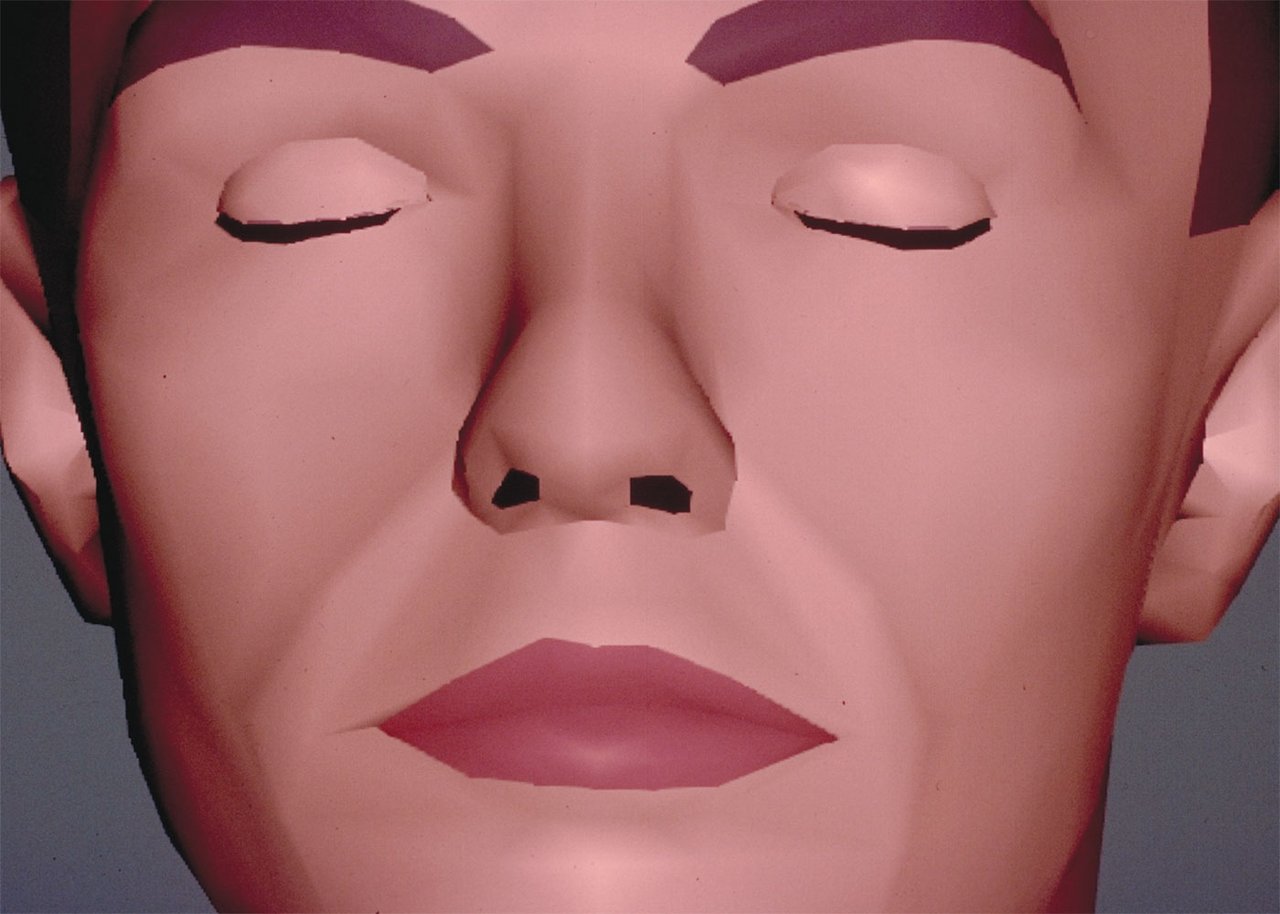
Rebecca Allen, (Still from) Musique Non Stop, 1986. Courtesy of the artist
[I have spent] a lot of time in the building across the street from the [works on the New Museum, and it has been] surprising, and a little humbling, to see how a new building is still very much handmade. [It has been both] reassuring and humbling that even the most futuristic-looking buildings are still made by hand. That is [a tension] the show addresses. The continuous dialogue between the machine and the human. I joke when presenting the show that it is about that weird feeling when your computer is asking you to click on a box to say you’re not a robot. That confusing moment where a machine is asking you to prove you’re human and what does that mean — ontologically?
I don’t think that the exhibition has answers to [questions of humans being made redundant by AI]. It swings back and forth between being optimistic [and not]. [The] sense of urgency is maybe exaggerated because we have had other technological watershed moments [when] everything changed and nothing changed. Part of me sometimes feels that that is why we took a long view on the problem. At other moments I feel existentially threatened.
One of the assumptions of the show is that in moments of existential threat — and I borrow this idea from Eduardo Viveiros de Castro, the anthropologist — we go back to myth.
His argument being that this is a moment of existential threat. He’s making the argument more about climate change but I think you can make it about technology as well. And so new myths are created and perhaps the role of artists and the role of museums is to analyze those myths.
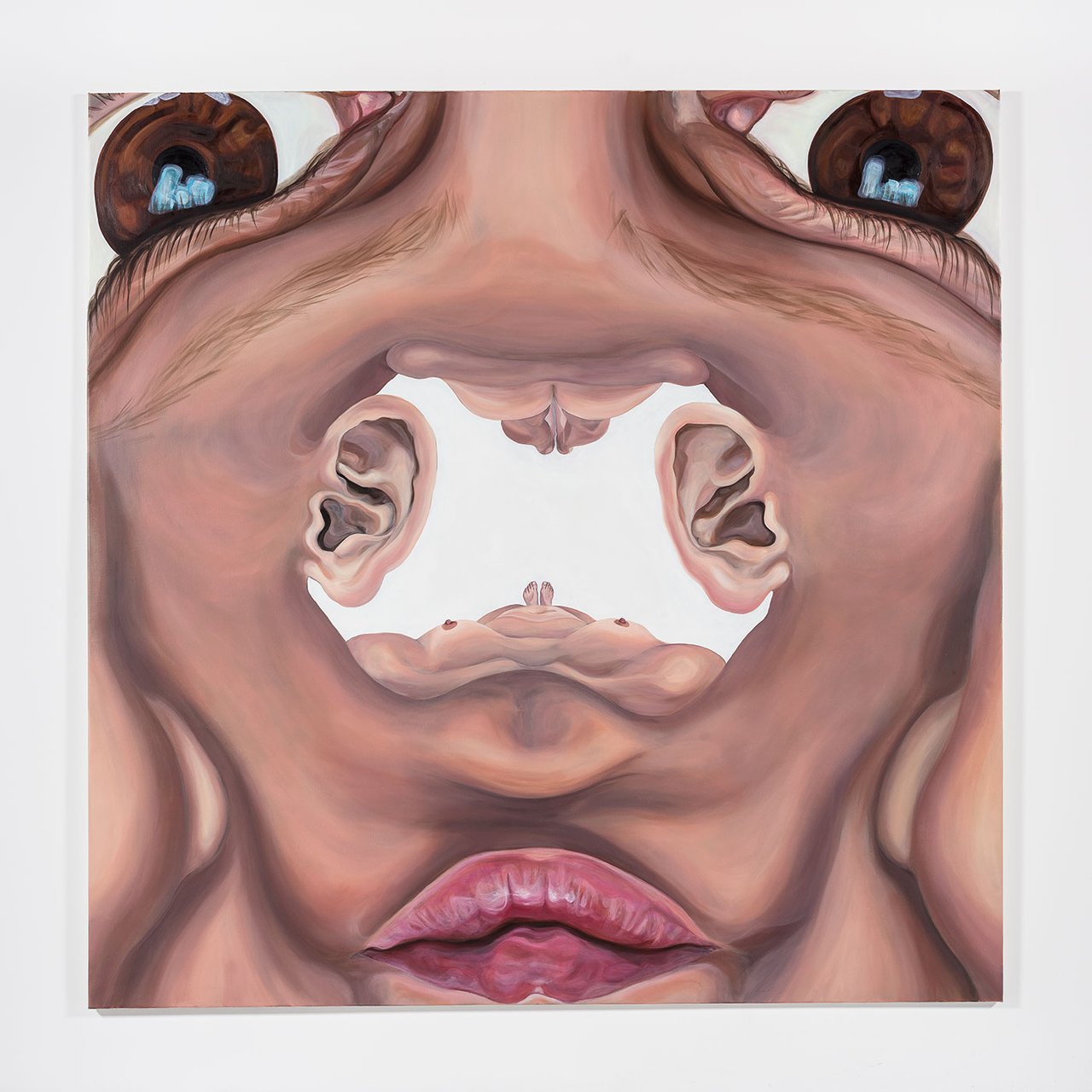
Jana Euler, „ ” (body), 2016. Collection Patrizia Sandretto Re Rebaudengo
So I think ultimately of the museum, and the exhibitions, as places where myths are analyzed and in some cases deconstructed and supplanted by new myths; new myths that will maybe guide us in dealing with that existential threat.
Maybe [the show is] less about the technology and more about the human and the need for the human to invent stories to deal with these existential threats.
LJ: Are there other elements of the exhibition, addressing human interaction with the non-human, that might surprise visitors?
MG: Defining the human in relation to the machine also means categorizing what is non-human and so the show inevitably looks historically and in the present at examples of people who didn’t get to be considered human. And at the scary conflation of technology and totalitarian regimes; the idea that we can remake the human. One of the essays in the [exhibition] book speaks about the artist as an engineer of the human soul.
Pamela Rosenkranz, Healer (Anamazon), 2021/2025. Courtesy of Karma International, Zurich; Miguel Abreu Gallery, New York; and Sprüth Magers
If you define the human in relation to the machine at one end, you’re defining the human in relation to the subhuman, or the animal, at the other. And that definition is loaded with consequences.
Weirdly, definitions of technologies have been complicit with definitions of who gets the privilege to enter the world of humanity. That’s one of the subtexts in the show: [where visitors will] be confronted with artists making work with a brush and a piece of canvas or paper. because that’s where, in depicting yourself, you are also defining yourself either as part of a human community or as excluded by the human community.
LJ: What do you hope that people will take away from the exhibition?
MG: Part of me — I don’t know if it's moralistic, or naive — hopes they will take away a sense of reassurance [from historical parallels to today]: that we've been through a lot and [in the Second World War] through even worse. If you see the same set of problems repeating, the bad news is we’ve been through this, and at what cost; but on the other hand we have been through this and I hope we can handle that. That would be the reassuring, consolatory, aspect.
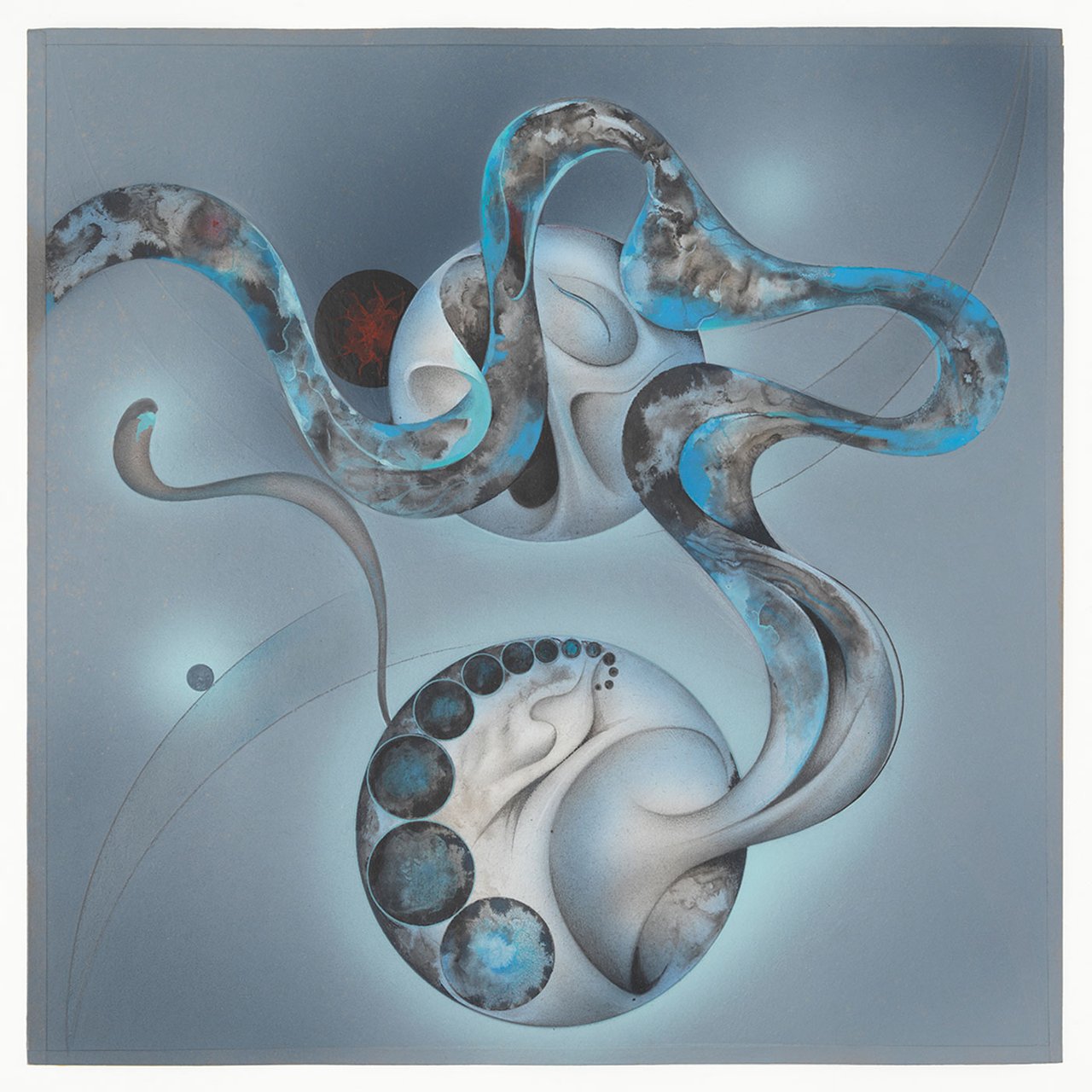
Tatsuo Ikeda, BRAHMAN: Chapter 4: Helix Granular Movement-6, 1979. Courtesty of The Rachofsky Collection, Dallas
It is also a show that combines masterpieces with very modest objects. It combines highly technological works [with book illustrations] cut out and reproduced. A show that takes advantage of tools of reproduction and imagines the show as a combination of precious and very modest materials — as a form of storytelling.
We tried to make a show that feels grand and complicated but in some cases also uses very modest materials.
A lot of these ideas might circulate more in books, particularly in the early 20th century, in illustrations, in photographs, and we wanted to present them as such. Just as certain ideas today are disseminated through the internet and your phone, more than they are in museums. And we wanted to reflect that in the quality of materials included in the show.
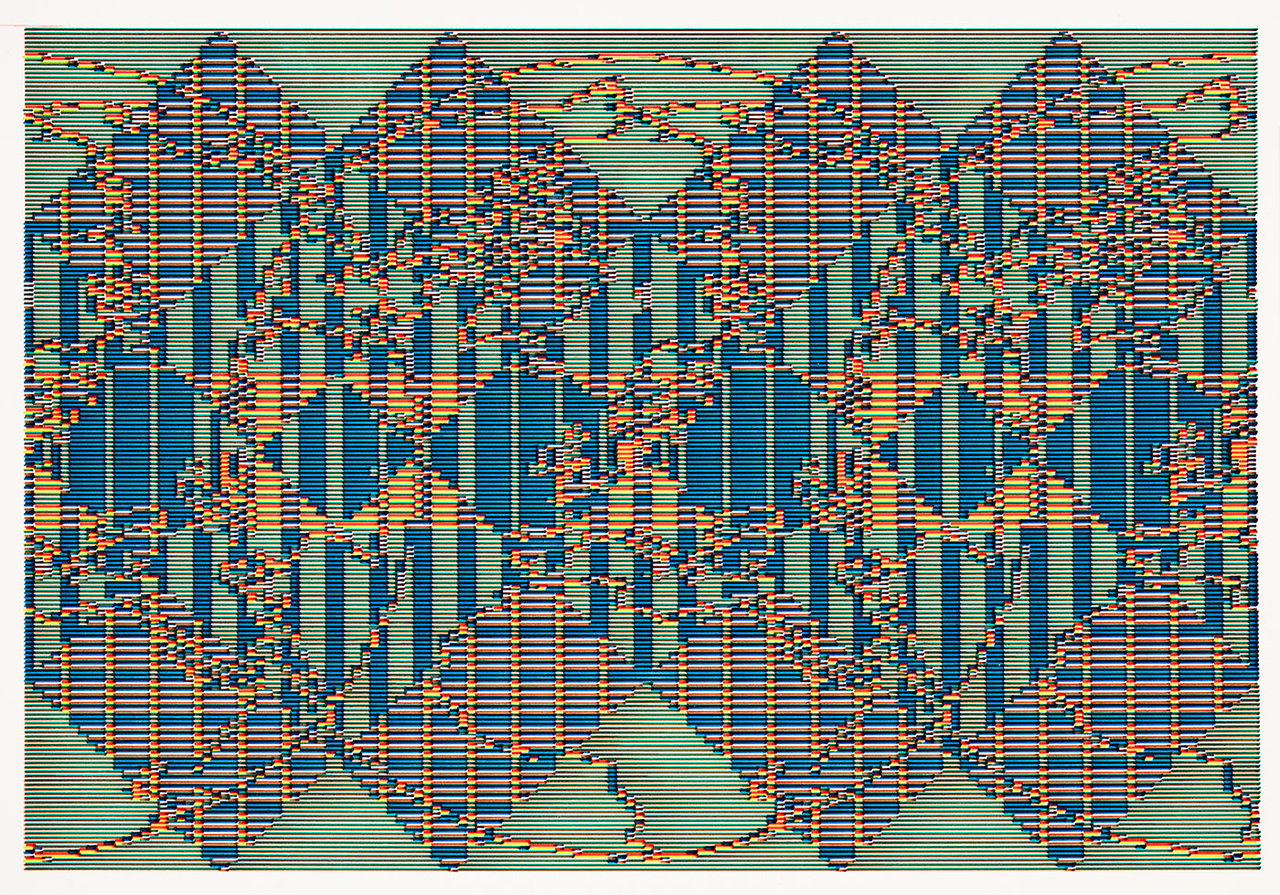
Thomas Bayrle, Superstars, 1993. Still. Courtesy of the artist, neugerriemschneider, Berlin, and Gladstone Gallery
LJ: This is an exciting period for museums, opening or reinventing themselves with an often radical, technology-adjacent purpose. Powerhouse Paramatta, in Sydney, Australia, is due to open at the end of the year and there has been great activity in the US, including the opening of NODE in Silicon Valley, the upcoming debut of the Geffen Wing at LACMA, Los Angeles, along with Refik Anadol’s Dataland Museum of AI Arts, and the Lucas Museum of Narrative Art, in the same city. With Canyon due to open in New York later in the year. How do you view the New Museum’s reopening on the crest of this museological wave?
MG: It forces us to understand that art could not just be entertainment or financial investment. I think it reminds us every day that what we do is important and it can be a tool for understanding the world outside the museum. So that's a general premise.
Maybe this new wave of museums that started at the end of last year with [the reopening of] the Studio Museum in Harlem and [the new] Princeton University Art Museum building has to do with delays in schedule caused by Covid. But it also [signals] that museums are here to stay and they play a vital role in many cities.
Though many are still struggling with attendance, I think museums are places of encounter, places of discovery, and learning. We seem to be necessary and that is, I think, encouraging and exciting.
Massimiliano Gioni is the Edlis Neeson Artistic Director at the New Museum, New York. He leads the museum’s curatorial team and is responsible for the exhibition program. As a member of the senior management team, he works closely with the Director and has broad responsibilities for museum-wide planning. Gioni joined the New Museum in 2006 as Director of Special Exhibitions, and was appointed Artistic Director in 2014. At the museum, he has curated exhibitions of artists including John Akomfrah, Pawel Althamer, Ed Atkins, Lynda Benglis, Judy Chicago, Tacita Dean, Nicole Eisenman, Urs Fischer, Theaster Gates, Hans Haacke, Camille Henrot, Carsten Höller, Kahlil Joseph, Ragnar Kjartansson, Kapwani Kiwanga, Sarah Lucas, Gustav Metzger, Marta Minujin, Chris Ofili, Raymond Pettibon, Carol Rama, Faith Ringgold, Pipilotti Rist, Anri Sala, Peter Saul, Nari Ward, Apichatpong Weerasethakul, and Lynette Yiadom-Boakye, among others. He has organized major group shows including “After Nature” (2008); “Ostalgia” (2011); “Here and Elsewhere” (2014); “The Keeper” (2016); and “Grief and Grievance: Art and Mourning in America” (2021), an exhibition originally conceived by Okwui Enwezor and realized in collaboration with Naomi Beckwith, Glenn Ligon, and Mark Nash. Gioni established the New Museum Triennial as The Generational Triennial: Younger Than Jesus in 2009 with Lauren Cornell and Laura Hoptman. Gioni’s international exhibitions include Manifesta 5 (Donostia-San Sebastian, Spain, 2004); Berlin Biennale (2006); 10th Gwangju Biennale (2010); the 55th Venice Biennale (2013); and The Great Mother (Milan Expo at Palazzo Reale, 2015) and The Restless Earth (Milan Triennale, 2017), both with the Trussardi Foundation.Gioni’s international exhibitions include Manifesta 5 (Donostia-San Sebastian, Spain, 2004); Berlin Biennale (2006); 10th Gwangju Biennale (2010); the 55th Venice Biennale (2013); and The Great Mother (Milan Expo at Palazzo Reale, 2015) and The Restless Earth (Milan Triennale, 2017), both with the Trussardi Foundation.
Louis Jebb is Managing Editor at Right Click Save.