NODE Foundation opened its new space at 180 University Avenue, Palo Alto, California, on January 23, 2026 with “10,000”, an exhibition centred on Larva Labs’ CryptoPunks.
The opening night of NODE felt like a declaration. The sliding glass doors parted onto University Avenue, Palo Alto, and immediately the space announced itself: vibrant, neon, deliberately edgy against the manicured calm of Silicon Valley. Screens with exposed glass backs revealed their own construction, nothing hidden, technology embraced. In the corner, a live Ethereum node pulsed every twelve seconds, synced to the beat of the network.
NODE Foundation is built on the premise that “network makes art work”. A new institution and physical space that is purpose-built to host digital art, the project is backed by a $25 million endowment from its founders Micky Malka of Ribbit Capital and his wife Becky Kleiner, designed from the ground up for code-based, networked, on-chain art. In May 2025, the foundation acquired the full CryptoPunks IP from Yuga Labs for approximately $20 million. But the acquisition was never just about preservation. It was about building a platform — starting with a collection that was foundational to art on the blockchain.
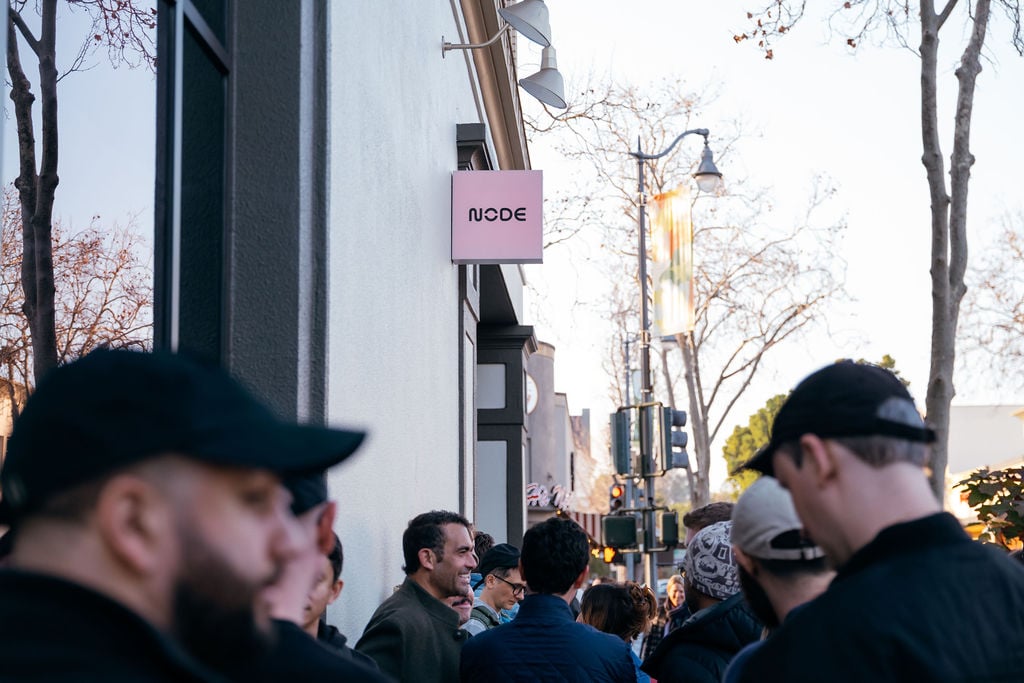
Visitors line up to attend discussion panels during the opening weekend at NODE, Palo Alto. Photography by Felix Uribe
The physical infrastructure of NODE was designed with experimentation in mind: reactive lighting, modular LED grids, and an Ethereum node that can link to any artist’s smart contract. The creators of CryptoPunks (2017), Matt Hall and John Watkinson, who founded the pioneering creative technology studio Larva Labs are also members of NODE’s advisory board. They have been involved in every aspect of this exhibition’s construction: coding elements themselves and sitting in the space until midnight in the days before opening. That level of artist involvement is not incidental — it is intended as a model. The pair also donated 25% of proceeds from their 2025 project Quine to the foundation. “It just felt like the right time to make a commitment to this space,” Hall said.
The Palo Alto location is strategic and symbolic. This particular corner of Silicon Valley — a mile from Stanford University, minutes from Meta and Google — has rarely been considered a cultural hub. But for this kind of institution, it might be a good home. The space is free to enter, with its glass façade welcoming passers-by while reinforcing the peer-to-peer principles that CryptoPunks captures. The local community is natively digital, with a literacy for code and comfort with screen-based experience.
On opening night, Malka spoke of a future where Stanford students walk in off the street and set up projects on larger-than-life screens, sharing what they have built with their friends.
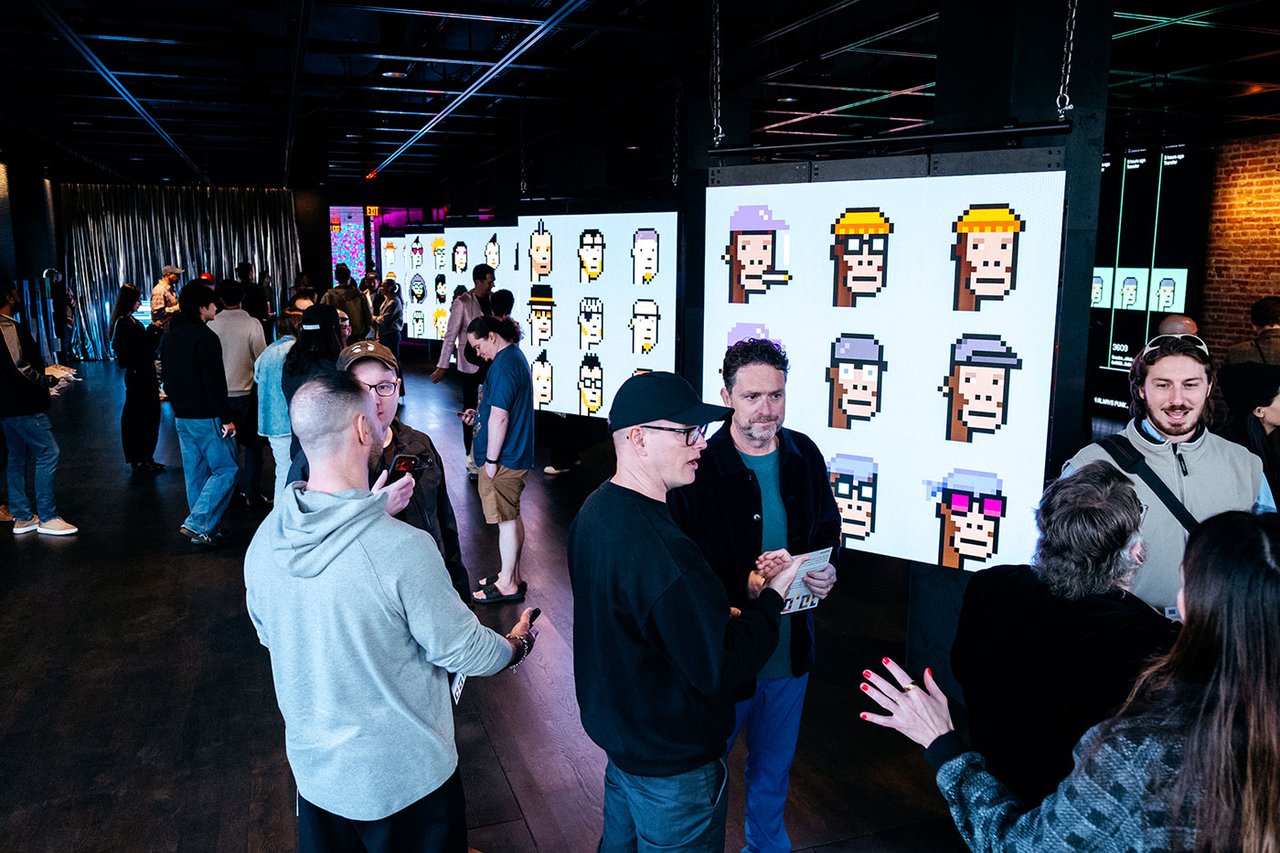
“10,000”, NODE, Palo Alto. Attendees around the Punk screens. Photography by Felix Uribe
“10,000”, the inaugural CryptoPunks exhibition, established the vision. Curated by Amanda Schmitt, produced by Natalie Stone, and created by Larva Labs alongside designer Qian Qian, the show presents the full CryptoPunks collection in its natively digital form for the first time. As one of the earliest collections of long-form generative art that sparked a cultural movement blending code, community, and commerce, CryptoPunks represents digital art’s power to disrupt the canon. It is also the logical place to start a conversation about where the medium goes next.
“Matt and John wanted to really emphasize that CryptoPunks are a living piece of software,” Schmitt explained. “The marketplace is the component that animates that software. That’s what they want to be most visible in this space.”
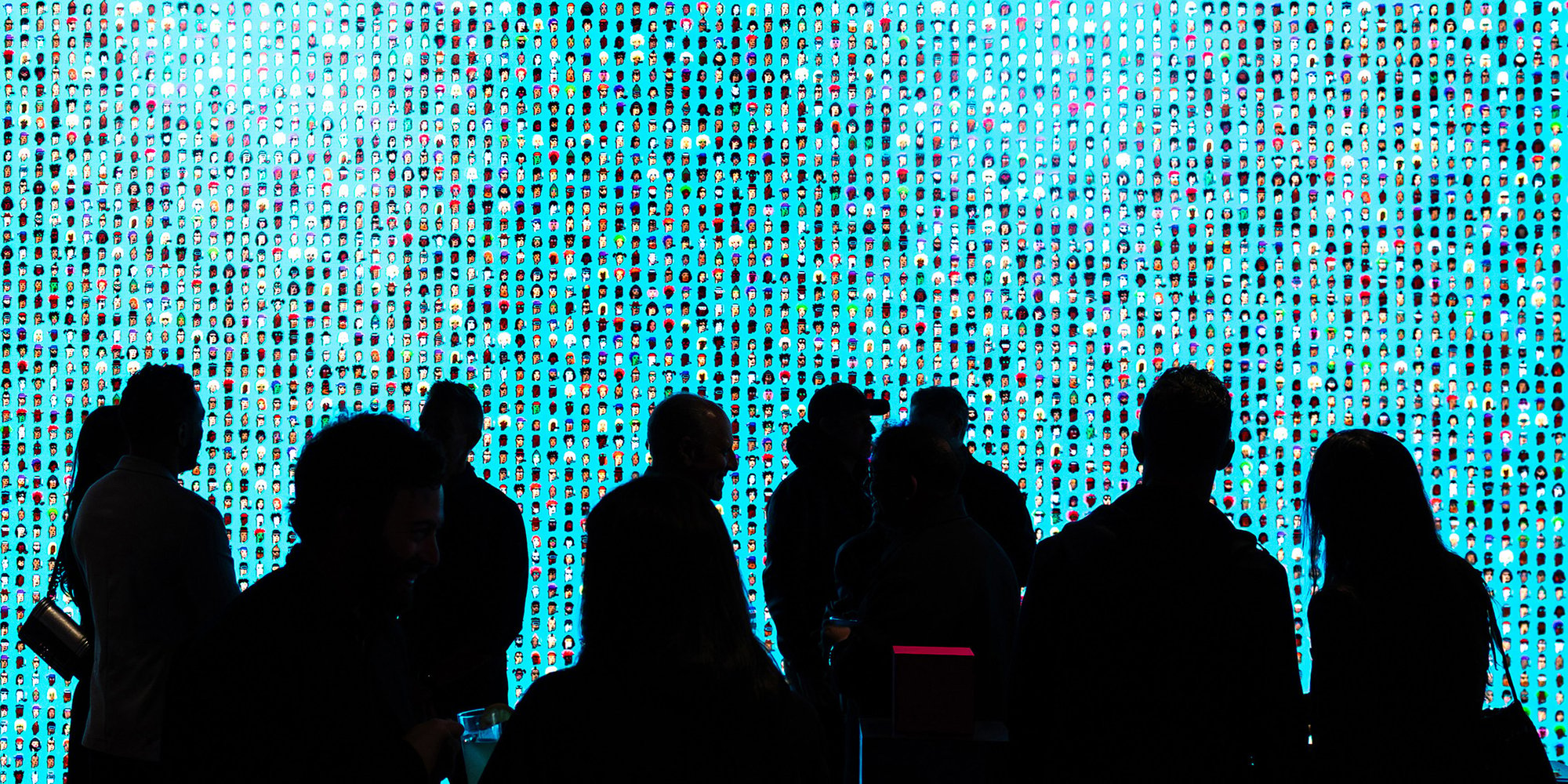
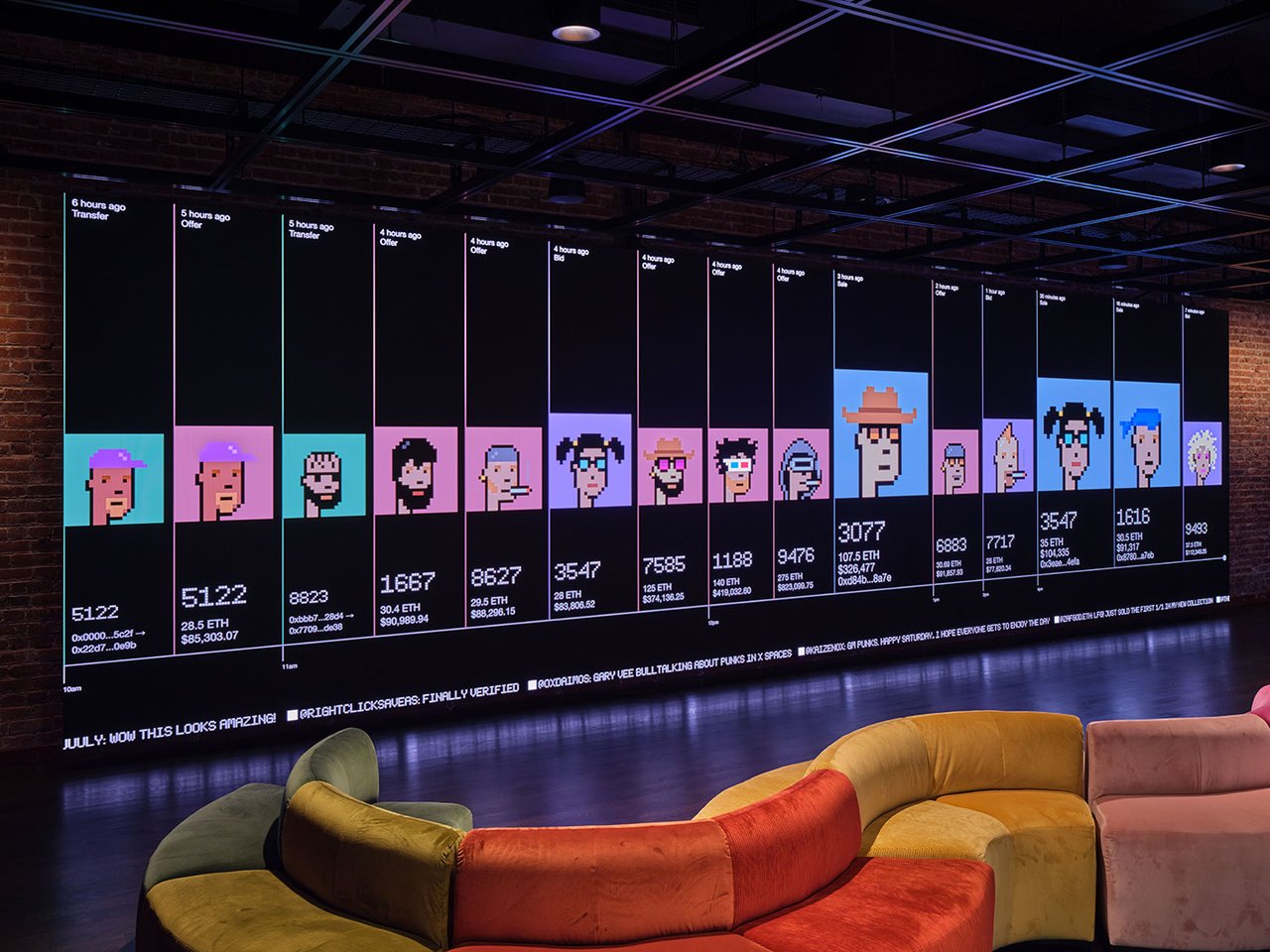
The exhibition integrates code, marketplace, attributes, and network as part of the art itself. A 62ft x 9ft (19m x 2.75m) LED wall visualizes every transaction in real time, and bright pink light beams when one of the works sells. Holders scan a card to surface their own Punk’s history, then watch their traits assemble on-screen. All 10,000 Punks appear together on the end wall, each custom-printed and carefully positioned on a 24 x 24 pixel grid, projection-mapped, and filterable by trait. In this way, the show declares the market not as hidden infrastructure but as the heartbeat of the work.
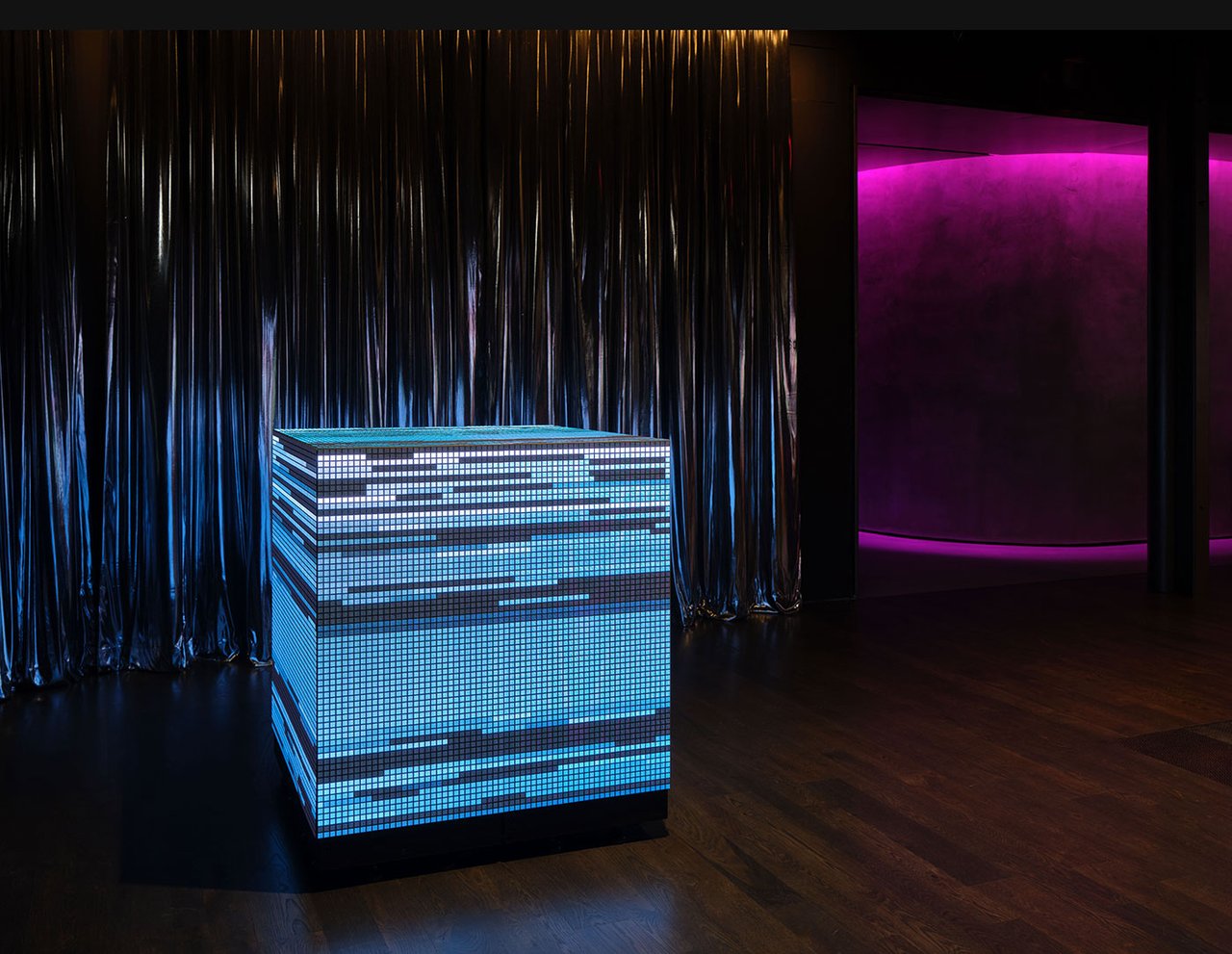
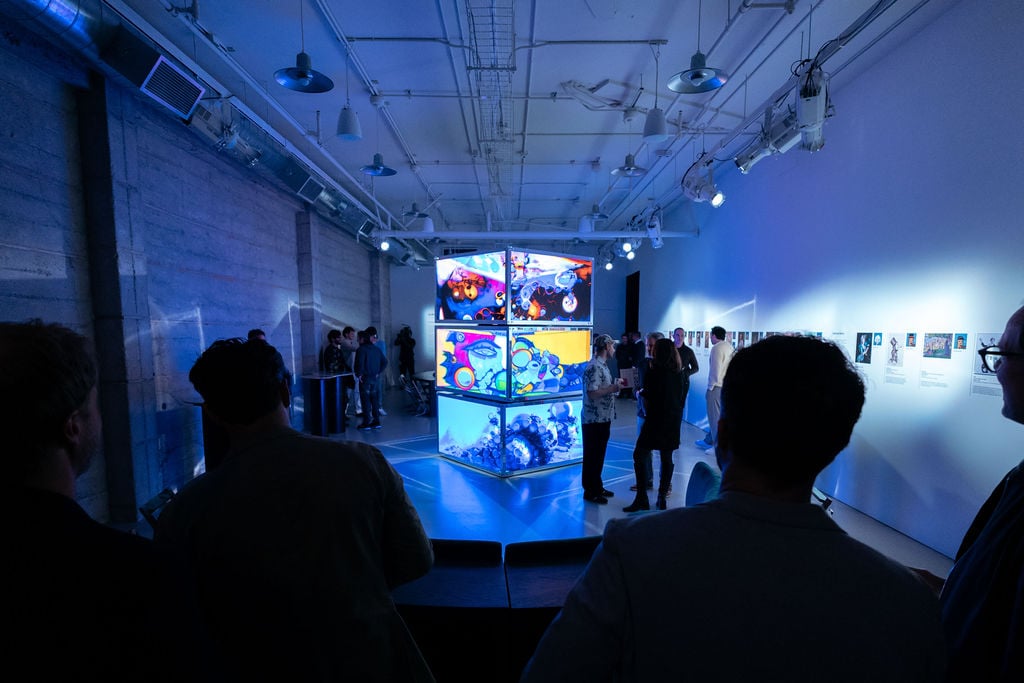
“10,000”, NODE, Palo Alto. The ∞ ETH NODE sculpture by Larva Labs. Photography by Paul Salveson
Larva Labs’ Ethereum node sculpture — the artists’ first — will outlast this exhibition. “It’s really to visualize the network that powers almost everything that will be shown here,” Watkinson explained. “When a future show comes in, we can link it up to that artist’s smart contracts. It can be this permanent sculpture that reflects what’s going on, show by show.”
Natalie Stone sees it as the exhibition’s most radical gesture: “It is literally presenting the network and Ethereum as the art itself. That’s a signal around what Larva Labs are as artists, their practice is systems, protocols, and the network.”
What distinguished the exhibition was what it revealed about the creation of the space itself. “We weren’t necessarily creating a space to present CryptoPunks,” Stone reflected. “We were creating a space where you could live within CryptoPunks. That’s a different approach to exhibition design.”
“10,000”, NODE, Palo Alto. The 62ft x 9ft LED wall visualizing CryptoPunks marketplace transactions in real time. Photography by Paul Salveson
Qian Qian reflected on the craftsmanship required to design NODE as a whole: “We’re in the middle of an AI revolution. Everything is about speed, power, how fast. But when you want to do something really outstanding, it takes time. Human labor to craft it properly. People might not know what it takes, but I think they can subconsciously feel the impact.”
More than 1,000 people traveled to Palo Alto for the opening weekend, many for the first time. Programming extended beyond the foundation’s walls: SFMOMA tours led by Alejandro Cartagena, a NEORT x Glimmer DAO exhibition at Bryant Street Gallery, a viewing at Gray Area with 100 collectors, a panel by Tribute Labs, and Bright Moments drinks at local bars. The marathon of events had the texture of something between an art fair and a reunion.
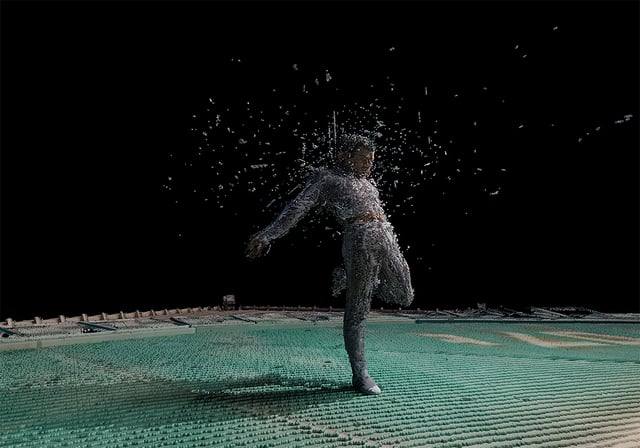
So what comes next? Beeple’s AI-driven work Diffuse Control (2025) stands in the end gallery; he will be the next major exhibitor in April.
“What we wanted to do was use AI in a way that you couldn’t do without AI,” Beeple explained. “It will continue to grow and expand as more curators curate different iterations.”
Beeple’s Diffuse Control (2025) in the Garage space at NODE, Palo Alto. Photography by Paul Salveson
Erick Calderon, the founder of Art Blocks and a NODE advisory board member, put it this way: “I think NODE signals permanence. Maybe let me rephrase that — durability. Not just at the technical level, but at the intrinsic level of what this means for culture. Every single artist here should be extremely excited.”
If “10,000” demonstrates what is possible when networked art has a space designed for it, NODE is set up to answer a larger question: what does it mean to host art with the potential to outlive the institutions intended to preserve it?
Ameesia Marold is a curator, creative producer, writer, and director of AUTOMATA, a new gallery for AI artwork. She helped establish Bright Moments as the definitive platform for experiencing contemporary digital art, producing generative and AI art exhibitions across ten cities worldwide and pioneering immersive live-minting experiences that transformed how collectors and communities engage with the medium.