On Screens | Jefferson Hack and Susanna Davies-Crook
The curators of a landmark survey of video art discuss the screen as a stage for performing identity and remixing culture
The curators of a landmark survey of video art discuss the screen as a stage for performing identity and remixing culture
Since he co-founded the magazine Dazed & Confused in 1991, Jefferson Hack has defined an approach to media and publishing that bridges pop culture with the underground. Through more recent titles such as AnOther Magazine (2001) and Nowness (2010) — both part of Dazed Media — he continues to document and shape the ways subculture becomes mass culture through text, image, and video.
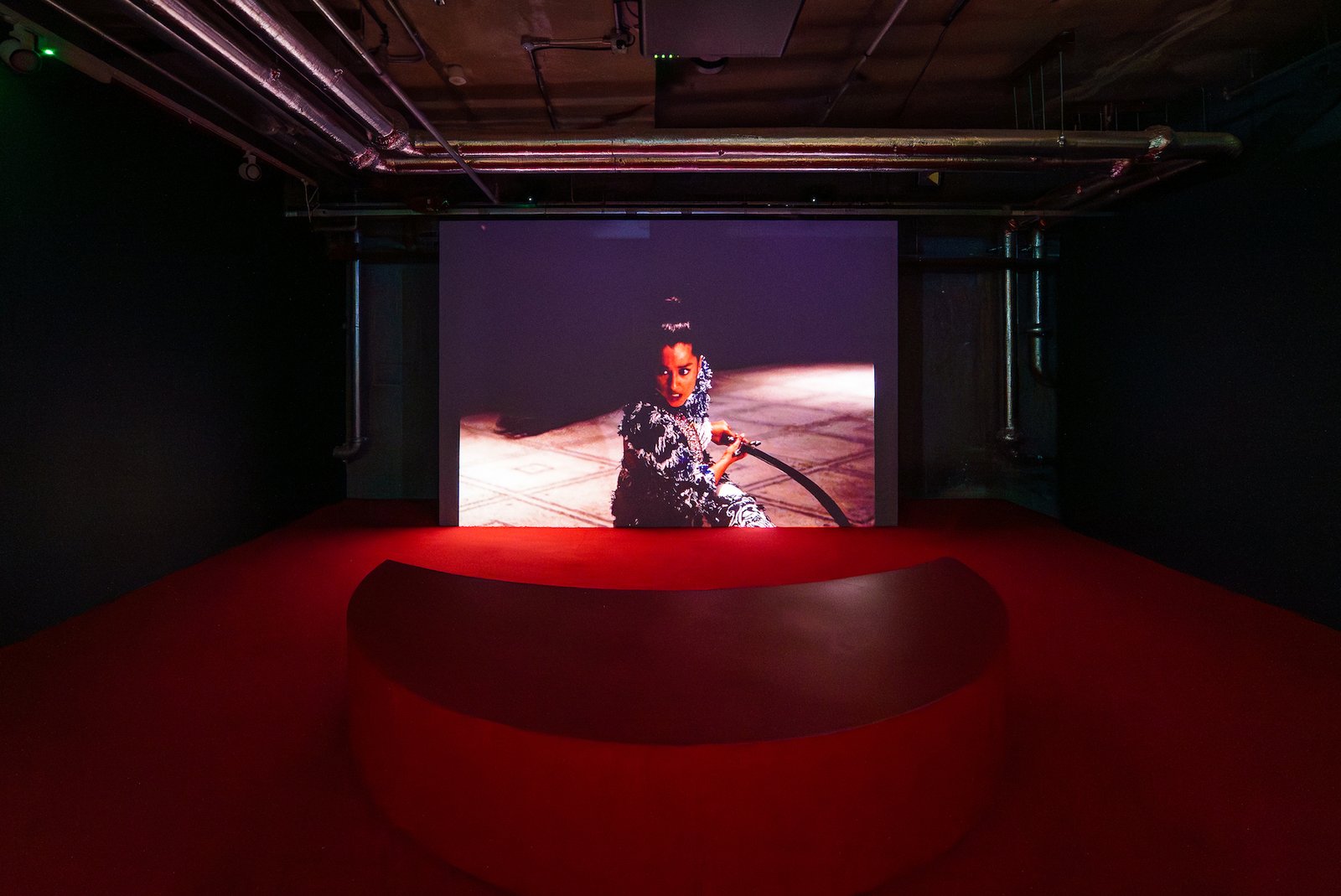
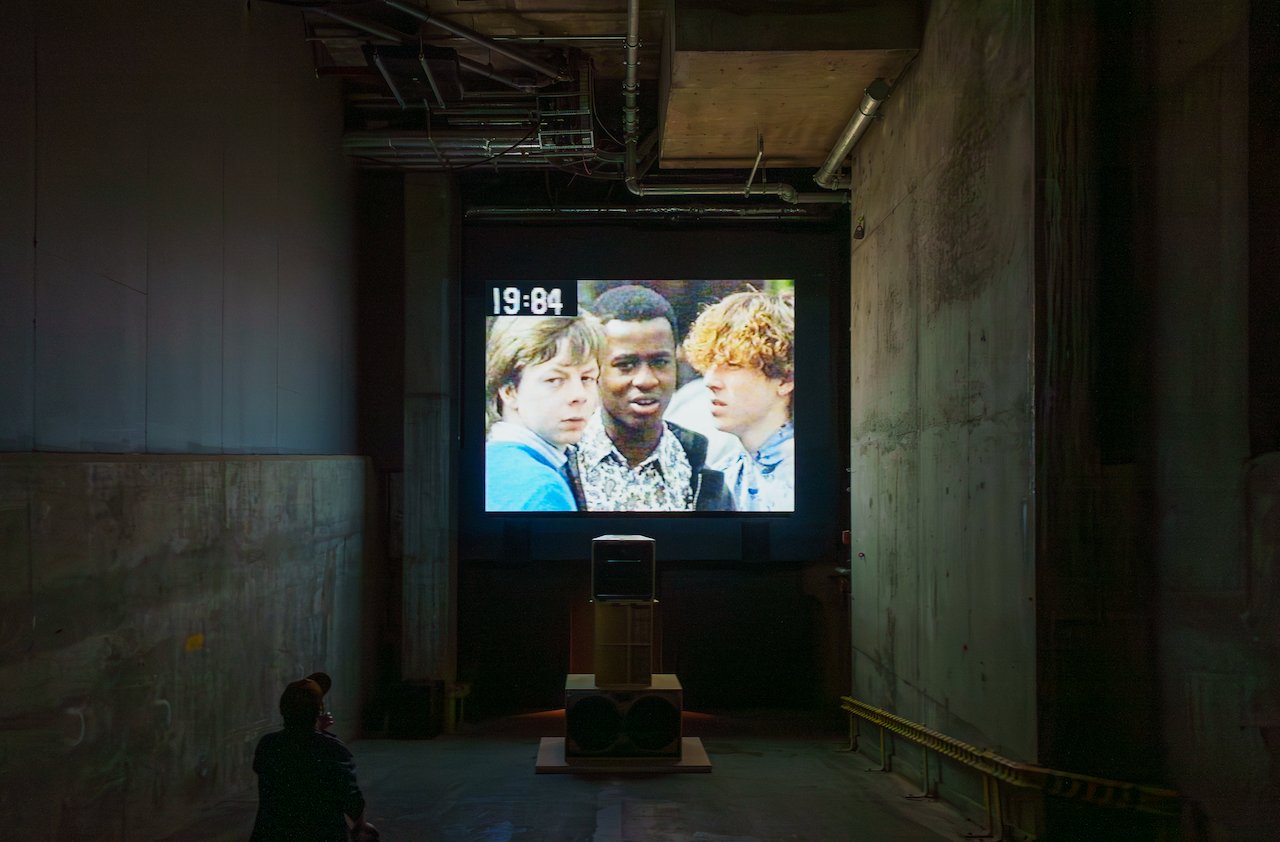
Together with leading curator Susanna Davies-Crook, Hack has developed two exhibitions: “Transformer — A Rebirth of Wonder” (2019), focused on interactive and immersive art, and, most recently, “Paradigm Shift” (2025-26), which turned the subterranean complex of 180 Studios into a spotlight on video art from the last half-century. In the following conversation with Right Click Save’s Founding Editor, Alex Estorick, the curators discuss how screens have evolved as stages for the performance of identity and remix of culture.
Alex Estorick: Your recent show at 180 Studios, “Paradigm Shift”, considered how artists have used interdisciplinary practices to disrupt mainstream image cultures. As you survey the contemporary scene where AI and algorithms have become vehicles for neoliberal logics and reactionary politics, what lessons can this generation learn from the artists included in the exhibition?
Jefferson Hack: The main lesson is to never give up on yourself. Many of the artists in the exhibition took very untraditional routes into the artworld and the level of self-determination and experimentation with new technologies is what really stood out. We were looking at how artists transcend mediums or play with new tech.
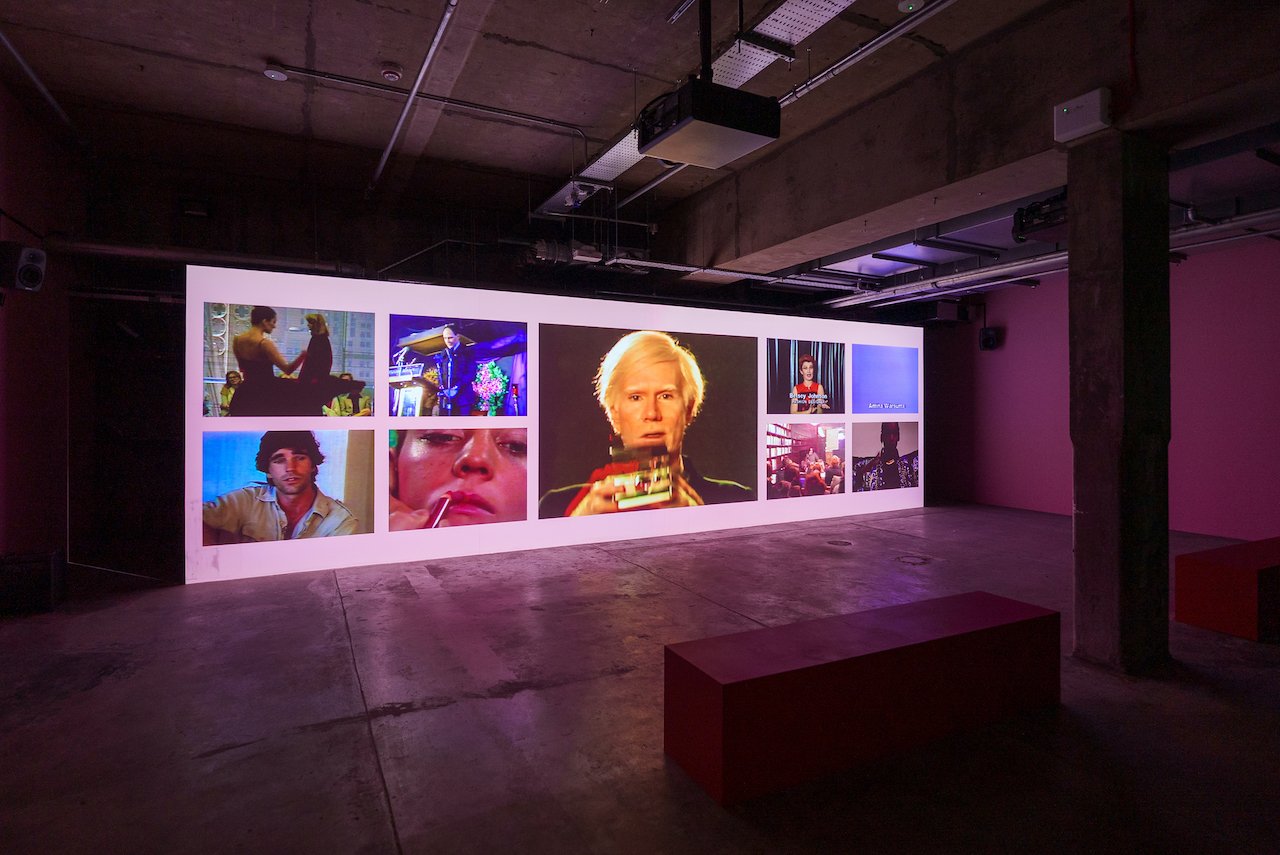
From Derek Jarman’s experiments with Super 8 to Arthur Jafa’s desktop sampling and sequencing of still images, it’s always interesting to me with moving-image works that the only thing that makes them artworks is the intention behind them, not the construct.
Our commission of Telfar TV’s installation, which discussed new models of sociopolitical organization and resistance within the context of a reality show format, reveals how artists are hijacking systems to express very important ideas about racial identity and culture.
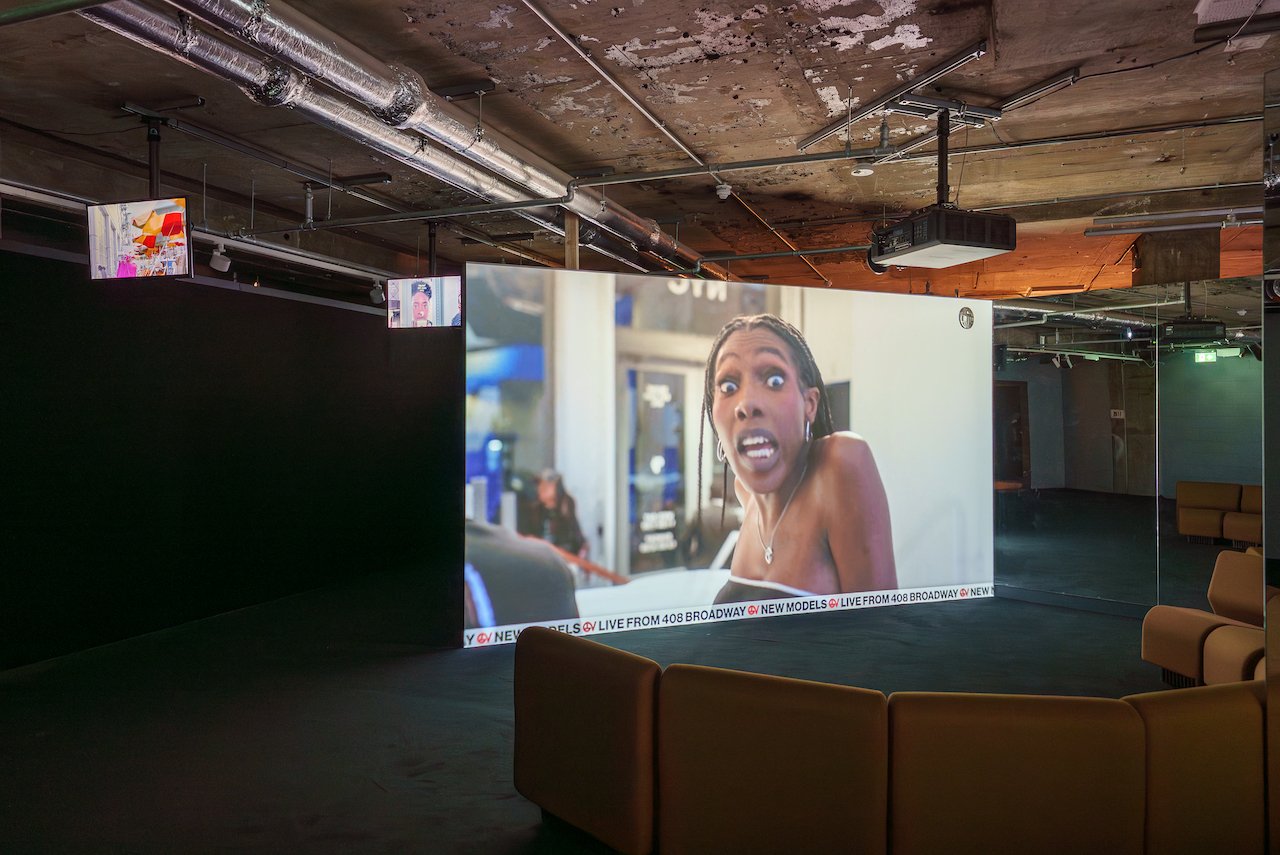
Susanna Davies-Crook: I’m inspired by work that ruptures received ideas, and I’m a real fan of the loop. Dara Birnbaum’s epoch-defining feminist work Technology/Transformation: Wonderwoman (1978-79) lifts the icon of Wonderwoman from popular culture and broadcast media and pushes the image by repeating and disrupting it, edited on an analogue tape-loop recorder.
Algorithms serve our desires, thoughts, feelings, obsessions, and projections back to us in a kind of sick ouroboros of slop. Artists help us to see past the industrialization of media by pointing to realities beyond the screen, which has become a kind of cultural hall of mirrors where we only see what we are supposed to see for the benefit of capital and production.
Art moves us to a place where we are more than simply good consumers. As Georgina Voss suggests in her book, Systems Ultra: Making Sense of Technology in a Complex World (2024), if you can see a system you can change it. What the works in our exhibition showed is that artists have always looked at commercial mainstream media and resisted it through the medium (as the message). Even in this seemingly endless splurge, it is artists that find a way through.
AE: What have your experiences of different platforms, including Dazed & Confused, Nowness, and the Institute of Contemporary Arts (ICA), taught you about the radical potential of digital and other media to critique and resist larger techno-social systems? How did those experiences inform this show?
SDC: In the symposium I curated at the ICA in 2024, “Cybernetic Serendipity: Towards AI”, decades after the landmark exhibition “Cybernetic Serendipity”, we invited the original curator, Jasia Reichardt, back to reflect on how AI is changing the world as well as art-making. Spaces of critique, historicization, and reflection are vital to driving public discourse in order to examine and intervene in cultural phenomena and so that we don’t simply become acquiescent automata ourselves.
Institutions that are driven by neoliberal, austerity agendas and increasingly restrictive remits are often focused on audience-first programming or broad-church curation, so that the output itself becomes a closed-loop system, rather than challenging the status quo, as Jasia did.
JH: I started in independent publishing and am still an independent publisher; so I have an independent mindset, which is always to challenge and critique the larger systems that control and shape culture.
With “Paradigm Shift” we chose work intentionally that represents a shift not only of identity but of media, and therefore a shift in the cultural understanding of these media.
AE: For Felix Stalder, one of the characteristics of the digital condition is not so much originality but “referentiality”: the remixing and resharing of content that is already equipped with meaning. Your exhibition highlighted the power of artists who use DIY strategies to remix and hijack media. What are some of the most striking approaches that you’ve encountered in recent decades that can help make sense of this digital condition?
JH: There is a strong sense of reclamation that happens within some of the works that are heavily reliant on samples. Artists using found imagery, sampling, remixing, and sharing imagery that is already loaded with meaning subvert and recode those images, often transforming or supercharging the original meaning in the process. APEX (2013) by Arthur Jafa, Technology/Transformation by Dara Birnbaum, and Sirens (2019) by Nan Goldin are the most powerful examples of that.
SDC: One of the characteristics of technofascism and monopolism is that they prevent the imagining of alternatives — attention is monetized and thoughts limited. Artists are vital to expanding horizons and intervening in the techno-social fabric.
Lawrence Lek, who we commissioned for the 2019 exhibition, “Transformer: A Rebirth of Wonder”, disrupts this brilliantly. I still remember his project Unreal Estate (The Royal Academy is Yours) (2015), which reimagined the Royal Academy as a luxury residential compound where art is gradually reduced to commerce in a (not too distant?) future. I also love Sougwen Chung’s poetic painting collaborations with robotic limbs, Alice Bucknell’s research into extraplanetary living, and the systemic interventions of Berlin collective CROSSLUCID. I also recently enjoyed the Almost Unreal Munch Triennial in Oslo which had some great artists featured.
AE: You’ve spoken of adopting an “editorial” approach to curation. In what ways did the show benefit from this stance and was there any debate about the language you applied to the exhibition? Does this show perhaps reflect the radical potential of a more hybrid approach to exhibition-making?
SDC: I’m so grateful to have grown up with a background in editorial, thanks to Dazed and Jefferson as well as Francesca Gavin. The editorial lens questions and filters key aspects of culture, which means it can be anti-institutional in a necessary way. 180 Studios is a great space to adopt that stance because of their focus on contemporary artist-forward approaches. I regard both “Transformer: A Rebirth of Wonder” and “Paradigm Shift” as editorial in form, while being both non-linear and associative.
JH: As 180 Studios is such an experimental venue and as I’m not a career curator, I can be more radical and also more personal in my approach to curating exhibitions. One of the things that I tried to stick to was the lineage of work that has been done at 180 by great curators and teams going back to Ralph Rugoff’s “The Infinite Mix” (2016), which was a huge inspiration for me.
One of the things I tried to do with “Paradigm Shift” which I haven’t attempted before was to be more historical. I wanted to look back to look forward.
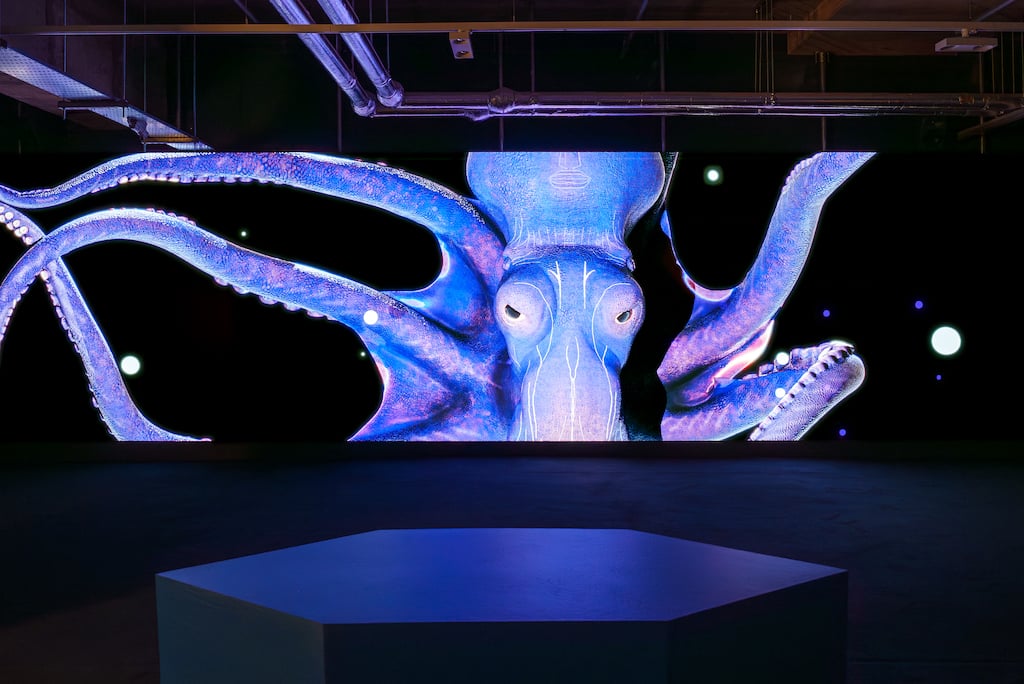
AE: “Storytelling” was part of your thinking behind this show, but that term has also been co-opted by marketing strategists in recent years. How might artists recuperate “storytelling” as a radical gesture?
JH: Broken Screen (2005) by Doug Aitken is one of the great books that explores the idea of how video artists completely reimagined the structures of narrative storytelling. Storytelling has now moved to worldbuilding — yet another cliche — so our impetus was to try and back away from any imposition of “storytelling” or “worldbuilding” and use the space to allow the viewer to find their own story within it. I felt we were really successful in doing that; to produce a show that felt intentionally unprescriptive was an exciting challenge.
SDC: I think of enabling people to have an affective psychic experience of moving through space and time as a conscious being, thinking and breathing, while at the same time allowing space between meanings, like the white space in a photo or a line break in poetry.
Slipperiness of meaning is important as dominant culture seeks to simplify and polarize.
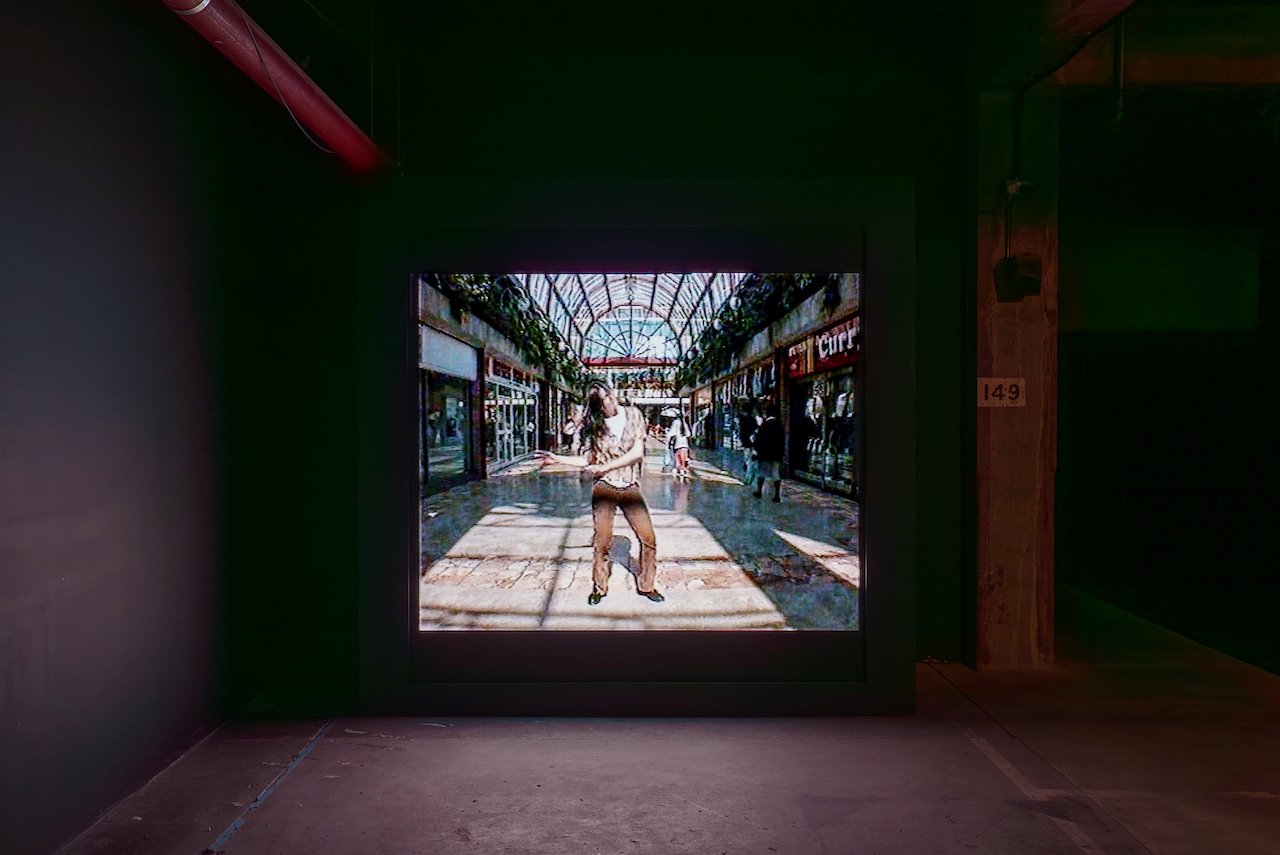
AE: If the screen is a site where subculture can be sublimated and mass adopted, can the radical power of those subcultures be preserved rather than aestheticized and capitalized?
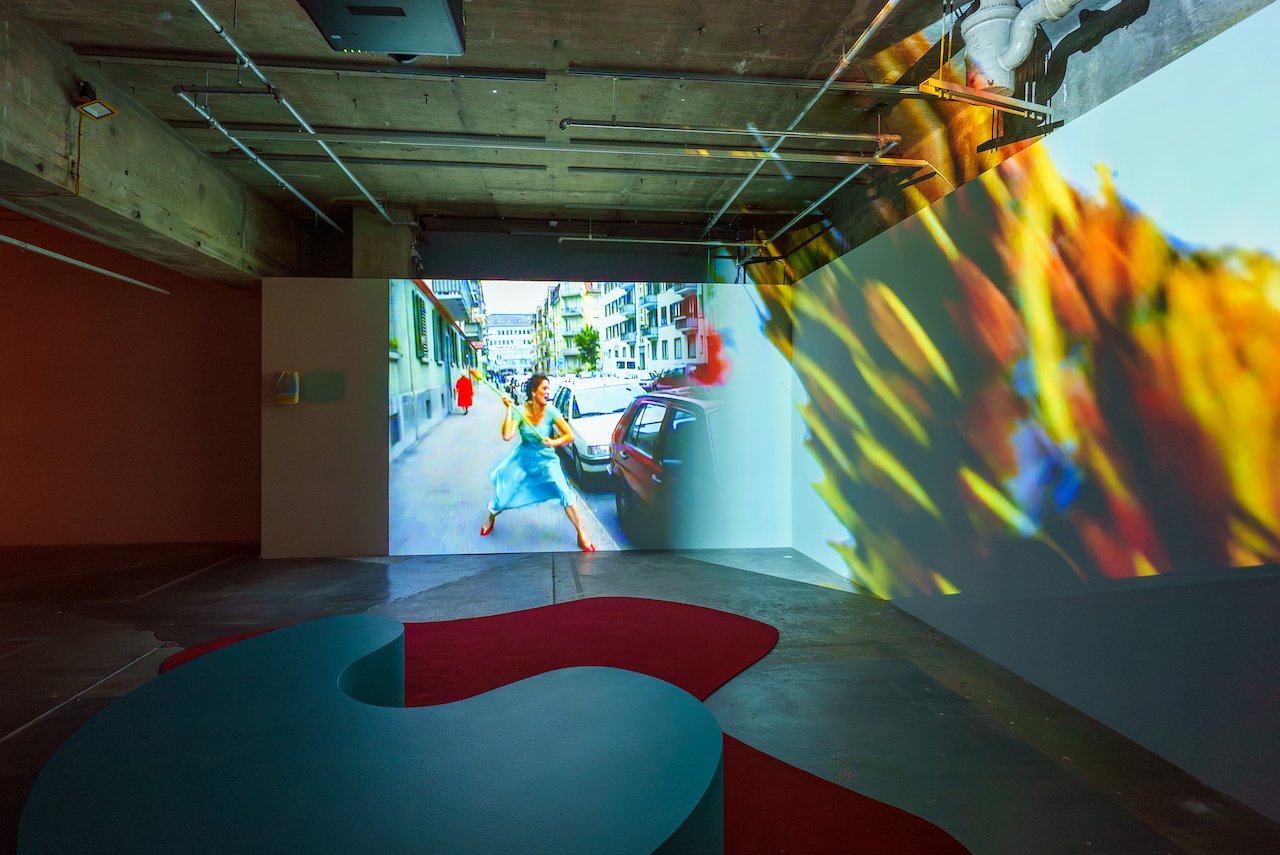
SDC: One really nice experience of the “Paradigm Shift” exhibition was overhearing a young person in front of Gillian Wearing’s Dancing in Peckham (1994) explaining to their friend how amazing it was that artists have played with performance and identity for such a long time by reclaiming the lens. The same is true of Ryan Trecartin and the postinternet scene in Berlin back in the 2010s.
The notion of performing identity for an unseen (mass) audience is now an everyday aspect of influencer culture, but I like the points at which it becomes weird or else intentionally messed up. As with all subcultures, it’s the unseen that holds the most life. Finding and supporting those underground pockets still feels vital.
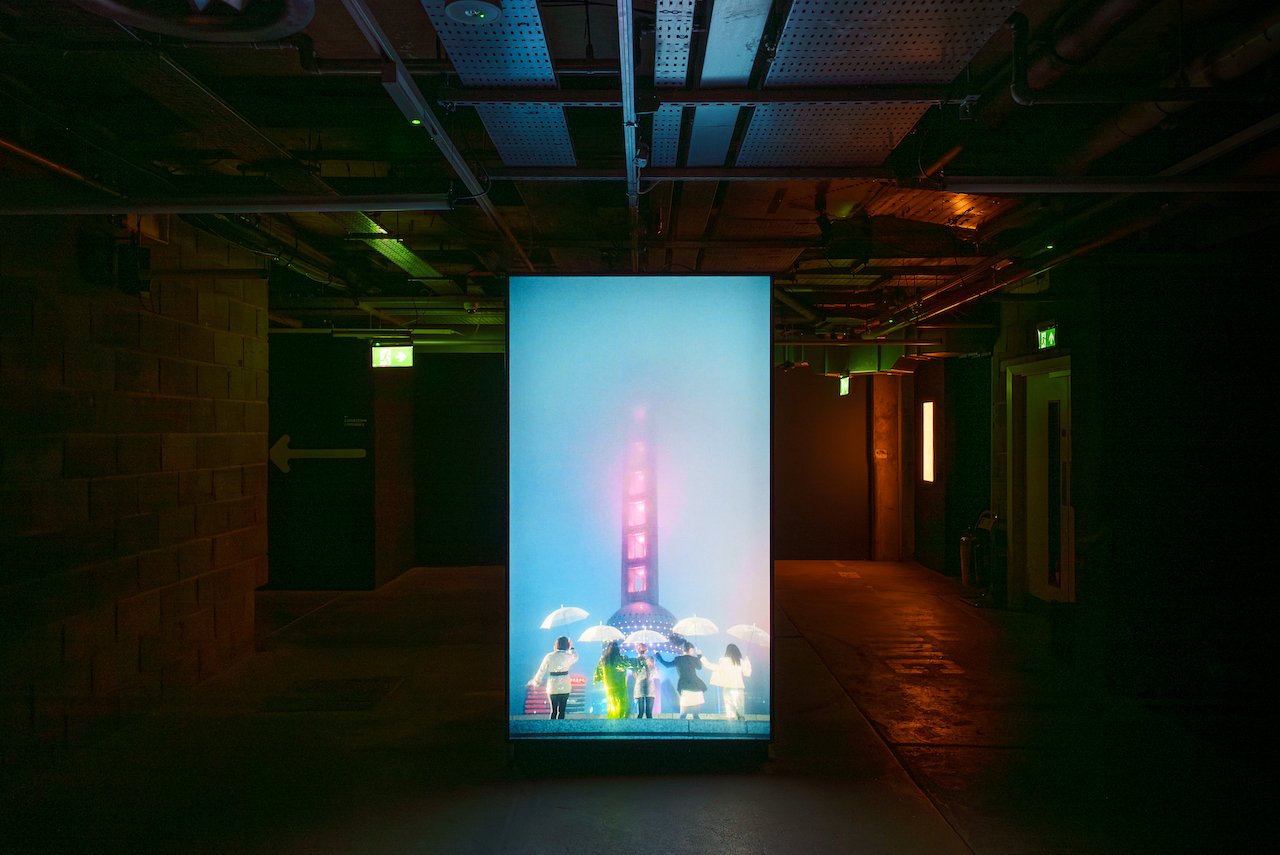
JH: Dick Hebdige was a big inspiration for this exhibition. I wanted to explore the ways artists use clothing and fashion as a way to talk about subcultural identity.
I was drawn to works that show identity being performed, constructed, and shaped.
Hebdige talked about how all subcultures ultimately become co-opted by the part of the culture they are in resistance to, so that everything that was once radical becomes reduced in power. What has changed since Hebdige’s time is that, instead of taking place over the course of a decade, deradicalization happens almost instantly. The truly radical work going on today involves strategies that can respond to that new landscape.
Susanna Davies-Crook is a writer, speaker, curator, and artist based in London. She has held the post of Curator of Public Programmes at Barbican, Curator of Talks and Research at the Institute of Contemporary Arts, and Head of Content and Community at Ignota Books. Susanna worked as Associate Curator at 180 Studios on the exhibitions “Transformer: A Rebirth of Wonder” (2019) and “Paradigm Shift” (2025) alongside Jefferson Hack. She is the co-founder of Write Club London in residence at Soho House, Groucho, and House of Koko. She is also a yoga teacher and hypnotherapist.
Jefferson Hack is a curator and the co-founder of Dazed Media. Its portfolio of global brands includes Dazed, AnOther Magazine, and Nowness. In 2016, Hack released Hack the System with publisher Rizzoli. He is the host of Where It’s At, a podcast channel featuring in-depth conversations with revolutionary figures in culture and science. Last year, he curated “Paradigm Shift”, a major video art exhibition at 180 Strand, London.
Alex Estorick is the Founding Editor of Right Click Save.
No comments yet. Be the first to share your thoughts.
Mentioned in this article
People: Alex Estorick, Jefferson Hack, Susanna Davies-Crook, Arthur Jafa, Dara Birnbaum, Dick Hebdige, Gillian Wearing, Jasia Reichardt|Events: Paradigm Shift: New Dimensions in Moving Image|Organizations: 180 Studios|