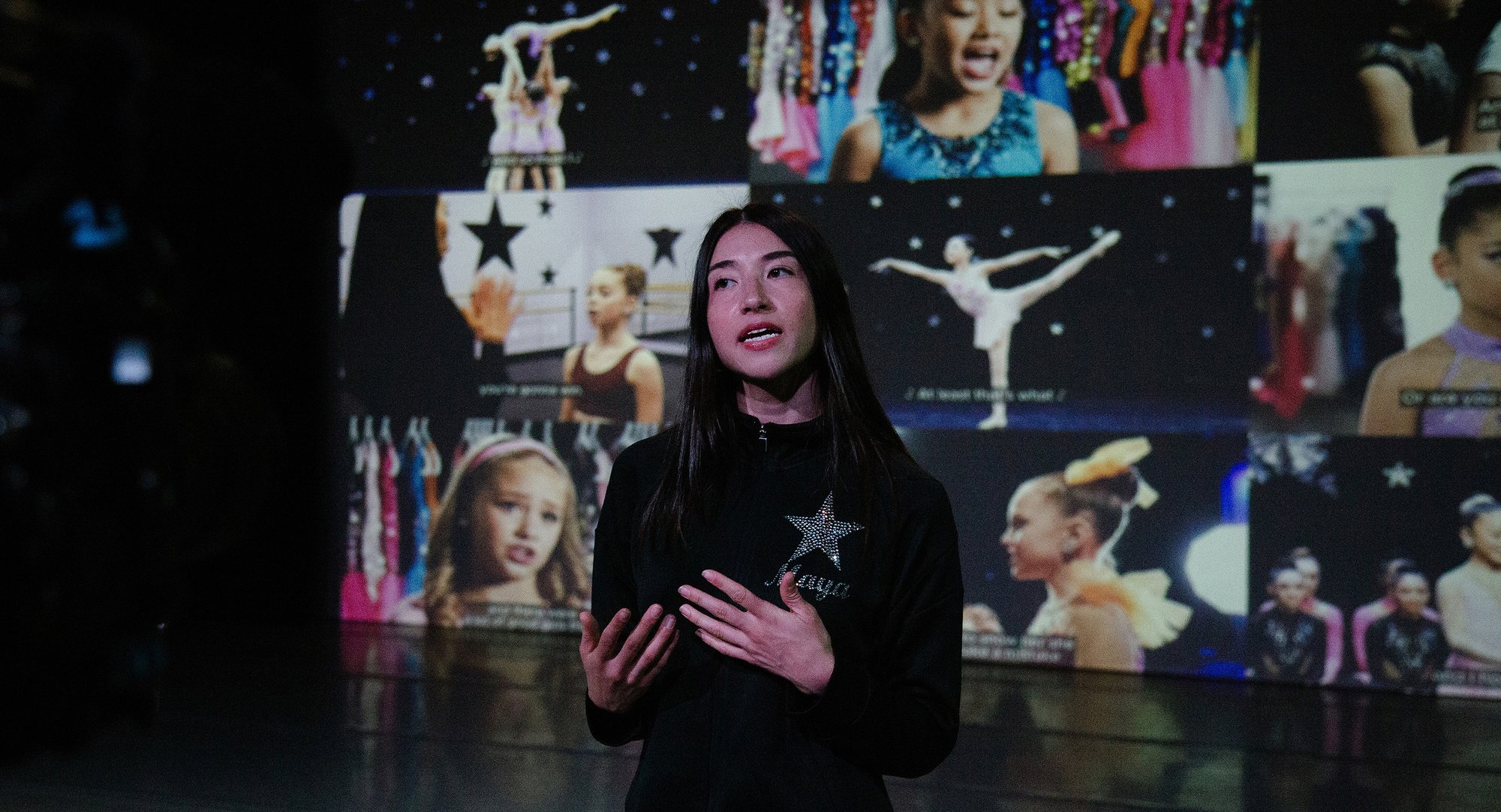
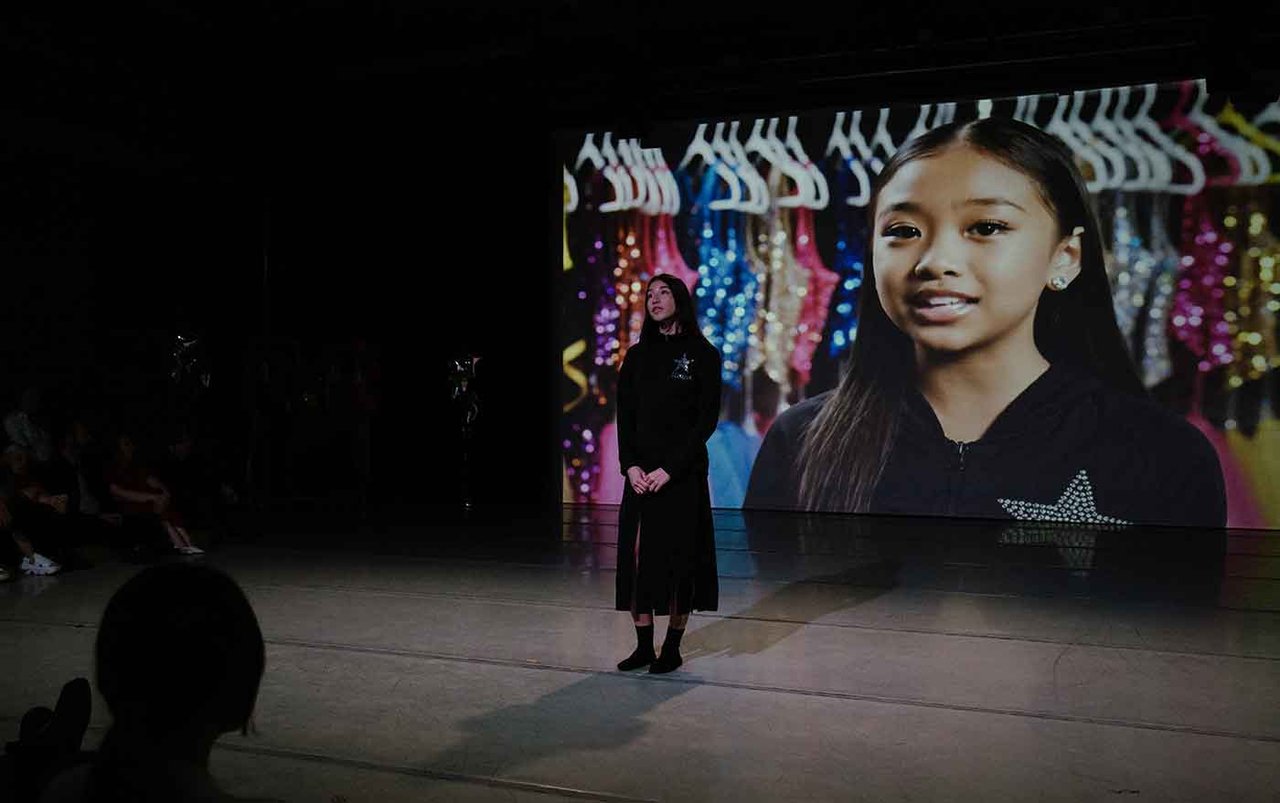
Maya Man, “StarQuest (Performance-Lecture)” (2026) co-presented by bitforms gallery, SOOT gallery, and the Future Humans program at the Berggruen Institute at L.A. Dance Project. Photography by Yuchi Ma
Maya Man, “StarPower”, is at bitforms gallery, New York, until May 2, 2026. Man’s performance-lecture “StarQuest”, followed by a conversation with Christiane Paul, Curator of Digital Art at the Whitney Museum of American Art, will be co-presented by Harvestworks and Roulette in Brooklyn, New York, on May 6, 2026.
Maya Man, a New York-based artist whose work addresses identity culture through internet-based approaches to hyperfemininity, authenticity, and the performance of self is presenting a solo show at bitforms as the “season finale” of her larger body of work, “StarQuest”, which focuses on competition dance culture in the US.
The subject of the exhibition “StarPower” is “very close to home” for Man, who grew up as a competition dancer in the Pennsylvania suburbs and who now feels ready to address that period of her childhood through her art. The worldbuilding that underpins “StarPower” is rooted heavily in the reality television show Dance Moms (2011-19), also set in Pennsylvania, and features digital and physical work created using text-to-image and text-to-video generative AI models as well as software-based generative systems.
Installation view of Maya Man, “StarPower”, at bitforms gallery, New York. Courtesy of the artist and bitforms. Photography by Max C Lee
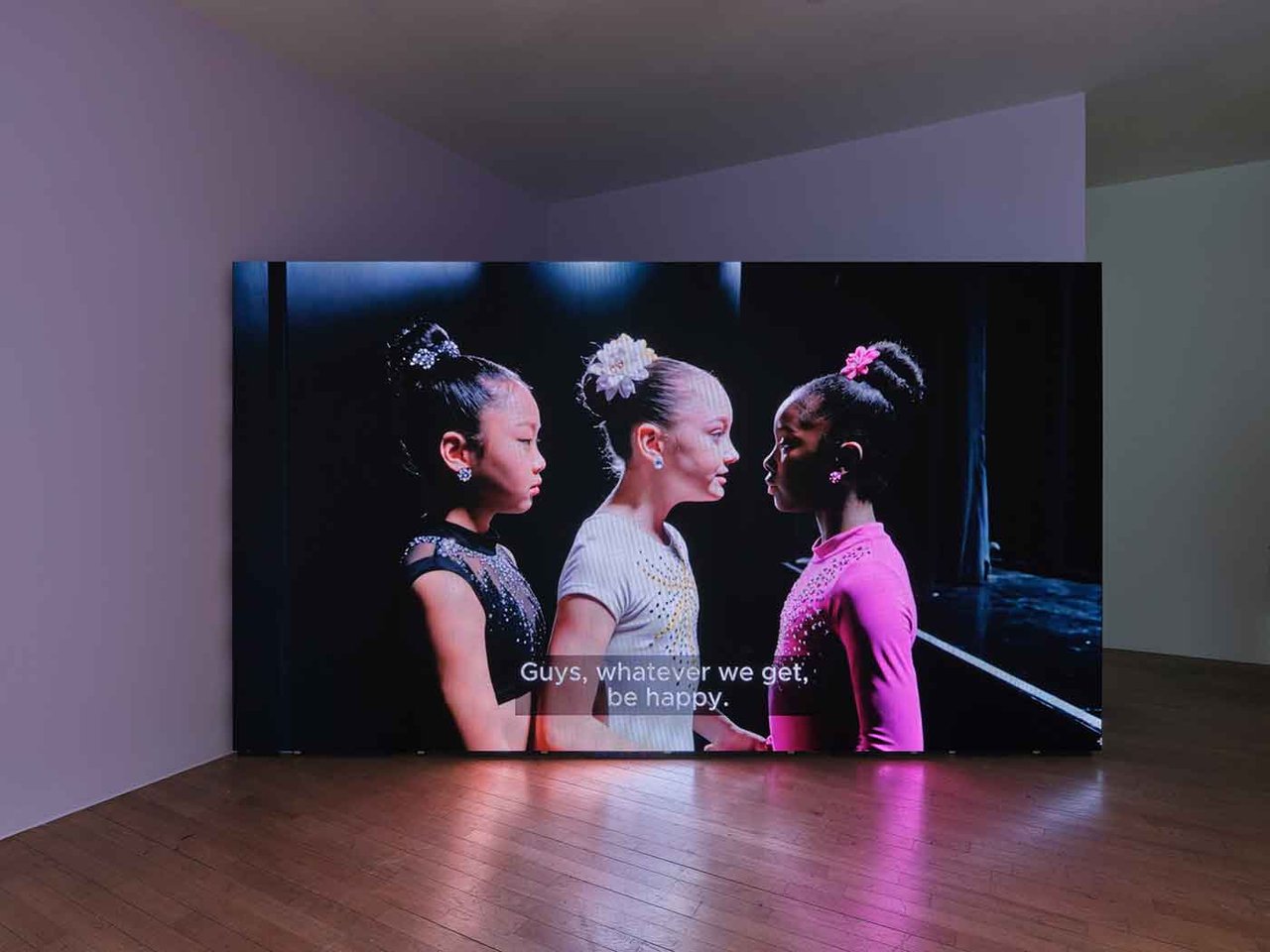
Man tells Right Click Save that she was excited to address the dance-contest universe “through the warped lens of generative AI”, where she used a generative text-to-video model to produce clips of competition dancers in action and discussing their performances. The main digital element of the bitforms show is StarQuest, a set of 111 8-second generative AI video sequences that are shuffled in real time using a custom software running in a browser. Software-based work about online culture and generative art have been central planks of Man’s work since working on her MFA in Media Art at UCLA, in 2022-23, when she studied with the artists Casey Reas and Lauren Lee McCarthy.
Man became interested in working with generative AI video in the past two years, once the technology had grown capable of producing something that looked distinctly “realistic”. The “StarQuest” world is the largest single body of work that Man has produced.
She spoke to Louis Jebb about her New York show; the role of language, randomness, and improvisation in her output; her delight in the “not quite right” outputs of generative art; and her continuing critical engagement with the impossibility of “authentic” voices on the internet when all online posts are in some sense performance.
Installation view of Maya Man, “StarPower”, at bitforms gallery, New York. Courtesy of the artist and bitforms. Photography by Max C Lee
Louis Jebb: How has the building out of the “StarQuest” world progressed in the past year, culminating in “StarPower” at bitforms in New York?
Maya Man: I put out an essay [in 2025] that focused on Dance Moms, on the [dance coach who is the central character in the series], and drawing an analogy between the coach and the algorithm. That essay was in Not Here to Make Friends, a zine dedicated to reality TV. It was the first node I put out in relation to this larger body of work.
I had an online exhibition with Feral File [in November 2025] which introduced the scenes of StarQuest, the 111 AI-generated short videos with AI-generated sound [in which the dancers perform and speak] and music. Around the same time, Triple Canopy and Feral File co-presented a performance-lecture in New York that I later brought to Los Angeles in February, along with a show in LA called StarBound [with SOOT gallery]. Arriving at bitforms in late March was a real culmination for me [with] a six-week physical show in the largest space that I’ve [shown in solo] to date.
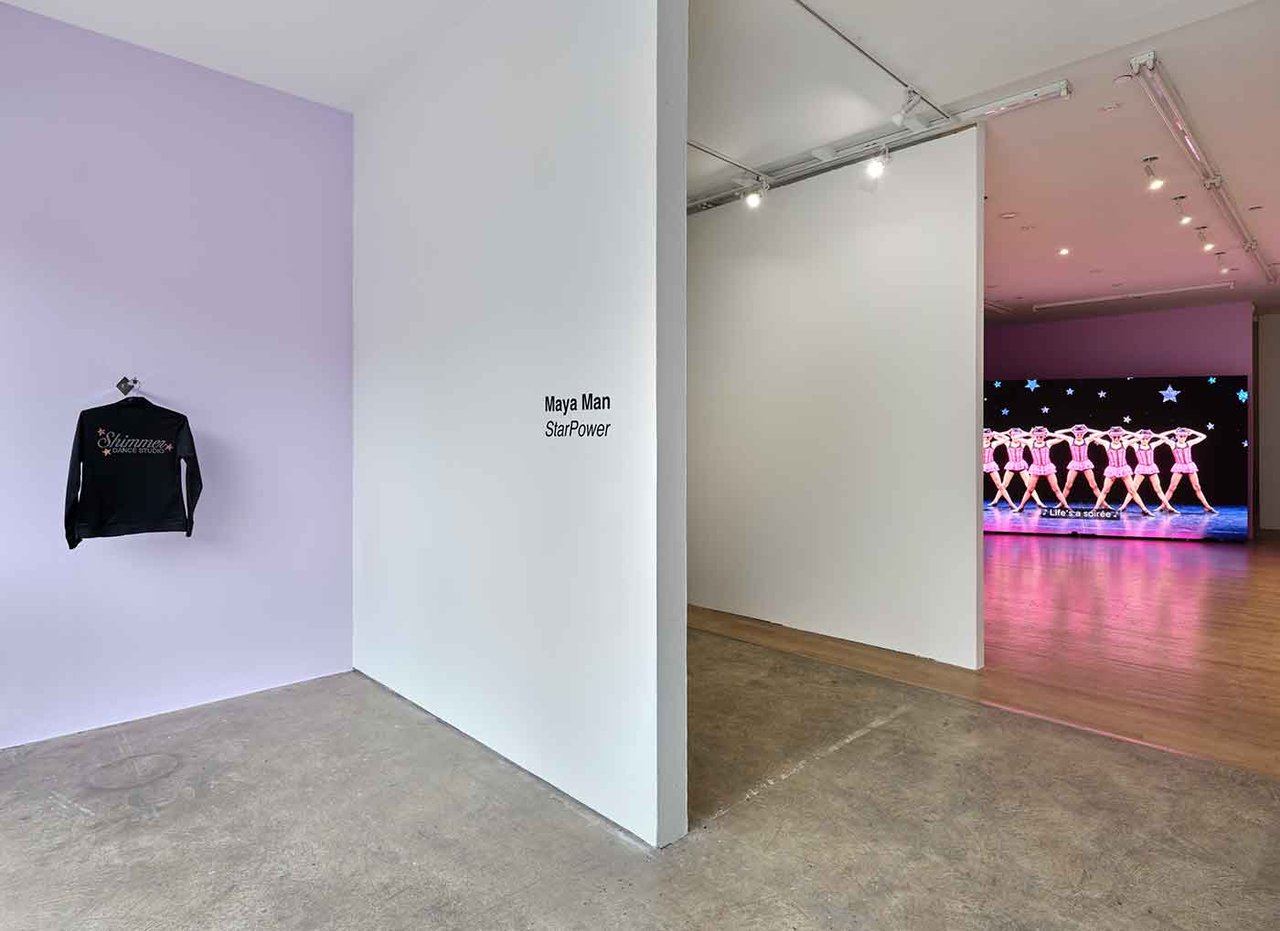
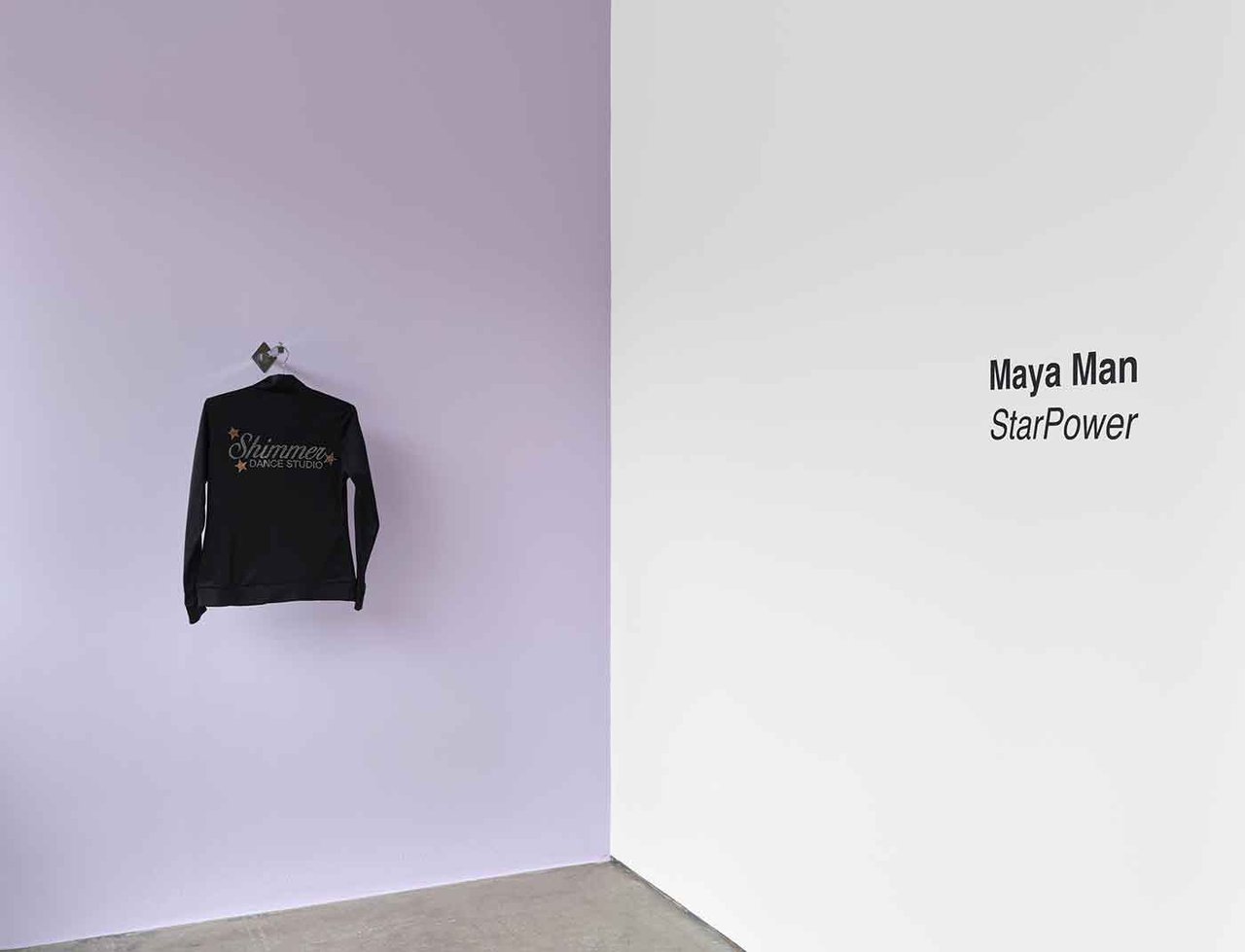
Maya Man, Coach’s Shimmer Warm-Up Jacket, 2026. Installation view of Maya Man, “StarPower”, at bitforms gallery, New York. Courtesy of the artist and bitforms. Photography by Max C Lee
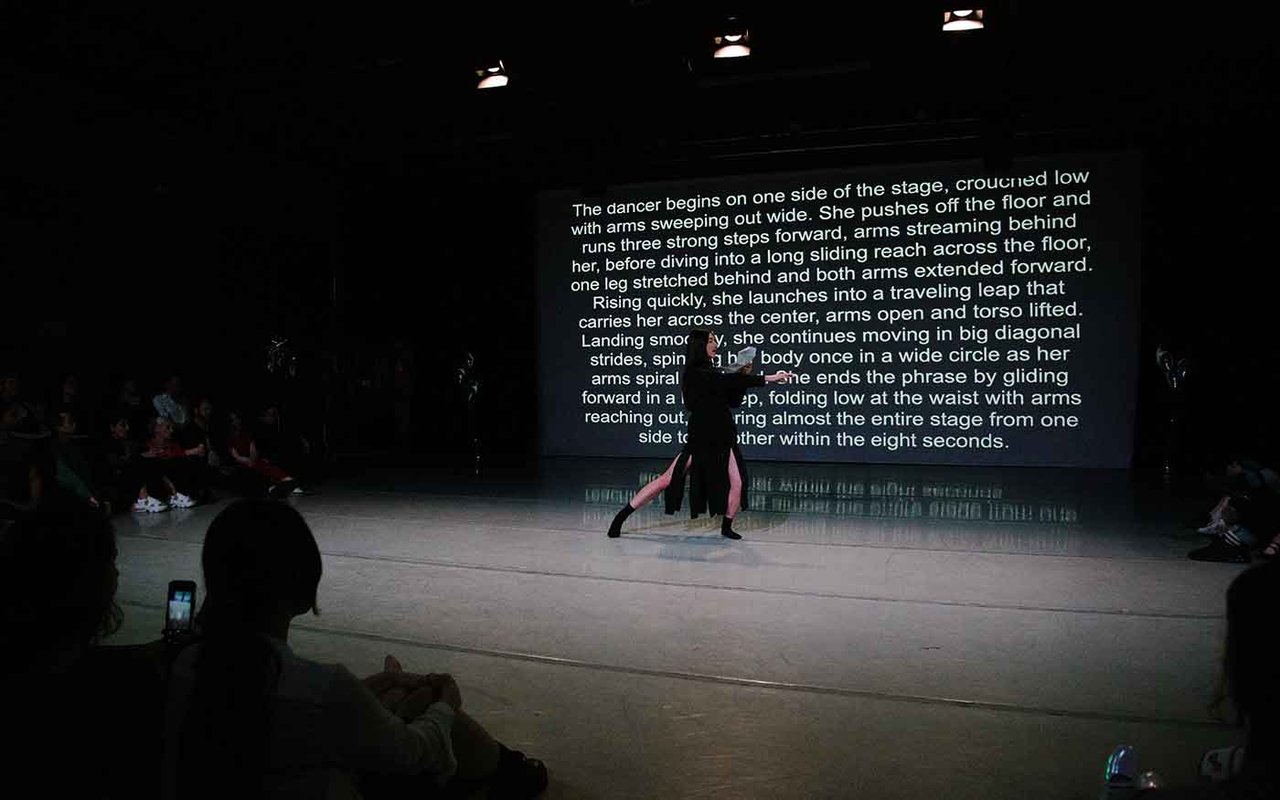
[The exhibition at bitforms] was a real opportunity for me to build out the world that exists in the digital piece, the primary engine for this body of work. An important [part of that physical building out] is Coach’s Shimmer Warm-Up Jacket (2026), which hangs at the entrance to the gallery. On the back it says “Shimmer Dance Studio”, [referring to] the dance studio that I’ve imagined as the backstory for these dancers in the digital work StarQuest. It is the studio that they all attend. On the front of the jacket, there’s my name with a star and rhinestones. It is also the jacket that I wear when I [perform] the performance-lecture.
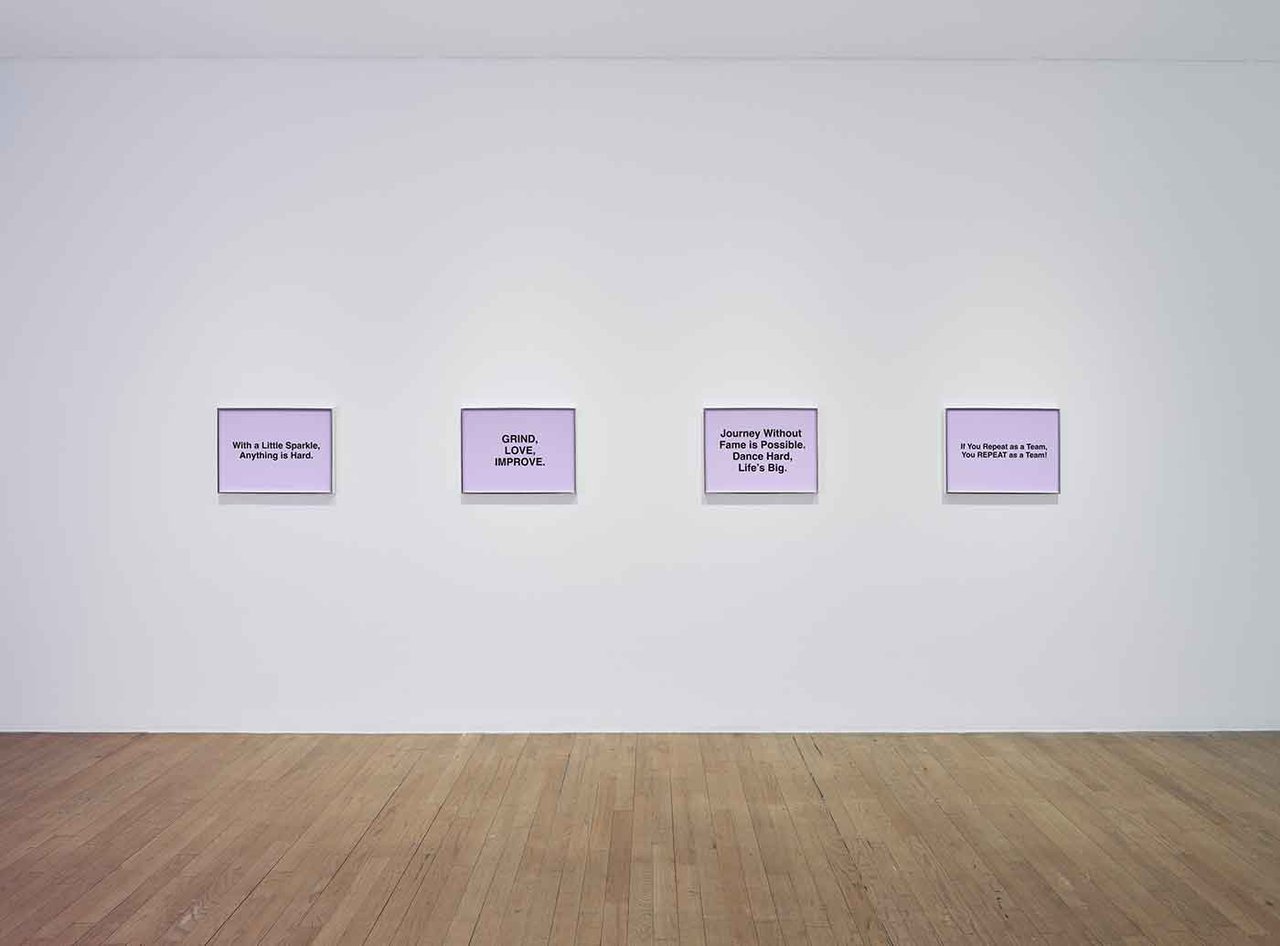
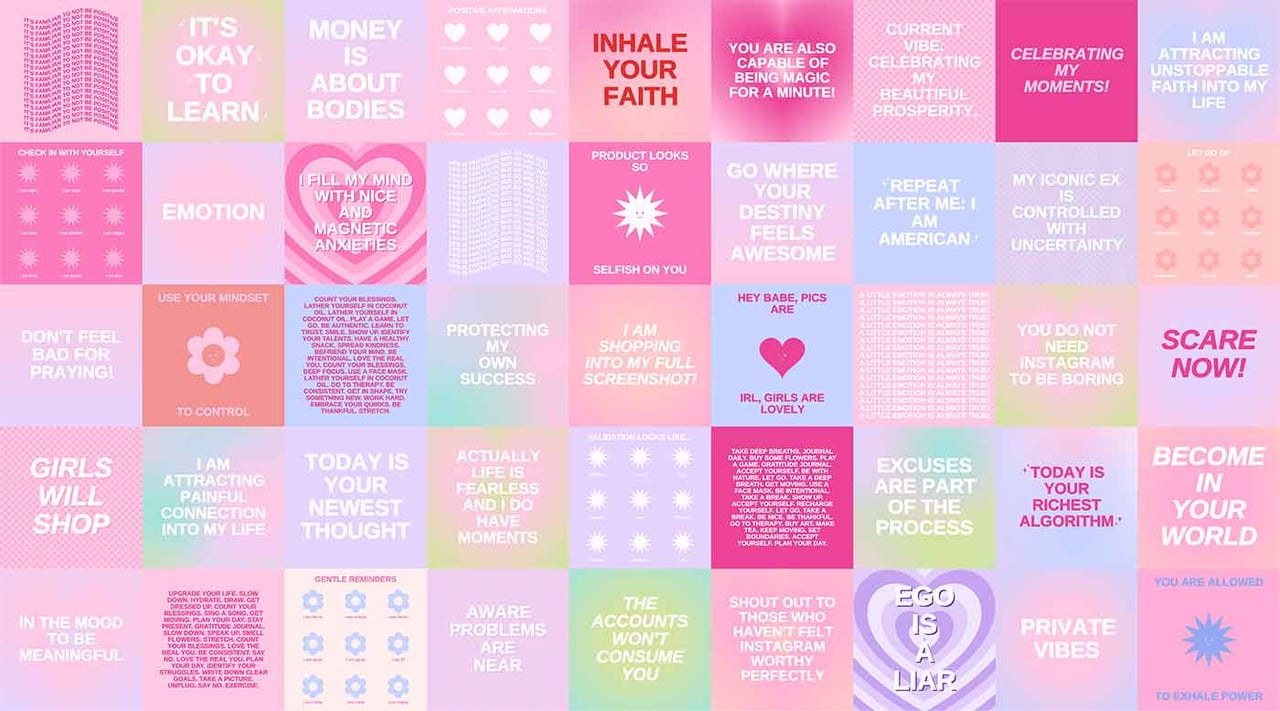
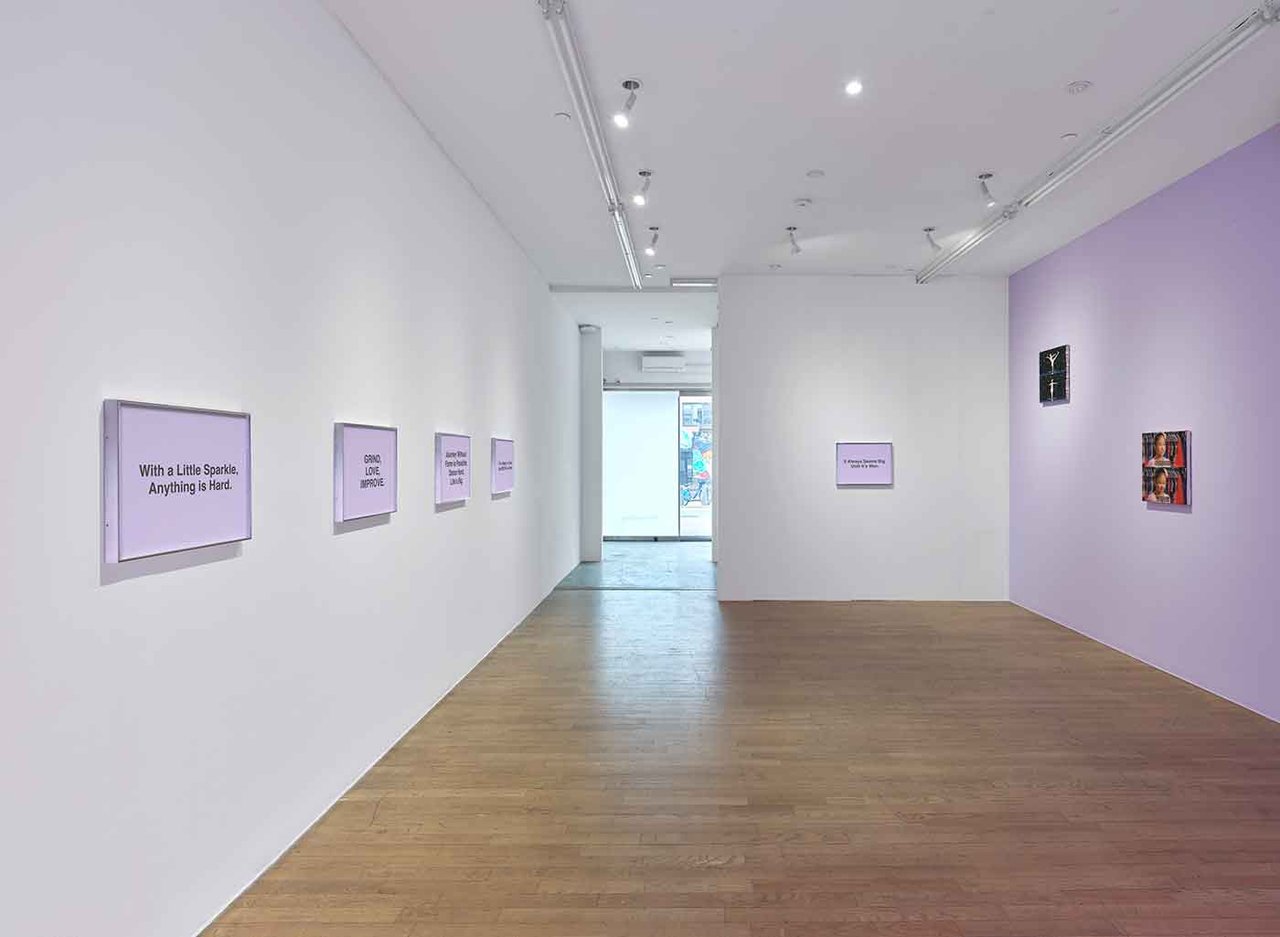
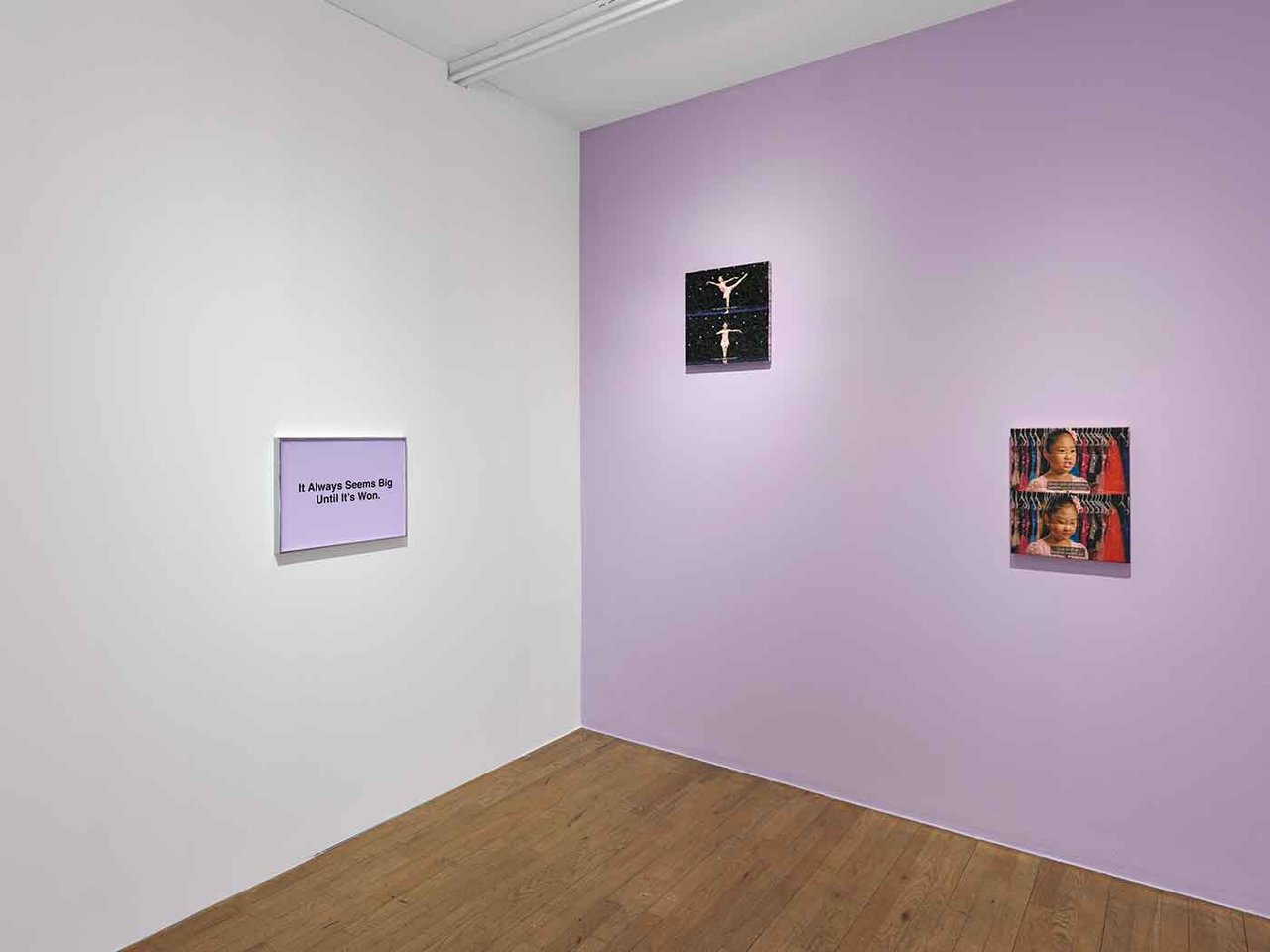
Then there’s a series of Shimmer Quote prints on the wall, which [will appear familiar to anyone who knows] my Art Blocks piece FAKE IT TILL YOU MAKE IT (2022), which was a remixing of language [from] Instagram graphics. This methodology is quite similar.
I wrote an algorithm that [remixes] aspirational phrases from the posters on the walls of the Dance Moms studio. Like the Instagram graphics behind FAKE IT TILL YOU MAKE IT, they’re text-centered. One of the most infamous ones reads “Winning isn’t everything, it’s the only thing”.
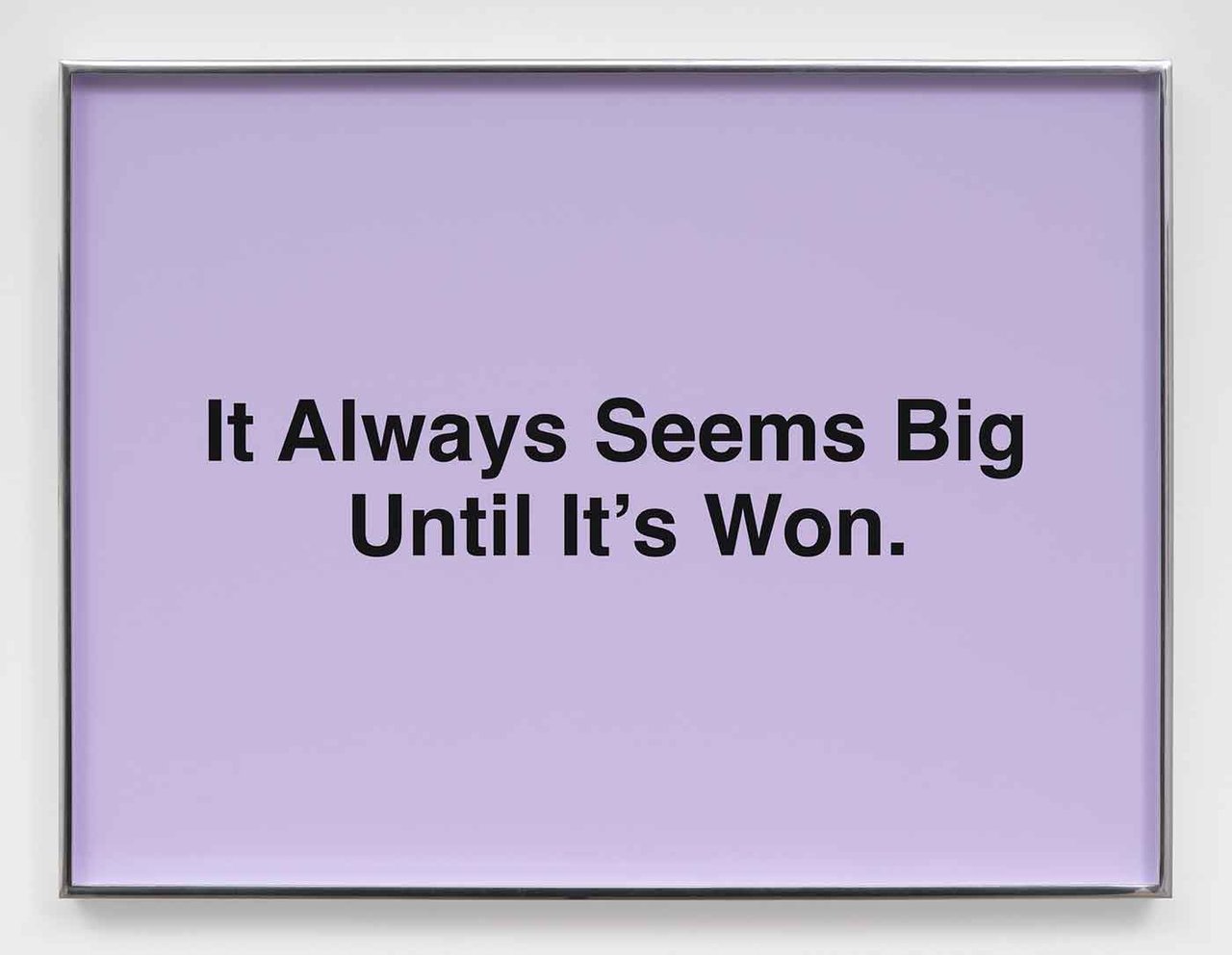
Maya Man, Shimmer Quote (Always Seems Big), 2026. Installation view of Maya Man, “StarPower”, at bitforms gallery, New York. Courtesy of the artist and bitforms. Photography by Max C Lee
[The prints have] custom-welded aluminum frames that have a polished face, [giving] them a mirrored quality, reminiscent of the [dance] studio, [that translates] the feeling of a digital file to a physical frame. There are five of them in the show. One of my favorite, “It always feels big until it’s won” I placed [...] on a wall by itself. because it’s something that I think everyone goes through. You want something: [perhaps] a personal crush or a professional accolade. And once you get it, it can feel very different than you expected.
LJ: In the bitforms show you play with scale. You have the big screen showing StarQuest — a generative mix of AI-generated clips — and then you use the iPhone installation to show three short StarQuest Edit pieces, a format that references how we consume so many media products through short highlights clips.
MM: It’s really important, when installing digital work, to think about scale, because a lot of digital art is “dimensions variable”. I was adamant from the beginning that StarQuest, the central piece, was very large. You walk in and it dominates the main space of the exhibition. I wanted [to use scale] to represent there being both primary content, like a TV show, and then what I refer to as second-order content, produced with clips from the primary content but remixed and reposted on TikTok or Instagram.
Maya Man, StarQuest Edit #3 (3, 2, 1), 2026. Installation view of Maya Man, “StarPower”, at bitforms gallery, New York. Courtesy of the artist and bitforms. Photography by Max C Lee
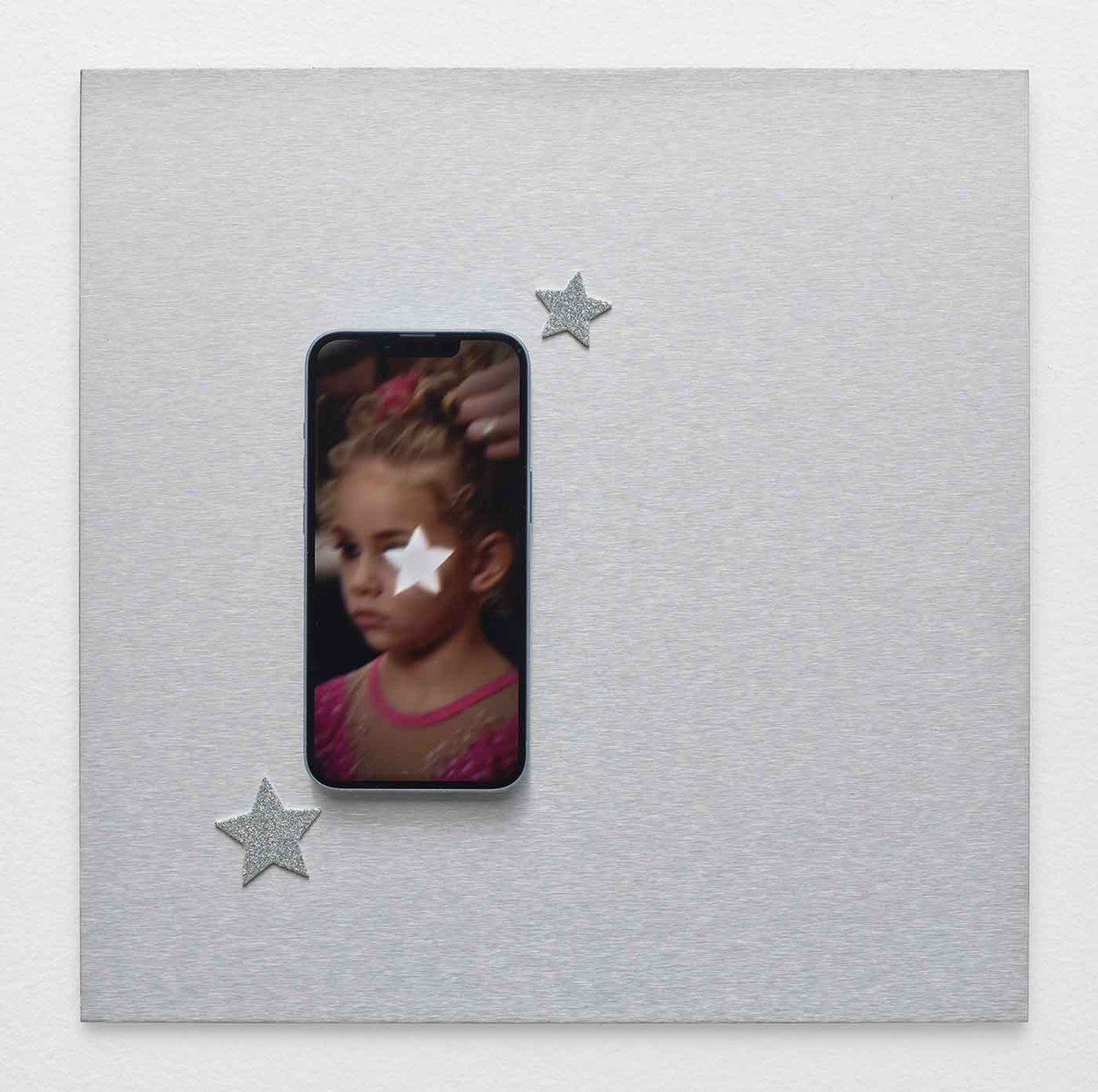
It made sense to present [the second-order content] — StarQuest Edit #1 to #3 — on actual phones. They are mounted on the wall in a way that influencers often use to film themselves. Presenting the piece with the phone in [the exhibition] context makes the phone into a sculptural object.
Each one of the StarQuestEdit pieces is mounted on a 12 x 12 inch brushed aluminum panel. And each one has its own bespoke glitter star pieces — the stars that you can also see in the digital work.
LJ: Looking at the Shimmer Quote pieces alongside FAKE IT TILL YOU MAKE IT reminds me of something that Analivia Cordeiro once said in an interview with Right Click Save:“Improvisation and random choice both deal with the unpredictable,” she said. “The difference is that improvisation is deeply organic and flows harmonically. Random choice is mainly chaotic and never organically constructed. They complement each other.”
Maya Man, Shimmer Quote prints, 2026. Installation view of Maya Man, “StarPower”, at bitforms gallery, New York. Courtesy of the artist and bitforms. Photography by Max C Lee
Looking at your work in “StarPower”, there is an improvisatory quality to the language of the Shimmer Quotes. Then, in the big screen piece StarQuest, the clips are randomly organised live by an algorithm. Likewise, when looking at FAKE IT TILL YOU MAKE IT, some of the texts read like elegantly composed epigrams while others have the chaotic nature of the random. Is it there, in the chaos, that you find the real truth?
MM: Cordeiro of course had a show at bitforms earlier this year (“Freedom”, 2025-26). It’s really special to be carrying the energy of everything she is interested in, to be asking the same questions with these hyper-contemporary technologies that really were only available in the past year or so.
Randomness is something that I think about so intensely, and have thought about since the beginning of my career working with a generative system. And I think [Cordeiro is really right in making] that analogy. Randomness and code maintain this quality of “liveness”, which has a lot to do with performance, and with uncertainty.
Maya Man, “StarQuest (Performance-Lecture)” (2026) co-presented by bitforms gallery, SOOT gallery, and the Future Humans program at the Berggruen Institute at L.A. Dance Project. Photography by Yuchi Ma
When you go out on stage to perform, you never know exactly how it’s going to go. There are always decisions being made in real time. That’s even more true with an improvised performance. I think that’s why I’m drawn to these generative systems in a sense, because having this level of generativity makes a work feel even more like a performance than it would otherwise.
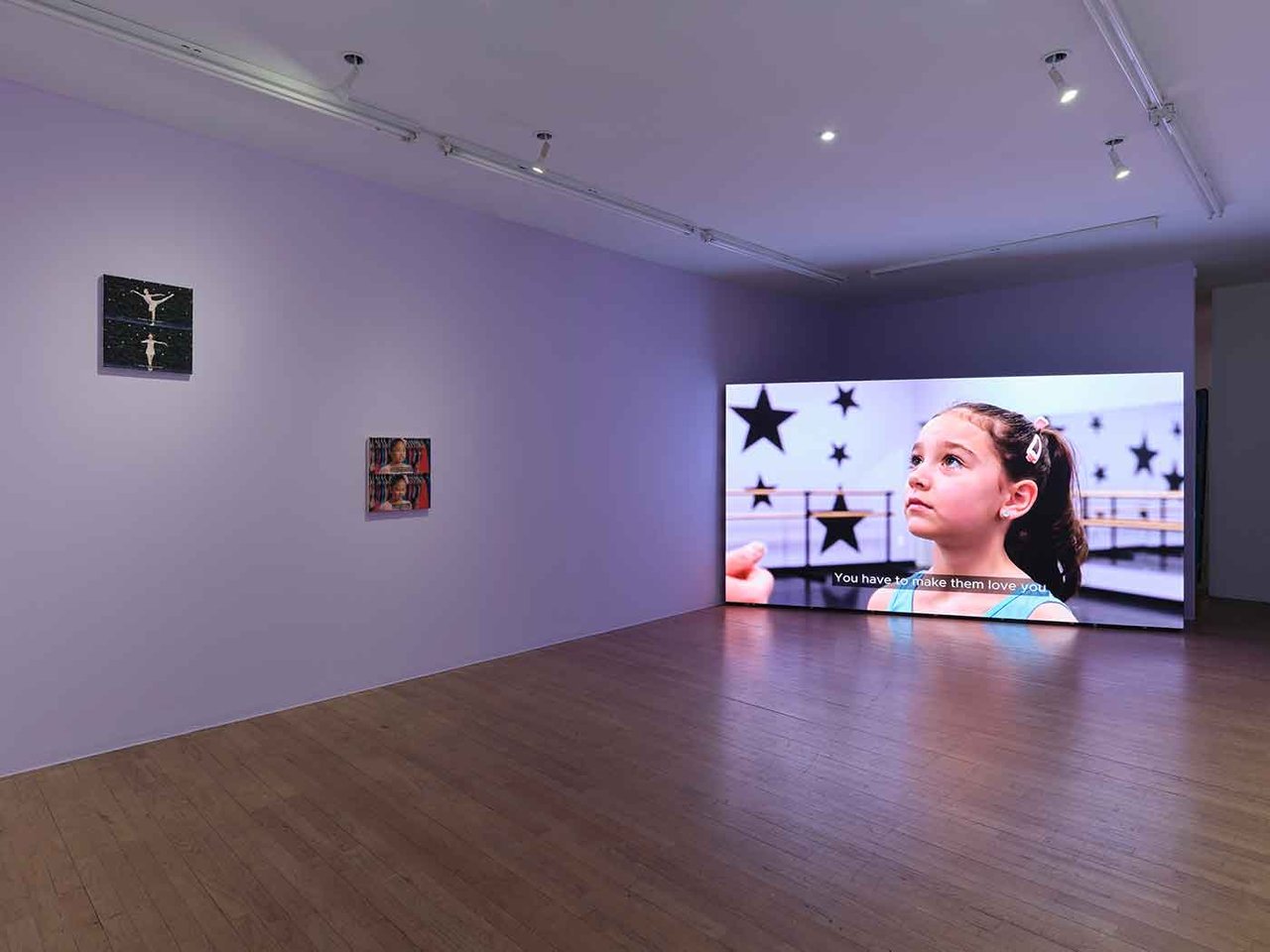
And that’s why I have an inherent discomfort with video. I am very adamant when I’m talking about StarQuest, the central piece of the show, that it’s not a video. And, of course, everyone comes into the gallery and thinks it’s a video because it looks like a video and it’s made up of videos. The true medium line of the piece is custom software. It’s running in the browser and clips are being shuffled in real time.
Similarly, with FAKE IT TILL YOU MAKE IT, whenever I show the piece in a gallery setting I like to have the code running live so you can see it executing and making decisions in real time. This turns the whole piece itself into a performance. That’s a major throughline in almost everything I make. In other mediums, where the artist’s hand or the medium is very exposed, it’s something that takes explaining, especially for people less familiar with generative systems in an art practice. Because the output can look exactly like something that you could make in a different way. FAKE IT TILL YOU MAKE IT could easily look like graphics made in the design platform Canva, or StarQuest like a bunch of video clips strung together on a loop.
Maya Man, FAKE IT TILL YOU MAKE IT, 2022. Courtesy of the artist
LJ: Recently, you presented on the Artwrld podcast with Michael Connor of Rhizome. I was struck by your statement that “randomness makes things not quite right”.
MM: That’s exactly where the artwork happens for me. I’m often trying to recreate a form of media that already exists. With FAKE IT TILL YOU MAKE IT, I’m mimicking Instagram graphics. In StarQuest I’m mimicking an actual reality TV show that’s out there. But the “not quite right” piece is what makes it an artwork.
And that’s what makes it compelling to me: once you get close to it, you realize that something about it is a little bit off. And that forces a cognitive exercise, an acrobatic exercise, [where you] figure out how it looks like something but isn’t quite that thing at all. I like playing with perception in that way.
Maya Man, Glance Back, 2018 to present. Screenshot of browser tab from 2022. Courtesy of the artist
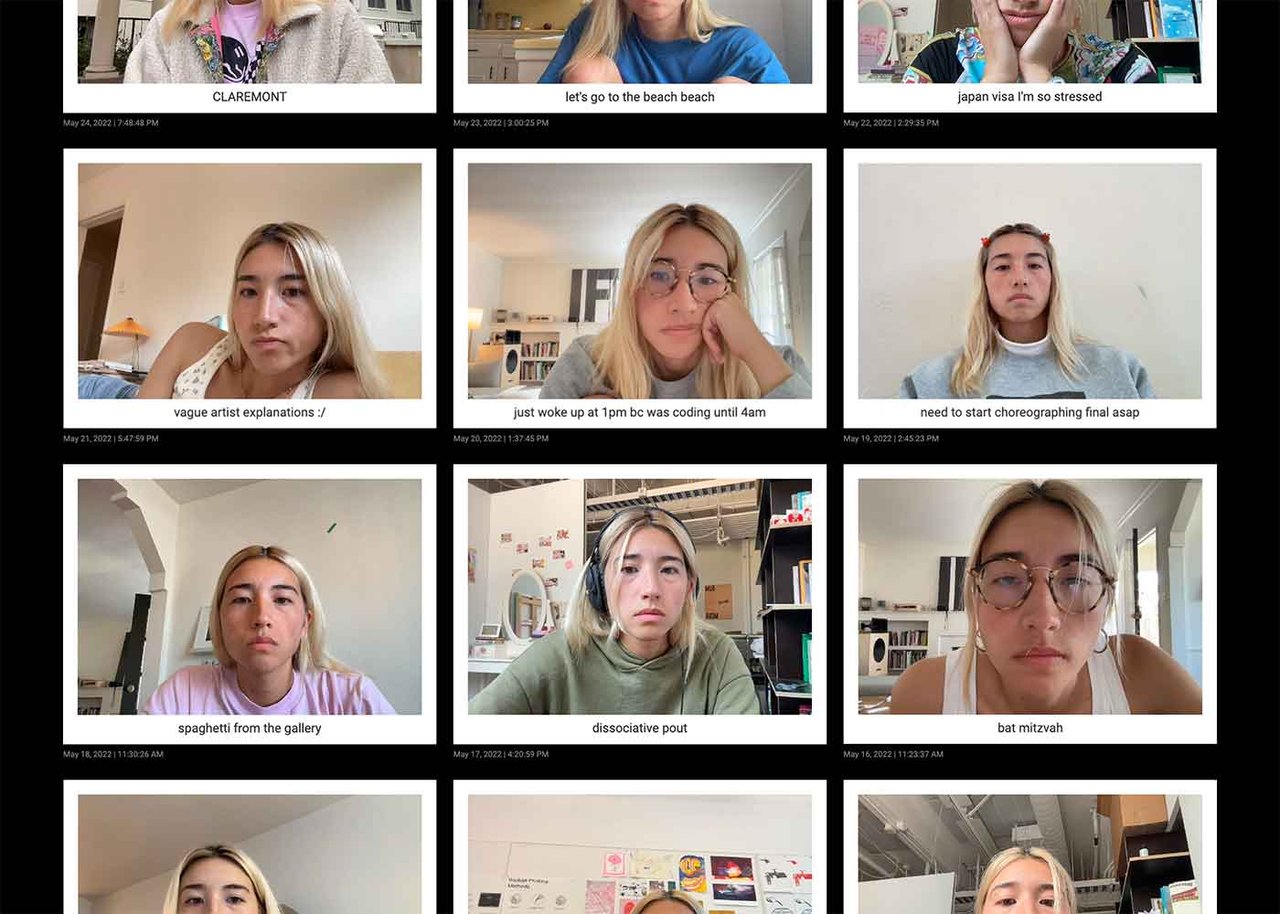
LJ: This seems like a natural development from Glance Back (2018), your browser extension archive of images of you staring at a computer while typing in what you are thinking. You said that it is not a more “real” version of you, just another you. How do you address the real and the authentic?
MM: It’s funny looking back on many of the titles of my pieces. I have FAKE IT TILL YOU MAKE IT; then my commission from the Whitney Museum is called A Realistic Day In My Life Living In New York City (2024-25). I’ve had this haunting obsession with this idea of what’s real. I’m often frustrated by people’s expectations for others to post online in a way that’s “real”. Because [the internet is] a massive network stage. You have to go out there and perform.
But it took me a really long time to rewire my relationship to posting online. To understand that it’s quite logical that I never felt I was being real online. This realization is a through line in all of my work, which focuses on this idea of performing, and questions the notion of authenticity online. It really comes full circle with StarQuest. Making the work, diving back into my own memories as a child growing up as a dancer, and training for hours every day to be on stage. This is where my interest in performance and the stage conceptually derives from.
Maya Man, “StarQuest (Performance-Lecture)” (2026) co-presented by bitforms gallery, SOOT gallery, and the Future Humans program at the Berggruen Institute at L.A. Dance Project. Photography by Yuchi Ma
LJ: You have spoken about how your work has sought to address hyperfeminine culture, and how that culture has long been treated as lowbrow. Can you talk about your concern with hyperfeminine culture and how it’s perceived in relation to “StarPower”?
MM: It is something I’ve been thinking about a lot with the show at bitforms. The piece is reproducing an existing reality show, Dance Moms, whose audience, I would argue, is primarily young women. Pop culture forms that are associated with young women are not respected as forms of media. And I find that to be a really concerning perspective, even beyond gender.
All forms of pop culture, I think, are extremely powerful tools for control and surveillance and political manipulation. But it is not treated with the weight that it deserves because it’s seen as low brow; it’s seen as dumb. And I think that is in large part because, a lot of times, fans of these forms of pop culture are women.
Maya Man, StarQuest, 2025. Installation view of Maya Man, “StarPower”, at bitforms gallery, New York. Courtesy of the artist and bitforms. Photography by Max C Lee
So I’m really interested in the power that’s wrapped up in a pop cultural form like this and how it can change people’s minds about how the world works, about their positions on social and political issues. And then of course, in this competition-dance culture in America, the dancing is very athletic, but there’s also this very pageant-esque angle to the way that you compete, where, from a very young age, you are wearing make-up; you’re wearing ornate hyperfeminine glitzy shimmery sparkly costumes. You’re instructed to smile and perform in a way where you’re often dancing above your age; or you’re performing in a way that’s meant to be older than you are.
A lot of the cultural conditioning of how to perform as a woman is really injected into the conditioning of competition dancers. I’m really interested in that happening at large in society. It’s really concentrated within American competition dance.
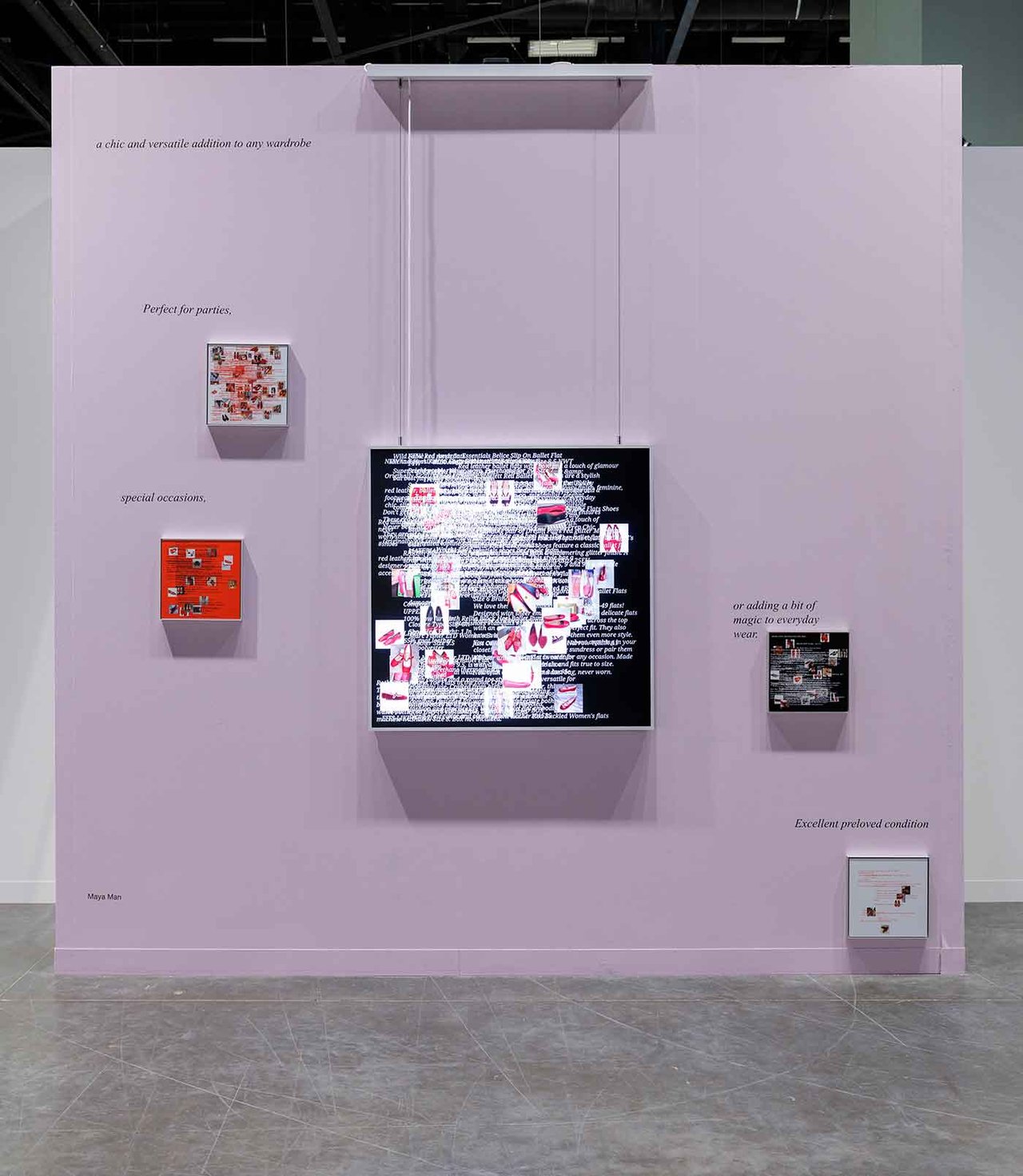
Installation view of Maya Man, (The Angels Wanna Wear My) Red Shoes (2024-25) at bitforms gallery, Zero 10, Art Basel Miami Beach, 2025. Courtesy of the artist and bitforms. Photography by James Jackman
LJ: Last December, you exhibited your work in the Zero 10 section at Art Basel Miami Beach, and now you’ve got your solo show at bitforms. Is this a moment when you can take stock about next steps?
MM: It’s been a really significant past couple of years for me in terms of taking myself seriously as an artist. I come from a background in computer science and media studies and worked in technology for a while before deciding to pursue my MFA in media art and really take my practice seriously.
It’s been really special to have these moments of presentation. Both have been at venues where they are in person and I am able to install the work in a very bespoke way that it would be impossible for someone to view looking at their computer.
Installation view of Maya Man, “StarPower”, at bitforms gallery, New York. Courtesy of the artist and bitforms. Photography by Max C Lee
It has marked a moment in my practice where I realize the value of presenting work in person. I’m an artist whose practice people understand to be very digital, that often runs natively on the internet. The primary medium is software. But it has helped me understand the direction I want to move toward, which is continued physical presentation of large-scale digital works, where I’m able to exercise this process of worldbuilding that I’ve used for “StarQuest “ or to approach it as an experiment in making an ecosystem of works that are all within the same conceptual framing. I’ve found that to be really productive.
I’d like to continue to use that methodology in the future because it’s been really exciting for me to have work span shows and mediums, and most importantly physical spaces. Within this body of work, I’ve also performed “StarQuest“ in New York and in LA. That has also been a lesson in translating my work into a new medium.
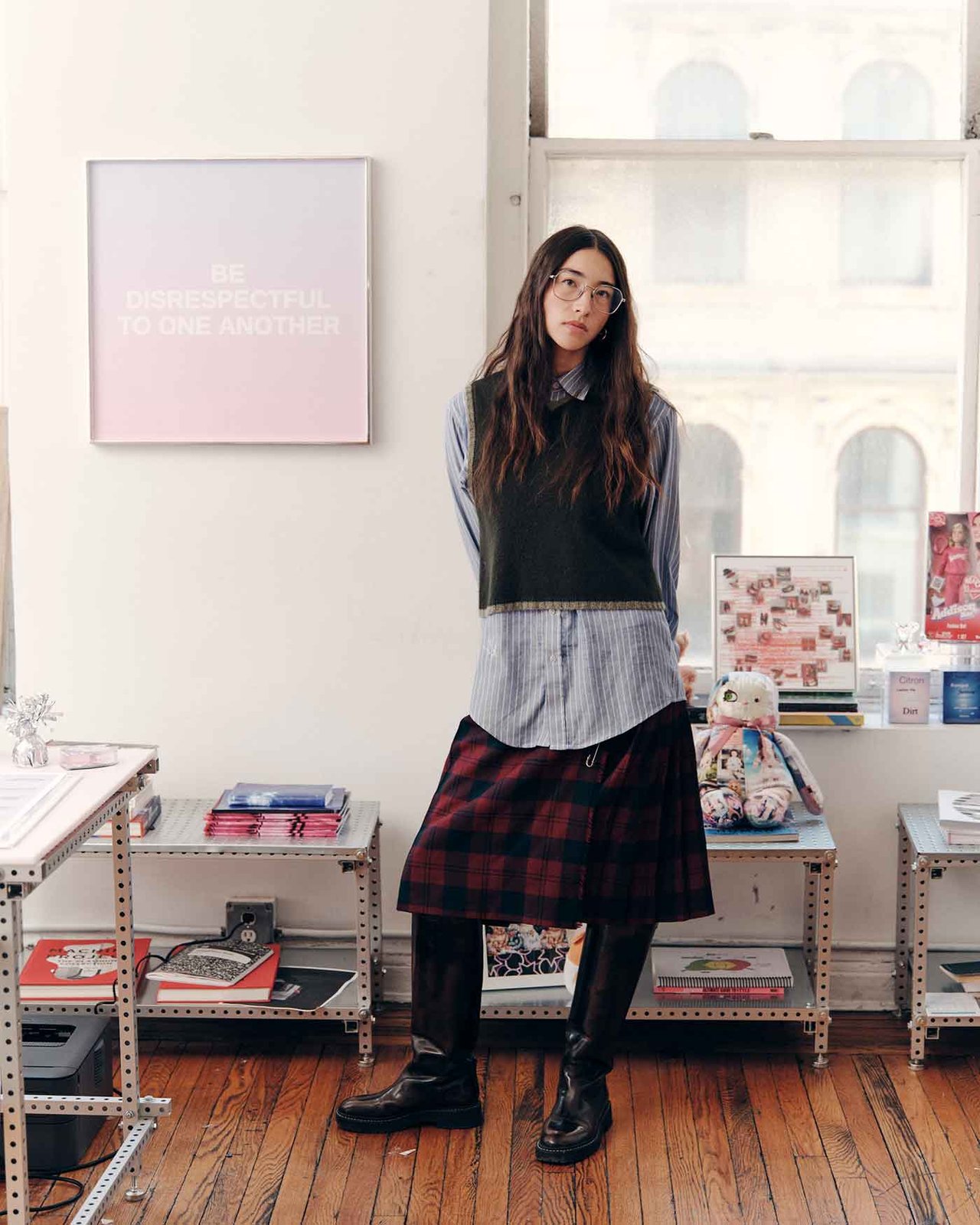
Maya Man. Courtesy of the artist. Photography by Nayquan Shuler
LJ: Tell us about your daily practice as an artist.
MM: The first time I had a dedicated studio was at grad school at UCLA. They give you a small studio in the building. And I think it’s quite easy, especially when you make primarily digital work, to think “I don’t need a studio because I’m on my computer and I can do that anywhere”.
But for me, it was really important because you put objects around you in the studio, you put things on the walls that you like, that you've made; you spend time with the work in a way where you're completely separated from the distractions of where you live. I'm lucky I have a space now in New York that is in SoHo, and a 10-minute walk from my apartment in Chinatown. I walk to so many events from the studio. I think it's really important to see shows and be hanging out with artists whose work you like; to see shows that are related to what you're into, but also not seemingly related. Because it pushes you in a way that I find productive.
Installation view of Maya Man, “StarPower”, at bitforms gallery, New York. Courtesy of the artist and bitforms. Photography by Max C Lee
LJ: Who are the artists, whether contemporary, historical, of any metier, who most interest or inspire you today?
MM: There are different cohorts of artists that my practice owes a lot to. There are artists who were working in the 1960s and ’70s with computation, especially artists like Vera Molnar, Lillian Schwartz, or Manfred Mohr, who were very open to the idea of the computer as an artistic tool. Then it was a major moment learning about net art and artists who really made websites as art objects, especially artists like Olia Lialina, Auriea Harvey.
Lynn Hershman Leeson made early work with technology and is always interested in the performance of identity and gender. Her work has been really important for me, especially the performances she did as Roberta Breitmore (1973-78), where she was thinking about performing the hyperfeminine in a specific way. And then an artist like Cory Arcangel, whose work resonates with me because he’s interested in pop culture and in software. That combination is rare. There are also artists who are thinking about hyperfeminine performance on the internet in a more contemporary context: Ann Hirsch, Molly Soda, Petra Cortright. Their work early on helped validate my interests in performance online.
Maya Man, FAKE IT TILL YOU MAKE IT, 2022. Courtesy of the artist
LJ: How do you view the present discourse on generative art and how do you see the future of the form?
MM: I’m really concerned about generative and digital art at large being given proper presentation. For a long time, it has not been necessarily the most commercial form of art-making. But I think it’s really important that curators and galleries and institutions look to artists who are making hyper-contemporary work using the tools that are available only now.
I think that “generative art” has become an increasingly unstable term. FAKE IT TILL YOU MAKE IT came out in 2022, but now everyone thinks it was made with AI. When I say generative art, people who don’t know associate it with AI. So there needs to be education around what these terms mean in different contexts.
Installation shot, Maya Man, "StarPower", bitforms gallery, New York. Courtesy of the artist and bitforms. Photography by Max C Lee
LJ: What do you hope people will take away from the show in New York?
MM: I hope people understand that reality is more fragile than it’s ever been. I have people who come into the show with no context who don’t realize for multiple minutes that the primary work, StarQuest, uses AI. It’s new for me to be chasing the edge of the technology I’m working with.
I hope people walk away feeling they had a really meaningful engagement with what’s possible in terms of image-making today, and that they are able to understand that I’m zooming in on competition dance as a very niche American subculture, but that this culture of optimization extends to a lot of different pieces of our lives now; and how people live in all kinds of ways with self-performance and quantification. I hope everyone is able to make that leap.
Maya Man is an artist focused on contemporary identity culture on the internet. Her work examines dominant narratives around femininity, authenticity, and the performance of self. She has exhibited internationally at the Whitney Museum of American Art and bitforms, New York; the Museum of Fashion, Antwerp; SOOT, Tokyo; Verse, London; HEK, Basel; and the online platform Feral File. She has performed or presented her work at The New Museum, New York; The V&A and Tate Britain, London; and MOCA, Los Angeles. She organizes a curatorial project called HEART, previously run out of her studio in SoHo.
Louis Jebb is Managing Editor at Right Click Save