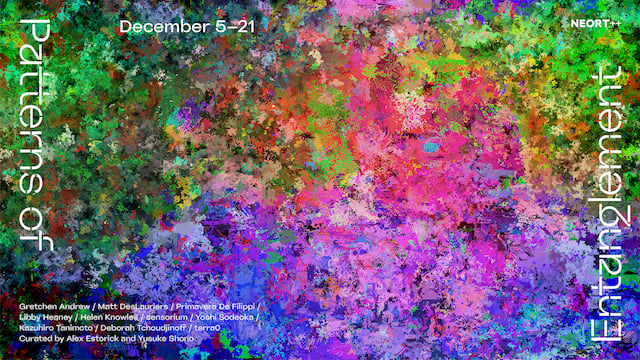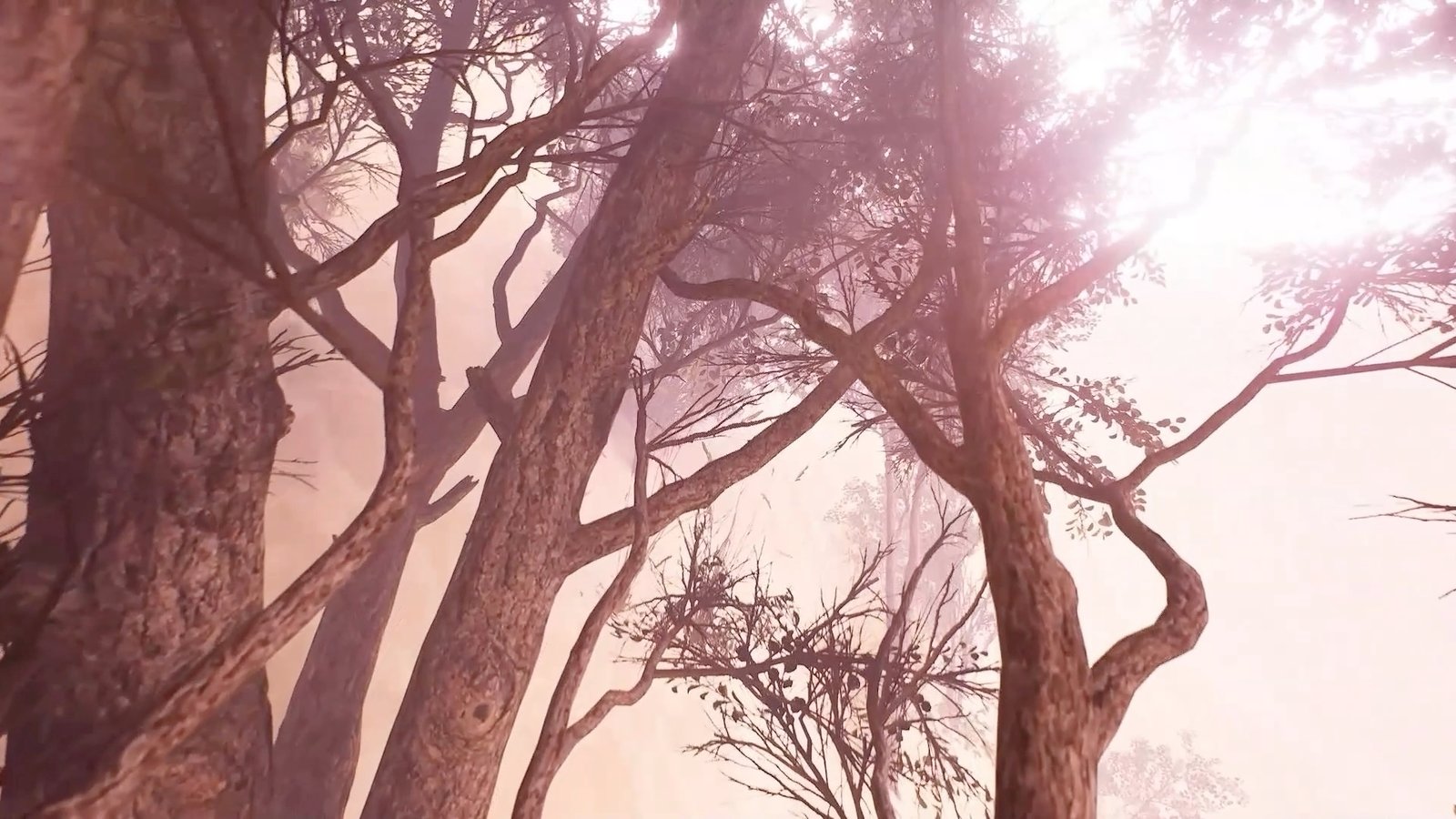
The contemporary moment is marked by the overshoot of planetary ecological boundaries, a rapidly inflating AI bubble, geopolitical conflicts, and a resurgence of far-right politics. Comprehending these changes requires us to follow patterns of entanglement across assemblages of code and carbon, community activism and climate change, computers and capitalism.
As the quantum scientist turned feminist philosopher Karen Barad astutely notes: “To be entangled is not simply to be intertwined with another, as in the joining of separate entities, but to lack an independent, self-contained existence. Existence is not an individual affair.”¹
According to Barad, entanglements are highly specific, dynamic and nonlinear configurations whose constant becoming require close and care-full attention. Elsewhere, Donna Haraway suggests that we complement the notion of autopoiesis — self-making — that arose in systems biology, with that of “sympoiesis” — making together — as a way of foregrounding multispecies entanglements.²

However, it is important to note that entanglement is not a neutral process. As the pioneering anthropologist, cyberneticist and environmentalist Gregory Bateson perceptively notes: “there is an ecology of bad ideas just as there is an ecology of weeds, and it is characteristic of the system that the basic error propagates itself.”³ While ecology is often employed to denote concern for the nonhuman world, Bateson instead draws our attention to how the term refers to flows of matter and energy through systems that cut across the three ecologies of mind, society, and the environment.
Alongside weeds we can now point towards ecologies of AI slop, deepfake pornography, and radioactive and toxic rare earth element mines.
Neither entanglement nor ecology are simply “good” things to celebrate or conserve. Colonial networks of plantations, enslavement, railways, and ports demarcated an extension of entanglements between humans, technologies, and ecosystems, just as the more recent processes of neoliberal globalization and platform capitalism involve lengthening supply chains while expanding multiple forms of extraction to intensify commodification and capitalist accumulation. Consequently, as Eva Haifa Giraud argues in What Comes After Entanglement?: Activism, Anthropocentrism, and an Ethics of Exclusion (2019), attending to patterns of entanglement requires an attentiveness to exclusion:
Recognizing that every course of action carries attendant exclusions is important, therefore, in complicating notions about what modes of ethics are necessary in responding to entangled worlds. At the same time, it is necessary to move beyond simply acknowledging the inevitable role of exclusion, as this could prove as paralyzing for questions of action and intervention as recognizing that everything is entangled. Exclusions, I argue, do not just need to be acknowledged but politicized.⁴

In politicizing patterns of entanglement, we can look towards the four modes of symbiotic relationship outlined by ecological science. These are parasitism, which denotes a relationship in which the parasite receives benefits to the detriment of the host; commensalism, an association where the commensal receives benefits while the other entity remains unaffected; amensalism, whereby one organism negatively impacts another while receiving no tangible benefit; and mutualism, whereby distinct species interact in ways which benefit both parties. Although parasitism is the most commonly encountered of these relationships in popular media and culture, mutualisms in fact dominate the nonhuman world:
Mutualisms have often been neglected in the past compared to other types of interaction, yet mutualists compose most of the world’s biomass. Almost all of the plants that dominate grasslands, heaths and forests have roots that have an intimate mutualistic association with fungi. Most corals depend on the unicellular algae within their cells, many flowering plants need their insect pollinators and many animals carry communities of micro-organisms within their guts that they require for effective digestion.⁵
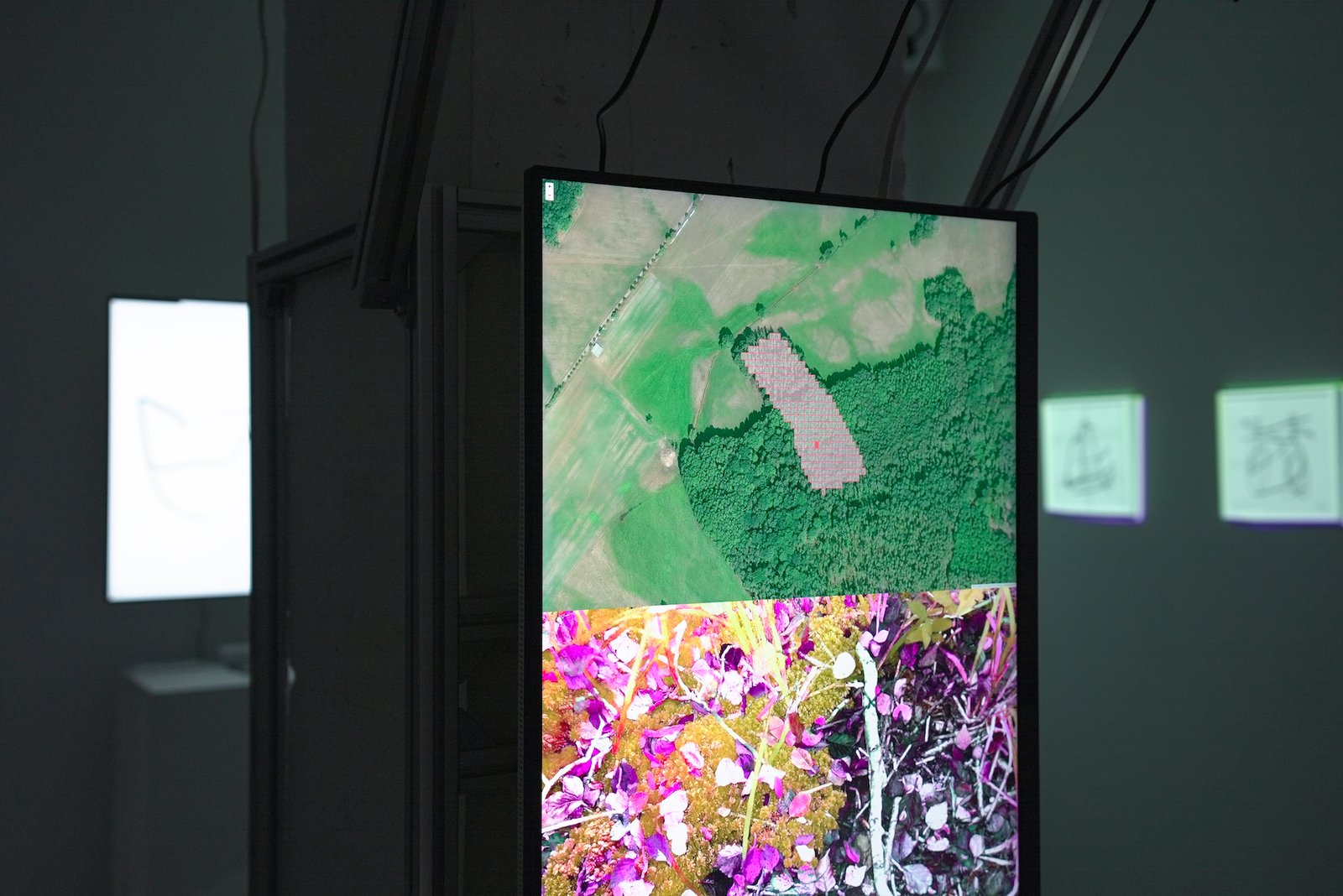
The prevalence of mutualistic relationships reveals that far from being dominated by competition — as implicit in depictions of life as the survival of the fittest — ecosystems are comprised of mutualistic, co-evolved assemblages.
Conversely, competition is the dominant mode of interaction associated with hegemonic forms of Big Tech-infused platform capitalism. While Big Tech draws value — now routinely measured in trillions of dollars — from our data, our communications, our creativity, and our communities, it externalizes a broad range of harms. These harms are felt by the young people suffering from an epidemic of depression and anxiety, workers faced with mounting precarity in the age of automation, future generations via the millions of tonnes of greenhouse gas emissions that continue to accelerate the climate crisis, and workers, communities, and ecosystems located close to sites of material extraction, industrial refinement, and waste processing.
In contemplating these politicized patterns of entanglement we should ask ourselves what actions, relationships, ecologies, and futures could escape the parasitism of planetary capitalism and instead enable diverse forms of mutualistic multispecies flourishing. As ever, art and artists play crucial roles in making these patterns, their consequences, and a broad range of possible futures visible, perceptible, and realizable.
Sy Taffel is a Senior Lecturer in Media Studies and co-director of the Political Ecology Research Centre at Massey University, Aotearoa-New Zealand. Sy’s research focuses upon the ecological, material, cultural, and political affordances of digital technologies. His current research project explores the intersections between digital technologies and postgrowth futures. He is the author of Postgrowth Digital Futures (Bristol University Press, forthcoming 2026), Digital Media Ecologies (Bloomsbury 2019), and an editor of Plastic Legacies (University of Athabasca Press 2021) and Ecological Entanglement in the Anthropocene (Lexington 2016).
¹ K Barad, Meeting the Universe Halfway: Quantum Physics and the Entanglement of Matter and Meaning, Durham, NC: Duke University Press, 2007, ix.
² DJ Haraway, Staying with the Trouble: Making Kin in the Chthulucene, Durham, NC: Duke University Press, 2016.
³ G Bateson, Steps to an Ecology of Mind: Collected Essays in Anthropology, Psychiatry, Evolution, and Epistemology, Chicago: University of Chicago Press, 1971, 489.
⁴ E Haifa Giraud, What Comes after Entanglement?: Activism, Anthropocentrism, and an Ethics of Exclusion, Durham, NC: Duke University Press, 2019, 176.
⁵ M Begon, CR Townsend, and JL Harper, Ecology: From Individuals to Ecosystems, Malden, MA: Blackwell, 2006, 381/382.
No comments yet. Be the first to share your thoughts.
Mentioned in this article
People: Karen Barad, Sy Taffel|Organizations: NEORT|