·News
Samia Halaby and Joshua Citarella to show at Whitney Biennial
New York-based digital artists among 15 art and technology practitioners who will feature in 2026 exhibition
New York-based digital artists among 15 art and technology practitioners who will feature in 2026 exhibition
The New York-based digital artists Samia Halaby and Joshua Citarella are among the participants selected for the 2026 Whitney Biennial, the longest-running and most-anticipated recurring exhibition of American contemporary art. Of the 56 artists, duos, or collectives chosen for exhibition at the Whitney Museum of American Art, New York (from March 8, 2026), some 15, including Halaby and Citarella, make work at the intersection of art and technology.
The selection was made by two Whitney curators, Marcela Guerrero and Drew Sawyer, after a year of interviews involving visits to more than 300 artists in the US and in “places marked by the reach of US power”, including Japan, Vietnam, and the Philippines. The other artists invited to the biennial whose work embraces the digital in an age of hybrid creativity, include Basel Abbas and Ruanne Abou-Rahme; Ash Arder; Zach Blas; Leo Castañeda; Taina H. Cruz; Ignacio Gatica; Cooper Jacoby; Michelle Lopez; Isabelle Frances McGuire; Gabriela Ruiz; Jordan Strafer; and Sung Tieu.
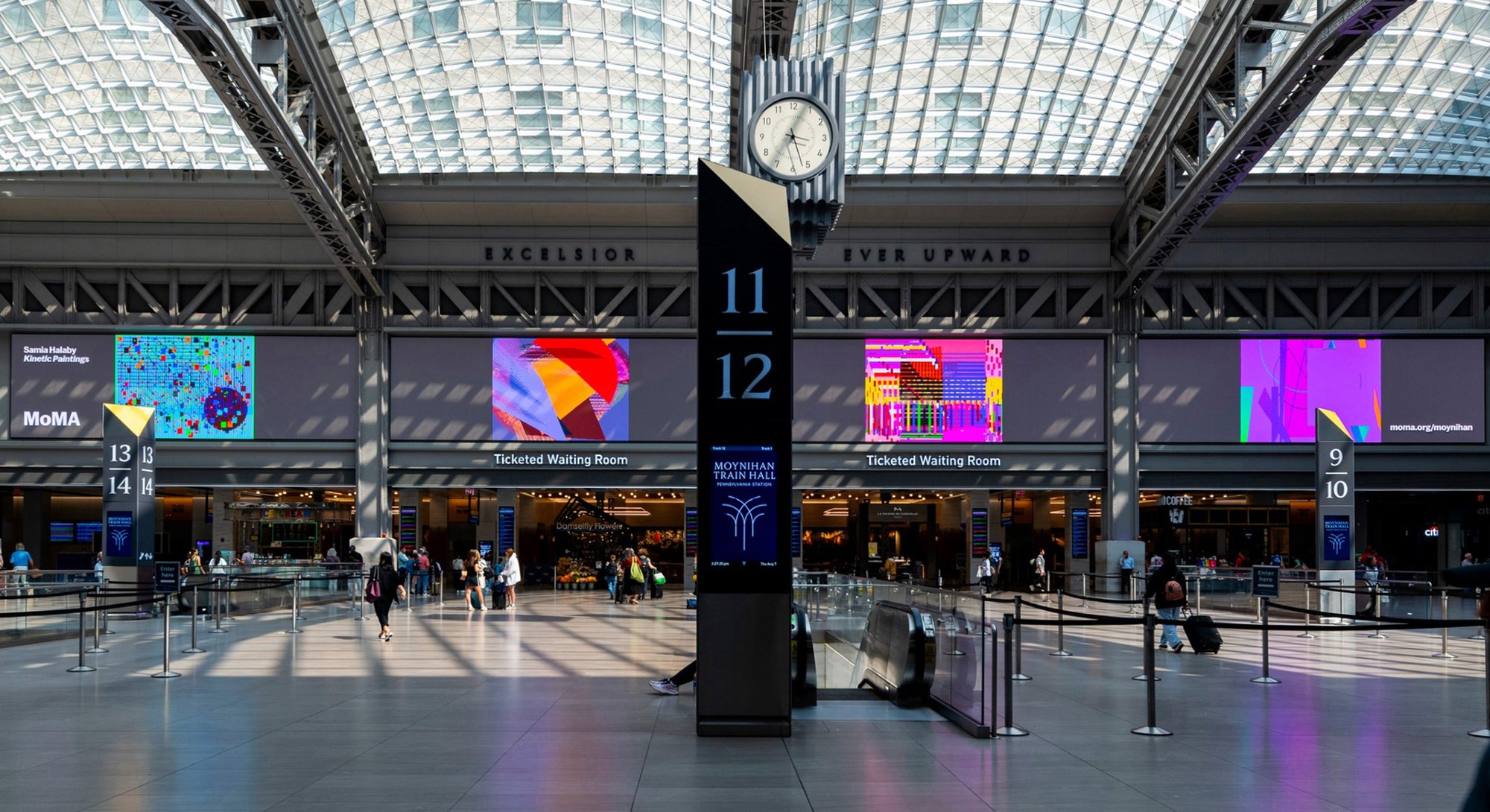
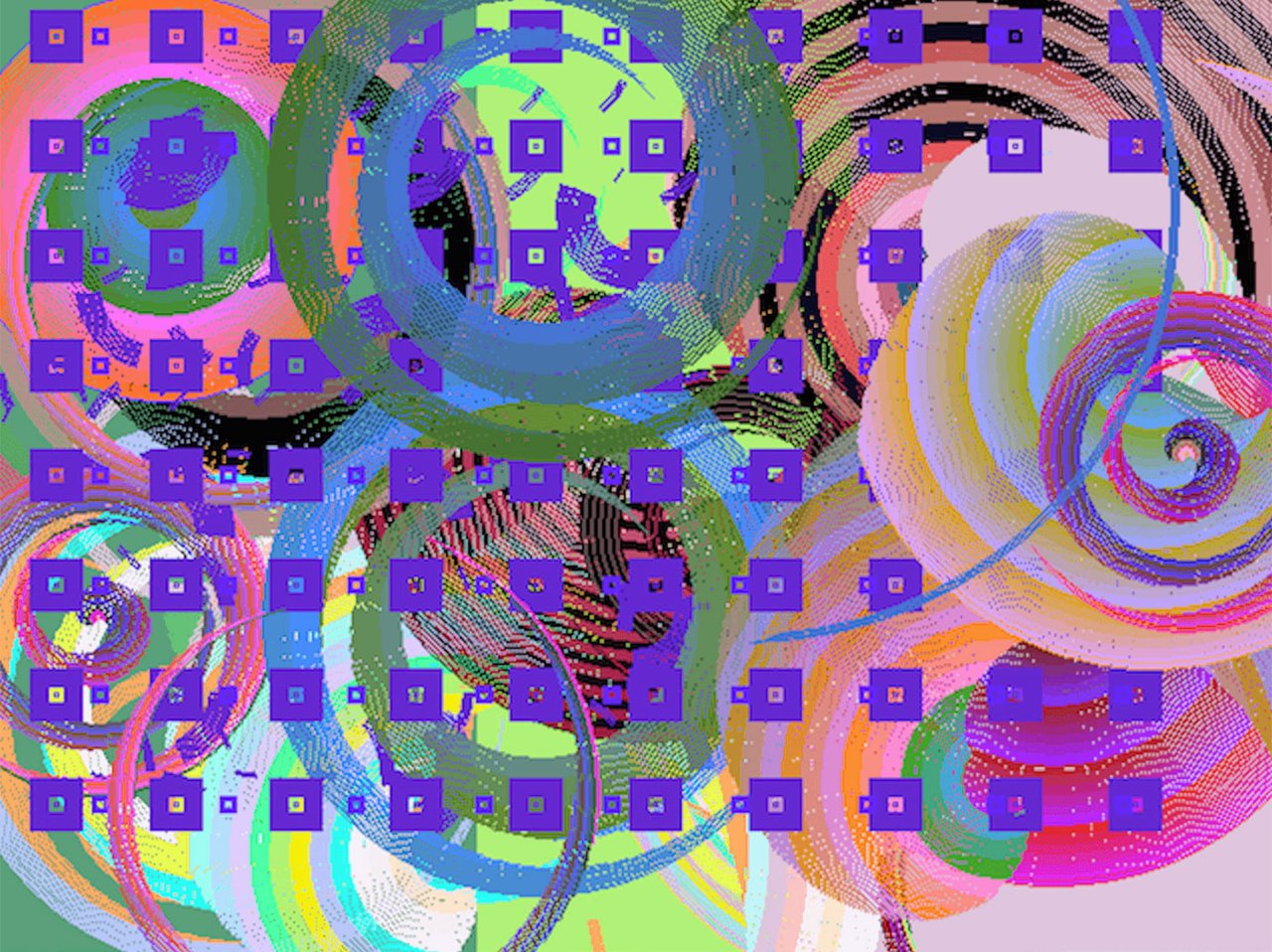
The Whitney’s invitation to Halaby, now in her 90th year, comes at the end of a year in which she has shown an installation at the Museum of Modern Art (MoMA), New York; exhibited her kinetic paintings on the digital billboards at Moynihan Train Hall, Penn Station, in the city, as part of MoMA at Moynihan; showed with Sfeir-Semler Gallery at Frieze Masters, London; and received the 2025 MUNCH Award, a prize set up by MUNCH Museum, Oslo, to recognize artistic courage and integrity.
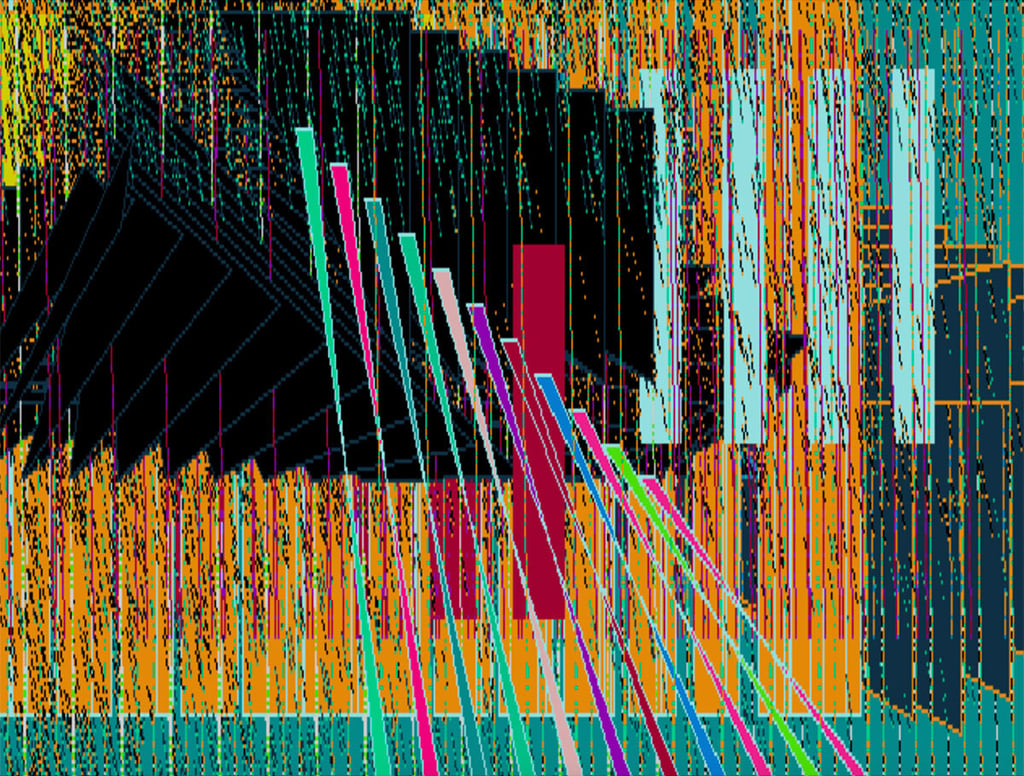
In a statement, the MUNCH Award’s jury said that it wished to mark Halaby’s “visionary and enduring artistic practice. She was at the forefront of the development of digital art through her experiments with early computer animation, and has been exploring abstraction in its different forms for over 60 years … As an activist, she has been organizing for causes concerning class, race, and Palestine since the 1970s. Halaby has been a vocal critic of censorship in the arts for decades, which she herself has faced, and overcome.”
In 2023, Halaby told Right Click Save in an interview why the computer is the ultimate tool of abstraction. “I read a lot of art history, and because I’m Palestinian living in the Western world, and because I see the Eurocentricity of art history, I can see what’s wrong with the way it’s being taught,” she said. “I’ve also concluded that differentiating illusion from abstraction is a mistake."
"All art is both abstract and illusionistic. All human invention is an abstraction from reality. We observe, we learn, and we extract; and we use what we learn as the basis for making things.” (Samia Halaby)
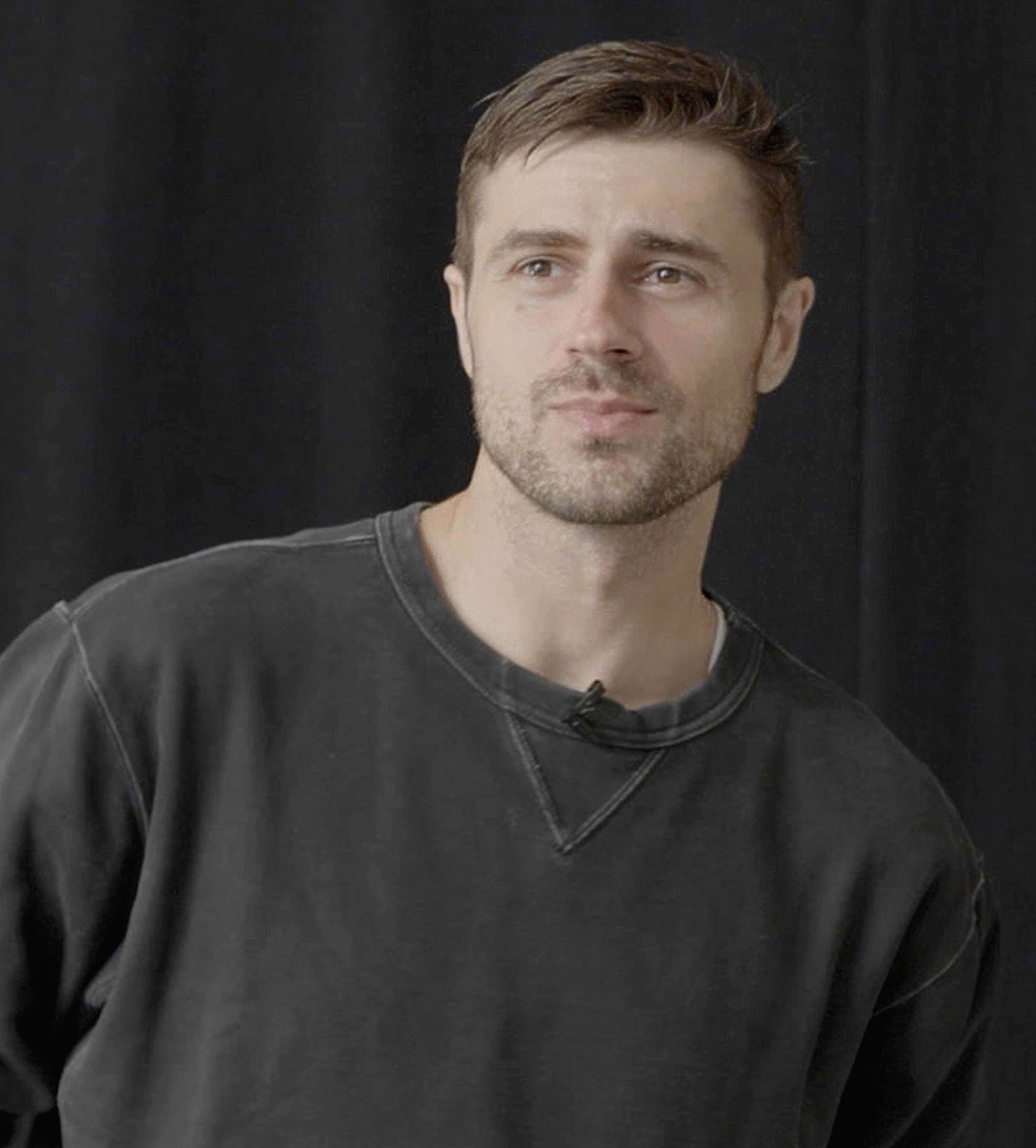
In October 2020, the post-internet artist, writer on internet culture, and media theorist Joshua Citarella launched the non-profit Do Not Research platform “for art, writing, internet culture and beyond”, and four years later the Doomscroll podcast, which has attracted artists such as Trevor Paglen, a broad mix of political voices including leading liberal figures such as The New York Times columnist Ezra Klein and the highly-visible Twitch streamer Hasan Piker, as well as profile writers from both The New York Times (“Is this artist the Joe Rogan of the art world?”) and The New Yorker. “The strange thing about making art on the internet as compared to galleries,” Citarella told The New York Times, “is that you are crafting a kind of influencer character in collaboration with your audience.”
“It’s real folks,” Citarella posted on Instagram, with the news of his inclusion in the biennial.
The curators of the 2026 Whitney Biennial have decided to go without a theme — the title of the 2024 biennial, “Even Better Than the Real Thing”, was a nod to the then-new pervasiveness of artificial intelligence (AI) — but one aspect across all 56 entries is the generational breadth (it features artists who represent three generations of practice, born between 1933 and 1998), the mix of established names and grassroots practitioners, and the presence of some striking family connections.
The youngest artist participating is the New York-based Taína H. Cruz, who works with photographs and other digital imagery in her personal archive before embarking on her paintings. The eldest is the painter, author and poet Carmen de Monteflores, an overlooked figure born in 1933, who is included in the 2026 line-up, as is her daughter Andrea Fraser, the well-known pioneer of the conceptual movement Institutional Critique. Leo Castañeda, a Miami-based digital artist working with gaming, wrote on Instagram of his inclusion in the biennial.
“It’s a dream to show my video game alongside a virtual environment made in collaboration with my grandmother @mariatherezanegreiros”. (Leo Castañeda)
Another family-focused participating artist, who has likewise engaged with games and game-making, is the Michigan-based Ash Arder — who learnt her love of art from car-ride conversations with her father. They are a transdisciplinary practitioner working with physical and virtual environments and a 2025 Knight Foundation Arts + Tech Fellow. Gaming is also the background to the work of the Chicago-based Isabelle Frances McGuire, whose exhibition “LOOP” (2023) at King’s Leap, New York, was formed on a hybrid of 3D printing and remixed symbols and sounds from well-known video games.
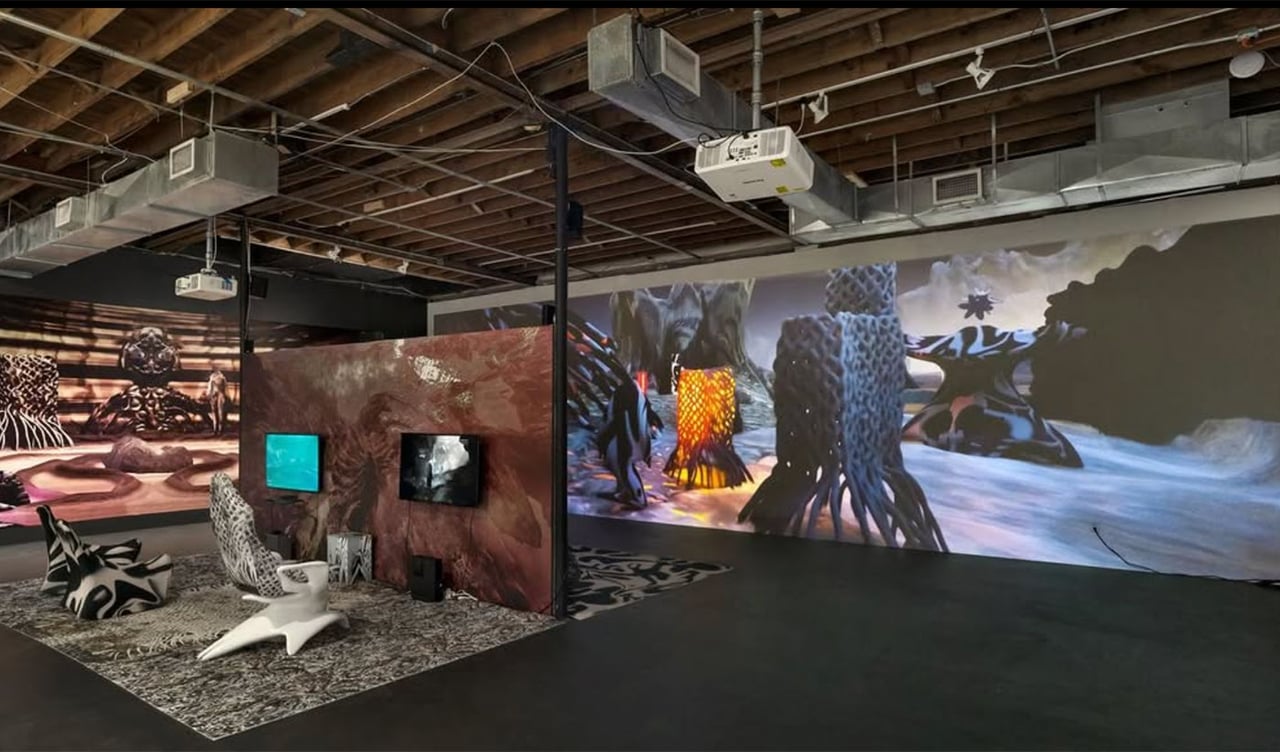
The Toronto-based Zach Blas, an artist whose practice contends with computational technologies, was included in a 2022 article published by Right Click Save on artists who address “mass surveillance, biased algorithms, and the circuits of data capture that have come to define Web2.” The LA-based Gabriela Ruiz engages with algorithms on social media. In her site-specific “Digital Engrams” (2023) she made use of video from her cellphone and the internet to create a sensibility-challenging immersive environment.
The Miami-based Cooper Jacoby works with AI, creating in How do I survive? (murmur feeds chant), 2022, thermostat installations that link, as temperatures fluctuate, to data sets compiled from science fiction novels. In 2025 the Philadelphia-based Michelle Lopez extended her practice in sculptural installations to Pandemonium, a multimedia project to include mechatronics, animation, sound, and VR film, in a 360-degree format, created in partnership with Moore College of Art, in the city, and shown at Fels Planetarium at the Franklin Institute.
In a year in which artists working with poetry such as Sasha Stiles and Ana Maria Caballero have been recognized at MoMA, The Lumen Prize, and Art Basel Miami Beach, the Whitney Biennial curators have included the work of two artists concerned with poetry, Ignacio Gatica and Anna Tsouhlarakis.
Gatica’s recent exhibition, “Playa Privada” (2025), at Galeria Patricia Ready, in Santiago, Chile, interlaced data visualization, algorithms, verbal poetry, visual poetry, cultural anthropology, screen printing, and the reinterpretation of everyday objects to generate “a narrative about the contemporary landscape from an innovative and multidisciplinary approach”.
The transdisciplinary artist Anna Tsouhlarakis, from Boulder, Colorado, whose recent installation work with text includes the use of digital signage for the Wexner Center for the Arts commission, The Native Guide Project: Columbus, an installation of texts at the center and across digital signage in Columbus, Ohio.
“I love how you know that Tecumseh could have been your founding father,” reads one sign. “It may be called Columbus,” reads another, “but it’s still native land.”
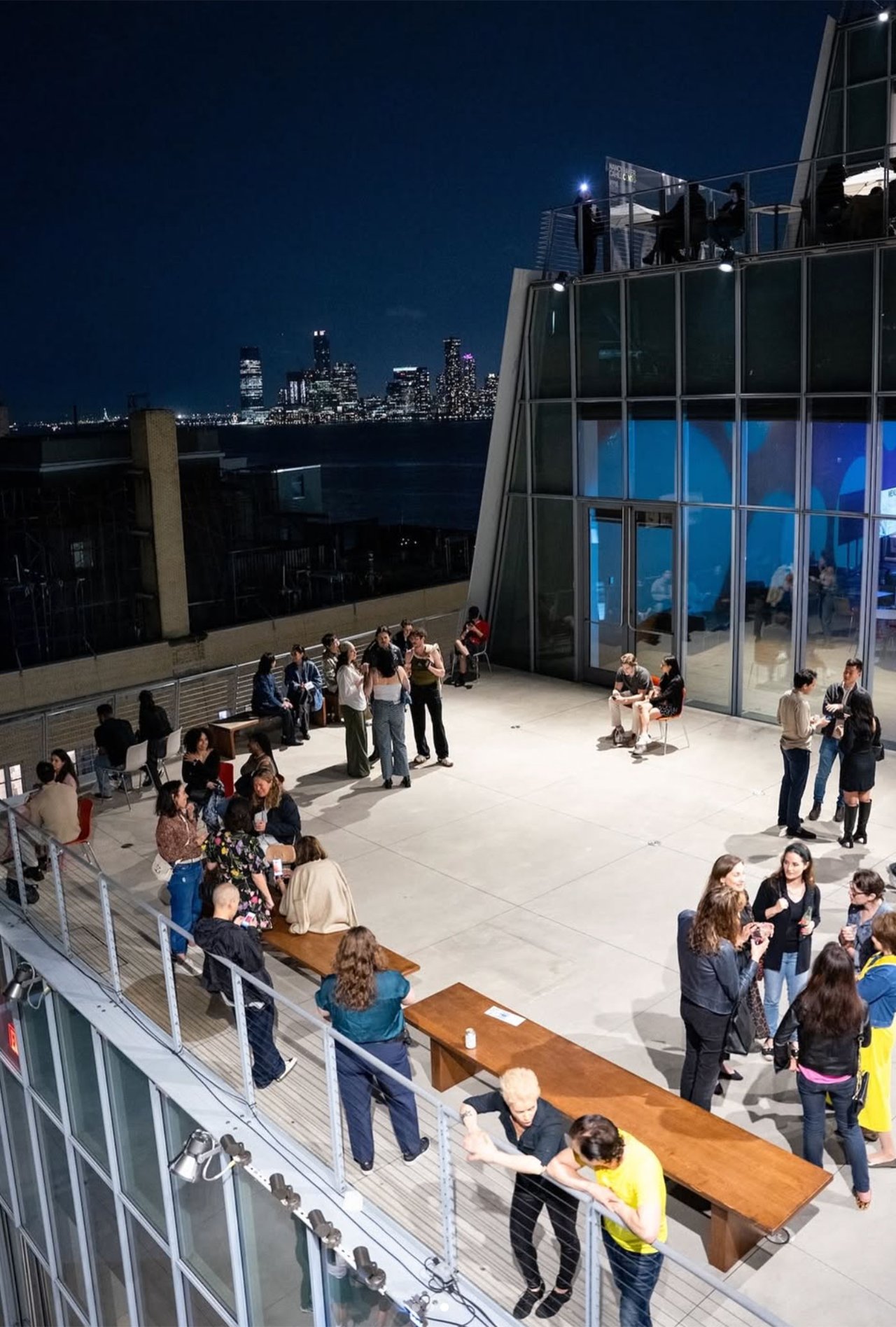
The Whitney exhibition began as an annual event in 1932 before becoming a biennial in 1973. The 2026 exhibition will occupy much of the Whitney’s headquarters in downtown Manhattan and will include public events, performances and online programming. The host museum has a strong connection to the world of art and technology, and Christiane Paul, its Curator of Digital Art, is a leading figure in the fields of media studies and digital art. The museum’s digital acquisitions in 2025 have included two works by the artist Gretchen Andrew from her Facetune Portraits series.
Louis Jebb is Managing Editor at Right Click Save.
No comments yet. Be the first to share your thoughts.
Mentioned in this article
People: Joshua Citarella, Samia Halaby, Anna Tsouhlarakis, Ash Arder, Cooper Jacoby, Ignacio Gatica, Leo Castañeda, Taína H. Cruz|Events: Whitney Biennial, MUNCH Award|