Sculpture Meets Digital Art Under the Moon
Hermine Bourdin and Hervé Martin Delpierre discuss their film collaboration with the Opéra national de Paris
Hermine Bourdin and Hervé Martin Delpierre discuss their film collaboration with the Opéra national de Paris
In 2024, the sculptor Hermine Bourdin invited the film director and producer Hervé Martin Delpierre, creator of the documentaries Daft Punk Unchained (2015) and What the Punk! (2024), to make a film for Coddess Variations, a physical and digital art collection she was working on as part of a residency with the sculpture and costume departments of the Opéra national de Paris.
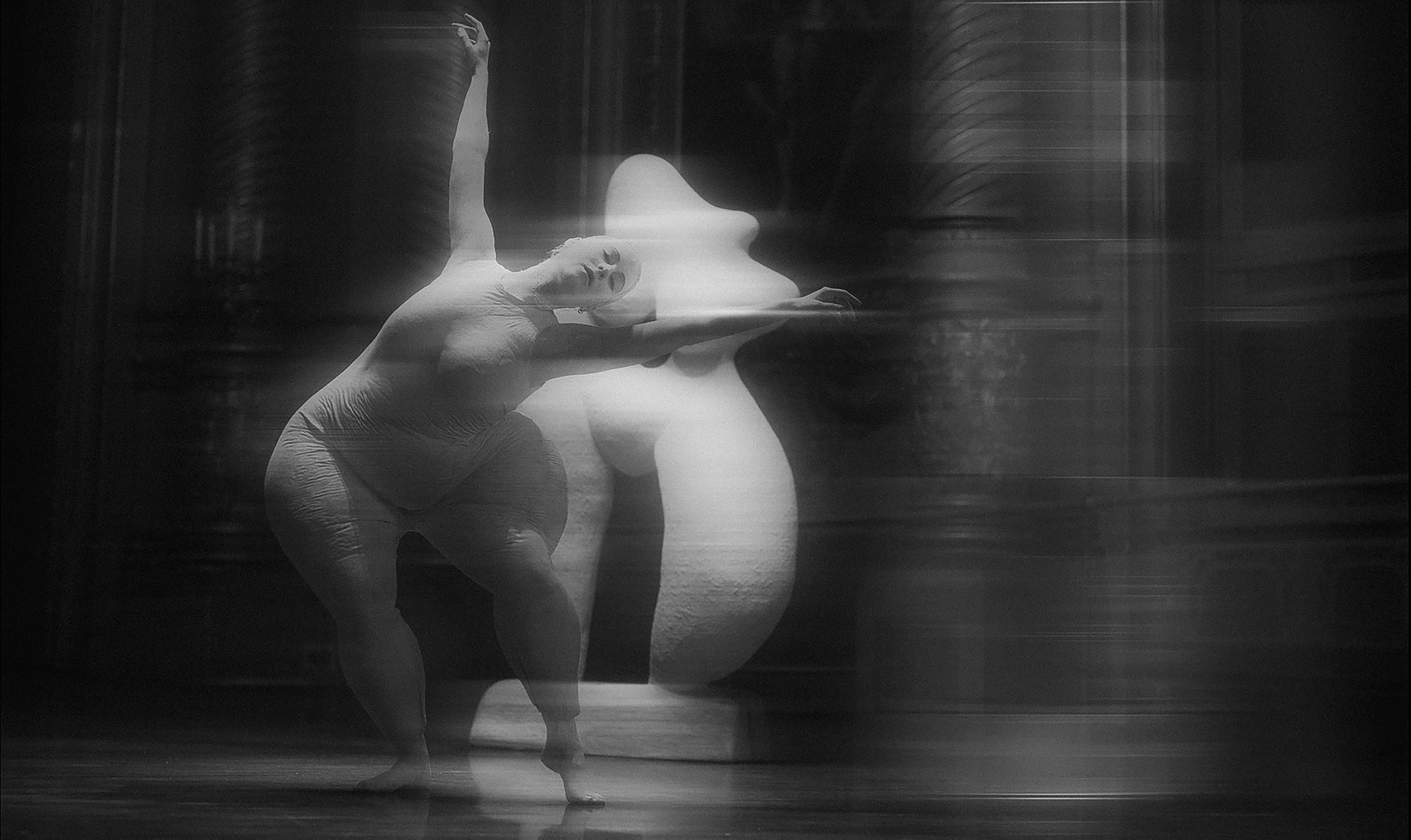
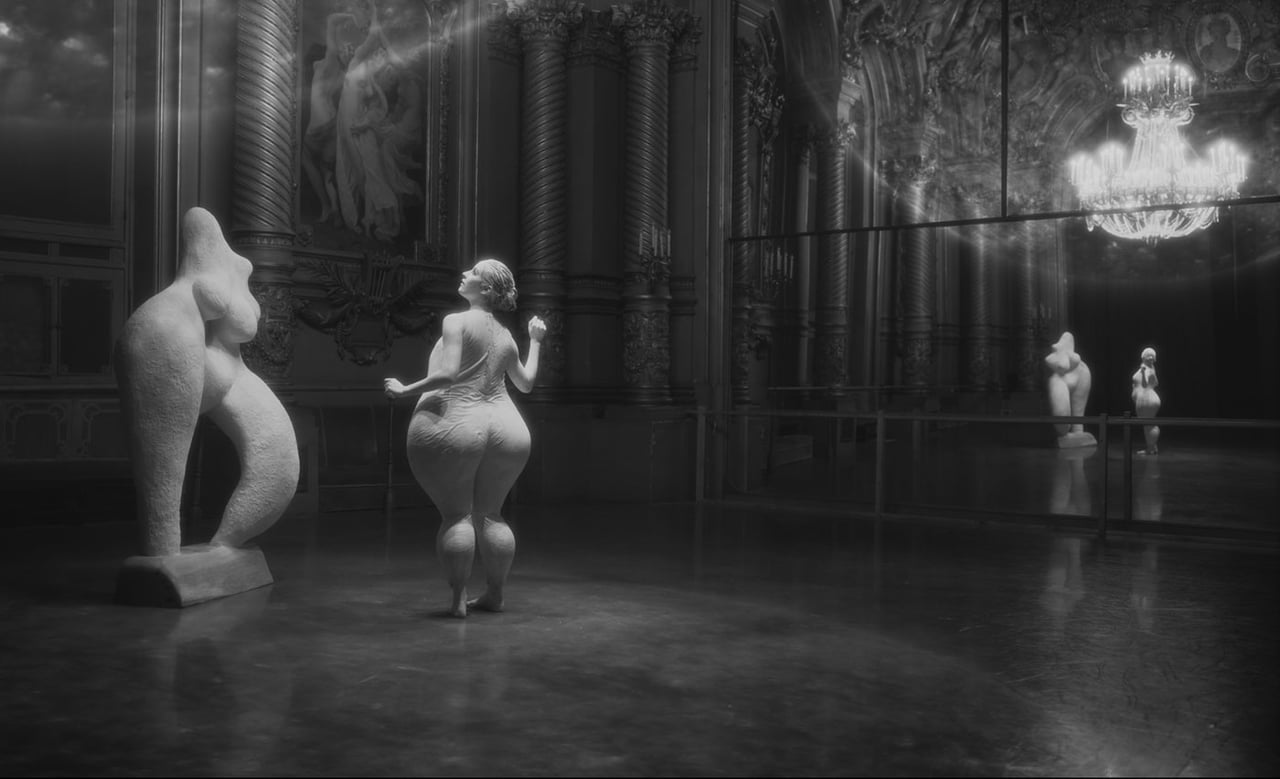
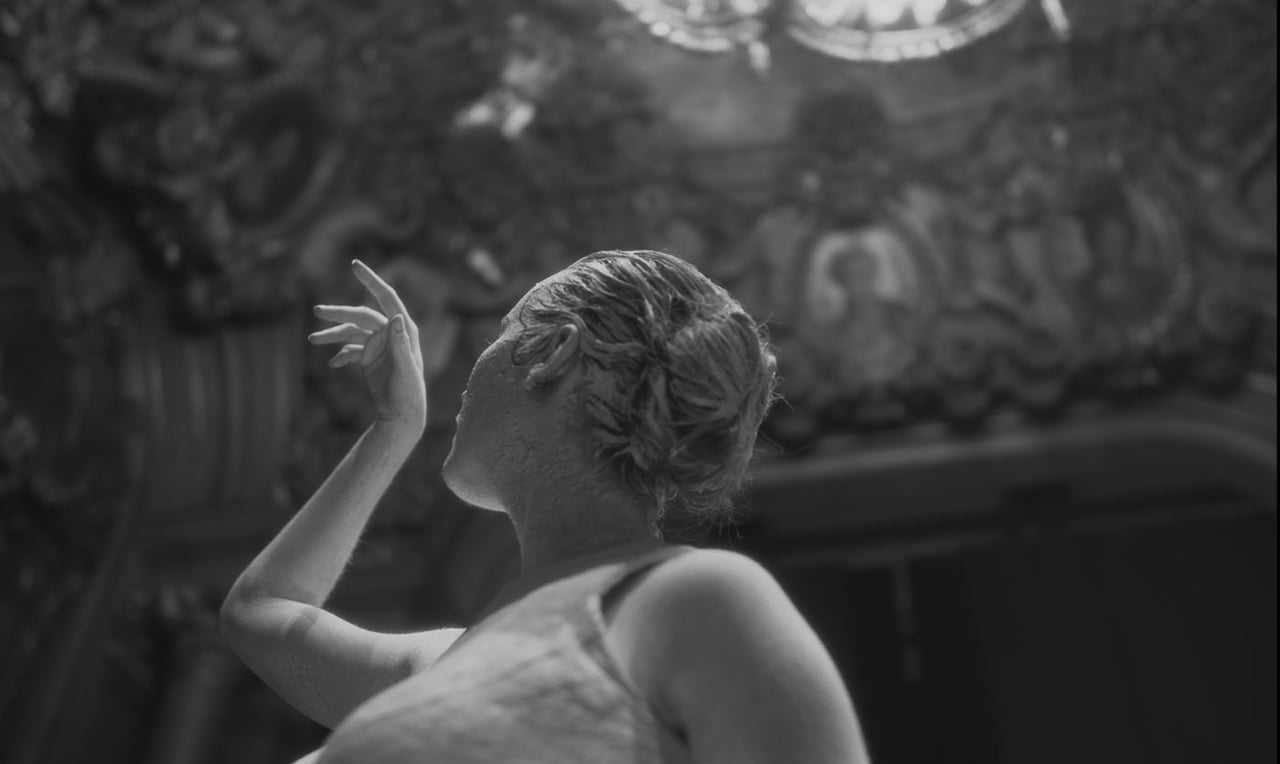
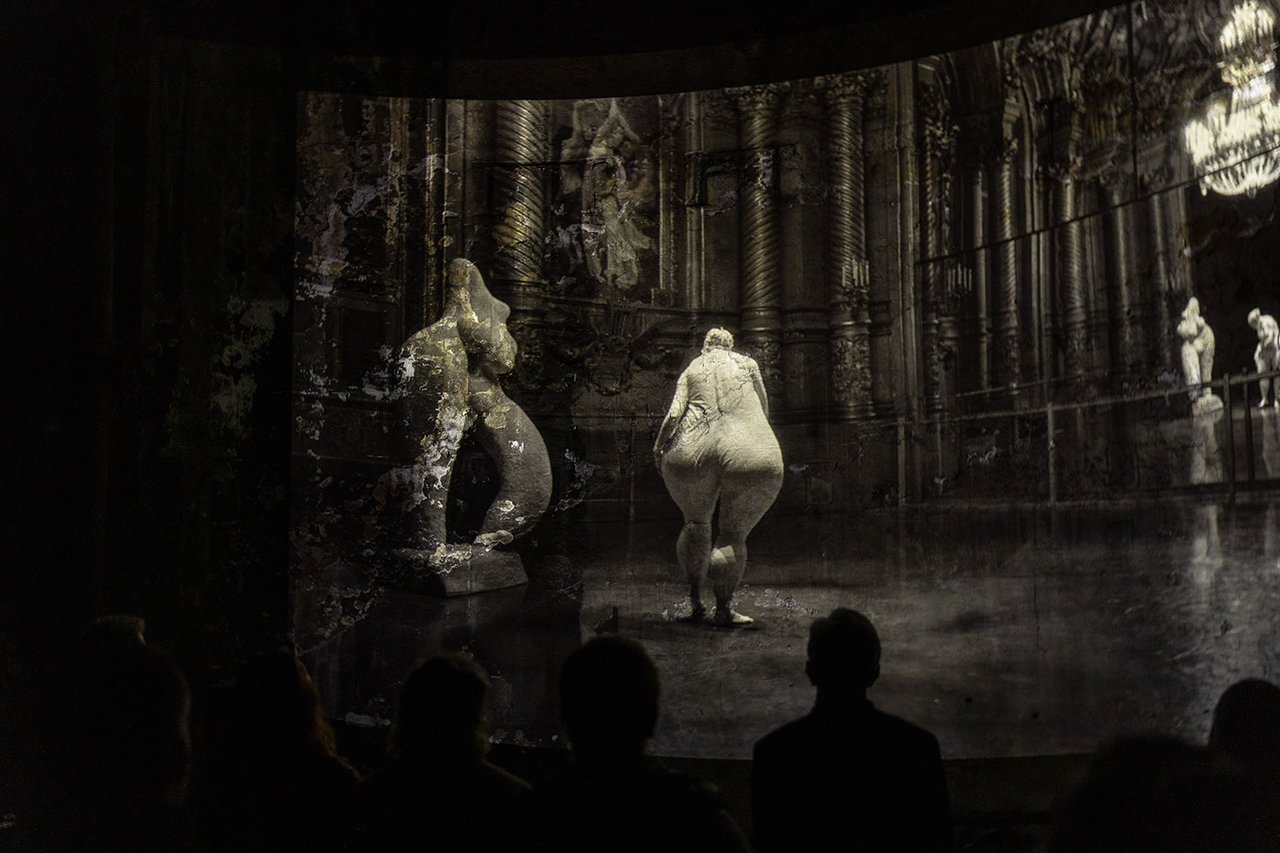
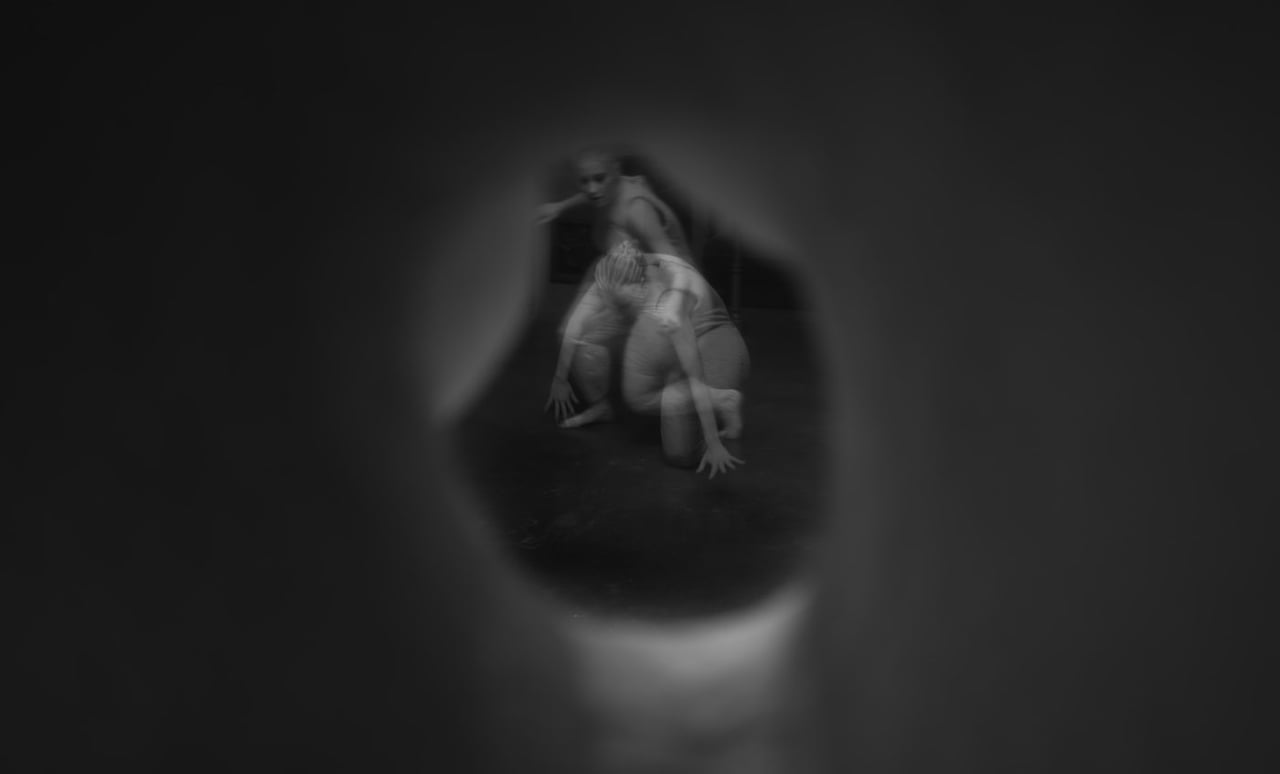
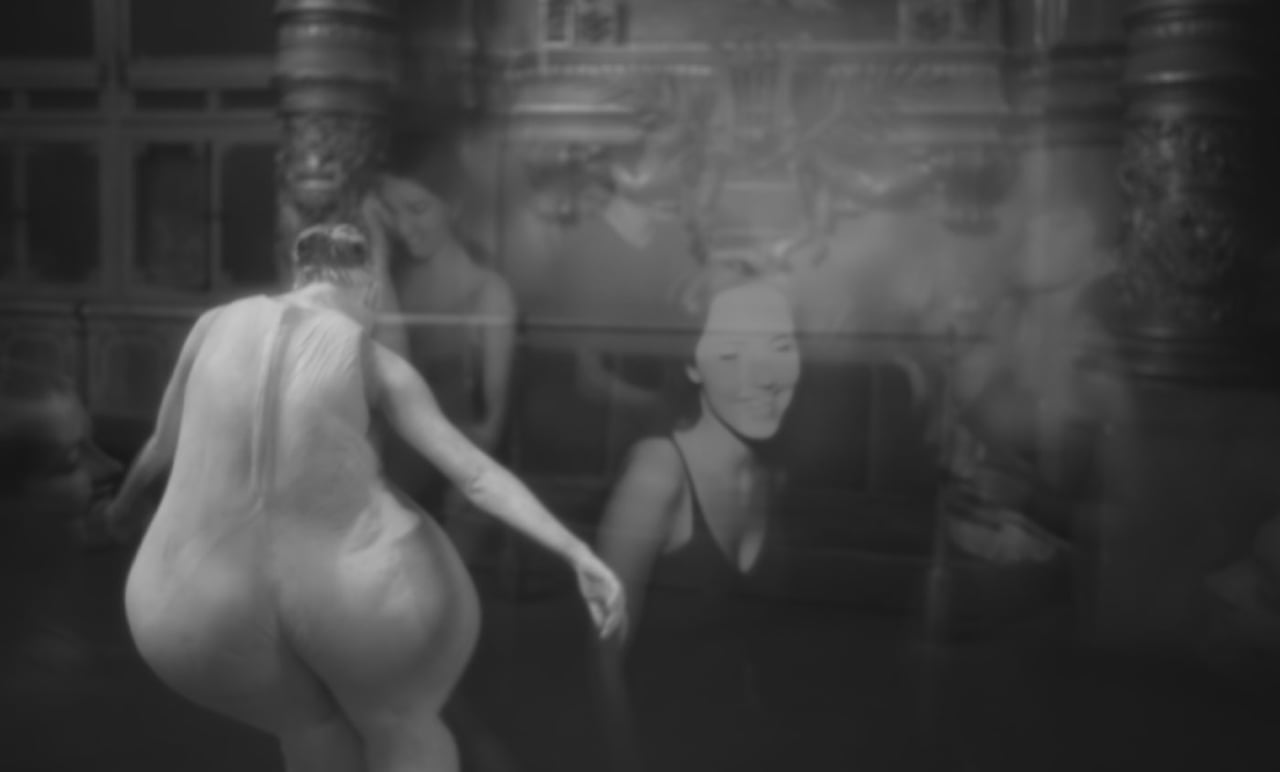
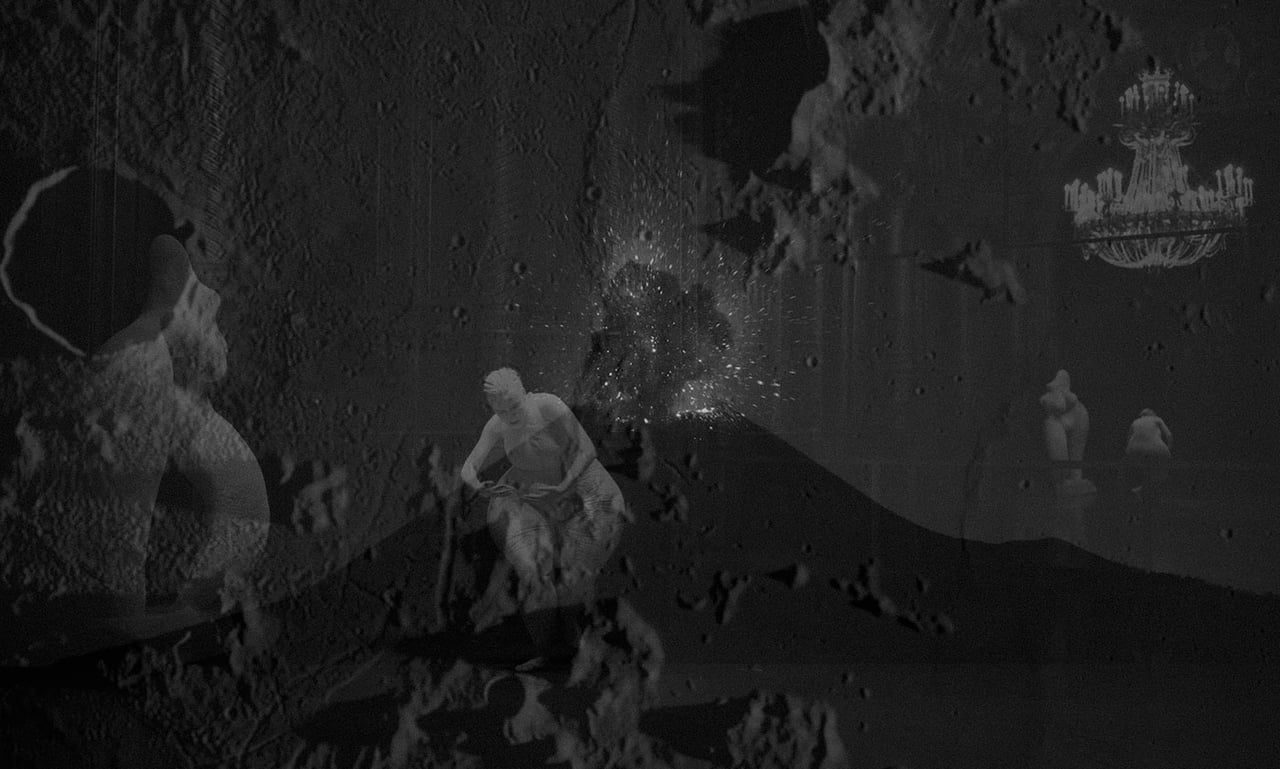
For Coddess Variations, Eugénie Drion, a dancer at the Paris Opera Ballet, performed choreography by Ania Catherine (of the duo Operator) in the splendidly ornate Dance Foyer of the Palais Garnier, portraying a Palaeolithic goddess who dances as a “living mirror” to a sculpture of another “Venus”, made by Bourdin in the Opéra workshops.
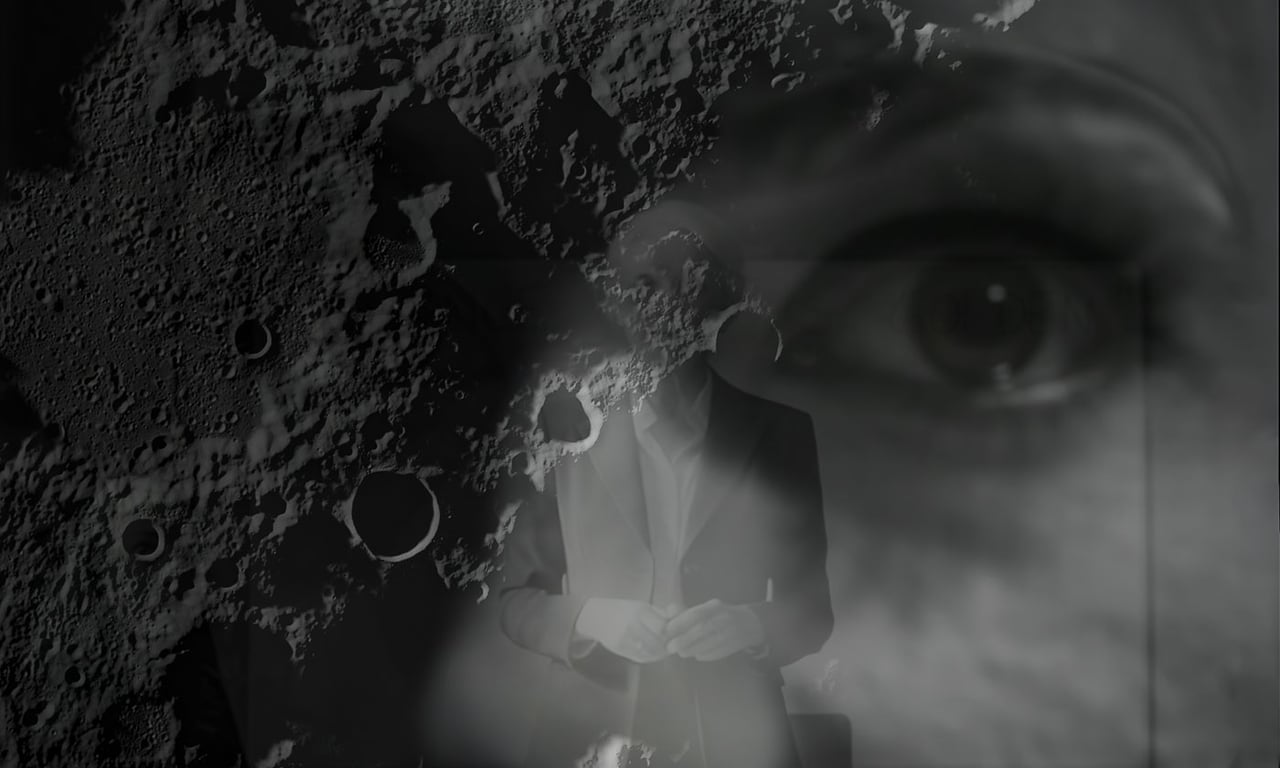
The resulting 21-minute art film, Under the Moon, a cinematic narrative developed from Drion’s performance of Bourdin’s and Catherine’s mise-en-scène, with the Moon as a third principal character, was produced and directed by Martin Delpierre. It was the first production from Kiritosu Studio, a company set up by Martin Delpierre and Jean-Michel Pailhon, the collector and founder of Grail Capital, and presented by Opéra national de Paris with support from the digital-asset security company Ledger.
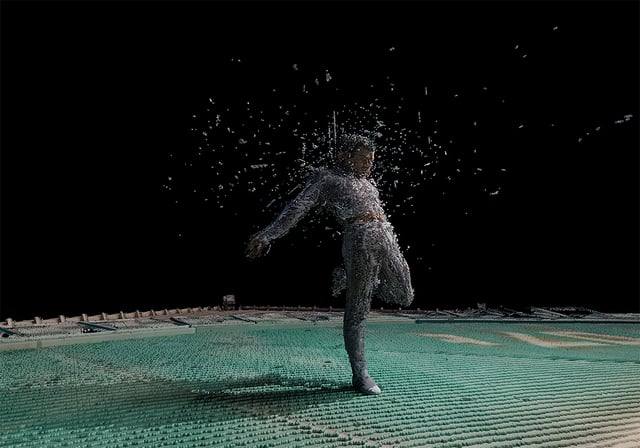
The footage, shot at 50 frames per second, was used to provide 100 still images for the project, which were marked with the Laban dance notation recording the related passage of choreography, devised by the contemporary dancer Camille Chaigne, and minted on OpenSea with a coded record of the dance movements.
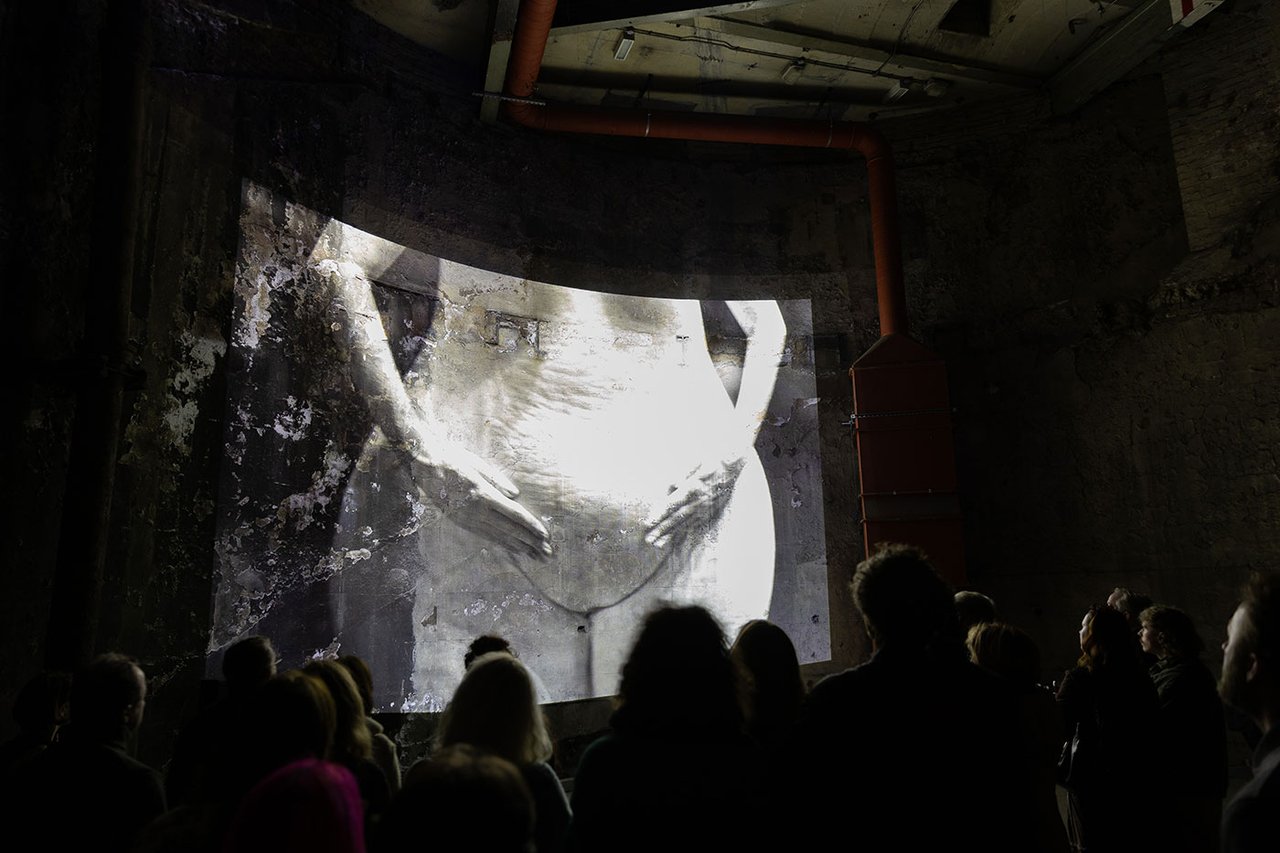
The film, whose haunting score was prepared by Christine Ott, a virtuoso of the Ondes Martenot, an early electronic musical instrument, has been available to subscribers of the Opéra’s streaming website since June 2025 and is being shown in immersive screenings at historic sites as part of the touring installation. The first showing took place at St. Elisabeth Church, Berlin, in June 2025, with the second at the Brunel Museum, London, in December 2025.
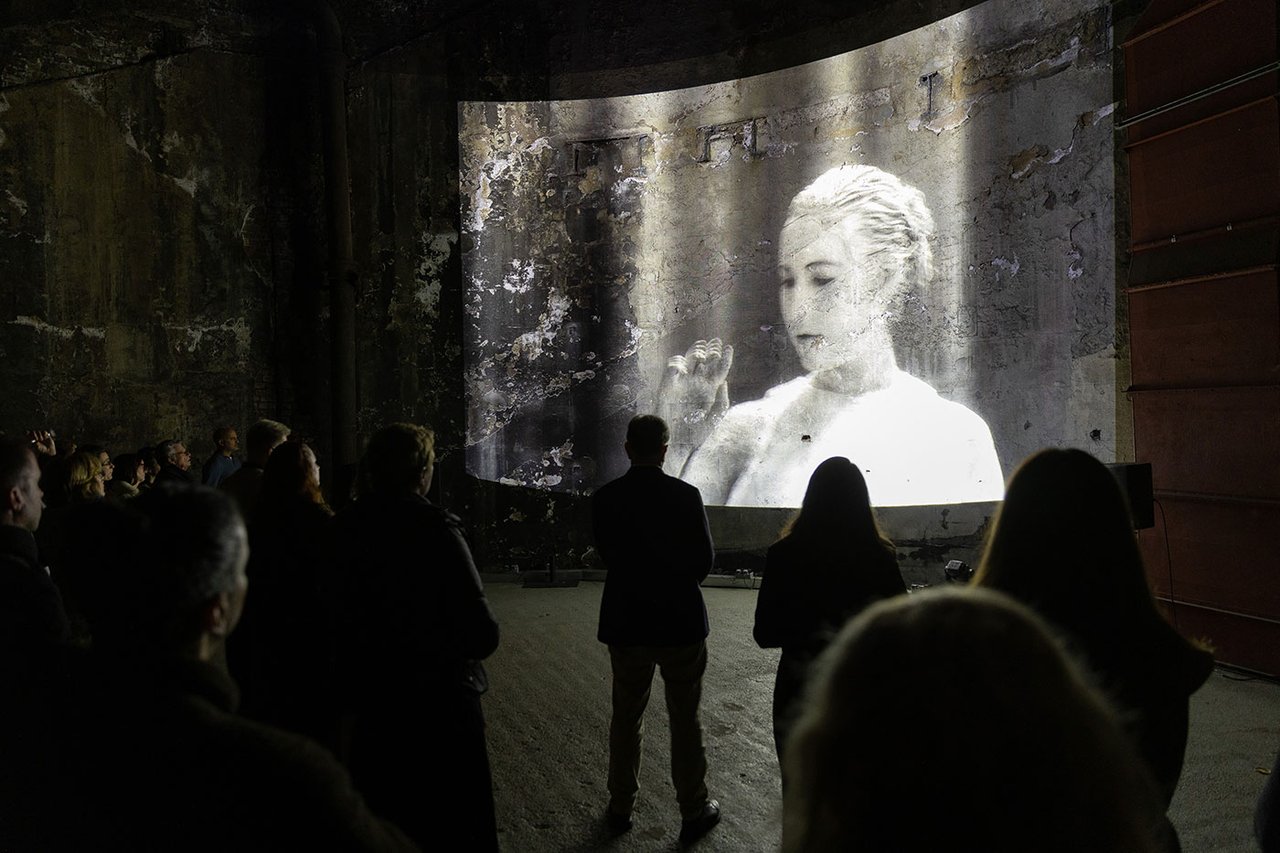
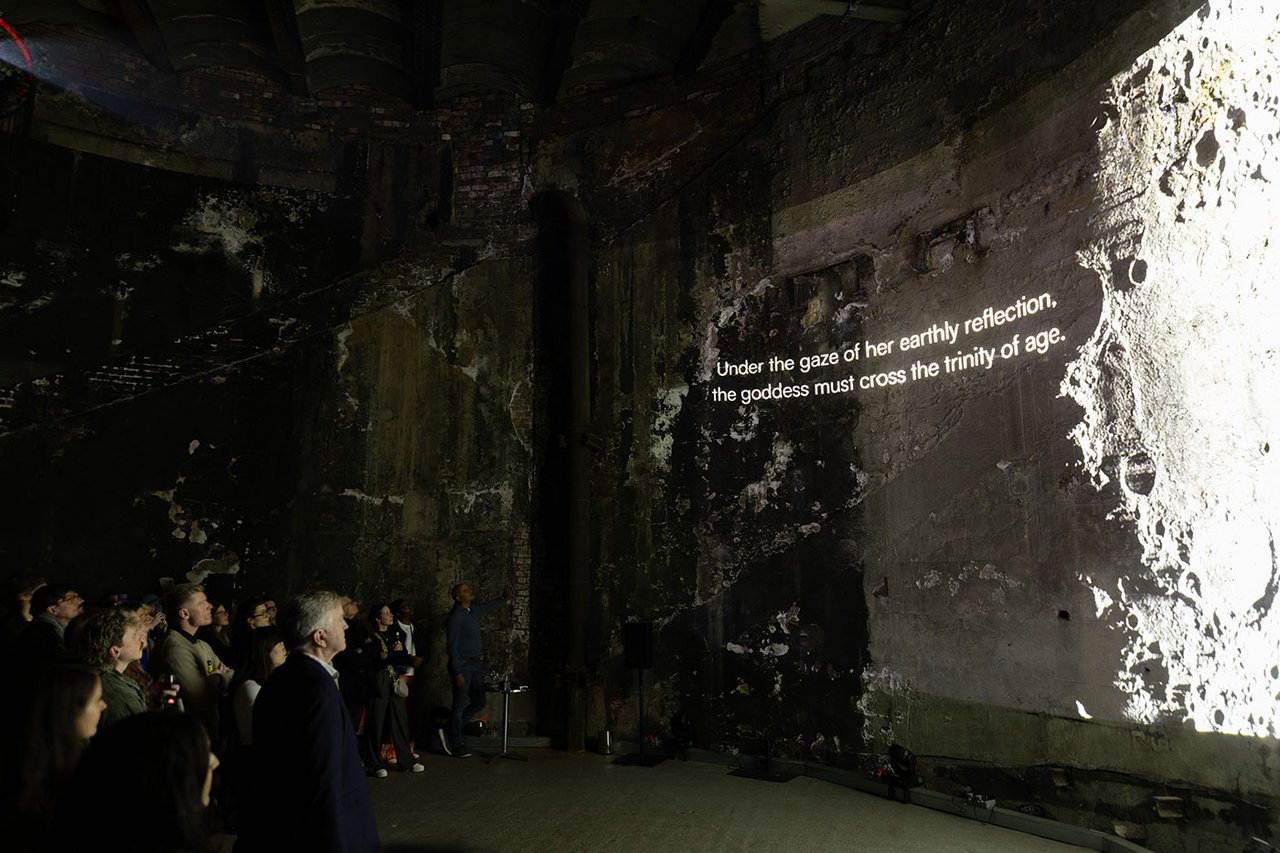
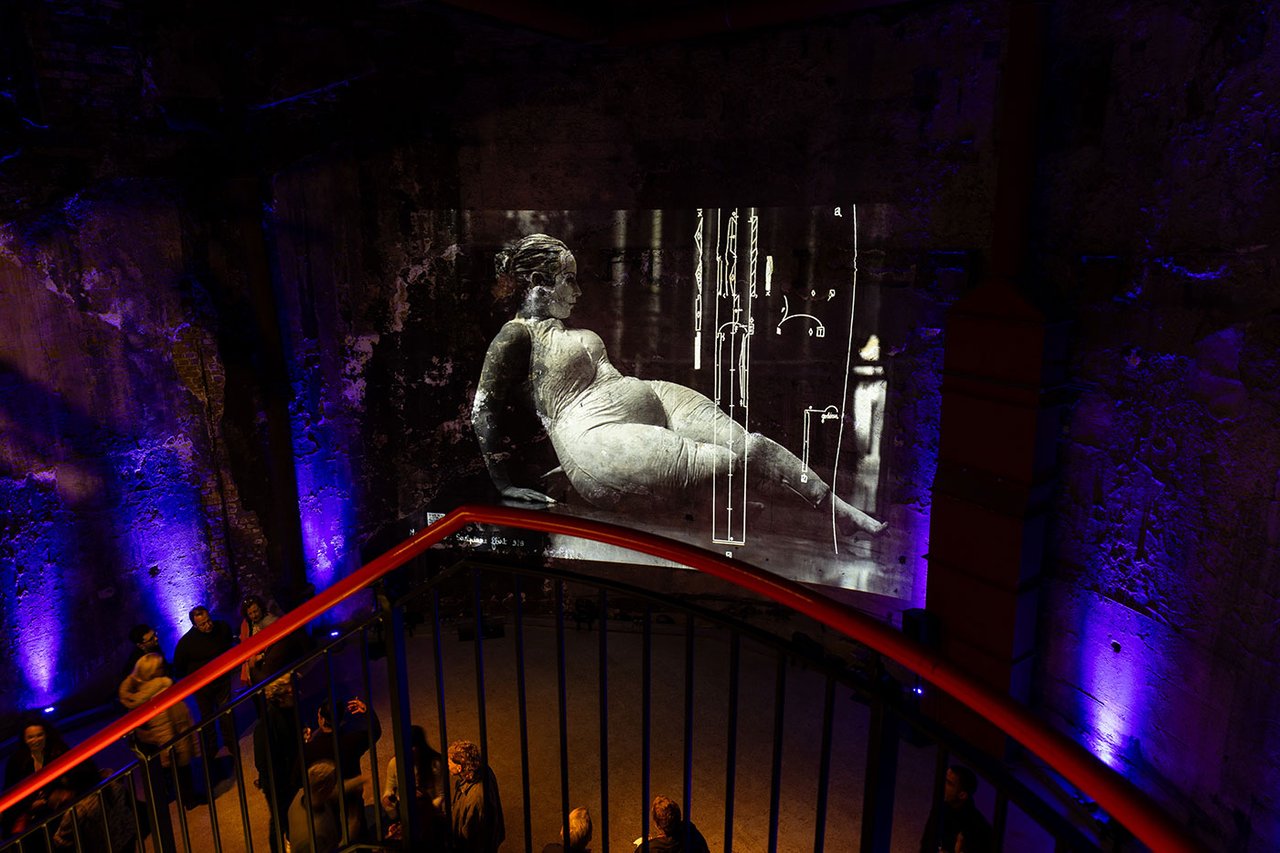
In London, the film was projected onto the walls of the massive subterranean Brunel Shaft, which had been erected in 1825 to initiate work on the Thames Tunnel, the world’s first underwater tunnel, by the father-and-son engineers Marc and Isambard Kingdom Brunel.
Bourdin has been showing her sculpture in Paris with Julie Caredda gallery since 2022, in group shows and two solo shows: “Axis Mundi” (2023) and “Des plis de pierre et de peau” (2025). Coddess Variations grew out of the artist’s long-standing interest in ancient and prehistoric figures of the goddess Venus, which constitute some of the earliest examples of human-produced art. The film was released not long before Bourdin showed the first example of a new project, Universal Venuses (2025), at FEMGEN Paris last October. Bourdin’s Venuses are generated from a dataset of figurines, some over 20,000 years old, assembled by the artist, and worked on with an AI model to generate digital Venus figurines from which the artist later makes physical versions.
The figures, Bourdin says, “explore how ancestral archetypes can be reborn through contemporary means, and how the universal can emerge from diversity, hybridity, and reinvention”.
Bourdin and Martin Delpierre spoke to Right Click Save about working at the intersection of art, cinema, and emerging technologies; the dream-like power of black and white imagery; their shared feel for a century of Surrealism and the work of Jean Cocteau, especially Le Sang d’un Poète, 1930, the first film in Cocteau’s Orphée trilogy, where the photographer Lee Miller plays a Classical statue that is brought to life. That Cocteau film is a foreshadowing of Coddess Variations, where a dancer’s presence shifts, in Bourdin’s words, “from object to organism, testing the limits of what a sculpture can become”.
Louis Jebb: Hermine, what can you tell us about the genesis of Coddess Variations?
Hermine Bourdin: With this creation, I wanted to bring a sculpture to life. Not just any sculpture, but a prehistoric Venus goddess, an ancient presence reactivated in our time. She embodies the elemental forces of nature and life, those primordial energies revealed through archaeology and carried through ancestral myth.
The project began with a two-meter-tall plaster figure that I sculpted in the Paris Opéra studio, inspired by Palaeolithic goddesses and the enduring resonance of their forms.
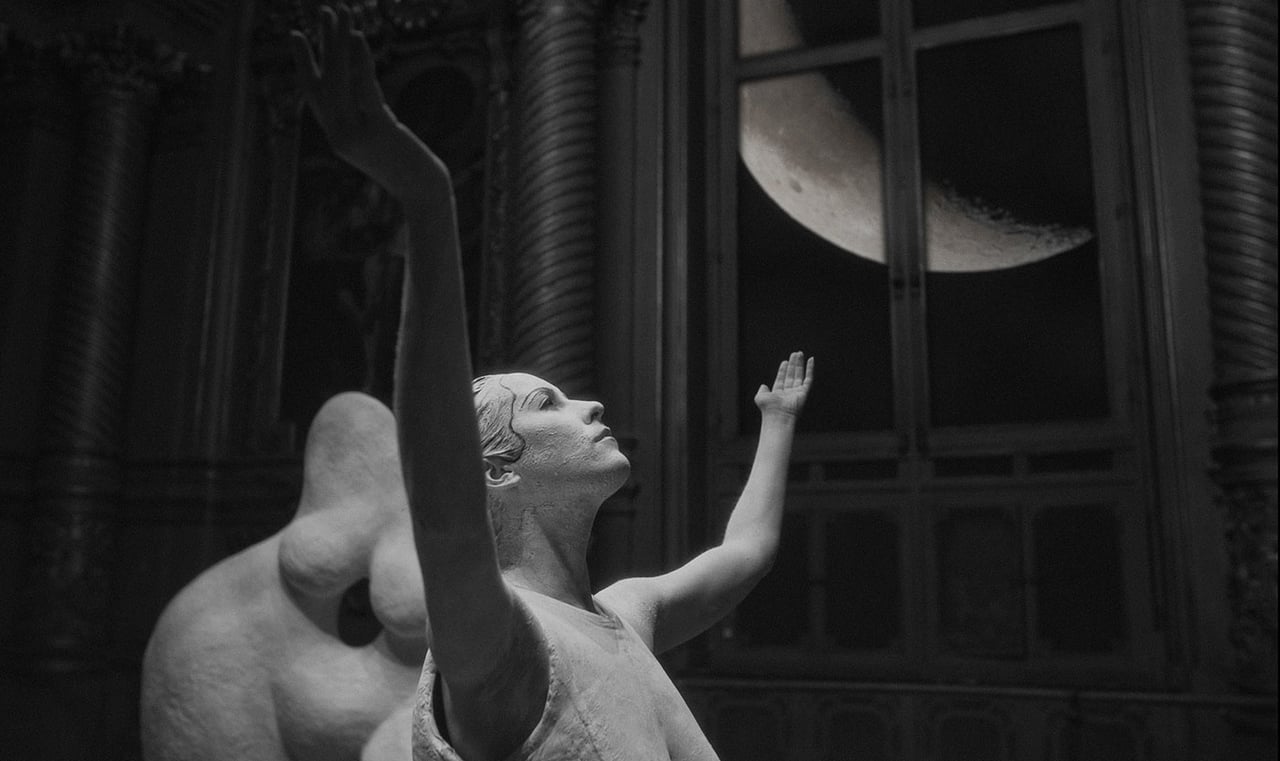
Facing this sculpted figure stands its living counterpart, the Opéra dancer Eugénie Drion embodying the Goddess in a Venus costume created in collaboration with the Opéra’s costume studio. Through performance, this embodied Venus moves through the archetypes of Maiden, Mother, and Crone, a cycle that echoes the rhythms of the seasons, the renewal of nature, and the ancient influence of the Moon, which has long guided human understandings of transformation.
In essence, I wanted to capture the dialogue between the static and the breathing, the archaic and the present, where sculpture extends beyond matter and enters the realm of lived experience.
LJ: Hervé, how did you come to work with Hermine on the film?
Hervé Martin Delpierre: The starting point was very precise and very practical. Hermine approached me just after my film What the Punk! because she was developing her digital collection Coddess Variations and wanted to capture a choreography visually that could later be reworked into still images for the project.
I suggested filming it — very deliberately — with a camera running at 50 frames per second. This choice immediately opened another space. On the one hand, Hermine could extract images from the footage for her digital work; on the other, it gave me the freedom to think cinematically, to construct a film that would offer a different point of view on the same mythology.
From the outset, I was clear that if I made a film, it would not be documentation. I wanted to build a cinematic narrative around this figure developed by Hermine. A goddess coming to earth, and her passage through the three archetypal stages of a woman’s life: Maiden, Mother, and Crone.
That film production was my initiative, developed with the agreement of the Opéra national de Paris, and it required me to fully assume both the role of director and producer.
This was not an obvious project to finance. The film did not fit into any classical categories of cinema or television, and there was no existing framework for it. But that constraint became a catalyst. It pushed me to invent new ways of producing and financing films at the intersection of art, cinema, and emerging technologies. In that sense, Under the Moon became a founding experience. It led to the creation of Kiritosu Studio with Jean-Michel Pailhon, and to the development of alternative production and funding models.
LJ: What was the significance, conceptually and aesthetically, of making the film in black and white?
HMD: For her digital collection, Hermine wanted to work in black and white, and we both felt the desire to pay tribute to Surrealism, especially at a moment when France was marking its centenary. But for me, the question was not simply aesthetic or historical.
I was looking for a language capable of holding contradiction: something timeless yet radically modern.
At that moment, I found myself thinking back to conversations I had had with [the photographer and film director] Peter Lindbergh, with whom I collaborated on Daft Punk Unchained. He once explained to me how essential it was for his black and white to be sharp, almost cold — stripped of ornament — so that the humanity of his subjects could fully emerge. That idea stayed with me. I wanted a black and white that would not romanticize, but reveal; something rigorous enough to let emotion surface without being imposed.
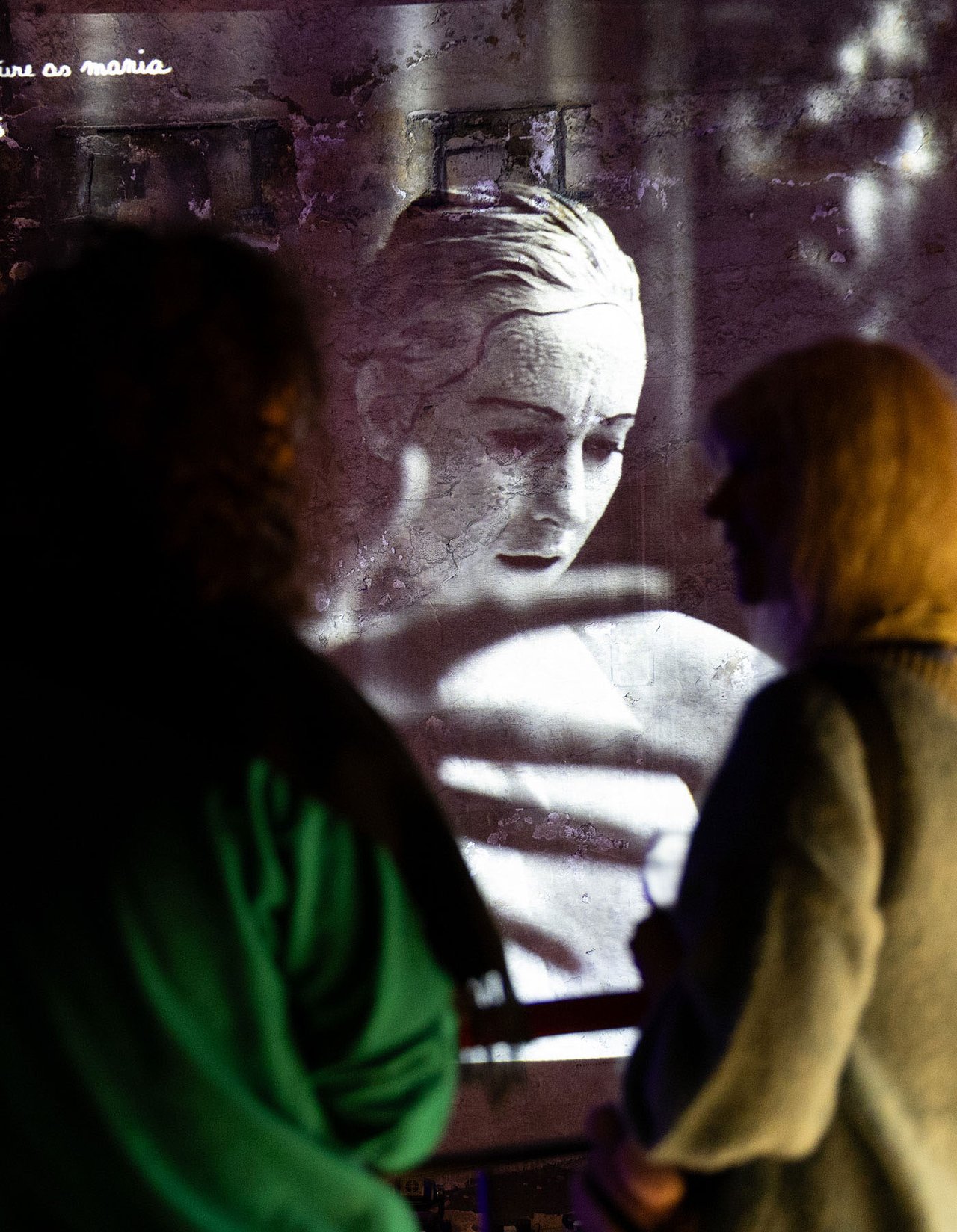
In a way, the film became a meeting point between two lineages that matter deeply to me as a film-maker: Cocteau on one side, Lindbergh on the other. To achieve this, I carried out image tests at the Opéra national de Paris with the dancer and the costume created by Hermine. These tests were crucial. Both for budgetary reasons and because of my documentary instincts, I wanted to work with the simplest possible lighting setup, often a single, clearly directed source. Black and white allowed me to fully embrace that constraint, turning it into a strength rather than a limitation.
Ultimately, black and white was not a stylistic overlay. It was the condition that allowed the film to exist in a space of clarity, austerity, and intensity, where form steps back just enough for presence, movement, and human fragility to come forward.
LJ: Hermine, may I ask about the Venus figure you made for Coddess Variations and how you came to work with sculpture?
HB: Before norms, before imposed gazes, before modern diktats, the female body was free. The earliest forms sculpted by humanity were powerful, sovereign bodies, offered without justification. They responded to no fashion, sought to please no one, and simply affirmed their existence. These primordial forms have long inspired my work.
In Coddess Variations, I sought to bring this presence into the present through two intertwined manifestations: a monumental plaster Venus and her living counterpart — a “living sculpture”. Plaster was chosen for its historical and symbolic resonance.
It recalls Constantin Brancusi’s assertion that plaster is “the material of dreams”, and it nods to the centenary of Surrealism, evoking Cocteau’s Le Sang d’un Poète, in which Lee Miller is transformed into a plaster figure that comes to life.
The whiteness of the plaster, mirrored in the dancer’s Butoh-inspired body and costume, serves as a conduit between stillness and movement, matter and breath, dream and reality. Through this shared whiteness, the static form awakens, the sculpture becomes living, and the two figures engage in a dialogue across time, between the archetypal and the immediate.
My practice is rooted in a lifelong engagement with material and form. I grew up close to nature, shaping clay figurines, toys, and working with the land, experiences that instilled in me an intimate understanding of touch and form. Later, my work in design and several years living in Copenhagen deepened my appreciation for the essence of shape, its purity and economy of line. Stone, plaster and clay have always felt profoundly feminine to me, and in French, “terre” (clay, soil) refers both to soil and to the Earth. Sculpting, for me, is a way of shaping the matrix of the world itself, a space of creation, continuity, and transformation, where femininity and matter converge.
LJ: How does Coddess Variations fit into your journey with digital art?
HB: This is the first time I have undertaken a project of this scale, bringing together multiple disciplines and talents, including Laban movement theory, sculpture, dance, costume, music, scenography, choreography, and film. While I have worked in digital media for several years, it has always been in dialogue with the physical.
It began with my solo show “Axis Mundi” (2023), where I combined performance, film, and AI to extend the physical into the digital. That was when I first began exploring embodiment and living sculptures through my Embodiments collection, displayed at Galerie Julie Caredda in Paris. I also work with 3D and augmented reality, starting by scanning a physical piece and then animating it. Working with digital tools allows me to transcend the constraints of the physical world, including gravity, offering a liberating freedom that material sculpture cannot afford, where every form must obey the laws of matter and remain grounded.
The project I presented in 2025 during the fourth edition of FEMGEN, Universal Venuses, is the culmination of years of research. I first assembled a precise archive of prehistoric Venuses, and it is from this foundation, this memory, that I work. Using an open-source, copyright-friendly, AI as a morphogenetic collaborator, I explore recombinations and variations that allow these ancient forms to dialogue with one another, creating continuities between bodies and generating hybridizations drawn from this archive.
From this process emerge figures that reactivate the primal power of the Venuses: bodies freed from norms, bearing a freedom that spans millennia.
I then bring these speculative forms into the physical world, materializing them in stone. The result is a form of contemporary mythology or archaeology, where imagination and research intersect. This work continues my investigation of Venus while giving it new forms and possibilities.
When I say that AI reorganizes forms, I am expressing a very strong symbolic investment: the projection onto the tool of a transformative, almost morphogenetic power. This is a creative stance I often take, one that is close to what we might call magical thinking — not naive, but poetic — where a technique is endowed with capacities that amplify imagination and open a space of possibilities.
LJ: Hervé, what was your experience of working with both sculpture and choreography?
HMD: It was an immense and deeply personal liberation. I was starting from a blank page, engaging with two languages that were new to me — sculpture and choreography — while at the same time working under production conditions that deliberately broke away from existing codes. That combination was both destabilizing and incredibly fertile.
Hermine’s sculptural practice resonated strongly with me from the start, particularly the way she moves between sculpture and what she calls “living sculpture”. Her work does not illustrate myth; it inhabits it. Through matter and through the body, she revisits the Venus archetypes not as static forms, but as forces in motion.
That approach aligned very naturally with my own desire to work with presence rather than representation.
Choreography, on the other hand, was a language I had to learn to listen to. But working with Ania Catherine was a decisive element. Watching her during rehearsals felt like travelling — a slow, attentive journey through repetition, restraint, and presence. Her practice is closer to performance than to classical choreography as understood within an institution like the Opéra national de Paris. There is very little emphasis on technique, and a strong commitment to reduction, simplicity — a search for something essential and unadorned.
Very quickly, I understood that I could not film her movement as one films dance. I had to approach it as a language of the body, something to be captured rather than staged. That realization shaped the way I framed, lit, and paced the film. It reinforced my instinct as a documentarian: to create the conditions for authenticity to appear, rather than to impose form upon it.
Working with sculpture and choreography was not about combining disciplines. It was about learning how to step back, and letting different forms of embodied knowledge speak through the camera.
LJ: Hervé, given your concern for the human aspect of your work, how did you connect to the mythic nature of the story of the statue of Venus dawning to life?
HMD: The artistic process was not as instinctive as one might imagine. What ultimately changed everything was the presence of the Moon as a character in the film. When I locked myself into the editing room to cut the film alone, I went through moments of real uncertainty at first. Something felt missing; for me, it lacked soul. I then remembered a sentence Hitchcock once said to Truffaut: “In a film, to make the audience feel that a train is moving fast, you have to make another train pass in the opposite direction.”
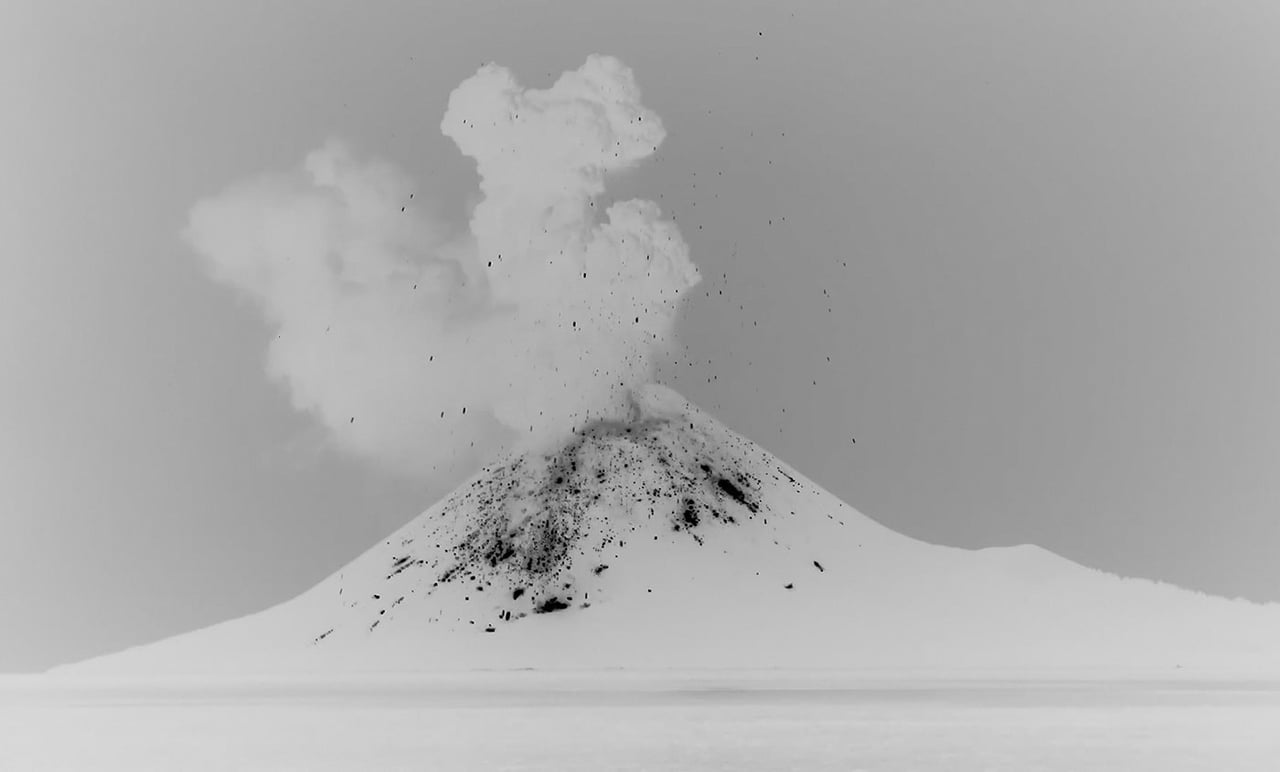
The earthly journey of the goddess, on its own, did not yet have enough substance in my cinematic language. I needed a counter-movement, something that would give it scale, tension, and meaning. That’s when I realized that the Moon had to exist as more than a symbol; it had to become a presence. The Moon is the force that guides the goddess to earth and accompanies her through the trinity of womanhood.
By making the moon a character, it became at once a mirror for the goddess and for the spectator and a reminder of the brevity of our own earthly passage.
I remembered Nasa images I had used in a film nearly 15 years earlier. They had stayed with me as some of the most powerful images I had ever worked with. When I returned to them, they felt absolutely right. They brought distance, humility, and a sense of cosmic time, allowing the myth to reconnect with something deeply human. That was the moment when the film found its balance: when the myth stopped being abstract and became anchored in our shared condition, suspended between flesh and infinity.
LJ: Hermine, how do you reflect now on working with Hervé on cinematic narrative and bringing the Moon into the story?
HB: The Moon, like the woman, embodies three transformative phases, reflecting her journey.
We chose to begin not with the Maiden, but with the often overlooked, older woman who carries wisdom. This allowed us to embrace a non-linear narrative, in dialogue with Surrealist cinema, recalling the works of Maya Deren, Man Ray, and Luis Buñuel.
I am deeply grateful to have collaborated with Hervé, as well as with an extraordinary team of talents: Eugénie Drion, Ania Catherine and Dejha Ti, the Ondes Martenot virtuoso Christine Ott, Camille Chaigne on Laban notations, and the Opéra teams in sculpture and costume, particularly Christine Neumeister, Jean-Bernard Scotto, Claire Niquet, Cécilia Delestre, Lux Studio, and the developers.
Hervé understood and rendered the film’s black-and-white aesthetic perfectly, which was central to my vision, echoing the ethereal transformative power of the Moon (a celestial body that seemed central to Goddess civilizations) creating a subtle dialogue between stillness and movement.
LJ: How important is the ethereal sound of the Ondes Martenot in creating a timeless, non-linear, Surreal, quality to the work?
HMD: It was essential. When I first started working seriously with electronic music many years ago, there were two almost mythical “real” instruments for studio musicians: the Ondes Martenot and the Mellotron. They carried something both archaic and futuristic — a sound that never belongs fully to a specific era.
I already knew about Christine Ott’s Ondes Martenot album released in 2020. I shared it with Hermine, who immediately connected with it. From there, I reached out to Christine and convinced her not only to let us use two existing pieces, but also to compose an original score specifically for the choreography and the film. What proved absolutely decisive was the process itself. Christine composed the music from an initial cut of the film. That allowed her Ondes Martenot quartet to respond not only to the dancer’s movements, but to her inner state, rhythm, breath, and interior journey.
The music was not added afterwards as an atmosphere; it was woven into the film’s temporal and emotional structure.
The Ondes Martenot has this almost supernatural quality, it seems to come from beneath the image, or from before language. Through sound, the film could touch what cannot be shown: the invisible dimension of the allegorical journey. In that sense, the music does not illustrate the myth, it gives it breath, memory, and duration.
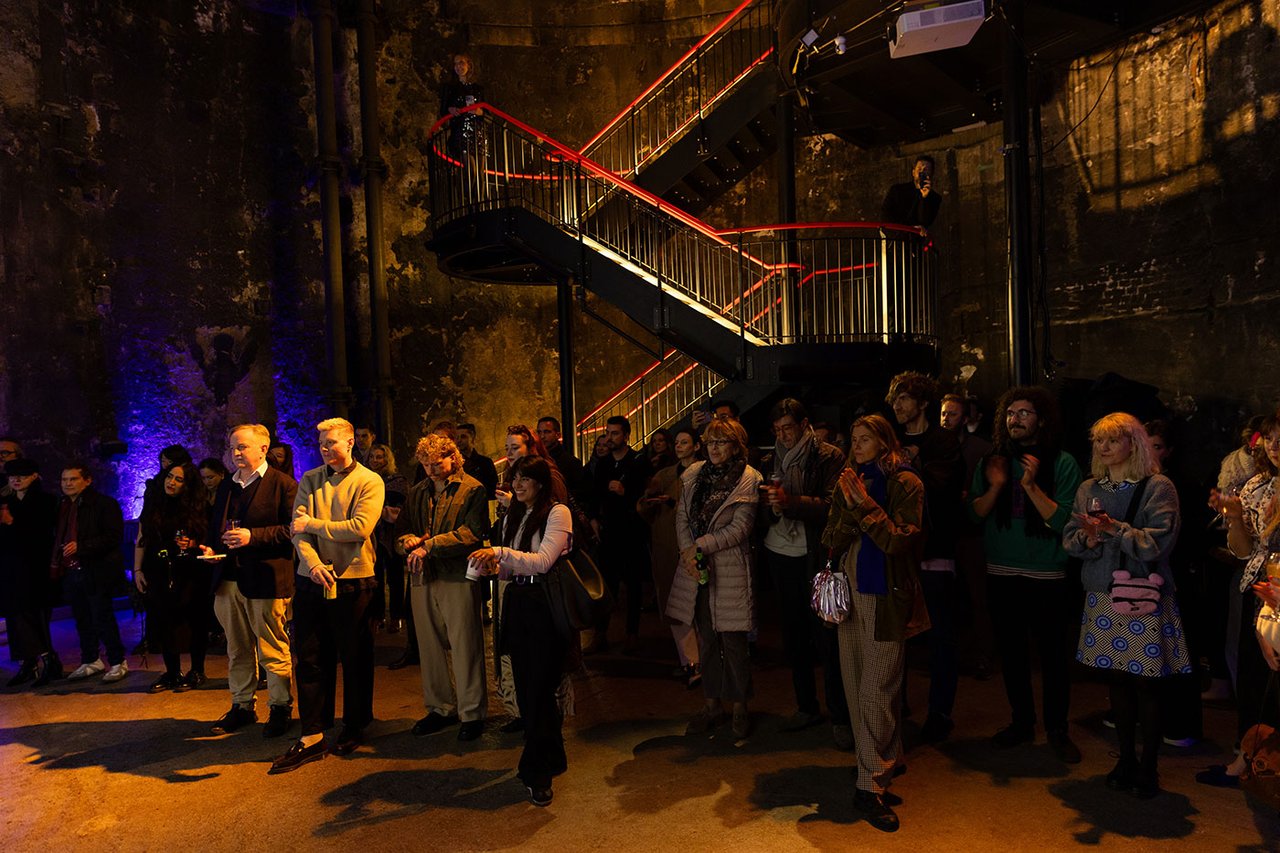
LJ: What are your plans for the film’s distribution and how is that being planned. The Brunel Shaft in London was obviously an exceptional location for showing the film; because of its history, architecture, and the distressed wall surface.
HMD: This question touches on a paradox that sits at the very heart of the film. A documentary I made earlier in my career, Daft Punk Unchained, has been seen by more than 500 million people worldwide over the past decade. With Under the Moon, I honestly don’t know if we will ever reach even a few hundred thousand viewers. And as producer and director I’m at peace with that.
Part of this is simply the current state of the film and television landscape, which is now largely shaped by industries built around formatting, placing works into predefined boxes, themes, and targets — turning films into content designed to circulate efficiently rather than resonate deeply. Under the Moon resists that logic. It is not meant to be consumed quickly or categorized easily.
It asks for time, attention, and a certain availability from the viewer. In that sense, it may remain a rarer experience, but rarity is not a weakness here; it is part of the work’s meaning.
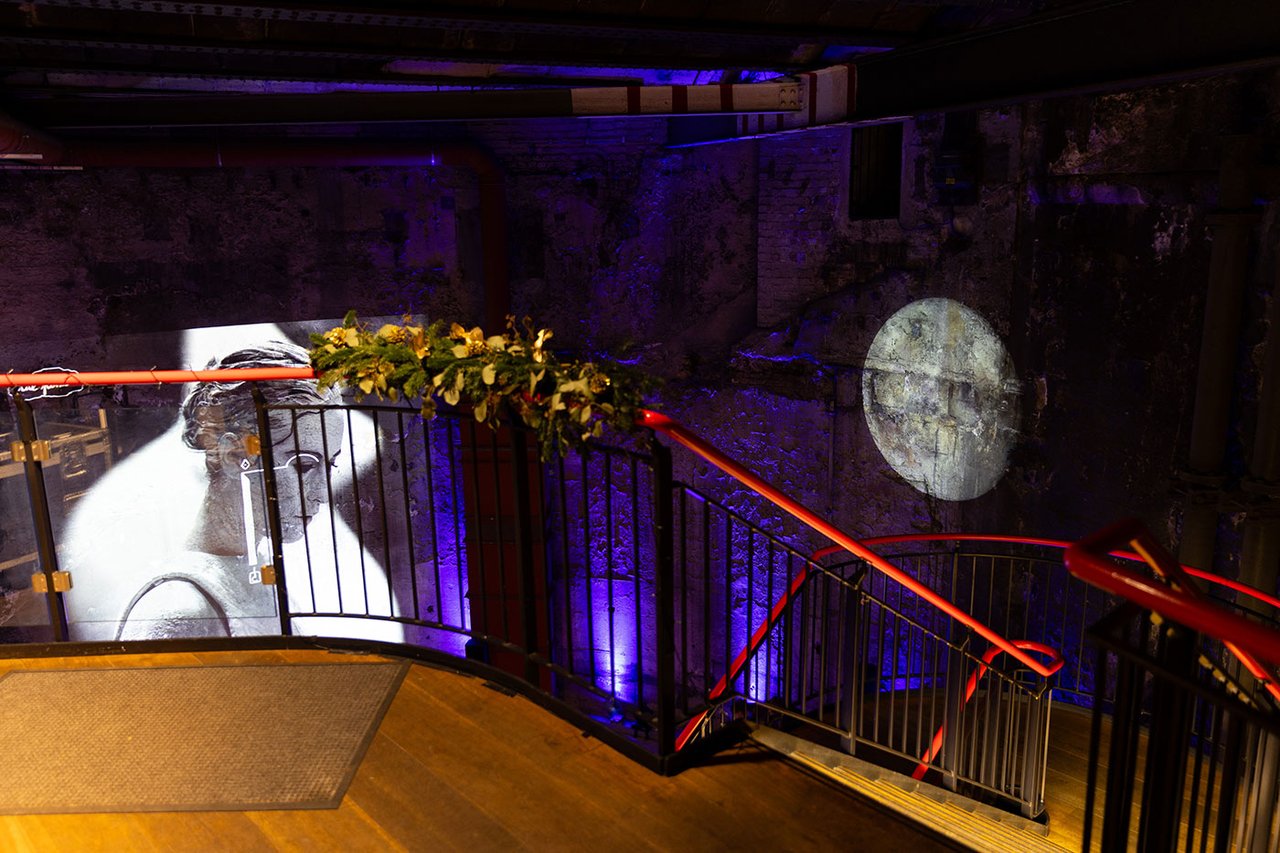
From the outset, I never thought of Under the Moon as a film destined only for festival screenings or traditional cinema theatres. I want it to be considered, in its future life, as an installation, a work that exists in space, in dialogue with architecture, texture, and the physical presence of the audience. In that sense, the Shaft at the Brunel Museum was not only an exceptional venue; it was almost a manifesto. Its history, its verticality, its surfaces: all of that allowed the film to breathe differently.
The images are not simply projected; they inhabit the space. This is exactly the kind of life I want the film to have.
Other locations will follow, in other cities, with other architectures, and for that, we will need partners who are willing to engage with the project over time, always chosen for their ability to resonate with the work rather than to neutralize it. The idea is not repetition, but translation: each place offers a new reading, a new encounter between the film, the space, and the audience. At the same time, Under the Moon is not only the title of a film. It is the name of a concept we want to develop with other experiences, artists, and forms of gathering — a space for convergence between humans and nature, outside of overt political or activist discourse.
I deeply believe that poetry is itself a powerful tool, for conversation, for perception, and even for persuasion, especially in the crucial moments we are living through on this planet. The Moon, as a universal and timeless reference, allows us to reconnect quietly with cycles larger than ourselves. That is the horizon I am working toward: a slow, enduring form of circulation, rooted in experience rather than scale.
Hermine Bourdin, a French sculptress, investigates the feminine through a nuanced dialogue between memory, the body, and the natural world. Inspired by Palaeolithic and Neolithic art, she engages with the organic and symbolic language of primordial forms, reinterpreting these ancient figures as active, transformative presences within contemporary space. Her work bridges temporalities, allowing the forms of the distant past to resonate in the present, carrying with them a poetic and ritual intensity. Beyond traditional materials, Bourdin extends her practice into the digital realm, employing contemporary technologies to animate, transform, and reimagine these forms, creating a dynamic interplay between the tangible and the virtual, the archaic and the immediate.
Hervé Martin Delpierre is a Paris-based film-maker: a director, producer, and writer, and co-founder of Kiritosu Studio. He explores the intersection of art, technology, and society through documentary cinema. His films are known for their sensory approach to reality, where form becomes reflection — a cinema of perception, gesture, and metamorphosis. His Daft Punk Unchained (2015) — the definitive film on the legendary French duo — sold in over 110 countries and was broadcast in prime time on major networks worldwide. His What the Punk! documentary on Larva Labs and Cryptopunks premiered at Art Basel in Basel in June 2024.
Louis Jebb is Managing Editor at Right Click Save.
No comments yet. Be the first to share your thoughts.
Mentioned in this article
People: Hermine Bourdin, Hervé Martin-Delpierre, Ania Catherine, Christine Ott, Eugénie Drion|Works: Coddess Variations, Under the Moon|Organizations: Brunel Museum, Kiritosu Studio, Opéra national de Paris|