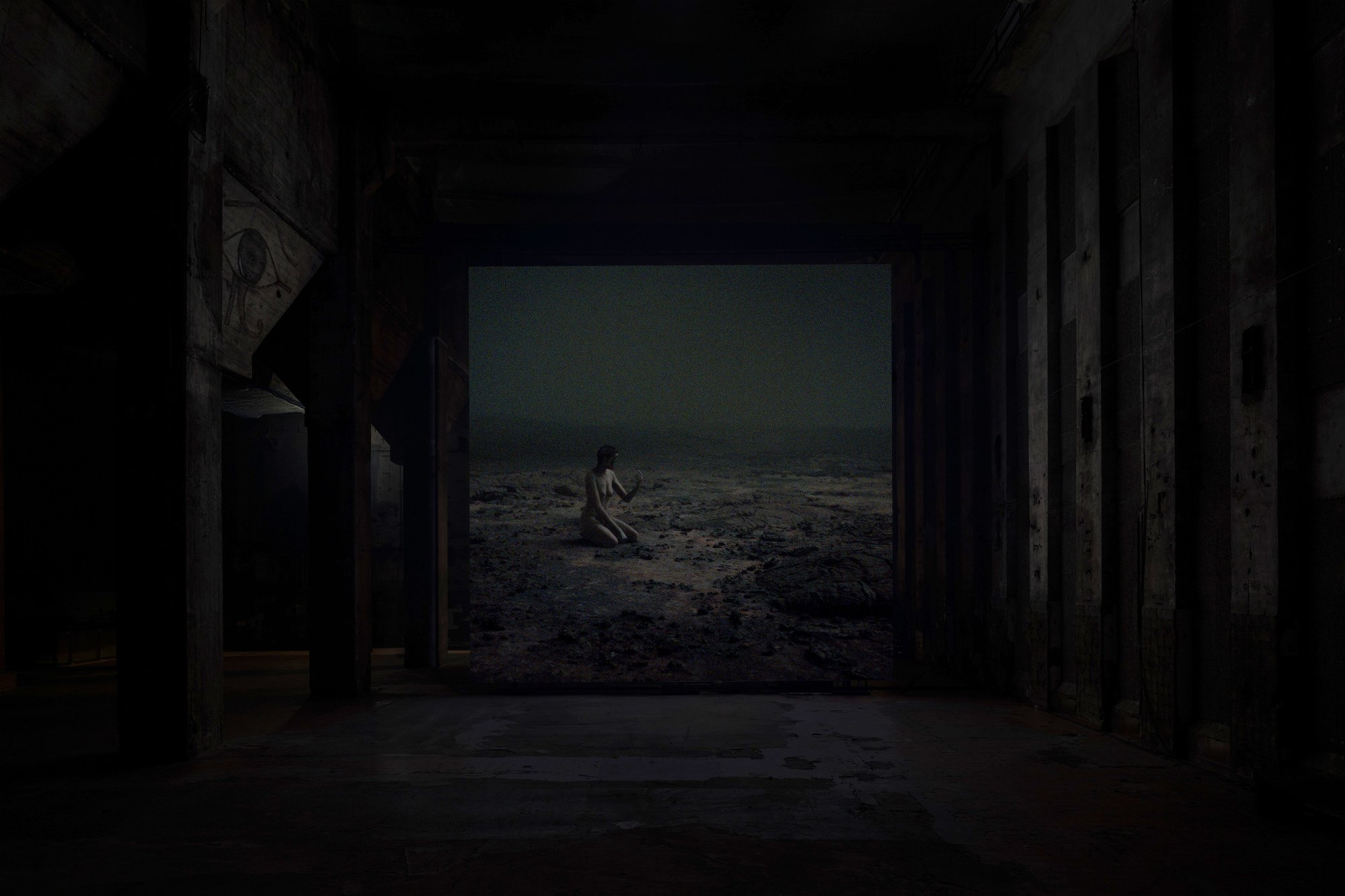
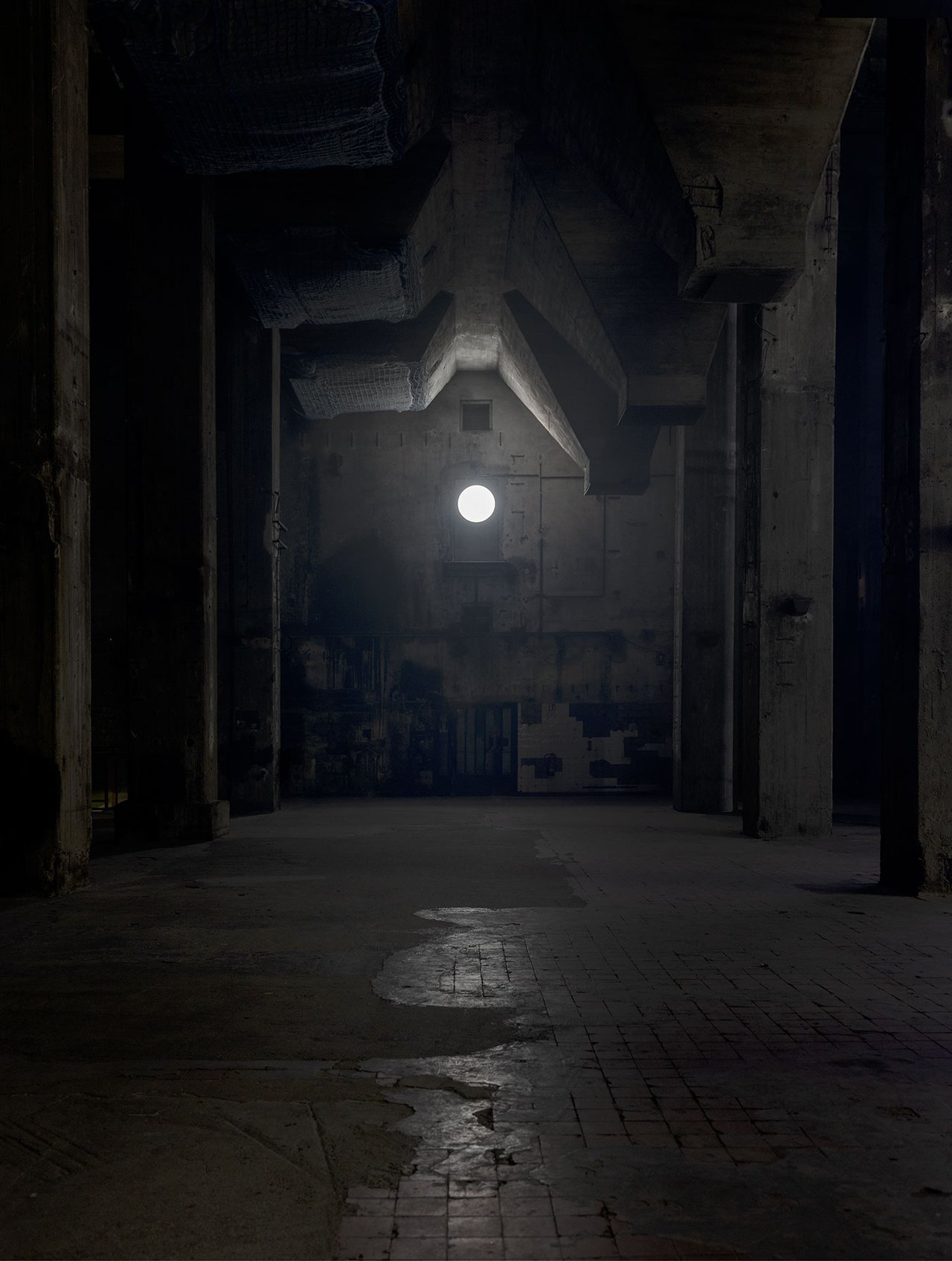
“Pierre Huyghe: Liminals”, a new commission from LAS Art Foundation, Berlin, and Hartwig Art Foundation, Amsterdam, is on show at Halle am Berghain, Berlin, until March 8.
Pierre Huyghe’s new work, developed in collaboration with the quantum physicist Tommaso Calarco and the philosopher Tobias Rees, is the second large-scale installation presented by LAS Art Foundation — a Berlin-based non-profit art foundation, working at the intersection of art, science, and new technology — as part of its “Sensing Quantum” program.
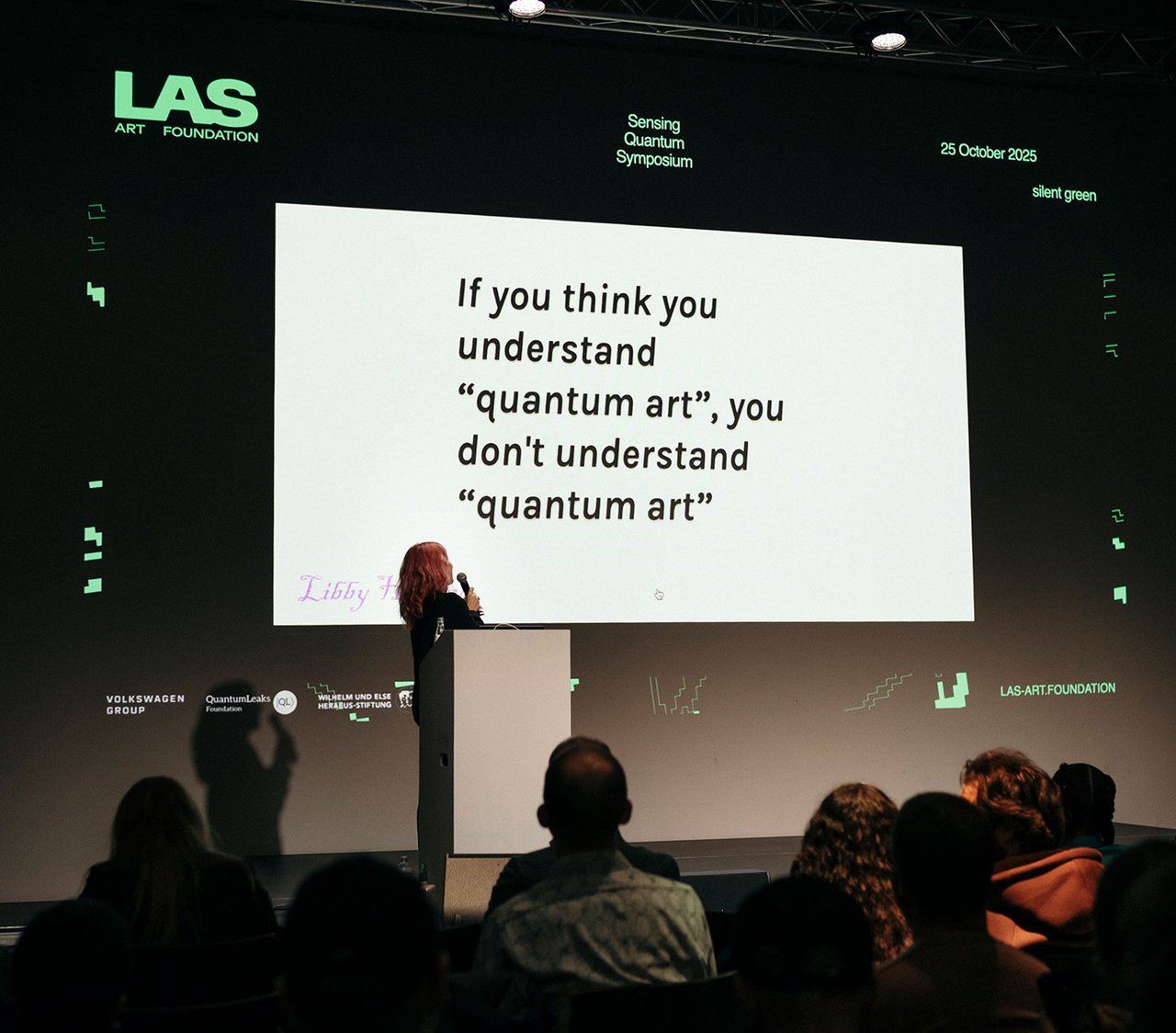
The exhibition is the fruit of a three-year conversation between Huyghe and the LAS team, during which time artists such as Libby Heaney, who collaborated with LAS in 2022, and the media artist Refik Anadol, in concert with Google Quantum AI, have also been exploring quantum technology. Such hybrid practices reinforce the power of cross-fertilization between art and science to stimulate creative expression.
“Liminals” follows the launch, under the “Sensing Quantum” program, of Laure Prouvost’s “We Felt a Star Dying”(2025), in the cavernous spaces of Kraftwerk, Berlin. Prouvost’s work was co-commissioned by OGR Torino, where the work is on show from February 5 to May 10, 2026.
Huyghe’s new work, the French artist’s first solo presentation in Berlin, forms the latest part of LAS’s focus on quantum computing, a frontier technology of almost limitless possibilities, though still some years away from mass adoption. The announcement of Prouvost’s commission in 2025 reinforced the importance of artists offering a prism on an extraordinary but ineffable technology, as it coincided with her collaborators at Google Quantum AI, a group led by Hartmut Neven from Santa Barbara, California, announcing a new quantum computing chip, Willow, that takes five minutes to complete some tasks that the world’s fastest conventional computers would take 10,000,000,000,000,000,000,000,000 years to complete. The chip promised to introduce new levels of “error-correcting” — a persistent challenge in the science — to help quantum computing become usable for daily tasks and to deliver on its theoretical potential to accelerate medical research (by modelling long chains of molecules), crack nuclear fusion (for clean energy), and break the most advanced codes, including those that protect the internet and the functioning of blockchain and cryptocurrencies.
In the lead-up to the presentation of “Liminals”, Huyghe worked with Calarco and researchers at Forschungszentrum Jülich, near Cologne, on a 100-qubit neutral-atom Pasqal quantum computer, to simulate the oscillations of matter in Huyghe’s film Liminals (2025). These simulations generated a field of probable states, which were then translated, using a quantum noise-based AI model, into moments in the film’s sound design, requiring experimental methods to create a dense sonic experience.
Calarco described the process as being like “plucking the computer’s atom array to hear its reverberations”.
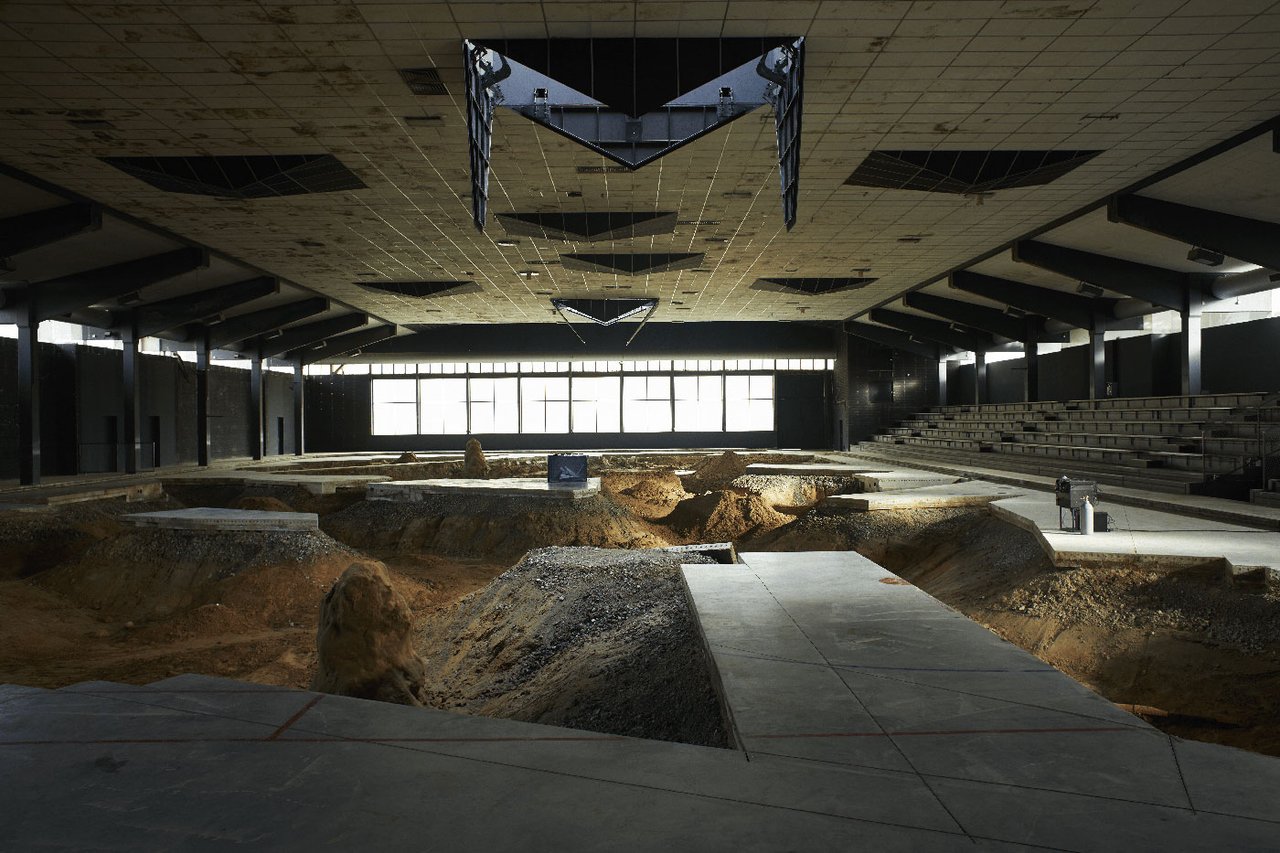
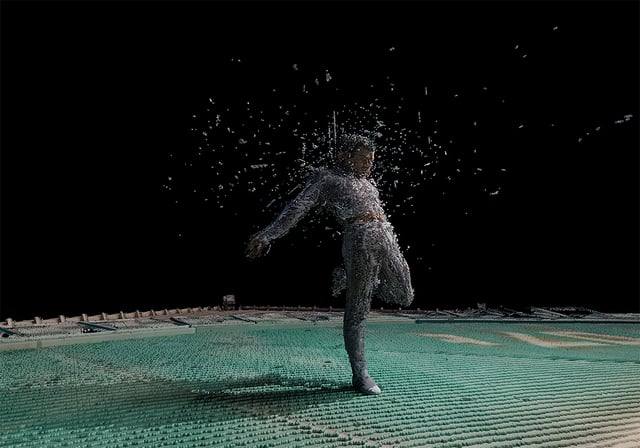
Pierre Huyghe, After ALife Ahead, 2017, Skulptur Projekte Münster. Photography by Ola Rindal. Courtesy of the artist and VG Bild-Kunst, Bonn
An artist of the in-between
Huyghe, who was born in Paris in 1962 and now lives in Santiago, Chile, is renowned for his thoughtful, questing approach. In the past decade he has made his mark with a series of arresting and ambitious installations, in unconventional spaces, addressing the human in nature and the mixing of the human and non-human. Contingency and unpredictability as well as porosity and permeability are central to the artist’s output. He regularly works at technological frontiers but is clear, as he told Ben Luke on The Art Newspaper’s A Brush With … podcast in 2022, that “The tools are not the work. They help the work sometimes.”
Huyghe’s early practice reflected a concern for cinema, bringing it into exhibition spaces, and making it the subject of re-enactment — earlier in his career reinterpreting classic Hollywood films such as Hitchcock’s Rear Window (1954) and Sidney Lumet’s Dog Day Afternoon (1975). Three pieces from the past decade, all of which caught a moment at biennials, galleries or in site-specific work, offer a flavour of Huyghe’s stance and ambition, as well as his feeling for permeability and in-between spaces.
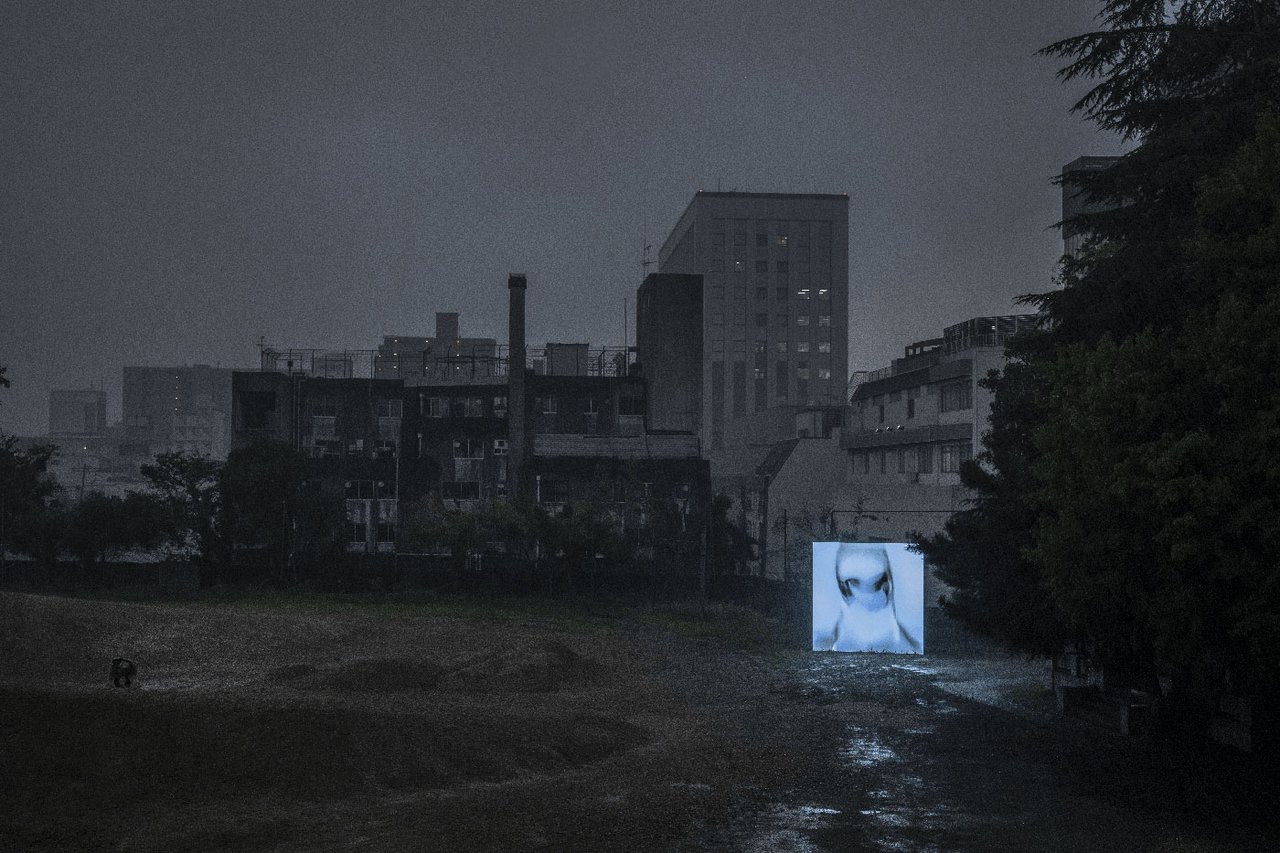
In 2017, at the Skulptur Projekte Munster festival in northwest Germany, his time-based bio-technical system After ALife Ahead produced speculative fictions on the site of a disused ice rink using augmented reality triggered by single-cell organisms stored in an incubator. At Serpentine Galleries, London, his exhibition “UUmwelt” (2018) presented the process of machine learning, working with brain scans to read the “imprint of thoughts” using an algorithm allowing a feedback loop taking in human and non-human inputs alike. In Variants (2022), a permanent installation in the Kistefos Museum’s sculpture park, near Oslo, Norway, Huyghe 3D-scanned a small river island and created digital simulations, produced by a generative adversarial network (GAN), to create an alternate reality for the locations, played out on screens and through 3D models.
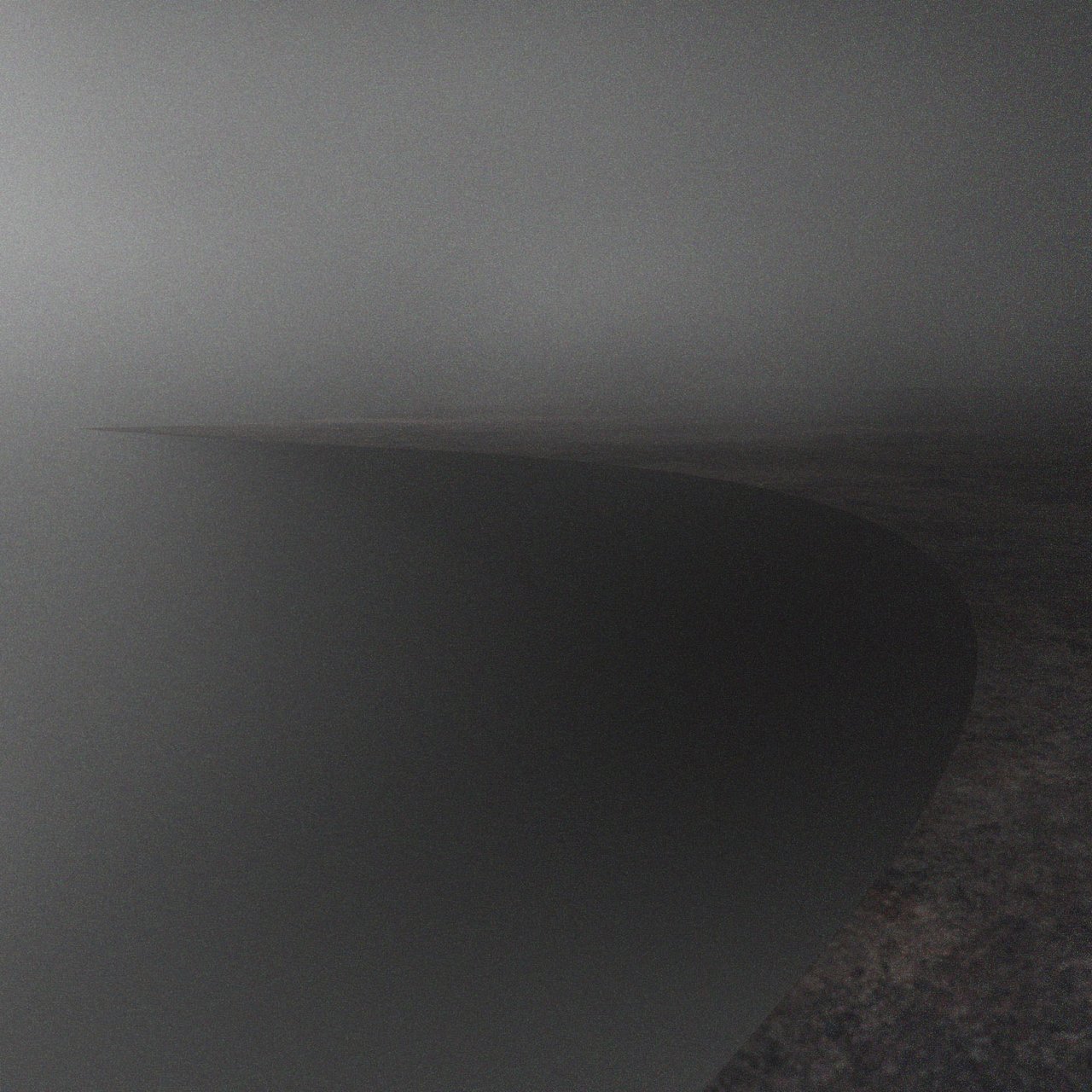
Huyghe describes the film presented at the centre of “Liminals”, as a “modern myth”, one that follows the emergence of a faceless, humanlike figure, that moves through shifting states. As the artist said in an exhibition statement, the film is “set in a realm outside time and space, where there is no beginning or end, no inside or outside, only an incessant dance of matter, in which every moment is a maybe.
“We witness the figure’s attempts to exist, communicate and escape a single state of reality or consciousness. We see a dissolution of boundaries between inner and outer realms, and between living and non-living matter.”
Huyghe’s work explores a shadowy threshold where states of being are superimposed on each other; in an analogy for quantum mechanics, where atomic and subatomic particles are seen as existing in multiple states at once before the quantum system is measured. As Heaney told Right Click Save in 2025, a feature of quantum physics is that “when a measuring device records information about a quantum system, it randomly collapses that system back to being digital or binary. It goes from being quantum, which is plural, entangled, and holds the potential to morph into different possibilities, back to how we observe the world.”
“This means that whenever you work with quantum technologies as an artist, you always depend on digital technologies anyway; even when you’re using a nonbinary technology the outcome is still binary.” (Libby Heaney)
When Huyghe was asked in 2022 what art is for he answered that it is to “toy with radical otherness. To dress chaos with something. Something that is before knowledge, before meaning, before language.”1
As “Liminals” opened in Berlin, Kames spoke to Right Click Save about how each LAS collaboration with artists on quantum projects starts with a philosophical dialogue; the visceral impact of experiencing the soundscape of “Liminals”; and how Huyghe’s role as an inspiration to fellow artists and curators generated excitement around “Liminals”, bringing renewed attention to the foundation’s Sensing Quantum project.
Louis Jebb: In 2025, you wrote about what the quantum era means for art, seeing “advancements in science as probing the depths of reality in the way that artists also do”. You cited artists’ “ability to “think through our ever-evolving world”, and LAS Art Foundation’s “desire to support them to produce enquiring new work on critical topics of the present”. Your collaboration with Pierre Huyghe on “Liminals” follows the foundation’s groundbreaking work with Libby Heaney in 2022 and Laure Prouvost, released in 2025. How does “Liminals” add to the wider quantum story?
Bettina Kames: We started with Libby Heaney; [our] first encounter with this quantum world. It was great because Libby was in her former life a quantum physicist and [then] she became an artist. It felt very profound in terms of quantum.
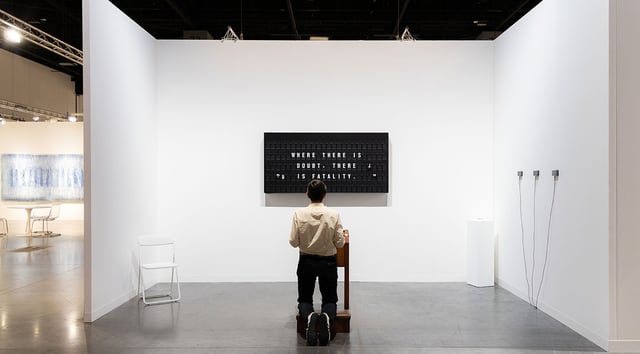
Sensing Quantum Symposium, 25 October, 2025. Presented by LAS Art Foundation at silent green Kulturquartier, Berlin. Photography by Yanina Isla
What we realized with Laure [Prouvost] is, yes, it’s important to be profound, to understand what you’re talking about, to experiment; [but that] quantum demands a different perspective on the world and how we see and feel the world; and that this is a major shift. The show was called “We Felt A Star Dying” because Laure could not believe that a qubit, the tiniest unit of a quantum computer, has this immense sensitivity; [that it is] influenced by the cosmos, by cosmic rays.
So, [working] with Laure, it was important for us to really emphasize “Yes, there is something like a quantum computer, but [what is] so important is that you have to change how you see and perceive the world with quantum physics, with quantum technologies.” And what does this mean for us as humans? What does this mean for society?
And with Pierre, it feels like [...] the culmination of [the] different thoughts and discussions we have had. [...] This commission with Pierre [is] about the human, the non-human. It’s about different states, different realities. This is a space that LAS has inhabited from the very beginning, [but] Pierre’s commission is [...] so much more. There’s this beautiful [remark] by Pierre about uncertainty; that he created this “cosmos of uncertainties”.
On a very personal note, it is a work that does not let you go for one second. It stays with you every single day [...] It is a nonstop journey with a commission like “Liminals”.
LJ: This project offers a general audience so many interesting angles or prisms on the quantum world. Your philosopher collaborator Tobias Rees talks of quantum being “a non-world in which time unfolds non-sequentially, in which linear causality is broken”. Working with artists in this field, do you feel they generate intuition despite working with a state that is beyond human intuition?
BK: Yes. It’s beyond the human. Like pre-existence; [a state] of [being] non-human, human, inhuman. The strongest relation to quantum is this in-betweenness: different states, different realities, this uncertainty in the cosmos. “Liminals” entails all of this. [As humans] we are used to defining, or perceiving, [things].
What Pierre has created is so much more, so different. That is why it doesn’t let you go. You can’t define it. You can’t say this is this or that is that. That’s why [...] this work has such power over you. Because it’s human, non-human, it’s different forms of consciousness, of realities, and it’s all [of it] together.
[There’s a] new aspect in the work [related to] sound and vibration. Links to quantum sound, to experimentations with sound [through] experimentation with Jülich and with Tommaso Colaco. But it’s all connected, it’s all linked.
Pierre is very much about in-betweenness. And that is embedded in quantum physics. So it’s a full circle in a way.
LJ: Is part of the interest of the project that you’re capturing reality at a micro scale, but then reimagining it through simulation or analogy at a visible, sensory, scale.
BK: 100%. There was the challenge [of taking data] from Pierre’s film, transferring that to sound, to data, at Jülich, and then bringing that back into the film. It’s sound and it’s also vibration; so when you enter Berghain, it’s this epic film by Pierre, but it’s also sounds. You’re sitting there and your body is vibrating. So it’s this experience of something invisible, of another world.
LJ: You’re almost hearing subatomic activity.
BK: Yes, you hear it. It’s a distinct sound. You hear that and you can feel it.
LJ: Looking back now over four years, working with Heaney, Prouvost, and now Huyghe, have advances in computing hardware changed how you approach artist collaborations?
BK: Yes. The entire sector of quantum technologies [is advancing]; so, you’re referring to quantum computing, but there are also different quantum technologies. And for example, for our next project at the Venice Biennale [Natasha Tontey’s The Phantom Combatants], they’re using [...] quantum ghost imaging. And that’s another technology and it’s very exciting.
For LAS, it’s about these different technologies within the quantum sector, but also [involving] AI. AI has been with us from the very beginning. And I think my assumption is that the bridges [with] quantum AI will become stronger and will have the same rapid development as [the computing] technology.
LJ: Tobias Rees, in the exhibition announcement, talks of Huyghe’s work and “exploring if we could create images using quantum systems that would not only transport those who see them into this other world, but also have the power to produce the spectators themselves in the non-terms of quantum.” This seems to be a new stage, philosophically.
BK: Exactly. Tobias is a philosopher and that’s his terrain. In this commission [...] early on we had conversations with Tobias and Pierre together, in 2023. [For LAS] this is the most important part, what’s the philosophical context of each commission and each project. With Pierre, one part of the exhibition is a library. So in our learning space, we established a library, with different references or touch points, from Jean-François Lyotard to Samuel Beckett.
Pierre never leans into any explanation or interpretation of his work and I wouldn’t do it either. But there’s an entire cosmos of different thoughts and references in this work as well. It’s the journey of a lifetime.
If you come to Berlin, you should really take the moment to sit in this library and to read.
LJ: How do you hope this exhibition will help make people aware of the new frontier of quantum technology?
BK: First, what is really beautiful about this project is that since we announced it, I have had, on a daily basis, conversations with artists, curators, people from the art world and beyond that tell me Pierre is the reason that they became an artist or that they entered the art world. Or that there is this one exhibition [of his] they still remember that had such an impact on their lives. It is an honor and a gift to be part of another masterpiece of Pierre’s. And Pierre has had this immense imprint on so many people and definitely on LAS.
The second answer is that when we founded LAS in 2016, and had the first exhibition in 2019, the big question was why are we founding another art foundation? What is the purpose of it? There’s so many great institutions out there. What is our reason to exist? And we said, we want to be a different institution and we want to be this institution that can have this imprint or that is building a bridge into society in a very open, very accessible way, for what lies ahead of us. And this includes the latest technologies and what kind of impact they will have on us.
It includes the discourse around what does [technological progress] really mean? What does this mean for us as a human or a non-human or for even as a digital species?
How do we need to see ourselves in the world and what do we need to redefine? This commission by Pierre in many ways embodies all of this in such a profound and complex way. I know it will have a huge imprint on everyone who comes to see the exhibition.
Louis Jebb is Managing Editor at Right Click Save.
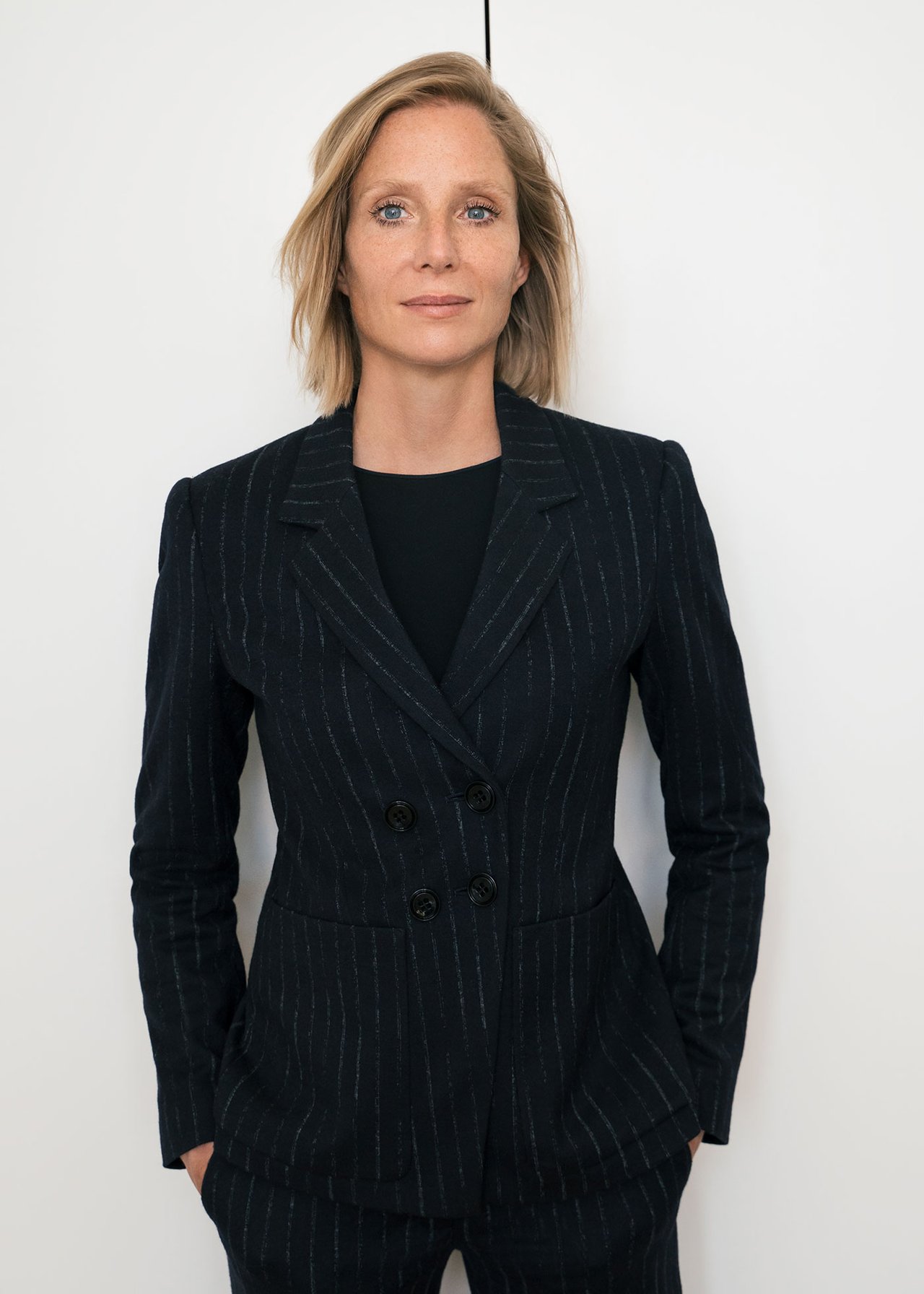
Bettina Kames is CEO and Co-Founder of LAS Art Foundation, Berlin.
¹ Ben Luke, What Is Art For?, London and New York: Heni, 2025, 241.