Suzanne Treister | Prophetic Dreaming - Right Click Save
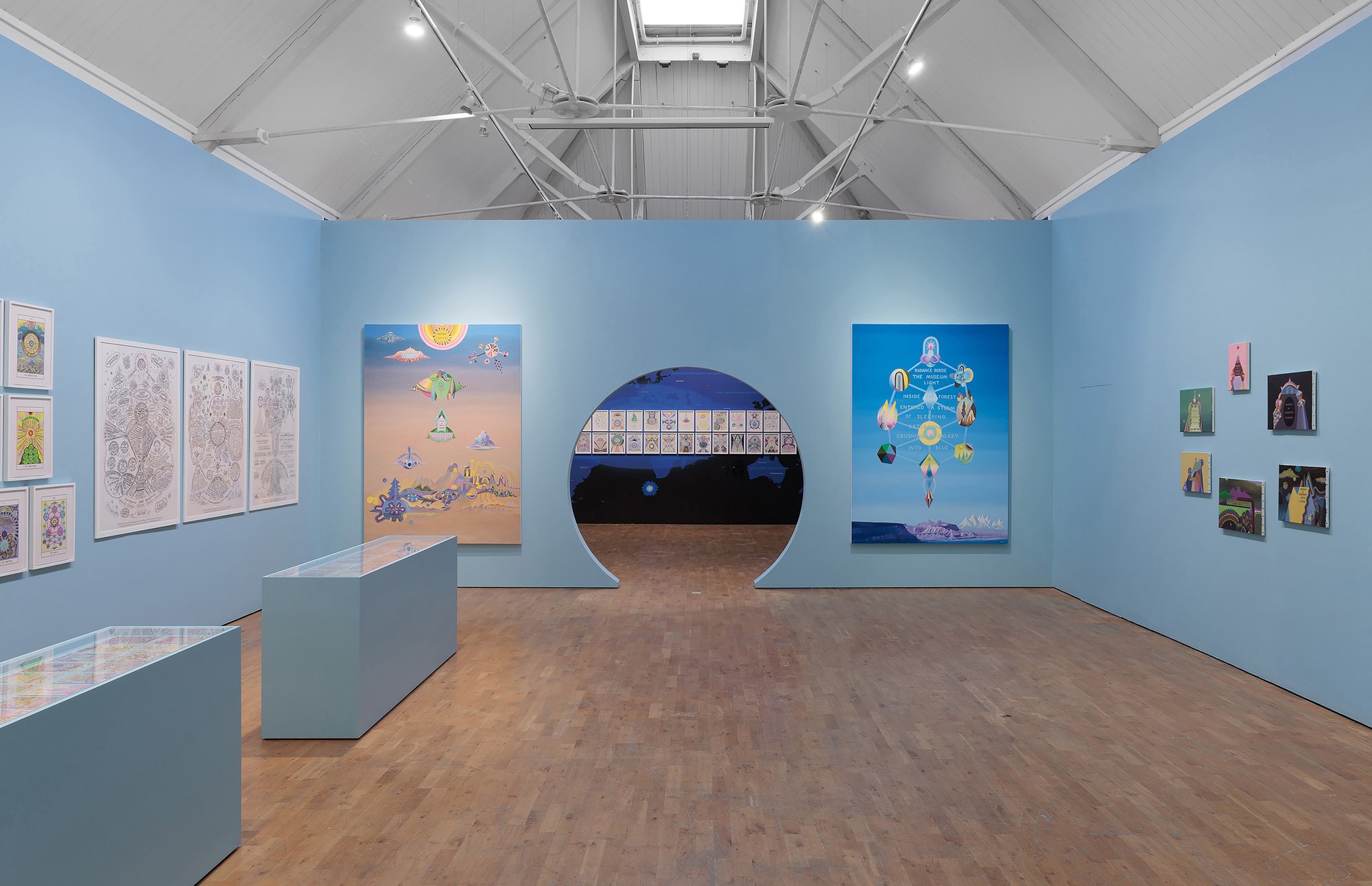
Installation view of “Suzanne Treister: Prophetic Dreaming” at Modern Art Oxford, 2025-26. Photography by Rob Harris. Courtesy of the artist and Modern Art Oxford
“Suzanne Treister: Prophetic Dreaming” is at Modern Art Oxford until April 12, 2026, and is curated by Jessie Robertson, Antonia Blocker, and Amy Budd. It will be presented at Muzeum Sztuki in Łódź, Poland, in 2026, and will be reimagined by MIMA, Middlesbrough Institute of Modern Art, UK, in 2027.
Suzanne Treister is a pioneering digital and para-disciplinary artist who works across media. She is amongst the earliest UK artists to experiment critically with emergent digital culture and areas of advanced theoretical physics, such as quantum science.
“Suzanne Treister: Prophetic Dreaming”, at Modern Art Oxford, is Treister’s first major institutional retrospective. Spanning work from the 1980s to the present day, the exhibition maps Treister’s visionary practice and investigations into new technologies, networks of power, the covert, unseen forces at work in the world, alternative belief systems, and the futures they prefigure. It reveals her prescient practice as a means of comprehending the complexities of the present while imagining new possibilities for what is yet to come.
Hannah Redler-Hawes speaks to Suzanne Treister about her work and processes through four decades of critical cross-media inquiry that anticipates central questions about our psychic and hybrid realities, the interconnectedness between people, planet, intention, imagination, and the potential future of humanity, and what thoughts and actions she hopes to inspire in the people who encounter her work.
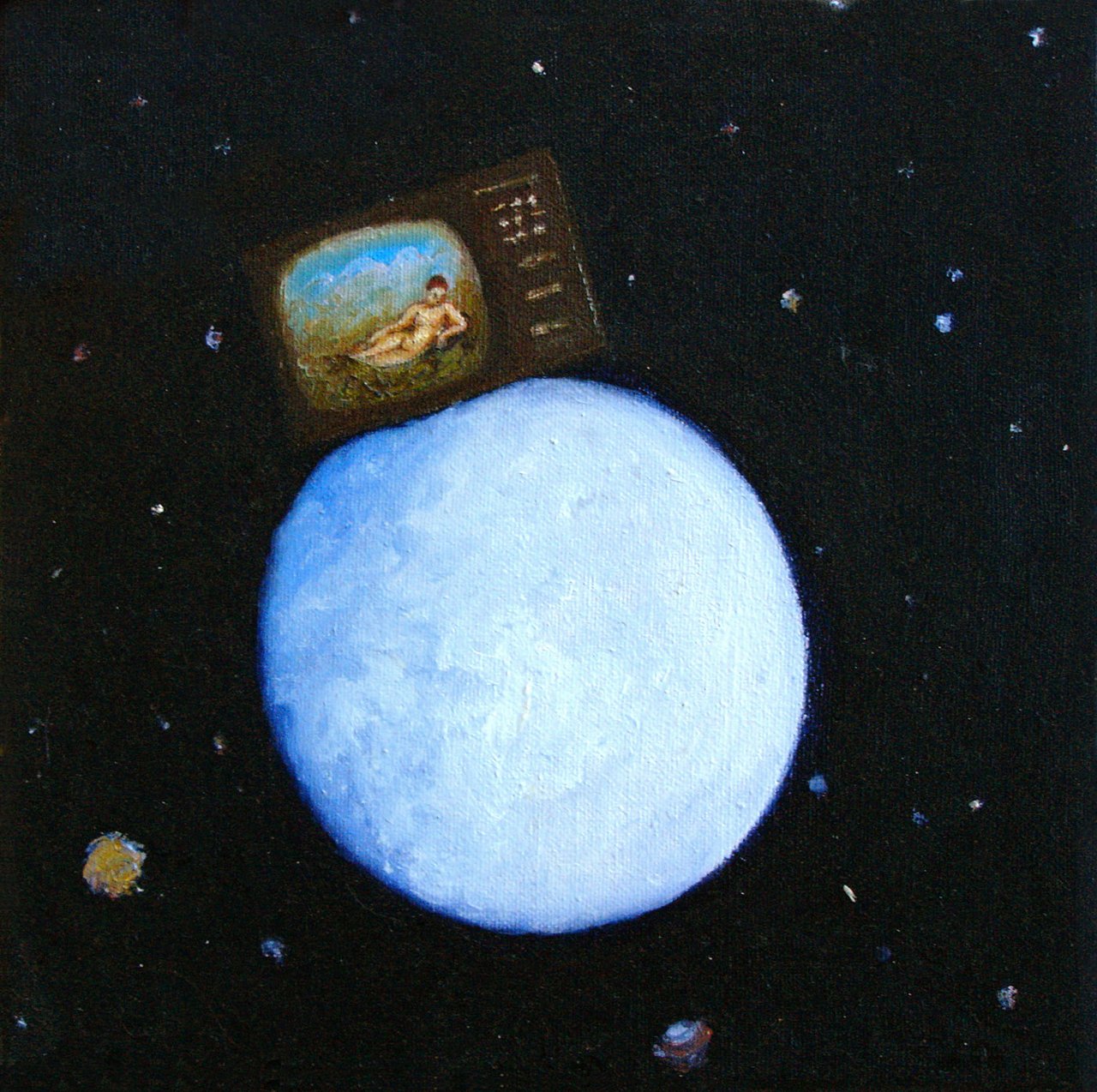
Suzanne Treister, Venus on TV on the Moon, 1986. Oil on canvas. Courtesy of the artist, Annely Juda Fine Art, London, and P.P.O.W. Gallery, New York
Hannah Redler-Hawes: Congratulations on “Prophetic Dreaming”, it’s thrilling to see so much of your work together. I loved the range of intellectual and imaginary wormholes — and the “real” portal at the end. What drove your selections and how do you hope visitors will be inspired?
Suzanne Treister: On my website, which houses most of the work I’ve ever made, there are columns on the left called “key projects” which we selected from. Many comprise over a hundred works, so there are no complete projects in the show. We chose very few of the individual works and series on the right side; those could make another whole retrospective.
I’d like to inspire critical and outside-the-box thinking, ethical thoughts/actions and mystical revelations.
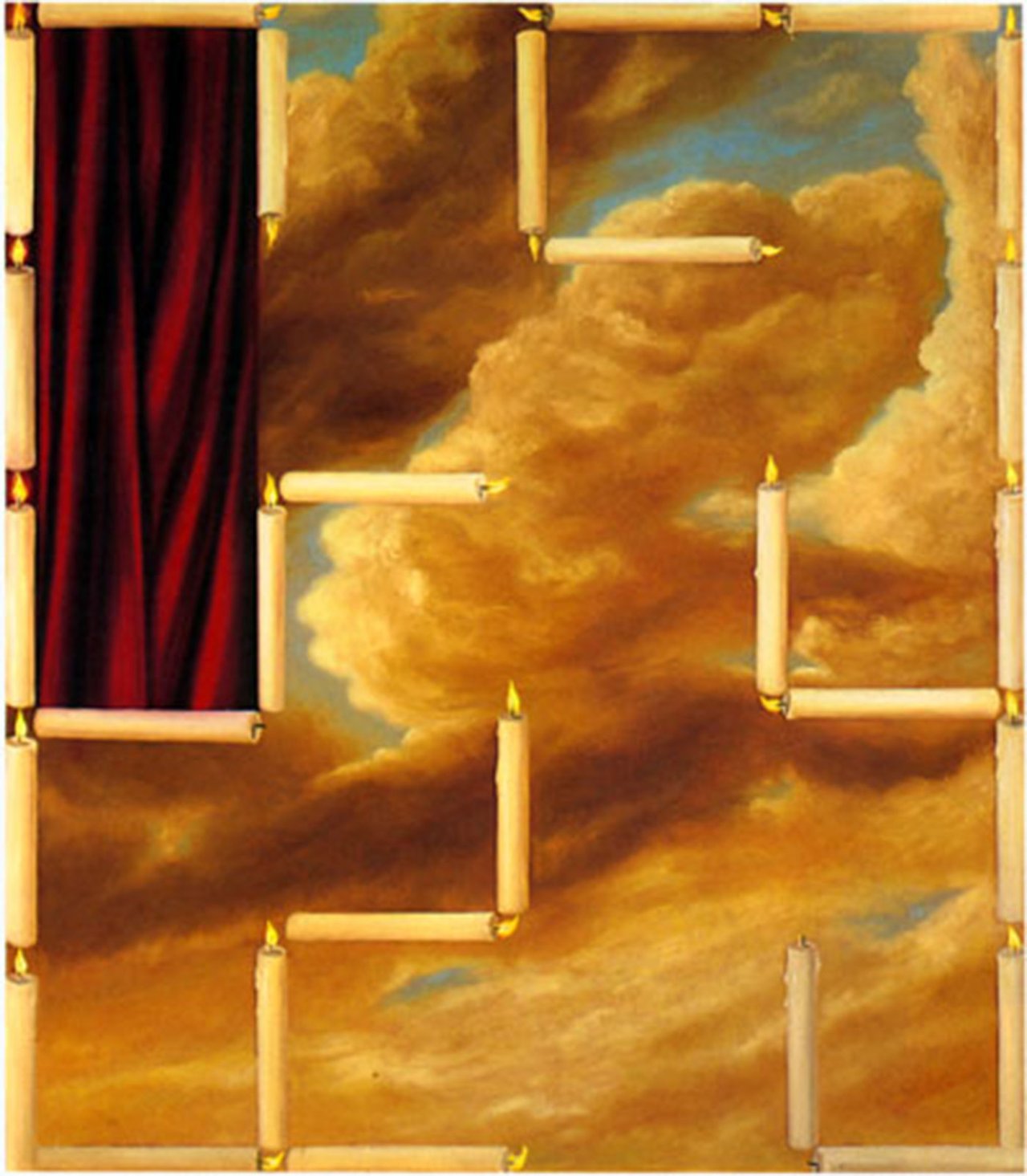
Suzanne Treister, A Simple Maze, 1988. Oil on canvas. Courtesy of the artist, Annely Juda Fine Art, London, and P.P.O.W. Gallery, New York
HRH: Although you were among the first UK artists to critically respond to the 1990s emergent web-based technologies (decades before the current art world canonization of digital art), your 1980s paintings were unique in drawing on the architectures, language, and psychological space of videogames.
ST: That’s right, there was no interest then from artists in the developing videogame culture in the UK, as far as I was aware. I became interested because of hanging out with a boyfriend in London’s Soho game arcades.
I saw the violent subject matter of the videogames and interactive technology as a possible sign of a much deeper, developing culture within civilization, which could lead to other potential uses of new technologies, perhaps military, as well as for hypothetical positive uses or even spiritual experiences. My 1980s paintings try to explore these ideas.
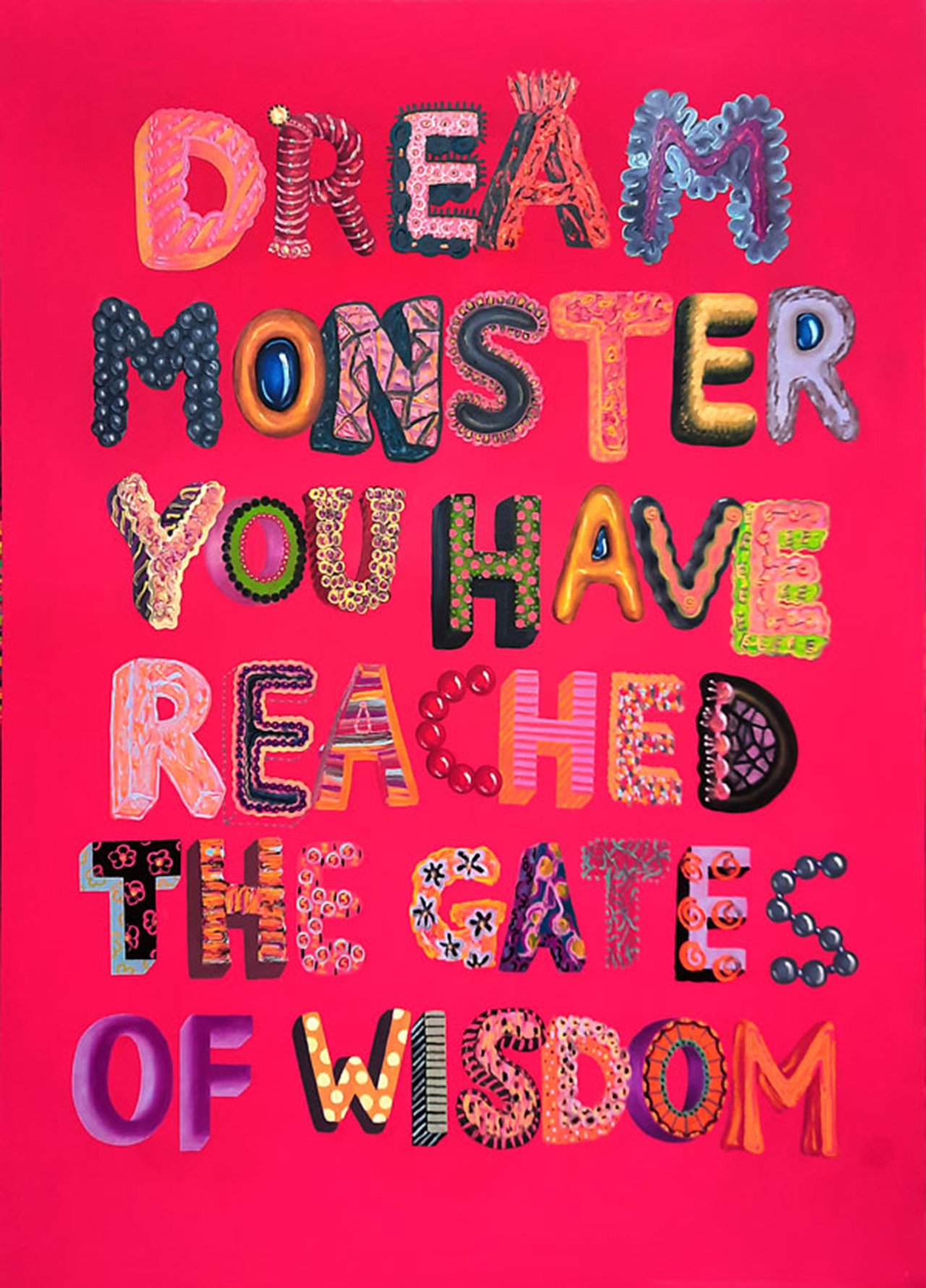
Suzanne Treister, Dream Monster, 1991. Oil on canvas. Courtesy of the artist, Annely Juda Fine Art, London, and P.P.O.W. Gallery, New York
HRH: Other media art pioneers explored the capabilities and aesthetic potential of hardware and software; you worked between painting and early computer painting or authoring packages. What were your processes and motivations? How did you work with the technical limitations? Everything was staggeringly low-spec compared to today’s technologies, wasn’t it?
ST: After making paintings of imaginary videogames, in 1991, I got an Amiga computer and used Deluxe Paint II to make similar works digitally. They were highly pixelated images which I had to photograph and print as photographs as there was no way of printing good images directly.
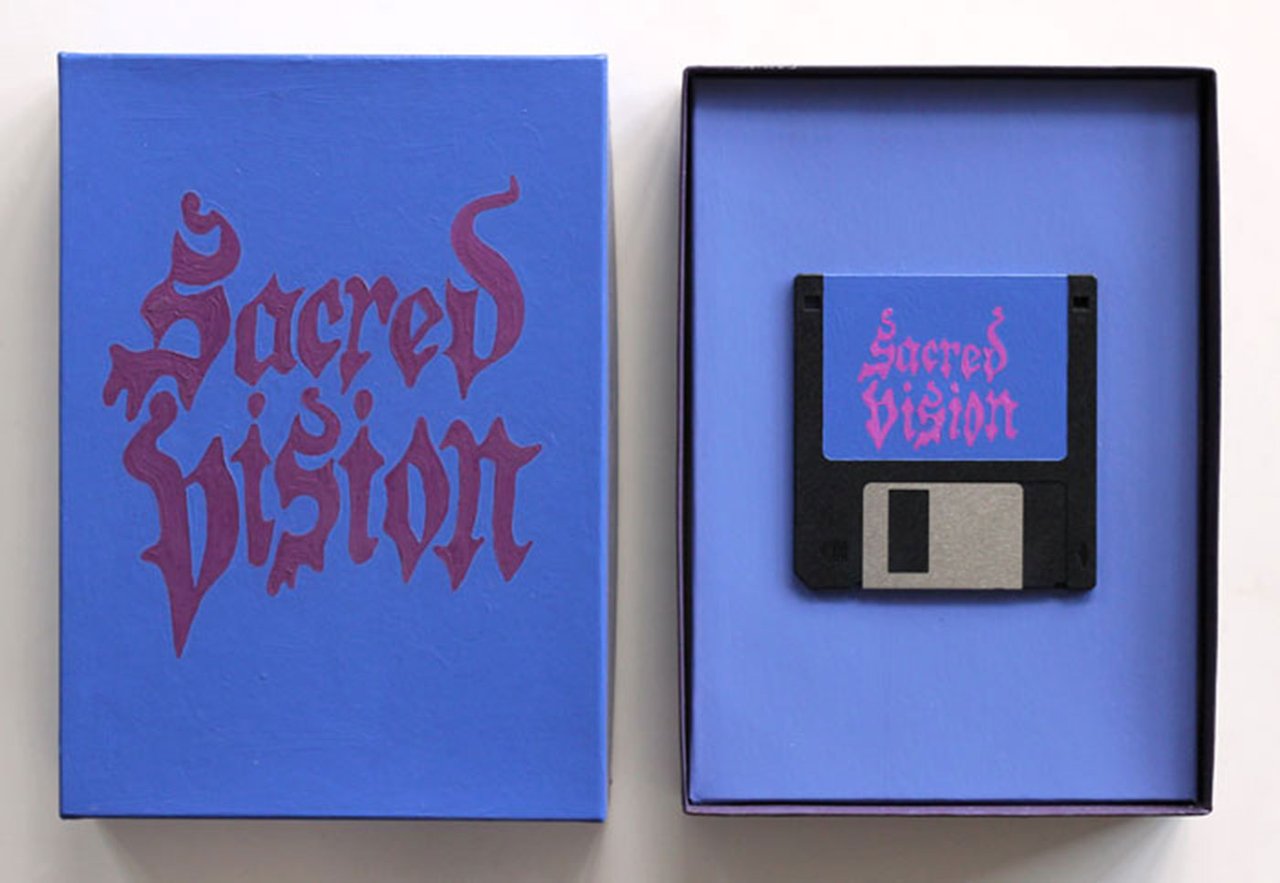
Then when I moved to Australia without my Amiga I made SOFTWARE (1993-94), a series of imaginary software packages out of cardboard, paint and floppy discs, anticipating what we now call apps; then a series of paintings about virtual reality; and then in 1995 I made my first website.
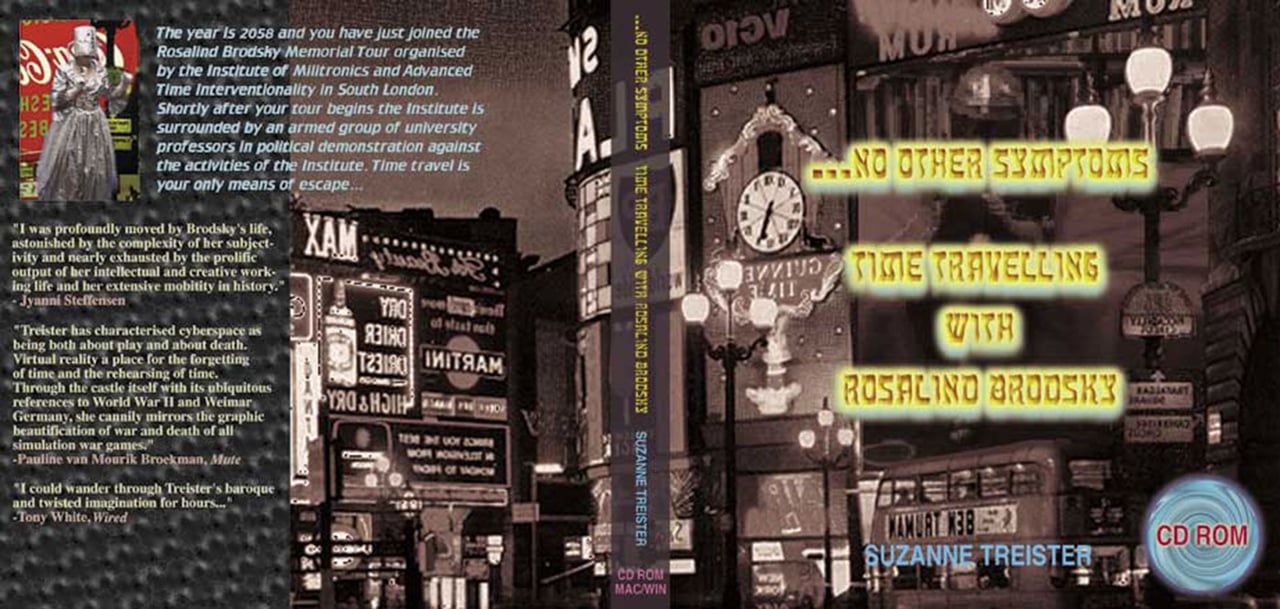
It all seemed very hi-tech at the time, that’s the nature of the latest technology. It only seems low-tech in the rear-view mirror. To be able to use Director 5 [software] in 1997 for my interactive CD-ROM Time Travelling with Rosalind Brodsky was considered the highest tech. Even nerd guys I knew couldn’t use Director, although they made a point of telling me how hard it was before I got started.
Suzanne Treister, SOFTWARE/Q. Would you recognise a Virtual Paradise?/Sacred Vision, 1993-94. Oil paint on cardboard box and floppy disk. Courtesy of the artist, Annely Juda Fine Art, London and P.P.O.W. Gallery, New York
HRH: At one point you made the decision to step back from using digital tools.
ST: I stepped aside from upgrading to the latest gizmo to make work in around 2000, when the net got governmentalized and corporatized. Tech was becoming like a military arms race and the new media art community, who had up until then acted like a new countercultural movement, seemed to be going along with it all uncritically. That’s when I started making a lot of work on paper.
HRH: It’s hard to walk away from your early paintings. The bold compositions and colours, and your powerful employment of suggestion to hint at our psychic immersion in virtual worlds is addictive, but how does suggestion continue to play an important role in your work?
ST: I still make up phrases and write prose for my works, opening up spaces for interpretation and revelation, perhaps tapping into wider knowledges and understandings which are outside the grasp of consensus reality.
For me it’s a Kabbalistic process.
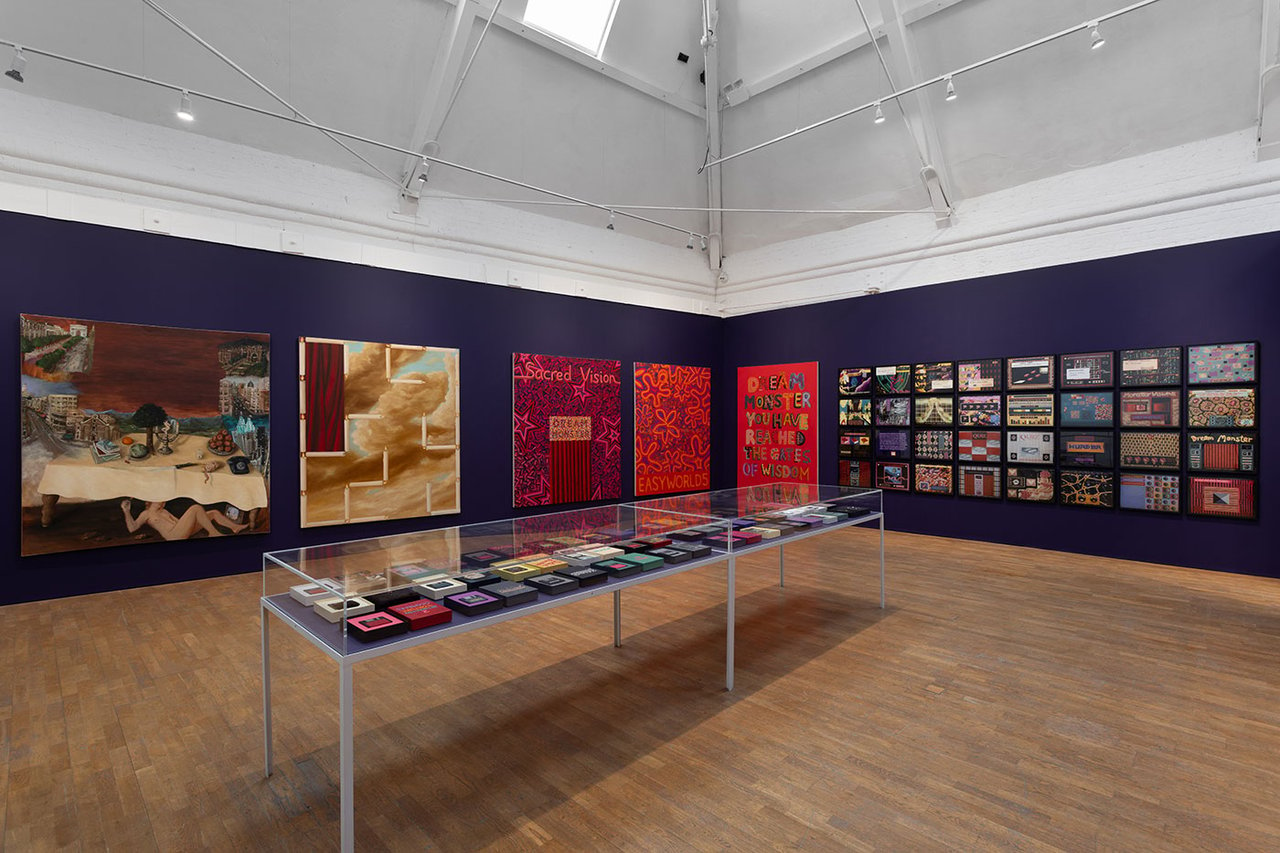
Installation view of “Suzanne Treister: Prophetic Dreaming” at Modern Art Oxford, 2025-26. Photography by Rob Harris. Courtesy of the artist and Modern Art Oxford
HRH: The Text Paintings (1991-92) and Fictional Videogame Stills (1991-92) anticipate how virtual worlds shape our hybrid realities. They herald ongoing themes like worldbuilding, time-travel, and the nature of reality across your projects which interrogate specific qualities or implications of emerging tech and scientific or philosophical concepts.
ST: I’m interested in scientific hypotheses from theoretical particle physics in relation to other ways of gaining insights about the nature of reality and the universe, whether these are actual or not.
There is always the chance that reality is actually elsewhere, out of sight of science or mystical ideas or of any human understanding.
During a five-year period visiting CERN in Geneva, I made several works combining my interests: THUTOAH (2018), testing myHolographic Universe Theory of Art History; The Escapist (Black Hole Spacetime) (2018-19), depicting experiences of a non-specific interplanetary entity of spaces of understanding within, and beyond, those of contemporary science; and Scientific Dreaming (2022), where I carried out workshops with CERN physicists enabling them to write sci-fi short stories foreseeing future scientific breakthroughs that might help restore the planet.
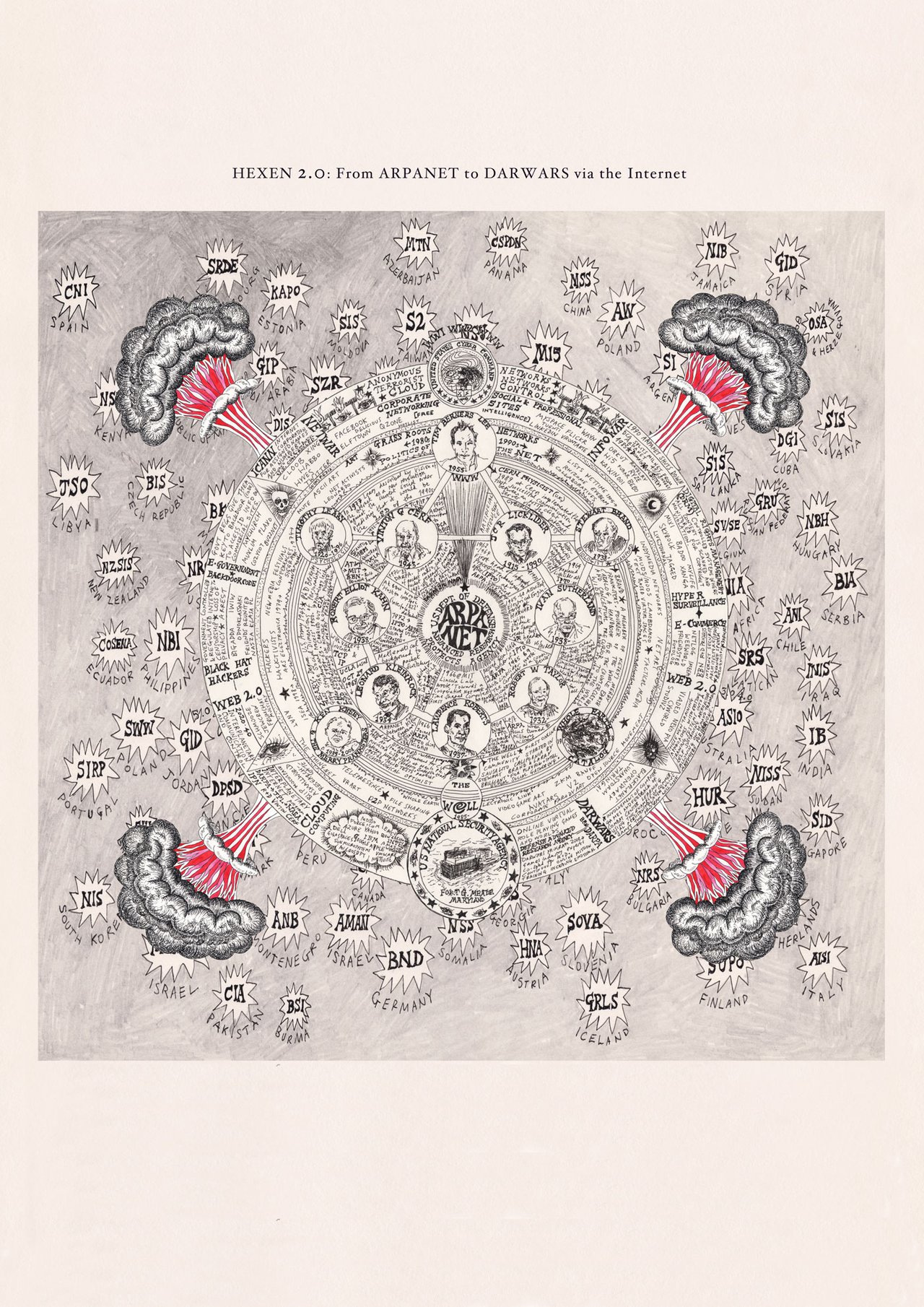
Suzanne Treister, Hexen 2.0 Historical Diagrams (From ARPANET to DARWARS via the Internet), 2009-11. Courtesy of the artist, Annely Juda Fine Art, London, and P.P.O.W. Gallery, New York
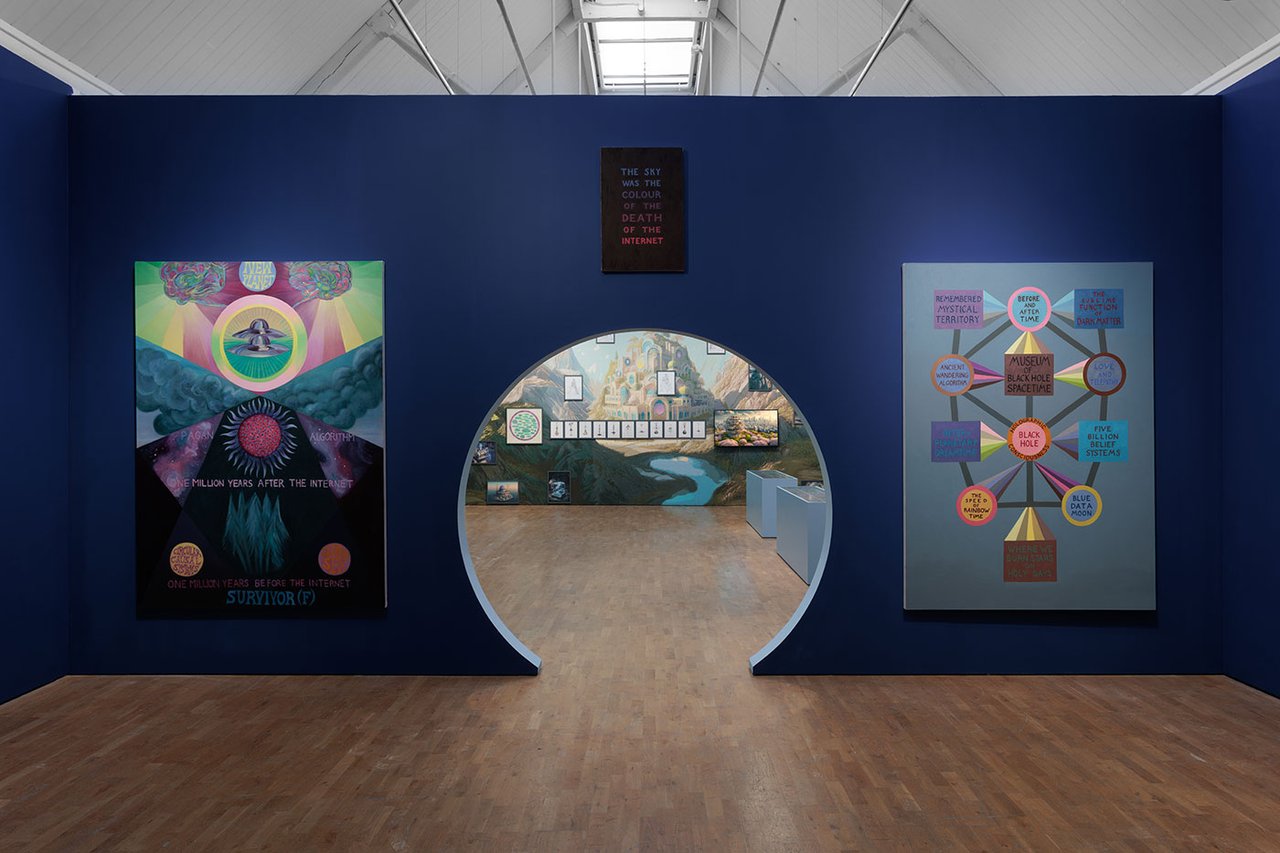
My earlier works include Hexen 2.0 (2009-11), which came out of a 2009 residency in the Texan desert. I had observed a possible connection between the mid-20th-century theories and applications of cybernetics, which arose out of WWII, primarily in the USA where they answered a perceived need for a more controlled society, and our current world of online social media and “Web 2.0”; ‘HFT The Gardener’ (2014-15) is an exploratory investigation into relationships between understandings of the nature of reality in divergent fields such as particle physics, psychedelics, finance, computing, and mysticism; and SURVIVOR (F) (2016-19) is an hallucinogenic exploration of a future reality in undetermined time and space.
It comprises supposed manifestations of either a survivor of the human race, on earth, in space, on a new planet or parallel universe, or an artificial superintelligence (ASI), perhaps transmitted through quantum technology to us on Earth at our moment in time.
HRH: How have your recent explorations with AI continued this?
ST: These are different. Like the internet, AI is a human technology which is causing a massive paradigm shift. So it’s important to try and foresee where this might lead in the short and long term.
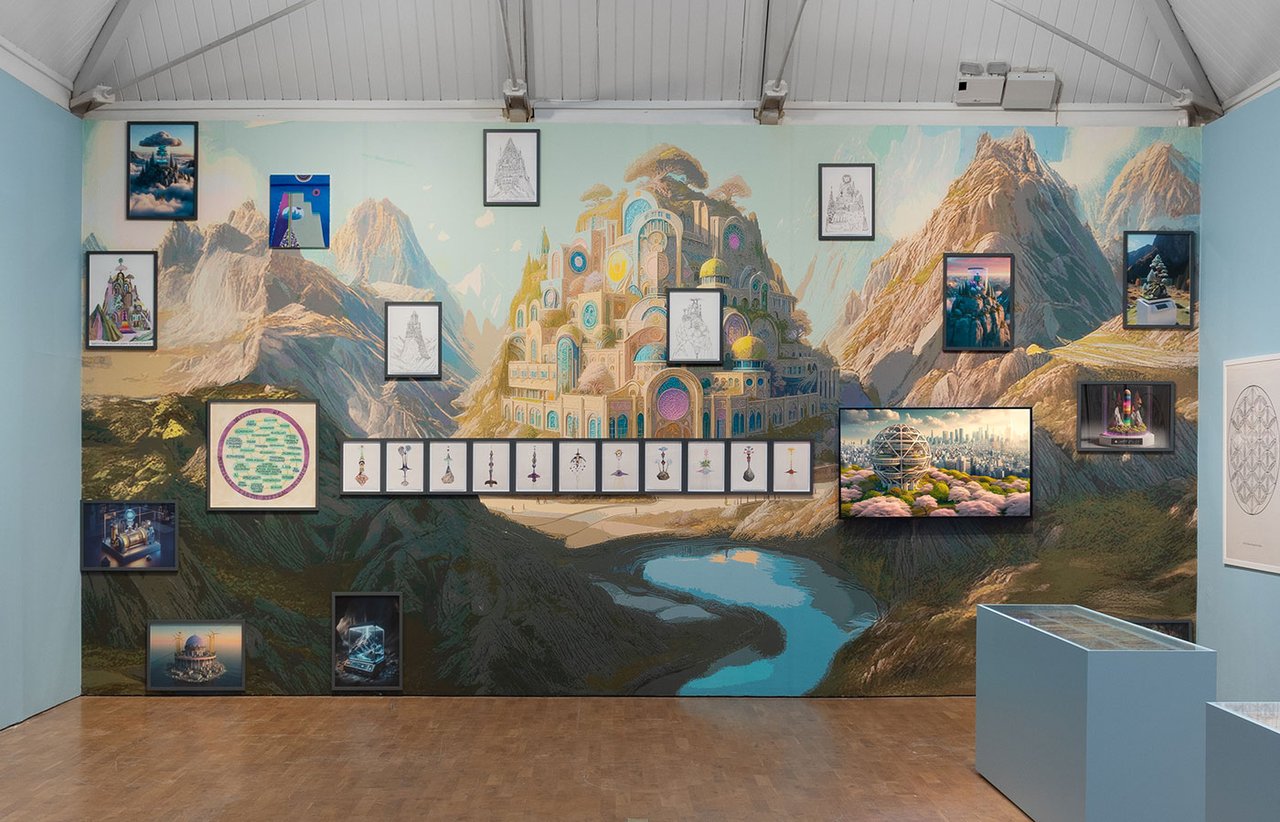
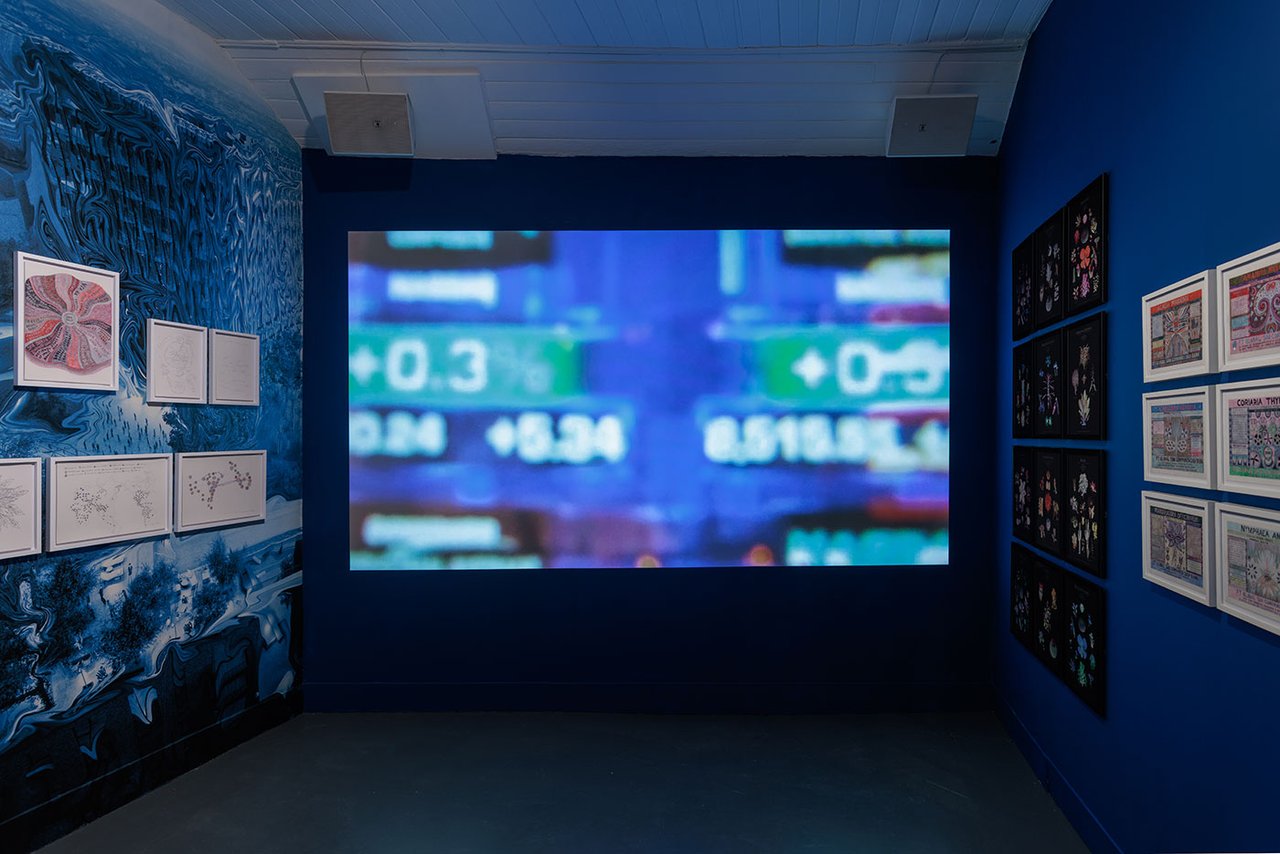
Installation view of “Suzanne Treister: Prophetic Dreaming” at Modern Art Oxford (2025-26) featuring work from the mixed-media series Institute of Mystical Earth System Science, 2024-25. Photography by Rob Harris. Courtesy of the artist and Modern Art Oxford
Despite the hopelessness of arresting the negative effects of AI driven by those seeking profit or control, I have been making work with and about AI to try and imagine how it might be able to heal the planet and ourselves.
The Institute of Mystical Earth System Science (2024-25) embodies a new holistic interdisciplinary field I invented, evolving out of cybernetics, systems theory, the Gaia hypothesis, complexity theory, and Earth System Science, which incorporates contemporary science, mystical, spiritual, and traditional knowledges.
Mystical Earth System Science understands, analyses, and interacts with the planet as a holistic complex system, in an attempt to address the climate crisis by working towards a return to a self-regulating planet.
It proposes a global alliance of Institutes of Mystical Earth System Science for planetary-wide locations, working across the permeable boundary separating scientific inquiry from mystical revelation, towards ethical human sustainability.
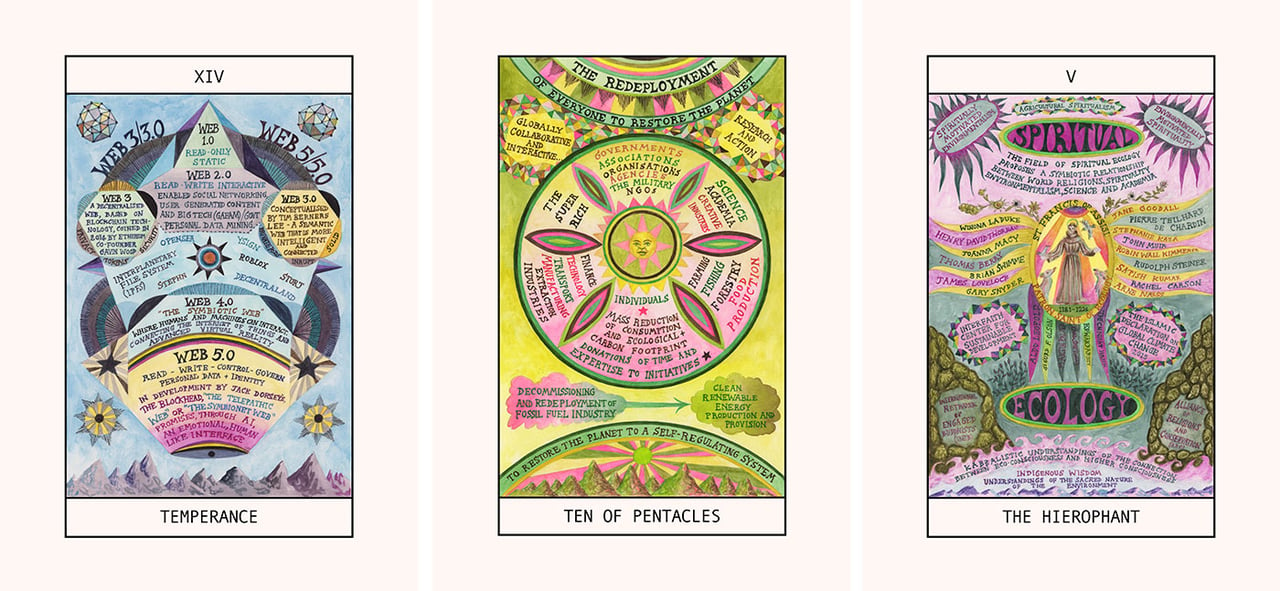
Suzanne Treister, HEXEN 5.0 Tarot, 2023-24. Watercolor on paper / digital prints / published box set. Courtesy of the artist, Annely Juda Fine Art, London, and P.P.O.W. Gallery, New York
HRH: How did you arrive at alchemical drawings, diagrams, and the Tarot sets as structures or “tools” for your narratives?
ST: The visual structure of many of my works derives from alchemical drawings of the 13th to 18th centuries, in which science, art, and religion/spirituality co-exist.
I used these structures for my tarot decks, specifically deploying the format of the tarot to allow audience participation in the engendering of possible new ideas for better futures.
HRH: Jewish mysticism has also been important.
ST: I came upon it in my teens reading various books. I never lost interest in it, it’s been a thread through my life, hanging around waiting for me to look deeper into it. Then, for the project, Kabbalistic Futurism (2021-23), I had the idea to write my own Kabbalistic text and wrote a 46-page manuscript.
Suzanne Treister, No Other Symptoms—Time Travelling with Rosalind Brodsky, 1997-99. Interactive CD-ROM and book. Front and back book cover. Courtesy of the artist, Annely Juda Fine Art, London, and P.P.O.W. Gallery, New York
HRH: Watching the hilarious Rosalind Brodsky Time Travelling Cookery TV Show in which she reverses time to transmutate a German cake into a Polish dessert, I wondered if trying to make sense of what happened to your Jewish relatives led you to try to assert your own artistic control over the vast, dominating systems of political and military control that enabled the events of WWII?
ST: You are totally correct.
Not just WWII but all future systems of control and political and military dominance. That’s what drives a lot of my work.
HRH: Your insistence on the need to pay attention to more intuitive, mystical, “eccentric”, or occult epistemologies, as well as vision and radical imagination, alongside scientific knowledge has led to it sometimes being dismissed as artistic fantasy or accused of conspiracy. Have audiences become more open?
ST: Those older audiences who misunderstood my work are not so active anymore, but for the past few years a lot of younger audiences have gained inspiration from it. They’re tuned into it because they can relate to the ideas. Older audiences didn’t have the mindset or the language before, and there wasn’t a context for it in the mainstream art world.
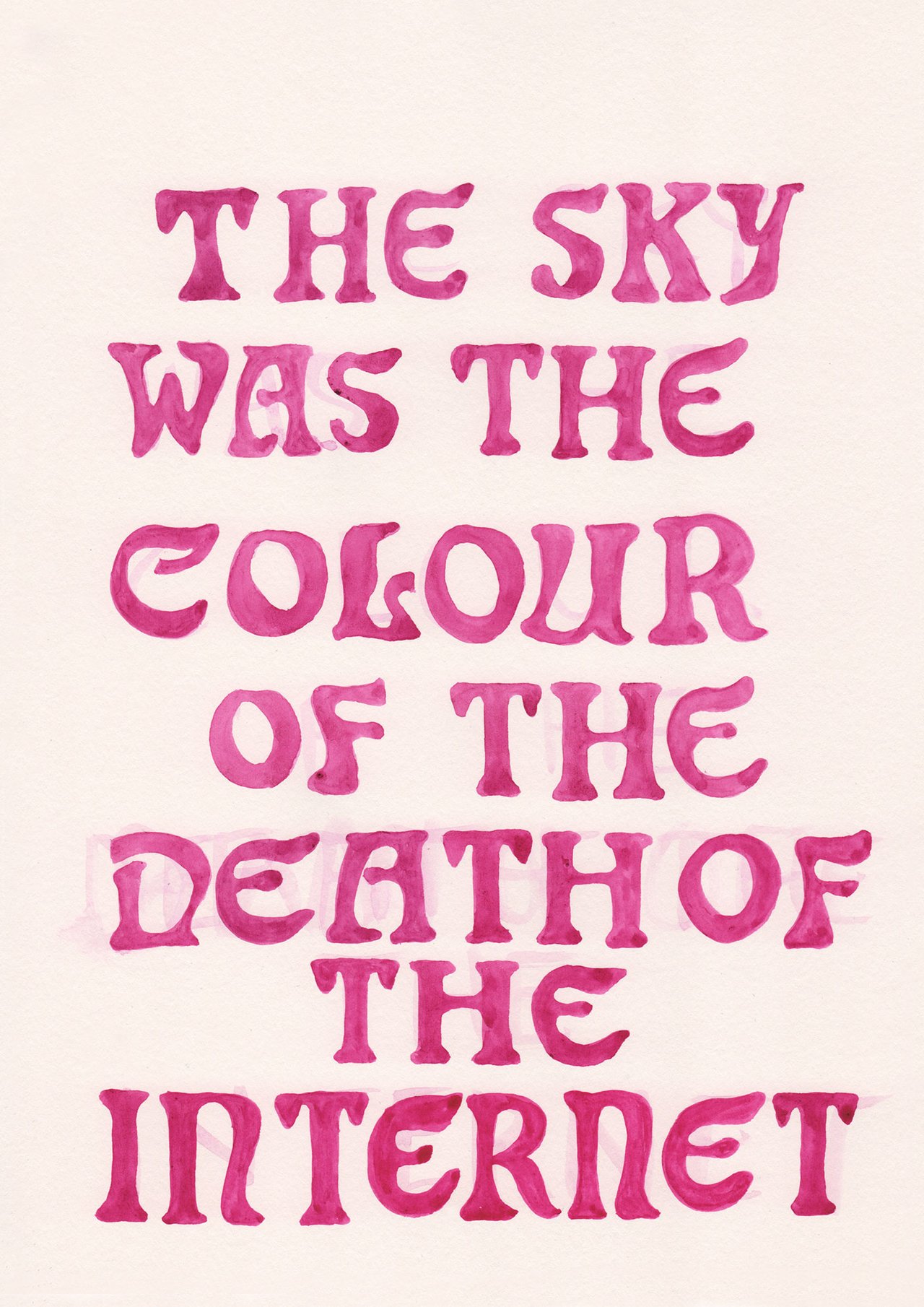
Suzanne Treister, SURVIVOR (F) The Sky Was The Colour Of The Death Of The Internet, 2016-19. Watercolour diagram. Courtesy of the artist, Annely Juda Fine Art, London, and P.P.O.W. Gallery, New York
HRH: Would you say there’s also been a shift in you? HEXEN 5.0 feels no less clear-sighted or critical than HEXEN 2.0, but, like a lot of the later work, also more hopeful. A bit like a guide to potential utopias?
ST: Now feels like a more critical moment than ever so we need clearer positive ideas and hope to move forward in any positive manner. Not towards a utopia, but perhaps towards a more ethical world.
There is no point complaining without proposing alternatives. At a recent HEXEN 5.0 reading the future card came out as THE HANGED MAN — Countercultures of Refusal and Renewal.
HRH: The HEXEN 5.0 Tarot set, unlike Hexen 2.0, includes guidance on how to play.
ST: This was the publisher’s idea. I agreed because I realised that some people needed guidance and confidence to use the HEXEN 2.0 cards productively. There are many other ways to use the cards. We also included the six diagrams in the box which unite all the material from the 78 cards into six interconnected maps, which could support group discussion.
Installation view of “Suzanne Treister: Prophetic Dreaming” at Modern Art Oxford (2025-26) featuring HFT The Gardener, 2014-15. Photography by Rob Harris. Courtesy of the artist and Modern Art Oxford
HRH: Responding to the exhibition title, what’s been your greatest prophecy?
HRH: Do you think being “para-disciplinary” has impacted how people have responded to your work? Until this exhibition, which positions you as a “pioneering digital and para-disciplinary” artist I’ve never seen you described as a digital or media artist. Does this mean the art world’s ready?
ST: That’s interesting because I’ve been in loads of shows where I’ve been described in the bio as a pioneer in the new media field since the late 1980s, but not necessarily categorized as a new media artist. There is a big difference.
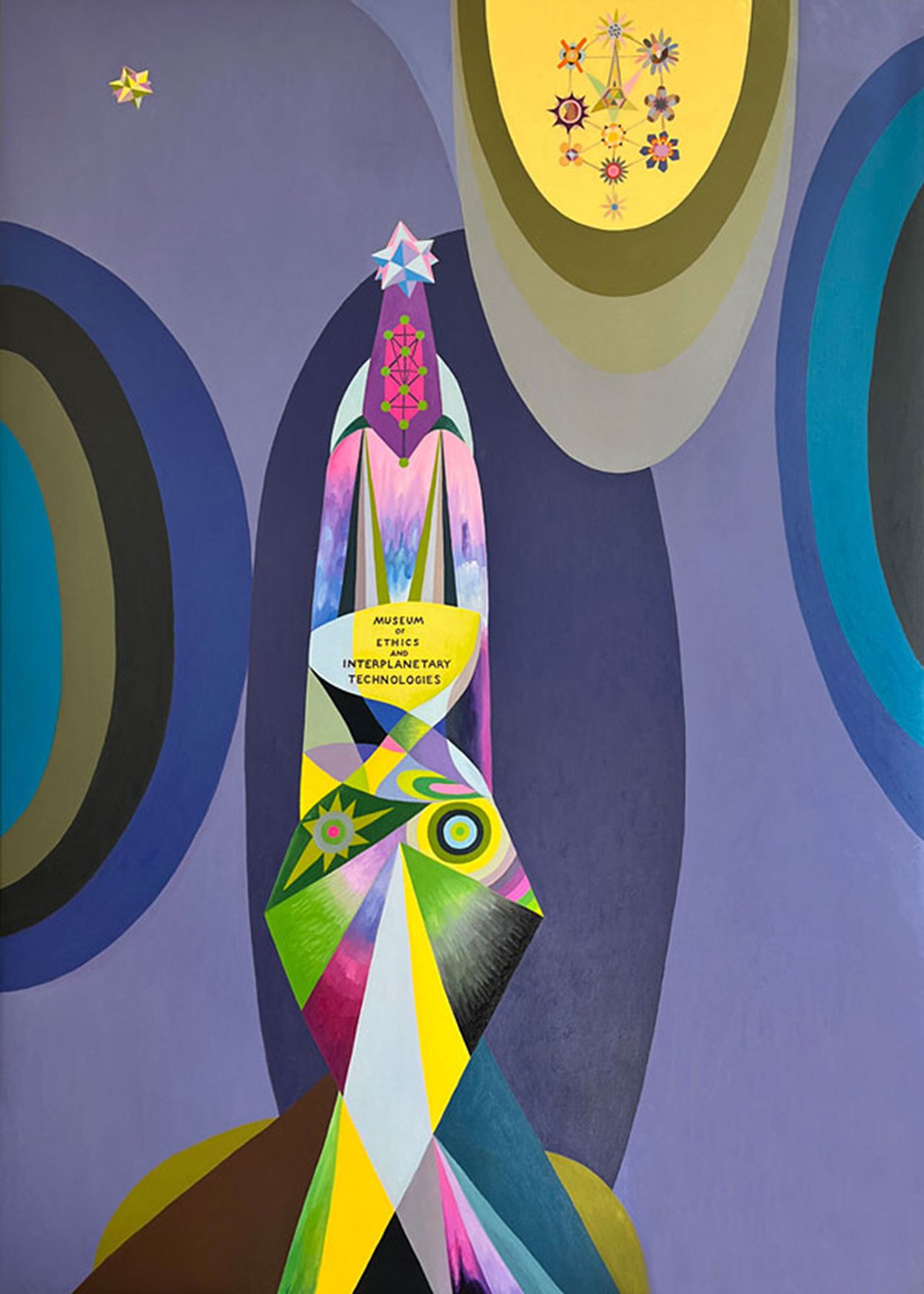
Suzanne Treister, Kabbalistic Futurism/Architectures/ Museum of Ethics and Interplanetary Technologies, 2023. Oil on canvas. Courtesy of the artist, Annely Juda Fine Art, London, and P.P.O.W. Gallery, New York
I was largely showing in the new media art world through the 1990s, exhibiting in festivals where it was a given that one was a new media artist.
I still take part in festivals like transmediale in Berlin, even with works about technology on paper. But mainstream art-world shows I took part in up to now in the UK were not including new media work until recently. They didn’t categorize my work as new media, but situated it within the curatorial theme of the show.
I never liked boxes, so I don’t call myself a new media artist or a woman artist or a painter, and I don’t only feel like an artist in the art world. A lot of my audiences are outside the art world working in fields I touch on in my work. I guess I am more about subject matter and the transformational power of art than about the media I use to get there.
Installation view of “Suzanne Treister: Prophetic Dreaming” at Modern Art Oxford, 2025-26. Photography by Rob Harris. Courtesy of the artist and Modern Art Oxford
HRH: Returning to your website, curator Jessie Robertson argues that as much as being an archive and distribution center for your work, it stands as one of your key artworks. Is she onto something?
ST: My website’s 30 this year. It began as a home for web-based projects, but I eventually added all my previous and subsequent works to it, even childhood drawings. It’s more comprehensive than any show I could ever have and is a free resource for anyone who has internet access, which means a lot to me.
I also feel good about making books about my projects as they can reach broader audiences than exhibitions, and perhaps books will outlive the internet. Until the day that everything burns.
Suzanne Treister (b. 1958, London, UK) studied at St Martin's School of Art, London (1978-1981) and Chelsea College of Art and Design, London (1981-1982) and is based in London and the French Pyrenees, having lived in Australia, New York and Berlin. Initially recognized in the 1980s as a painter, she became a pioneer in the digital/new media/web-based field from the beginning of the 1990s, making work about emerging technologies, developing fictional worlds and international collaborative organisations. Utilising various media, including video, the internet, interactive technologies, photography, drawing and watercolour, Treister's work has engaged with eccentric narratives and unconventional bodies of research to reveal structures that bind power, identity and knowledge. Often spanning several years, her projects comprise fantastic reinterpretations of given taxonomies and histories that examine the existence of covert forces at work in the world. An ongoing focus of her work is the relationship between new technologies, society, alternative belief systems and the potential futures of humanity.
Recent solo and group exhibitions include: “Suzanne Treister: Prophetic Dreaming”, Modern Art Oxford (2025); 5th Industrial Art Biennial, Croatia; 13th Seoul Mediacity Biennale, Korea; The Warburg Institute, London (2025); Tate Modern, London; Kunsthalle Wien, Vienna; United Nations, New York (2024); 14th Shanghai Biennale; Museion Bolzano, Italy; Centre Pompidou-Metz; Helsinki Biennial, Finland; ARoS Kunstmuseum, Denmark; P.P.O.W. Gallery, New York (2023-4), High Line, New York; Plateforme 10, Lausanne; Hayward Gallery Touring; Albertinum, Dresden; Somerset House, London; Palace of Culture and Science, Warsaw (2022).
Hannah Redler-Hawes is a curator known for her pioneering work in arts-led interdisciplinary and digital projects. She has been commissioning and curating digital and media art since the early 1990s, including the first interactive software and neural net-based installation art to be acquired by the national collections. Between 1999 and 2014 she led a contemporary art programme at Science Museum London, where she had the privilege of premiering Suzanne Treister’s Hexen 2.0 in 2012. Hannah’s curatorial practice convenes outstanding artists, scientists, technologists, experts by experience and world-class arts, science and cultural organisations to create award-winning new artworks, exhibitions, programmes, research projects and events across disciplines, but specialising in participation, interaction and the emerging fields of data and AI. Her work champions the essential roles of artists alongside researchers, educators and activists in imagining alternative modes or spaces for people and other living beings to live well and in finding ways for ethical and equitable practices to take hold across technologies. She combines her independent practice with her role as an Open Data Institute (ODI) Associate, directing Data as Culture art programme. Hannah trained as a painter at Camberwell and Norwich Schools of Art and in curating contemporary art at the Royal College of Art. In 1993 she co-founded one of London’s first interactive multimedia software companies with other artists, designers and friends.