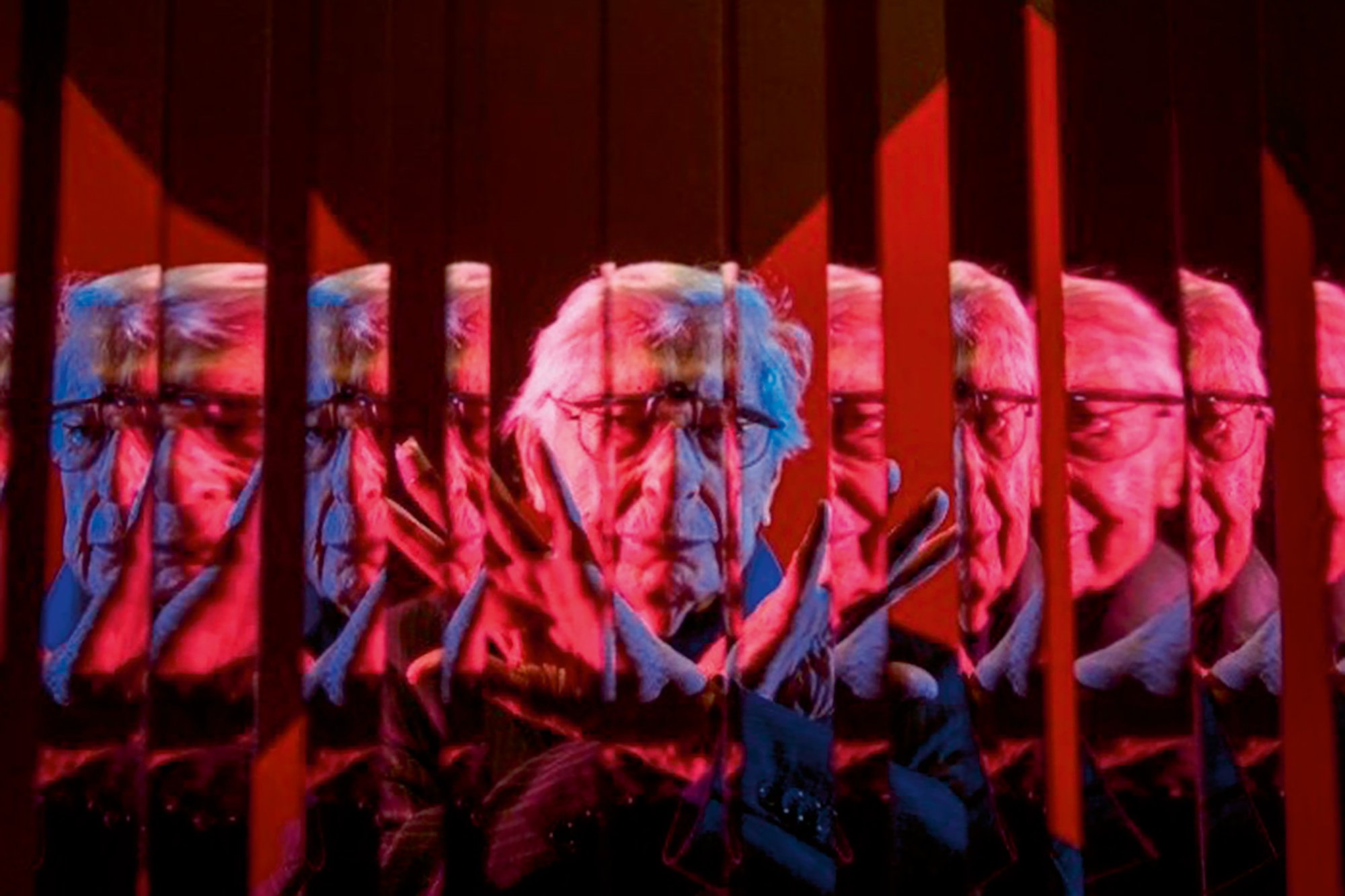
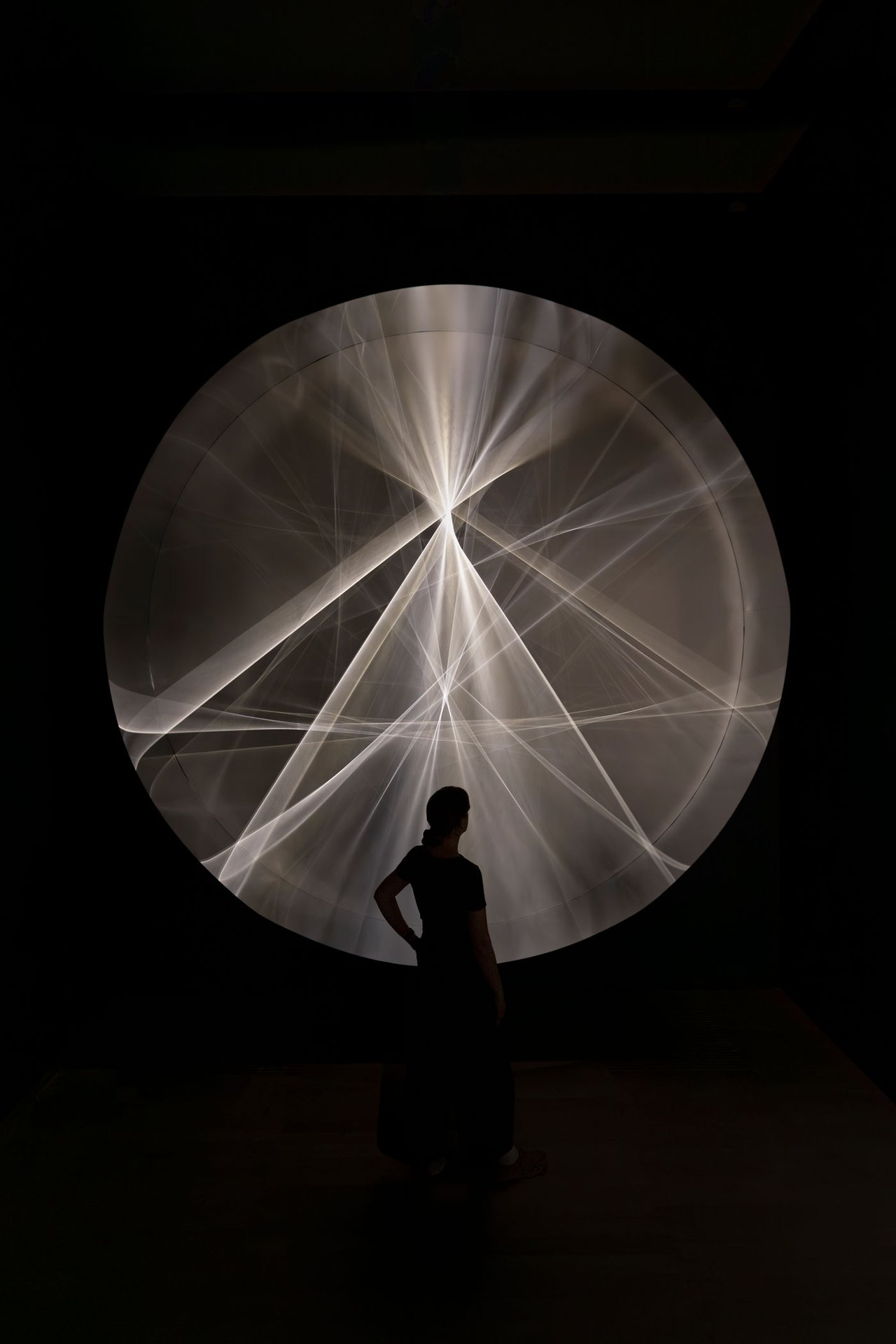
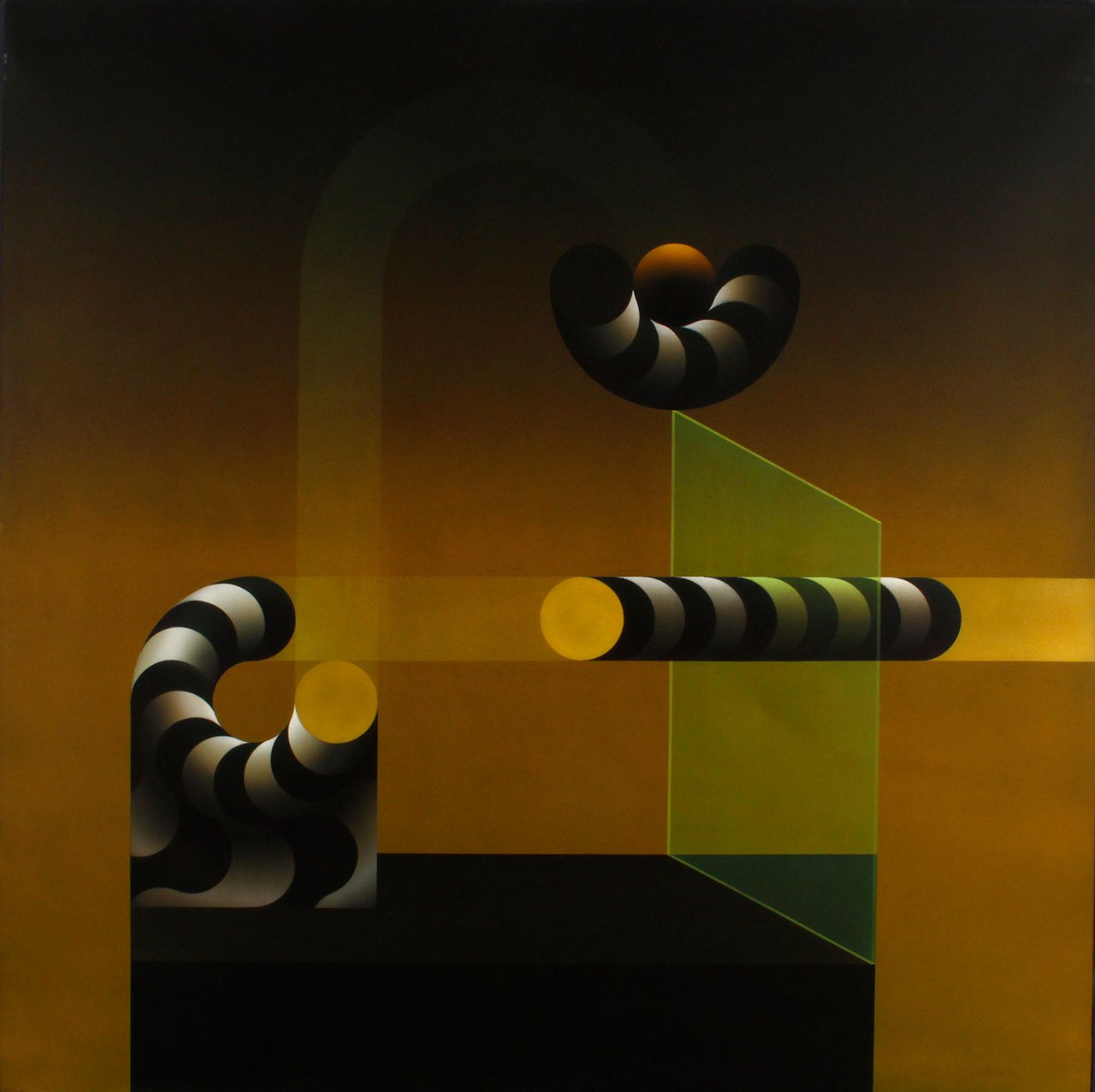
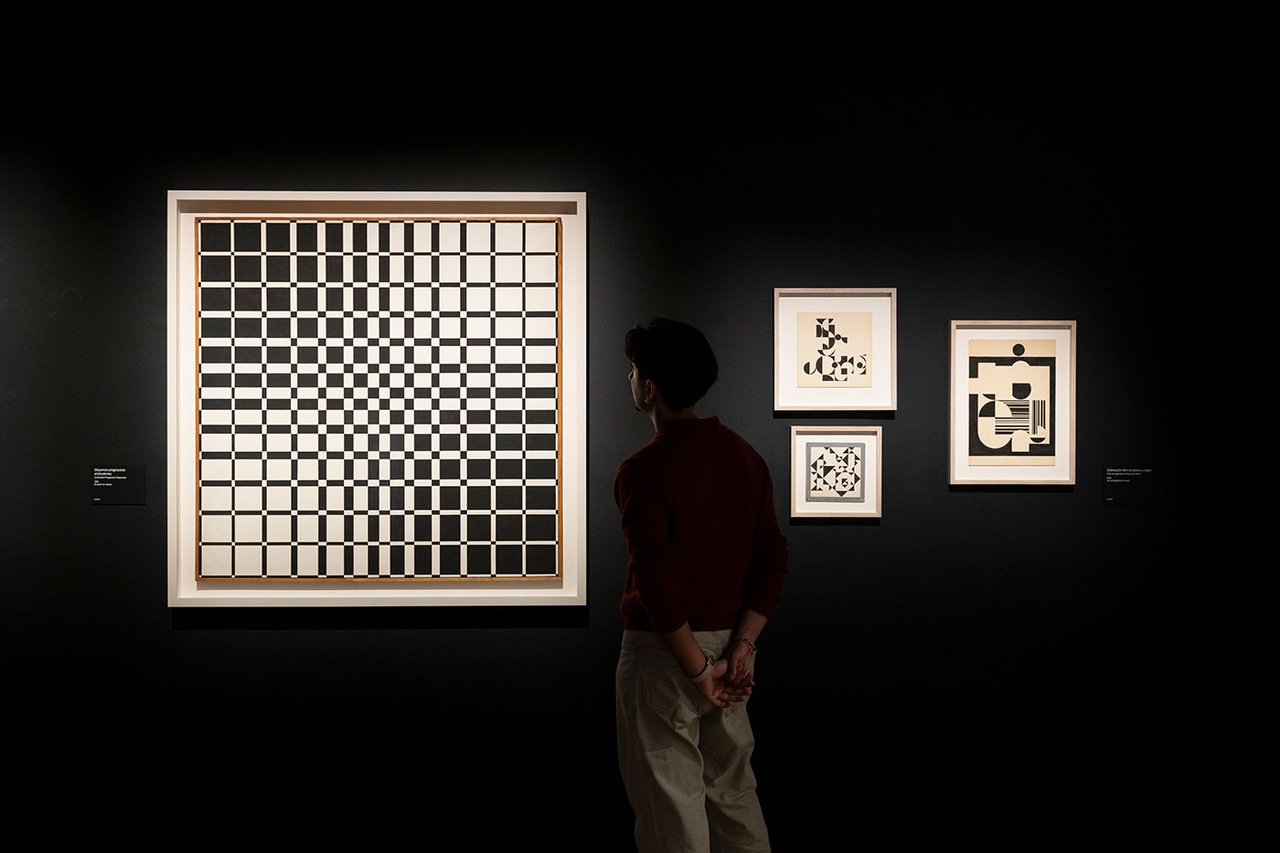
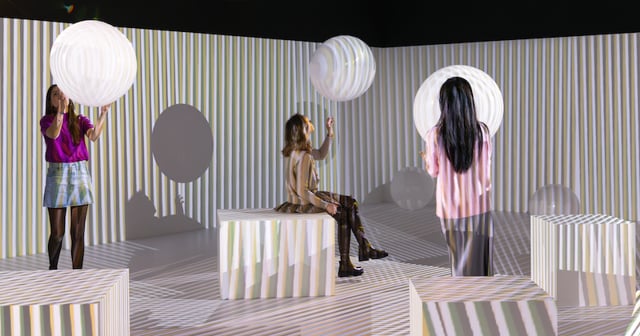
“Julio Le Parc | Light. Colour. Action”, a survey of the artist’s interactive installations, light sculptures, and geometric paintings, curated by Val Ravaglia and Francis Hardy, is at Tate Modern, London until May 3, 2027
I met Julio Le Parc in Paris in January 1969. It was a week before my 15th birthday. I had travelled from Brazil to Europe to meet my relatives with my Italian-born father Waldemar Cordeiro, a leading proponent of computer art and concrete art. Le Parc was introduced to me as an Argentinian artist living in France. My Italian-Brazilian father and Le Parc had much in common, starting with the physical impression they made. Both were tall, handsome, men, imbued with Latin American culture. Julio was very tall, but my father was two centimetres taller. Both were concerned with the avant garde in art, with transforming the status quo, and with the promotion of human rights and progressive politics.
At the same event in Paris I encountered Pierre Restany, the French philosopher-critic. And another, very special, person: Denise René, the Paris-based gallerist specialising in abstract and kinetic art. There she was, this courageous woman, who had bet on abstract and kinetic art, supporting Julio in his new art form as he joined the cultural battles of 1960s Paris.
René was tough, she took risks, while managing her gallery as a business. I was amused as a curious teenager to see this petite woman issuing orders to these two large, physically imposing, men: “This I like; this I don't like. This I want; this I don't want.”
Restany, the founder in 1960 of Nouveau Réalisme, under whose banner he brought together the work of artists such as Yves Klein, Arman, Niki de Saint Phalle, and Jean Tinguely, was an important figure in the Paris art world of the day. He loved Brazil, was close to my father, and later took me seriously as an artist, recognizing my earliest work, when I was barely in my twenties.
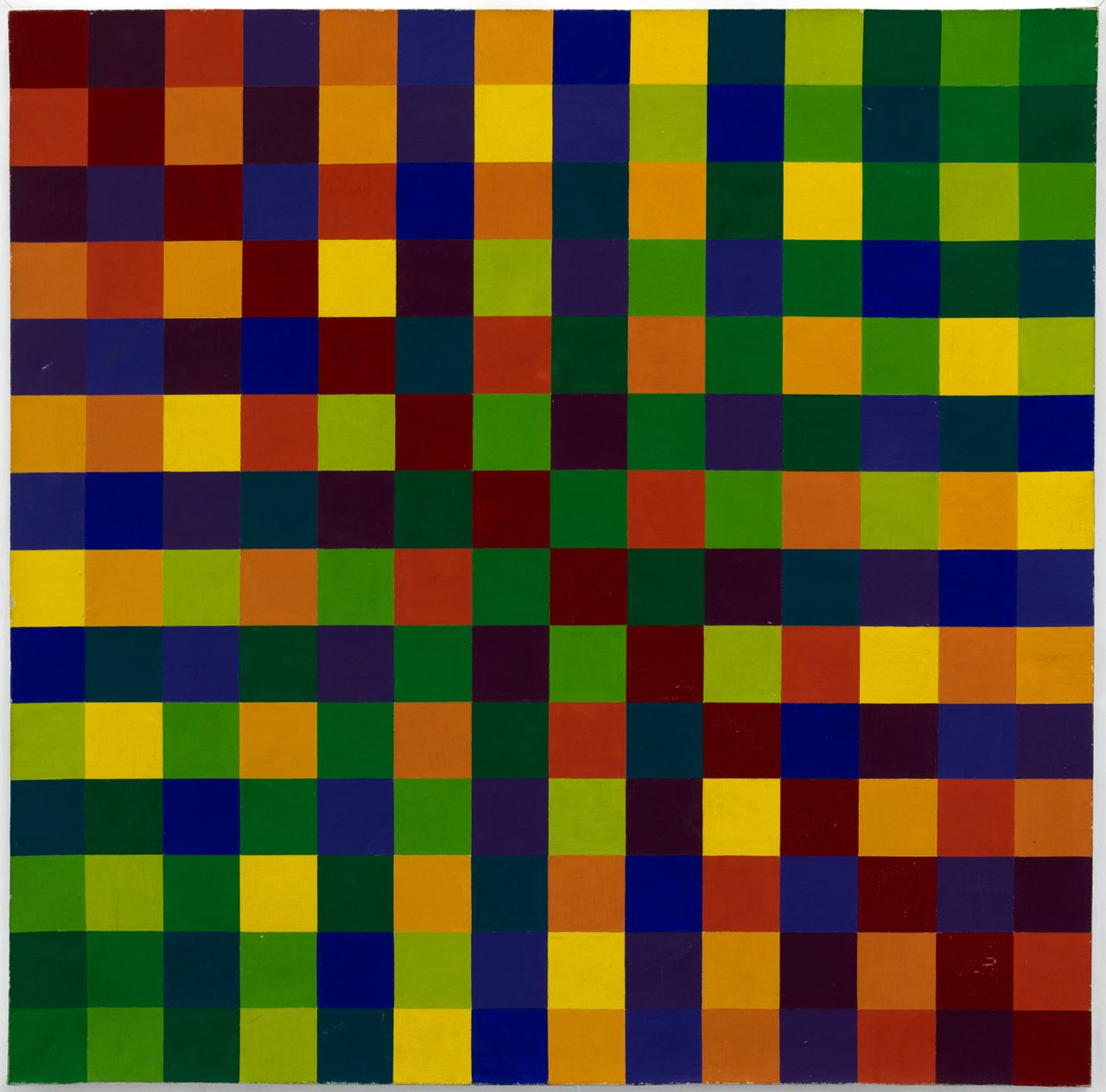
I remember the first impression Le Parc’s work made on me. It was a group of physical paintings, none of them large, no more than 50 to 70 centimetres wide. They were not trying to be “big” or impressive. Instead, they drew you in; encouraging you to draw close to the painting, and to the paint. To take your time. Le Parc had been embarked since 1960 on his voyage with light, translucent materials, and kinetic art. Like my father, he was exploring a new point of view in art history, examining how the eye feeds particular kinds of visual effects to the brain, and to the cognitive self.
Paris in the late 1960s was enjoying a moment of cultural freedom and self-discovery. Concrete art and kinetic art, which look so clean, so non-political, were part of this atmosphere of political, social and sexual freedom.
Kinetic artists like Le Parc and the movement’s founder, Victor Vasarely, were researching the interaction of the eye and the brain, but at the same time society was accepting new points of views, not just through this kind of art but in every aspect of life.
People were looking around and seeing things they had never seen before. It was a real societal “moment”. That was one of the reasons Le Parc’s work was so well received in Paris in the 1960s; so attuned to the times. Just as the hippy movement used bright colors in the mid-1960s, so Le Parc used bright colors, but his were more primary, more classical. It was a time when life was being rebuilt. And Le Parc took advantage of this moment in his work.
The kinetic artists were, like the concrete artists, and the constructivists, on a particular quest. To create effects for the viewer to interact with. Were these effects mathematically intelligent enough, they asked, or elaborate enough, in the effect they had on the viewer?
And then, running in parallel, there was the work of Umberto Eco, as set out in Eco’s text Opera Aperta (1962), with its thesis that “open works” need audience participation to find, or complete, their meaning. Eco opposed the idea of art as a mental phenomenon communicated, unchanged, from the mind of the artist to the mind of the viewer. Art can exist, he argued, only because of the involvement of the public, and the movement, or sense of displacement, they bring to it.
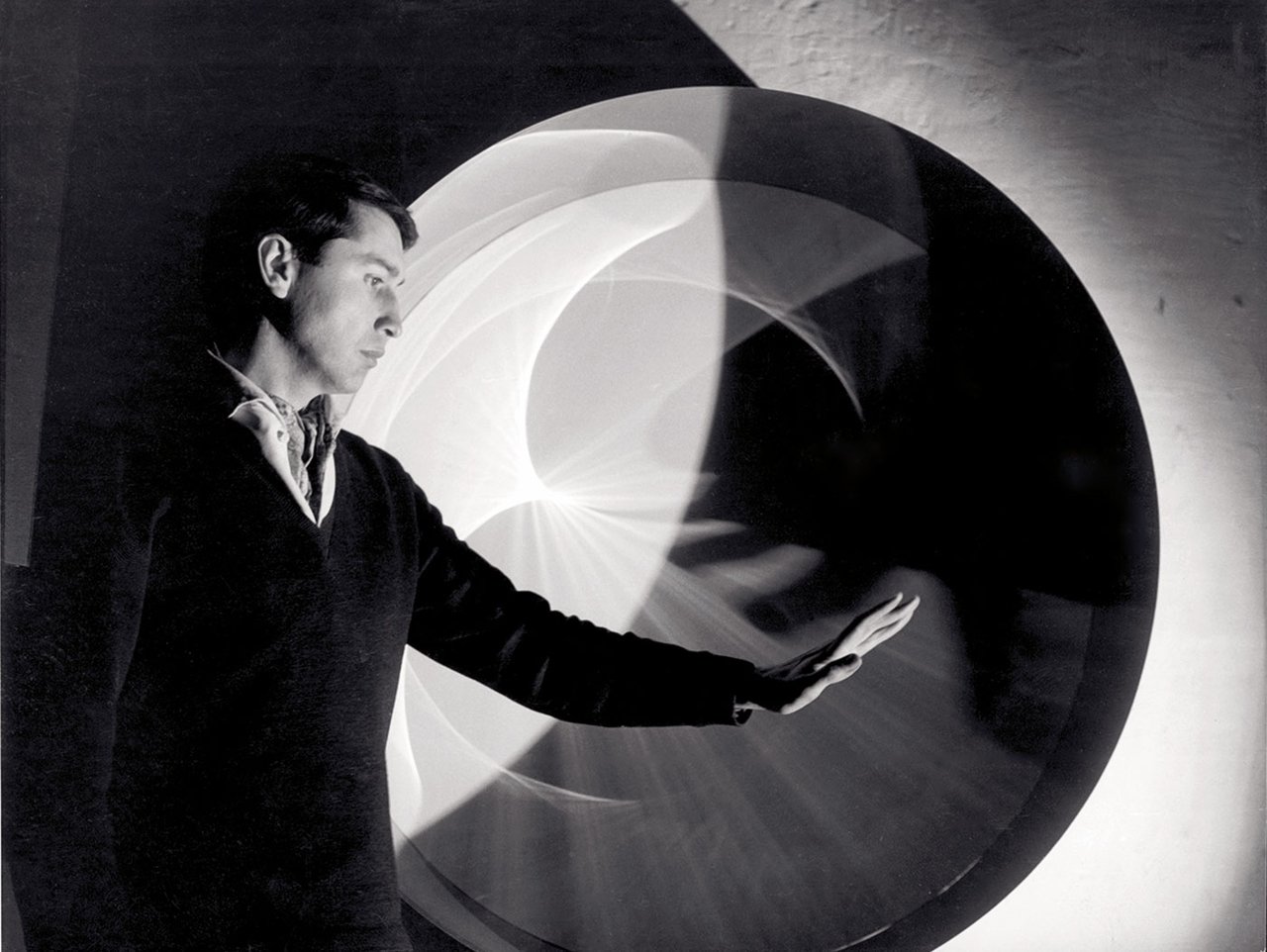
Eco’s framing brings out a critical element of Le Parc’s kinetic work. Le Parc factored in the movement of the viewer’s body, in order to allow the eye a different perspective on the work. So that, for Le Parc, the work cannot exist if the viewer does not move in space. The art becomes completely dependent on the relationship between the work and the viewer. It cannot exist without the public, while the public in turn does not exist, cannot complete itself, without the work.
Le Parc’s work comes alive through a mix of its visual effects and the movement of the viewer; and through the artist’s very Latin American sense of color. In Latin America the sun is bright. Life is filled with color. Bright colors feel familiar. Le Parc was at home with bright palettes.
When I close my eyes and think of Le Parc’s work, the image that comes to mind is of enlivening, awakening, colors: red, orange, yellow, blue. Nothing grey.
Le Parc researched the effect of colors. His was a scientific, conceptual approach, but his finished work touches the mind, the body, the soul, in memorable fashion. His works are so clear in their intention. They are direct, and transmit exactly what he was trying to say. They imprint themselves on the viewer’s mind, and they stay there, because they have one, clear, message, exactly expressed, with the same level of clean visual quality, whether it be in his smallest works or his largest installations.
Julio Le Parc chose the bright side of life; to be an optimist. It is a choice people make in life, and he chose to be light and to enjoy people. This comes across in his work, with its clear intention, and in the sense of order it brings to the viewer’s mind, and with it a sense of wellbeing.
It might seem strange to associate a subjective sense of wellbeing with matters of kinetics, and of geometry, but Le Parc’s work is drenched with feeling, and a powerful sense of emotion.
In person, Le Parc cut, to the end of his life, an elegant figure. He was warm, open, and happy; free from anguish. He took daily pleasure in life, and in interacting with others. I was very familiar with his work, but when I saw him in Brazil, or Paris, we would enjoy good wine together, and talk about so much besides art, about the everyday concerns of life and death.
Le Parc liked life as it is. He needed no stimulants. He was open and welcoming to all, and gave genuine hugs. He was a model of courtesy. But, like my father, he needed no cultural heroes, no one to represent or act for him, because, like my father, he had a profound sense of his personal worth, both as a man and as an artist.
A story of my father’s from the 1940s might easily have been told of Julio Le Parc. My father lived in Rome as a young man and, at the end of the Second World War, he drew caricatures for the satirical socialist weekly newspaper Il Pettirosso, where his friend Federico Fellini also wrote jokes and drew caricatures. Fellini asked my father and Marcello Mastroianni if they wanted to be in the movies he was writing at the time, as they were both such good-looking men. And my father answered, “I cannot play any other role besides my own. I am myself.” Le Parc had a similar type of unassailable artist’s ego. A powerful sense of his own self-worth.
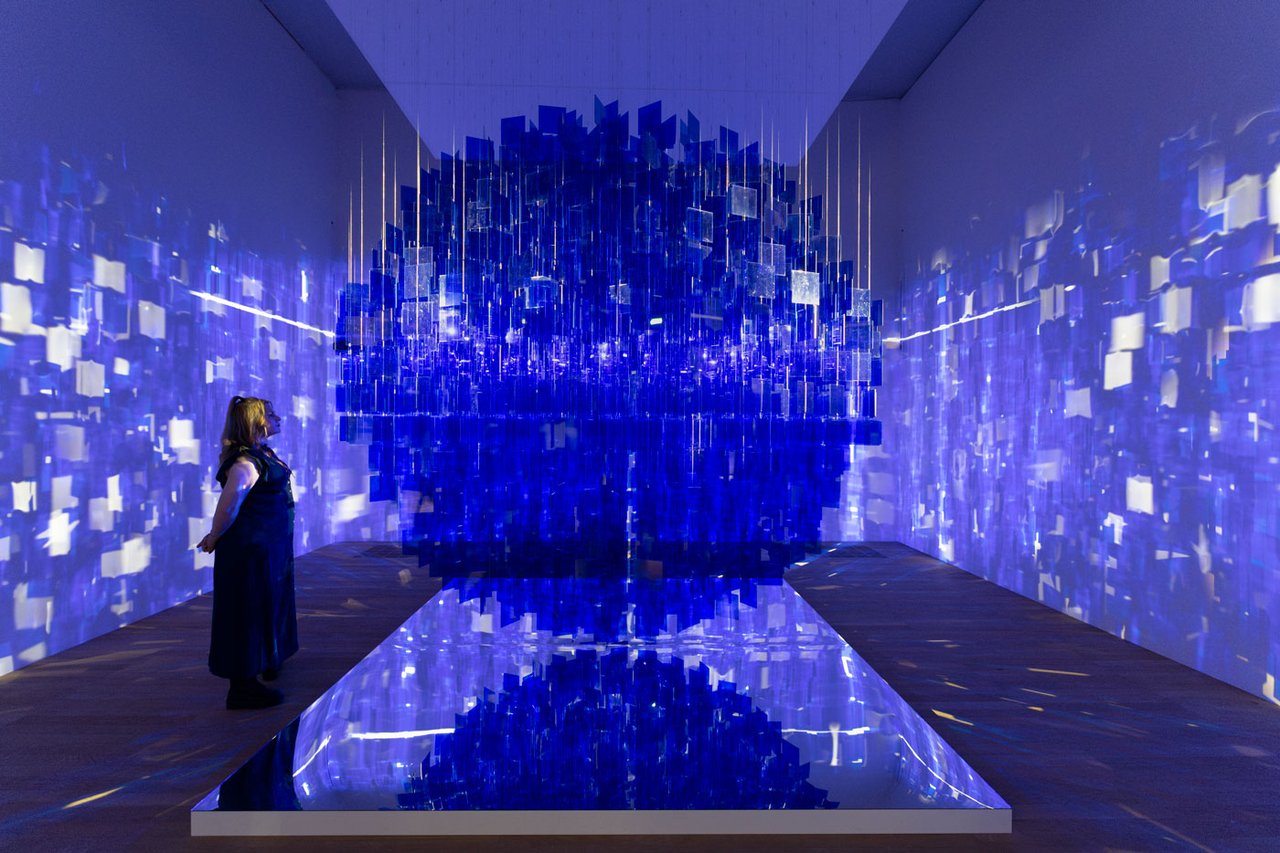
Installation view of “Julio Le Parc | Light. Colour. Action” at Tate Modern, London. Photography by Kathleen Arundell
Le Parc lived into his late nineties, and sadly died just before the opening of his retrospective at Tate Modern, with whose planning he had been much involved. In the last 15 years he was the subject of other substantial exhibitions both in the Americas and in Europe: at Palais de Tokyo, Paris (2013); Serpentine, London (2014–15); Perez Art Museum Miami (PAMM), Miami (2016); the Metropolitan Museum of Art, New York (2018); and the Centro Cultural Kirchner, Buenos Aires (2019).
When an artist receives critical attention late in life it is too easy to say that they are somehow being rediscovered. In these late-career survey exhibitions Le Parc was not being rediscovered, he was being seen. People today see his work and they learn from it, because he has something to teach: how to make bright, strong, unforgettable work, using simplicity and purity.
Le Parc’s work demonstrates that you can be bright in your expression, you can be happy, without having to be messy. You can be clear and simple in your methods, without trying to do too much. The simpler the better. Only one in a million have, like Julio Le Parc, what it takes to achieve that.
Julio Le Parc; born Palmira, Mendoza province, Argentina, September 23, 1928; Grand Prize for Painting, Venice Biennale 1966; Chevalier de la Légion d'honneur 2014; married 1959 Martha Boto (died 2025; marriage dissolved; three sons); died Paris May 30, 2026.
Analivia Cordeirois a Brazilian dancer, choreographer, and artist who pioneered the use of computers and video in the design and performance of dance. Born in 1954, she is the daughter of concrete artist Waldemar Cordeiro. Since the 1970s, she has developed innovative methods for notating and capturing human movement using digital technologies. Her work M 3×3 (1973) is considered one of the first computer-generated choreographies. She continues to explore the intersection of technology and embodied experience through projects such as BodyWays, an app that allows users to capture and share their movements. Her work has been exhibited and performed globally and is included in collections such as MoMA, New York; V&A, London; and the Reina Sofia, Madrid.