An Artist of Infinity | Remembering Yayoi Kusama 1929-2026
Japanese trailblazer was instantly recognizable for her polka dots, pumpkins and distinctive personal style. Her Infinity Mirror Rooms became a transformative backdrop to a natively digital generation
“Yayoi Kusama”, a major retrospective, is at Stedelijk Museum Amsterdam, September 11, 2026 to January 17, 2027. The exhibition was formerly at Fondation Beyeler, Basel (October 2025 to January 2026) and Museum Ludwig, Cologne (March to August 2026).
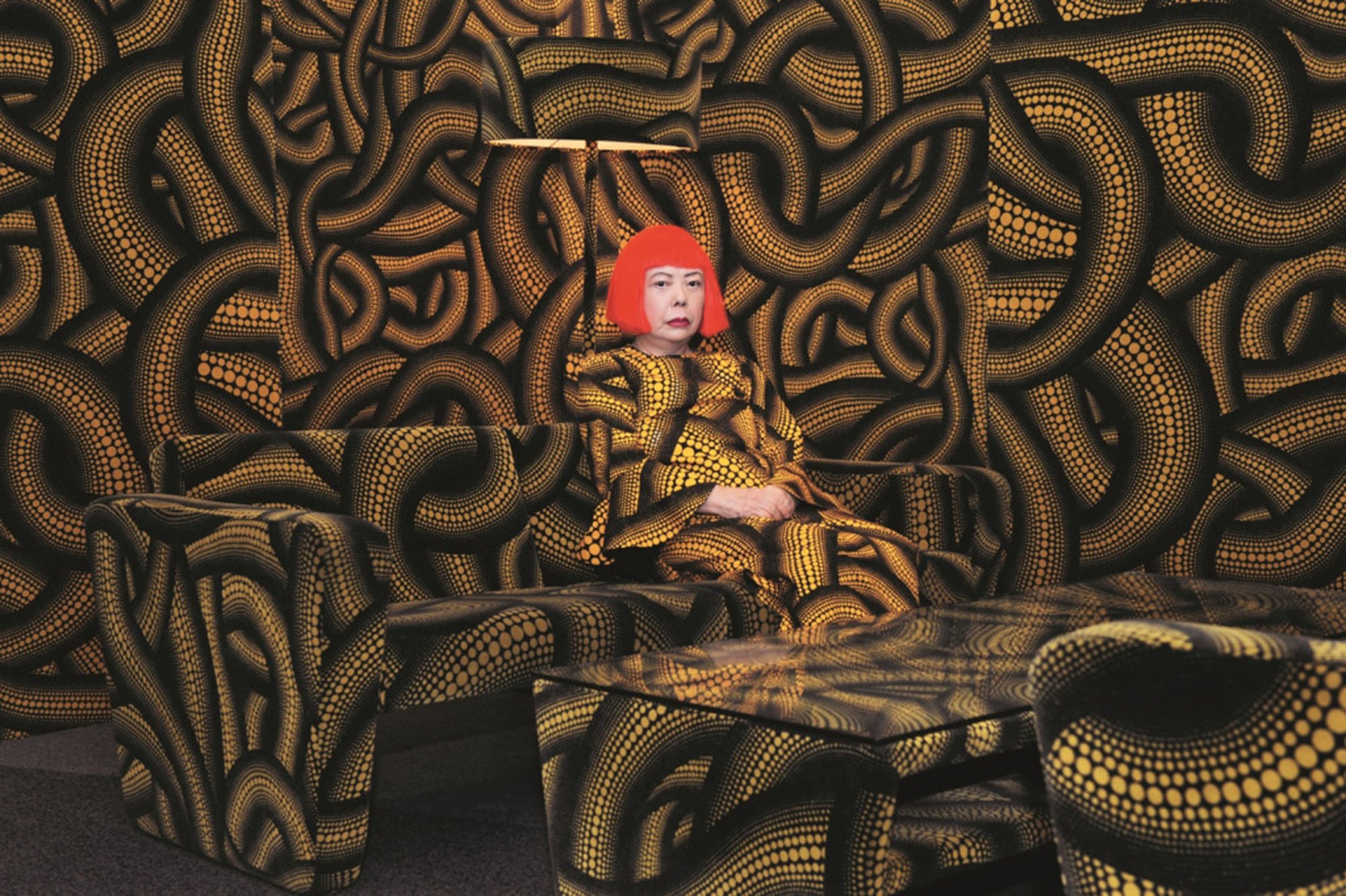
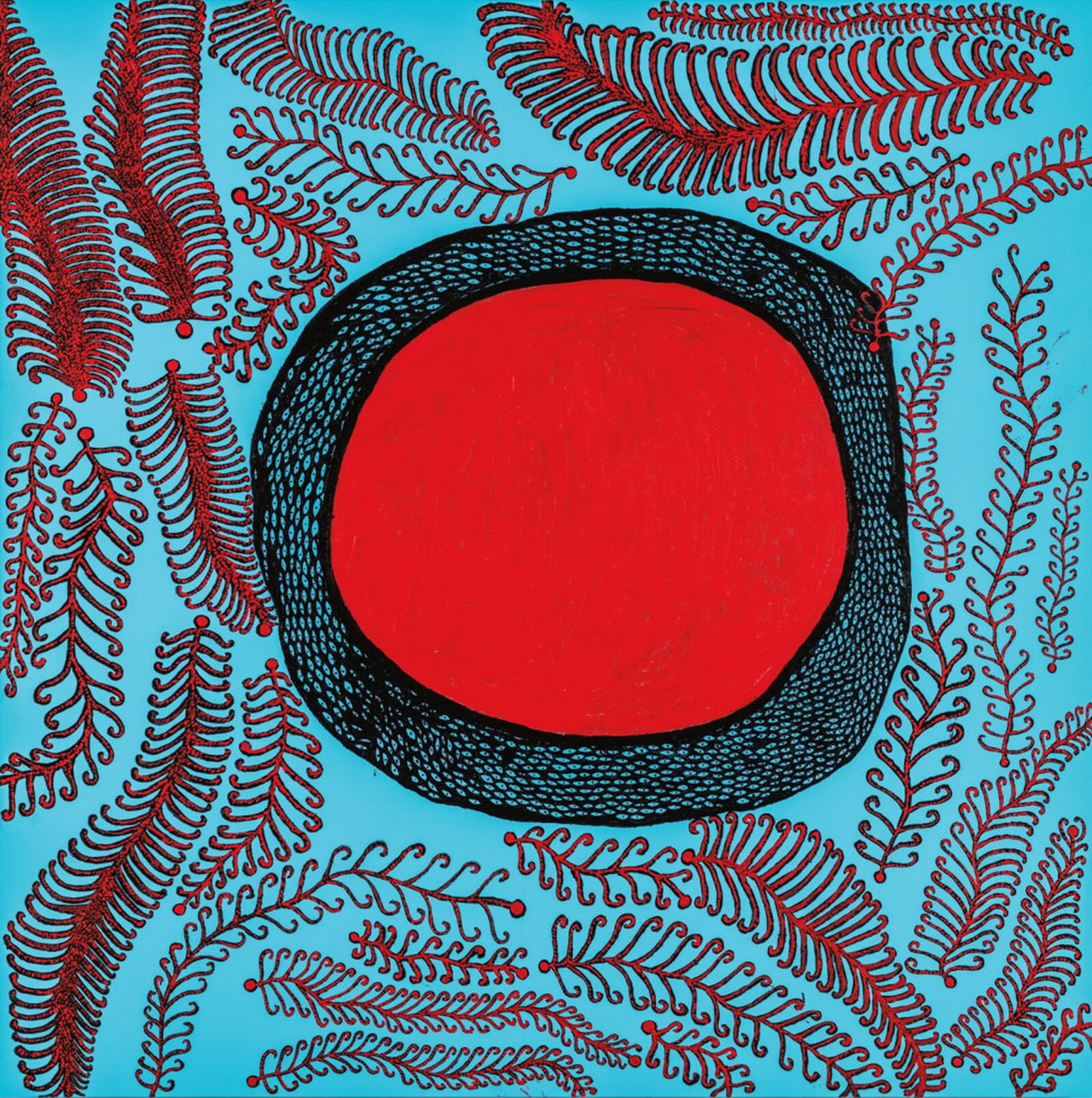
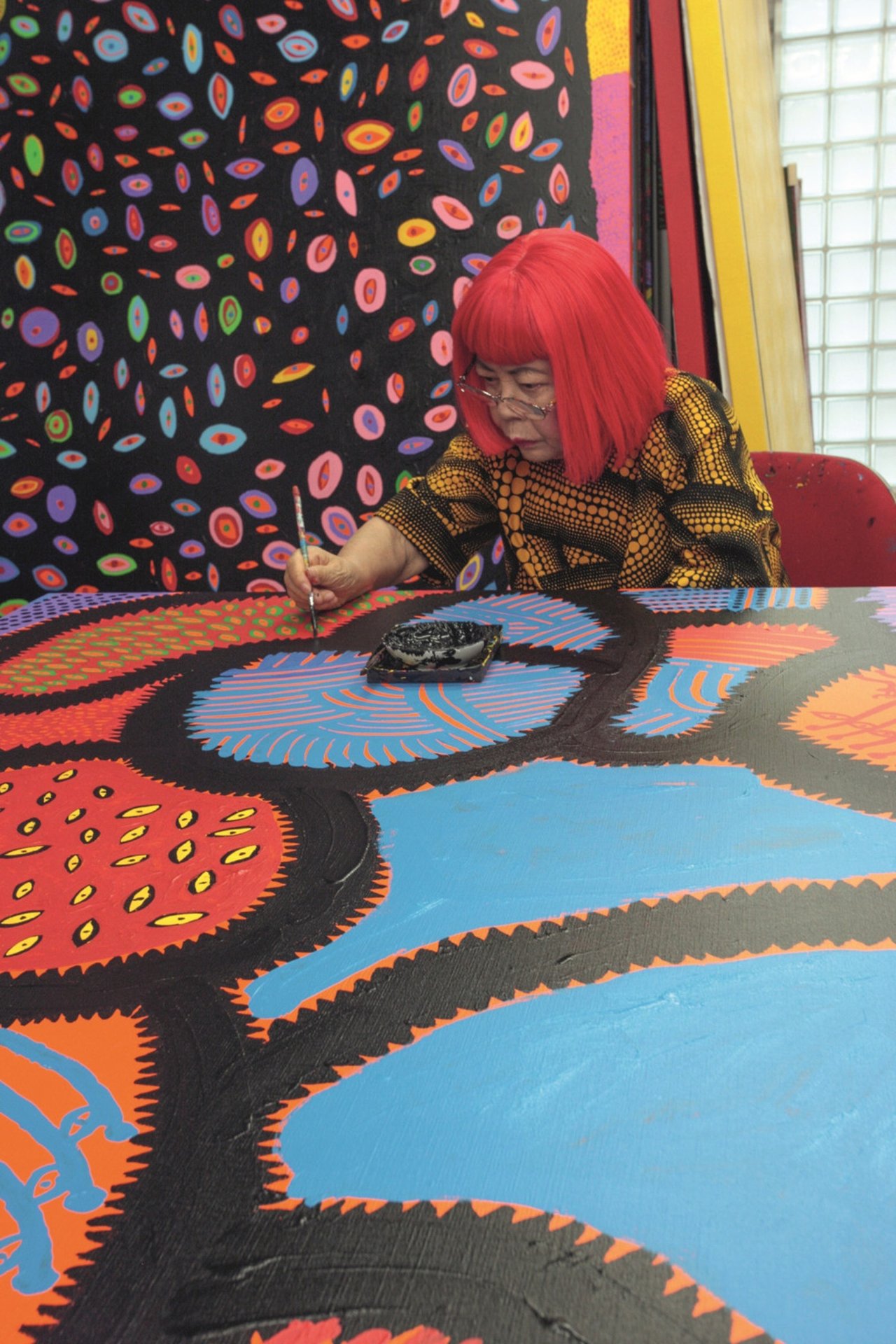
Yayoi Kusama was one of the best-known and most influential artists of her time, as instantly recognisable for her personal style, her watchful gaze and vividly colored page-boy fringe as she was for the polka dots and pumpkins that populate her vivid output as an artist. She died in hospital in Tokyo on August 14, 2026, and her death was announced, on August 27, 2026, by the Yayoi Kusama Museum and the Yayoi Kusama Foundation.
“Throughout an extraordinary lifetime devoted entirely to artistic creation,” her studio said in the announcement, “Kusama pursued an internationally acclaimed career as a pioneering avant-garde artist whose creative practice encompassed visual art, performance, fiction, and poetry. She continued to paint until her final days, never setting aside her brush, and continued exploration of forever love and eternal soul.”
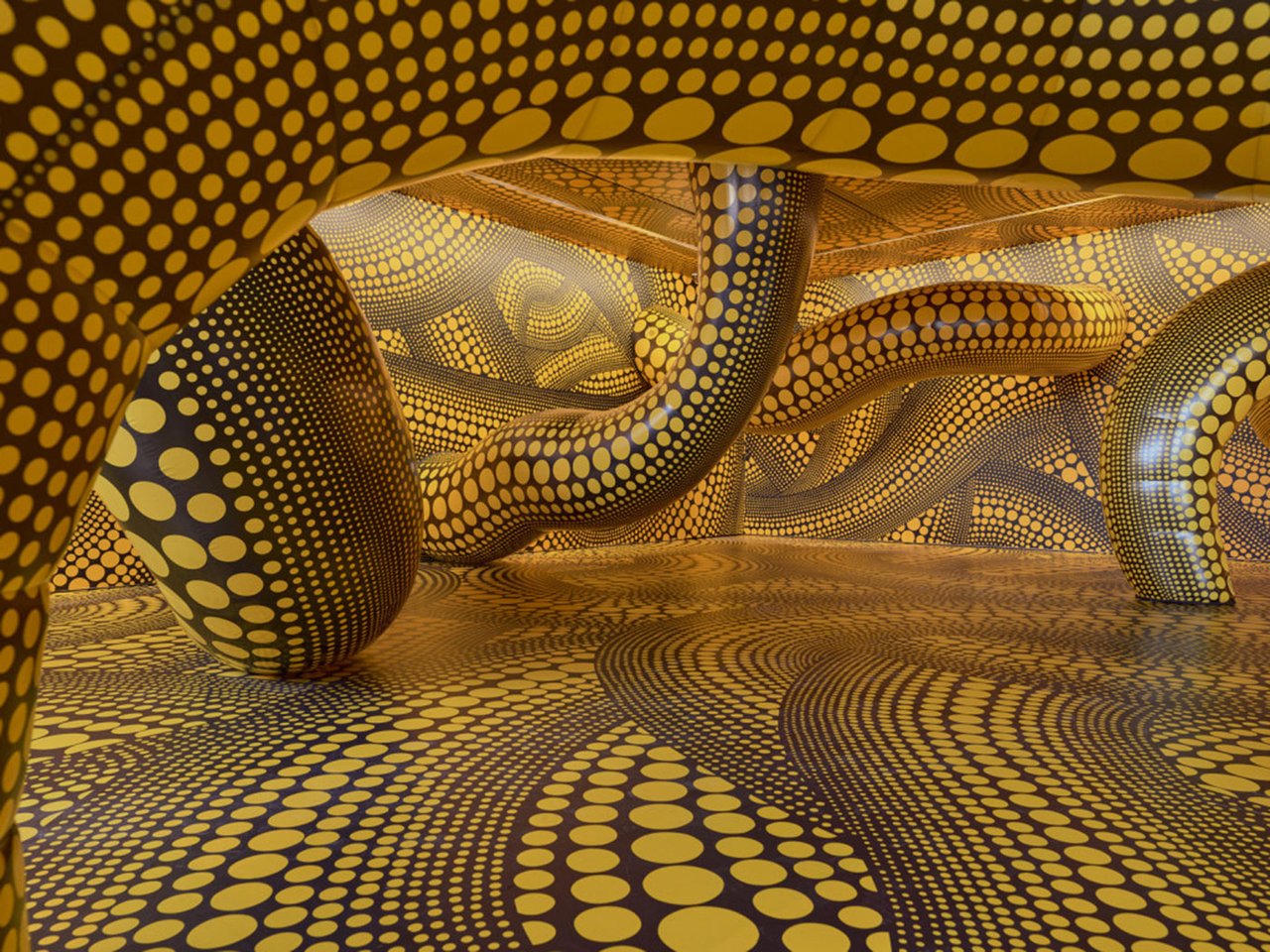
Her Infinity Mirror Rooms, the earliest of which dates back to 1965, form a distinctive contribution to millennia of engagement with optics by scientists, astronomers, and artists. These spaces became over the past two decades, in the age of the smartphone, a natural backdrop for a natively digital generation, trained in the ways of Instagram, to locate itself.
David Zwirner, who had been one of Kusama’s gallerists since 2011, said in a statement published following her death that her art “influenced the histories of minimalism, pop art, and performance art; more recently her large-scale installations single-handedly pioneered what is now referred to as experiential art.” That experiential genre, largely founded on Kusama’s Infinity Mirror Rooms, had given rise by the early 2020s to an identifiable type of immersive institution which is represented by spaces such as the teamLab group, Sphere Las Vegas, Outernet London, Refik Anadol Studio’s recently opened Dataland museum of AI arts, Los Angeles, and the upcoming UBS Digital Art Museum, Hamburg.
It could be argued that Kusama’s contribution to experiential art, through her Infinity Mirror Rooms, has changed the way art institutions approach the challenge of attracting, and bringing together, audiences from across generations.
It is telling that, because of public demand, Tate Modern extended a show of two of Kusama’s infinity spaces to run for close to three years (May 2021 to April 2024): Infinity Mirrored Room — Filled with the Brilliance of Life, originally created for the gallery’s retrospective of the artist in 2012, and Chandelier of Grief, 2016/2018.
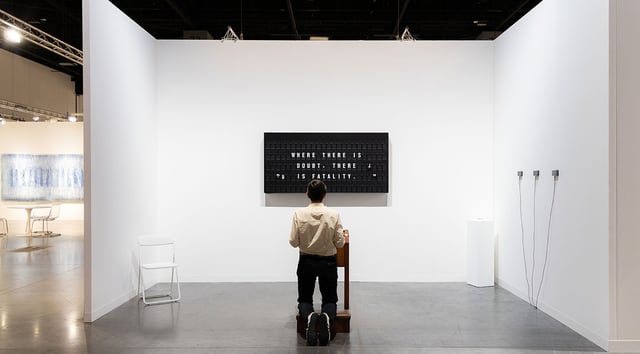
The reach of the Infinity Mirror Rooms phenomenon, born of the selfie culture that grew up in the 2010s, is captured in a work such as Operator’s On View (2019). commissioned by SCAD Museum of Art, in Savannah, Georgia, and described by the museum as examining “how art experiences generate in today’s audiences the wish for themselves to be its subject”. The work’s connection to the reach of Kusama’s Infinity Mirror Rooms was drawn by Dejha Ti and Ania Catherine of Operator in an interview published by Right Click Save in 2023.
Zwirner added in his statement that it had been “one of the great privileges of my professional life” to have been able to represent Kusama’s “extraordinary art”. “The last time Kusama visited New York, a city where she lived for many years, was in 2013. During that visit, she opened the first of many exhibitions in our galleries that had hour-long lines for the chance to experience her work. Her steadfast message of love and peace has now reached millions of admirers around the globe.”
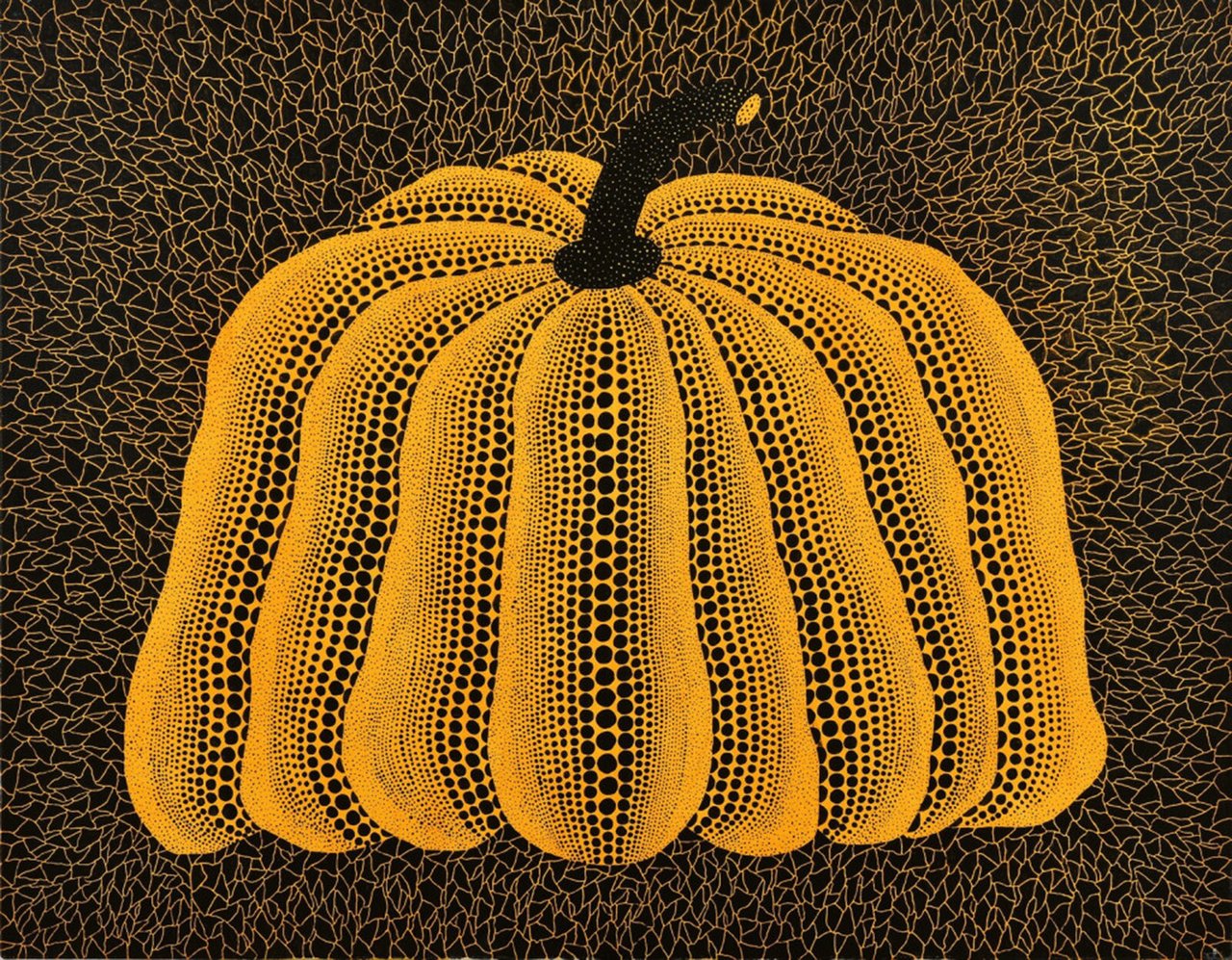
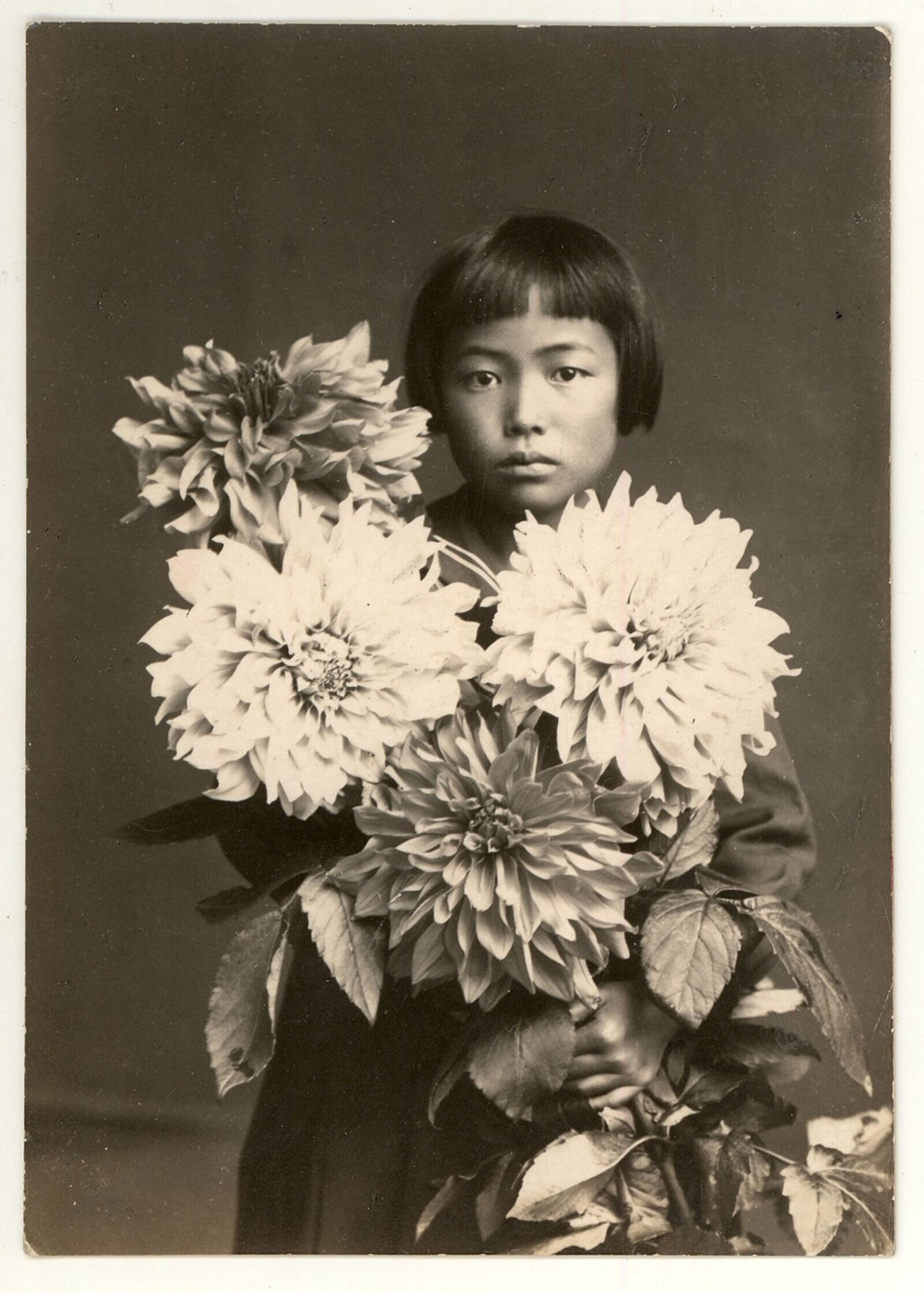
Kusama was born in the city of Matsumoto, northwest of Tokyo, in 1929. Her family, prosperous and middle class, ran a plant nursery and wholesale seed business, and their house was surrounded by pumpkin fields. In 1946, Yayoi created her first pumpkin artwork. The squash had important symbolic and biographical importance for her
“Pumpkins have been a great comfort to me since my childhood. They speak to me of the joy of living. They are humble and amusing at the same time, and I have and always will celebrate them in my art.” (Yayoi Kusama)
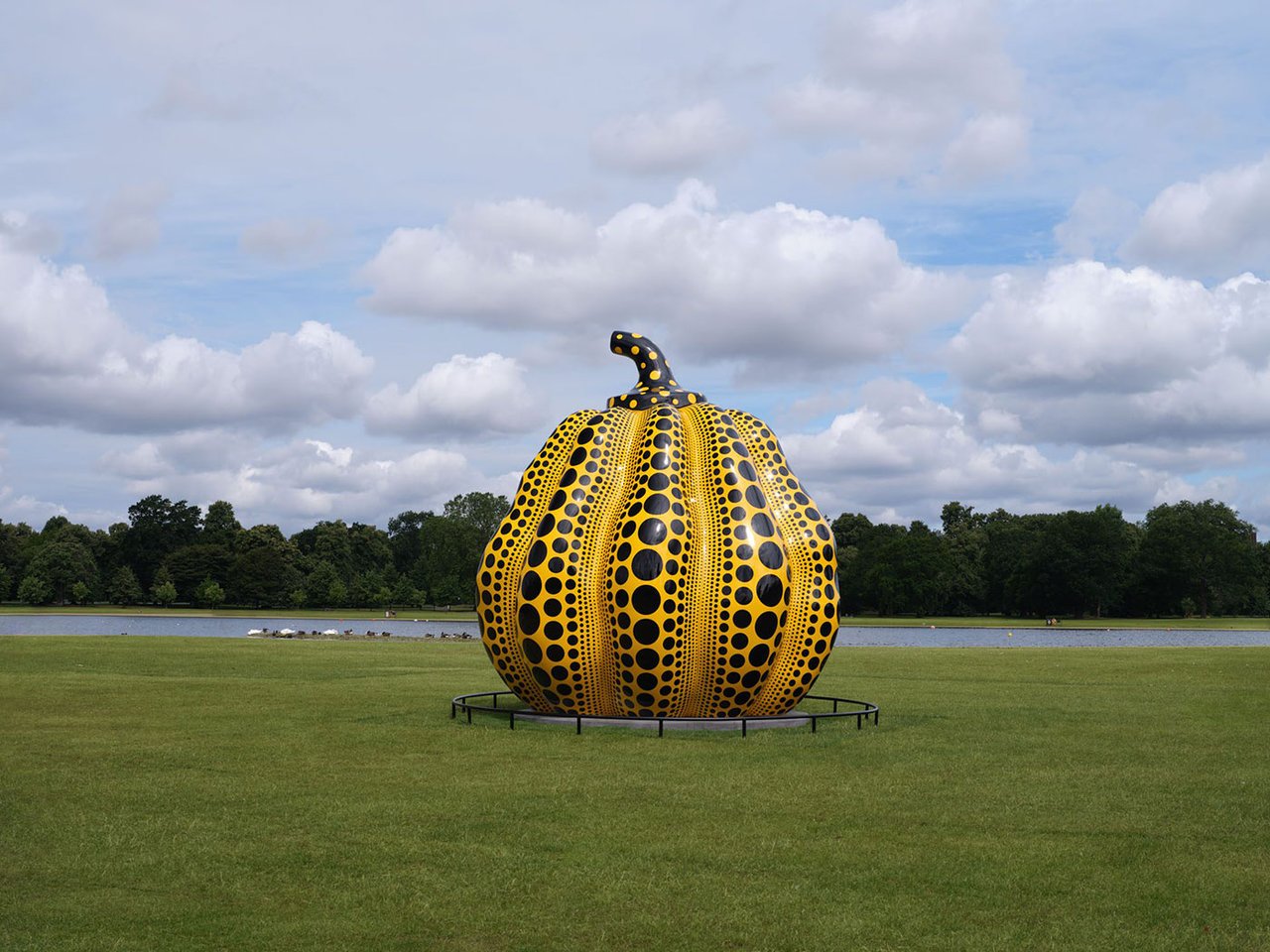
Kusama made representations of the pumpkin, marked with the artist’s trademark polka dots, of a wide variety of size and color. The larger manifestations became ubiquitous examples of her public art, whether posed at the end of a jetty, with a glittering sea as background on the island collection of Naoshima, Japan; to the backing of vineyards in the Donum collection in Sonoma wine country; or by the Round Pond in Kensington Gardens, London, where Serpentine Galleries hosted the tallest bronze Pumpkin to date, in 2024: 6 metres tall and 5.5 metres in diameter.
This giant 2024 Pumpkin was recalled in a statement released following Kusama’s death by Hans Ulrich Obrist, artistic director of Serpentine: “Kusama has always emphasised the idea that painting holds mortality at a distance. Her art is obsessive, accumulative, infinite, and yet fundamentally restorative. It was a great honour, two years ago, for us at Serpentine to present this work in Kensington Gardens. Her signature pumpkins have become a landmark motif for the artist, and this project was a reunion for Kusama and Serpentine: her first major survey exhibition in Britain was staged in our galleries in 2000.”
The need for comfort was in part a response to the powerful optical hallucinations that Kusama had been prone to since childhood. Art became, for her, a form of healing to the mental health issues she openly discussed throughout her adult life.
“I fight pain, anxiety, and fear every day,” she said in a 2022 interview, “and the only method I have found that relieves my illness is to keep creating art. Painting helps me to keep away thoughts of death for myself. That is the power of art.”
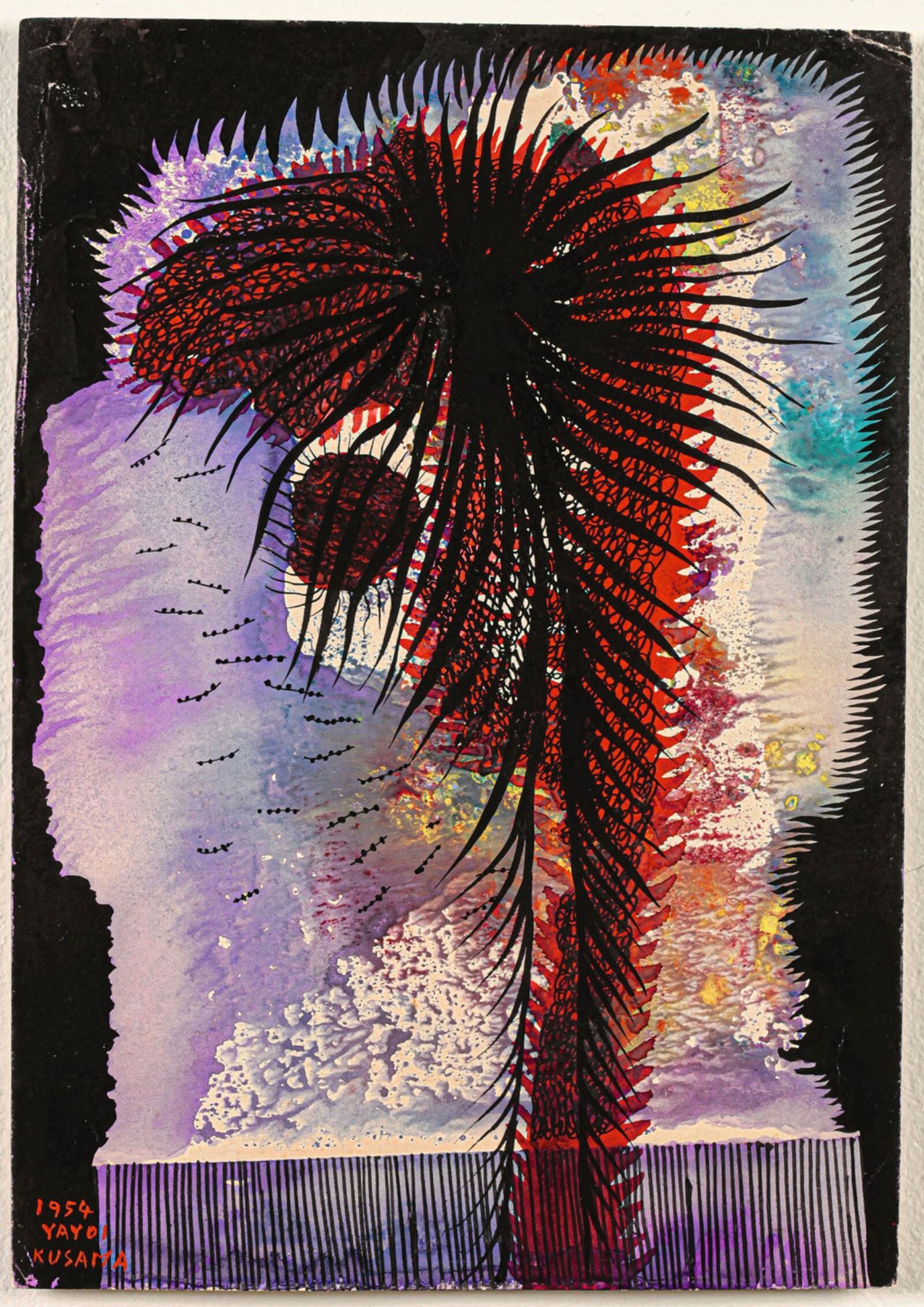
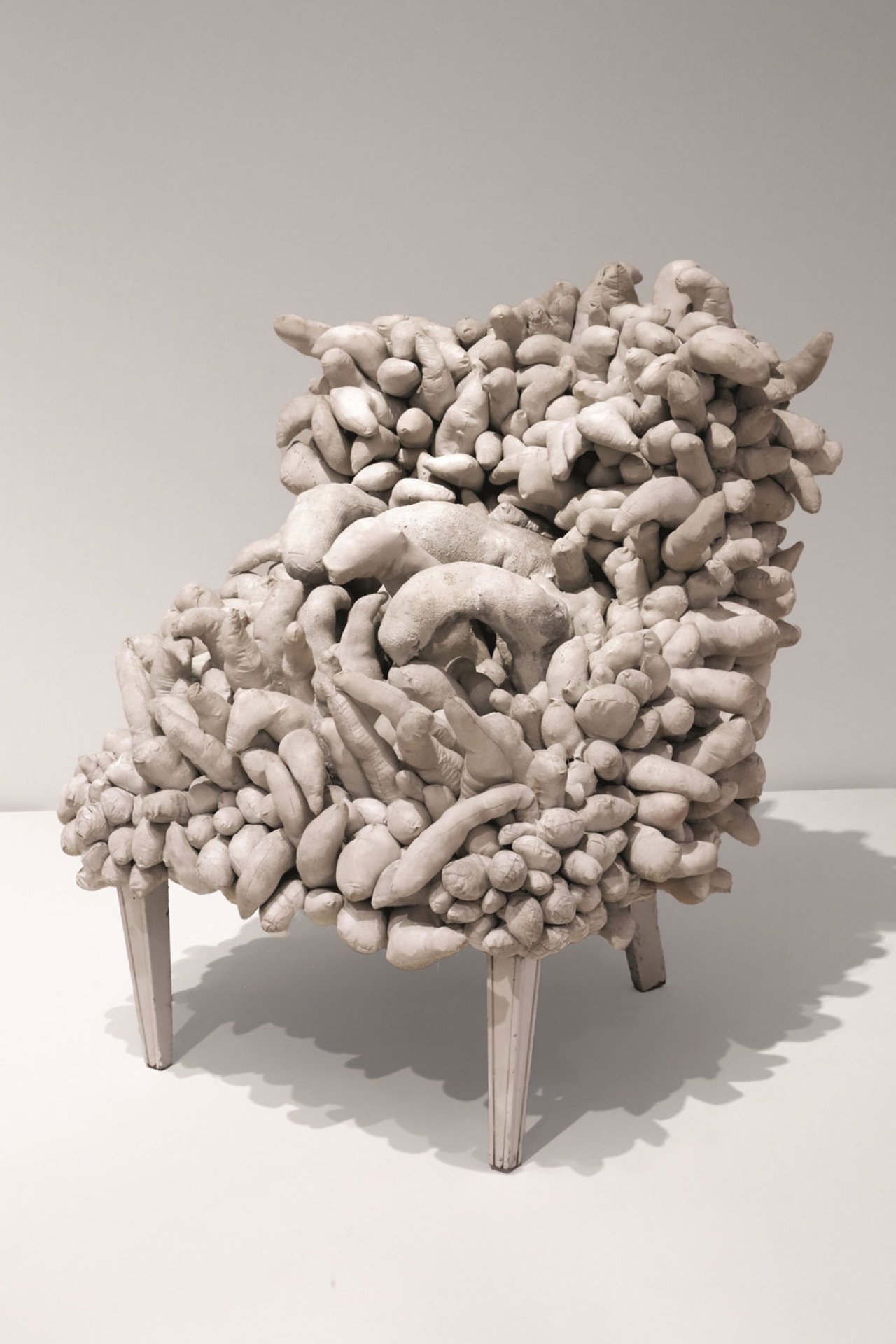
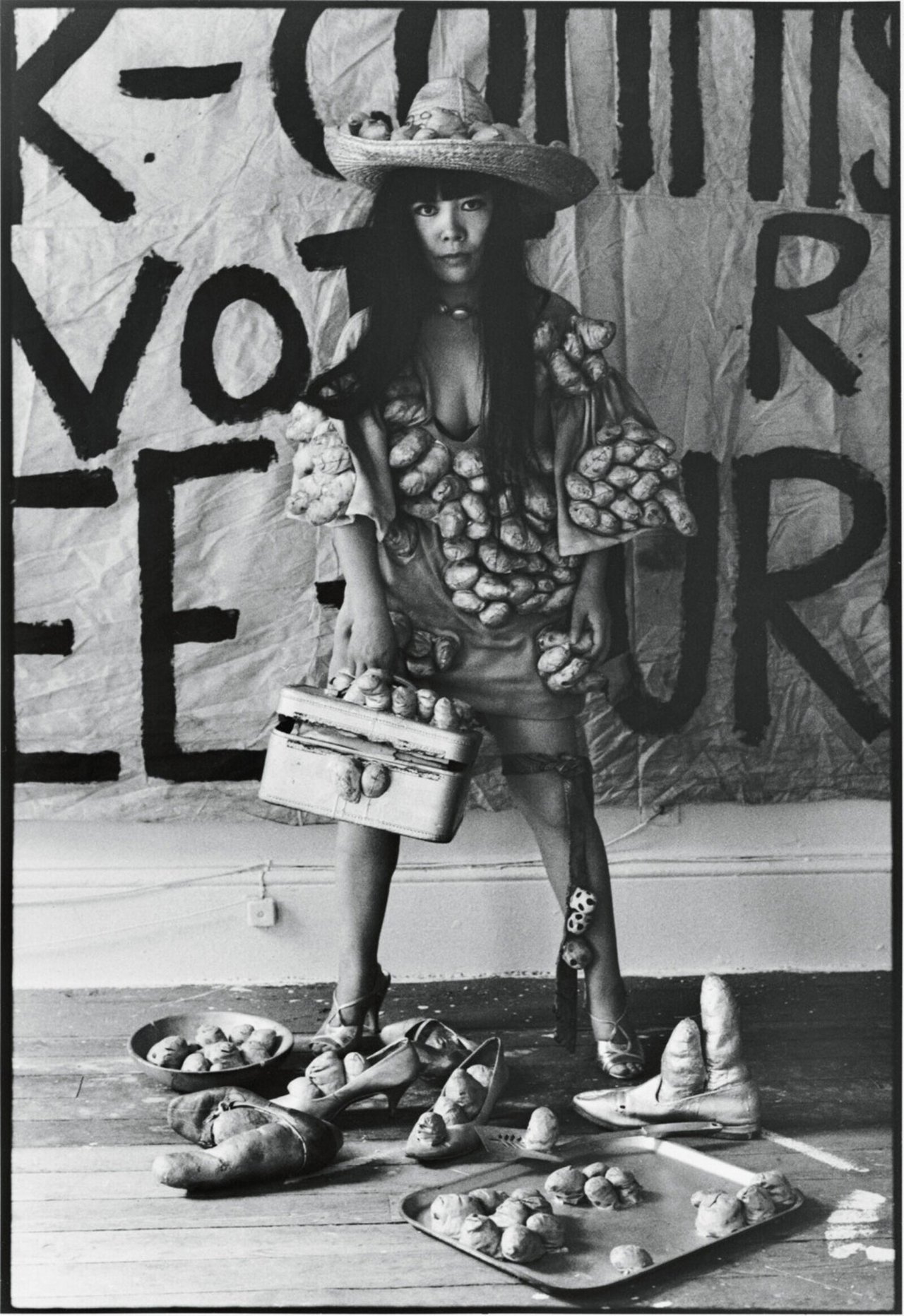
Kusama attended art school in Kyoto where she studied Nihonga painting while remaining alert to developing trends in contemporary art. She moved in 1957 to Seattle and then, in 1958, to New York City, where she became associated with emergent art movements: with Minimalism through her Infinity Nets paintings, in 1960, and with Pop Art through her cloth phallus sculptures. The latter form appeared in her first Infinity Mirror Room, Phalli's Field, 1965, at Castellane Gallery in New York.
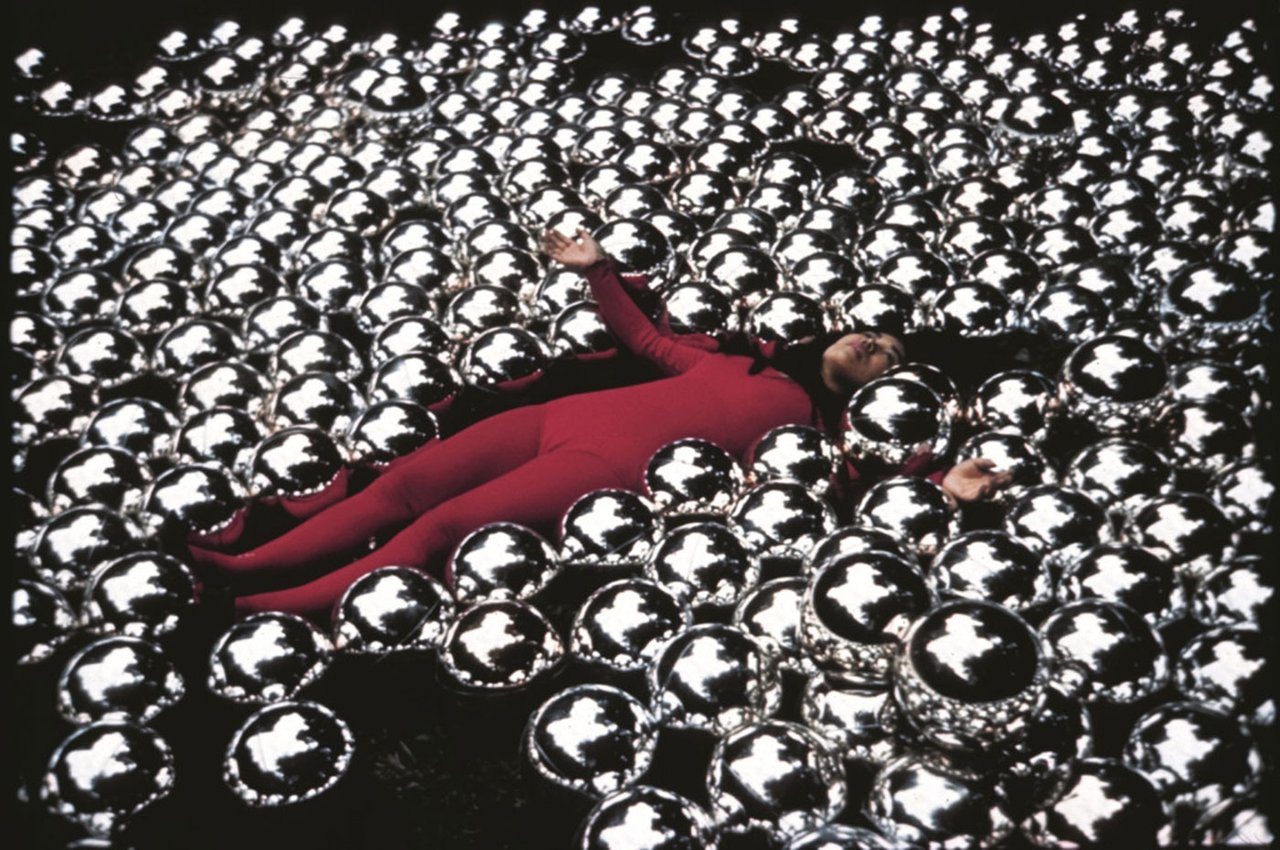
At the height of the hippy era, Kusama became engaged with anti-Vietnam War happenings around Manhattan, where, dressed in polka dot fabric, she painted her naked collaborators with more polka dots. She presented an international provocation at the 1966 Venice Biennale where she showed, at her own initiative, Narcissus Garden, 1966, a work made up of 1,500 plastic silver globes, which she sold on the lawn outside the Italian Pavilion for $2 each, before being asked to desist from “peddling” by the Biennale authorities.
Kusama returned to Japan in 1973, a time when she added a series of novels and volumes of poetry to her creative output. In 1977, with her hallucinatory spells and panice attacks growing stronger, she admitted herself to a psychiatric hospital in Tokyo, where she lived for the past 49 years, working daily in a neighbouring studio. The past half-century, and especially the past 20 years proved to be astonishingly prolific for Kusama and her studio.
Her appearance at the 1993 Venice Biennale, as Japan’s official representative, acted as a mini-retrospective, including as it did Infinity Nets paintingsand a classicInfinity Mirror Room, one of her first since the 1960s, of yellow and black pumpkins. The exhibition was well received, 27 years after the succès de scandale of Narcissus Garden, and was the prelude to a series of institutional shows around the globe.
“Love Forever: Yayoi Kusama 1958–1968”, organised by Los Angeles County Museum of Art and the Museum of Modern Art (MoMA), New York, in 1998, was an important reassessment of her early work in New York that also traveled to Walker Art Center, Minneapolis (1998-99), and Museum of Contemporary Art, Tokyo (1999). A landmark 2011-12 retrospective traveled between Museo Nacional Centro de Arte Reina Sofía, Madrid; the Centre Pompidou, Paris; Tate Modern, London; and the Whitney Museum of American Art, New York. In the 15 years since, with burgeoning “Kusamania”, barely a year has passed without a significant survey of Kusama’s work being presented somewhere around the globe.
Kusama saw her lifelong attention to polka dots as a palliative, unifying process, as is evidenced by one of her most-quoted remarks:
“Our earth is only one polka dot among a million stars in the cosmos. Polka dots are a way to infinity. When we obliterate nature and our bodies with polka dots, we become part of the unity of our environment.” (Yayoi Kusama)
A 2023 collaboration with the fashion brand Louis Vuitton saw giant inflatable figures of Kusama, several storeys tall, appearing outside stores in capital cities around the world. Like the late David Hockney, she became the subject towards the end of her life of seemingly ever larger and more ambitious retrospectives, invariably attracting record attendances.
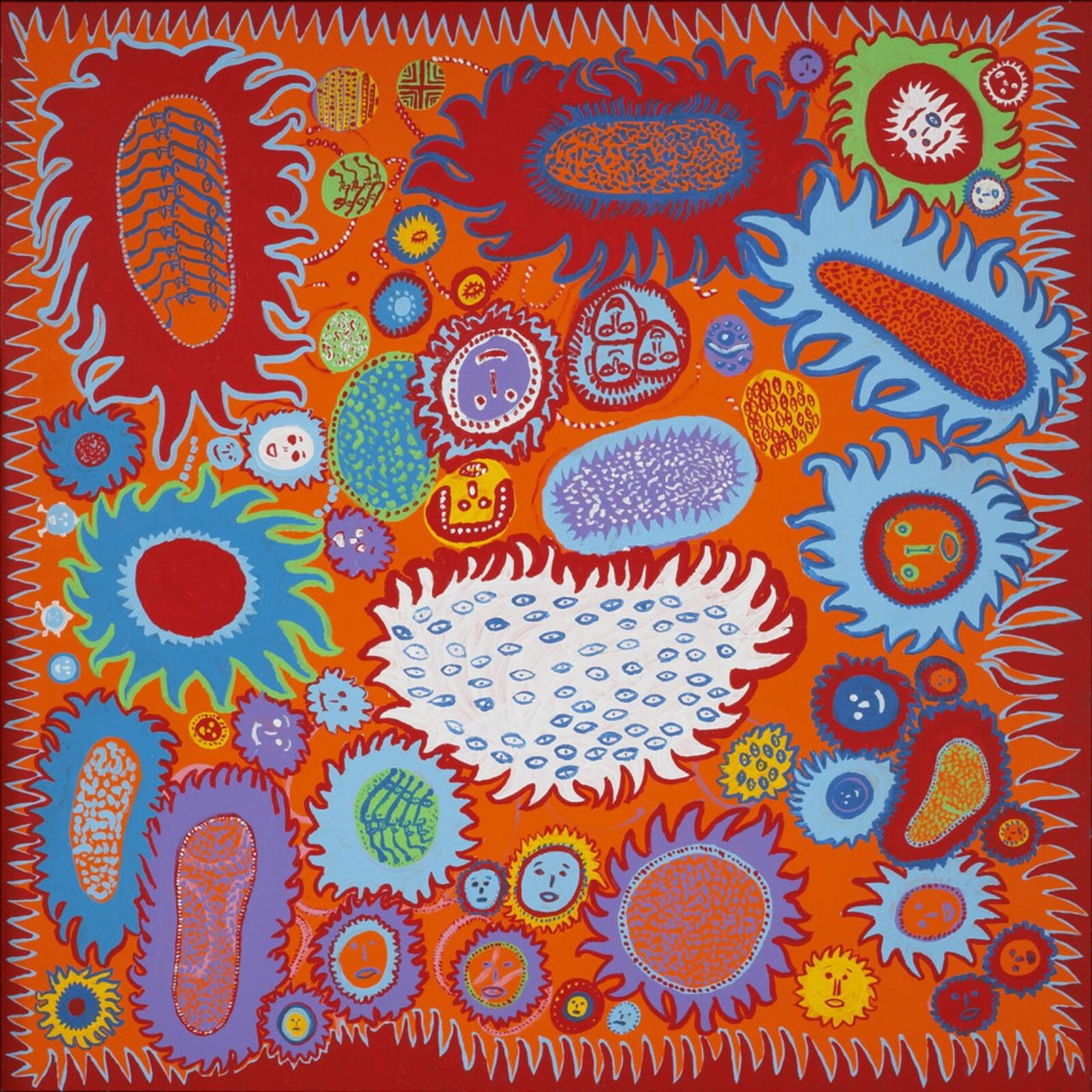
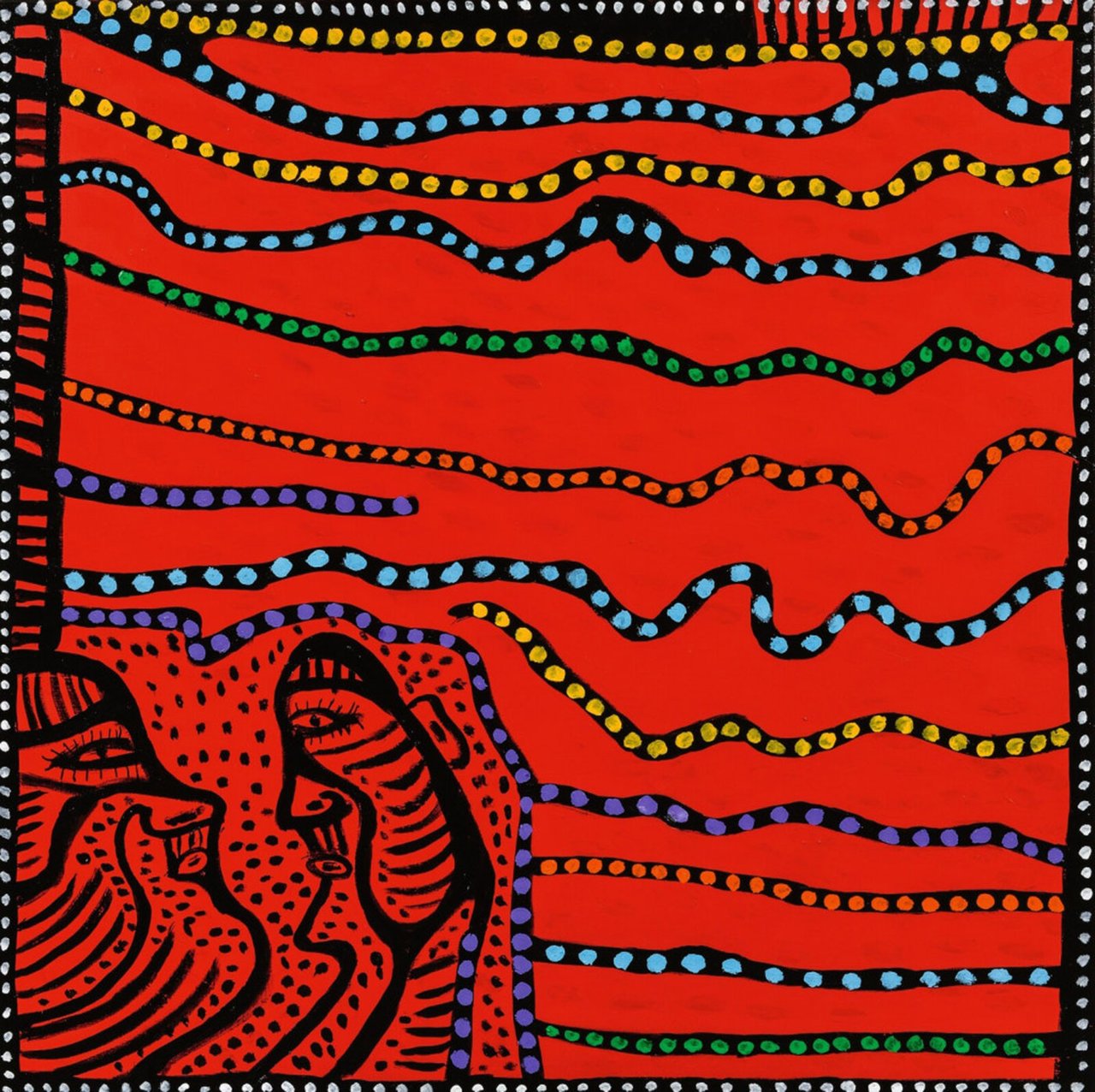
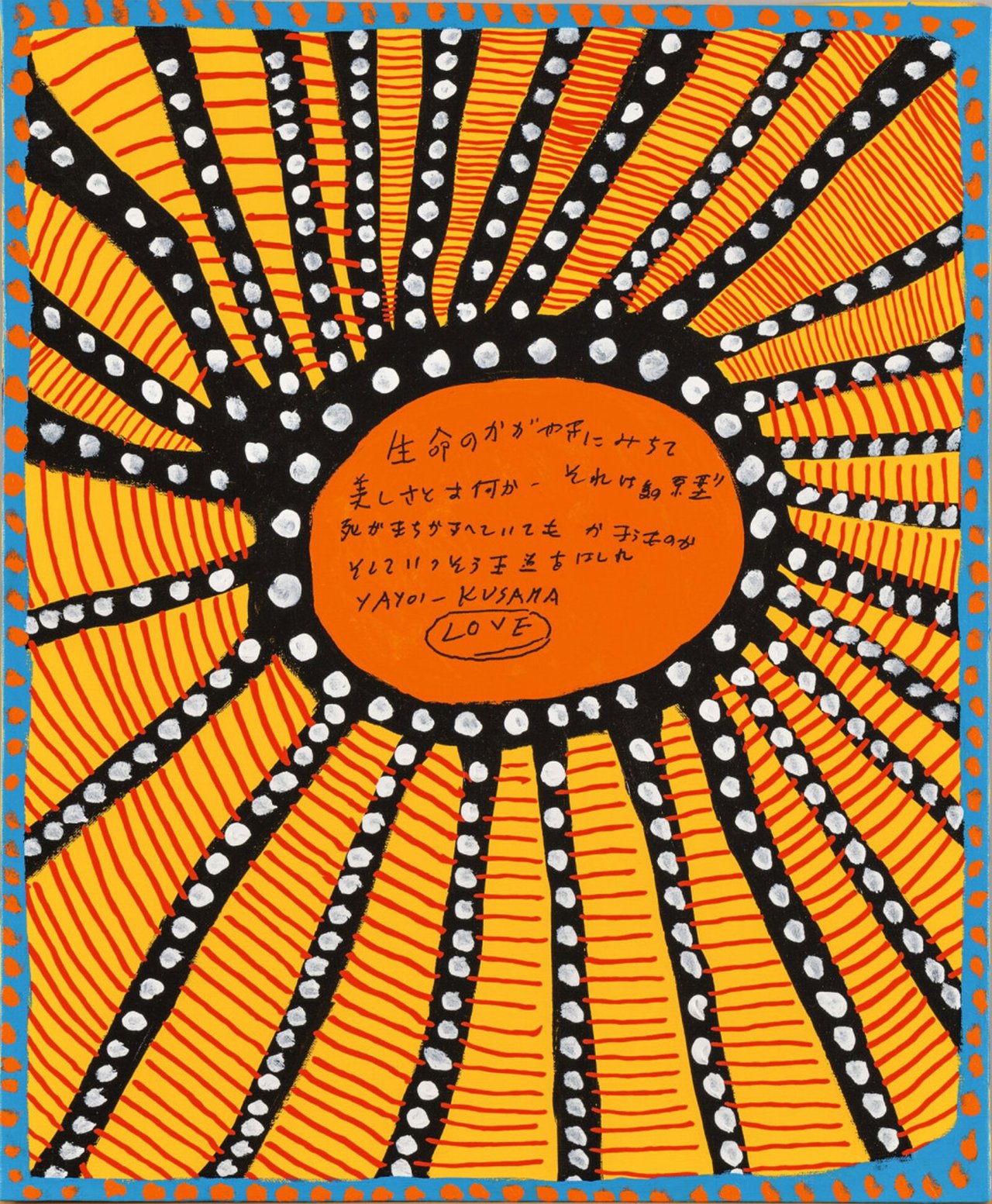
Most recently, a career-spanning exhibition in Europe, containing 300 works, ranging from her childhood drawings to the present day, has travelled from Fondation Beyeler, Basel (October 2025 to January 2026) to Museum Ludwig, Cologne (March to August 2026). The exhibition’s final iteration, opening at Stedelijk Museum Amsterdam, on September 11, 2026, will now serve as the artist’s memorial.
—
Yayoi Kusama; born Matsumoto, Japan, March 22, 1929; died Tokyo, August 14, 2026.