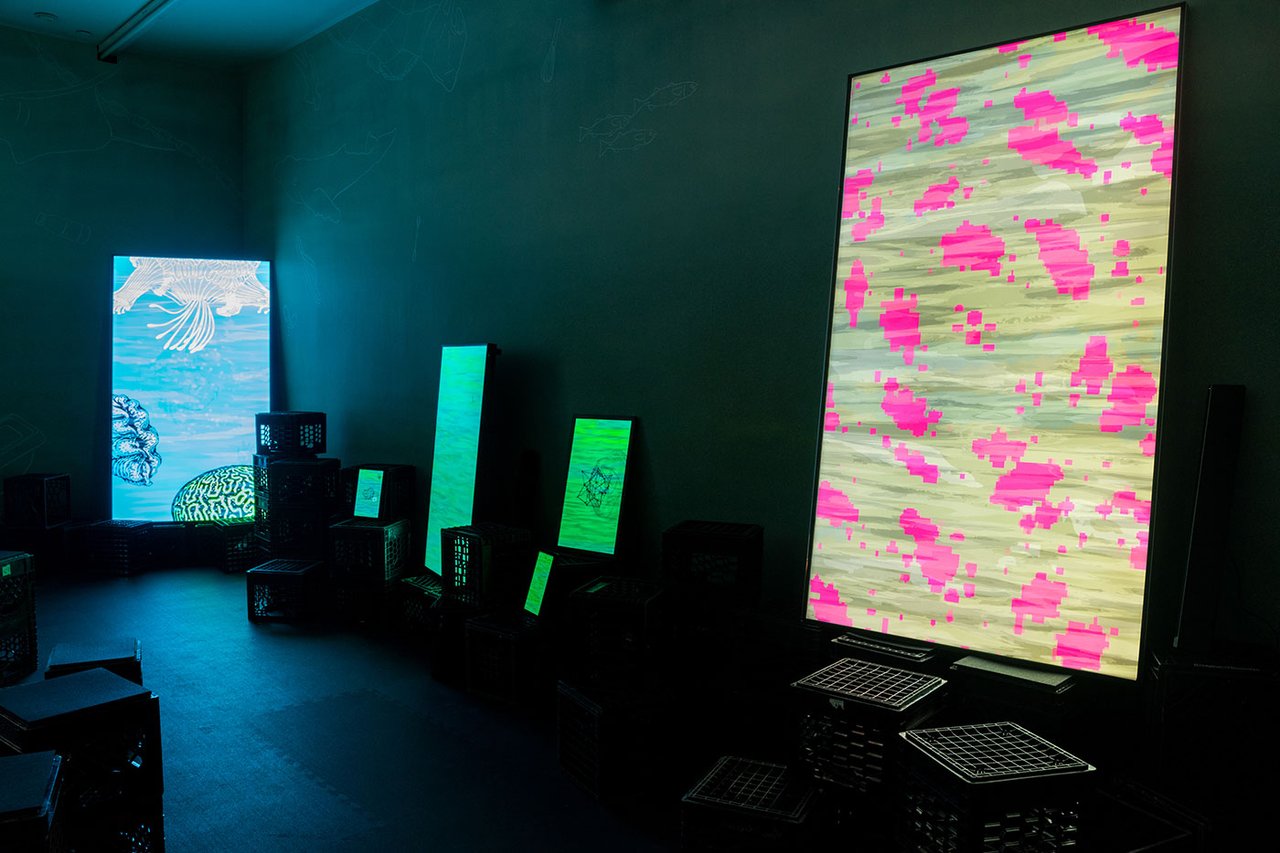
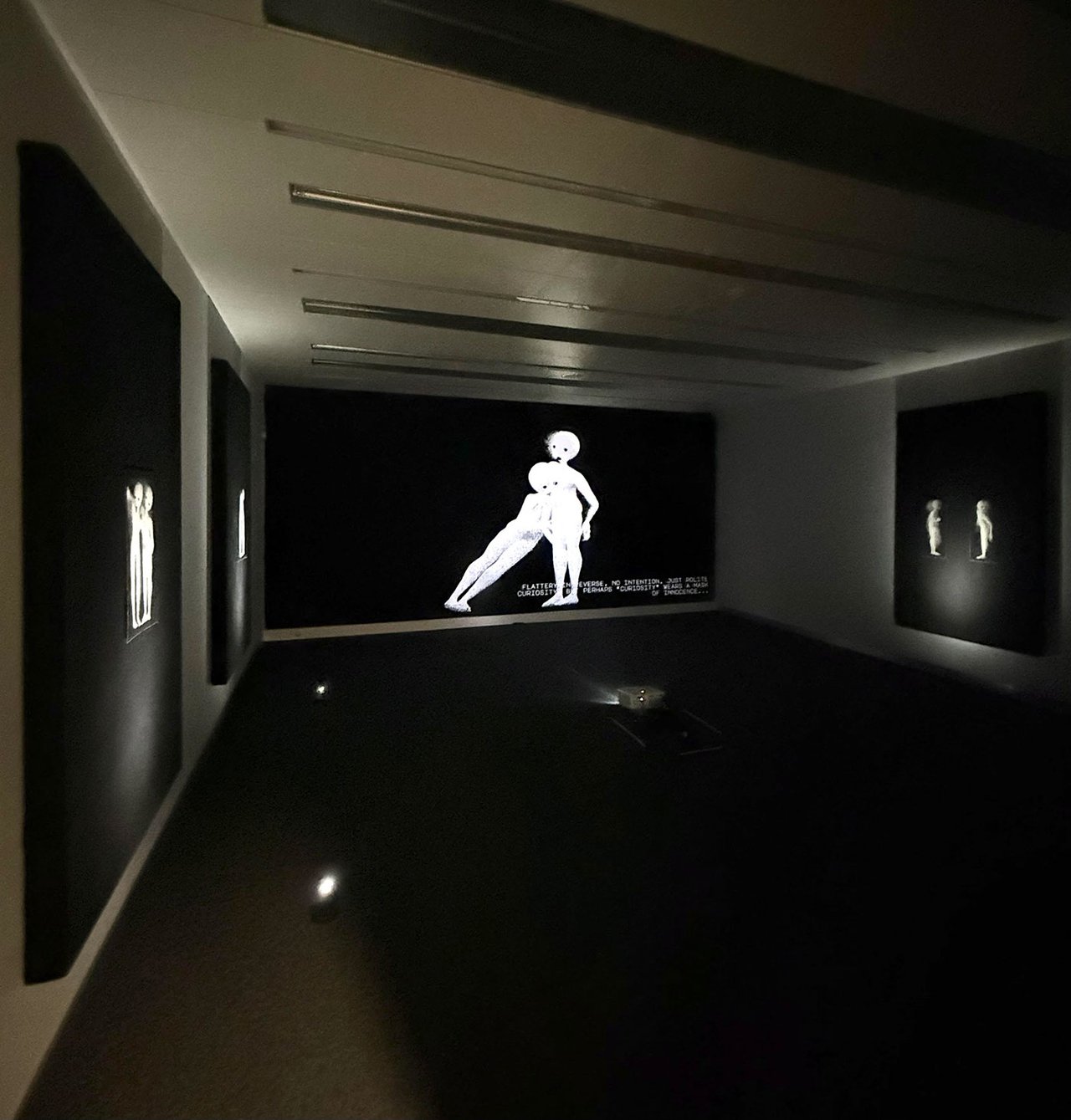
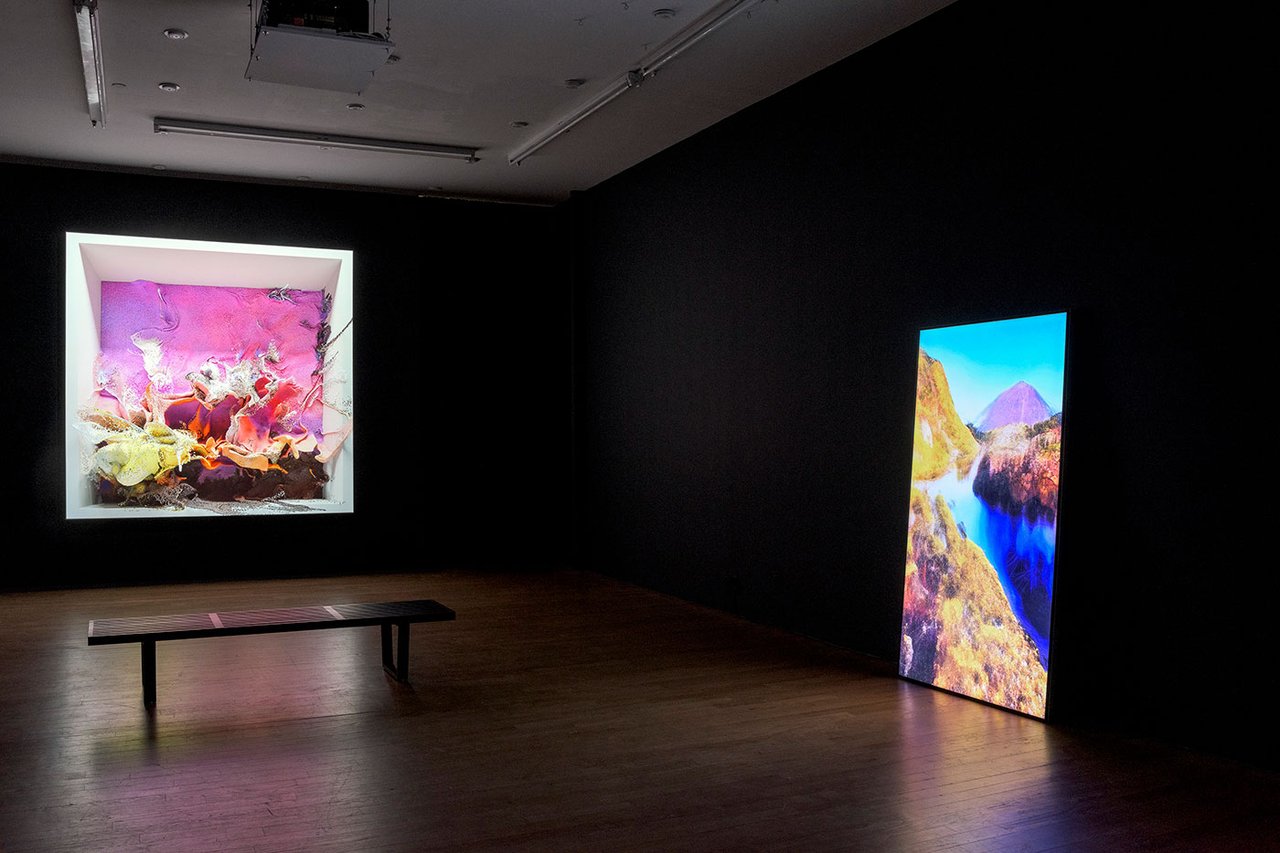
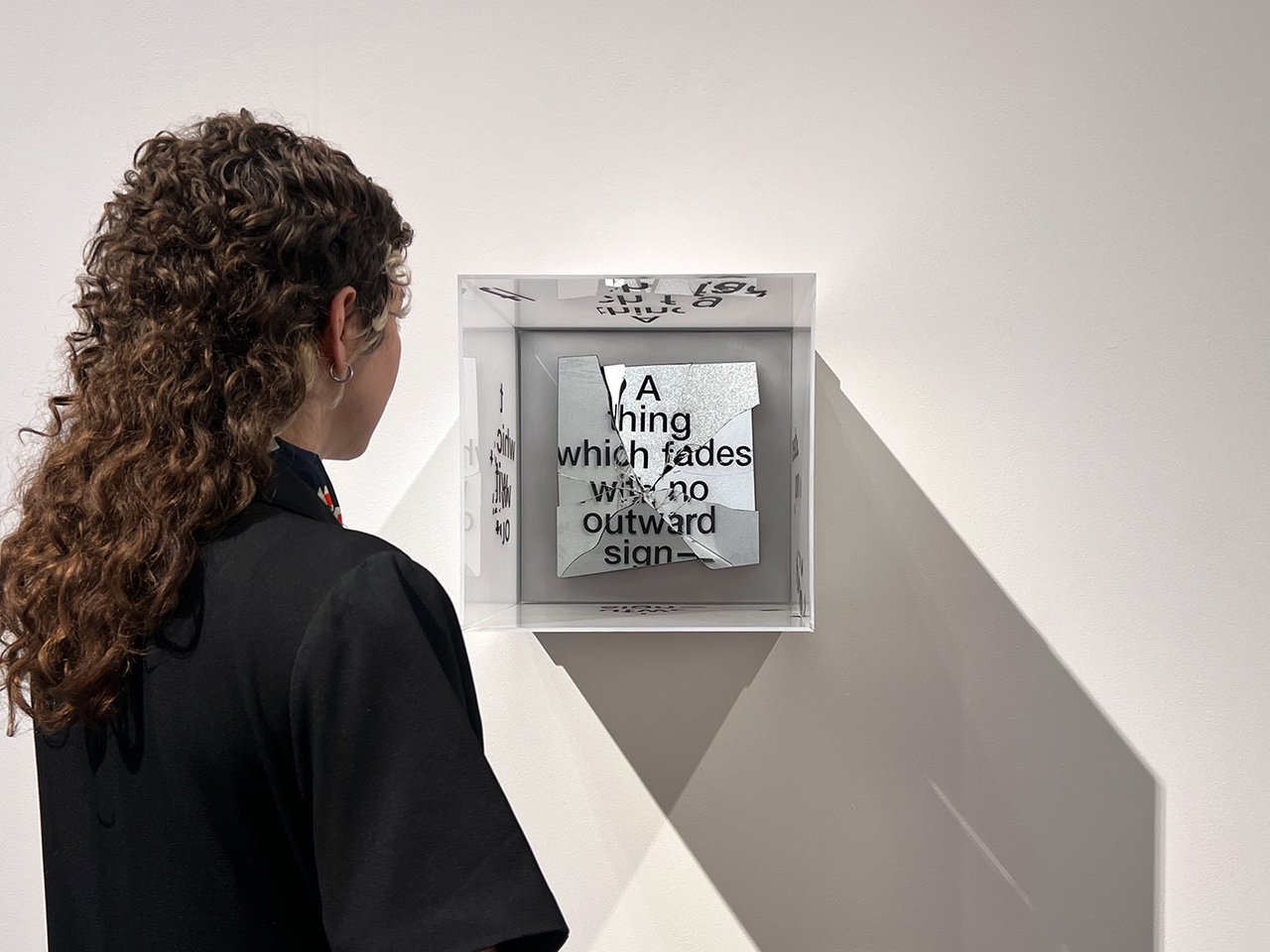
2026 marks the 25th anniversary of the New York gallery bitforms: a quarter-century dedicated to the display and promotion of digital, internet, time-based, and new media art forms. In that period of rapid advances in software, computing power, and screen technology, the gallery’s ebullient founder, Steven Sacks, has been at the center of the conversation about the lexicon and genealogy of experimental media art, and its presentation in commercial, public, and private spaces. By 2005 the tech bible Wired had headlined Sacks as “The King of Digital Art”.
In the week of Art Basel, the global art market’s annual summit of artists, curators, and dealers in Switzerland, bitforms gallery opened an exhibition, “time is a flat circle” (June 18 to August 1, 2026), at its Allen Street headquarters in New York’s Lower East Side, while also marking what Sacks terms “Zero 10 Cubed”, the gallery’s third successive appearance at Zero 10, Art Basel’s initiative covering art of the digital era (June 17 to 21, 2026).
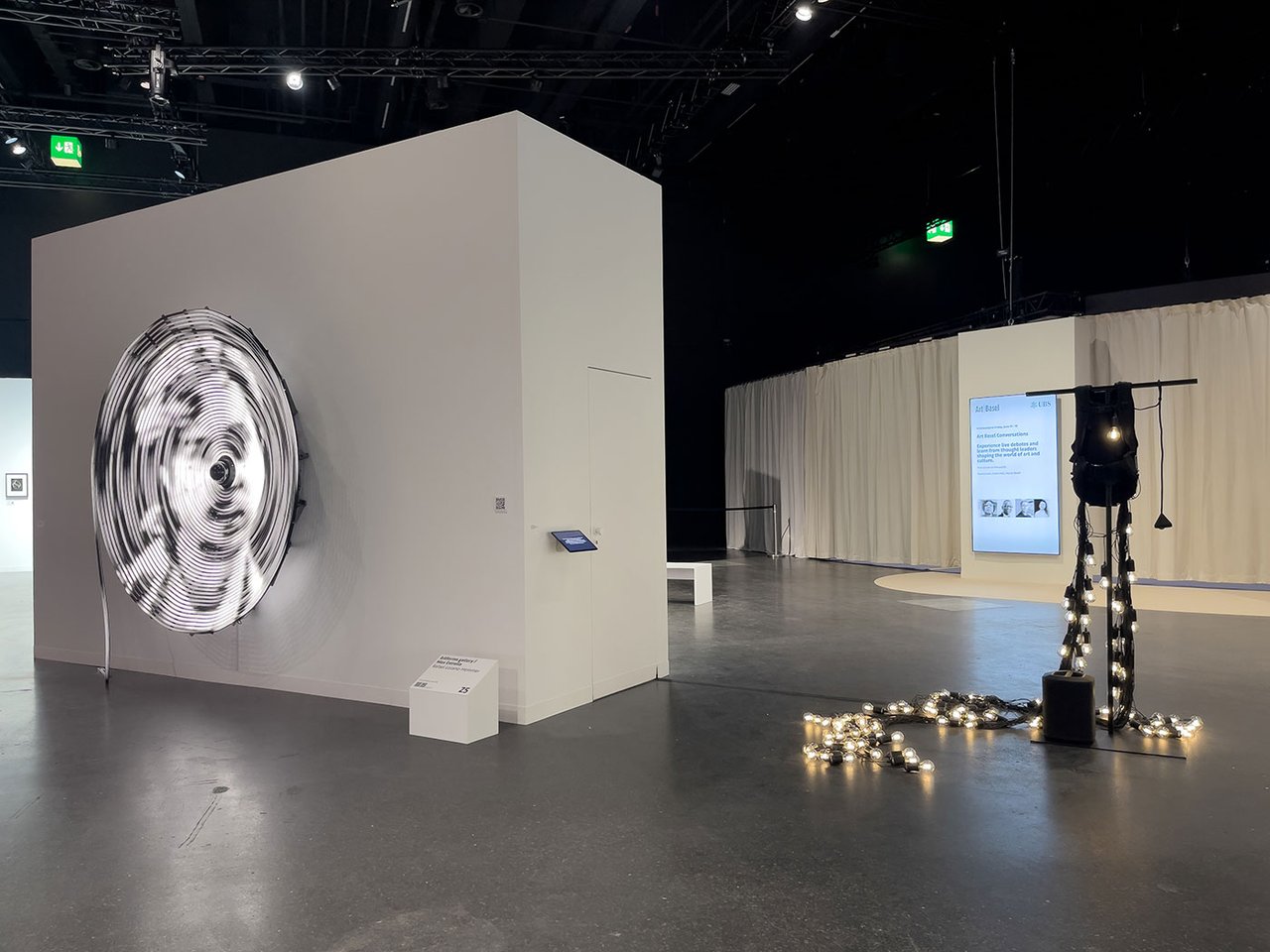
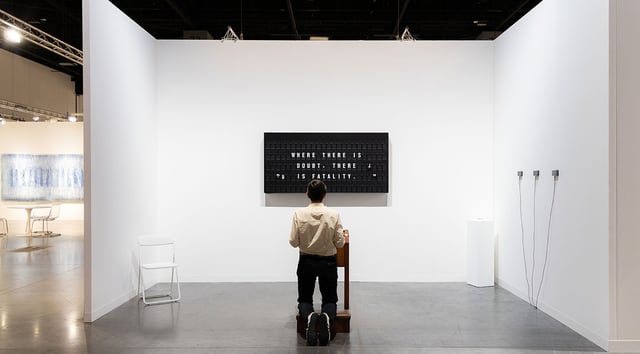
At Basel, Sacks presented the work of a long-standing bitforms artist, Rafael Lozano-Hemmer, with “Panoptic Chiasma”, a selection of digital art installations that “explore contemporary perception as inseparable from computation”.
On its stand at Zero 10, bitforms collaborated with Max Estrella, a Madrid gallery, while in New York it is partnering for the second time with the Los Angeles-based curatorial platform Rip Space. This openness to exhibition collaboration represents an expenses-sharing sign of the times while demonstrating the commercial experience that Sacks — who has a Master’s degree in Business and grew up in the antiques trade — brings to the game having spent decades working with international art fairs and trading in New York. It also offers a collaborative parallel to Sacks’s 25 years spent convening artists who are critically engaged with new technologies to build a community of collectors, artists, and institutions, in order to tell the story of art of the digital age.
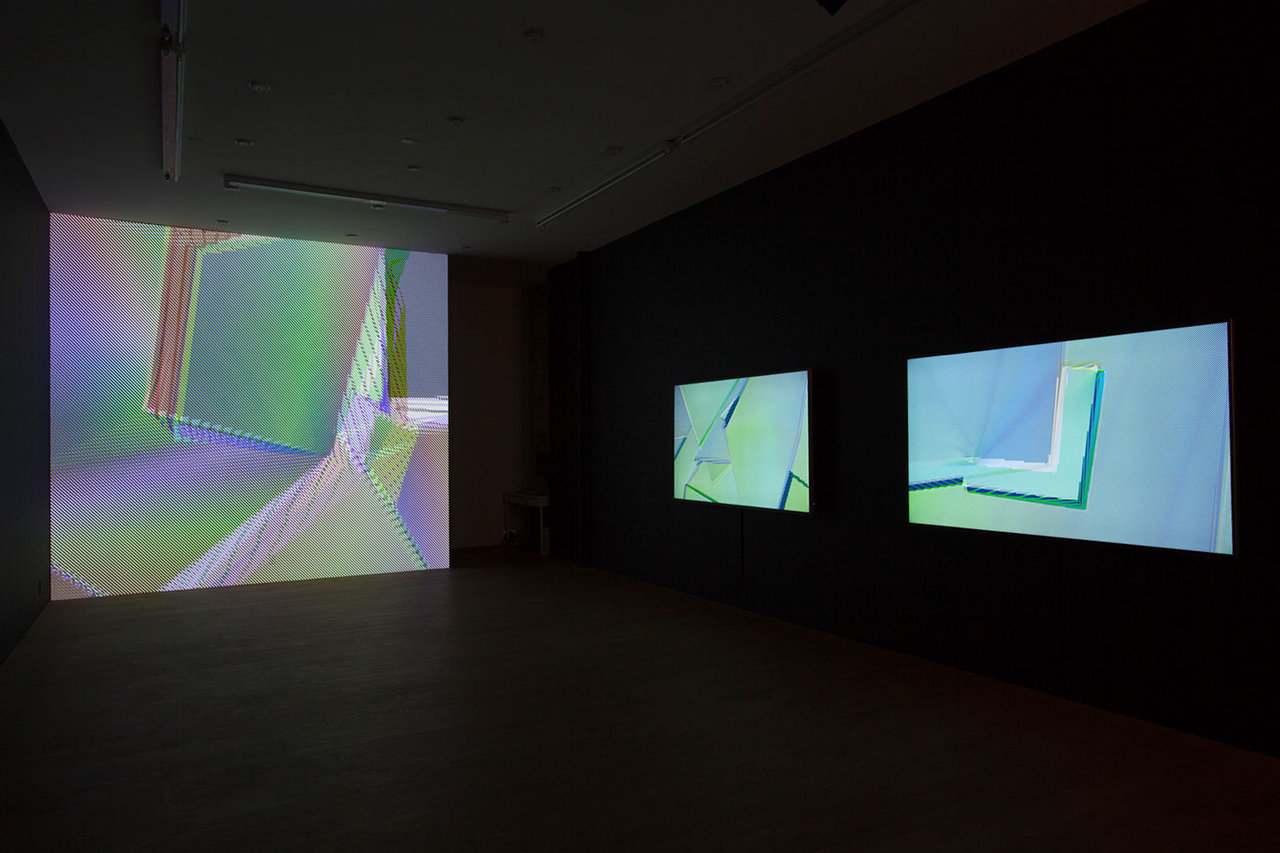
Installation view of Rafael Lozano-Hemmer, “PanopticChiasma”, bitforms gallery stand at Zero 10, Art Basel, 2026. Courtesy of the artist, bitforms gallery, and Max Estrella Gallery
At the first Zero 10, at Art Basel Miami Beach, in December 2025, bitforms showed three artists whose practices chart the trajectory of generative art, over more than five decades: Manfred Mohr, who has shown with the gallery since 2002 and who held a 50th anniversary show of his practice at bitforms in 2019; Casey Reas, who cites Mohr as an inspiration for his own career, and who showed in the first bitforms exhibition in November 2001; and Maya Man, who studied with Reas at UCLA for her Masters in Fine Art and recently had a solo show, “StarPower”, at bitforms (March 19 to May 2, 2026).
This multigenerational presentation of generative art is indicative of the focus that Sacks has given to the medium since early in bitforms’ history, explaining both the artistic intention and the technology to collectors, curators, and journalists.
Sacks spoke to Right Click Save about the “different world” that surrounded bitforms’ original launch in 2001; his determination from day one to present a diverse group of new media artists at the gallery’s first space in West 20th Street, in the Chelsea district of Manhattan; the gallery’s role in spreading the word on digital art, while supporting the pioneering artists who had had been working with algorithms since the 1960s; the new energy that Zero 10 has brought to the global art market; and the evolution of bitforms through the eras of desktop publishing, flat screens, social media, NFTs, and artificial intelligence.
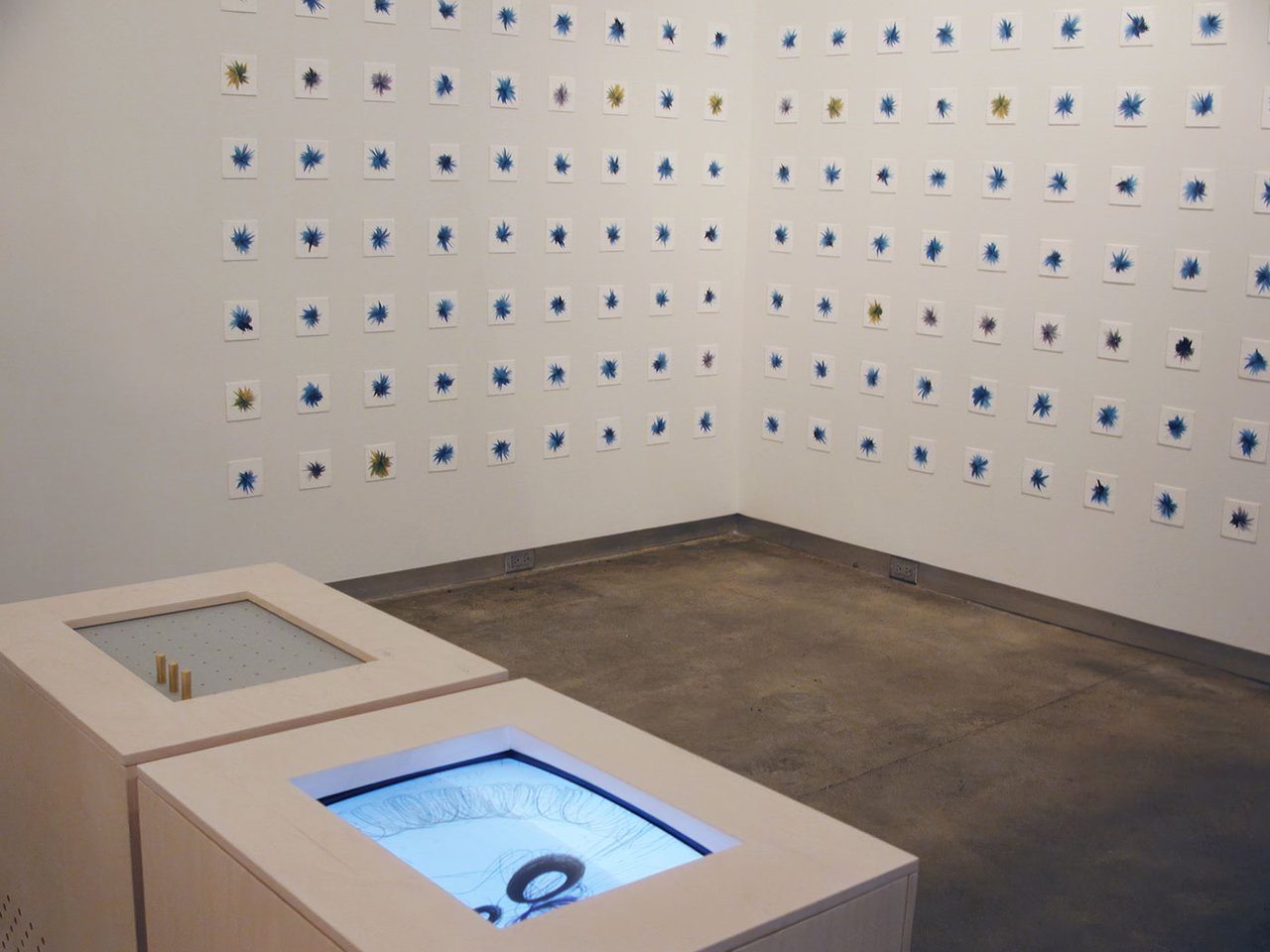
Installation view of “Golan Levin and Casey Reas” at bitforms gallery, New York City, 2002, with work: Seed 0-9 (2002) by Casey Reas. Courtesy of the artist and bitforms gallery
Louis Jebb: What is the origin story of bitforms and how has it evolved over the past 25 years?
Steven Sacks: My family was in the antique business. I grew up with an understanding of, and respect for, traditional art; and an understanding of how art can be a business. Not every child grows up with a father who comes home and speaks of the art objects he found, revealing their value and history. Looking back, that was a unique education that has stayed with me to this day.
I was very much aware of the art sales model from a young age — that art and commerce could be a sustainable and exciting line of work. I also witnessed the care for these special objects and the craft that was required to make them.
I decided to get an MBA as I didn’t want to enter my father’s antique business, and felt it could provide a solid foundation for whatever direction I decided to pursue. A few years after graduating, I co-founded and was creative director of a company called Digital Pulp (which still exists today). It was a special moment when the dot-coms were emerging: internet-based startups driving heavily speculative investment in the late 1990s. The company was devoted to that genre, and we had a very unusual group of people working under one roof: creatives and technical people, including programmers, working together in a creative agency environment in a way that had not been done before.
It was a very intense four or five years and, too many times, the client dictated the creative output. I was getting frustrated and burnt out, so I resigned. I also sensed a dot-com bubble burst, and felt creatively uninspired because of the constraint of client direction. I thought, “How do I enjoy this combination of art and technology and the creative process without those constraints?” I felt art was the answer, but a kind of art that was not very prevalent in galleries at the time: experimental media and digital art.
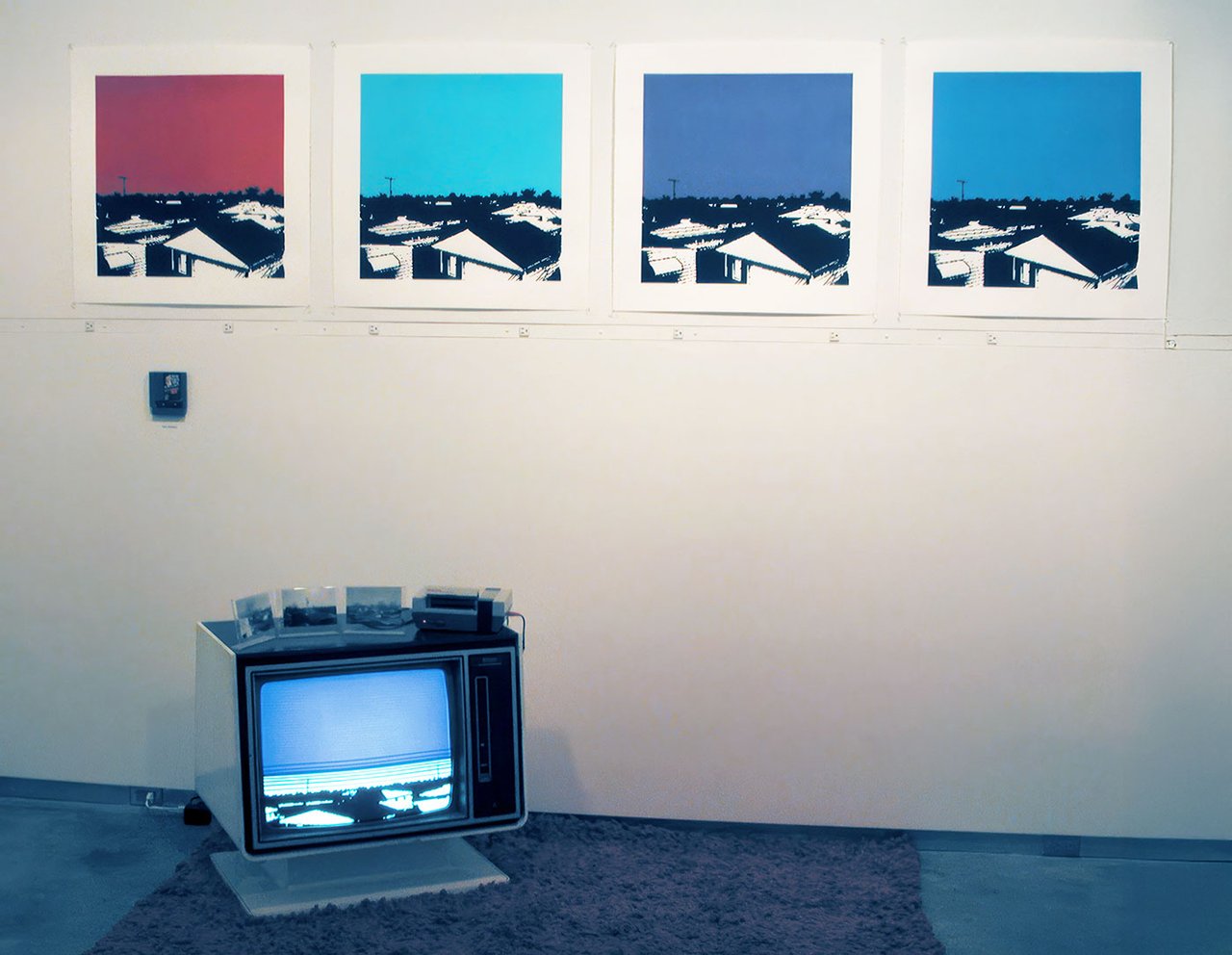
Installation view of the group show “Prints + Chips” at bitforms gallery, New York, 2002, with work: Super Mario Clouds (2002) by Cory Archangel. Courtesy of the artist and bitforms gallery
As I was transitioning from my previous job, the Whitney Museum of American Art, New York, was showing “bitstreams” (2001); SF MoMA had “010101: Art in Technological Times” (2001); and the Brooklyn Museum had a digital printmaking show. I had done research to see if there were galleries that were really focused on this area. Postmasters, in Manhattan, was the best example of a gallery doing great work with experimental media art, but they weren’t as focused as I wanted to be.
After six to eight months of mulling over a gallery concept, I found a space in Chelsea, and hired this really cutting-edge architect, Winka Dubbeldam, to build out my space. It was small, but we had a really slick aluminum box that acted as an office and meeting spot. There was a swinging arm with two screens that had an interface with the catalog of artworks. It was a touchscreen that could swing into the gallery space, or into my office. This innovative design helped differentiate the physicality of the space, and serve as an elegant way to present works from the inventory.
Chelsea in 2001 was a place where contemporary art was gaining a solid foothold in New York. I thought we should be in a physical location, where curators and collectors were experiencing and buying contemporary art. But it took two or three years for our new media art program to gain momentum and to get acceptance in the more traditional art world.
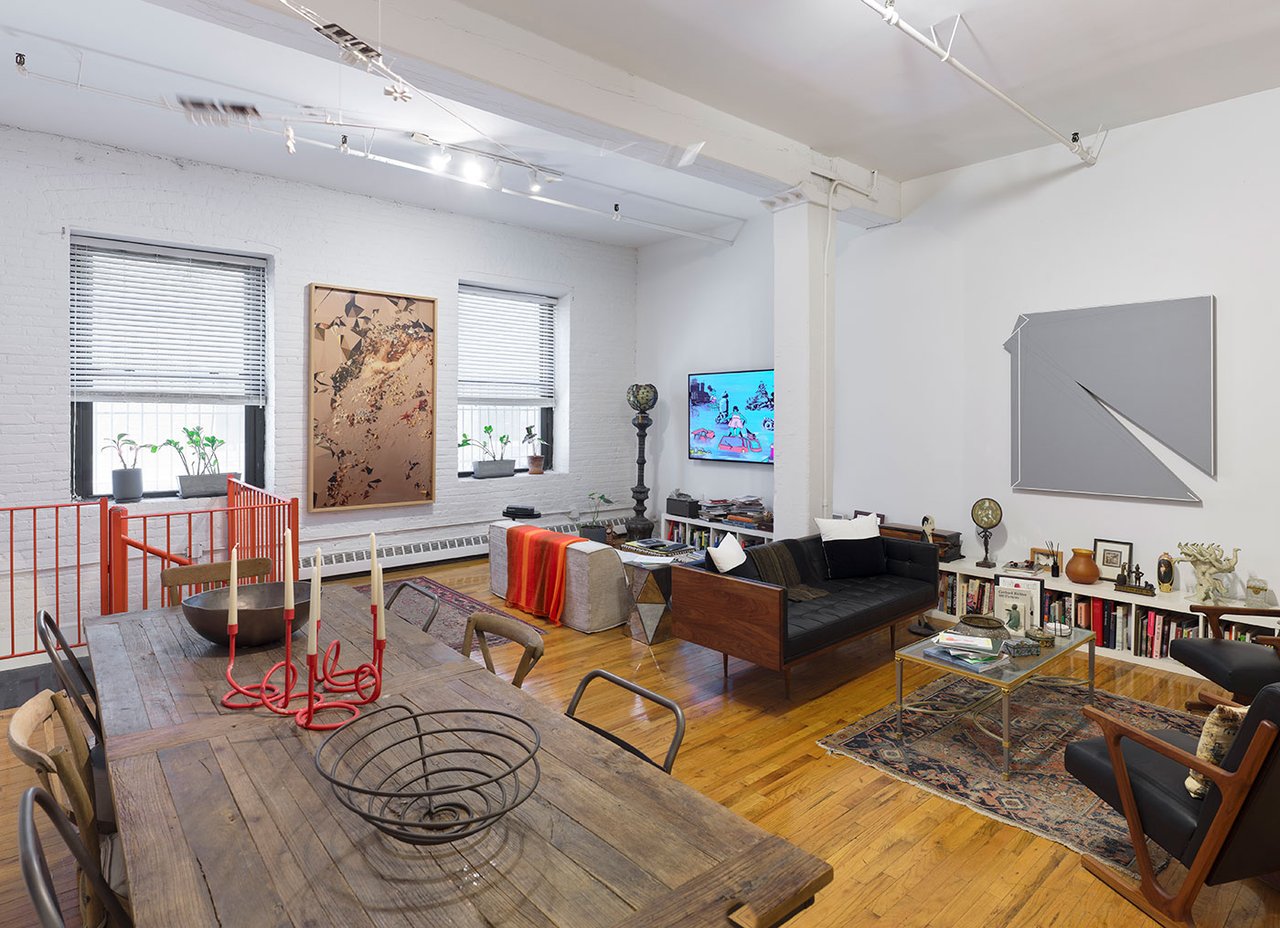
Steven Sacks’s collection at home in New York. Screen display, Marina Zurkow, Slurb, 2009; Quayola (left), Iconographies #16, 2016; Manfred Mohr (right), P-511/M, 1996. Courtesy of Steven Sacks and bitforms gallery. Photography by Max C Lee
LJ: The gallery opened at a very difficult time for the city.
SS: We were building out the gallery. And we were two months out from opening in November 2001. I had put a lot of my personal money into creating the space. I had no partners. And then 9/11 happened. It was shocking on so many levels. I had known people that were in the Twin Towers and had friends who worked near the buildings. You could see the World Trade Center from the cross street where we were located in Chelsea. It was an unbelievably challenging moment. It took me some time to comprehend the reality of the situation: I’m starting a new business, in a very difficult sector — the art world — and I’m doing something that the commercial art world really hasn’t seen before, a gallery specifically focused on new media art. The 9/11 catastrophe added this unimaginable hurdle.
One pertinent lesson from my MBA is that any business that you start has a minimum of a two-year waiting period for success: to build your reputation, your image, and your clientele. So I took that to heart.
It kept me sane; kept me focused. And the city bounced back within a year. People started to get back to regular activities, but that memory of the people lost, and the city in turmoil, will never leave me.
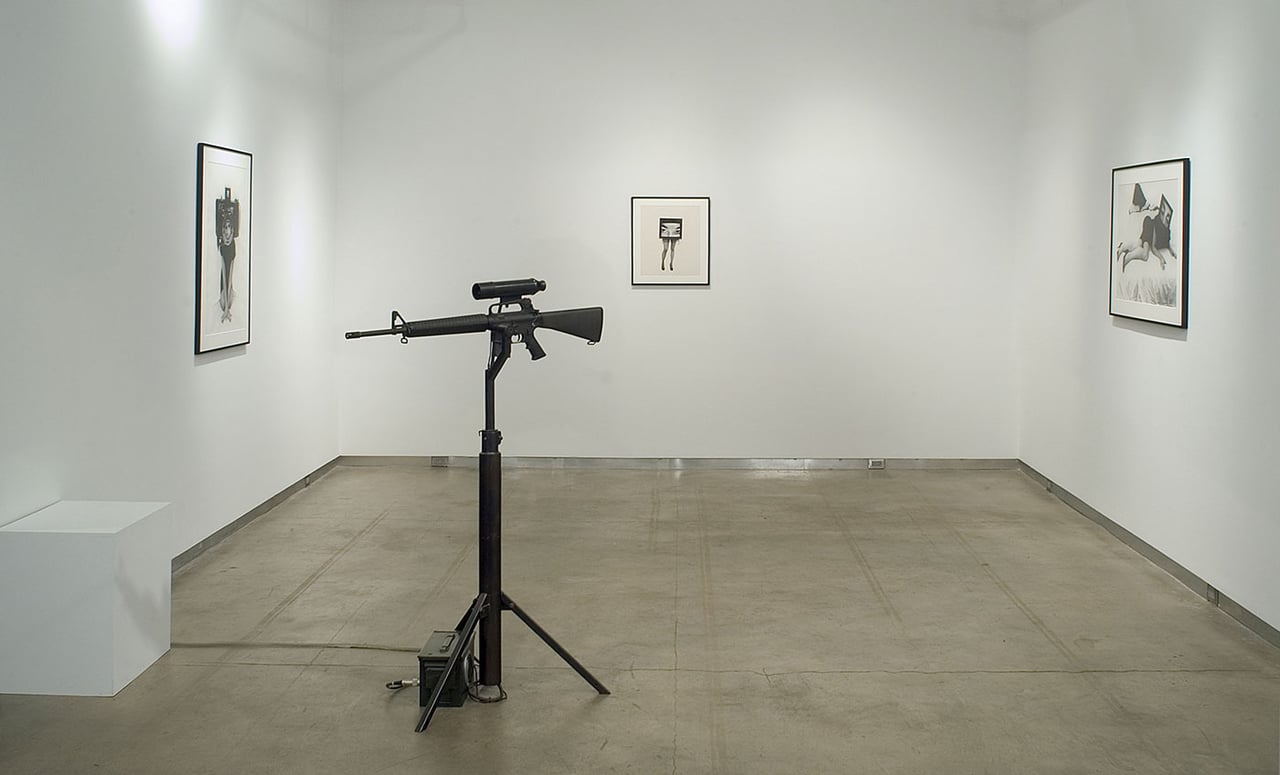
Installation view of Lynn Hershman Leeson, “Selected Works, 1974–2005” at bitforms gallery, New York, 2006. Courtesy of the artist and bitforms gallery
LJ: What can you tell me about the artists you showed in the early years, and how you came to choose the name bitforms?
SS: I always wanted to work with artists who had the ability to execute their concepts both physically and virtually. The name bitforms evolved from that idea.
It was very important to me to convey that the use of digital tools was not only meant for screen-based ephemeral work. From the very beginning we presented clear examples of that, including work by Manfred Mohr, Lynn Hershman Leeson, Cory Arcangel, Yael Kanarek, Mark Napier, Casey Reas, and many others.
I gained confidence putting together shows with a combination of physical and digital works. It was also about getting to know the system: how the art world works, and which artists had a long-term vision for their career combined with the mental toughness to survive. I also wanted to have diversity in generations and reveal how they interpret the new tools and media culture of their time. That was essential.
If you look at our program today — Maya Man to Manfred Mohr: an artist in their 20s, an artist in their 80s — very few galleries in the world have such a wide generational spread with a focus on art and tech.
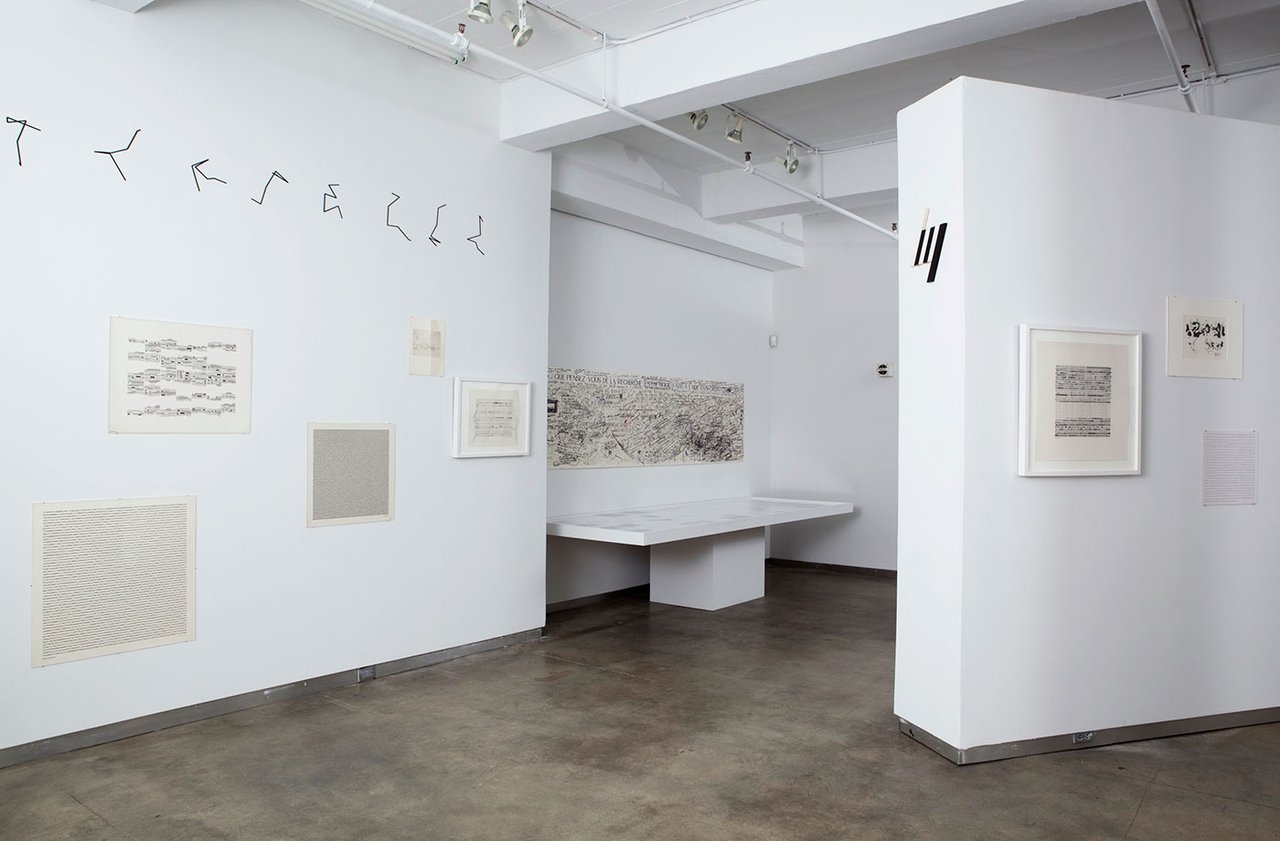
Installation view of “Manfred Mohr: 1964-2011” at bitforms gallery, New York, 2011. Courtesy of the artist and bitforms gallery
LJ: How do you see the term “new media art” 25 years on?
SS: “New media art” was always a difficult phrase. New media becomes old media, sometimes within weeks, especially now with AI. The definition of the term was always contingent upon the time of production and creation. When Manfred Mohr was creating in the 1960s and ’70s, it was highly experimental, very much a new media exploration. Whereas today, any serious programmers making media art would not look at it as very complex or challenging.
Mohr is a great example of how one managed the constraints of the early years. One of the only things he could do with his code was to create plotter prints because there was no computer or screen that was capable of showing the work in real time to his liking. This was the case until the year 2002, when he released his first live generative work, the P-777 series.
In the early years, Manfred, Casey, and many of the artists had to build their own hardware. The 777 piece was built on a custom PC. Before that, almost everything code-based was physical except for a handful of experimental films that were recordings of the generative work.
The essence of contemporary art is a representation of contemporary culture. And that holds true of technology, because technology is connected to the evolution of culture. It’s the foundation of what the gallery is and always will be.
Installation view, showing work by artists including Michael Najjar and Casey Reas, of the inaugural show, in 2005, at the space that bitforms gallery ran in Seoul, Korea, from 2005 to 2007. Courtesy of bitforms gallery
LJ: “You have had bitforms gallery spaces in locations beyond New York. What can you tell us about them?”
SS: I had a space in Seoul, Korea from 2005 to 2007. I was contacted by a very successful Korean businessman who read about the gallery and asked if I would come to Seoul to meet and discuss. I was also being interviewed by Wired magazine at the time and they actually accompanied me on the trip and meetings.
I had a Korean employee in NY and I asked if she could help run the space in Seoul. She agreed and then I proceeded with having them build a beautiful space and presented exhibits for around two years. We were too early on the scene but very popular and it was a special experience having a space in Asia. I have also done numerous pop-ups in San Francisco at Minnesota Street Projects and decided to open a permanent space there from 2021 to 2023.
Like many, I assumed the big tech money would translate into big business for the gallery, especially with my focus on art and tech, but it turned out not to be the case. We did fine and enjoyed the East/West coast experience, but I decided it was no longer worth it to maintain two spaces.
We have also had a few pop-ups in Los Angeles. One in 2019 at The Row in DTLA and a large project near LACMA in 2024 called Interreality. And we just had a small pop up at Wilshire Online called Continuum. I feel with the recent opening of Refik Anadol’s Dataland (we have worked with him since 2021), Los Angeles has a lot of potential for the gallery and we are in the process of planning additional exhibits.
Installation view of Casey Reas, “There’s No Distance”, at bitforms gallery, New York, 2016. Courtesy of the artist and bitforms gallery
LJ: What about the emphasis that bitforms has put on generative art since 2001?
SS: Generative art was probably the most important thing that we embraced early on. But back in the early 2000s, we were presenting works on CD-ROMs, Zip drives, not such reliable media. And the Graphic Processing Units (GPUs) were at a very different level than they are today. Generative artworks were constrained by the technology of their time.
In the early days of bitforms, there was no hardware that could create the smooth graphic, the movement, the fluid line many generative artists were seeking. Manfred and Casey were producing their own hardware. A lot of artists were doing that because the powerful PCs were too expensive and too large for consumer use.
The evolution of the flat high-resolution screen as a simple, elegant object, has helped artists get their work into both museums and private collections. It also made it more accessible and practical to collect and present video and generative art at home and in institutions.
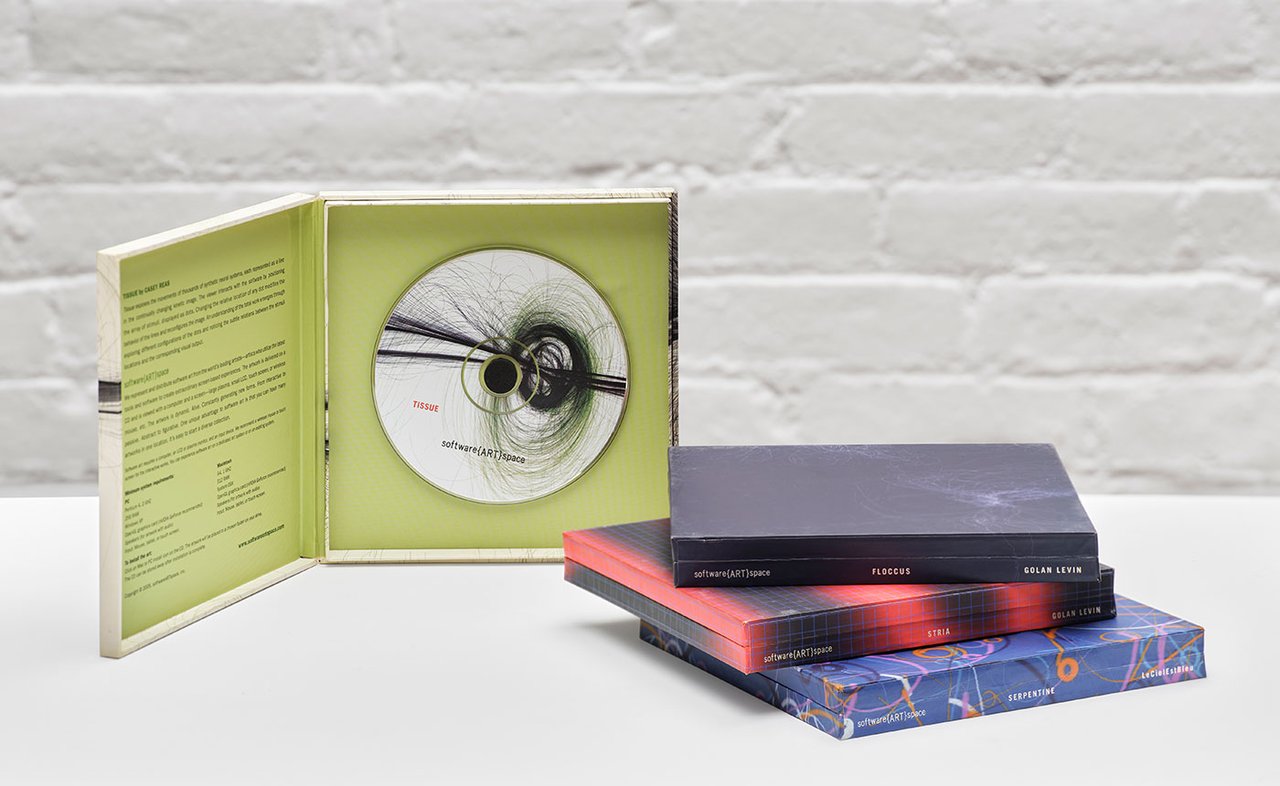
In the mid-2000s, I launched Software Art Space to reach a wider audience about generative art. I worked with Lia, Golan, Casey, James Paterson, and other artists, and we made these beautiful custom-made boxes with printed CDs in them. They were editions of a hundred, and we wanted to convey: “Here’s a live software-based artwork you put in your computer at an affordable price. We recommend having a devoted screen to experience the art.” [In the early 2000s] the screens were not of great quality. But this was an idea that we tried very early on, to expand the marketplace with artwork that is code-based and forever changing.
Packaging and CD for Software Art Space, 2005. Courtesy of Steven Sacks
The language that we used on the packaging was designed to make people feel comfortable with this new type of art — to encourage people to have a devoted screen in their home for art that could also have multiple pieces in a single location (a new concept for collecting). Now this idea is accepted, but 20 or 25 years ago that was unheard of.
Pretty much every screen today is 4K, with a 16 by 9 aspect ratio. If the work is at that ratio, and the artist is comfortable with multiple scales, the work can fit into this idea of being on a system with multiple other works. Now, of course, this doesn’t apply to artists that want their work presented in an alternative aspect ratio or scale, or if the artwork is connected to a sculptural object.
There are so many artworks that fit the 16 by 9 format that I think a lot of collectors can get excited about and really transform their collection and their homes by having a devoted screen for art.
So it’s been interesting to see how generative art has evolved, as the technology has expanded both in computing and screen options. Casey Reas’s and Ben Fry’s creation of Processing tools allowed many new artists who never thought they were capable of coding to create generative work.
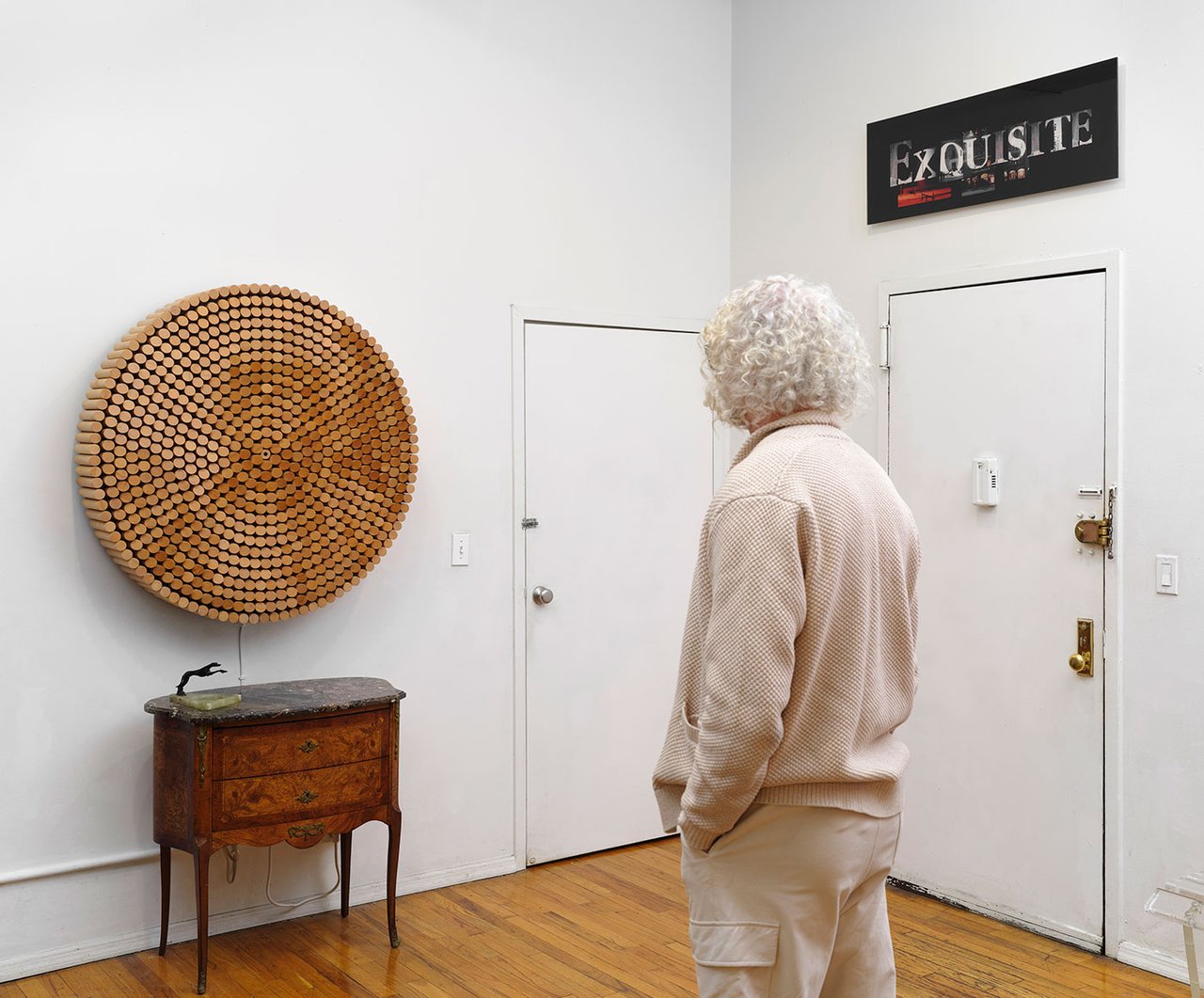
Steven Sacks at home in New York with Daniel Rozin, Peg Mirror (2007) and Rafael Lozano-Hemmer, Exquiste (2003). Courtesy of Steven Sacks and bitforms gallery. Photography by Max C Lee
Until the launch of the Art Blocks platform in November 2020, generative art, and explaining it to the general art world, was still complicated. Many of the collectors I worked with were comfortable with it, but most did not understand the concept of generative art. Art Blocks was the most effective way up until that time of educating a wider collecting audience about what generative art is and could be and the concept of code being utilized as an artistic tool for creation.
LJ: And how about the combination of software and physical works?
SS: One thing that really differentiated the gallery early on was the inclusion of physical and code-based artworks.
One of the most important physical manifestations of software, even to this day, is Daniel Rozin’s creation of the Wooden Mirror (1999). It is such a beautiful representation of pixels in a physical form.
And he has continued to reinvent this concept of interactive physical pixels in a wide variety of scales and material that always astounds me. In fact, he currently has a solo show with many examples of his physical works at the Museum of Art and Light in Manhattan, Kansas. Rafael Lozano-Hemmer is another great example of an artist combining physical art and software, and recently had a solo show at the Museum of Modern Art in Mexico City. His work is in numerous museum and private collections. Most of my artists have a mixed media practice and you can check them out on our site.
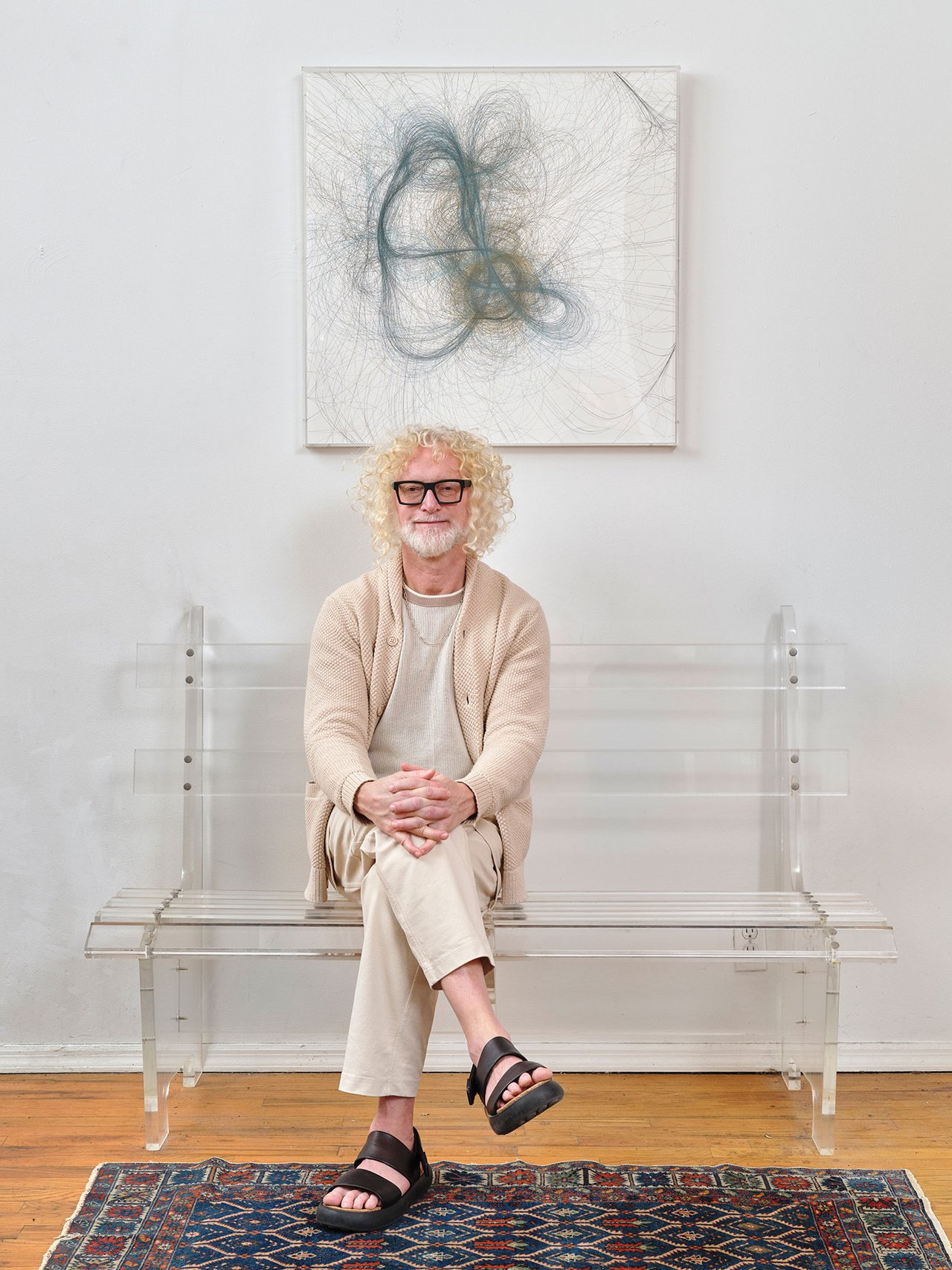
Steven Sacks at home in New York with Casey Reas, Path Series (2001). Courtesy of Steven Sacks and bitforms gallery. Photography by Max C Lee
LJ: How did the boom in NFTs affect bitforms and your artists?
SS: NFTs really started to gain popularity when Beeple sold Everydays: The First 5000 Days, in March 2021 for $69m. For the art world, NFTs were brewing before that, but the $69 million Beeple sale was unbelievably disruptive.
The world was watching. And everything shifted. There was a group of artists that really embraced blockchain, crypto, NFTs, and the community around it. Much of this new movement wasn’t about art; it was about legitimizing crypto.
The Beeple moment was amazing. I am friendly with him. He had had a long career beforehand and had built a big following. But $69 million was extraordinary and unprecedented, especially for someone who was not in the contemporary art world. It disrupted the whole art system in terms of valuation, provenance, and history. That impacted my gallery, which was focusing on digital and working with artists that had built 20, 30, 40, 50-year careers, and who were selling for numbers that were dramatically lower.
A handful of the artists I worked with, including Refik Anadol and Casey Reas, were connected to NFTs, but many others were not really comfortable with the idea of minting artworks on-chain and using crypto.
Back when NFTs first started, I was very concerned about the “art” factor. There was no attention given towards the experience, the presentation, and many of the concepts were trivial. How do you live with this work? What’s the idea behind the work? This new “art” had become a commodity that was traded on the blockchain. It didn’t mean that some of the output wasn’t interesting or art, but the majority was not.
Installation view of Sarah Rothberg and Marina Zurkow, “Wet Logic” at bitforms, New York, 2020. Courtesy of the artist and bitforms gallery
A marketplace was created. And there was confusion among the art world about what I had done at bitforms, which was to build a serious gallery around new media and digital, and 90% of my artists were not minting NFTs. I needed to pivot and make connections to understand what was happening. and also to educate the NFT community. To say: “What you’re doing is relevant because you’re supporting this medium [of digital and new media art], but there is a deep history that’s being missed or not really acknowledged by the community that you need to be aware of. You can decide how you want to deal with that history, but you have to understand it.”
Most of my artists didn’t want to be deeply connected to social media, which was essential to the success of any artist who was making it in the NFT marketplace. If you were not on Twitter, Discord, or Instagram pretty aggressively, you were not part of the community. And my artists would rather make art and not spend their energy and creative time in that capacity. So that was another major shift in this new artist practice — and the generation of artists that did well were adept at creating and building relationships/communities on social media. That allowed them to form direct connections and dialogues with the collector — another danger for galleries.
Now, in 2026, things have shifted dramatically. Almost all the artists that were successful [in the NFT boom years] now want to be in a gallery or museum show, to have their work physically presented, and have it contextually connected to art history.
They want the art world to embrace their work, engage with it and collect. A big part of this practice now is how do you make these physical interactive objects that can engage people on a much wider level beyond NFTs.
Sarah Rothberg, FOREVER MEETINGS, 2026. Installation with bitforms gallery at Basel Social Club 2026. Courtesy of the artist and bitforms gallery
LJ: How have you viewed the advent of AI tools and artists leading the way in terms of the critique as well as the use of AI?
SS: Some of it is politically complicated because the companies themselves have certain points of view that some artists are not comfortable with.
The great news is, whether they’re politically or ethically correct or incorrect, these big AI companies are definitely leaning on artists to showcase new forms of creative output using code.
They’re funding artists; they’re doing residencies; they’re connecting them to R&D that artists would never have the capability of doing themselves, and computational power that is beyond individual artists as well.
If you get past the ethical and political sides, it is an incredible tool for creative development. It adds a layer of efficiency that I’ve never seen before in terms of process. The speed at which ideas can come is extraordinary. Vibe coding using natural language is clearly going to be a game changer and have a massive impact on those artists who may not be as comfortable coding, but have a sense of where they need to go.
Installatio view of Refik Anadol, “Quantum” at bitforms gallery, New York, 2021. Courtesy of the artist and bitforms gallery
LJ: At the end of 2025, you were out in California seeing “Art + AI”, a show of the collection that Google Arts & Culture has put together at their Gradient Canvas building in Mountain View.
SS: That was a very successful example where a company commissioned artists from bitforms, such as Casey Reas, Clement Valla, and Refik Anadol, to make pieces that were placed in a Google building that is pretty much devoted to AI.
It is amazing to see these companies support art, to inspire their employees, and to give artists access to powerful tools and computing power — and to actually pay for commissions to support the artist’s practice.
SS: They’re interesting because they’re a little more apolitical. They are more about challenging the ethics of AI, and challenging what’s possible. They are not concerned that other companies may not want that dialogue to occur. Anthropic thrives on that dialogue and embraces the critique of AI.
Rafael Lozano-Hemmer, Black Hole (2026), bitforms gallery stand, Zero 10, Art Basel 2026. Courtesy of the artist, bitforms gallery, and Max Estrella Gallery
LJ: You have been attending art fairs for 20 years. You have now taken part in the first three iterations of Art Basel’s Zero 10 initiative, dedicated to art of the digital era. How has Zero 10 changed things?
SS: We have done the main Basel fair five or six times over the years, Swiss Basel, as well as Art Basel Hong Kong. Zero 10 was very surprising because for many years Art Basel itself was not very supportive of new media art.
The whole management of [the Miami Beach launch of Zero 10] was very different to the typical art fair process. It was clearly curated with specific galleries in mind that have a very keen connection to digital. Miami was fairly heavy on the crypto side. I think most of the galleries and participants and even the visitors were supporting the NFT crypto community, where I think the real potential of doing a fair like this is actually converting the large traditional collector base that Basel has nurtured, and having them become interested versus having the crypto audience reinforce what they already know.
The positives are that the artists are now really not just thinking about the screen [or] the blockchain, they’re thinking about what all artists should think about, which is the concept, presentation, and experience. That’s what Zero 10 really emphasizes.
Zero 10 at Art Basel Miami Beach was almost too much of a spectacle in some way, and I think maybe some traditional collectors may have been intimidated by that. Art Basel Hong Kong, where we showed work by Quayola and Daniel Canogar, was a bit more serious than Miami in terms of the institutions and collectors, and revealed the potential of a serious Asian art market.
Rafael Lozano-Hemmer, Broken Mirror Ono (2025) at bitforms gallery stand, Zero 10, Art Basel 2026. Courtesy of the artist, bitforms gallery, and Max Estrella Gallery
LJ: And how did Swiss Basel, where a number of long-standing Art Basel galleries joined the Zero 10 initiative, complete the narrative?
SS: We were at Swiss Basel Zero 10 with a solo presentation by Rafael Lozano-Hemmer, and teamed up with Max Estrella’s Madrid gallery. It’s a model I’ve followed before to help with expenses and staffing.
We also showed an AI animation and print series by Sarah Rothberg at Basel Social Club — a very cool, casual art fair with a more performative, less rigid art fair structure.
Zero 10 was held in a location across from the main fair, so some visitors were lost due to the disconnect with the main building. I feel very strongly about integration versus separation as it’s the only way to reach and educate the broader art market.
That being said, Zero 10’s showcase of media and digital art is making a powerful statement, supported by an elite art fair. I only had to wait for 25 years!
Steven Sacks is founder of bitforms gallery, New York. bitforms has supported and advocated for the collection of ephemeral, time-based, and digital artworks since its founding in 2001, and its artists are in the collections of the Museum of Modern Art, New York; Tate Modern, London; the Solomon R. Guggenheim Museum, New York; the Smithsonian American Art Museum, Washington, D.C.; The National Portrait Gallery, Washington, D.C.; Center for Art and Media (ZKM), Karlsruhe; Centre Pompidou, Paris; Victoria and Albert Museum, London; Stedelijk Museum, Amsterdam; and Borusan Contemporary, Istanbul, the Whitney Museum of American Art, New York; among many other institutions and private art collections internationally.
Louis Jebb is Managing Editor at Right Click Save.