The Art of the Profile Picture Portrait
Katherine Howatson-Tout considers the place of PFPs in the history of portraiture
Katherine Howatson-Tout considers the place of PFPs in the history of portraiture
PFPs (profile pictures) project new selves at a moment when our hybrid identities are increasingly performed in digital space. They permeate much of the Web today, often in the form of cartoons and comic-art avatars that stand in as online body doubles. Frequently posed in bust length and three-quarter profile, these avatars sit unquestionably within the Western canon of portraiture, reincarnating our social identities in new virtual worlds. That they often wilfully mask rather than reveal an inner self also ties them back to histories of aristocratic portraiture, which often (though not always) sought to aggrandize and airbrush “reality” in order to make a public statement. In fact, PFPs achieve many of the same goals as portraits five hundred years ago.
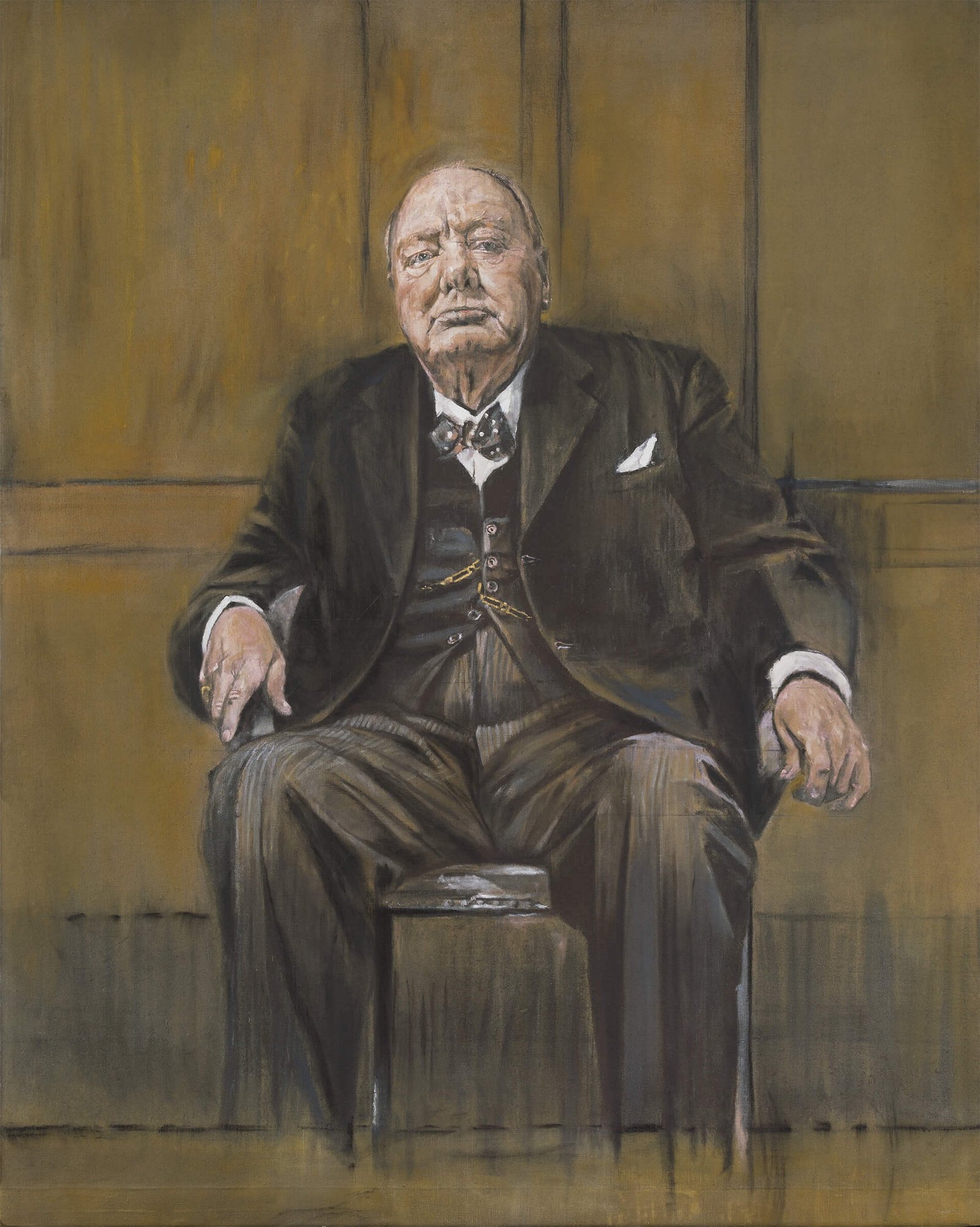
The stakes are high in portraiture, in which a sitter’s social status and their perceived moral character can hinge on minute details of place and face. Subtle tweaks of pose and lighting produce different effects and invite different responses. Winston Churchill famously despised his 1954 portrait by Graham Sutherland, who was only painting what he “saw.” Yet the image was ultimately burned by members of Churchill’s staff for its perceived denigration of the aging prime minister.
As ever, people want to project a flattering image of themselves. But even online, old rules still apply.
Traditional portraitists have adopted strategies to elevate their subjects socially and politically through idealization. Sitters are frequently shown surrounded by their worldly possessions: signifiers of power, intellect, and moral fiber. Holbein’s double portrait of The Ambassadors (1533) is a paradigm in this respect, its two full-length figures framing an array of luxury objects that serves to enhance their reputations as noble and venerable souls. In the words of sixteenth-century writer, Baldassare Castiglione, “external appearances often bear witness to what is within.” But they can also be used to mask that interior.¹
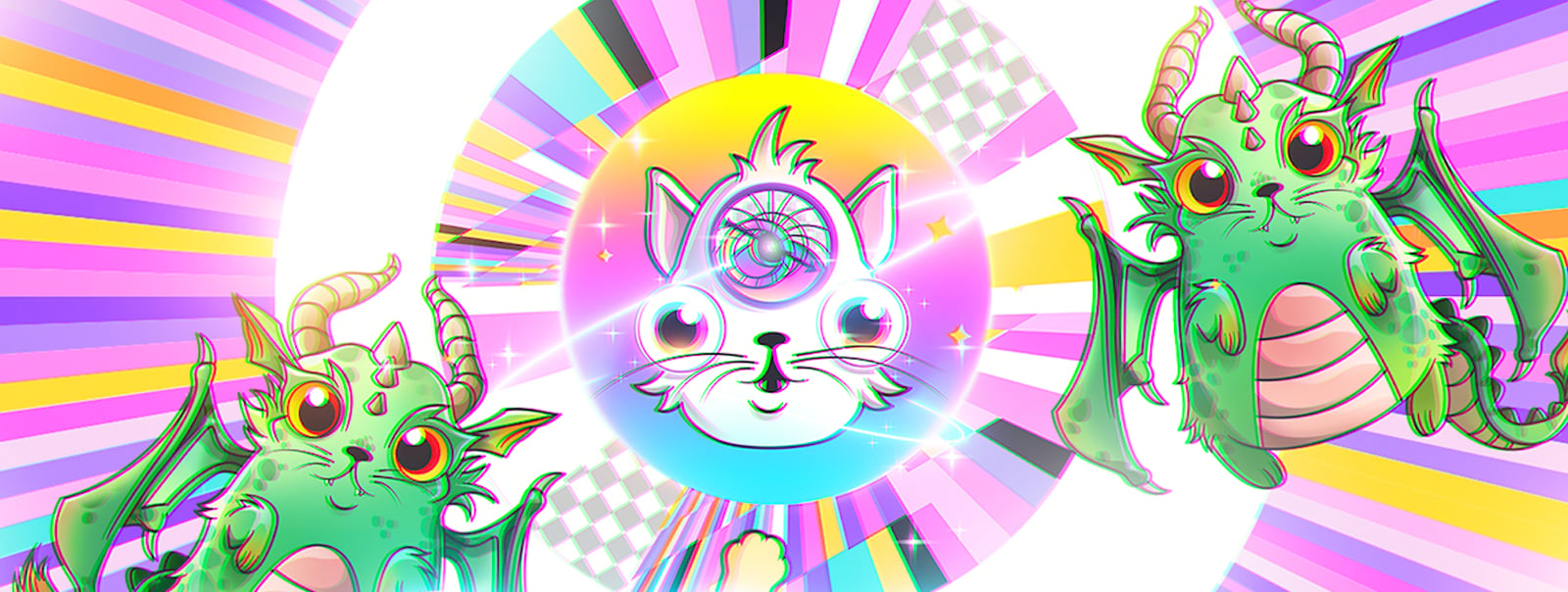
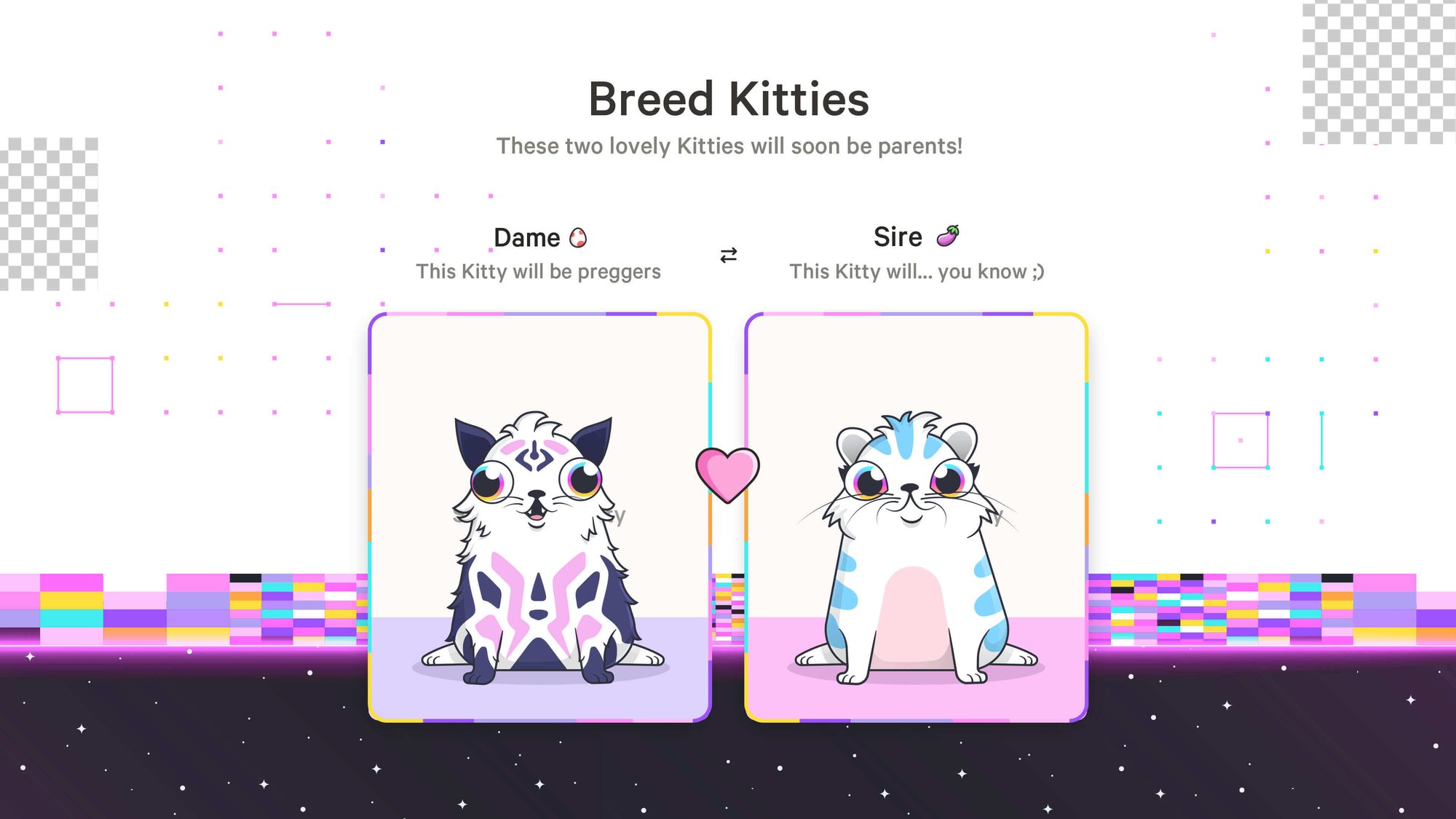
In recent years, the portrait has infiltrated the world of online gaming, with the human body dissolved and re-embodied as a digital skin. Likewise, today’s in-game acquisitions serve to bolster one’s legend within a new status hierarchy. A notched pickaxe in The Elder Scrolls V: Skyrim (2011) is as much of a ranked attribute as a fur-trimmed cloak in a fifteenth-century portrait, lending gravitas to its owner as it once did to the sitter. For a prototype PFP project like CryptoPunks (2017), the rarity of a Punk’s attributes contributes to the perceived value of the Punk itself. While CryptoKitties (2017) incorporated a “breeding” feature that allowed collectors to generate new and unique “cattributes” down the generations. For PFP projects ever since, rarity has become the native metric of the avatar as it always was for the aristocrat.
Right now, rarity is its own form of currency, with collectors of generative art especially absorbed by the hunt for the grail. Yet CryptoPunks is also a generative art project, which complicates the clean separation of “art” from “collectibles”. In the expanded field of NFTs, old categories are unstable. Indeed, for the academies of Europe, portraiture came second only to history painting in the hierarchy of genres. To consign PFPs to a world apart is therefore to deny their debt to the history of art. In the view of Guile Twardowski, who designed the original CryptoKitties, crypto art “evades characterization.”
Perhaps it’s therefore time we reframed the PFP as a Profile Picture Portrait.

Virtual worlds rely on the transfer of real-world identity into the virtual. This process of translation invites a level of skeuomorphism — the preservation of familiar traits — in the redesign of the self. Simon Gottschalk regards the introduction of avatars in the 2000s in spaces like Second Life as inherently altering interpersonal relationships built over the Internet: “This visual capability is significant, as it enhances the emotional, mental, and physical experience of actually being there.”²
An avatar offers access to mutable identity which, in the 21st century, might represent one’s inner life with rather more accuracy.
In this way, avatars extend the logic of abstract portraiture, whereby the sitter is extracted from their physical body. It therefore privileges the psyche over the physical vessel in which it is contained — the flesh is weak, however hard artists try to stall its physical decline. Indeed, avatars express a variable selfhood more in keeping with Francis Bacon’s famous bodies in pieces.
Today’s inner identity is increasingly untethered from the physical body, leaving the avatar — as a flexible projection — an apt expression of the current age of “algorithmic identity”.³ Traditional portraiture presumed a stable and coherent identity on the part of the sitter, not least because it was designed to preserve that individual for posterity. The Renaissance scholar, Alberti, argued that portraiture “makes the absent present (as they say of friendship), but it also represents the dead to the living.”⁴ He was right to situate the portrait within its social networks, but today’s avatars are also active performers in an ever-changing metaverse — born to roam a natively digital landscape. In the world of PFPs, likeness is also irrelevant. Indeed, NFTs have generated a market for generic (“unique”) personae within a neoliberal age of icons.
By purchasing a CryptoPunk, the owner is making a personal investment in their digital identity, simultaneously financializing and circulating themself throughout the Web3 ecosystem.
While an 8-bit bust might not resemble its owner, its associated attributes augment their online presence as it dissolves their physical traits. This can cause problems if the image associated with a PFP becomes co-opted, as was the case with Matt Furie’s irresistibly memetic Pepe the Frog. To circulate one’s PFP is therefore to invoke the public associations of that image, positive or negative.
PFPs also court associations of kitsch, even when their directness of expression suggests a realist art movement. Despite its roots in crypto art’s early sharing economy, the PFP’s memetic nature and, often garish, cartoonism also renders it ripe for the flipping. Nevertheless, it still provokes the same lingering elitism that seeks to preserve contemporary art apart from the low-brow democracy of crypto. For Clement Greenberg, kitsch, “by virtue of a rationalized technique that draws on science and industry,” erases the distinction between art and everything else. As we now know, it wasn’t kitsch that erased this distinction, it was the NFT.⁵

PFPs have the power to inject kitsch into portraiture, rupturing its historical function to celebrate the individual as a unique and coherent personality. In the NFT economy, identity is up for sale. A case in point is JOINTPEPE (2016), which appropriates an image of a laughing Bob Marley for a memefied vision of a joint-smoking frog. Juxtaposed with the slogan, “RELAX AND LEVEL UP,” Pepe’s swollen face and animated, bloodshot eyes reframe the original photographic portrait within a pixelated bush of vibrant marijuana.
Marley is only one of numerous public figures whose images have been remixed for sale as PFPs, extending the singer’s huge body of posthumous commercialized imagery. For Paul Gilroy, it was Marley’s unifying, poetic voice — the identity he communicated through his music — that “enabled the overdeveloped and underdeveloped worlds, the global North and South, to communicate in new ways.”⁶ Marley also vocalized the experiences of marginalized members of society, channeling the collective voice of conscientious objectors to the Vietnam war, and providing the “raw materials from which a new version of black identity would be assembled.”⁷
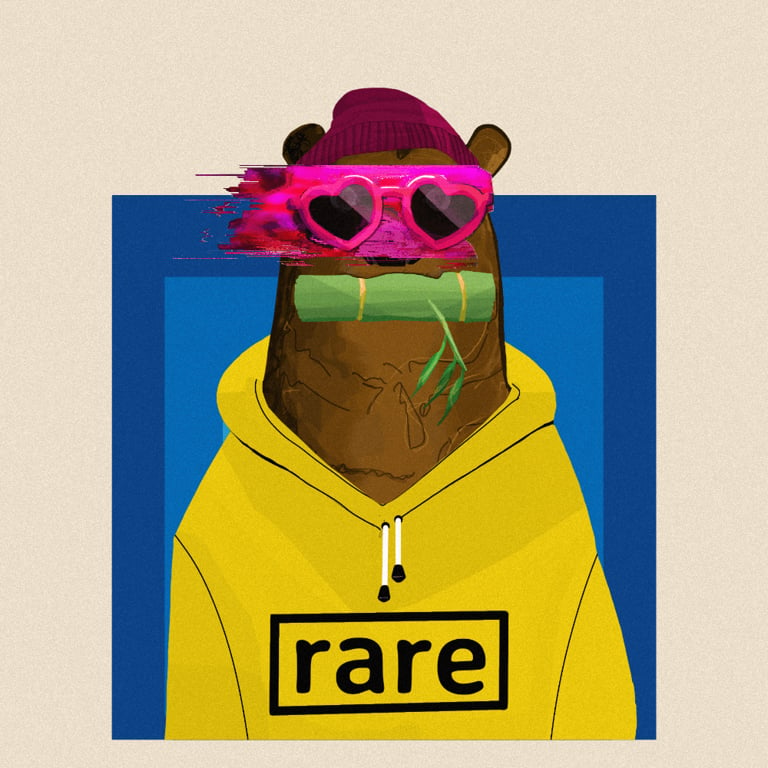
In his lifetime, Marley’s portrait embodied a global symbol of hope and unity, and yet, in the years following his death, consumer culture repurposed his image for mass consumption. The complex network of meanings that resonate with Marley as a political and social unifier is poignantly reduced by his portrait’s commercial reproduction — stripping the uniqueness of the individual and hollowing out his pre-existing meaning. This is a characteristic of Rare Pepes in general, whose ludic trivialization of their subjects follows Susan Sontag’s definition of camp as “playful, anti-serious,” “styliz[ed],” and “neutral with respect to content.”⁸
Of course, this approach of demystifying and overturning hierarchy is central to the creator economy of Web3, as it was to pop art in the 1960s, with crypto art the new means of bringing high culture down to earth.
Like crypto art, PFPs have also struggled to gain currency within traditional art institutions. But when read as profile picture portraits, their consonance with the canon is clear. Certainly, their engagement with the aesthetics and politics of identity means they deserve scrutiny at a time when our data bodies are up for sale. Despite their memetic appearance, PFPs are a realist art form in the spirit of Pop around which key concepts of camp and kitsch coalesce. Far from a niche of their own, PFPs are pure crypto art. Now that the hype has drained away, it’s time to see them for what they really are.
Katherine Howatson-Tout is Assistant Editor at Right Click Save.
¹ B Castiglione, The Book of the Courtier [1528], G Bull (trans.), London: Penguin Classics, 2003, 135.
² S Gottschalk, “The Presentation of Avatars in Second Life: Self and Interaction in Social Virtual Spaces”, Symbolic Interaction, Vol. 33, no 4, 2010, 503.
³ J Cheney-Lippold, “A New Algorithmic Identity,” Theory, Culture & Society, 28(6), 2011, 165.
⁴ LB Alberti, On Painting [Book II], C Grayson (trans.), London: Penguin Classics, 2004, 60.
⁵ C Greenberg, “Avant-Garde and Kitsch,” in Clement Greenberg: The Collected Essays and Criticism, Volume 1, Perceptions and Judgments, 1939-1944, J O’Brian (ed.), Chicago: University of Chicago Press, 1986, 13.
⁶ P Gilroy, “Could You Be Loved? Bob Marley, anti-politics and universal sufferation,” Critical Quarterly, Vol. 47, no. 1-2, 2005, 229.
⁷ Ibid., 238.
⁸ S Sontag, Notes on “Camp” [1964], London: Penguin Modern, 2018, 2-10.
No comments yet. Be the first to share your thoughts.
Mentioned in this article
People: Bob Marley, Guile Twardowski, Katherine Howatson-Tout|Works: CryptoKitties, CryptoPunks, JOINTPEPE|Organizations: Dapper Labs|