·News
Zero 10 | Digital Art Goes Mainstream at Art Basel
New section headlines landmark year for art and technology at Art Basel Miami Beach
New section headlines landmark year for art and technology at Art Basel Miami Beach
“The digital artists are going to bring their best!” Tyler Hobbs says of the work that he and 18 other artists, presented by 12 galleries and one corporate collection, are showing at Zero 10, a new section dedicated to art of the digital era at Art Basel Miami Beach (December 3 to 7, 2025).
In a similar vein, Beeple (Mike Winkelmann) says he expects Zero 10 to bring “conversations happening within the digital art space into a much broader cultural arena”. “It’s very special to show software-based work about online culture here,” Maya Man tells Right Click Save, “because people will encounter the work who may not consider themselves yet interested in art on the internet.”
Hobbs, Beeple, and Man were among artists talking to Right Click Save about their hopes for the new digital art initiative at the art world’s fashion-conscious winter get-together. Eli Scheinman, Zero 10’s Curator and Program Lead, announced in early November 2025 that the new section, which is presented with the support of OpenSea, would be “not upstairs, not offsite” but covering 10,000 square ft of floor space and central to the fair experience in the sprawling Miami convention center.
“Zero 10 reflects a strategic conviction: digital art is no longer at the margins — it is integral to how art and the market are evolving in real time,” Noah Horowitz, CEO of Art Basel, said in a launch statement. The fair group plans to extend Zero 10 to Art Basel Hong Kong, and beyond, in 2026.
The exhibitors at Zero 10 are AOTM (showing Dmitri Cherniak); Art Blocks (Larva Labs); Asprey Studio (Andrea Chiampo, Yatreda); Beeple Studios (Beeple); bitforms gallery (Maya Man, Casey Reas, Manfred Mohr); Fellowship & ARTXCODE (IX Shells); Heft Gallery (Michael Kozlowski); Nguyen Wahed (Kim Asendorf, Joe Pease, XCOPY); Onkaos (Mario Klingemann); Pace Gallery (James Turrell); SOLOS (Tyler Hobbs); UBS (Lu Yang); and Visualize Value (Jack Butcher).
The title for the section was inspired by “The Last Futurist Exhibition 0,10”, held in Petrograd in 1915-16, a celebration of pure abstraction where the 0 represented the end of Cubo-Futurism and the birth of Suprematism, a changing of the guard represented in the show by 155 canvases, including Kazimir Malevich’s epochal Black Suprematic Square, 1915. The use by an established art fair of a title powerfully linked to the birth of a new order stirred a lively debate among the Web3 and digital art community on social media.
Other headline digital art moments at Art Basel include a new work by Holly Herndon and Mat Dryhurst, Kinder Scout (2025), presented by Fellowship in the established Meridians section for larger installations. Talks events held during the week include the second annual Digital Art Conversations, hosted by Michael Govan, CEO and Wallis Annenberg Director of the Los Angeles County Museum of Art (LACMA), on December 1, with Refik Anadol presenting alongside many of the Zero 10 artists, and Art Basel’s Digital Dialogues, featuring the artists Matt Hall, of Larva Labs, and Beeple on December 4 and Maya Man, Kiya Tadele, of Yatreda, and Jack Butcher on December 6.
The art and technology conversation continues at Design Miami, and on stage and in gallery booths at the smaller but well-established fairs that have for two decades brought diversity and grassroots programming of media art to Miami Art Week.
They include the beachside SCOPE Art Show (with a focus on immersive installations, wellness — there’s a Padel court — and artist talks); NADA Miami Beach, where Anna Kultys Gallery presents “Memento Mori”, featuring the work of artists including Jonas Lund and Sasha Stiles; and Untitled Art, where bitforms shows the work of 16 artists including Man, Mohr, Sarah Rothberg, Marco Brambilla, and Ana Maria Caballero, Heft Gallery shows the work of five artists including Auriea Harvey and Nancy Burson, while Petra Cortright guest curates Untitled’s “Artist Spotlight” on fellow practitioners working on new digital frontiers and outsider art.
“Looking at Models”, curated by Charlotte Kent, is the featured offering in the MUD Foundation’s Art Week 2025 program “Media Under Dystopia 6.0”. It includes citywide events, talks, and live coding and an artist panel discussion with Man, Carla Gannis, Fabiola Larios, and Gretchen Andrew.
The eyes of the wider art world will be on activity in Miami Beach at the end of a year in which The Art Basel and UBS Survey of Global Collecting 2025 revealed that digital art as a medium ranked narrowly third (at 14%), after painting (27%) and sculpture (14%), in the total spend of 3,100 big collectors surveyed. At a time when both Art Basel Paris and Paris Photo bucked downbeat global collector sentiment — with artists who work across physical and digital realms having standout moments at both events in the French capital — the Art Basel and UBS report revealed that the biggest spends regionally on digital art were in France (where 26% of fine art spending went to digital art) and Japan (18%).
In the lead-up to Art Basel Miami Beach, the big auction houses (in a year that has seen the closure of numerous commercial galleries) enjoyed upbeat November sales in New York of blue-chip 20th-century works — with records set for paintings by Gustav Klimt and Frida Kahlo — and Robert Alice’s BLOCK 1 (24.9472° N, 118.5979° E) from the series “Portraits of a Mind” set a new auction record for the artist at The Now and Contemporary Evening Sale at Sotheby’s.
Speaking on Roger Dickerman’s The DAM Show podcast, Scheinman said he hopes that the work at Zero 10 “is well received and it sells well [...] to some of the existing digital art collectors, but also importantly to a new collector base”.
Scheinman said that he wants the new section to deliver “a memorable and meaningful experience” for galleries, artists, collectors from the digital art ecosystem, but also for “new collectors and attendees who come into the space and have maybe preconceived notions of digital art”.
The galleries exhibiting are experienced in presenting a digital-meets-physical narrative for non-specialists and in countering the notion that digital art exists solely on a screen. A post on X from Jack Butcher about his Self Checkout (2025), on show at Visualize Value, captures one of the main challenges of Zero 10, of providing an interactive, thought-provoking, experience for fairgoers, anchored in the radical transparency of Web3 art. “Point of Sale. Purchase is proof. Ownership is permanent. Speculation is eliminated. Viewing is participating. Value is up to you. In person at Art Basel Miami. Onilne and Onchain at receipts.vv.xyz”.
In the lead-up to the launch of Zero 10, artists and gallerists involved spoke to Right Click Save, and to the wider digital art ecosystem, about why Zero 10 matters; the works (and summer clothes) they are bringing to Miami’s South Beach; the interactive elements they are offering at gallery booths; and the online activity offered to customers not attending the fair.
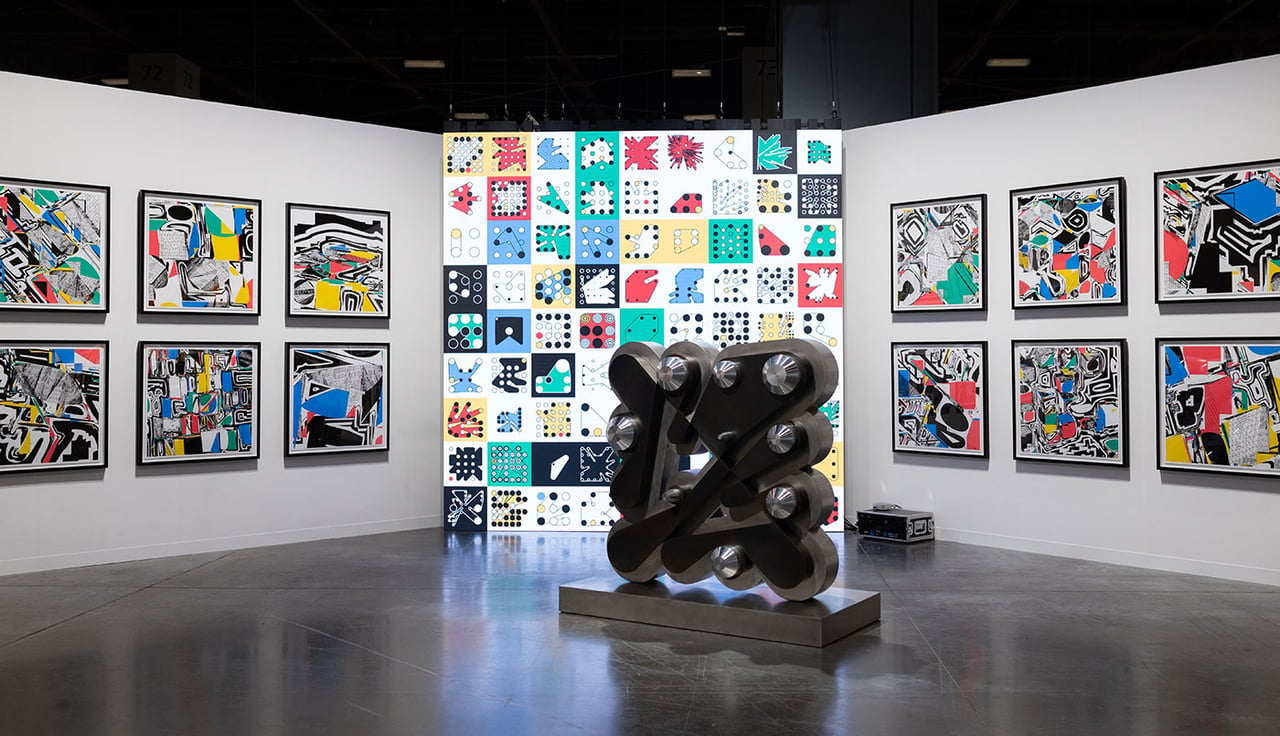
Dmitri Cherniak: Polygon Etcetera (2025); Ringers (Algorithmic Interpolation) (2025); Floor Ringer (2024)
The New York-based artist and coder Dmitri Cherniak presents a new series, Polygon Etcetera (2025), and two outputs from his Ringers series.
The Floor Ringer, a “human-sized” sculpture in stainless steel, stands at the heart of the Art of This Millennium (AOTM) stand. It represents the first time the Ringers collection has taken three-dimensional form since its launch on Art Blocks in January 2021. “We are going to Zero”, the artist writes in a playful post on X, accompanied by an animation of the 700lb (317kg) sculpture descending through a crumbling gallery floor. Ringers (Algorithmic Interpolation) is a preview of a work being developed for display at Tel Aviv Museum of Art in 2026, analysing the visual development of the Ringers algorithm.
Polygon Etcetera is a release from a process where the artist has been working with cubed grids collapsed into two dimensions. The output will be represented by prints from a series of 20 unique blockchain-based assets.
“I’ve looked over the whole fair and Zero 10 punches way above its weight,” Cherniak posted on X.
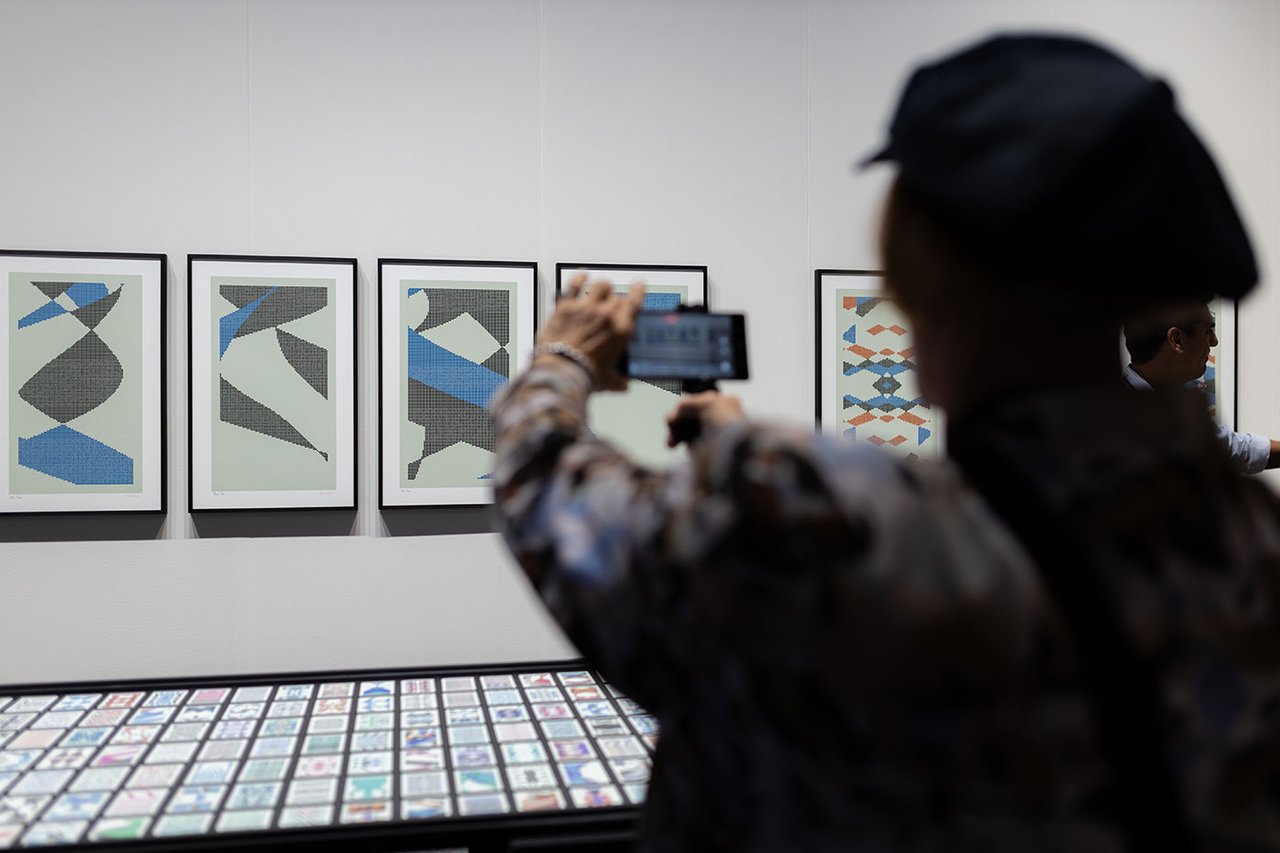
Larva Labs, the creative technology studio founded by Matt Hall and John Watkinson, launched Quine — their first major project since 2021 — as the final release on Art Blocks Curated, the platform’s foundational series.
At the time of the minting, on October 9-10, Hall and Watkinson reserved 20 Quines, 10 of which will be shown at Zero 10 as signed, framed works, and available for sale. All 497 works in the series will be displayed on the Larva Labs stand, in miniature form on a large vitrine table.
Hall said on The DAM Show that presenting on this “gigantic” table, offers something unique to a physical space. “It’s hard to get across the full set of something on the screen”. It is, he said, “a pretty unique experience to see the full output of the algorithm”. It is something designed, he added, “to bridge the gap a little bit to people who might just be walking by and are not quite sure what’s going on”.
Art Blocks is presenting at Art Basel for the first time. “We applaud Art Basel’s commitment to digital art,” the platform said in a post on X.
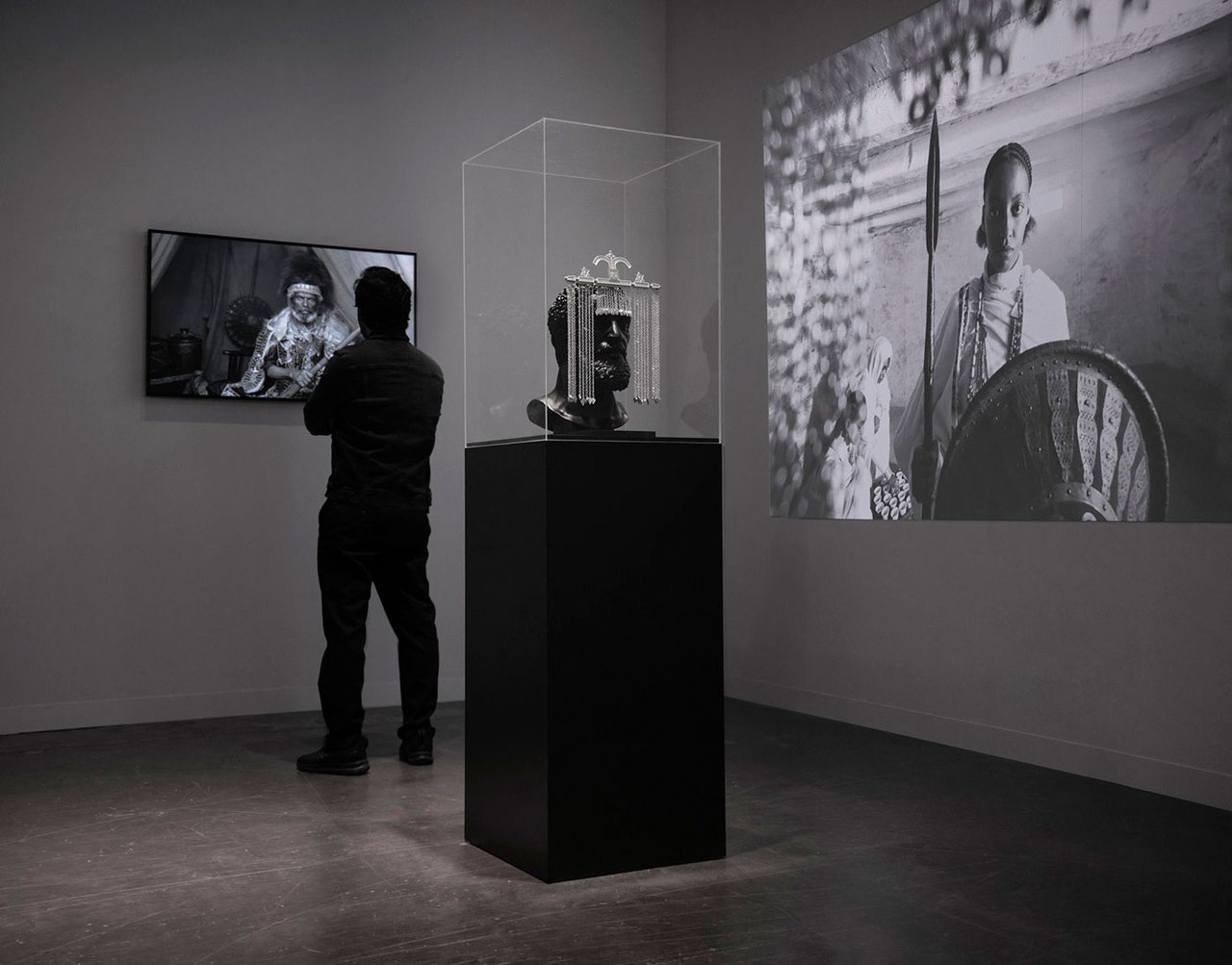
Asprey Studio is hosting digital and physical presentations of new works by Yatreda, a family-based collective of artists from Ethiopia, and the London-based Italian artist Andrea Chiampo.
Yatreda is presenting Twenty-First Century Akodama, a digital rendering of the traditional male crown that was worn by chieftains and warriors in the Ethiopian highlands as a mark of nobility, paired with a sculpture handcrafted by master silversmiths at the Asprey Studio Atelier.
“Our digital art culture has been built by eccentric yet extremely dedicated people,” Yatreda tells Right Click Save. “Rather than try to change who we are, Zero 10 at Art Basel Miami Beach gives a fresh stage to the unique art born from this community. Audiences can meet the work where it truly lives. We as Yatreda, alongside our friends at Asprey Studio, are proud to be among this first wave at Zero 10, standing with the future we have committed ourselves to.”
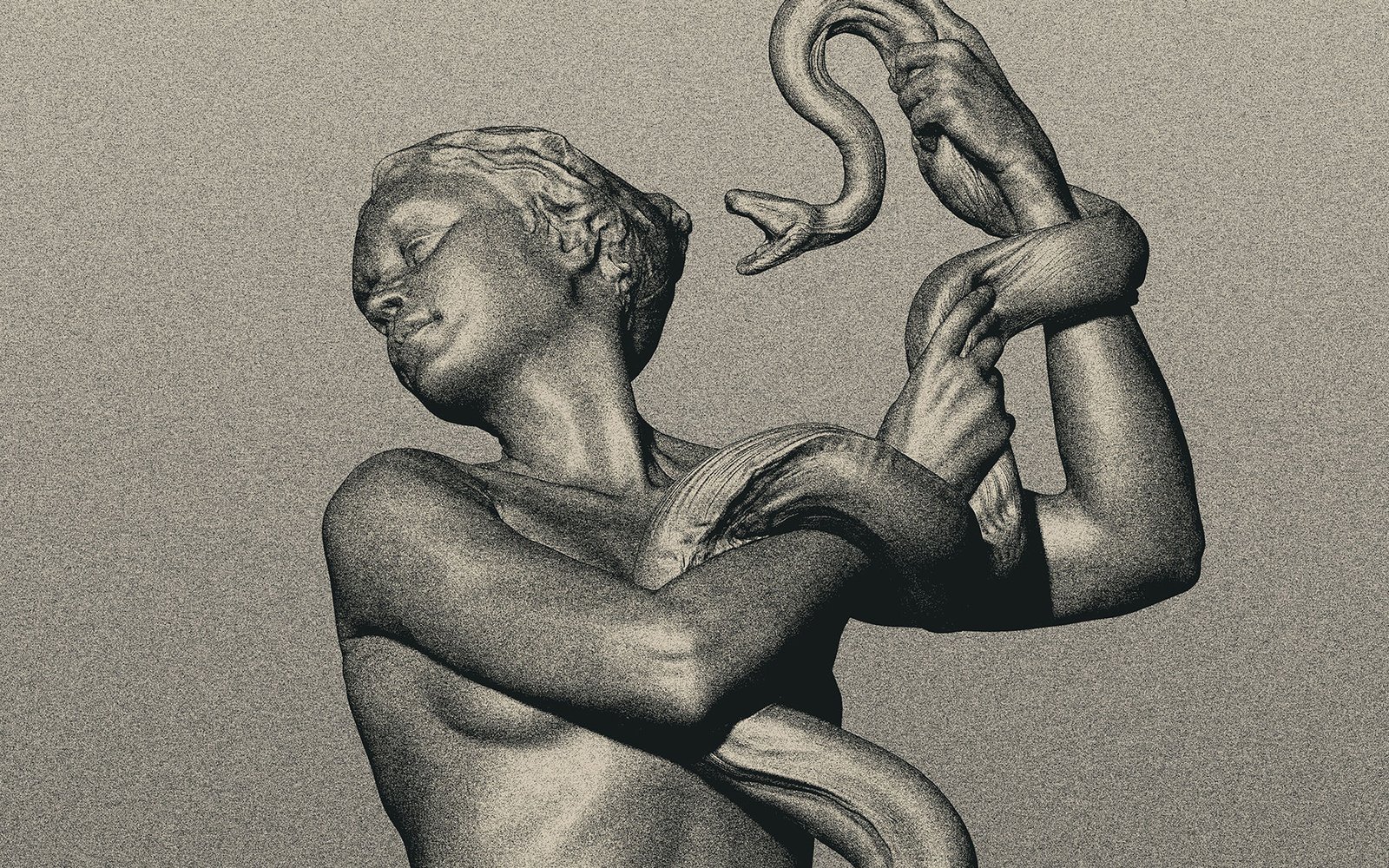
Andrea Chiampo is showing MATER NATVRA, part of his series FUTURED PAST, consisting of a digital work paired with a sculpture handcrafted by the silversmiths of Asprey Studio. “Showing at Zero 10 is important to me because my work lives at the intersection of tradition and emerging technology,” Chiampo tells Right Click Save. “FUTURED PAST is built on the idea that digital craft deserves the same cultural weight as classical techniques, and Zero 10 embodies that shift.”
“Seeing Zero 10 receive this kind of presence at Art Basel Miami Beach matters because it marks a turning point: digital and on-chain art are finally being presented not as peripheral experiments, but as central voices shaping contemporary culture.” (Andrea Chiampo)
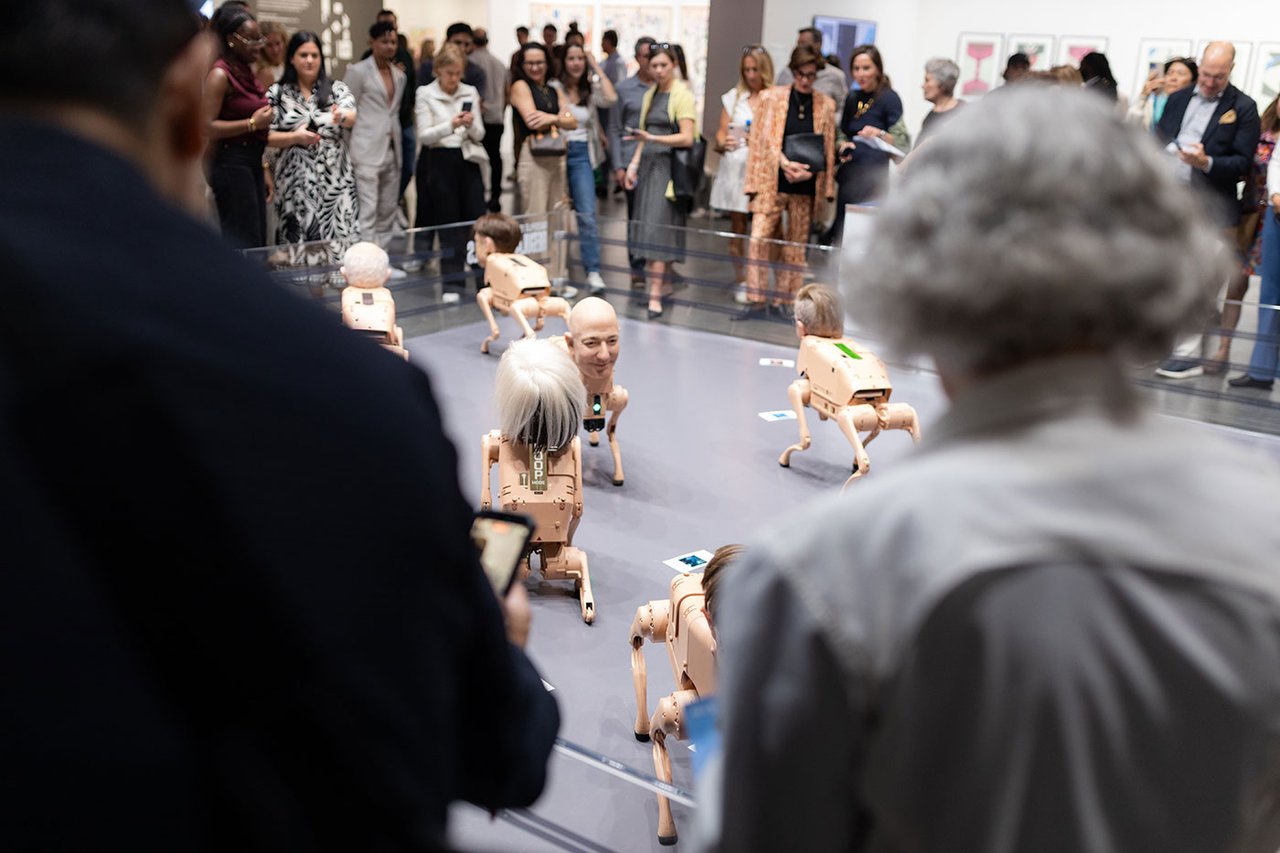
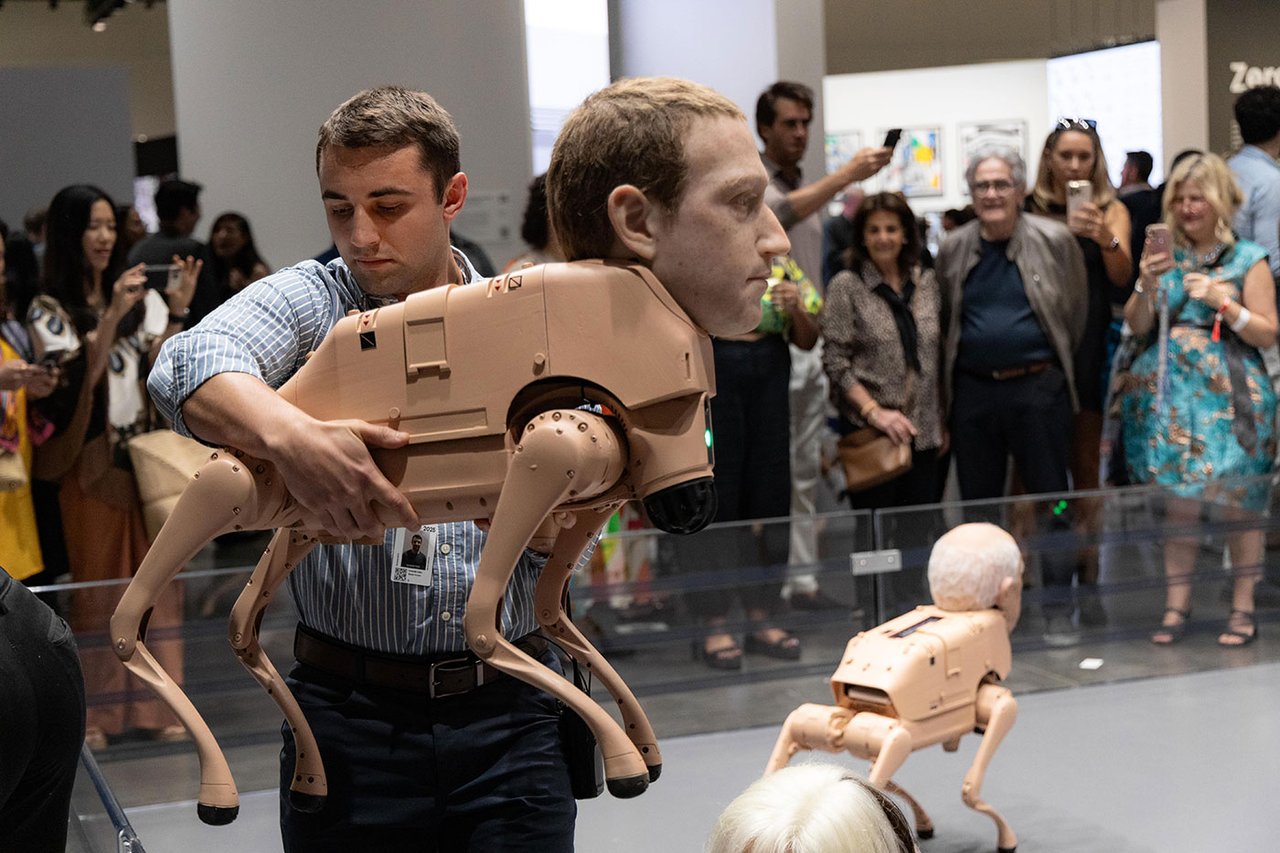
Beeple’s Regular Animals — autonomous robot dogs, with the heads of Andy Warhol, Mark Zuckerberg, Elon Musk, Pablo Picasso, and Beeple, that move autonomously and use LIDAR technology to avoid bumping into each other — are corralled in a glass-walled pen that constitutes the Beeple Studios booth. These Regular Animals are due to “poop out” a total of 1024 free prints; one in four of which carries a QR code that allows the owner to claim one of 256 free NFTs.
“Showing at a platform like Zero 10 during Art Basel Miami Beach is important because it brings the conversations happening within the digital art space into a much broader cultural arena,” Beeple tells Right Click Save. “Artists working with emerging technologies are addressing ideas that increasingly shape daily life, including identity, data, automation, and the accelerating pace of change.”
“These themes deserve greater visibility precisely because technology’s impact on society has never been more profound,” Beeple says.
“Giving Zero 10 a prominent presence at a fair as significant as Art Basel helps ensure these discussions are not confined to niche communities but are engaged with, challenged, and understood by a wider public.” (Beeple)
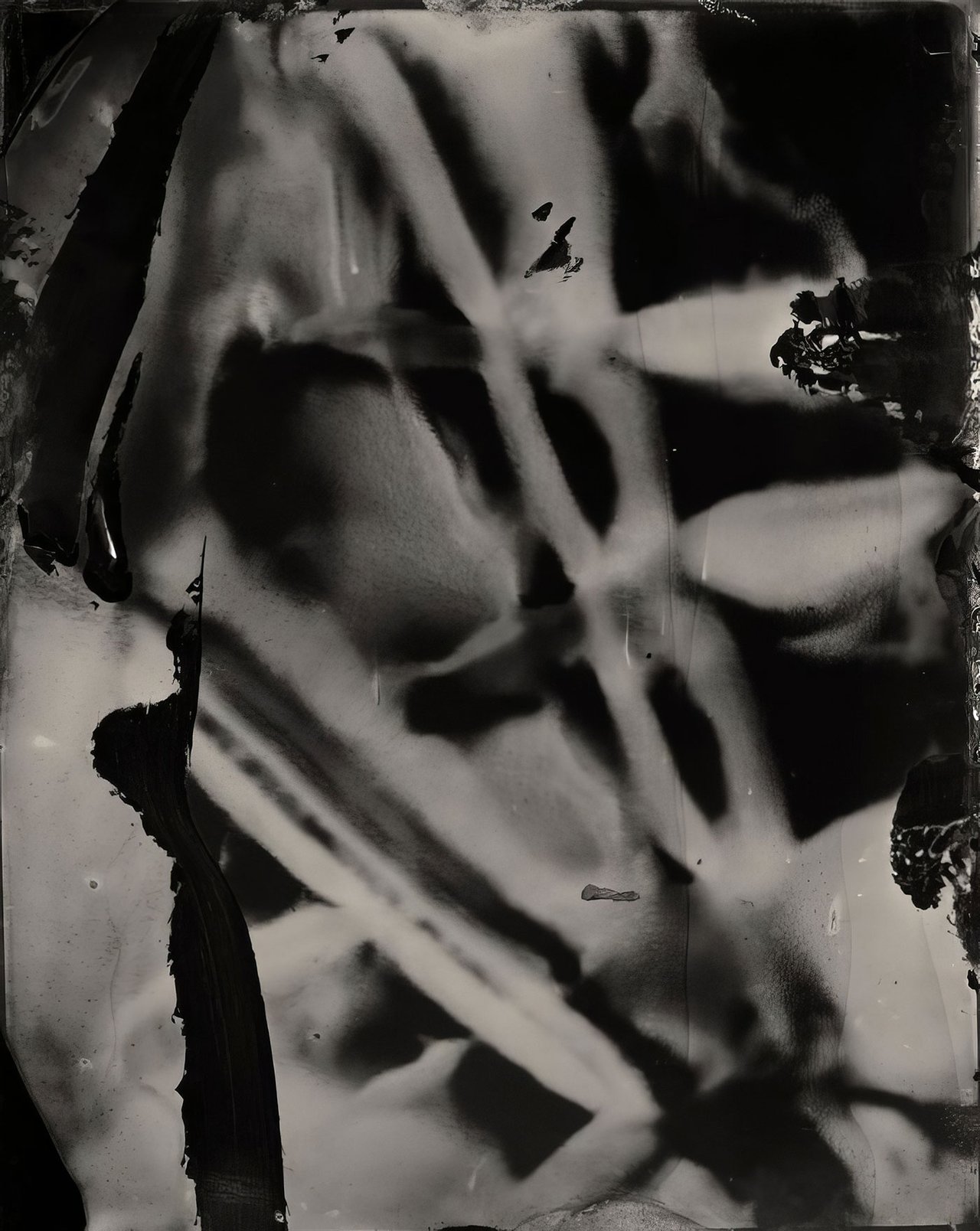
In the lead-up to the celebration of its 25th anniversary in 2026, bitforms gallery, New York, is bringing together three generations of artists at Zero 10 whose practices, it says in an exhibition statement, “chart the trajectory and ongoing vitality of generative art”: Manfred Mohr, a pioneer of algorithmic art; Casey Reas, who saw Mohr as an inspiration when he embarked on his career; and Maya Man, who studied with Reas at UCLA for her Masters in Fine Art.
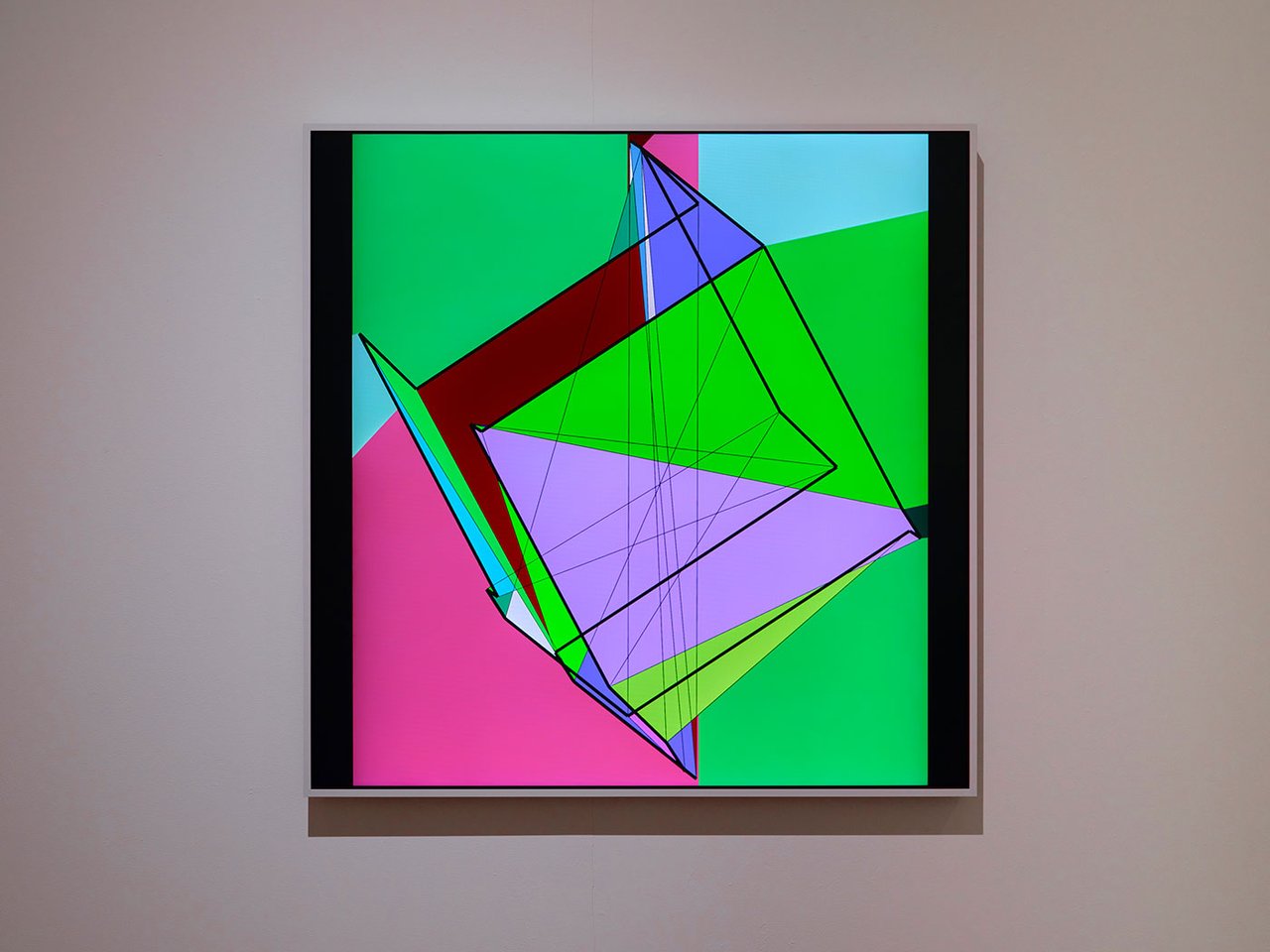
Manfred Mohr is showing a series of works created from his P-700 algorithm, referenced by the artist as the space.color.motion program.
“I am excited to be included in Zero 10 at Art Basel Miami Beach 2025 and happy that we were wisely given a central and prominent space for generative works,” Manfred Mohr tells Right Click Save. “For my presentation, it was a wonderful challenge to transcribe programs I wrote almost 30 years ago so that they can run on the LAYER screen, a wonderful and visually beautiful new technology.”
“My code P777 space.color generates non-repeating animations based on a subset of lines and colors from a rotating 6-dimensional hypercube. Together with my colleagues, we present an artistic highlight in digital development which emphasizes the importance of algorithmic thinking.” (Manfred Mohr)
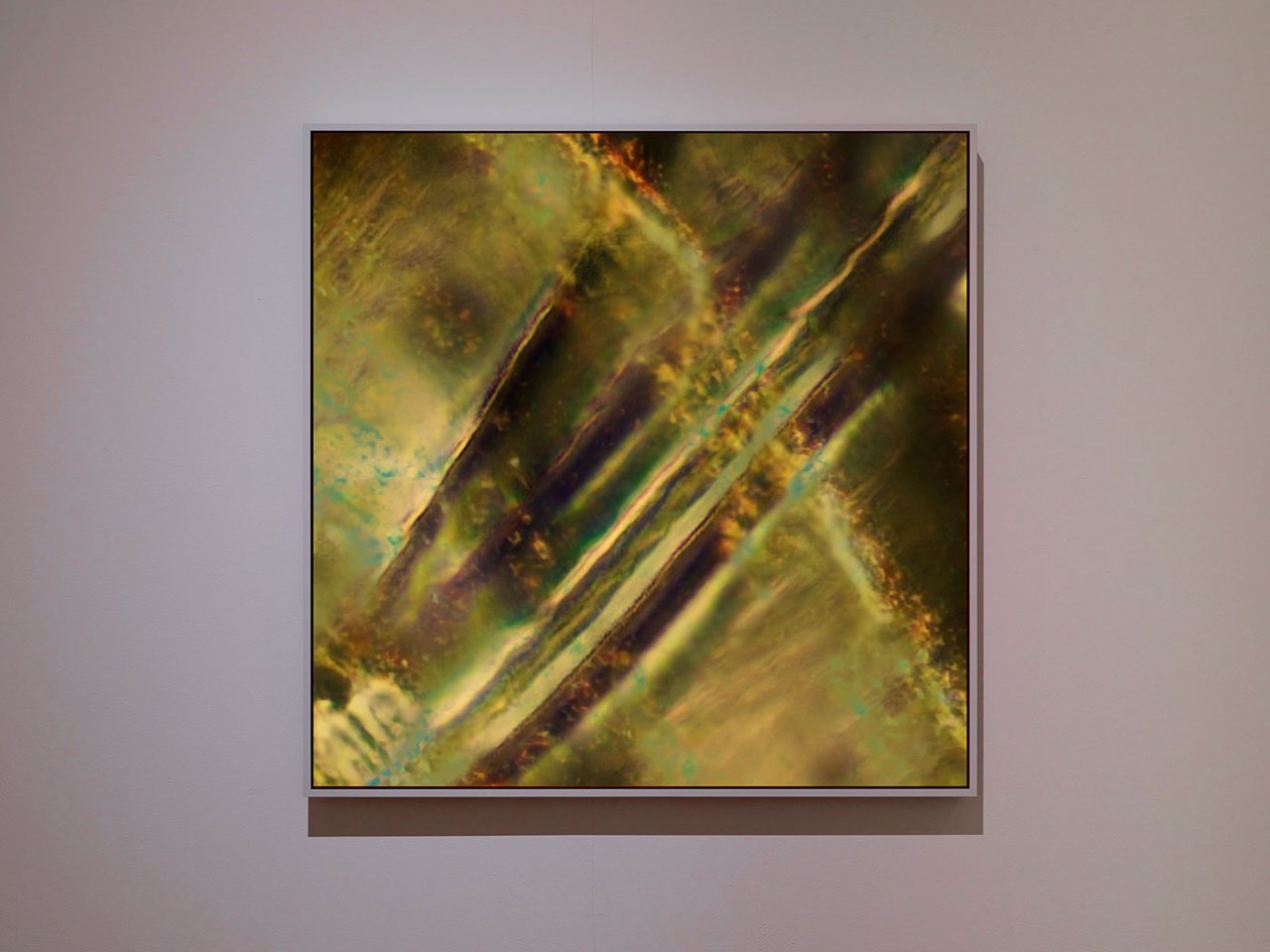
Casey Reas is showing two sets of work. His own video-based Earthly Delights (2025), generated from scans of summer vegetation collected at Burnt Mountain in Colorado, and works made with Erika Weitz in the Technical Image series, where the two artists use the 19th-century wet plate collodion process, an early photographic technique, to fix GAN-generated botanical images.
“Zero 10 joins a conversation that museums like the Whitney and LACMA have been hosting for a while. It’s good to see Art Basel Miami Beach step into these ongoing dialogues with clarity,” Casey Reas tells Right Click Save.
“My Earthly Delights works and Technical Image collaborations with Erika Weitz, shown through the bitforms gallery, feel at home here — projects rooted in systems and observation, open to interpretation and in dialogue with both historical and contemporary artistic practice.
Zero 10 treats digital art as an integral part of the landscape, which is refreshing. It acknowledges where artists already are.” (Casey Reas)
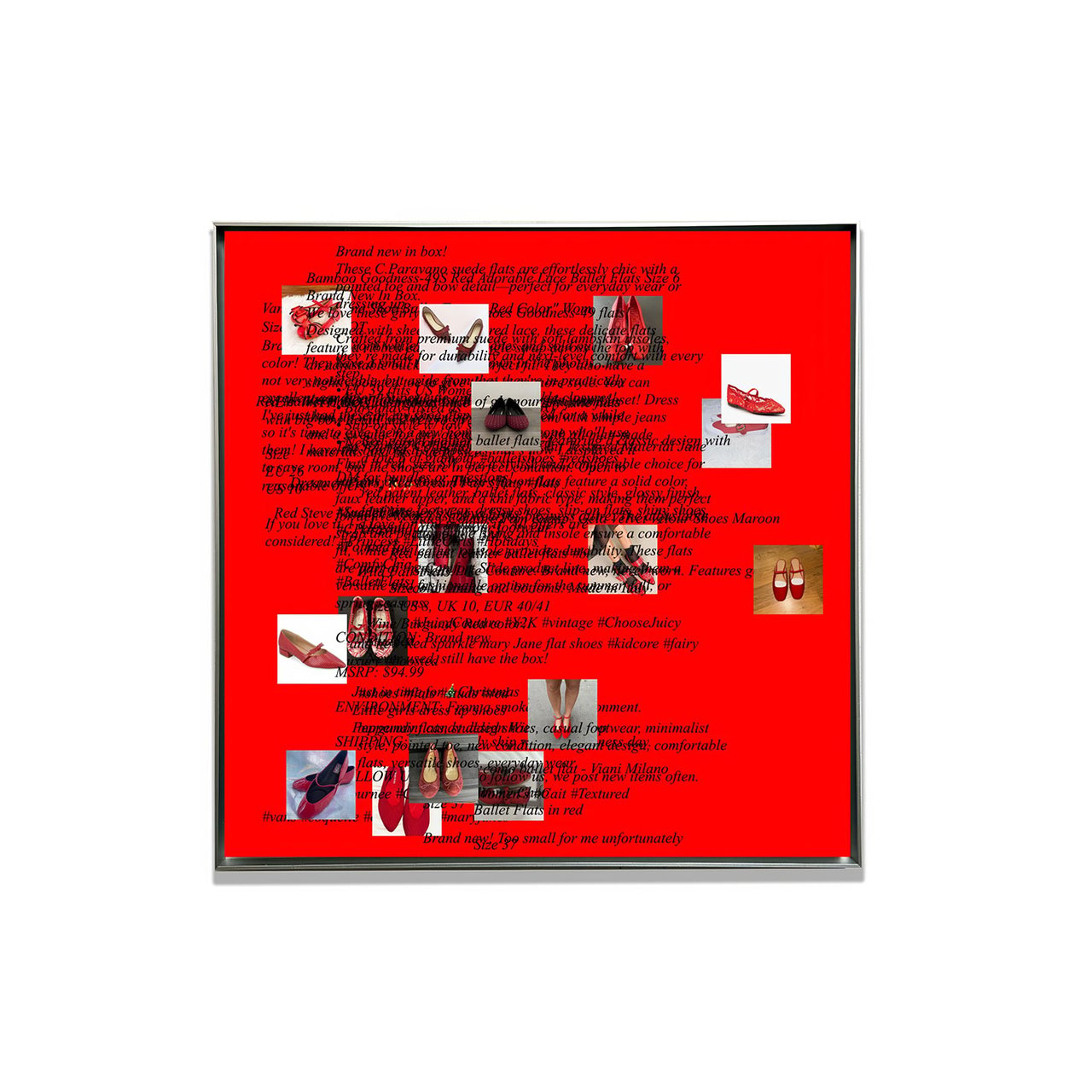
Maya Man’s (The Angels Wanna Wear My) Red Shoes, based on Hans Christian Andersen’s cautionary fairy tale The Red Shoes, is being presented on screen and as small prints on aluminum dibond. Each print freezes a moment from Man’s algorithm — which scrapes user-generated posts from Depop, the online vintage clothes marketplace — and turns them into compositions. They capture, according to a gallery catalogue entry, “the chaotic interplay of automated desire, digital aesthetics, and secondhand consumer culture”.
“It’s very special to show software-based work about online culture here,” Maya Man tells Right Click Save, “because people will encounter the work who may not consider themselves yet interested in art on the internet.”
“Digital art offers the most contemporary possible window into the way that culture operates today. It’s time for that to be recognized by people who have the power to determine what becomes classified and historicized as ‘Art’. Historically, digital art has often been relegated to the basement or sidelines, positioning it as something other than ‘Art’.
If contemporary art is meant to reflect contemporary life, Zero 10 acknowledges the reality of our world that’s now inextricably intertwined with the internet.” (Maya Man)
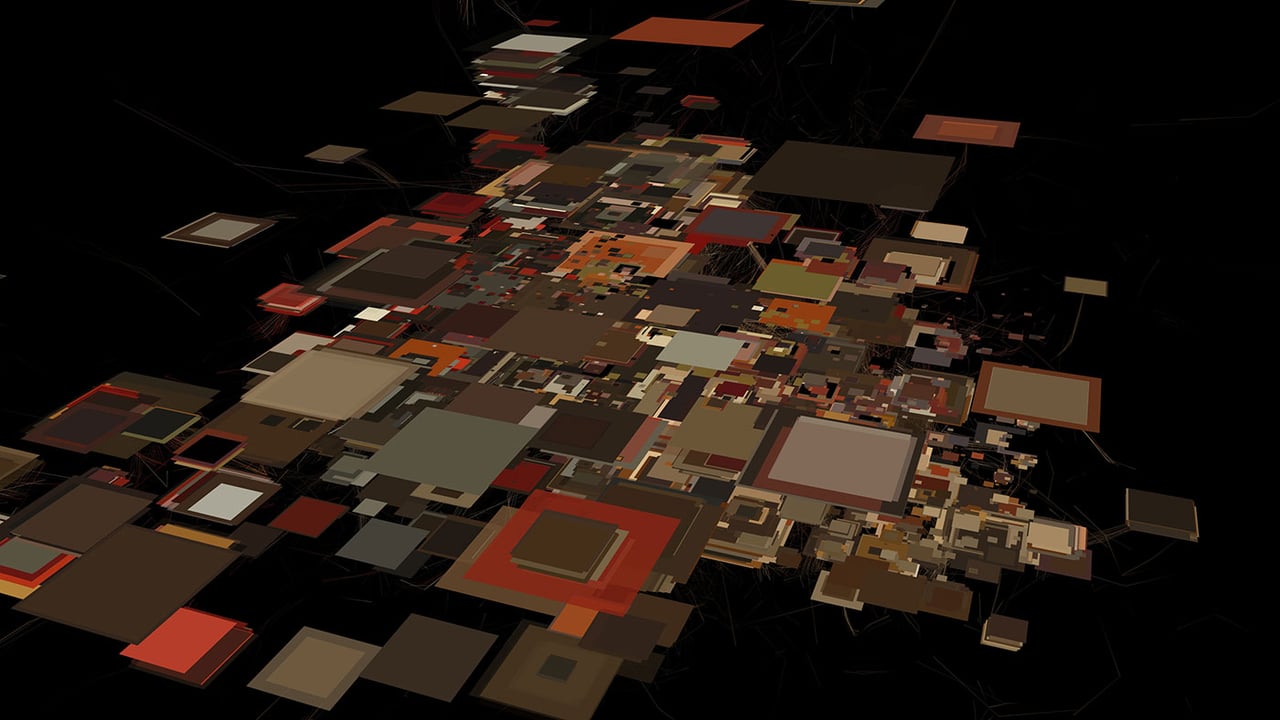
Itzel Yard’s interactive piece No Me Olvides explores links between the histories of Nordic women artists to her own Afro-Caribbean and Latin American heritage, using generative systems of light and sound.
“Showing at Zero 10 matters to me because it gives this interactive piece a shared space with the people who experience it,” Yard tells Right Click Save. “I’m from Panama, where digital art barely has a scene, so much of my practice has lived online. I’m grateful for that, but here something shifts. The work isn’t just a link on a screen, it reacts to bodies in the room and holds attention differently.
Having Zero 10 positioned so prominently at Art Basel Miami Beach signals that code-driven work belongs in this context, carrying the histories and voices behind it into a larger conversation.” (IX Shells)
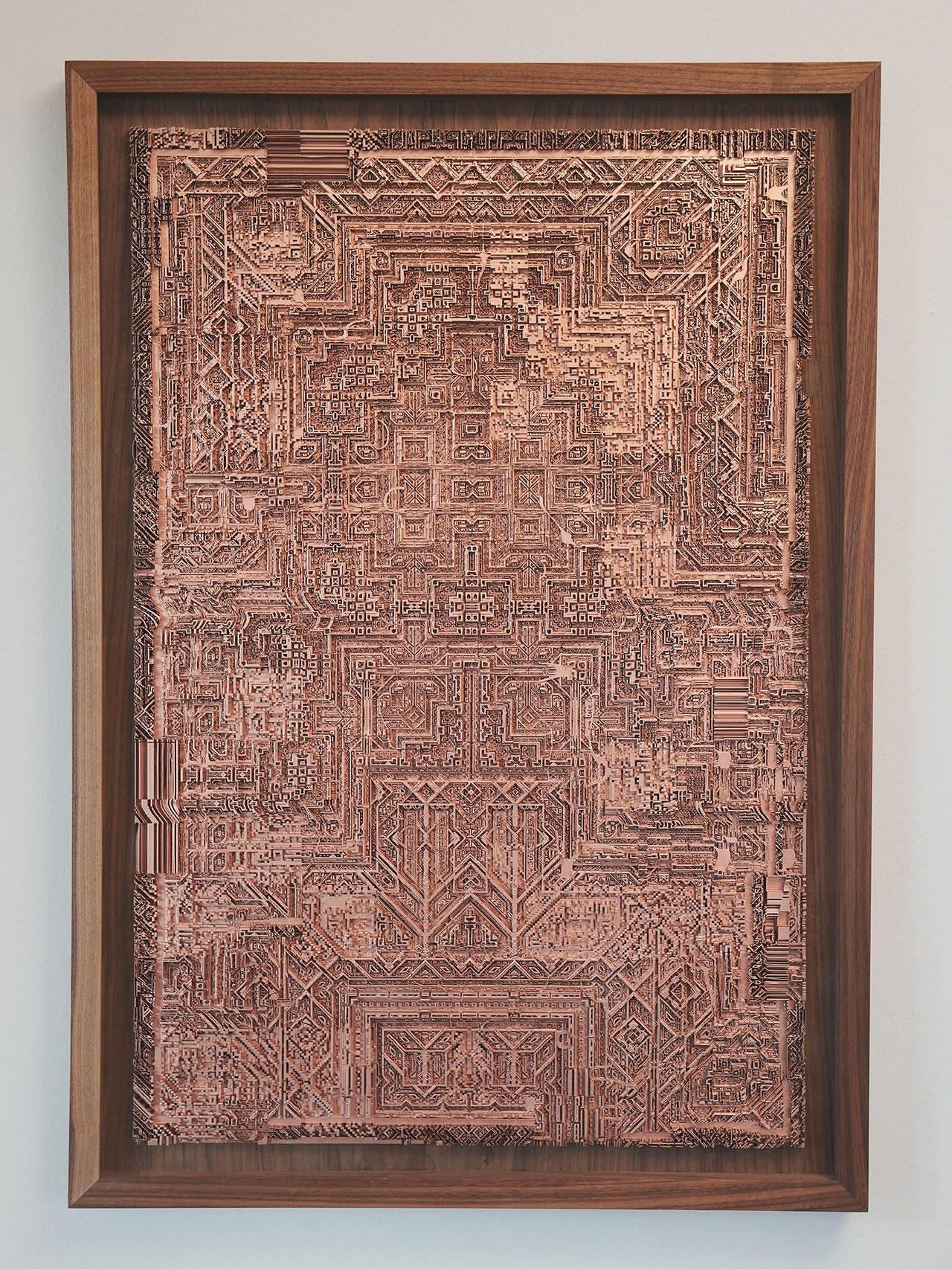
Heft Gallery of New York is presenting five unique editions from mpkoz’s new series Tesselations (2025); a sculptural series of three wall-hung reliefs and two free-standing monolith-like sculptures. They are output from digital models as hyper-detailed 3D-printed resin casts, plated with metal.
Mpkoz describes the series on The DAM Show as a fusion of two different aesthetics. “One is the algorithmic and pattern-based, rule-based, artwork of the Middle Ages [...] Persian rugs, mosaic, architectural features in holy buildings, mosques and cathedrals and public places. [The other is] the aesthetics of GPU, CPU architectures. There's a lot of visual crossover there [but] the more thematic reason is [that] we revere a lot of the architectures that drive our lives nowadays [...] reated from this circuitry.
There’s this whole hidden world that is driving our beliefs and our actions, much like it was in the Middle Ages, but nowadays it comes in the form of electrical engineering.” (mpkoz)
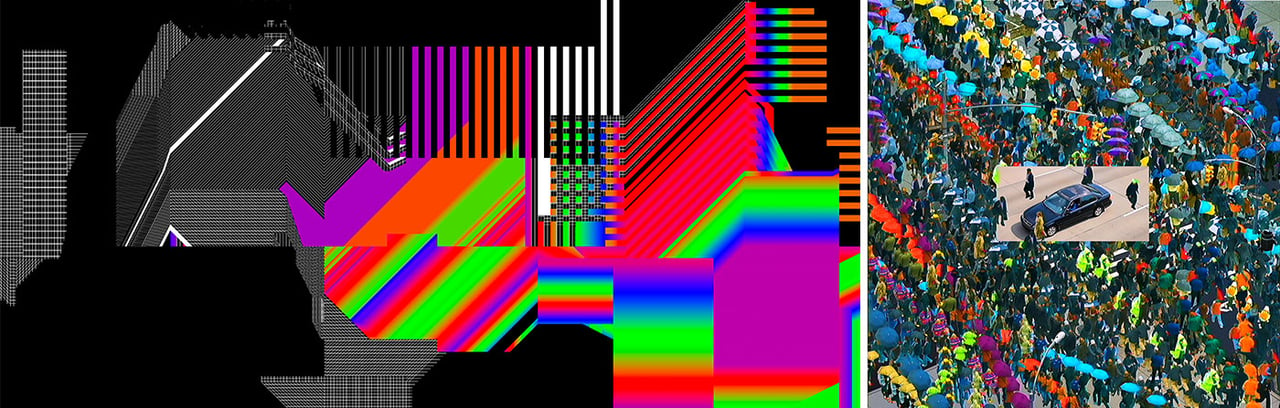
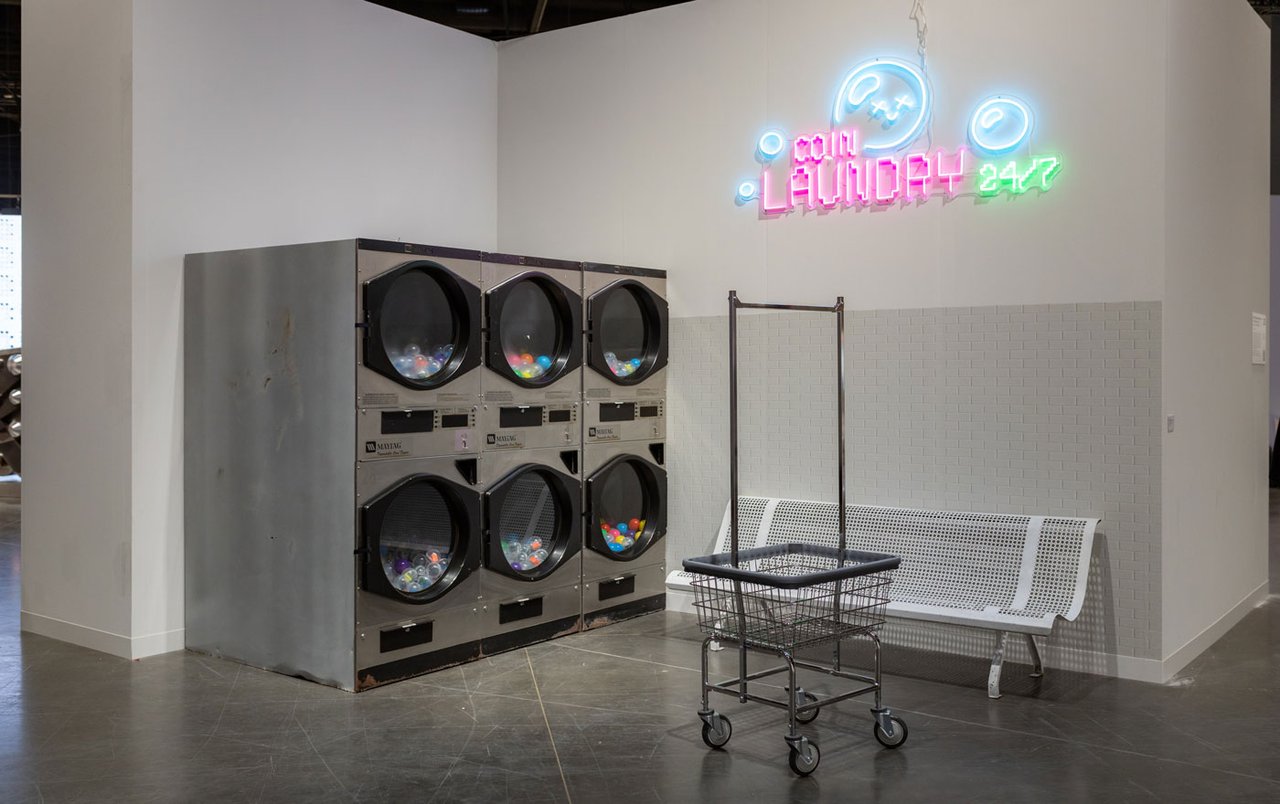
On the Nguyen Wahed stand, the collective theme is of artists working with the blockchain as a medium. Kim Asendorf presents Raster und Spectrum, an onchain abstract real-time animation that can play on any device; Joe Pease’s zero dollar man depends on triggers from a smart contract; while XCOPY’s Coin Laundry uses fungible tokens inscribed in code.
Asendorf, speaking on The DAM Show, referred to Raster und Spektrum as a conceptual work around algorithmic rules, and his artistic quest for automation rather than generating data or generative art, to “find automations that somehow surprise me and also can express the complexity of everything around us; all these black boxes that we are facing everywhere”.
In Raster und Spectrum, one brush is a raster, or grid, with white lines on black. The other is a spectrum, the artist said, “that is constantly changing or iterating through the color hue, and therefore always painting with a different color”. The brushes cross the screen (itself divided roughly into quarters) in one of eight directions — up, down, left, right, and the four diagonals — and return once they meet an edge.
Asendorf characterises the piece as “very formal, a very simple, minimalistic concept … always ongoing and a little meditative”. With the speed of the brushes’ movement finetuned over weeks of testing.
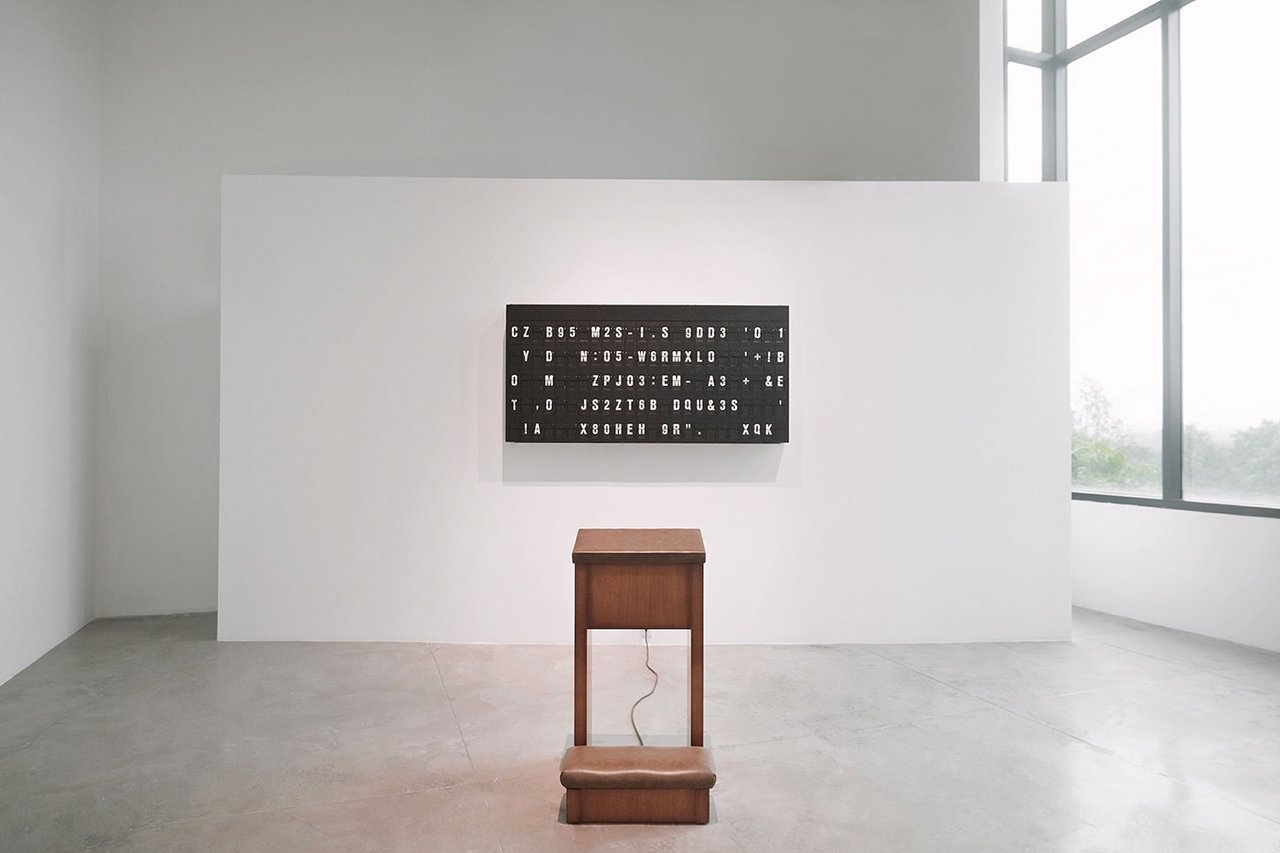
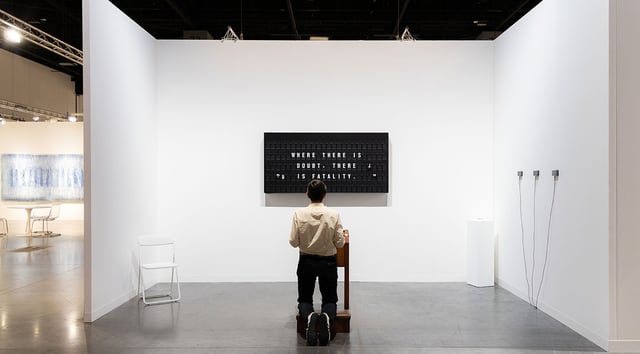
The Munich-base Mario Klingemann is showing one of his favourite works, Appropriate Response, an installation made up of a split flap display, such as used to be common at airports and train stations, and a kneeler where a visitor’s weight on the kneepad acts like a large button to generate a unique quote or epigram of up to 125 characters on the display. Klingemann trained a GPT-2 model on famous quotations in order to study how much meaning could be extracted from a limited number of letters.
For Zero 10, Klingemann added a new feature. When a user “kneels down and their quote is produced,” he told The DAM Show, “this will then be minted onchain as an NFT and people will be able to buy that if they want to.”
“The way that humans figured out how to create an extremely condensed form of meaning into just five or eight words, I find that very fascinating,” Klingemann said.
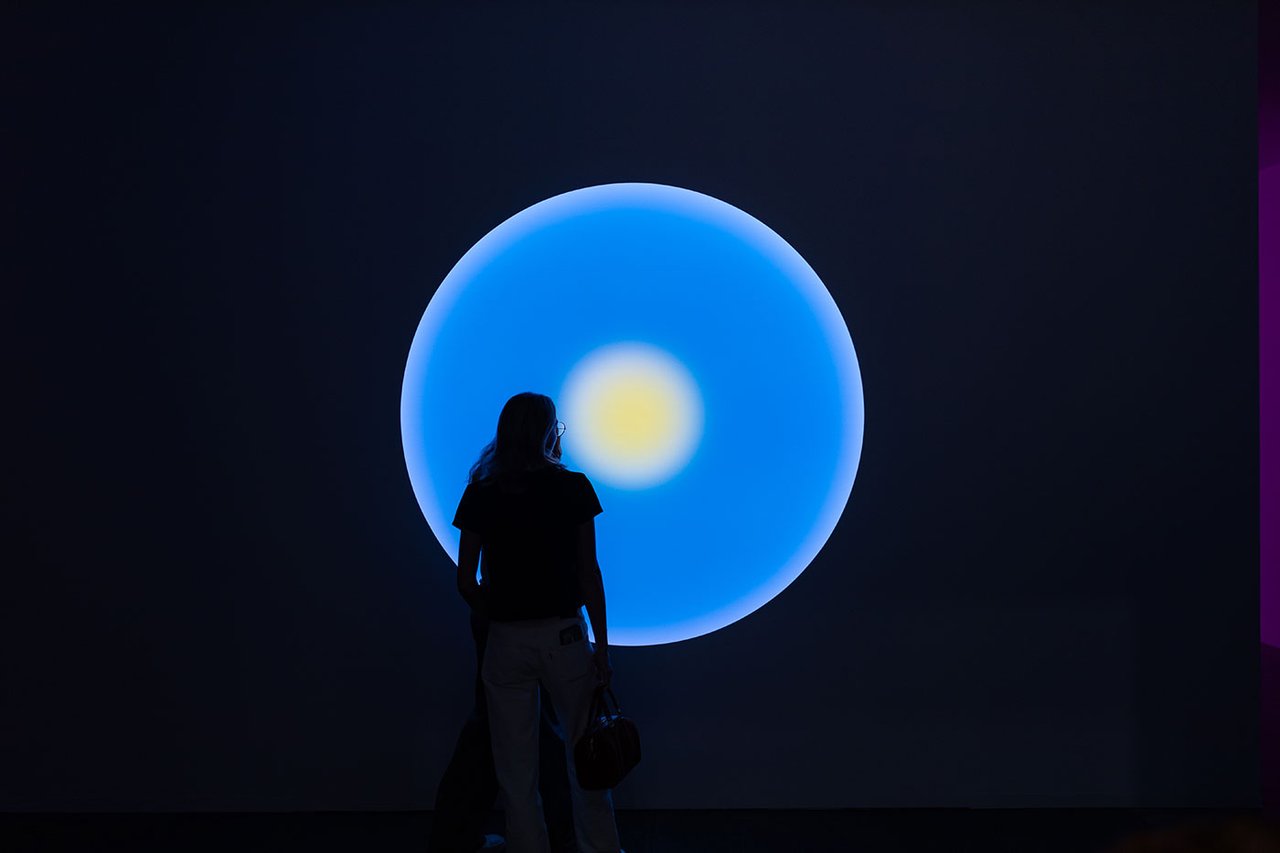
James Turrell, Bailey’s Beads, Circular Glass, 2021. Pace stand, Zero 10, Art Basel Miami Beach. © James Turrell, courtesy Pace Gallery. Photography courtesy of Art Basel
Pace is showing two radiant, etched-glass, installations by James Turrell, a foundational figure in the Light and Space movement, from his Glassworks series, each with 2 hours and 30 minutes run times. Both are connected with Turrell’s research into the materiality of light and the limits of human perception.
Turrell has been an inspiration to many Web3 artists, bringing a particular creative strand and generational heft to Zero 10. In 2022, Lawrence Lek talked to Right Click Save about the fascination of Turrell’s career trajectory, “which takes art out of the literal, out of the material, into the perceptual — into light and subjective experience. Fast forward 30 years, he’s creating physical, Land Art-scale architectural manifestations. [...] Part of that narrative of 1960s and ’70s California Land Art is that, instead of being trapped in the apartment, ‘Let’s drive out into the desert and see what we find. Let’s look at the horizon instead of the skyscraper.’ And I often ask myself, ‘What is the equivalent of that for digital native artists like us today? What is the equivalent of the permanent installation?’ Maybe the blockchain can achieve this.”
Pace — which has recently exhibited another Zero 10 artist, Tyler Hobbs — has this week shown its openness to developing its business model with the launch of Pace Di Donna Schrader Galleries (PDS), a collaboration with two other heavyweight art dealers, Emmanuel Di Donna and David Schrader, which will focus on the secondary market.
The presence at Zero 10 of a blue-chip international contemporary art gallery like Pace is significant for the fair’s organisers. “It was great to see Pace coming to the table with the Turrell project in Miami,” Noah Horowitz, CEO of Art Basel, said on The DAM Show.
“I think there are countless other examples of artists that have been seen in one light in the more conventional art world that can learn and will be interested in growing and enriching their own platforms through what [the digital art] community brings to the table.” (Noah Horowitz, CEO, Art Basel)
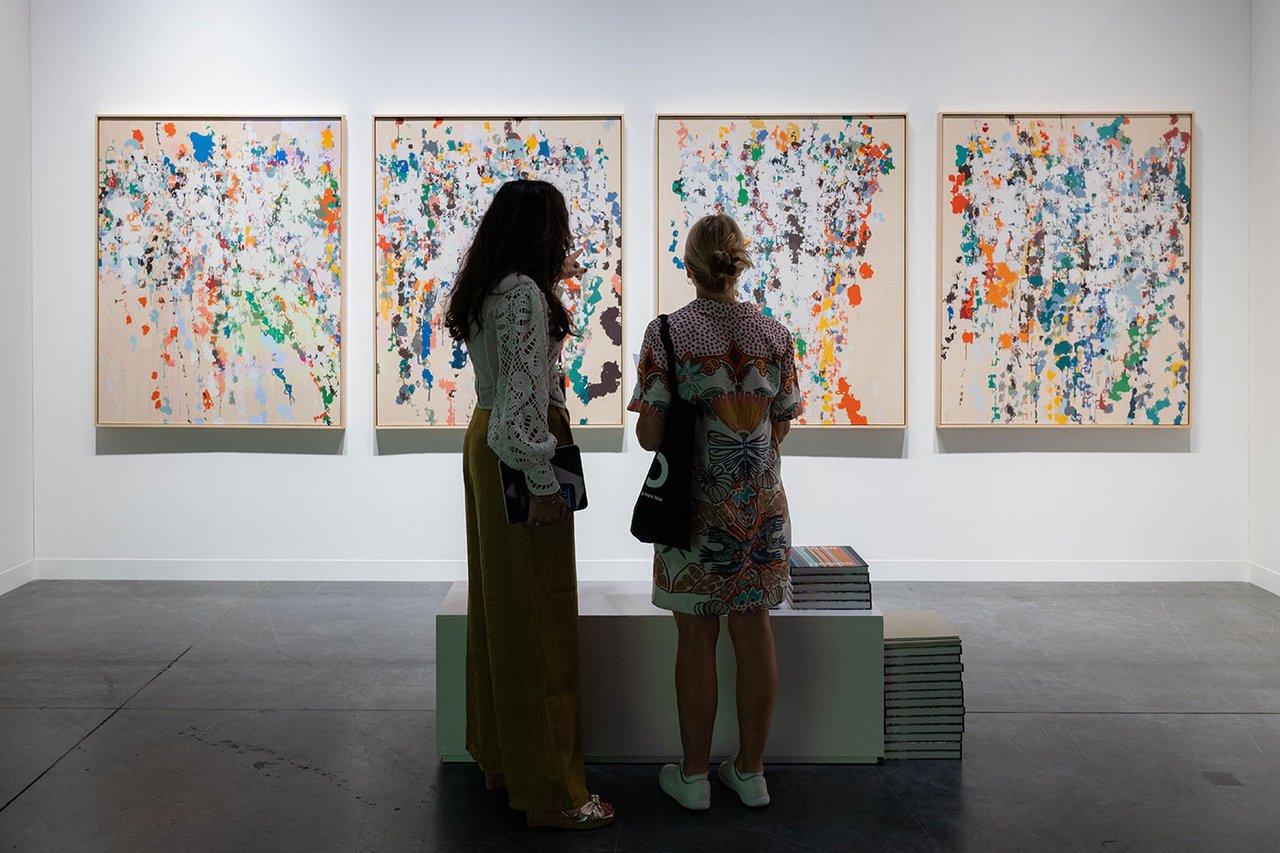
Tyler Hobbs presents his new series From Noise, a set of 12 NFTs from one algorithm which will be represented by four large-format prints on wood, varnished by the artist. The print will be accompanied by boxed sets of six screen prints of Translated Gestures (2025), derived from single “gesture” details taken from the From Noise outputs.
“I think it’s an incredibly exciting opportunity,” Hobbs says of Zero 10 to Right Click Save. “For so long, digital art has been put in the corner or held at a distance as a lesser art form or a bit of a curiosity. And I don’t think that it’s been given the same level of consideration that more traditional media have been given. And so, first and foremost, I think this is a wonderful opportunity to have some of the best digital artists of today shown on the same footing as all the blue-chip artists that we know and love and all the other contemporary artists working in more traditional media. That’s the thing I think I’m most excited about.”
“I know that the digital artists in this cohort are going to bring their best. This is a great opportunity to show people what digital art looks like in 2025. And I think many of the fairgoers don’t know what that looks like or they will find out what that looks like at the fair.”
“This art form, these artistic practices, are more important and more relevant than ever. And I truly believe that digital art and art involving computers is extremely important for our time.” (Tyler Hobbs)
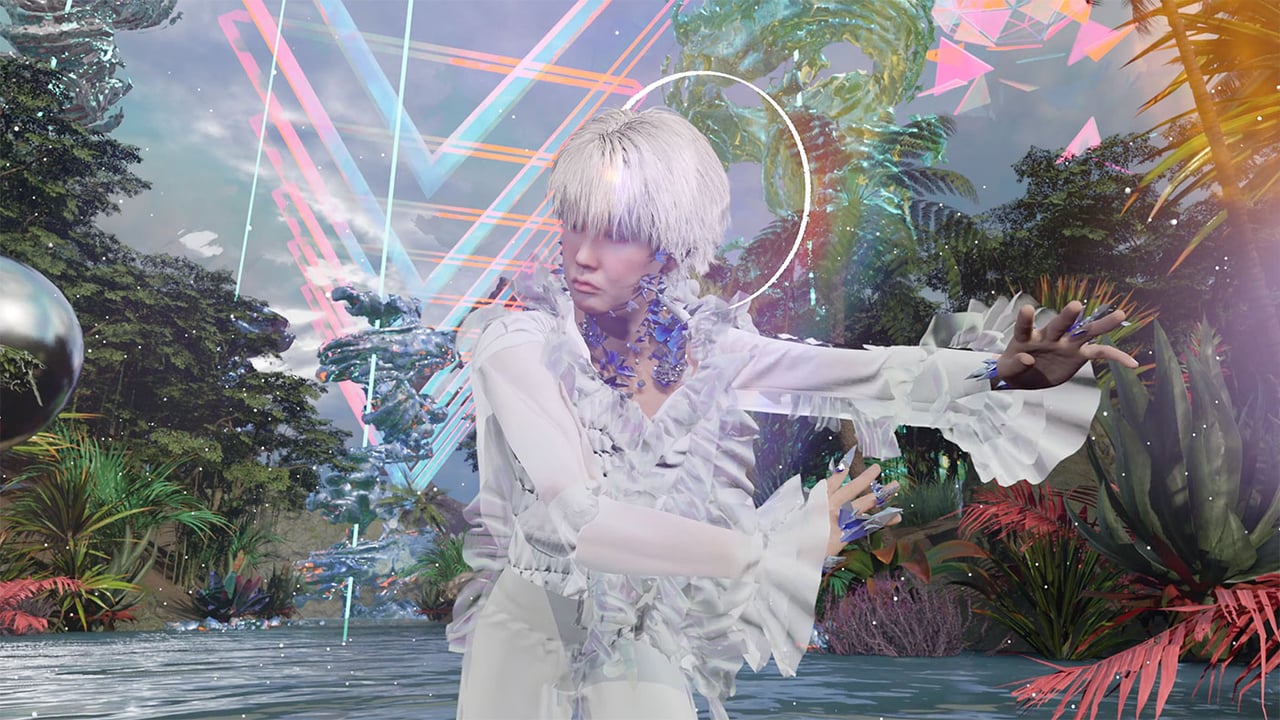
Lu Yang’s video work ,rendered through motion-capture choreography and 3D animation, is on loan from and presented at Zero 10 in collaboration with UBS, Art Basel’s Global Lead Partner.
The piece, according to the UBS Art Collection is “a hallucinatory, single-channel video in which the multimedia artist’s avatar moves through a blissful, celestial realm, its motion-captured choreography drawing on Balinese and Indonesian dance styles”. The artist is reincarnated as an avatar “Dokusho Dokushi” (DOKU) in a “digital parallel universe built to unleash the creative potential of virtual technology”.
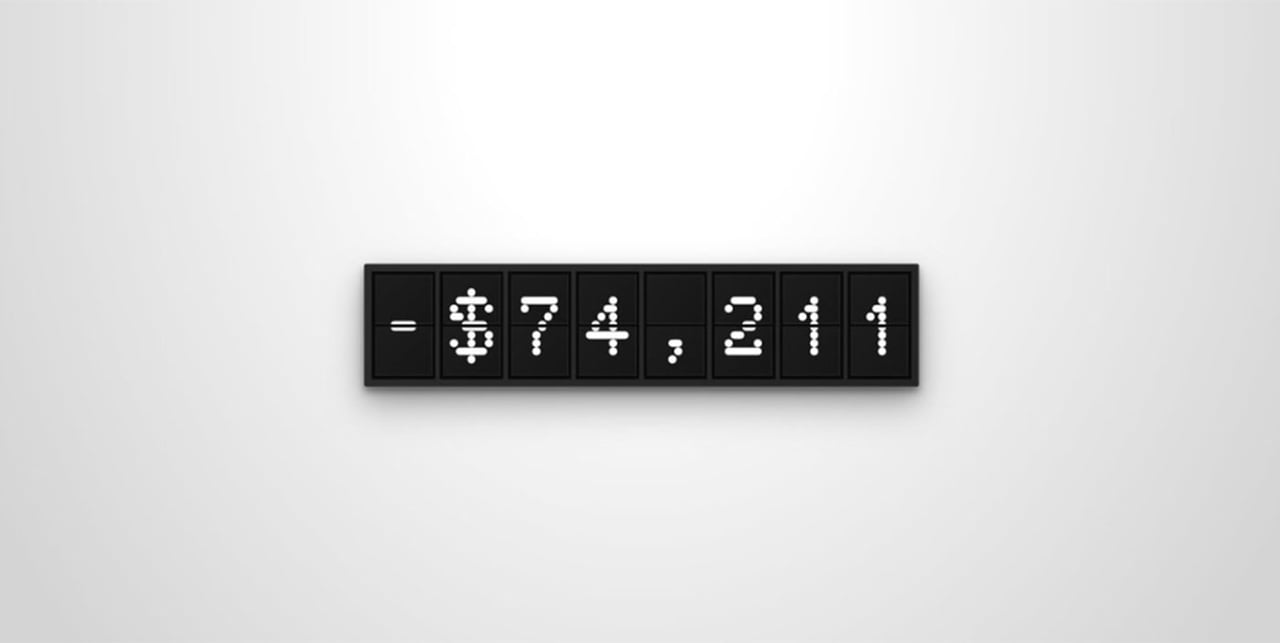
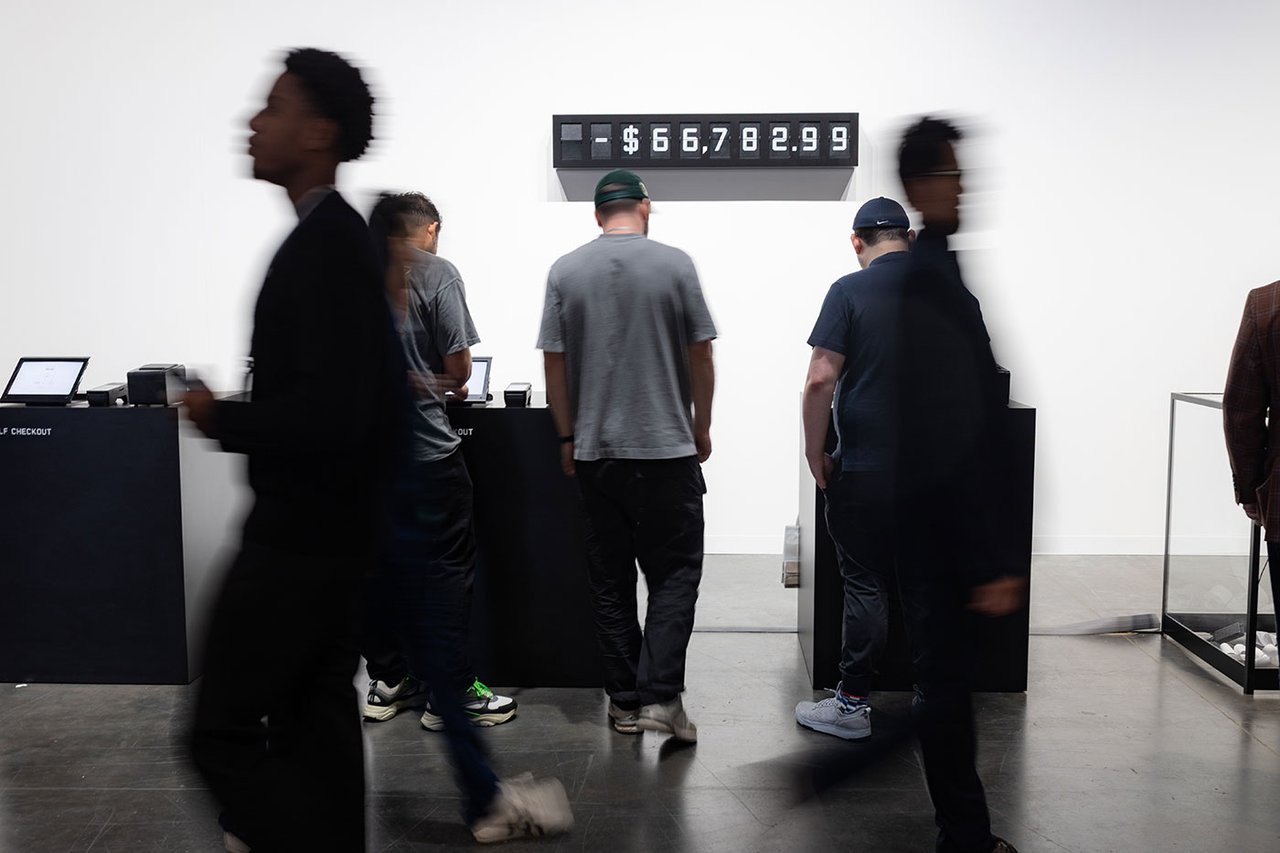
Jack Butcher invites online participants as well as fair visitors to take part in Self Checkout, a piece inviting varied contributions to the production costs of the new work: four kiosks and an on-wall counter — a live, split-flap, display, counting back from the $74,211 deficit — which online participants can watch remotely.
“Pay what you want at Art Basel,” Butcher announces on the Self Checkout whitepaper. “Your receipt is the artwork. Payment amount equals receipt length. A live display tracks whether the artist recoups $74,211 in production costs or takes a public loss.”
The idea, Butcher explains on the DAM Show, “came from this now ancient critique of NFTs, which was ‘An NFT is just a receipt’ and massively leans into that idea by using the receipt itself as the artwork and the idea that the cumulative cost to build this experience is this live P & L [profit and loss to the artist] that is reduced by participation of people purchasing these artworks."
On the stand, visitors are set to find three kiosks to handle in-person transactions by card “while a transparent Online Orders kiosk prints remote purchases in real time”. Printers map the number of dollars given to receipt length and also “stamp a seed phrase that unlocks a non-transferable NFT. Remote buyers pay shipping and receive their receipt in the mail.”
“Over the course of the fair,” Butcher said, “we'll be able to see exactly how many people participate remotely via this massive ribbon receipt that's hopefully accruing in this transparent box at the end.”
Louis Jebb is Managing Editor at Right Click Save.
No comments yet. Be the first to share your thoughts.
Mentioned in this article
People: Beeple, Casey Reas, Jack Butcher, Maya Man, Tyler Hobbs|Events: Art Basel Miami Beach, Zero 10|Organizations: Art Basel, Asprey Studio, bitforms gallery|