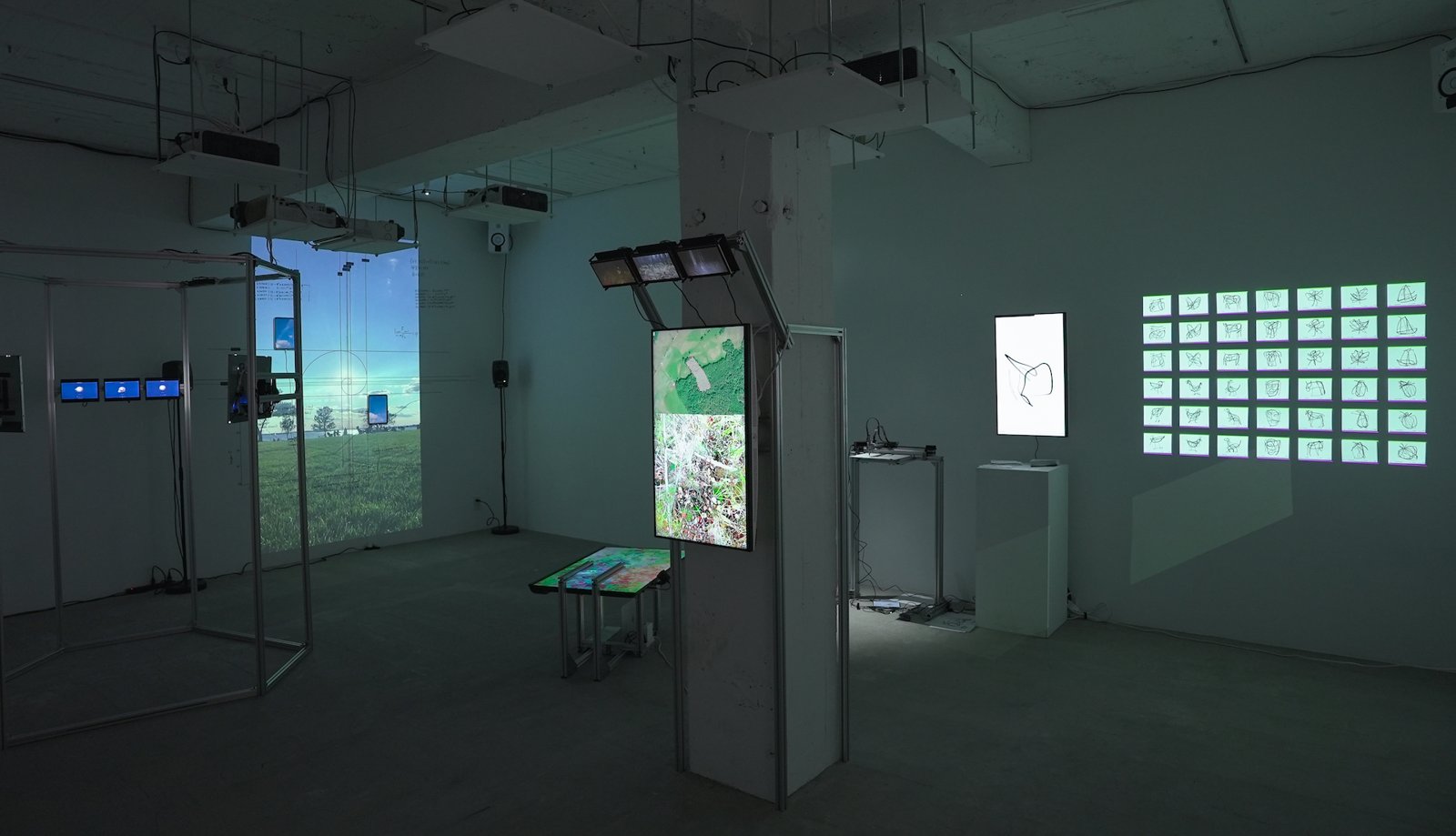
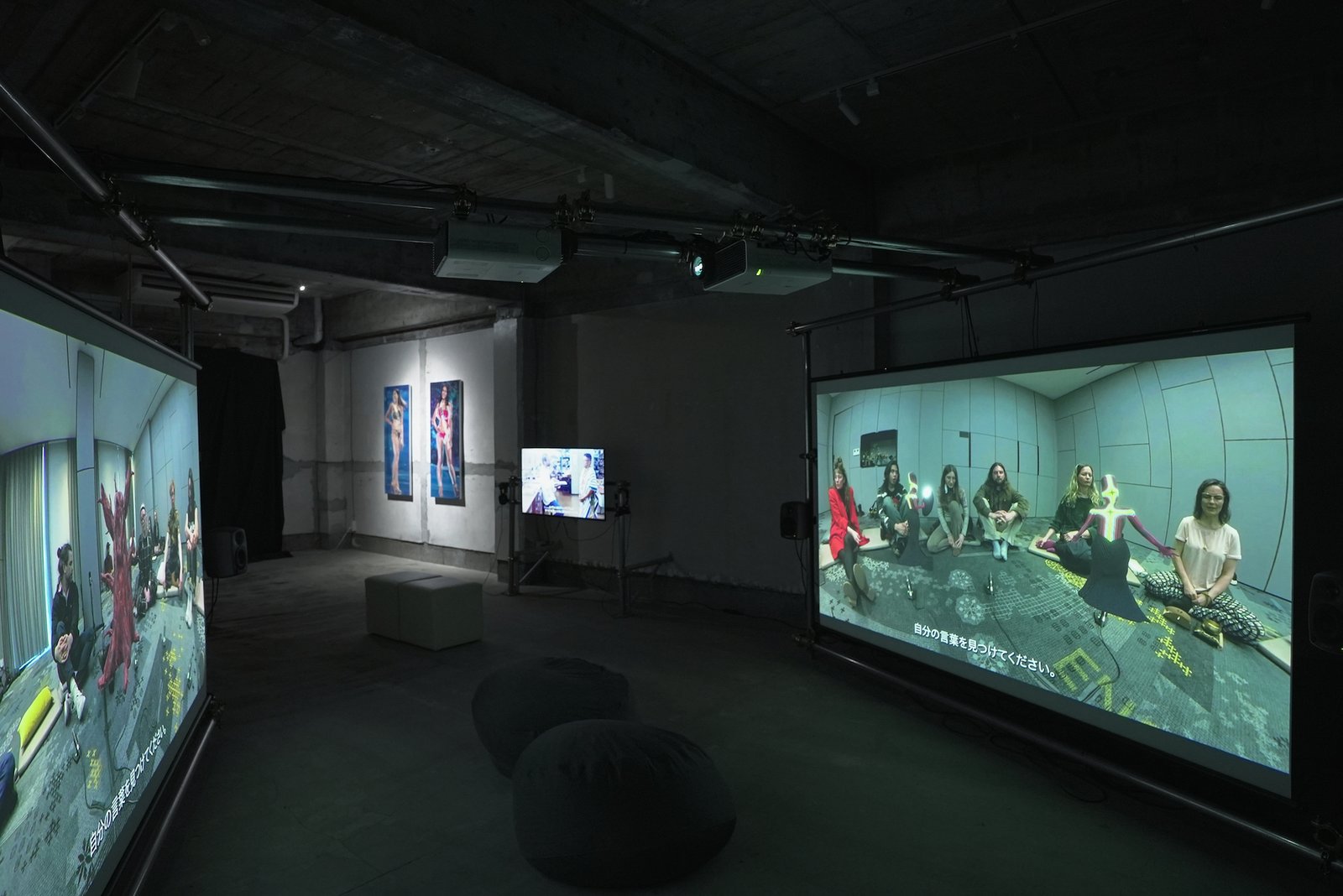
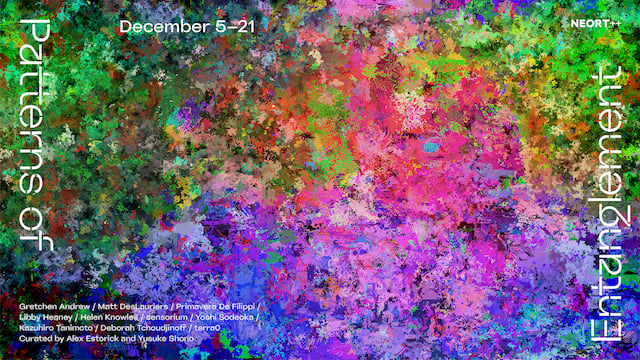
The exhibition, “Patterns of Entanglement”, runs to December 21 at NEORT++, Tokyo. Works by a number of participating artists are now on sale with Verse.
This year, Right Click Save has hosted conversations about the posthuman as well as the need to rethink the relationship between humans, machines, and the living world. Given the urgent nature of such discussions, the editors of RCS and MASSAGE MAGAZINE came together to curate a new exhibition at NEORT++ in Tokyo that examines the ways technology is woven into natural systems.
Situated over two floors — an intimate “lab” and a more open space of critical immersion — “Patterns of Entanglement” considers the ways digital media shape contemporary realities. However, the participating artists do not simply take the concept of ecology as their theme; rather, they practice reworlding — testing the conditions required to establish different ecologies and economies. In his recent essay on art after the Anthropocene, the scholar Sy Taffel stressed the crucial role played by artists in making a range of futures “visible, perceptible, and realizable.” Here, the ten participating artists discuss their works for the exhibition and the power of digital art to reworld reality.
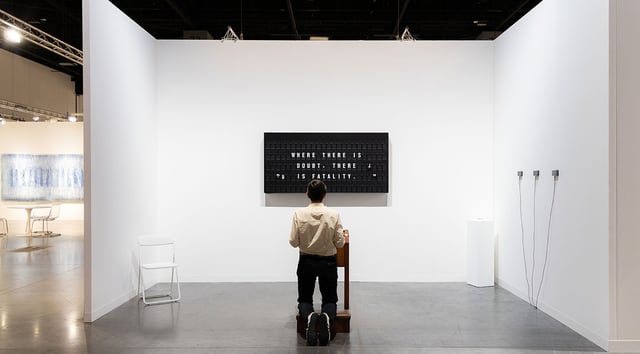
Installation view of “Patterns of Entanglement” (2025) with works by Helen Knowles and Gretchen Andrew. Courtesy of NEORT
Alex Estorick and Yusuke Shono: Tell us about your work for “Patterns of Entanglement” and how your practice considers the relationship between human and nonhuman ecosystems.
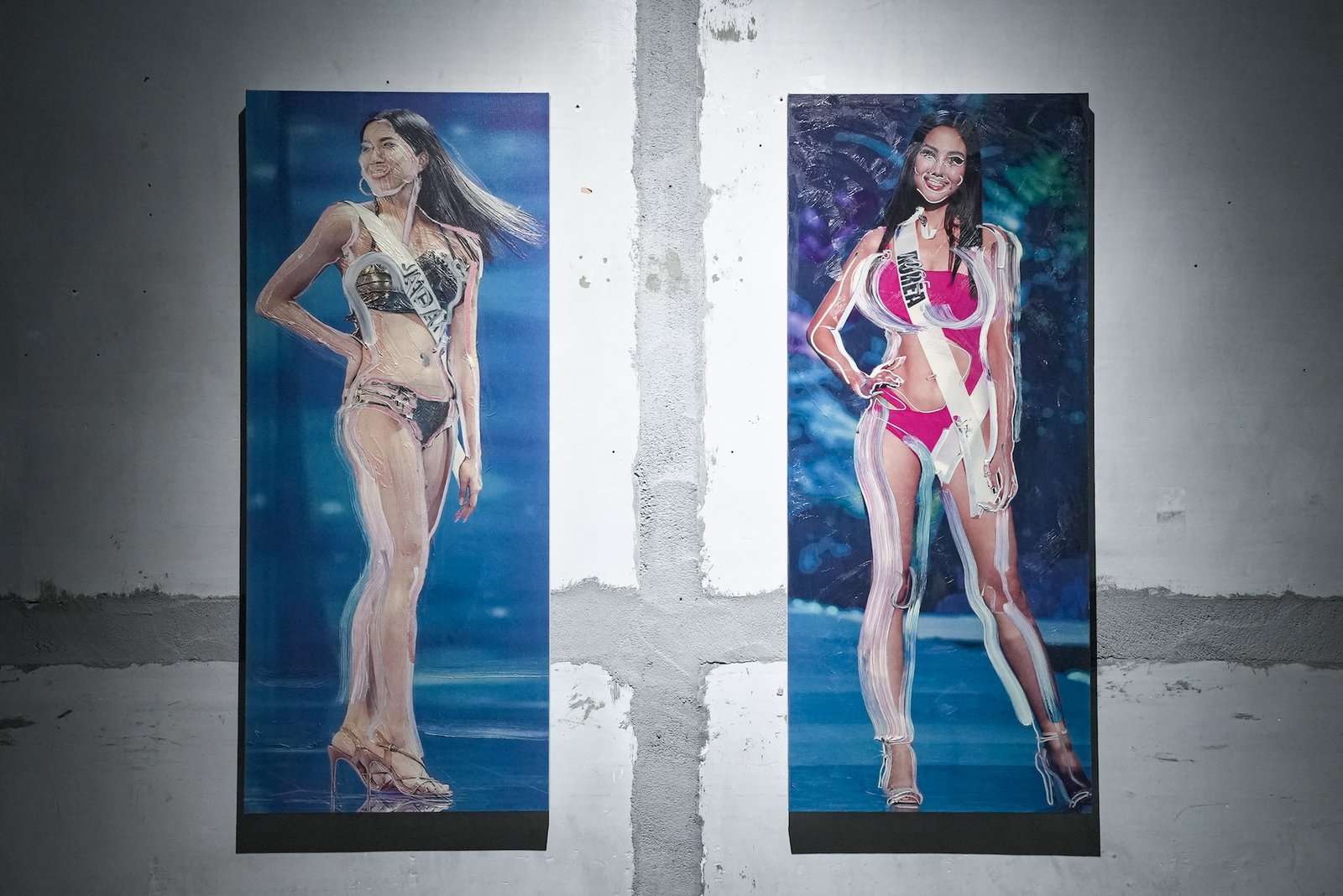
Gretchen Andrew: For this exhibition, I am presenting three Facetune Portraits from the series “Universal Beauty”, which examines how the nonhuman forces of artificial intelligence and algorithmic systems shape contemporary beauty standards — and, through those standards, our expectations of others, ourselves, and the natural process of aging.
Facetune Portraits make the invisible pressures of social media visible by translating the seamless, imperceptible act of pixel-perfection into the messy, gashed-up experience of physical transformation these systems imply for the human. The algorithmically “beautiful” body is not only homogenized; it does not age, does not scar, and does not carry the marks of lived experience. It is a body suspended in what Jonathan Franzen calls “an anesthetized dream of self-sufficiency.”
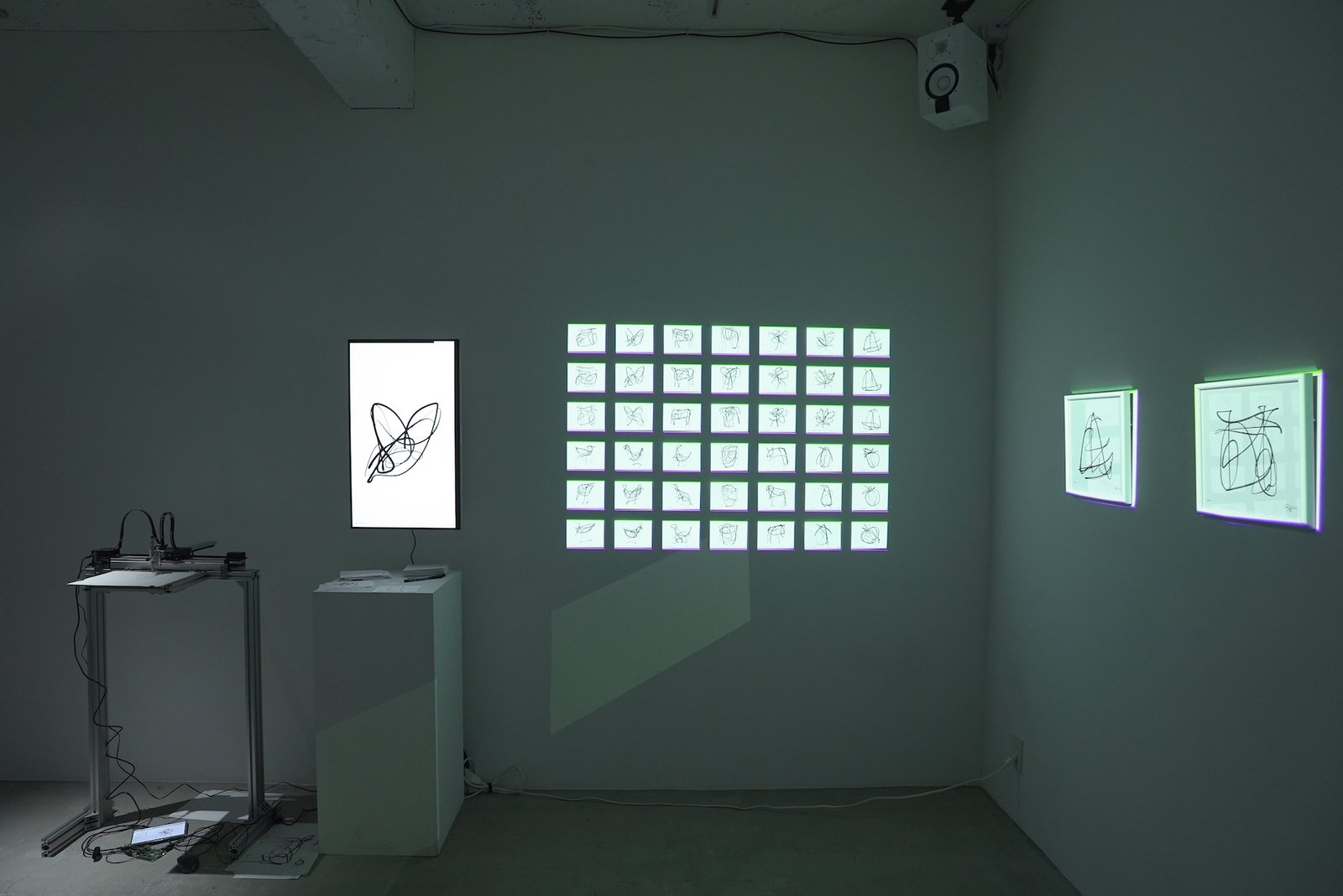
Matt DesLauriers: Latent Dispatch is a research project that stems from my growing interest in how neural networks operate. The work juxtaposes the unique ways that machines perceive, interpret, and realize the world’s available training data, and how that contrasts with the same task performed by a human.
A drawing by a single human participant will carry the memory and ideas unique to that individual, perhaps with very different interpretations of the prompt and rendering instructions. A machine, on the other hand, is heavily constrained by its code, always steering towards particular patterns and abstractions.
The machine-driven drawings reveal the biases and limitations of AI datasets. And, yet, there is a certain elegance in this machine precision, as the model aims to generate the purest form of a given prompt, a kind of mathematical averaging of humankind’s published material on the subject. Upon looking at a range of machine drawings, there is often no doubt as to their prompts and subject matter, as we are looking at a statistical archetype, rather than a singular drawing.
Matt DesLauriers, Latent Dispatch, 2025. Photography by NEORT. Courtesy of the artist
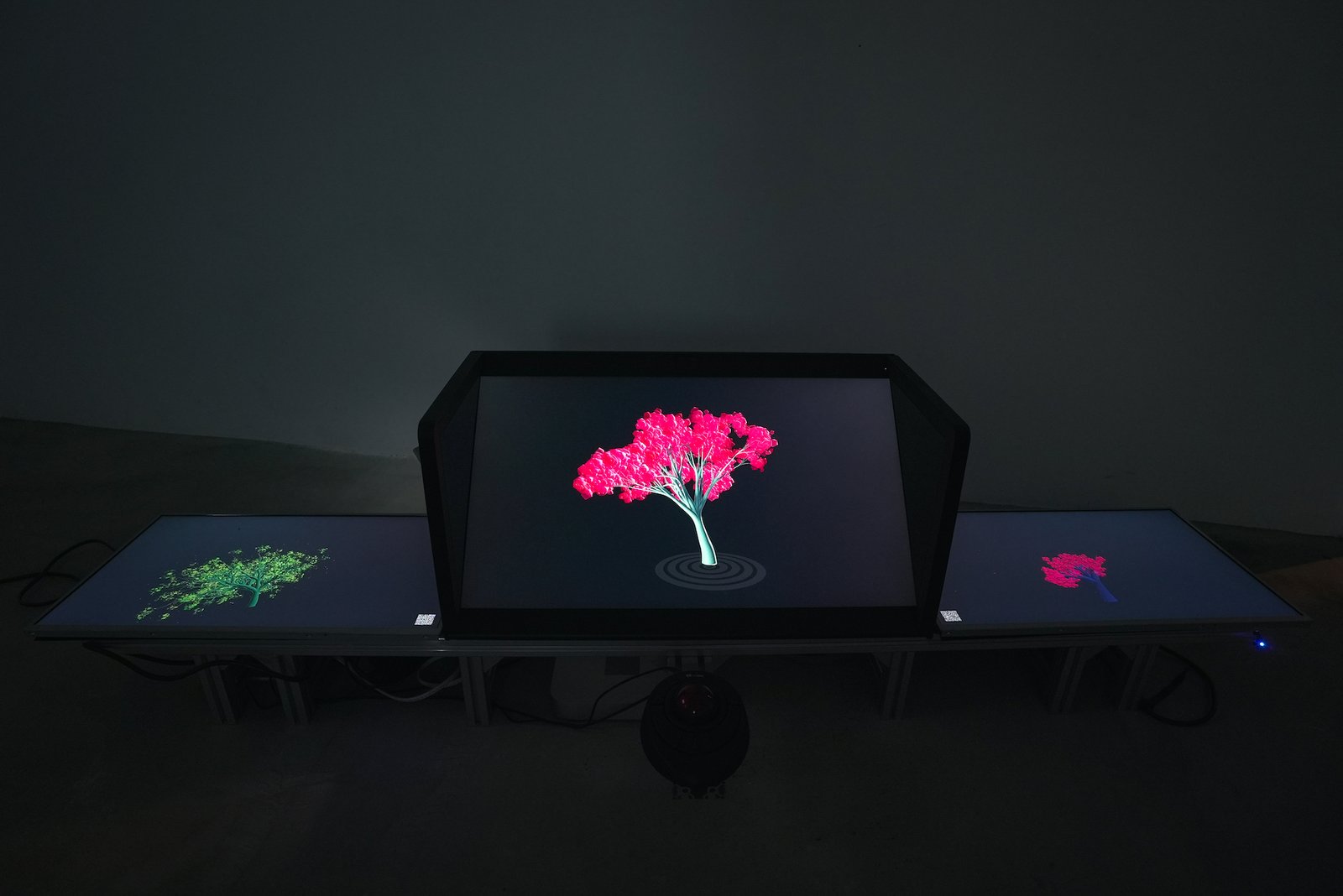
Primavera De Filippi: My artistic practice explores the creation of semi-autonomous digital entities, leveraging blockchain technology for operational autonomy and human subjectivity for decisional autonomy. For “Patterns of Entanglement”, I’m exhibiting Arborithms, a new form of synthetic life that uses blockchain code, economic incentives, and human sensibility to evolve and reproduce. Arborithms are digital trees that subsist as NFTs on the blockchain, with each carrying a unique genetic code that determines its visual representation. As synthetic organisms, they reproduce through cross-breeding, creating offspring that inherit genes from both parents.
Arborithms create a symbiotic relationship between humans and machines; the more popular an Arborithm becomes as a breeding parent, the higher the royalties its owner receives. Humans who want to maximize their economic returns are therefore incentivized to breed new digital trees with the most desirable traits.
This economic mechanism transforms humans’ desire for capital accumulation into a generative force for digital biodiversity.
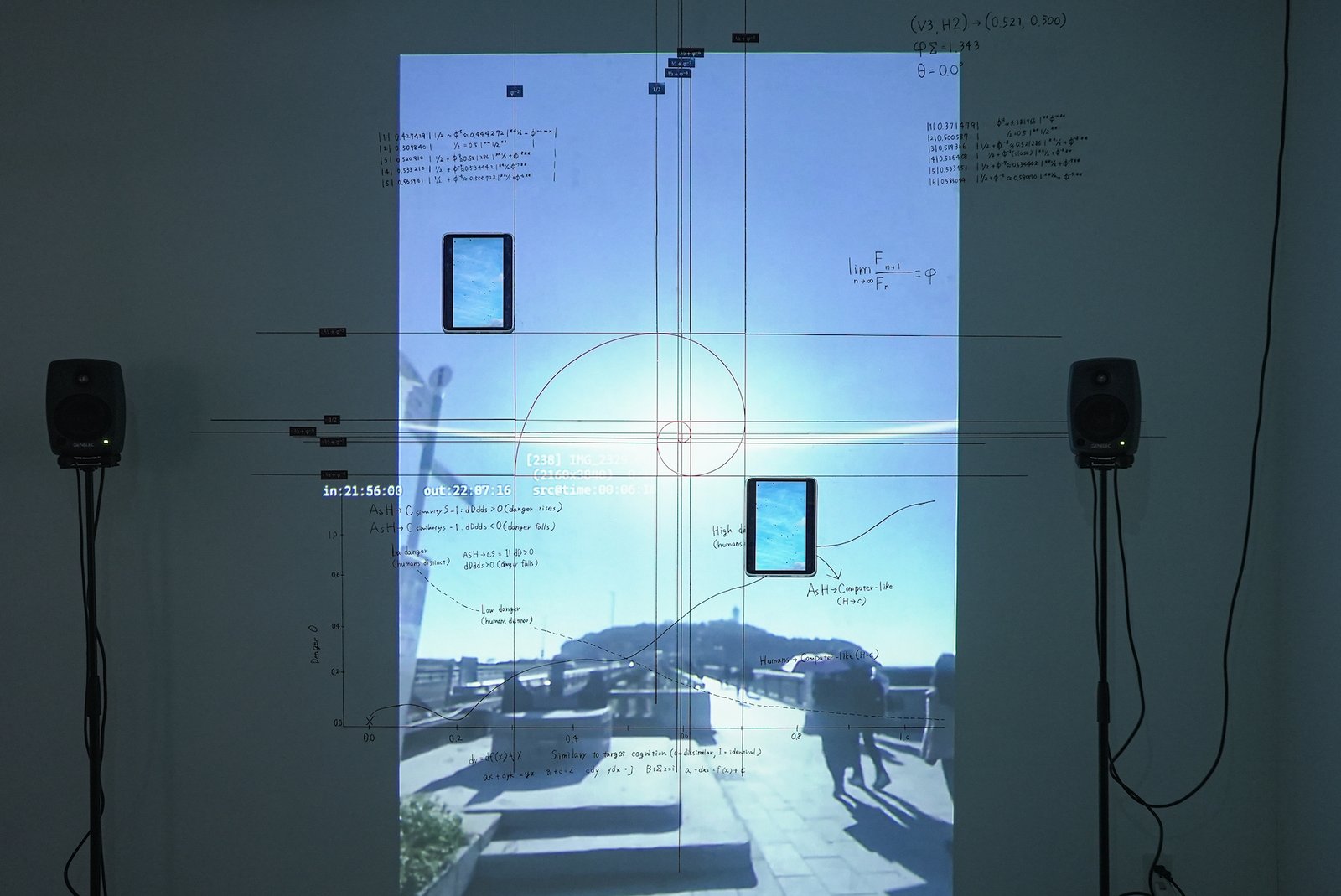
Libby Heaney: In Qlimates (2025) I use quantum computing as a medium to edit sound and moving images generatively, depicting possible climate scenarios impacted by quantum technologies. The work unfolds following the layered, shapeshifting patterns of five-qubit quantum entanglement, highlighting the aesthetics of quantum non-linear time and suggesting complex hybrid past-present-futures for our environment. For me, humans and machines are already part of nature, horizontally.
Technology needs artists because we subvert and expand the uses of technologies and ask questions scientists and technologists would never dream of posing because of the reductionist framework they work within. I wrote about this in relation to quantum computing in the British Council’s recent report, “Why technology needs artists”.
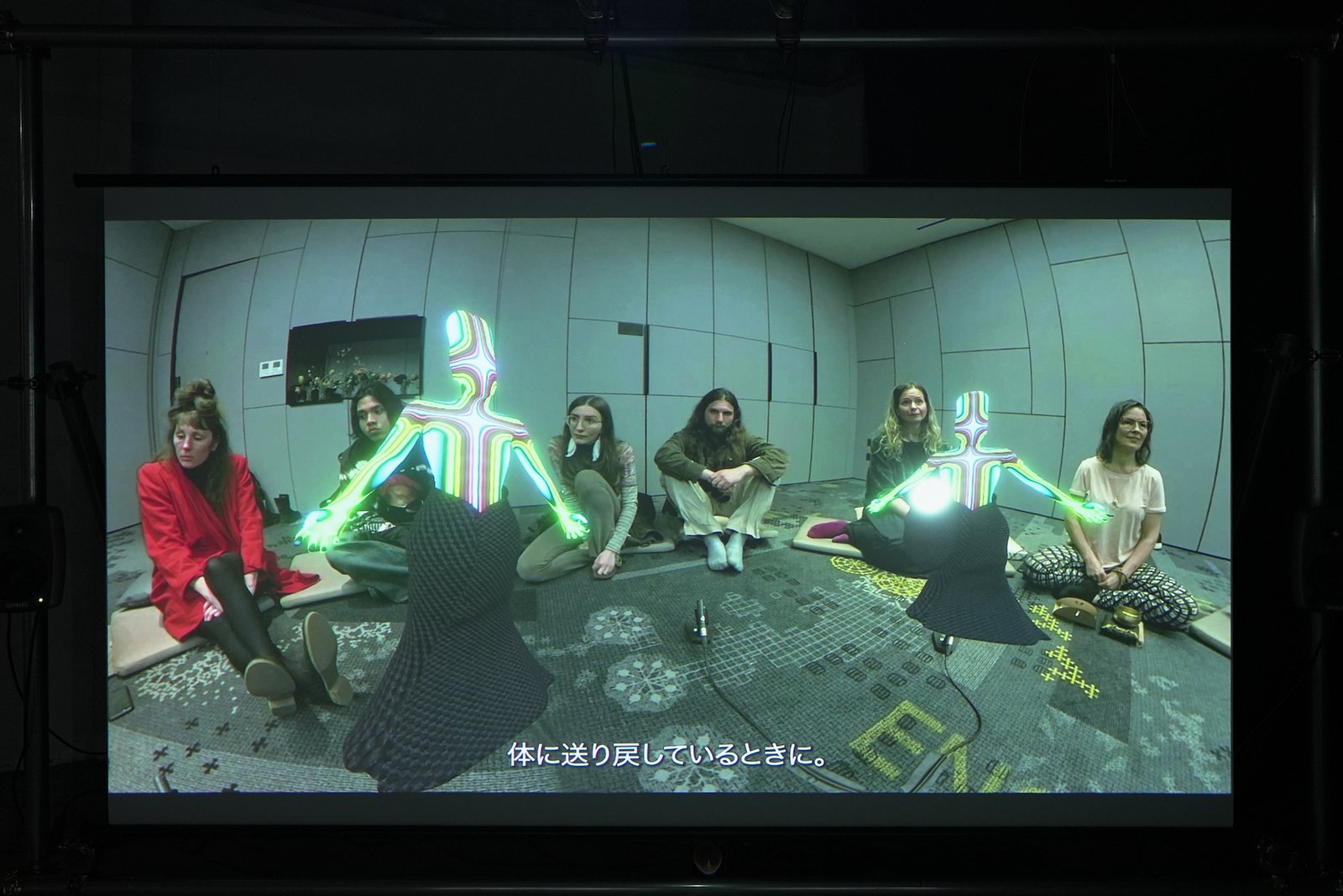
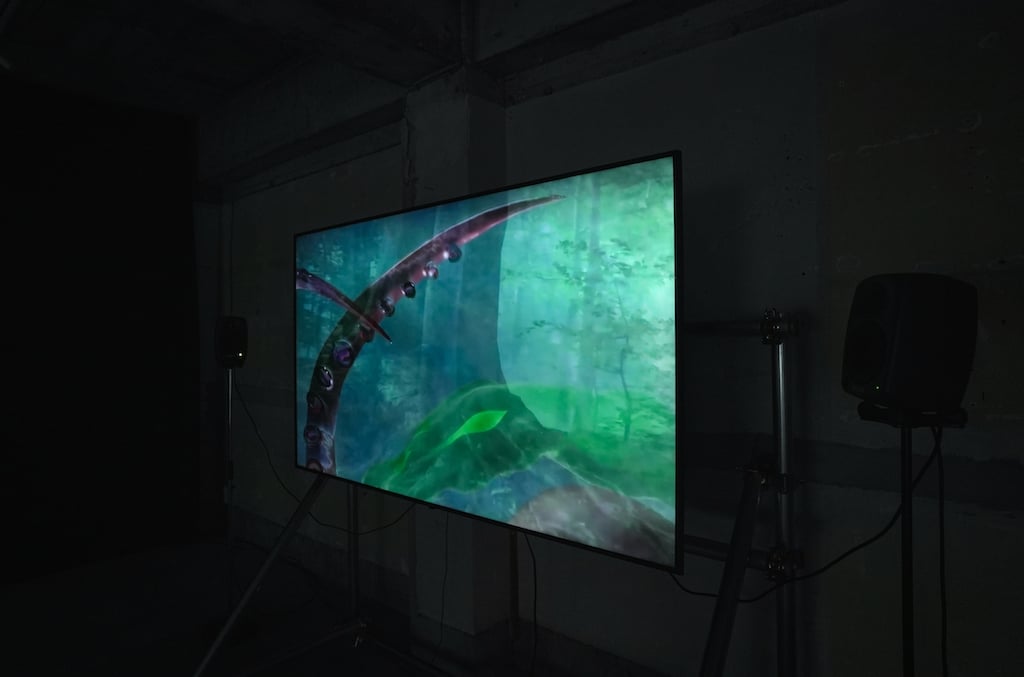
Helen Knowles: The two works on show in the exhibition, Indexed Beings and Trust the Medicine, are part of a trilogy of artist films which facilitate a multitude of voices: nonhuman, more-than-human, and human. The films pay attention to an intangible and ephemeral constellation of entities that are linked to plants and to contemporary tools of psychedelic medicine with which we form relationships.
Helen Knowles, Trust the Medicine, 2023. Photography by NEORT. Courtesy of the artist
While Indigenous cultures have long worked with plant spirits and developed frameworks to manage and interact with such agents within a relational architecture, [these works consider] how scientists frame and understand psychedelic entities that emanate from a synthesized chemical drug made in a laboratory. My intention is to think beyond the natural or artificial in an expansive and inclusive manner which looks three ways: between the tools, the entities, and our human presence in the world.
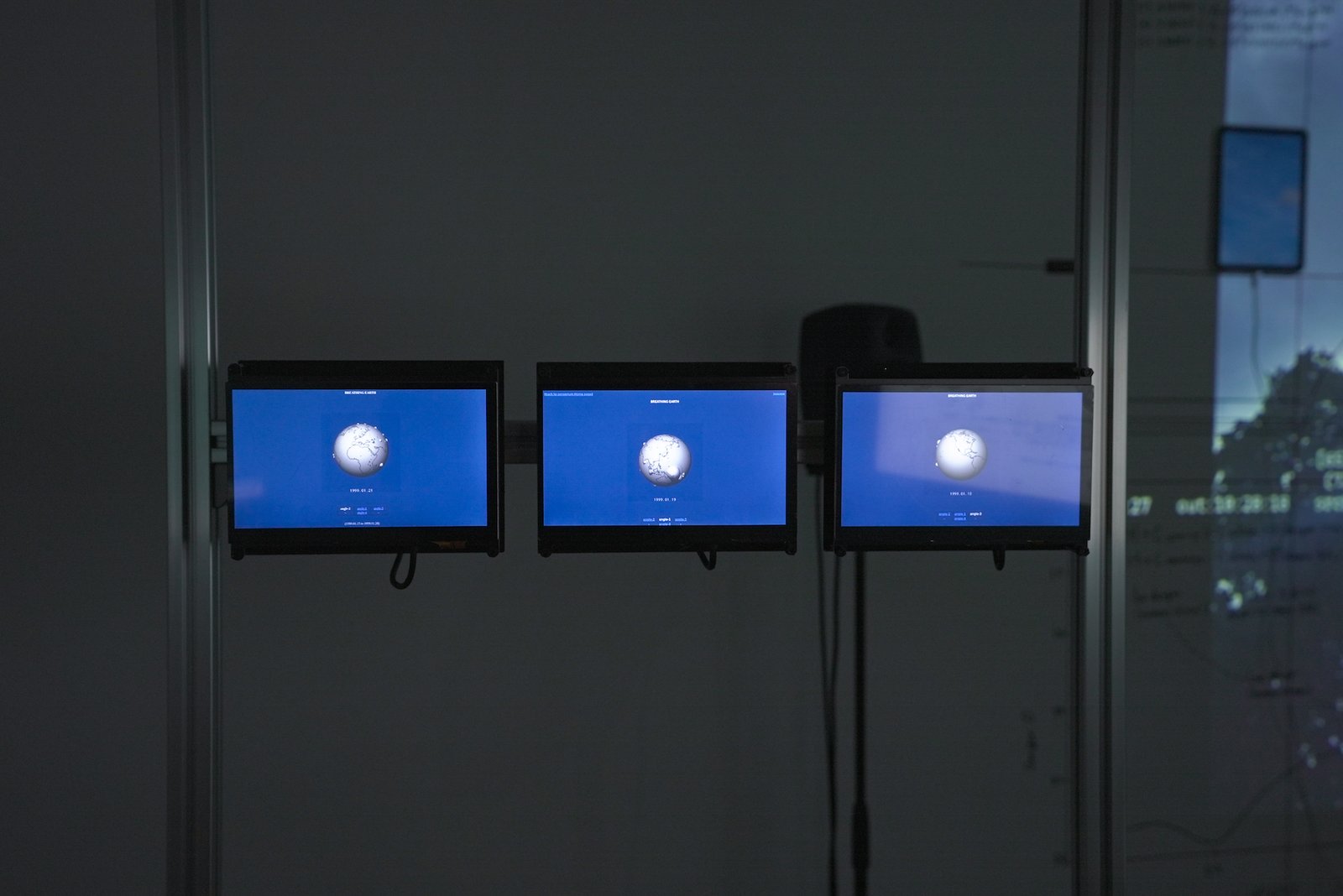
Ichiro Higashiizumi for Sensorium: It was through the cultural anthropologist, Shinichi Takemura, a core member of Sensorium, that I sensed a vision of earth’s history that extends far beyond the humanistic or cultural-historical world. Deep temporal narratives such as the birth of the planet, the formation of the atmosphere, how life emerged, and how the crust and tectonic plates have continued to shift throughout that process formed the foundation of his thinking.
What we shared from the very beginning was the idea that the earth is alive and in flux at this very moment, and we want people to sense that breath through the Internet.
Yoshi Sodeoka: I usually think of humans as part of a much bigger system. Nature, materials, technology, weather, data: none of these feel separate to me. They affect us, and we affect them. In my work, I like to show that overlap: birds that move like code, digital shapes that behave like weather, and systems that feel half natural, half artificial. I enjoy working in that blurred area between the human world and everything outside of it.
Yoshi Sodeoka, 21.000, 2025. Photography by NEORT. Courtesy of the artist
Kazuhiro Tanimoto: In my work, I regard humans and natural elements as agents that operate according to their own distinct sets of rules. Today, humans intervene in nature through technology on an unprecedented scale, but this intervention is never a simple matter of control. Even when we believe that we are manipulating nature, it may in fact be that nature is expanding itself by making use of humans and technologies.
Many of the artificial systems or technologically reinforced environments that appear stable are, in reality, extremely fragile, requiring the constant input of energy. Left alone, they are eroded or transformed by natural forces. I see the world’s unique and beautiful complexity emerging from the interference and entanglement of these elements.
Deborah Tchoudjinoff: Research into supercontinents from different geological epochs gives space to think about the formation of natural resources. As each supercontinent has drifted, erupted, collided, and separated through the shifting of tectonic plates, it has created the minerals that give shape to the objects we make and use.
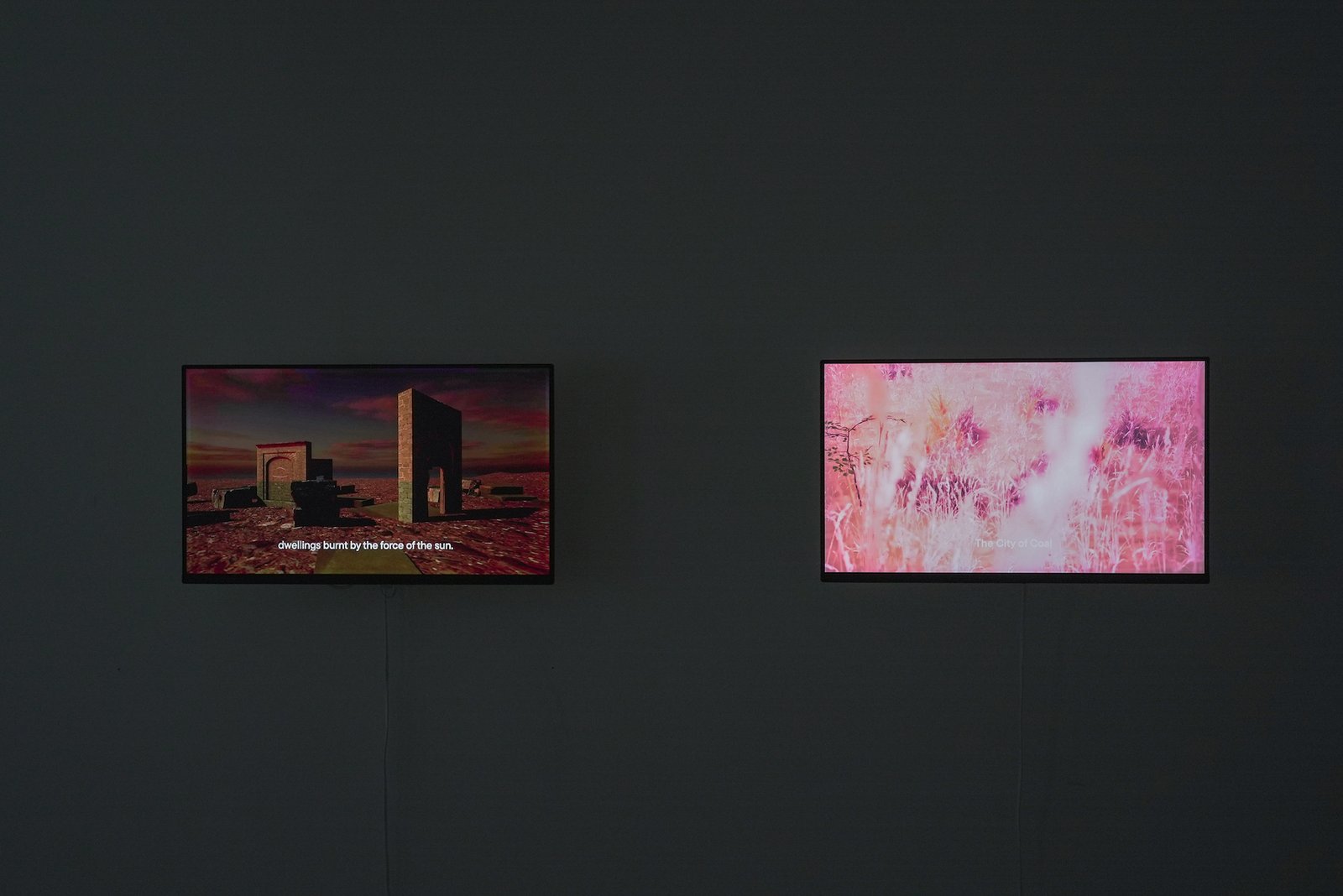
Starting out with a short fictional text, I began to imagine a future supercontinent. The two cities presented at NEORT++ are named after minerals that are heavily sought after — gold and coal. I am asking what a world where these natural resources no longer exist would look like and who would be the inhabitants. The City of Gold imagines a desert next to an oceanic body of water while The City of Coal alludes to regenerative tactics of desertification. The works consider the relation of human and nonhuman meanings to geological and sedimentary scales.
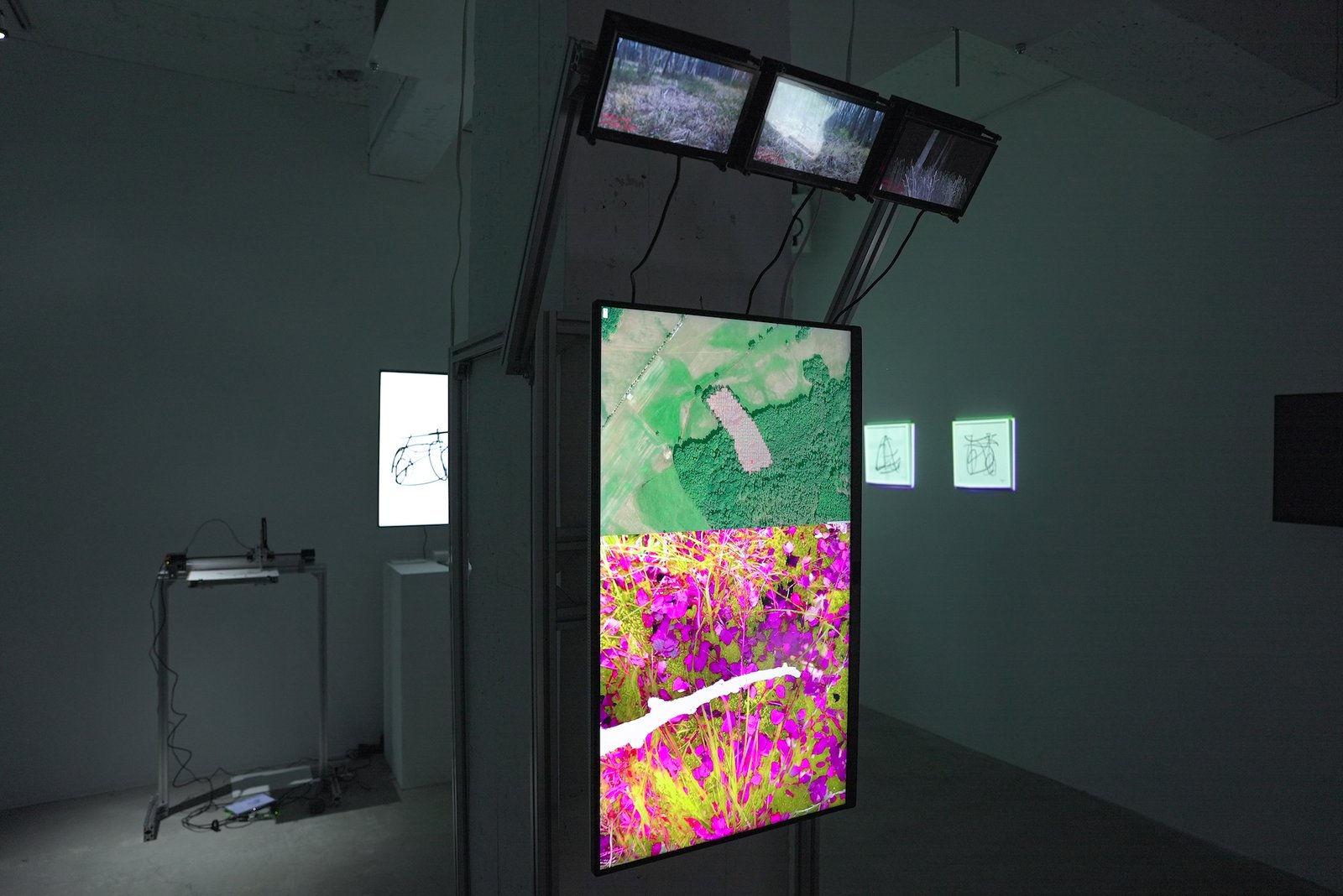
terra0: For “Patterns of Entanglement” we are presenting the work Autonomous Forest — a living work of art and new technological-legal entity that redefines ecological regeneration through collective, blockchain-based ownership. This work is the result of a multi-year collaboration with LAS Art Foundation, consisting of an association/DAO [decentralized autonomous organization] that owns and maintains several plots of land, including forest, by allowing natural generative processes to take place without human intervention.
The forest as a nonhuman entity is embedded in a legal construct (the association), which is expanded by technical means (the DAO). The DAO’s decision-making should always be understood as an expression of the autonomy of the ecosystem, which is only made possible by social consensus. Through the work, we are trying to rethink land art by reflecting on the social, economic, and ecological conditions of land and property.
Deborah Tchoudjinoff, The City of Gold (2022) and The City of Coal (2025). Photography by NEORT. Courtesy of the artist
AE & YS: The show at NEORT++ explores the hybridity of contemporary creative practices, exhibiting works of digital media in physical space. How do you think about the question of display both online and offline?
DT: NEORT++ provides a unique opportunity for artists working across media to show their work both online and offline. As an artist for whom both material and moving image are important, online and offline are equally important. For example, the full moving image works on show aren’t currently hosted online — having a distinct space and time where they are shown is important. It provides a context for reading the works.
PDF: Unlike my previous blockchain-based life forms, Plantoids, which manifest themselves physically as metallic sculptures, Arborithms are purely on-chain creatures. But in order to interface with humans, they incorporate an on-chain JavaScript rendering system that creates 3D representations of these digital trees that can be displayed as holograms. When displayed in a gallery, they invite people to breed them, displaying their evolutionary capacities in real-time as visitors interact with them.
The physical exhibition space becomes a laboratory where these digital organisms can be observed and cross-bred, turning the visitors from passive consumers into active participants in an ongoing evolutionary experiment.
Primavera De Filippi, Arborithms, 2025. Photography by NEORT. Courtesy of the artist
YS: Online and offline simply create different kinds of encounters. When someone sees the work online, it becomes a private experience — it is just them and a screen, and the piece lives inside whatever environment they are in. The scale is fixed, and the viewer brings their own rhythm to it. I think of online viewing as another valid space, not something I need to tailor for a specific platform. Both contexts have their own strengths, and I enjoy letting the work shift naturally depending on where it lives.
Ichiro Higashiizumi for Sensorium: Although Sensorium was a network-based project, we tried to shape it in a way that wouldn’t make the internet itself appear as the main subject. The internet was merely a means or tool; what was truly interesting was the world itself. Each work posed the question: “What if the real world could be seen or felt in this way?”
Instead of focusing on digitality, we were asking how one might experience the rawness of the world through the net — how the senses might reach through it.
t0: Autonomous Forest is a work that takes place in different contexts. The various components, such as the forest plots in Saxony-Anhalt, the association, and the DAO, result in very different artifacts and representations of this work. These include the signed association statutes, correspondence with state authorities, ERC-721 tokens, DAO votes, and the protocols of association meetings. For us, there is no apparent contradiction between offline and online, on-chain and off-chain, etc.
What, for example, are our ERC-721 tokens, each of which represents a parcel of forest? Ostensibly, they are purely digital objects that can be traded as digital artworks. On the other hand, those digital objects have several characteristics that link them directly to the landscape. The purchase price of the NFT immediately benefits the association, which can invest the capital in further forests. In addition, the NFTs can be staked for governance rights, which determine how the association handles the capital (which ultimately influences the ecology of real forests in Germany). It is precisely through such feedback loops that Autonomous Forest is always natively post-digital.
terra0, Autonomous Forest, 2025. Photography by NEORT. Courtesy of the artists
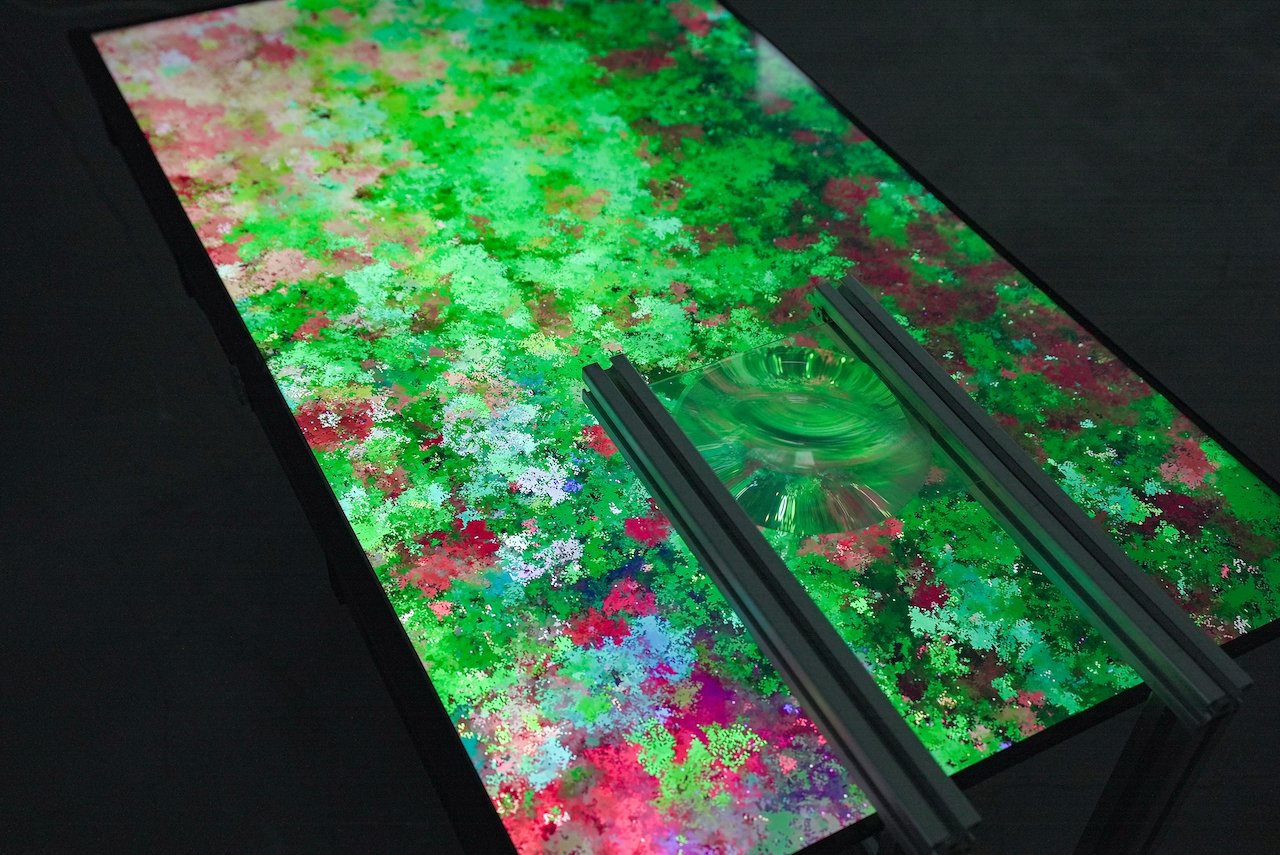
KT: I have mostly presented my work online until now, so I had not given much thought to physical exhibition formats. For this project, I decided to incorporate optical lenses simply because I found it fascinating to enlarge and observe the diverse behaviors of cellular automata. I have always been drawn to close observation of phenomena that resemble natural processes. By inviting viewers to peer through a lens, I hoped they might experience the same pleasure of slow, attentive observation that I enjoy.
MD: As an artist working with code and digital media, it feels natural to create work that spans online and offline platforms. Rather than constructing singular images or focusing on a single tool or particular medium, I like to build systems and algorithms that can be realised in many ways. Unlike most of today’s AI tools, the system I’ve created for Latent Dispatch does not produce images or pixels. Instead, the model distills abstract concepts such as “sailboat” or “butterfly” into a single continuous line comprising a few sweeping arcs and flowing gestures.
HK: The installation of Trust the Medicine mirrors the circular structure of a psychedelic integration group. Its presentation makes nonhuman entities tangible both visually and sonically while facilitating audience interaction with the beings themselves via a text chat. Material and online spaces are woven together, which seems realistic to me.
GA: Facetune Portraits is about what happens when digital processes cross back into the physical world. The series confronts the way algorithmic enhancement operates invisibly through screens.
By materializing these digital alterations as visceral, wounded surfaces, the work insists that our bodies matter, that the human body exists beyond the screen, and that it remains irreducibly tied to pain, aging, and mortality. What is usually invisible on our devices becomes visible, confrontational, and real.
Gretchen Andrew, Facetune Portraits - Universal Beauty (Japan and Korea), 2025. Photography by NEORT. Courtesy of the artist
AE & YS: How do you view the relation of media to reality?
YS: To me, media is part of reality. Digital images shape how we see the world, and the world also shapes digital aesthetics. I like exploring that loop.
Sometimes a simulation feels more real than reality. Sometimes nature behaves like an algorithm. Media lets me highlight patterns or structures that we usually do not pay attention to.
LH: I don’t like constructing artificial boundaries between, say, the physical and the digital — media is reality. However, through my quantum training, I would say that all of our reality is an illusion anyway.
DT: For me it is a dialogue: media can reflect but also reveal alternative realities. [Working with media] allows the freedom and opportunity to explore ideas and possibilities that are not rooted in the real now, for example gravitational rules.
GA: Media isn’t separate from reality; it produces reality. Beauty standards and celebrity culture have always shaped our expectations for how we are supposed to look. One of the major shifts today — along with the rapid, global spread of a singular beauty ideal generated by AI — is that we now see celebrity images and digitally or surgically modified bodies in the same visual context as photos of ourselves and our friends. When scrolling on Instagram, an image of ourselves might be followed by a photo of Kim Kardashian, which is followed by an influencer whose appearance has been Facetuned. This compression and lack of separation intensifies the pressure to believe that we should also look a certain way.
Kazuhiro Tanimoto, Mutual Field, 2025. Photography by NEORT. Courtesy of the artist
KT: If we define “reality” as physical reality, then media are merely one of its many constituent elements. At the same time, humans and nature can also be seen as media that carry genetic information or knowledge. These living, information-producing and information-perceiving media interact with other forms of media in layered and complex ways. Together, they generate subjective reality — perception — and in doing so, transform their own activities. These transformations eventually feed back into physical reality itself.
HK: Both media and reality inform each other endlessly.
MD: Media, especially online media, are a series of overlapping constructions of reality that are being subtly shaped by corporate interests, algorithmic feeds, big data, engagement hacks, and other opaque processes. With today’s large AI models, we are at an apex of this feedback loop between reality and the media. There is a real risk of flattening as models train increasingly on machine-generated outputs, compressing these constructed realities into shallow averages. By breaking apart these systems, recontextualizing, and remaking them, artists have the potential to reveal such problems, and perhaps redirect this gradual churn away from uniformity.
Libby Heaney, Qlimates, 2025. Photography by NEORT. Courtesy of the artist
t0:Two questions seem to resonate here: “What is the relationship between a given medium and reality?” And “What interactions arise between a media reality and a society?” As artists, we are naturally confronted with both questions. If we follow the media philosophers Vilem Flusser and Friedrich Kittler, we would have to conclude that the determination of reality and media is reversed.
For Flusser, reality only arises from the media. Technical images (photos, digital images) abstract from texts/concepts that are already embedded in the apparatus. Kittler then reads Flusser in a quasi-materialistic way: “media determine our situation” through the rules and circuits inscribed in the hardware. “Meaning” appears as the ultimate humanistic fantasy to describe signal processing. This is the end of a certain kind of teleological thinking, which can be found today in the AI discourse and elsewhere. Althusser’s concept of overdetermination can help to resolve things: yes, media are shaped by their social genesis, but they are always so overdetermined that their effect remains contingent.
PDF: In my view, media is not a means to represent reality, but rather a means to generate new realities.
In my artistic practice, my goal is to explore what new forms of life become possible when we stop treating technology as a tool and start recognizing it as an environment where new kinds of life forms can emerge. The blockchain is, in my view, an interesting substrate that enables new forms of synthetic life to emerge. Yet, when I create new blockchain-based life forms, I’m not trying to mimic organic life, I’m creating new life forms that have their own logic and autonomy.
Arborithms are a perfect illustration of that. While they are inspired by the cross-breeding process of organic trees, their evolutionary dynamics create a reality that didn’t exist before: one where digital trees incentivize humans to help them reproduce through economic incentives. Thus, rather than mimicking physical reality, Arborithms represent an expansion of what reality can be.
Sensorium, Breathing Earth, 1996. Photography by NEORT. Courtesy of the artists
Yoshiaki Nishimura for Sensorium: Back when we were working on Sensorium, it felt as though society was flooded with “secondary information”. From news on TV or in newspapers to stories repeated from person to person, everything was mediated; almost no one was seeing the world directly with their own eyes. There were plenty of rich outdoor magazines, yet people didn’t actually go outside. Then smartphones and social media spread, and the walls surrounding society grew even higher and thicker.
That’s why I wondered whether the internet could be used to “open a window in that wall” — to let people feel distant worlds directly, even through a tiny aperture. It wouldn’t be first-hand information, but it wouldn’t collapse into second-hand information either. Something like “one-and-a-half-order information.” What we pursued in Sensorium was a structure that would allow people to feel the world in as unfiltered a way as possible.
Gretchen Andrew is a painter and hacker who manipulates systems of power through art and technology. Her unique practice stems from her background at Google and a formal painting apprenticeship with the artist Billy Childish. Known for merging traditional oil painting with strategic information systems and emerging technologies, she works across mediums to interrogate and manipulate the structures that shape beauty, influence, and authority in the digital age. Gretchen’s Facetune Portraits series explores how aesthetics, AI, and algorithmic visibility collide. She first gained recognition for her internet interventions and conceptual use of search engine manipulation, but it is her unique fusion of classical painting with digital subversion that has earned critical and institutional acclaim. In 2025, The Whitney Museum of American Art acquired two of her Facetune Portraits into its permanent collection, with unanimous and enthusiastic support from the museum’s committee.
Matt DesLauriers is a Canadian artist now living in London, whose work focuses on generative art, algorithms, and emergent systems. His generative art is part of the permanent collection of the Los Angeles County Museum of Art, and his work has been exhibited internationally, including at Somerset House, Paris Photo, MoCA Taipei, and Art Basel. He’s active in the open-source community, and often teaches workshops and classes; including tutoring a Master’s of Architecture creative coding module at UCL Bartlett.
Primavera De Filippi is an artist and legal scholar at Harvard University, exploring the intersection between art, law, and technology, focusing specifically on the legal and political implications of blockchain technology and AI. Her artistic practice instantiates the key findings of her research in the physical world, creating blockchain-based life forms that evolve and reproduce themselves as people feed them with cryptocurrencies. Her works have been exhibited in various museums, galleries, and art fairs around the world.
Dr Libby Heaney is a working class, award-winning artist with a PhD and professional background in Quantum Science. She is the first artist to work with quantum computing as a functioning artistic medium. Heaney’s practice explores the inherently non-binary and hybrid concepts and non-linear temporalities of quantum physics. She combines diverse media such as virtual reality, video games, moving image, watercolor, glass, and most recently, public sculpture with cutting-edge technologies including AI and quantum computing. Spanning the organic, the mechanical, and the human, Heaney’s practice continuously seeks to expand the possibilities of the individual and the collective through the irrational magic of quantum, while critically queering capitalist uses of technology.
Helen Knowles is an artist working with expanded forms of moving image. Her practice examines the intersection of immateriality and life, focusing on responsibility, autonomy, and ethics in relation to technology, AI, and the nonhuman. Knowles explores the digital world through a planetary lens. Working collaboratively with Indigenous communities, medics, scientists, lawyers, crypto specialists, and inmates, among others. Her use of performance and film focuses on the relational and generative qualities of discourse. Knowles is also the curator of the Birth Rites Collection currently housed in the University of Kent.
Sensorium is a project that was launched online on January 1, 1996 at the theme pavilion in the Japanese Zone of the Internet World Expo. After the exhibition period ended, it moved its platform to sensorium.org and continued its activities, though the project has since concluded. Its guiding concept was “expanding the potential of the Internet as a neural network enveloping the entire Earth and creating mechanisms for sensing the living world.” The members included Shinichi Takemura, Yoshiaki Nishimura, Ichiro Higashiizumi, Takuya Shimada, and Koichiro Eto, among others, forming a diverse group of cultural anthropologists, designers, programmers, and musicians. Each project was developed by small, cross-disciplinary teams assembled according to the needs of the work. In 1997, Sensorium received the Golden Nica in the .net category at the Prix Ars Electronica.
Yoshi Sodeoka is a renowned artist known for his innovative exploration of various media and platforms, including video, GIFs, and print. With a deep-rooted passion for music, his neo-psychedelic style directly reflects his love and background in the field. Drawing inspiration from music cultures such as noise, punk, metal, and prog rock, Sodeoka has developed a unique artistic vision encompassing complex, mind-altering visuals. Originally hailing from Yokohama, Japan, Sodeoka relocated to New York in the 1990s to pursue his passion for art, enrolling at Pratt Institute. Since then, he has called New York home, establishing a strong presence in the city’s vibrant art scene.
Kazuhiro Tanimoto is a generative artist and chemist engaged in material research and development. He uses the unique computational capabilities of computers to explore expressions that fuse physical and digital material, permanence and transience, and science and art. With a particular focus on audio-visual expressions created through code, his practice examines the interrelations between technology, nature, and the human mind.
Deborah Tchoudjinoff works across moving image and sculpture, often presented in the form of installations. She is attentive to the dialogue between material and digital approaches in the production of her work, exploring methods of worldbuilding and fiction. Tchoudjinoff is inspired by visual references relating to the otherworldly, the spiritual, and the imaginary. Often beginning with a conceptual framework, she considers what the form is through the process of material and visual experimentation. Deborah has worked with metal, wood, and found material to produce static and kinetic sculptures. She has also worked with various digital methods for her moving-image works. Her practice is underpinned by curiosity about the role of technology in temporality and the imaginary.
terra0 is an art collective that explores how economy and ecology intertwine. Since their inception in 2015, terra0 has explored how ecosystems can become economic agents, and have engaged in questions of collective ownership. Their first work, terra0 whitepaper (2016), proposed a self-utilizing forest which, with the help of sensors and smart contracts, sells logging licenses and ultimately accumulates capital. Later works have iterated and reflected back on the claims set forth in the whitepaper, continuing to center on emerging technologies’ potential to support new forms of ownership and the different conceptions of agency they may thus entail. Throughout their practice, terra0 raise questions around autonomy and agency in culture and law; novel distributions of ownership; and regard for the natural world within and beyond market capitalism.
Yusuke Shono is the publisher of MASSAGE MAGAZINE, an independent publication that highlights grassroots culture from Japan and abroad. Alongside his work in media production, he has curated numerous exhibitions. His curatorial projects include “Computational Poetry”, “Patterns of Flow”, and “Web as a Medium” at NEORT++; “Machine-Made Aura” at K Art Gallery (2024); “Proof of X — Blockchain As A New Medium For Art” held in Daikanyama (2023); and “PHENOMENON: RGB” Exhibition at Laforet Harajuku (2019). He continues to explore and share the diverse cultures that emerge and circulate within the online world.
Alex Estorick is a writer, editor, and curator based in London. As Editor-in-Chief of Right Click Save, he seeks to develop critical and inclusive approaches to emerging technologies. He is also a Visiting Research Fellow in the Department of Computing at Goldsmiths, University of London. Recent curatorial projects include: FEMGEN at Artverse, Paris; Cure3 at Bonhams, London; “Patterns of Flow” at NEORT++, Tokyo; The Pixel Generation at Unit, London; and “Ecotone” on Feral File. He writes for various publications, from Artforum to the Financial Times, and was lead author of the first aesthetics of crypto art. His edited volume, Right Click Save: The New Digital Art Community (2024), is published by Vetro Editions. In 2025, he was included in the Monopol Top 100, a list of the most important people in the art world.