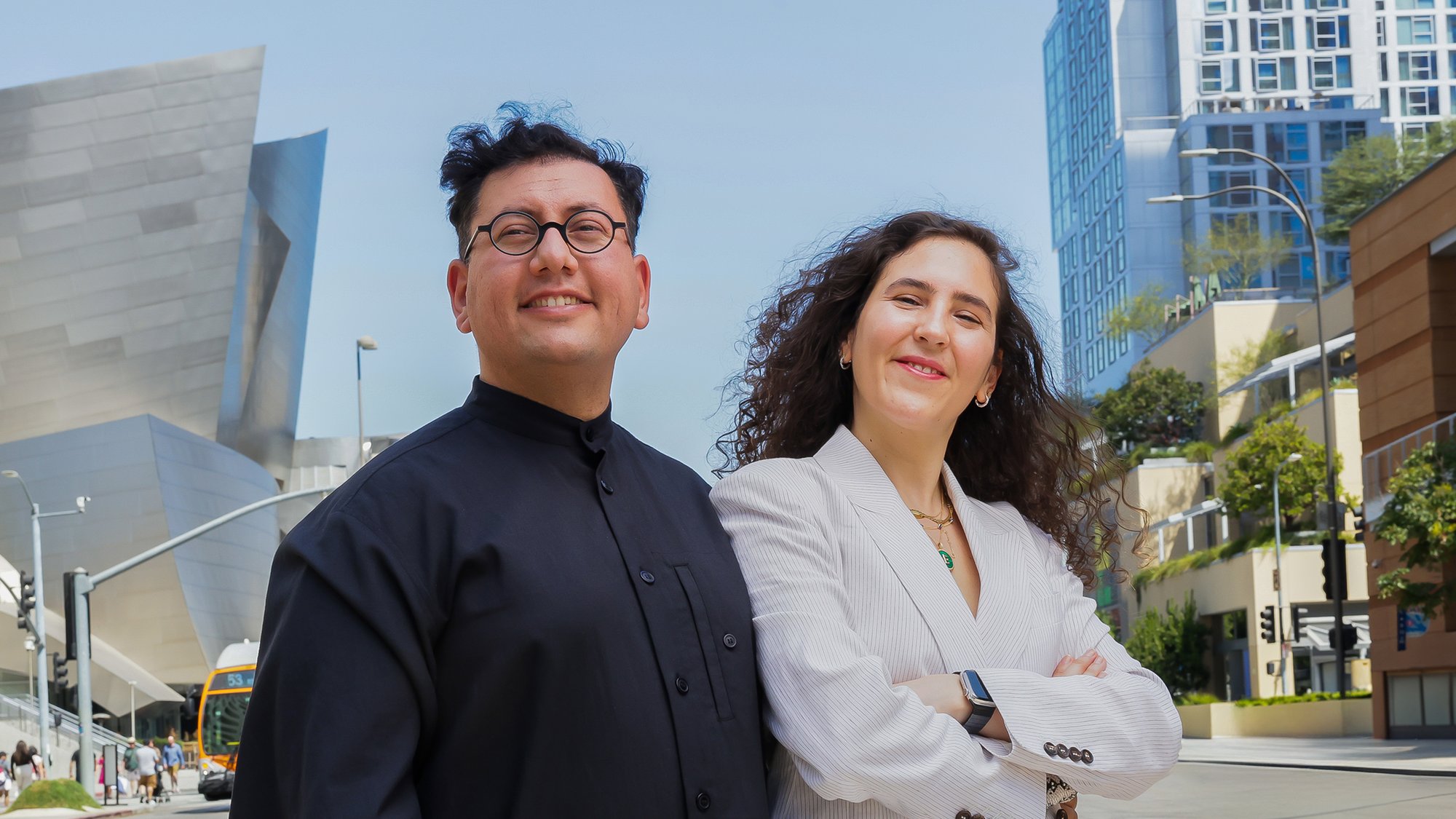
The Artists who Dream with Data | Refik Anadol and Efsun Erkılıç
The co-founders of Refik Anadol Studio discuss the launch of Dataland museum of AI arts, Los Angeles, collaborating with the academic rigor and archival richness of Oxford University, and the developing ethics of creative AI
Efsun Erkılıç and Refik Anadol have played a central role in what is proving to be an enthralling year for new institutions, with a range of reimagined or newly established spaces — museums, educational bodies and festivals — offering fresh frames through which to view the entanglement of art, design, science, and technology that has long been an editorial focus of Right Click Save. These entities include NODE, in Palo Alto, California; the remodelled and enlarged Los Angeles County Museum of Art, and New Museum, New York; the forthcoming launches of Canyon in downtown Manhattan, and Powerhouse Parramatta in Sydney, Australia.
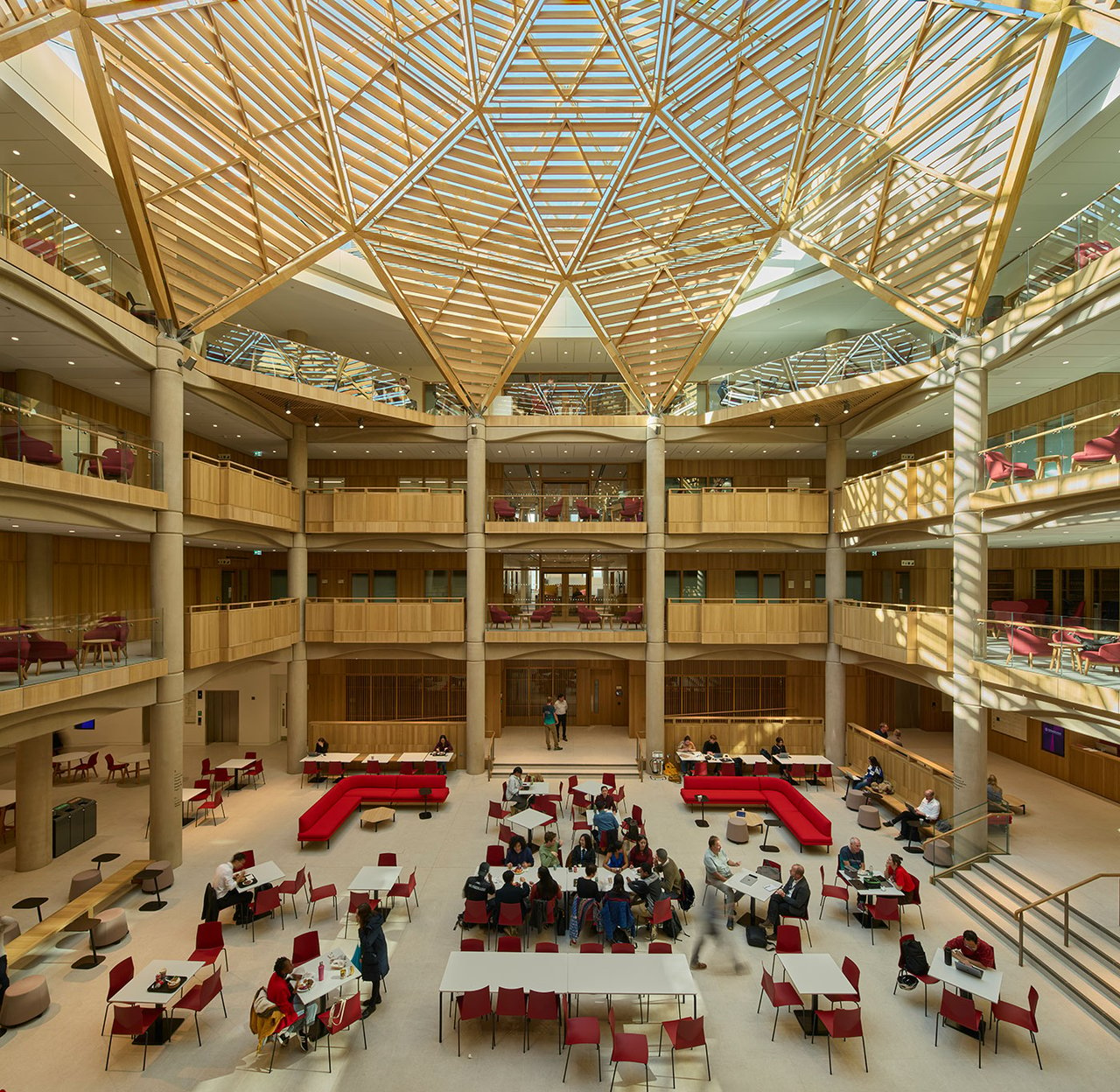
Since April 2026, Erkılıç and Anadol have taken a leading part in the inaugural cultural program at the Stephen A Schwarzman Centre for the Humanities, Oxford University, building an AI model in collaboration with the university’s academics and its rich botanical archives.
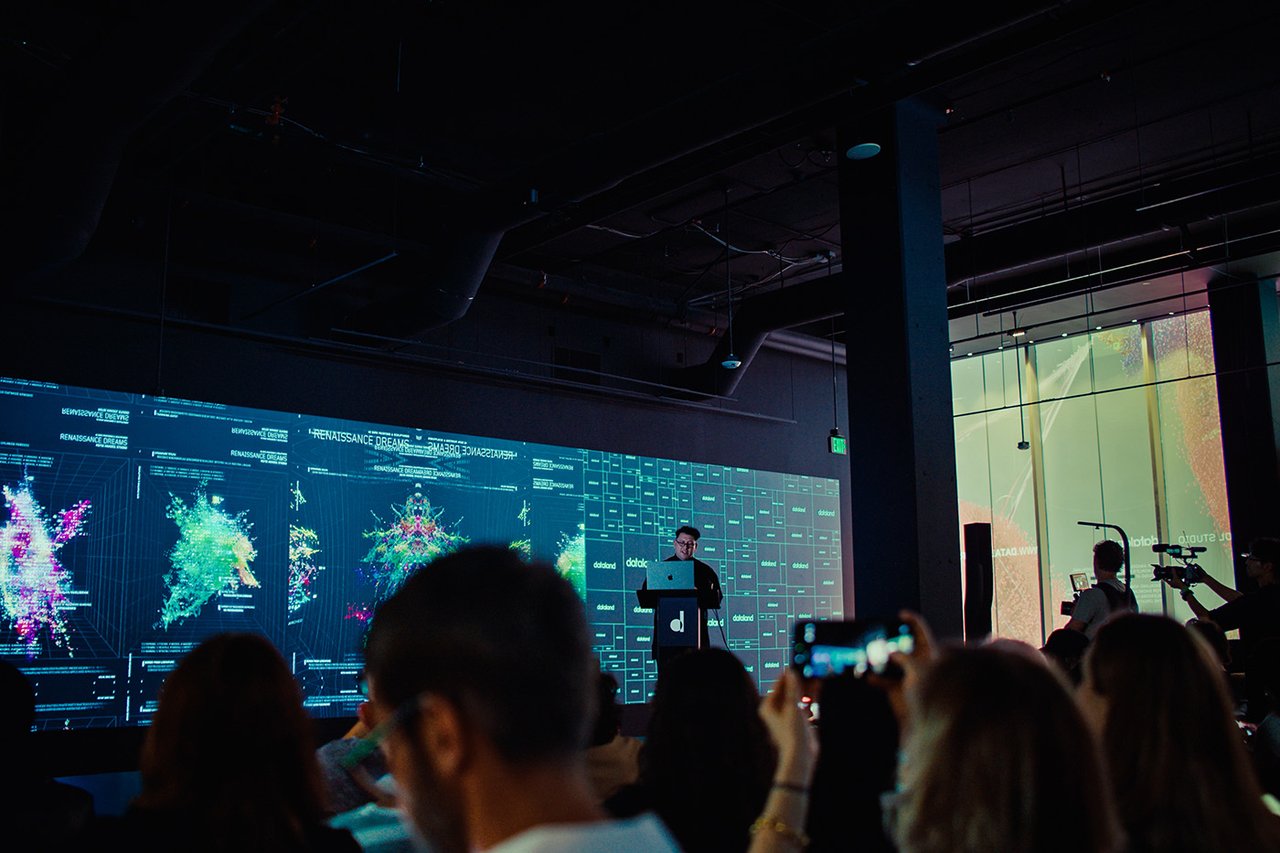
In June 2026, Erkılıç and Anadol opened an institution of their own: Dataland, a grand-scale, interactive museum of AI arts they co-founded in a Frank Gehry-designed development, the Grand LA, on Grand Avenue, downtown Los Angeles.
The building sits in a cultural corridor with the art hub of The Broad and the Museum of Contemporary Art; Gehry’s landmark Walt Disney Concert Hall; and the nearby Music Center’s opera and theater spaces. Dataland’s opening was greeted as a big moment — with full-dress articles on the two co-founders published by The New York Times and TheNew Yorker — a dozen years after Erkılıç and Anadol co-founded Refik Anadol Studio (RAS) in the same city in 2014.
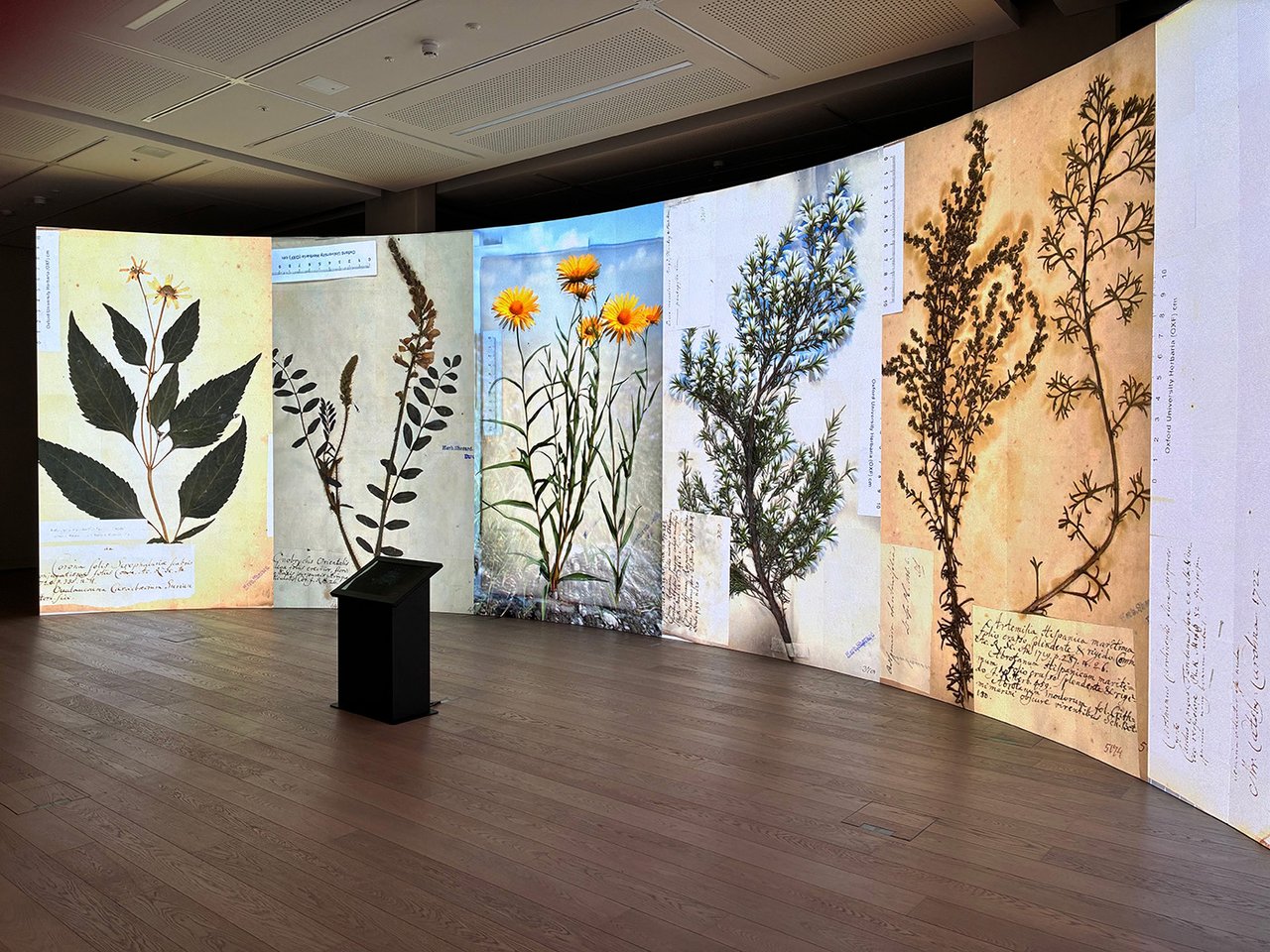
For the public opening of Schwarzman Centre, Anadol, the globally recognized media artist and public face of the studio, created Archive Dreaming (2026), which RAS developed as an AI model through a deep archival dive in collaboration with the university’s botany department, building data sets from a vast collection of plant specimens and their images in the university’s botanical collections, working with the herbarium’s curator Professor Stephen Harris. Anadol is also the first recipient of the Lau Fellowship in Creativity and AI at the Schwarzman Centre, a role which has brought him into close contact with philosophers and scientists in the building and on stage at the center for a public debate in May 2026 on the ethics of creative AI.
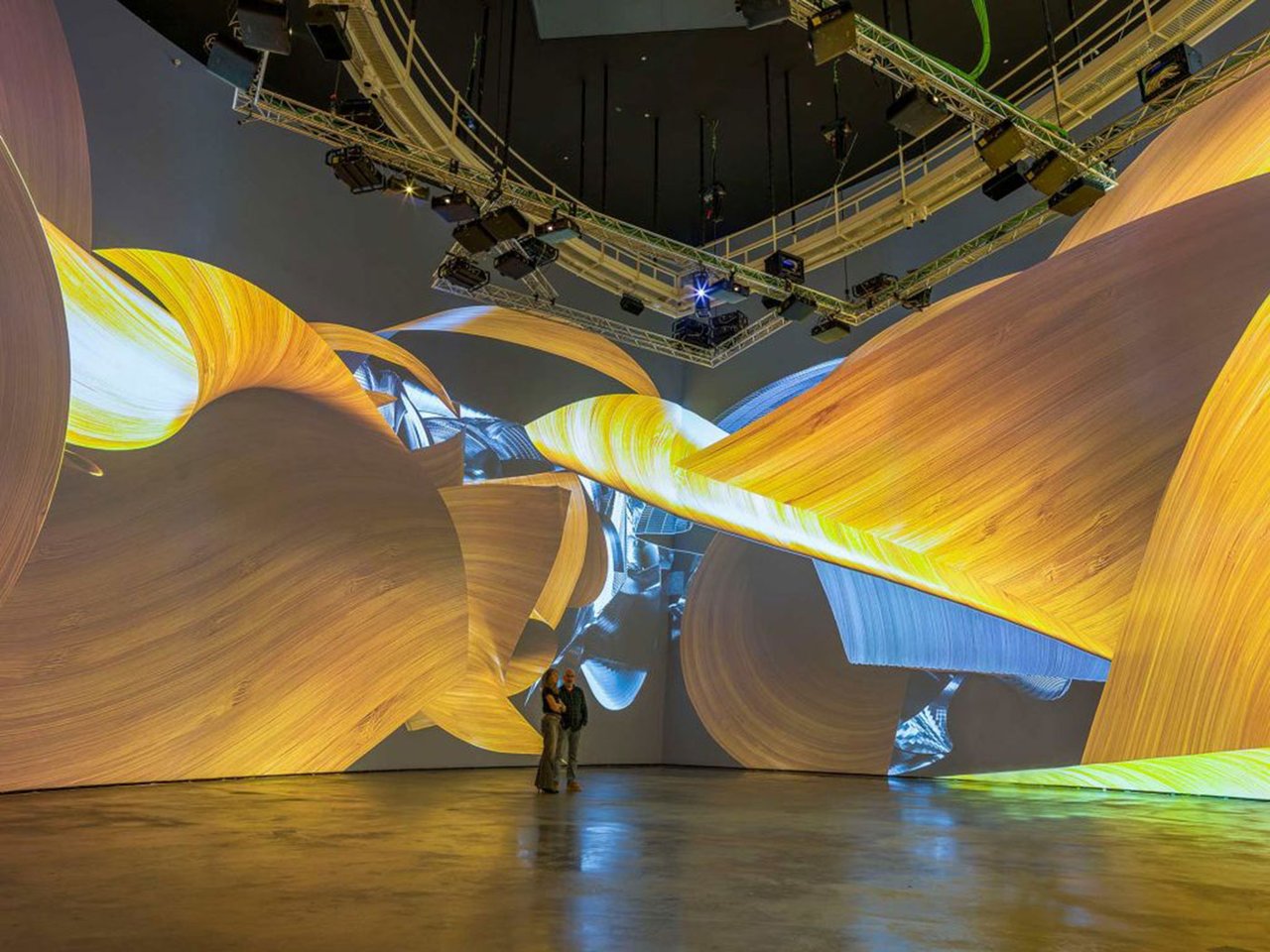
Installation view, Refik Anadol, Archive Dreaming, 2026, Schwarzman Centre for the Humanities, Oxford University. Photography by Right Click Save
Both Erkılıç and Anadol tell Right Click Save that working with the Oxford academics was remarkable for the flexibility and quick decision-making the university team showed on Archive Dreaming, and related archival projects, but also for the sense of institutional staying power they feel when working with a entity that dates back to the early Middle Ages.
It is interesting, Erkılıç says, to collaborate with such an historic institution, which is “so alive and sound”, and experimenting with a technology like AI, a subject that “creates a lot of worry” around the ethics of data collection and the fate of the human. “But they have the tolerance to be able to bear that worry,” she says. Newer institutions, she thinks, won’t always “have that stamina”. An institution with Oxford’s longevity, Erkılıç says, has a “flexibility and also wisdom to be able to adapt or accept the new things in their existing infrastructure. Sacrificing a lot [over a long history].”
Staying power matters on a topic like AI where it is a role of artists, institutions and publishers to offer the wider public the tools not to turn away from a difficult subject. “That’s why I think that the age of AI is going to challenge a lot of institutions,” Erkılıç says. “The ones who have more tolerance are going to survive, succeed or thrive”.
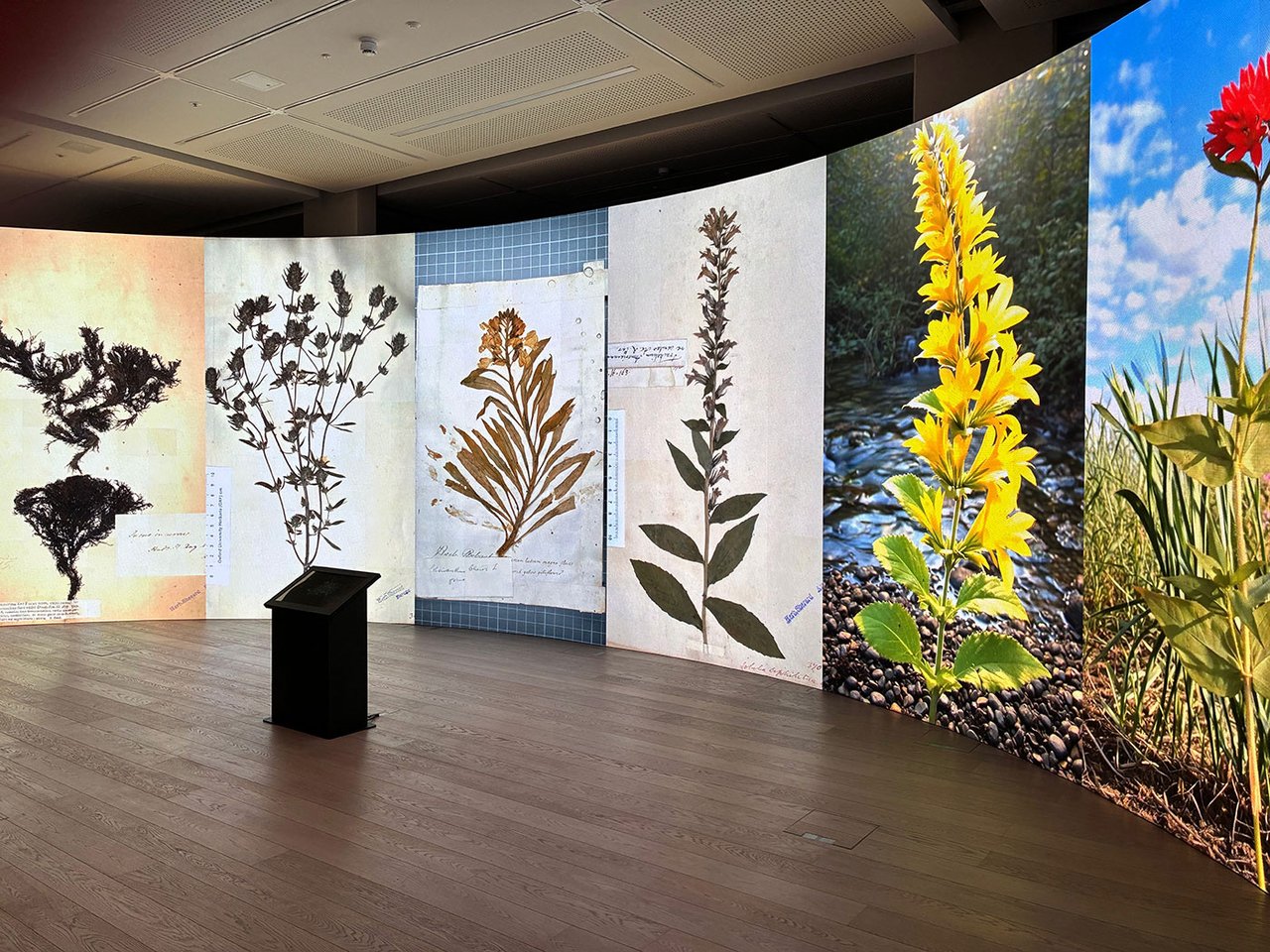
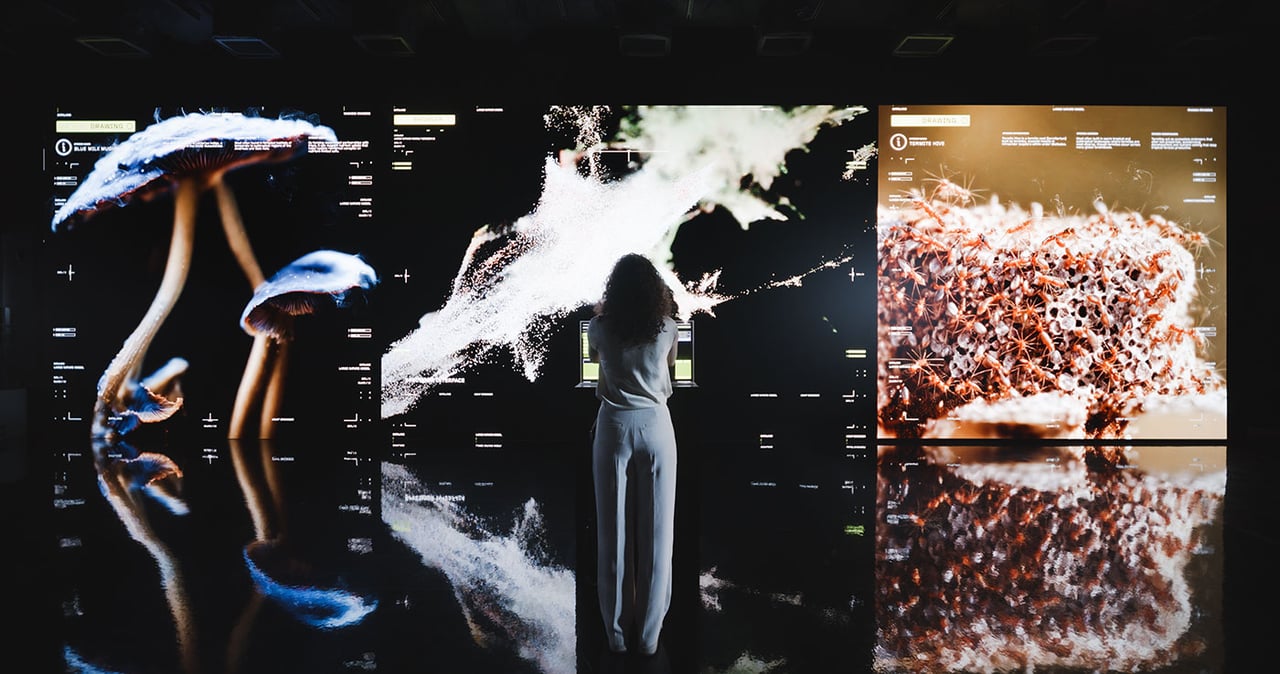
For Archive Dreaming, in the Schwarzman’s White Cube space, open free to the public, visitors were encouraged to explore Anadol’s work using an interactive console placed in close proximity to a latest-generation, large, arc-shaped screen, one that offered a vivid representation of the rich pigments of Anadol’s data visualizations. Anadol was careful, in preparing Archive Dreaming, not to overcomplicate the data science. “We focused”, he said, “on a subset of beautiful data from the historic specimen drawings from the herbarium archive.” The piece is designed to have “a research mode” where the character of the archive images is most apparent, “and a dream mode”. “Dream mode,” Anadol says, “is of course when the artwork dreams and it creates hallucinations. But the research mode is truly a scientific place where the AI shows incredible new connections between the [specimens].”.
Installation view, Refik Anadol, Archive Dreaming, 2026, Schwarzman Centre for the Humanities, Oxford University. Photography by Right Click Save
Harris said in an interview with the Schwarzman Centre, that he sees the herbarium’s archive specimens as nodes on a multi-dimensional space connected by each specimen’s date, taxonomy, geography and the identity of its collector. Archive Dreaming offers him, Harris said, an “amazing” interpretation; one that showed him how all these archival data points are connected. Harris’s reaction — he was reported to be visibly moved by his first experience of Archive Dreaming — is “exactly the mission of this project”, Anadol tells Right Click Save. “He was so touched. And the data was so special.”
“It’s not just a cool technology, disconnected from humanity, but an extension of the human mind. It did the work emotionally, intellectually.” (Refik Anadol)
The Anadol studio has not wanted for public attention in the past five years and has shown work at high-profile institutional level, with installations at multiple landmark spaces, including MoMA, New York; Antoni Gaudí’s Casa Batlló, Barcelona; Serpentine, London; Sphere, Las Vegas; and the Guggenheim Bilbao. The studio has also presented regularly at quasi-governmental level, with organizations such as the World Economic Forum annual meetings at Davos and the United Nations, deploying symphony orchestra-accompanied theatre-scale data visualization works, with subject-matter emphasis on climate change and protecting the global ecology.
Underpinning much of the studio’s work in the 2020s has been the development of its Large Nature Model, constructed from millions of pieces of ethically acquired data supplied by leading scientific institutions including the Smithsonian Institution in Washington, D.C., the Natural History Museum in London, and the Cornell Lab of Ornithology, New York state.
The Schwarzman Centre collaboration and the opening of Dataland — followed by the announcement of its first cohort of AI artist residents who are joining a six-month-long program run by the museum in partnership with Google Arts & Culture, with close interaction with RAS and Anadol himself — represent a moment for RAS. They are more than new big-ticket openings for an extraordinarily prolific studio whose work has been closely concerned with two of the existential issues of the day: climate change and the ethics of AI.
Together these two very public presentations represent at once a coming home, an attention to timescale and to the sharing of tradition, and a focus on extended interaction with users and collaborators alike. Followers of Anadol’s work have seen Archive Dreaming as a taking of aesthetic stock, where the character of the source archive shows through to beguiling effect in the final experience of what Anadol calls its “research mode”, much as it did with Anadol’s Large Architecture Model, based on the historic archive of Frank Gehry’s studio, when Living Architecture: Gehry was shown in the towering spaces of Gehry’s Guggenheim Bilbao in 2025.
The bricks and mortar reality of Dataland gives the studio a public base in a city whose artists, artistic culture, and academic institutions — Anadol teaches at his alma mater UCLA — have long been interwoven with the studio’s work.
The launch of the six-month-long residency at Dataland gives a further sense of institutional longevity. “The residency is designed to give artists both the freedom to experiment and the support of a thoughtful community,” Erkılıç, Chief Strategy Officer at Dataland, said at the time of the cohort’s announcement. “Together with Google Arts & Culture, we wanted to create an environment where responsible innovation could flourish.”
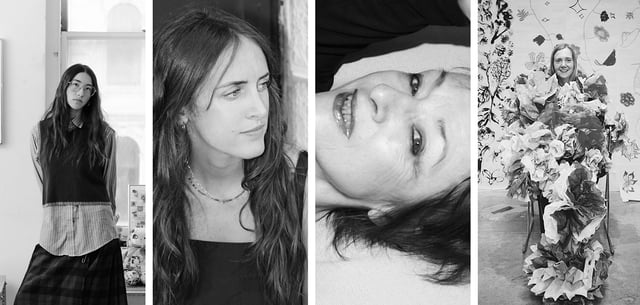
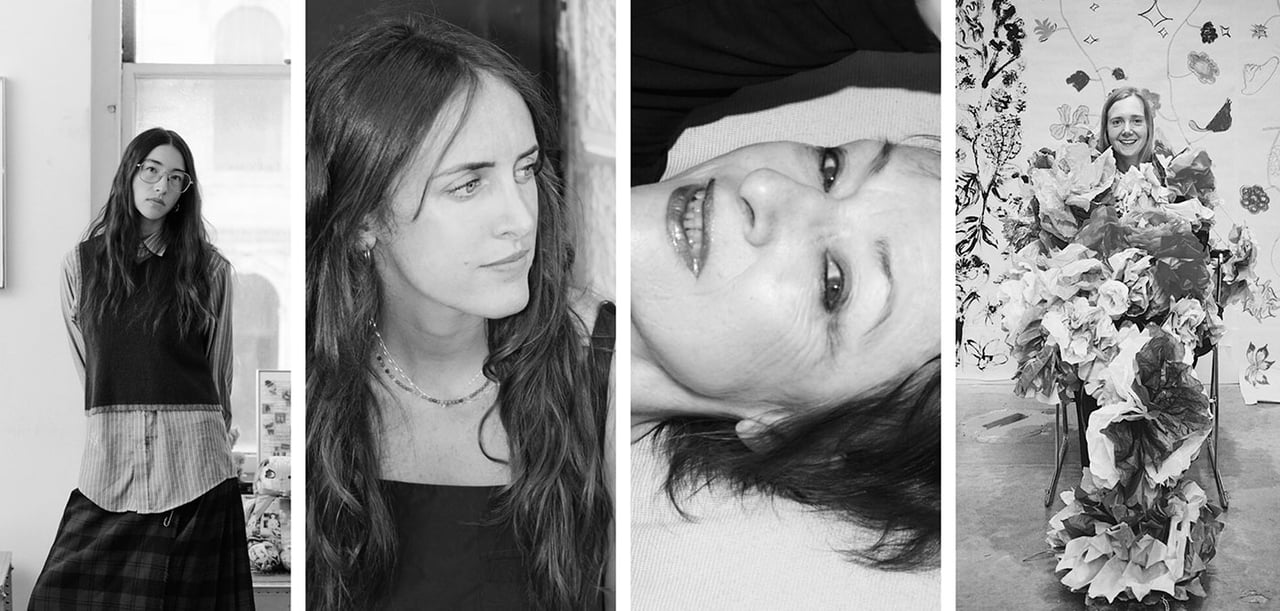
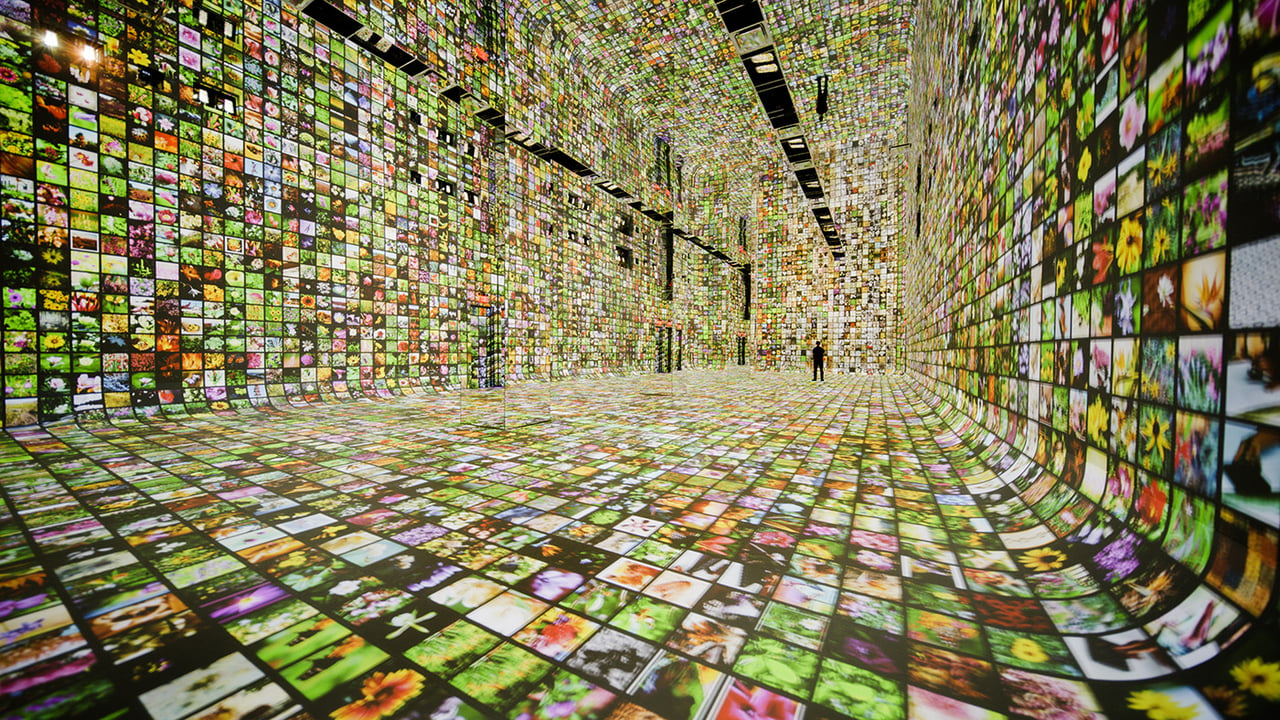
The first group of AI artist residents at Dataland, Los Angeles: (from left) Maya Man, Lucia Rebolino, Penny Slinger, and Jess Starns. Courtesy of the artists and Dataland
With Dataland, Erkılıç tells Right Click Save, “we are experimenting with the concept of the museum. We are not like a traditional museum. Not in the business side, not in the practical side. Our exhibition is a timed experience, so every 10 minutes up to 20 people can be let in [to allow visitors to linger immersively in each of the five spaces].” The concept of the museum, she says, “needs to be discussed again, because I think it renews itself, it updates itself, and then you have to do a spring cleaning for the concept.”
They decided to use the term “museum”, Erkılıç says, “because we don't have any existing word to describe Dataland …. Let’s experiment with this word. Maybe we can create another provocation”.
Dataland, she says will have an exhibition mode and also and an event mode. “Imagine an album presentation in the space,” she says. They recently hosted the Quantum AI team from Google for a symposium, Anadol says.
At Dataland, Anadol says, “the museum is the artwork … the institution is the artwork. So we don't treat it as a corporate or organizational world, but we think the whole concept is the artwork.” They found nothing inspiring in the existing museum system, he says, so they experimented with the ticketing system, with the merchandise by having “a design store with items that are personalized”.
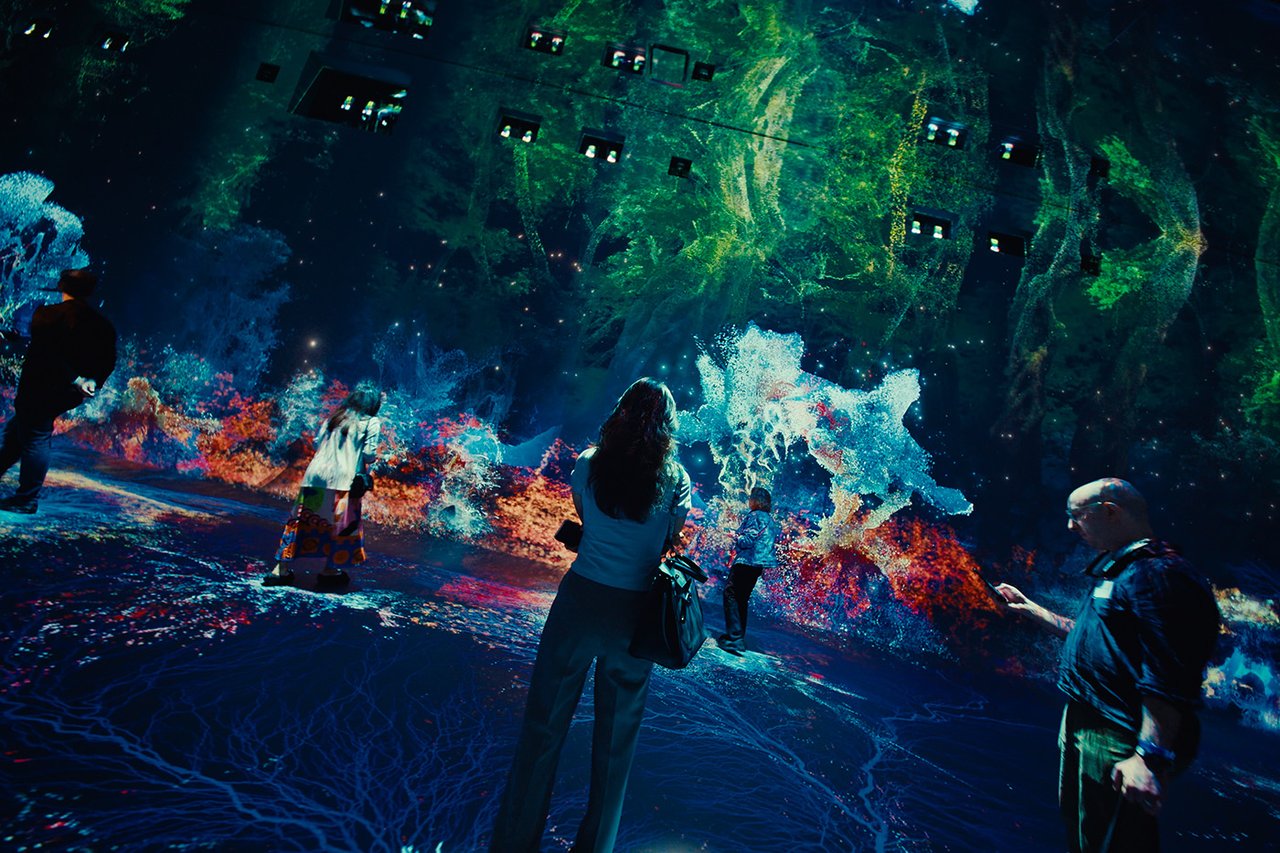
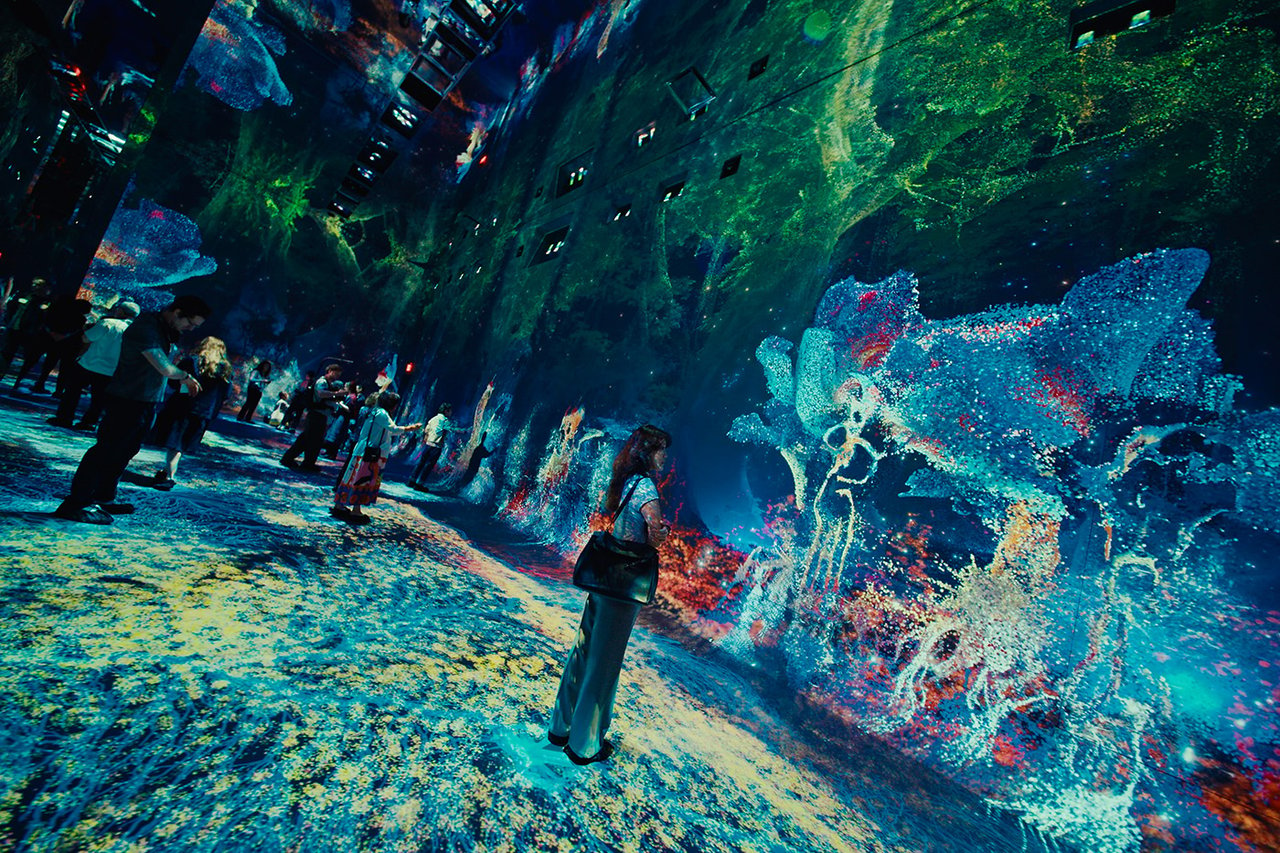
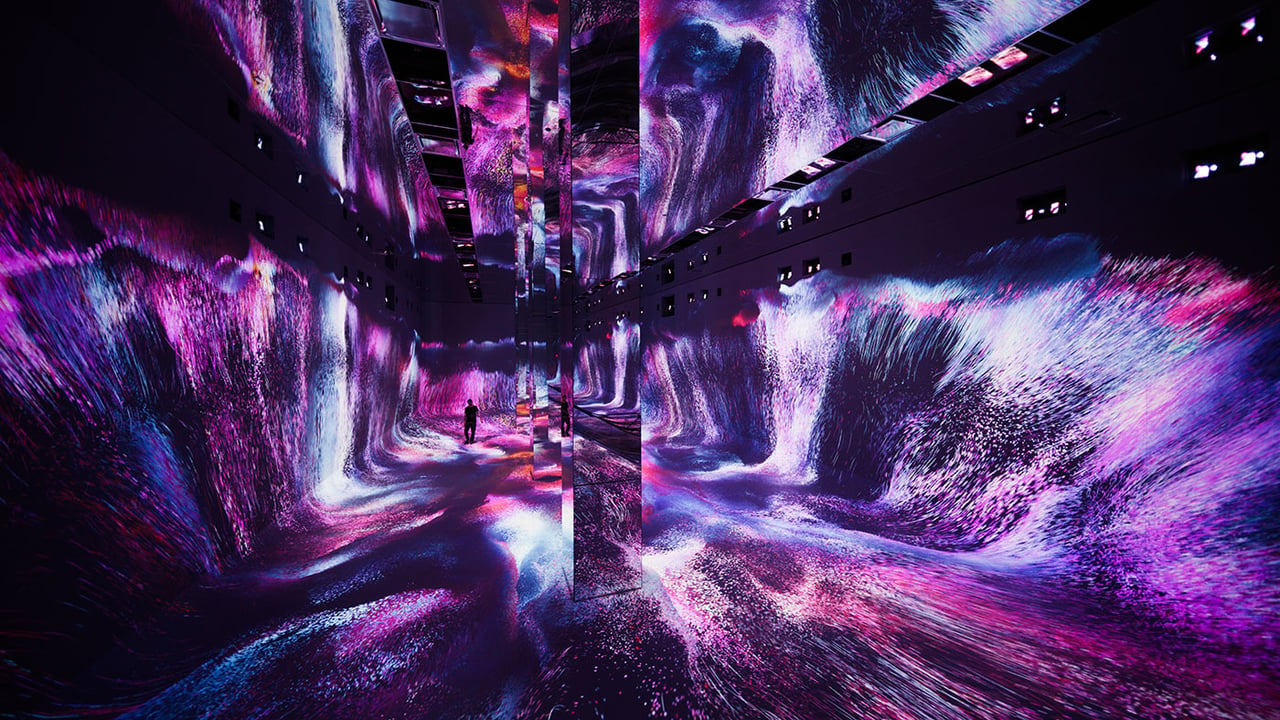
It is telling that within Dataland’s first exhibition “Machine Dreams: Rainforest” (until January 31, 2027), developed from the Large Nature Model, visitors are encouraged to take stock of their feelings, to spend time in each space as the AI-generated sound, visuals and scents the visitor experiences are intermediated through the biometric wristbands they wear to track their physical and emotional responses, as they move through five large chambers. The studio team worked with the cosmetics company L’Oréal Luxe to create a device that goes around a visitor’s neck and combines 12 different scents — including forest floor, a mushroom-infused earthy smell and a jasmine-like floral experience — that are individualized as a visitor moves through the experience.
“We are changing the artwork right now,” Anadol said as he walked through the Infinity Room. “As we’re moving, the color is shifting. Colors, the moment, the sounds. So there are multiple algorithms in real time that are transforming the world.”
Anadol said he used a virtual reality game engine to test Machine Dreams: Rainforest before bringing it into the space at Dataland. “We got it out of the headset,” he said. He likens it to the experience of cinema: “Being together, and understanding.”
The LA Phil’s conductor laureate Esa-Pekka Salonen came to Dataland shortly before it launched, to experience the 48-channel audio and the museum’s acoustics. “He was blown away,” Anadol says, “saying ‘for years I have been on stage hearing the audio. This is the first time the whole system moved around me’.” “It’s one of the most advanced sound systems in the world,” Anadol says. “So we are specifically receiving information where we are; [the sound] comes with you [...] The whole system is real-time, recomposing itself, so it knows where we are, everything is recomposed.”
Anadol has brought similar experiences to institutions around the world, but at Dataland the opportunity was to create a space after making the artwork. “Instead of putting the artwork on the wall, we first designed the work and then designed the gallery,” he says.
It was poignant for RAS to create Dataland in a Gehry-designed building, and to open to the public six months after the architect’s death. The studio’s relationship with Gehry dates back to 2014, when Anadol was working on his master’s project at UCLA and projected data from the LA Phil archives on the inside walls of the Walt Disney Concert Hall. This was Visions of America: Amériques (2014), a site-specific architectural video installation developed to illuminate Edgar Varèse’s composition Amériques as it was played by the LA Phil; activating the concert hall’s architecture to respond in real time to the music and to the movements of Esa-Pekka Salonen, the orchestra’s conductor.
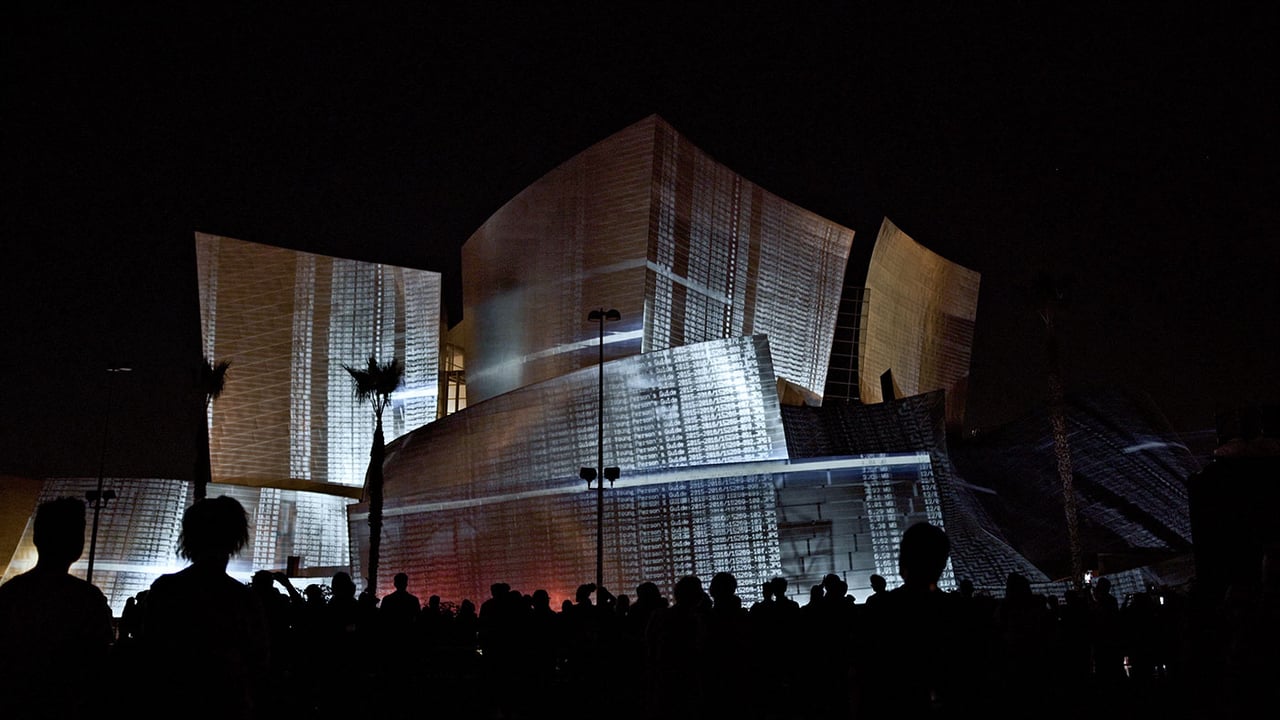
Four years later, Anadol’s career was taken to a new level when he made WDCH Dreams (2018) using machine learning on the LA Phil orchestra’s digital archives, and projecting the resulting narrative onto the full external breadth of the hall’s distinctive titanium “sails”.
Part of Erkılıç and Anadol’s embrace of their home city relates to one of the main strands of their studio’s work since 2014; its commitment to the marriage of art and architecture. That concern is a useful prism through which to view multiple elements of the studio’s development: the timeline of its rise to global attention; the scale and spectacle of many of its projected works; the high seriousness of its work and concern for showing process, especially as it concerns the ethical gathering and handling of data for the practice’s AI models.
“Over the years,” Anadol said during the AI ethics session at the Schwarzman Centre in May 2026, “we learned that using light as a material and architecture as a canvas allowed us to see new forms of art that are perhaps hard to perceive in an exhibition setup.”
“We learned that public art, one of the most inspiring forms of art, brings people together without any concern about background, culture, or ages.” (Refik Anadol)
Erkılıç and Anadol first experimented with media art in gallery spaces, during their early life and education in Turkey, working with data gathered from the natural forces of tides, temperature and wind, in a conjunction of interdependent natural and built environments.
While still an undergraduate at Istanbul Bilgi University in Turkey, in 2008, Anadol saw the idea of embedding media art in architecture as “the ultimate dream”, and he has since defined his AI data paintings and AI data sculptures as “site-specific, three dimensional, dynamic sculptures at the intersection of architecture, media art, light studies, and AI-based data analysis”. Many of Anadol’s experiments in dreaming with archive-based AI have related to “making a building ‘dream’” as an immersive installation with the help of AI”.
Anadol’s concern for showing process in AI data sculptures — to demystify the collecting of data by showing, stage by stage, its ethical sourcing and responsible use — has been apparent in RAS’s exhibitions since 2022 and beyond. In 2023 Anadol spoke to Right Click Save about the importance of “demystifying AI and machine decisions in general”. “As an artist,” Anadol said, “my role is to take responsibility. In every exhibition we do, we dedicate one major space to demystifying where the data comes from, which algorithms we use, which AI domains we are researching”.
Refik Anadol, WDCH Dreams (2018), projected on to Frank Gehry's Walt Disney Concert Hall, Los Angeles (2003). Courtesy of Refik Anadol Studios
That journey with architecture has engaged with scale: from intimate VR, in a first-generation Oculus Rift headset (2013-14), to exo-architecture on a colossal scale at The Sphere, Las Vegas (Machine Hallucinations — Sphere, 2023); to large conference halls at the World Economic Forum, Davos (2023-25), and the United Nations headquarters, New York (Large Nature Model: Coral, 2024); to a floor-to-ceiling interactive archival narrative in Agnes Gund Hall at the Museum of Modern Art, New York (Unsupervised, 2022-23); to data stories projected onto landmarks like Casa Battló, Barcelona (In the Mind of Gaudí, 2021, and Living Architecture: Casa Batlló, 2022), as well as Gehry’s Walt Disney Concert Hall in Los Angeles.
“Casa Batlló”, Anadol wrote on Linkedin in January 2026, “was our proof of concept—a moment where Gaudí‘s masterpiece building became a living memory ... Now, that philosophy expands into an entire reality. At Dataland, living architecture isn’t just one iconic facade—it’s a permanent ecosystem. Inside our Living Galleries, the Large Nature Model doesn’t just display data; it dreams it …. Casa Batlló was the door. Dataland is the world beyond it.”
A decade’s worth of RAS’s architectural work was brought together in the Large Architecture Model (LAM), launched in March 2025, at Guggenheim Museum Bilbao, with Living Architecture: Gehry. The work incorporated data taken from the archive of the LA-based architect’s 65 years in practice, along with a mass of ethically accessed open-source architectural images, combining them with data in the Large Nature Model.
Anadol’s collaboration with the California-based tech giants Google and Nvidia has underpinned the ambition of the AI data sculptures that the studio has been able to offer to the world over the past decade.
At Echoes of the Earth: Living Archive at Serpentine Galleries, London, in 2024 the studio used a data process wall to show radical clarity on the raw data sources and functional make-up of the Large Nature Model.
Echoes of the Earth: Living Archive in the close-coupled quadrangular spaces of Serpentine North showed that architecture can be intimate, confiding and at one with nature, as the Amazon birdlife of the AI model felt ready to fly free into the surrounding urban oasis of Hyde Park, central London, in a symbiosis of built and unbuilt ecologies of nature and architecture.
Speaking of the process walls, or process videos — there was one on show at the Schwarzman installation — Erkılıç tells Right Click Save that they are looking at turning them into a learning program at Dataland. “And we can start talking about AI, what we know, or invite people who are pioneers in the field and share their knowledge with the public.” She sees that as a way “to start the discussion and conversation around AI because all we know about AI is from the mainstream media” and the products of the big tech giants, rather than the bespoke models, and data sets within them, created by RAS, Anna Ridler, and other artists.
At the same time that Anadol and Erkılıç were attending discussions of AI ethics at Schwarzman and presenting Dataland to the wider world, other leading digital artists have been engaging with the expansion of institutional ambition and the academic and public discourse made possible by it.
Anna Ridler presented her own AI art commission at Schwarzman at the same time as the launch of Archive Dreaming. She unveiled “Anna Ridler: A Perfect Language of Images” (until August 25, 2026) at the center in company with Professor Daniel Grimley, Head of Humanities at Oxford University, in a further demonstration of how the Schwarzman enables an historic university to work directly with contemporary artists. Shortly after, Beeple, in northern California for his mid-career exhibition, “BEEPLE: / INFINITE_LOOP”, at NODE, was addressing AI and creativity at Stanford, the academic powerhouse behind the rise of Silicon Valley.
Anadol sees RAS’s work as sitting in a triangle of art, science and technology, and "contributing to the academic discourse, contributing to the discussions and concerns and problems and questions, but also showing a way, a new way of looking at these new technologies. So I think it's doing its work.” Though, he says, artworks do not “need to do” such work; they do not need to have a pedagogical or instructive function.
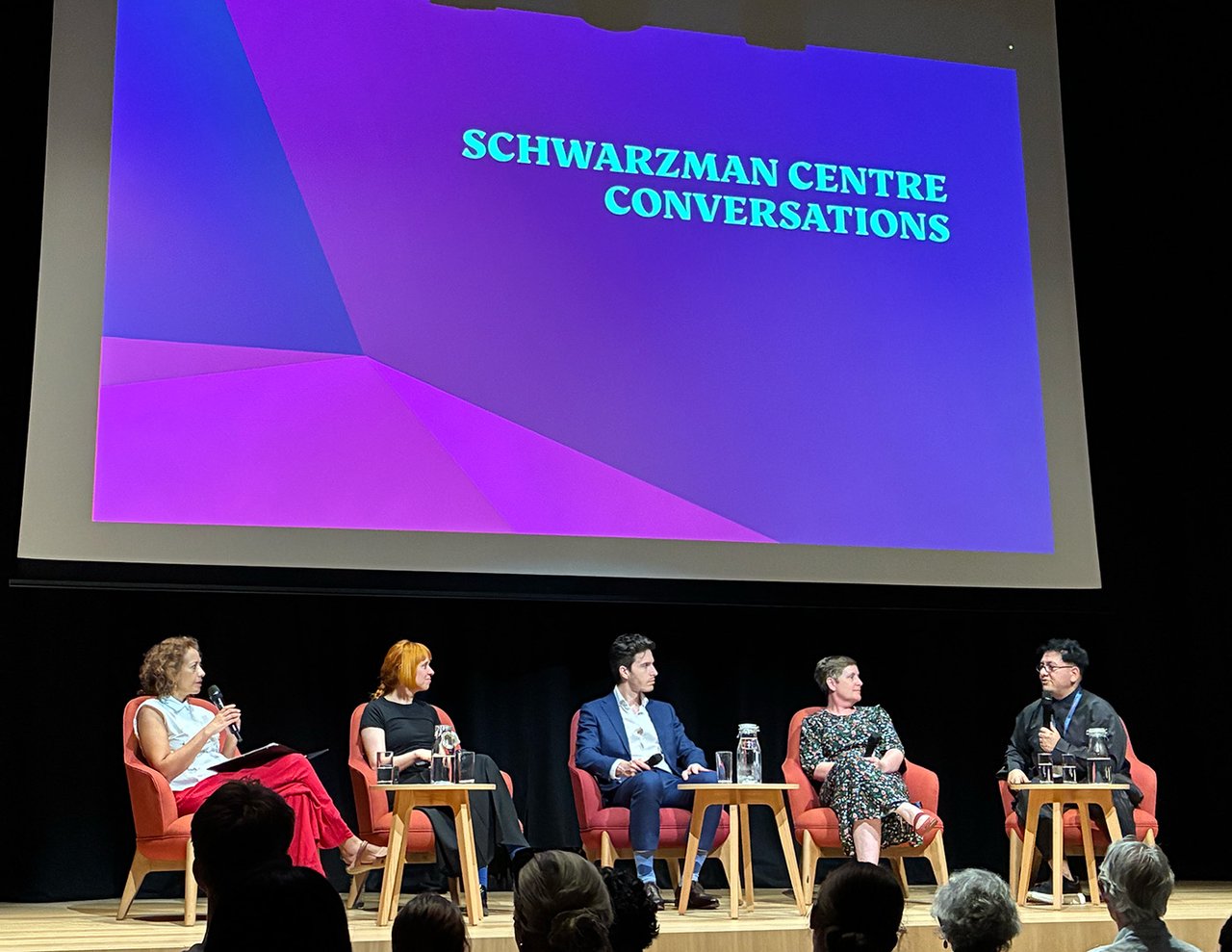
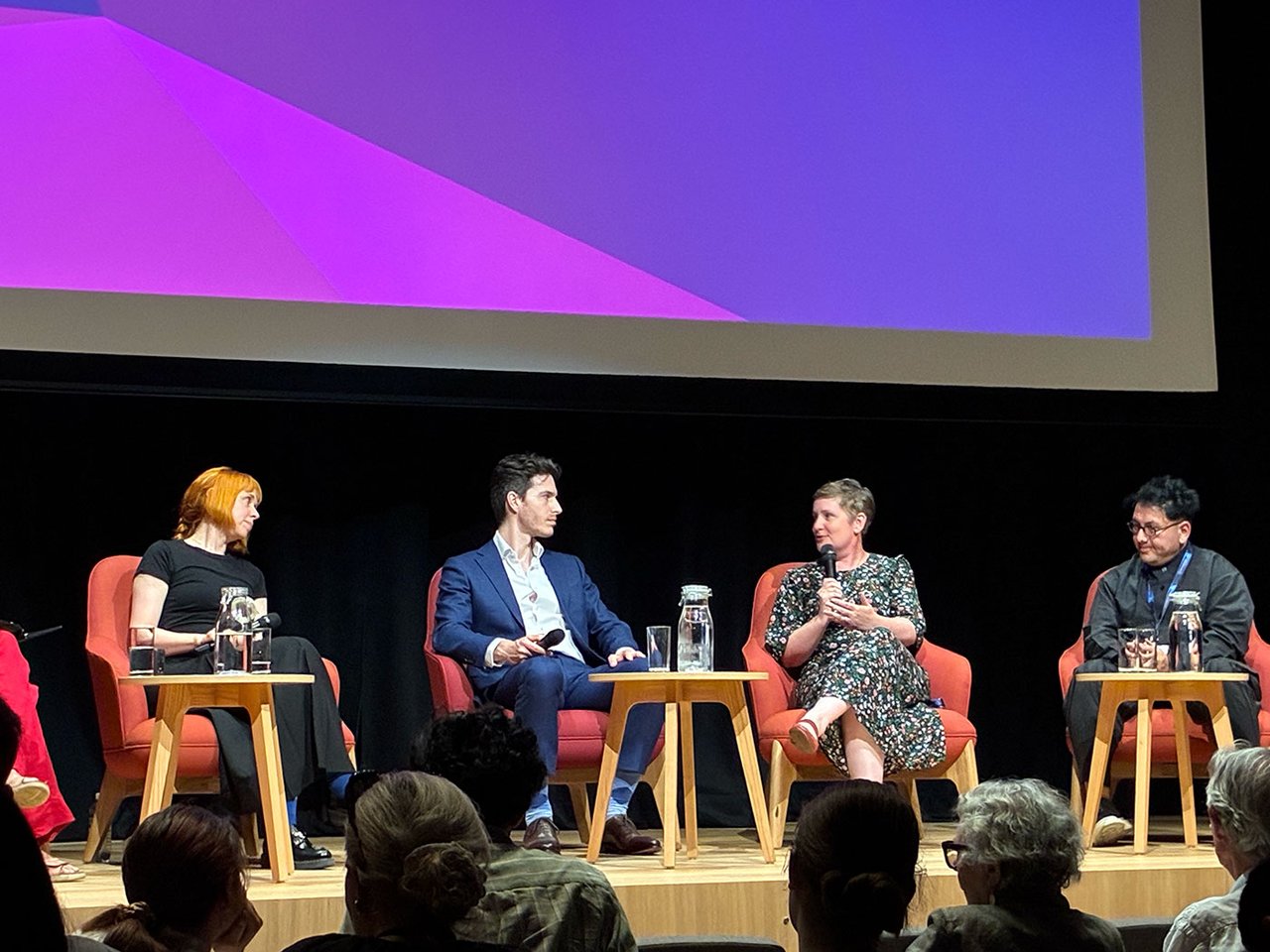
Anadol went on stage at the Schwarzman Centre on May 28, 2026, in company with the artist Holly Herndon to discuss “AI, Creativity and Ethics”. They were talking with Professor Raphaël Millière, of the Institute for Ethics in AI, Oxford University, and Dr Kathryn Eccles, of the Oxford Internet Institute. The conversation was moderated by the broadcaster Samira Ahmed, presenter of the flagship BBC radio arts program Front Row.
The discourse was a demonstration of the worth of bringing artists as informed and thoughtful as Herndon and Anadol together with the academic rigor of Oxford University and the journalistic rigor of the BBC. It was a moment when the long-term societal value of the physical and intellectual architecture of institutions such as the Schwarzman Centre was demonstrated in uniting artists, scholars, and a critically engaged public, drawing on a genuine variety of generational experiences, to shed light on existential issues of the day.
Millière characterised his work as examining the “rich middle ground” between the view of AI good and AI bad, “and that's where I sit with my work, try to do good empirical research to arbitrate these difficult questions about the capacities and limitations of current and future AI systems”.
Millière stressed the importance of language, and the definition of terms and shared his interest in the intersection of AI and art, and how he has been “thinking for quite a few years about how pioneering artists like Holly and Refik and others using AI are blurring the boundaries between creation and curation in really interesting ways”.
The broadcaster Samira Ahmed (left) moderating a conversation on “AI, Creativity and Ethics” at the Stephen A. Schwarzman Centre for the Humanities, Oxford University, on May 28, 2026, with (from second left), the artist Holly Herndon; Professor Raphaël Millière, of the Institute for Ethics in AI, Oxford University; Dr Kathryn Eccles, of the Oxford Internet Institute; and Refik Anadol. Photography by Right Click Save
At one point, Ahmed intervened to ask what Anadol meant by his assumptions that “machines are hallucinating and machines are dreaming”. Even the best model in the world can make things up,” Anadol replied. “We are feeling, seeing, hearing, sometimes smelling new realities. I think we may need to define a name for this era, for this feeling. I'm calling it generative reality. These systems are creating realities.”
“But they're not realities, are they,” Samira Ahmed interjected. “They have the appearance of being real, but it’s not real.”
For his response to this challenge, Anadol drew on his experience of working with students, where two of them might have developed different expectations of an AI model’s behavior, and how that is affected by how the model is used. “The more we expose and demystify these tools,” he said, “the more the chance of ‘biased’ tool usage” may be reduced.
Eccles said she felt it is important to let children and students have “lots of different experiences and empower them to be curious and critical about the tools that are in front of them. That's what we try to do with our students who are under enormous pressure in university. They have these incredible tools at their disposal, they're heavily encouraged not to use them in many ways. But how can we understand what these tools are without using them?”
A conversation on “AI, Creativity and Ethics” at the Stephen A. Schwarzman Centre for the Humanities, Oxford University, on May 28, 2026, with (from left), Holly Herndon; Professor Raphaël Millière; Dr Kathryn Eccles; and Refik Anadol. Photography by Right Click Save
Eccles said she felt lucky to have Herndon and Anadol present in the conversation because their work with AI models shows what it means to push these tools “so that we can understand where we feel comfortable with their use or very uncomfortable with their use”.
Anadol’s final contribution to the discussion was to describe a pop-up session that the Dataland team held in Los Angeles in December 2025. For a generation that grew up with the internet, and with the technologies that have come since, it is important to remember, he said, how intuitive that felt. He feels the same thing will happen with upcoming generations “born in the age of visual intelligence”.
“We opened our AI model to the public and 1500 people came,” he said. “The majority were families. And parents were so [happy] to see their children doing awkward things with the model in a fun way, like asking interesting questions [about] the flying unicorn […] But what was fun was [to see families] enjoying in a public setting a kind of artwork that allows the young ones to interact with a new ‘being’, and to be present without fear… I heard a lot of joy.”
Refik Anadol (b. 1985, Istanbul, Turkey) is an internationally renowned media artist, director, and pioneer in the aesthetics of data and machine intelligence. He is the Director and co-founder of Refik Anadol Studio in Los Angeles, the Artistic Director and co-founder of DATALAND, and teaches at UCLA’s Department of Design Media Arts. Anadol’s site-specific data paintings and sculptures, live audio/visual performances, and immersive installations take many forms, while encouraging us to rethink our engagement with the physical world, public art, decentralized networks, and the creative potential of artificial intelligence. Anadol’s work has been exhibited at venues including MoMA, Guggenheim Bilbao, Centre Pompidou-Metz, Serpentine Galleries, National Gallery of Victoria, Venice Architecture Biennale, Hammer Museum, Arken Museum, Casa Batlló, Dongdaemun Design Plaza, Daejeon Museum of Art, and Istanbul Modern. www.refikanadol.com
Efsun Erkılıç (b. 1982, Istanbul, Turkey) is a visionary artist, producer, cultural researcher, and co-founder and Chief Strategy Officer of DATALAND, and co-founder of Refik Anadol Studio. With a career spanning over a decade, Erkılıç has been the Executive Producer of multidisciplinary artworks at more than 80 venues worldwide, ensuring the seamless blend of human-machine collaborations and high-quality execution in every step of the Studio’s interdisciplinary projects. Erkılıç is also an established painter. Her work captures an eclectic spectrum of colors and shapes, chronicling her myriad mystical, inner, and physical odysseys. Beyond her visual art, Erkılıç crafts performance pieces that meld bodily expression with philosophical insights into the human condition. She holds a BA and MA in Visual Communication Design from Bilgi University, Istanbul.
Louis Jebb is Managing Editor at Right Click Save.