·
Five years after 2021: Where is digital art heading to?
PG
Pierre Gervois@pgervois3 months ago
Okay, let’s address the elephant in the room. We all have this nostalgia for the extraordinary moments we were part of in 2021, when we witnessed an explosion of art conversations catalyzed by the arrival of NFTs in mainstream discourse and their use as vessels for artworks. Suddenly, and without warning, poets talked with painters, sculptors with photographers, musicians with visual artists, and many friendships were formed in the burgeoning Web3 art community.
Following the collapse of the NFT market in 2022, we pretended that this very real, documented collapse did not happen and kept our enthusiasm for a few years, until the slow, drip-like cessation of activity across the majority of NFT marketplaces became an inescapable reality check. There was no more sizable market for NFT art collectors.
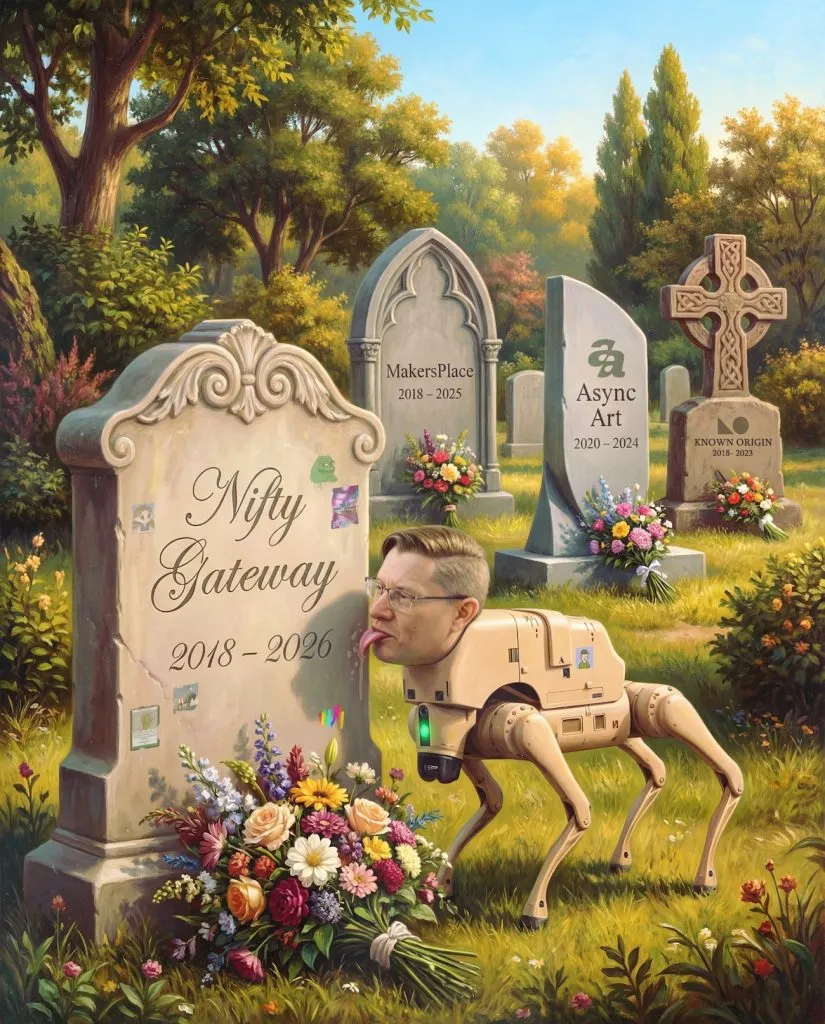
Beeple (2026)
I recently had the curiosity to do a deep dive into the accounts I was following on X, related to NFT and Web3 art. A majority of them have ceased to post in 2024 or 2025. Some of my close artist friends who were very active in Web3 art have completely left the space.
We have all noticed that the frequency and the quality of our engagements about Web3 art on X have severely decreased, year after year, since 2022.
In the same timeframe, many digital art institutions in Western Europe, the Middle East, and the United States have flourished and have presented cutting-edge digital art installations, made for collective, public enjoyment.
What failed spectacularly is the idea that a growing number of individual collectors were going to collect tokenized digital artworks and display them in their homes through specialized screens, similar to framed drawings or paintings on canvas. This did not happen. Displaying NFTs on a regular television does not look good, and specialized screens made to showcase NFTs were way too expensive and clumsy to use at home for a large audience.
As an NFT collector myself (in a very modest way), I’m enormously frustrated by the practical inability to live and enjoy my favorite digital pieces in my collection the same way I live with paintings, sculptures and drawings. And I’m not alone. I had many private conversations with other NFT collectors who experienced the same frustration.
What succeeded spectacularly is the use of digital art for public art and collective experience, through large-scale, immersive displays, whether inside a museum or on a building. Dataland, created in Los Angeles by Refik Anadol, is one brilliant example. Mad Arts Museum in Fort Lauderdale, FL, is another one.
What I believe - and I welcome criticism - is that public art will be the best use case for digital art going forward.
What do you think?

I think that NFTs specifically experienced what the crypto space experienced in 2017, its first mainstream break.
I remember people mass-exiting during the 2018-2020 bear and many “normies” declaring crypto to be dead after the bubble had popped. But almost 10 years later crypto isn’t just here, it has grown multiple times in size, it attracted millions of new participants and it has become more legitimised through new laws, institutions and more.
I believe the same is happening and will happen to NFTs. The moment they prove that they weren’t a fad and “a firework” they will begin attracting a large amount of new participants and parties interested to build the rails in order to make NFTs more accessible to the average joe. The institutions never stopped caring but the main issue for NFTs is that liquidity dried up. But that is normal when the majority of people collecting NFTs depended on crypto to do well in order to collect. Things will turn around eventually and these collectors will become active again, with hopefully new entrants coming in as well. It was never a viable solution to not try and attract traditional art collectors or even normal people who weren’t collectors before, and just rely on crypto native collectors.
Digital Art has been a thing for dozes and dozens of years, NFTs were just a chapter in that story and that story is far from done.
Thank you Giannis for your input