Landscape as Memory | Connie Bakshi’s “Black Water”
Nora N. Khan talks to the artist about her web-based interactive film Between These Black Waters
Nora N. Khan and Connie Bakshi
Nora N. Khan talks to the artist about her web-based interactive film Between These Black Waters
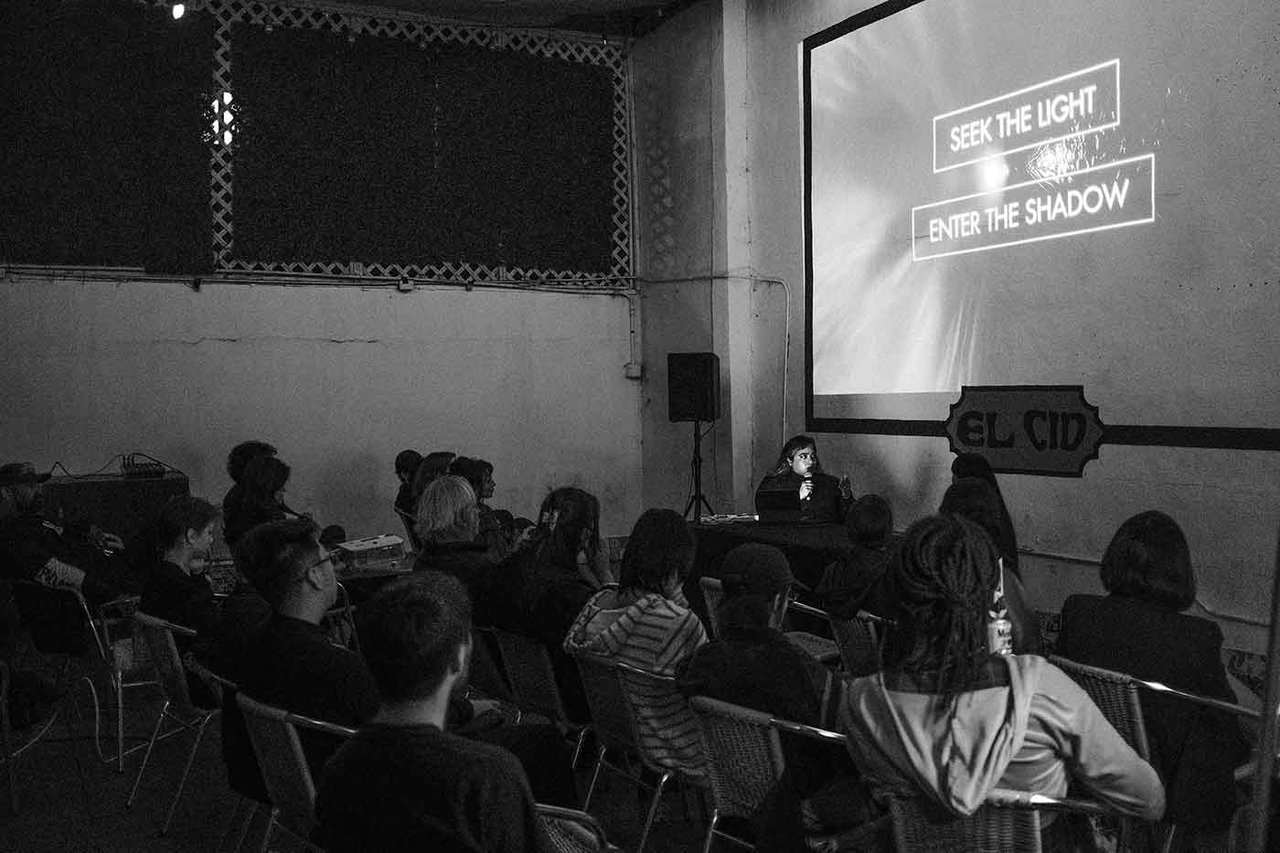
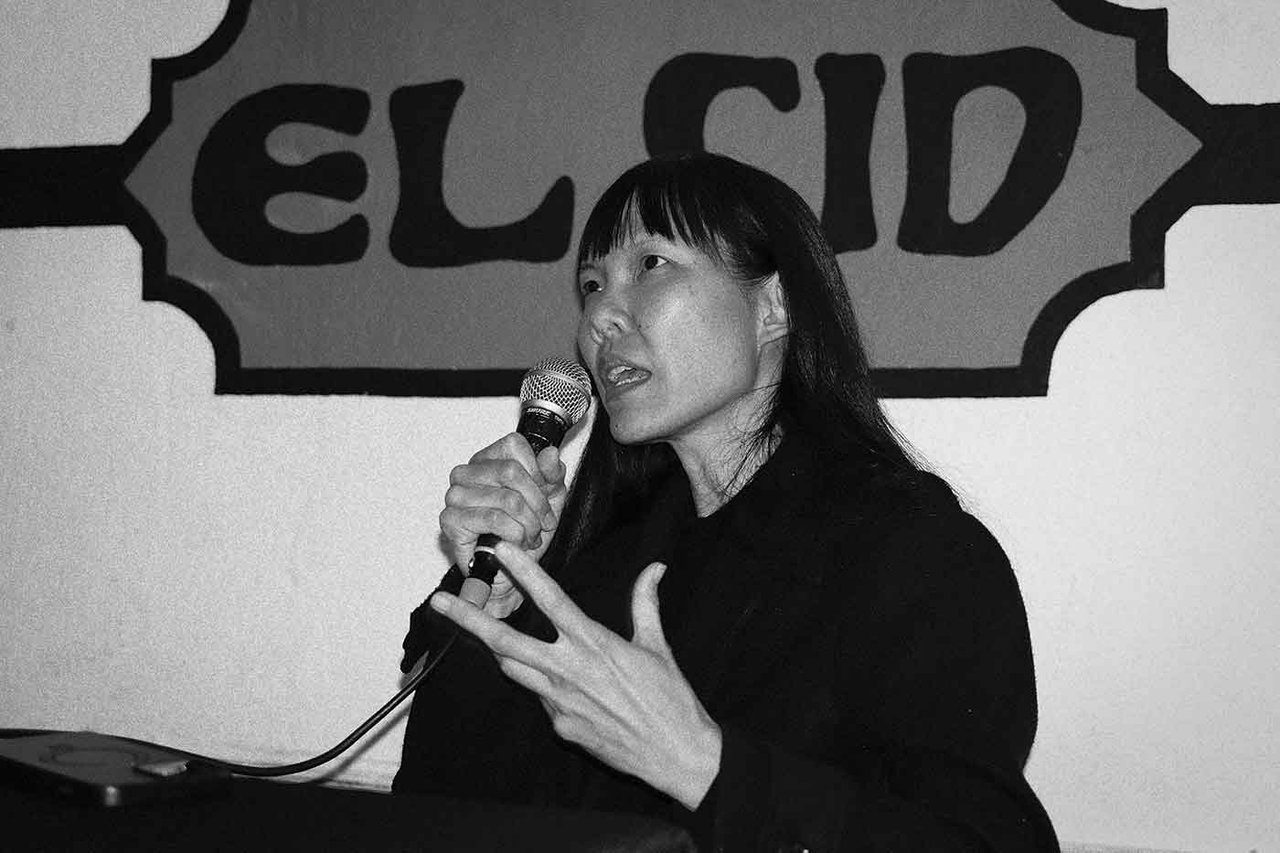
On April 21, 2026, the digital art community Catalyst LA and the virtual exhibition space EPOCH presented a conversation between the Taiwanese-American artist Connie Bakshi and the critic and curator Nora N. Khan, centered on Bakshi’s new web-based interactive film Between These Black Waters (2026), which is now on view at EPOCH. The event was held at the performance and event venue El Cid, on Sunset Boulevard, Los Angeles. The following transcript of Khan and Bakshi’s conversation has been edited for clarity and length.
Nora N. Khan: Connie Bakshi has a wide-ranging artistic practice that moves through her interests in diasporic memory, ancestral knowing, the mythos of power, the influence of machine intelligence, and the promise of autonomous choice. She rigorously questions what becomes legible when dominant codes break down. She has exhibited internationally at HEK Basel, bitforms, Feral File, the Knight Foundation, and is regularly invited to speak on the state of art and AI.
First, Connie is going to speak about her work.
Connie Bakshi: You awaken. There’s nothing before this moment. No memory of arrival, of origin, of who or what you are. Between These Black Waters follows an entity that wakes up in exactly this condition. It wakes in an abandoned world. It’s a world that’s procedurally generated, it’s structurally intact, and it’s built without this entity in mind. The system that runs the world, it’s still running. And it’s looking for something. What it’s looking for and what’s standing in front of it aren’t the same thing.
The piece begins with an incantation, a single phrase whispered into AI again and again: “Black Water”. Not as a description, not as a query. As a summoning. (Connie Bakshi)
NK: I’ve been following your work closely for the last five years. This work feels like a significant move in your practice. You take a deep dive into interests that you’ve been consistently exploring: prompts, protocols, diasporic memory, as you probe our collective relationships with systems.
There’s a heady theory layer, too, as you materialize concepts from Ursula K. LeGuin, Sylvia Wynter, and Katherine Hayles. You’re asking what post-human life will look like, and what cognitive flexibility we will require in that future. What protocols of survival will we need to exercise?
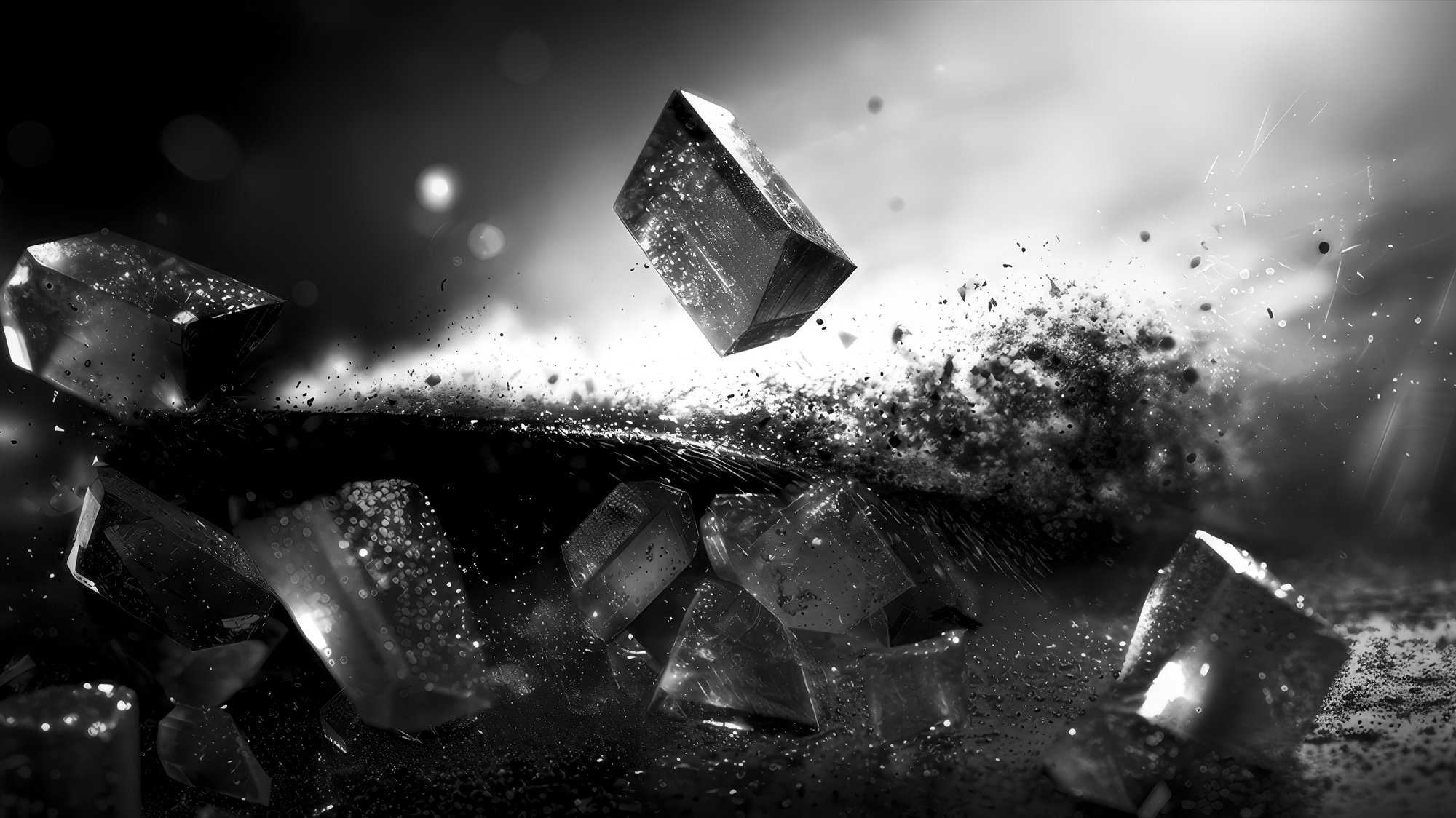
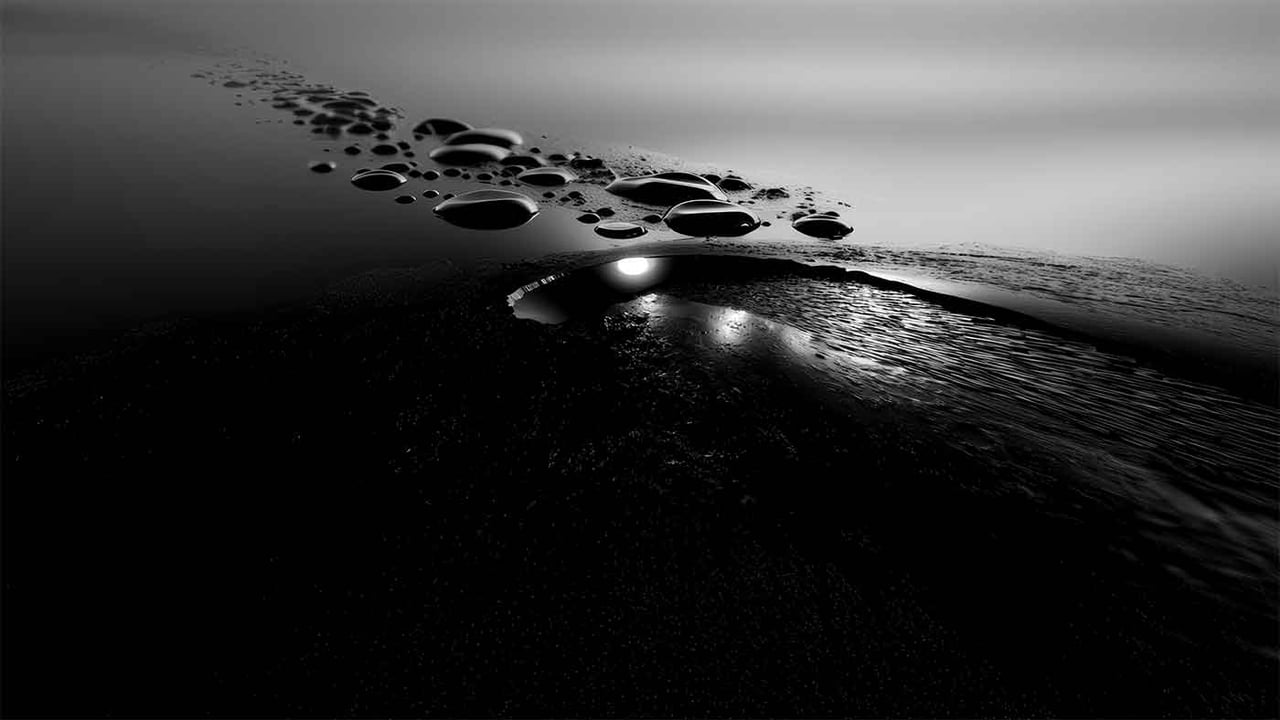
To set the scene of the work, we begin in a void: what one might read as oil at first, but then understand is a black ocean. You feel the terrain moving with your own movement. You’re given choices through the journey: you can choose between light and shadow. You can enter the water, and you can drink it at some point.
A core binary becomes apparent early on: the viewer can either wander, or they can come back to join the system of the known world. You watch these beautiful shapes and objects emerging on the edge of your awareness. (Nora N. Khan)
Second, you make an argument throughout for how hard it is to wander, to choose to be a wandering spirit. I mapped my own experiences of exile, immigration, and dislocation onto this world and felt them more viscerally.
Further, I was moved by the way that this abstract, symbolic landscape is designed for us to go inward. This tension might feel very familiar for many: either give in to the system, or keep trying to pursue an unknown territory.
And the third element [...] is that there are two competing narratives throughout. There’s the system’s code overlay [on screen], and then there’s the interior monologue of the narrator, and a conversation happening between them.
How did this work come about? Let’s start with “black water”. You mentioned in your opening that you whispered “black water” into a model to start this process of iteration. [...] What does this phrase mean literally and symbolically? How did it function for you as a prompt, to then become this incantation?
CB: “Black Water” to me invokes [...] the Black Water Ditch: the darkest passage of the Taiwan Strait between China and Taiwan. It was named “Black Water” because that was how it was understood by the people who had to cross it. Diasporic migrants that traveled between China and Taiwan associated black water with erasure. Black Water was named as such because of what it swallowed.
That’s one register: the crossing as a site of loss and layered displacement. When we look at the Black Water Ditch today, we’re seeing something a little bit different. [...] Taiwan is a post-colonial state that’s been navigating between imperial pressures for centuries. This has spanned history from the Dutch to Qing to Japanese occupations. But it’s currently in this condition of permanent geopolitical ambiguity. It’s claimed by China, it’s defended by American strategic interests, but it’s formally recognized by almost no one. I believe this set of conditions gave rise to the Taiwan Semiconductor Manufacturing Company, arguably the world’s most advanced semiconductor manufacturer. And this is so critical because the chips that run Nvidia’s AI accelerators; that are running our Apple devices; that are running most of the large language models that we work with — they are predominantly made in Taiwan. By a workforce in a post-colonial state, on an island whose future and whose identity is still being contested.
So the machine has bones. And those bones, they have a lived history. We don’t talk about this enough in mainstream conversations about AI. The machine is not neutral. It’s made of a material “somewhere”. (Connie Bakshi)
In my work, “Black Water” was always a double invocation between the colonial passage where the unnamed were swallowed and the maritime crossing, the heart of the present-day semiconductor industry and infrastructure that runs the machine. It’s two histories collapsed into one site.
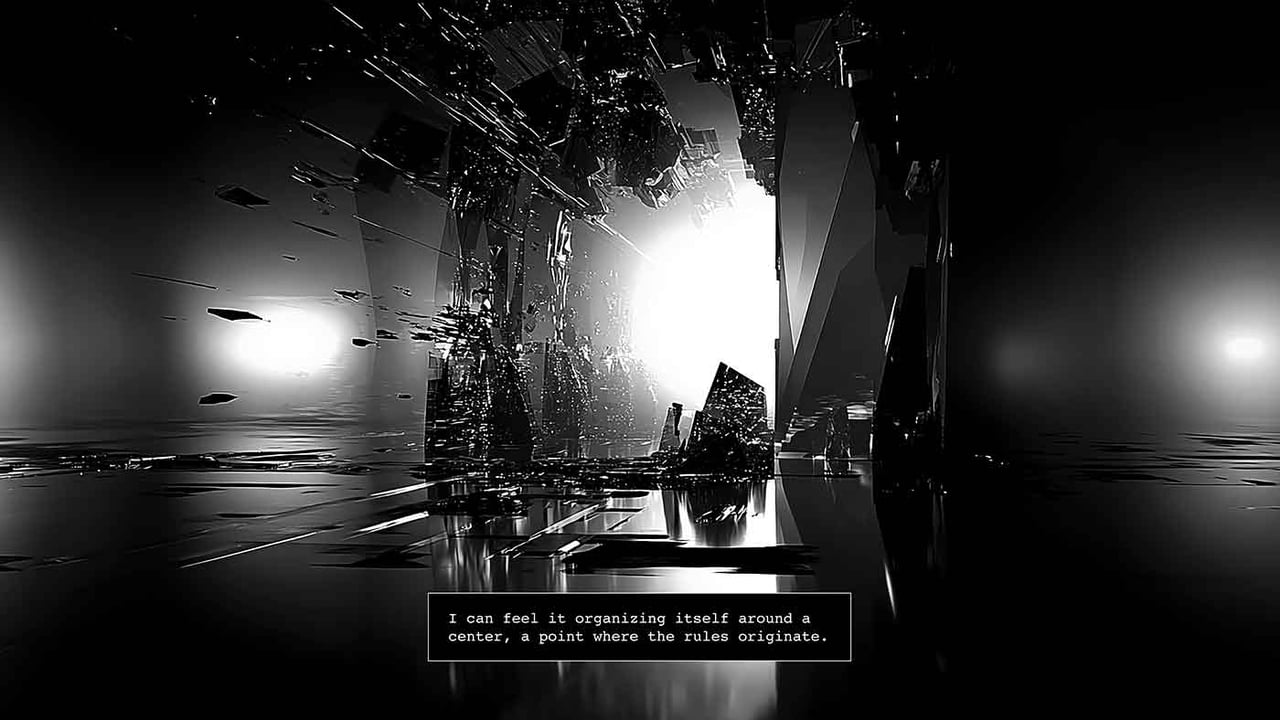
NK: Earlier, we talked about I Am a Strange Loop (2007), by Douglas Hofstadter. An incredible book about consciousness and the weird feedback loops our brain has to make to create a sense of an “I”. Our sense of a self is only made because our brains find symbols in the world, with which it creates an illusion of a self. This illusion of a self in relation to the landscape is a golden thread that we’re following through this piece.
I experienced your piece as precisely one of these strange loops, which you make possible to access through a psychogeographic landscape we wander. Our thoughts, as the protagonist, are made literal through the black water. (Nora N. Khan)
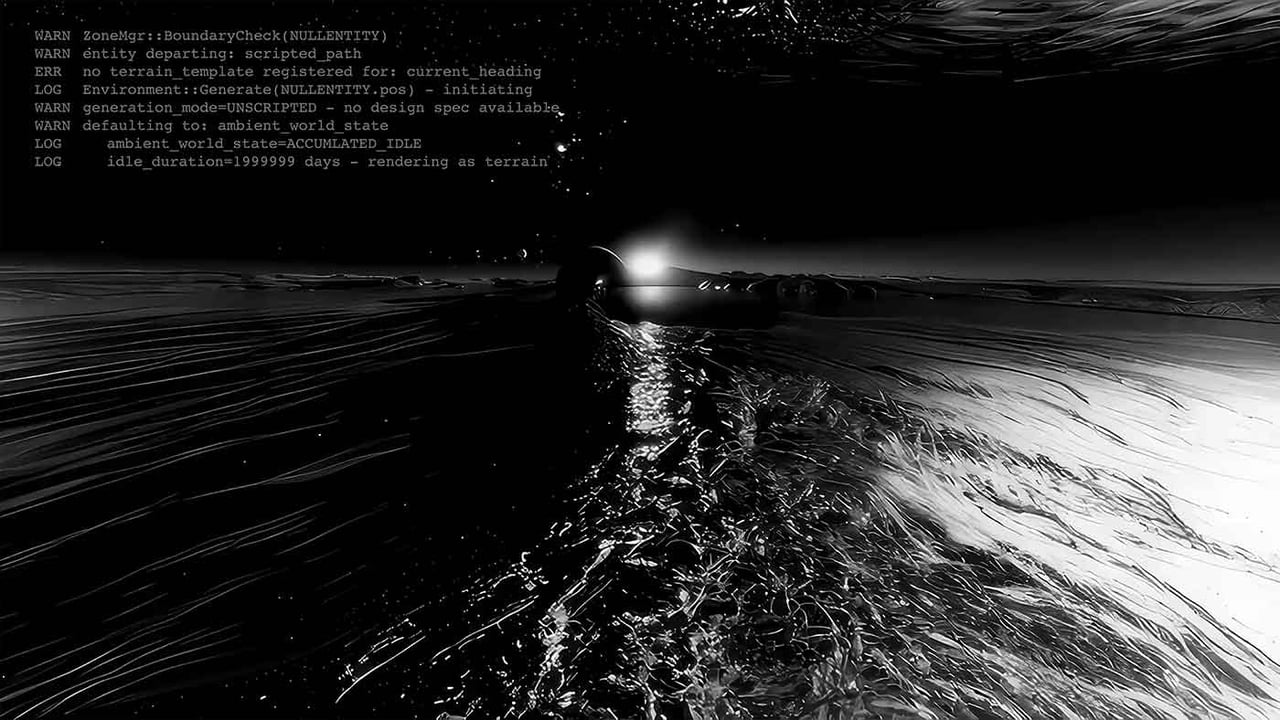
We see spheres, orbs, thresholds, fragments and voids. Importantly, we inhabit this self as, you term, a “null entity”. You also call it a “state without a witness”. In a programming context, a null entity is invalid. It’s no object state. In gaming, a null entity [...] haunts you, follows you through a game. And philosophically, a null entity is like the absence of being. I’d love to hear you talk about the null entity as it reveals these hidden protocols in the system.
CB: I love that you highlight the null entity because I think there’s a poetics to computation that reflects itself in the programming language. I was fixated on this idea of the null entity in the development of this work. You describe the null entity as absence of being, and I would emphasize that the null entity is not the same thing as zero. I would define it as an absence of value where value is expected as a return. The thing about the null entity is that it exists in system memory – it occupies space, it can move through code, it can trigger responses, and it can register as logs.
But when the system reaches for what the null entity is, what it’s for, what it should do, the code returns nothing. And I don’t think this is an error. It’s a registered absence by intentional design. What this says to me is that these system categories are not a true reflection of reality. (Connie Bakshi)
They’re a construction of decisions made in advance about the world in terms of what things exist and what value they’re expected to have. In Between These Black Waters, the system doesn’t discover that the narrator is null. It renders the narrator null simply because the system was built from a model of the world that didn’t account for this presence.
The null here is not a fact about the entity, it’s more a fact about the system itself. And I think that distinction is the whole argument. What gets seen, and what returns as null — those are products of the specific architecture that built the system. This is the condition the narrator wakes into.

NK: You design the world around a walkabout, our wandering and looping. This circular movement of coming back to chapters, moving out again, feels, to me, in tension with the procedural generation of the work. Could you speak on your design of the walkabout, this wandering, as it relates to cognition? How do you think of this style of cognitive mapping as a way of learning about the world, and about ourselves?
CB: [The term] walkabout originates in the Australian Aboriginal tradition where it’s a journey into the wild — the 40 days in the wilderness, essentially. Where one communes with the landscape and connects with it in a way that enables a sense of knowing about the terrain that you’re traversing as well as a knowing about yourself.
“Walkabout” has been taken on as a colloquial term to speak about these paths, the paths that we might traverse again and again, and reflect upon ourselves. Each “walking” reveals something different. (Connie Bakshi)
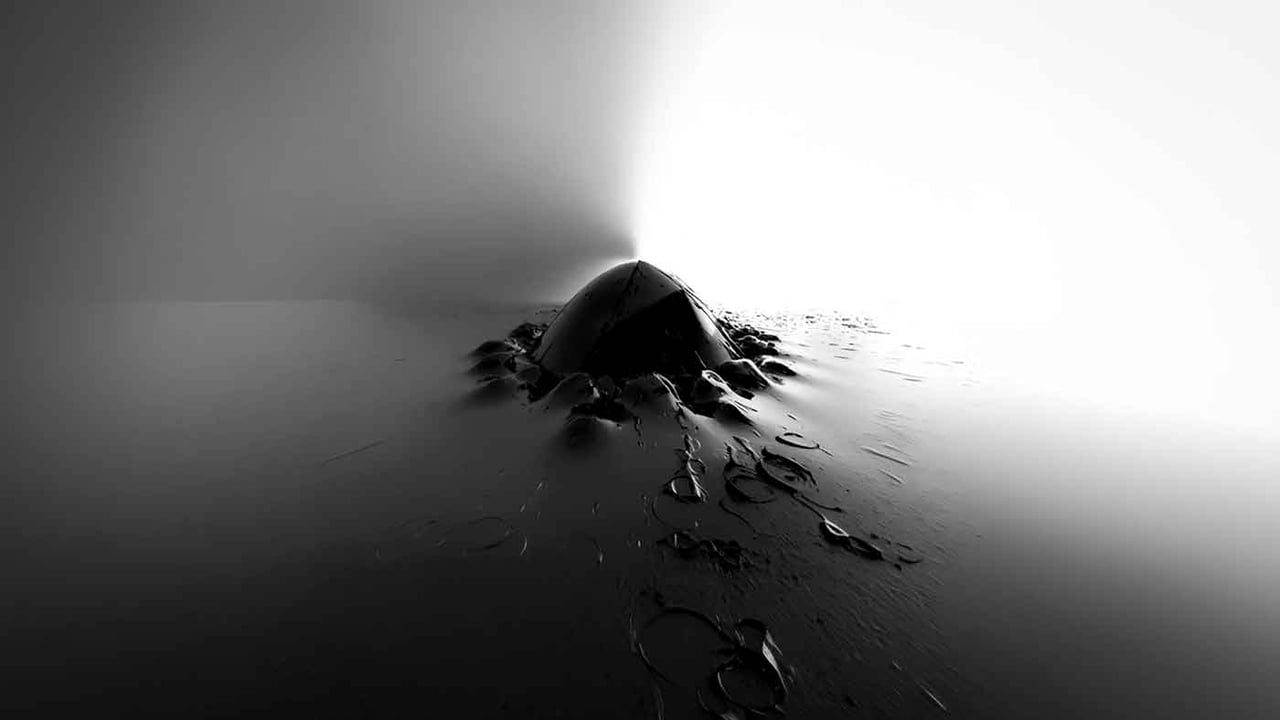
NK: Yes. And the landscape itself is not still, at all. The waters are roiling. It’s wildly active and alive. You talk quite a bit about the system gazing back at us. Can you talk about how you use procedural generation?
CB: This is so much of the development of the piece. When I think about the procedural generation of any constructed world, it’s the algorithmically-shifted terrain, it’s the physics of architecture, the logic of how certain spaces connect.
They are all produced from weighted probabilities from existing data. This world of Between These Black Waters isn’t actually built. It’s grown from a seed. And a seed is what the system already knows, which is inherently shaped by these historical conditions and these patterns of inclusion and exclusion. So these kinds of worlds already have an inheritance before anybody even steps into them. And the governing logic of this world is taking every aspect of this inheritance and executing it — as literally as it can. That’s how procedural generation actually shows up in the development of Between These Black Waters.
The work was grown from a process seeded with the same material: “black water”. It’s a phrase with more weight than the system can account for. And what generated from that seed was a world that has the structure of memory, but not the substance of it. (Connie Bakshi)
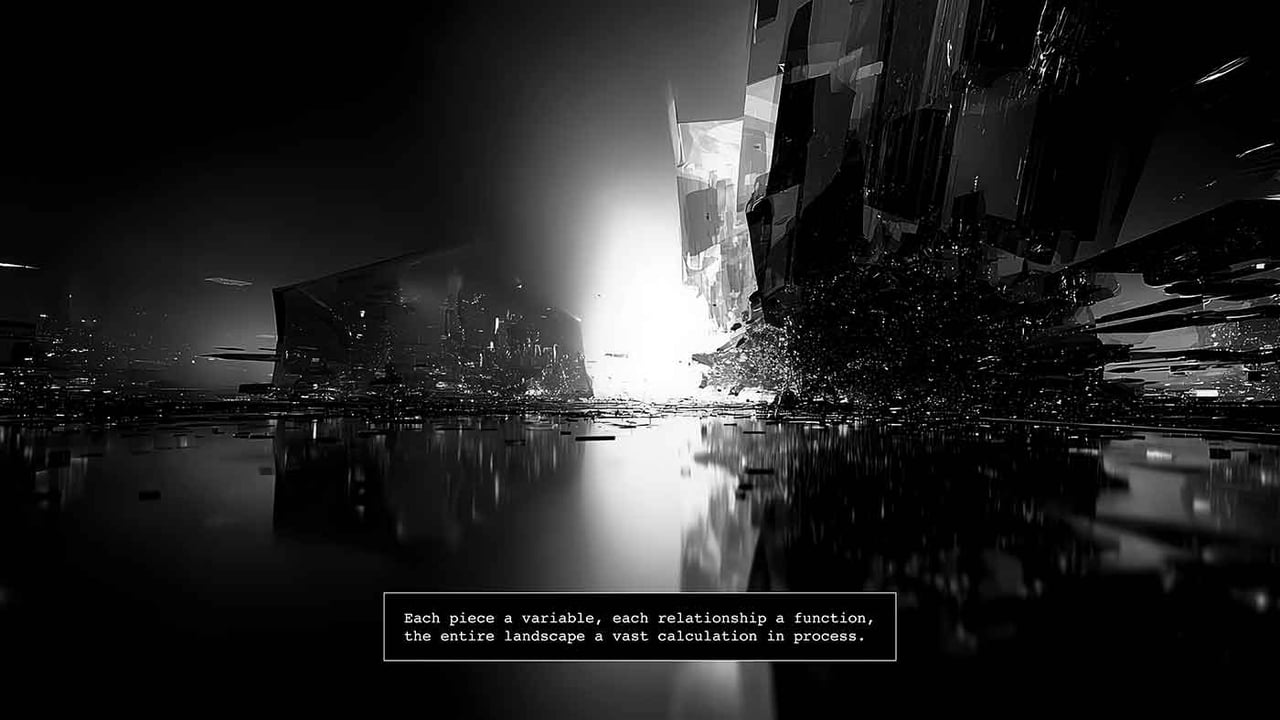
The world responds to black water, but it responds imprecisely, and only at the resolution that the data supports.[...] The incantation wasn’t just seeded into a generative process and permitted to run on repeat. It’s the persistent condition of the terrain that emerged in every step of the development process. Every space that the narrator moves through, that’s the “black water” still present in the material and in the bones. What the system can’t contain doesn’t disappear. It persists as pressure, and then as residue where classification breaks down – where the knowledge of the system stops short. That residue is a signal of structural blindness, and that’s what procedural generation actually makes visible.
NK: I want to return here to memory. [We had] a conversation about how this piece deals with “debris memory”. This is a walkabout through the debris of memory. That memory shows up as fragments, as silicon fragments, as little shards throughout the piece. There is an intentional lack of narrative specificity as a result. Could you talk about the role of memory fragments in the work?
CB: To talk about memory, you have to talk about landscape. The landscape that the narrator moves through, it looks like terrain, but it does function like memory. As you said, it’s fragmented, it’s non-linear.
Specifically, you’re landing in certain coordinates and there’s something in the space that feels significant. And you can’t really figure out why, and you move through it anyway. That’s the diasporic condition rendered spatially. (Connie Bakshi)
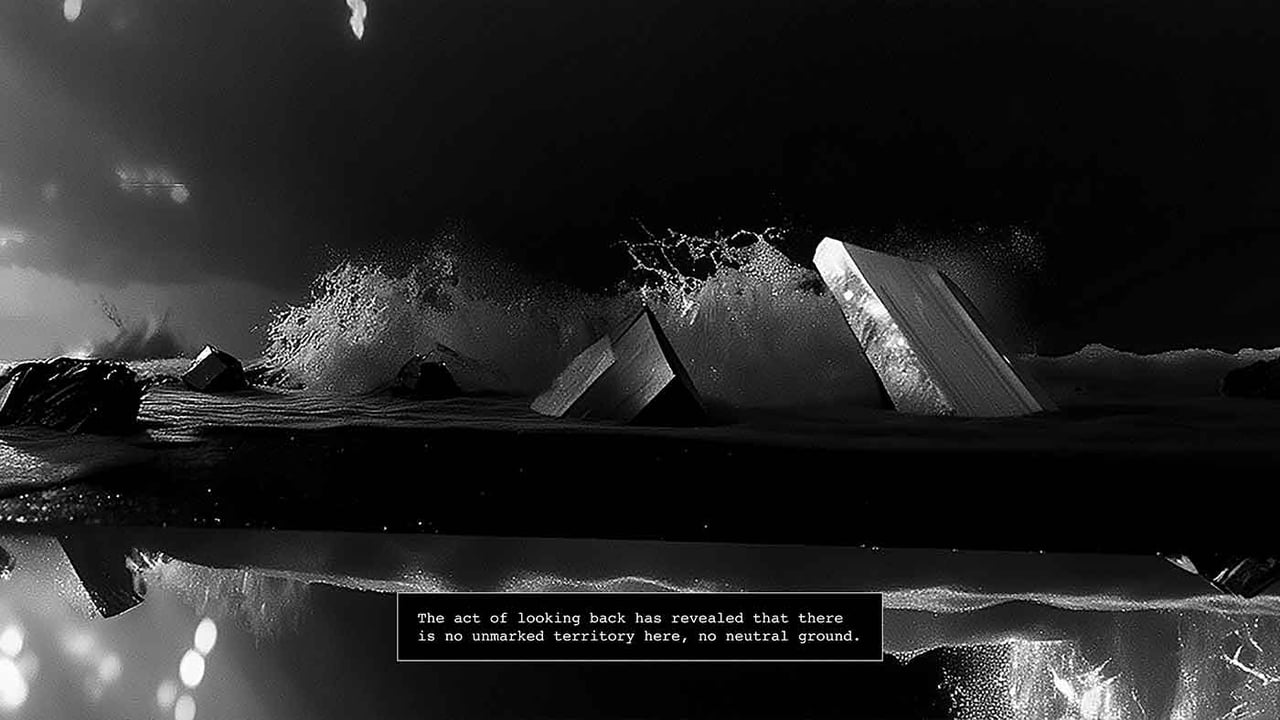
The thing about diaspora is that it produces a very specific relationship to object and memory. You inherit these fragments. They’re bits and pieces of things that were important once, in a place, in a language, within a set of practices that you may or may not have access to anymore. You carry them without really knowing what you’re carrying or what it cost to carry them this far. You carry them and you walk with them — not because you’re looking for a destination, but because the knowledge is the movement. It was never separable from the passage. The carrying is how you know what you’re carrying. So knowing and moving are the same act.
[The act of moving] generates and creates something in the passage that didn’t exist before. It’s something that couldn’t have existed without the movement itself. Because the terrain is changing, our memory is not fixed. We’re remaking it, retelling it to ourselves. There’s this natural feedback loop and act of becoming that occurs when you’re moving, when the landscape is shifting in response.
In the context of Between These Black Waters, I believe there’s something powerful about this process — where each choice changes not only the landscape, but also what the null entity is before the system can finish classifying what it was. In that sense, memory, movement, and agency are inextricable from one another. (Connie Bakshi)
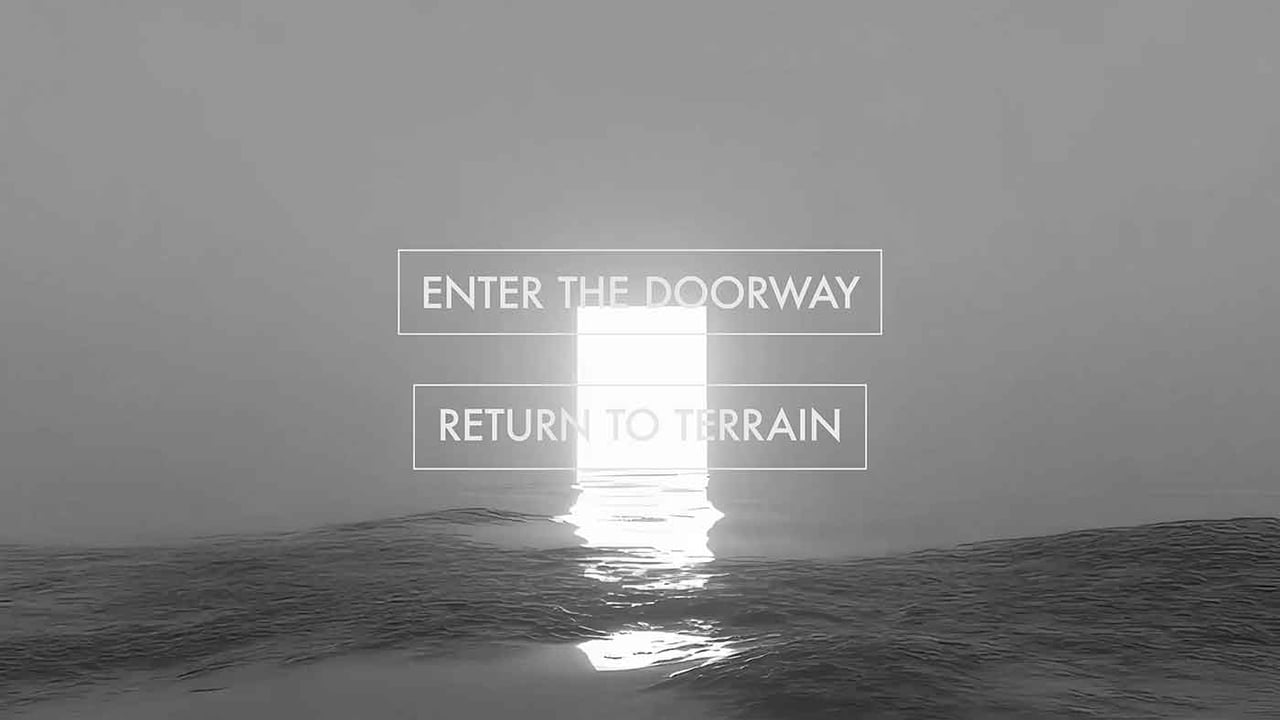
NK: Each time I got to [the end] of the piece, I found the restart very moving. The work insists on a lack of resolution and the importance of restarting. Let us close by returning once more to the strange loop. We are each a system that can ever learn to see differently, by taking one more journey through the symbolic landscape. How did you think about your future players’ strange loops, which they would be inevitably be experiencing?
CB: When I think about the players and how I wanted them to experience the work, I think about how often, in the stories that we tell ourselves, we assume movement towards a finite resolution, towards a definite ending.
What fascinated me about the loop is what it reveals: that you haven’t finished with these crossroads. The loop isn’t asking you to repeat the same choices under the same conditions. It’s asking you to return and choose your way forward with the experience you’ve accumulated. That’s not a failure to advance. It’s a different understanding of the objective of a journey. (Connie Bakshi)
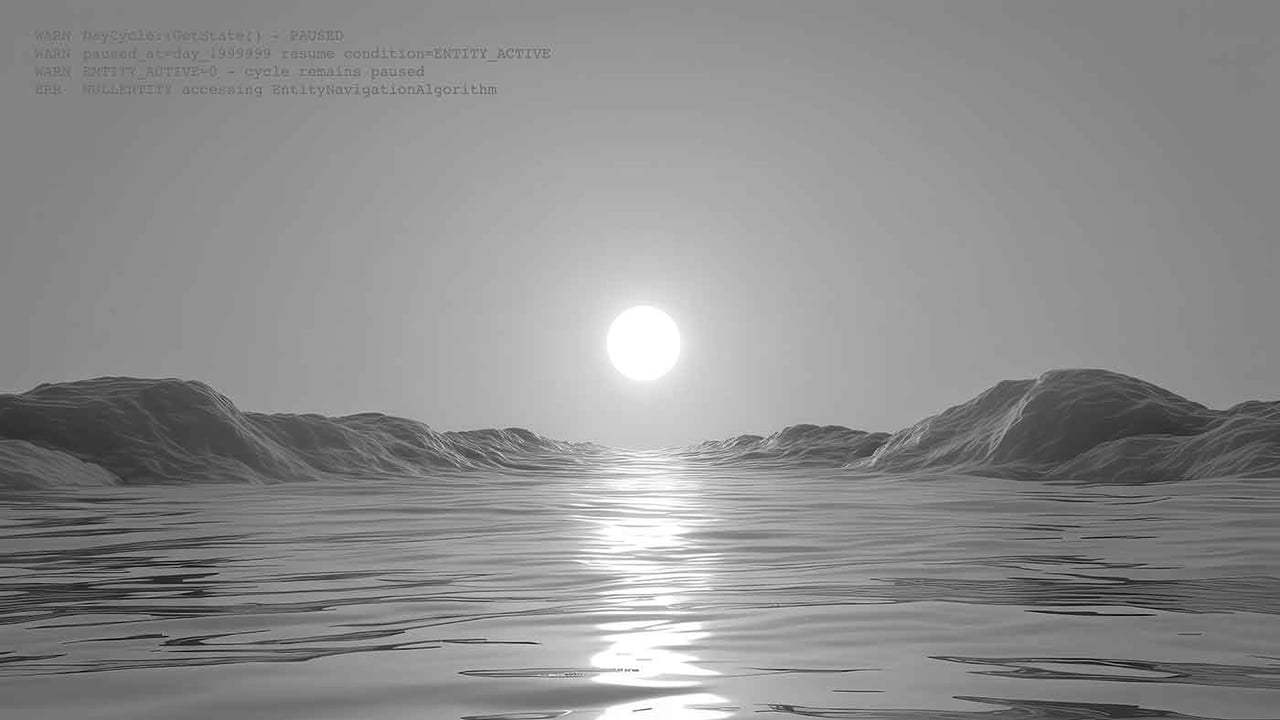
The second time that you move through the piece, you’re carrying the memory of the first time that the narrator can’t. And the narrator has no record of prior paths. You do. Which means that on the second pass, you’re not playing the same piece. You’re playing the piece in conversation with your prior experience of it. This iteration, this repetition, this recursion is actually where the work lives.
Between These Black Waters becomes more visible across multiple runs. Your experience spans different choices, different endings, and different paths, but moves through the same world. You, as the audience, are doing something that the narrator can’t. You’re carrying the shape of each journey and the history of each journey in your memory and letting it shape the next one. What generates from that layered experience is what this piece is really about.
Connie Bakshi is a Taiwanese-American artist whose practice moves through diasporic memory, mythos of power, and autonomous choice. Working at the intersection of ancestral knowing and machine intelligence, Bakshi often questions what becomes legible when dominant codes break down. She has exhibited internationally, including at HEK Basel, bitforms, Feral File, and the Knight Foundation and has been covered by publications such as Right Click Save, Outland, Forbes, and SPIKE Art Magazine. Regularly invited to speak on the state of art and AI, she has featured in talks and panels at ICA London, EYEBEAM, BMW, Proof of People x Refraction, and Bright Moments. Her art is in the collections of HEK Basel, MAD Arts Museum, and the Medici Collection.
Nora N. Khan is an independent critic, essayist, curator, and educator. Her writing on philosophy of AI and emerging technologies is referenced widely across fields. Formally, this work attempts to theorize the limits of algorithmic knowledge and locate computation’s influence on critical language. She is a member of the Curatorial Ensemble of the 2026 edition of Counterpublic, one of the nation’s largest public civic exhibitions, titled Coyote Time. She was Co-Curator with Andrea Bellini of the Biennale de L’Image en Mouvement 2024, A Cosmic Movie Camera, hosted by Centre d'Art Contemporain Genève. The edition was the highest-attended in the biennale’s history. As curator of Manual Override at The Shed (2020), she worked with Sondra Perry, Morehshin Allahyari, and Lynn Hershman Leeson on new commissions, in an exhibition that featured major works by Simon Fujiwara and Martine Syms. She is currently Affiliate Faculty in Creative Technologies at UC-Santa Cruz. She has served as Arts Council Professor at UCLA in Design Media Arts, History and Theory faculty at SCI-Arc, and professor in Digital + Media at Rhode Island School of Design, where she was nominated for the John R. Frazier Award for Excellence in Teaching. Her books are Seeing, Naming, Knowing (2019) and Fear Indexing the X-Files (2017), with Steven Warwick.
No comments yet. Be the first to share your thoughts.
Mentioned in this article
People: Connie Bakshi, Erika Weitz, Nora N. Khan|Works: Between These Black Waters|Organizations: EPOCH Gallery, bitforms gallery, Catalyst LA, Feral File, HEK Basel, Knight Foundation|