·News
Recent Acquisitions | From Emi Kusano to Shahzia Sikander
A round-up of digital art acquired or commissioned by institutions and foundations around the world
A round-up of digital art acquired or commissioned by institutions and foundations around the world
Digital art and museums are having a moment in 2026. The year is rich in institutional openings that offer new or reimagined homes for art that engages with technology, from the launch of the public program at the Schwarzman Centre for the Humanities at Oxford University, to the opening of Powerhouse Paramatta, in Sydney, Australia. Meanwhile Qatar Museums, with its Digital Agenda 2030, and M+, Hong Kong, with its loan exhibitions and facade commissions, continue to champion the sector.
In the US, the Museum of the Moving Image in New York integrates blockchain into its institutional framework in collaboration with Tezos; the New Museum, New York, long an incubator for digital art, reopens in March with a program rich in hybrid practices and twice its previous exhibition space, while the Los Angeles County Museum of Art (LACMA) will present new installations in its Geffen Building, and the Museum of Art + Light in Manhattan, Kansas, is reimagining what collections mean when work is born digital.
Three new US institutions meanwhile promise fresh approaches of their own: NODE in Silicon Valley offers reconfigurable exhibition infrastructure; Refik Anadol Studio’s forthcoming Dataland Museum of AI Art in Los Angeles offers artist fellowships and the promise of public pedagogy; CANYON opens later in the year as a street-facing hybrid museum and performance venue aligned with urban life in downtown Manhattan.
These new and revived exhibition spaces are experiments in what cultural institutions look like in an age of liquid display. Instead of continuing to speculate on whether digital art belongs in museums, artists and curators are now asking what sort of museums best suit digital art.
In the first edition of a new spotlight on the reimagined museum, Right Click Save looks at examples of digital art acquired or commissioned in recent months by institutions and foundations around the world.
The V&A in London, one of the world’s pre-eminent collections of applied and decorative arts, holds more than 3,000 digital art and design objects dating from the 1950s to the present day. In April, the museum opens a new campus, V&A East, co-created with the local community and introducing a commissions program presenting new work by artists including Tania Bruguera, Rene Matić, Carrie Mae Weems, and Lawrence Lek, the London-based multimedia artist and film-maker whose work exists at the intersection of simulation, cinema, and speculative futures.
In 2025, Melanie Lenz, curator of digital art at V&A, told Right Click Save that she finds it "incredibly important when acquiring works for the collection that I talk with an artist about how they want their work to be understood, and what labels they do and do not want — it’s not one model fits all.”
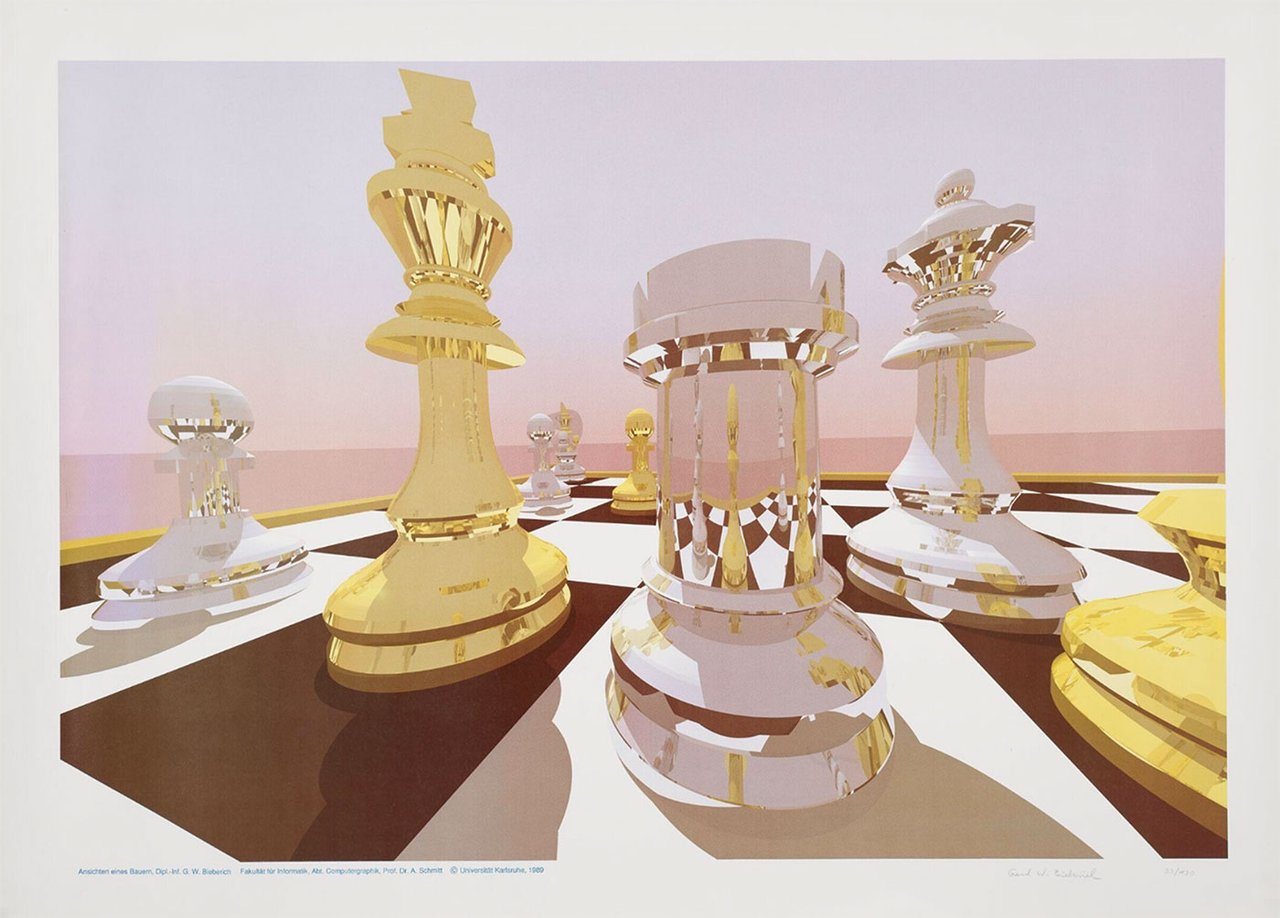
One of the V&A’s recent acquisitions, Views of a Pawn Threat (1986), by the German artist Gerd W. Bieberich, is a demonstration of the groundbreaking computational art that was being done in the 1980s at the University of Karlsruhe (now Karlsruhe Institute of Technology), where Bieberich was a student. Bieberich created Views of a Pawn Threat, under the guidance of Professor A. Schmidt, to demonstrate the effectiveness of the software VERA (Very Efficient Raytracing Algorithm), an algorithm, developed at the university’s Institute for Business and Dialogue Systems, that could generate both realistic and non-realistic images.
The work’s depiction of reflection is sophisticated for mid-1980s computer graphics, using ray tracing, a rendering technique, described by the V&A as creating photorealistic images “by modelling how light travels and stimulating various optical effects, such as reflection, shading, colour gradient, and refraction”.
Views of a Pawn Threat is considered one of the earliest convincing computer renderings of an illusionistic image. “When it was first published,” the V&A says on its website, “the rich details of this artwork fascinated both computer experts and audiences outside of that circle.” The work won the Baillie Gifford Prize of the Computer Art Society in London in 1989.
The corporate collection of Web3 art assembled by Arab Bank Switzerland (ABS), Geneva, curated by Nina Roehrs, keeps the digital art community informed of its acquisitions via regular posts on social media. The bank also sponsors the ABS Digital Art Prize, won in 2025 by Anna Ridler and Sofia Crespo.
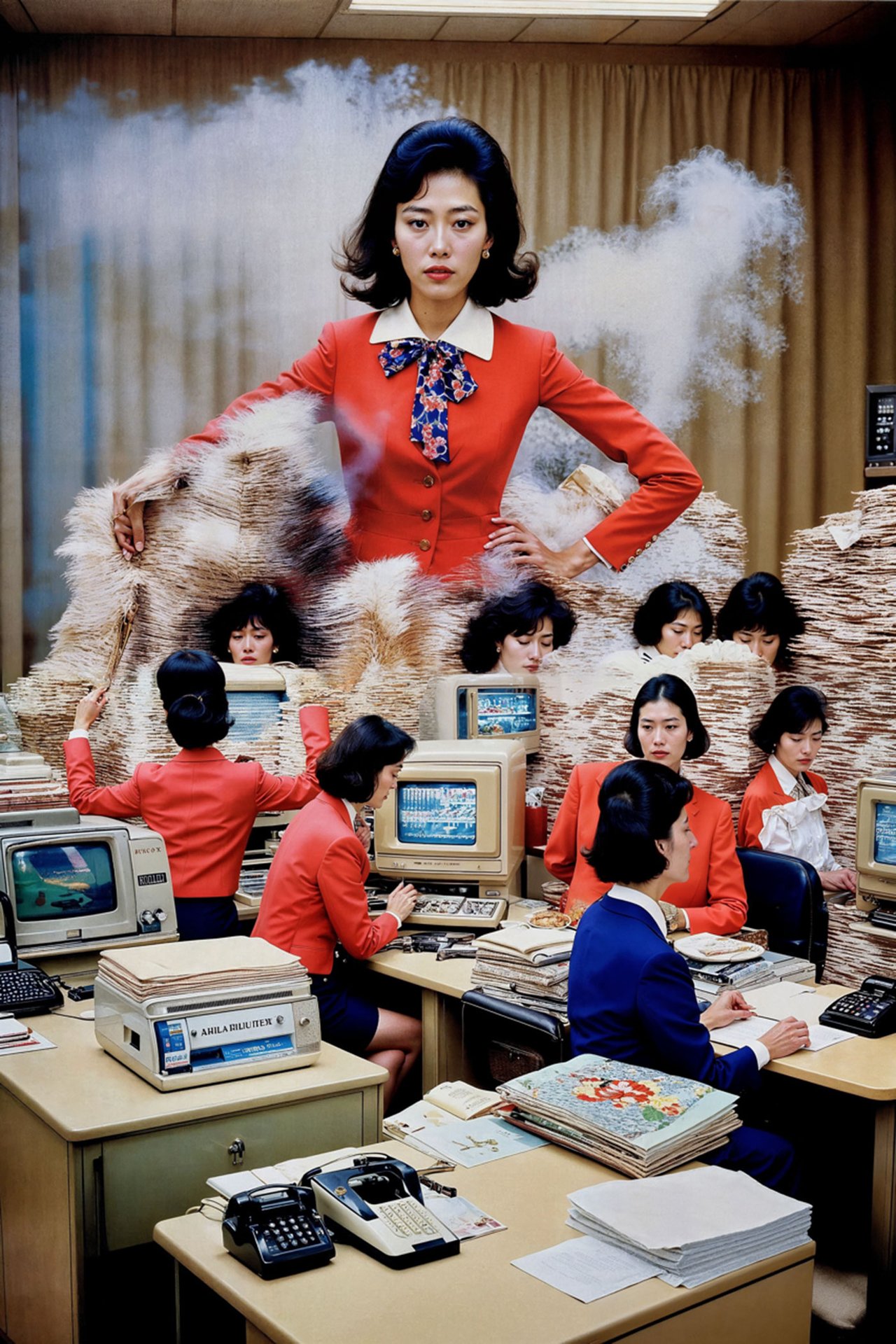
A recent acquisition for the ABS collection is Emi Kusano’s Overseer (2025), a digital artwork and physical edition from the AI photographic series “Office Ladies: Rituals of Overflow”. Kusano’s series explores the themes of artificial intelligence and gender norms, visualizing the latent gender biases within contemporary society by superimposing an AI double — generated from the artist’s physical data — onto the stereotype of an “Office Lady” (OL). Kusano shows technology amplifying the rituals of “roles” historically imposed on women.
Before entering Web3, Kusano, a multidisciplinary artist who has made a career reviving 1980s pop culture, was well-known in Japan for her street photography and retro-futurist persona as the lead singer of the synthwave band Satellite Young. In 2020, she co-founded the NFT collective Shinsei Galverse with Ayaka Ohira, the animator responsible for the music video that accompanied her debut solo, “Glass Ceiling.”
A collection document describes Overseer as “a metaphor for an evolved AI that oversees the ritual of immense information processing and labor. Is her overwhelming scale a symbol of the absolute power and administrative capabilities acquired by AI? Or is it a representation of the immense solitude and pressure of a being who now bears all labor on her shoulders, having merged with the system itself?”
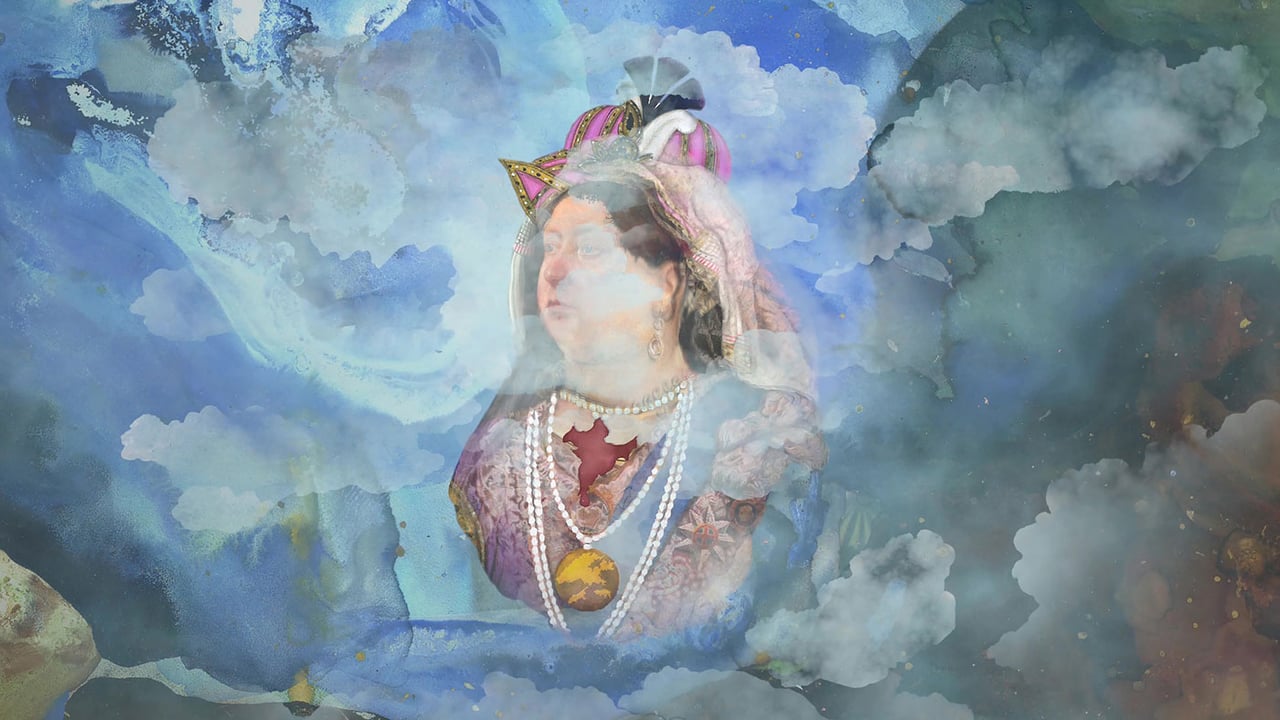
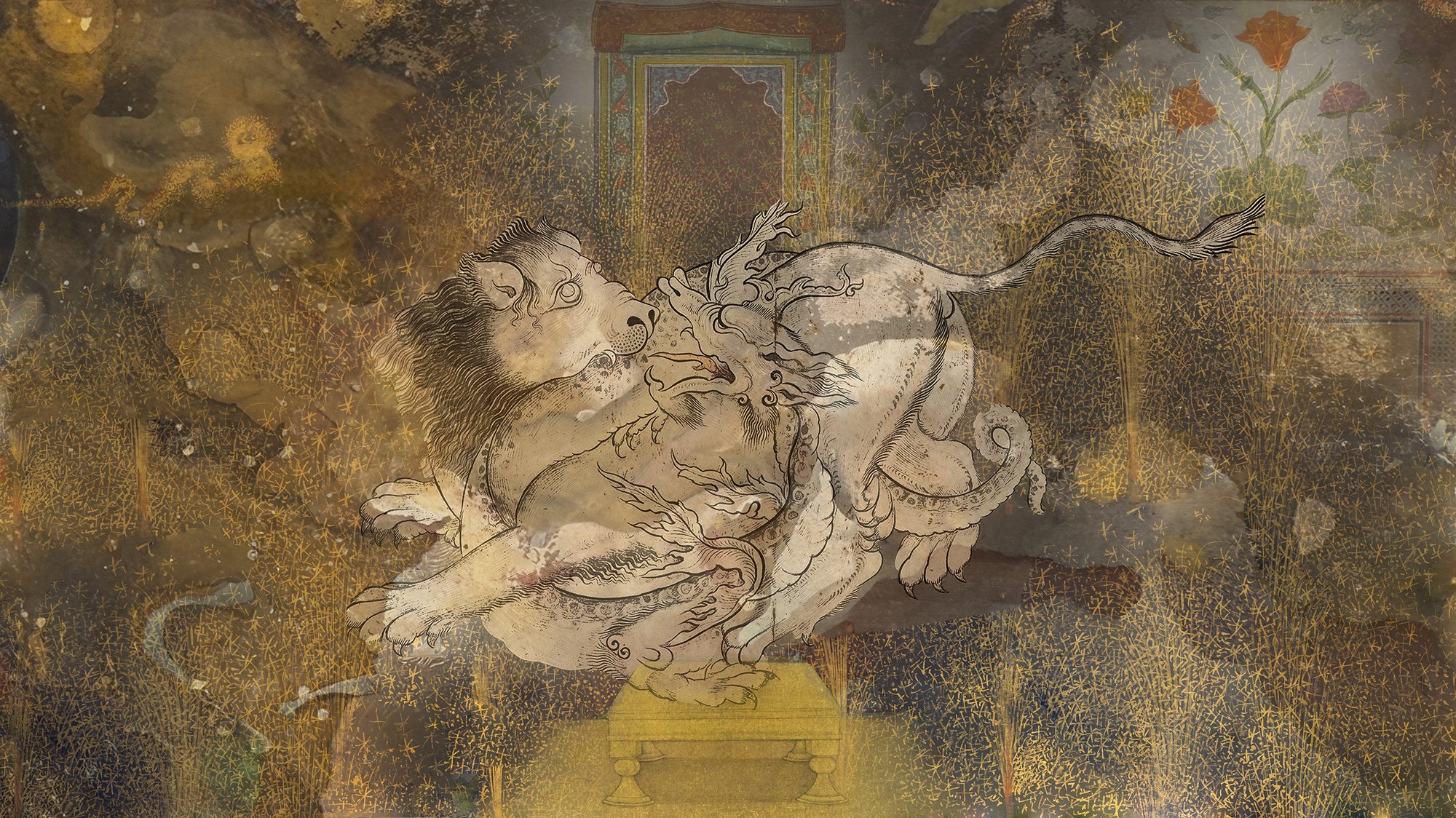
One of the most striking elements of the landmark M+ museum, Hong Kong, is its giant outdoor LED screen, one of the largest media screens in the world, overlooking Victoria Harbour. The screen hosts the museum’s Facade commissions, the latest of which is 3 to 12 Nautical Miles (2026) by the Pakistani-American artist Shahzia Sikander. The work is co-commissioned by M+ and the Art Basel art fair, and presented by UBS.
The work is a cinematic tableau, animated from hand-painted images by Sikander, addressing the currents of international power and trade that have shaped the global landscape since the 19th century.
Trained in traditional Indo-Persian miniature painting, Sikander addresses colonial, postcolonial, and feminist narratives around cultural identity and race.
“By reimagining the intimacy of miniature painting on this monumental scale, Sikander’s animation presents exciting new possibilities for storytelling and interdisciplinary visual culture in the public realm,” Ulanda Blair, Curator, Moving Image, M+, said in a launch statement. “Watercolor, as the work’s central medium, serves as a bridge across territories and time, fluidly connecting historical memory to contemporary experience. Through densely layered imagery, viewers are invited to reflect on Hong Kong’s dynamic history of international exchange and the often opaque systems that continue to influence economies today.”
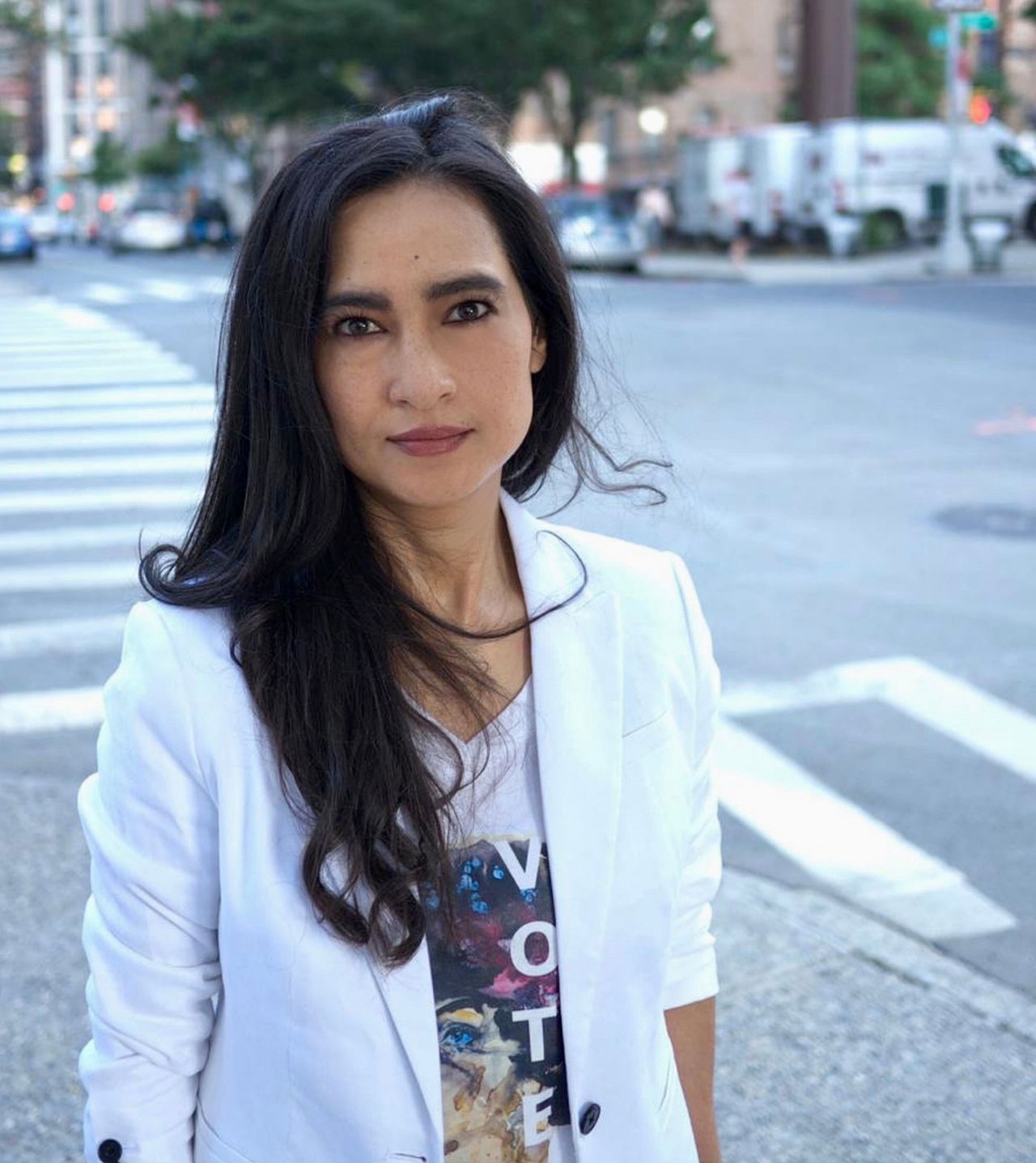
“This commission to create a new work for M+’s iconic facade has offered me an opportunity to extend my previous projects in Hong Kong into a deeper historical inquiry,” Sikander says. “3 to 12 Nautical Miles traces the city’s emergence at a locus of intersecting empires, markets, and cultures, where the opium trade and the sea converged.”
“This time-based cinematic work echoes the idea of the sea through ink, movement, and particle systems, alluding to water and ocean as conduits of imperial power, commercial exchange, and political control.” (Shahzia Sikander)
The commission marks the fifth consecutive year that M+ and Art Basel have collaborated on the Facade commission, presented by UBS. The immediately preceding Facade commission was Ayoung Kim’s Dancer in the Mirror Field (2025), a speculative fiction film (October 3 to December 28, 2025). It was a co-commission with Powerhouse Paramatta which is due to open in late 2026 as part of the Powerhouse, Sydney, group of museums dedicated to the intersection of arts, design, science, and technology.

In 2025, one institutional exhibition in particular, “Infinite Images: the Art of Algorithms” at Toledo Museum of Art, delivered a genealogical survey of digital art over the past half-century, using its own holdings and loans from other collections. Curated by Julia Kaganskiy, it covered work produced by 24 artists between 1961 and 2025. These included the abstract graphic pioneers Josef and Anni Albers and the foundational Minimalist Sol LeWitt, by way of the computer artist Vera Molnar’s engagement with randomness, to on-chain innovation from Larva Labs and Snowfro, to the hybrid experimentation of Gen Y artists such as Dmitri Cherniak, Tyler Hobbs, and William Mapan.
Adam M. Levine, Director and CEO of TMA, put on the show — notable for showing a survey of art made with technology at the heart of an historic, enyclopedic, museum — to reinforce the museum’s “commitment to presenting bold, forward-looking exhibitions that expand our understanding of what art is and can be”.
A work by Snowfro, Chromie Squiggle #1458 (2020), one of the artist’s genre-defining long-form generative series, and included in “Infinite Images”, is one of nine works from the series acquired by TMA in 2025. The TMA acquisition was nearly contemporaneous with the announcement by the Museum of Modern Art, New York, in December 2025, that it had collected eight Chromie Squiggles, causing Calderon to comment that “What started as a proof of concept for @artblocks_io and the blockchain’s ability to generate entropy evolved into something much bigger than I could have ever dreamed of.”
Louis Jebb is Managing Editor at Right Click Save.
No comments yet. Be the first to share your thoughts.
Mentioned in this article
People: Emi Kusano, Shahzia Sikander, Erick Calderon (Snowfro), Gerd W. Bieberich|Works: 3 to 12 Nautical Miles, Chromie Squiggle #1458, Overseer, Views of a Pawn Threat|Events: Art Basel|Organizations: M+|