A Node in the Network Preserving Digital Art | LI-MA
Gaby Wijers, director of the Amsterdam-based organisation, on how collaboration, and knowledge-sharing, has been key to creating a global approach to caring for media art and its history
Over the years we have changed the vocabulary, from the preservation to the caretaking of media art. Because it is not only a matter of preservation, but of continuous care. Something is not preserved. It needs care over time.
— Gaby Wijers
Gaby Wijers is director of LI-MA — Living Media Art, the Amsterdam-based organisation dedicated to the presentation, promotion and preservation of media art. LI-MA takes care of 10.000 artworks from over 50 international institutions, for 900 artists, advising on the presentation and care of media art. The organizations it collaborates with include Centre Pompidou, Paris; Rhizome, New York; and Tate in the UK. It also collaborates with universities and archives, and actively with some 200 artists, including Rafaël Rozendaal, Jan Robert Leegte, and Jonas Lund. In March 2026, the organisation held Transformation Digital Art, its 10th annual international symposium on caring for digital art.
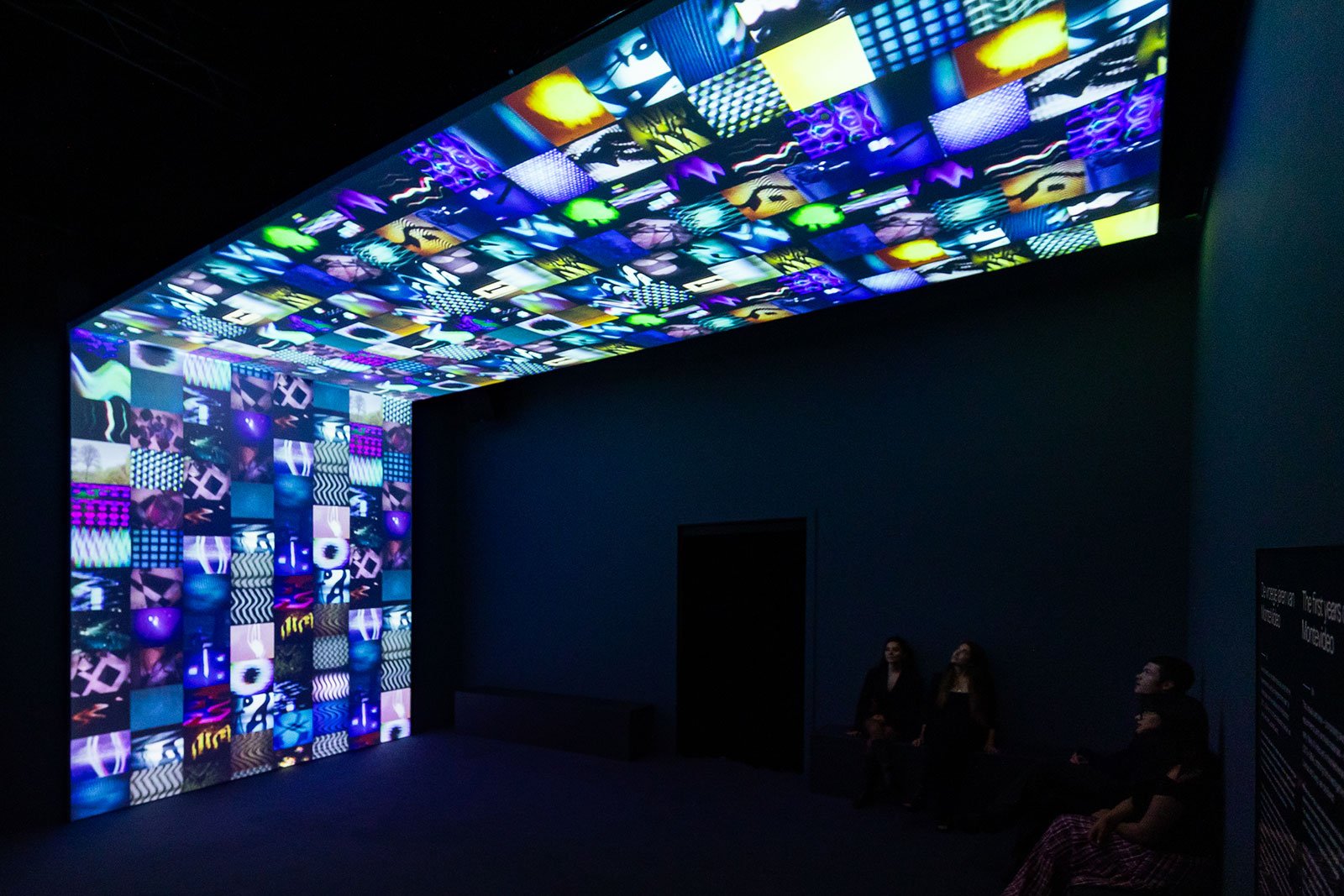
This year, LI-MA has collaborated in the exhibition “Pioneers of Media Art | The First Years of MonteVideo”, which is at Nxt museum, Amsterdam. The exhibition looks back at the formative years of MonteVideo, the first gallery dedicated to video art in the Netherlands, and one of the forerunner organisations behind LI-MA.
Wijers spoke to Right Click Save about the history of LI-MA, and the pioneering Dutch organisations that came before it, her own role in its development and the important part that collaboration plays in creating an international knowledge base around the care of digital art. LI-MA is, she says, “not a very big institution, but has a big impact since it is part of a huge network”.
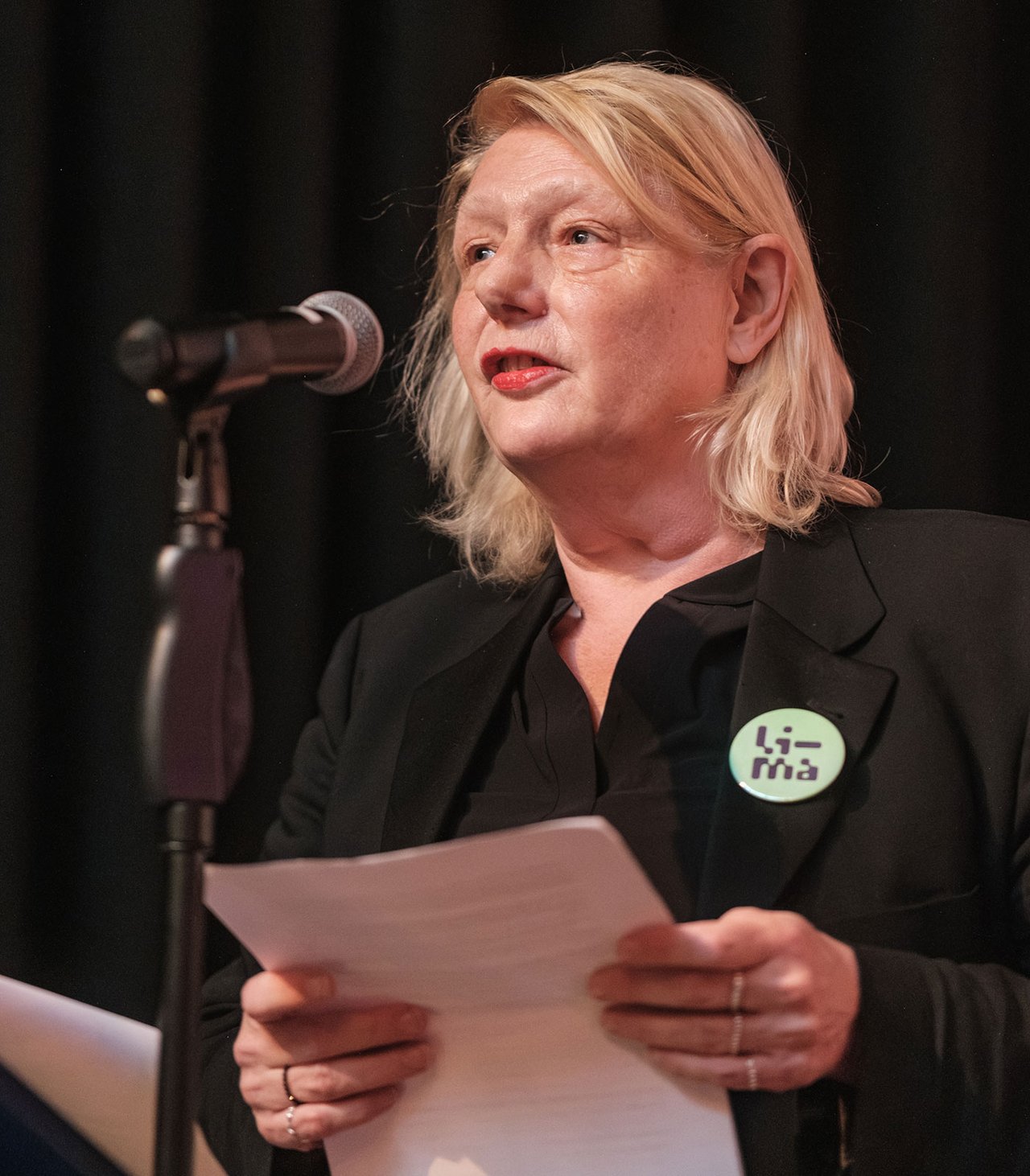
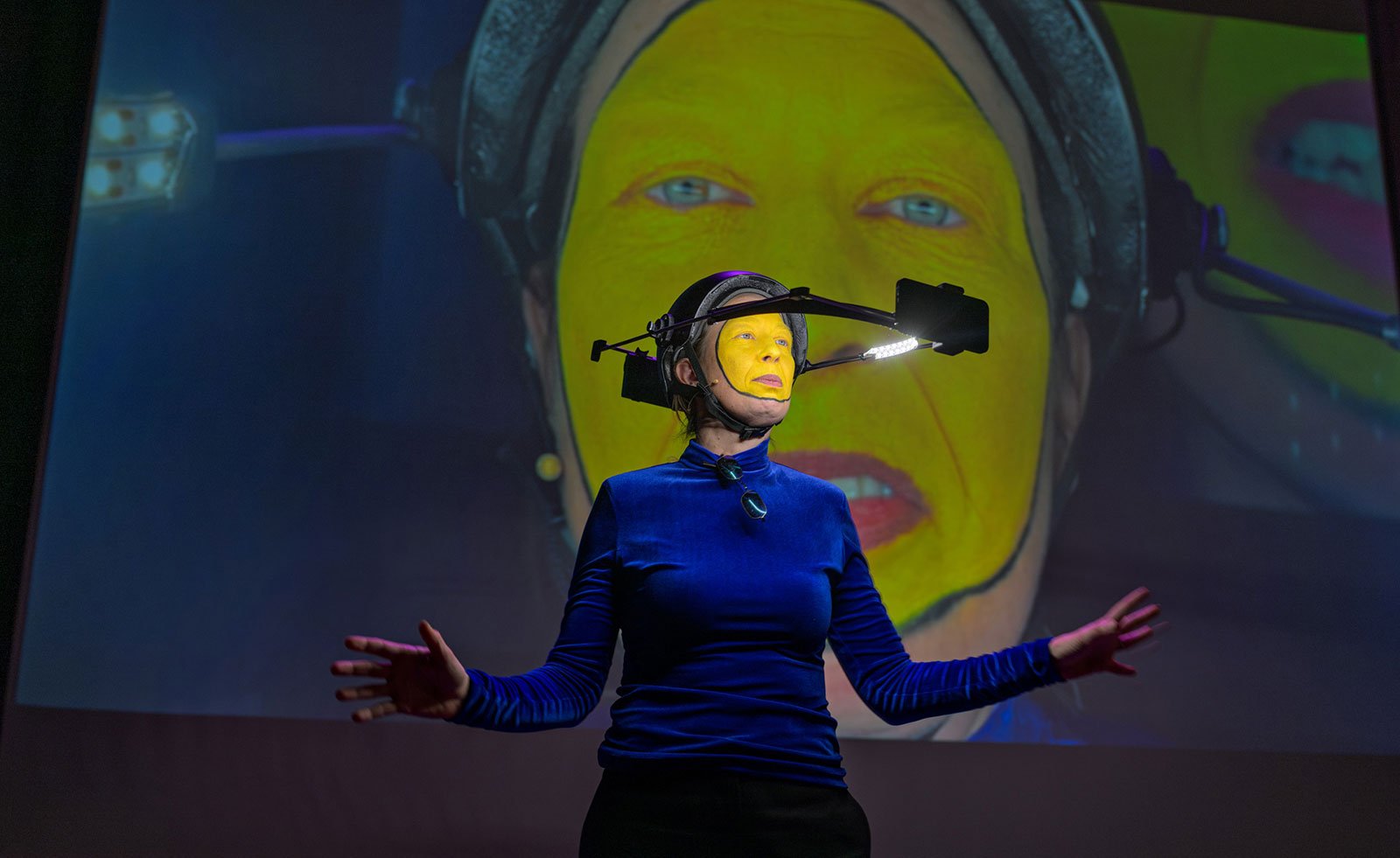
Gaby Wijers, director of LI-MA, opening the 10th edition of Transformation Digital Art, Amsterdam, 2026. Photography by Alex Heuvink
Louis Jebb: Please could we start with LI-MA’s background story and its work today.
Gaby Wijers: LI-MA is an organization, started 13 years ago, but deriving from forerunner institutions dating back nearly half a century, dedicated to the presentation and promotion of media art, and to its preservation, so that these works may be enjoyed in the future.
In the Netherlands, LI-MA is connected to a network for cultural heritage: involving museums, libraries, archives and networks such as NDE (Network for Digital Heritage). We are also partners of The Foundation for the Conservation of Contemporary Art. LI-MA is a node in all of these networks, providing our knowledge, our expertise, our care. And over the last year or two, we have been, more than ever, working on our archive and on artists’ archives.
LI-MA is rather unique because it’s not related to a museum or to a university, and it’s not a very big institution, but it’s part of a huge network. It is a place where different “blood groups” of expertise find a way to meet. And to exchange knowledge.
We think it’s super important to exchange. It’s not only about how to preserve a certain artwork and the strategies for doing so. It’s also very important to have an insight into how others do it and what we can learn from them and how we can collaborate. Everything we do, nationally, and internationally, is based on collaboration and knowledge-sharing.
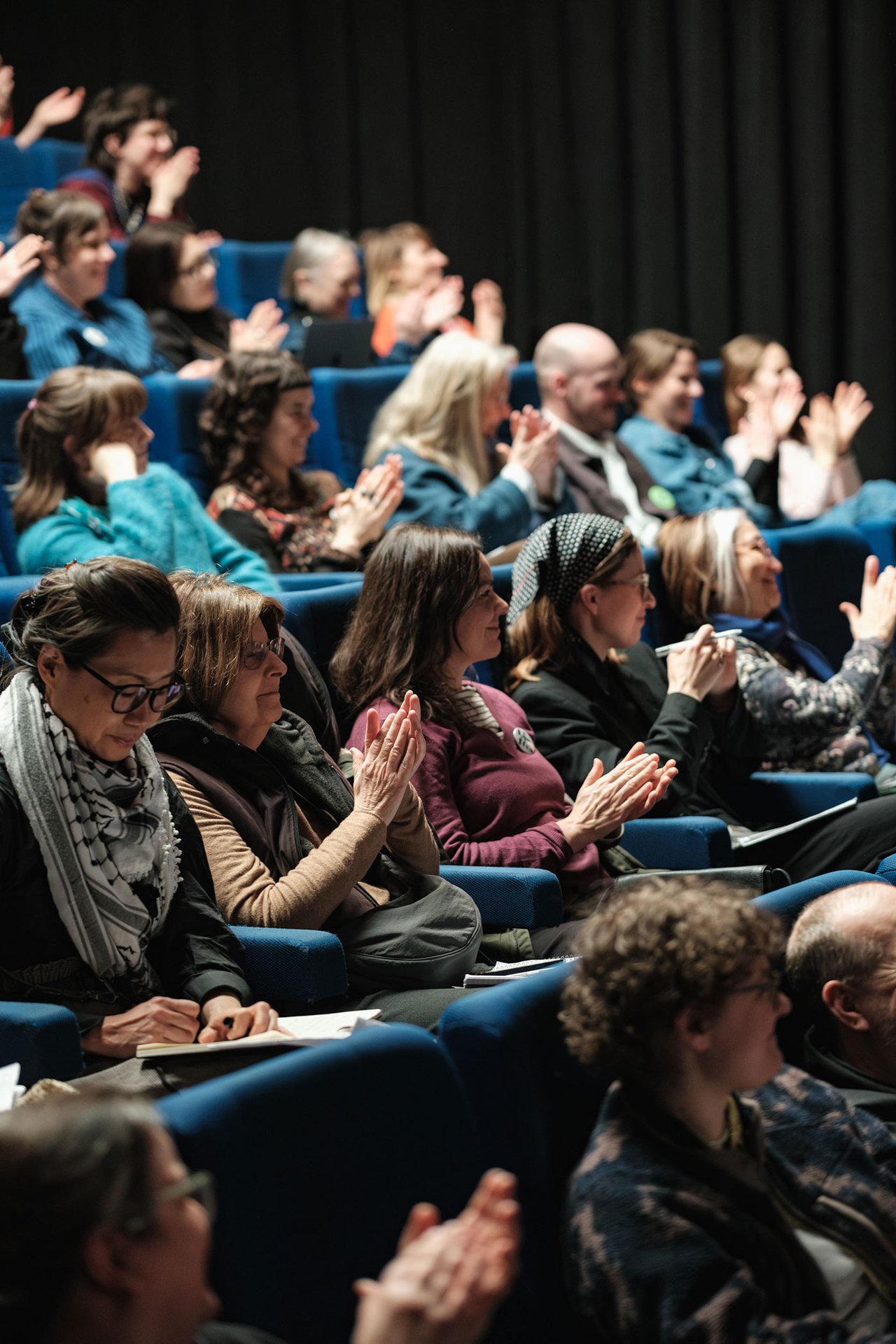
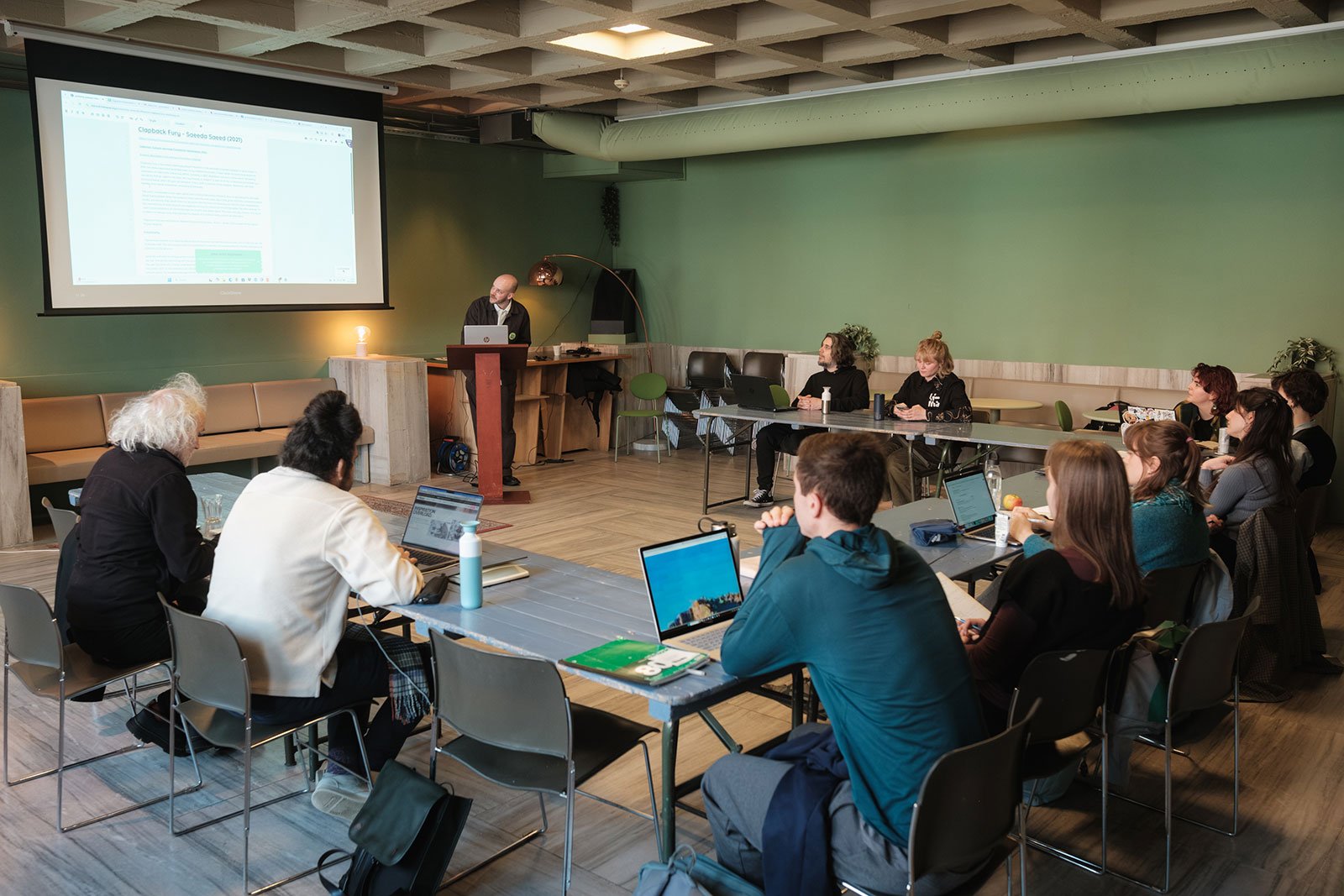
The audience at Transformation Digital Art symposium, Amsterdam, 2026. Photography by Alex Heuvink
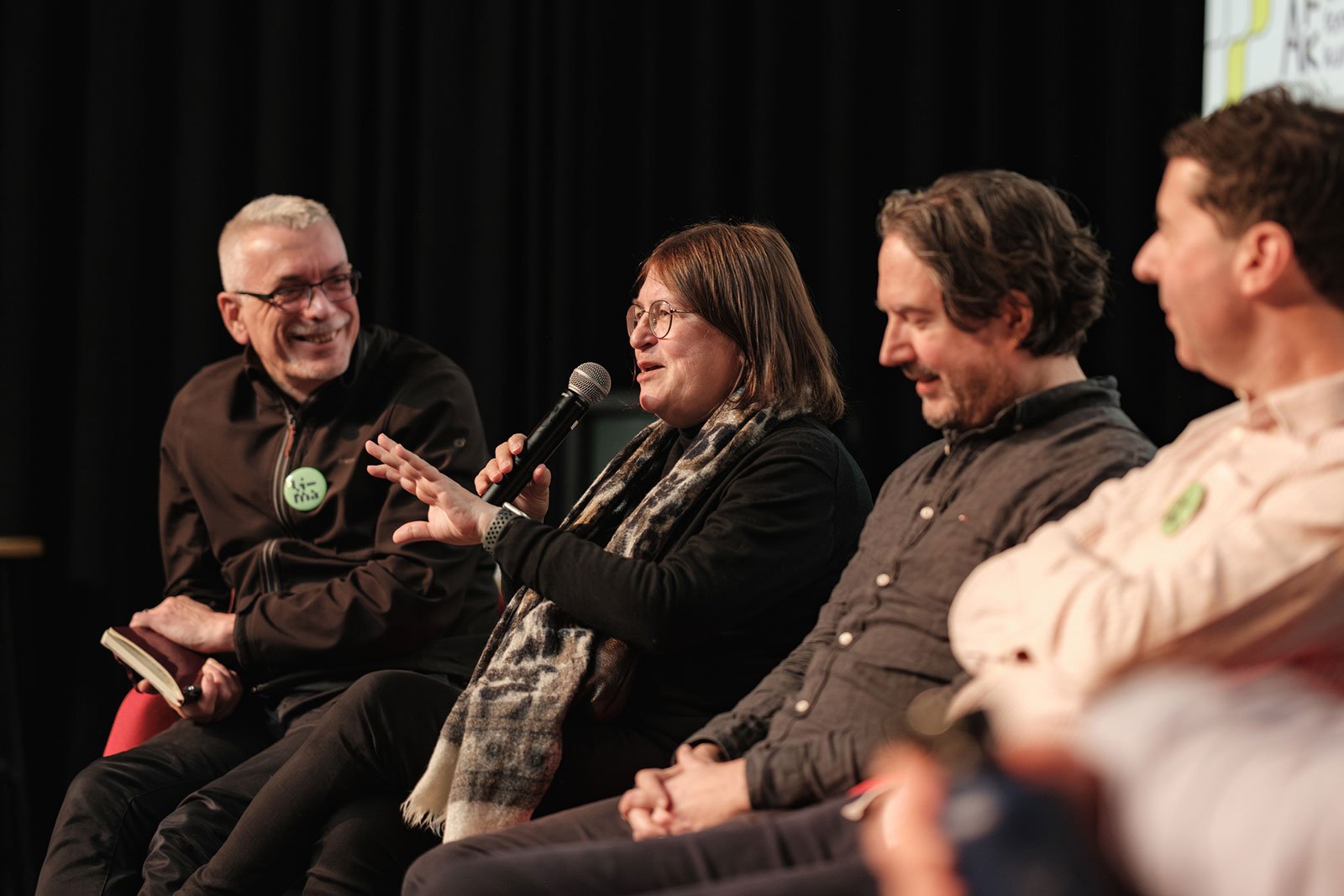
A panel discussion, “Connecting AI in Documenting and Representing Digital Art”, at Transformation Digital Art, 2026, with (left to right): Steve Benford (University of Nottingham), Gabriella Giannachi (University of Exeter) John Moore (The National Archives, UK) and Adam Lockhart (University of Dundee). Photography by Alex Heuvink
Software Art Preservation Student Workshop, Transformation Digital Art, 2026, presented by Joost Dofferhoff (LI-MA) and Mauricio van der Maessen de Sombreff (LI-MA). Photography by Alex Heuvink
LJ: How big is the team?
GW: We have a small core team, around five persons: a registrar, someone dealing with the distribution, another with communication, there is the business side and archive and preservation and I’m the general, and the artistic director. And then there is an expanded team — a big shell containing technicians, art historians, scholars, students and interns — who have technical and art and media historical knowledge, and who work on a project basis for smaller assignments.
LJ: Who are the institutions you work with on a regular basis?
GW: Our long-term partners include the Tate, ZKM in Karlsruhe, HEK in Basel, and Centre Pompidou. We have many Netherlands partners such as the Stedelijk Museum in Amsterdam; the Museum Boijmans Van Beuningen in Rotterdam; the Van Abbemuseum, in Eindhoven; and the Kröller-Müller Museum, at Otterlo.
We are involved in all kinds of international projects. In the UK, I am an Honorary Research Fellow at Exeter University and participate in projects there and at the University of Nottingham. We have worked a lot with them over the years, especially with Gabriella Giannachi, Professor in Performance and New Media at Exeter; and we collaborate on somabotics, led by Steve Benford at Nottingham, looking at AI in the production and presentation of robotic works. We also have a collaborative project that looks into how metadata from collections can be improved or shared; and another on bias in the work we do with AI technology.
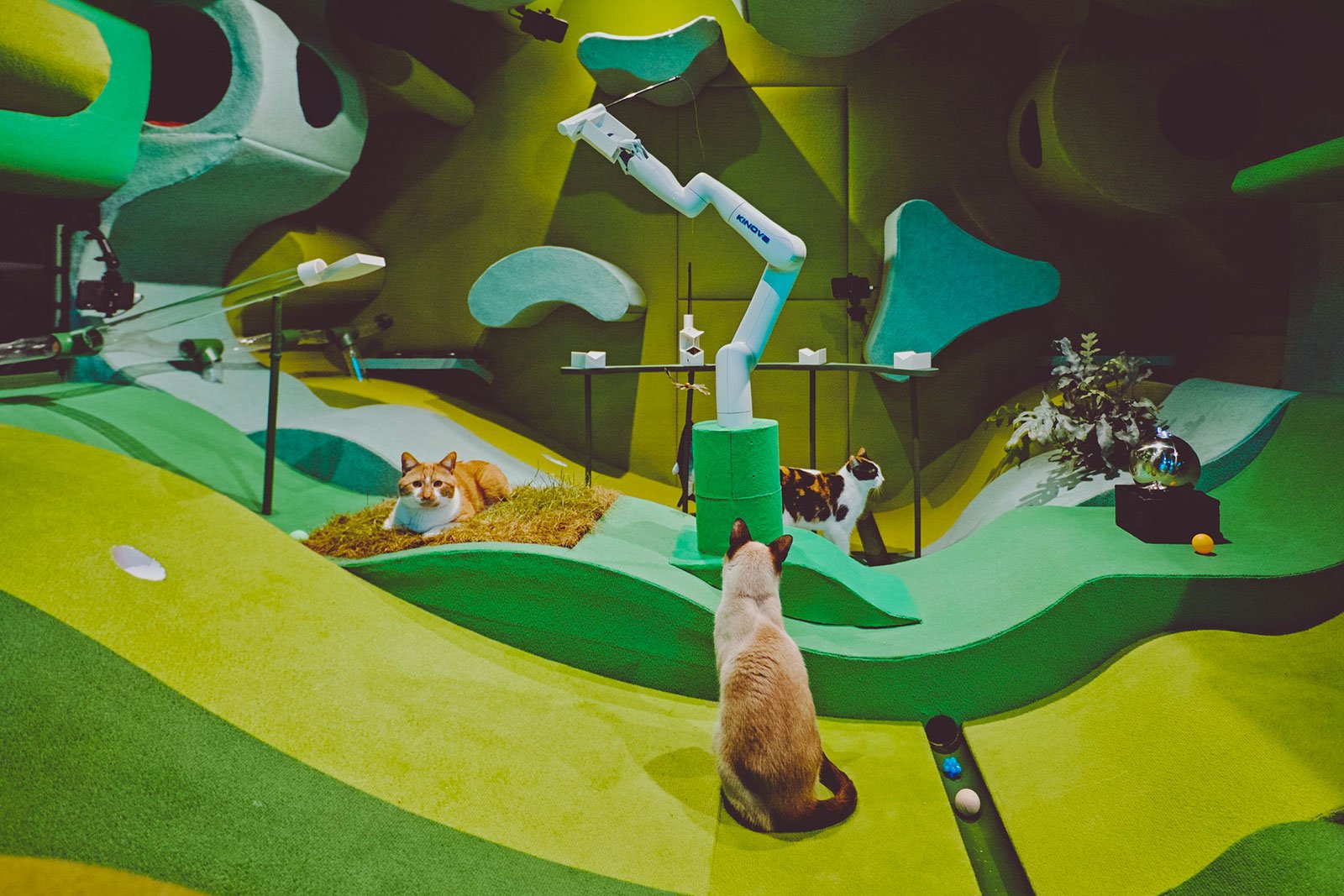
Blast Theory, Cat Royale, 2023. In collaboration with LI-MA and presented by LI-MA at Transformation Digital Art, 2023, 2025, 2026. Photography by David JW Bailey/Stephen Daly.
LJ: How are you, as a non-profit, funded?
GW: We are funded by the city of Amsterdam. That is a four-year funding. That is not so much for our work in preservation. It is more for our role in the city, supporting artists, presenting works, providing knowledge, being part of the network, supplying artworks and presenting artworks in the Netherlands.
We are also funded in part by the museums and collectors that pay for the services we give them. And the rest is project funding. We can survive with that, but it’s not the best way. So we’re aiming for funding on a continuous basis; because the work we do sustaining these artworks and these legacies and these narratives is a work on a continuous basis.
That’s not something you can do on a project basis. So we are looking for ways to sustain it. And with the organizations that outsource the care of their works to us, we are working on sustainable funding.
LJ: What can you tell us about the origin story of LI-MA?
GW: LI-MA comes from a long history of practices and institutions. We have a 50-year legacy in the development of media art in the Netherlands and abroad. Towards the end of the 1970s, René Coelho, a producer at the VARA, a broadcast company in the Netherlands, started a gallery called MonteVideo. He was fascinated, and inspired, by the work of Livinus van de Bundt, one of the first abstract video pioneers in the Netherlands.
At that time, the new artform created a new model: new digital and other forms of technology-based art that came with a new attitude, style of communication, forms of audience engagement, and an infrastructure built in collaboration with artists — one that facilitated connection and community building. Getting access to the equipment for creating and presenting media art — and to the whole of what we call in Dutch the denkraam, or concepts, of this form — was a challenge. The machinery was both large and expensive.
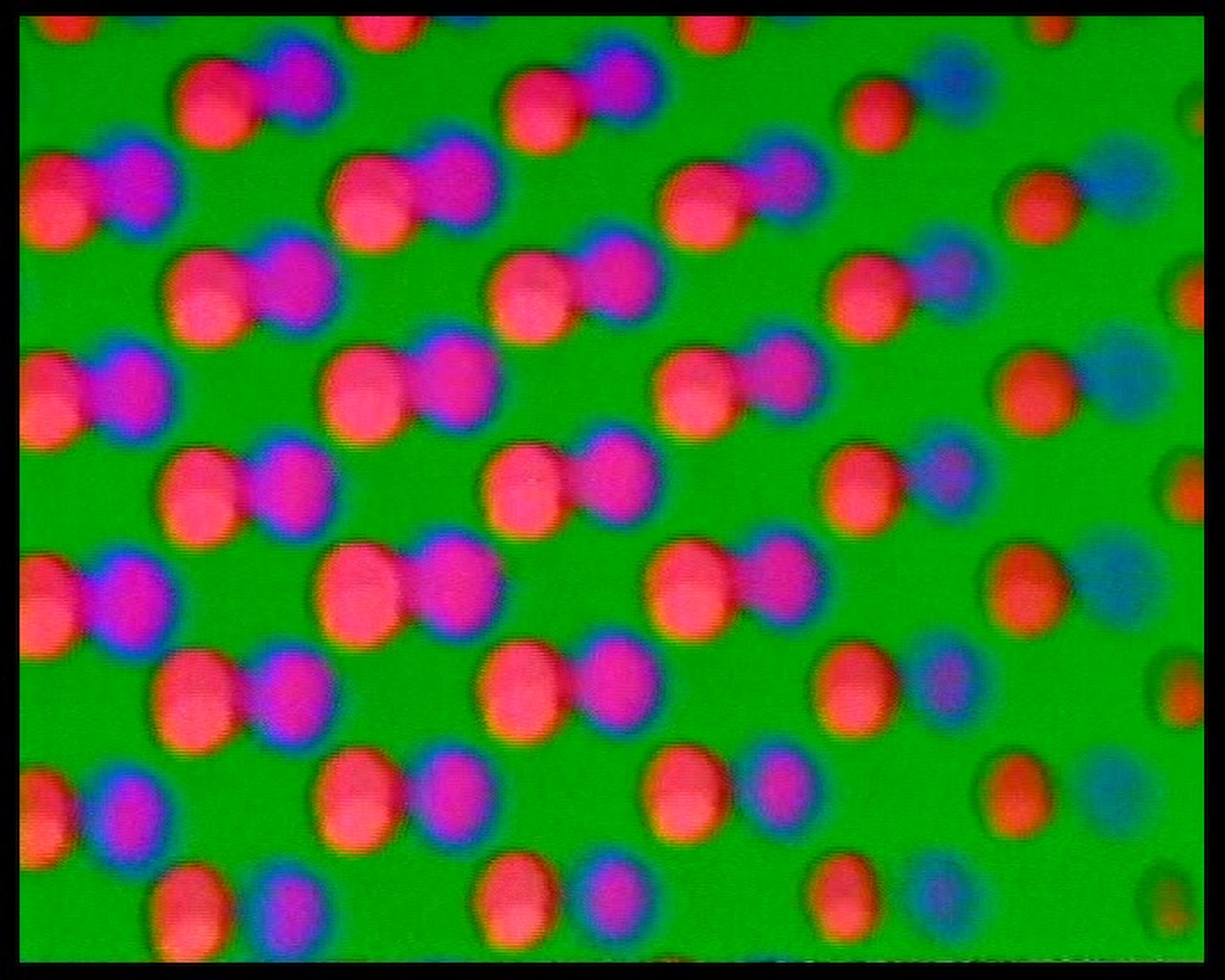
Livinus & Jeep van de Bundt, (still from) Moiré, 1975. Collection of LI-MA, Amsterdam
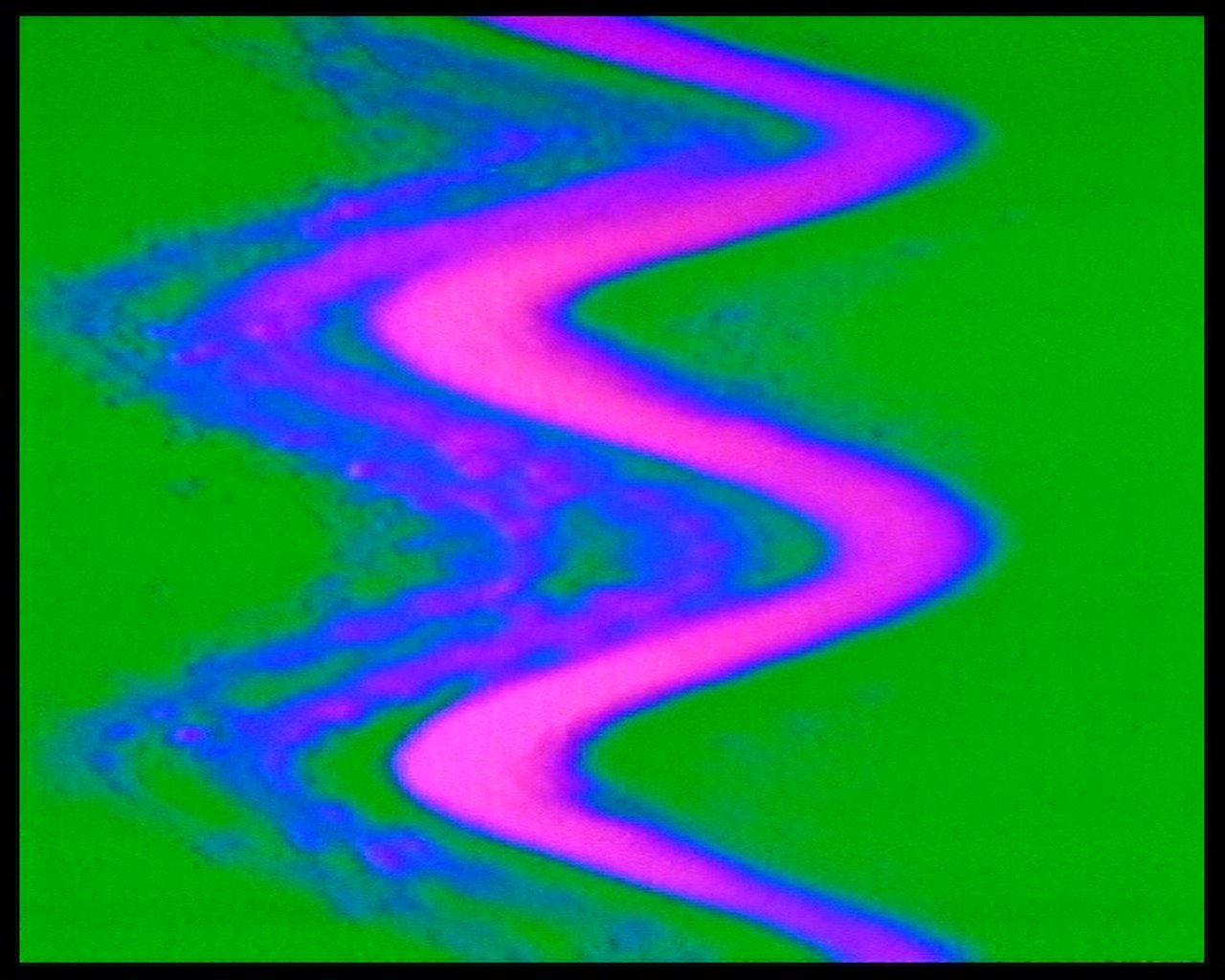
Livinus & Jeep van de Bundt, (still from) Moiré, 1975. Collection of LI-MA, Amsterdam
At the time, Livinus van de Bundt made his own machines in collaboration with his son Jeep and created a lot of artworks that were shown at festivals. It was a time when The Vasulkas, Bill Viola, Nam June Paik, Nan Hoover and other pioneers were often in the Netherlands to present and promote their works. And MonteVideo was the place that produced and presented a lot of works.
Over time, MonteVideo grew into a larger organization. It was always rather technically oriented and its concern with media art came to be fused with that of the Time Based Arts Foundation (TBA). This was the video section of de Appel, a contemporary art organization in Amsterdam that at the time was also dedicated to performance art. MonteVideo and TBA fused in the early 90s, and became, later in the decade, the Netherlands Media Art Institute (NIMk). NIMk was founded to support artists and institutions in finding ways to use new technology in producing new artworks, in reaching out to new audiences, in thinking of new narratives, while acting as an agency, a distributor for the artists.
From the 70s onwards, artists were supported by MonteVideo, Time Based Arts Foundation, and de Appel, and artworks were selected to be presented worldwide. Over time, these distributor organisations, along with entities such as Electronic Art Intermix, New York, became repositories of knowledge about media artworks, video artworks, digital installations. They were directly rooted in artistic practice — an important consideration when working with media art, where a variety of versions of works often exist, applicable in different installations, different exhibitions, and different displays.
From the early 90s, Montevideo started to think about preserving video works, pneumatic works [using compressed-air mechanics], and other formats of media art, in collaboration with museums in the Netherlands, and the government collection. It was one of the first entities, together with the Bay Area Video Coalition (BAVC), founded in San Francisco in 1976, to start preserving these works.
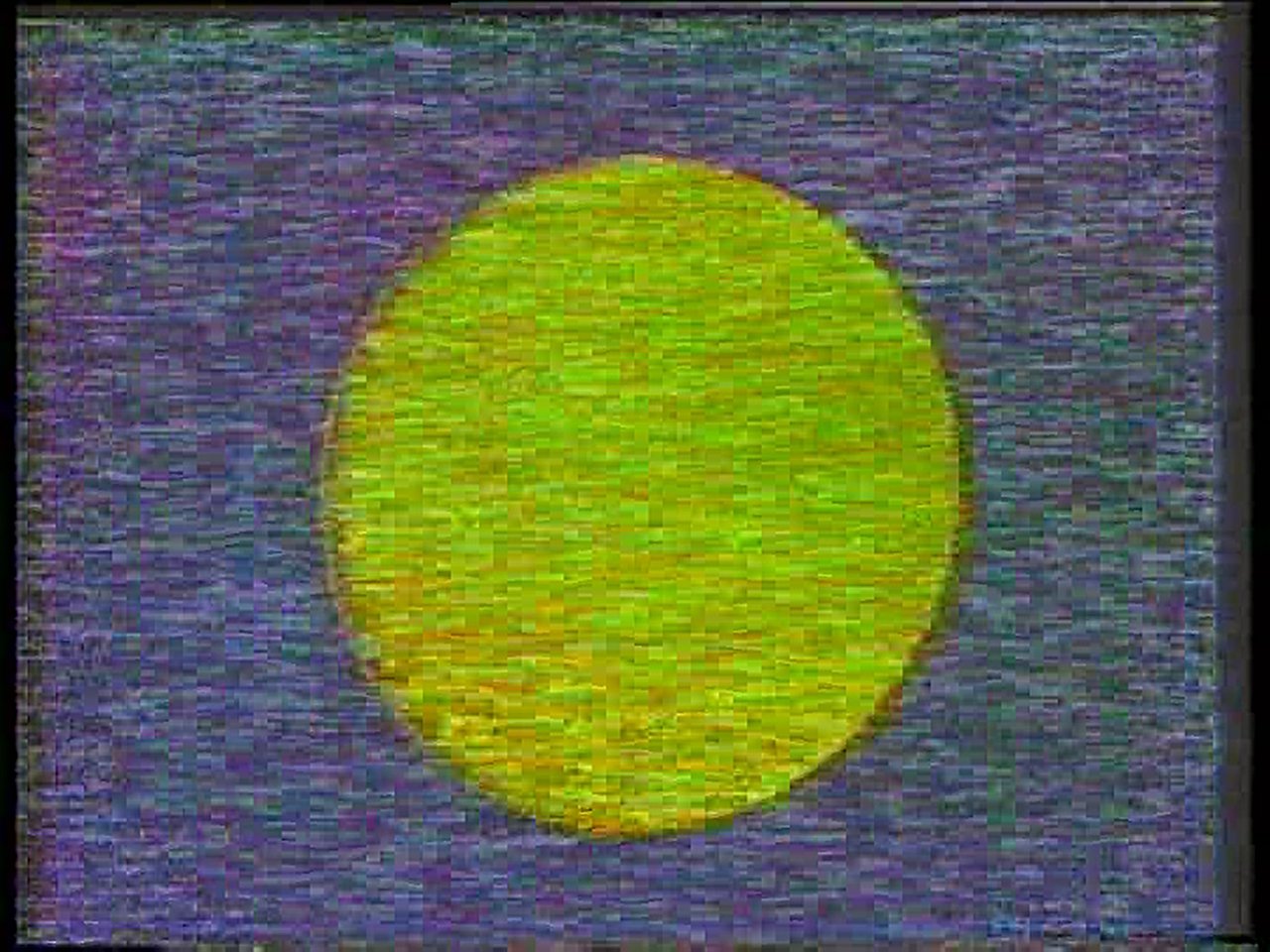
The Vasulkas, (still from) The Noisefields, 1974. Collection of LI-MA, Amsterdam
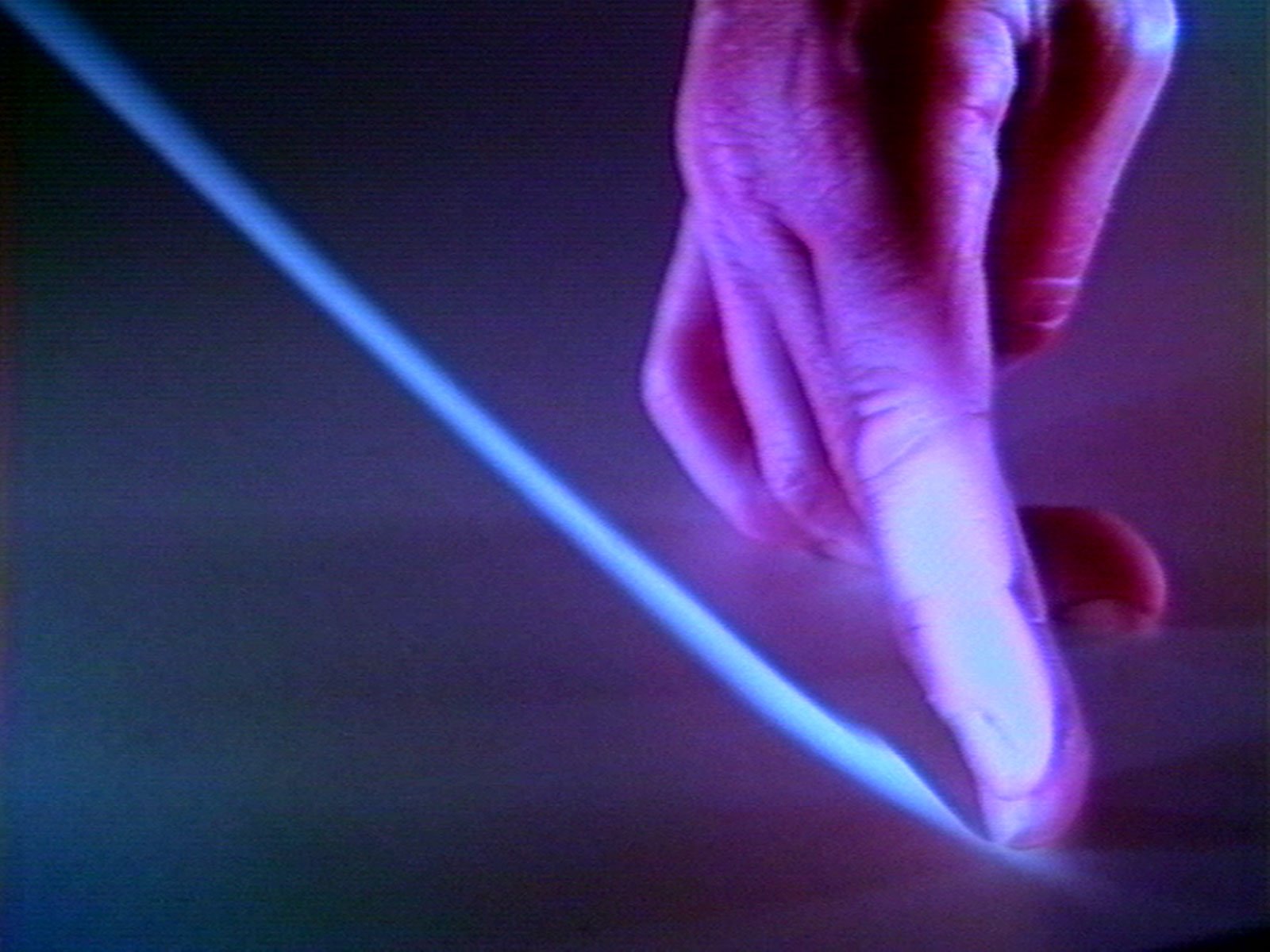
Nan Hoover, (still from) Impressions, 1978. Collection of LI-MA, Amsterdam
LJ: When did you join the Netherlands Media Art Institute?
GW: In the mid-90s. I was approached to make their catalog for the media art collection and told that everything from that time on would be digital. Not only the catalogue but also the artworks.
So how to digitize the video material, all the artworks and the installations from here? That was my first challenge. From video art, the preservation focus and collaboration moved in time to installations, software-based art, performance and life art, online art/net art and virtual reality. I have a background in informatics, and theater, and I come originally from the library world. Digital preservation, structuring information, and mediating between data, artist and users, so to speak, has always been the core of my professional work.
The Netherlands Media Art Institute grew, and became an international role model. It ran a lot of production, had artists in residency, and an education department. Unfortunately, there were large budget cuts for the cultural field also in the Netherlands, in 2010 and 2012, and the Netherlands Media Art Institute lost 100% of its government and regional funding.
We were keen at least to continue our work on preservation, research and knowledge services; maintaining infrastructure and networks; research; and supporting artists and the distribution of their art. LI-MA was set up as a not-for-profit organisation to carry on that work.
We scaled down the work with exhibitions and production, thinking that there were many institutions and many places where media art was produced and presented, but none that specialized in the presenting and preservation of media art, and all the related research. We took that as a point of departure.
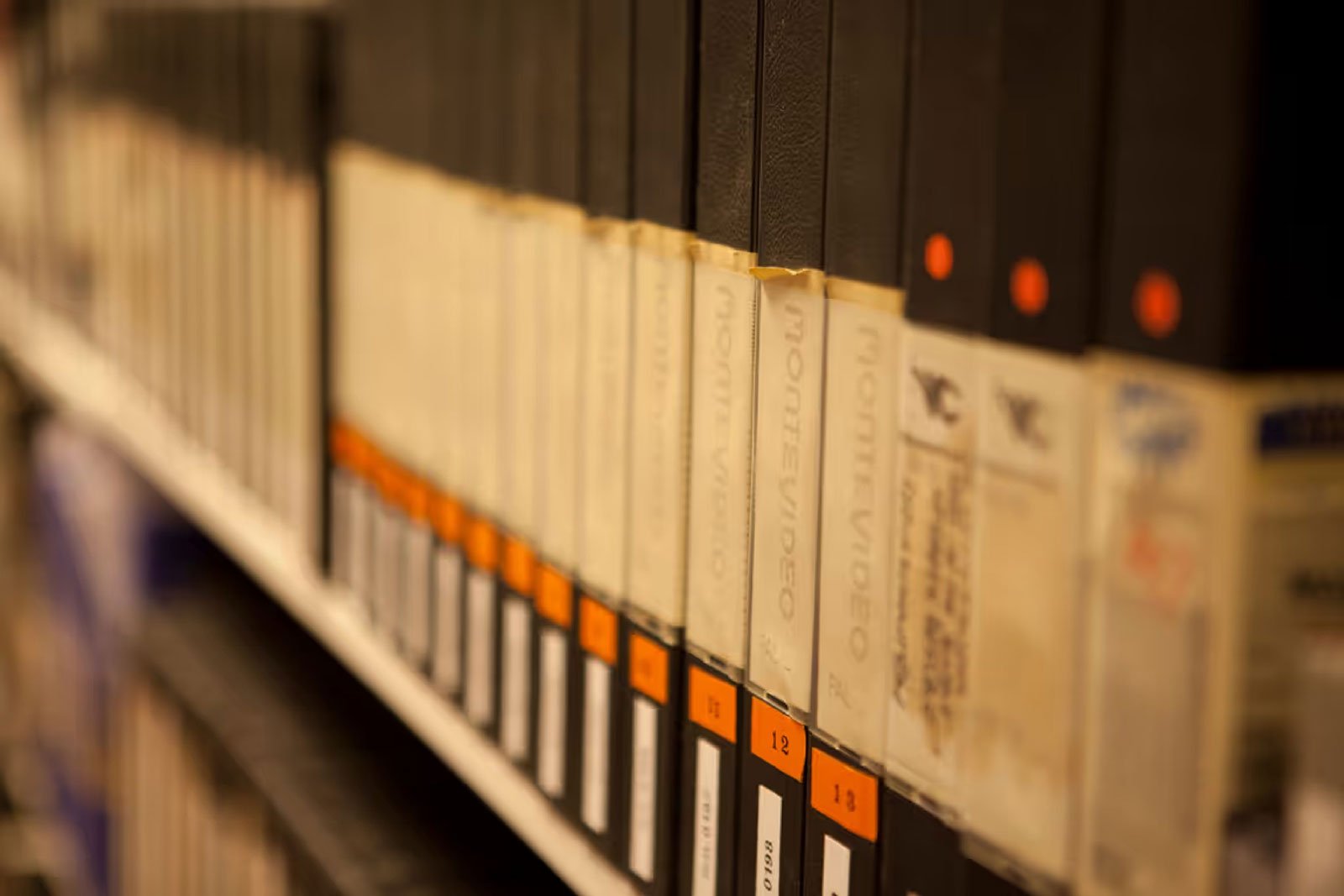
Videotapes from the Montevideo archive in store at LI-MA, Amsterdam. Courtesy of LI-MA
LJ: How does LI-MA’s work relate to the rest of the art world, and to sharing knowledge about the care of media art?
GW: Media art has links with many different art forms. It is live, it can be interactive, it can be online, it can be screen-based, it has specific spatial requirements and might involve audience participation. So there are related connections with contemporary art preservation, with film preservation, with live art, with technology, with information and communication technology.
There are also a lot of connections to digital preservation in libraries and archives. But with media art, there is a specific artistic concept to preserve. So that it has needs that go beyond those of regular digital material.
On one hand, LI-MA has its network, and collective expertise. We are nearly 50 years in the field. So we have some knowledge, art historical, technical, and in media archaeology. We have a network and we take care of media art. Over the years we have changed the vocabulary, from the preservation to the caretaking of media art. Because it is not only a matter of preservation, but of continuous care. Something is not preserved. It needs care over time. Just as history needs to be written over time. Legacy media art formats need to be translated to new technology, new times, and to new generations in order to be properly understood.
That is the phase we are in now. Caring for the media artworks, but also for the concept, the context, the practice.
Take media artworks from the 60s or 70s as an example. People have no idea any more about the production process of the time, and how unique such an artwork was. While today we are totally surrounded by screens and interactive material, 60 years ago artists had to go to a technical university to have access to a computer screen, to a color monitor. For that reason it is important we write narratives of “care over time”. And there's a lot of work to be done there, in the Netherlands at least, and that will take time. But there is genuine momentum behind the need to bring the care of media artworks more to the surface.
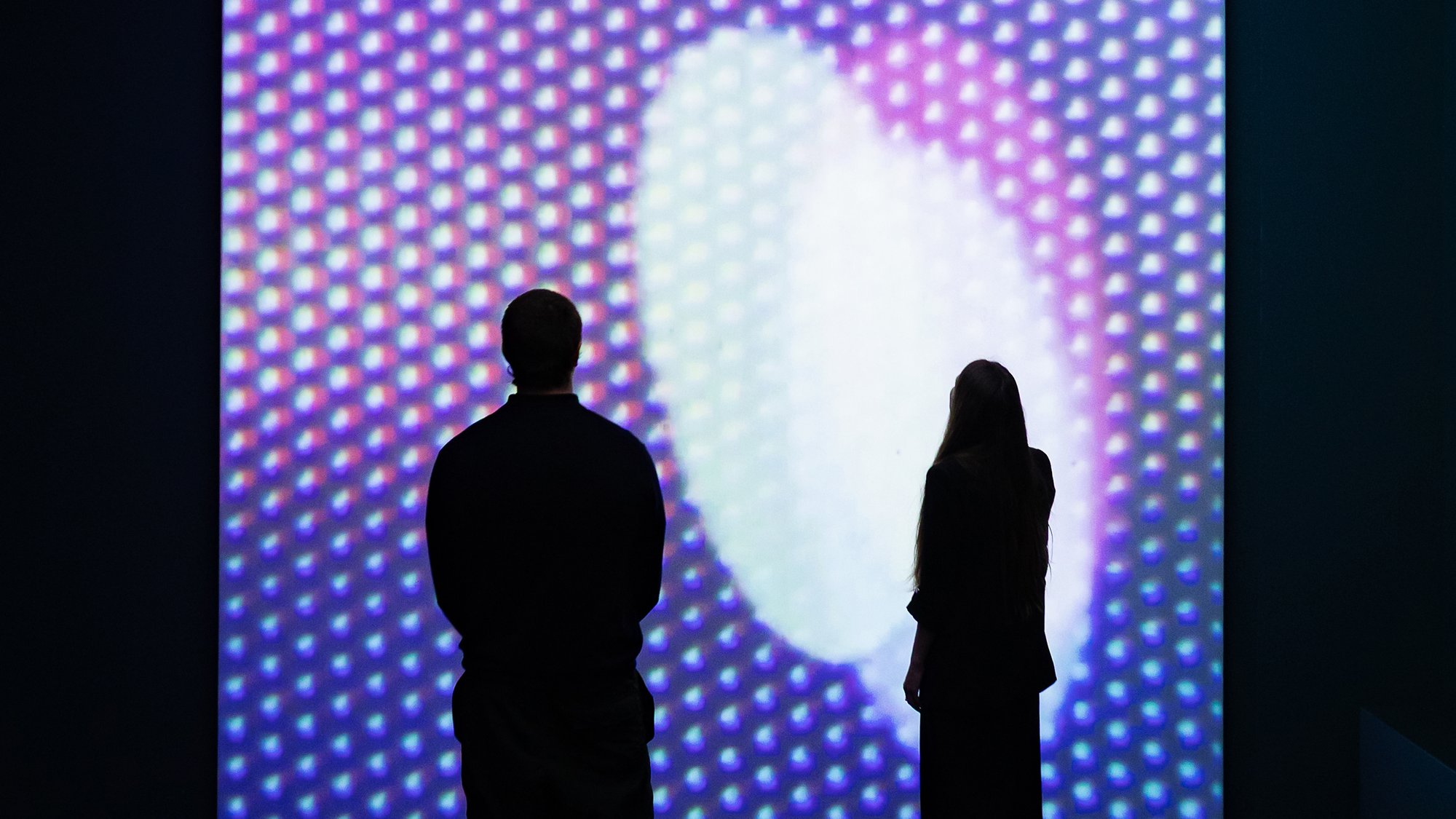
LI-MA x Nxt Museum, “Pioneers of Media Art | The First Years of MonteVideo”, installation view at Nxt Museum, Amsterdam. Photography by Maarten Nauw
At LI-MA we want to bring together the different groups who have care of media art. Some museums with media art in their collections deal with it in a certain way, one that could be either improved or better communicated so that others can learn from it. Then there are artists who have their individual ways of sustaining the work, or are looking for ways to do it. Both their work, and their archives.
And then of course you have scholars and students — art students, art history students, technical students — all of whom have their own angle. LI-MA is a place where we like to bridge those differences. And we work internationally, with both institutions, and artists.
Besides being a knowledge institute, we also offer preservation services to museums and private collectors, and some archives outsource the maintenance of their media artworks to us. We have a technical infrastructure where works are stored and monitored. Museums or the collectors also come to us for support with technical advice on how to present the work. We do this for about 70 institutions and provide distribution support to a couple of hundred artists.
We also do research into different preservation strategies for preservation or technical research — how to care, for example, for artworks made on Commodore Amiga PCs in the 1980s or how to preserve NFTs. We are also looking into other lines of preservation that are not so much the technical transfer of works to another system, not migration nor emulation, but representation — a transition of the concept to a different surface or to a different audience. That particular program is called Unfold and we have used it for projects addressing works by Dan Graham, Nan Hoover and the Vasulkas. And now are working on the legacy of the Dutch artist Moniek Toebosch.
LJ: How about the annual Transformation Digital Art symposium?
GW: This year we had our 10th edition. The first Transformation Digital Art edition — it then had a Dutch title, Transformatie Digitale Kunst — in 2016 was dedicated to the work of one digital pioneer in the Netherlands, Peter Struycken, whose work is in multiple collections. And for each work we, together with private and corporate collections, came up with a preservation strategy, and helped educate the institutions in it.
Luna Maurer, performance of Emoji is all we have, Transformation Digital Art 2024, hosted by Nieuw Instituut, Rotterdam. Photography by Pieter Kers
We made a nice video — “Digital art. Who cares?” — in collaboration with the Foundation for the Conservation of Contemporary Art. Rafaël Rozendaal also presented works at the symposium. We discussed the preservation of his work and we produced a video documenting the development of his work.
The following year, 2017, there was a similar collaborative project, Future Proof, but dedicated to the work of one media artist, Geert Mul. His digital, often interactive works needed both defining and a preservation strategy. Mul had a solo exhibition at the Stedelijk Museum Schiedam, where he wanted to present the works that were not in a collection. He had to take care of the preservation himself, and approached us for help. Together we made scripts and scenarios of how to preserve the work, and present it at Schiedam, and the symposium was held during the exhibition. Jon Ippolito [Professor of New Media, University of Maine, and formerly of Guggenheim, where he co-ordinated the museum's Variable Media Initiative] and others presented thoughts of how to deal with digital artworks.
We made video documentation of the installation and preservation of Gert Mul’s work, in which we asked artists to speak in front of one of the works to describe its functionality and key elements. We also devised a questionnaire for artists, an artwork documentation tool, to use as a checklist of what to think about, and what information might be needed for the future.
Installation view, “Reboot | Pioneering Digital Art”, Nieuwe Instituut, Rotterdam, 2023-24, with work: Jan Robert Leegte, three versions of Scrollbar Composition, 2000. Photography by Pieter Kers
From 2017 onwards another line of research was presented at the symposium, called ArtHost — to host online artworks for others and look into preserving online artworks. It was developed in collaboration with the artists Constant Dullaart and tested using work by artists including Martine Neddam.
This is how we work. We research particular cases, and extract generic questions or generic solutions, around how to present it and how to care for it. Or the other way around. Over time, we have created hundreds of case studies, and a knowledge base, taking us more into education.
LJ: Given your archival and educational work, have you been involved in creating genealogies for digital art?
GW: Some years ago we started work on a canon for digital art from the Netherlands. A collaborative project that we discussed in several places including the Transmediale festival in 2018. The Digital Canon shows 20 selected works of Dutch art. If you “flip” the website, you can read the argument behind the choices, and the discussions we had around defining and selecting. We showed these works in dialogue with nine commissioned contemporary artworks in an incredible exhibition, “Reboot”, at Nieuwe Instituut, Rotterdam, 2023-24.
Many of the works had to be preserved before they could be presented. And, as we always do, we connected the process (under the title Digital Care) with the community, with the artists, and with different groups — to make the whole thing possible.
Gaby Wijers is founder and director of LI-MA − Living Media Art, a centre of expertise in (new) media art based in Amsterdam. She has a background in information management, theater, and informatics, and previously worked as coordinator of collection, preservation and related research at Montevideo/TBA/NIMk, Amsterdam (NL). Wijers has initiated, advised on, and contributed to numerous national and international projects dedicated to the documentation, preservation, and accessibility of (new) media art and performance. These include CUSP, EMBARK, ArtHost, UNFOLD, Transformation Digital Art, Preservation of Media art Collections in the Netherlands, Inside Installations, Inside Movement Knowledge, Collaborative Infrastructure, Digitizing Contemporary Art, Digital Canon?!, Documenting Digital Art. She is an active member of various national and international networks such as the Foundation for the Conservation of Contemporary Art (SBMK), the Dutch Digital Heritage Network (NDE), and Network Archives Design and Digital Culture (NADD). In addition, she is a guest lecturer at the University of Amsterdam and an honorary research fellow at the University of Exeter.
Louis Jebb is Managing Editor at Right Click Save.