·News
New Shows to See Around The World
From CryptoPunks at NODE to Constantin Brancusi, museums and galleries are leaning into art and tech in 2026
From CryptoPunks at NODE to Constantin Brancusi, museums and galleries are leaning into art and tech in 2026
In 2026, the art world calendar includes a raft of high-profile biennials — the 82nd Whitney Biennial (March 8 to August), the 61st Venice Biennale (May 9 to November 22), the 25th Biennale of Sydney (March 14 March to June 14); and the 16th Gwangju Biennale (September to November) — as well as new art fair players in the shape of Art Basel Qatar and Frieze Abu Dhabi; and the second iteration of Zero 10 digital art section at Art Basel Hong Kong.
In a month when the Web3 art world has learnt of the cancellation of NFT Paris, but received confirmation that NFC Summit in Lisbon goes ahead in June, we survey exhibitions of art made with technology supported by galleries and institutions around the world. They include the CryptoPunks “10,000” exhibition to mark the opening weekend of the first space, in Palo Alto, California, created by the Node Foundation (NODE), a significant new non-profit cultural institution for digital art. The weekend launch (January 23 to 25) takes place during the third annual SF Art Week
The exhibitions featured include the last chance to see Analivia Cordeiro’s “Memory” at bitforms gallery, New York, in the year that Steven Sacks’s historic New York space celebrates its 25th anniversary; immersive art at Somerset House, London, the Berggruen Art Foundation Palazzo Diedo in Venice and the opening installation at the new Taichung Green Museumbrary, in Taiwan’s second city; and the remediation through photography of the work of the ur-modernist meme-generating sculptor Constantin Brancusi, through his own lens, and those of other artists.
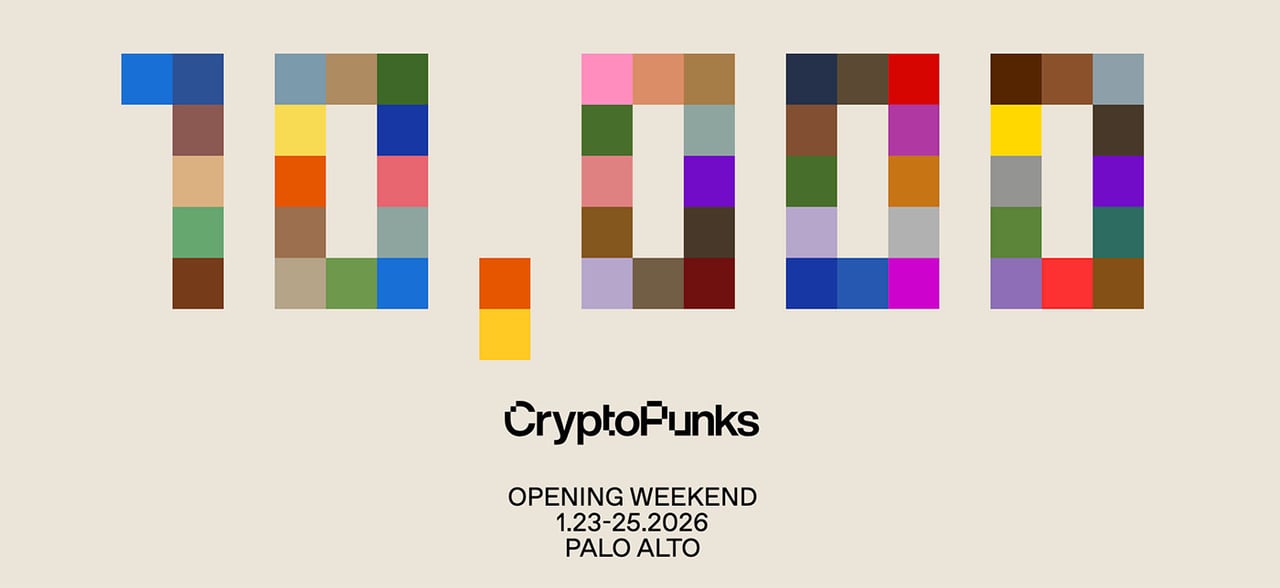
“10,000” is a celebration of CryptoPunks (2017) — the groundbreaking early NFT collection from pioneering creative technology studio, Larva Labs, founded by Matt Hall and John Watkinson — that marks the opening of the first space created by the non-profit NODE foundation. NODE was launched in April 2025 with a founding grant of $25 million from the digital art collector and entrepreneur Meyer “Micky” Malka (founder of Ribbit Capital), and Becky Kleiner, to support their belief, declared in a statement on the foundation website, that “digital art is the defining art form of this century.”
NODE acquired the IP to CryptoPunks in May 2025. Hall and Watkinson — with Erick Calderon, founder of Art Blocks, and Wylie Aronow, co-founder of Yuga Labs — are on the NODE advisory board. In October 2025, Larva Labs announced, at the time of the launch of Quine (2025), that they were giving 25% of their proceeds for the project to NODE “and their mission of supporting the continued stewardship of CryptoPunks and the broader digital art space.”
The installation at NODE will include a panoramic and interactive display of all 10,000 CryptoPunks in the collection, for visitors to explore. And the artist Beeple will be presenting his digital sculpture Diffuse Control (2025) with three iterations curated by Larva Labs.
NEORT gallery, Tokyo, and Glimmer DAO are holding a one-day celebration of pixel art, its aesthetic and cultural impact, at Bryant Street Gallery, a four-minute walk from the NODE space, in Palo Alto. The event, tracing the inspiration that CryptoPunks gave to a digital art movement across Asia, especially in Japan, features the work of Larva Labs, PIV, Yosca Maeda, Excalibur, and Bright Moments. Apply to attend at this link.
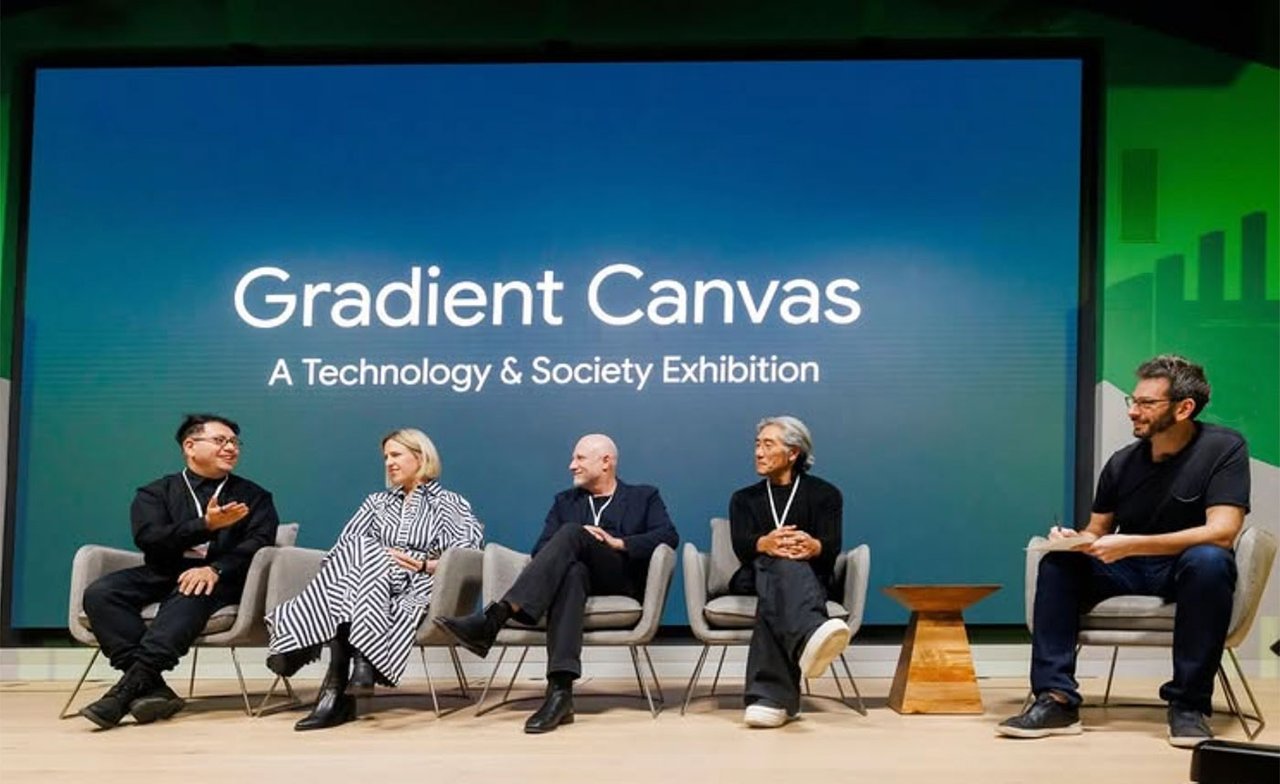
At the end of 2025, Google Arts & Culture collection announced the acquisition of 11 examples of AI art, inspired by the San Francisco Bay Area, by Refik Anadol, Linda Dounia, Alexandra Daisy Ginsberg, Michael Joo, Certain Measures, Rashaad Newsome, Trevor Paglen, Sarah Rosalena, Casey Reas, Sasha Stiles, and Clement Valla, commissioned for “Art + AI”, to be shown at the search giant’s Gradient Canopy building, at Mountain View, California.
On January 8, Blaise Aguera y Arcas, CTO of Technology & Society at Google, who works on fundamental AI research, and the nature and origins of intelligence, moderated a panel to mark the opening of the exhibition, with Anadol, Ginsberg, Joo, and Paglen. “A decade ago, I founded the Artists + Machine Intelligence program with an inkling that machine learning could be a creative medium, one that expands how we perceive reality and the mind itself,” Aguera posted on Instagram.
“But what these artists have created is far more profound than I could have imagined, with each piece revealing forms of intelligence beyond our own.”
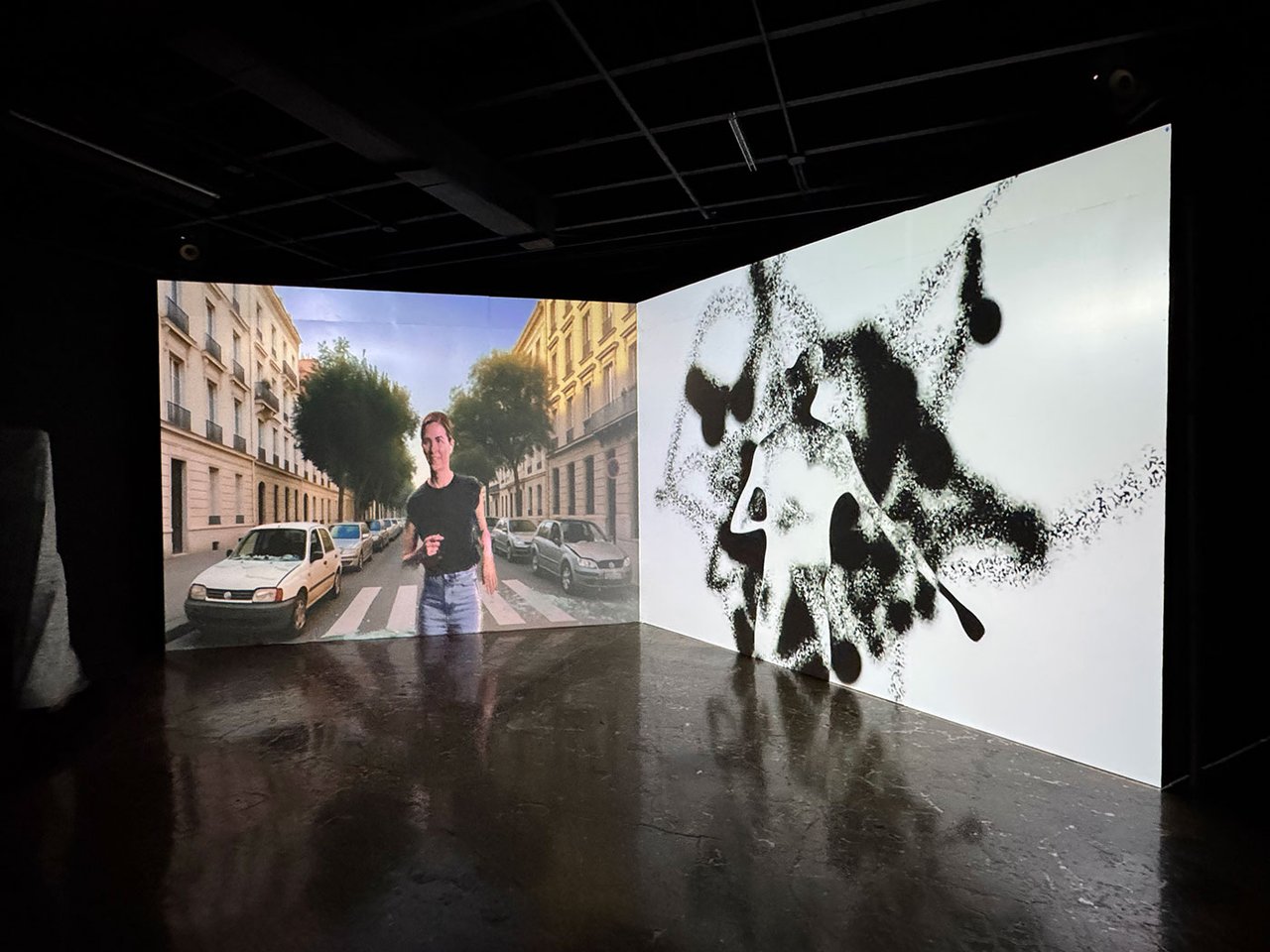
MAD Arts, the museum, community hub, and laboratory for art and technology, in Dania Beach, Fort Lauderdale, is showing the transdisciplinary artist Ana María Caballero’s “micro-poetic” film, Pace (2025), a homage to Pipilotti Rist’s Ever Is Over All (1997). In the latter video installation, a woman gleefully smashes car windows with a flower as she walks down a street,
Caballero stars in her own work — the first in the “Literal Litoral” series of explorations combining her performed poetry with cinematic AI — executing movements rooted in salsa music, which she grew up dancing, and draws on as a source of resilience. As she advances through a streetscape, urban wreckage is repaired.
“Whereas Rist’s protagonist symbolically takes down failed systems,” Caballero says on her website, her main character “practices radical repair. Pace posits that private joy is as powerful a form of resistance as destruction.”
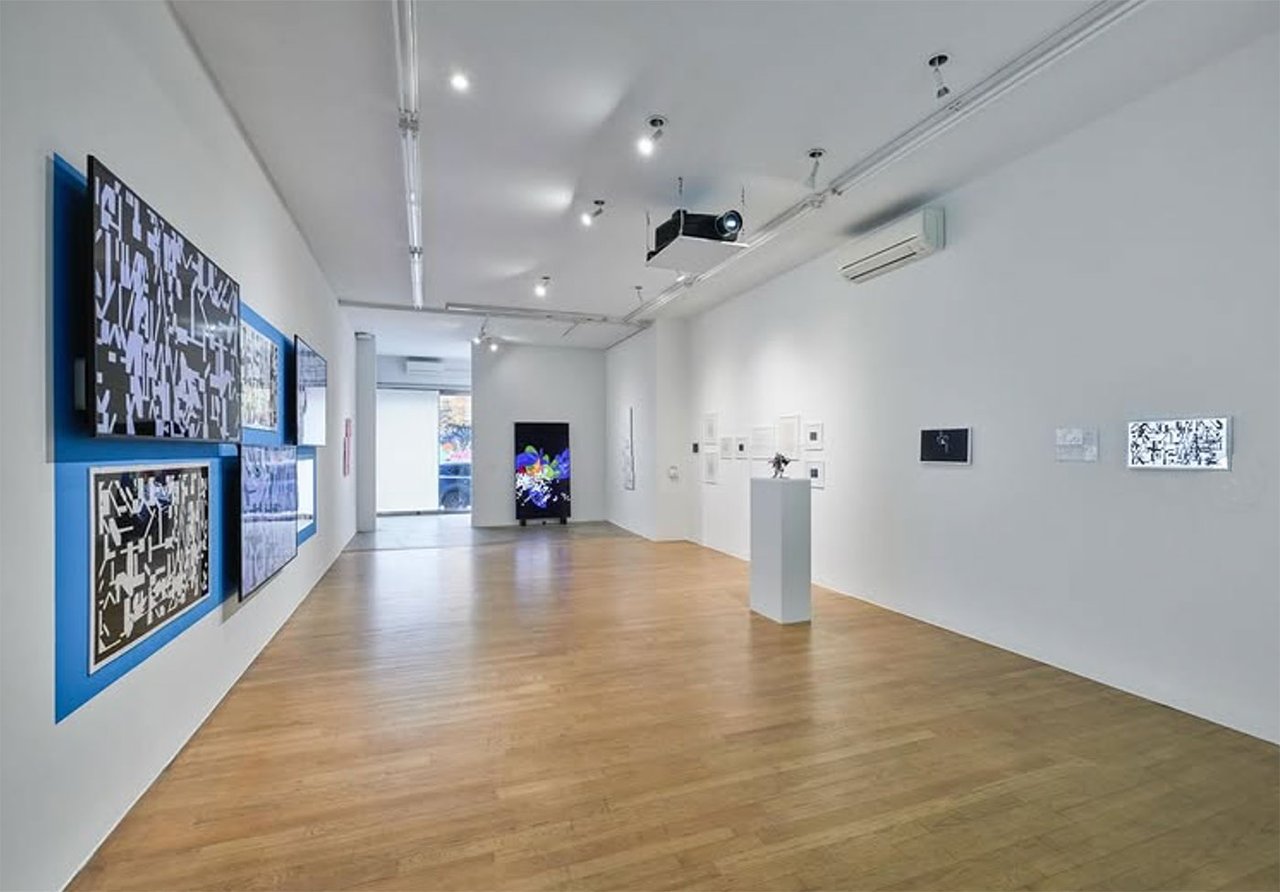
The pioneer of generative choreography Analivia Cordeiro has used code, since the early 1970s, to translate dance into digital experiences that foster dialogue, in her own words, “between rules and freedom.” Cordeiro’s single-artist show at bitforms, “Freedom”, highlights her role as a pioneer in the intersection of body movement and computation when, long before the advent of motion capture and interactive media, the artist developed methods that anticipated many of the processes now central to digital art and performance.
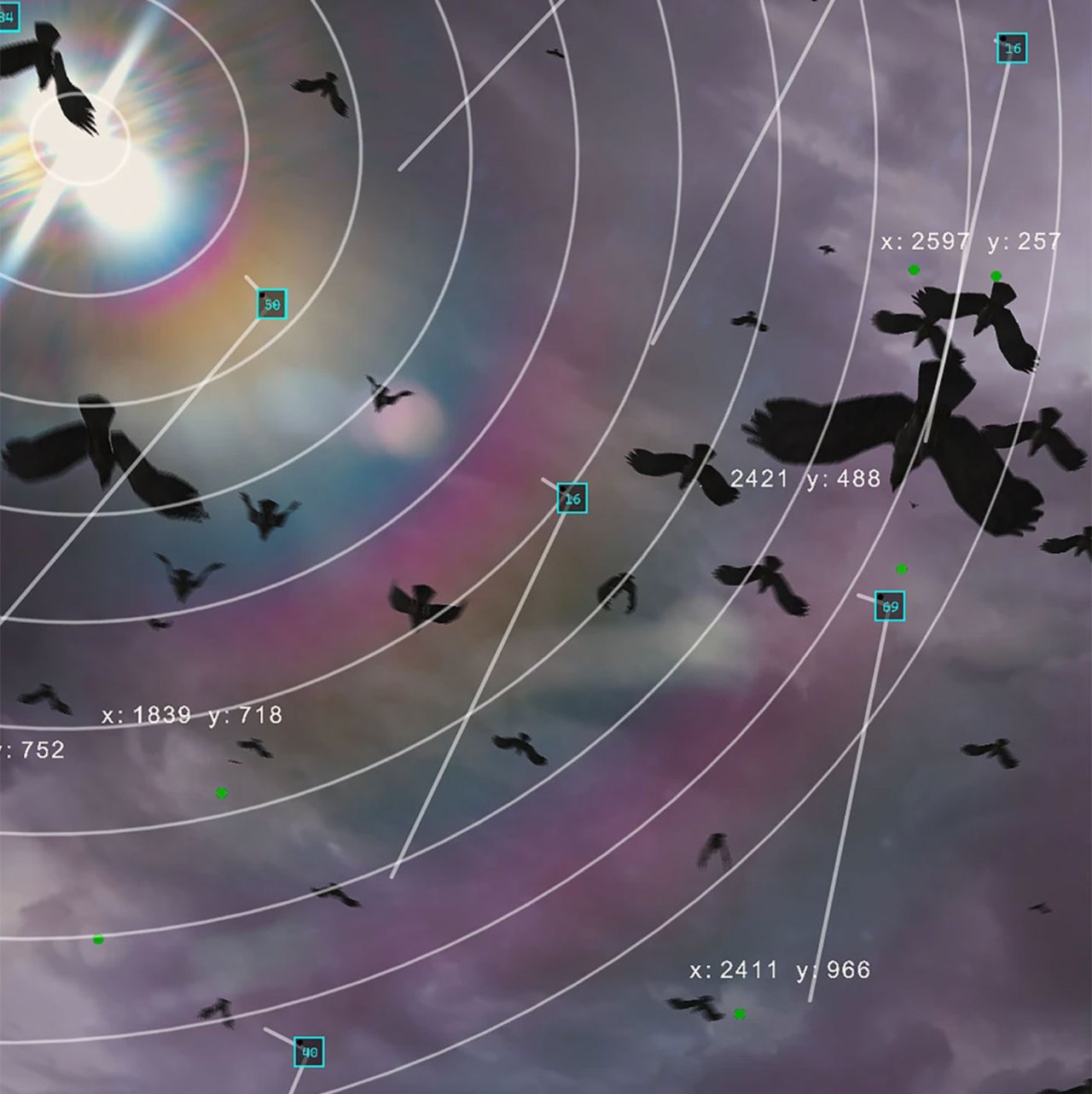
TRANSFER Download: AliveNET. Chia Amisola, Leo Castañeda, Carla Gannis, Huntrezz Janos & Antigoni Tsagkaropoulou, Fabiola Larios, Rosa Menkman, Lorna Mills, Eva Papamargariti, Yoshi Sodeoka | with TRANSFER. 16 January to 1 March, 2026
TRANSFER Download was conceived in 2016 by Kelani Nichole and Harvey Moon, and in the past ten years has travelled to San Francisco, New York, Los Angeles, Santa Fe, Miami, Basel, and Shanghai. Back in New York, TRANSFER is partnering with Nguyen Wahed to present an immersive exhibition “exploring the fragile space of perception between human and machine vision”, featuring nine artists’ work presented in TRANSFER’s three-channel interactive format.
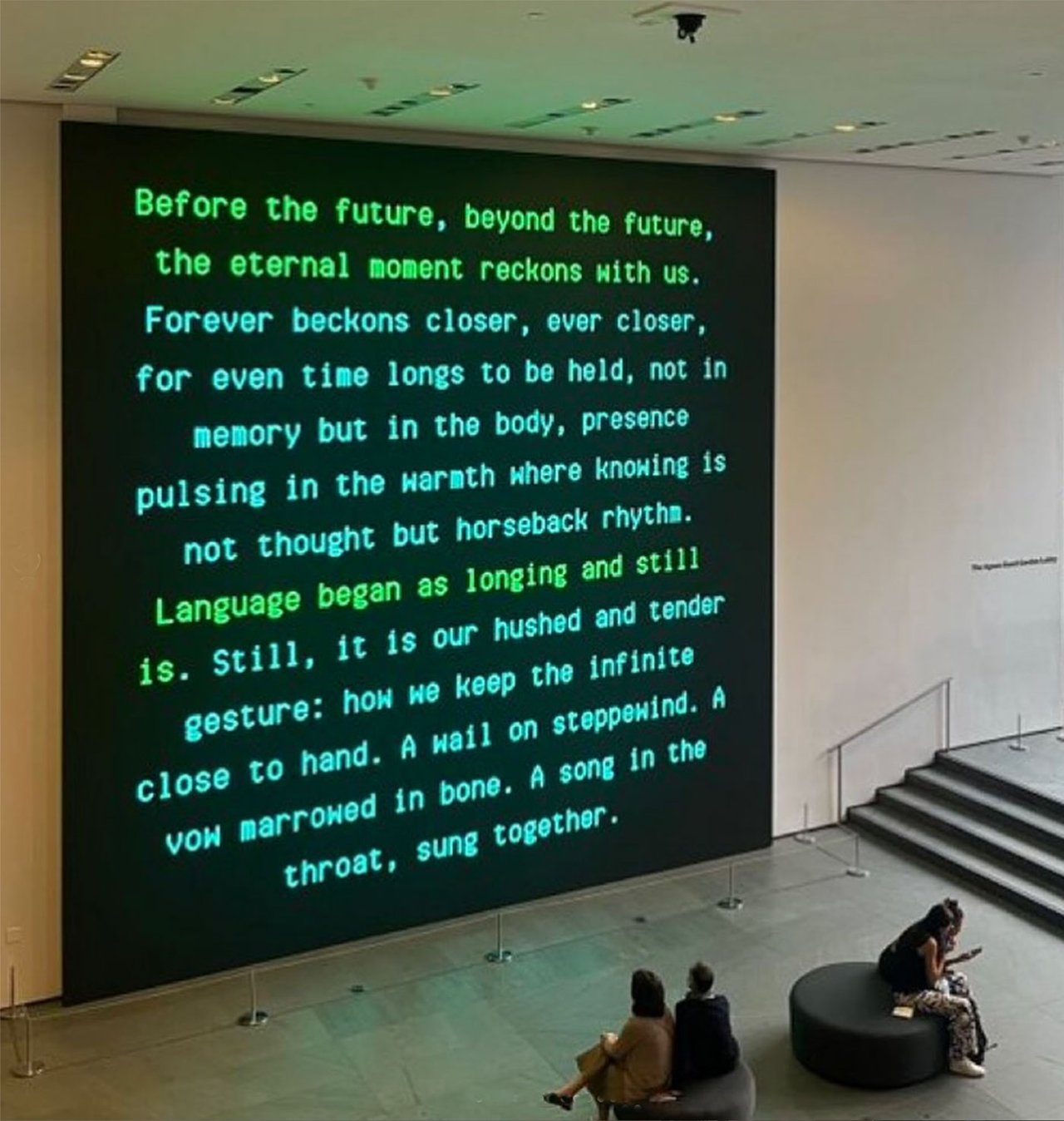
Sasha Stiles’s A LIVING POEM , an infinite text powered by human imagination and computer algorithms, is on show on the giant screen in the Agnes Gund Garden Lobby at MoMA in New York until Spring 2026. In 2025, Stiles received The Lumen Prize’s Literature & Poetry Award for her AI-infused infinite poem WORDS BEYOND WORDS. The artist also brought poetry to Art Basel in June with the official poster for the fair, a pop-up “POEMSHOP”, and a live performance of generative poems, written in real time.
“Within this landscape, I sensed a palpable shift in the understanding of poetic language as a vital force: a dawning realization that poetic intelligence, the intertwining of emotion and logic, order and rupture, is an essential literacy for navigating systems powered by linguistic patterns and natural language interfaces, and a way to stay human in a time of profound, ever-accelerating change.” (Sasha Stiles)
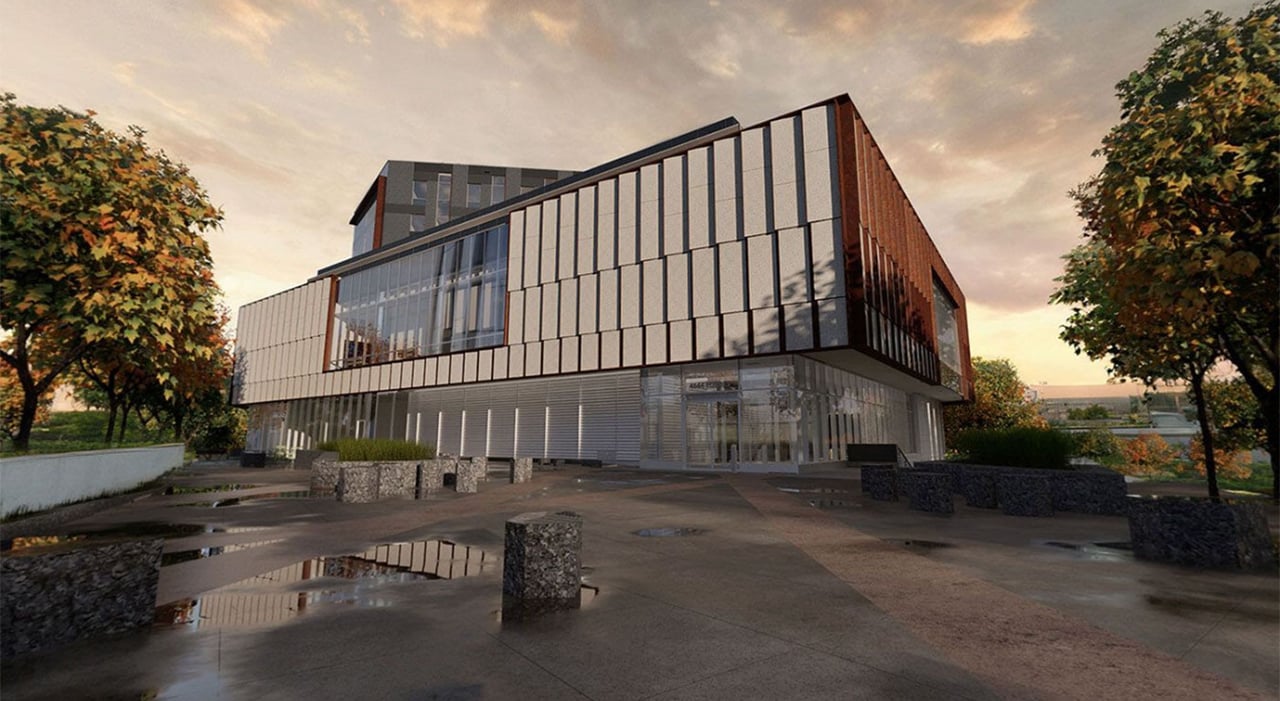
During construction work on its new home in the Richard King Mellon Hall of Sciences, the ICA Pittsburgh — Carnegie Mellon University’s contemporary art institute — is reimagining its gallery experience in a virtual world. The Generative Museum is an experimental project — developed for desktop users by the ICA in collaboration with the international non-profit KADIST and the virtual exhibition space EPOCH.
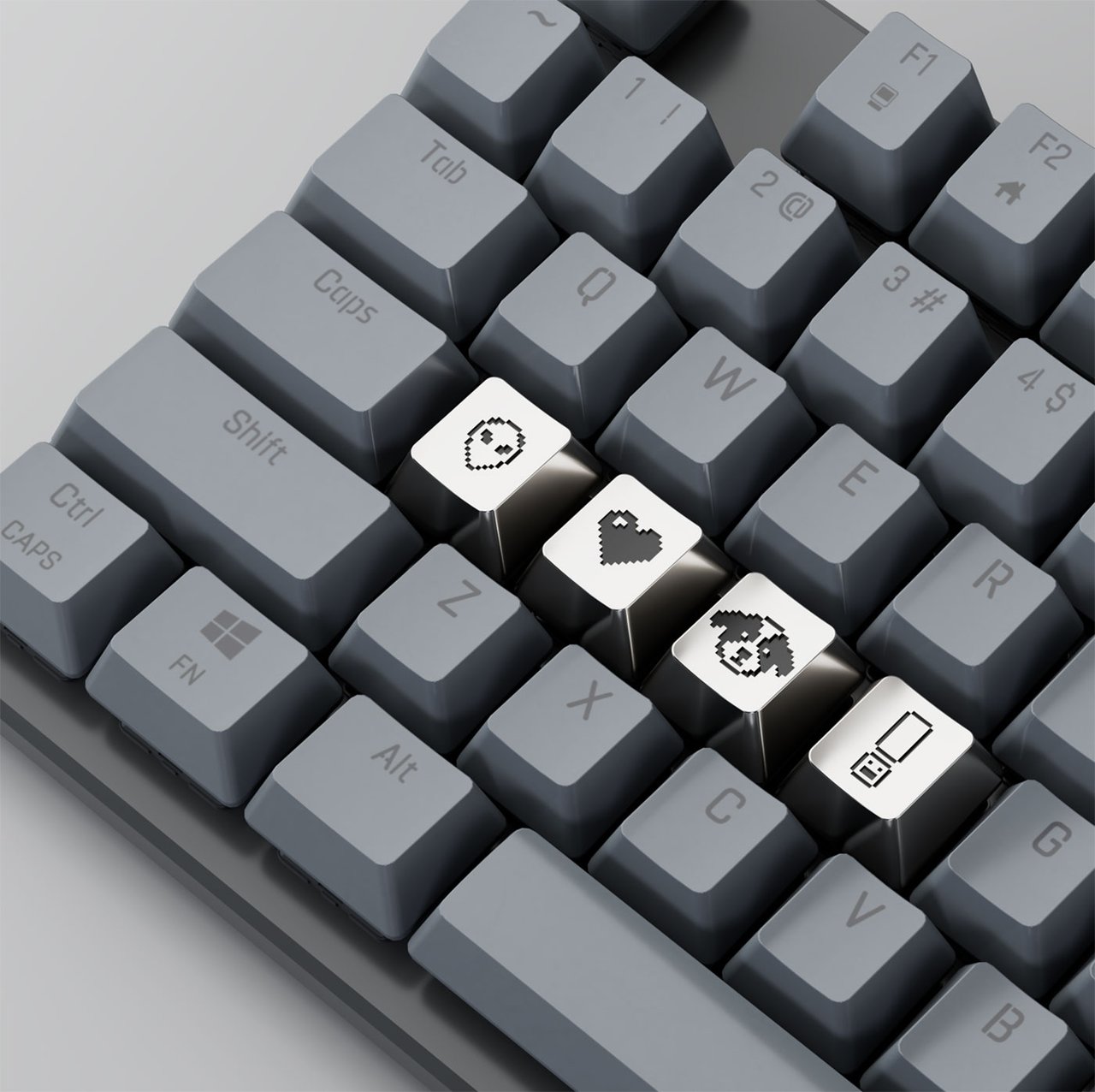
The spirit of Susan Kare’s historic user interfaces, created at Apple in the early 1980s in their pixelated glory, is captured in “Esc Keys”, a digital and physical limited-edition release from the artist. It includes 32 new icons by Kare, available in handcrafted designs by the Asprey Studio Workshop: either as computer keycaps, with enamelled images on sterling silver or gold vermeil computer keys, or necklace pendants. Each physical piece, handcrafted at Asprey Studio workshops, comes paired with the digital artwork.
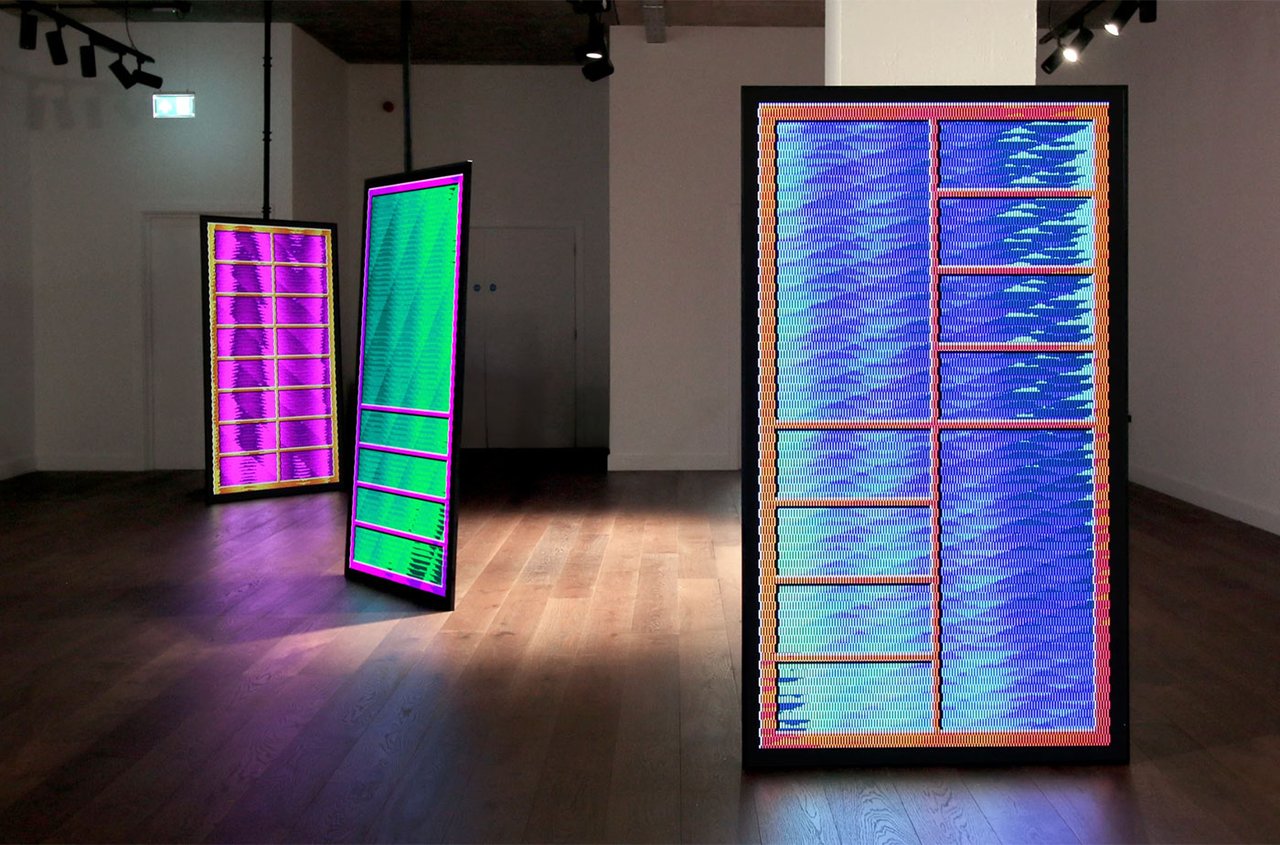
The Canadian-born artist Nicolas Sassoon has three bodies of work on show in his one-man exhibition at Nguyen Wahed’s gallery in Islington, north London. DOORS uses blockchain technology as a conceptual framework, where artworks become temporally locked, and transferable only when temperatures fluctuate in specific geographic locations. WAVES, created as a commission for Vancouver’s Yaletown-Roundhouse Station, shows Sassoon’s investigations into Moiré patterns and optical interference. Prismatic Studies draws from biological and atmospheric sources including butterfly wings, oil spills, and ice crystals to create screen-based experiences with color-shifting properties.
“My interest in moiré patterns, retinal persistence, and iridescence lies in the fact that these optical phenomena make us aware of optical illusions,” Sassoon says in an exhibition statement: “They also make us aware of the material complexity of the surfaces we’re looking at (in this case, screens).
“The beauty of optical and kinetic art forms lies in those moments, pointing to the perceptual limitations of our eyes and brains, as well as the devices used to deceive them.” (Nicolas Sassoon)
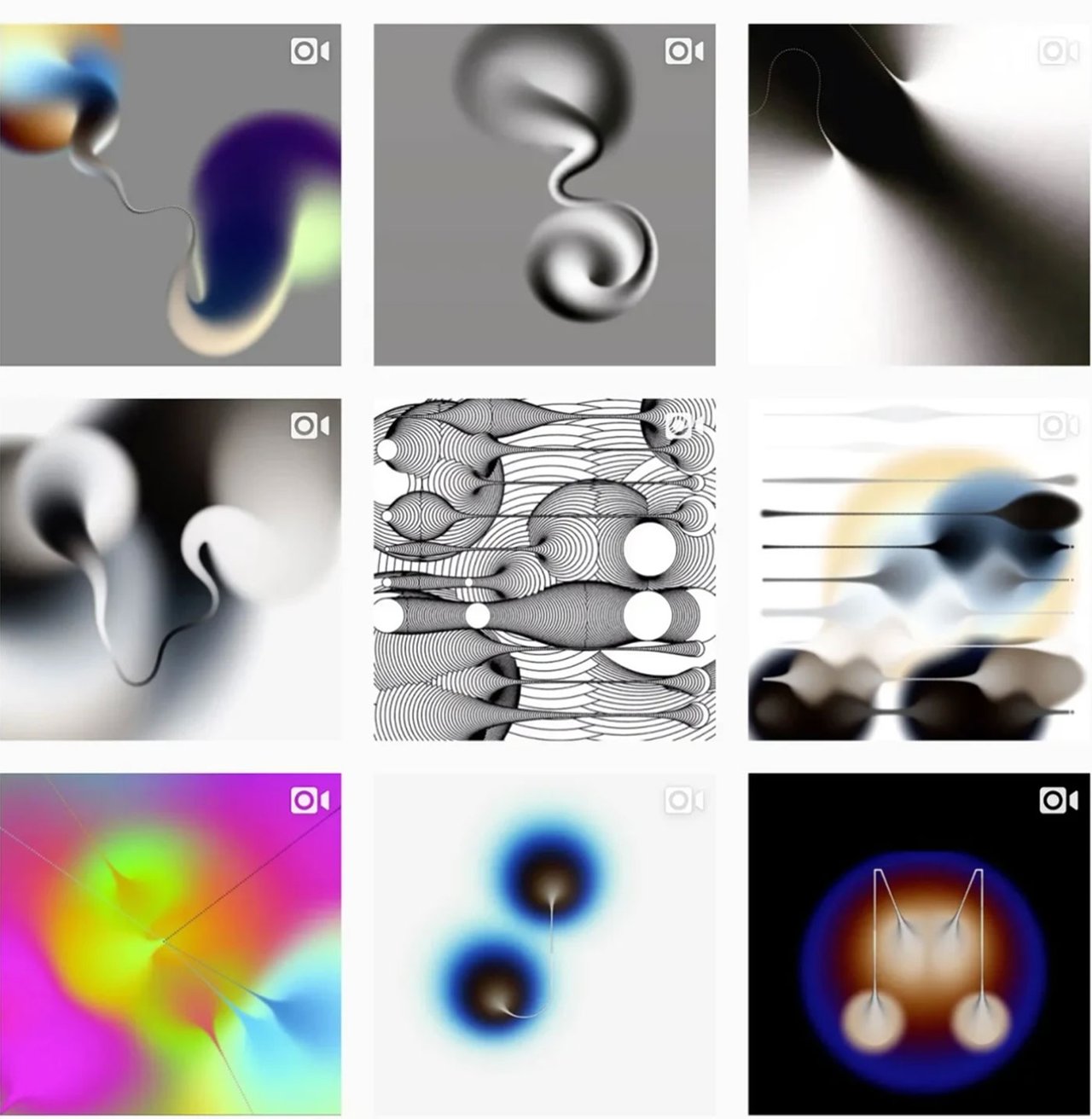
Nguyen Wahed is presenting a selected archive of Zach Lieberman’s celebrated daily sketching practice, a decade-long social media documentation of his digital experiment. Lieberman’s practice, the gallery says in an exhibition statement, “accumulates into something far more profound than the sum of its daily outputs”.
“As a creator, there are always voices in the back of your head telling you, ‘it’s not good enough’ or ‘people will think it’s silly’ or ‘you’re misjudging this’,” Lieberman says in an artist statement. ”I feel my job as a creator is to silence these voices (as much as possible) to the point where my head is almost empty. I can’t stress this enough, that single voice needs to be your guiding light.
“That voice might be your intuition, your curiosity, your love for the medium or the spirit that got you started. But whatever that is, that is something you need to protect dearly, like an exposed candle flame in the wind.” (Zach Lieberman)
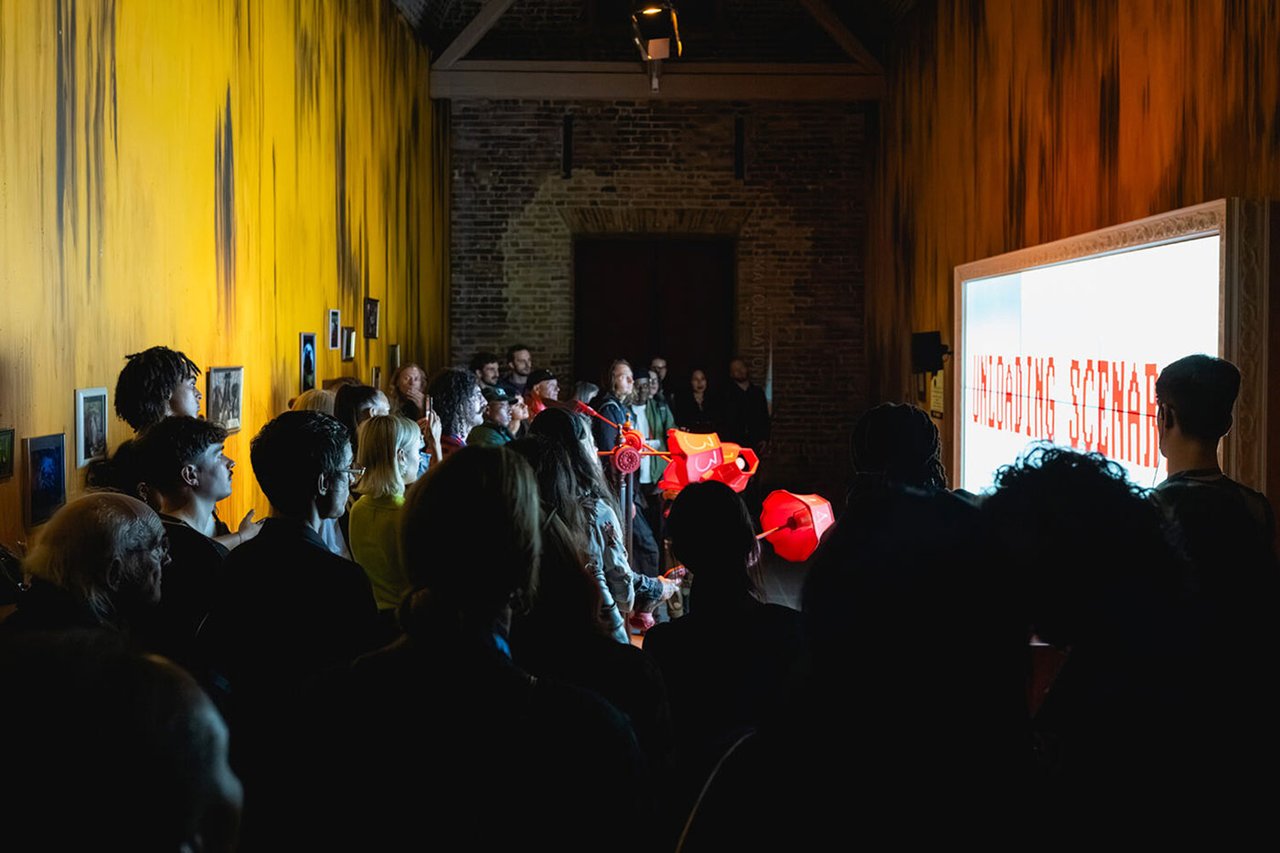
Danielle Brathwaite-Shirley’s striking exhibition — a video-game commission and multiplayer immersive experience that runs on game engines to explore themes of polarization, censorship, and social connection — is both timely and designed for all, whether they have experience of video games (and video-game controllers) or not. In an era of global diplomatic, political, and social unease, the exhibition is built on the backstory of an imaginary post-apocalyptic period when, following a “Day of Division”, people live in “Peace by Isolation”. That reference to isolation, the artist says, reflects “the kind of world we’re living in where there’s a group of people that you agree with [...] and the many groups of people that you don’t agree with; and there’s not much cross-pollination [between them]”. The exhibition asks how audiences “relate, respond, and resist when faced with collapsing systems and distorted realities.” It invites them to engage in difficult questions in an unsettled time.
The artist has addressed the challenge of audience inclusion by “naturalizing” game interfaces as household objects, rather than confronting non-gaming attendees with multi-button crablike controllers that are inviting mostly to a demographic that lives on Switch or PlayStation. In the exhibition’s three games, visitors are asked in one to open a cupboard door and in others to interact with tables or lamps in order to enter a gaming environment. These oversized interfaces allow multiple players to participate simultaneously as hands-on players or observers. They are also designed, Brathwaite-Shirley says, to provoke fun, a useful prerequisite — discovered in the game’s R&D sessions with psychologists — for encouraging strangers to interact.
In Spring 2026, “The Delusion” will continue and launch online, developed in partnership with The Forge and Black Girls Code.
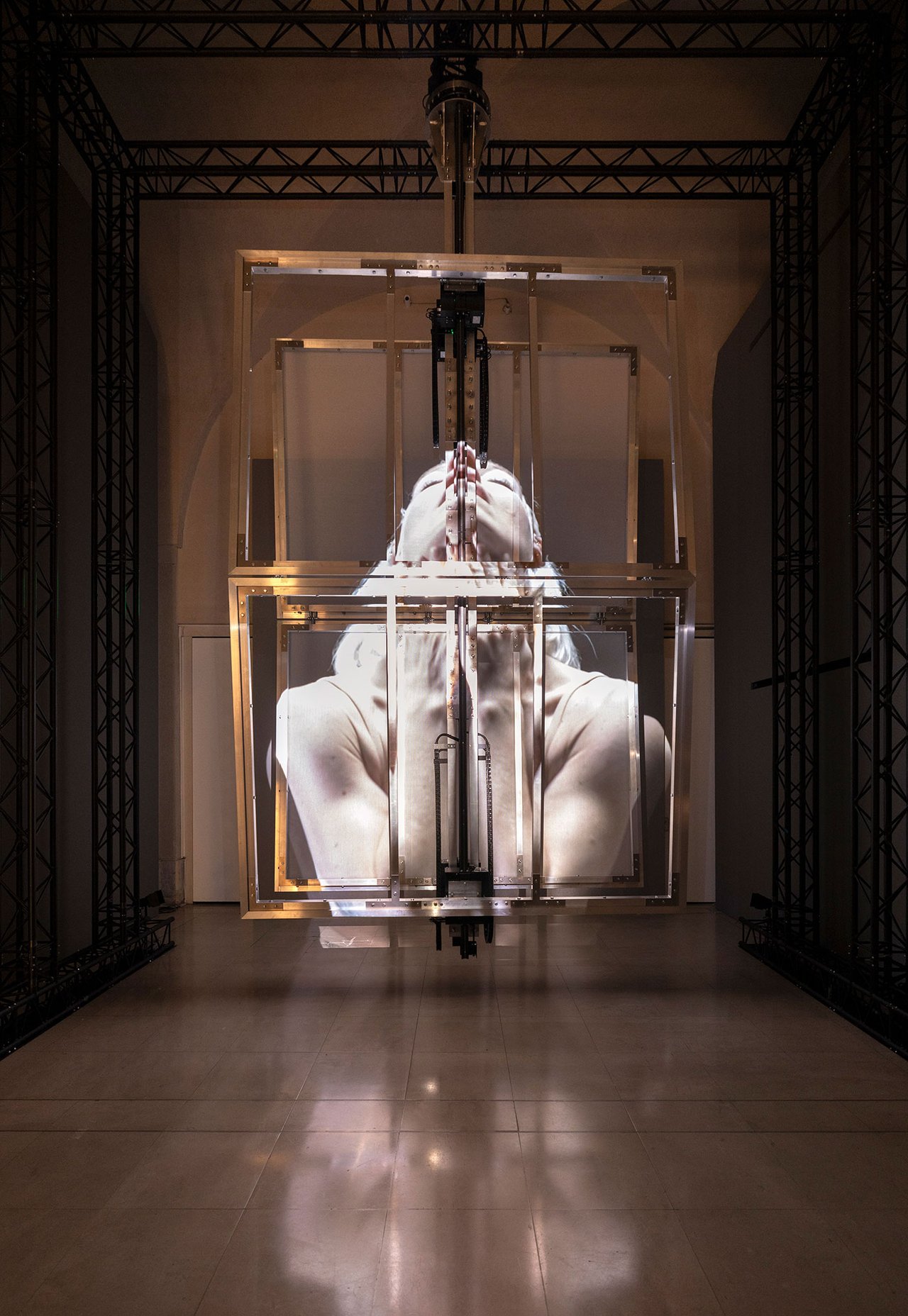
At “Wayne McGregor: Infinite Bodies”, at Somerset House, London, the tech-savvy choreographer’s AI and light-art-infused retrospective, curators are on hand to encourage even the most inhibited visitor to dance with Aisoma, one of the show’s many performance-focused installations, and be rewarded by having their moves played back to them through the prism of an elegance-enhancing AI model of performances from McGregor’s three-decade career.
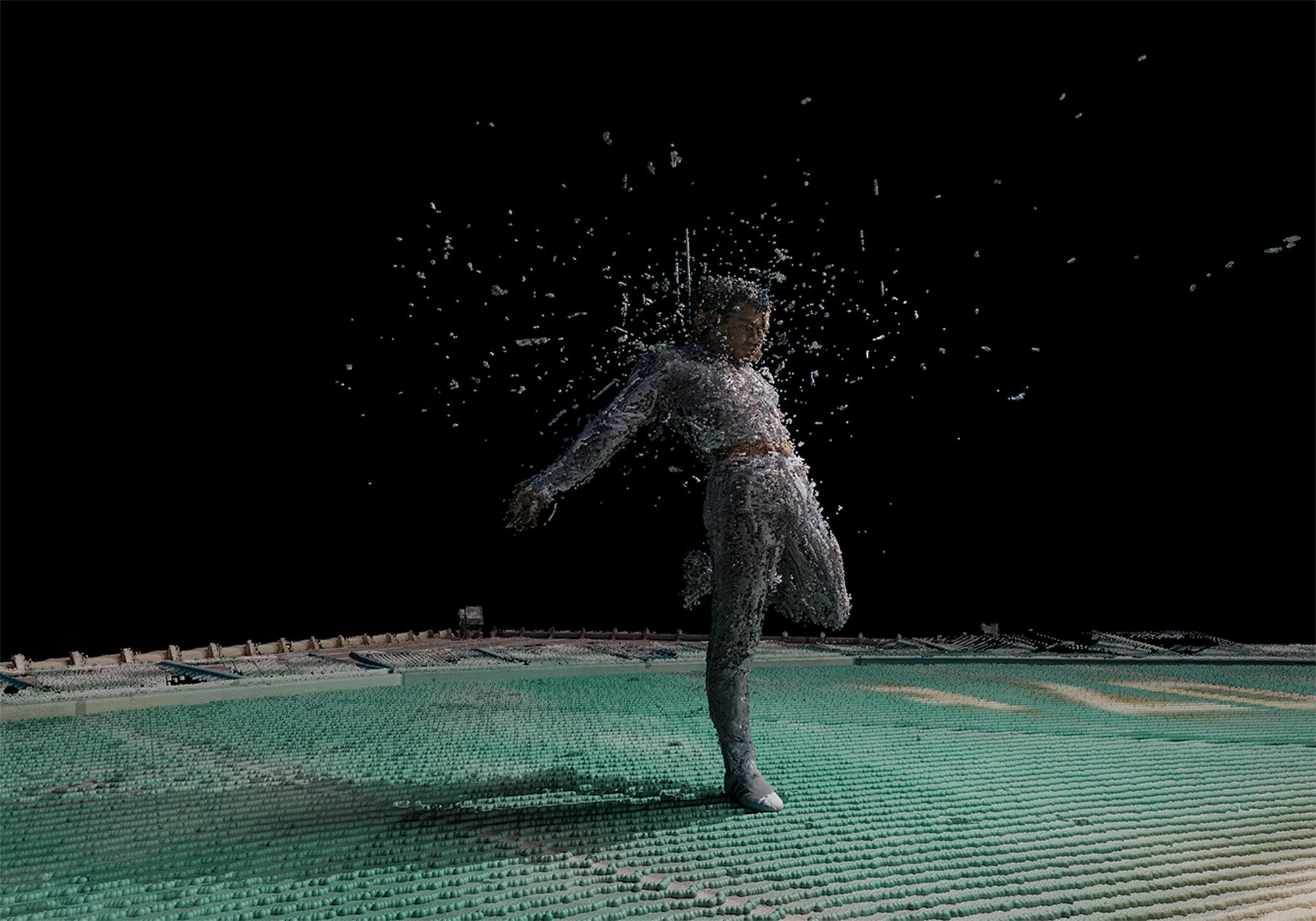
The most immersive piece in the exhibition is reserved for an off-site installation at Stone Nest in Shaftesbury Avenue. “On The Other Earth” is a 57-minute virtual experience where groups of up to 20 visitors at a time, standing and wearing 3D glasses, feel within touching distance of the digitally captured dancers from Company Wayne McGregor that surround them.
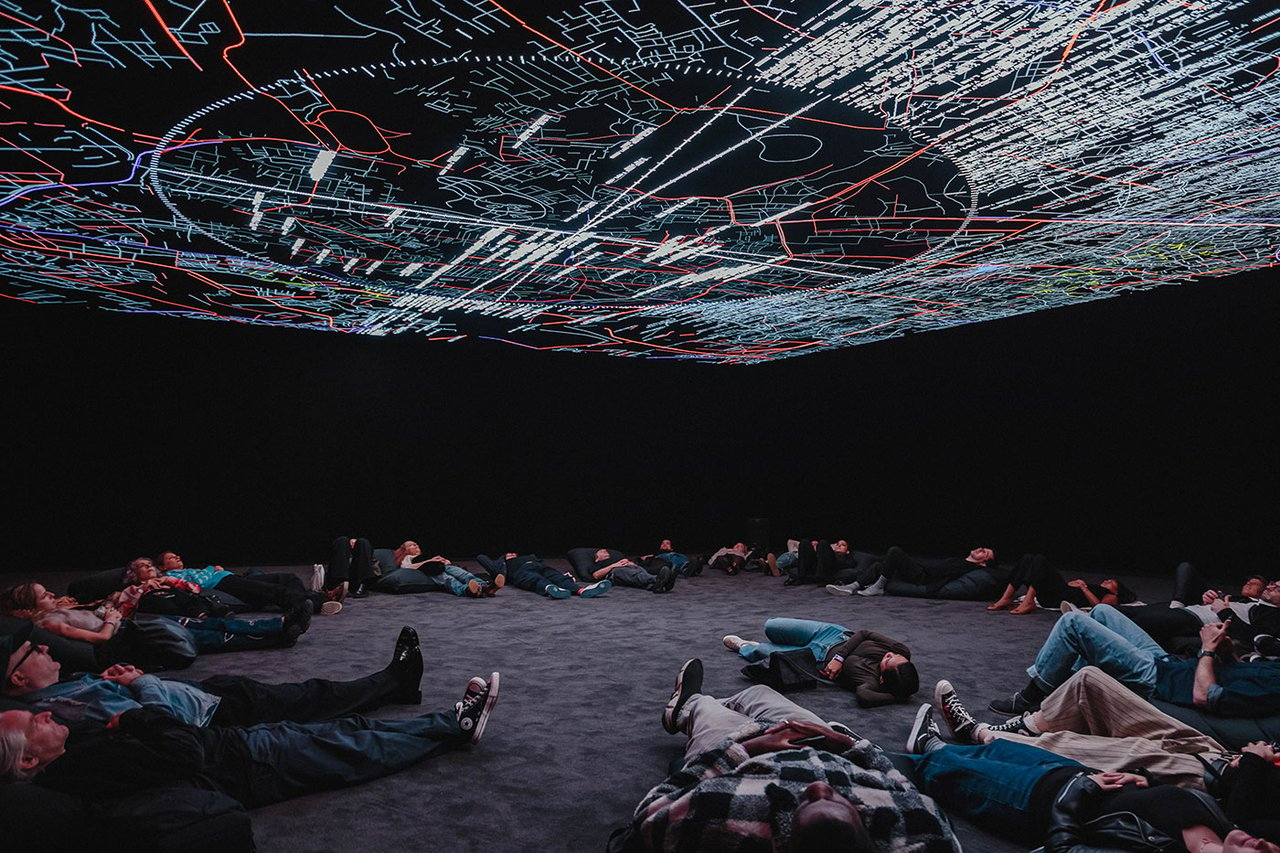
180 Studios, the high-tech cultural hub in the Strand, central London, recently extended two installations in its gallery spaces. A new site-specific audiovisual installation from the composer and media artist Ryoji Ikeda, data-cosm [n°1], commissioned by 180 Studios, examines a full range of data on nature — from particle physics to astrophysics — as was the case in a previous work, Ryoji Ikeda: data-verse (2020).
Paradigm Shift: New Dimensions in Moving Image, curated by Jefferson Hack and Mark Wadhwa in the large subterranean spaces of the Brutalist edifice that houses 180 Studios, presents moving image works from the 1970s to the present day, drawing from avant-garde cinema, TV, music video, performance, fashion, gaming and the internet. The featured artists include Dara Birnbaum, Cao Fei, Nan Goldin, Arthur Jafa, Derek Jarman, Mark Leckey, Josèfa Ntjam, TELFAR, Gillian Wearing and Andy Warhol.
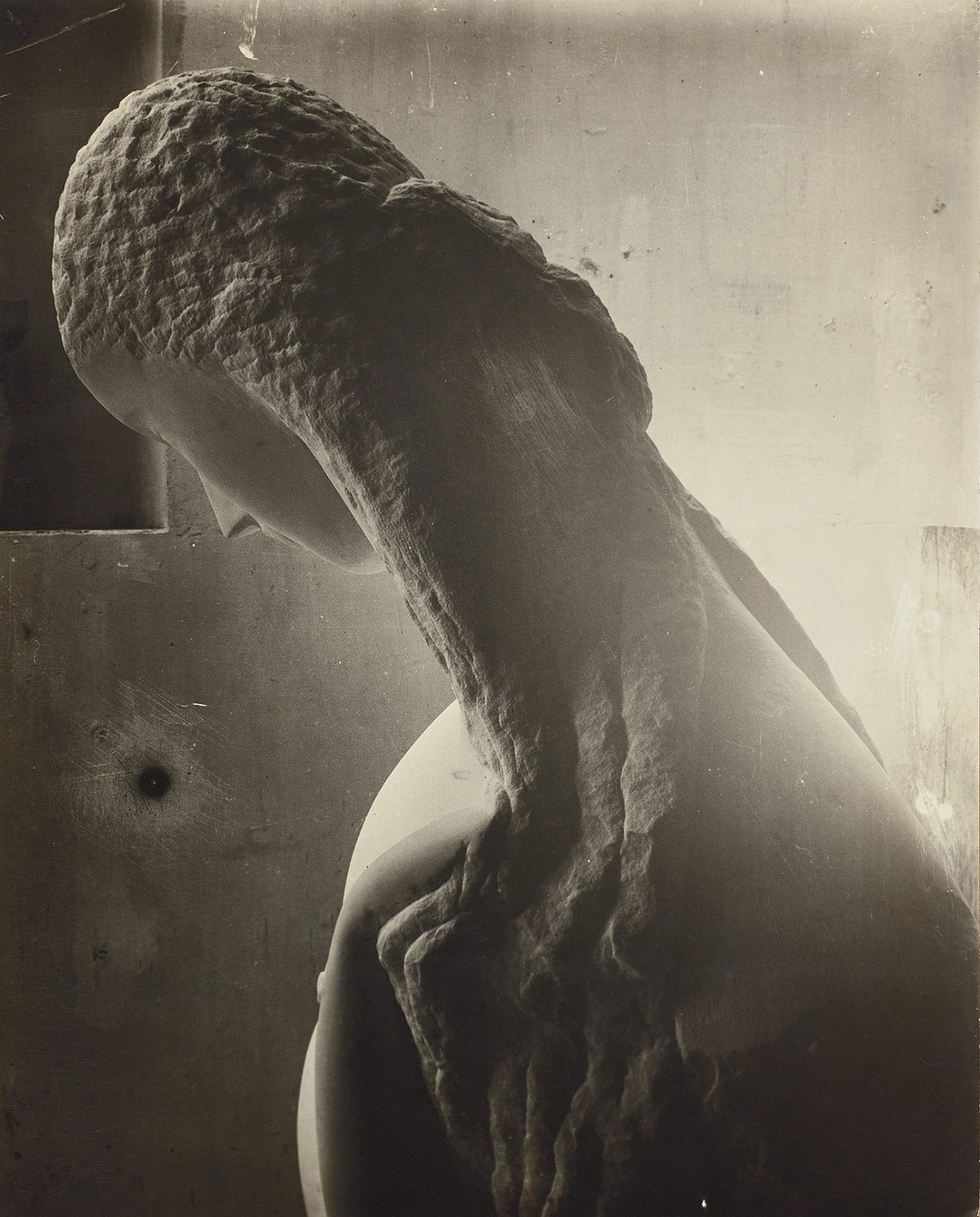
Constantin Brancusi, the ur-modernist sculptor, was also an accomplished photographer, remediating his work through an additional modernist lens. The show of his own photographs at Thaddaeus Ropac, London, is a reminder of what a central, minimalist, meme-worthy, role he played in 20th century art, inspiring abstract and digital artists and Web3 creators including Claire Silver.
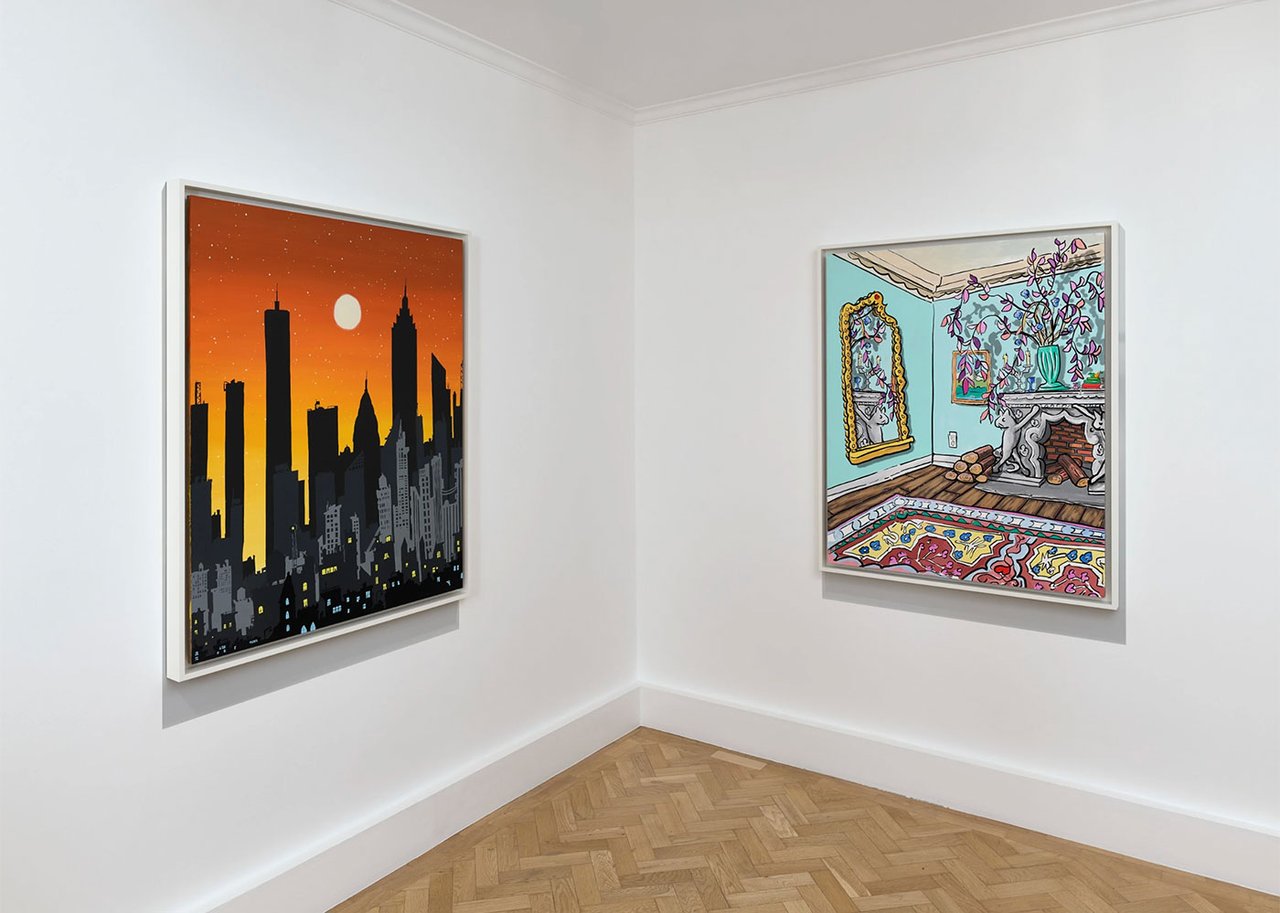
The Swiss-born, US-based, artist Urs Fischer is known for witty physical and digital art that comments on the process of entropy, of natural decay, and juxtaposes unrelated objects — think sculptures of wild animals mixed with kitchen utensils. In 2024 he collaborated with 1OF1 — the digital art collection founded by the venture capitalist, collector, and patron Ryan Zurrer — to mix decay and conjunction by reconfiguring his 2022 NFT series CHAOS #1–#500, which had been sold with digital sculptures. Owners of two or more of the original CHAOS NFTs were invited to have them combined into a new NFT, using special smart contracts. The owners of the new tokens were then given a new digital sculpture by Fischer created by fusing two or more of the original sculptures.
Fischer is showing two digitally-based collections in one of Gagosian’s small spaces in London’s West End. Upstairs the artist is showing four new paintings of ornate domestic scenes, based on drawings made on a digital tablet. In the downstairs gallery, Fischer is showing a video of older men eating bananas, produced using AI, with often comical results that serve as a commentary on the vagaries of verbal prompts
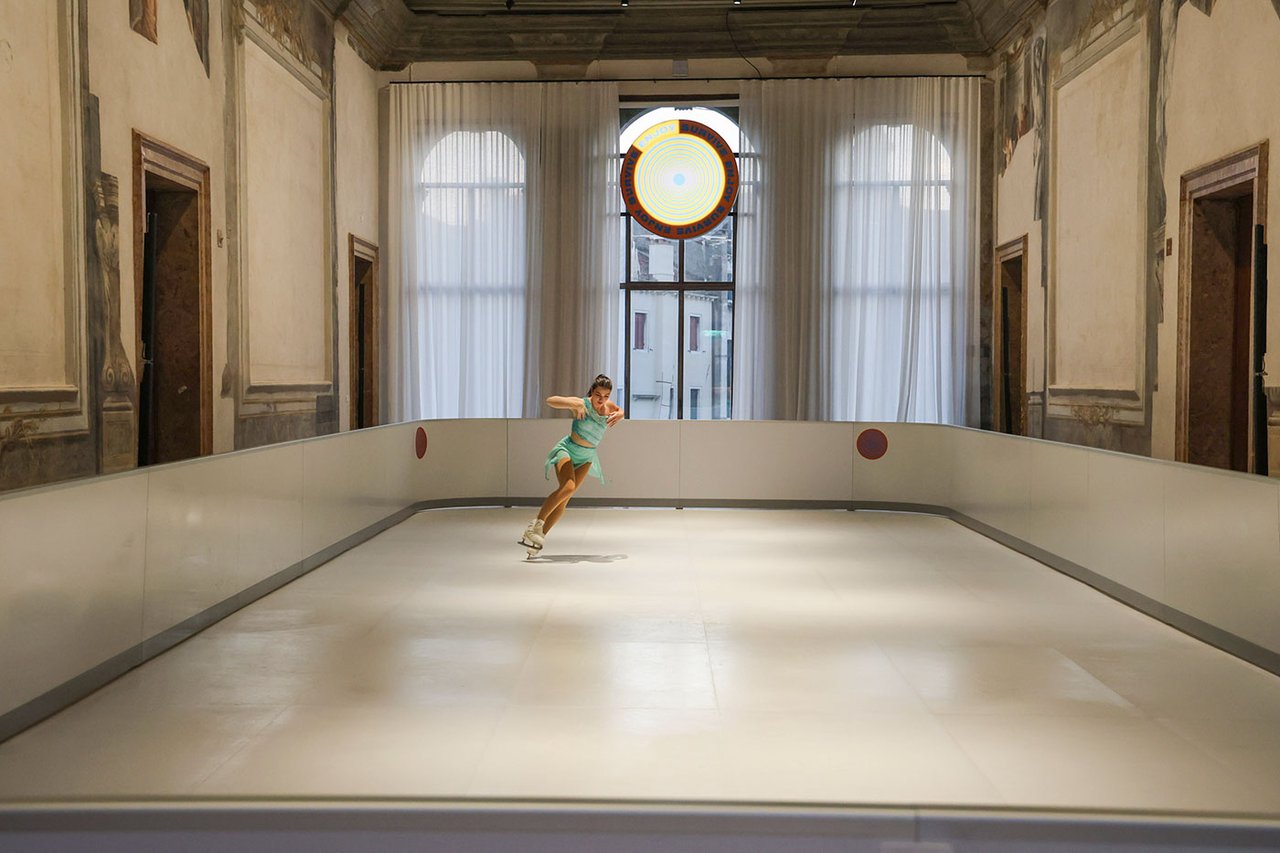
The algorithm-focused German conceptual artist Olaf Nicolai has brought his ice installation Eisfeld II to the first floor of the Palazzo Diedo, Venice. The audio-enhanced hybrid ice-rink piece — with a specially composed soundtrack by the Berlin band To Rococo Rot — is accompanied by Nicolai’s two lightboxes ENJOY/SURVIVE (I & II) at each end of the rink.
The installation, produced to mark the 2026 winter Olympics at Cortina d’Ampezzo, is the latest of many imaginative moments in the thoughtful restoration and reimagination of the 18th-century palace by the curator Mario Codognato and the architect Silvio Fassi, for the Berggruen Art & Culture foundation. Ice-skating or otherwise, this handsome palazzo, whose fabric serves as a vivid palimpsest of pre-modern and modern Venetian history, contains a remarkable collection of contemporary art. It makes for a warm recommendation for anyone attending the 2026 Venice Biennale.
The artist Ana María Caballero, winner of the Still Image category of the 2025 Lumen Prize, has a new installation Entre domingo y domingo opening at Max Estrella gallery. The title comes from Caballero’s first book, for which she won the José Manuel Arango Prize for Poetry of Colombia. Each alternate poem in this manuscript is titled “Sunday”, a structure, the artist says on Instagram, that juxtaposes the iconography of the weekend with that of the working day.
“Caballero’s installation visualizes her book’s creative proposal,” a gallery statement reads, “transforming everyday garments into spaces that invite close reading: every stitch becoming a moment of potential collective interpretation.”
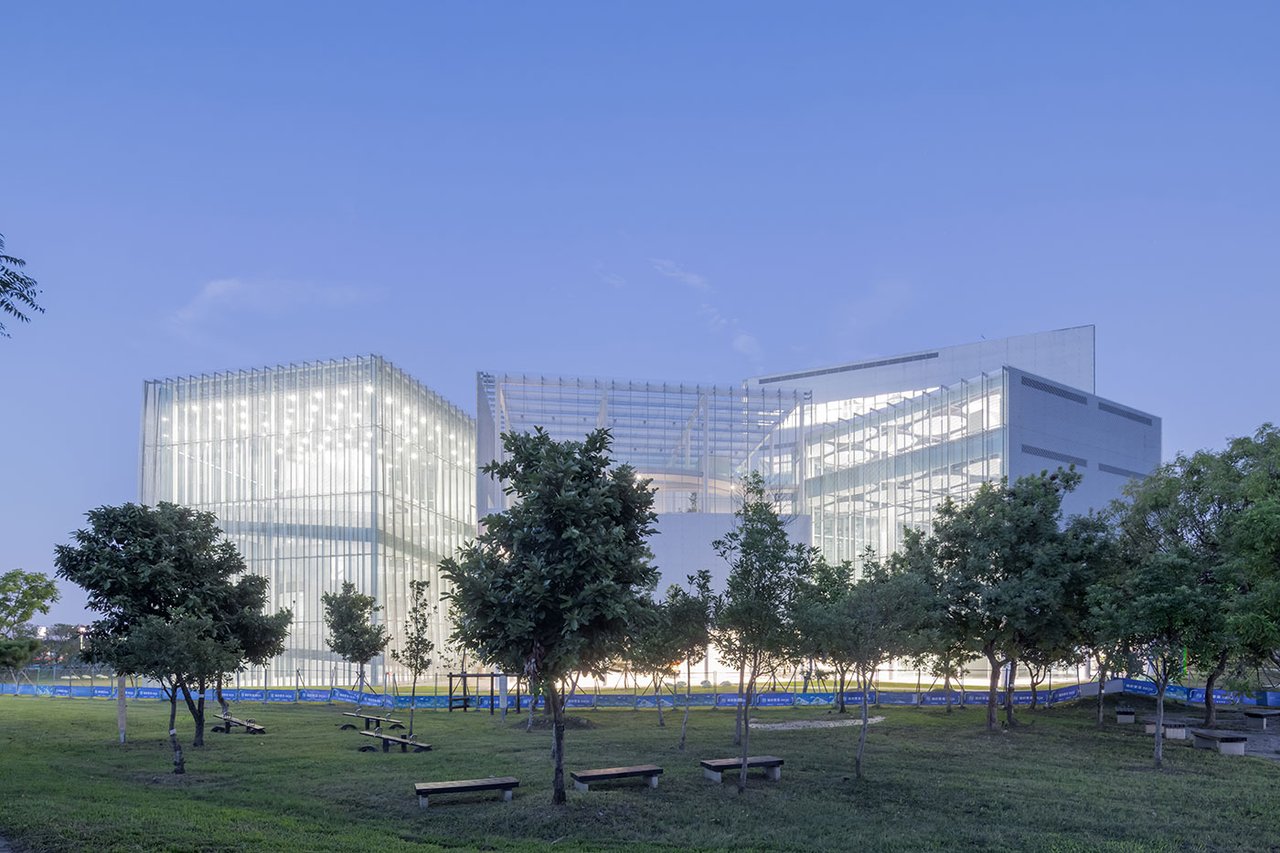
Loukia Alavanou, On the Way to Colonus. An exhibit in “A Call of All Beings: See you tomorrow, same time, same place”. Until 12 April, 2026
Loukia Alavanou’s VR work On the Way to Colonus, which the artist showed in the Greek pavilion at the 2022 Venice Biennale, is on show at the inaugural exhibition at the Taichung Art Museum; part of the newly opened Taichung Green Museumbrary in Taiwan’s second-largest city. Alvanou’s work is part of the museum’s opening exhibition “A Call of All Beings: See you tomorrow, same time, same place” in the new building designed by the Pritzker Prize and 2025 RIBA Royal Gold Medal-winning Tokyo-based architects SANAA. The new museum is seen as the most important addition to Taiwan’s art scene since the founding of the Taipei Biennial (1998), Taipei Art Week (2024), and New Taipei City Art Museum (2025).
Louis Jebb is Managing Editor at Right Click Save
No comments yet. Be the first to share your thoughts.
Mentioned in this article
People: Alexandra Daisy Ginsberg, Ana María Caballero, Analivia Cordeiro, Blaise Aguera y Arcas, Constantin Brancusi, Danielle Brathwaite-Shirley, John Watkinson, Larva Labs|Works: CryptoPunks|Organizations: NODE Foundation|