Computer Art Pioneer Holds First Solo Show at 95 | Leslie Mezei
He made plotter drawings in 1967, and showed at the main art and technology shows of the day, before leaving the field in 1978. A Paris gallery spent ten years tracking him down to show everything that survives
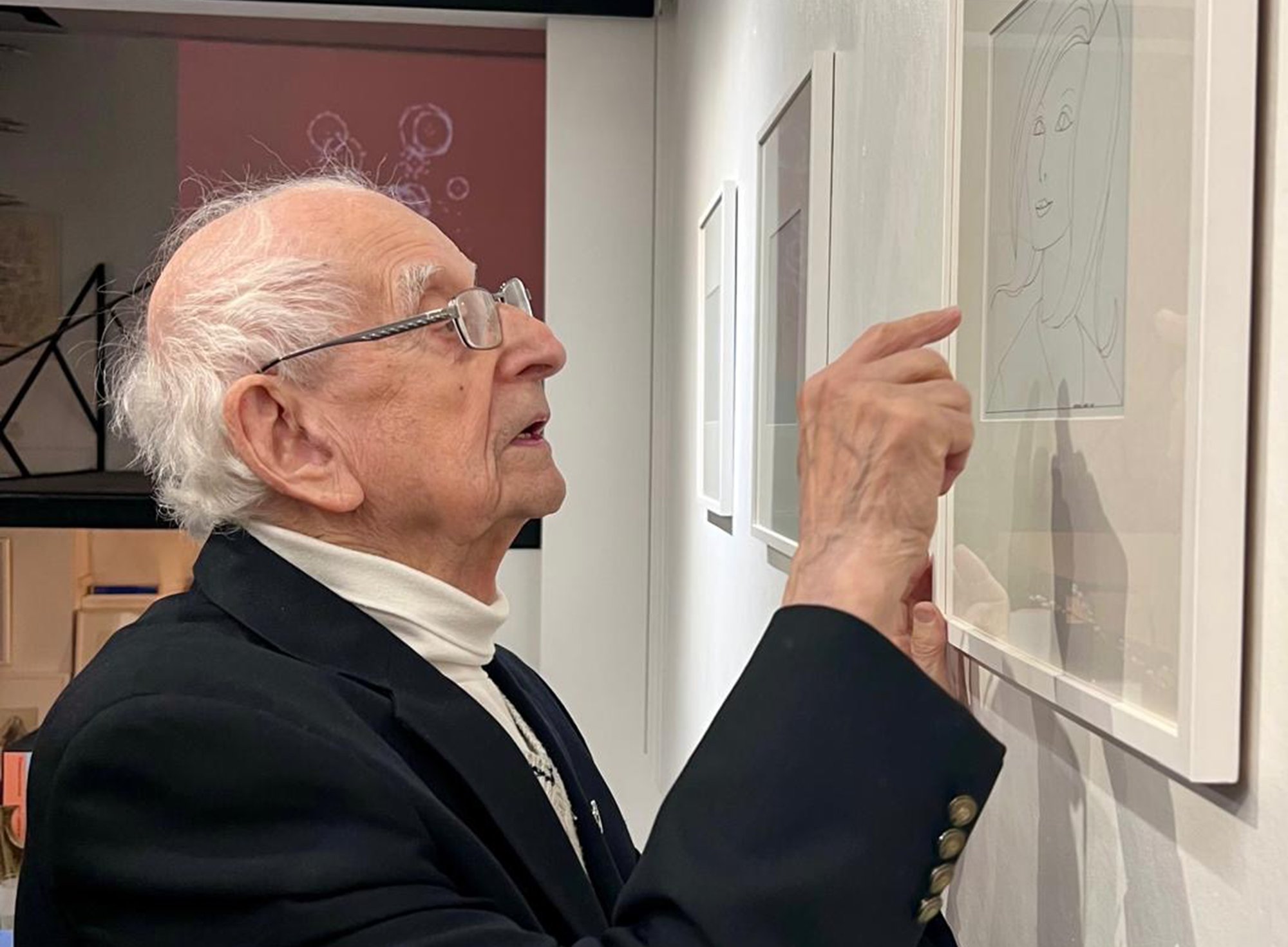
At 95, the visionary Canadian artist Leslie Mezei is having his first solo exhibition. RCM Galerie, Paris, led by the historian and collector of computer art Robert Murphy and his wife Camille Fremontier-Murphy, is showing Mezei’s entire surviving body of work, including his plotter drawings from 1967, in a landmark exhibition of 11 unique physical works and two films. The gallery also hosted an evening in Mezei’s honor on October 22, 2026, with the artist present.
The Paris show, the fruit of a decade’s work by Robert Murphy and Camille Fremontier-Murphy in tracking Mezei and his work down, represents a moment of curatorial discovery for an artist who was one of computer art’s first historians, in the 1960s and 1970s. Mezei is also widely regarded as the grandfather of digital art in Canada, a country that has given the world Marshall McLuhan, one of the most influential of media theorists — whose University of Toronto class received an address on computer art by Mezei — and, more recently, some of the leading pioneers of NFT art, including Larva Labs, Dmitri Cherniak, Rhea Myers, Sarah Friend, Mitchell F. Chan, and Mad Dog Jones.
Leslie (Laszlo) Mezei was born in Budapest in 1931 and grew up in the neighboring city of Gödöllő. His father, a Jewish lawyer and writer, was murdered in Auschwitz in 1944. In January 1948, Mezei arrived in Canada as a refugee, graduated from McGill University in mathematics and physics in 1953, and earned an MA in physics in Toronto in 1954.
He wrote his first programs for the power company Ontario Hydro on FERUT, the University of Toronto's Ferranti Mark 1 computer, the transformational machine built in Manchester with a programming manual written by the giant of computer science Alan Turing.
After ten years as a programmer and systems manager, including at the insurance company Confederation Life, Mezei became associate professor of computer science at the University of Toronto in 1965. By his own account he taught Canada's first course in artificial intelligence there, and in 1967 he founded the Computer Graphics Group, which later became the Dynamic Graphics Project. In 1968-69 he brought the computer scientist and artist Frieder Nake to Toronto as a postdoctoral fellow; with their fellow computer graphics pioneers Ron Baecker and Bill Buxton following later.
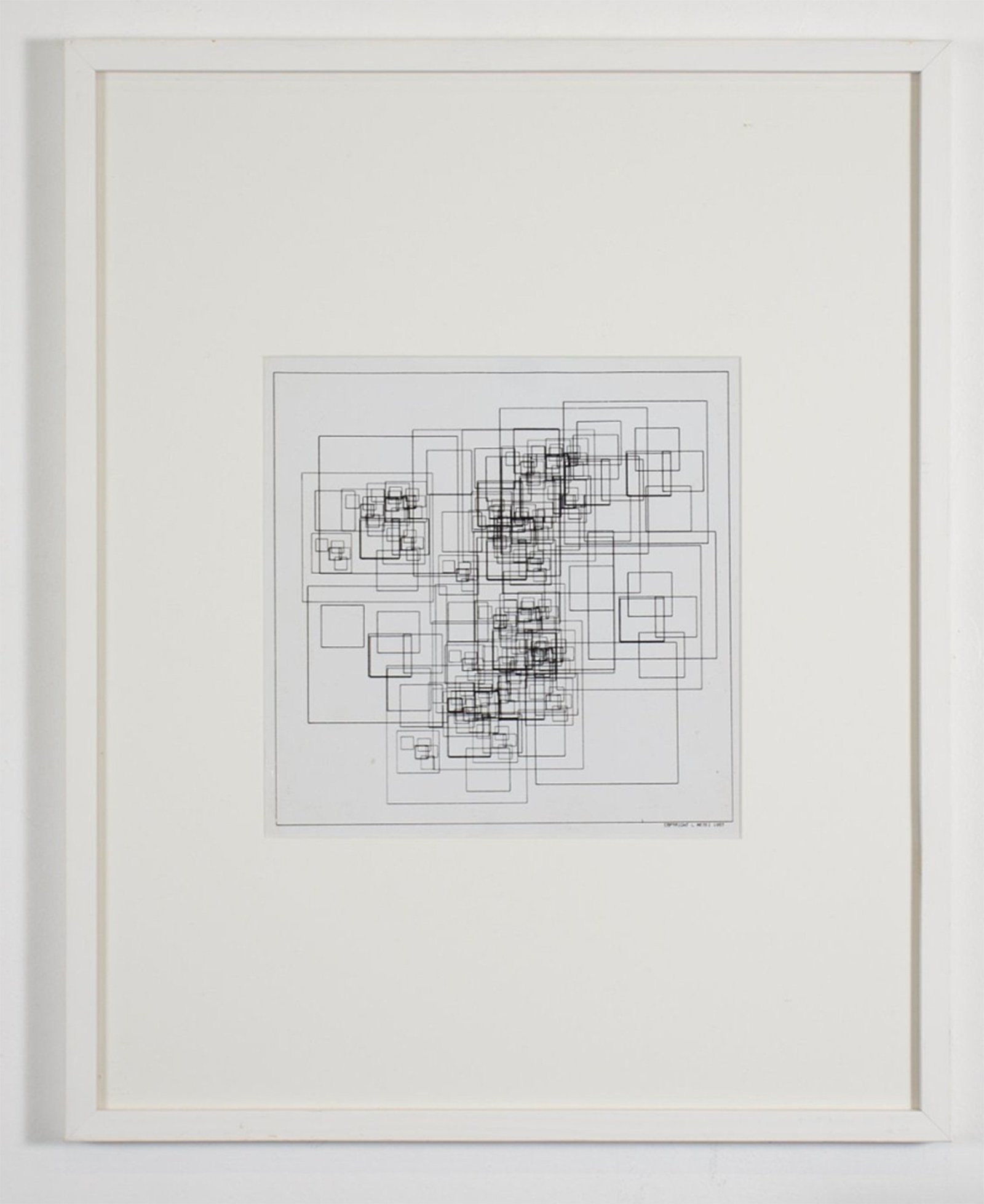
Installation view, “Leslie Mezei | A Computer Art Pioneer”, RCM Galerie, Paris, with work: Nested Squares (1967). Courtesy of the artist and RCM Galerie
In August 1964 Mezei’s essay “Artistic Design by Computer” appeared in Computers and Automation, and the same year he published, with the sociologist Arnold Rockman, the essay “The Electronic Computer as an Artist in Canadian Art”. Mezei became the field's first chronicler: with an annual bibliography published from 1967, a column in artscanada, and a book completed in 1972, but never published, Computer Art: A Historic International Portfolio of the First Decade, with contributions from some 50 artists and groups.
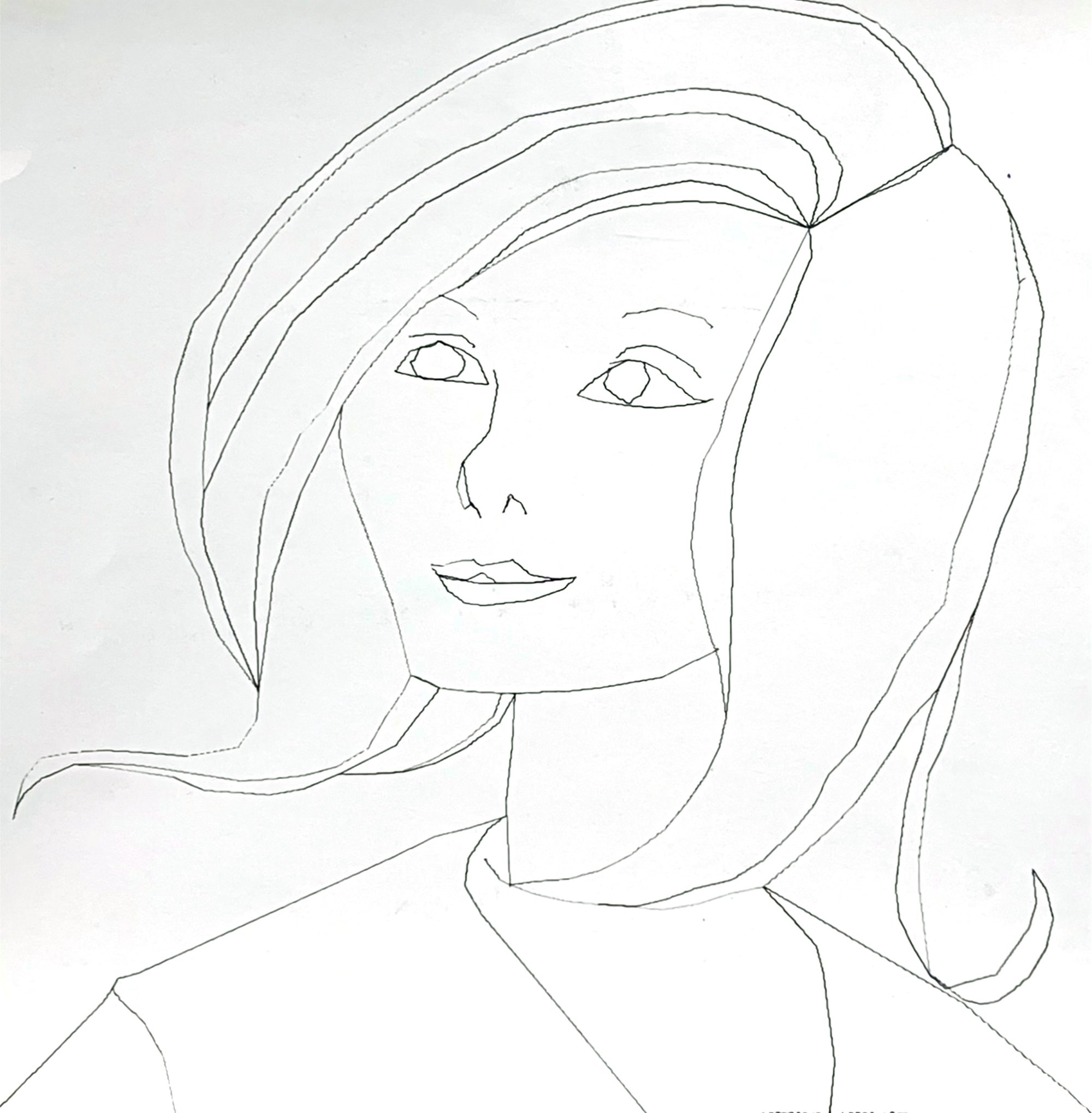
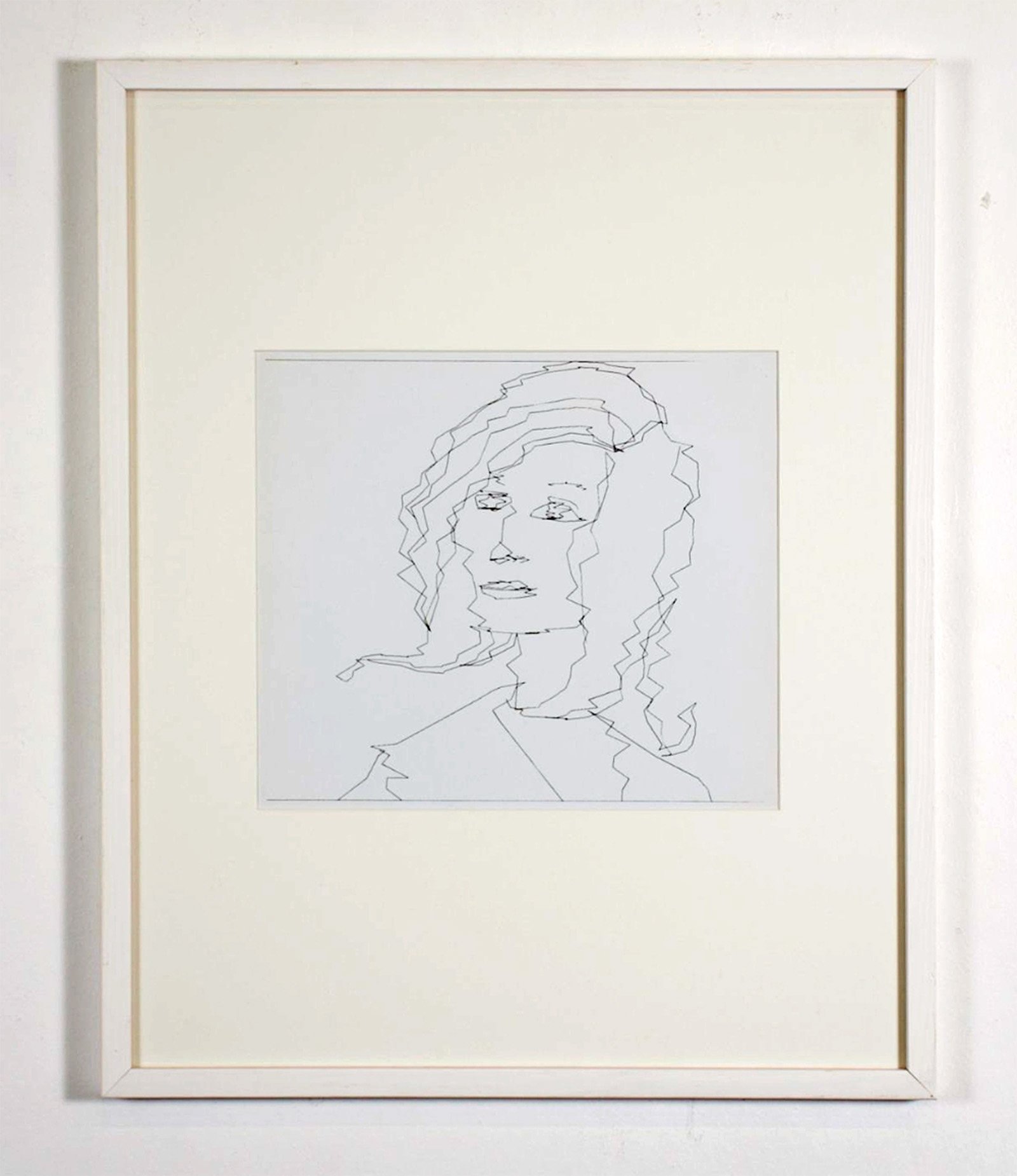
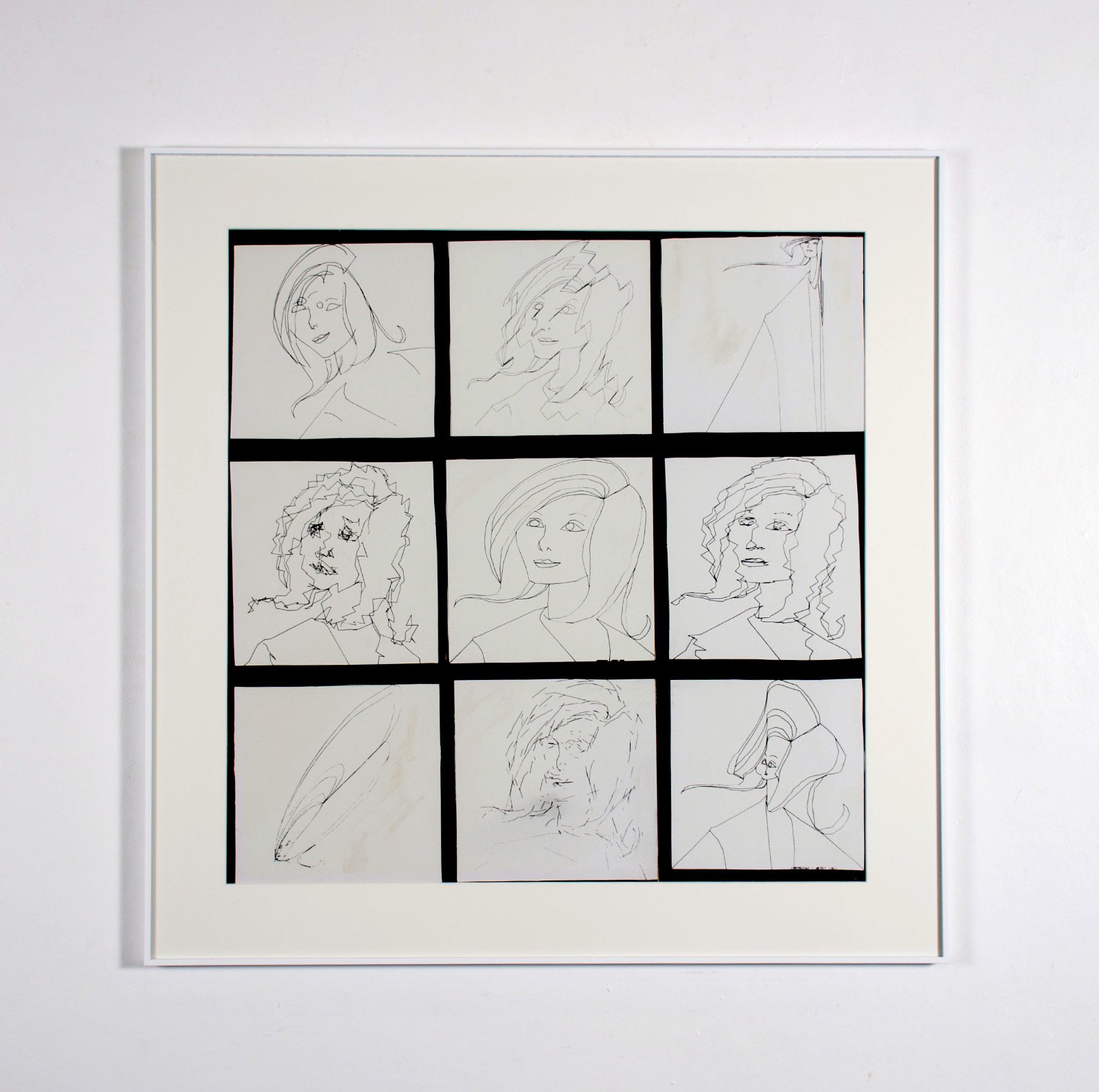
In 1967 Mezei began drawing, with SPARTA, a language he developed on top of FORTRAN IV for manipulating arbitrary line drawings, which he presented at the IFIP (International Federation for Information Processing) Congress in Edinburgh in 1968. The starting point was often a simple drawing entered by hand: a girl's head made of about 600 points. Mezei shifted, stretched, sliced and jittered it with random numbers: Girl Shifted, Girl Shook, Girl Sliced, Girl Stretched, Girl Elongated.
Together with Charles Csuri, he was among the first to apply algorithmic transformations to figurative images.
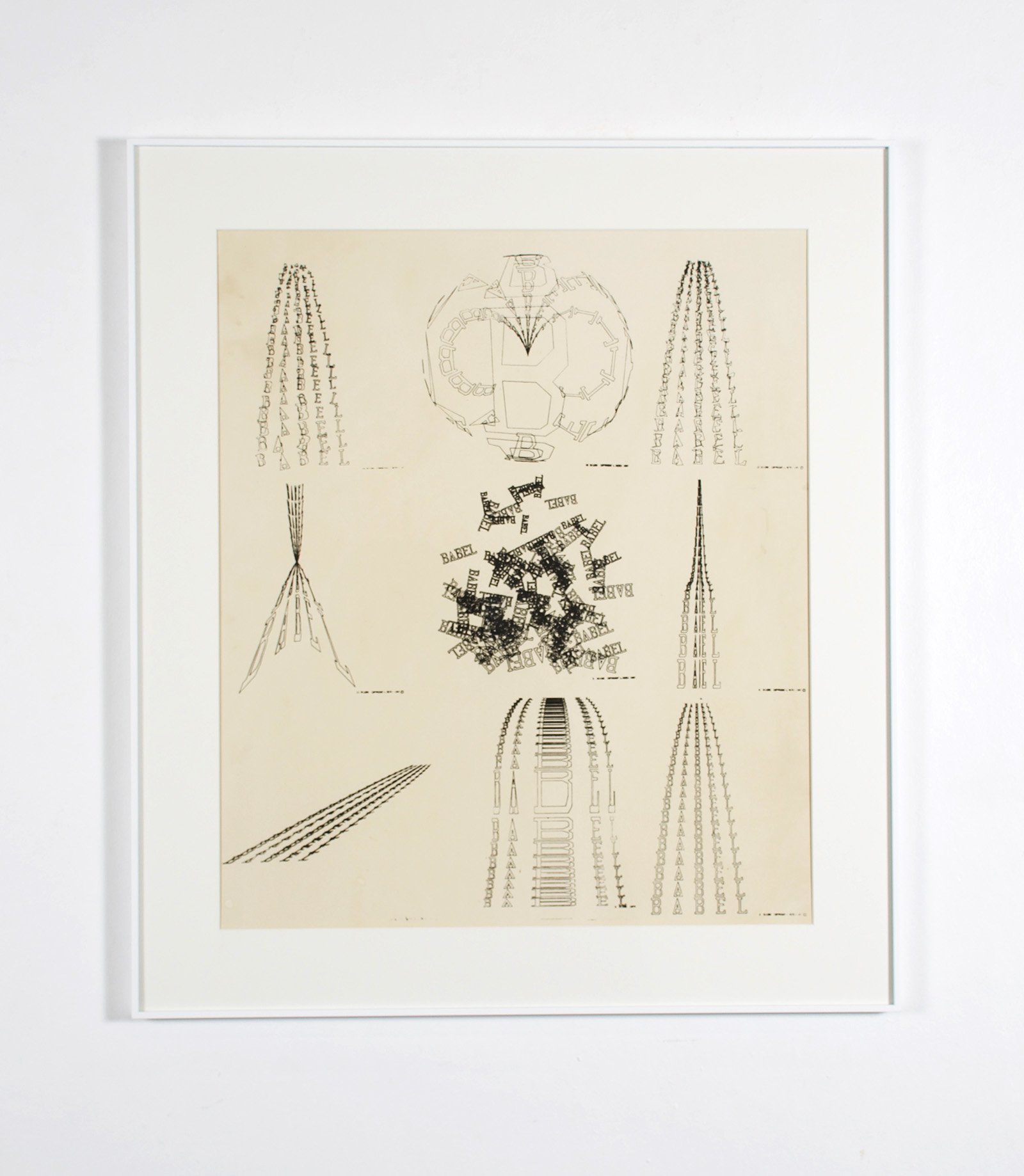
At the same time he made Babel (1967): inspired by the concrete poem (B)ABEL, by the Brazilian poet Pedro Xisto, Mezei set the words in towers, in perspective and around a sphere, and at the centre let it collapse into a heap. Other motifs turned on Canadian emblems such as the beaver and the maple leaf. With the animation system ARTA came films, including Art From Computers (1971).
His work appeared in the defining exhibitions of the period: Computer Art and Animation in Montreal (1967), Cybernetic Serendipity at the ICA London (1968), computer graphic in Brno (1968), and Impulse Computerkunst at the Kunstverein München (1970). In 1978, after the death of his first wife, Anna, Mezei left the university and computer graphics. He worked as a financial planner, became active in the interfaith movement, and published the Holocaust memoir A Tapestry of Survival (2019). His archive has been held by the Art Gallery of Ontario since 2022.
At the time of his Paris exhibition, Mezei spoke to the art advisor and curator Georg Bak for Right Click Save.
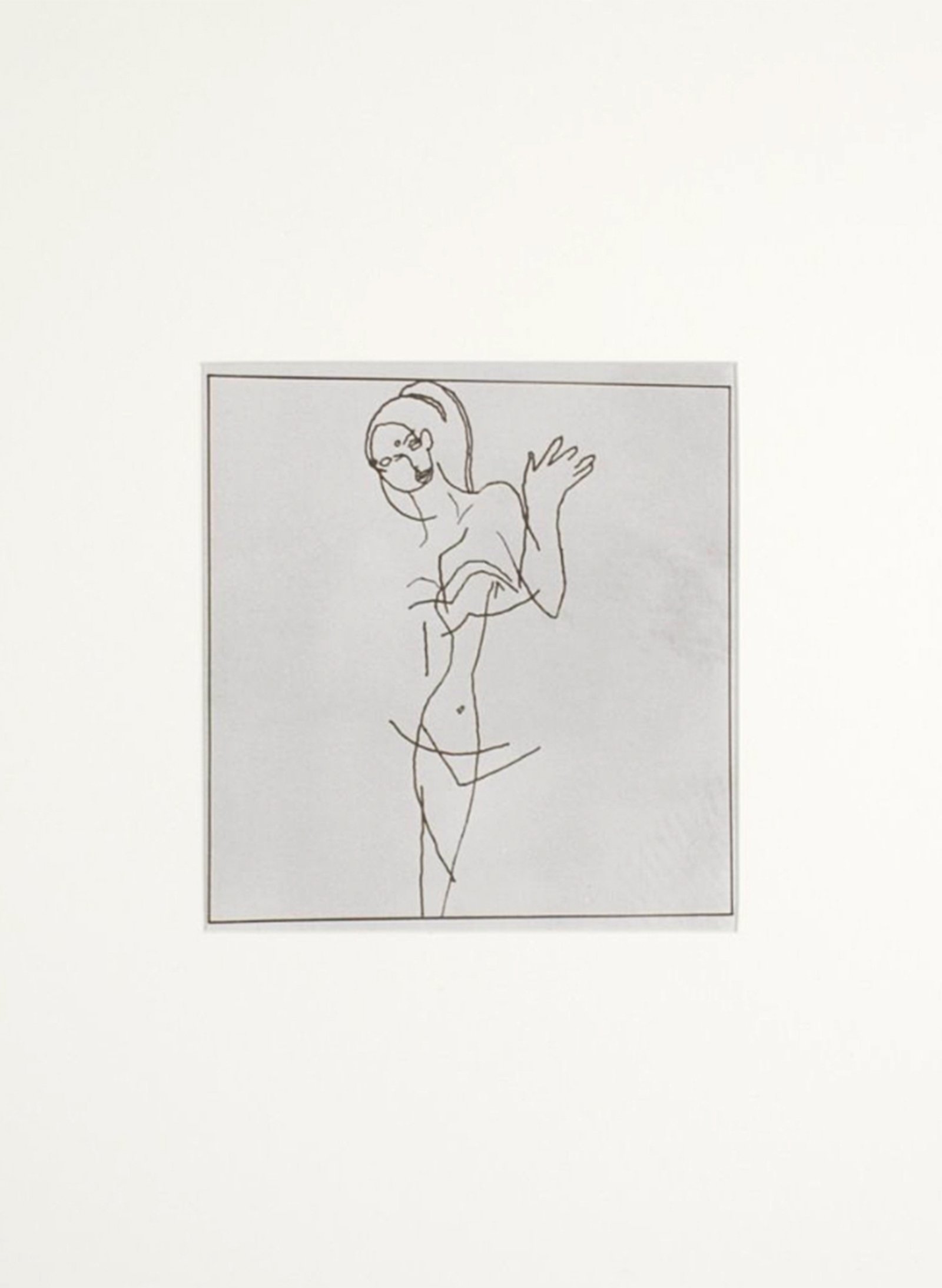
Leslie Mezei, Original Girl, 1967. Courtesy of the artist and RCM Galerie
Georg Bak: You are having your first solo exhibition at the age of 95. How did it come about and did you expect to be rediscovered so late in your career?
Leslie Mezei: Robert Murphy and Camille Fremontier-Murphy, proprietors of the private RCM Galerie in Paris looked for me for 10 years, to mount an exhibit of my computer art. I am deeply indebted to him. They all sold, too!
GB: In 1964, before you had made your first computer drawing, you published “Artistic Design by Computer” in Computers and Automation. That same year, Marshall McLuhan published Understanding Media, introducing his famous idea that “the medium is the message”. What first drew you to computers as a tool for artistic expression? And, since you were both based in Toronto, did you know McLuhan personally, or did his ideas influence your thinking?
LM: It was in conversation with my friend Arnold Rockman that the possibility of designing art by computer came to us, before there had been any computer art exhibitions. I was a computer science professor at the University of Toronto, and my specialty became computer graphics because of this interest.
I did know Marshall McLuhan, who was at the same university, and actually made a presentation about computer art to his class. I thought of him as primarily a poet, and I don't think that his ideas influenced me much.
GB: Do you remember which was the first artwork you made on a computer and can you give us a bit of a context which hardware you had access to and which softwares you were using to create your artworks?
LM: All my computer art stills were produced in 1967, and I don't remember which was first. I believe the university had an IBM 360 by the time I did my computer art, and used a Calcomp plotter, and later a microfilm plotter for animation.
Installation view, “Leslie Mezei | A Computer Art Pioneer”, RCM Galerie, Paris, with work: Girl Shook (1967). Courtesy of the artist and RCM Galerie
GB: You developed your own programming language SPARTA which was meant for graphic designers with no programming experience. Did you see yourself as an artist — or as a toolmaker showing what was possible?
LM: Definitely the latter. Actually, I, and others, considered me to be a computer scientist. In those days, you were considered to be of one profession; even though I created much computer art and wrote about 20 papers and articles. It was more recently that I became considered to be also an artist and scholar.
SPARTA and later the animation version, ARTA, were Fortran subroutines, able to operate on points, lines, sub-pictures and pictures, and nonscientists could easily learn to apply appropriate parameters to produce a specific picture. Details of both languages have been published.
GB: One of your best-known artworks from the time was the girl’s head and its variations. With Charles Csuri you were among the first artists to generate figurative computer art and especially a morphing image. Can you say more about the process and variables you used for this series?
LM: I believe that Csuri and I (both with a Hungarian background) created the first computer art with meaningful figures, like the girl's head, at the same time, in 1967. We explored all kinds of transformations and added random numbers to our creations.
Installation view, “Leslie Mezei | A Computer Art Pioneer”, RCM Galerie, Paris, with work: Girl's Face Transformation (1967). Courtesy of the artist and RCM Galerie
GB: Your artwork Babel goes back to a poem by Pedro Xisto. What role did concrete poetry play for you?
LM: Pedro Xisto visited the University of Toronto, inspiring my Tower of Babel series. We had a campus-wide Babel Festival at the University of Toronto.
GB: You spoke of "controlled randomness". How much control did you want to keep, and how much did you leave to the machine?
LM: The machine had no control at all. It obeyed the programs we fed to it. I wrote articles about Controlled Randomness. I created a controlled randomness scale image, out of 9 by 9 black-and-white checkerboards, which turned out to be two scales: one with a varying degree of repetition, ending with the usual black and white checkerboards, with varied amount of each, randomly determined, the other with the various degrees of continuation, ending with all squares black or white. You have to see it to appreciate it.
GB: In 1967 you and Charles Csuri, working apart — you in Toronto, he in Columbus — both took a hand-drawn figure and let an algorithm deform it: your girl’s head, his Sine Curve Man and Hummingbird. Csuri turned his into a film that same year; you followed with your animation system ARTA and the film Art From Computers (1971), in which the girl’s face moves on screen. Did you know each other’s work at the time? And tell us about your own films: how many did you make, and what were they about? How was a film actually produced with ARTA? Was each frame drawn on a screen and photographed onto film, how long did a few seconds of animation take, and who worked with you on them?
LM: Csuri and I were not aware of each other's work at that time. He is often referred to as "The father of Computer Art." The girl's face not only moves, but has various transformations applied to it, by mathematical formula, or randomness, or both. The advantage of ARTA was that it produced all the in-betweening frames. Each frame was plotted automatically onto the “microfilm plotter”.
Installation view, “Leslie Mezei | A Computer Art Pioneer”, RCM Galerie, Paris, with work: Bikini Shifted (1967). Courtesy of the artist and RCM Galerie
GB: Your book Computer Art: A Historic International Portfolio of the First Decade began in 1970 — around the same time as Herbert W. Franke published Computergraphik. Computerkunst — as a commission for the New York Times’ book division. It was finished in 1972, just as the Times left book publishing. You had written to nearly everyone in the field and collected images and important sources of knowledge. Half a century later, after reworking it with Frieder Nake: will the book finally be published? And can you also say something about what brought you and Frieder together in those days?
LM: I invited Frieder as a Postdoctoral Fellow for a year to the University of Toronto. I also invited Ron Baecker, who produced the first PhD thesis about computer animation, to join the department permanently and thus started DGP (the Dynamic Graphics Project). At my show in Paris, somebody came forth with the intention to publish the book, with some 54 computer artist's pictures, with my explanations and their statements.
GB: In a time where we had no internet, Jasia Reichardt curated Cybernetic Serendipity in London in 1968, a comprehensive overview of computer art of the time. How did your contact with Jasia Reichardt come about?
LM: I think she contacted me, my work was well known.
Installation view, “Leslie Mezei | A Computer Art Pioneer”, RCM Galerie, Paris, with work: Babel (1967). Courtesy of the artist and RCM Galerie
GB: In 1968 you gave a talk at the Metropolitan Museum of Art New York on the computer as a tool against art forgery. Today the blockchain is meant to secure the provenance and authenticity of digital works. How do you see that?
LM: There was a lot more in that talk, I don't actually remember the part about art forgery. Since I left the university in 1978, I have not given any thought to these things. Had I stayed, I would have concentrated on the graphic display of processes of nature, and on the display of social trends.
Just before I left — computer science was becoming more technical, and my interest was only in creative applications — my chairman wanted to promote me to full professor. And he asked, "But this computer art stuff is not serious, is it?" Yes, it is!
GB: In 1966 you asked whether computers have artistic talent. How would you answer that question today, in the age of generative AI?
LM: When I taught the first artificial intelligence course at UoT — [two decades] before Geoffrey Hinton joined us, winning a Nobel Prize for his "Deep Learning” algorithm for AI [in 2024] — I became more deeply aware of the limitless abilities and subtlety of the human being. I became a strong humanist. We can get to the "heart of the matter" based on our lived experience. The computer is a tool that has to follow its programming.
I compiled an anthology of science fiction stories on the theme of “The Computer is Taking Over”. Not published. I know, I know: There are challenging discussions about this now.
Georg Bak is a Swiss-based digital art advisor and curator who worked in senior positions at Hauser & Wirth and as an art advisor for LGT Bank in Switzerland before running his own digital art gallery Scheublein + Bak. He curated the landmark “Sealed Cryptopunks” sale at Sotheby’s and the exhibition “Ex Machina. A History of Generative Art” at Phillips in London having been the first to exhibit CryptoPunks in an art exhibition in 2018. Bak has served on advisory and curatorial boards for institutions including HeK Basel, MoCDA (Museum of Contemporary Digital Art), CADAF, Rare Art Festival New York, and Le Random. He co-founded NFT ART DAY Zurich and The Digital Art Mile