Michael Govan, CEO and Wallis Annenberg Director of LACMA, and Michael Connor, Executive Director of Rhizome, spoke in the opening session of a day of “Conversations on Digital Art” at Los Angeles County Museum of Art (LACMA) on February 25, 2026. This article is part of a series published by Right Click Save on latest practice in the care of digital art. The series includes an interview with Gaby Wijers, director of the Amsterdam-based LI-MA — Living Media Art.
It has become abundantly clear that digital art preservation is about more than right-click save (pun intended). Broken links, obsolete software languages, unobtainable hardware, and lost meanings and contexts are just some of what comprise more and more of the landscape of digital culture, and give headaches to museum conservators entrusted with caring for digital objects — objects entangled with the material world and the social spheres from which they emerge and in which they live.
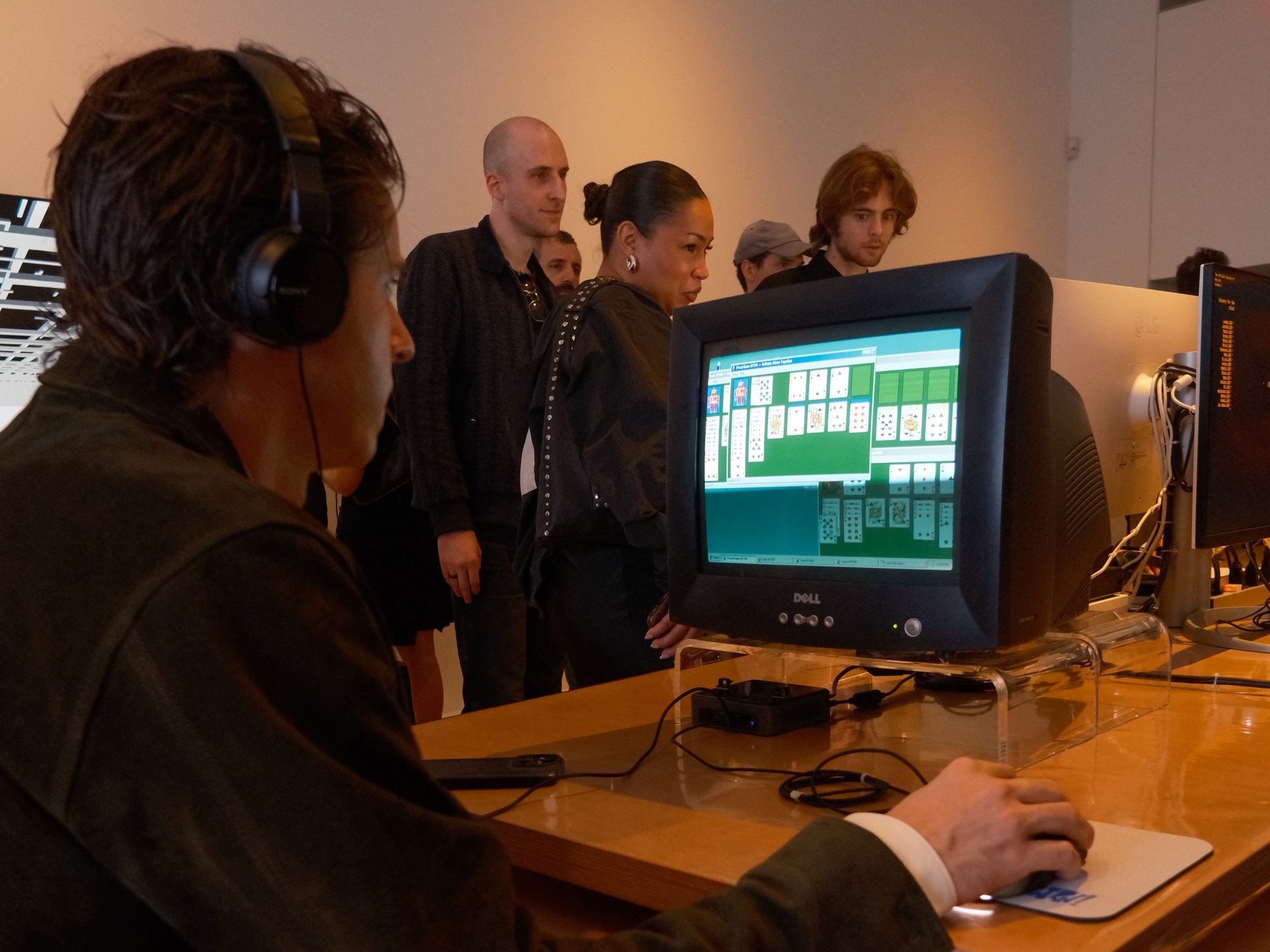
Nolen Royalty’s Solitaire Alone Together (2026) is a good example. In a recent exhibition “Websites! Websites! Websites!”, presented as part of Rhizome’s 30th anniversary, visitors could play Solitaire alongside one another, with each other’s game also displayed on the other’s screen. Solitaire, a single player game, came pre-installed on Microsoft Windows systems which had, ironically, promised greater connection between people. In the work, players interact with the game displayed on a cathode ray tube (CRT) monitor, an endangered species of computer hardware. To be sure, the hardware was material to the work, as highlighted by a settings slider in the interface that allows users to mimic the visual effect of a CRT if the work is displayed on a modern computer monitor.
Nolen Royalty, Solitaire Alone Together, 2026. Photography by Right Click Save
Those of us old enough to remember burning time during the 1990s and early 2000s, remember Solitaire embodied in CRT monitors. The game’s fate in the collective memory is inseparable from the hardware on which it was played.
The effect of these overlaps on the preservation of digital art was the topic of the following conversation between Michael Govan, CEO and Wallis Annenberg Director of LACMA, and Michael Connor, Executive Director of Rhizome. Their discussion, which has been edited for length and clarity, presents works of digital art not as standalone objects, but as part of larger ecosystems.
Govan remarks that Connor calls museums “Memory institutions”. By blending preservation, conservation, and display with the concept of memory, Connor intersects art with personal and social spheres. And indeed, in the on-stage conversation on the evolving landscape of digital art, Govan and Connor both move between artists, collectors, communities, and institutions, to identify various strategies in the preservation of digital art.
Govan and Connor understand digital art as no longer solely a technical matter, with preservation implicated with ecosystems that extend far beyond the digital file; ecosystems that guide answers to questions like “What do we preserve, how, and why?”
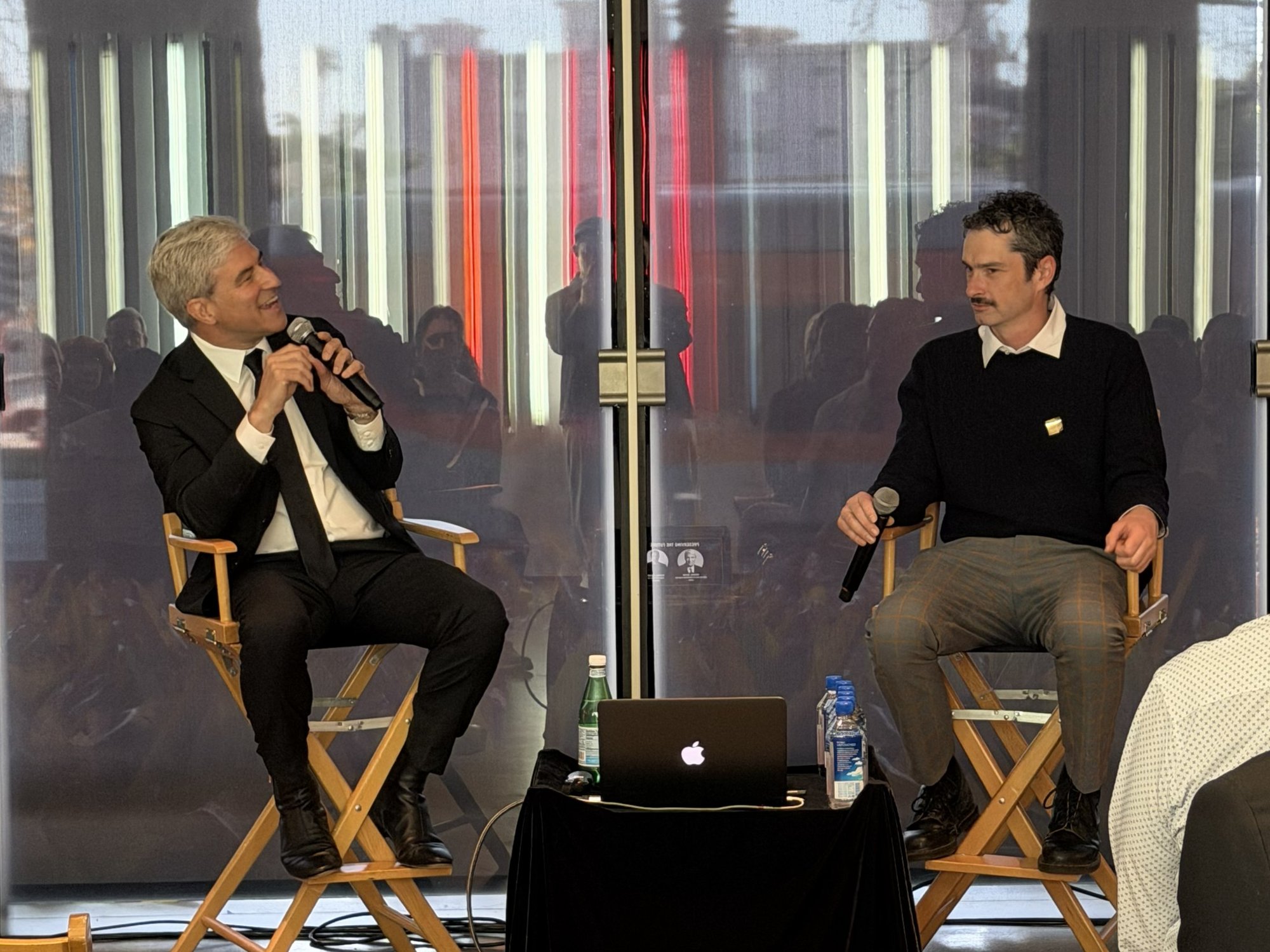
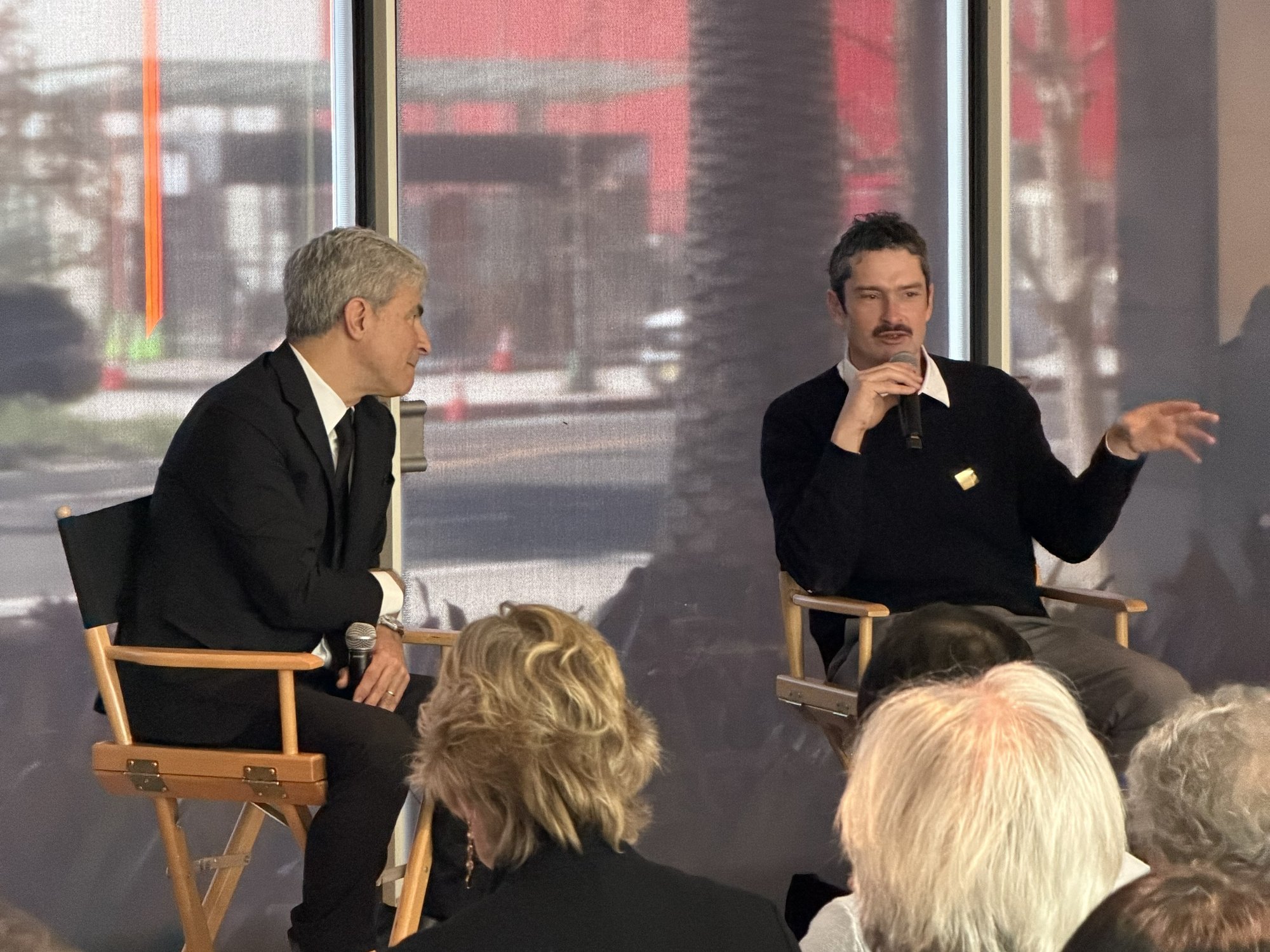
Michael Govan, CEO and Wallis Annenberg Director of LACMA (left), and Michael Connor, Executive Director of Rhizome, opened the “Conversations on Digital Art” at LACMA. Photography by Right Click Save
Michael Govan: You call institutions like the Los Angeles County Museum of Art (LACMA) ‘memory institutions’. Over the years, Rhizome has kept net art alive by creating a history and a presence for digital art. As Rhizome was evolving, there was a bubbling energy that art was really changing and that we needed to make room for all this innovation. How does your work at Rhizome connect with big memory institutions like LACMA, which have thousands of years of art history and objects of every kind?
Michael Connor: Rhizome started in 1996, which makes the organization 30 years old — old in internet time. We started as a very fluid organization led by artist Mark Tribe. He was interested in starting a new media community and gathering people to develop a shared language around the emerging field of new media art, which people were just coming to terms with. By 1999, Mark and the Rhizome team decided to start an archive because they realized what a huge problem memory is in digital culture.
Technological change is something that is done to us, and a lot of the upgrades and new models that are forced upon us are not necessarily better than what came before.
Retaining a sense of what our digital lives looked like in the past and what kinds of things we were expressing and sharing requires a serious resistance against the entire flow of technological change.
That kind of research has been an important part of Rhizome’s ethos, even as we’ve continued to support experimentation. In practical terms, that means we research how to preserve software and network culture. Back in the 1990s, people didn’t think about how we keep a server online, what happens when web standards change, and what happens when the browser changes — those are the kinds of things that have become big parts of our research and quest to preserve digital objects and memories.
MG: So much art is about how it’s a vessel to carry ideas forward across time and generations, and a lot of that is about reckoning with the fact that we’re human beings and have limited lifespans. Is cyberspace infinite and forever? Can you feel it? Is there death in cyberspace?
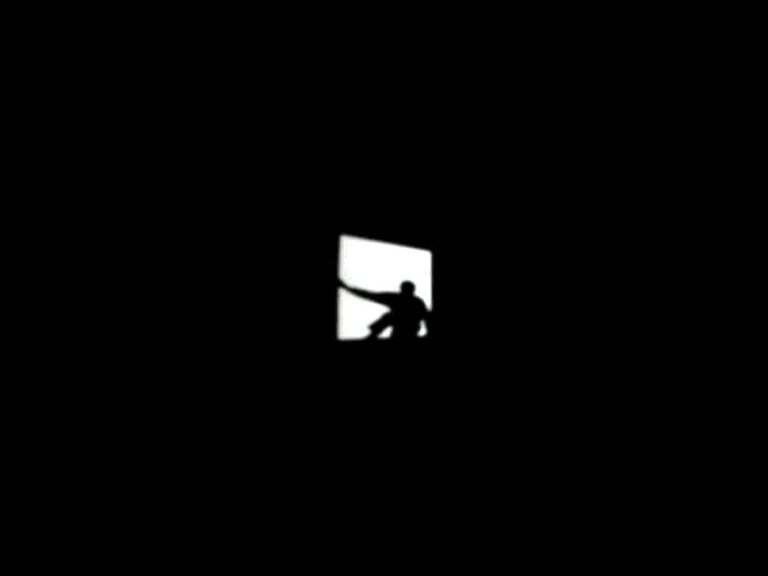
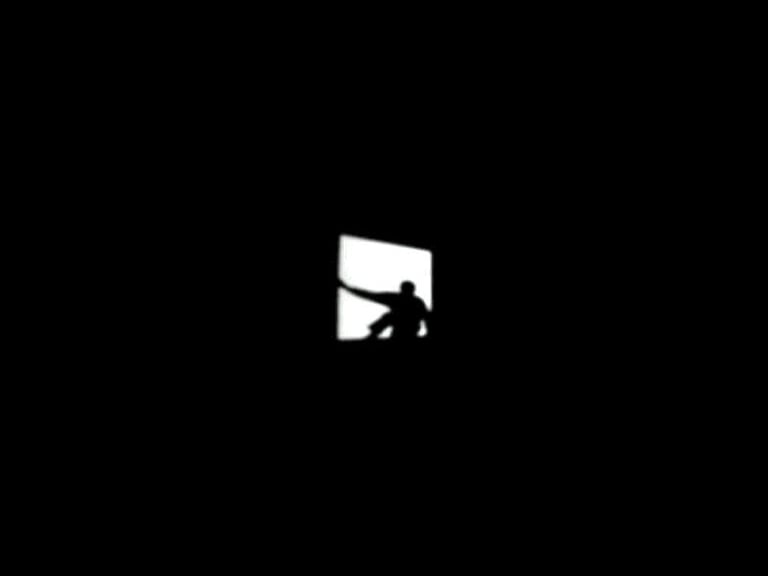
Francis Alÿs made screensavers on video monitor screens. His work The Thief (1999) was a black-and-white animation of a trapezoid-like window with a figure that entered it. It was a riff on Windows at the time, which was the main operating system. You could see the silhouette of the figure going towards the window, putting one leg into it, putting the other leg into it, and then jumping through it, and it repeated over and over again. It was so emotional, beautiful, simple, and powerful, as it was playing with the idea of the Renaissance window, which had over 500 years of history.
Early on, it was clear that you could create meaningful works with digital technologies, works that you couldn't create in any other medium, but without Rhizome, a lot of those artworks would die.
MC: The screen saver was such a big part of visual culture. Artists wanted to be in that space even though there was not a clear exhibition or market framework for it, and it was a great space for experimentation.
As far as The Thief itself, the screensaver was run on a software system from 1999, and hardware, like the CRT monitor, from 1999, which is also part of the artwork. When you see the work on a CRT monitor, it kind of looks like the reflection of a window, but then it also kind of looks like you’re looking at someone coming in from a window behind you. I don’t think that translates to the age of the retina screen in the same way.
When we’re conserving artwork at Rhizome, before we do anything, we have to decide what the object is, because there isn’t just a single object there.
We have to decide how to date it, if it was presented or reperformed on different occasions. Here we may ask, do we need to include a CRT monitor so we have that reflective quality?
In the case of The Thief, they actually rewrote it a number of times to update it for new operating systems. At Rhizome we would call that kind of strategy a sort of migration, interpreting it for a new system. A lot of what we do is emulation where we would take a piece of software from 1999 and we maintain the system from 1999 so that we can run the software in its original system without changing it. The advantage of that is that we hate to rewrite things because it’s expensive and takes a lot of time. But a project like that also belongs on your screen, so I think it actually should be updated and continue to circulate even if it means that it changes too.
MG: You’re nestled in the New Museum, but you're independent, and there has always been a complicated relationship between the work Rhizome does and the institutions of the art world. What are some tensions you can identify?
MC: 10 years ago, with Dragan Espenschied as our preservation director, we felt like we were running against the grain: when a museum collects a CD-ROM, they make sure that the CD-ROM, as a physical object, is perfectly preserved, but the real issue is how to run what’s on that CD-ROM.
Our ethos at Rhizome was entirely opposite of what museums did; we were trying to make systems that could maintain digital works over time.
Another quality of digital culture is that it’s also a participatory mass culture of makers and circulation. Works are made by contemporary artists, but similar experiments are performed by many people on the web.
Digital art resembles kinds of folk culture, and museums have always neglected folk culture, partly because they found it difficult to incorporate in their collections.
At Rhizome we try to stay a little closer to communities and adopt a ground view that is important for thinking about digital culture historically. The more formal institutions could in turn provide sustainability and a long-term framework for these works. The ideal is to have a synergistic relationship between these two.
MG: In the 90s we thought the future of digital preservation would be software emulation, but we weren’t really thinking about circumstances and contexts that had to be recreated, like CRT monitors.
As museums, we struggle because the number of things you have to take care of is exponentially growing. So, with part of it we're unable to have the necessary expertise. I don’t think we can exist in this world without partners like Rhizome. Museums, as memory institutions, need to build friendships and partnerships with organizations that are focused on the technical side of art.
MC: The ideal scenario is that we develop tools and infrastructure that organizations can use to create their own meaningful archives.
Digital preservation requires thinking about an even larger ecosystem that also includes hobbyists and open source systems — like film projectors that only exist because collectors keep them alive in their garages.
There are entire ecosystems of people that are just passionate about something and that also reminds us that the things that survive are the things that people care about beyond the institution.
MG: A good example of that is works by artist Thomas Wilfred. They look like abstract paintings on digital screens, but then you go behind it, and it’s like a bunch of little mechanical motors with turning light bulbs, turning platters, and tinfoil reflecting light onto a surface. There's one man, an astronomer from Los Angeles, who has kept this artist’s work alive. Without this person, this artist would have disappeared from history. Our job is to encourage that because we would not be able to do what we do without a lot of friends who make up a mosaic of care, like the community you have built around Rhizome.
“Conversations on Digital Art” at LACMA. Michael Govan, CEO and Wallis Annenberg Director of LACMA (left) and Michael Connor, Executive Director of Rhizome. Photography by Right Click Save
MC: People really care about and love Rhizome wherever I go in the world. It is an incredible experience, and very humbling, and it’s a real responsibility to carry. My response to the very technical and complex problems of digital preservation is really just to help people connect with digital art and care about this field.
MG: One of the things we’ve been talking about in our future-oriented collecting here at LACMA is looking backward. If big chunks of history get left out or lost, you lose the thread. One of our roles here is to build a genealogy, because without it we can’t produce meaning to project forward. To that extent, we’ve had exhibitions at LACMA about early computer-related art and about how Photoshop changed the world and changed artists’ practice, for example, drawing lines across history. As a historian, can you summarize for us where AI Art fits in the history (and future) of art?
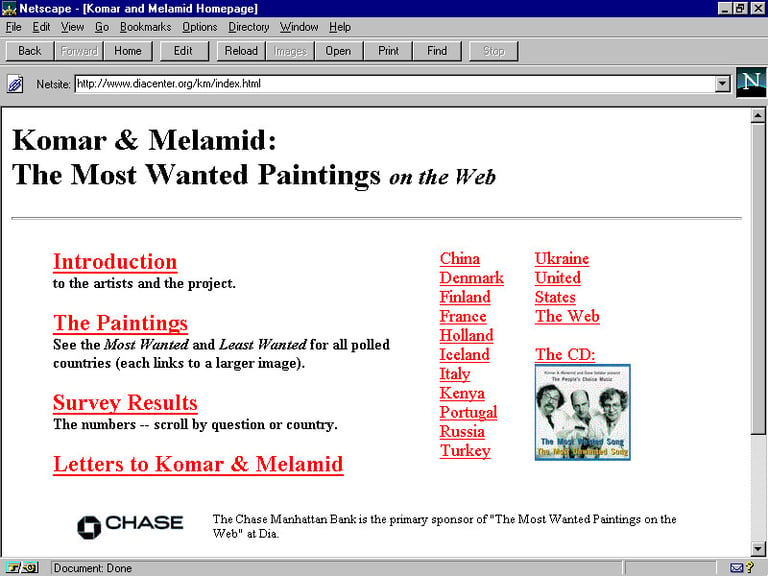
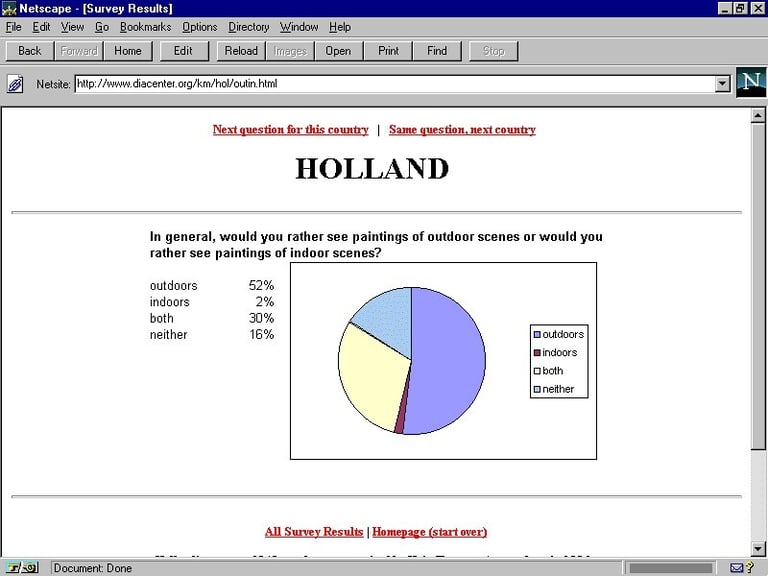
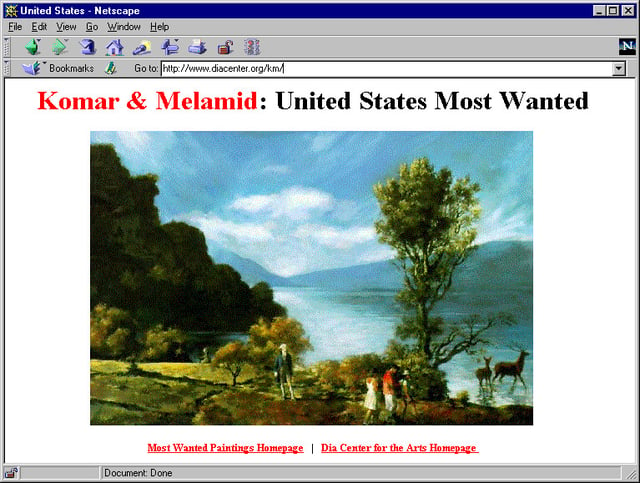
MC: Artists have been experimenting with computer networks for as long as computer networks have existed, but those histories are extremely difficult to access. The nature of that kind of work is by definition a little bit ephemeral, since a lot of these works are about connecting people, and the works only exist through the connection of people. The Most Wanted Paintings (1995), by the Russian emigrant artists Vitaly Komar and Alex Melamid, had a website, but the website and the final images were the documentation of a process — a survey that was taken on a network to determine what people of each country prefer in their paintings.
Works can take on great importance for a particular community but then just disappear completely. Unless you are a part of it or have some access to it, it would be really hard to understand what even happened.
Net art is full of micro movements and micro moments, like a group of people organizing around the Y2K aesthetic on Tumblr in the 2010s. Whatever it is, these moments that emerge and become conversations among a group are hard to historicize. My own path to net art began in 1999 when I met Alex Galloway, then editor of Rhizome, and he told me about a project called Toy War.
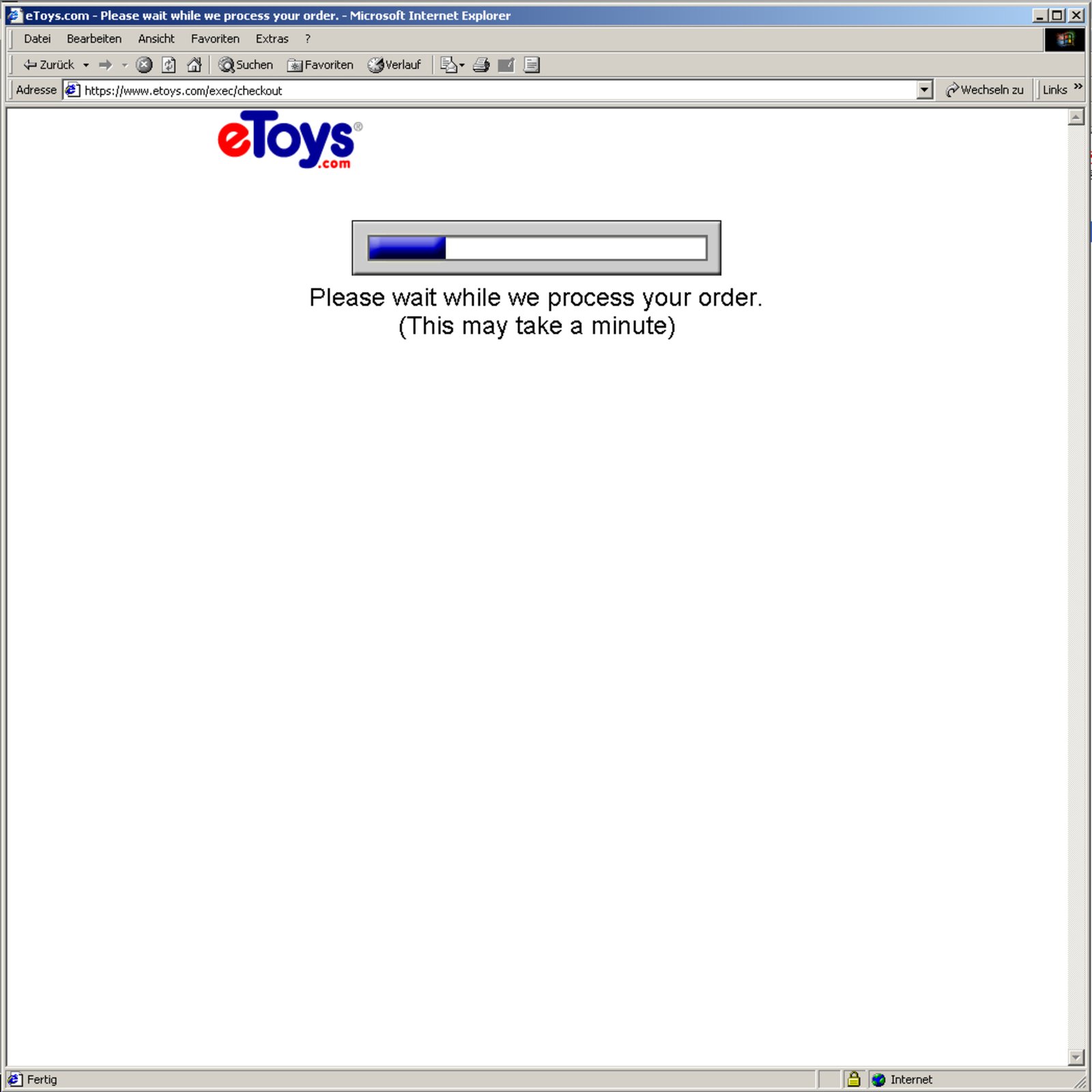
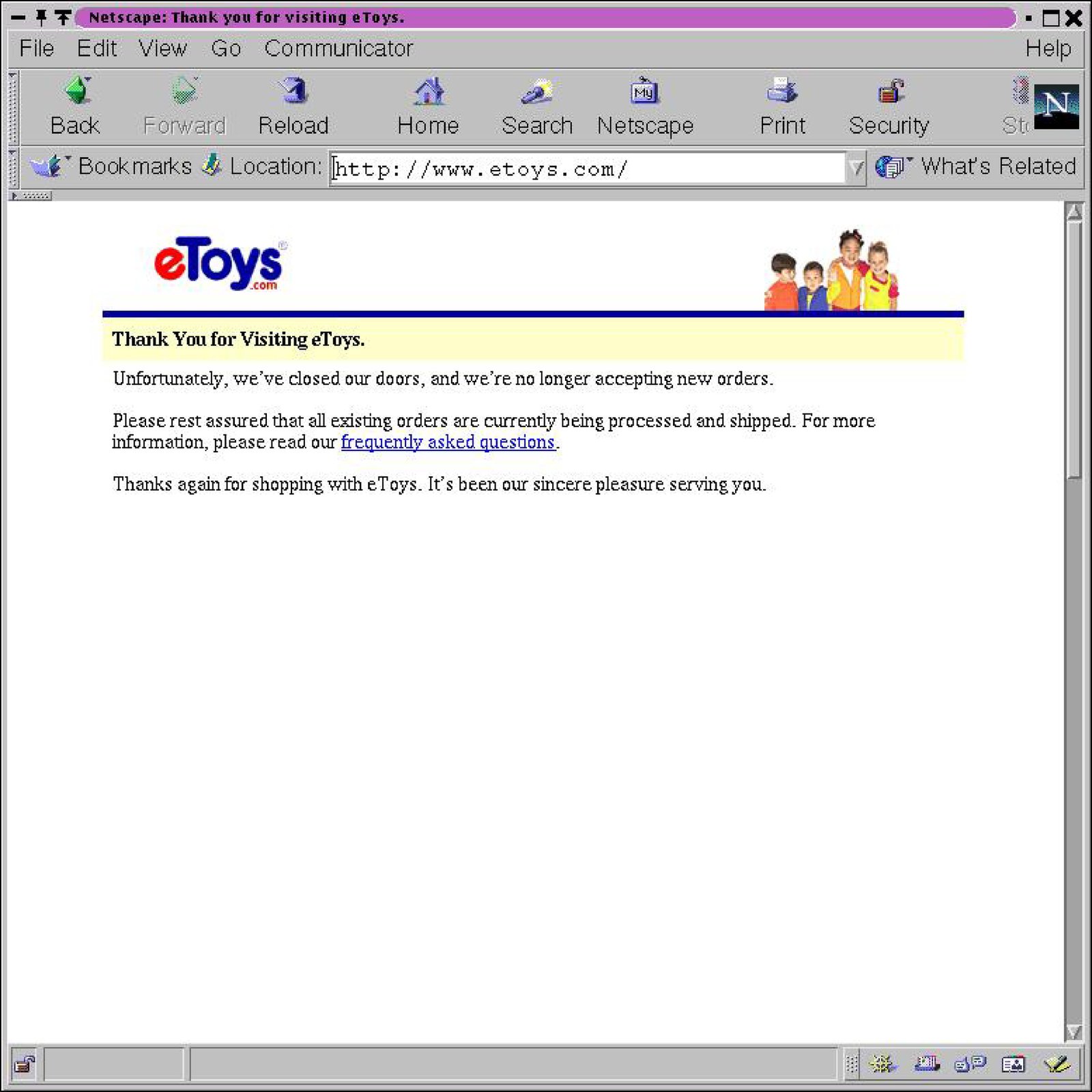
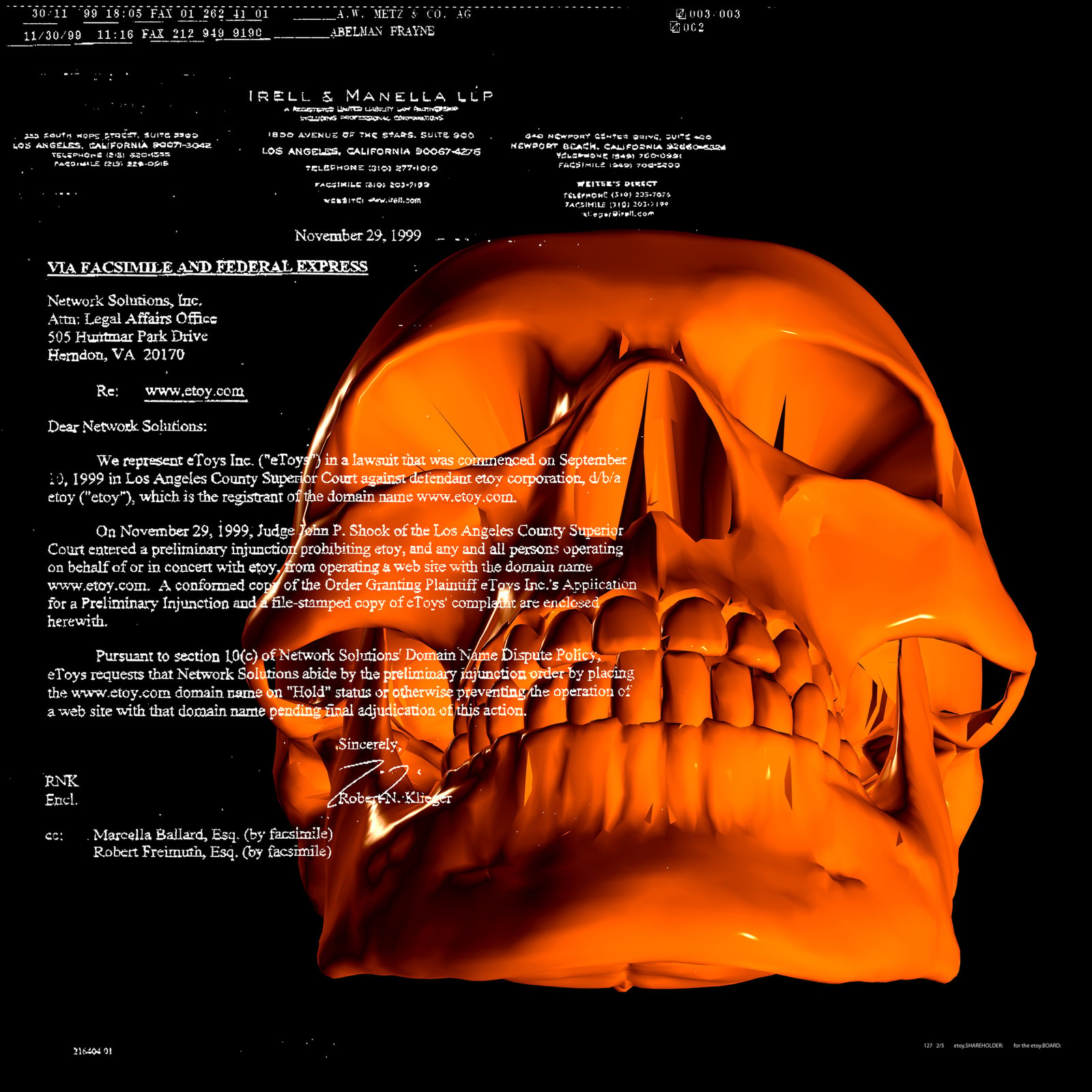
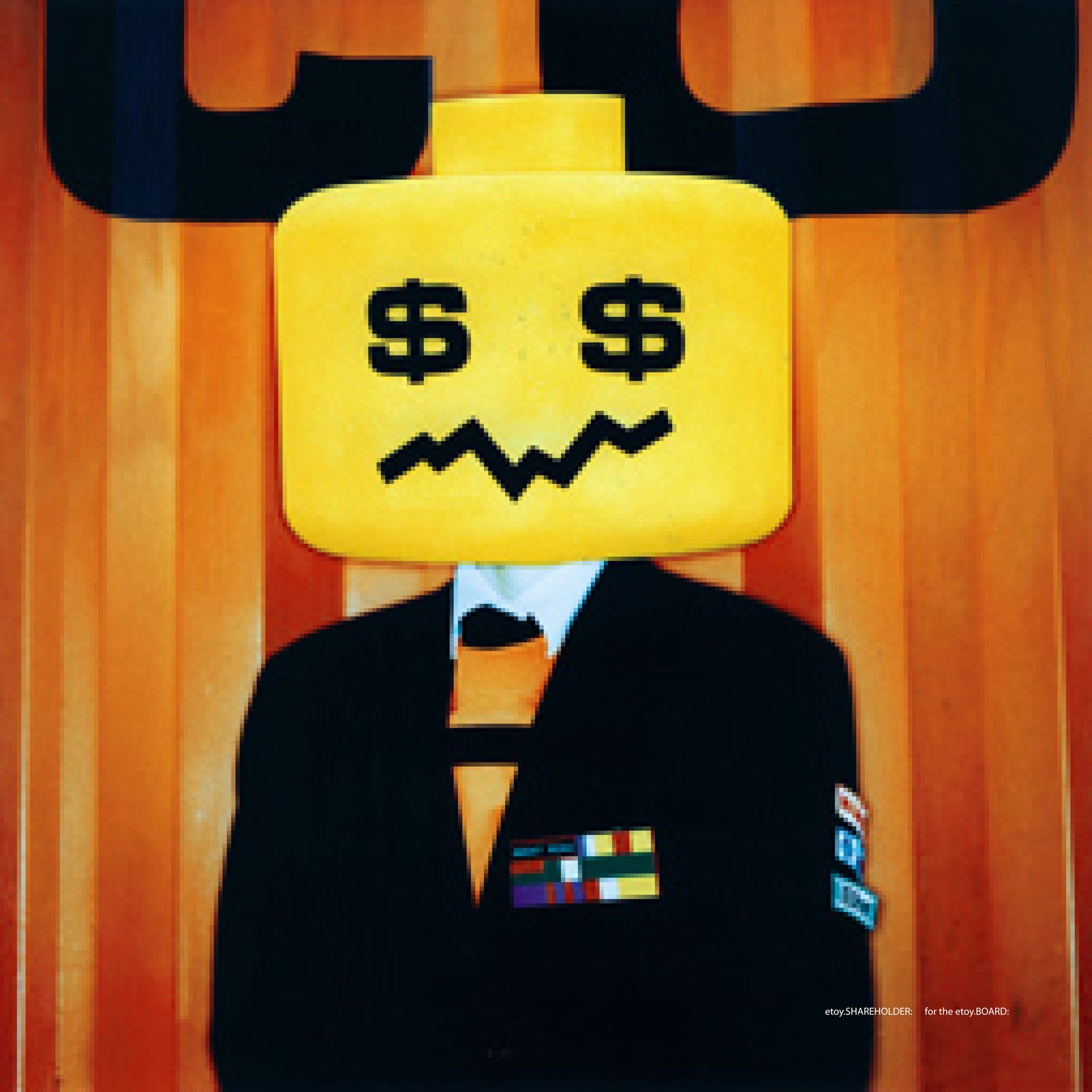
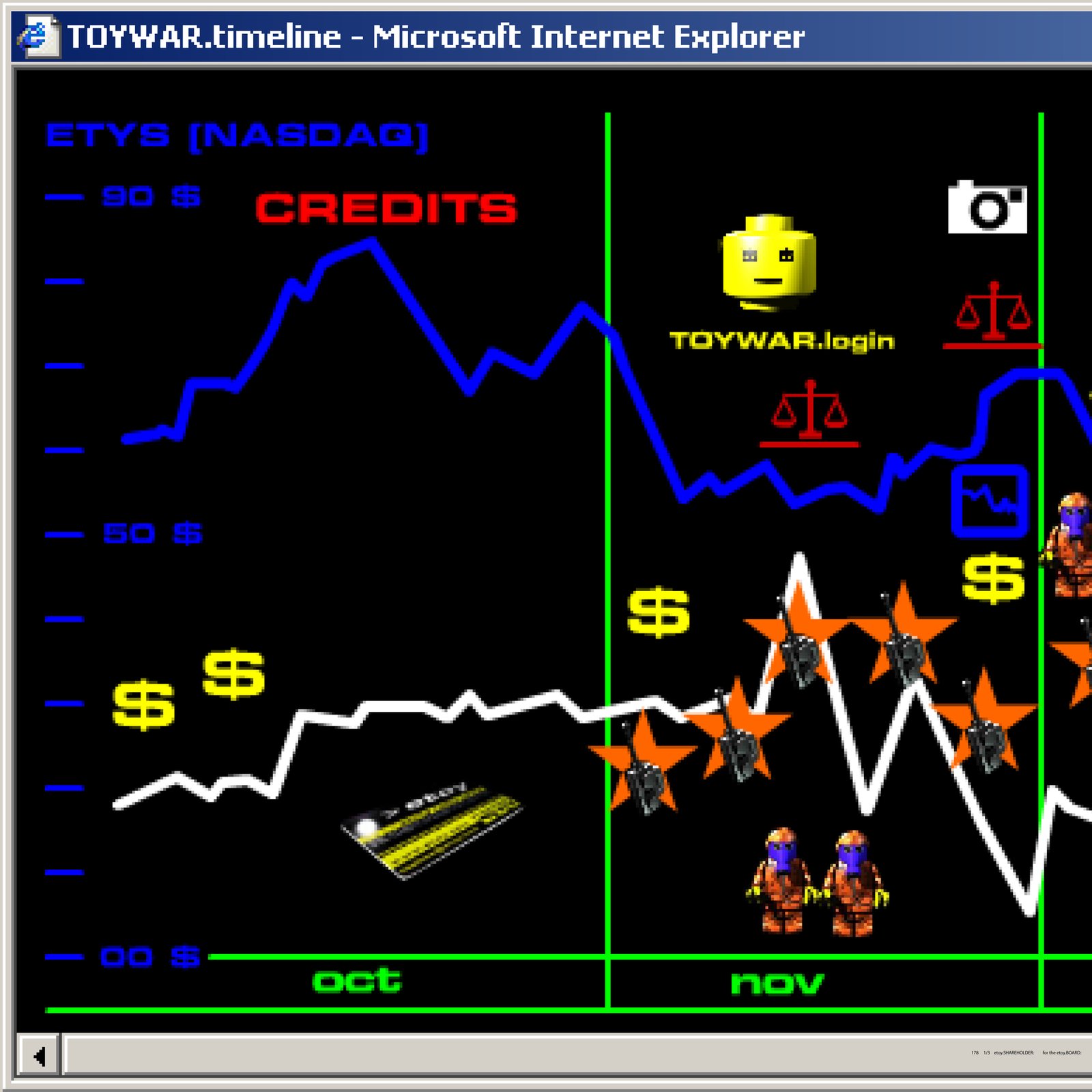
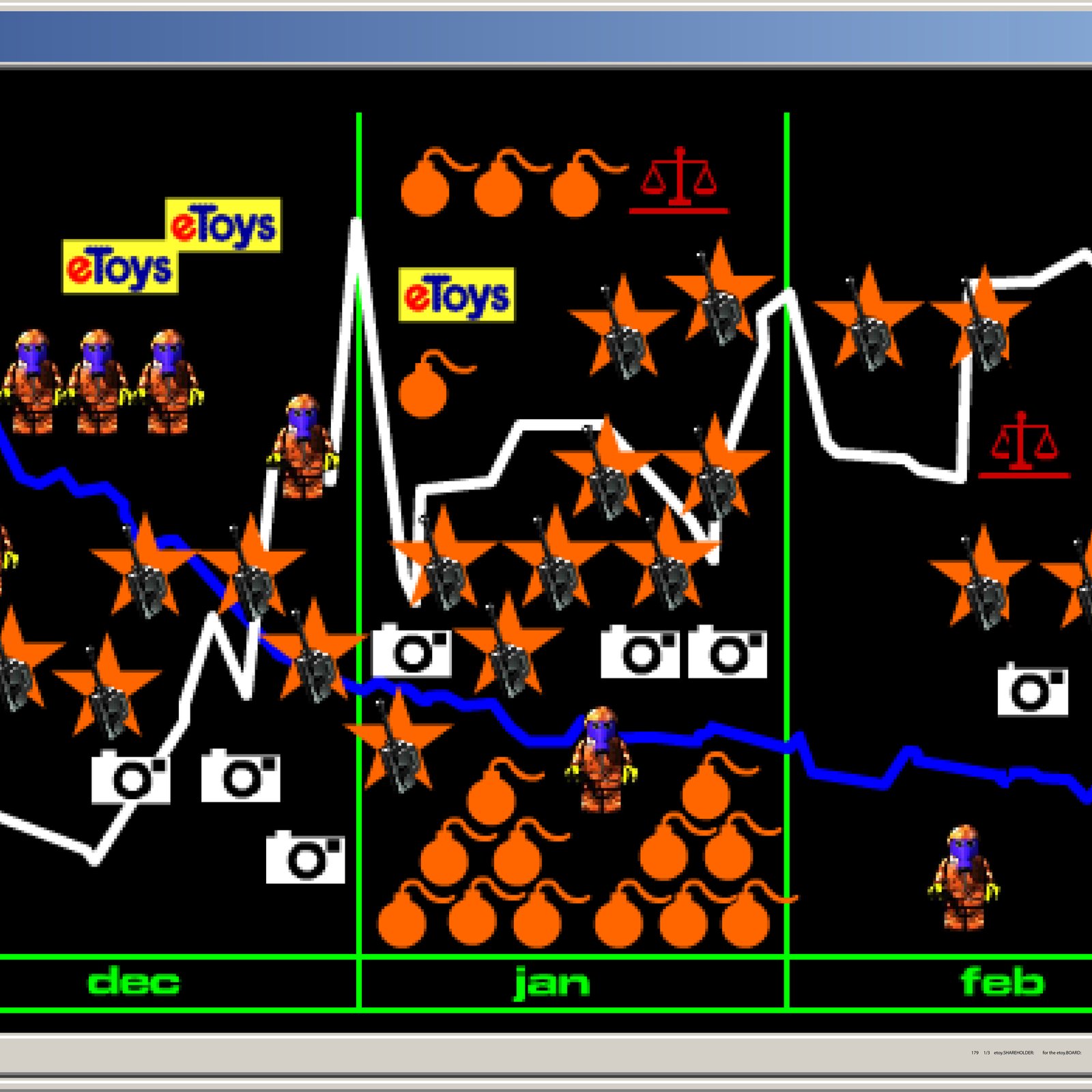
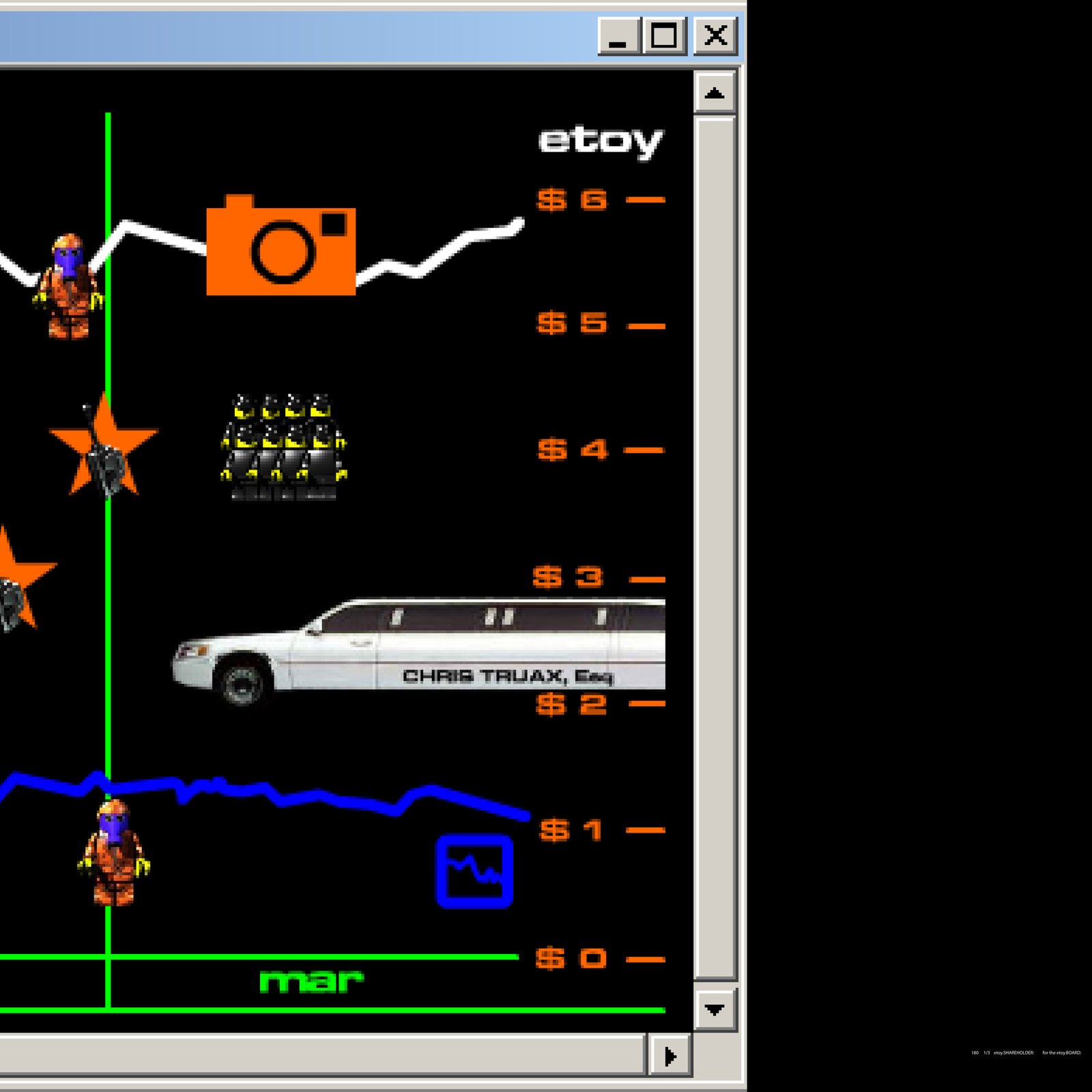
ToyWar was by a collective from Vienna called “etoy”. They had picked their name through a generative computer program that was picking brands. After etoy was founded, an American toy company called etoys came about. A battle for the name ensued between etoy and etoys and a California court ruled that etoy had to shut down. So they went to war on the internet and that involved a website which would reload etoys.com over and over again, slowing down their server traffic during the busy Christmas season in 1999.
I went back to the computer lab where I worked and I put every computer to the etoy website. I remember standing there, looking at something like 30 computers reloading the etoys website, and I thought, “This is cool. What is this?” It’s about being a part of something.
etoy, etoy.SHARE-CERTIFICATE EYB No. 167, 1999-2000. Courtesy of etoy
etoy, etoy.SHARE-CERTIFICATE EYB No. 220, 1999-2000. Courtesy of etoy
etoy, etoy.SHARE-CERTIFICATE EYB No. 127, 1999-2000. Courtesy of etoy
etoy, etoy.SHARE-CERTIFICATE EYB No. 137, 1999-2000. Courtesy of etoy
etoy, etoy.SHARE-CERTIFICATE EYB No. 178, 1999-2000. Courtesy of etoy
etoy, etoy.SHARE-CERTIFICATE EYB No. 179, 1999-2000. Courtesy of etoy
etoy, etoy.SHARE-CERTIFICATE EYB No. 180, 1999-2000. Courtesy of etoy
Audience Questioner 1: AI models have progressed and changed so drastically in just a few years and there’s so many of them. I’ve been concerned that early AI models will disappear. Is there any effort to preserve those earlier models?
MC: In the past, Rhizome’s ethos has been very software focused. Dragan Espenschied, our preservation director, says hardware is nasty stuff. He doesn’t like to touch it. But I think AI models are one of the areas where you have to do a bit of both because we can’t abstract those systems yet.
One of the interesting problems of AI is that they’re so hardware intensive that there tends to be a really strong relationship between the software systems that are running and the hardware that it’s running on.
MG: There are also ways to collect artifacts so that differences might be demonstrated visually. We have collected artworks that made use of early AI where the artists know it’s going to be a capsule of how things looked at a particular time.
MC: We’re always trying to build context in some way, and I think already we’re doing that for early AI. Not all these things are going to survive, but it is important to remember that it is also an artist tool and we don't always archive artist tools, though being able to look back is really powerful for people.
Audience Questioner 2:Over the last 20 years we’ve seen many technology platforms die, and with it, you lose a ton of art. What role do you play in conversations with technology companies and platforms, like Adobe Flash or Instagram for example, about their responsibility for the legacy of these platforms?
MC: Flash was huge for artists and is a little bit of a success story in terms of preservation. There’s a distinction between a platform and a software tool, between something entirely contained within your browser or computer (which is a little easier even if it's proprietary) and something that’s up on the cloud and locked into someone else’s infrastructure. A few years ago at Rhizome, Flash seemed like an unsolvable problem because it was such a black box, but there's been a lot that’s happened that allows accessing it now.
We had conversations with technology platforms about preservation, and it would be great for platforms to think about preservation as part of their end of life. But it never really happens. One thing to say is that an artist using open source tools is really powerful for those reasons.
MG: It’s a good strategy for artists to talk to Rhizome about how you can make your work more durable, because there are ways to do it.
MC: However, some artists don’t want their work to survive in the same way. Sometimes Net Art is meant to be in that particular corporate locked down platform for that moment and to then exist in that way regardless of what survives.
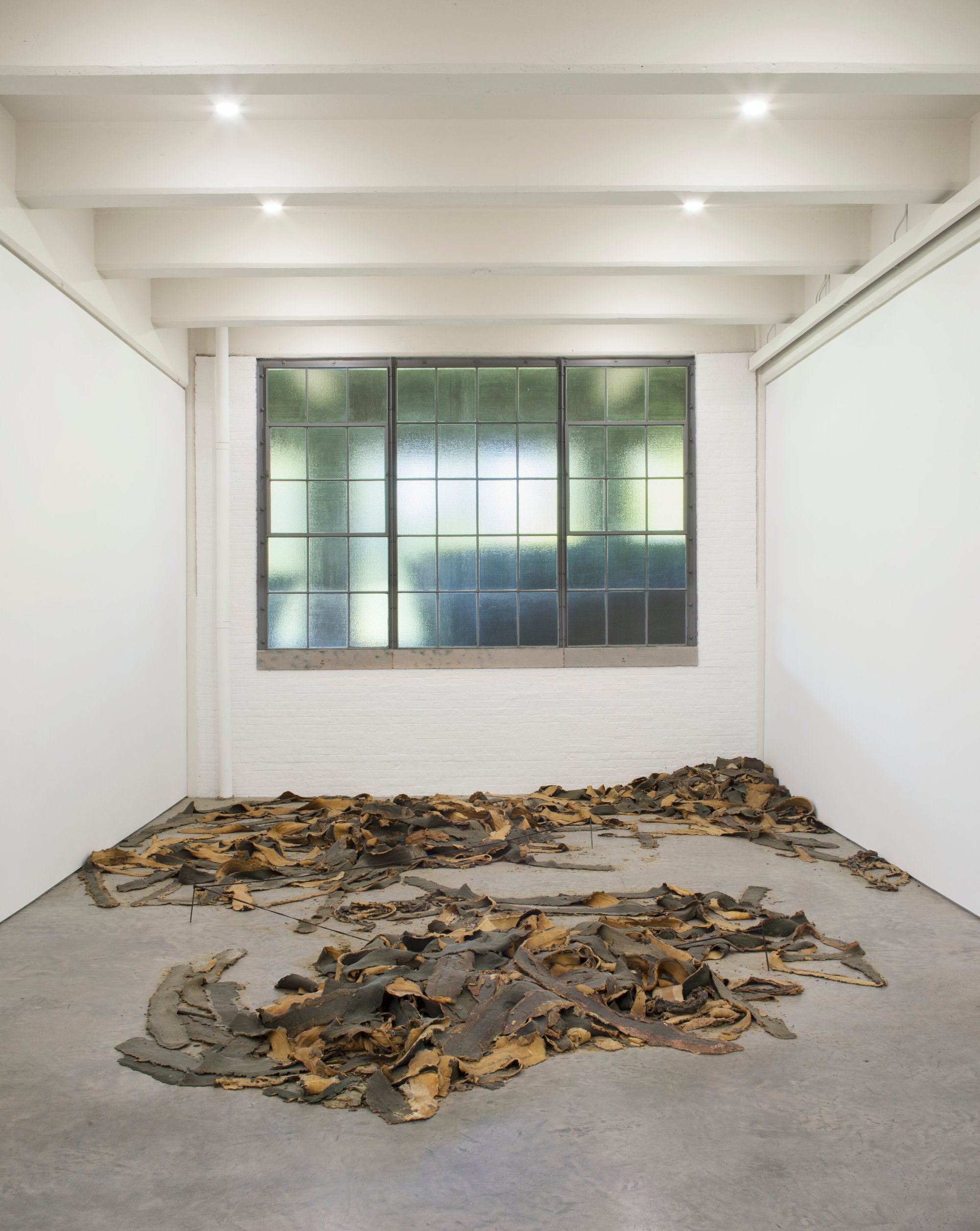
MG: I should also add that if everything survived, it would be a disaster. That’s why I say artists are also very good editors. Artists decide what from the past is worth moving forward. A lot of things can’t survive; otherwise, we wouldn’t be able to maintain it all. The artist Richard Serra worked in the 1960s with a lot of fiberglass, plastics, and rubber that were UV- and oxygen-sensitive. His work Scatter Piece was on view at Dia Beacon, and the conservators said UV and air were going to kill it.
Serra said, “you know what, there were a lot of things we made that weren't meant to last; they were just meant to be gestures. Take a photograph, put it in the file, and then you can remember it as part of that. Not everything has to last.”
Audience Questioner 3: How do you balance artist intention with changing technological standards?
MG: There are a lot of examples in video art, because technology was moving more slowly. Nam June Paik didn’t live to see how difficult it would be to just get a monitor. We try to keep all the 80s and 90s television monitors we can for those works, but it is a pretty hard thing. One good thing about technology changing so fast now is that artists are seeing their medium emerge and disappear and are taking a more active role in that.
MC: At Rhizome, there’s a lot of emphasis on artist intent in the conservation field though we try to distance ourselves from it a little bit for two reasons: The first reason is that we are not well resourced and we try to do things at scale, so we don’t always get to take the white glove approach for every individual work. The second reason is that sometimes the artist’s intentions, especially when it comes to technology, are illegible as time passes. They often misunderstand a dependency within their system, or they might describe something that doesn’t exist in the same way, or something that seems default to them at the time won’t actually exist in 10 years. For that reason, descriptions by artists are sometimes not that helpful.
If you rewrite an artwork from the 1990s for modern browsers, you need to remember that the screen size back then was approximately 800px by 600px and that it will look so different on a large screen, changing the composition entirely. At the same time, there are works like Eva and Franco Mattes’s Life Sharing from the early 2000s that were less about the aesthetics of the work. It was like a performance where anyone in the world could access their computer. You could log in and check their email, see their photos, etc. What was important in that work was that there was a kind of transparent window through the web into a file system, so when we restored it at Rhizome, we just put it online in a normal browser and had to update it on the back end to make that work, which was more in keeping with their intentions and felt like more part of the ethos of the project.
And another important thing we need to balance is that beyond artist intention, when an artist makes something, it belongs a little bit to the public after that.
Michael Govan joined the Los Angeles County Museum of Art (LACMA) as Chief Executive Officer and Wallis Annenberg Director in 2006. In this role, he oversees all activities of the museum. During his tenure, LACMA has acquired by donation or purchase more than 46,000 works for the permanent collection, doubled gallery space and programs, and more than doubled its average annual attendance to well over one million. In 2026, the museum opened a new, state-of-the-art permanent collection building designed by Pritzker Prize–winning architect Peter Zumthor.
Michael Connor is Co-Executive Director of Rhizome, where he oversaw the Net Art Anthology initiative, an effort to retell the history of net art through 100 works, presented as an online exhibition, gallery exhibition, and book. He is also curatorial advisor for Kadist, a non-profit contemporary art organization, and Art Blocks, an NFT platform. His first online curatorial project took place in 2003 at FACT, Liverpool, where he organized an edition of the traveling exhibition, “Kingdom of Piracy,” with Shu Lea Cheang, Yukiko Shikata, and Armin Medosch. Connor is currently editing a book by Gene Youngblood about the work of Kit Galloway and Sherrie Rabinowitz.