Finding Photography’s Pulse
In an age after truth, nothing captures cultural anxiety like post-photography, argues Danielle Ezzo
In an age after truth, nothing captures cultural anxiety like post-photography, argues Danielle Ezzo
If photography is synonymous with technological change, then post-photography is a history of the anxiety that change produces. Every decade, as a new wave of imaging tools comes to market, the same obituary appears: photography is dead. With it come declarations that the photographic image is no longer indexical and therefore no longer trustworthy.
“Post-photography” has become the go-to term for this supposed afterlife, revived whenever the conditions of photography drift too far from the camera.
Although its exact origins are unclear, the term “post-photography” started appearing in the 1980s and early ’90s with the advent of digital imaging, though it would take Robert Shore’s book Post-Photography: The Artist with a Camera (2014) to introduce it to a broad audience. What is striking is how rarely his codification is acknowledged; when generative AI arrived and critics reached again for the term, Shore’s prior use, and every iteration before it, went largely unmentioned.
Even before “post-photography” entered popular discourse, theorists were already circling similar concerns with adjacent language: Jean Baudrillard on simulacra, simulation, and the retreat from the real; Vilém Flusser on the technical image and the logic of the apparatus; and Allan Sekula on photography as a social system rather than a neutral record. What each of these frameworks shared was a suspicion of the photograph’s claim to truth, though they differed in what they thought photography concealed. For Flusser, the technical image didn’t expose its constructed nature but buried it, presenting the apparatus’s program as transparent reality.
The truth is that photography hasn’t died. If anything, it’s multiplied. More images now move through the world under photographic conventions than ever before, whether or not a camera, in the traditional sense, was involved in their creation.
Images are now made expressly to be seen by machines rather than people, scraped from the internet or used to pad out datasets in order to generate new material. Post-photography as an umbrella covers all diversions and perversions from the camera, while being less stable than the medium itself. It shapeshifts in meaning with each technological turn while rarely acknowledging the long tail of its history. The anxiety, then, is not about what photography is, but about what we need it to be.
A proto-period brought with it a range of approaches to engaging with photography that challenged the truthfulness of images: John Baldessari’s photo-text works of the 1960s revealed how photographic images depend on language to produce meaning; Cindy Sherman’s fictional narratives borrowed the visual grammar of cinema to destabilize photography’s documentary claim; while Richard Prince’s reappropriation of advertising photography in the late 1970s and early ’80s made clear that the photographic image was already a copy of a copy. These artists might not seem post-photographic by today’s standards, but what they were doing — interrogating the medium — is central to how we understand the post-photographic condition today.
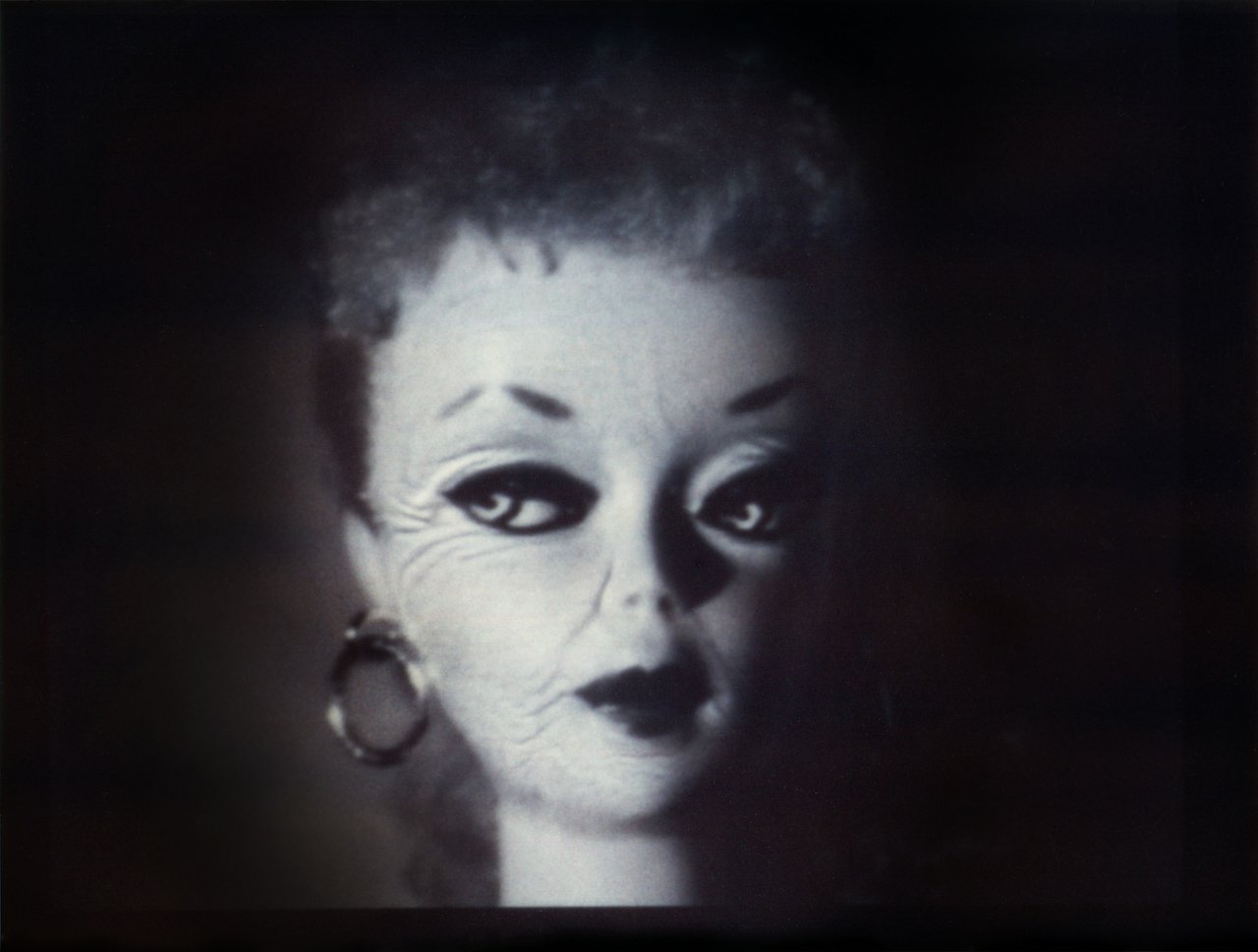
While working at Bell Labs from 1968, Lillian Schwartz used early digital compositing and image processing to blend photographs and video, treating the photographic image less as a fixed document than as malleable electronic material. Her work demonstrated that the documentary authority of a photograph could be engineered long before Adobe Photoshop made that practice commonplace. Around the same time, Nancy Burson began collaborating with engineers from the Massachusetts Institute of Technology on one of the first digitizer-to-computer systems, allowing her to scan human faces and manipulate them digitally.
The cover of the February 1982 edition of National Geographic featured Gordon Gahan’s photograph of the Pyramids of Giza, digitally altered by editor Wilbur E. Garrett, who used a Scitex image-processing system to move the pyramids closer together, thereby allowing the subject of the image to fit nicely into the vertical format of the magazine.
The outrage that followed called into question the authority of documentary photography and the standards journalism should uphold. This was proof that the photograph’s claim to truth was already fragile enough that a single editorial decision could crack it open.

Yet, the magazine defended their editorial choice, and in 1984 went on to make the same decision with another cover. For many critics of the time, the new technical ease of fabrication felt like a decisive break. In his lectures, the writer, curator, and professor, Fred Ritchin, has described post-photography as being “unhinged from the real”, with the “post-” signifying instability.
But the phrase “unhinged from the real” assumes what it cannot prove: that photographic certainty ever existed in the first place.
In an article for The New York Times, Ritchin anticipated that “realistic-looking images will probably have to be labeled, like words, as either fiction or nonfiction, because it may be impossible to tell them apart.” If images could be constructed without a referent — an object or scene that exists directly in front of the camera — then perhaps we had moved beyond photography altogether.
The medium’s fragility became harder to ignore with the release and widespread adoption of Photoshop in the 1990s, which put the means of manipulation in nearly everyone’s hands. By the turn of the new millennium, the problem was no longer simply the malleability of digital images, but the speed at which they circulated online. Camera phones, social platforms, and an increasingly networked world all contributed to the pace and scale at which images, constructed or not, could spread.
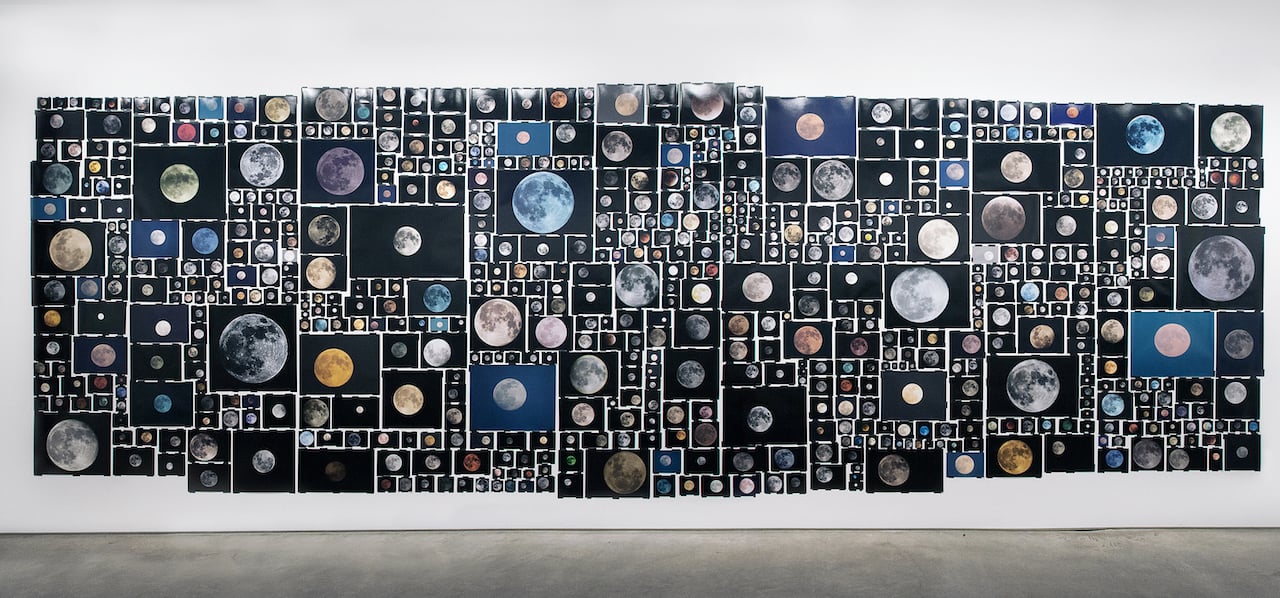
Penelope Umbrico’s work is central here. By aggregating thousands of images of sunsets, moons, or Craigslist TVs scraped from the internet, she demonstrates how photography is a collective behavior rather than simply an individual act, revealing the image as a form of vernacular exhaust. Or, Thomas Ruff’s series jpegs (2007), where he enlarges compressed files or reprocesses found digital imagery until the artifacts of software become the subject, making clear that the photograph is now delivered pre-mediated by the limitations of resolution and compression.
Together, these practices challenge photography’s claim to being an unmediated record of the real — a myth the medium has always struggled to sustain.
By the 2010s, the concerns about photography’s fluid and constructed nature permeated what is often described as the “postinternet” era, which observed the full texture of network culture as both material and subject: screenshots, stock imagery, memes, and images made with the assumption they would be seen on screens first, if not exclusively.
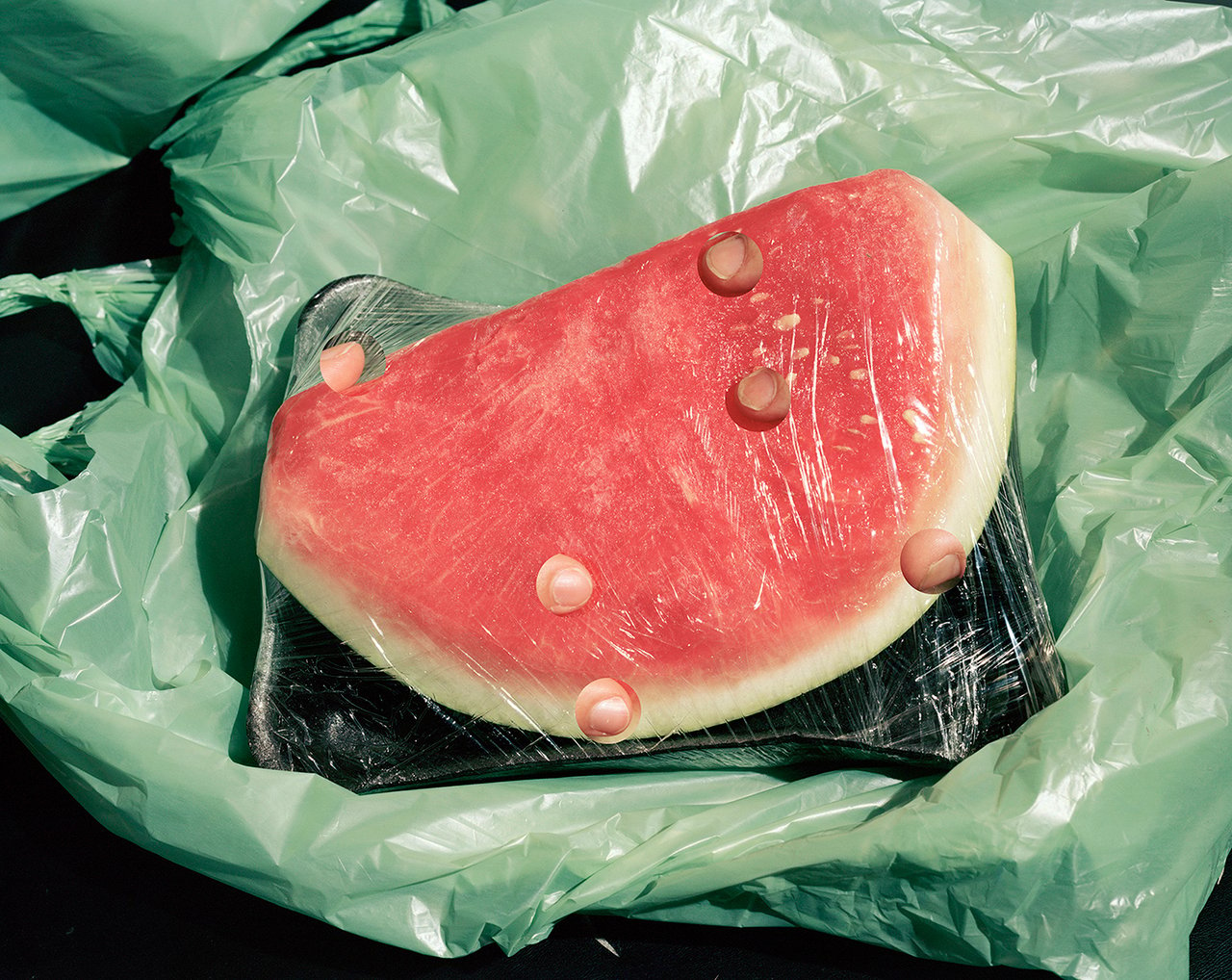
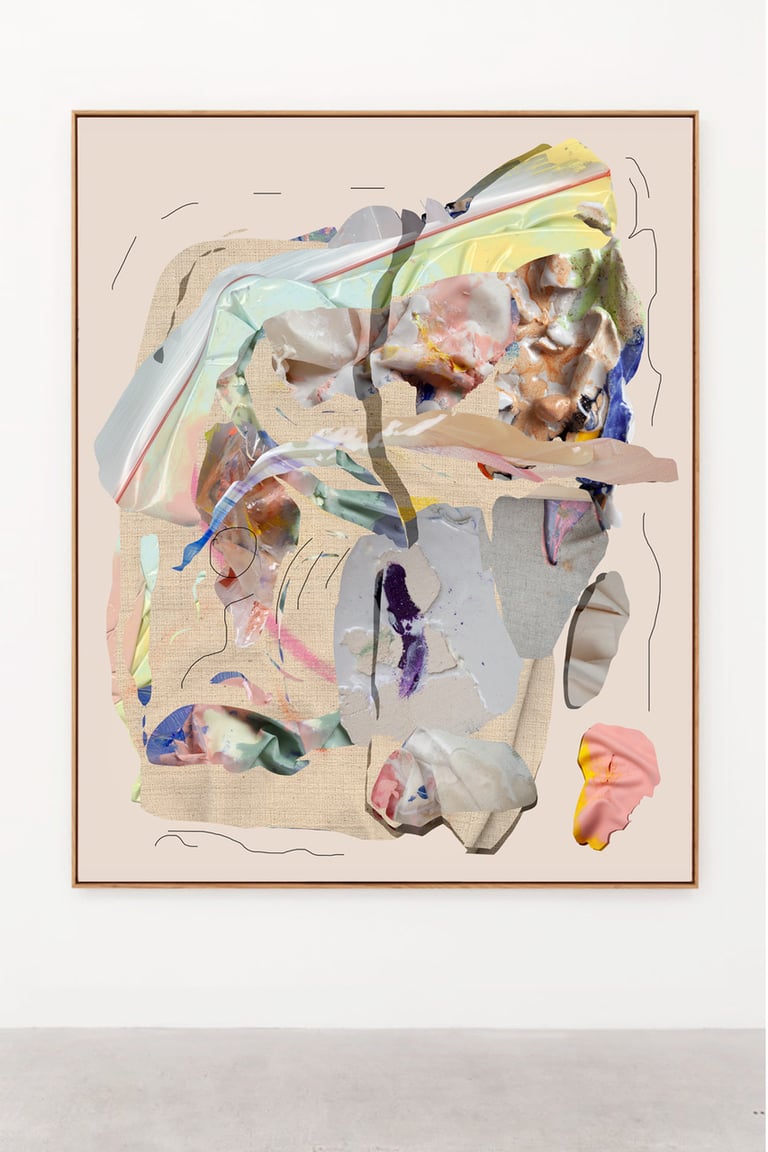
Kate Steciw and Rachel de Joode used digital collage and mark-making to make visible the constructed nature of their images, and to establish connections between digital and physical material. Lucas Blalock left Photoshop’s gestures and cloning artifacts — the repeated patches of pixels used to fill or replace sections of an image — visible and unresolved, treating digital mark-making as part of the image rather than something to be concealed, while Joshua Citarella worked through meme culture and the political economy of online image circulation. Each of these practices exposes the invisible human labor that have made photographic images consumable for the public.
In 2012, the Metropolitan Museum of Art hosted Faking It: Manipulated Photography before Photoshop, an exhibition and publication curated and written by Mia Fineman, which made the case that photography’s claim to truth has been contested since the beginning. The show cited some of the earliest examples of composite photography, including Henry Peach Robinson’s Fading Away (1858), made from five separate negatives, and Carleton Watkins’s Cape Horn (1867) albumen prints, documentary landscape photographs made for a geological survey that nonetheless required combination printing to work around the exposure limitations of the time.
What Fineman’s exhibition made undeniable was that photographers had long drawn directly onto glass negatives with graphite pencil and ink, darkening or erasing elements with the same deliberate mark-making that would later define Blalock’s practice; while combination printing — the cutting and joining of separate negatives into a single image — anticipated the digital collage of Steciw and others. The lineage of both techniques can arguably be traced back to painting, or “painting with light”, eventually feeding into the contemporary retouching practices we see today, where the same impulses to master the image are reiterated in the advertising industry.
Digital imaging didn’t so much create this instability as underline its prevalence, rendering the methods of construction, abstraction, and manipulation that were always there more visible and widely accessible.
What this history implies is not a decisive break from photography’s truth claim, but rather a recurring condition for image-makers to engage with the photographic logic of contemporary culture. Post-photography is a response to that imperative.
Framing the present as “after” photography imposes an artificial periodization over an ongoing transformation: an expanded field of technologies, processes, and ways of seeing that remain photographic in nature even if only by degrees of association.
Natasha Chuk’s recently published book, Photo Obscura: The Photographic in Post-Photography (2025) expresses concern that “emerging image-making practices of post-photography are photographic but not necessarily photographs.” Chuk focuses on a cohort of artists who investigate the grey areas of the medium, including Pascal Greco’s in-game photography in the series Place(s) (2021), which explores a kind of omniscient or dual seeing in the video game Death Stranding (2019).
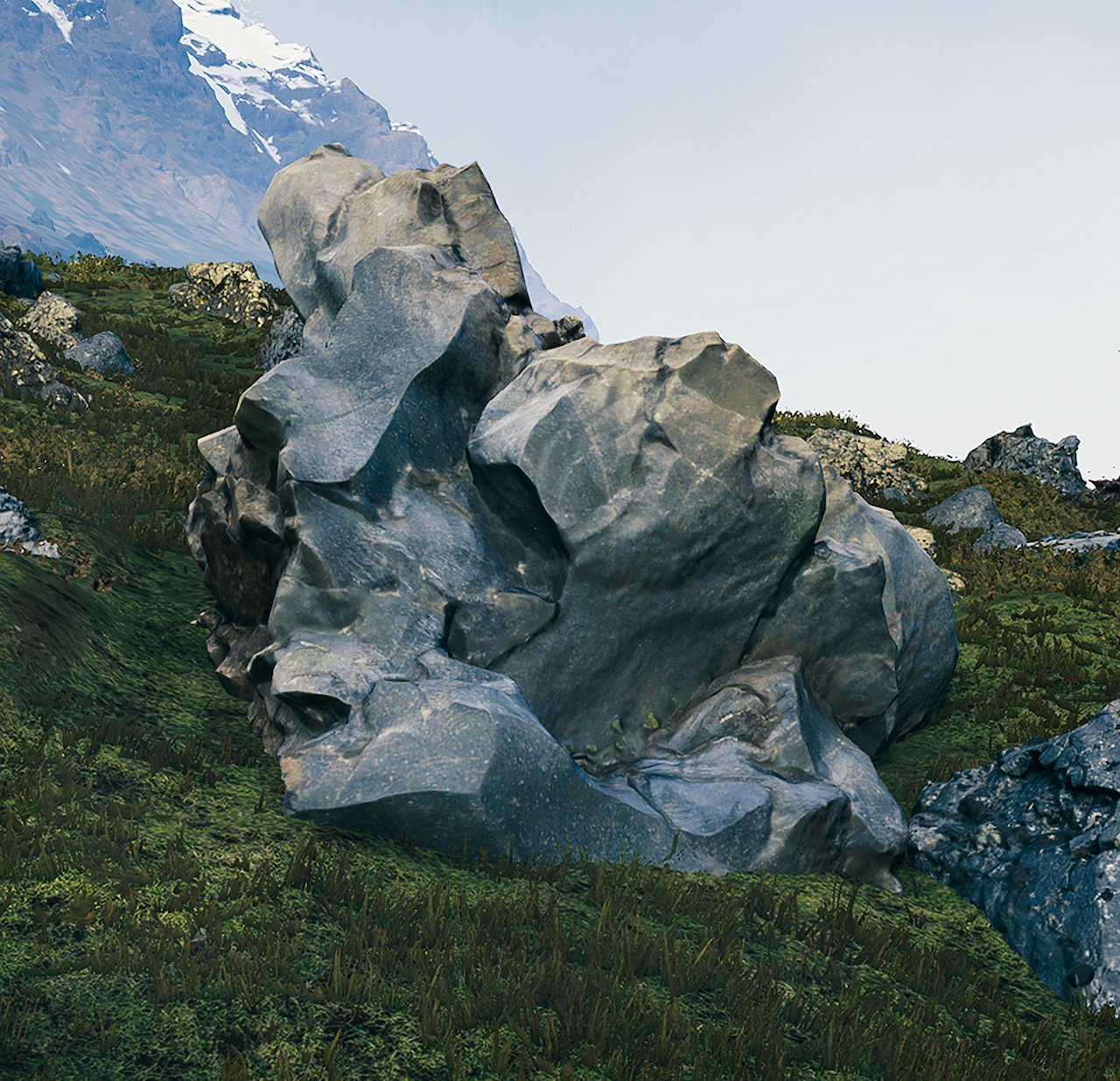
Generative AI systems continue photographic practice, compounding the medium’s dialectical tension with reality.
These models are trained on a vast corpus of photographs and their accompanying metadata, compressing decades of visual culture into statistical form. The images they produce are not detached from the world so much as inferred from it, assembled from patterns learned across millions of prior photographs. Inference is an important phase in the machine-learning (ML) training process, where a model is exposed to unseen real-world data to generate novel predictions and insights. The resulting outputs, be they images, texts, or videos, are “synthetic” insofar as they are generated or emergent, yet they also remain in some sense “historical”, if abstracted and biased according to their training data.
As Simon Denny noted last year in a conversation for STUDIO titled, “Canon Fodder”, “training datasets for AI is a form of history building that reaches from the past in order to deploy to the present.” AI-generated images are not produced by a camera, so there is a distancing that comes with that, but they are, as Denny puts it, “natively networked imagery that turns canon-building into a medium.” The consequence is not a departure from photography’s referential logic but rather its most extreme extension; it is, and has always been, a medium built from prior conventions and assumptions about what the world looks like, now made at a scale that was previously unimaginable.
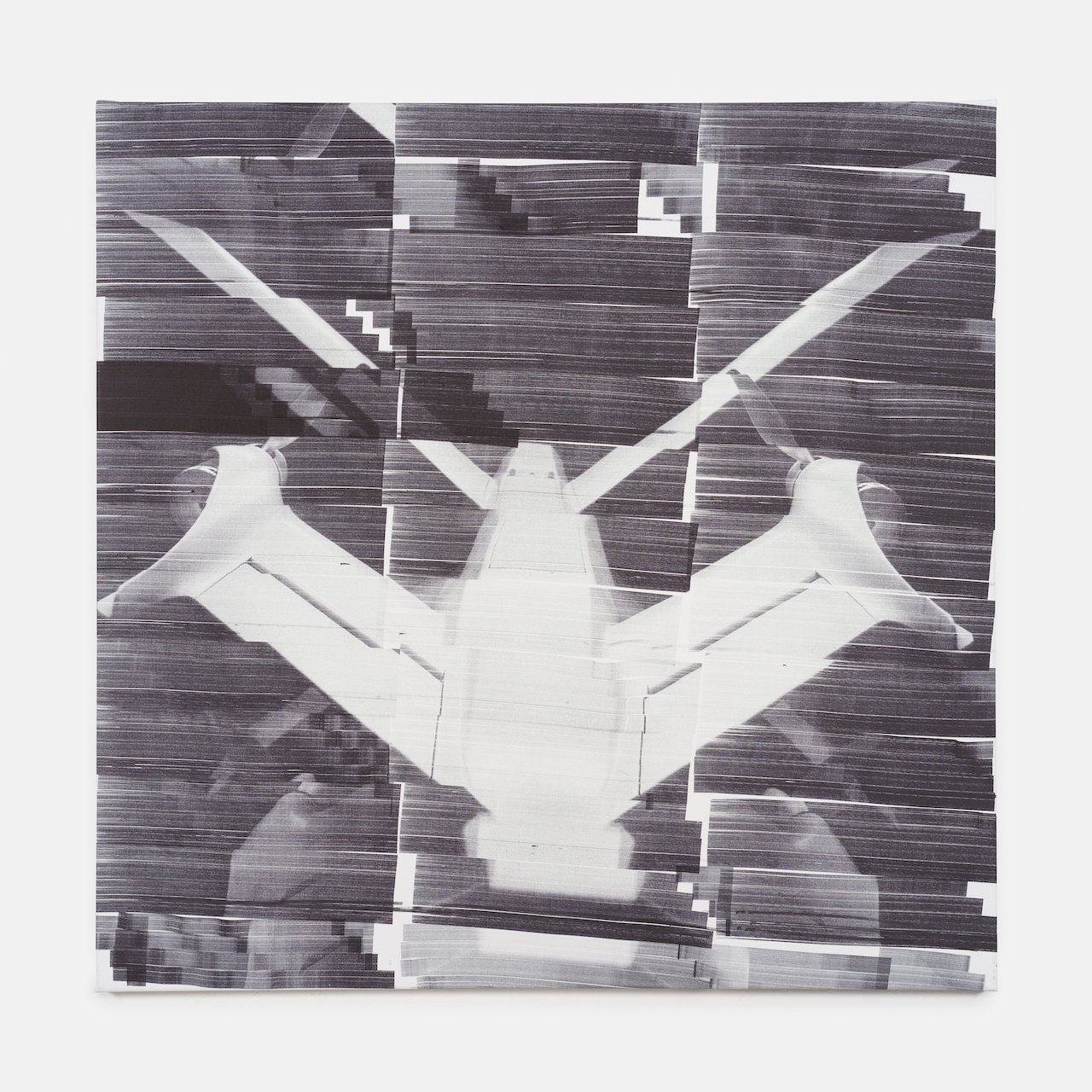
Flusser identified this problem a long time ago. “The photographer can only desire what the apparatus can do,” he wrote in Into the Universe of Technical Images (1985). What the apparatus cannot do is reproduce the world, instead realizing, blindly, what its program makes possible.
Where the camera resolved light with silver nitrate or a digital sensor, ML models resolve statistical weight into emergent pixels. The apparatus has become the archive.
What the apparatus produces from those inferences varies depending on the model and its training. Rendering a truth claim conditional and seldom repeatable fortifies the truth’s instability. Both Rashed Haq’s Human Trials (2016-20) and Alexey Yurenev’s Silent Hero (2019-25) come to mind here. In my own visual practice, An Incantation in Twelve Prompts (2023) revisits the long-standing connection between text and image, and how language and syntax deepen, if not complicate, the contextual understanding of images.
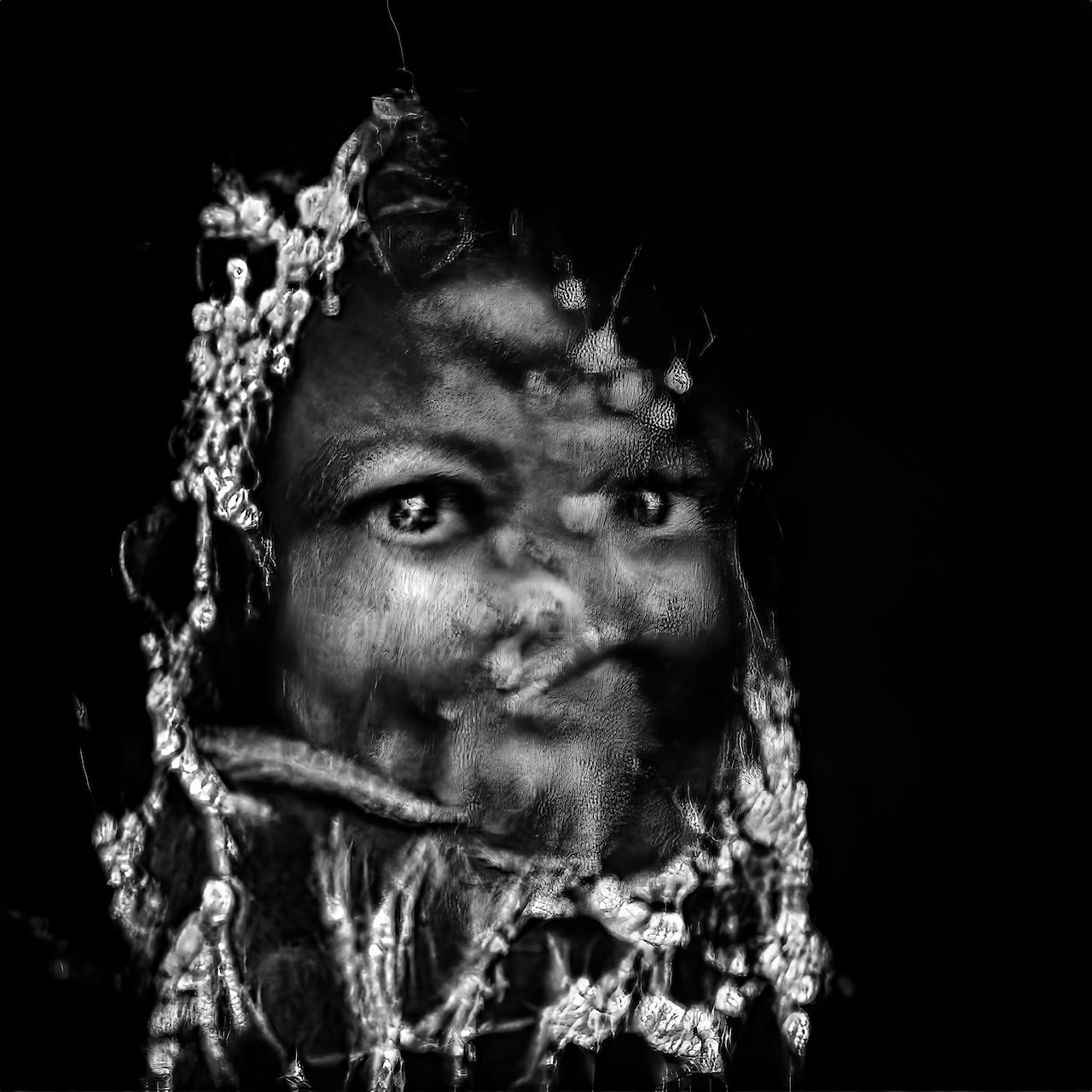
As Andrew Dewdney and Katrina Sluis have argued, the issue is no longer whether photography survives but how images operate as networked data. What Haq’s, Yurenev’s, and my own work point to is the index being redistributed across millions, if not billions, of images and expressed through unique model architectures and training runs. Rather than the index’s single evidentiary trace from scene to camera, contemporary digital images accumulate meaning through indirect correlations within latent space. This kind of multi-dimensional indexicality, where a form of truth emerges through statistical probability across text, algorithmic instruction, and procedural logic, evolves a complex composite from new systems of information collection.
Instead of marking an end, post-photography condenses a wider cultural anxiety that photographs cannot fully sustain the empirical pressure that has been historically attached to them.
But if the photograph could never guarantee objective reality, accruing meaning through layered systems of mediation, inference, and interpretation, then truth today only exists as a mesh of implied meanings, by virtue of its being embedded in training data and entrenched in the image-generation process long before it reaches the viewer.
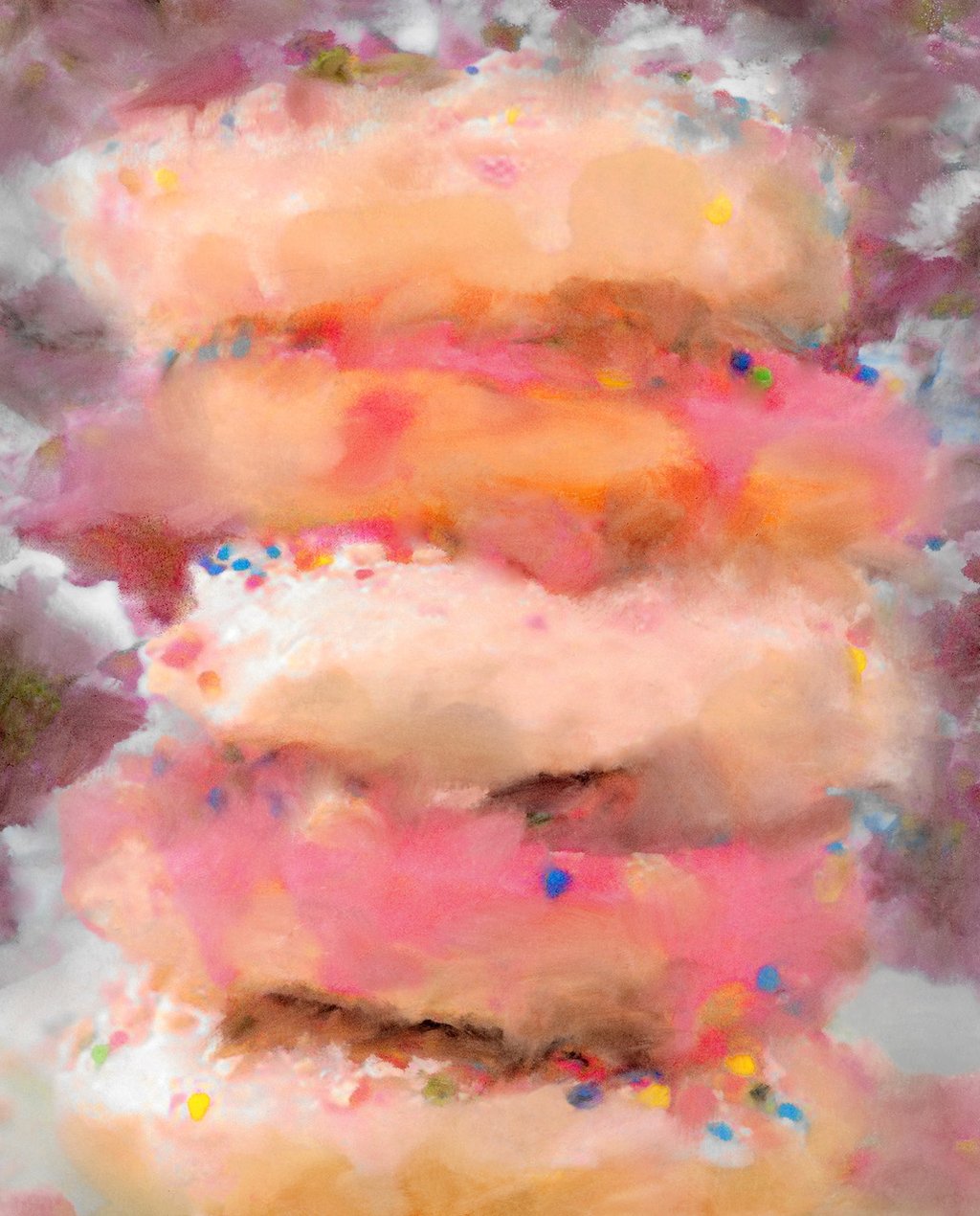
If the term “post-photography” is misleading, it may be because it focuses our attention on the wrong problem. The question is not whether an image is photographic enough to be trusted — a notion that assumes a stable past that never fully existed, and favors the index as the single most important method of information collection. The question is why we continue to believe that images provide certainty. Despite photography’s penchant to lie, we want to believe in it as a medium, and it’s that belief that overrides our ability to comprehend its inherent fallibility.
We continue to place the burden of representation on still and moving images as the principal bearers of truth because we crave an elegant solution to a complex and ever-changing problem. We look to photography to quell our fears about the world, to affirm our vision of it, and when it can’t, we reach for the “post-” as a way to assuage those fears. But the anxiety is the point.
The post-photographic condition bespeaks a broader matrix of post-truth uncertainty, which is precisely why the stakes feel so high and why the term keeps returning. If we want to address the term “post-photography”, then we must address this underlying anxiety.
Whether photography is dead or alive is less interesting than why artists, theorists, and image-makers persist in testing its limits. The answer, across every decade surveyed here, is the same: a drive to understand how images make meaning, bear witness, yet simultaneously fail to do both.
From the early days of multiple exposure composites to the latent space of diffusion models, the expanded field of photographic practice has always been in the business of stress-testing its own assumptions. “Post-photography”, at its most useful, points to that stress. Yet it often mistakes the symptom for the diagnosis. The question was never whether photography has a pulse, but why we keep needing to check.
Danielle Ezzo is an interdisciplinary artist and writer based in Brooklyn, New York. Her artwork is held in the collections and libraries of The Metropolitan Museum of Art, Santa Barbara Museum of Art, and Cornell University. Her writing on photographic practices and technology has been published in The New Inquiry, Magnum Photos, and The British Journal of Photography, among other publications.
No comments yet. Be the first to share your thoughts.
Mentioned in this article
People: Ben Millar Cole, Danielle Ezzo, Fred Ritchin, Lucas Blalock, Nancy Burson, Pascal Greco, Penelope Umbrico, Rachel de Joode, Rashed Haq, Simon Denny|