An Artist Whose Futures Keep Coming True | Cao Fei
With two big European shows this year, the creator of a city in Second Life has become an ethnographer of Chinese technology — embedding with drone-makers and warehouse robots to ask what automation leaves of the human
Cao Fei, “Testimonies to the Near Future”, is at Kunstmuseum Basel | Gegenwart, until October 11, 2026. Cao Fei, “Dash”, is at Fondazione Prada, Milan, until September 28, 2026. Cao Fei’s work features in “New Humans: Memories of the Future”, at New Museum, New York, until August 9, 2026
Cao Fei pioneered worldbuilding as an artistic practice. Between 2008 and 2011 she built RMB City inside Second Life, treating it not as a game but as a medium: a virtual metropolis she moved through as her avatar, China Tracy, who ran talk shows and feng shui sessions and conducted a love life in public. It was a working site of urbanism, economy, and desire well before Web3 arrived to sell “your own virtual land” in Decentraland — and far more critical about what such a place was for. Two decades on, she frames the project as obsolescence made visible:
RMB City has become “a kind of digital fossil”, her role with it shifting “from creator to witness”, Cao Fei tells Right Click Save via email.
This summer she stages two shows, in Basel and Milan. Testimonies to the Near Future, at the Kunstmuseum Basel, her largest European survey to date, lays out three decades of work as a city of districts — from the Osram factory floor of Whose Utopia (2006) to the Second Life metropolis of RMB City, Asia One (2018), and the sci-fi fantasy Nova (2019). “Dash”, at Fondazione Prada, is the new work: a three-part commission built from three years spent embedded with the agri-drone-maker XAG.
Installation view of “Cao Fei: Testimonies to the Near Future” at Kunstmuseum Basel | Gegenwart, with work: RMB City: A Second Life City Planning by China Tracy (2007-11). Courtesy of the artist, Vitamin Creative Space, and Sprüth Magers. Photography by Samuel Bramley
Born in Guangzhou, one of China’s manufacturing megahubs, to artist parents in 1978, Cao has spent three decades investigating what technology does to labor, and what it leaves of the human.
What keeps her working with each era’s newest tools, Cao says, is “not ‘newness’ itself, but what these new things do to us — mentally, psychologically, socially, and philosophically”.
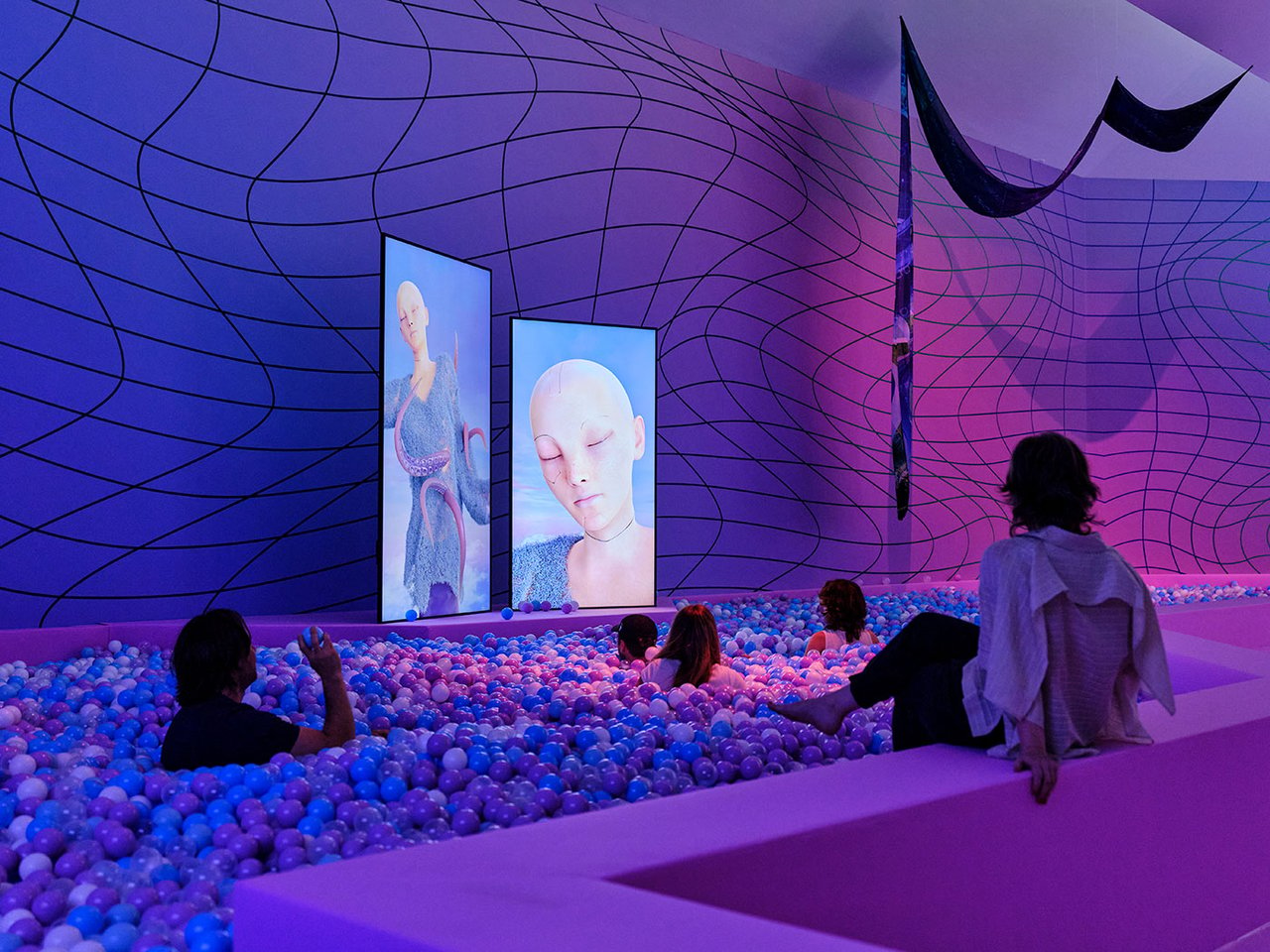
Oz is the avatar Cao created for Duotopia (2022), roughly 15 years after China Tracy — half-human, half-octopus, with mechanical tentacles, built inside the Chinese platform Yuanbang Mega City rather than the US-run Second Life. Where China Tracy embodied 2007-era optimism, Oz is an ambivalent successor, “the integration of artificial intelligence into our society”.
Installation view of “Cao Fei: Testimonies to the Near Future” at Kunstmuseum Basel | Gegenwart, with work: Oz 01 (2023). Courtesy of the artist, Vitamin Creative Space, and Sprüth Magers. Photography by Samuel Bramley
The octopus, she notes, is “a visitor from beyond, quietly observing how we exist within these systems”. In Basel, Duotopia hangs in “The Playground” , above a ball pool, beside the arcade game Super Delivery — observing humans at play.
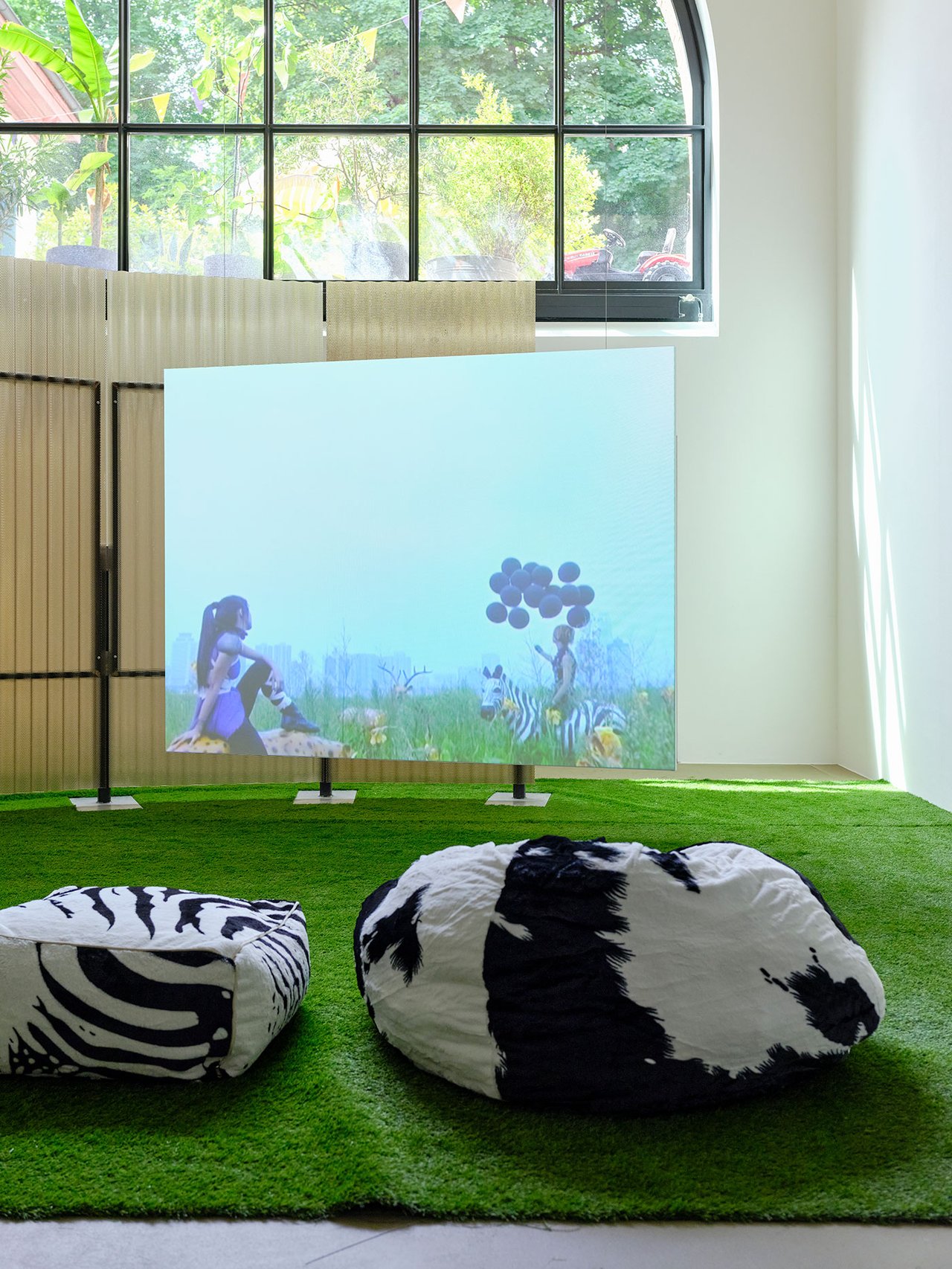
Escapism through play is a longstanding theme. In Cosplayers (2004), young people use the characters of anime and comics to momentarily suspend reality. Imagination, Cao says, becomes “a kind of tunnel or refuge”, an “imagined shelter” connecting otherwise isolated, island-like realities.
Cao’s work traces the rapid evolution of Chinese technology, from China as the factory of the world to a China that is technologically innovative and driving green industrialization. (In April 2026, a Hangzhou court ruled that companies cannot fire workers simply to replace them with AI.)
Installation view of “Cao Fei: Testimonies to the Near Future” at Kunstmuseum Basel | Gegenwart, with work: Cosplayers (2004). Courtesy of the artist, Vitamin Creative Space, and Sprüth Magers. Photography by Samuel Bramley
Her films render the landscapes of contemporary Chinese life — the city, the factory, the office — as backdrops for dreamlike, Tarkovsky-inflected work. “I am one step to the side of fantasy and he is one step to the side of reality,” she has said of her father, the realist sculptor Cao Chong’en. “But we are approaching the same thing, and we are mixing real life and second life, reality and desire.”
Reality itself, she adds, “is composed of multiple narratives; it is, in a sense, already surreal”.
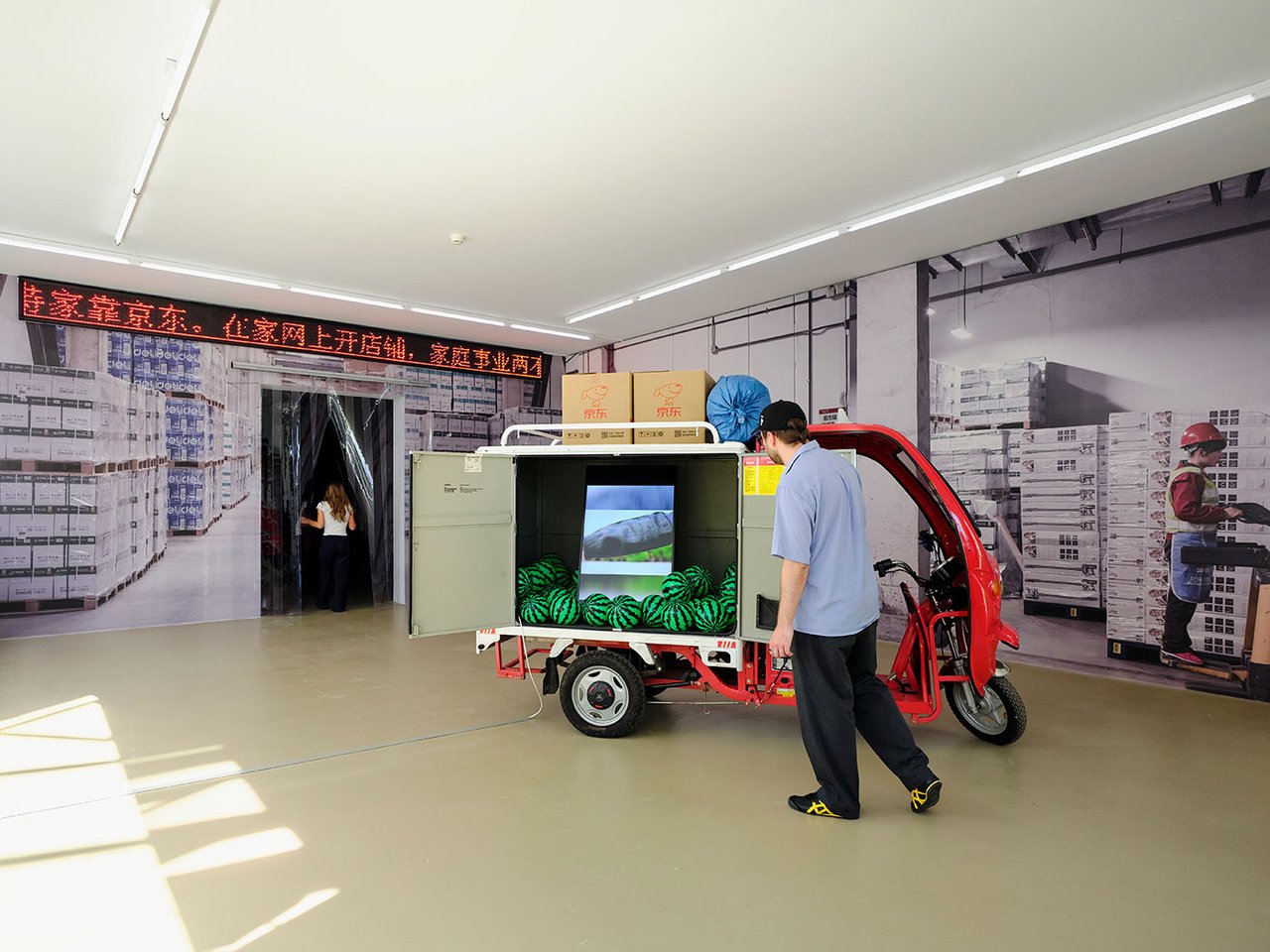
Two works function as a diptych. In Whose Utopia (2006), Cao filmed workers at an Osram factory in Foshan enacting their dreams — a ballerina, a musician with an air guitar — a meditation on the alienation of labor under industrial conditions. By Asia One (2018), set in JD.com’s automated “Asia No 1” fulfilment centre, the story had flipped: a love affair between two human workers and a robot amid towering shelves. Where Whose Utopia asks what the worker dreams, Asia One asks what happens to intimacy when the worker is nearly obsolete — the anxiety shifts from alienation to redundancy.
As Cao puts it, labor is moving “from once being ‘disciplined labor’ to now becoming a ‘displacement of labor’.” A third film, 11.11, restores the human to the center: shot around Singles’ Day, it tracks couriers and sorters at home, their hardships and hopes for their children — a human counterpoint to the empty warehouse.
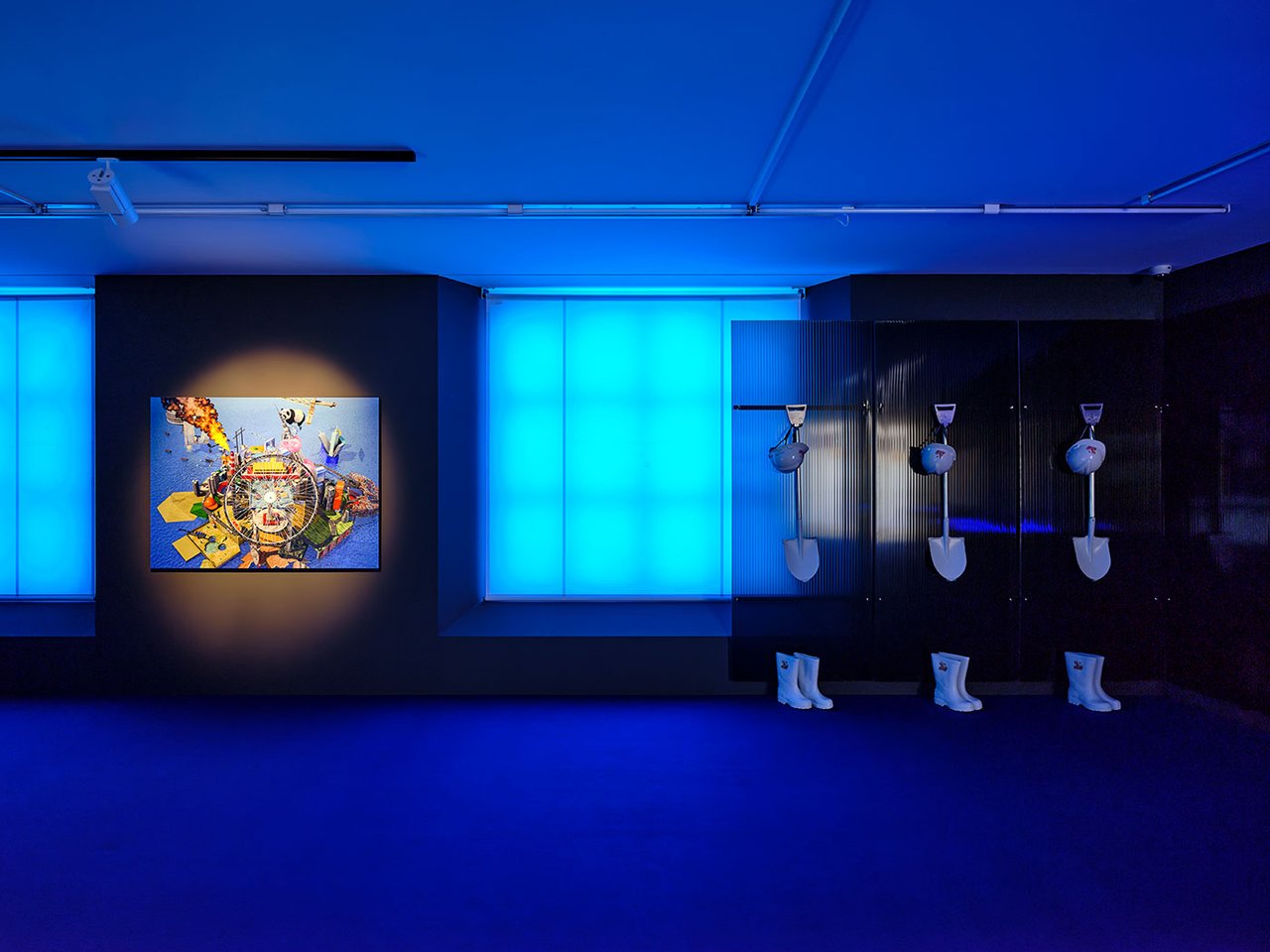
Installation view of “Cao Fei: Testimonies to the Near Future”, Kunstmuseum Basel | Gegenwart. Courtesy of the artist, Vitamin Creative Space, and Sprüth Magers. Photography by Samuel Bramley
Motifs recur across the Basel show: the delivery man travels from 11.11 to the playable Super Delivery; watermelons appear as both sculpture and merch; matryoshka dolls occur in both MatryoshkaVerse (2023) and as decorative elements. The delivery man is the “last human link” in modern logistics, she explains, connecting “data with physical reality”. The matryoshka offers “systems within systems, backrooms extending endlessly, without conclusion”.
The watermelon is “a symbol of fragility”: it can crack the moment it falls, the customer may refuse delivery, and the courier bears the cost. “They are like tightrope walkers, balancing precariously at every step.”
Cao’s method is to embed herself in a company for months or even years, a corrective to cliché: she aims, she says, “to document and uncover the lived conditions of workers, the subtle flaws within these systems”. For Whose Utopia she filmed for six months, staging dream-interviews she deliberately chose not to show. In Asia One, shot on site at JD.com, workers dressed as Cultural Revolution-era model-opera characters dance beneath a banner reading “Humans and machines, hand in hand”.
In the socialist imaginary, automation was meant to liberate labor; here it liberates capital from labor — the iron rice bowl of Whose Utopia giving way, under Xi Jinping’s “Chinese Dream” of national rejuvenation, to gig-work precarity.
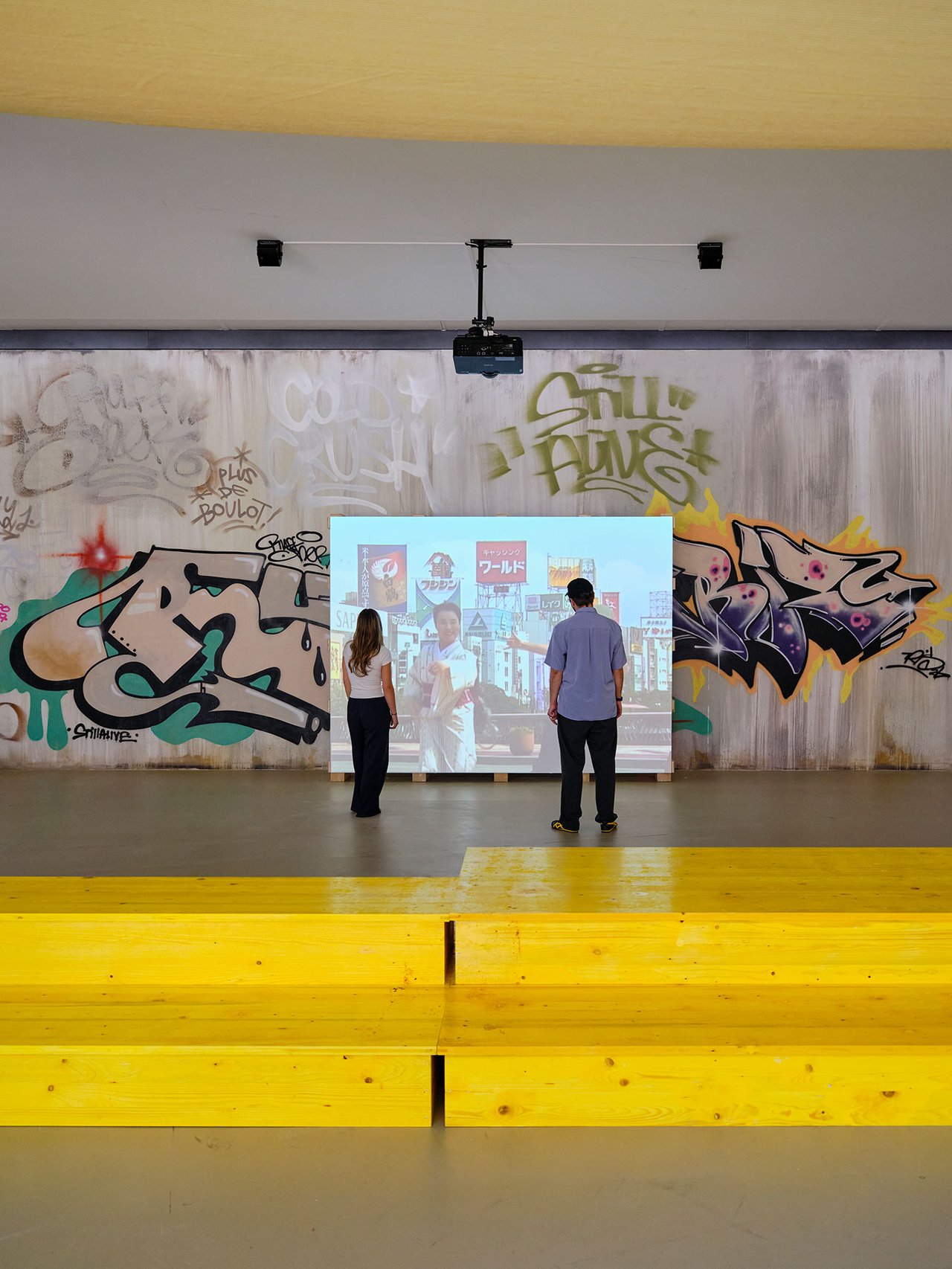
Installation view of “Cao Fei: Testimonies to the Near Future” at Kunstmuseum Basel | Gegenwart, featuring the “Hip Hop” series (2003–25). Courtesy of the artist, Vitamin Creative Space, and Sprüth Magers. Photography by Samuel Bramley
Cao’s stance reads as a humanist rebuttal to Lawrence Lek’s concept of Sinofuturism, elaborated in his 2016 video essay Sinofuturism (1839-2046 AD), which posits China as the foundation of a technologically advanced future — its people cast as components of a greater artificial intelligence poised not to take over the world, but simply to outlive it. Lek now seems prescient: China became a global leader in robotics and advanced manufacturing, even as its government eyes the most intimate human-machine interface — the phone in your hand — with suspicion.
Cao’s work is often filed under Sinofuturism, but where Lek dissolves the human into the machine, she does the opposite: she keeps the ballerina on the factory floor, the courier in his flat, the avatar as interactive body.
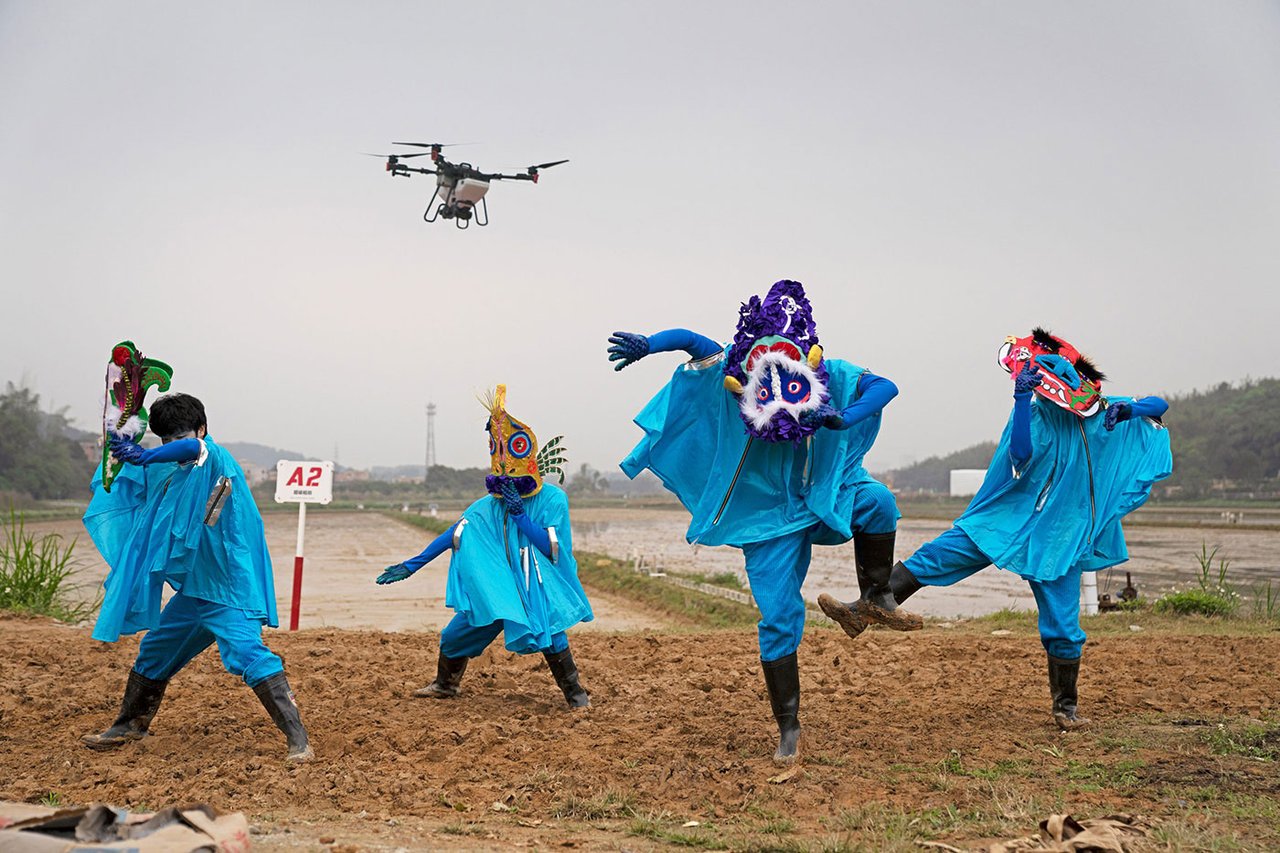
“Dash”, commissioned by Fondazione Prada, extends the investigative approach to the landscape. Its centerpiece is a 47-minute two-screen film on the mechanization of Chinese farming, made with the Guangzhou drone company XAG. Then the VR piece Dash-180c places the viewer inside a discarded drone, reactivated by a monkey, drifting through derelict warehouses and ancient temples. A Land Ceremony built from Lombardy rice and drone parts completes the installation, alongside a temple of fertilizer sacks and an archive of propaganda posters and “Busy Farming” folk vinyls.
Cao Fei, “Dash”, 2026, at Fondazione Prada, Milan. Courtesy of the artist and Fondazione Prada
The show’s theme, taken from the philosopher Bernard Stiegler, casts technology as both remedy and poison: drones spray pesticide while AI sensors read soil moisture, yet workers still place a drone on an altar and wrap it in banners.
Cao reads the ritual as being about people, not machines: “What farmers are venerating is not the ‘machine’ itself, but rather the uncontrollable and unfamiliar nature of the technology… humans still need irrational forms of emotion to situate themselves.”
Three years in, the field changed the tempo of the work. “I turned ‘waiting’ itself into a form of practice,” she says “waiting for sowing, for sprouting, for wind, for rain, for harvest.” What she gained, she says, was “a sense of reverence; the awe that traditional farmers hold toward heaven and earth”.
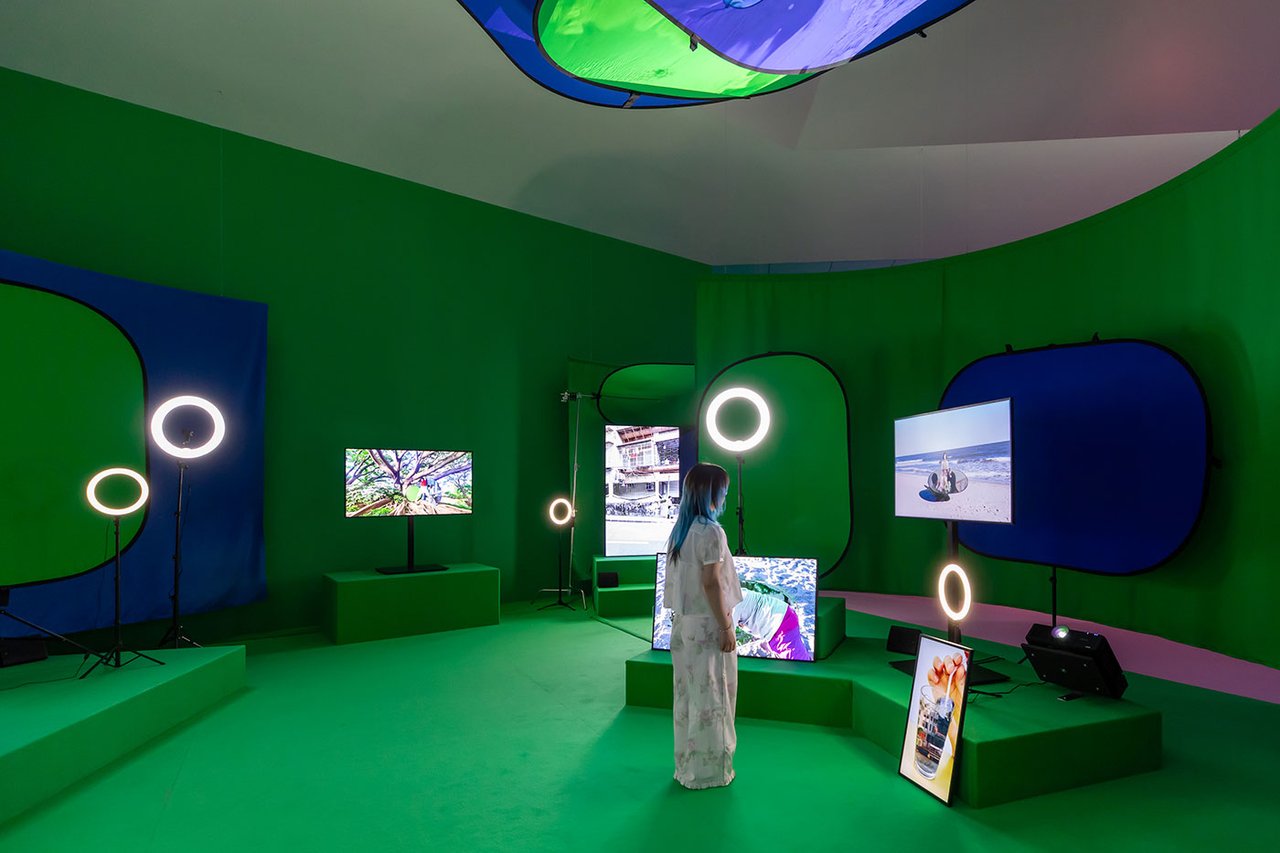
Installation view of “Cao Fei: Testimonies to the Near Future” at Kunstmuseum Basel | Gegenwart, with work: Screen-Autobiography (2023). Courtesy of the artist, Vitamin Creative Space, and Sprüth Magers. Photography by Samuel Bramley
Across the work a drift is visible. The method regresses from workers-with-voice (Whose Utopia, 11.11) to silent farmers surveyed from above in Dash — from participatory camera to aerial gaze, echoing the remove of the airborne Oz. Her worry is specific: those “older farmers who cannot adapt” hold “embodied understandings of seasons, climate, and soil, not captured by algorithms and being rapidly optimized out of existence” — even as she sees “a new generation of farmers returning to the countryside, bringing technology with them”.
The Basel exhibition title, “Testimonies to the Near Future”, leans on how, in Cao’s view, her scenarios keep coming true: La Town (2014), with its figures in an empty doomsday world, anticipated pandemic isolation.
She refuses to genuflect to the newest model — she rejects using AI in her own practice, and Dash-180c already imagines its tech as junk, told from the discarded object’s point of view: “being forgotten is also a perspective”.
It is a long way from China Tracy in RMB City to Oz, watching from the sky. RMB City's hosting platform Second Life has declined into “almost a digital ruin”, its utopia now “an earlier era’s vision” — so Cao turns back to the ground. “[My children] are 14 and 17, and they already feel scared of the future, of AI destroying the world, and they are turning towards the past,” she told Ocula earlier this year. “They dress in vintage Carhartt and listen to the music I grew up with. I grew up with the texture of mud.”
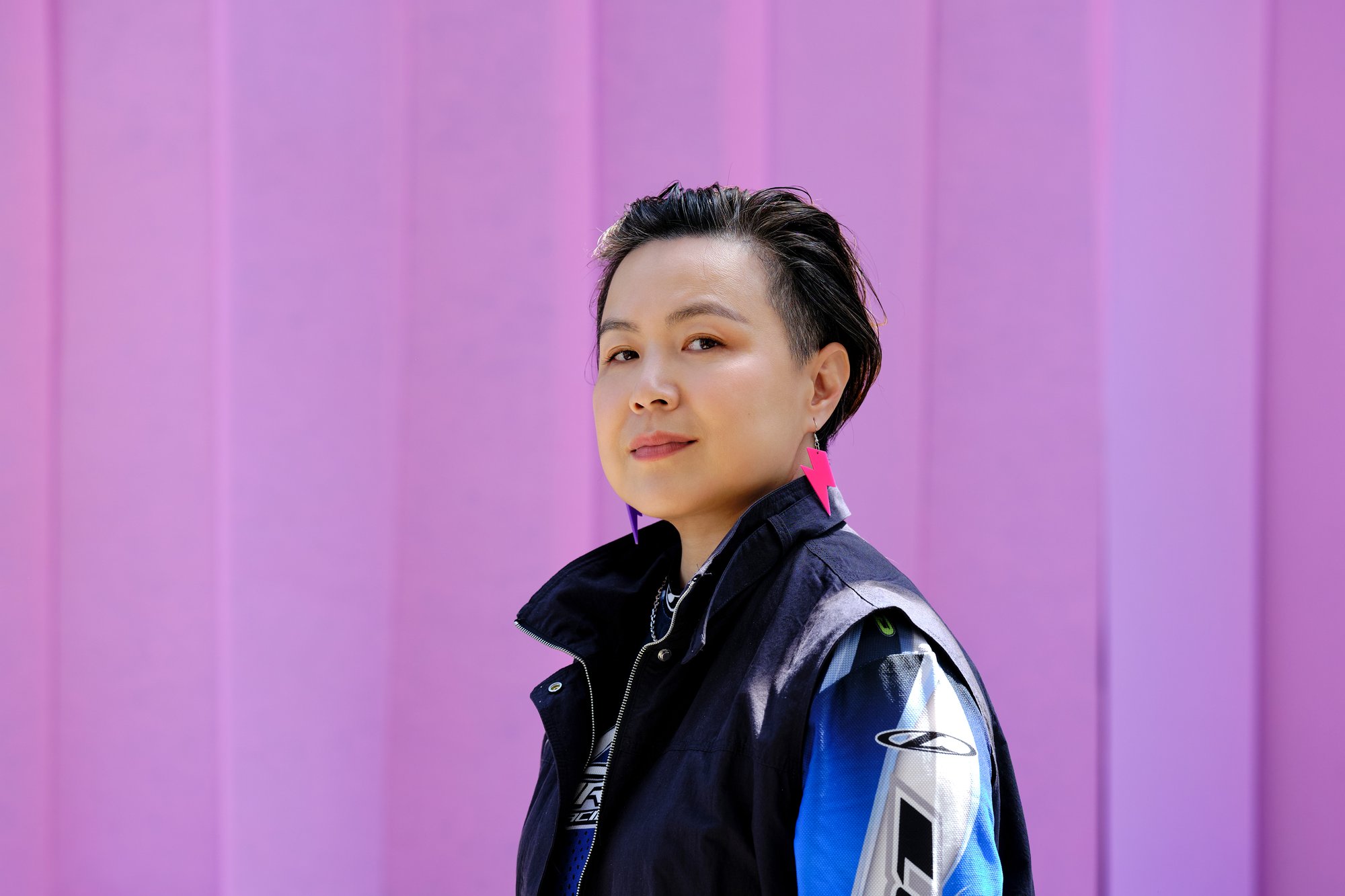
Cao Fei (b. 1978, Guangzhou) is an internationally renowned Chinese contemporary artist currently living and working in Beijing. She mixes social commentary, popular aesthetics, references to surrealism, and documentary conventions in her films and installations. Her works reflect on the rapid and developmental changes that are occurring in Chinese society today. Cao Fei's works have been exhibited at a number of international biennales, triennales, and major art museums including MoMA and the Solomon R. Guggenheim Museum in New York, Tate Modern in London, and the Centre Pompidou in Paris. Cao Fei’s recent projects include a major retrospective at the UCCA Center for Contemporary Art, Beijing (2021); solo exhibitions at the MAXXI, the National Museum of 21st Century Arts, Rome (2021), Kunsthal Charlottenborg, Copenhagen (2022), Pinacoteca Contemporânea, São Paulo (2023), Lenbachhaus, Munich (2024), SCAD Museum of Art (2024), Museum of Art Pudong, Shanghai (2024), Art Gallery of New South Wales, Sydney (2024), Museo de Arte Latinoamericano de Buenos Aires (2024).
Dr Jeni Fulton is a writer, editor, and academic working across contemporary art, the art market, and the evolution of digital art. She was the founding editor of Art Basel Magazine, and the curator of Digital Dialogues, Art Basel’s talks program dedicated to digital art. Prior to this, she was Editor-in-Chief of Sleek Magazine in Berlin, and contributed to Spike, Frieze, Apollo and many other arts publications. Based in Zurich, she teaches at the Zurich University of the Arts (ZHdK) and the University of Zurich.