The Machine and the Gardener | Carsten Nicolai
The artist and musician also known as Alva Noto reflects on his hybrid practice and Berlin after the fall of the wall
The artist and musician also known as Alva Noto reflects on his hybrid practice and Berlin after the fall of the wall
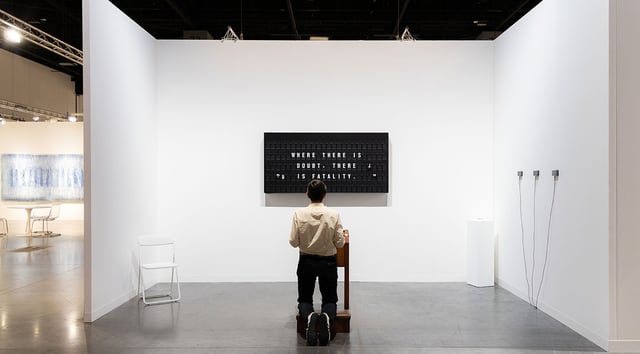
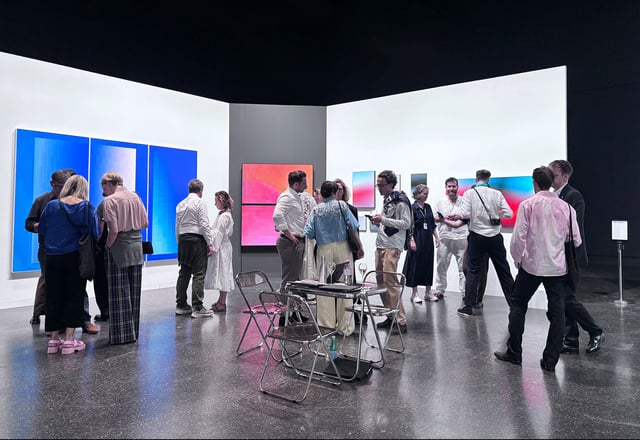
The following conversation took place in Carsten Nicolai’s Berlin studio in March 2026, in the run-up to “Cosmic Knots” — a collection of ephemeral spaces and acts curated by Viola Lukács for 0xCollection during Art Basel, 15-20 June, 2026. The exhibition gathers works that resist photographic documentation, anchored in a framework of knotted topological structures. On the opening evening, Nicolai will activate a hidden architectural gem in the form of HYBR:ID PARA PARA.
We had been speaking for some time about the gardener as a figure in his recent work — about attention without command and the difficulty of making space for time-based art that the institutional system increasingly cannot afford to host. The conversation moved through the Japanese Zen temple garden of Ryoan-ji, through the productive vacuum of post-1989 Berlin, to the question of how durational work survives the obsolescence of technologies on which it relies. Underneath it all is Nicolai’s proposition that what we build is never permanent but a moment when something becomes possible that we protect for as long as we can.
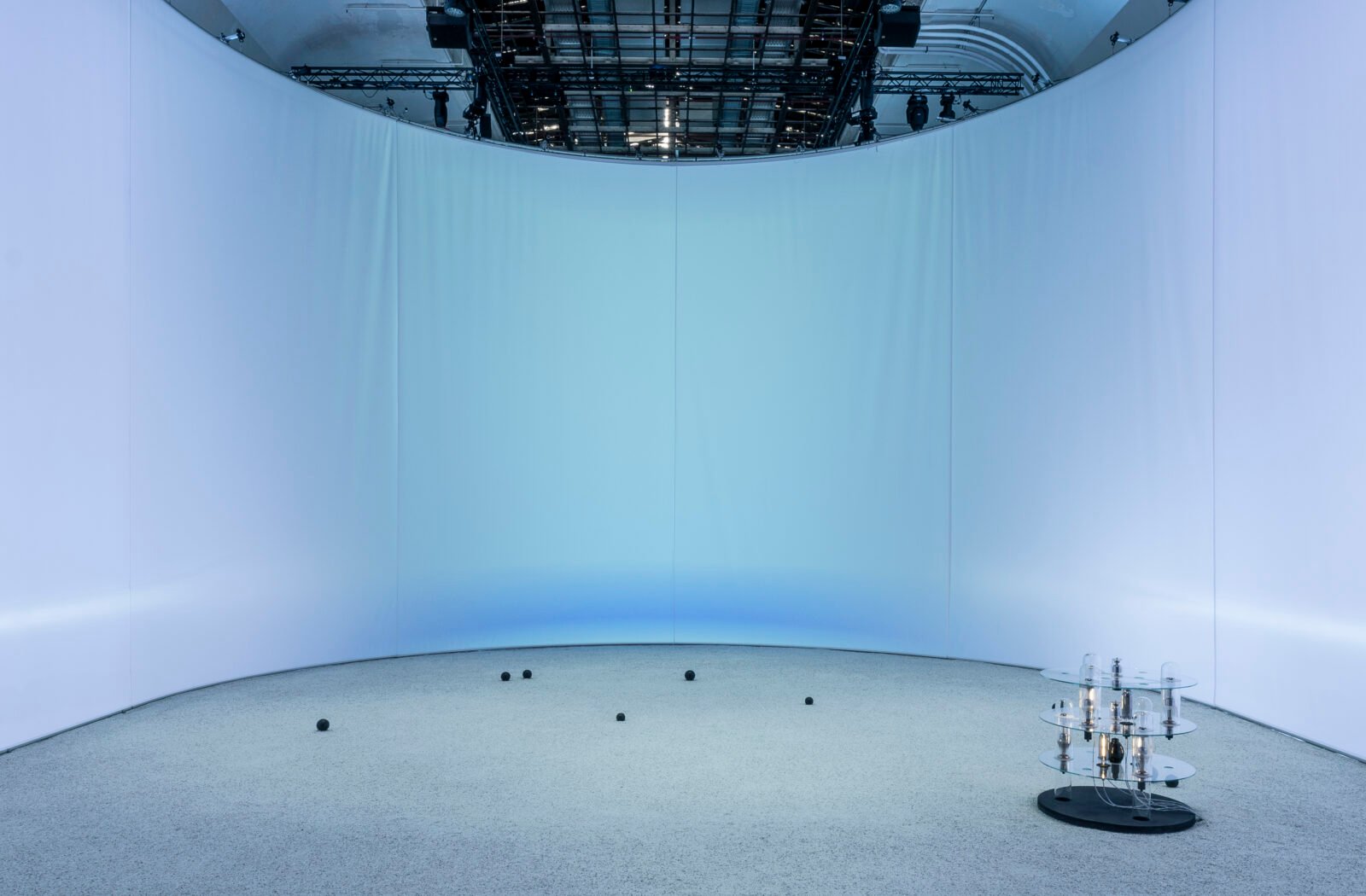
The work that brought us together, transmitter / receiver — the machine and the gardener, was developed for Andrea Lissoni’s invitation at Haus der Kunst, Munich, in 2022. An audiovisual environment built around a set of vintage Geiger counters and electromagnetic radio frequencies from outer space that detects cosmic radiation and noise, the work activates light and sound through events taking place off-world. Comprising a floor of slate together with projection walls that breathe, its central counters are held in a kind of space-age reliquary. The garden is unmistakably there, but the title points us elsewhere — not at the garden, but at the gardener.
Viola Lukács: Your installation, transmitter / receiver — the machine and the gardener, reads almost as a testimonial. There is an otherworldly garden in the room, but the work names the figure tending it. Is this gardener a cosmological witness rather than a designer of nature?
Carsten Nicolai: Yes. And it has a very direct biographical reference, even if it became symbolic. In East Germany, every boy was supposed to go into the army when he finished school. I wasn’t accepted for health reasons, but you still had a year of obligatory service before university. I chose gardening, and I ended up working for the city department that took care of the public parks, cemeteries, all of it.
I was placed in the educational division — they thought I was more qualified than the rest because most of the other gardeners had dropped out of school. I learned a lot, mostly about nature. Before that I was a city boy. Later, when I studied landscape architecture in Dresden, designing gardens was part of the course. Gardening as a discipline isn’t only about plants — it’s about taking care of something.
The gardener is something like a curator. You have an environment and you make it possible for things to start growing.
VL: That raises the question of hybridity — the way gardeners traditionally produce hybrids by grafting one plant onto another. A single tree carrying two kinds of fruit, but no longer able to reproduce is performative by definition. How does the tension between the natural and the artificial play out in the scale of the installation?
CN: The installation is based on parameters from outer space, something immense in scale and difficult for us to grasp fully because it operates at a universal dimension. To counterbalance that vast scale, I wanted to introduce something very personal, of almost intimate human scale.
You could call it a hybridity or polarization. I’m interested in the tension between these different scales and ideas.
Since I’m somewhat skeptical about visitor participation, I liked the idea of the curator becoming an active part of the installation. I was more interested in a form of interactivity represented by the gardener, someone who contributes to the environment without expecting an immediate result or direct impact. In a sense, it’s an anthroposophic approach: the idea that we are part of nature rather than masters of it. That was also the reason I started incorporating other kinds of sensory input.
In Transmitter / Receiver, the work is activated by non-terrestrial phenomena, cosmic radiation, and sound sources from beyond the earth. By considering the planet itself as part of the system, you expand the notion of what interactivity can be.
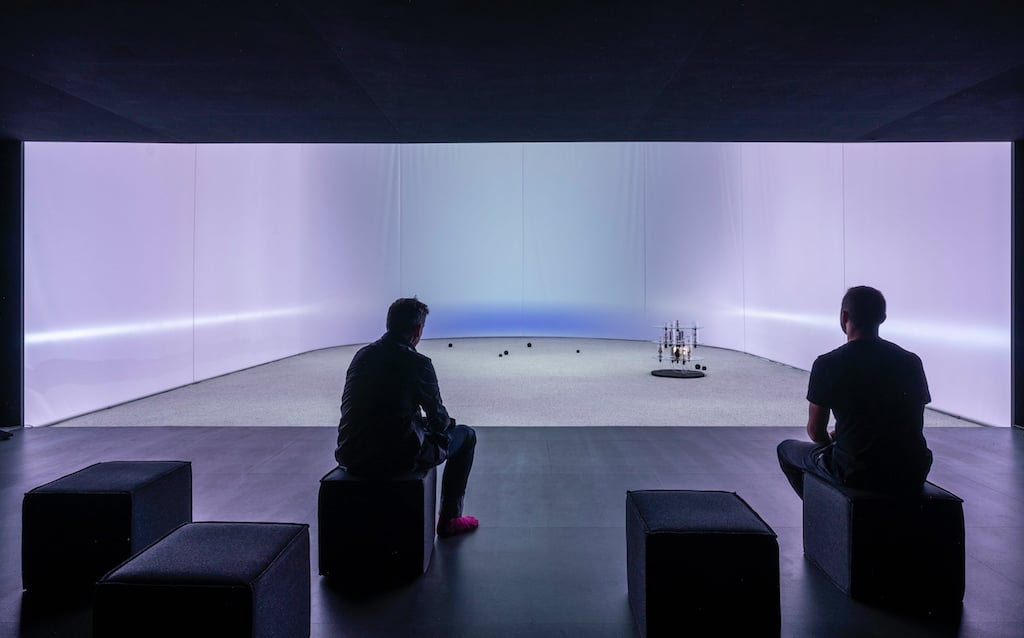
VL: That installation is modular, comprising a multitude of integrated systems, including Geiger counters at the center. The surrounding elements — projections, slate, sound — are activated by naturally random (not pseudo-random or algorithmic) cosmic events.
CN: In Munich, the installation extended the environment into a kind of infinite space through the use of a cyclorama, effectively expanding the space of the Haus der Kunst while transforming it into an environment articulated almost entirely through light and sound. The space became a metaphorical representation of a garden — a “space” garden.
Japanese landscape gardens are always representations of much larger phenomena: oceans, mountains, mathematics, and numbers. It’s a much wider field than the surface of what you see. You’re looking into a miniature world or universe.
VL: That widening from garden to universe is precisely what happens at Ryoan-ji, where 15 stones are arranged so that from any vantage point on the veranda only fourteen are visible. The garden refuses to give itself completely to any single viewer.
CN: Ryoan-ji is a garden I carried with me for years before I ever went to Japan. Later, I discovered that it had been a major source of inspiration for John Cage. Initially, I was simply drawn to it through photographs. The beauty of the garden lies precisely in the fact that you can never see it in its entirety. This relates to the notion, found in Greek philosophy, that a fragment can represent the whole.
As much you may learn from quantum theory, which is based on the idea that two particles can remain connected even when separated by great distances, they continue to affect one another. Today, we call this phenomenon entanglement, although the underlying philosophical idea originates from the Greek philosophy of fragmentation.
Every model we have of how the world is structured was developed without ever seeing the world from the outside. The earth is round; the sun is at the center of our solar system — no one observed these things directly at first. Rather, they emerged from assembling fragments of evidence and recognizing the only model that made sense.
VL: Did Japanese culture shape your way of looking?
CN: Yes and no. What I realized is that I had projected a great deal of my own interpretation onto Japanese culture largely because it appeared so abstract to me. I was very drawn to it and initially assumed it was something inherent to the place. In retrospect, that kind of assumption is more a reflection of my own culture.
I tend to work with abstraction as a natural mode of thought. If you ask someone on the street what Zeichen (sign) means, it is quite difficult to define precisely. Yet it is a word we use constantly, almost as if it were a vessel — something that can hold shifting meanings without ever needing to be fixed.
VL: The same orientation runs through your relation to Joseph Beuys and Rudolf Steiner — a way of thinking that resists separation between art, science, and life. You participated in “Rudolf Steiner and Contemporary Art” at Kunstmuseum Wolfsburg in 2010 alongside Beuys, Anish Kapoor, Olafur Eliasson, and others. It was the first major attempt to make that lineage visible.
CN: I never met Beuys, but I came to him through the people who continued his political work: Walter Dahn, Johannes Stüttgen, the Omnibus für Direkte Demokratie (Omnibus for Direct Democracy). They came to the East after the unification, and through them I discovered Steiner, which gave me access to the philosophical backbone behind Beuys’s whole practice; I could see the origin of his thinking.
What is strange is that the anthroposophists never write about Beuys, and the Beuys art world never writes about the anthroposophists. The two communities are afraid of each other. Wolfsburg was one of the few exhibitions that tried to make the connection visible. It was a moment when that conversation was still possible. I’m not sure it would be now.
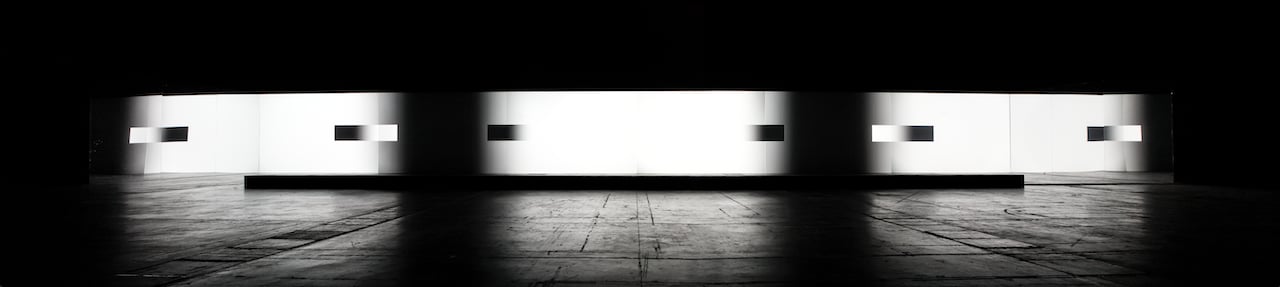
VL: Before your institutional moments at Documenta X and, later, in Venice, there was VOXXX in Chemnitz, the cultural center you co-founded in 1992 in the former brewery in the Kaßberg district. People often frame it as a “club” but, reading the program, it was clearly something more like an organism.
CN: It was a biotope: gallery with artist studios, as well as a beer garden, outdoor cinema, and enough space that we could keep inventing new formats that hadn’t previously existed in any classical sense. A lot of theater directors premiered their work there. I’d call it a place of cultural production but we weren’t only producing; we were also receiving. Later, I made a piece called Import Export (2005) about exactly that. We worked there, lived there, and at the same time enormous amounts of activity came from the outside in. So it was never institutional, but it had become an institution.
VL: Was it commercial?
CN: We had to be, partly. Later, we needed support to survive and maintain the buildings. From a business standpoint, we probably could have made it work; what we couldn’t manage was the space of five buildings — the scale was simply too big in the end.
VL: Were the parties part of the artistic program?
CN: Yes. What I understood during that period was that the gallery only functioned as well as it did because of everything around it — the party next door, the cinema, the talks, the concerts.
It was the combination that mattered, not any single element on its own. That was when I realized I was not interested in any single medium.
We also learned something more practical: that economic independence had to be built into the project itself, as a kind of microeconomy. This became an important idea for us. We entered the capitalist system relatively late, and quickly understood that an idea alone is not enough; the structure itself has to generate just enough income to allow the next step to happen.
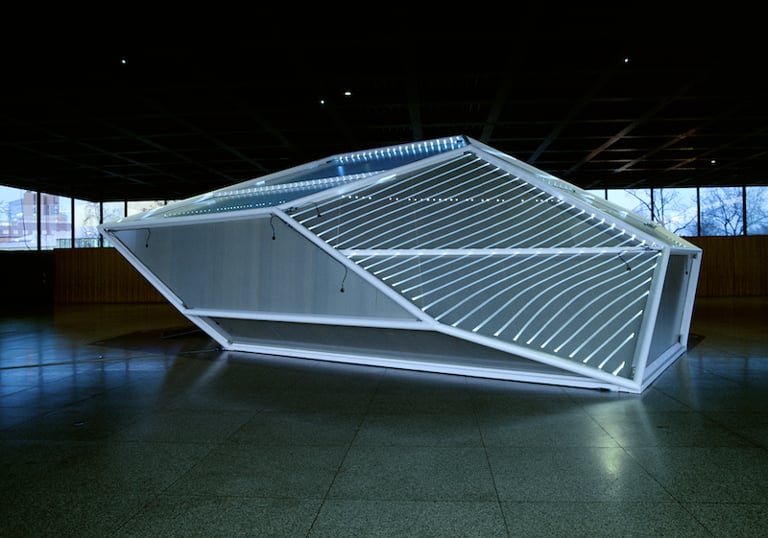
VL: That logic whereby a survival strategy becomes a sustainable model became almost a defining feature of post-1989 Eastern European culture. In your case it fed directly into Berlin in the 1990s. How did Berlin become Berlin?
CN: Berlin became big because of its microeconomy. Most of the people who made it interesting did not pay rent but squatted, or else they had informal leases. That allowed an underground organism to exist.
People keep forgetting that other cities had similar things first. Halle, Cottbus, Leipzig — every smaller city in the East had something. Berlin became a magnet partly because of its scale.
Three quarters of the city was half empty after the war [and] you could live there for a fraction of what you’d pay anywhere else in Europe, with people who wanted to do the same thing as you. You weren’t trying to enter an established hierarchy, because there was no hierarchy. There was nothing. If a bar was missing, you built the bar. If a cinema was missing, you built the cinema. Alongside all of that, a political system was collapsing while another took over. There was a gap, a vacuum.
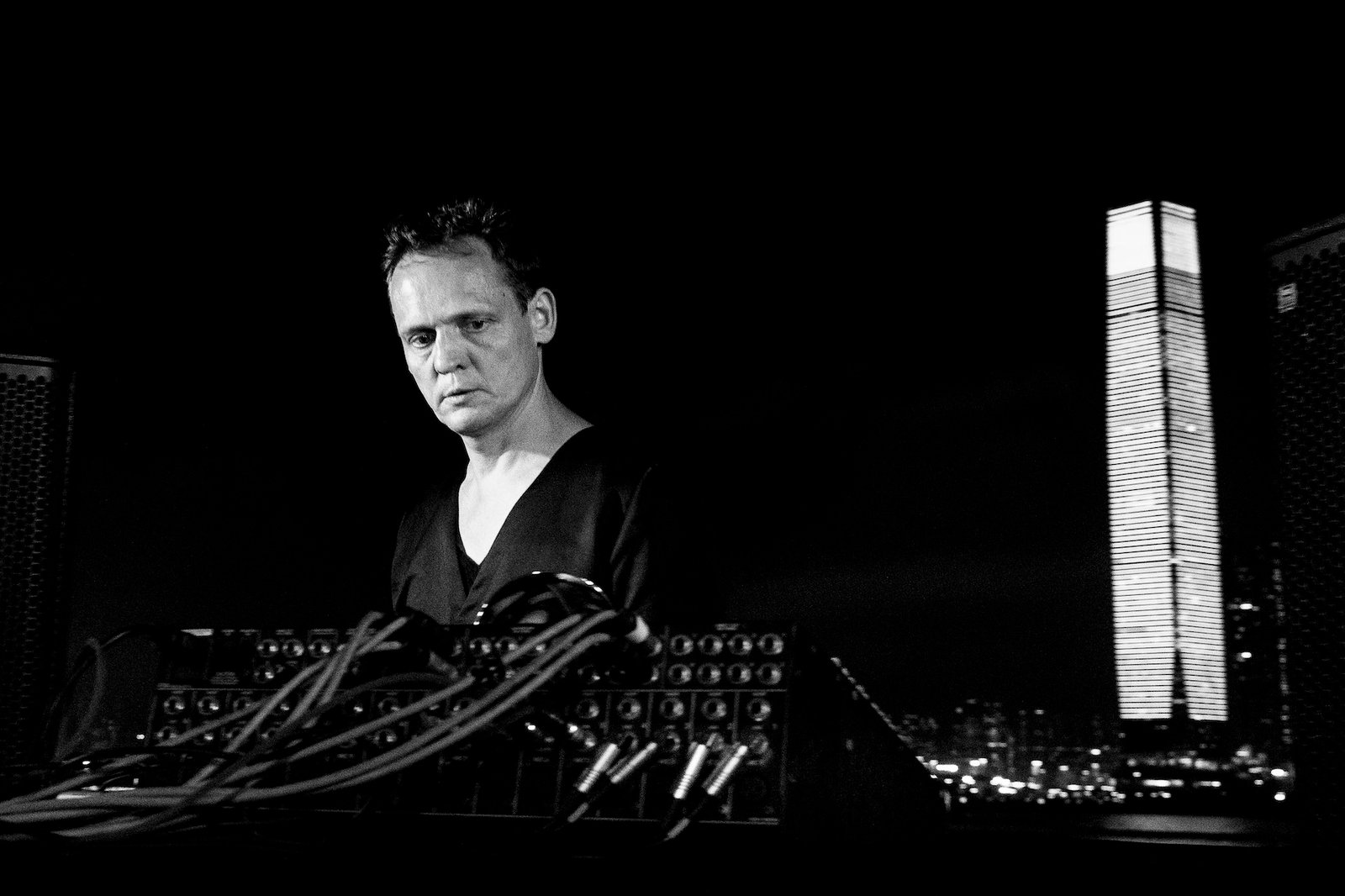
VL: In 1994, you founded a label Noton (later Raster-Noton), which shaped a whole generation of experimental electronic music. Was that always part of the same impulse and refusal to specialize?
CN: It was the same impulse. If a label was missing, you built the label. The label gave sound work a way to exist outside the gallery: an independent infrastructure and a different audience and economy. It also kept me from having to choose between the two languages.
I was never going to be only a visual artist or a musician. The label was how I refused that question.
VL: That vacuum is now a myth, but you describe it as something generative rather than romantic.
CN: It was the most productive period I have lived through. It lasted maybe twenty years. Now Berlin looks like Paris and New York with their hierarchies, institutions, and regulations — it’s difficult to do anything. But for that long stretch the vacuum and attitude was real: you can do everything. That was the foundation. Maybe this also explains my practice. Because everything was missing, you ended up working across all of it.
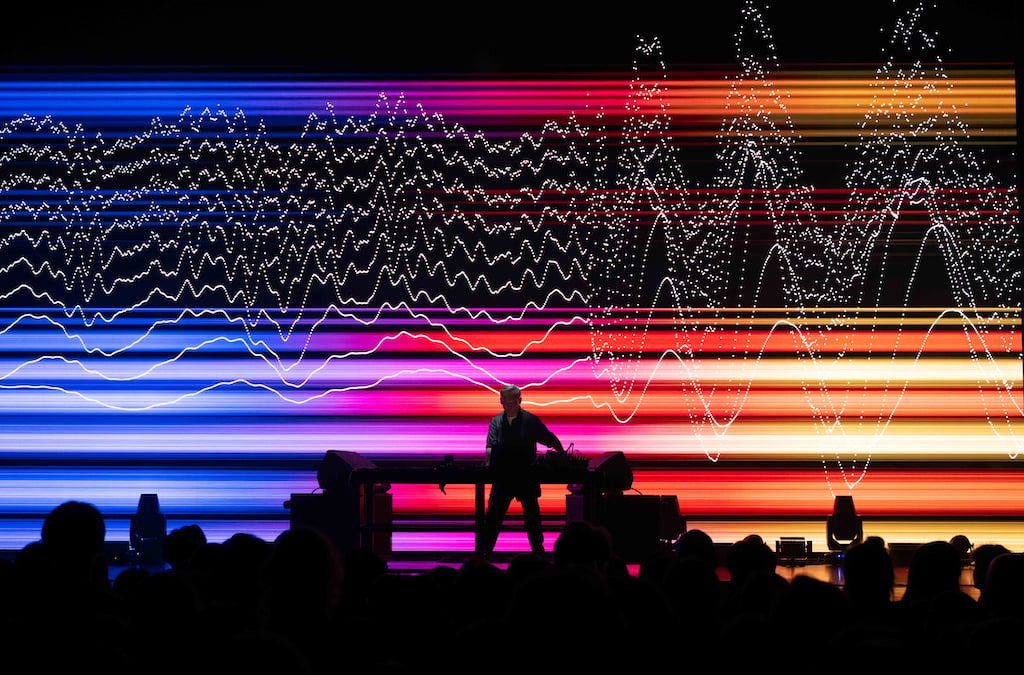
VL: People always read your practice as the work of a single artist, but it has always involved community.
CN: This is one of the things the art world consistently gets wrong. There’s a name on the invitation [and] one face on the cover of the catalog. Although it sometimes allows itself a movement when it’s better for marketing, the market wants single artists.
One of the biggest mistakes of the Western world and the Hollywood model is the conviction that one person or “hero” can save anything. That structure is wrong. Whatever we achieved in Chemnitz and in Berlin, none of it was singular. It was always collective.
VL: That collaborative period overlaps with your selection for Documenta X in 1997, curated by Catherine David. How did she find you?
CN: Catherine came to the studio. My brother Olaf had been on her early list, and she ended up selecting more people from the East. I was included partly because I was bridging into sound, which she didn’t have much of in the show. There was very little work back then that tried to incorporate music, sound performance, and broadcast. I made a piece called ∞ (Infinity) (1997), which was a kind of sound graffiti spread through Kassel [where Documenta is based].
I smuggled 72 short audio pieces into the city. The agreement was that public radio stations would broadcast them during regular programming, unannounced, unidentified, and with no explanation. People thought their radios were broken. They played in airports, train stations, completely non-art contexts. No frame.
I then based a radio play on a small news item I’d come across about a man who started hearing voices, went to the doctor, and turned out to have a filling in his teeth that worked as a receiver. He was hearing actual radio transmissions through his molar. The play simulates what he might have been hearing for forty minutes — distorted, fragmented sound. Only at the very end does a classical news voice come in and read the article that explains it. The frame arrives last.
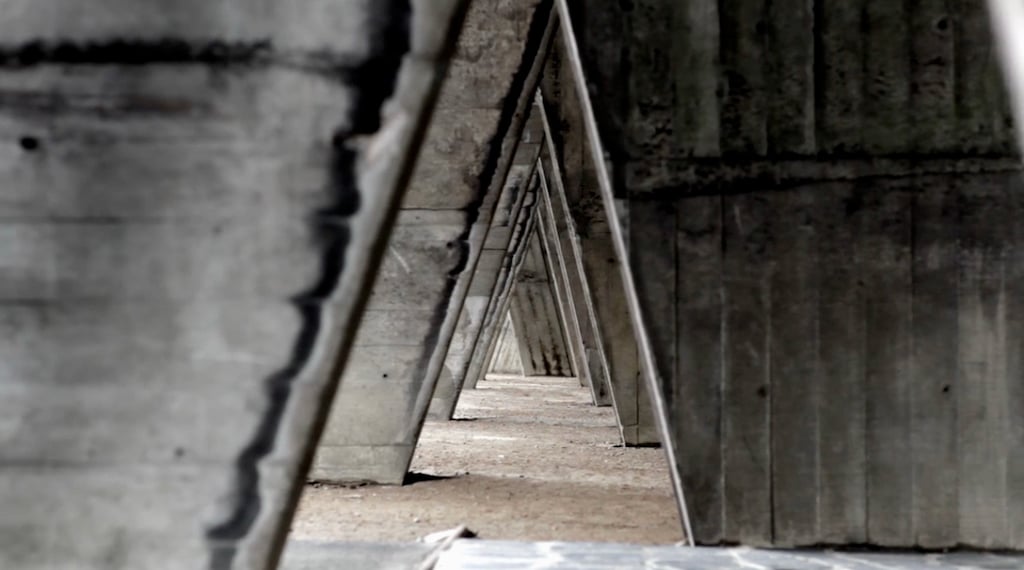
For the installation in Kassel I had access to the spiral of an old parking garage, which looked a little like a Guggenheim except it was hidden. I put up a parachute as a ceiling, ran the radio play through it, and invited friends from neighbouring fields to come and perform. Carl Michael von Hausswolff, who was also in the show, did a piece there. The Kassel work was already about expanding outwards from the white cube: bringing other practices in, sending the work out into the city, and testing what counts as the territory of an exhibition.
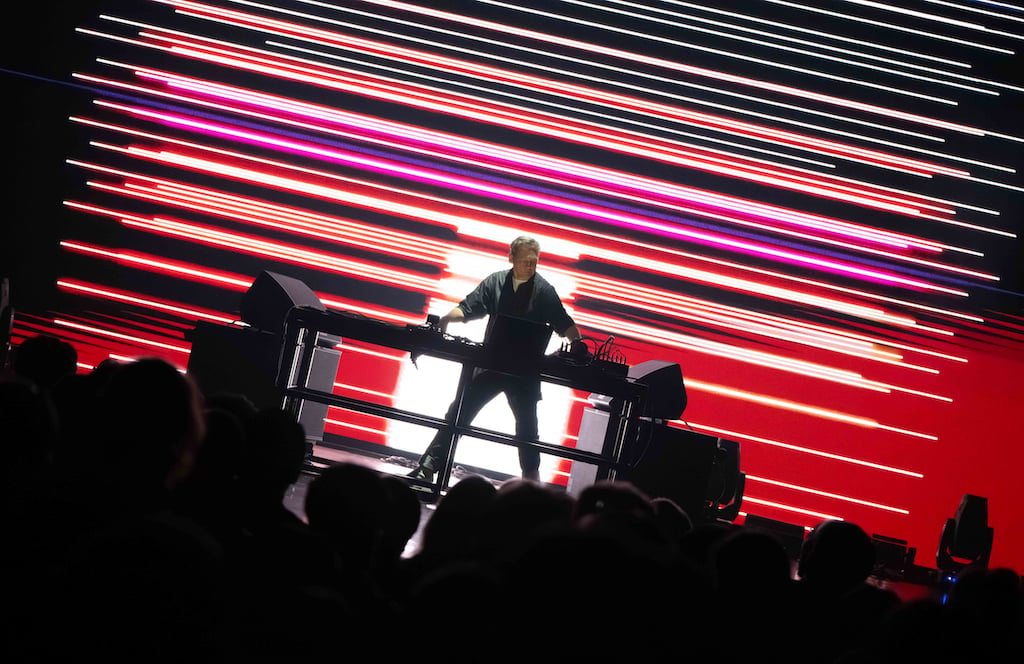
VL: Four years later you were in Venice as part of Harald Szeemann’s Plateau of Humankind (2001). Szeemann is often regarded as having invented the idea of the curator-as-author. How did that come about?
CN: Through Liverpool, actually. Tony Bond invited me to TRACE, the inaugural Liverpool Biennial in 1999, and I made a subsonic piece in an abandoned factory, titled Atem. Szeemann saw it, liked it, and that was the conversation that led to Venice. He gave me the entrance room of the Italian Pavilion, and I have to admit I didn’t fully understand the importance of that at the time. When I visited Venice prior, in order to view the space, the pavilion looked like an abandoned house. It was ghostly. I wanted something more modernist and futuristic. I didn’t yet understand who he was.
What I understood later is that Szeemann was different from the curators of his generation in one specific way. The dominant model then was the thematic show — a curator constructs a concept and the artists illustrate it. Szeemann worked the other way around. He was close to the artists. He was, in a sense, an artist himself.
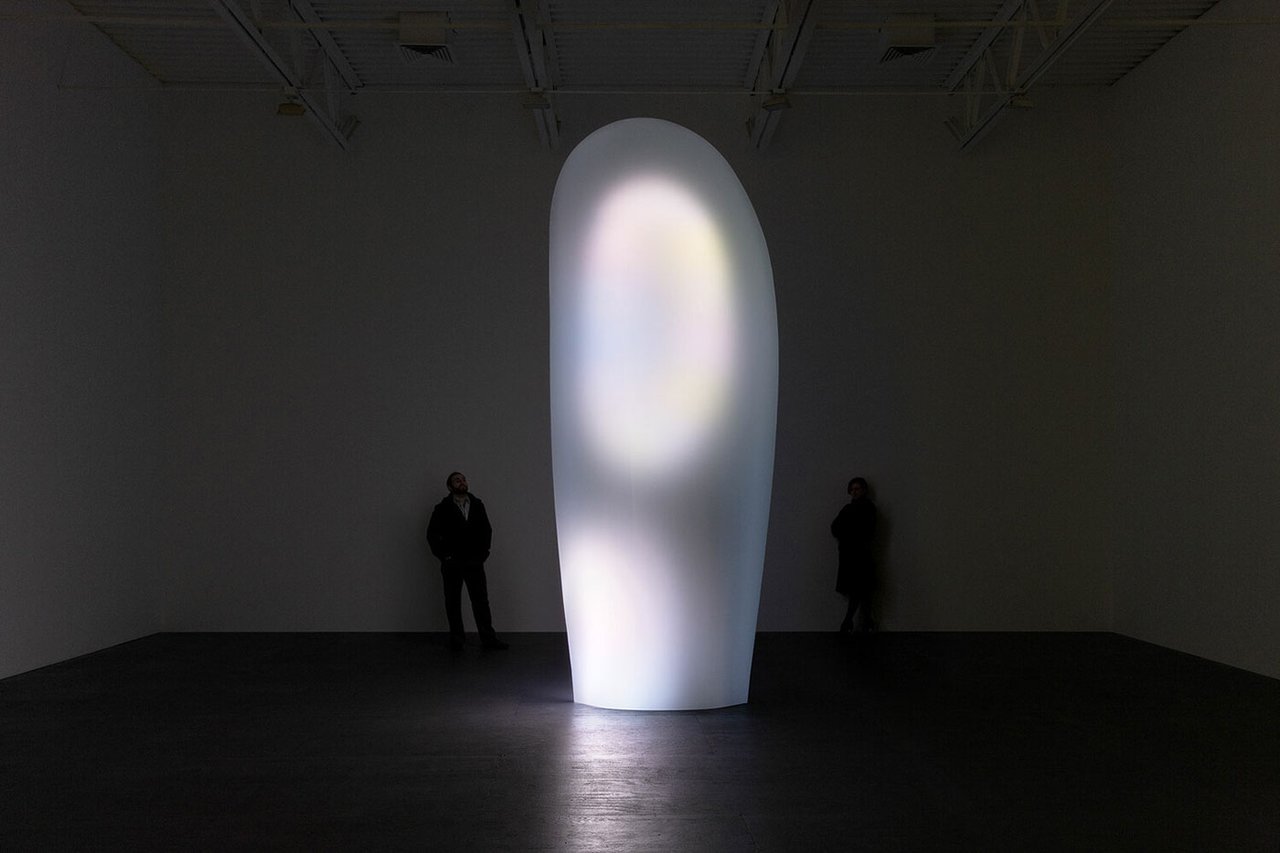
VL: Right now, together with 0xCollection, we’re working on the technical rehabilitation of Mariko Mori’s Tom Na H-iu (2007), which relies on a live data feed from the Kamioka Observatory in Japan. It makes me wonder about how you see your own archive?
CN: We’re working on mine in different sections, from analog to digital, while including the documentation of both the creation and display of each work. They’re different kinds of memory. The hardest part of archiving is that every time you finish a piece, you should immediately do post-production, but the moment you start a new work you stop wanting to. The new work is more interesting while the archive is always a year behind.
But the deeper problem is technological. Eighty percent of media art will eventually become unshowable because the technology no longer exists. Even now, when you look at Bruce Nauman’s Super 8 films, they’re shown on a video projector. That’s already half the work [gone]; it’s not authentic.
You can try to maintain the original technology, but doing so for purely cultural reasons is almost impossible. You end up cur(at)ing obsolete machines.
That’s why, when I produce a new work now, I sometimes deliberately use older technologies that I know can be repaired. The moment a computer is involved, you’re in trouble. From a strict restoration standpoint, you shouldn’t touch the system. You cannot restore what doesn’t exist anymore. You have to make a choice — either reprogram the work (which is expensive, and not always possible because the chip architecture won’t support it), or transfer it to another medium.
VL: What would you propose at the systemic level? Because this is exactly the conversation institutions need to be having.
CN: Imagine you bring together fifteen of the most established media-collecting institutions in the world, and you go to Apple, Linux, Google, and Microsoft and say: “Listen, you need to rebuild an old operating system that we can emulate on top of new machines.” They will say: “there’s no market”. You have to explain to them that this is a question of cultural heritage. Hundreds of artworks were created on those machines. If we lose the operating system, we lose the work.
That single act would solve the problem for thousands of artists at once, instead of every individual artist trying to reprogram their own pieces in isolation.
The same companies producing the technologies that destabilize our cultural production are the ones who could solve the long-term archiving problem. Someone has to bring them to the table.
Carsten Nicolai lives and works in Berlin. Inspired by scientific reference systems, Nicolai explores mathematical patterns such as grids and codes, error and random structures, as well as the phenomenon of self-organization. Following his participation in documenta X (1997) and the 49th and 50th Biennale di Venezia (2001 and 2003), his works have been included in important private and public collections and presented in national and international exhibitions in renowned museums and galleries. These include major solo exhibitions at Schirn Kunsthalle Frankfurt (“anti reflex”, 2005), Neue Nationalgalerie Berlin (“syn chron”, 2005), Berlinische Galerie (“tele”, 2018), Kunstsammlungen Nordrhein-Westfalen (“parallax symmetry”, 2019) and Haus der Kunst München (“transmitter / receiver — the machine and the gardener”, 2022).
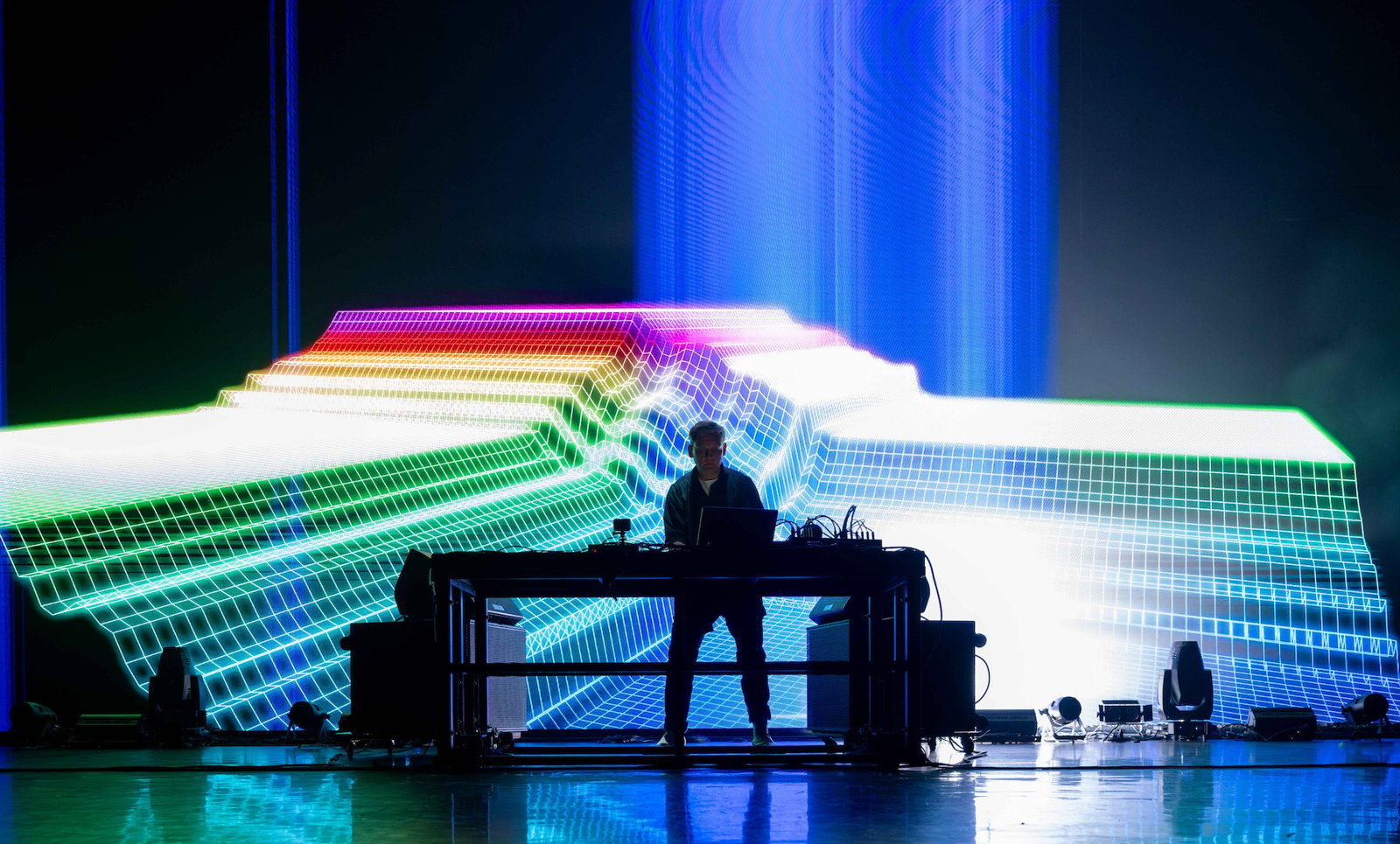
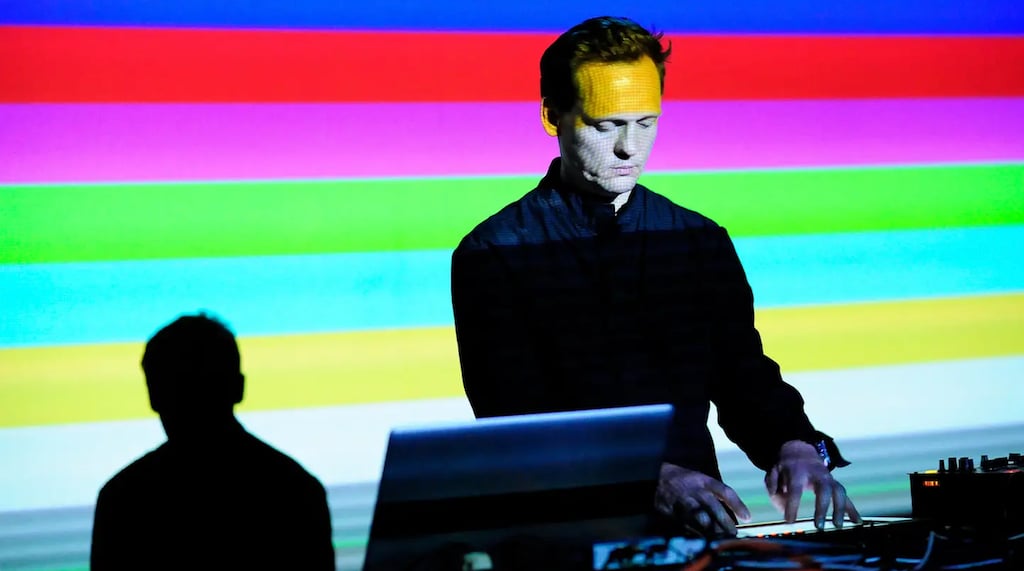
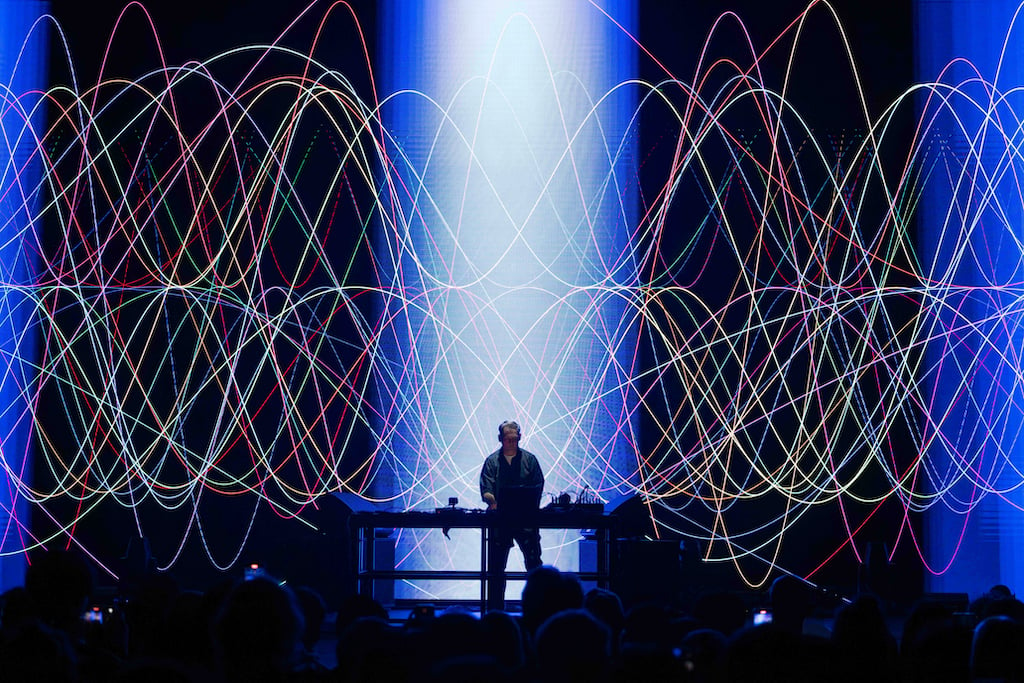
Under the pseudonym Alva Noto, Nicolai is one of the best-known representatives of contemporary electronic music. Concerts have taken him to the Solomon R. Guggenheim Museum, New York; the San Francisco Museum of Modern Art; Centre Pompidou, Paris; and Tate Modern, London. His various musical projects include collaborations with Ryoji Ikeda, Mika Vainio, Iggy Pop, Blixa Bargeld, and Ryuichi Sakamoto. With the latter, Nicolai composed the music for Alejandro González Iñárritu’s Oscar-winning film The Revenant, which was nominated for a Golden Globe, a BAFTA, and a Grammy in the Best Original Score category. Nicolai has received numerous awards and scholarships, including Giga Hertz Prize (2012, with Ryoji Ikeda); Villa Massimo, Rome (2007); Zurich Art Prize (2007); Villa Aurora, Los Angeles (2003); Prix Ars Electronica (2000 and 2001, with Marko Peljhan); Grand Prize Japan Media Arts Festival (2014). Since 2015, Nicolai has held a professorship for art with a focus on digital and time-based media at the Dresden University of Fine Arts.
Viola Lukács is a curator and writer based between Basel and Berlin, whose practice investigates the complex entanglements of human and nonhuman agencies through contemporary art. Her curatorial work is rooted in a deep attentiveness to systems — ecological, technological, and cultural — and their shifting interdependencies. In 2015, she curated “MetaMetria”, a landmark exhibition devoted to the sculptural and conceptual oeuvre of Bernar Venet. She has worked with renowned institutions such as Sotheby’s, the John F. Kennedy Center for the Performing Arts, and Postmasters Gallery in New York. In 2021, Lukács co-founded NFT DEB, Europe’s first generative hackathon and conference, a pioneering initiative at the nexus of art, technology, and climate consciousness. She is also the founding curator of BINÁLÉ, Budapest’s digital art biennial. Viola currently serves as the Director of Curatorial Affairs of a Basel-based new media art collection, 0xCollection.
No comments yet. Be the first to share your thoughts.
Mentioned in this article
People: Carsten Nicolai, Alva Noto, Catherine David, Harald Szeemann, Joseph Beuys, Mariko Mori, Rudolf Steiner, Shigeo Gomi, Viola Lukács|Works: Tom Na H-iu|