How the Reinvented Centre Pompidou Can Reboot Digital Art
The Paris museum has spent fifty years collecting the future. Now temporarily closed, dispersed, and lent out to the world, it may be the institution best positioned to engage with what comes next, writes Alexis de Bernède
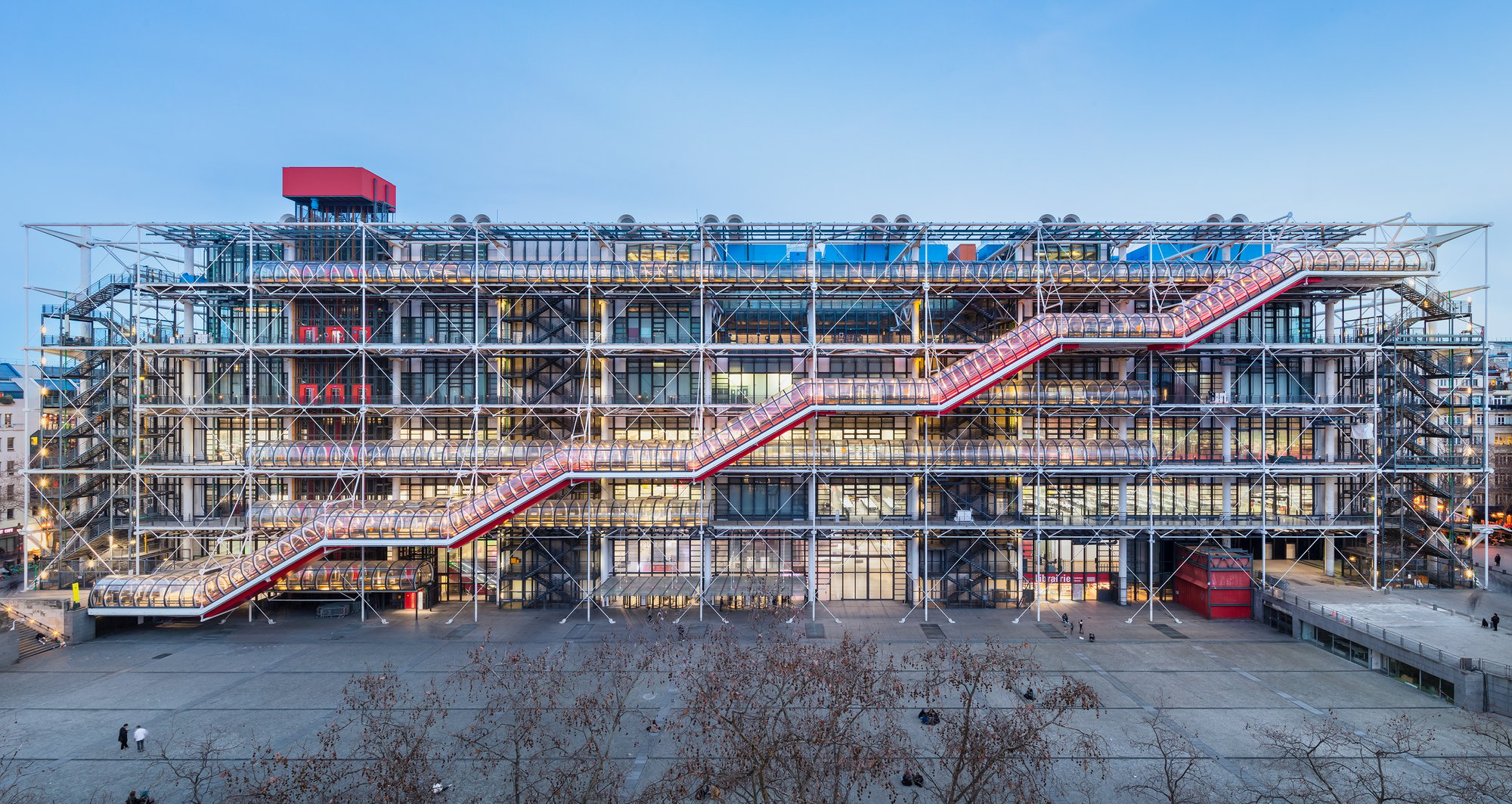
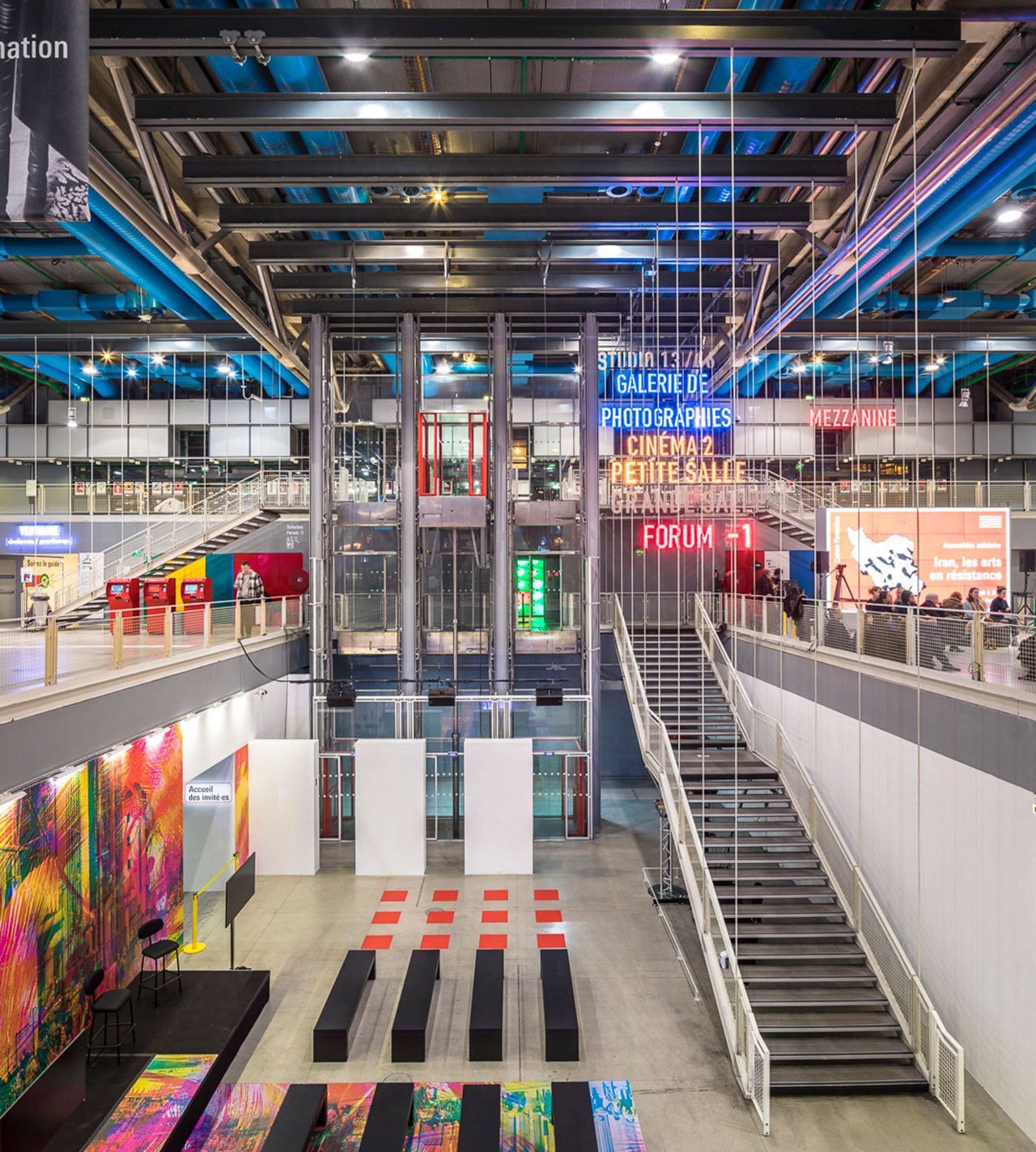
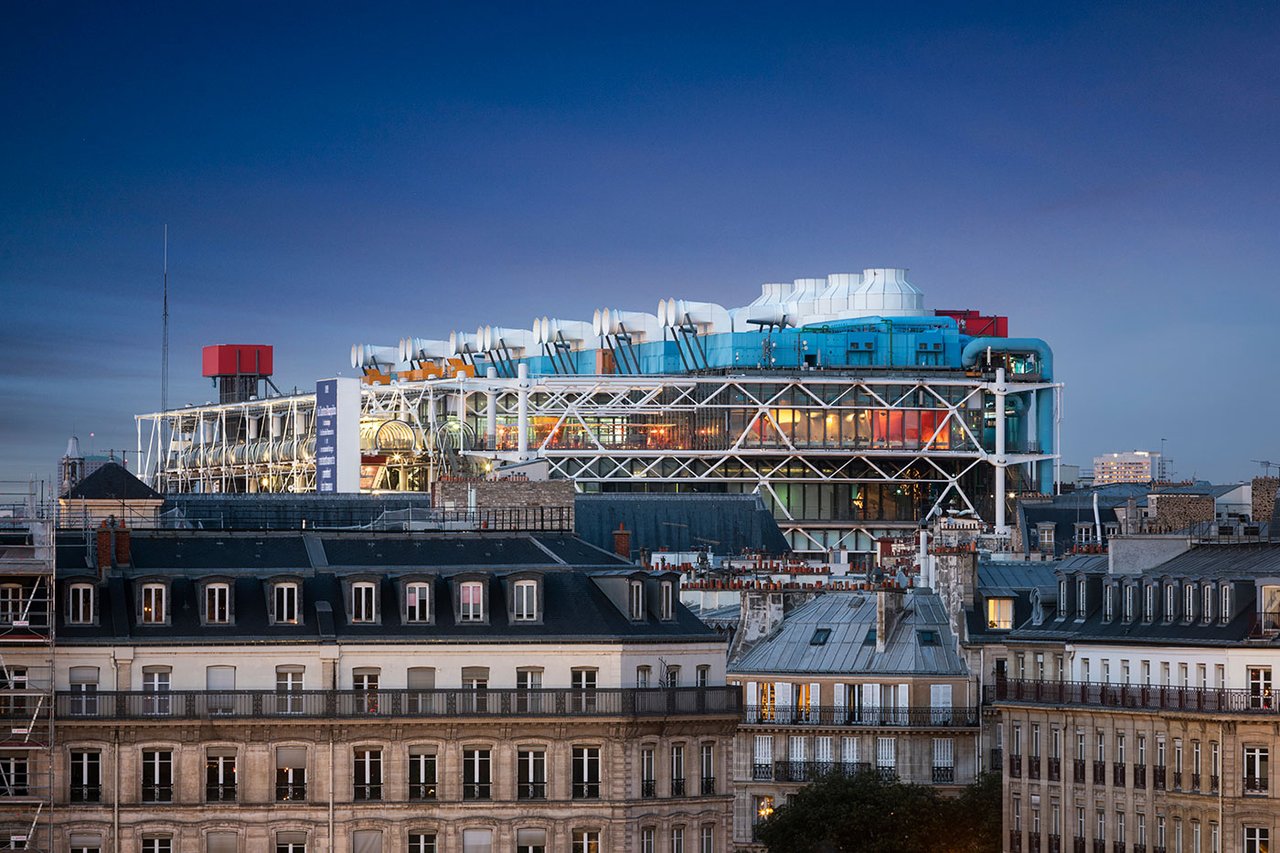
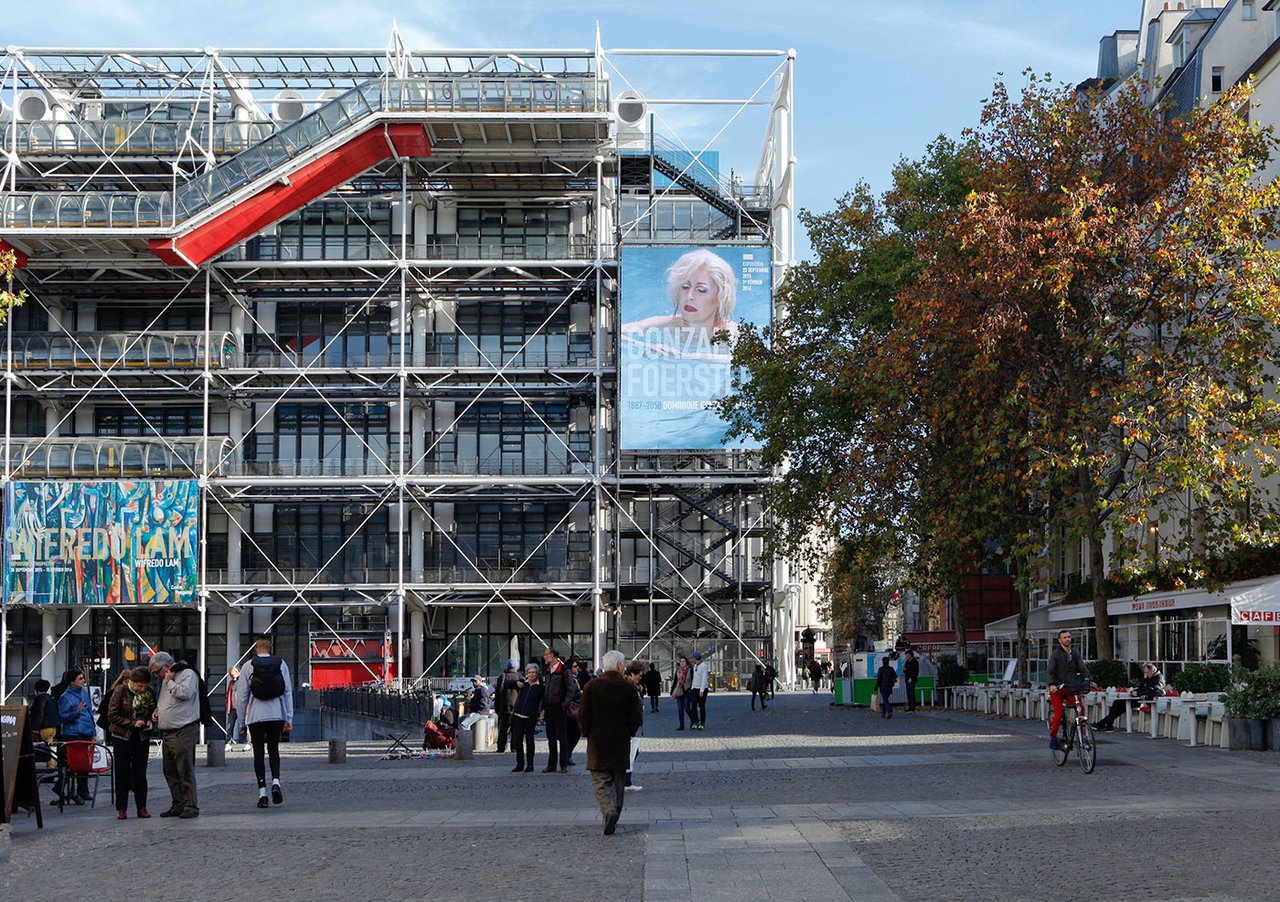
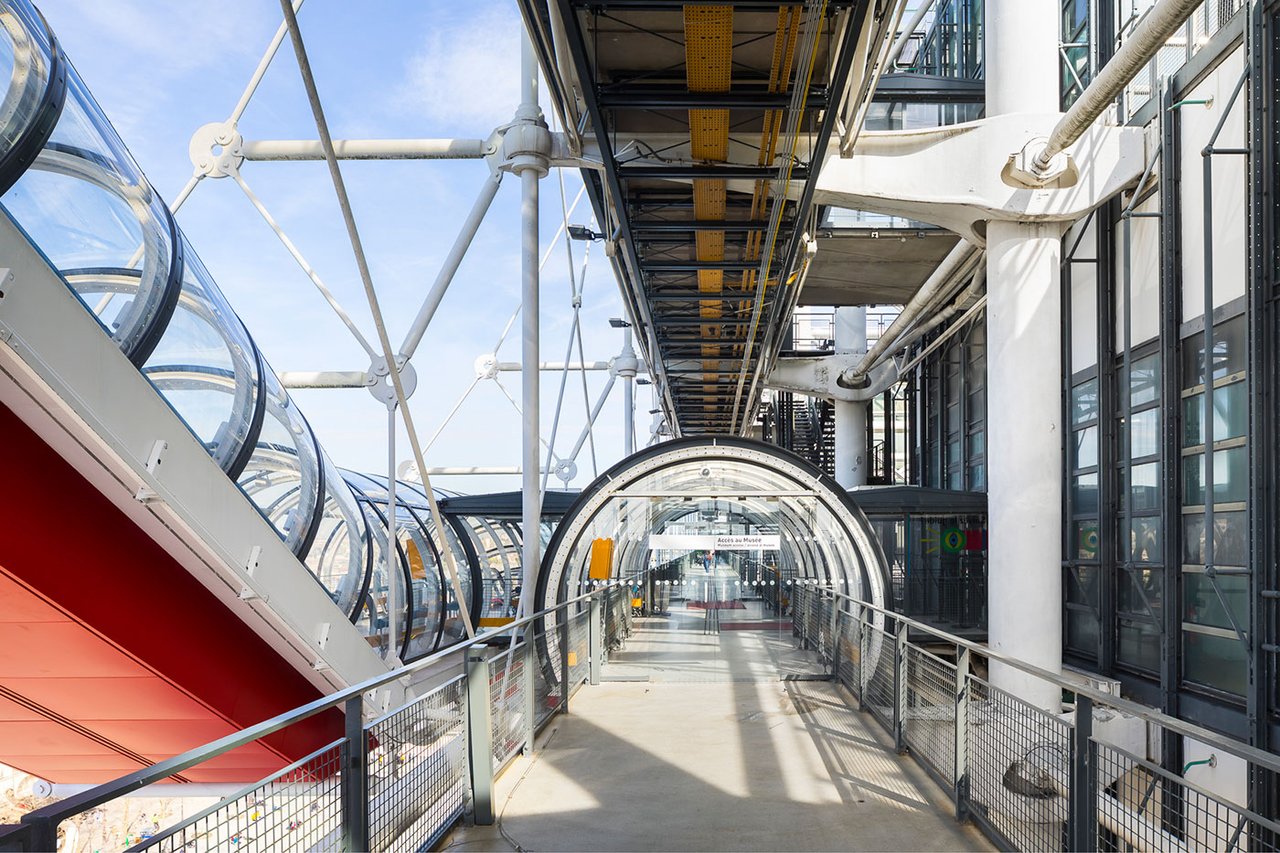
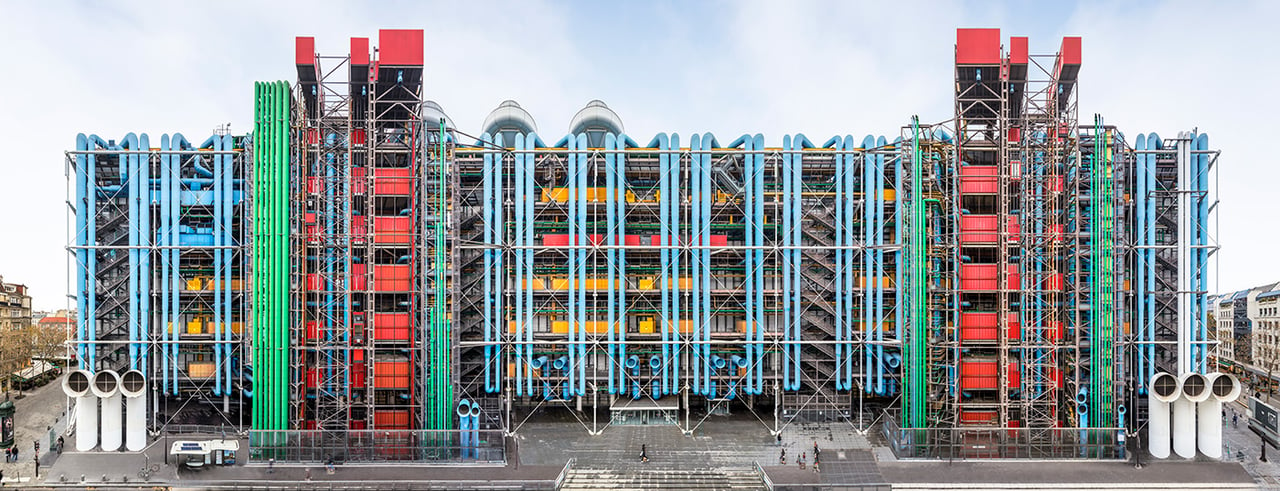
There is a joke that the Centre Pompidou has always looked more like a blockchain than a building. Its famous façade of pipes and ducts colour-coded by function, its skeleton worn on the outside, reads like a transparency manifesto: every system visible, every layer legible, nothing hidden behind walls of stone. When Renzo Piano and Richard Rogers unveiled the building in 1977, critics hated it. But the institution it housed became, over five decades, the most adventurous repository of modern and contemporary art in Europe — known as Beaubourg, after the Paris district it inhabits — and one of the most technically inquisitive of museums.
That sense of curiosity has rarely been linear. In 1979, the year the music and acoustics research centre IRCAM (Institut de recherche et coordination acoustique/musique) was finding its rhythm beneath Place Igor Stravinsky, across from the main Centre Pompidou building, an experimental computer-art laboratory called ARTA — the Atelier de Recherches en Techniques Avancées, led by the engineer Christian Cavadia — was formally attached to the Centre de Création Industrielle (CCI). ARTA had been operational since 1973, developing software for graphic creation and image processing on what were then the first generations of micro-computers.
It hosted Vera Molnar. It collaborated with Italo Calvino and Jean Tinguely on television projects. It won prizes from Tokyo to Melbourne to Munich. It was, for the visual arts, what IRCAM was for music: a research lab embedded inside a public museum, producing tools rather than merely displaying objects.
It did not survive the decade. By 1983, ARTA had been dissolved. The reasons, documented in the Pompidou’s archives, are instructive: ageing hardware, an absence of stable software pipelines, the museum’s drift toward more traditional museography under new leadership, and, most tellingly, internal competition for budget, with the composer Pierre Boulez, founder of IRCAM, reportedly perceiving any other research laboratory at the Centre as a rival to his institute.
Two years later, “Les Immatériaux”, the 1985 exhibition curated by Jean-François Lyotard and Thierry Chaput, became the institution’s high-water mark for thinking about networks, dematerialization, and the post-object condition. The exhibition is still cited today as the conceptual ancestor of any serious curatorial argument about digital art. But the lab that might have built on it was already gone.
This is the institutional memory worth holding in mind. The Pompidou’s relationship with computing was not linear. It has been a story of one laboratory (IRCAM) that survived and another (ARTA) that was abandoned, and of curatorial ambition that has periodically outrun the institution’s willingness to maintain the infrastructure it requires. The Musée national d’art moderne — which moved into the Pompidou in 1977 — has for just as long been acquiring work that challenges conventional ideas of the art object: video art, net art, generative art, sound art, installation. Curators like Marcella Lista and Philippe Bettinelli have steered the Nouveaux médias collection towards one that situates blockchain-based work within a long genealogy of immaterial and post-object art, from Yves Klein’s receipts for invisible paintings to Tino Sehgal’s ephemeral constructions, with “Les Immatériaux” as its great precedent. It is a curatorial argument as much as an acquisition policy: art has been renegotiating its materiality for sixty years, and NFTs are a chapter in that story.
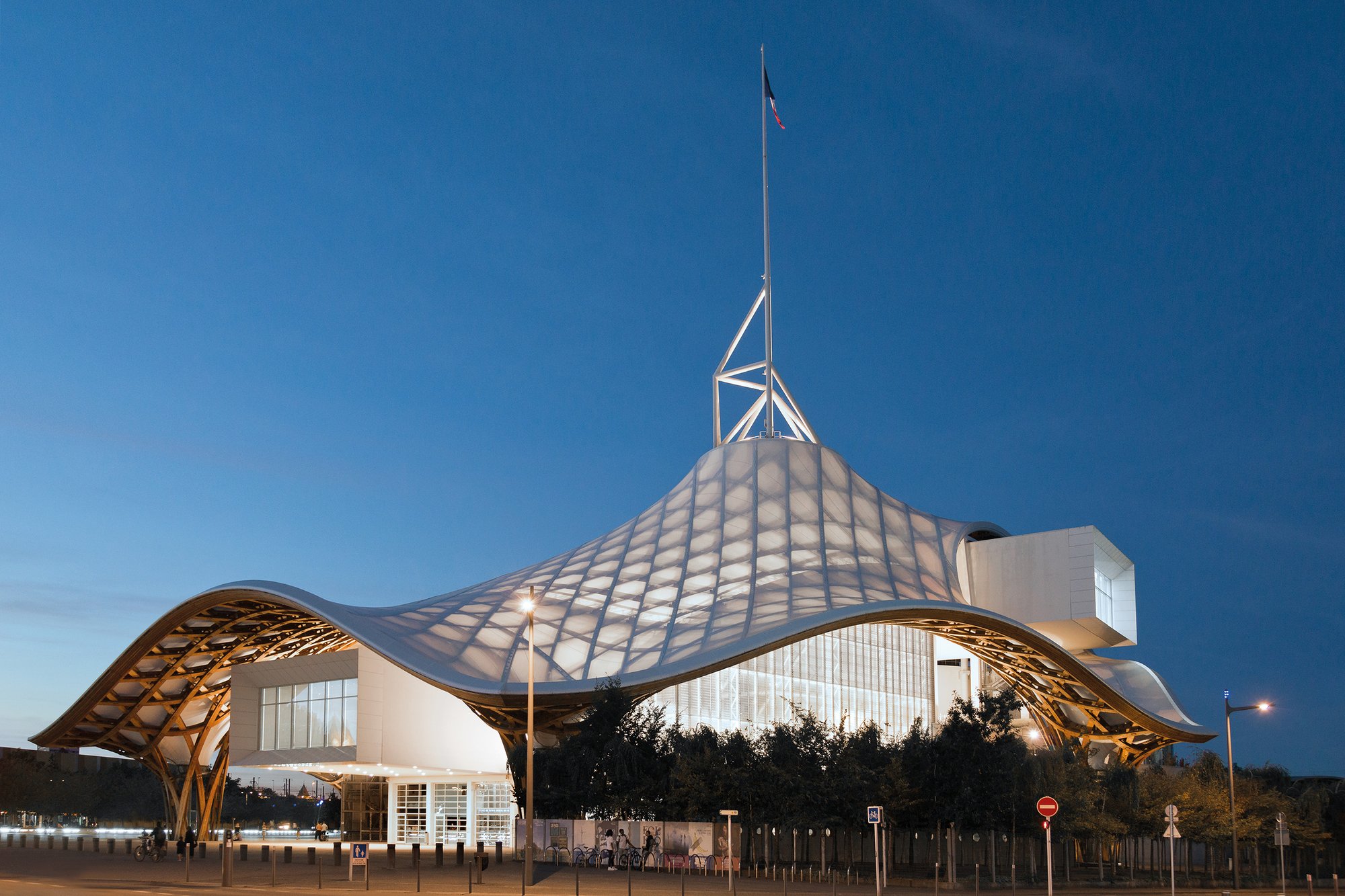
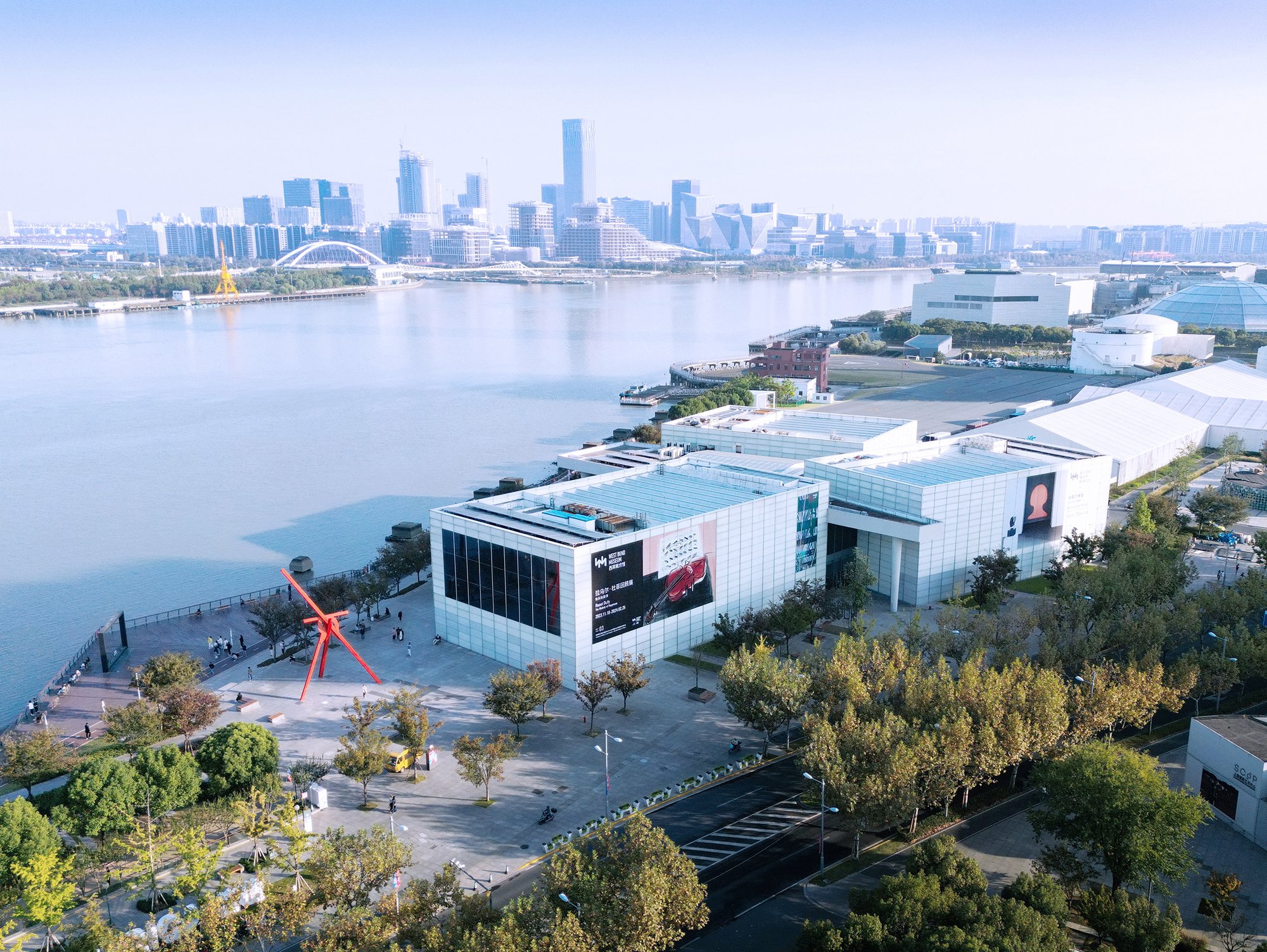
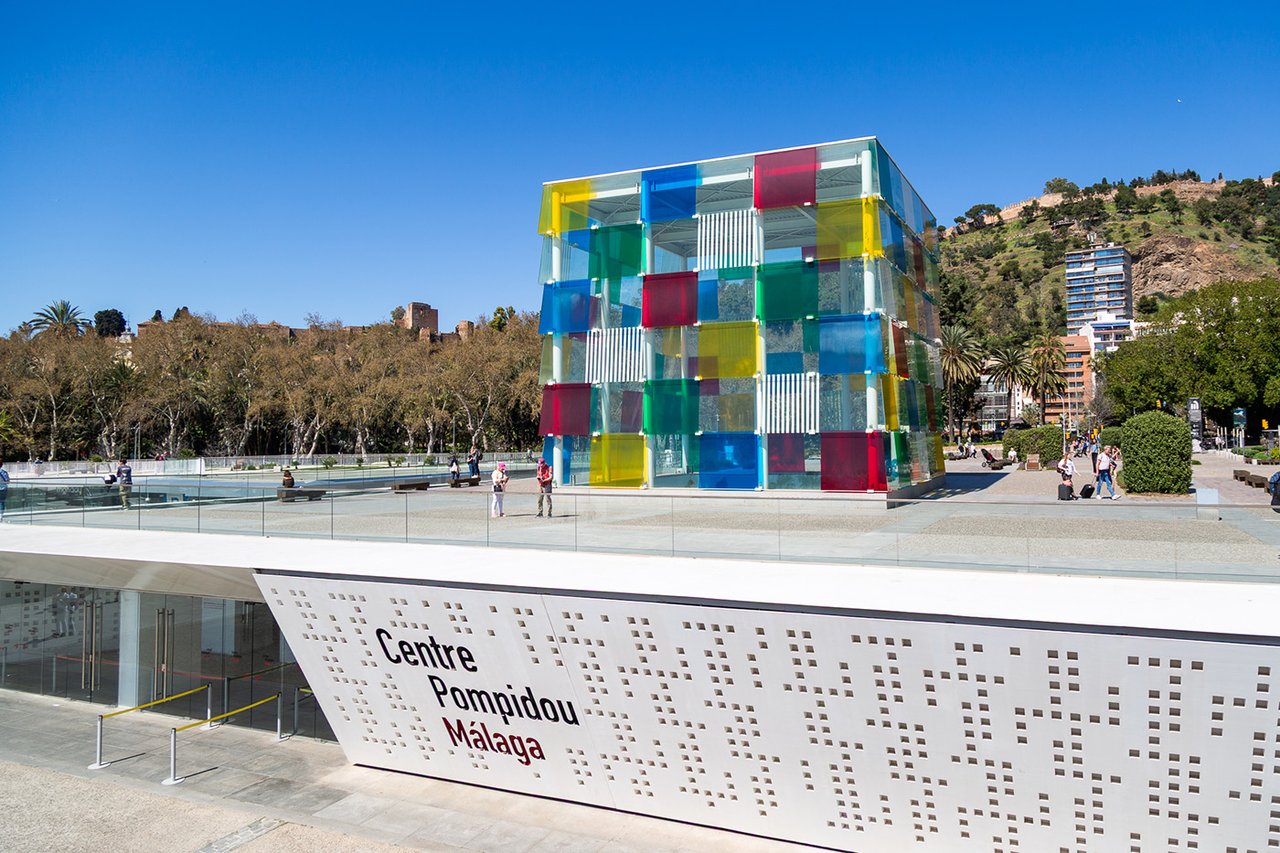
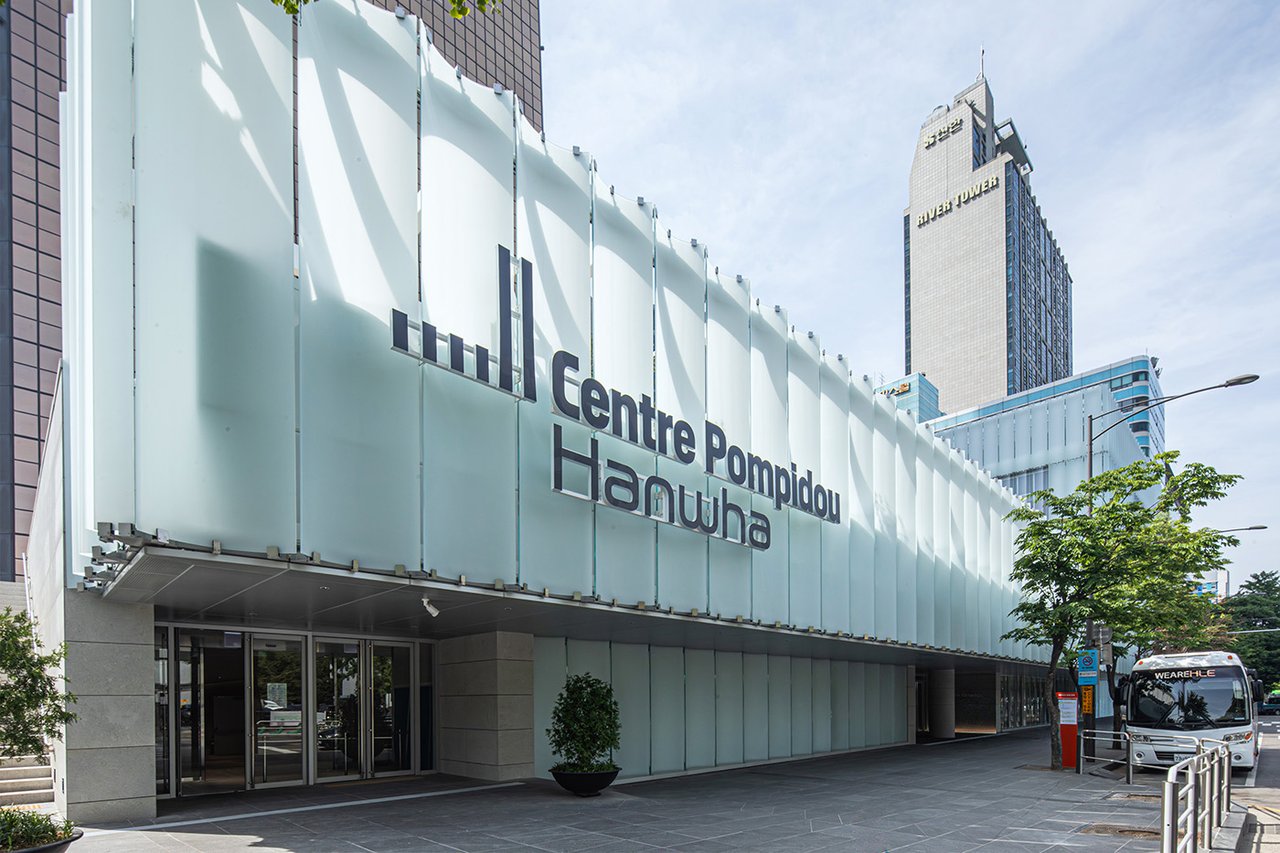
Now the building is empty. As of September 2025, the Centre Pompidou has shut its doors for a five-year renovation: asbestos removal, energy overhaul, structural renewal, with a planned reopening in 2030. Its collection of some 150,000 works has been dispersed across France and around the world under a programme named, with arresting aptness, Constellation. Around 8,000 artworks are on loan. Satellites exist or are emerging in Metz, Málaga, Shanghai, Seoul, Brussels, Massy (south of Paris), and Foz do Iguaçu (Brazil). IRCAM, on Place Igor Stravinsky, remains open; for now, the only node still burning on the original Beaubourg “plateau”.
The question the art world should be asking is not whether the Pompidou will survive this closure. It will. The question is whether a period of radical enforced decentralization might do something more interesting: push the institution toward a new relationship with the communities, technologies, and governance models that are reshaping culture from below. Whether, in other words, the Centre Pompidou might become the first great national museum to genuinely engage with Web3 and its culture.
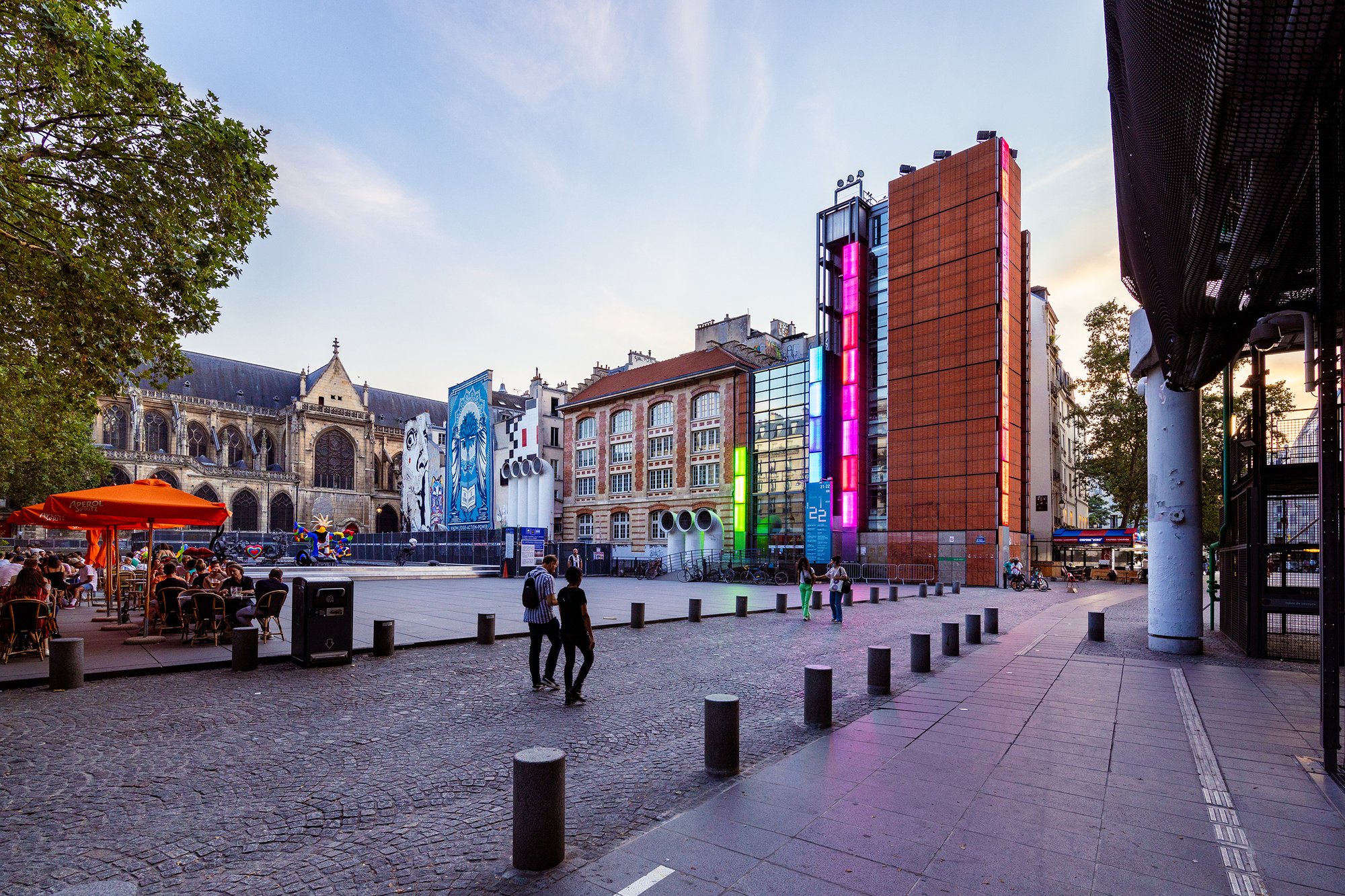
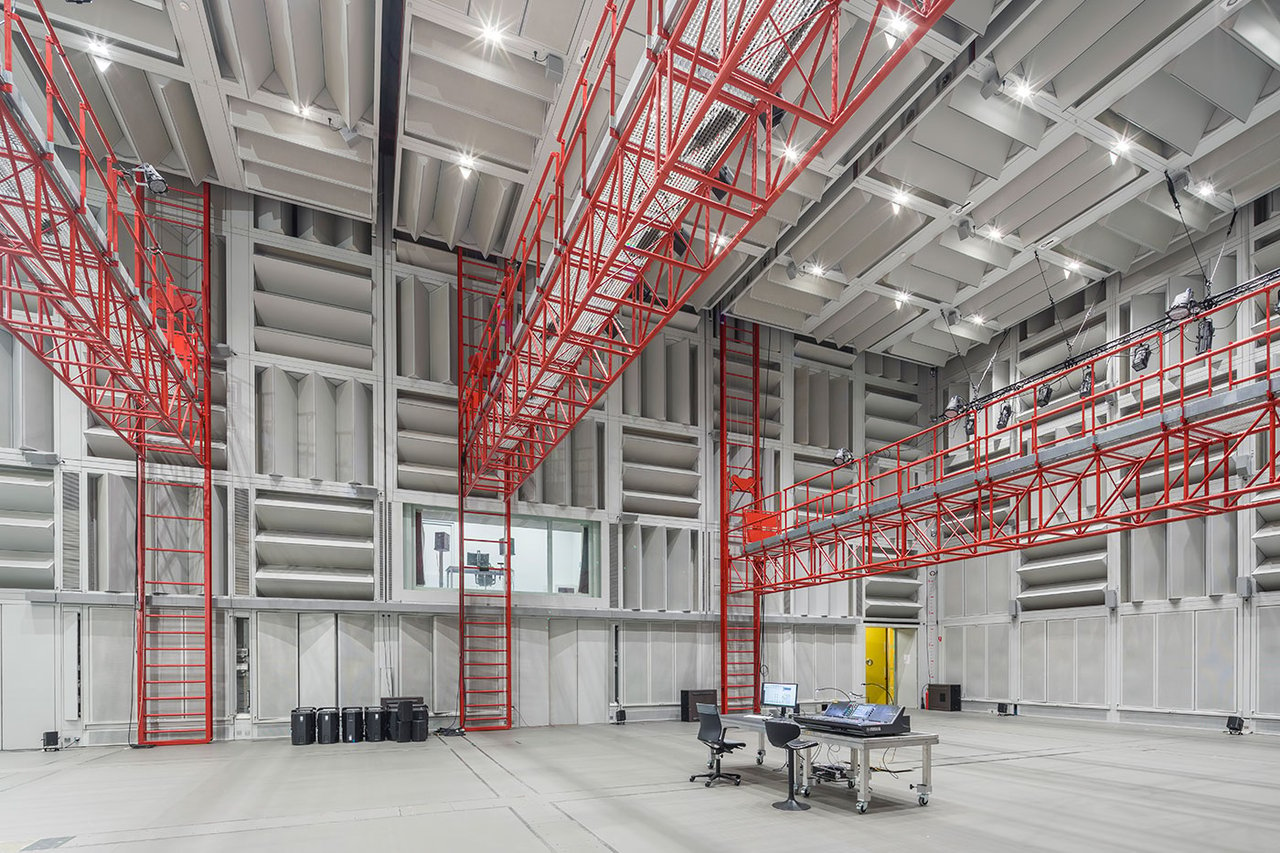
IRCAM was born from the same political will that created Beaubourg. President Georges Pompidou tasked Boulez with building it in 1970; it opened in 1977, its 3,500 square metres of studios, anechoic chambers, and variable-acoustics concert halls housed underground. From its inception, the organisation of the space reflected what its founders called, even then, a commitment to computing.
IRCAM is where Max/MSP music software was written. Where FM synthesis was pioneered. Where some of the foundational software tools of electronic music were developed. For over four decades, it has run residencies where composers and researchers work alongside engineers. It is a model of collaborative, cross-disciplinary making that anticipates by decades what the Web3 space now calls “artist-in-protocol” work.
The Pompidou’s closure and its Constellation programme have created something genuinely unprecedented in the history of major public museums: a national institution without a fixed address, operating as a network of nodes. The framing is more than poetic. It is a description of the architecture: cultural, operational, logistical, that the Pompidou is now being forced to build.
The geography is remarkable. Metz, the first Pompidou satellite, opened in 2010 and has been one of the most visited contemporary art institutions in provincial France. Málaga hosted a Pompidou for a decade. Shanghai has had one since 2019. Now: Seoul, Brussels, Massy, and Foz do Iguaçu.
The Centre Pompidou makes clear that these are not branch offices or secondary locations. They are, in the language of the program itself, nodes in a constellation, each hosting loans from the collection, each generating programming in dialogue with their own cultural context.
The word “constellation” matters. Unlike a hierarchy or a franchise, a constellation has no single dominant point. Each star emits its own light. Walter Benjamin used the term to describe a mode of thought in which ideas are brought into proximity not to create a narrative synthesis but to generate a field of meaning through their juxtaposition. Whether or not the Pompidou’s programmers were thinking of Benjamin, the metaphor they have chosen describes exactly the kind of distributed, non-hierarchical cultural logic that Web3 was invented to enable.
The Pompidou’s curators have been quick to read the closure as an opportunity rather than only a constraint. “Moments of closure are always conducive to reflection on practices presented as ‘immaterial’ — even if that is largely a misnomer — or at least practices that develop in virtual spaces,” Bettinelli observes; the pandemic, he notes, was a forced rehearsal of exactly that. The renovation is now allowing the museum to take stock of its digital collection while putting it into circulation.
Two travelling exhibitions, both drawn from the collection, make the point concrete. “Unstable Media in the 21st Century”, organised by Lista, opens at the Hamburger Kunsthalle in November 2026 and proposes to reconsider the field of so-called “new media” by foregrounding what she calls the “philosophy of instability” that accompanied the rise of video and now resonates in the way networks and flows have become the operators of artistic and economic circulation.
“Computer Worlds”, organised by Bettinelli, Camille Lenglois, and Olivier Zeitoun, with Victor Guégan as associate curator, will open at the West Bund Museum in Shanghai in late September 2026 and will trace the relationships between computing and creation across the visual arts, design, and architecture.
The NFT ecosystem, in Lista’s framing, takes its place within this broader history of media that question the specificity of artistic form.
This is a meaningful shift in register. A museum that has just closed for five years is, in its first full year of dispersal, choosing to send its digital and computational holdings on the road and making this a primary curatorial argument. The Constellation is both redistributing works and redistributing the terms on which those works are read.
The Web3 art world that Centre Pompidou might engage with in 2026 is not the Web3 art world of 2021. That distinction is essential, and any honest case for institutional engagement has to begin with it.
The intervening years have been a long, sometimes painful contraction. Platforms that defined the early ecosystem have closed or pivoted. Marketplaces have consolidated. Magazines and editorial outlets that briefly flourished alongside the speculative boom have shuttered or thinned. Communities that were noisy and ambient in 2021 — Twitter spaces, Discord servers, Telegram channels — are quieter, more dispersed, and in many cases have migrated to smaller and more committed venues like Farcaster.
The phrase “NFT art” has become, for many practitioners, something between an embarrassment and a strategic liability.
Pompidou’s own curators describe this with characteristic precision. “There was a gold-rush phenomenon in the early 2020s,” Bettinelli observes, “which saw many actors position themselves around questions of digital art — or sometimes simply around NFTs, independently of any artistic consideration.” What followed, he argues, is “a form of rationalisation of the ecosystem, a resizing to a more realistic scale, and an adaptation to successive technological enthusiasms” — the metaverse, then artificial intelligence. What remains, in his reading, is not nothing. It is “works, artists who are more numerous in being able to live from their practice than in the past, and the structures that support them: as many elements as are essential to the development of an artistic milieu.”
Lista adds a complementary observation that cuts against a common assumption in the institutional world. The closures of recent years, she suggests, may say something about the overvaluation of physical exhibition venues for this kind of practice in the first place. “The communities tied to digital creation are attached to a form of nomadism and to the renewal of forms of artistic experience.” Meanwhile, she notes, many artists trained in the plastic arts or music have absorbed advanced software techniques into large-scale works that now circulate through more established exhibition venues — typically museums — while international art fairs increasingly carve out dedicated sections for digital and on-chain practice that sometimes become events in their own right. The map has not so much shrunk as redrawn itself.
This is the diagnosis. It matters because it changes the terms of the institutional argument.
A flourishing market does not need a museum. A contracted, more serious, more committed scene might. The question is whether a national institution can offer durable anchoring to a community that has just lost a significant portion of its commercial scaffolding and is now in the slower, harder work of building what comes next.
The artists are still making the work. The collectors who matter are still buying it. The critical writing is still happening. What is missing, in many cases, is the kind of long-horizon institutional partnership that protects practices from the volatility of the markets that produced them.
This is not unique to digital art. Video art faced the same contraction in the 1980s after its first commercial flush; net art faced it in the early 2000s. In each case, what eventually mattered was that a handful of public institutions chose to take the work seriously over decades rather than over hype cycles. The Pompidou’s Nouveaux médias department is one of the very few that has done this consistently, across all three waves. That track record is the credibility on which any future engagement would rest.
It also reframes the urgency. In 2021, an institutional embrace of Web3 would have looked like a museum chasing a market. In 2026, it would look like something different: a museum extending its long-standing curatorial argument, that art has been renegotiating its materiality for sixty years. The closure of the building is a constraint. The closure of much of the Web3 commercial ecosystem is, paradoxically, an opportunity. Both pressures point toward the same horizon: an institution that engages with digital-native communities not as an audience to be courted, but as a constituency whose work belongs in the long history the Pompidou has been writing all along.
The convergence between Pompidou’s situation and Web3’s tools is almost too obvious to state, and yet stating it clearly is worth the effort. An institution that has been collecting blockchain art since 2023 and continues to do so. An institution that has, by necessity, become a distributed network of cultural nodes across three continents. An institution whose curators describe the Constellation in language Walter Benjamin would have recognised and a designer of a Distributed Autonomous Organization (DAO) would find familiar. The materials are there. The question is what, if anything, the institution chooses to make of them as it moves toward its 2030 reopening.
An interesting line in the Pompidou’s own forward-looking thinking comes from Lista. Asked what she hopes the closure period will have allowed the institution to construct with digital communities by 2030, she answers that it will become possible “to rethink the presentation of networked digital works in their native environment”, online exhibitions, evolutive and decentralised works.
“It is a particularly stimulating prospect,” Lista adds, “to welcome current creation beyond the physical walls of the Centre Pompidou.”
Bettinelli, for his part, hopes the collection will continue to develop in ways that allow the museum to tell a broad history of digital art and to integrate it fully into the history of modern and contemporary art that the Pompidou has been building for fifty years. He also hopes that history can be shared not only with the communities that already know it, but with the visitors who live every day with the technologies that shape it without necessarily recognising the artistic genealogy behind them.
These are curatorial horizons, not commitments. But they describe a museum already comfortable with the idea that the works it cares about no longer live, in any meaningful sense, only inside its walls. That is the conceptual door through which a Web3-native programme might walk.
What such a programme might look like is, at this stage, more usefully imagined than prescribed. The mechanisms are not speculative: they exist. The WAC Lab, co-founded by Diane Drubay of We Are Museums and launched at Art Basel in 2021, has already worked with cultural institutions on structured engagements with Web3. The Musée d’Orsay introduced digital collectibles through a partnership with the digital souvenir specialists Keru. The Louvre’s foundations have explored NFT drops tied to exhibition access. These are early experiments, but they point toward a model in which the relationship between institution and audience becomes something other than a one-way broadcast.
The more ambitious version imagines something closer to what Ruth Catlow and Penny Rafferty called Radical Friends, the title of their 2022 book on DAOs and cultural institutions. A DAO-governed collecting fund for the Pompidou might, in principle, work like this: a defined community of digital-native collectors, historians, curators and critics pools resources and votes on acquisitions within a defined scope. Curators from the Nouveaux médias department set the research framework and ensure conservation standards. The DAO governs the selection. The Pompidou holds and exhibits the work, issues provenance credentials on-chain, and reflects the community’s trust back into the culture.
This is offered as a thought experiment rather than a policy proposal. It is not, in the abstract, as radical as it sounds. The Pompidou already has a Société des Amis, a friends-and-patrons structure that has channelled private support toward acquisitions for decades. The conceptual question is whether that model can be extended, opened, and partially put on-chain; not to displace institutional authority, but to share it in a defined and bounded way like it does with other patronage groups. DAO or DAO-like initiatives might also be used to involve the community in the life of the works after their acquisition, locations of their exhibition around the world. Beyond acquisitions, this might help the museum bring many international patrons, and interact with them in a different way. Traditional friends and patronage groups are often built with local participants. International groups could have a hard time involving patrons in the life of the museum and creating activations for them. DAOs and blockchain technologies could change everything.
This tension is one Bettinelli himself has identified, though in more general terms. The most cutting-edge technologies, he observes, remain difficult to access, both in terms of infrastructure and expertise, and the material conditions of serious research are far from easy to assemble in the field of art. At the same time, Web3’s culture of decentralization “can seem antithetical to the constitution of large institutional research centres”. That tension exists, but it isn’t a closed door. It is an invitation to think more carefully about what kind of institutional form might actually serve a decentralized community: not a recreation of IRCAM for visual artists, which is the ARTA story repeating, but something more porous, more lightweight, co-built and closer in spirit to a residency or experimentation programme distributed across the Constellation nodes than to a single great laboratory on Place Igor Stravinsky.
The point of imagining these horizons is not to specify the answer. It is to suggest that the answer is now worth asking for. The Pompidou’s curators have built the conceptual scaffolding over five decades. The closure has created the operational opening. The community has, through its own contraction, become the kind of constituency a serious institution can engage with on serious terms. What follows from all of that is a conversation that the institution is in a stronger position to lead than almost any peer in the world
One thing the Pompidou has historically done well (and that major institutions often fail at) is the cultivation of new audiences before they become the mainstream. The Piazza at the heart of Beaubourg was designed to be a public space where artists, street performers, passersby, and museumgoers would intermingle. Studio 13/16, its youth-focused programme, has worked with teenagers and digital natives for years. IRCAM has always attracted composers, engineers, and hackers in equal measure.
But the communities that have built the NFT and broader Web3 art world are culturally distinct in ways that institutions have struggled to bridge. They live on Discord and Farcaster, not Instagram. Their critical discourse happens in threads and voice chats, not panel discussions and academic journals. They have built their own marketplaces, their own magazines, their own models of behaviour. It is a separate art world operating in parallel to the institutional one, often invisible to it.
The Pompidou is in a position to make a bridge. It already has the credibility of the 2023 NFT acquisition, received with genuine respect in the Web3 art community precisely because it was serious, contextualized, and curatorially argued. =
Lista and Bettinelli framed blockchain art within the genealogy of immaterial and conceptual art, speaking the language of art history without condescending to the new. Their shared curatorial insistence on “the most daring uses of technology” treated blockchain as a medium for critical artistic reflection. They held the acquisition to the same standard as the rest of the Nouveaux médias collection.
What would complete the move is now an invitation. A sustained, structural programme of engagement that treats digital-native communities as co-creators of the institution’s future. This means putting Web3 artists in IRCAM, or a new form of residencies. It means designing Constellation node programming that includes artists from the fxhash or Art Blocks generative-art communities. It means having conversations on Farcaster or other digital platforms, not only at symposia.
There is a precedent for exactly this kind of sustained program, and it is worth recovering. Between 1992 and 1996, the Centre Pompidou ran the Revue virtuelle, a quarterly experimental format jointly developed by what was then the CCI and the Musée national d’art moderne. Three times a year, two modules in the museum’s galleries presented an installation and a videodisc anthology, open to the public free of charge. Each issue was accompanied by a printed booklet and a public lecture. The format ran for 16 numbers and brought figures including Nam June Paik, Karl Sims, Edmond Couchot, Anne-Marie Duguet, and Matt Mullican into sustained dialogue with French institutional audiences. Jean-Louis Boissier, one of its curators, has described the project as a deliberate attempt to bridge the museum and the more accessible CCI, to put experimental practice in the galleries without first having to settle the question of whether it qualified as art.
It was a programme of structured ambiguity, sustained over four years, in a public space, with institutional backing. This is the model worth remembering. The Pompidou can recover a method it once practised, and to update it for an art world whose native infrastructure now happens to be a blockchain.
The aspiration here is modest and concrete: a recurring, gallery-anchored programme that takes Web3-native practice seriously on its own terms, that is built in dialogue with the communities producing the work, and that does not need to resolve in advance the question of whether what it shows is “art” or “research” or “infrastructure”, because the Revue virtuelle showed that an institution can productively leave that question open for years at a time, and that the public is more than ready to follow.
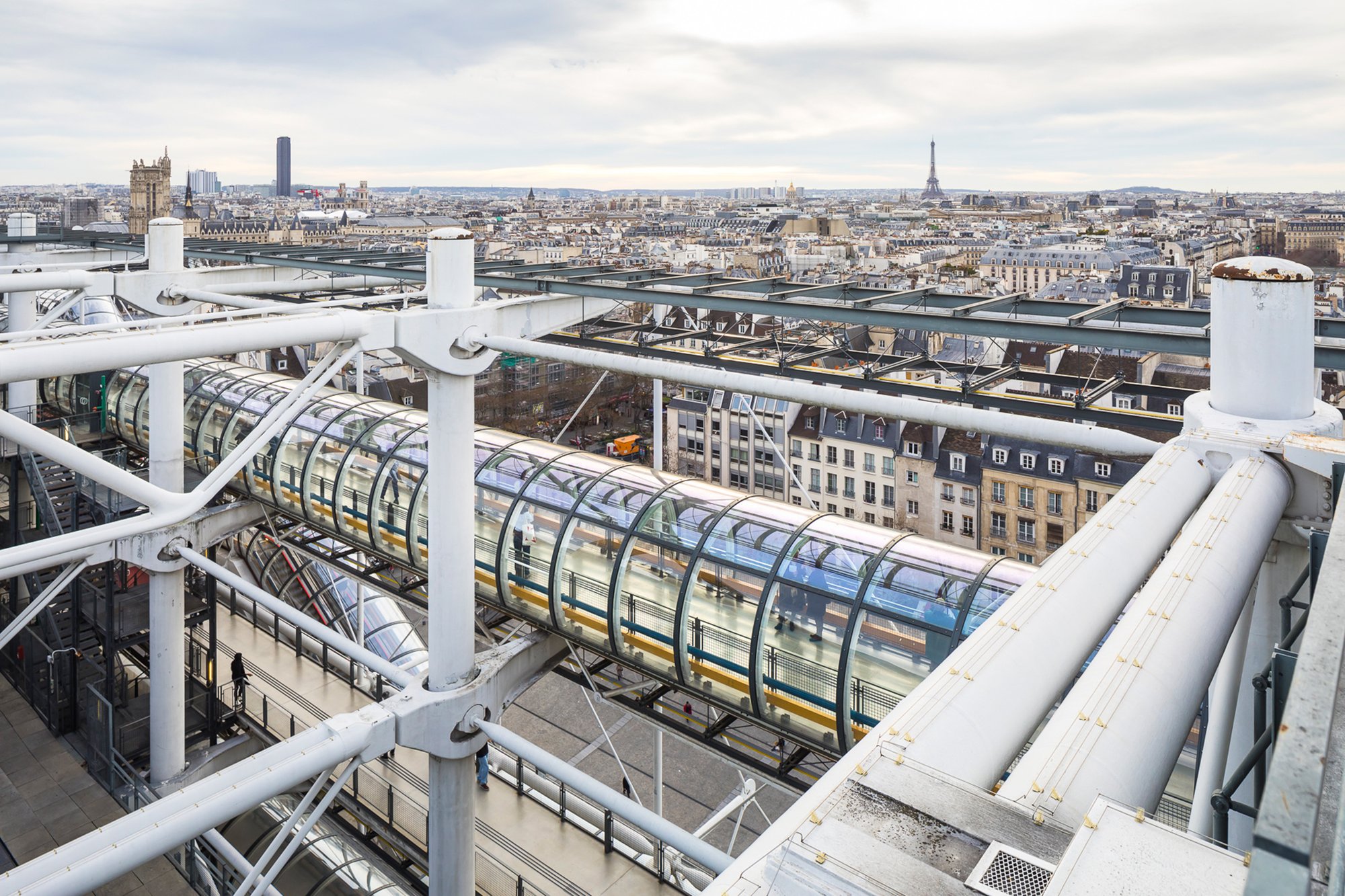
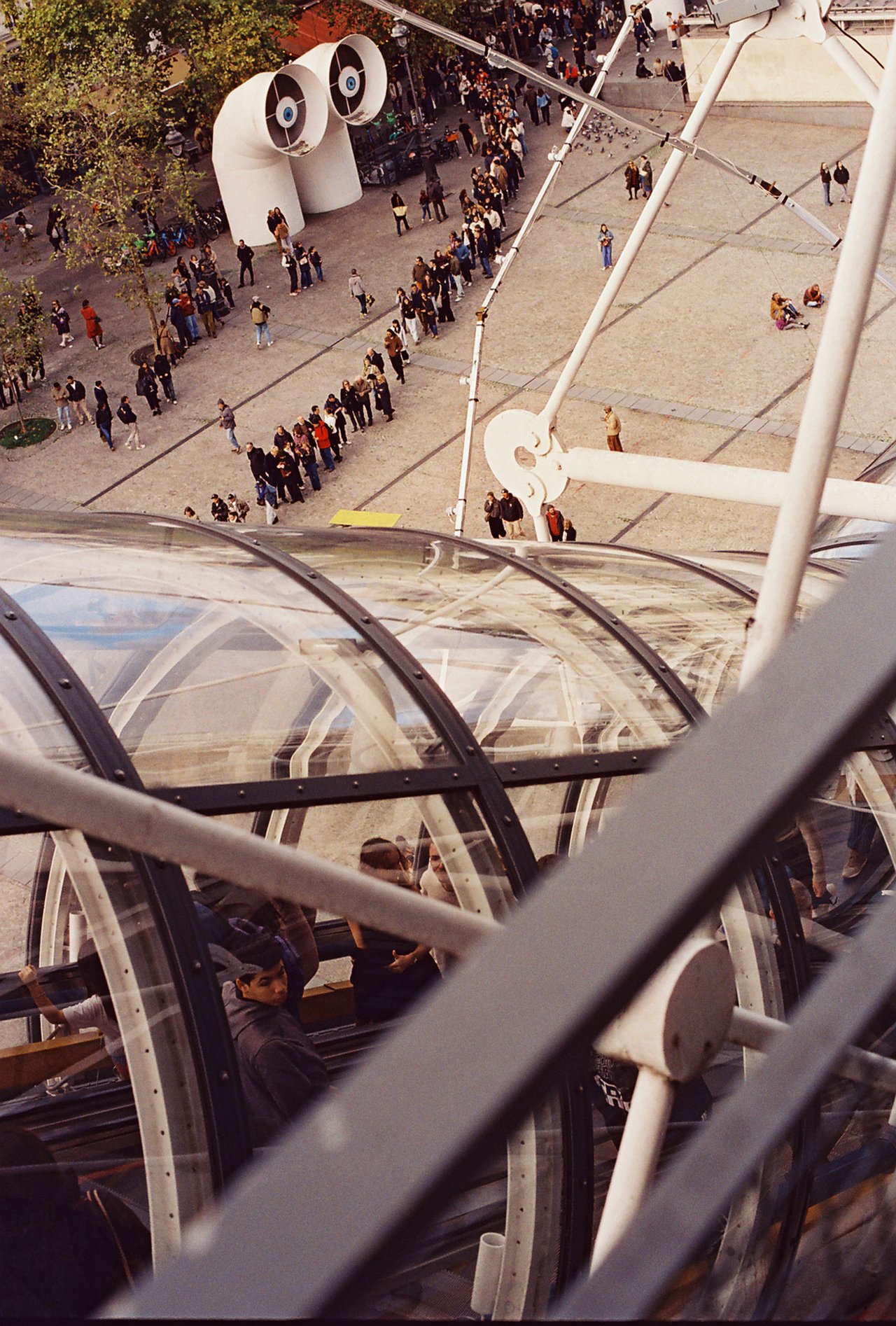
Buildings shape institutions in ways that are easy to underestimate. The Beaubourg’s visible infrastructure, those famous pipes, that great piazza, the transparent escalator that lets you watch the city as you ascend through the collection, was an architectural argument about openness, about culture as a live process rather than a sealed archive. “Reinventing this extraordinary utopia” is how the Pompidou’s president, Laurent Le Bon, has described the ambition of the 2030 redesign.
If that spirit is to mean anything in 2030, it has to grapple with the fact that some of the most genuinely experimental work in collective culture, open access, and networked creativity is now happening not in buildings but on chains. Not all of it. Not even most of it. But enough of it, sustained over enough years, by enough artists who have outlasted the speculative cycle, that the institution’s relationship to that field is now a real question rather than a marketing one.
The Pompidou was born of a 1970s belief that culture should be porous, participatory, and connected to its moment. Web3, at its best, is a set of tools for building exactly that kind of culture: open, composable, governed by communities rather than only by institutions, traceable rather than opaque.
This is where the urgency argument matters. A flourishing market does not need a museum. A contracted, serious field does. The renovation is a reboot. The Constellation is a distributed network. The NFT collection, ongoing since 2023, has been described by the institution itself as a first wave rather than a final position. What is missing is the leap: the decision to let a new generation of communities inside, as participants more than simple guests. To treat the logic of decentralization as a principle to be enacted, lightly and provisionally, in forms the institution can sustain.
The Pompidou has everything it needs to make that leap. The DNA of experimentation, and, as the ARTA story reminds us, the institutional memory of what happens when that DNA is allowed to wither. The curatorial seriousness, sustained across video, net art, and now blockchain by Lista, Bettinelli, and their colleagues. The global network of Constellation nodes, which is itself the most distributed cultural infrastructure of any major museum in the world. The collection. The moment. What it needs now is the willingness to ask, in public and in dialogue with the communities concerned: what would Beaubourg look like if it were not only a building that looks like a blockchain, but an institution that operates a little more like one?
The pipes are visible. The escalator is waiting. And IRCAM is still running, the one node that never went dark, still asking what it sounds like when art and technology think together. The next question: what does it look like when art, technology, and community govern together, is one Pompidou is uniquely positioned to ask.
Alexis de Bernède is founder of Darmo (darmoart.com), and a doctoral candidate at the Université Panthéon-Assas Paris (École Doctorale Georges Vedel), where his research examines the evolution of museums in the era of generative art and artificial intelligence, with a focus on decentralised governance and the institutional integration of Web3 technologies. Since 2020, he has worked as a curator, building and participating in residencies, exhibitions, and programmes to advance the discovery of contemporary artists and the rediscovery of artists left on the sidelines of history. His work sits at the intersection of curatorial theory, digital humanities, and organisational innovation, bringing practitioner experience directly to bear on questions of museum governance and the future of cultural institutions in the digital age.