The media theorist Lev Manovich proposes a new approach to categorizing digital art based on ideas from the sociology of culture, and his own experiences as a digital artist
The usual answer is simple: art made with digital technologies. And technology indeed matters. We can divide digital art into categories depending on the tools used to make it, as well as output and exhibition formats. In fact, these are the usual categories used to classify digital art (net art, interactive installation, data art, and so on). But here I want to take a different approach, inspired by ideas from the sociology of culture — and my own experiences as a digital artist for over 40 years.
I began working with digital imaging and 3D animation in 1984, and started teaching and publishing about digital art in 1992. Over the next three decades I watched the field not only grow but divide. As new technologies and new opportunities appeared, new kinds of digital art developed — and each found its own audiences, criteria for evaluation, and support structures. I will refer to them as worlds, following a classic of the sociology of art — Howard Becker’s Art Worlds (1982).
Consider three hypothetical artists. One regularly sells digital prints and receives commissions from collectors who discover the work online — through Instagram, online marketplaces, portfolio sites, or artist communities. Another presents artwork in museums and biennials, where it is discussed by curators and critics. A third develops interactive installations involving robotics, scientific data, or custom AI models; occasionally publishes in specialist journals; and is known mainly in media art festivals and research communities.
All three make digital art. All may be successful. But what counts as success is different in each case, because each operates within a different professional and cultural environment.
These differences suggest a different way of approaching digital art. Instead of asking only whether a work is good, original, popular, or whether it uses the latest technologies, we can ask:
— Where does it circulate?
— Who values it?
— What are the criteria for judging works?
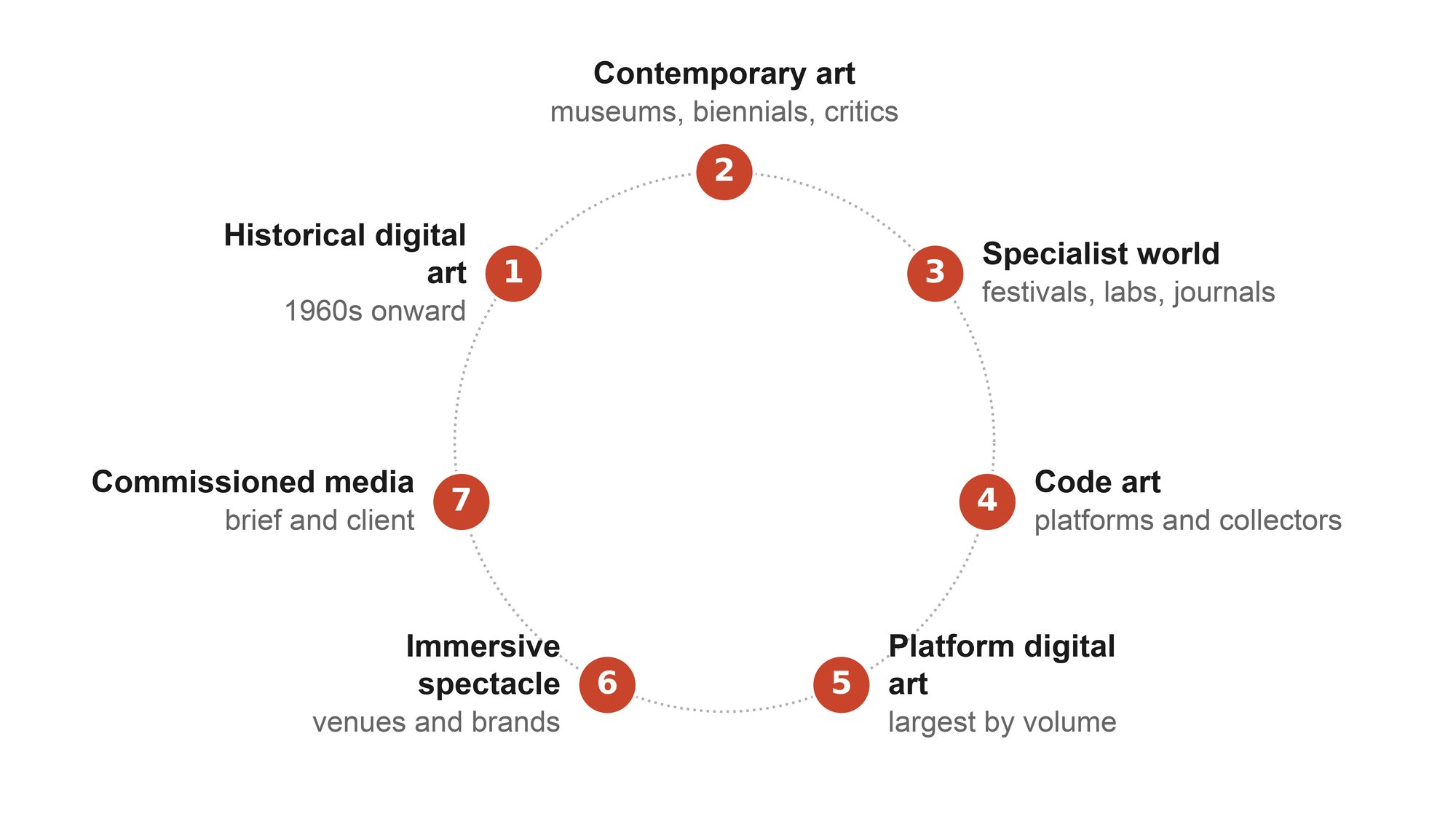
Today, digital art has at least seven overlapping worlds. Some of them did not exist 15 years ago, and another observer would draw the boundaries differently — this is one map, not the map.
Several of the artists and studios named below work across more than one world. I have placed each according to where the work is principally received and valued today, not where the career began. The movement between worlds is the subject of the diagrams that follow.
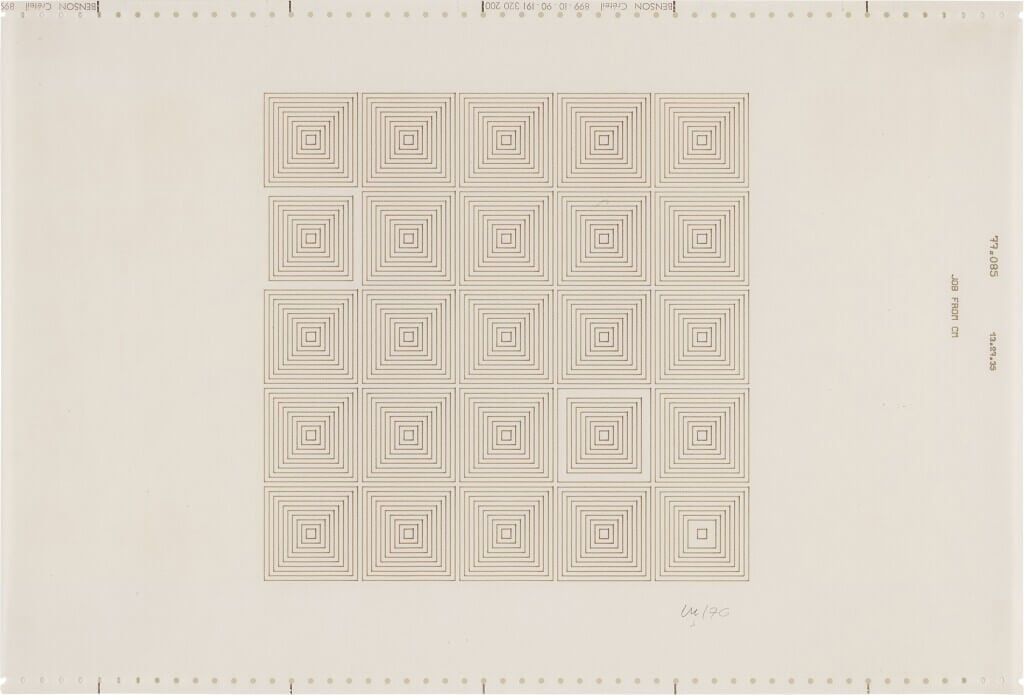
Vera Molnar, 1% de désordre (1% of disorder), 1976. Courtesy of the artist
1. Historical digital art
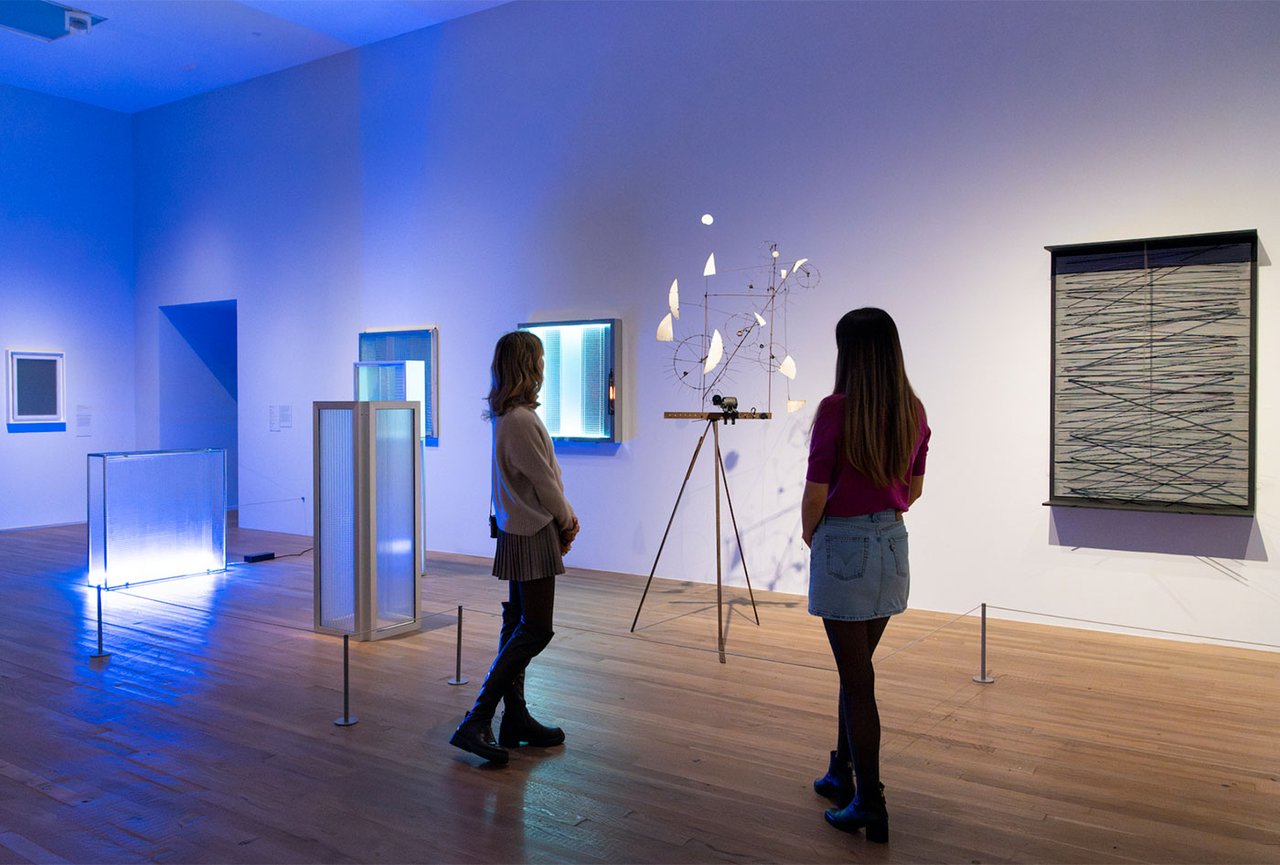
Early computer graphics, generative art, video, cybernetic art, net art, and interactive work from the 1960s onward are increasingly part of art history. Here the central questions are historical influence, documentation, preservation, and conservation. Representative figures include Vera Molnar, Manfred Mohr, Georg Nees, Frieder Nake, Lillian Schwartz, JODI, and Olia Lialina. These are the artists who appear in the recent museum surveys of the field — “Programmed” at the Whitney (2018), “Coded” at LACMA (2023) and “Electric Dreams” at Tate Modern (2024–25) among them, with more since. Many of them are also active in worlds 3 and 4, where the same work is valued by different criteria.
2. Digital practice in contemporary art
Artists who work in this world address an art audience, and their work is judged as contemporary art. It can take a variety of forms, such as data visualization, virtual worlds, generative images and video, and interactive installations. Many engage larger questions — power, labor, ecology, surveillance, identity, infrastructure, the changing conditions of culture — and take a critical position toward the technologies they use: Hito Steyerl, Trevor Paglen, Forensic Architecture, Cao Fei,Anna Ridler, Lawrence Lek, Holly Herndon & Mat Dryhurst. Others are concerned with aesthetics, perception, scale, and duration, treating computation as a material rather than a subject: Ryoji Ikeda, Carsten Nicolai, Ian Cheng, Rafael Lozano-Hemmer.
Either way, what is rewarded is a position that art criticism can take up, critical or formal; technical novelty on its own counts for little here. Recognition comes through museums, biennials, curators, galleries, and critical writing.
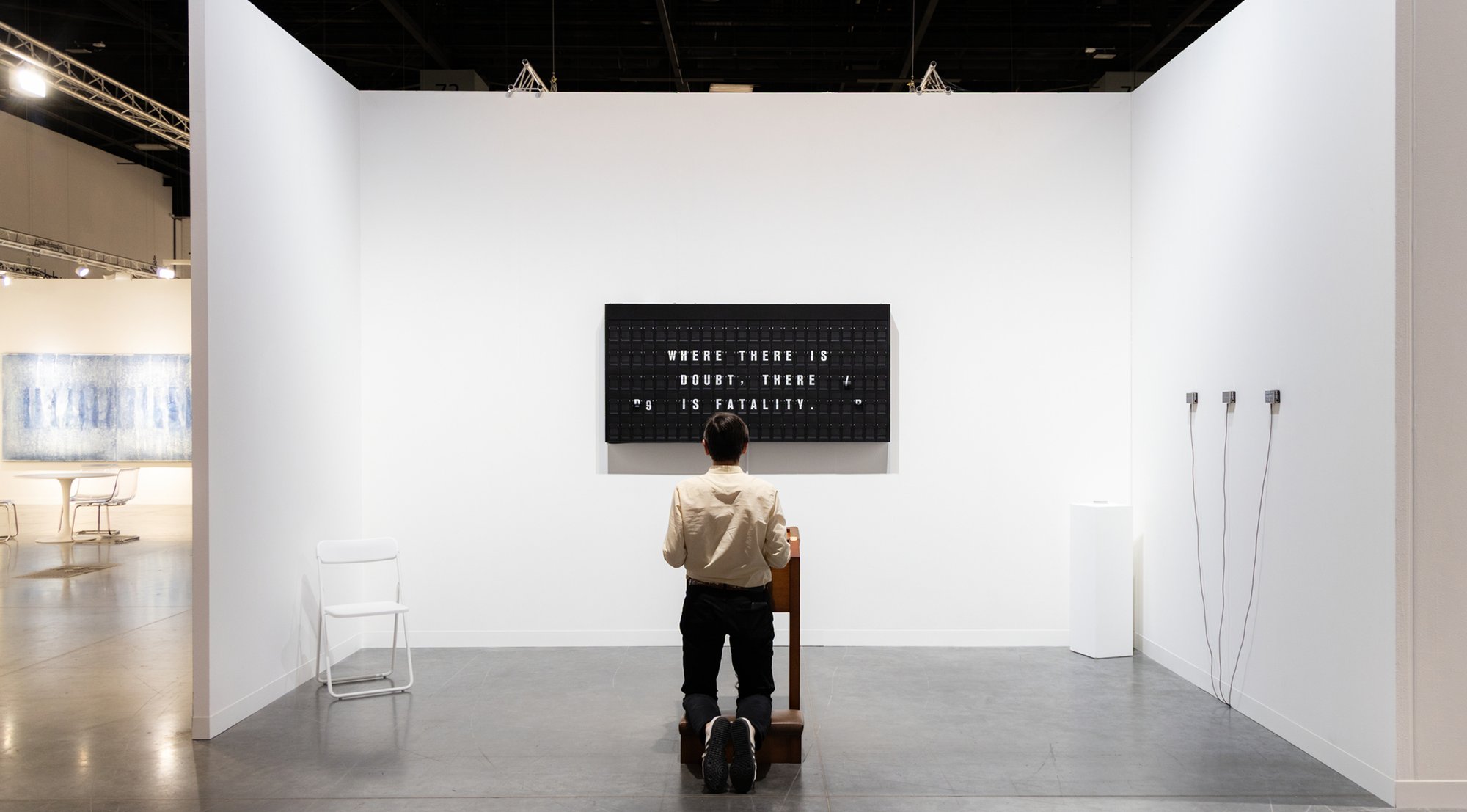
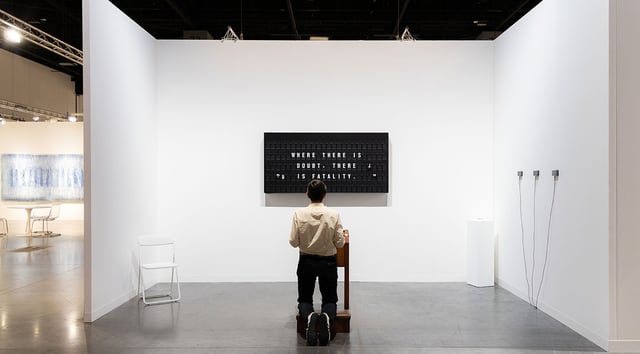
Mario Klingemann, Appropriate Response (2020) at the Onkaos stand at Zero 10, Art Basel Miami Beach, 2025. Photography by Art Basel
3. The specialist world of digital art
Art-and-technology conferences, university labs, creative-coding communities, and media art festivals such as Ars Electronica, ISEA, SIGGRAPH art exhibitions, the Beijing Media Art Biennale, CYFEST, and FILE São Paulo. Here the values are technical experimentation, research — sometimes published in academic journals — and collaboration across art, engineering, and science. What distinguishes this world is not absence from the art world — Casey Reas is represented by bitforms, and several of these artists are in museum collections — but where a reputation is made in the first place: among peers, through juries, panels, and festival selection. This type of digital art is usually focused on exploring new artistic possibilities of computer technologies. The same division that runs through world 2 — form, perception and experience on one side, social and political issues on the other — runs through this world too. Representative figures include Zach Lieberman, Casey Reas, Lauren Lee McCarthy, Golan Levin, Daito Manabe, Mario Klingemann, and Christa Sommerer & Laurent Mignonneau.
4. Code art
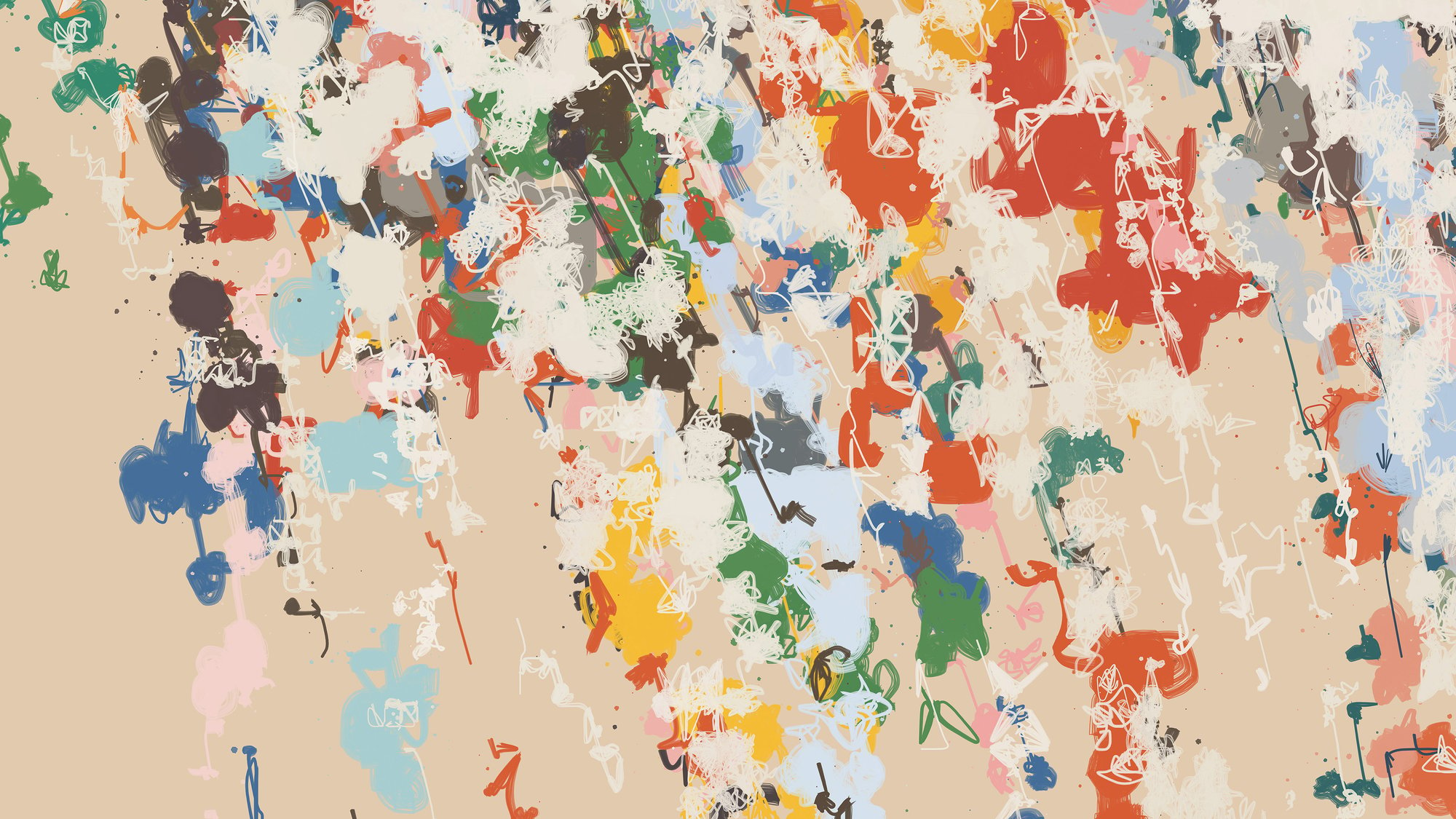
Artists write programs that generate the work. The lineage runs back to world 1 — Molnar, Mohr, Frieder Nake — and the practice comes out of the creative-coding tools of world 3, above all Processing. What is new is how the work is generated, sold and owned. Platforms such as Art Blocks (2020) and fxhash (2021) have made the algorithm itself the work: the artist submits a program, and each output is generated at the moment a collector buys it, seeded by that transaction and in most cases recorded as an NFT. The artist sets the rules and the range of variation; nobody, the artist included, sees the individual work before it exists.
For many long-term participants, art on blockchain is a genuine medium with its own unique possibilities. Here is one of them as implemented by Art Blocks: the work’s code is stored on-chain, and it is rerun every time the work is viewed. You collect not a single original but one run of that code.
Tyler Hobbs, From Noise #7 (detail), 2025. Courtesy of the artist
Recognition comes from collectors, from platform curation, and from a dense online community of other coders. Representative figures include Tyler Hobbs, Dmitri Cherniak, Zancan, Emily Xie, and Anna Lucia. This is also the world that recently has moved fastest into the traditional art market: Hobbs had a solo exhibition at Pace in 2023, and Cherniak’s Ringers #879 sold at Sotheby’s that year for $6.2 million.
5. Platform digital art
This is the largest of the seven worlds by sheer volume of work. Illustration, character and fan art, 3D renders, AI images, and animation circulate through ArtStation, DeviantArt, Behance, Instagram, and marketplaces for editions. The artist posts directly to an audience, without the curators, galleries, and museums of the art world in between.
The motives are mixed. Some post to build a portfolio and get hired — here the audience that matters is a future employer. Some post to sell prints, commissions, or editions directly to buyers. Some are looking for a community of people working in the same style or medium, and for the recognition of peers.
The values that follow are virtuosity and a recognizable personal style, judged in the first instance by an audience and by the platform’s own metrics and ranking systems.
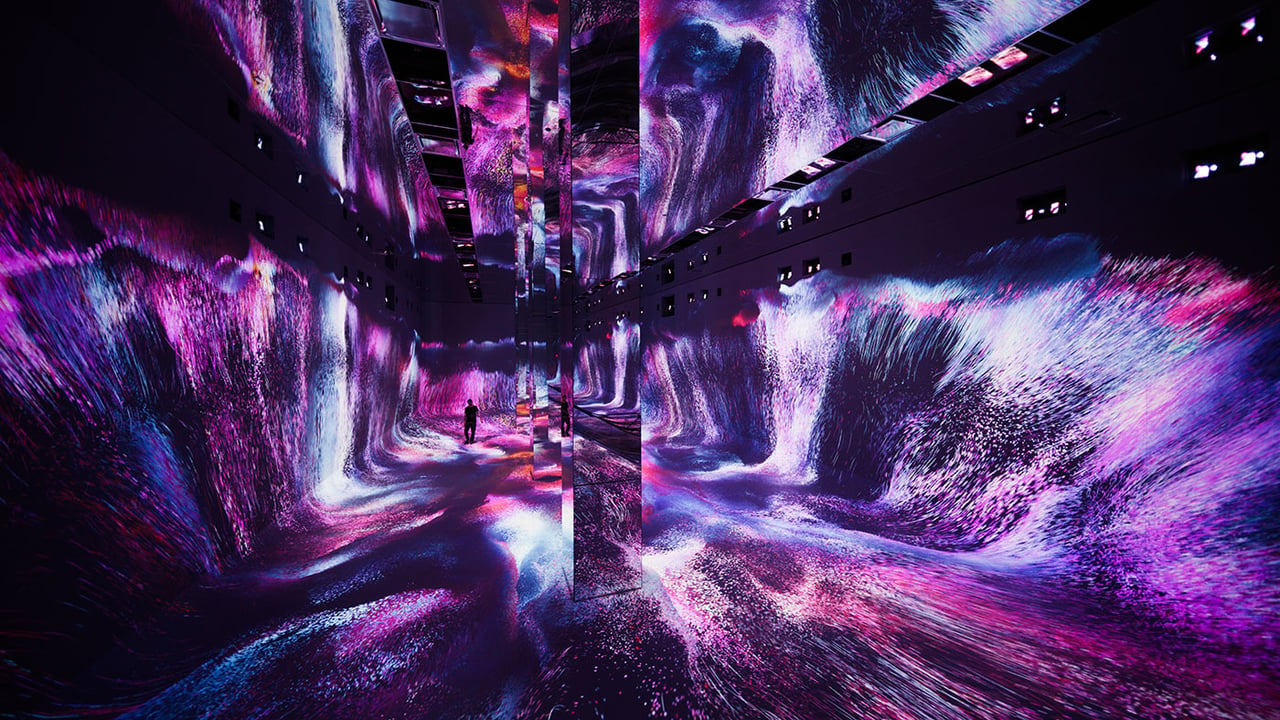
This world consists of projection-based environments, large-scale installations, and immersive experiences produced for brands and dedicated venues. Here the values are scale, sensory impact, and visitor numbers. Unlike the commissioned digital media of world 7, which serves a film, a product, or an institution and is rarely credited to its makers in public, the work here is itself the attraction and circulates under the name of the studio or artist who made it. Currently successful studios include teamLab, d’strict, and Refik Anadol Studio.
7. Commissioned digital media
The professional world of digital media production: interface and app design, concept art and visuals for film, television and games, motion graphics, and media for exhibitions and public spaces. All this work is commissioned, and begins with a brief specifying what the designers must accomplish. What is rewarded is the result that satisfies all brief requirements while matching the level of the best work being done in the industry at that moment.
Judgment comes from an art director and a client through rounds of revision. Recognition rarely reaches the public at all: the designers who made a film’s interfaces or an app’s motion system are known mainly to peers. This is the sharpest difference from the other six worlds, which are all organized around public authorship.
Representative studios include Buck (motion design and animation for brands), Territory Studio (screen graphics and interfaces for film and games), and Local Projects (media design for museums and public spaces).
In the 2010s an increasing number of artists in the contemporary art world began to use cutting-edge digital technologies in their work — without drawing attention to this in the accompanying descriptions. When the art world became more interested in technology after 2017, the strategy changed. Today the gallery and museum texts for exhibitions by artists such as Pierre Huyghe and Anicka Yi no longer hide the technology. It is foregrounded, because it now adds value.
But this was a shift in the contemporary art world at large. What was happening between the seven digital art worlds themselves?
Until recently these worlds were largely separate. Two developments changed that. In the second part of the 2010s, museums began to include digital work in their exhibitions and collections. This opened a door into world 2 for some artists who had until then circulated only through festivals and labs.
Then the NFT boom of 2021 gave world 4 its own market and its own validating institutions. It opened a direct market to some artists in world 5 as well, but no new authority to judge them: there the criteria stayed as they had been — audience numbers and platform ranking.
Artists had been working with blockchain since the middle of the 2010s, well before that boom — Kevin McCoy’sQuantum in 2014, CryptoPunks in 2017, the first crypto art marketplaces soon after.
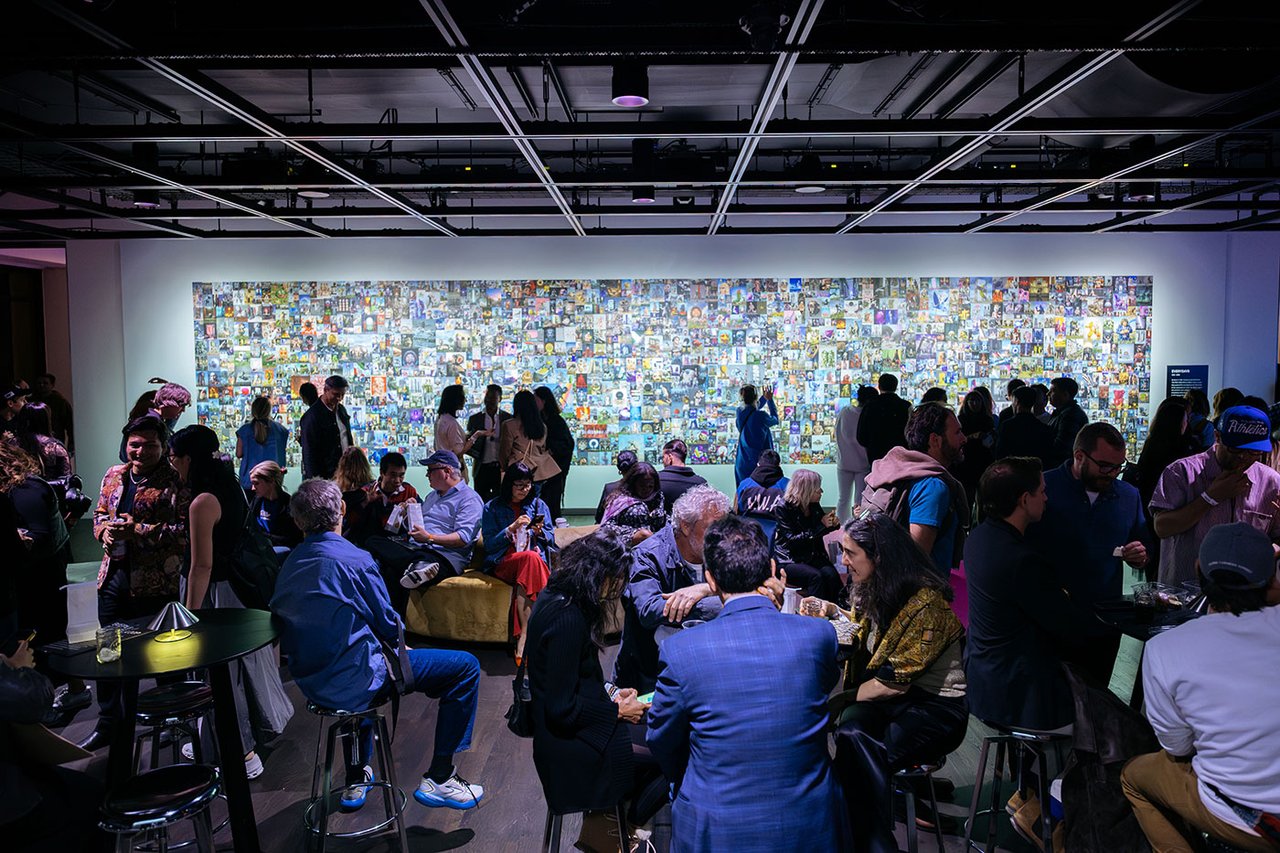
Beeple, Everydays, 2007-present. Installation view of “BEEPLE: / INFINITE_LOOP” at NODE, Palo Alto. Photography by Felix Uribe
What 2021 added was scale: a year in which very large numbers of people were buying and very large numbers of artists were minting. That phase ended, and most of that traffic left. The world it left behind is smaller but more serious — the long-term participants described in world 4 are the ones who stayed. And the moment mattered beyond its own market, because it drew far more attention to digital art as a whole from museums, auction houses, and galleries.
The most visible careers now are often the ones that cross between worlds.
Refik Anadol makes large-scale data-driven work for venues, public spaces, and corporate commissions. He also shows at MoMA, so the same practice is received as spectacle in world 6 and validated as contemporary art in world 2. Rafael Lozano-Hemmer came out of the festivals of world 3 and now works largely through museums and galleries, carrying the recognition he earned in world 3 into the institutions of world 2. d’strict, whose core business is commissioned work, formalized the crossing structurally, spinning off a separate artistic unit, a’strict, to make gallery work free of client commissions. The newest of these crossings runs from world 4 into world 2: code artists arriving in galleries and auction rooms with the collector base they had already built online.
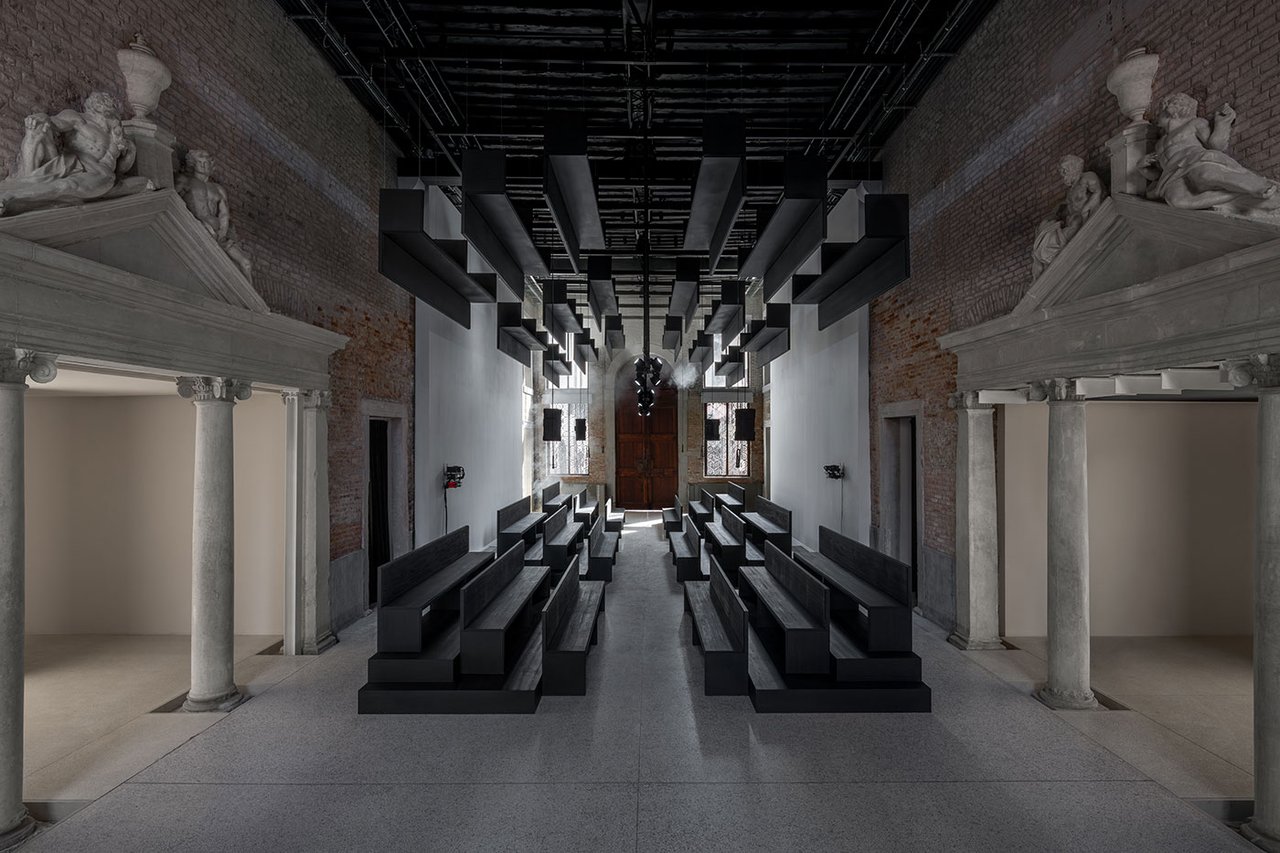
Installation view of “Strange Rules” at Palazzo Diedo Berggruen Arts & Culture, 2026, with work: Attention Guild (2026) by Mat Dryhurst and Holly Herndon. Photography by Joan Porcel
Not what is digital art, but which digital art world?
The number of such crossings is growing. But the great majority of digital artists still operate in only one of the seven worlds. An artist may have success without significance, or significance without success. A work can be technically brilliant, popular online, and commercially successful without becoming historically or institutionally significant. Or the reverse: a work may be valued in media art history while remaining invisible in the mainstream market and to most art museums.
Which is why the question of belonging continues to matter. When you encounter a digital artwork, it is not enough to know that it was made with technology. You also need to consider the following questions:
In which digital art world does it circulate? (in other words, where do you encounter a work — in a museum, festival, platform, etc.)
Who validates it, and in what form? (museum curators, jury, collectors, platform curators, professional awards)
What does that world reward? (historical influence, a critical position, technical innovation, price and provenance, visible craft, scale, meeting the brief)
Is it original and interesting in relation to other works in that world?
Does the world it belongs to preserve its work — and in what form? (conservation, documentation, an archive, code on-chain)
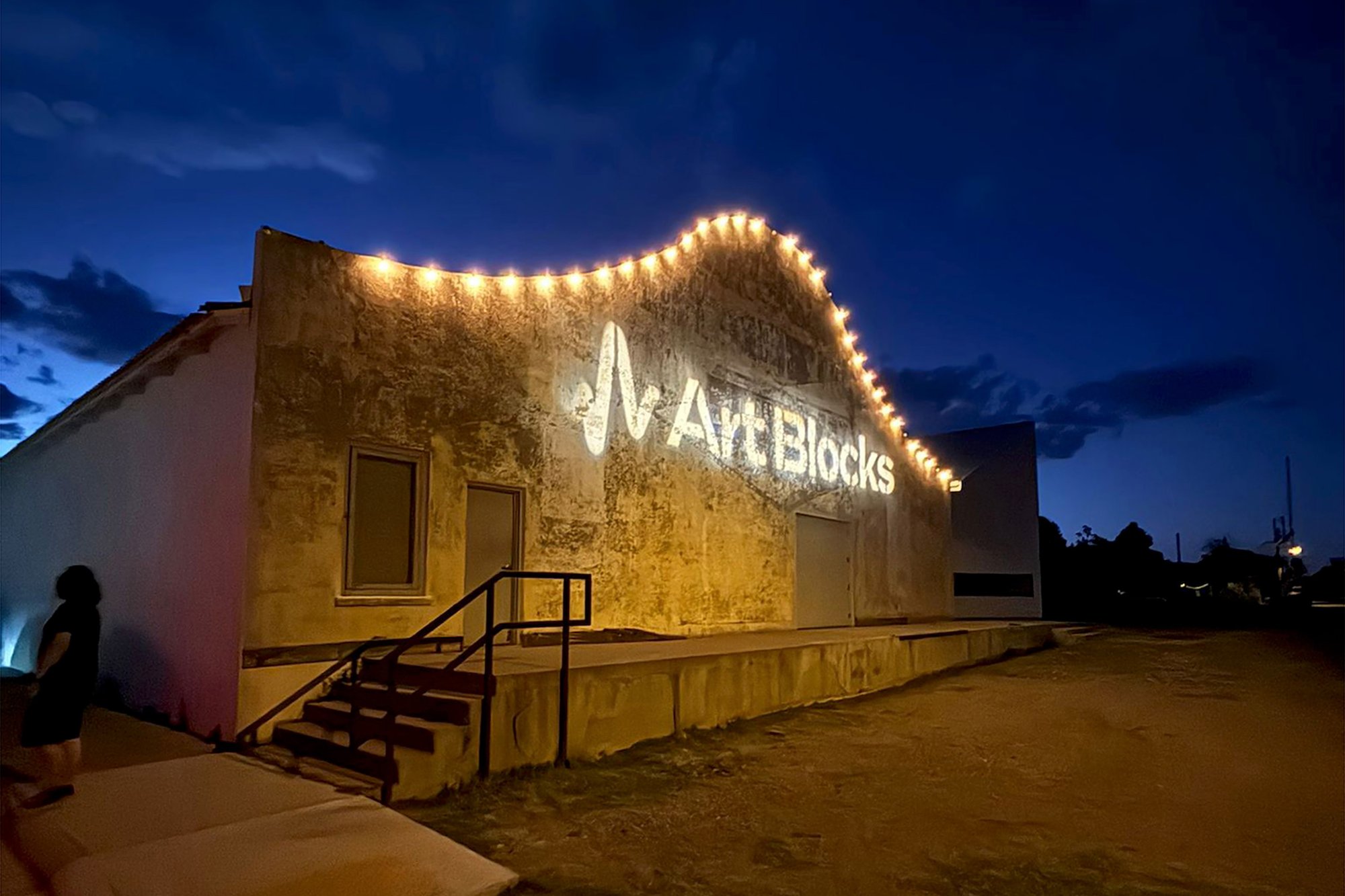
The Crowley Theater, Marfa, Texas. The Art Blocks community gathers for its annual Marfa Weekend. Photography by Joana Kawahara Lino
Where to look
If you are new to digital art, there are books and many resources online, and you can also ask an AI assistant to tell you about the field, give you lists of artists and their websites, and so on. Here I want to foreground three institutions that have shaped how this work is documented and seen, and three more recent platforms that have introduced new models. (There are many other platforms and archives; these are simply my own favorites.)
The first three date from the field’s institutional beginnings.
Founded in 1989 and opened in its Karlsruhe building in 1997, ZKM was the first institution to combine a museum of media art, an archive, production studios and research laboratories.
The Archive of Digital Art, begun by Oliver Grau in 1999, is the first large online archive of the field.
Founded in 2001 by Christiane Paul, the Whitney Museum of American Art’s artport was among the first spaces dedicated to digital art at a major art museum, and one of the very few of its generation still commissioning internet art today.
The three recent ones work differently.
Art Blocks, founded in 2020 by Erick Calderon, is where the model described in world 4 was established: the artist deposits an algorithm, and each work is generated at the moment a collector buys it.
Feral File, founded in 2020 by Casey Reas, organizes online exhibitions from which works are sold in editions.
CIFRA (chief art curator: Olga Shishko) is a streaming platform and online exhibition space for digital art (disclaimer: I serve on its advisory board).
Appendix 1 | Connections between seven digital art worlds
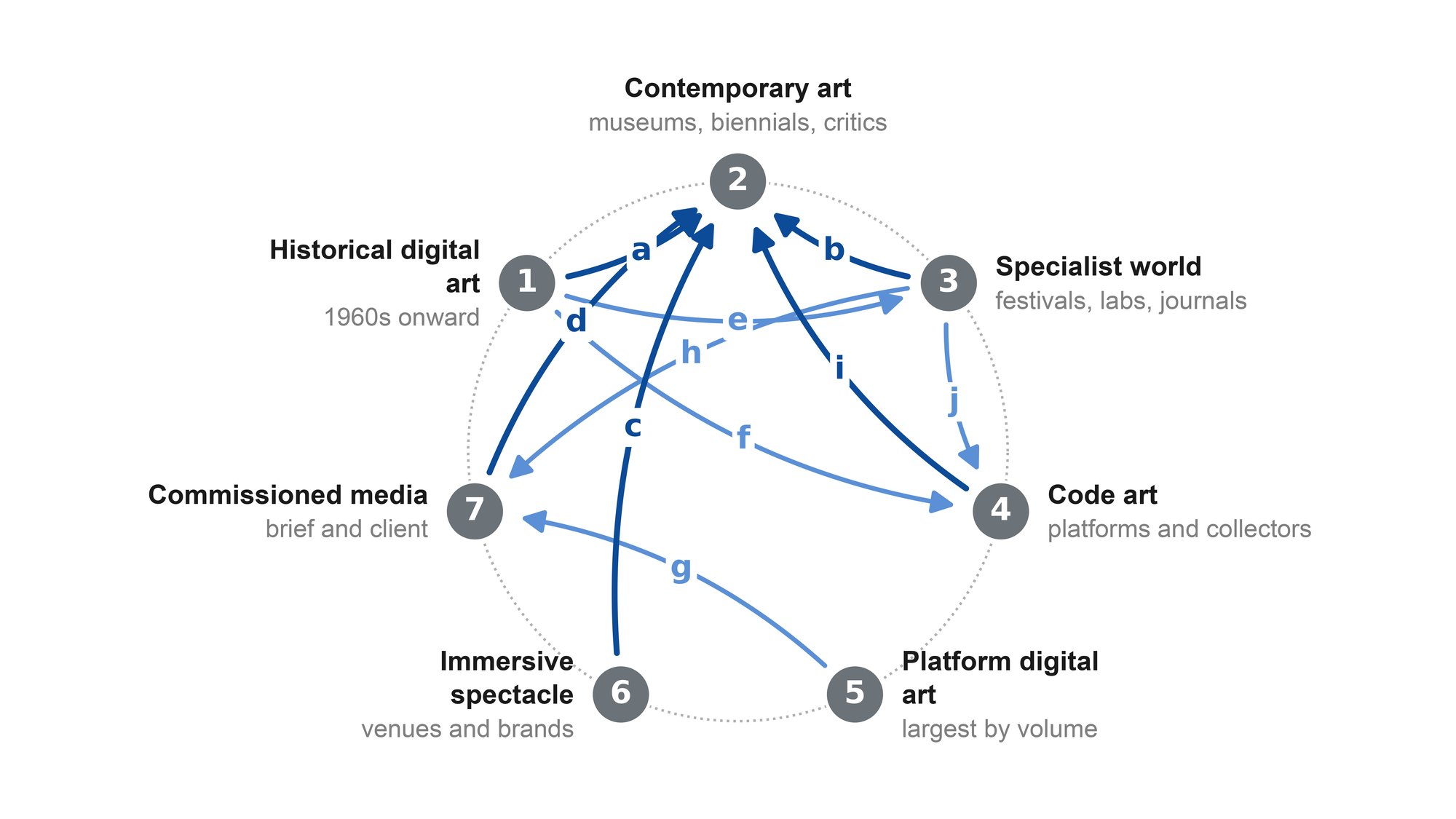
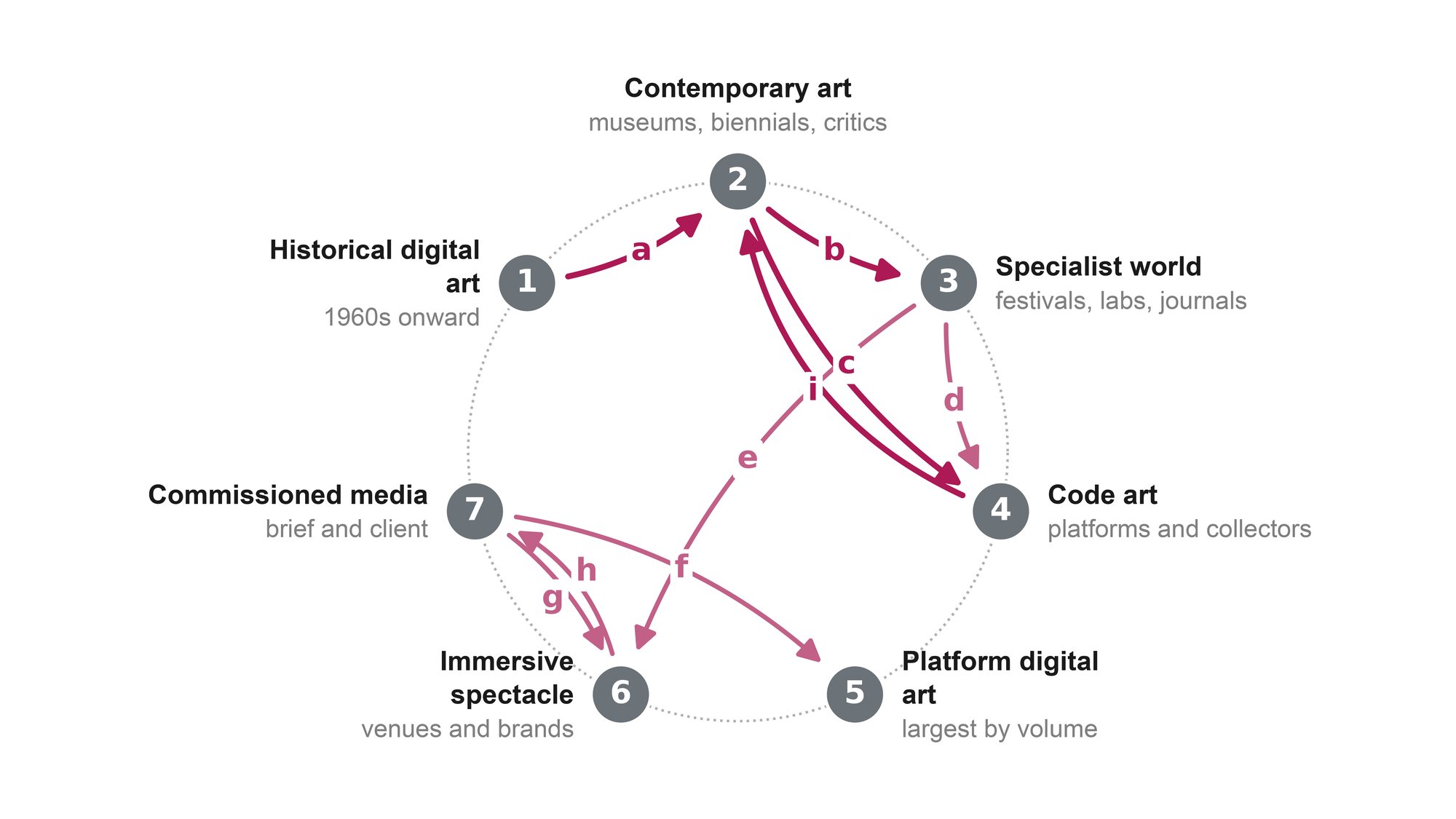
The two diagrams below map the connections between the seven worlds as I see them today. In Diagram A the connection is made by movement. A work or an artist begins to circulate in another world and is valued by different criteria there. In Diagram B it is made by adoption: a tool, a technique, a format, or a model of production is taken up in a different world. Below I will discuss how these crossings came about.
Diagram A | The movement of people and works between worlds
Ten crossings. Half of them arrive at world 2, which takes people and works from five other worlds and sends none the other way. The letter on each arrow keys it to the list below. Arrows that touch world 2 (a, b, c, d, i) are drawn in a saturated color; the rest (e, f, g, h, j) are in a lighter tone of the same color, to set off that convergence on world 2.
(a) 1 → 2Works enter the museum. Computer graphics, generative art, video, cybernetic art, net art, and interactive work from the 1960s onward are increasingly exhibited and collected. What changes is the criterion: on arrival the work is valued for historical influence, documentation, preservation and conservation rather than for what it does.
(b) 3 → 2Artists carry festival standing into galleries. Recognition earned in festivals or other venues of the specialist world can be converted into standing in museums and galleries; museums beginning to collect digital work in the 2010s is what made the conversion possible. However it happens in a given career, the work is then read as contemporary art rather than as technical research.
(c) 6 → 2Spectacle is shown as contemporary art. Anadol makes large-scale data-driven work for venues, public spaces and corporate commissions — and also shows at MoMA, so the same practice is received as spectacle in world 6 and validated as contemporary art in world 2. d’strict formalized the crossing structurally, spinning off a’strict to make gallery work free of client commissions.
(d) 7 → 2 Designers’ own work reaches the art world. The thin direction. Designers trained in art schools, follow exhibitions closely, and make speculative work, redesigns and short films alongside client projects; some of it is shown as art. The traffic the other way — artists and curators looking into world 7 — is thinner still.
(e) 1 → 3 Works restaged and archived by the field itself. The same early work also circulates inside world 3 — reshown at festivals, documented at ZKM and in the Archive of Digital Art. Here it is valued as the specialists’ own canon, which is a different thing from being valued as art history.
f) 1 → 4Canonical work acquires a price. On-chain generative work claimed Molnar and Mohr as ancestry, and the 2021 market followed the citation. The same objects and the same names, valued as a market lineage rather than as a chapter of art history.
(g) 5 → 7 Platform artists get hired. “Some post to build a portfolio and get hired — here the audience that matters is a future employer.” ArtStation and Behance are where studios find concept artists, illustrators and motion designers. The same skill is then rewarded for satisfying a brief rather than for a recognizable personal style.
(h) 3 → 7Specialists take commissions. Capabilities developed as research get commissioned by clients — for many specialists not an occasional detour but how the practice is funded. On this side of the arrow the research is invisible; only whether the brief is met counts.
(i) 4 → 2Code artists enter the gallery and the auction room. Tyler Hobbs at Pace, Cherniak’s Ringers #879 at Sotheby’s, Molnar and Martin Grasser’s late series opening Sotheby’s generative program. The work arrives with a collector base and a price history already attached, which is not how world 2 normally acquires an artist.
(j) 3 → 4Coders move to the platforms. The people who wrote and taught the creative-coding tools of world 3 are often the same people making work for world 4. What changes is not the practice but who validates it: collectors and platform curation instead of festival juries and peer review.
—
Diagram B | The adoption of one world’s tools, techniques and conventions by another
Nine adoptions. World 4 imports its software from world 3 and its apparatus of authorship from world 2, and exports the mint back to world 2. World 5 imports its craft standards from world 7 and exports nothing. The letter on each arrow keys it to the list below. Arrows that touch world 2 (a, b, c, i) are drawn in a saturated color; the rest (d, e, f, g, h) are in a lighter tone of the same color, to set off that convergence on world 2
(a) 1 → 2 Algorithmic generation becomes ordinary. What world 1 worked out as a research problem — images and animation produced by rule rather than by hand — is now a default capability in the software every artist already has. Contemporary artists use procedural and generative methods without needing world 1’s context and usually without citing it: the technique arrived, its history did not.
(b) 2 → 3Formats and conventions of showing. Most of the conventions world 3 works within were settled in contemporary art from the 1960s onward: installation and the environment; the instruction as the work, from Fluxus scores and LeWitt’s wall drawings, which is why nobody had to argue that a program could be an artwork; documentation standing in for the work, established by performance and land art and now the only form in which most festival pieces survive; participation, from which interactivity inherited its legitimacy as an artistic proposition rather than an engineering feat; site-specificity, inherited by locative and urban projection work; and the expectation of a critical position, the statement and the discursive frame that festivals now require as a matter of course.
(c) 2 → 4 The apparatus of authorship. Named author, numbered edition, provenance, a primary and a secondary market, the artist’s statement: the machinery world 2 built for objects was imported more or less whole by the NFT market, which needed a way to make a file behave like an artwork. Art Blocks is world 2’s apparatus running on world 4’s material.
(d) 3 → 4 The tools. Processing, p5.js, openFrameworks. The languages of generative art were written inside world 3 — by Casey Reas, Lauren Lee McCarthy, Zach Lieberman. World 4 was built on top of them.
(e) 3 → 6Technique at venue scale. Projection mapping, sensor-driven interaction, data as visual material, the artistic use of image models. Methods worked out as research in labs and festivals reappear at the scale of a venue, in the hands of studios that did not develop them. The underlying software mostly comes from industry rather than from artists; what travels from world 3 is not the tool but what to do with it.
(f) 7 → 5 Industry craft standards. What reads as accomplished on ArtStation or Behance is the standard set by film, television and game production — lighting, rendering, finish, the conventions of concept art and of a reel. The bar arrives from world 7, which is also where much of the audience is looking from: a good part of these portfolios is addressed to an art director.
(g) 7 → 6The studio model. Immersive spectacle runs on world 7’s apparatus: a brief, a production pipeline, rounds of approval, credit to the studio rather than to the individual. The one thing not adopted is anonymity — here the work is the attraction and carries the studio’s name.
(h) 6 → 7 And back: the client mode. The spectacle studios also work to briefs: teamLab and d’strict each make work that is itself the attraction and work made for a client. Which is why d’strict had to spin off a’strict — to keep the two modes apart inside one company.
(i) 4 → 2 The mint as a sales format. The auction houses have taken on the mechanics world 4 invented — the timed drop, the Dutch auction, the output generated live at the moment of sale — and run them as their own events. The apparatus world 4 borrowed in (c) comes back adapted.
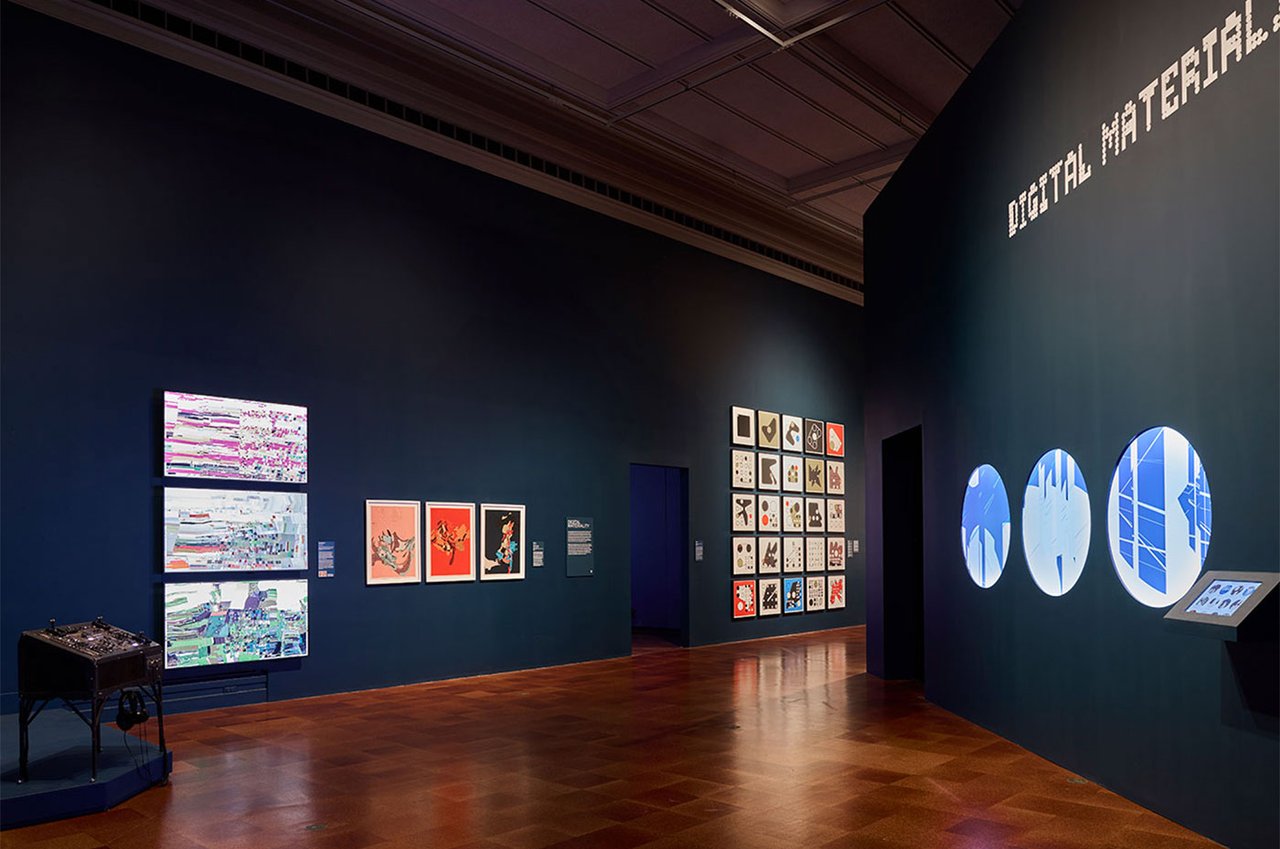
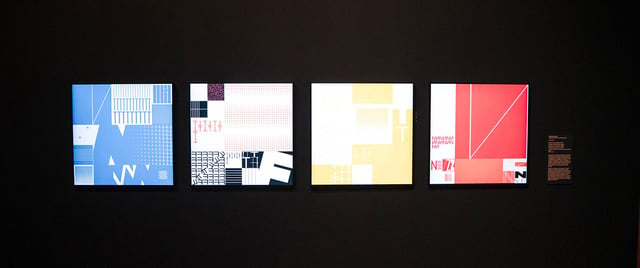
Installation view of “Infinite Images” at Toledo Museum of Art, 2025, with work including series (from left) by William Mapan (three images from Distance, 2023), Emily Xie (three images from Memories of Qilin, 2022), Dmitri Cherniak (25 images from Ringers, 2021) and Casey Reas (three images from Century, 2021). Courtesy of Toledo Museum of Art
Appendix 2 | Artists mentioned in the essay
Wikipedia where an entry exists; otherwise the artist’s own site, gallery or platform page.
Dr Lev Manovich is a Presidential Professor at The Graduate Center, City University of New York (CUNY). He is recognized as one of the most influential thinkers in digital art, digital culture, media theory, and digital humanities. Manovich’s publications include 227 articles, reprinted over 460 times in 40 languages and 17 books which include Artificial Aesthetics, Cultural Analytics, Instagram and Contemporary Image, Software Takes Command, and The Language of New Media, called “the most provocative and comprehensive media history since Marshall McLuhan.” Manovich’s art projects have been exhibited in 140 international exhibitions at leading cultural institutions, including the Institute of Contemporary Art (London), the Centre Pompidou, and the Shanghai Biennale. Manovich’s latest book is Artificial Aesthetics: Generative AI, Art and Visual Media (2024), available as a free download.
In my opinion, there are also a few smaller art worlds adjacent to these that could be worth adding.
The first is the world of digital art native galleries and institutions. We've seen a rise in new galleries specializing in digital art, such as Artverse, Galerie Met, Heft, &others, alongside platforms with no fixed physical presence, like Fellowship and Verse. Perhaps they already are, or will eventually be, part of Art World 2, but I'd argue that for now they operate outside it, in a separate ecosystem with its own collector base, one that has much in common with that of Code Art. NODE also sits outside Art World 2 in this same way.
The second is the community based digital art world of peers. It exists mostly on Slack and Discord, where artists share code, talk through ideas, and put together DIY shows. This art world was most active before the NFT boom, when monetizing digital art wasn't yet possible and peers simply shared their outputs with one another. Web3 culture was built on top of that foundation, but now that the hype has cooled, interest in it may return, since there are still many artists coding and experimenting purely for pleasure. Some of them aren't even looking to be part of the art world at all, working underground and holding other full time jobs.
On that note, I'm wondering whether Code Art is the right classification, given that it's really a subset of a larger tokenized art world, one with more platforms and artists who don't always use code but still define their practice as digital, such as post-photographers, digital collage artists, digital illustrators, artists working with 3D or point clouds etc. Since there are also other platforms like Objkt, Superrare, Verse , perhaps the clearest distinction between Art Worlds 4 and 5 is simply whether the works are sold on the blockchain.
I'd also add, to the commissioned media art world, that more and more brands are now looking for validation and promotion from artists, engaging them in projects that fall outside a typical designer brief. This lets artists work in their own style with few limitations, while brands use the artist's name and reputation as a promotional asset. So it's not only about finding artists for hire, but also about drawing on personal brands that artists have built on external platforms, or sometimes within an institutional context.
Hi Ivona, thank you for this thoughtful comment. I read a few of your points a little differently.
On the digital-native galleries: I took Lev's worlds to be defined by who validates the work and on what terms, not by the institutions themselves. He places each artist according to where the work is principally received, and treats movement between worlds as the subject of the second half. Galleries like Heft or platforms like Verse seem to me less a separate world than places where worlds 2 and 4, and sometimes 5, are currently negotiating with one another. Presence in one does not cancel presence in another.
On peer communities: I think the essay already makes room for them. World 3 names creative-coding communities outright, and world 5 includes artists who post for the recognition of peers working in the same medium. DeviantArt, which Lev references, was doing exactly this for more than 10 years before Discord existed.
This also bears on the line between worlds 4 and 5. World 5 already lists marketplaces for editions, and the essay notes that the NFT boom opened a direct market to world 5 artists without giving them a new authority to judge them. Drawing the line at whether a work sells on-chain would sort by infrastructure, which is the approach Lev sets aside in his opening paragraph. A digital illustrator on Objkt and a long-form generative artist on Art Blocks share a sales mechanism, but not criteria.
On code art as a subset of tokenised art: the practice predates tokenisation by roughly half a century. Molnar, Mohr and Nake were writing programs to generate works in the 1960s. What 2020 added was a market model in which the algorithm itself is sold and each output is generated at the moment of purchase. Tokenisation gave code art a market; but I strongly believe that it didn’t produce the practice.
I agree with you on brands. I would place that shift closer to world 6 than world 7, though: once the artist's name is the attraction, it is no longer the uncredited brief-work Lev describes in world 7.
On the digital-native galleries makes sense when it’s framed this way. I was just wondering whether digital-native galleries operate strictly within world 2 and 4 context or is there also something beyond that. Perhaps they don’t always want to be part of the contemporary art world (by catering to a different kind of collector) and don’t only work with artists who code.
I completely agree with your argument about code art and tokenised art. I just think there is then a whole range of art practices that lies outside of such definition (tokenized digital art that is not Artblocks code art, and from artists who don’t write programs themselves). It’s not clear which world would these range of practices belong to? But perhaps I’m missing something.
DeviantArt and other platforms to me are closer to social networks (at least in the form they exist now, it is true they were very different say 10 years ago...) than peer communities. At some point they become a popularity contest with the like-optimization goal and audience building in mind. What I had in mind is private servers where external discovery is not happening or even in-person gatherings of very small communities. Maybe even a digital equivalent to Fraser’s Community-Based Subfields.
Thanks for a very interesting read!
In my opinion, there are also a few smaller art worlds adjacent to these that could be worth adding.
The first is the world of digital art native galleries and institutions. We've seen a rise in new galleries specializing in digital art, such as Artverse, Galerie Met, Heft, &others, alongside platforms with no fixed physical presence, like Fellowship and Verse. Perhaps they already are, or will eventually be, part of Art World 2, but I'd argue that for now they operate outside it, in a separate ecosystem with its own collector base, one that has much in common with that of Code Art. NODE also sits outside Art World 2 in this same way.
The second is the community based digital art world of peers. It exists mostly on Slack and Discord, where artists share code, talk through ideas, and put together DIY shows. This art world was most active before the NFT boom, when monetizing digital art wasn't yet possible and peers simply shared their outputs with one another. Web3 culture was built on top of that foundation, but now that the hype has cooled, interest in it may return, since there are still many artists coding and experimenting purely for pleasure. Some of them aren't even looking to be part of the art world at all, working underground and holding other full time jobs.
On that note, I'm wondering whether Code Art is the right classification, given that it's really a subset of a larger tokenized art world, one with more platforms and artists who don't always use code but still define their practice as digital, such as post-photographers, digital collage artists, digital illustrators, artists working with 3D or point clouds etc. Since there are also other platforms like Objkt, Superrare, Verse , perhaps the clearest distinction between Art Worlds 4 and 5 is simply whether the works are sold on the blockchain.
I'd also add, to the commissioned media art world, that more and more brands are now looking for validation and promotion from artists, engaging them in projects that fall outside a typical designer brief. This lets artists work in their own style with few limitations, while brands use the artist's name and reputation as a promotional asset. So it's not only about finding artists for hire, but also about drawing on personal brands that artists have built on external platforms, or sometimes within an institutional context.
Hi Ivona, thank you for this thoughtful comment. I read a few of your points a little differently.
On the digital-native galleries: I took Lev's worlds to be defined by who validates the work and on what terms, not by the institutions themselves. He places each artist according to where the work is principally received, and treats movement between worlds as the subject of the second half. Galleries like Heft or platforms like Verse seem to me less a separate world than places where worlds 2 and 4, and sometimes 5, are currently negotiating with one another. Presence in one does not cancel presence in another.
On peer communities: I think the essay already makes room for them. World 3 names creative-coding communities outright, and world 5 includes artists who post for the recognition of peers working in the same medium. DeviantArt, which Lev references, was doing exactly this for more than 10 years before Discord existed.
This also bears on the line between worlds 4 and 5. World 5 already lists marketplaces for editions, and the essay notes that the NFT boom opened a direct market to world 5 artists without giving them a new authority to judge them. Drawing the line at whether a work sells on-chain would sort by infrastructure, which is the approach Lev sets aside in his opening paragraph. A digital illustrator on Objkt and a long-form generative artist on Art Blocks share a sales mechanism, but not criteria.
On code art as a subset of tokenised art: the practice predates tokenisation by roughly half a century. Molnar, Mohr and Nake were writing programs to generate works in the 1960s. What 2020 added was a market model in which the algorithm itself is sold and each output is generated at the moment of purchase. Tokenisation gave code art a market; but I strongly believe that it didn’t produce the practice.
I agree with you on brands. I would place that shift closer to world 6 than world 7, though: once the artist's name is the attraction, it is no longer the uncredited brief-work Lev describes in world 7.
Thank you for your food for thought!!