·
In 1859 Baudelaire stood at the Paris Salon and delivered a verdict on photography that he mistook for a description: too easily made, by too many people, for the medium to be anything but the death of imagination. He was not describing photography. He was managing his exposure to it, and the exposure of a class of producers whose authority rested on distinctions the new medium made difficult to sustain.
The “slop” consensus performs the same operation with the same speed. It names four real properties — no stable author, repetition without evident intention, production outside institutional circuits, a volume that offends any economy built on scarcity — and then converts those properties into an exemption from evaluation rather than a basis for it. Every one of those properties also describes the ex-voto, the prayer card, the memorial daguerreotype, and the vernacular archive that art history spent two centuries declining to catalogue.
Two recent pieces on this site describe the same fault line from opposite sides. Danielle Ezzo’s Finding Photography's Pulse shows that "post-photography" is not a period but a recurring symptom, revived whenever the apparatus drifts far enough to provoke disquiet — "the anxiety is the point." @primavera’s Off-Grid Aesthetics makes the same claim from inside the model, arguing that the "promptable latent space" is a semantic jail, since "if something has never been named, it can never be reached by a prompt." Read together, the thesis which convenes suggests that what circulates as slop is not a failure of originality but a symptom of statistical prevalence, i.e.the archive showing itself, in the registers — devotional, elegiac, comic — it was always disproportionately made of.
Szarkowski's 1964 defense of vernacular photography did not ask for the snapshot's admission to the canon on the canon's terms; it replaced "does this qualify as art" with "what is this, and what does it do." No equivalent methodology yet exists for what is being dismissed as slop, and the scholars equipped to build one, folklorists, historians of devotional material culture, media anthropologists, are not the ones currently setting the terms of this conversation.
So the question I want to put to this forum: what is the analogous work required now, and does it belong inside the art institution at all, or is it already happening entirely outside it?
12 comments
Love your thoughts here @praxitelean...As a side note, I adore Szarkowski (I was lucky enough to study with him in the 90s), and consider his ‘Photography Until Now’ a photography bible. I wonder how long it will take until there’s a similarly thoughtful history and analysis of images created with the assistance of AI...
When we started Right Click Save, we wanted to encourage precisely this kind of vibrant scepticism of prevailing arguments in order to ensure that the contemporary evaluation of image cultures is always informed by historical awareness. Thank you @praxitelean for responding so sensitively, respectfully, and incisively to two of our recent articles.
I’m a strong advocate against AI slop, so I feel personally concerned with this claim. My take is that the difference with Baudelaire & co’s criticism of photography was that it was not about the medium but about the democratisation of an art medium into the hands of non artists (too many, too fast); whereas in the case of AI slop, the criticism is not so much on the users but rather on those building the new art medium (i.e. the AI trainers) who makes it difficult for people not to generate slop.
@axel Yes! I love that your Byzantine prehistory gives us a way to distinguish familiarity from exhaustion. Within icon culture, resemblance to an established prototype was not evidence of failed invention but the basis of the image’s efficacy. Repetition sustained continuity across images and encounters, allowing an absent or sacred figure to become experientially present to a community. The image mattered not because it was unprecedented, but because it could reactivate a familiar relation.
Of course, a canonical prototype and a statistical average are not equivalent. One belongs to an authorized tradition; the other is produced through datasets, classification, tuning and platform incentives. But that difference is precisely why the comparison is so useful. The conditions under which an image is produced do not exhaust the meanings it acquires afterward. A model may deliver the statistical mean, yet circulation can turn recognizability into convention, convention into ritual, and ritual into social or affective force. “Slop” collapses the image’s origin and its afterlife into a single judgment, treating the fact of averaging as a complete account of what the resulting image can do. That is very close to the distinction I’m ultimately trying to draw.
Thank you, Shakthi, for your reply. Your sentence “Images (...)circulating without any aspiration to authorship” makes me think a lot.
oh my goodness- definitely jealous @danielle —what an extraordinary person to have studied with!
I wonder whether the difficulty is not only critical distance but archival survival: AI images are already becoming detached from their prompts, models, makers and original contexts of circulation. What would we need to preserve now for that future history to be possible at all?
Yes, absolutely, archival survival is a real issue with AI imagery! As an artist, some of the models I used to produce work back in 2021/2022 are now gone, which is such a shame.
Thanks @axel :) I’d be very curious to hear your thoughts on whether you see “slop” as a useful critical category at all, or whether the term forecloses the kind of looking it claims to describe?
As someone who is always exasperated by neologisms, the entry of “slop” into common parlance is undeniably important as it captures the widespread revulsion many feel against the reduction of art to an average. However, the history of images has often been about more than a search for original or “emergent” outcomes. As I try to argue in my Byzantine Prehistory of Digital Art, Western image cultures have just as often invested cultural, indeed spiritual, value in the familiar.
I think this is exactly the useful distinction, and perhaps it makes the analogy more specific rather than less so. With AI, aesthetic agency has been concentrated much further upstream, i.e. trainers, preference tuning and platform design prestructure what users are able, or encouraged, to produce. In that sense “slop” may be less the failure of an individual maker than the successful output of an industrial apparatus optimised for familiarity.
Where I hesitate is over what follows from that diagnosis. Explaining why these images look alike does not exhaust what they become once people use them. A grief portrait or devotional image produced through a constrained system can still acquire a social and affective function its trainers neither intended nor control. My concern is that “slop” slides too easily from a critique of the infrastructure into a verdict on the resulting image culture, making it exempt from further attention. Perhaps we need to distinguish much more clearly between slop-producing systems and the vernacular practices developing inside their constraints.

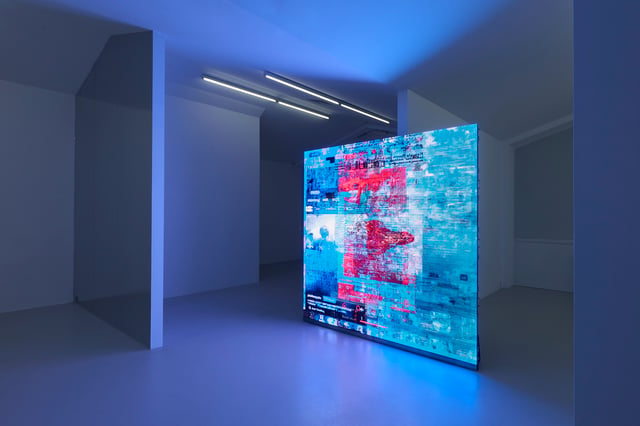
Let me be the devil’s advocate here. I don’t like the term “AI Slop” which seems very elitist and conservative at the same time. I disagree with the pre-judgment of some forms of rapid-fire AI iterations in photography. Any output with any level of artistic intent is a valid artwork that can legitimately be brought to the public and submitted to criticism. It might be mediocre or brilliant, but it should not be automatically disqualified and placed in a sub-category.
I’m largely with you, though I might go one step further. Artistic intent may be sufficient to bring an image into criticism, but I’m not sure it should be necessary for critical attention. Many of the images I’m interested in are not being offered as art at all-some of the most revealing images are functional, communal, or anonymous, circulating without any aspiration to authorship.
Defending them primarily by granting them “artwork” status might simply assimilate them back into the very framework whose limits are in question, and reproduce the hierarchy we are trying to interrogate. The issue is not whether every output is a valid artwork, but why cultural analysis so often stops where artistic intention cannot be established.