Art Basel Welcomes Converging Art Worlds - Right Click Save
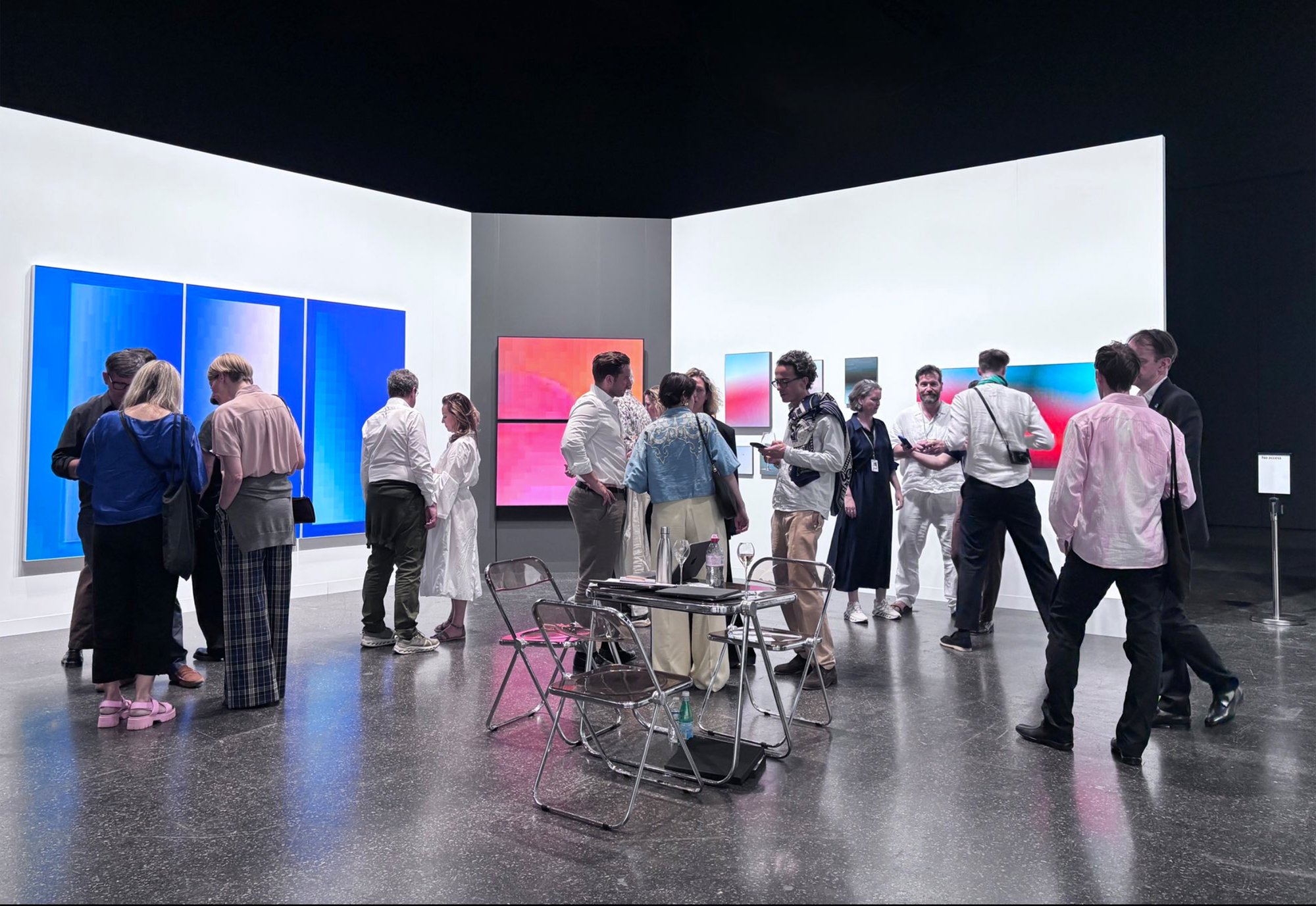
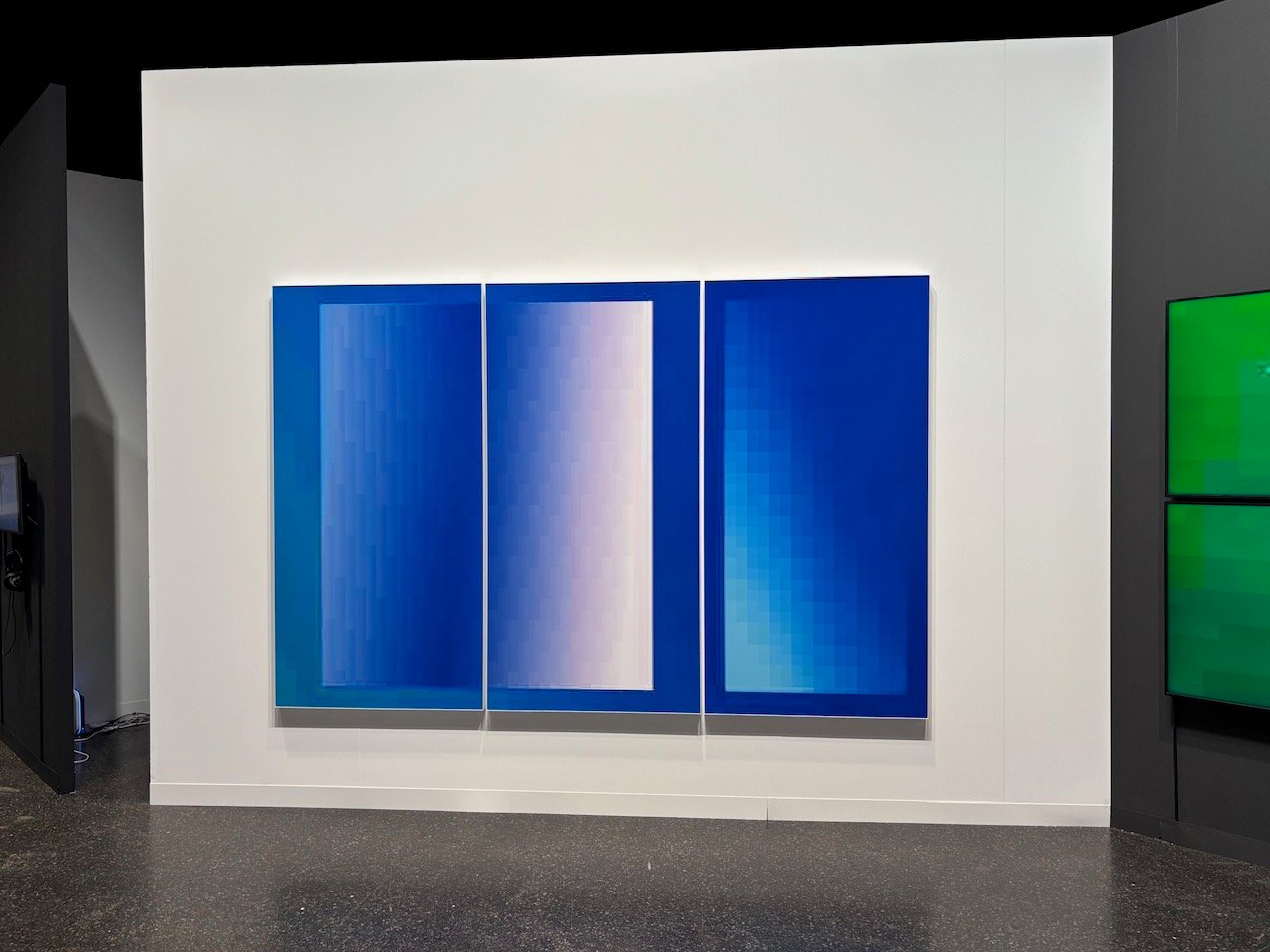
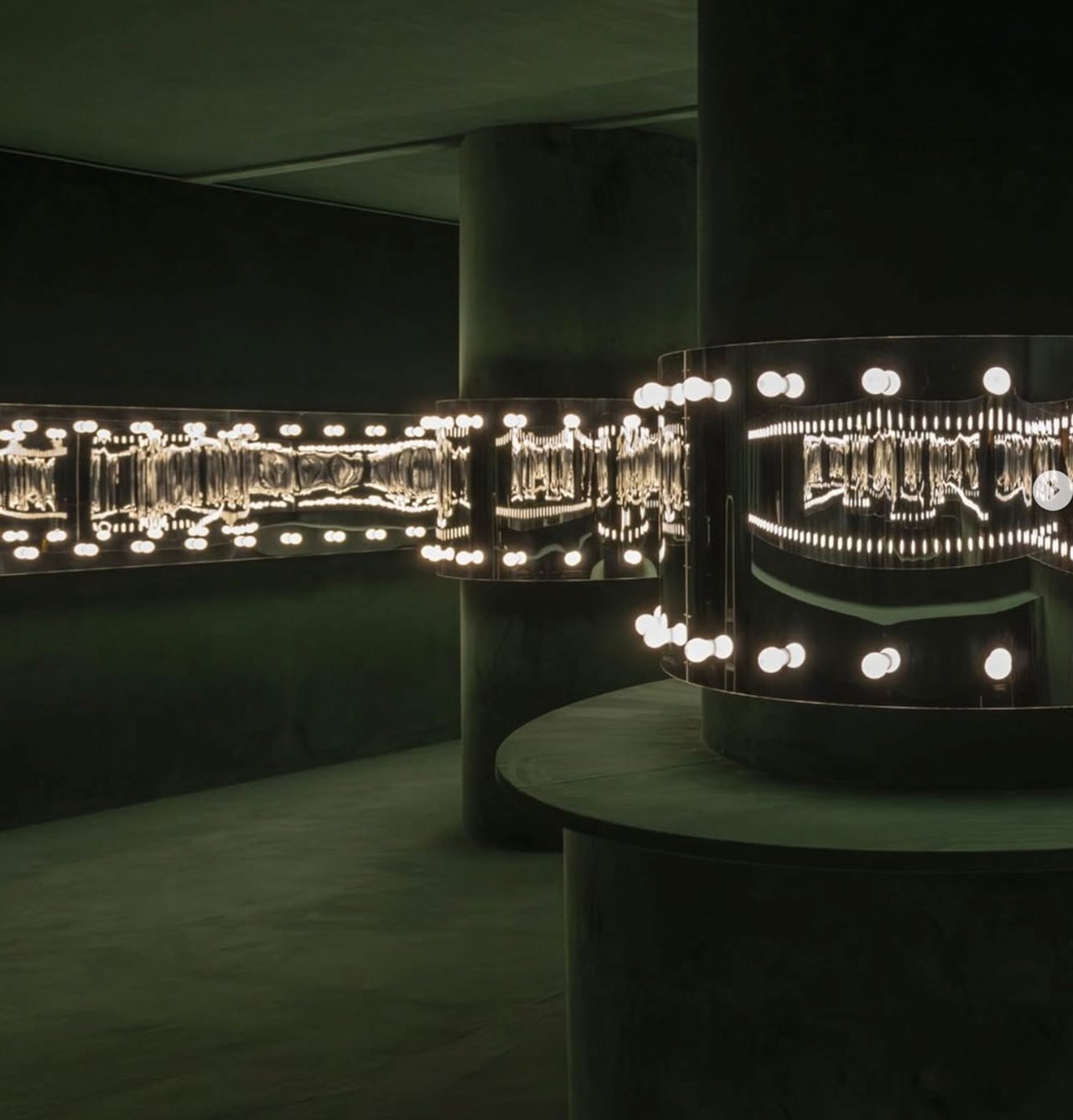
Jan Robert Leegte's work on show at the Art Basel Zero 10 stand shared by OFFICE IMPART and Upstream Gallery. Via x.com. Courtesy of the artist, OFFICE IMPART and Upstream Gallery
Art of the digital era, and at the intersection of the human and non-human, is widely represented at Art Basel 2026, the global art market’s annual summit in Switzerland of artists, curators, collectors, and dealers.
The third iteration of Zero 10, the Art Basel initiative for art of the digital era, curated by Eli Scheinman and the artist Trevor Paglen, features for the first time a number of established blue-chip galleries alongside the leading digital and media art galleries, many of whom were Zero 10 exhibitors at Art Basel Miami Beach 2025 and Art Basel Hong Kong 2026.
The inclusion in Zero 10 of international houses such as Hauser & Wirth and Marian Goodman feels like a show of faith in a post-medium art world free from artificial separations.
The digital and traditional art worlds which for so long occupied parallel universes, occasionally encountering and often misunderstanding one another, are converging in the Swiss city at both fair and institutional levels.
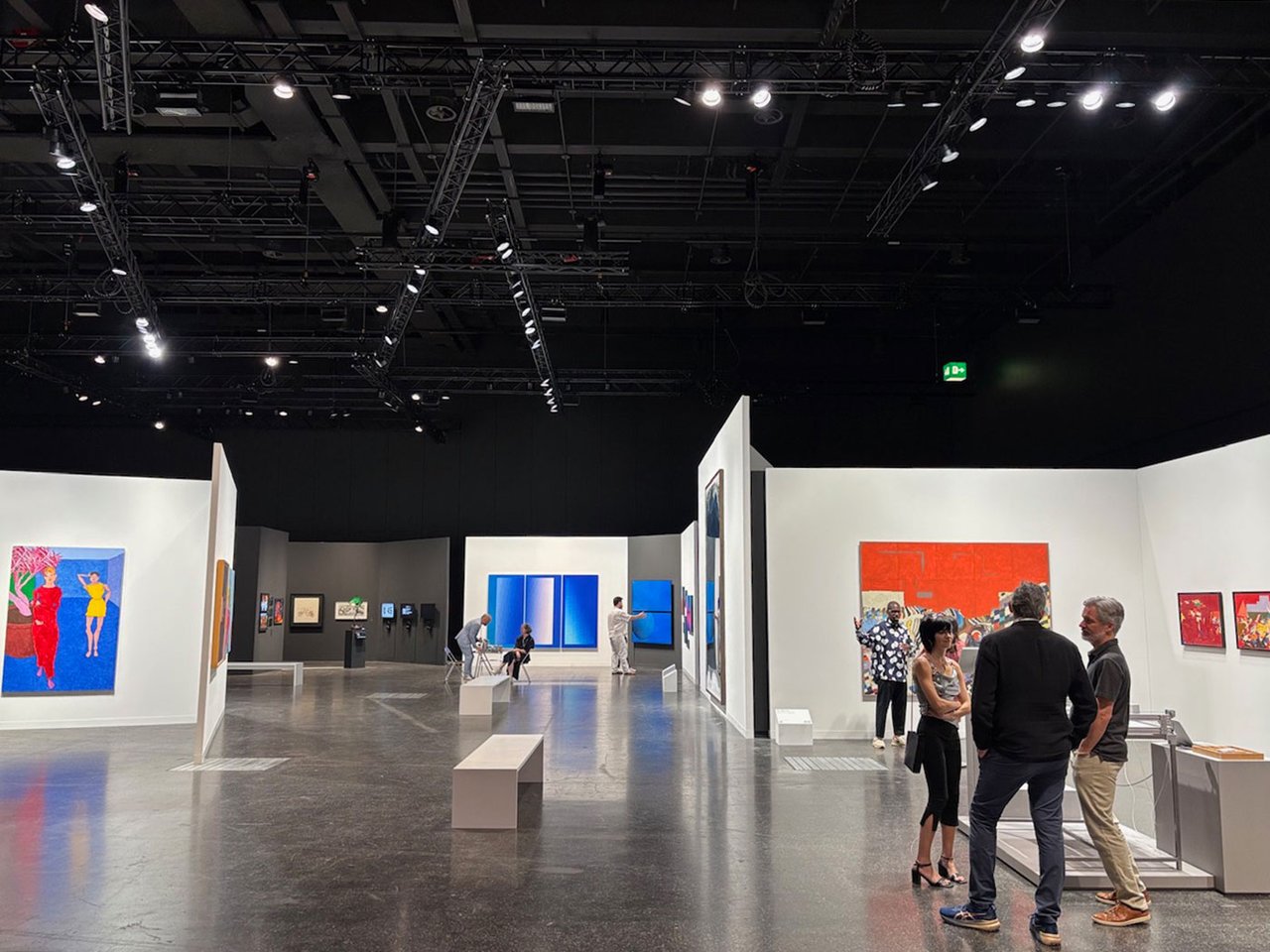
Installation view, Zero 10, showing (from left) Gazelli Art House (Harold Cohen), "Digital Masterpieces" presented by ArtMeta, OFFICE IMPART and Upstream Gallery (Jan Robert Leegte), Sprüth Magers (Andreas Gursky), and Art Blocks (William Mapan). Photography by Right Click Save
At ArtMeta’s annual Digital Art Summit on June 15, 2026 — which brought together many of the leading figures in the field including Scheinman and Paglen, the Net Art pioneer Miltos Manetas, and the artists Jonas Lund, Primavera De Filippi, 0xDEAFBEEF, and Sam Spratt — Right Click Save’s Founding Editor, Alex Estorick, moderated a panel of curators and collectors on “How Masterpieces Are Made: Canon Formation in Digital Art”, a topic that feels timely as digital art’s histories become ever more visible.
Estorick asked the artist Jan Robert Leegte, “After 30 years, the penny has finally dropped. How does it feel?” Leegte's response was: “Unreal. This field has been kept outside of the art world for a very long time…So this is miraculous to be in Basel.”
One of Estorick's panellists, the collector of digital art Michael Spalter, meanwhile posted on X an array of images of long lines of people queueing to be admitted to Zero 10 with the comment “Walking in a desert for decades and finding an oasis of kindred spirits who finally embrace, celebrate and understand.”
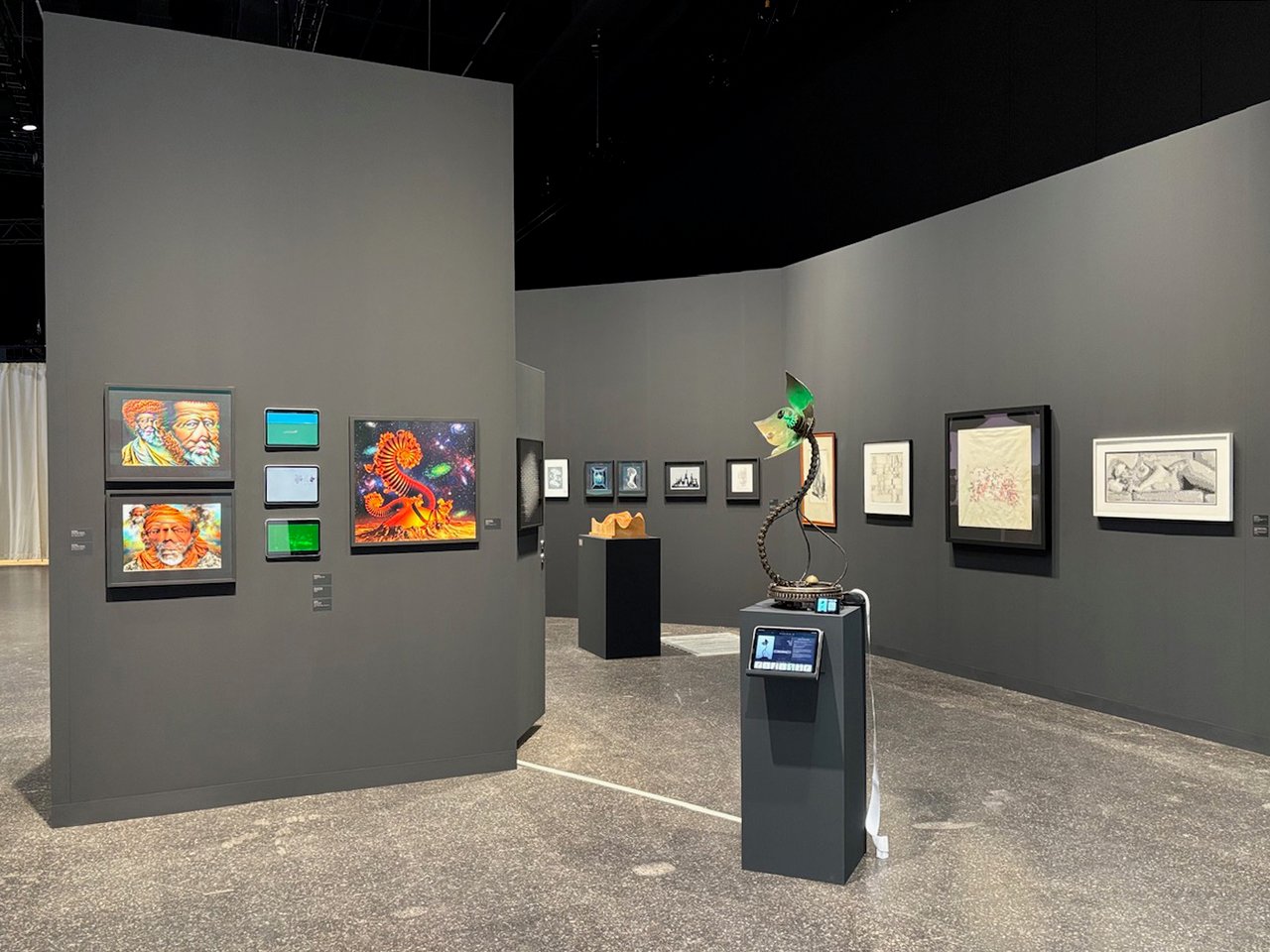
Installation view, "Digital Masterpieces: From Code to Canon", presented at Zero 10 by ArtMeta. Photography by Right Click Save
As part of Zero 10, ArtMeta’s ambitious exhibition “Digital Masterpieces: From Code to Canon” introduces collectors to 70 years of overlooked art history from the past seven decades, stretching from early computer art trailblazers to today’s networked and AI-driven practices. While the Basel-based research institution HEK (House of Electronic Arts) participates in Zero 10 for the first time by presenting five significant works of early Net Art from its collection.
Other Basel institutions — including the Kunstmuseum, the Fondation Beyeler, Kulturstiftung Basel H. Geiger, 0xCollection, and the after-hours-friendly Basel Social Club — are, as ever, hosting a conceptually rich programme of exhibitions, many of them speaking to the convergence of the physical and digital.
Asked in May 2026 what had convinced so many established Art Basel galleries to join Zero 10, Scheinman told Right Click Save that the digital art initiative has been intended from the beginning “to respond to the local considerations and each region in very different ways”.
“Miami had its own texture that was maybe about spectacle,” Scheinman said. “Hong Kong had a different feel and different type of nuance across the space. In Basel [...] there is in the region an institutional rigor and ameliorating [of] artificial delineations” between art mediums. “That context, I think, was very attractive to some of those galleries.”
Galleries and artists showing at Zero 10
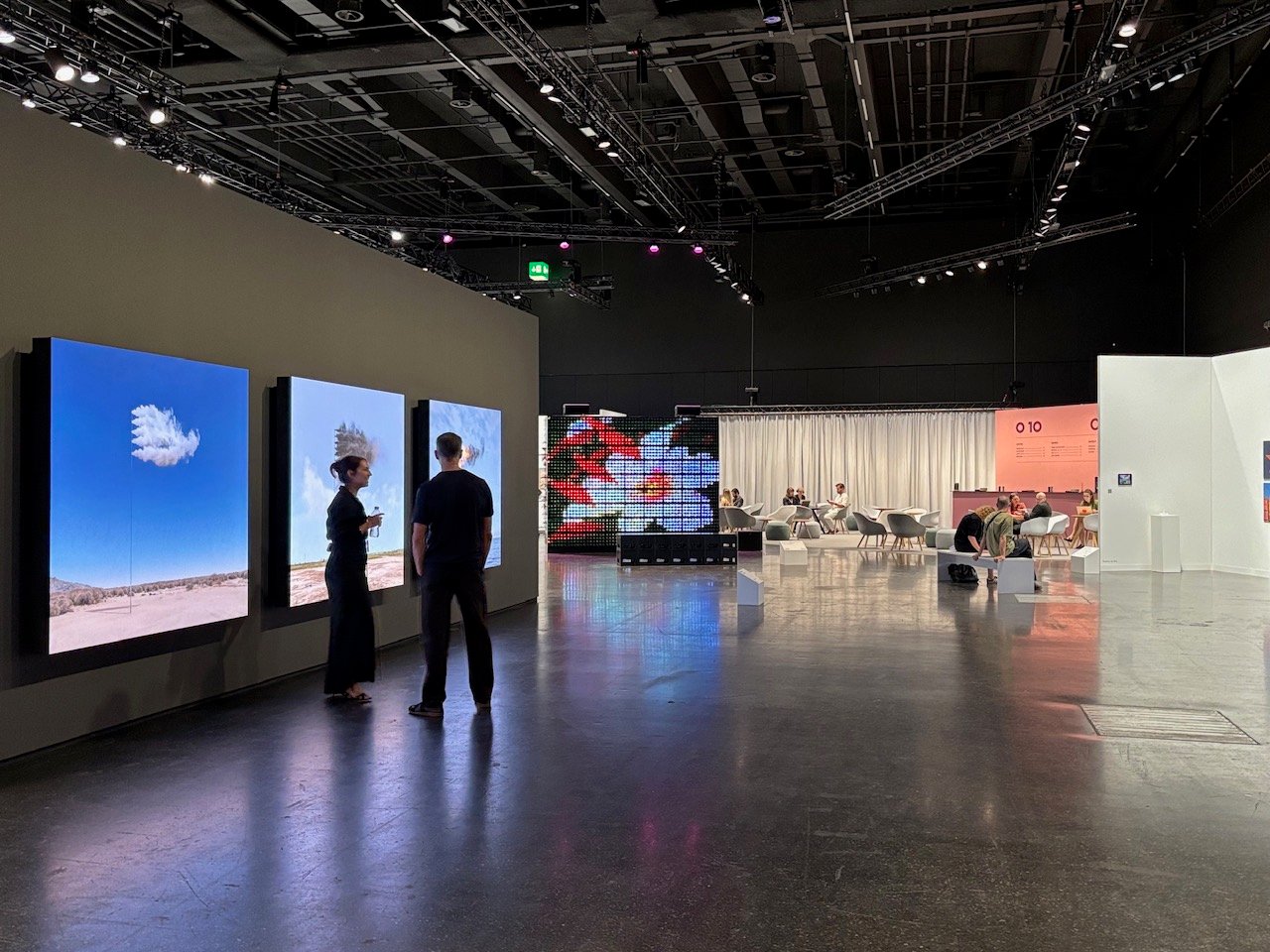
Installation view, Zero 10, showing (from left) the stands of Fellowship (John Gerrard) and Esther Schipper, and Andrew Kreps Gallery (Hito Steyerl), Photography by Right Click Save
Zero 10 at Art Basel 2026, presented in the Event Hall, in the Messeplatz, is the largest iteration of the digital art initiative to date, with 20 galleries (some collaborating) showing in company with two non-selling exhibitions mounted by ArtMeta and HEK. It is remarkable for the first-time inclusion of some of the established art world’s leading international houses, including Hauser & Wirth, Marian Goodman, Almine Rech, and Sprüth Magers.
The composer and visual artist Ryoji Ikeda’s work features computer displays running translations of scientific data into immersive audiovisual compositions. Almine Rech previously presented Ikeda’s data-verse 3 (2021) as a standalone artwork at Art Basel's Unlimited sector, in 2021.
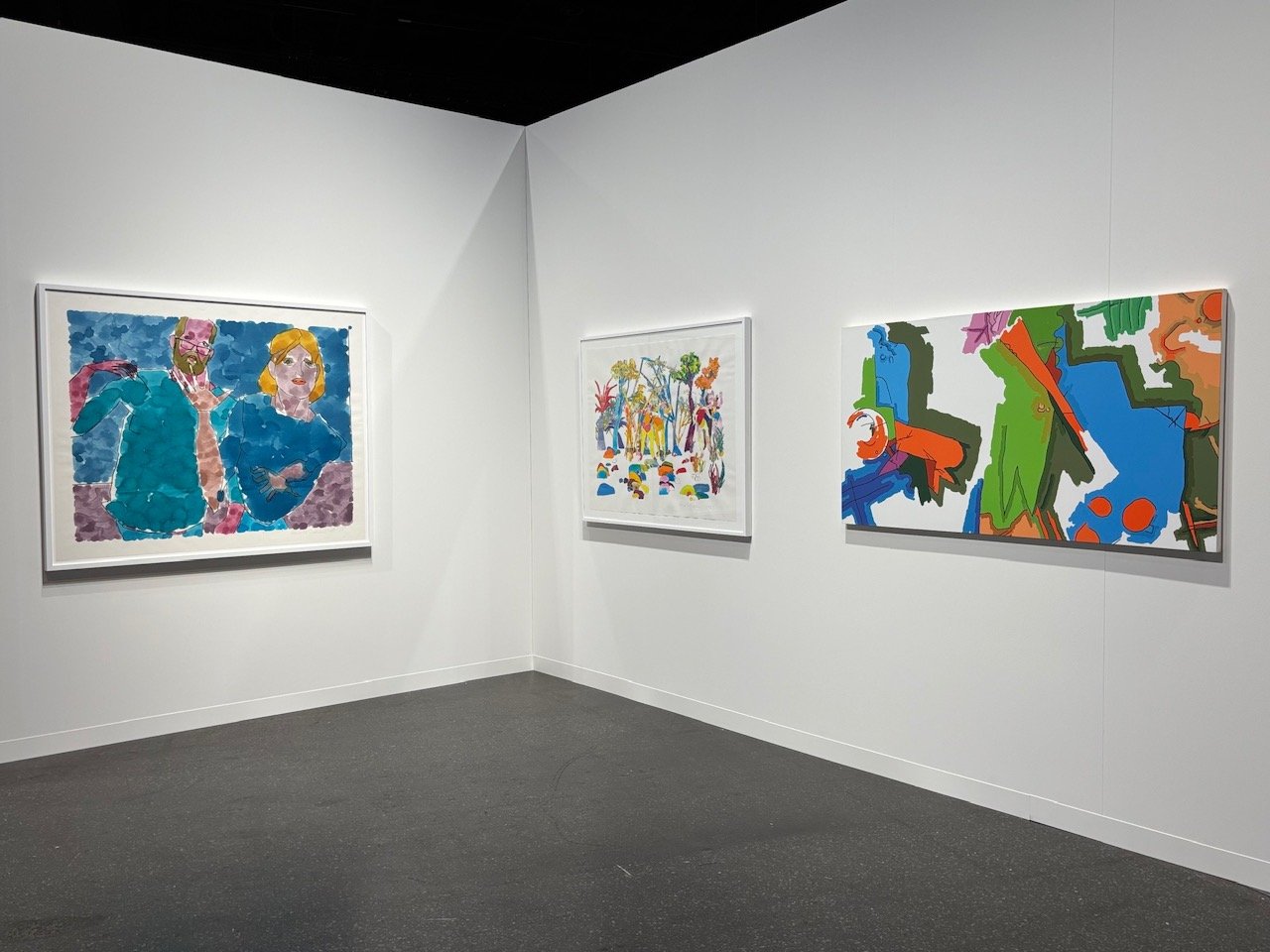
Installation view, Art Blocks, William Mapan, Paysages Plausibles (2026), and Dances on Shadows (2026). Photography by Right Click Save
Art Blocks | William Mapan, Paysages Plausibles (2026), and Dances on Shadows (2026).
Both series by the generative artist William Mapan derive from nine months’ work on an algorithm built through research into texture, form, and space, carried out on what the artist describes as a “bridge” between code and paper. The work is an evolution of the program the artist used to create the four oil paintings he showed in “Code + Matter”, a group show of physical works by algorithmic artists that he put on in Paris in October 2025 with his friends Alexis André, Julien Espagnon, and Florian Zumbrunn. A show that saw the convergence of digital art and established art audiences in traffic-stopping numbers during the week of Art Basel Paris.
ArtMeta | “Digital Masterpieces: From Code to Canon”
ArtMeta’s survey of 70 years of digital art, curated by Georg Bak, offers Art Basel’s community of collectors and art-world insiders a chance to explore a different set of practices to those they are accustomed to. All of the works will be viewable online as part of a detailed survey, which has been divided according to a range of different genres.
The history of digital art has always been closely linked to technological developments. Bell Labs, the Hochschule für Technik Stuttgart, MIT, NYIT, Xerox PARC, Google, NVIDIA, and blockchain infrastructure are not merely backdrops to this story, they are among the protagonists and often the roles of engineers and artists were fluid and interchangeable. (Georg Bak)
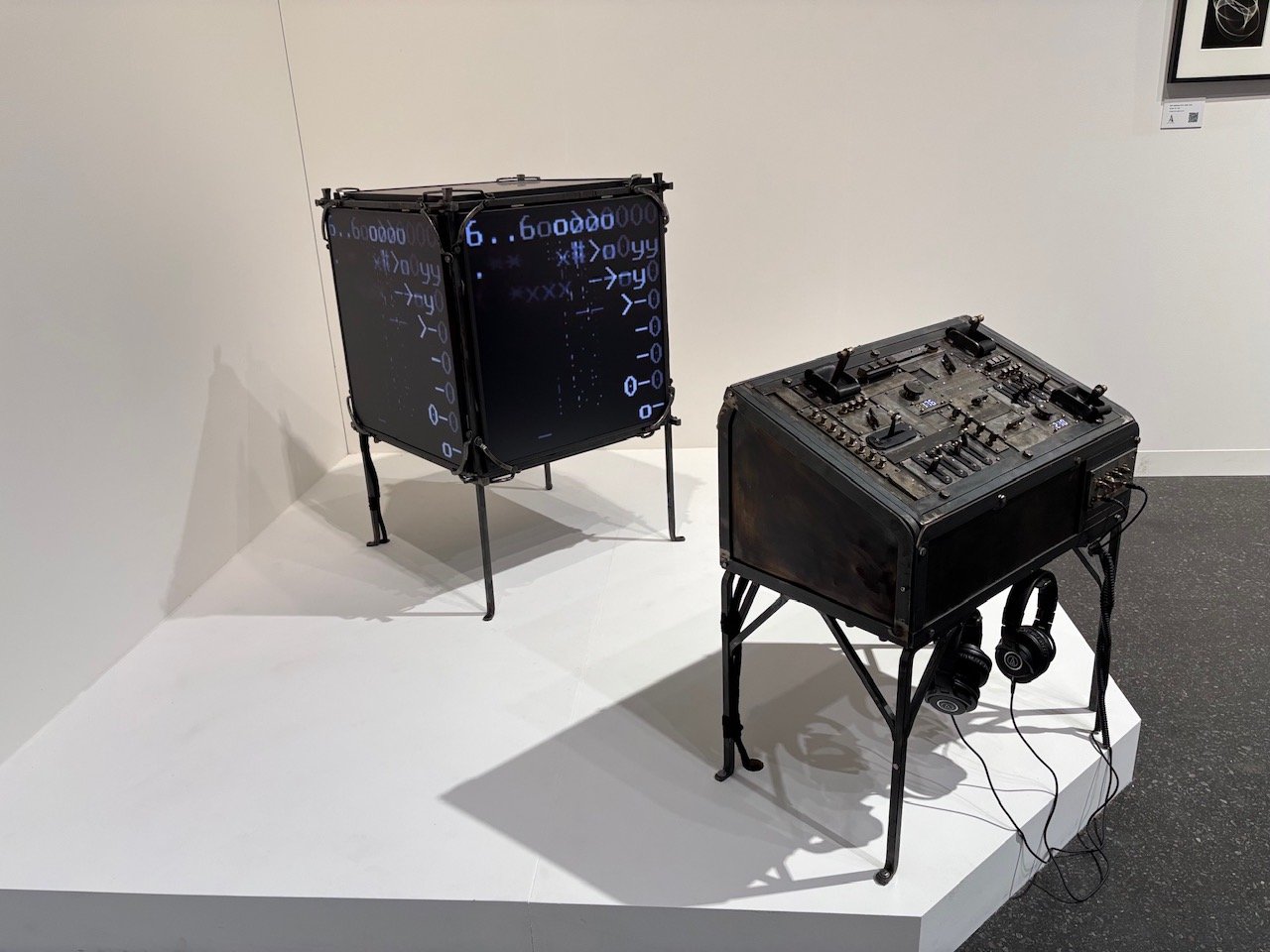
Installation view, Asprey Studio, DEAFBEEF, Matter and Signal (2026). Photography by Right Click Save
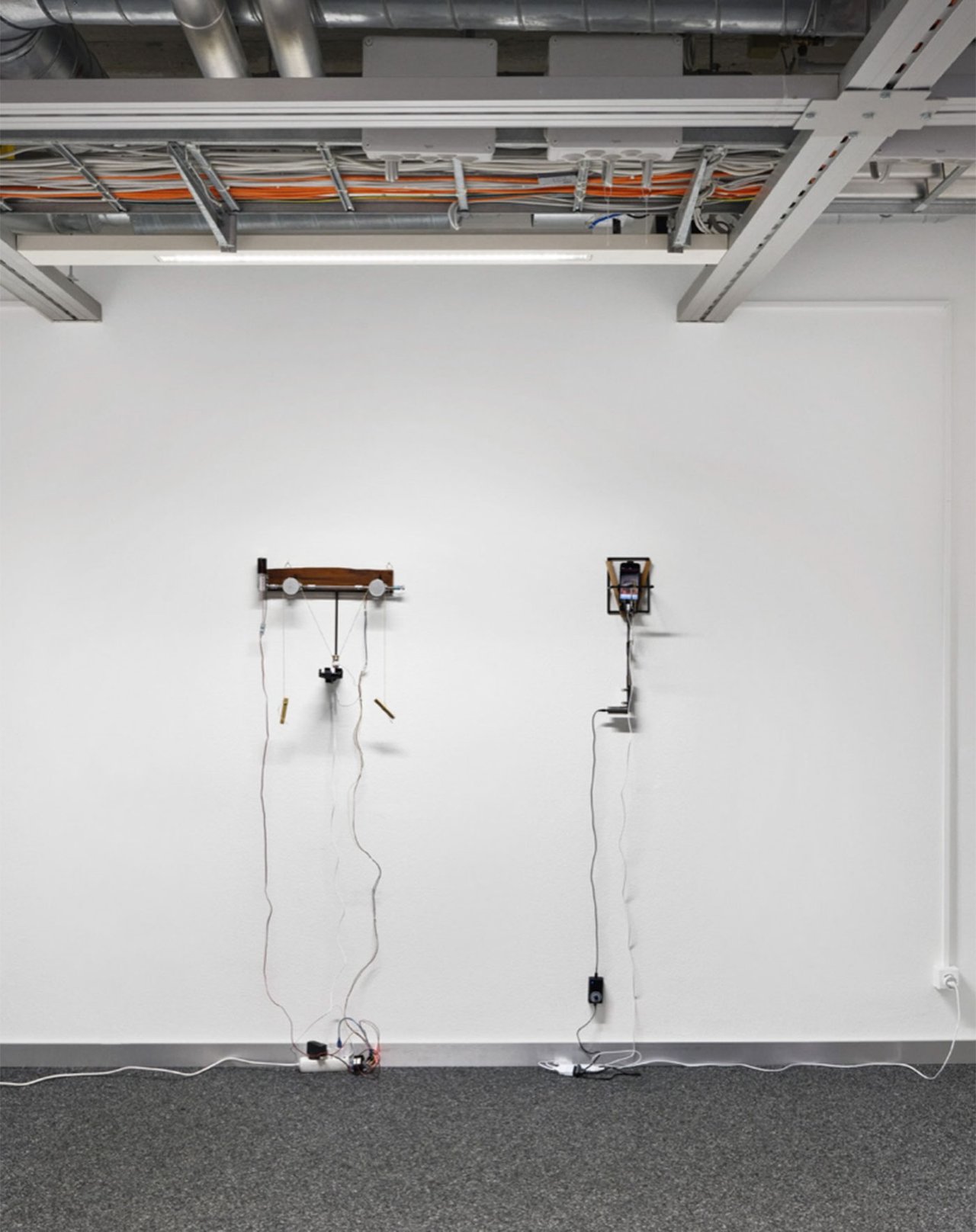
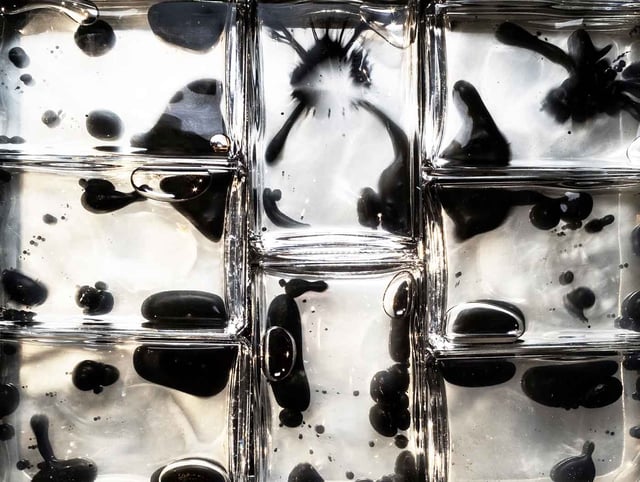
Asprey Studio | 0xDEAFBEEF, Matter and Signal (2026)
On Asprey Studio’s third successive Zero 10 stand, the artist and engineer 0xDEAFBEEF is presenting Matter and Signal, a multimedia project examining generative systems centered on the interactive sculpture Glitchbox, which records participant-generated outputs on the blockchain.
bitforms gallery and Max Estrella | Rafael Lozano-Hemmer, Panoptic Chiasma
bitforms gallery, of New York, in its third successive Zero 10 presentation and celebrating 25 years since the space dedicated to media art was founded by Steve Sacks in 2001, joins forces with Max Estrella, the Madrid gallery dedicated to new technologies. The shared stand is presenting the work of a long-standing bitforms artist, Rafael Lozano-Hemmer, with “Panoptic Chiasma”, a selection of digital art installations that “explore contemporary perception as inseparable from computation”.
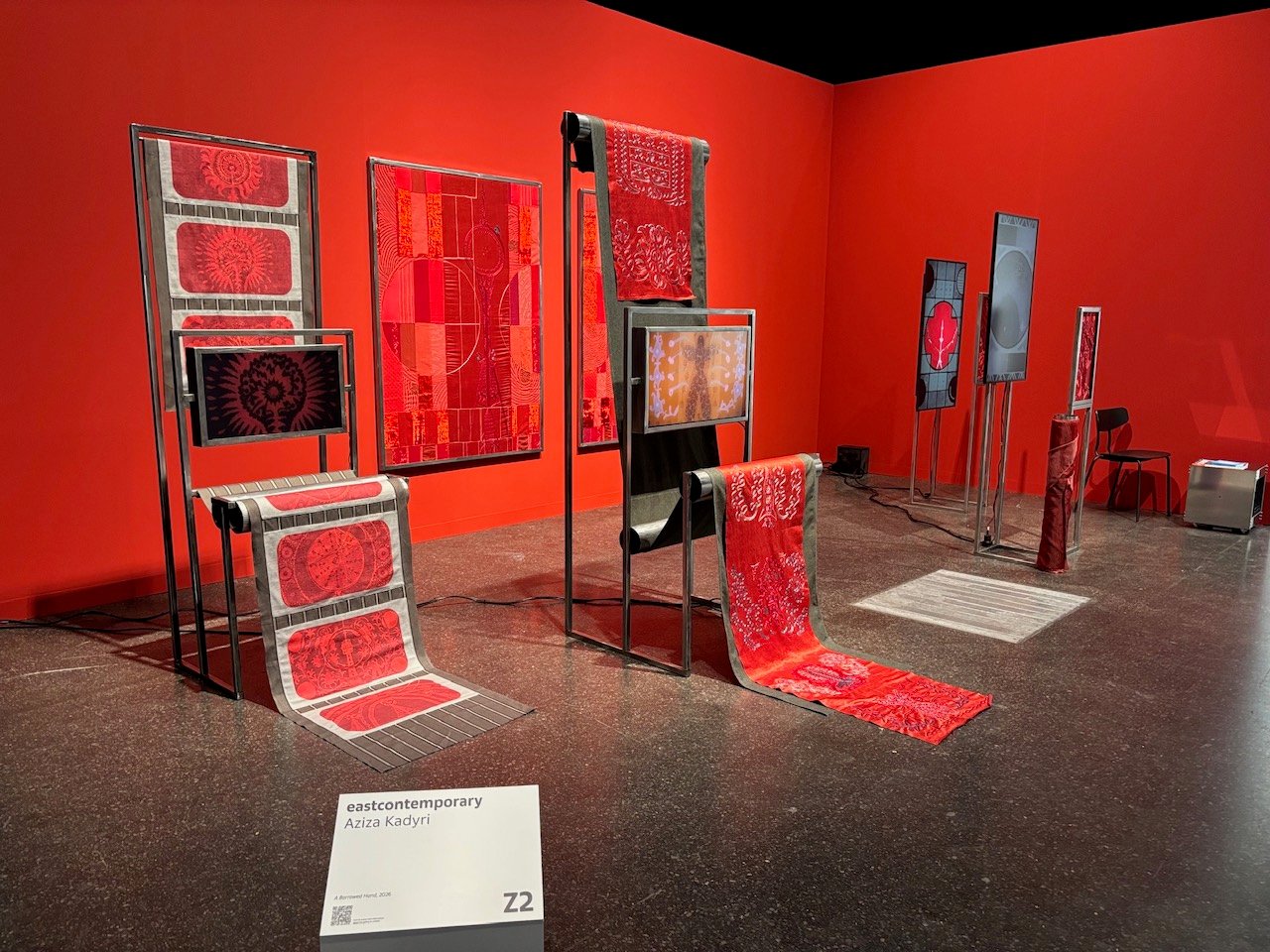
Installation view, Eastcontemporary, Aziza Kadyri, A Borrowed Hand (2026). Photography by Right Click Save
Eastcontemporary | Aziza Kadyri, A Borrowed Hand (2026)
Aziza Kadyri, who showed at the Uzbekistan National Pavilion at the 2024 Venice Biennale, presents free-standing textile and metal installations that draw on suzani embroidery traditions from Central Asia. Her work explores the intersection of collective cultural memory and lived experience with the artist’s custom artificial intelligence model.
Esther Schipper, and Andrew Kreps Gallery | Hito Steyerl, Green Screen (2023)
Esther Schipper and Andrew Kreps are collaborating on a joint stand presenting Hito Steyerl’s Green Screen (2023), an installation featuring an LED wall made up of recycled glass bottles, AI-generated imagery, and bioelectrial connections to living plants.
Fellowship | John Gerrard
John Gerrard’s triptych is made up of three real-time simulations in perpetual motion depicting environmental crisis, systems of power, and fossil fuel extraction: Western Flag (Spindletop, Texas), 2017, Flare (Oceania), 2022, and STANDARD, 2023. Fellowship describes the installation as “A nine-year body of work, completed before the present moment arrived, that now describes it precisely.”
Installation view, Gazelli Art House, Harold Cohen, “AARON and the Birth of Machine Agency”. Photography by Right Click Save
Gazelli Art House | Harold Cohen, “AARON and the Birth of Machine Agency”
The Gazelli Art House installation brings together paintings, drawings, and live-running code systems devised by Harold Cohen and his creation AARON, one of the earliest autonomous systems for artmaking. The exhibition addresses Cohen’s investigation into systems, perception, artistic authorship, and the language used around computer art.
Haus der Elektronischen Künste | Various
HEK, Basel’s center for the study of art and technology, is presenting a non-selling exhibition showing early examples of Net Art from its collection, as part of its focus on education and the evolution of web-based artistic practices.
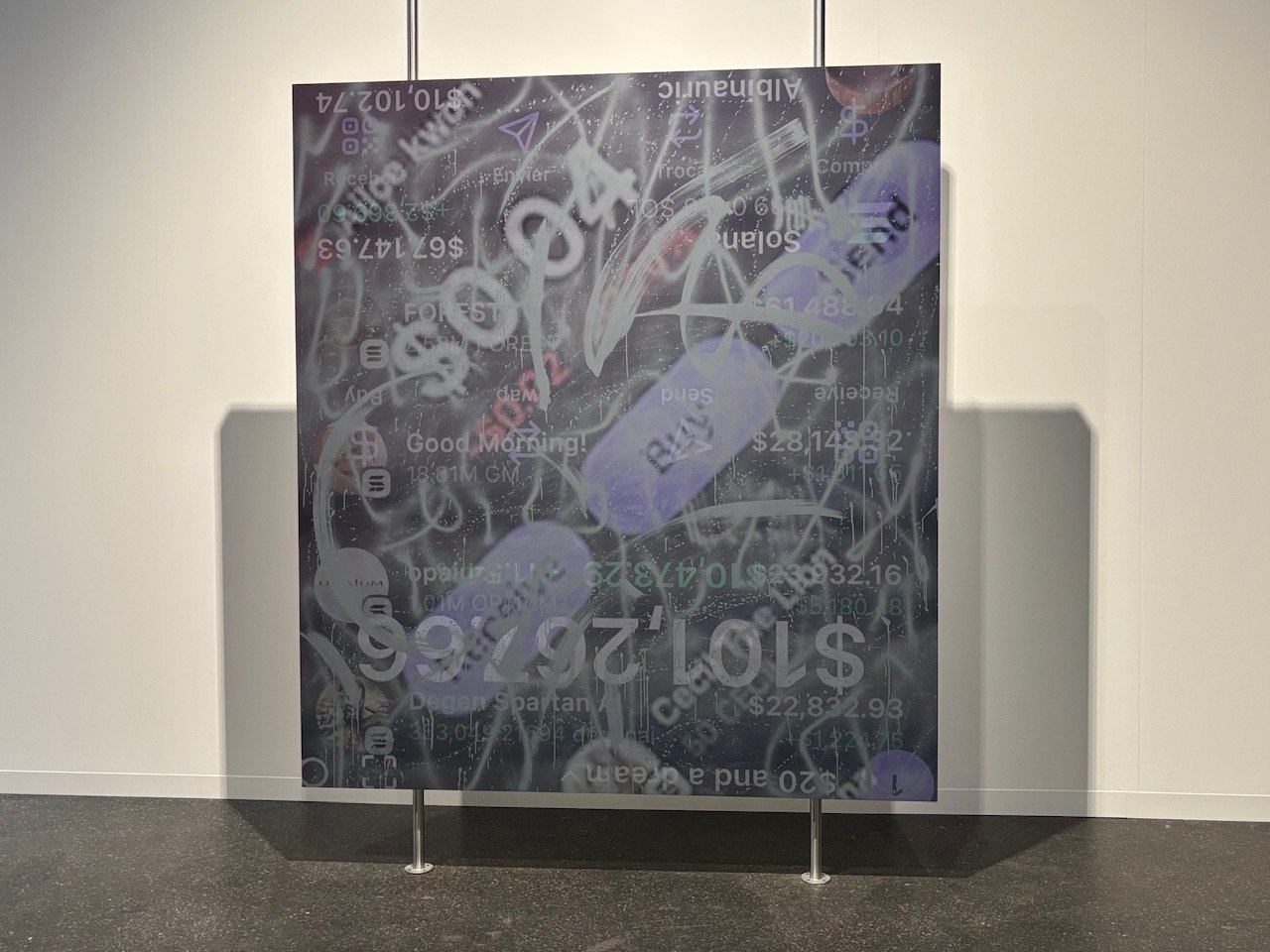
Avery Singer, Shit Coin Maxi (2025), on Hauser & Wirth's stand at Zero 10. Photography by Right Click Save
Avery Singer is showing Shit Coin Maxi, depicting two digital wallets discovered on X in a composite layered image that draws on her recent work examining finance, gambling, and the speculative culture surrounding cryptocurrency. “War_overlays”, Singer’s first show of work using AI tools, is at Hauser & Wirth Zurich until September 5, 2026
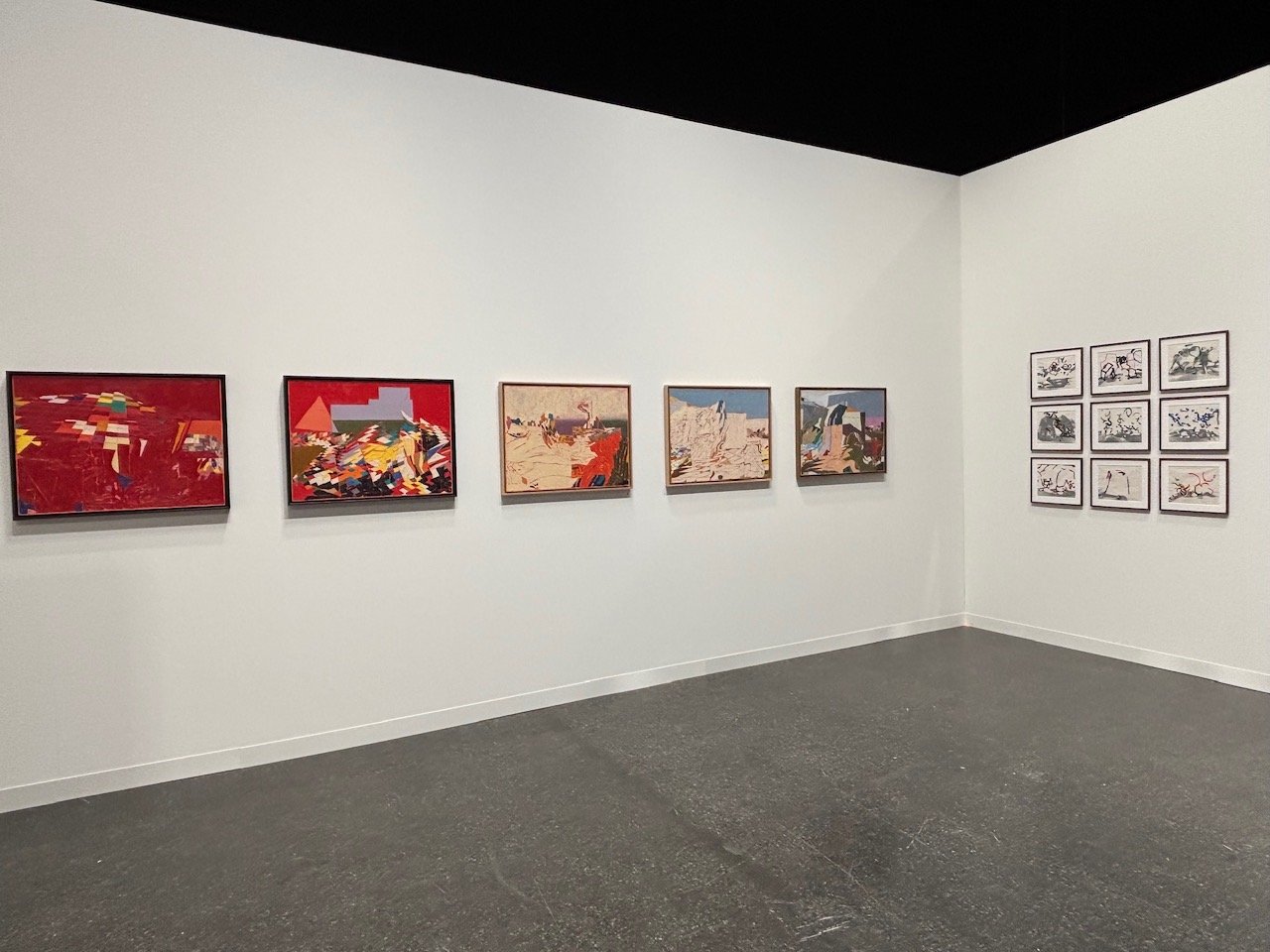
Interface Gallery, and Galerie Oniris | “When Algorithms Draw: The Vision of Vera Molnar”
Oniris.art and Interface Gallery are combining to show the role of code in the practice of the abstract painter and pioneer of generative art Vera Molnar. Molnar’s printmaking is the subject of an exhibition at Kunstmuseum Basel, “Vera Molnar. Possibilities” (until July 27, 2026).
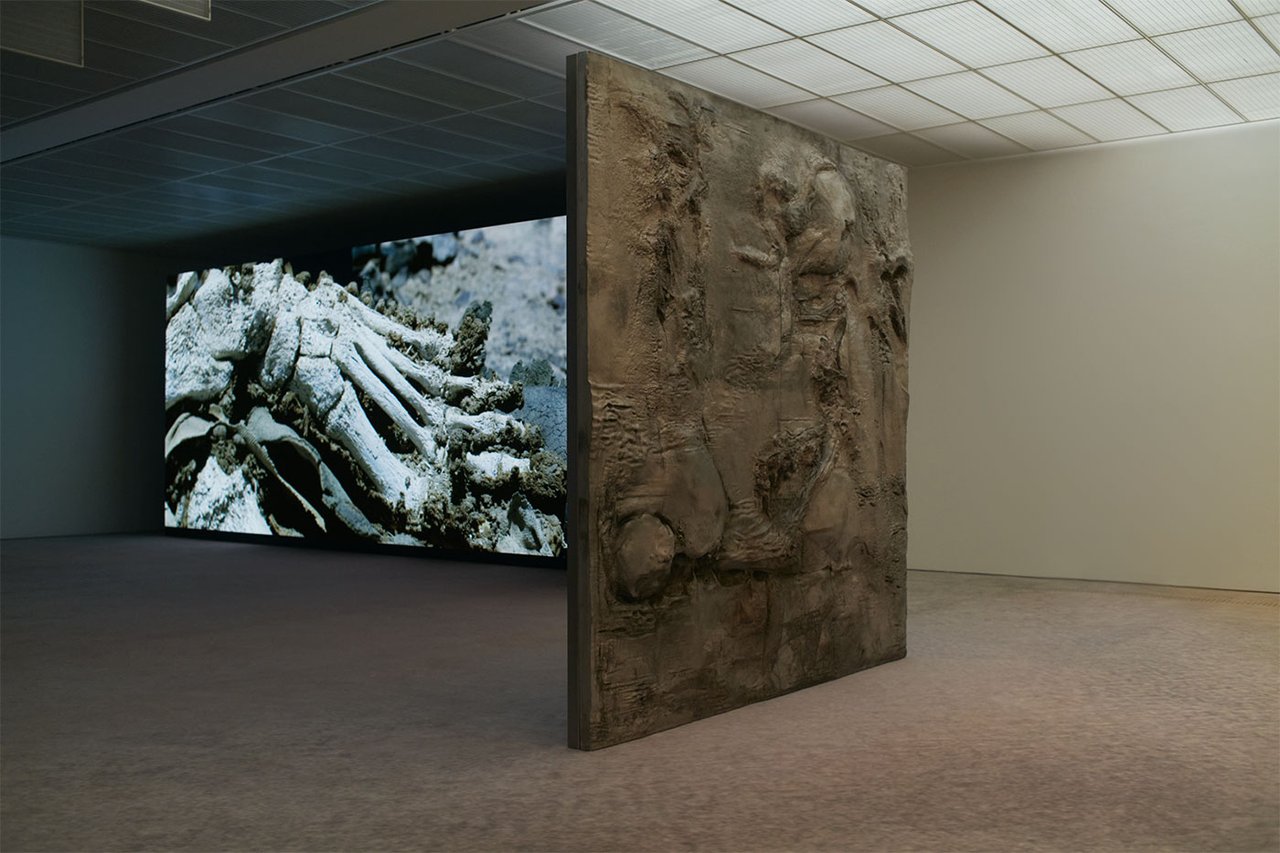
Agnieszka Kurant, Alien Internet (detail), 2023. Courtesy of the artist and Marian Goodman Gallery. Photography by Mathias Völzke
Marian Goodman | Agniezka Kurant
The presence of Marian Goodman gallery at Zero 10 is a reminder of the contribution that the gallery’s eponymous late founder made to the creation of 2026’s expanded art world with her support of the Belgian poet and artist Marcel Broodthaers at her first exhibition in New York in 1977. Agniezka Kurant is showing a mix of sculptures made from compacted, pulverized materials and installation pieces digitally controlled in an electromagnetic field.
Nugyen Wahed of New York and London, is showing the work of two Swiss generative artists exploring the code, and materiality, of participation in digital art. Leander Herzog’s Infinite Garden is a collective on-chain work, presented on the stand as a 2 x 2 metre floor-level LED installation, where collectors are gardeners, assembling and sharing a generative flower. Andreas Gysin’s Meltdown meanwhile examines the concept that programming languages, though invisible in daily life, have an inherent rhythm and graphic quality.
Installation view, OFFICE IMPART and Upstream Gallery, showing Jan Robert Leegte. Photography by Right Click Save
OFFICE IMPART and Upstream Gallery | Jan Robert Leegte
Upstream Gallery, of Amsterdam, and the Berlin space OFFICE IMPART are joining forces to present three bodies of work by Jan Robert Leegte — JPEG, Sightings, and Orbits — in all of which the artist addresses the part compression plays in the hidden infrastructures of digital image culture.
Sprüth Magers | Andreas Gursky, Ocean V (2010)
At Sprüth Magers, Andreas Gursky is showing Ocean V (2010), one of the artist’s giant composite, deep-blue oceanscapes, derived from satellite imagery, and inspired by a night flight from Dubai to Melbourne.
Fondation Beyeler | “Pierre Huyghe” (24 May to 13 September, 2026). Curated by Mouna Mekouar, and Anne Stenne
Fondation Beyeler is presenting the first solo exhibition in a Swiss museum of Pierre Huyghe, an artist of the in-between and the mixing of the human and non-human who presented a quantum art commission, Liminals, with LAS Foundation, at Halle am Berghain in Berlin, in February-March 2026. Liminals is one of the group of new artworks, recent films and a selection of early works by Huyghe on show at the Beyeler.
Kunstmuseum Basel | “Cao Fei | Testimonies to the Near Future” (until October 11, 2026). Curated by Stephanie Seidel, Philipp Selzer, Alice Wilke
The work of the Chinese artist Cao Fei, in her first solo exhibition in Switzerland, transforms the Kunstmuseum Gegenwart into a digital immersive city bringing together installations and video universes from her practice of the past twenty years. The works on show include Whose Utopia (2006), Asia One (2018), Nova (2019-), Oz (2022), and the Hip Hop series (2003-). The artist, whose work features in the first thematic exhibition at the reopened New Museum, New York, Massimiliano Gioni’s “New Humans | Memories of the Future”, is also the subject of “Dash” — a new multimedia project examining a global agricultural technological revolution — at Fondazione Prada, Milan (until September 28, 2026).
Kunstmuseum Basel | “Helen Frankenthaler” (until August 23, 2026) | Curated by Anita Haldemann
Helen Frankenthaler, the Abstract Expressionist who allowed chance, even randomness, into her paintings with her soak-stained work is the subject of a 50-painting show, set in the context of 15th to 20th-century art. In an interview with Right Click Save about his Paysages Plausibles series (2026), showing at Zero 10, William Mapan identified the Frankenthaler show at the Kunstmuseum as a show to see during Art Basel week. The exhibition was inspired by the Helen Frankenthaler Foundation’s gift to the Kunstmuseum in 2024 of the artist’s painting Riverhead (1963).
HEK (House of Electronic Arts) | Various events (June 15 to 21, 2026)
Besides its contribution to Zero 10, Basel’s research institution HEK is running a full program of exhibitions and events during Art Basel week. include the online show HEK X Tezos: «404_LAND», showing on screen in the HEK foyer, and Stefanie Egedy’s sound installation Sonic Energetics. On the HEK Outdoor Platform, HEK and Tezos Foundation present the artist Quayola’s En plein air.
For 0xCollection, a Basel-based institution working with digital and time-based media art across exhibition, research, and education, Viola Lukács presents “Cosmic Knots”, a collection of ephemeral spaces and acts. On the opening evening, Carsten Nicolai, the artist and musician also known as Alva Noto, activated what Lukács describes as “a hidden architectural gem" in the form of “HYBR:ID PARA PARA”.
Installation view, Chloe Wise, “Extrasensory”. Courtesy of the artist and Kulturstiftung Basel H. Geiger
Kulturstiftung Basel H. Geiger | Chloe Wise, “Extrasensory” (until 6 September 2026). Curated by Samuel Leuenberger
In her solo exhibition “Extrasensory”, the Canadian artist Chloe Wise introduces a film project set within a large-scale immersive installation. Wise appears as Edith in Alien Melodrama, co-starring the actor Ben Ahlers as Bradford, and part of a three-channel film installation, PsyFi*. Wise’s work is rich in visual references to the aesthetic of the bug-eyed Roswell incident “alien”. It reflects, the Kulturstiftung Basel H. Geiger says in a statement, “on phenomena that resist definition, from the poetic to the uncanny, from angels to UFOs”. The show's curator, Samuel Leuenberger, says in a statment: “This exhibition is less about defining phenomena than about how they are experienced. Chloe Wise stays with moments where perception and language begin to falter, allowing uncertainty to remain active rather than resolved.”
Basel Social Club
The fifth edition of Basel Social Club, free to all in a vacant multi-storey office building, and open until 3am, is a site-specific social stage for art. A number of artists and galleries who are showing at the art fair or in one of the city’s institutions are also bringing additional or related work to the vibrant, all-hours, Social Club.
Arab Bank Switzerland, owners of a collection of digital art in Geneva, and sponsors of the ABS Digital Art Prize — won in 2026 by Gretchen Andrew for her Facetune Portraits: Universal Beauty Vietnam — is supporting Basel Social Club for the first time as a partner. ABS is contributing to the 2026 Social Club with a project by the Italian writer, artist, and designer Silvio Lorusso, Shouldn’t You Be Working?
OFFICE IMPART is showing the work of Yehwan Song at Basel Social Club. Courtesy of OFFICE IMPART
Also at the Social Club, Chloe Wise is showing Non-Human Resources – Edith, and Alien Melodrama (single channel), an excerpt from her three-channel film installation PsyFi*. These works offer a taste of “Extrasensory”, Wise’s solo exhibition at Kulturstiftung Basel H. Geiger.
Office Impart, of Berlin, who are showing Jan Robert Leegte at Zero 10, are bringing the work of Leegte, Yehwan Song, and Jonas Lund to the Social Club. While Nguyen Wahed, of New York and London, also exhibiting at Zero 10, are bringing “OOO (Out of Office)”, presenting CCTV (2015) by Addie Wagenknecht and Win-Win (2024-26) by Andreas Gysin.
“Each examine the architectures, and instruments of contemporary work,” Nguyen Wahed says in a press statement. “They find in the office not merely a setting but a paradigm, one that has shaped how we move through space, apportion attention, and understand ourselves as productive subjects.”