Whatever Happened to NFTs?
Kyle Waters and Alex Estorick discuss the evolving market for digital art
But the world puts up great resistance, the higher the goals, the greater the resistance. (Franz Kafka)
Kyle Waters and Alex Estorick discuss the evolving market for digital art
As the winter of discontent continues into its third year, the task of preparing an overview of the NFT market feels somewhat Kafkaesque. The downturn has hit NFT marketplaces hard, with MakersPlace just the latest to announce it is set to shut down following the high-profile closures of Versum, KnownOrigin, and Async Art. Meanwhile, OpenSea CEO Devin Finzer has been teasing a new version of the platform that has been rebuilt “from the ground up.”
The sobering reality for many startups that built their brands off the back of 2021’s NFT boom is that the economics have simply stopped making sense. At the same time, there are reasons to be skeptical of the death of NFTs. As the market undergoes visible and painful evolution, activity is moving to new corners of the on-chain universe.
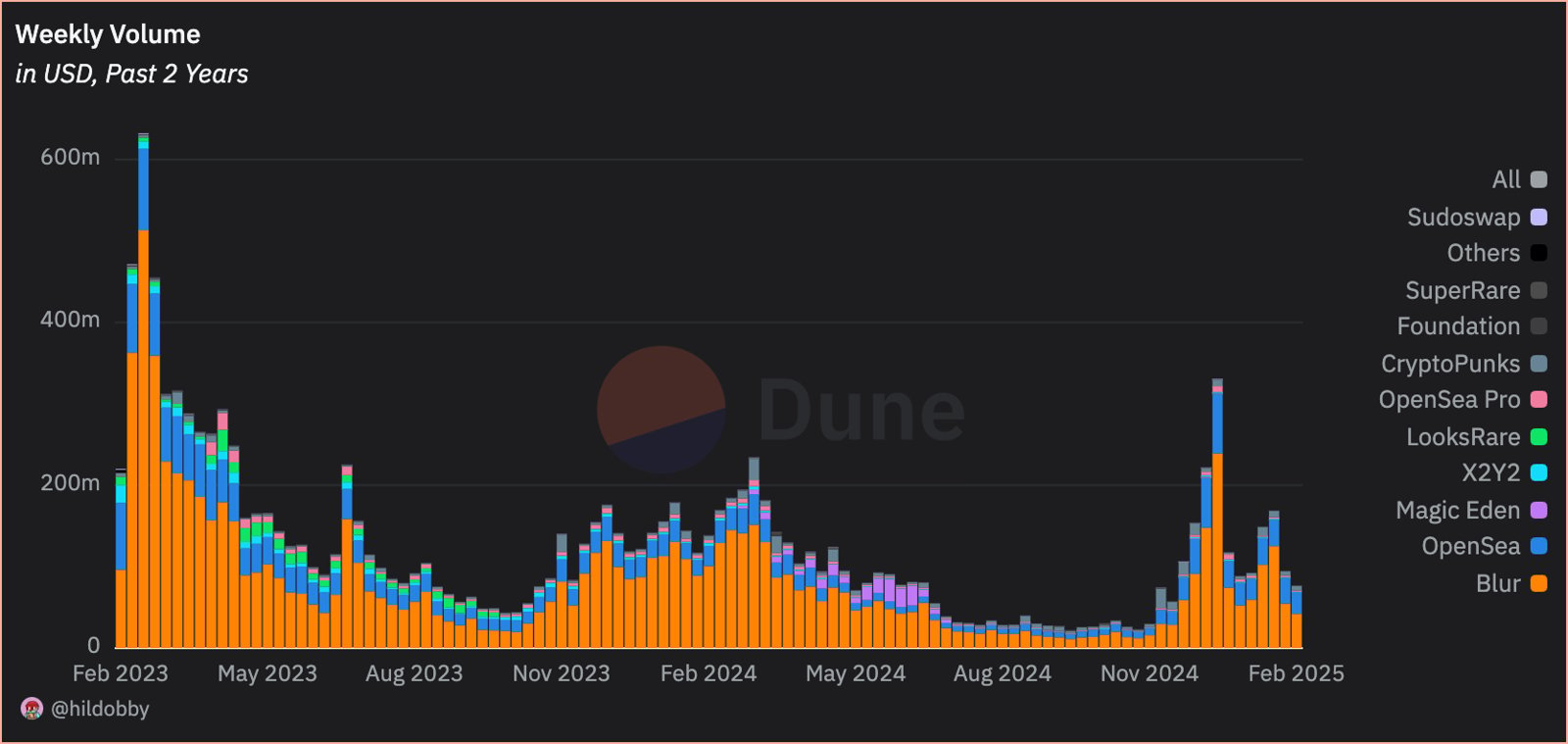
The weekly trading volume on Ethereum-based marketplaces currently stands at around $90 million (ETH equivalent), which is up from last summer, but a far cry from the halcyon days of 2021-22. Meanwhile, the number of weekly buyers is down from 150,000 just two years ago to 25,000 today. NFTs are not alone in suffering from a higher interest rate environment. Despite overall growth in the luxury sector, the fine art market has been experiencing its own “correction” since 2023, with leading auction house Sotheby’s forced to make a 6% cut to its workforce last December amid slumping sales.
Right now, two Ethereum Layer 2s, Zora and Base — a platform spearheaded by Coinbase — are drawing a lot of traction, with consumers increasingly minting low-cost NFT collections on both. Daily active transacting addresses on Base have averaged over one million since last fall, which offers potential for a new wave of digital art and innovation. According to the State of Crypto Report 2024 compiled by a16z crypto’s Daren Matsuoka, Robert Hackett, and Eddy Lazzarin, “NFT activity appears to have shifted from high-volume secondary markets to low-cost social collecting experiences.”
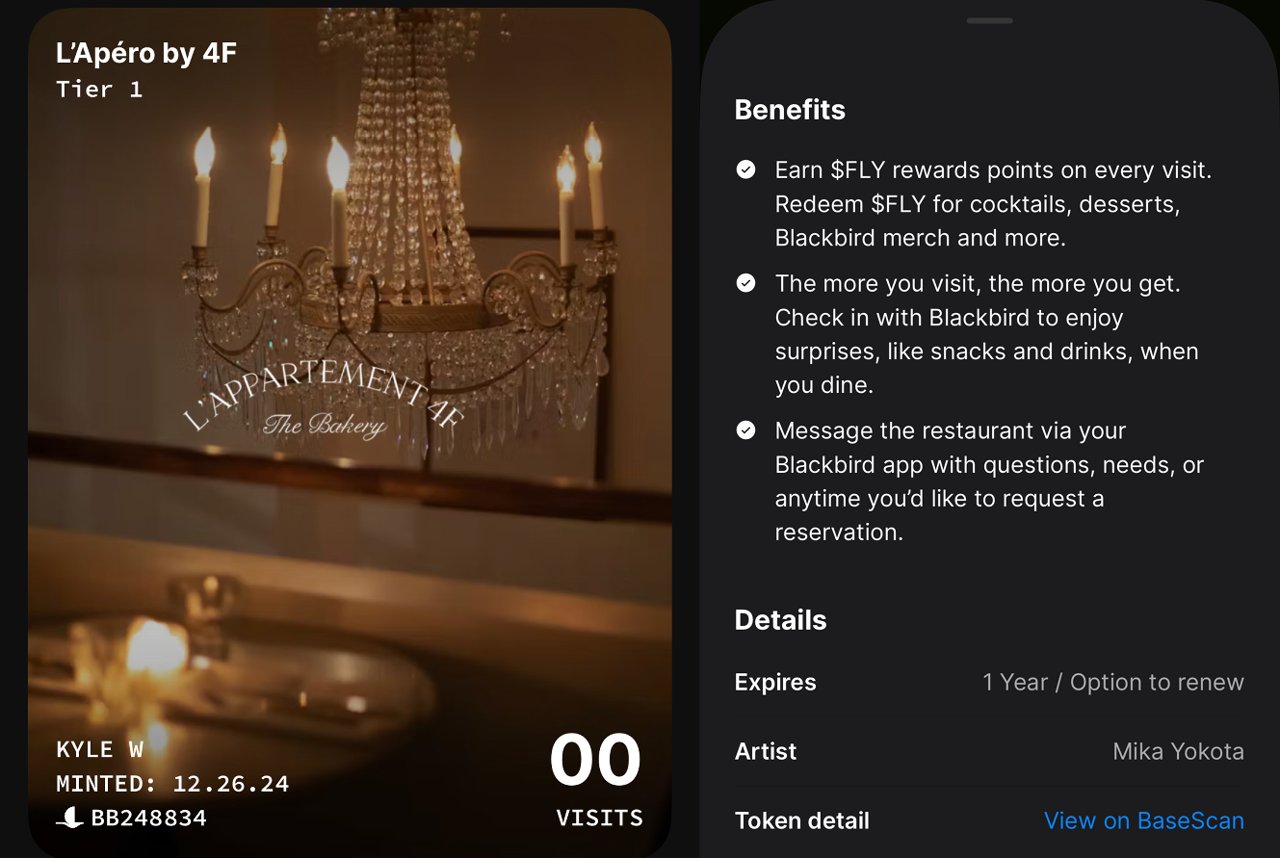
Coinbase’s introduction of smart wallets that offer account abstraction is another catalyst for wider adoption. Smart wallets remove many of the frictions associated with Web3 solutions. Wallet owners can use passkeys instead of having to manage seed phrases; they can also adopt more familiar, less cumbersome sign-up workflows and recover their accounts. Infrastructure and UX upgrades like this could prove significant for the next wave of adoption. Blackbird exemplifies the move toward low-cost social collecting experiences as well as the march of consumer crypto. As a restaurant loyalty app built on-chain, the platform logs patron-restaurant connections and visits, which are minted as NFTs on Base Mainnet. Patrons earn reward points in the form of $FLY that they can then redeem for cocktails, desserts, and merchandise.
The launch last summer of a new social platform, Rodeo, by NFT marketplace Foundation is indicative of the flow of online communities on-chain even after Meta’s infamous U-turn on NFTs. Reimagining the minting experience as something closer to an Instagram feed, Rodeo includes an integration with Farcaster, a protocol for decentralized social media that has built a community of 800,000 users in only a year.
The emergence of new infrastructure also coincides with a fresh approach to digital asset regulation in the US. At the end of last summer, OpenSea received a Wells notice from the US Securities and Exchange Commission that implied that some NFTs on the platform might be unregistered securities. However, with the SEC undergoing a major shakeup in the wake of the new Trump administration, the Commission is now charting a different approach to the regulation of digital assets which augurs well for NFT marketplaces.
Recent comments from the White House’s AI and crypto czar, David Sacks, identifying NFTs and meme coins as “collectibles” rather than “securities” or “commodities” indicate a clearer stratification of digital assets.
Meanwhile, the world’s leading art institutions are queuing up to canonize digital art, from MoMA to the Centre Pompidou to Tate Modern, whose exhibition: “Electric Dreams: Art and Technology Before the Internet” runs to June 2025. Whether blue-chip galleries also end up embracing digital art will depend on their willingness to engage a new generation of collectors that is more accustomed to buying digital things in digital space — not a bad bet given that future buyers are more familiar with QR codes than business cards.
The openness of Art Basel, which runs fairs in Miami, Paris, and Hong Kong, as well as Switzerland to engage in digital dialogues suggests that the future of the art market is hybrid if not necessarily on-chain. While there is irony in the rebellious, Cypherpunk-rooted crypto art movement seeking approval from traditional, centralized institutions, the expansion of the canon to include natively digital art can help to connect with younger, “born-digital” generations. So long as there are buyers, it seems, major auction houses remain happy to celebrate the full spectrum of generative practices: from code-based generative art by the likes of Snowfro to so-called “AI art,” whose reliance on machine learning has prompted a backlash to Christie’s forthcoming auction “Augmented Intelligence.”
Looking ahead, there is growing awareness of Web3’s benefits as well as its risks, with policymakers amenable to critical discussion that balances innovation with protecting creators and collectors from bad actors. Despite the urge of many maximalists to break free from legacy structures and traditional gatekeepers, the damage wrought by the downturn has necessitated pragmatism and a willingness to work with them.
At a micro level, it is likely that successful consumer projects going forward will avoid the word “NFT,” interest in which has plummeted even while searches for “Crypto” and “Bitcoin” accelerate.
Yet despite the prevailing skepticism toward non-fungible tokens, the world isn’t becoming any less digital and blockchain remains the foundation of digital art’s brave new market. It is right to acknowledge the seismic impact of NFTs on contemporary art even while they continue to enrage and inflame. The old world might be putting up resistance to the on-chain economy, but this story is far from over.
Kyle Waters is the co-founder and CPO of PortexAI, a decentralized global marketplace for the new data economy. He is a Data Science Contributor to ClubNFT and has collaborated with its CEO Jason Bailey (Artnome) on data, art, and tech projects since 2018. He previously led research and built data products at Coin Metrics and has written extensively about blockchains, AI, and the intersection of art and technology.
Alex Estorick is Editor-in-Chief at Right Click Save.
No comments yet. Be the first to share your thoughts.
Mentioned in this article
People: Alex Estorick, Kyle Waters|Organizations: Blackbird, Coinbase, OpenSea, Rodeo|