A Prototype of the Future | Shenzhen’s First Art and Technology Biennale
China's city of technology puts digital art at the heart of a massive program of institutional and curatorial inquiry
Aimee Dawson
Hong Kong’s tech-hub neighbor a natural home to “rethink” of how art and technology co-evolve
Inaugural Biennale housed in Shenzhen's new museum dedicated to art and technology
Chinese technology giants JD.com and Tencent opening own art and tech museums in city
Main exhibition features artists working at cutting edge of light and quantum mechanics
The inaugural Shenzhen Art and Technology Biennale is at the Shenzhen International Museum of Art until April 30, 2027. Under the title “A Glimpse of the Infinite”, the first edition of the biennale is directed by Zikang Zhang, and co-curated by Naiyi Wang and Mónica Bello.
The digital art scene in Shenzhen is distinctive, not because it is mature, but because it is still being written. The city is a global hub for hardware and manufacturing, and that infrastructure is increasingly being repurposed for cultural production.
— Naiyi Wang
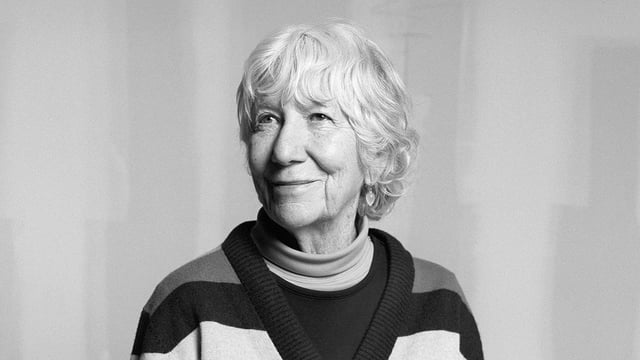
As the co-curator of the 2026-27 Shenzhen Art and Technology Biennale (SATB), Wang is discussing the new artistic landscape of Shenzhen, China’s third largest city. The works exhibited at the inaugural Biennale exemplify the city’s unique cultural identity, with artists such as Semiconductor (Ruth Jarman and Joe Gerhardt) and Libby Heaney interrogating cutting-edge technologies.
In 1979, according to the Chinese propaganda song, “Story of Spring”, China’s former leader, Deng Xiaoping, “drew a circle by the south China sea,” and “cities rose as if by myth.” The lyrics referred to Shenzhen, then a small village across from Hong Kong, which would soon after become known for its world-leading manufacturing industries. No more than 30 years later, Shenzhen also established itself as a center for “original copies”, as art critic Philip Tinari put it, through its “village” of Dafen — the world’s largest production hub for oil painting reproductions — and now, it has transformed into a global hub for art and technology. “It is a city where the future is being prototyped in real time,” Wang says.
The rapid rise of Shenzhen — a market town of around 30,000 people in the 1970s and now home to some 18.25 million people — led to the coining of the phrase “Shenzhen Speed”. The city’s rapid growth is due in part to its strategic location, on the coast of southeastern China, immediately north of Hong Kong, and flanked by the South China Sea. In 1980, Shenzhen was declared China’s first special economic zone, allowing for an influx of foreign investment and businesses. Now Shenzhen is the country’s third most populous city after Shanghai and Beijing, and has become a global technology hub with tech giants such as Tencent, JD.com, Huawei and DJI all having global headquarters there.
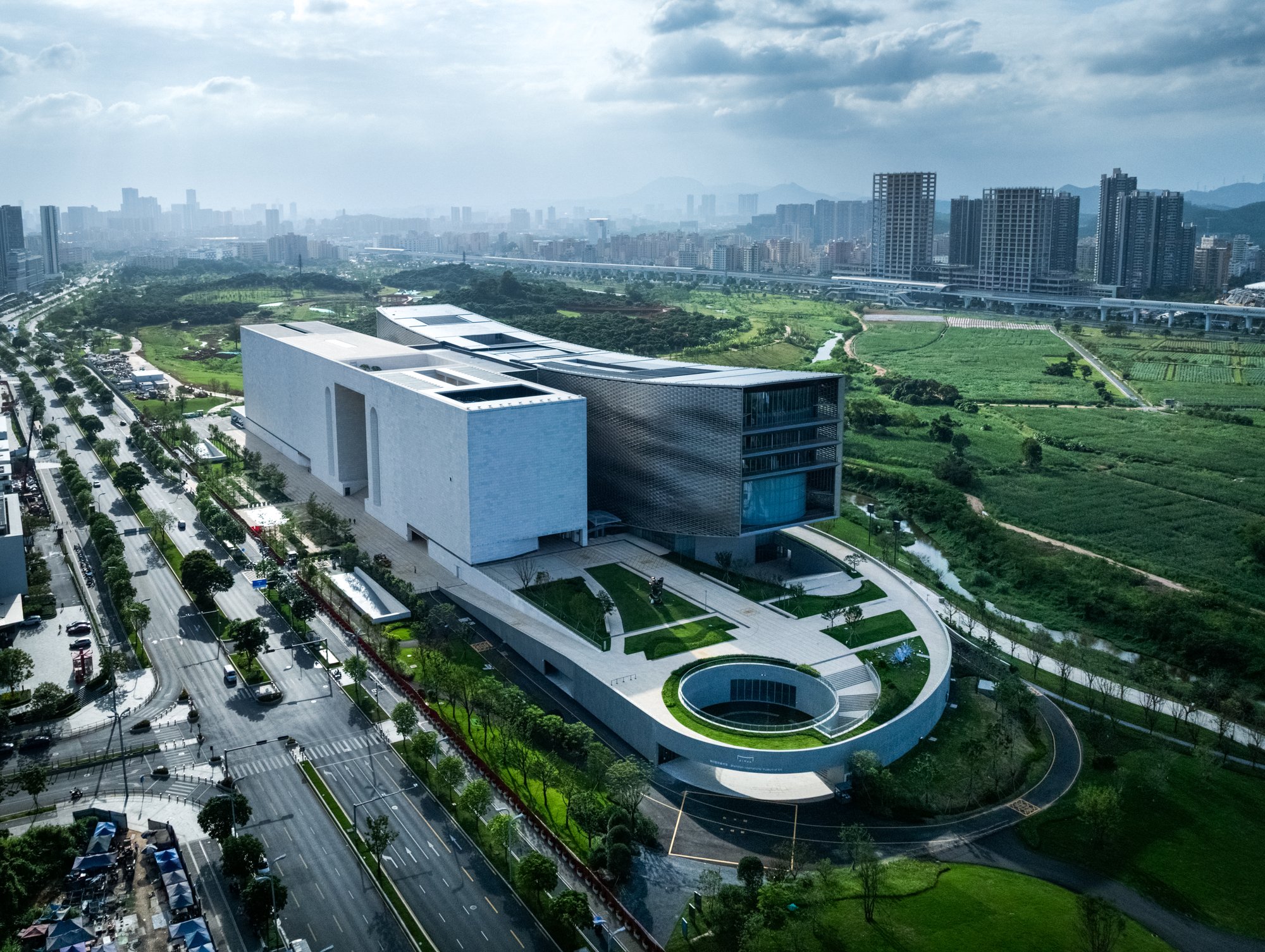
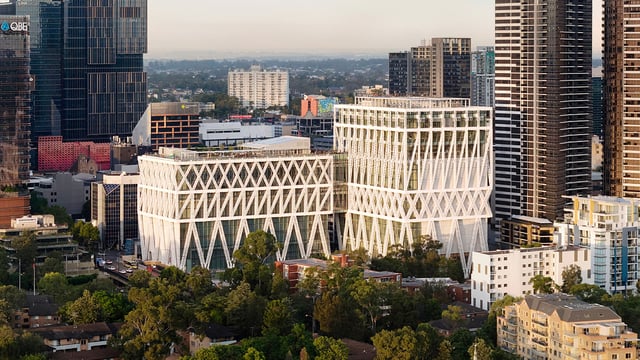
Shenzhen International Museum of Art, Shenzhen, China, 2026. Courtesy of He Xu
But Shenzhen Speed hasn’t only applied to population growth and technological development. The city’s cultural credentials have also been progressing rapidly. In 2008, Shenzhen was awarded the title of “Design City” by the Unesco Creative Cities Network for its focus on processing and manufacturing industries and, in 2017, the city partnered with the Victoria and Albert Museum, London, to open the V&A Gallery, a design hub and museum in the Shekou district.
In 2018, the Chinese government announced its accelerated plans to build ten new cultural facilities (at a total estimated cost of $3 billion), which have begun opening in the past two years: the Shenzhen Science and Technology Museum’s (SSTM) inauguration was in May 2025; the Shenzhen International Museum of Art (SIMoA) opened on May 30, 2026; the Shenzhen Natural History Museum launched on July 28, 2026; and the Shenzhen Bay Culture Square (which has a three-year partnership with London’s Design Museum) officially opened in August 2026 after a soft launch in November 2025.
“The opening of Shenzhen International Museum of Art is a significant milestone. A museum of this scale dedicated to art and technology signals real institutional commitment.” (Naiyi Wang)
“Beyond that,” Wang says, “there is a growing ecosystem of independent spaces, educational programs and cross-disciplinary practices beginning to define what a Shenzhen art scene might look like. It is a scene still in formation, and that incompleteness is precisely what makes it compelling.”
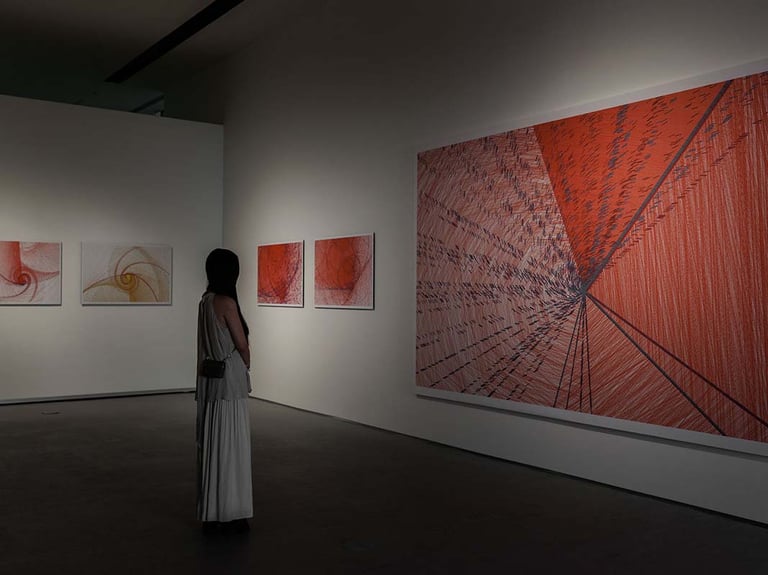
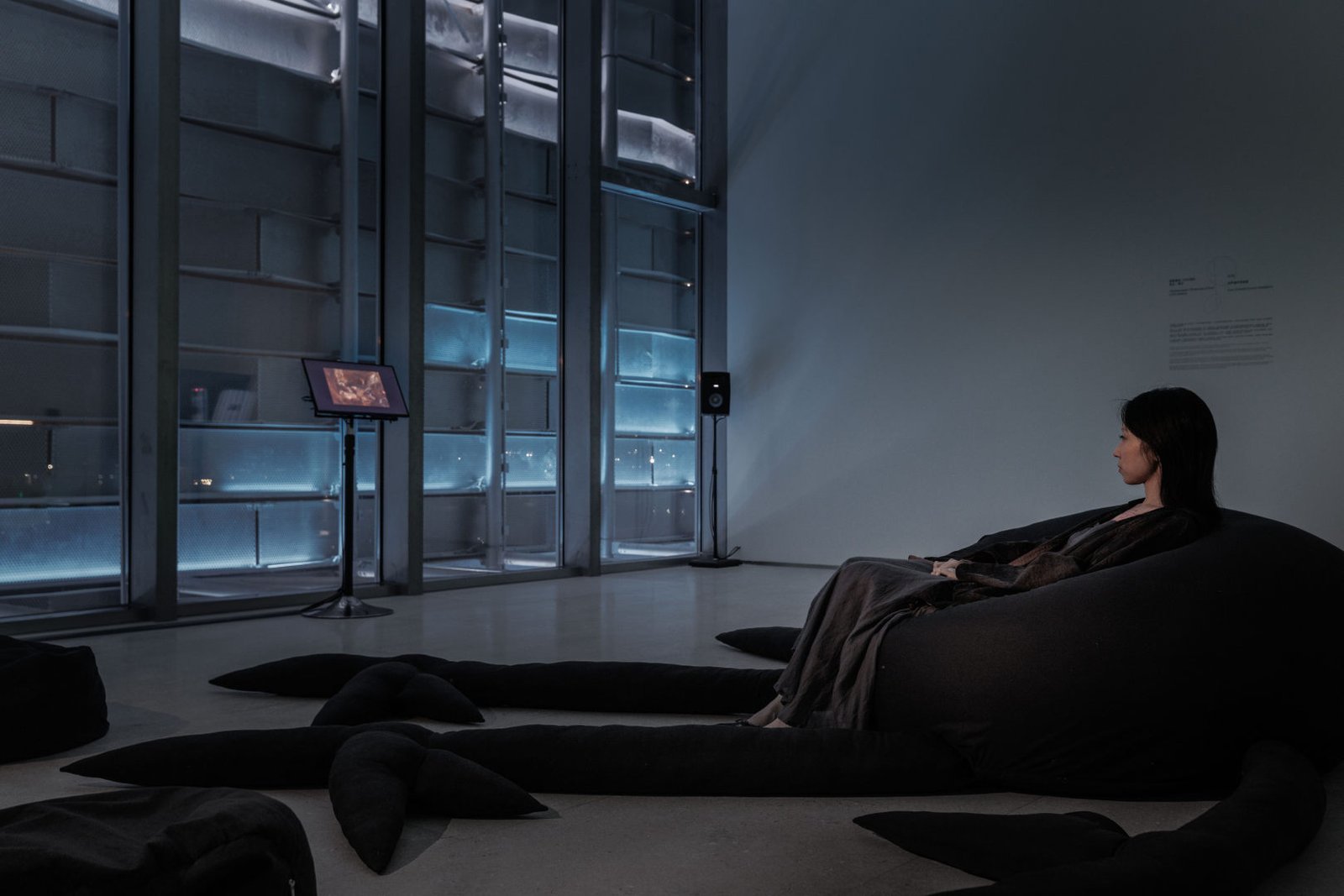
Installation view of “A Glimpse of the Infinite”, Shenzhen Art and Technology Biennale, Shenzhen International Museum of Art, Shenzhen, 2026. Courtesy of He Xu
Wang is the co-curator (with Mónica Bello) of the inaugural SATB, an international exhibition exploring the intersection of art, science, and technology being held at SIMoA (May 30, 2026 to April 30, 2027). The show is titled “A Glimpse of the Infinite”, exploring “the quantum condition of perception”, in which spectators play an active role in fixing multiple possible outcomes into a single observable work of art.
Fei Jun, Associate Professor in Interactive Media Art and Design at the China Central Academy of Fine Arts in Beijing and academic advisor for SATB, says the subject of quantum mechanics is having a cultural moment. The United Nations named 2025 the International Year of Quantum Science and Technology to celebrate a century since the foundational development of quantum mechanics. “We are living through a period where quantum technologies are moving from the laboratory into practical application,” Jun says.
“We live in a world of superposition: of multiple possible futures, of identities that resist fixed categorization, of systems that cannot be understood from the outside. Quantum mechanics gives us a language for that experience.” (Fei Jun)
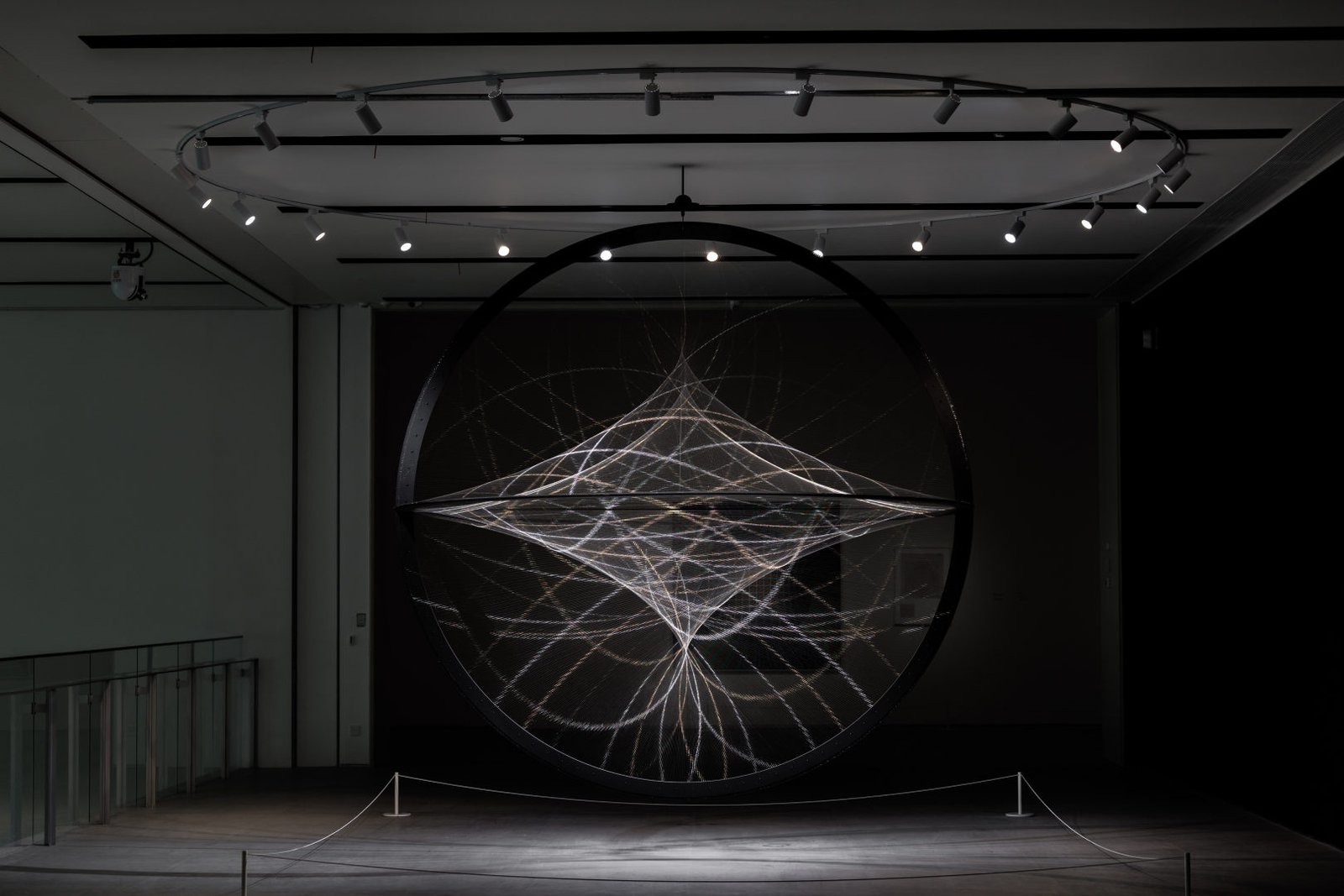
Yang Song, Photon and π, 2026. Courtesy of Naiyi Wang
The show brings together the work of more than 50 international artists, scientists and researchers. These include the French-Hungarian artist Victor Vasarely as well as leading contemporary digital and new media artists such as Christa Sommerer and Laurent Mignonneau, Qiu Zhijie, and Semiconductor.
Wang didn’t want the artists to illustrate quantum theory but rather asked them what it means to make visible that which cannot be seen and resists our senses? “The works that emerged speak in light, sound, matter, and code,” Wang says, “telling stories that language cannot hold”.
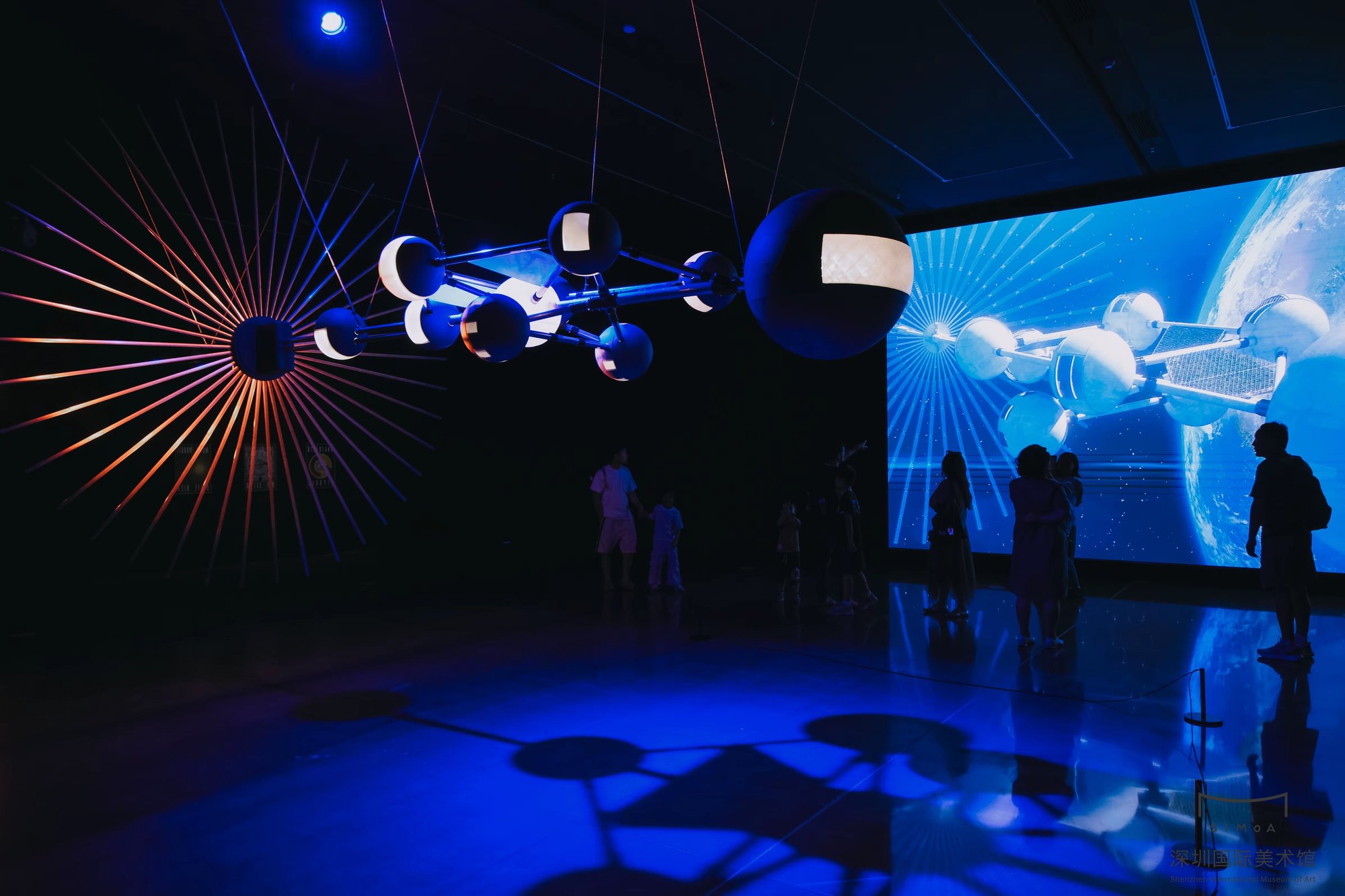
The exhibition is not organized by theme or chronology but unfolds across SIMoA like “a quantum field”, Wang says. While some works require prolonged looking, others respond to movement and audience activation.
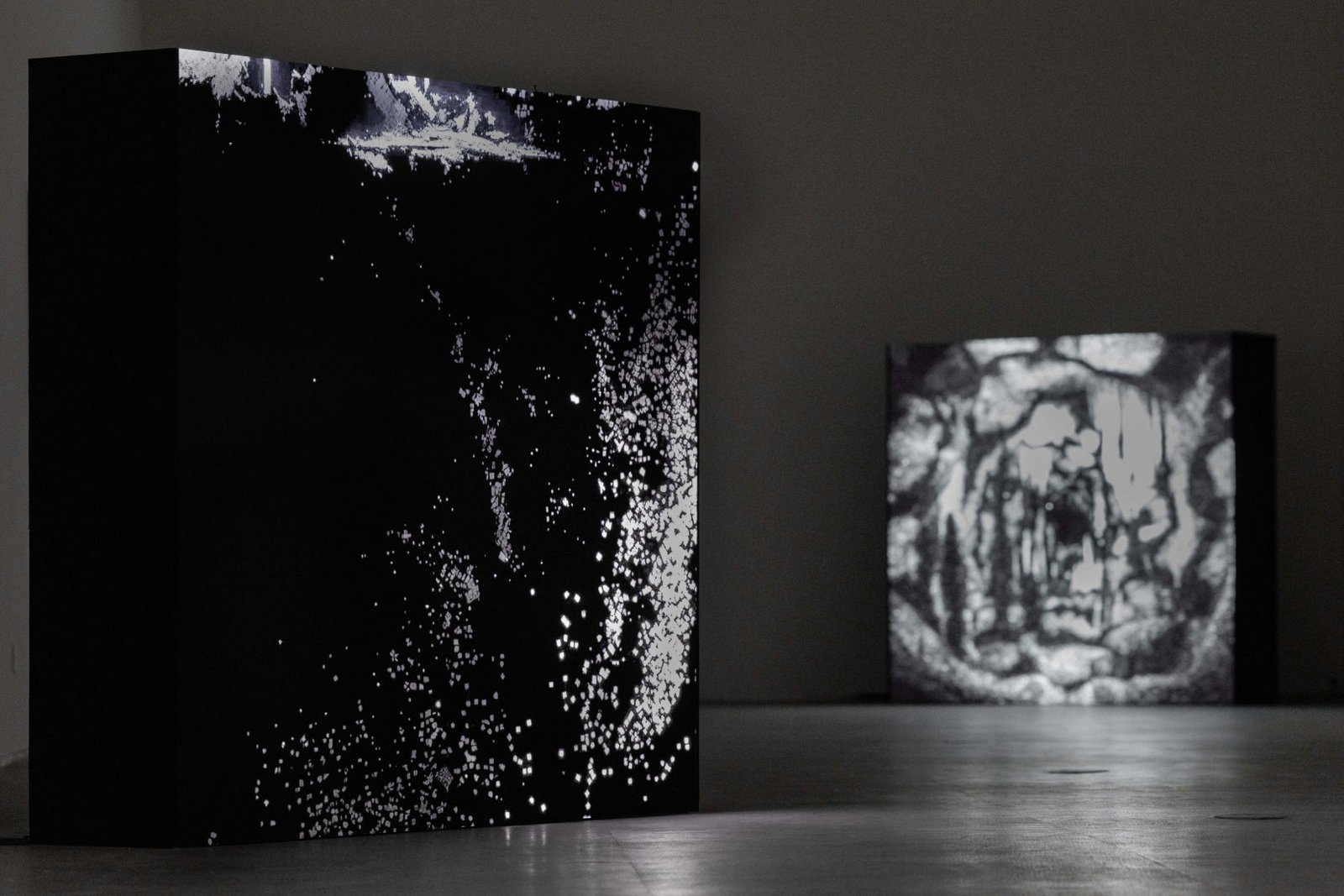
Libby Heaney, Shadowscapes (Wilderness Within), 2025. Courtesy of He Xu
“This is not a show to be ‘read’ in sequence but one to be wandered through — a space where meaning emerges not from the works in isolation but from the relations between them, and between them and you.” (Naiyi Wang)
A key example for this sort of work is Libby Heaney's Shadowscapes (Wilderness Within) (2025), an interactive generative four-channel sound environment. The work, described as a ‘self-playing instrument’, combines images of paintings by J.M.W. Turner with data from IBM’s publicly accessible quantum computers along with various sound materials (including AI-generated audio) that are recomposed in real time in response to the viewer’s input.
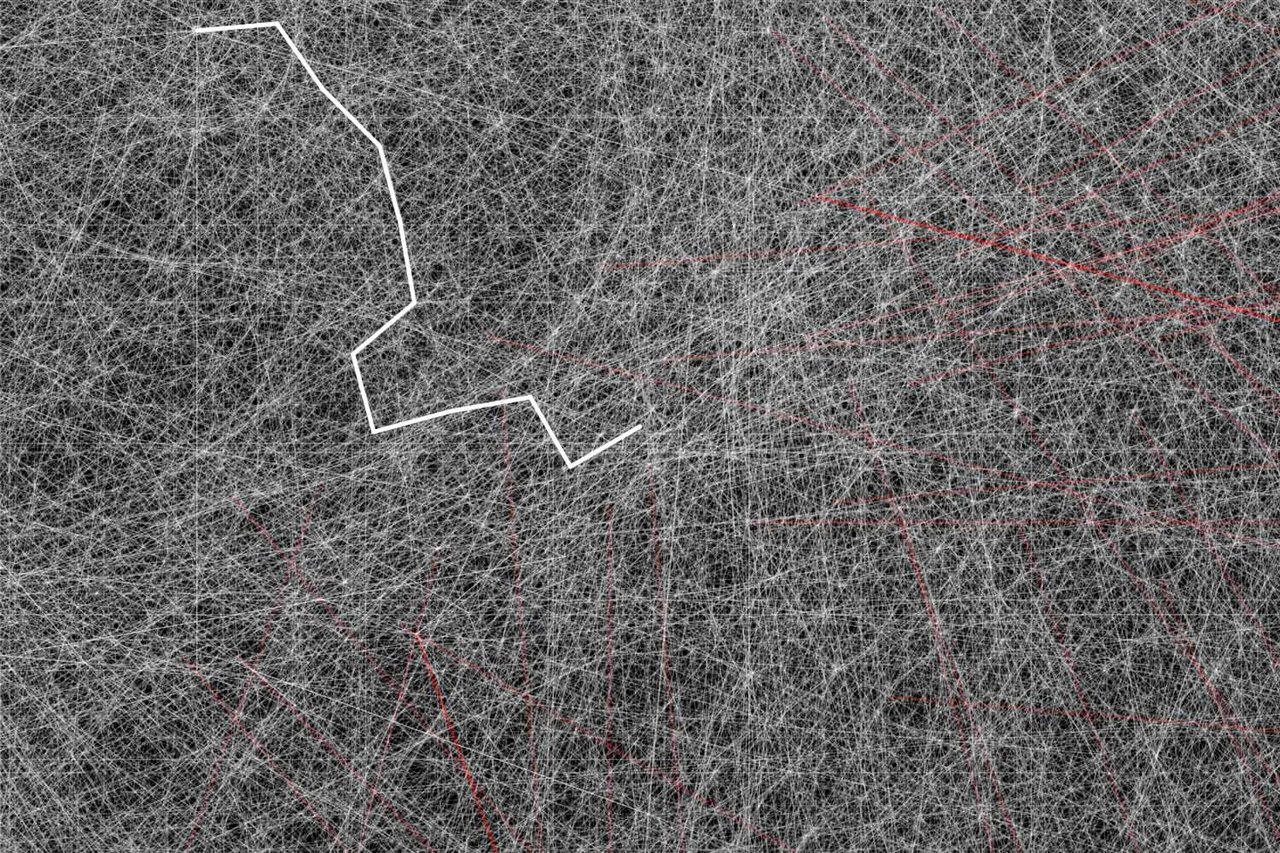
A number of the works in the show emerge relationally and form a bridge between the art and scientific communities. David Young’s Multiverse Maps (2022-2023) and Quantum Drawings (2021-ongoing) organize quantum data into visual representations to establish new insights by transforming computational measurements into aesthetic objects.
Semiconductor’s Light-in-Flight (2025) converts quantum principles into an object that can be grasped by the senses. The duo, working with physicists at the University of Glasgow, slowed the speed of light to a human-visible frame rate using a single-photon-detecting camera. “What you see is counterintuitive: a pulse of light traveling toward you arrives in reverse order due to the geometry of photon paths,” Wang explains. “It challenges our most basic intuition about time and perception.”
Semiconductor (Ruth Jarman and Joe Gerhardt), Light-in-Flight, 2025. Courtesy of He Xu
The audience data from the exhibition’s run so far reveals Shenzhen’s distinctive character: technology professionals make up around 35% of visitors, 25% are art and design practitioners, 20% are students, and 15% are visitors from nearby Hong Kong and the Greater Bay Area. It is also worth noting that the average age of Shenzhen’s population is 32.5. Wang says these factors are influencing the ways that audiences engage with the work.
“They aren’t ‘appreciating’ art in the traditional sense — they are reverse-engineering the work’s technical logic. I don’t see this as a misreading. On the contrary, it is Shenzhen’s unique mode of seeing.” (Naiyi Wang)
The Chinese curator and artist Li Zhenhua, who has been focused on digital art since the 1990s, says that the Biennale is “the right approach for Shenzhen”. He points to the Shanghai eArts Festival, a major international digital and electronic arts event that ran from 2007-09, as an early example of the appetite of Chinese audiences for such exhibitions.
Wang is also the director of the Beijing Art and Technology Biennale, which launched in 2022. Both biennials are supported through a combination of public and private funding, with the Shenzhen Biennale co-organized by SIMoA and SSTM, with institutional backing from the city. “Funding remains one of the most challenging aspects of this work,” Wang adds. “Biennials are costly, especially given our research-driven, commission-heavy model.”
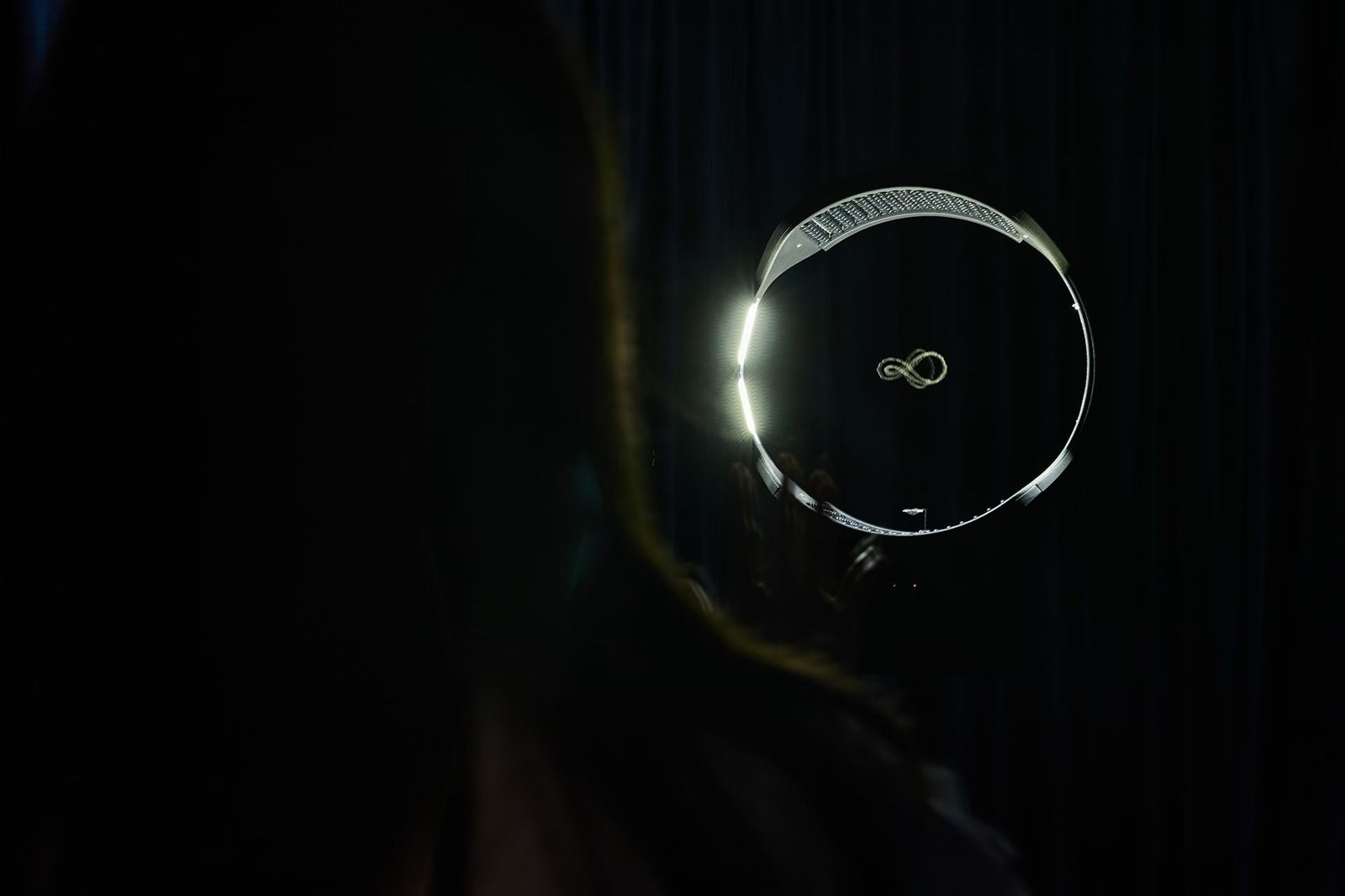
Seph Li, The Light Named You, 2026. Courtesy of He Xu
Commissioning new works is a central tenet of SATB, establishing the importance of supporting arts and artists through new production, rather than shipping in existing works from other contexts. Commissioned works include Yang Song’s Photon and π (2026), which translates the unmeasurable, mathematical nature of the number pi (π) into a physical sculpture of looping steel wire with light refracting along its infinite paths. Another example is Seph Li’s The Light Named You (2026) that uses cutting edge electronic technologies that track visitors’ hand gestures to manipulate a particle suspended in mid-air.
Shenzhen’s digital art institutions are soon set to expand. One of China’s largest online retailers, JD.com, announced that it will open the JD Museum in Shenzhen in late 2027. While the technology and entertainment conglomerate Tencent will launch the Róng Museum of Art in Shenzhen’s Nanshan District. “What is striking about both institutions is that they are not isolated cultural projects but are deeply integrated into their parent companies’ broader ecosystems,” Jun says.
David Young, Multiverse Maps, 2022–2023. Courtesy of the artist
“Both museums represent a shift from technology companies simply sponsoring art to technology companies building the institutional infrastructure for art itself.” (Fei Jun)
Clara Che Wei Peh, a curator and arts writer from Singapore, points out that big technology firms’ involvement in digital art is nothing new. The decision of the the JD Museum and Róng Museum of Art to locate themselves in Shenzhen is what is interesting. “They sit at the source: this is where the hardware behind these very technologies gets manufactured, and where many artists I know already travel to procure equipment,” Peh says. “I am curious as to whether cultural institutions originating from the tech companies themselves will see these technologies differently.”
For Jun, “What makes Shenzhen distinctive is that the digital art scene here is not simply about artists using new tools — it is about a fundamental rethinking of how art and technology can co-evolve. The future of this intersection lies not in technology serving art, nor art illustrating technology, but in their mutual interrogation — each pushing the other to ask deeper questions.”
Aimee Dawson is a British art writer and editor. Among her areas of specialty are social media, the digital sphere and art and culture in the Middle East. She is a Contributing Digital Editor at The Art Newspaper. Her writing has appeared in Apollo, Artnet, Artsy, V&A Magazine, and Cultured Magazine, among others, and she was a contributing writer to the book African Artists (Phaidon, 2022). She is also a Guest Lecturer at SOAS, University of London.