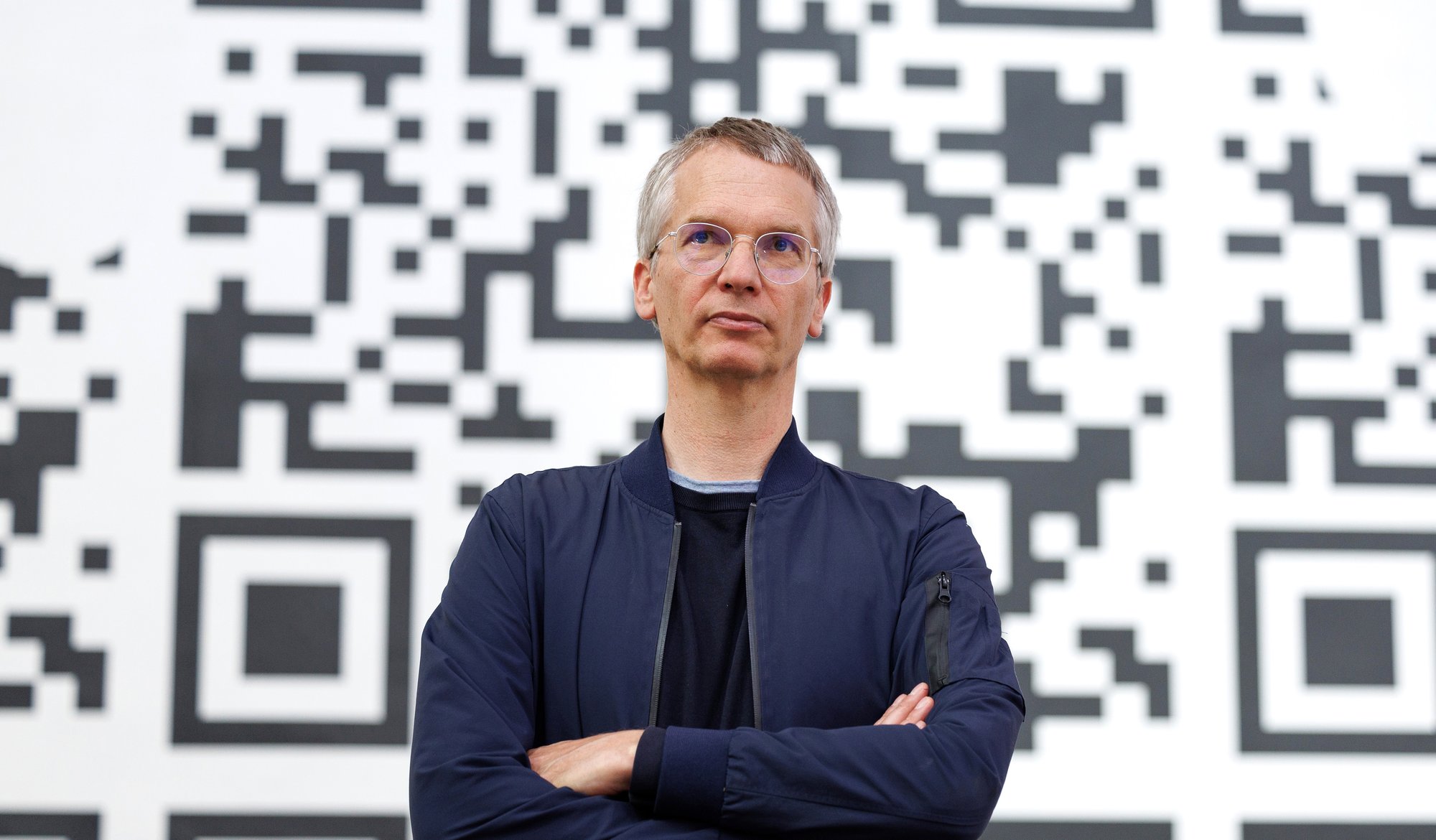
For more than 20 years, the artist has taken online art into physical spaces, from the era of internet cafés onwards. Now that the internet is everywhere, and AI may soon browse it for us, he asks what will be left of the web if we stop visiting it
How do you exhibit digital art? If a work lives online and anyone can see it from home, why go somewhere else to look at it?
The German conceptual artist Aram Bartholl has been asking questions like this for more than two decades. Where is the internet? Is it a public space? What happens when something made for a screen enters the street, a gallery, or a museum? Trained as an architect, Bartholl has approached digital culture through the spaces, objects, and people around it. He embedded USB drives into walls for Dead Drops, brought elements from computer games into the city, followed Google Street View cars, and turned the brightly colored bikes and scooters of start-up culture into material for his work.
But what happens to that practice when the distinction between online and offline has all but disappeared? Bartholl is asking himself what kind of work he can still make. Humor has always been central to his work, but at a moment of wars, political upheaval, and increasingly hostile social media, even that feels less straightforward.
“Maybe Aram Bartholl’s funny phase is over,” he says.
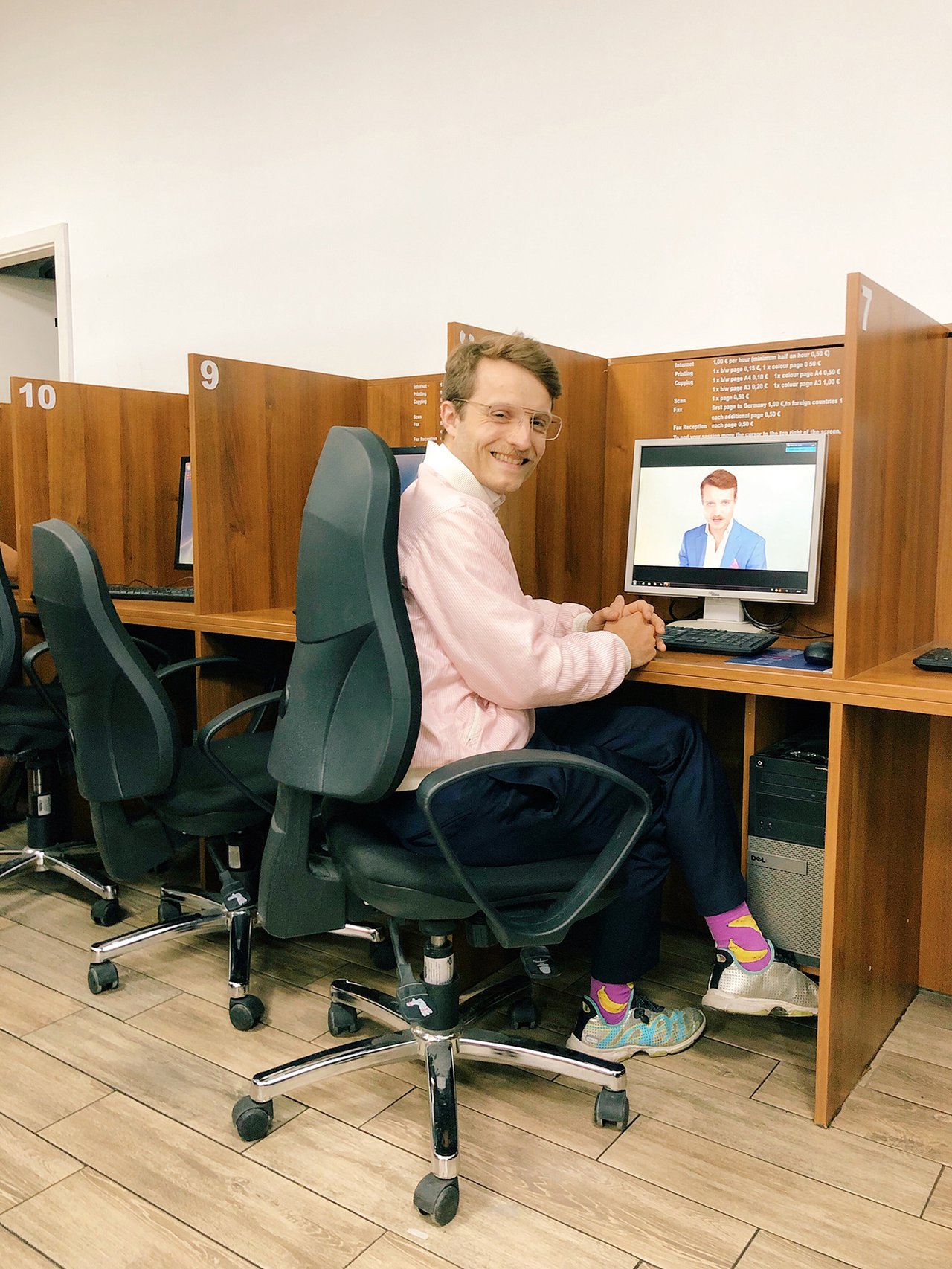
The location for the exhibition “FACE THE FACE | A Speed Show on the Post-Digital Self”, curated by Anika Meier & Aram Bartholl, on July 5, 2019, Internet Cafe – Midnightshop, Schönhauser Allee 188, corner of Torstraße, 10119 Berlin. Courtesy of Anika Meier
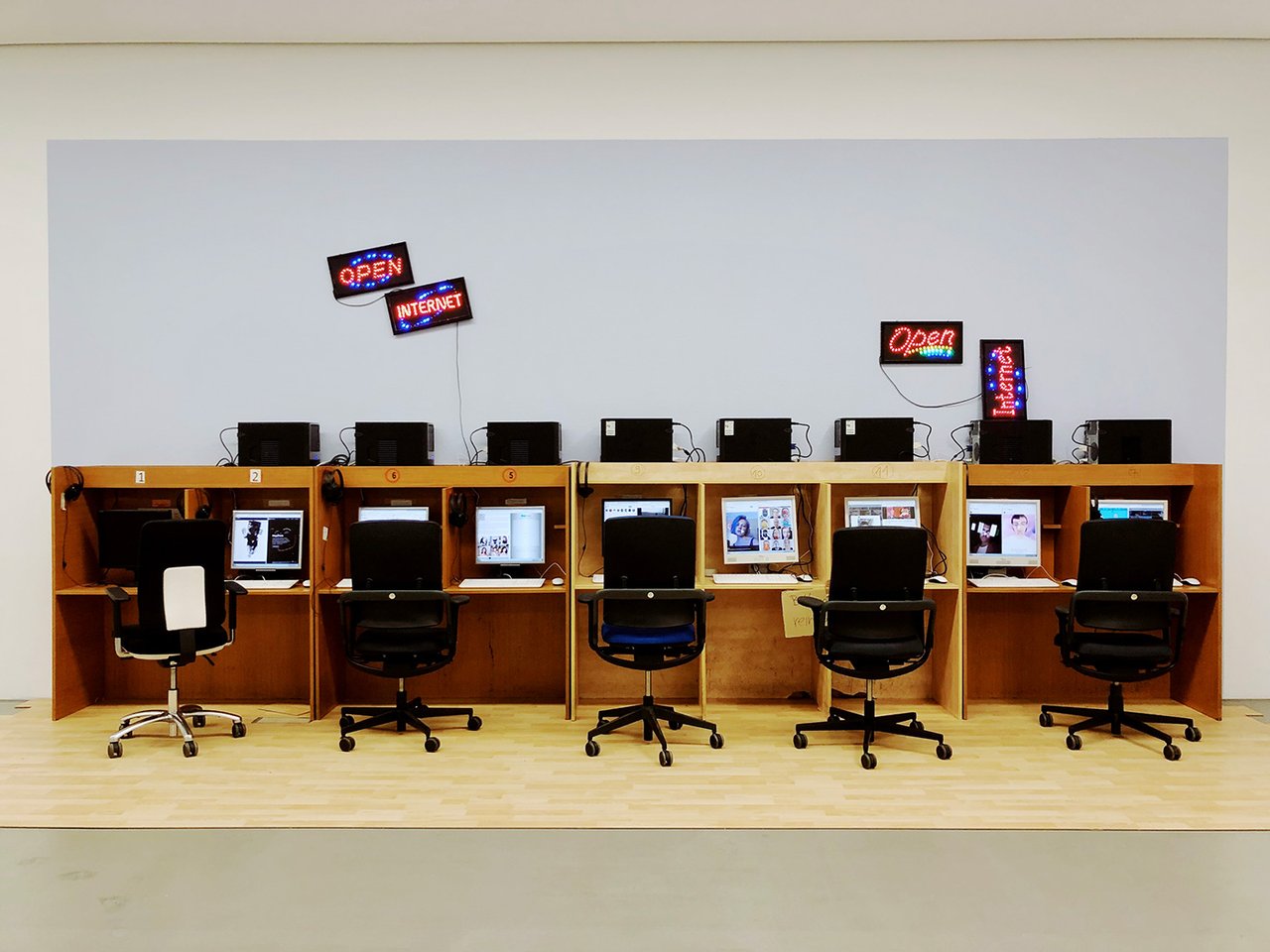
In 2010, Bartholl started Speed Show, an open exhibition format that used the computers of working internet cafés to show browser-based art. In 2019, Bartholl and I curated “FACE THE FACE | A Speed Show on the Post-Digital Self” in an internet café in Berlin. Later that year, for my exhibition “Link in Bio” at the Museum of Fine Arts Leipzig, we went one step further: we bought the interior of an old internet café on Kottbusser Damm and moved it into the museum.
Fifteen years after the first Speed Show, the internet café has almost disappeared, while the questions behind it have not. Digital art moved from websites to social media and NFTs, and the internet from something we accessed to something embedded in everyday life.
Now websites are being rediscovered, artists are looking back at the early web, and AI agents raise another question that Bartholl asks in this conversation: What will be left of the web if we stop visiting it ourselves?
For Right Click Save, I spoke with Bartholl about what it means to make, show, and find an audience for art online; why bringing people together still matters when everything is accessible from home; and what happens to an artistic practice built around making the digital visible once the distinction between online and offline has all but disappeared. We also discuss the NFT boom and its rewriting of digital art history, how social media changed the job of the artist, and what might come next.
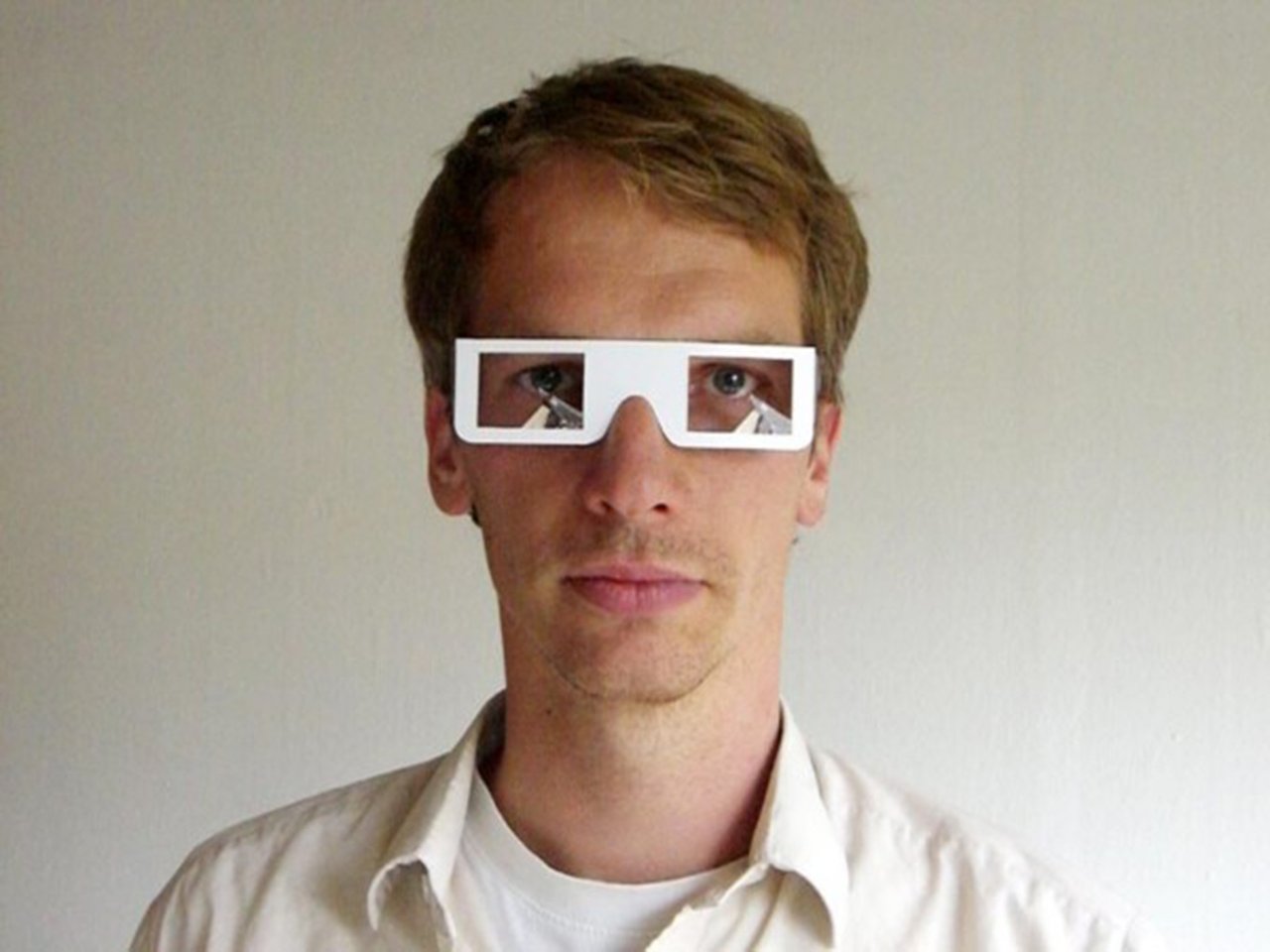
Aram Bartholl wearing the glasses from his First Person Shooter, 2006. Mixed media. Courtesy of the artist
Anika Meier: We’re going through a period of nostalgia for the early web right now. Net art is being revisited and exhibited again, including works that were originally made to be experienced in a browser. You started Speed Show in 2010, taking over all the computers in a working internet café for one night to show browser-based art. Fifteen years later, what is it like to see this renewed interest?
Aram Bartholl: I was always asking myself, how do you exhibit digital art? There have been many different approaches since, from works running on routers to exhibitions you access on your own phone. For the early net art pioneers, net art was something you experienced at home on your computer. I was interested in a different question: Where is the internet in public space? I had started asking myself that in the early 2000s, when we didn’t yet have the internet on our phones. And by 2010, the internet café was already retro. They still existed, but they were already old. The iPhone had been around for several years.
Speed Show was very explicitly an open format, with instructions that anyone could use. And people did. Other formats developed around it as well. Rafaël Rozendaal started Bring Your Own Beamer shortly afterwards. That was a completely different format, but it came out of a similar moment
The artist Andy Kassier in front of his artwork on view as part of the exhibition “FACE THE FACE | A Speed Show on the Post-Digital Self”, curated by Anika Meier & Aram Bartholl, on July 5, 2019, Internet Cafe – Midnightshop, Schönhauser Allee 188, corner of Torstraße, 10119 Berlin. Courtesy of Anika Meier
AM: I remember when we did a Speed Show together in 2019, you cycled all over Berlin trying to find an internet café and could barely find one. Fifteen years after the first Speed Show, internet cafés have largely disappeared, and smartphones have made the internet almost permanently present. How have you experienced that shift?
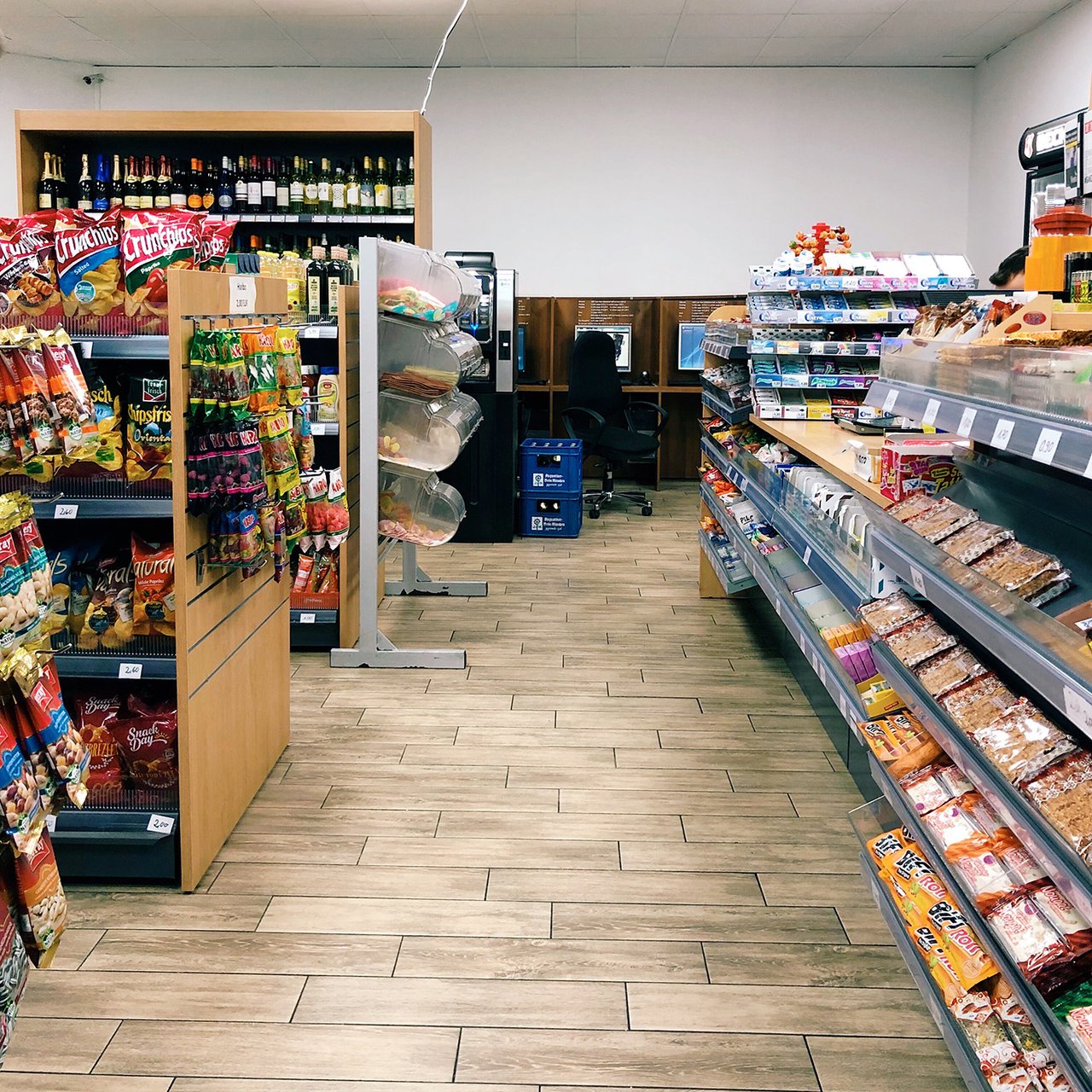
AB: There’s a photograph from the first Speed Show on Kottbusser Damm in 2010. The internet café was in the back, the Späti was in the front, and above it was this huge sign that just said “INTERNET”. You walked in underneath it. I loved that very literal question: Where is the internet?
That question has run through my work from the beginning. I originally trained as an architect, so I was always interested in space and the city. What happens to a city when the internet arrives?
A lot of my early works took something from a computer game and placed it in urban space. What happens when something that belongs to digital space suddenly becomes physical?
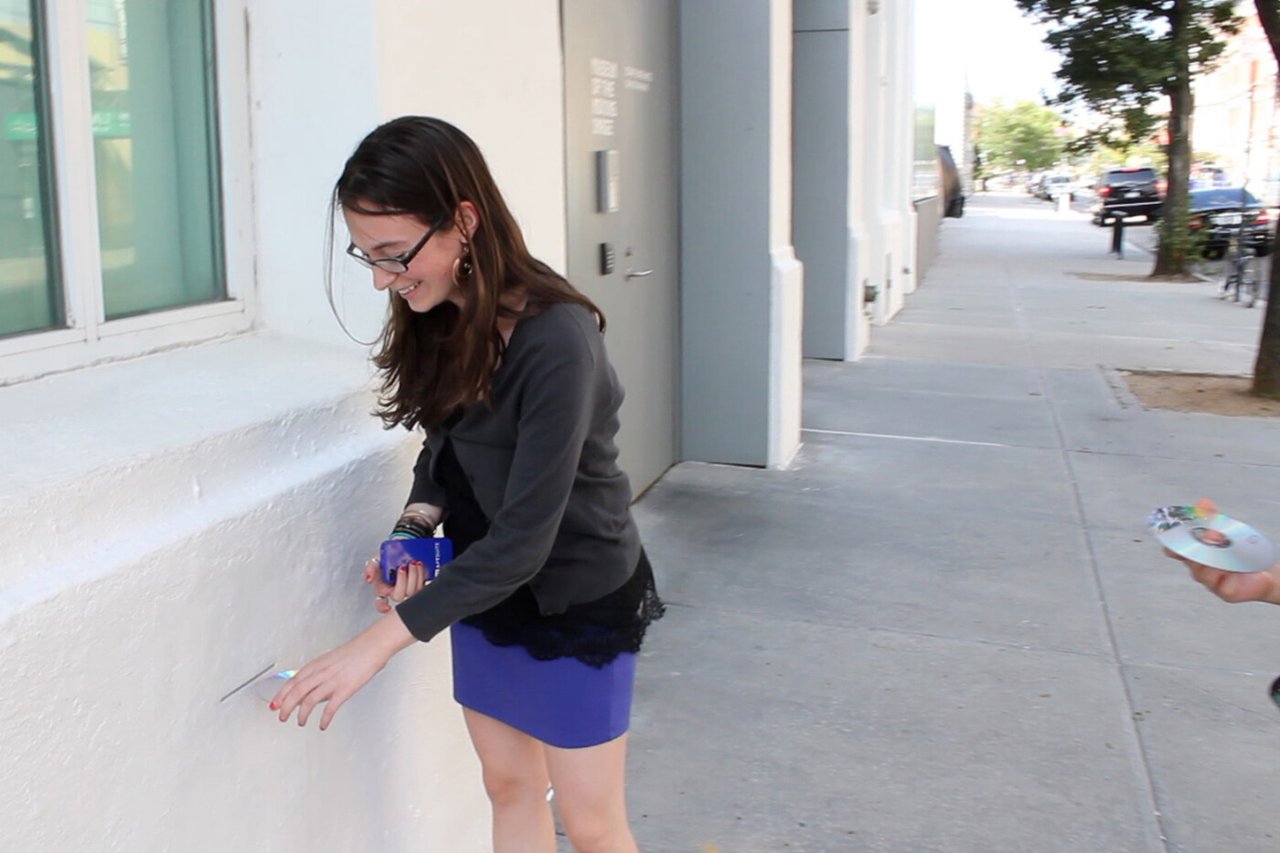
Aram Bartholl, Dead Drops, 2010. Mixed media. Courtesy of the artist
Aram Bartholl, Dead Drops, 2010. Mixed media. Courtesy of the artist
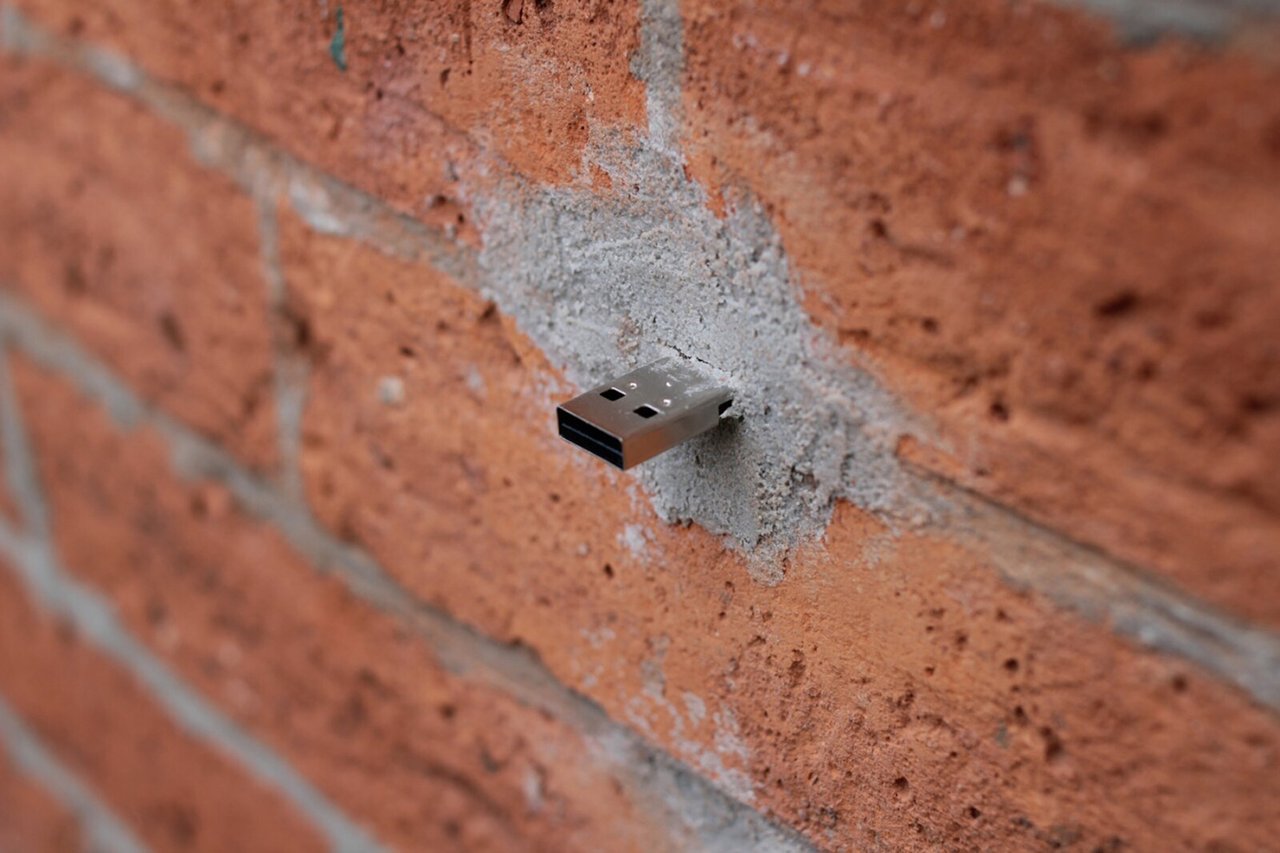
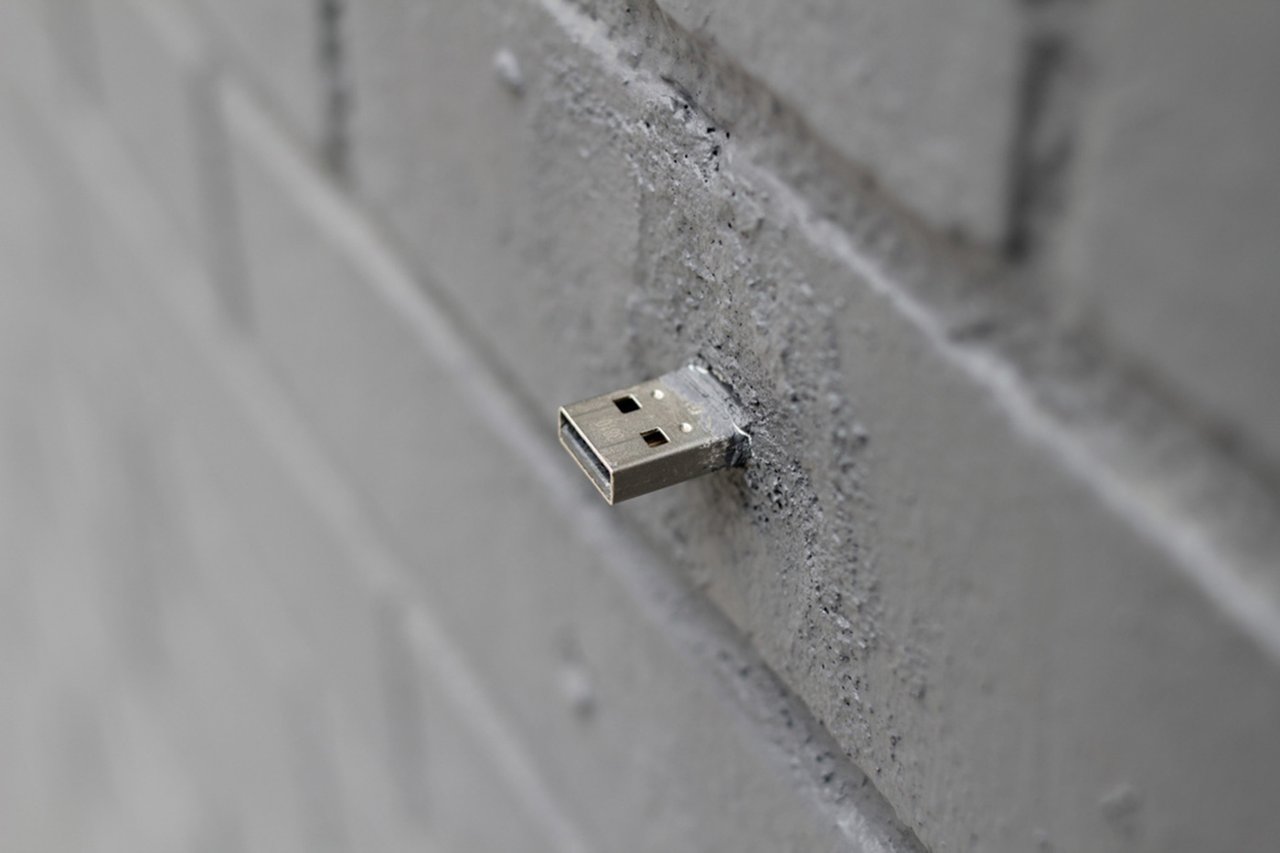
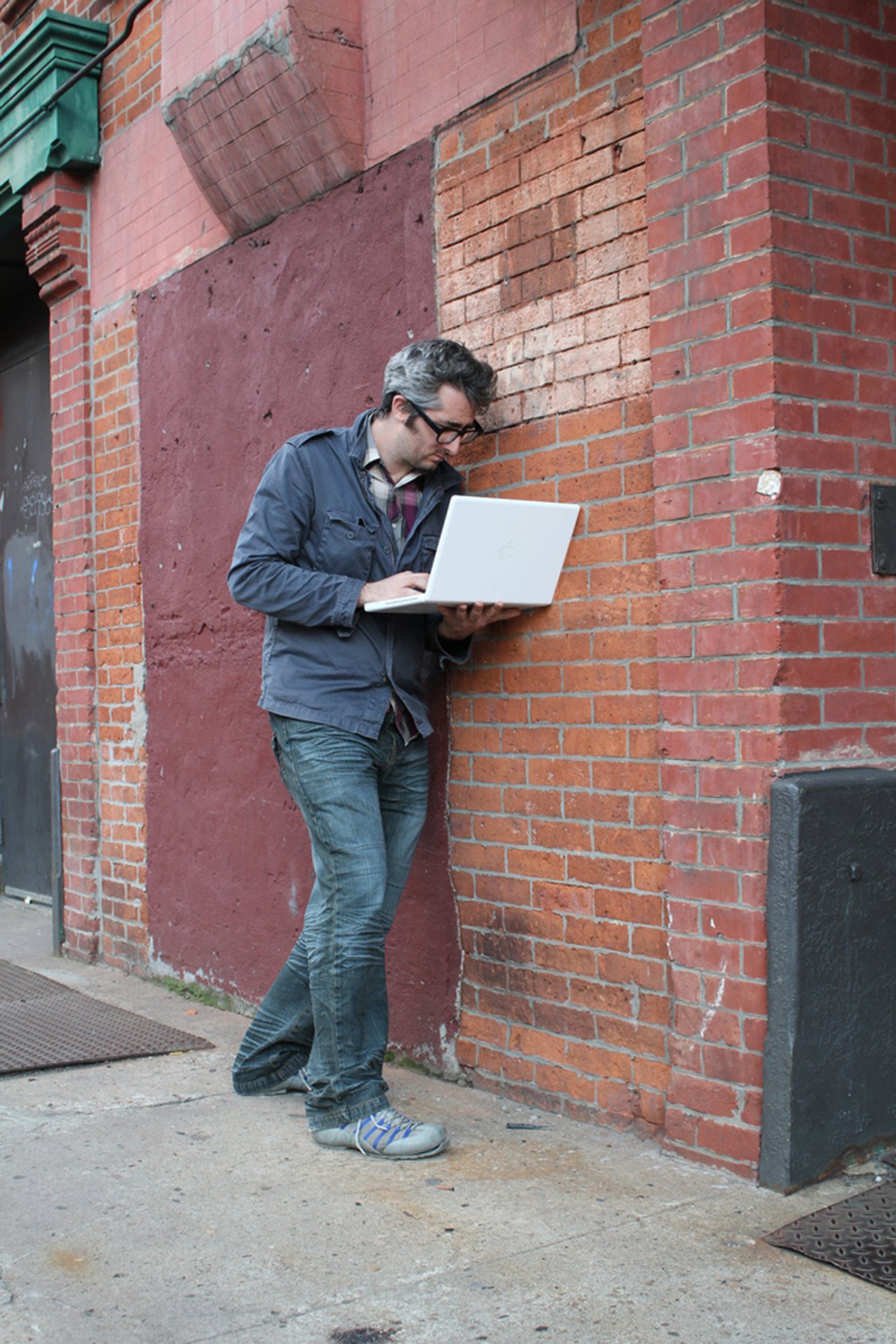
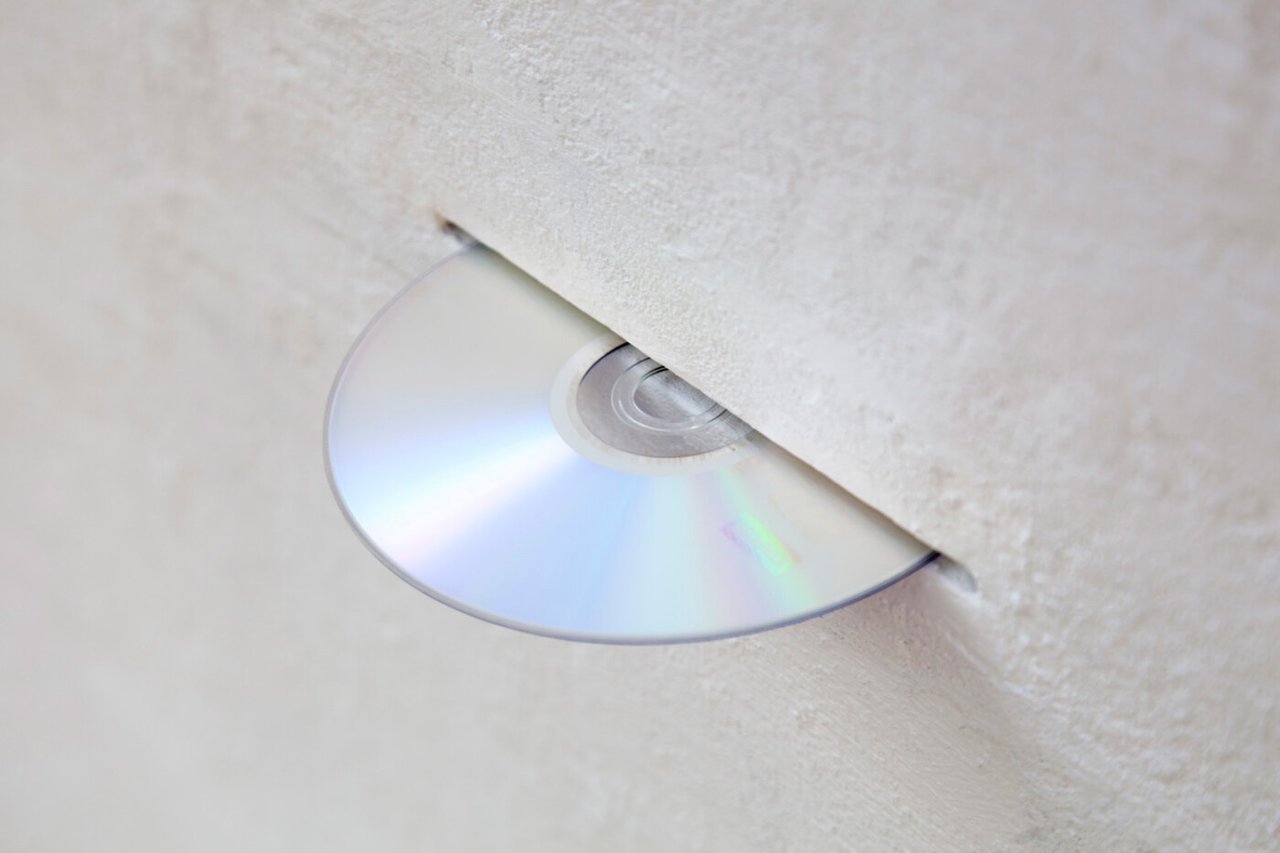
Dead Drops came out of the same thinking. I embedded USB drives in walls in public space, starting with one in a brick wall in Brooklyn in 2010. People kept telling me how dangerous it was because the drives could contain viruses, but that was part of what made the gesture interesting. You plug your computer directly into a wall, and suddenly the building itself becomes a data carrier. What does that make the building? What does it mean to put data in the city rather than access it through a browser at home?
And that leads to a bigger question: What does all of this mean for public space? Is the internet itself a public space? Well, not really. We spend most of our time on privately owned platforms. That question has only become more urgent as a handful of companies have taken over more and more of the internet.
And now we have this whole discussion around AI agents. What will be left of the web if we no longer visit websites ourselves? Is the web itself under threat?
At the same time, that might explain some of the nostalgia we’re seeing. Making your own website is cool again. So is burning CDs, or restoring old phones and putting things on them. I see it with my students. They’re fascinated by devices they never actually used themselves, things that disappeared before their time.
Aram Bartholl, Dead Drops, 2010. Mixed media. Courtesy of the artist
AM: Do you feel nostalgic when you think about the internet before the iPhone?
AB: With the internet, I’m less nostalgic than frustrated by the debates around it. Politically, there’s always some new proposal that sounds good but doesn’t really address the problem. Now they want to ban social media for children instead of properly regulating the platforms.
AM: Has the way you make work changed along with the internet?
AB: My works might be workshops where we go out into the city as a group, or performances where we walk around with World of Warcraft usernames above our heads. You take something from the internet and put it into physical space, and then you can start talking about what is actually happening online. I think that’s what I became known for. I wouldn’t describe myself as a net artist.
I haven’t made that many works that exist directly on the internet. I’ve always made work about digital space.
There used to be this constant distinction between digital and analog. People still make it, but everything is now so intertwined that it’s becoming impossible to separate the two. And these new AIs may in some ways be more like analog brains than digital programs. There are strange overlaps that can’t really be disentangled anymore. That’s actually where I find myself asking: What kind of work do I make now? Because that act of translating something from the digital into the physical, which was so central to my work, has in a way explained itself.
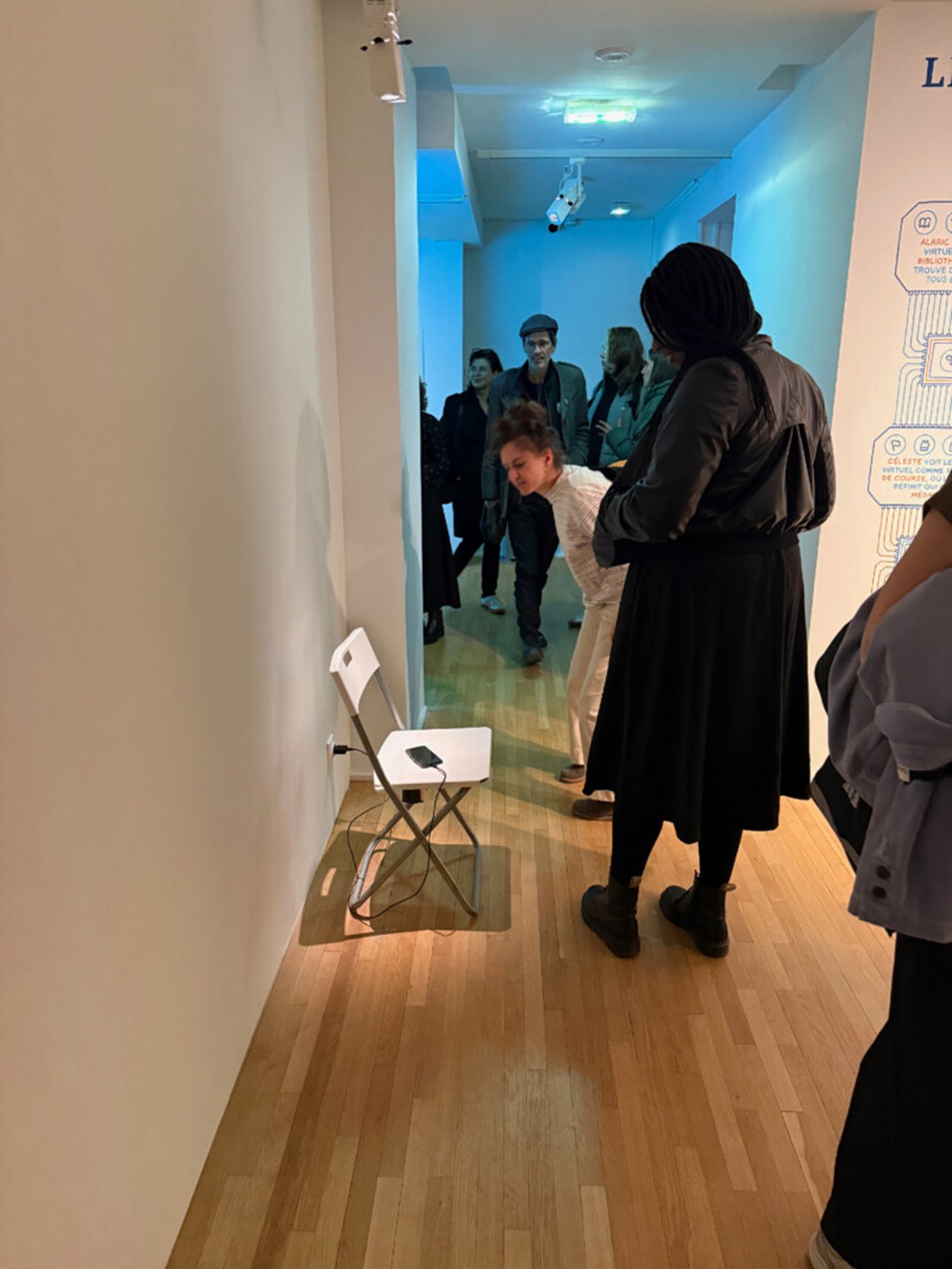
Installation view, “Me and Others: Artists’ Perspectives on Our Online Lives”, EDF Foundation, Paris, 2026, with work: Aram Bartholl, On the Brink (2024). Mixed media. Courtesy of the artist
Installation view, “Me and Others: Artists’ Perspectives on Our Online Lives”, EDF Foundation, Paris, 2026, with work: Aram Bartholl, On the Brink (2024). Mixed media. Courtesy of the artist
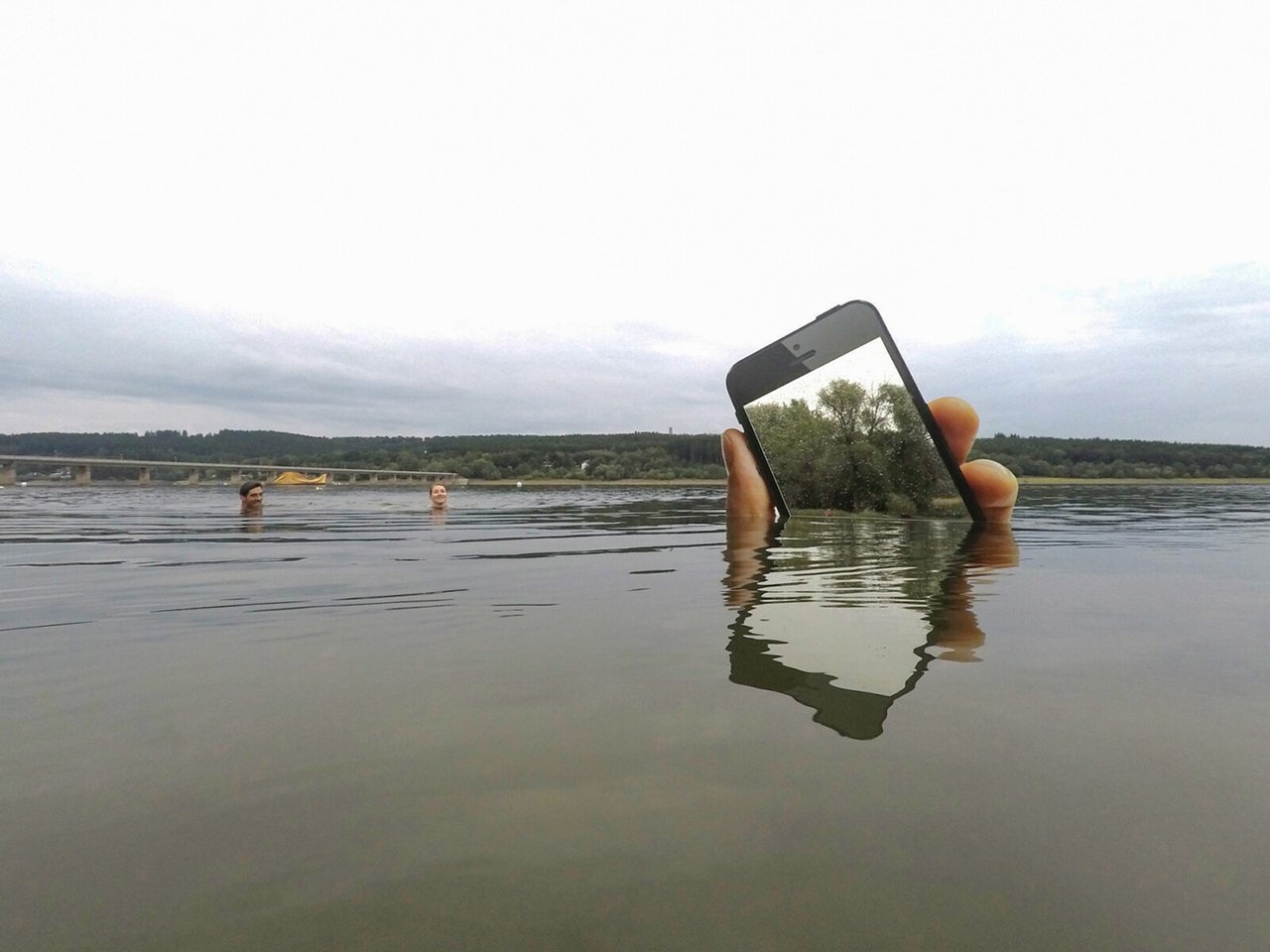
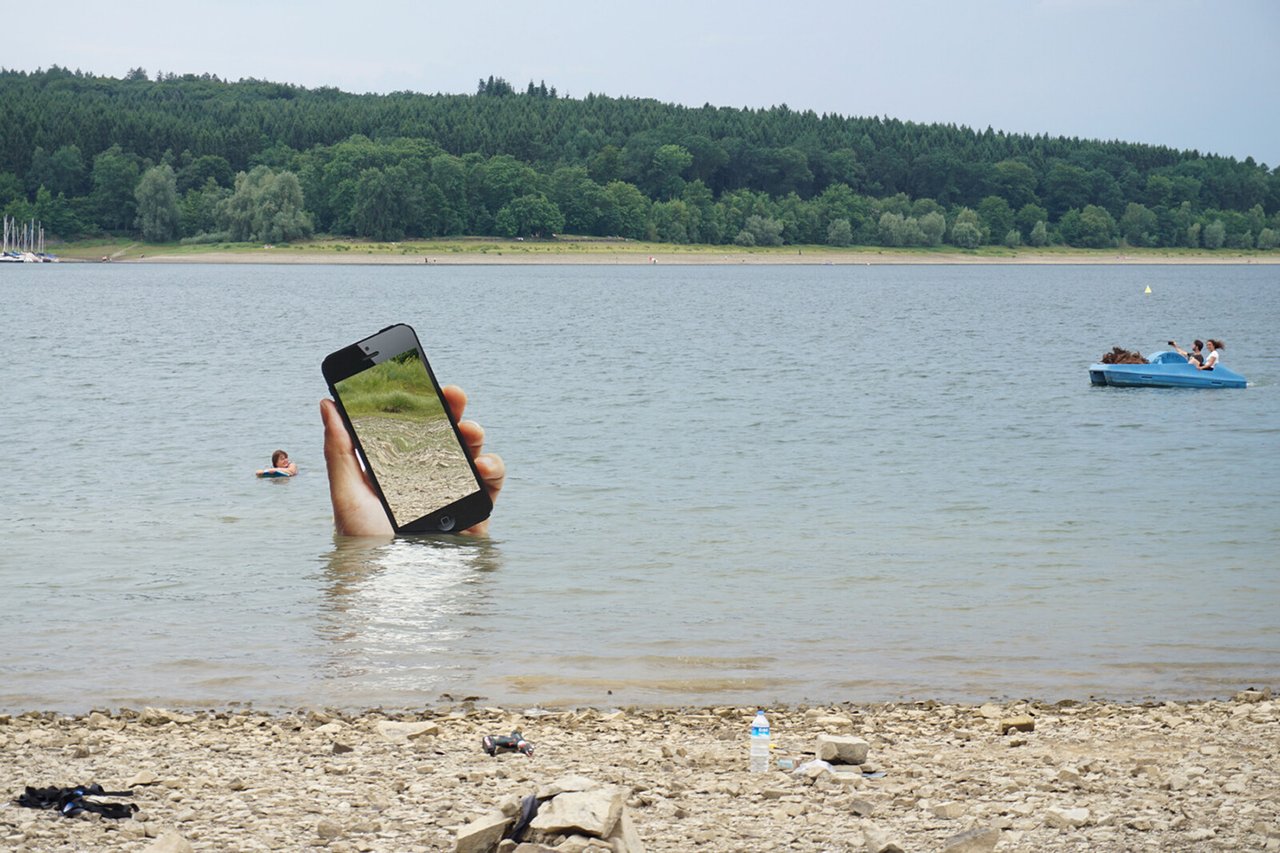
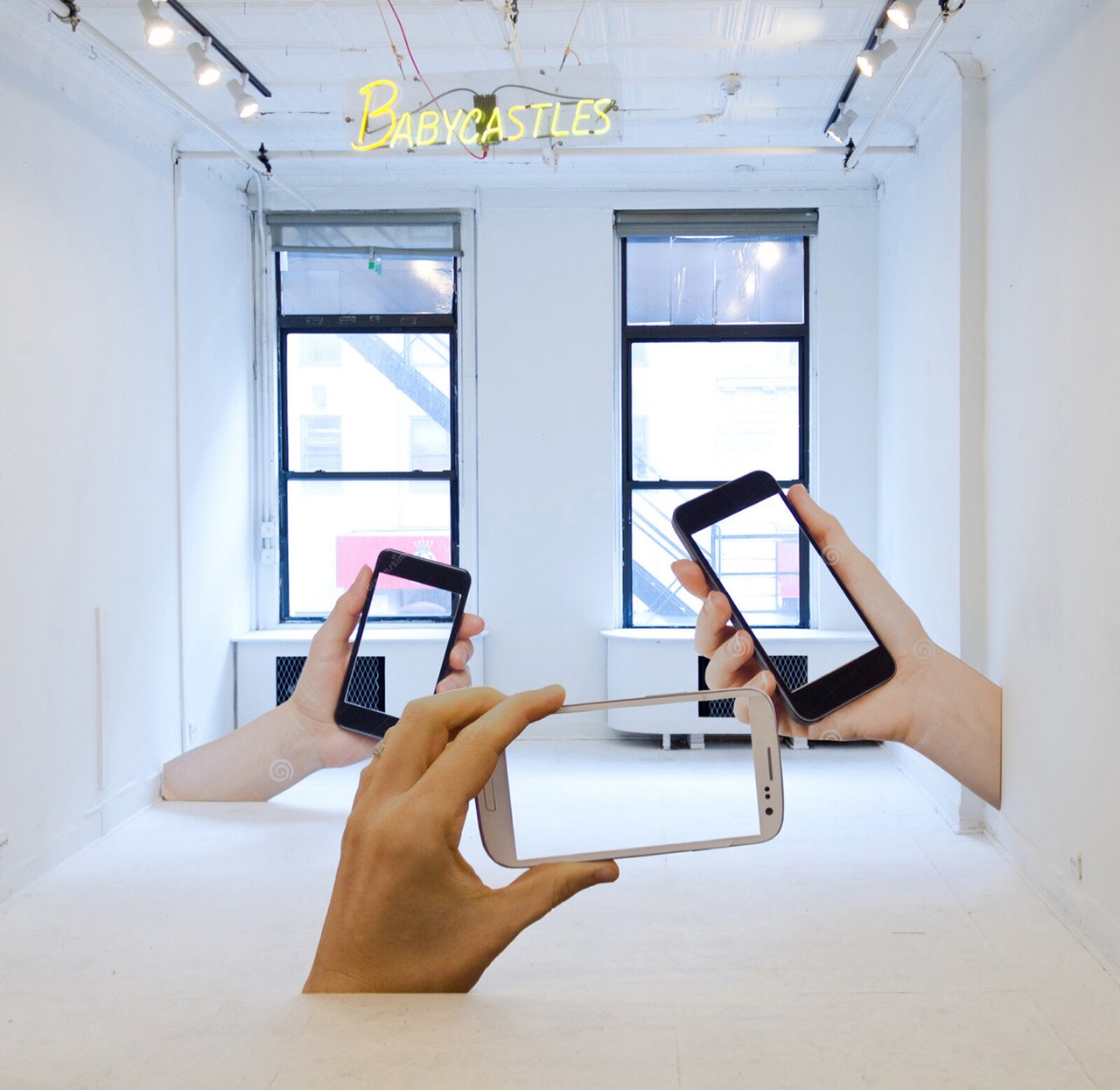
AM: You’ve spent much of your career taking things from the screen and bringing them into physical space: data with Dead Drops, elements from games, Google Street View, even giant smartphones people could pose inside. And now that digital culture has become inseparable from everyday life, what is left for you to do?
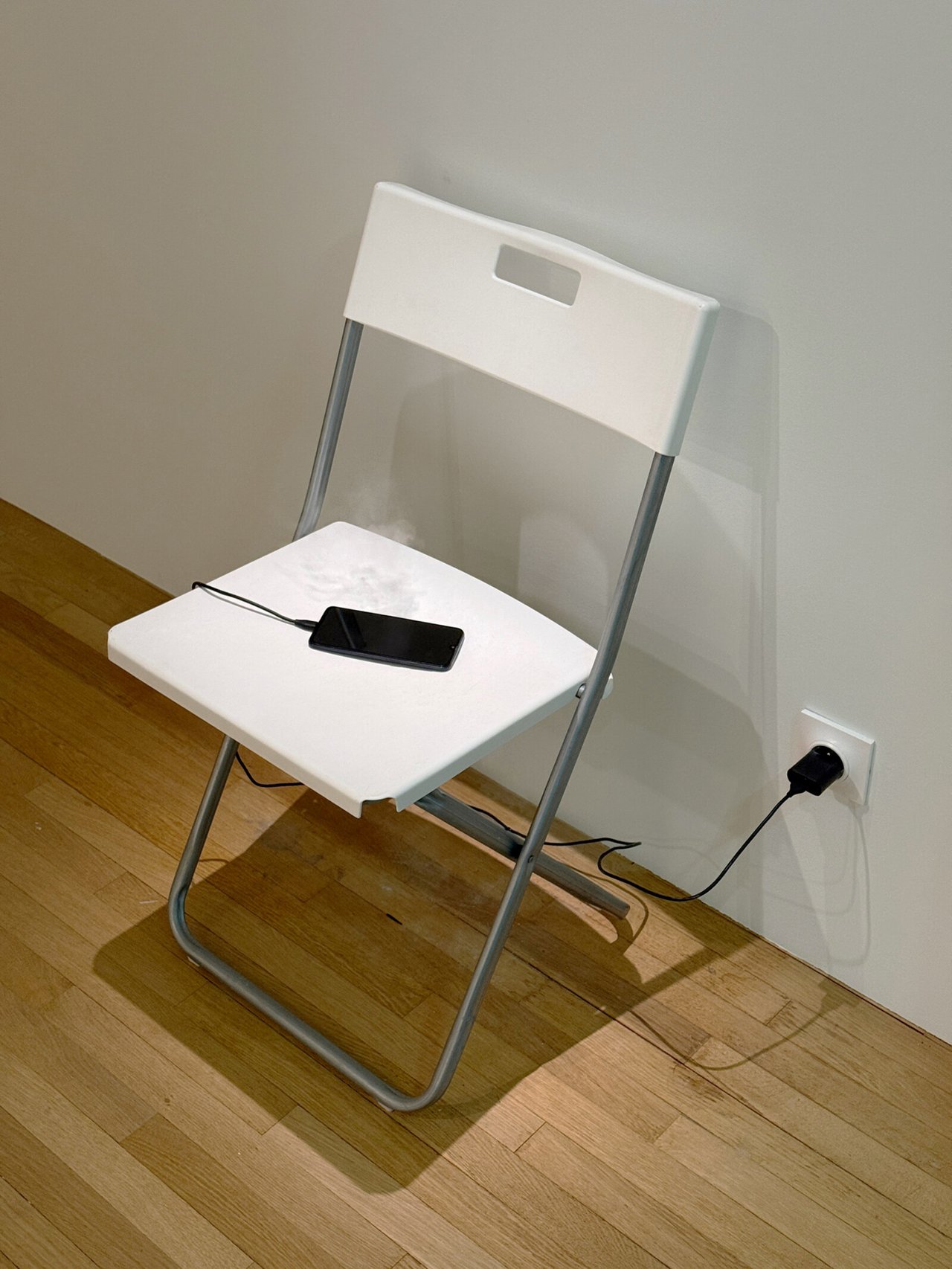
AB: That’s the question: Can you keep playing that game? I think there have been different phases. One of the more recent works that’s still very important to me is On the Brink from 2024. It’s a smartphone lying on a chair in a museum, plugged into the wall to charge, with a little bit of smoke coming from it. When you enter the room, you first think it’s the museum attendant’s chair. But where is the attendant? Then you notice that the phone is smoking. There’s this slightly alarming sense that it might catch fire. It’s fun to watch people encounter it. They walk past at first and then suddenly get a fright. Sometimes people have even unplugged the charging cable.
For me, the work captures something about the overheated atmosphere of social media and politics. Twitter and the other platforms have become incredibly charged spaces. They no longer function particularly well as spaces for discussion. Everything has become extremely loud and increasingly right-wing. All of that compressed madness is inside this phone that is literally on the brink, about to catch fire. But underneath the chair there’s actually just a water vaporizer, basically a humidifier producing the mist.
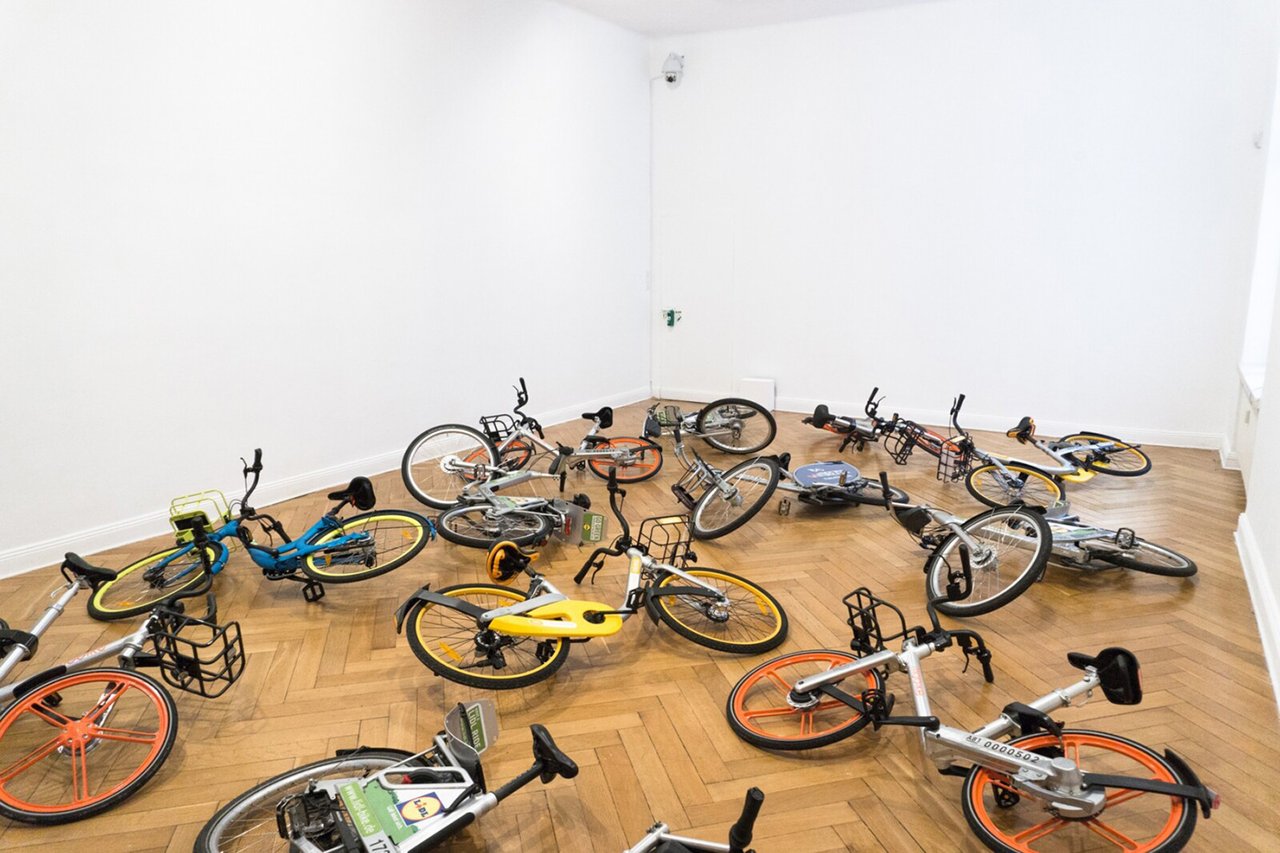
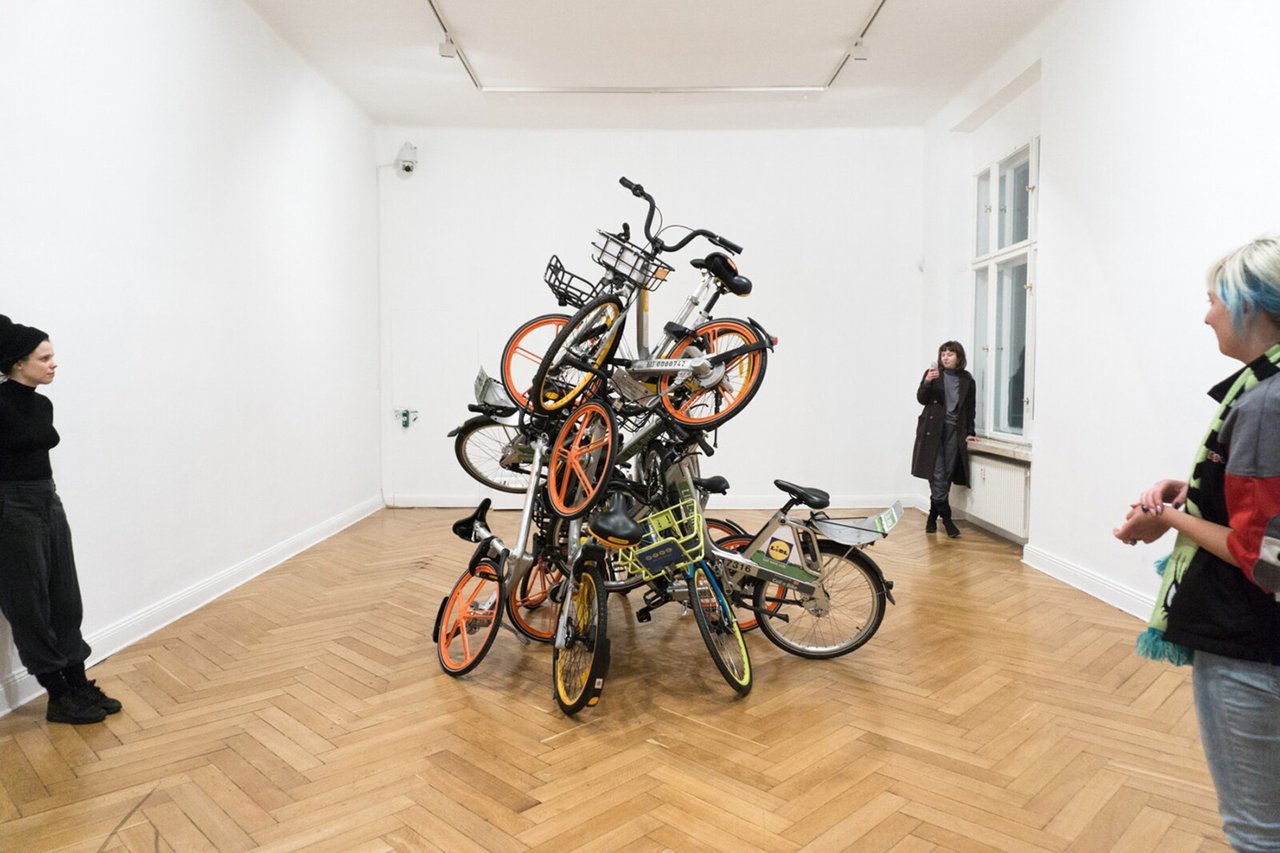
Aram Bartholl, Your Parcel Has Been Delivered (To Your Neighbour), 2018. Mixed media. Courtesy of the artist
Aram Bartholl, Your Parcel Has Been Delivered (To Your Neighbour), 2018. Mixed media. Courtesy of the artist
AM: What is it about this particular moment that On the Brink captures?
AB: With Meta, Twitter, and the other platforms, outrage is built into the system. We know how these algorithms work: if I post something that makes other people angry, it performs better. Negative emotions travel further, so the platforms actively amplify them. That’s how they’re designed, and that’s where regulation needs to happen.
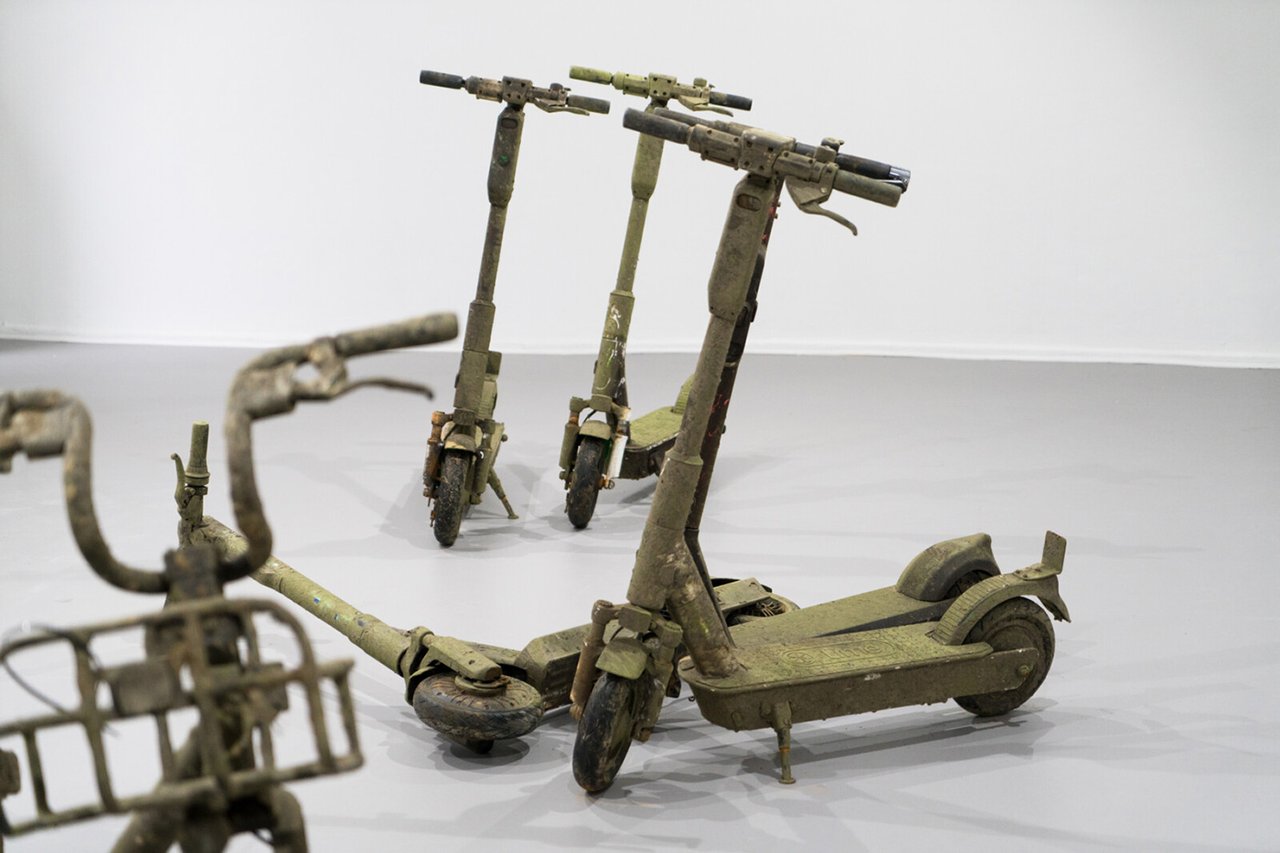
There are other works where I’ve looked at what happens when the logic of digital platforms becomes physically visible in the city. I worked with all those brightly colored rental bikes and scooters that suddenly flooded the streets for a show called Your Parcel Has Been Delivered (To Your Neighbour) at Import Projects Berlin in 2018. They almost looked like colorful icons from the internet that had materialized everywhere in urban space. For me, they embodied that whole venture-capital start-up mentality of “we’re going to disrupt this.” These services had largely existed online, and suddenly that logic became physically visible. I started bringing the bikes into the gallery. If I rent one and take it out of public space and into a private gallery, who does it belong to at that moment? The company? Me, because I’m renting it? Am I even allowed to take it inside?
Then there were the scooters people threw into canals. I pulled some of them out, and after a year underwater they looked like dinosaurs from the Stone Age. Suddenly all these other questions became visible too, about sustainability and the way these platforms operate.
Companies carelessly dump 10,000 scooters into Berlin, and teenagers just as carelessly dump them into the nearest canal. There’s something about digital culture and the start-up economy in that. Once their logic enters physical space, you can see very clearly where it breaks down
Aram Bartholl, DVD Dead Drop, 2012. Mixed media. Courtesy of the artist
Aram Bartholl, DVD Dead Drop, 2012. Mixed media. Courtesy of the artist
AM: You just asked yourself what kind of work you can still make. What do you mean by that?
AB: I recently gave a talk in Rotterdam, and someone said, “But there’s always been so much humor in your work. The things you make are funny.” And I thought, maybe Aram Bartholl’s funny phase is over. Maybe there’s a new phase coming. I’m genuinely struggling with that at the moment. I still have lots of ideas, but then I think: Do I really want to make this now?
With the wars going on, the debates around elections, the political situation in Berlin, everything feels pretty mind-melting. To then come along and say, “Hey, here’s this funny project I made” feels difficult right now.
AM: You’ve also spent a lot of time thinking about how to exhibit digital art. With Speed Show, anyone could already see the works online. There was no practical reason to go to an internet café to see them. So why bring people there?
AB: I don’t remember exactly how it started. I was part of F.A.T. Lab, the Free Art and Technology Lab, at the time, and the question came up: Should we do an exhibition? How do you exhibit these projects? And somehow the obvious answer was: in an internet café.
Aram Bartholl, Obsolete Presence, 2017. Mixed media. Courtesy of the artist
Aram Bartholl, Obsolete Presence, 2017. Mixed media. Courtesy of the artist
But the bigger answer is that a lot of my work has always involved creating a social space. Whether it’s a workshop or something we do together as a group, bringing people together is important. That’s also what matters about an exhibition opening: you’re physically in the same place and you talk to each other. We can all sit at home and visit the same website or look at a digital exhibition, but then we don’t come together. That’s the crucial difference. This social space runs through my work in different forms, whether it’s a workshop or a group of people walking through the city doing something together.
With Speed Show, I initially thought it would be funny to pretend to have an exhibition in an internet café. Then I thought, “Wait, that’s actually a good idea.”
The net art pioneers, whose work I only really discovered retrospectively, told me that people had talked about doing something like that, but nobody had actually done it as far as I know. I also remember Documenta [exhibition] in 1997, where net art was shown on computers in a dedicated space. That may have been somewhere in the back of my mind as well, although I remember their setup being more like an office.
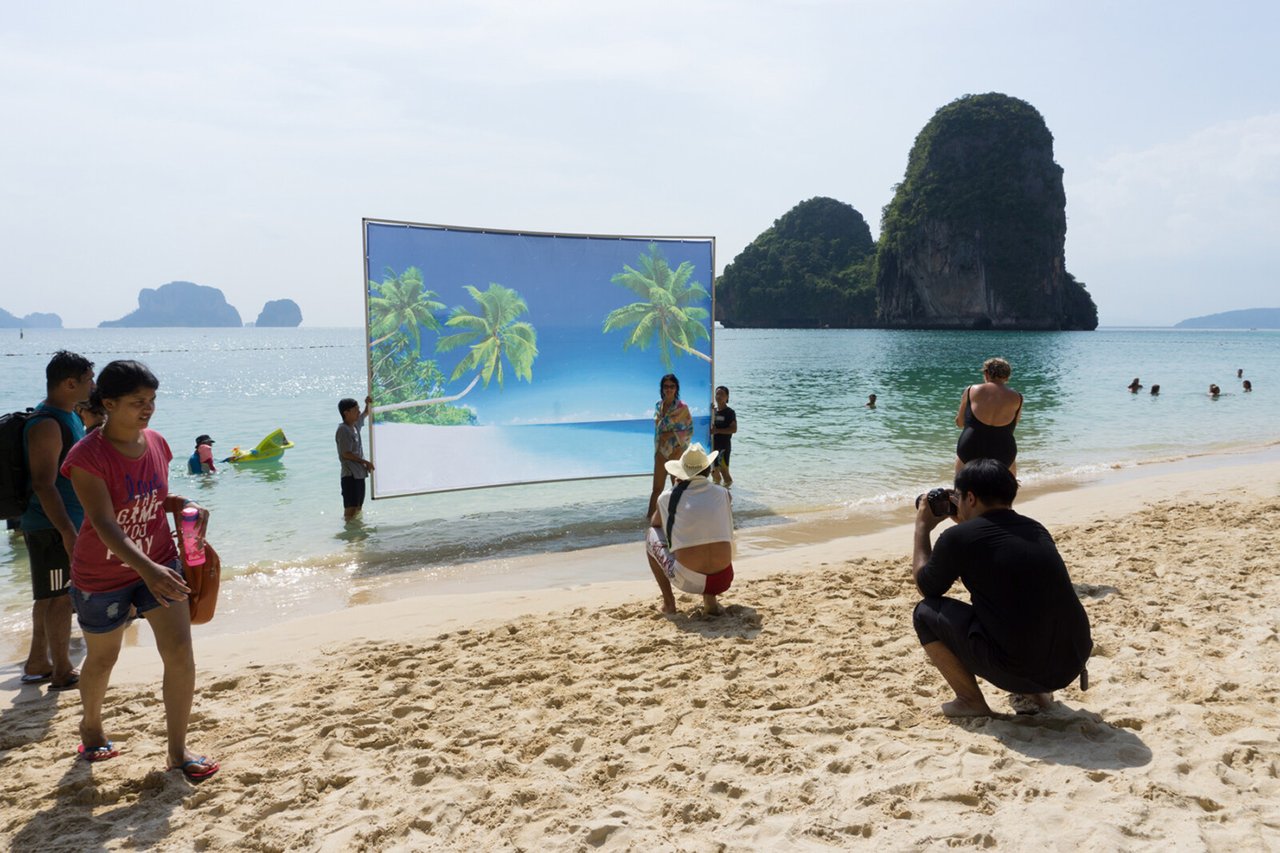
Aram Bartholl, The Perfect Beach, 2018. Mixed media. Courtesy of the artist
AM: Speed Show was about creating a social space, but it was also self-organized. You didn’t need a museum, a curator, or a gallery to make it happen. You mentioned Documenta, where net art immediately had an institutional framework.
AB: As an artist, of course it’s good when your work enters an institution. But with Speed Show, Dead Drops, and various other projects, the message was always: Just do it yourself. Don’t wait for a curator or a gallery to come to you. You can organize a show, invite your friends, find an internet café, and rent it for the evening for 30 euros. It was very easy to organize. That was part of the idea.
With Dead Drops, I started the project in 2010, and by 2011 it was already included in “Talk to Me” [Design and the Communication between People and Objects, exhibition] at MoMA. So I put out a call: “Bring your digital artwork to MoMA.”
People could put their work on the USB drives and then claim they had shown their art at MoMA. I still have those USB sticks somewhere with all kinds of funny things on them.
That was also a way of playing with the question of what it means to be inside an institution. Where have I exhibited? Can I say my work was at MoMA? Institutional recognition is obviously important for an art career, but maybe it’s also overrated. It’s a game, and there’s a ladder you’re supposed to climb.
There’s also a lot of freedom in doing things independently. I remember working with major museums where you arrive and decide you want to move a photograph 20 centimeters to the right, and you can’t. You immediately find yourself inside this huge apparatus. That isn’t always much fun.
Speed Show, curated by Anika Meier and Aram Bartholl as part of the exhibition “Link in Bio. Art After Social Media”, curated by Anika Meier, at the Museum of Fine Arts Leipzig, December 17, 2019 to March 15, 2020. Courtesy of Anika Meier
AM: Although I have very good memories of us doing almost the opposite in Leipzig in 2019, for “Link in Bio”, the exhibition I curated at the Museum of Fine Arts. We were allowed to buy the entire interior of an internet café, load it into a van, and install it in the museum.
AB: That had always been an old dream of mine: to take an entire internet café and put it into the institution, into the white cube. It worked really well. I still have it in storage somewhere. In a way, that closed the cycle. You could finally ask: Is this art?
AM: Then the pandemic happened, followed by NFTs, and suddenly digital art had a completely different kind of visibility. It also seemed to rewrite its history. A lot of what had happened before was forgotten, while things that had existed for years were presented as entirely new. What was it like to watch something you had been working with for so long suddenly become so commercial?
AB: There was obviously an enormous amount of discussion around NFTs. I was never really a fan. People had already been selling digital art before that. Rafaël Rozendaal famously sold entire websites, for example, and other artists did similar things. But as with art in general, paintings were always easier to sell, and everything else was more difficult.
Aram Bartholl, Point of View, 2015. Mixed media. Courtesy of the artist
NFTs created this enormous hype because they introduced such a strong market and trading element, tied to Bitcoin, blockchain, and all the different coins. What bothered me was how completely the market came to dominate the conversation. You can argue endlessly about what makes good art, and those questions are always going to remain open. But once works started selling for huge amounts of money, that became the story. The number was all anyone talked about, rather than the artwork itself.
One thing I had always enjoyed about media art was the culture around it. At festivals, there was a real sense of exchange. The commercial gallery world can be much more competitive, whereas in media art people would ask each other, “How did you make that?” There was a technical curiosity and a willingness to share knowledge. It often felt friendlier.
The NFT boom brought a very different dynamic into that world. It distorted the conversation enormously. And as you said, it also rewrote the history.
For a lot of people, what happened with NFTs simply became the history of digital art. Maybe Right Click Save is helping to widen that perspective again, so people start asking what was there before.
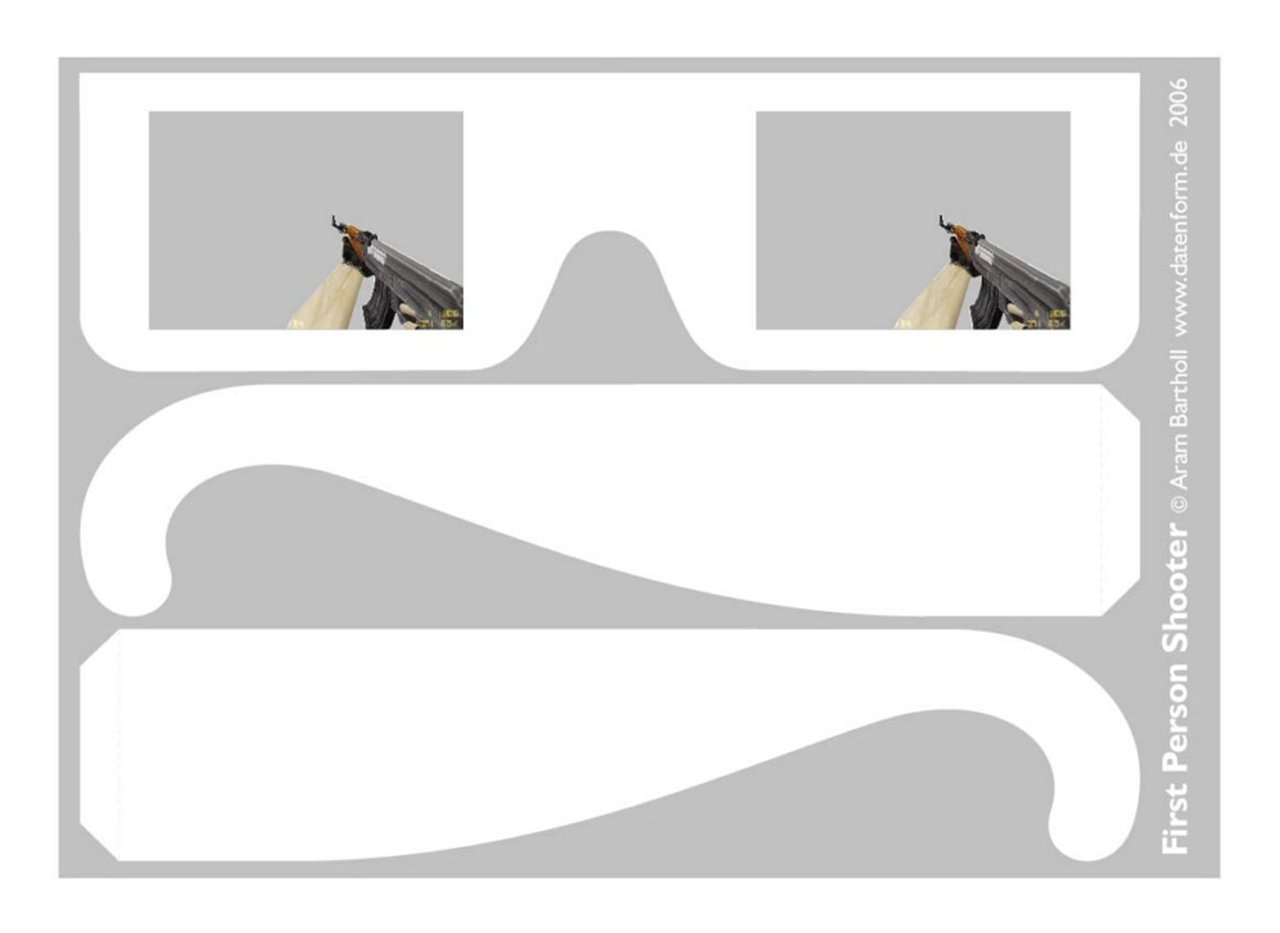
Aram Bartholl, First Person Shooter, 2006. Mixed media. Courtesy of the artist
AM: Brad Troemel coined the term “Athletic Aesthetics” in the 2010s for a new kind of artistic labor shaped by social media: the artist constantly posting, producing, and competing for attention, almost like Super Mario collecting hearts in the form of likes. I’ve been thinking about what comes after that as “Flip Aesthetics”. With NFTs, it wasn’t only attention that could accumulate. The work itself could be traded, flipped, and designed around that circulation. Did you feel that shift in what it meant to be an artist online?
AB: I can relate to the idea of “Athletic Aesthetics”. When I started making art around 2004 or 2005, I would make a project and put it on my website. Social media wasn’t really a thing yet, but there were blogs, and things could go viral through them. Some of my early Counter-Strike works, like the crate I put in the street or the glasses where you could see the weapon from the game [First Person Shooter, 2006] , spread widely that way.
Instagram and Twitter were really a continuation of that, only at a much larger scale, and now you have TikTok and this incredibly compressed short video formats. But in the beginning I didn’t find my audience through a gallery or the traditional art market. My audience was always the internet.
That was also something that connected me to F.A.T. Lab. [The artist] Evan Roth used to describe this overlap really well: something could be shown in the art world, but the video of it might also get a million views in a week. Suddenly you’re in pop culture as well.
You can see another version of that on Instagram today. There’s a certain kind of Instagram art that is really about the effect it produces in a post. Some of those people barely appear in the art world at all, but they have huge audiences and millions of views. It has developed in all these different directions. You could call some of it clickbait art.
And NFTs obviously added another layer with the market and the money.
Aram Bartholl, Unlock Life, 2020. Mixed media. Courtesy of the artist
AM: We’ve gone through net art, media art, post-internet art, post-digital art, and now we’re back to talking about digital art again. Do any of these terms still make sense to you?
AB: I’m honestly not that attached to the terminology. “New media” has always been a strange term because the new becomes old very quickly, especially with technology. And media art comes with its own history. I grew up with festivals like Ars Electronica, which was my first major exhibition and was very important to me. But there’s also a side of media art that becomes very technical and spectacular, almost like a tech demo. That part interests me less.
At the same time, I’m a nerd. I still want to know what this new Meta device called Muse Charm which looks like a Tamagotchi-like thing is. I look at all of it. I just don’t care that much whether we call the resulting work digital art, post-digital art, or something else. Maybe the distinction itself no longer makes much sense.
Digital media appear everywhere in art now. That has been normal for a long time. In that sense, “post-digital” is probably quite accurate.
The same thing happened with post-internet art. The term was incredibly hot for a while and then people dropped it like a hot potato, but the aesthetics never disappeared. They spread everywhere. When people ask me what I do, I usually say that I work sculpturally, through interventions and installations, about digital space and the internet, rather than in the internet.
Aram Bartholl (*1972) uses sculptural interventions, installations, and performative workshops to question our engagement with media and with public economies linked to social networks, online platforms, and digital dissemination strategies. He addresses socially relevant topics, including surveillance, data privacy and technology dependence, through his work by transferring the gaps, contradictions, and absurdities of our everyday digital lives to physical settings. The effect is twofold. The works create an at-times bizarre confrontation with our own ignorance of globally active platform capitalism, and they renegotiate network activities as political forms of participation on an analog level using the potential of public space. Bartholl thus initiates a performative process to catalyze a renewed understanding of individual action within a collective and self-determined network discourse. Conceptually and technically, he uses the same aesthetics, codes, and communication patterns that users are familiar with from YouTube, Instagram, and video games. A purposeful contextualization employs the logic of the Internet while at the same time undermining it with individual strategies.
Anika Meier is a Berlin-based writer, moderator, curator, and lecturer specializing in art, technology, and digital culture. She teaches at the Department of Digital Art at the University of Applied Arts Vienna, is the co-founder of the curatorial collective The Second-Guess, and is the curator and program lead of the objkt labs Residency. She regularly contributes to Monopol, Kunstforum, Spike, SLEEK, Numéro Berlin, and The AI Art Magazine, and has moderated conversations and spoken at events including Art Basel, re:publica, and Ars Electronica.