·News
Remembering David Hockney 1937-2026
The celebrated and influential British artist was noted for his work with new technologies over half a century
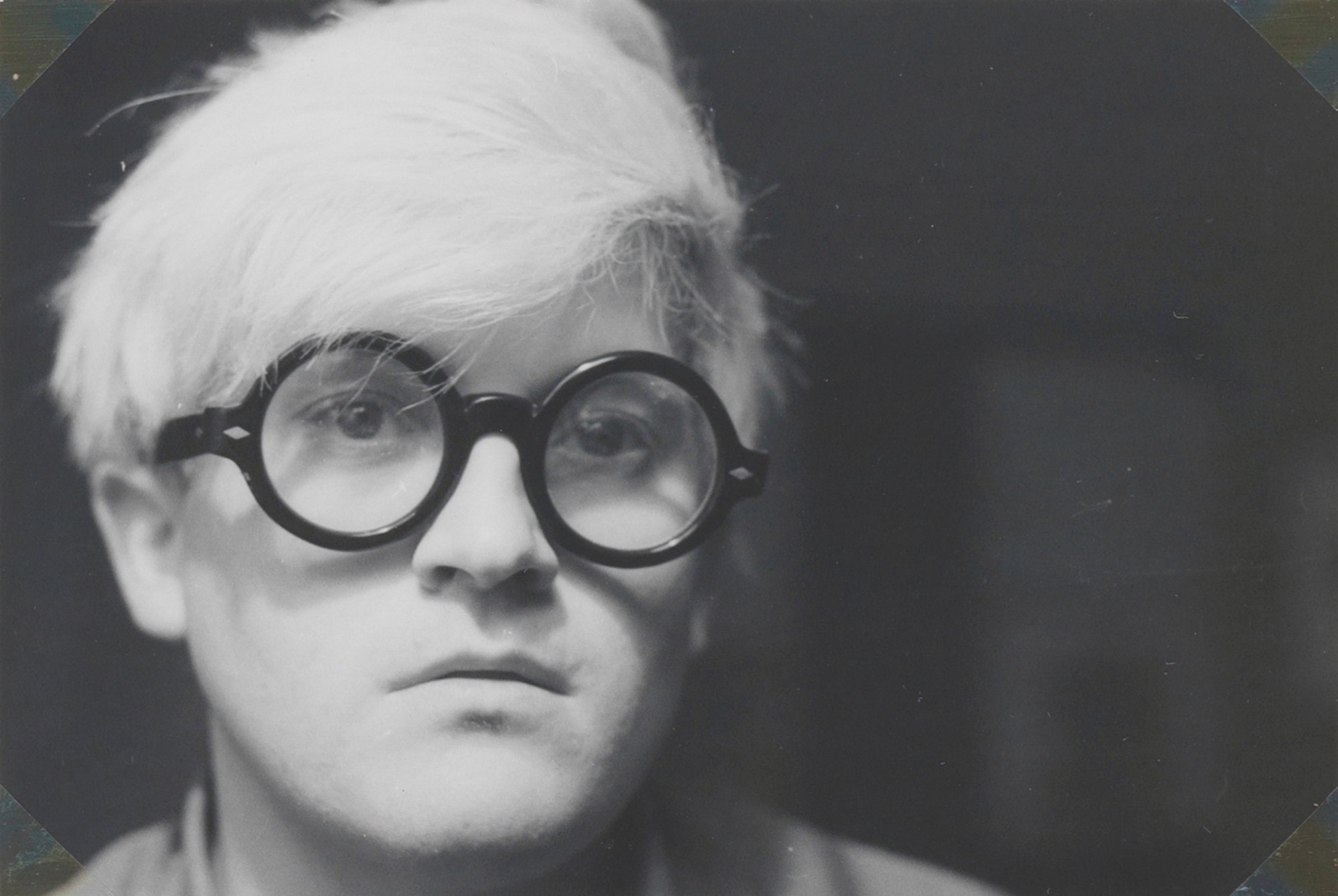
David Hockney, one of the most influential artists in the world, died on June 11, 2026, aged 88.
The celebrated and influential British artist was noted for his work with new technologies over half a century
David Hockney, one of the most influential artists in the world, died on June 11, 2026, aged 88.
Hockney and his work had been the subject of international attention since the celebrated “Young Contemporaries” exhibition, at RBA Galleries London, a year before he graduated from the Royal College of Art (RCA) London in 1962. He was an artist who from the first engaged thoughtfully with new technologies, from Polaroid cameras via the Quantel Paintbox to the latest versions of the iPhone and iPad, by way of the fax and the photocopier.
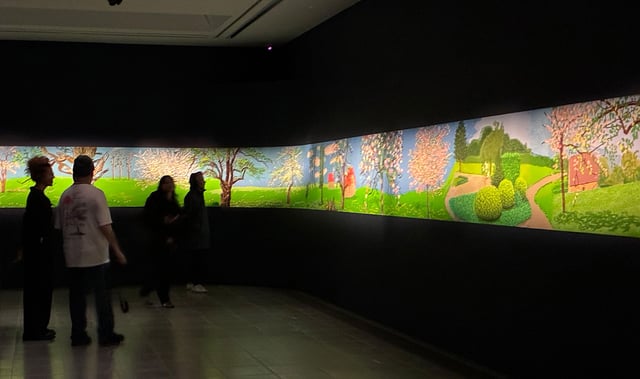
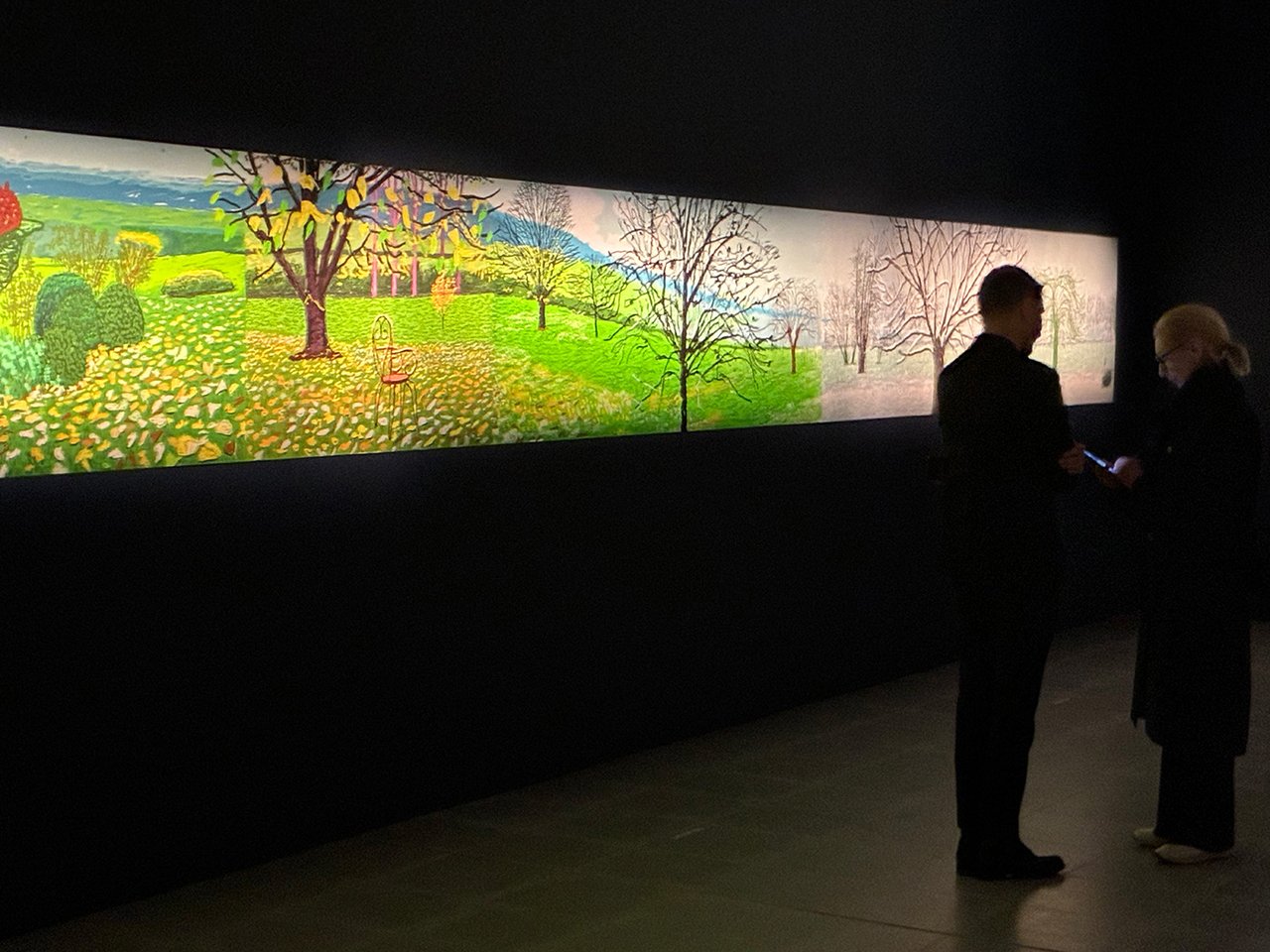
As a student first in his native Bradford and then at the RCA he showed himself to be a worker, happy to paint through the night to complete a new canvas, aghast at how dilettante some of his fellow students were. With each new technology he encountered he took time; he iterated, to find what benefits he could derive in light, color and composition. The present exhibition of his work at Serpentine North, London — “David Hockney: A Year in Normandie and Some Other Thoughts about Painting” — is a demonstration of how he had refined his technique on the iPad since his first essays on the hardware in 2010. It is also a reminder of how much Hockney had done to usher in a digital form of painting.
At the time of the exhibition’s opening, its curator, Hans Ulrich Obrist, a long-standing friend of the artist, described Hockney as an “artist’s artist” who was regularly described to him as an influence by younger artists, but also “beloved by the masses”.
Hockney’s landmark show, “David Hockney 25”, at Fondation Louis Vuitton, Paris, in 2025, was an eye-opener, even to those familiar with his work. It was also a reminder of how he remained an inspiration to artists of all generations. For the artist William Mapan the exhibition was a revelation. “I was thinking I was making an OK size of paintings. And then I went to ‘Hockney 25’ and there are giant paintings with multiple patterns. And you see how he has practised,” Mapan told Right Click Save. “How he started with some style but kept pushing, kept evolving. Working with topics like portraits or perspectives, and playing with different mediums: oil, acrylic, charcoal, drawings, water color.”
“What was fascinating to me is how he has evolved through painting, oil, then acrylic, iPad, digital, and animation. He travels generations of art. I think he is very interested in just sitting in the moment where he is in nature. Always on the go, but observing the world, trying to see it from a different angle.” (William Mapan)
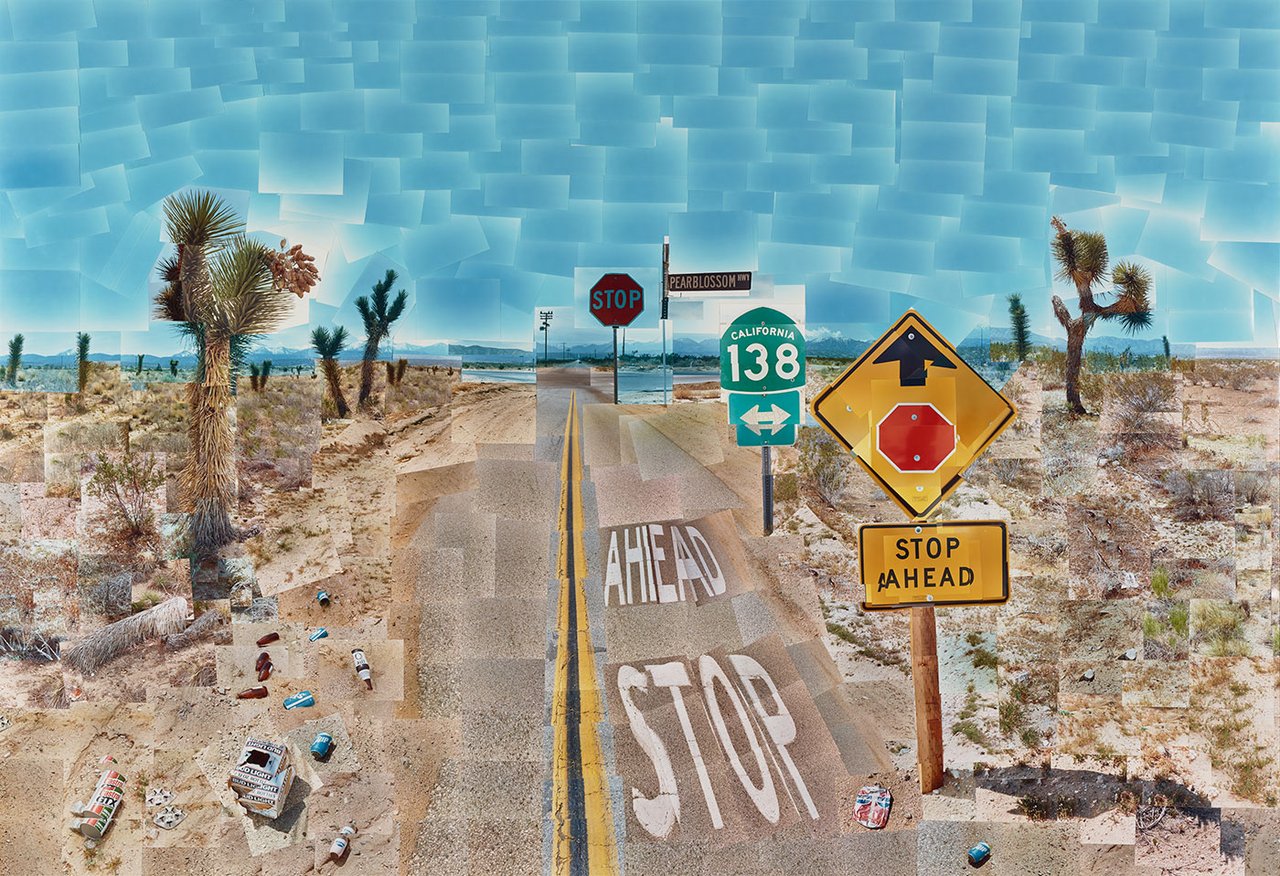
“There was this giant painting, 10 metres across at least [in the show], with multiple panels linked together, a scene in California," Mapan remembered. "And it made me think of my work when I play with dimensions in 3D and 2D. [You have Hockney saying] from one point of view, I will show this. And from another point of view, in the same painting, I will show this. In different [parts] of the painting, the ‘camera angle’ is different. So you have these different perspectives, these different stories, and multiple points of view. And as a viewer, when you look at it, you don't know where the start [is] and [where] the end….”
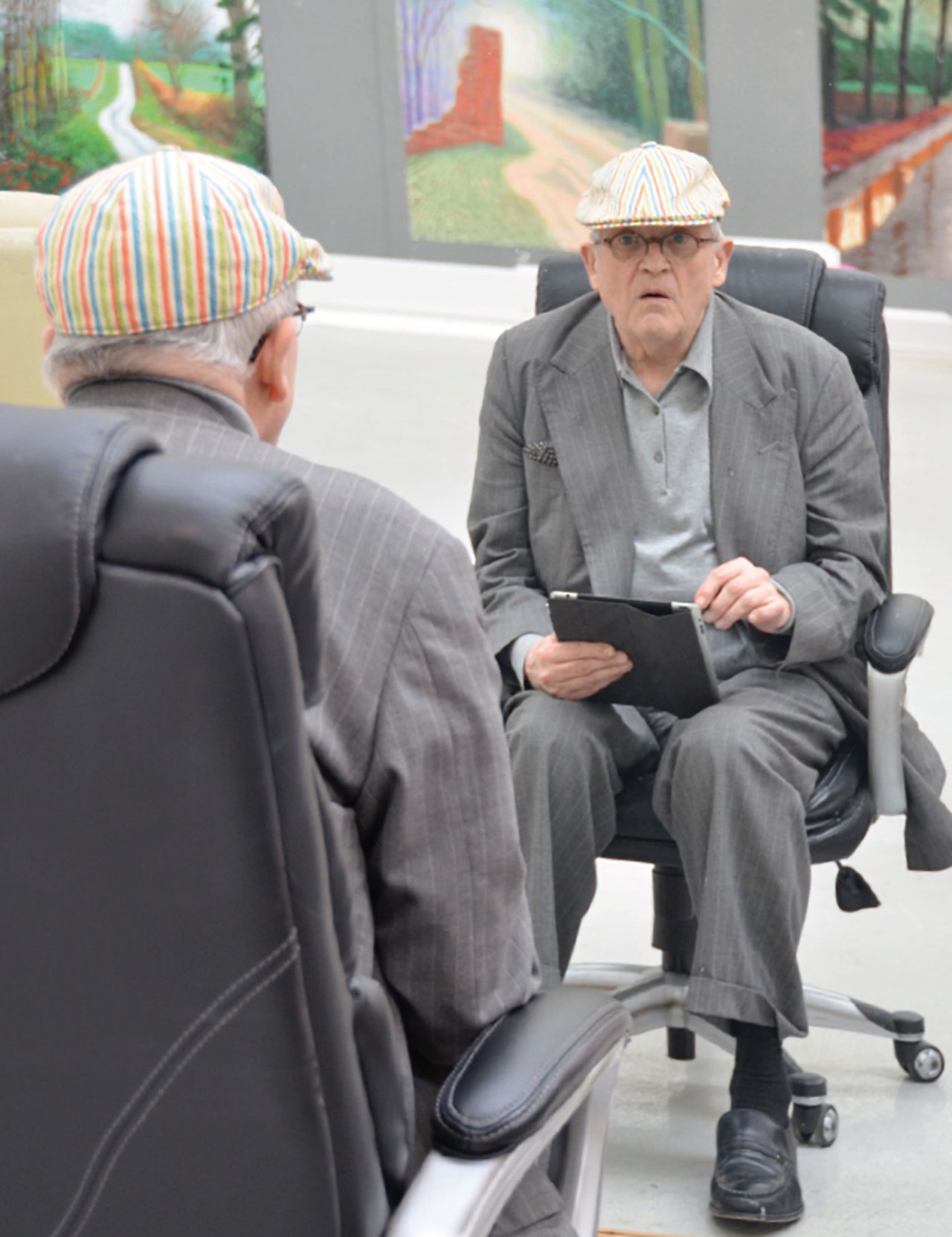
A 1987 BBC documentary series Painting with Light featured Hockney as one of the artists testing the Quantel Paintbox, an early digital art tool which helped shape pop culture in the 1980s. The Hockney episode demonstrates the artist’s inquiring experimentation with a new technology. In archive footage on YouTube, Hockney can be seen declaring “I don’t know what I’m doing” before becoming intently focused on the transfer between the movement of the stylus in his hand and the painting on screen, as well as the ability to change brush widths and mix and layer colours. (Nearly 30 years later Hockney had custom digital brushes made by a studio in London to use with the Brushes app on his iPhone and iPad.)
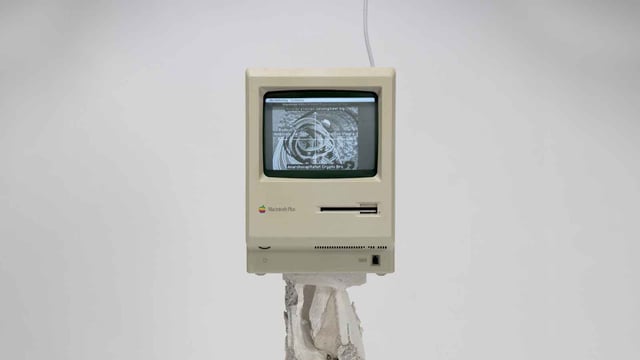
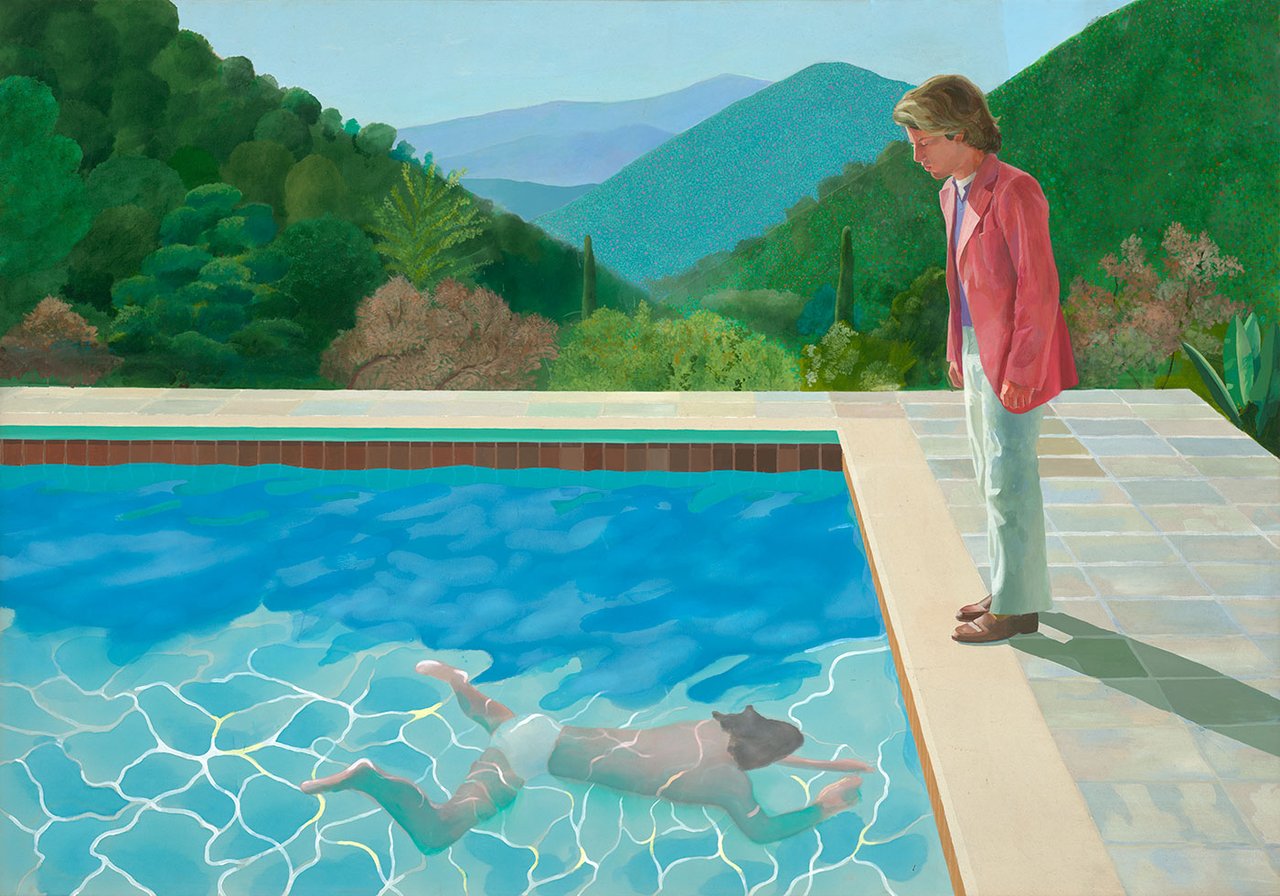
Hockney used photography as a compositional tool for his great double portraits and swimming pool paintings of the 1960s and ’70s, a genre that he developed after visiting Los Angeles for the first time in 1964. Using Polaroid cameras, with their near-instantaneous output of prints, acted as a spur to experiment with multi-focus, multi-temporal photomontages in the ’80s. He worked with computer design software from Apple Oasis onwards — after a visit to the Bay Area to meet the team behind what became Adobe Photoshop.
His work with the historic camera lucida (1999), gave new point to his always penetrating line portraits, with his front-on portrait of his artist friend Lindy Dufferin a particularly powerful example.
Hockney used the photocopier and the fax machine to make and distribute multi-frame images. Obrist remembered the background to Hockney’s work with fax. In the 1980s Alighiero Boetti had said there should be “a fax agency where an artist could fax artworks all over the world — pre-internet”. And ultimately Hockney did more or less that. The artist sent friends drawings by fax which were collected in David Hockney: FAX Dibujos/ FAX Cuadros (1990), produced for an exhibition at the Centro Cultural/Arte Contemporáneo in Mexico City.
He also used Polaroid and photography composites as time-based, multi-focus, works, extending that principle to multi-aspect videos and 3D photogrammetry. A Year in Normandie is a time-based work. It was produced as a series of iPad drawings at Hockney’s French home and studio during the Covid-19 pandemic lockdown, in which Hockney demonstrates the influence of the Bayeux Tapestry and Chinese scroll-painting — both multi-temporal in concept — on his work. In Waldgate Woods, Winter (2010) he drives an array of nine video cameras at walking pace through the Yorkshire landscape, playing, as he rolls along, with time and focus.
Critics of the 1980s and 1990s saw the conceptual element of Hockney’s work. To Andy Grundberg of The New York Times, Hockney’s photocollage works of the 1980s, such as Pearblossom Highway 11-18th April 1986, #1 (1986), were clearly Cubist in conception, heightening “the intersection of painting issues with photographic ones, and the intersection of art with everyday life.”
In 1996, John Russell Taylor, of the London Times described Hockney as “as much a conceptual artist as any who claim loudly to be so. It is just that he sees before he thinks, and what he thinks is always at the service of what he sees.”
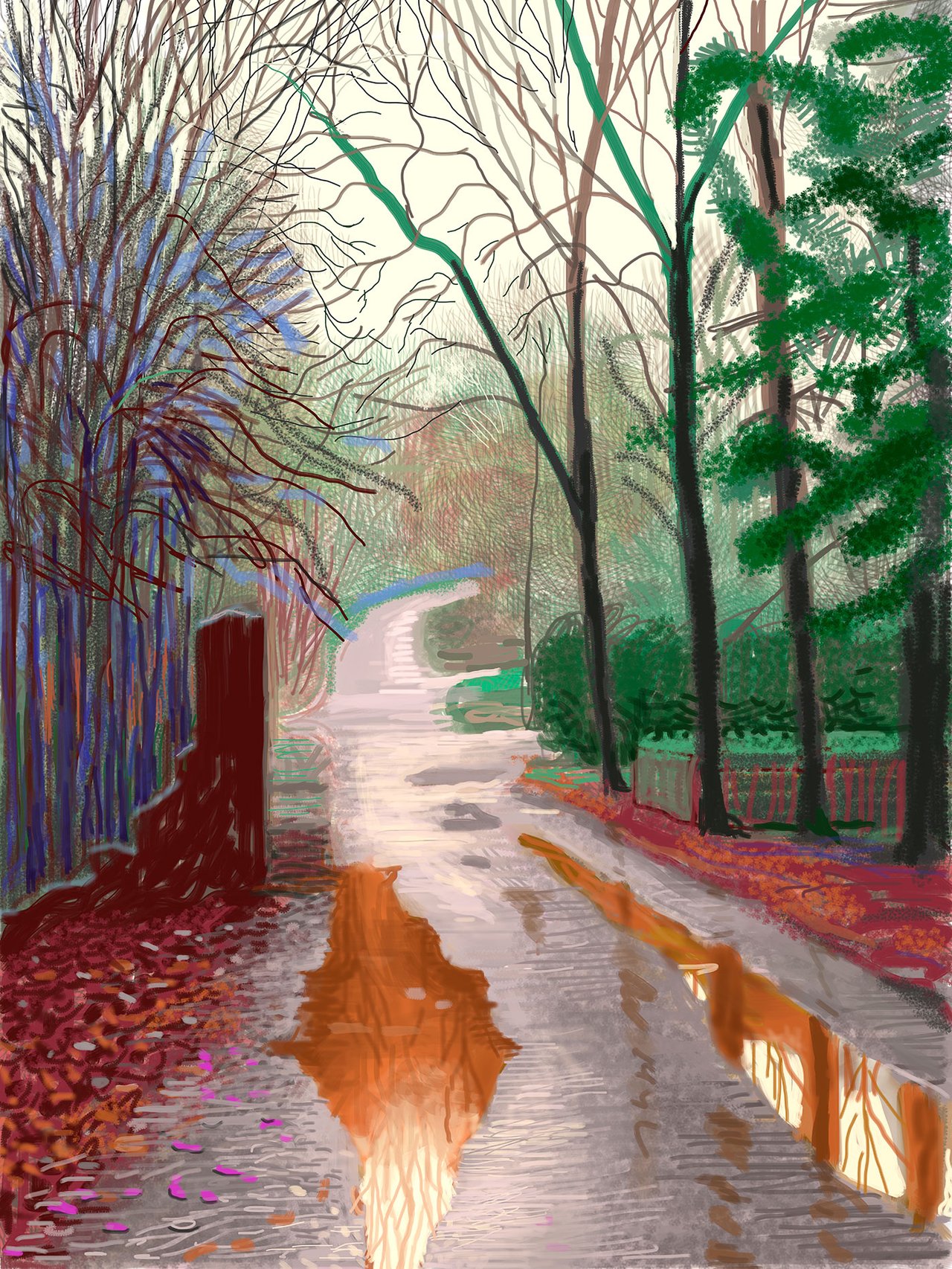
With the iPhone (2007), and the iPad and stylus (2010) Hockney discovered portable, light, and climate-agnostic sketchbooks, which gave him the ability to capture fugitive moments of light and color when out in the country, whether it was Yorkshire, the Yosemite, or Normandy. With these tools, he could maintain the purity of color and light — where water colors muddy when layered on paper — while improving his ability to capture the moment.
When the morning light was right he would send a group of friends an iPhone drawing of a flower, made in his Yorkshire bedroom.
Hockney’s interdisciplinary practice included designs for opera where, through a discovery of the importance of lighting to the stage, he transformed the scope of his work from the Hogarthian charm of his flats and costumes for Stravinsky’s The Rake’s Progress at Glyndebourne Festival Opera in the 1970s to moments of monumental grandeur in his designs for a 1987 production in Los Angeles of Wagner’s music drama, Tristan und Isolde.
In 2024 Hockney announced that work had begun on a David Hockney Catalogue Raisonné, to be released in a series of online volumes. The first volume, devoted to painting, was due to be released in 2026, overseen by the artist and his assistants and Trustees of the David Hockney Foundation Jean-Pierre Gonçalves de Lima and Jonathan Wilkinson.
To the end, whether at home in Los Angeies, London, Yorkshire or Normandy, he remained an artist’s artist; his work an inspiration to up and coming practitioners. “I saw the show at Vuitton just before going on vacation,” Mapan remembered. “And right after that, I wanted to make even bigger paintings or even tinier paintings. But it just kept me pushing [more] into painting: keep practising because you never know where it will lead you.”
—
David Hockney, born Bradford, Yorkshire, July 9, 1937; studied Bradford School of Art 1953-57, Royal College of Art, London, 1959-62; John Moores Painting Prize 1967; Royal Academician 1991; Companion of Honour 1997; Order of Merit 2012; Officier, Légion d’Honneur 2026; partner of Jean-Pierre Gonçalves de Lima; died London June 11, 2026.
Louis Jebb is Managing Editor at Right Click Save.
No comments yet. Be the first to share your thoughts.
Mentioned in this article
People: David Hockney, Hans Ulrich Obrist, Jean-Pierre Gonçalves de Lima, Jonathan Wilkinson, William Mapan|Events: David Hockney: A Year in Normandie and Some Other Thoughts about Painting|Organizations: Fondation Louis Vuitton, Right Click Save, Royal College of Art, Serpentine North|