Judged by Intent, Not Medium | The 2026 Lumen Prize Winners
This year every entry for the art and technology awards went into one of three new categories: Legacy Futures, Systems & Structures, and Experiential Innovation. Nina Knaack examines what the winning works in those sections, by Mimi Onuoha, Theo Triantafyllidis, and Lauren Lee McCarthy, bring into focus
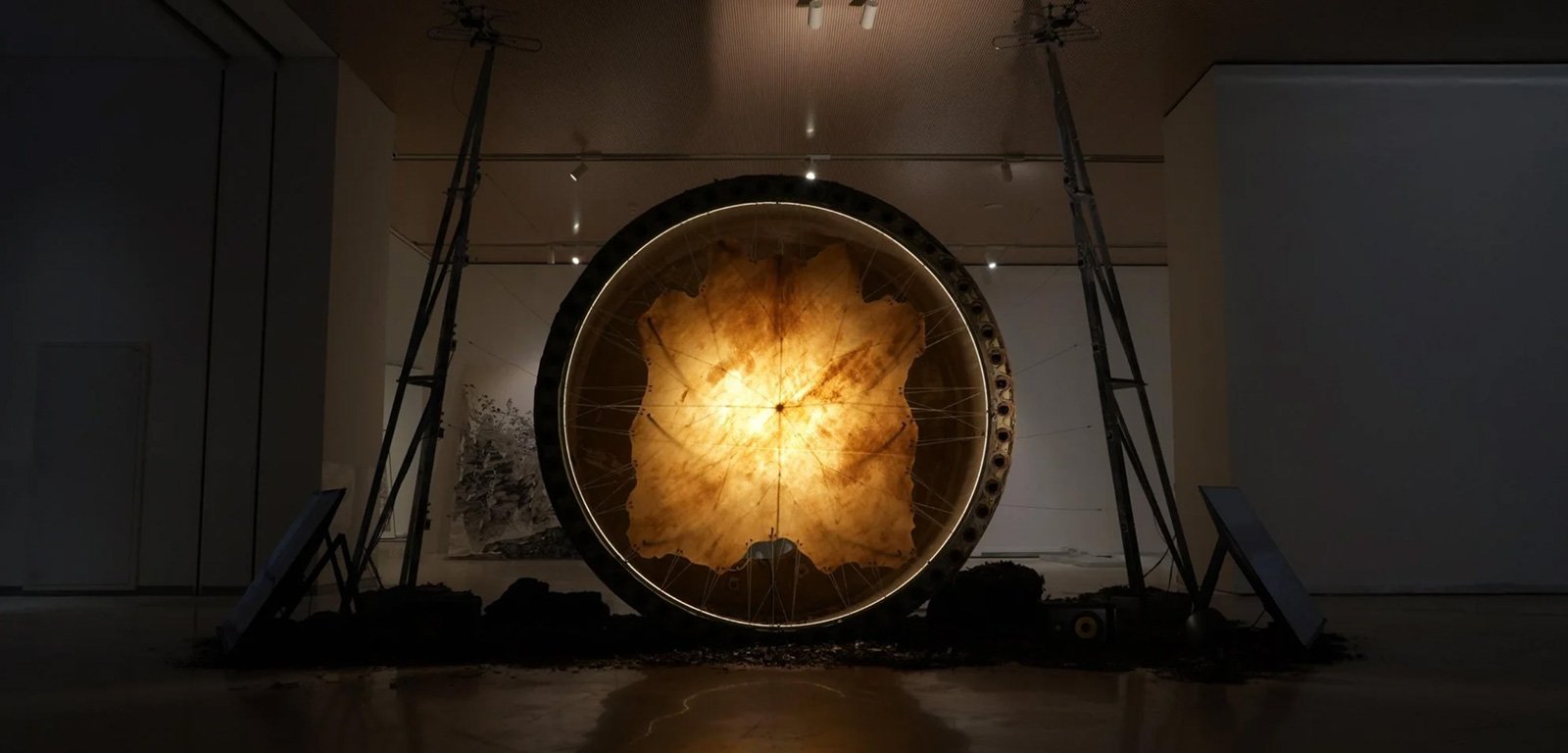
A film about a burial ground in Texas might once have entered the Lumen Prize for art made with technology under the Moving Image category. This year, Mimi Onuoha’sGround Truths won the Legacy Futures award, a new category concerned with what artists do with the histories they inherit. A film entered in that category might find itself in the company of an installation or a work of generative art, on the strength of what each makes of the past.
There were already signs of this approach in last year’s Lumen Prize, where a Nature & Climate category sat alongside others for Still Image and Moving Image. But this year, Lumen made three broader categories the starting point for every entry to the Prize. Alongside Legacy Futures, Systems & Structures asks how a work makes the operation of a system perceptible, while Experiential Innovation begins with what happens when someone encounters the work.
Gillian Leitten, Executive Director of The Lumen Prize, says the new framework followed conversations with the community. She describes the categories as “intentionally open and medium-agnostic”, with the revised approach focused on thematic intent and cultural impact.
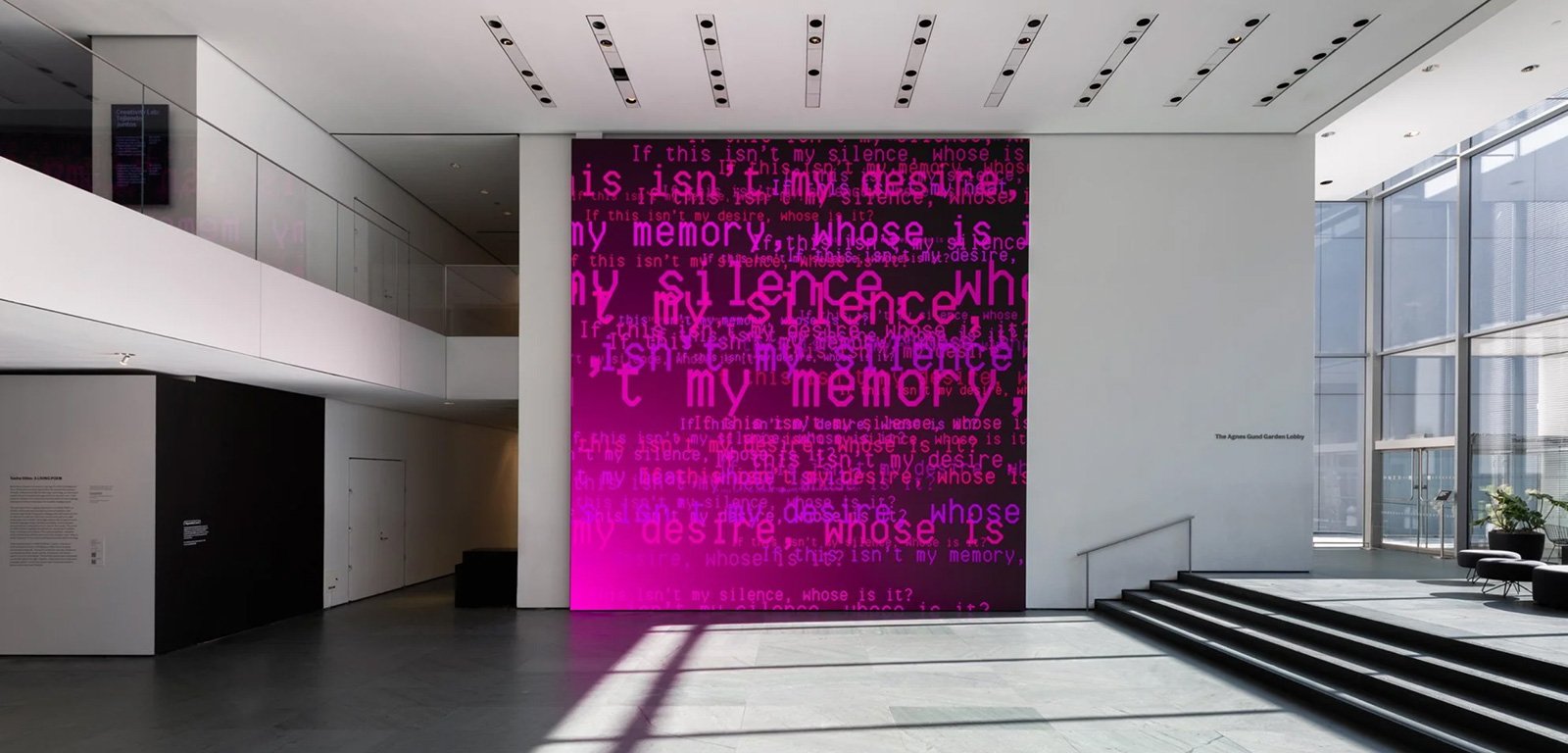
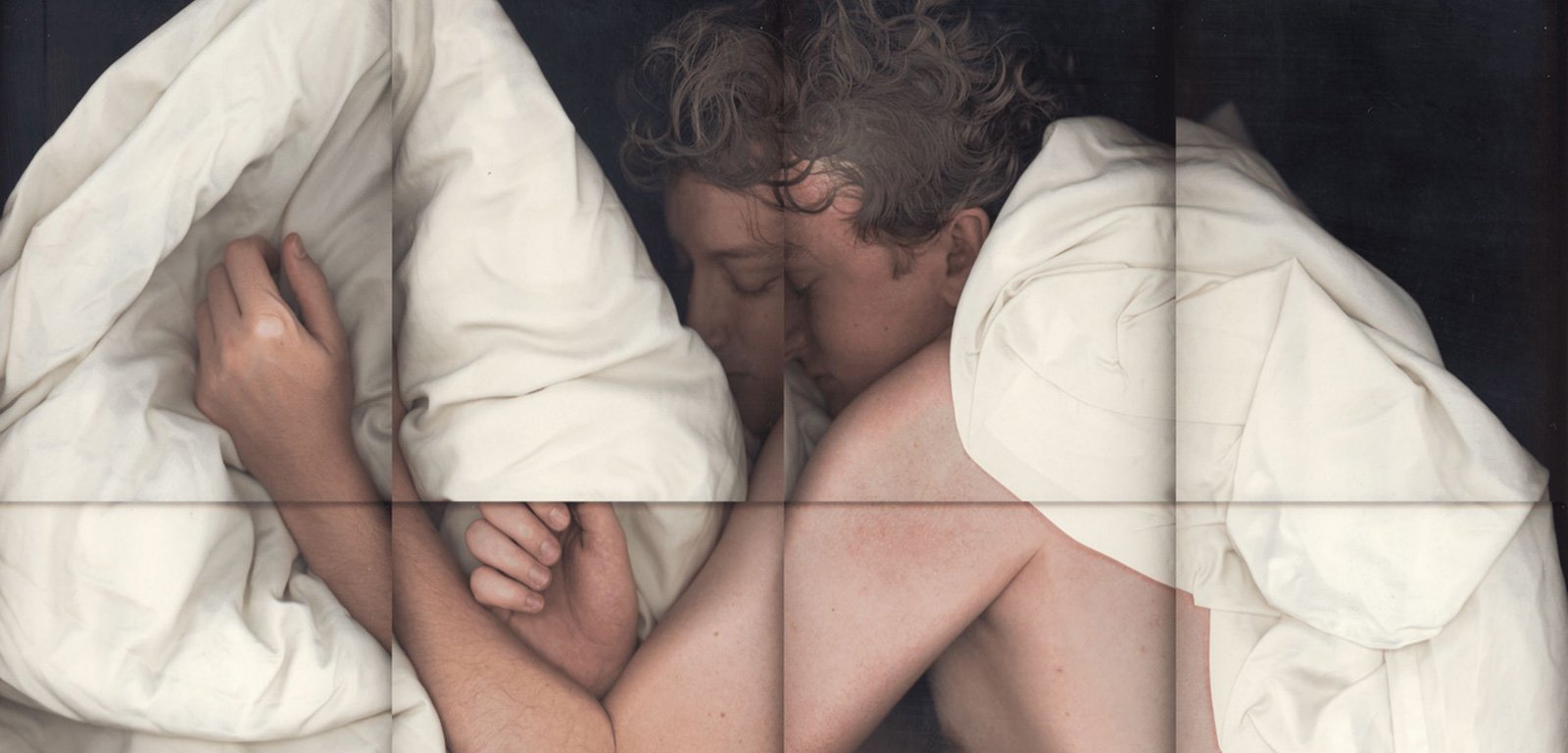
The history of the prize is important here: among the works Leitten cites as inspirations for the Legacy Futures category are Ivona Tau’s A Life Passed By (My Grandmother’s Memories) (2025), a Moving Image finalist last year, and Sasha Stiles’s WORDS BEYOND WORDS (2025), which won the award for Literature & Poetry 12 months ago. “The new categories bring together concerns that were already developing across those separate awards,” Leitten says.
The question of how an audience encounters a work was already a consideration at the founding of the prize, in 2012. When Carla Rapoport, Lumen’s founder, invited artists to submit work made on computers, phones or tablets, she paired the competition with an online exhibition and plans for an international tour. A work made on a screen could reach a viewer on another screen, before being viewed in a public gallery, where its scale and the time people spent with it could be quite different.
Kunstsilo museum, Kristiansand, home to the Lumen Prize since 2025, with Lab212’s site-specific installation Growing projected on to the building’s façade on the night of the work's launch, November 7, 2025. Photography courtesy of Kunstsilo
Lumen now counts more than 35,000 artists and cultural professionals in its network across more than 80 countries. The shortlisting process for the prize gives curators a way to discover artists working with technology, and Lumen’s year-round programme helps those introductions turn into exhibitions or commissions. In September 2026, for instance, Lumen presented a selection of this year’s finalists at the Digital Design Weekend at V&A South Kensington, in London, giving the work a public audience ahead of the awards. The return to Kunstsilo, in Kristiansand, which is hosting the ceremony for the second year running, is part of that longer history of finding places for the work to be seen.
“What makes our partnership with Lumen so rewarding is our shared belief in the potential of digital art and the artists shaping its future. Together, we are creating opportunities that go beyond the Awards Ceremony, connecting artists, encouraging new ideas and supporting artistic development.” (Torill Haugen, Head of Digital Engagement and Development, Kunstsilo)
This year, more than 2,200 submissions from 82 countries went through two stages of judging. An International Selectors Committee reviewed the entries and chose the finalists, at which point the jury took over, choosing a winner in each of the three entry categories and awarding the overall Gold Award from across the shortlist. The jury panel included Annie Bicknell, curator of public programmes at Tate; Melanie Lenz, digital curator at the V&A; Christiane Paul, adjunct curator of digital art at the Whitney Museum of American Art; Myriam Achard, chief of new media partnerships and PR at PHI; Ulrich Schrauth, artistic director of the UBS Digital Art Museum in Hamburg and founder of VRHAM! Biennial; Rachel Falconer, senior lecturer and head of creative technology at Goldsmiths, University of London, and Gonzalo Herrero Delicado, an independent curator and associate lecturer at Central Saint Martins and the Royal College of Art.
Legacy Futures Award | Mimi Onuoha, Ground Truths (2025)
Single-channel 4K video, 15:59 minutes
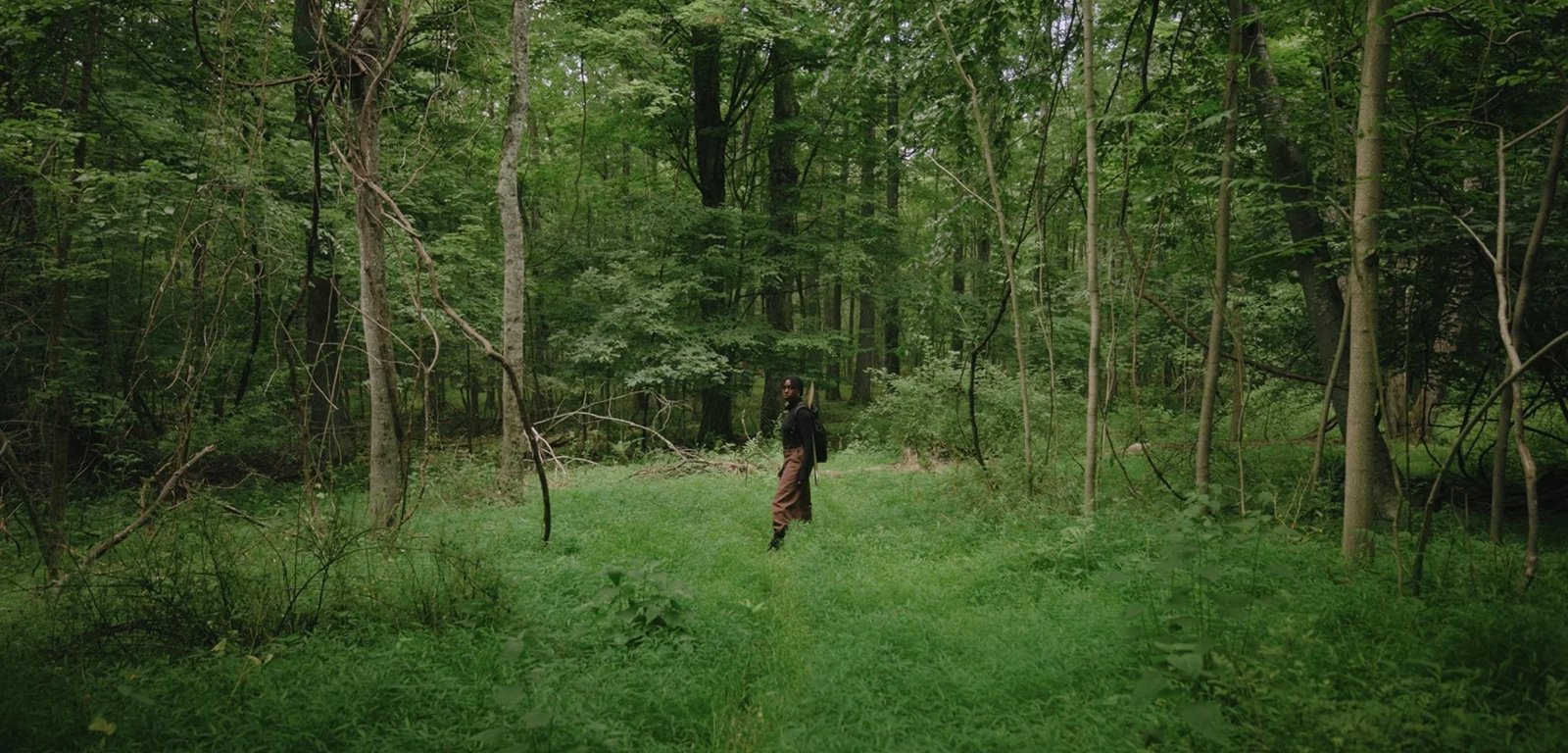
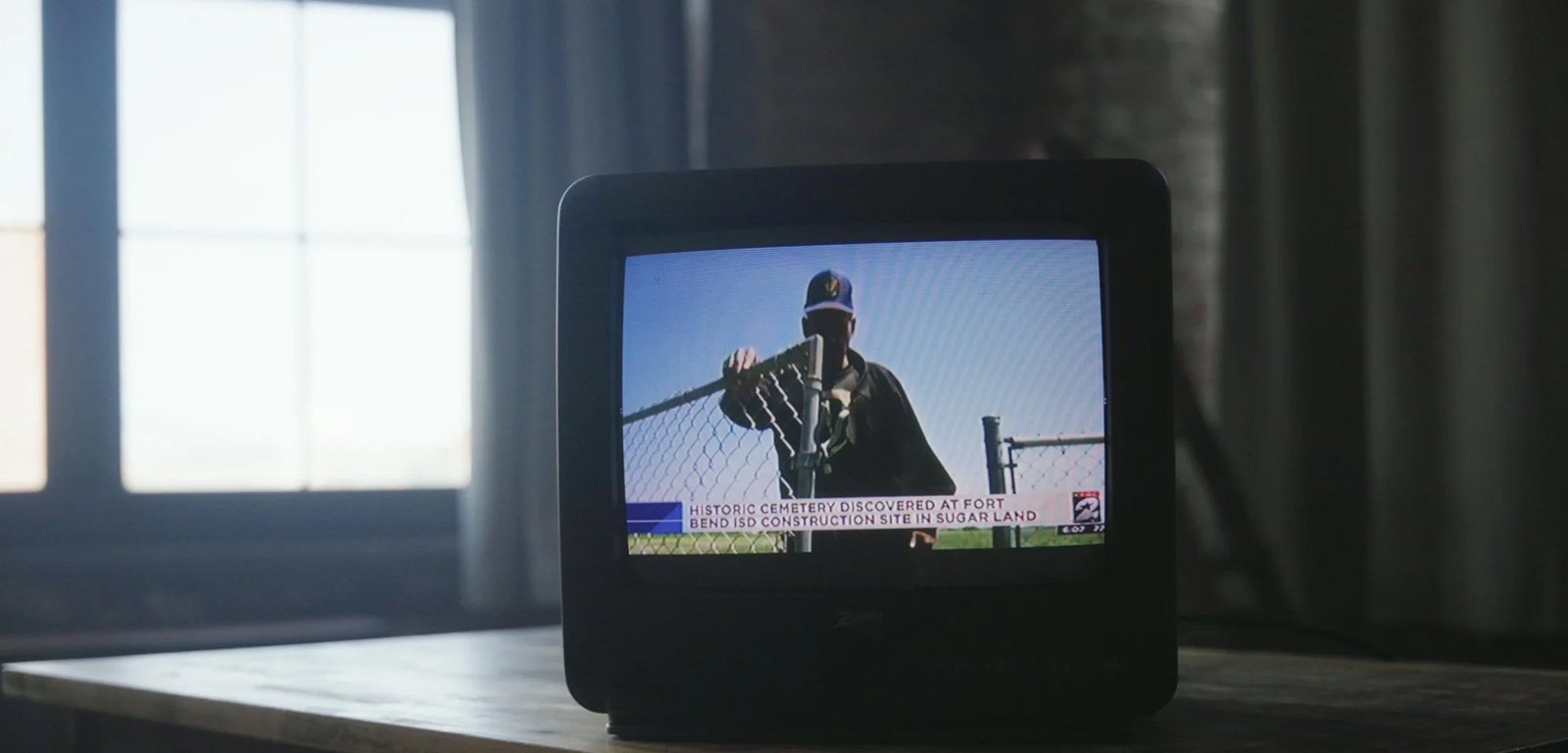
In 2018, construction crews working on a school district site in Sugar Land, Texas, a town immediately southwest of Houston, uncovered a grave. The excavation that followed brought to light a cemetery containing the remains of 95 people, which archaeologists linked to convict leasing, a system through which the state supplied incarcerated people as labor to private employers after the abolition of slavery. Mimi Onuoha grew up minutes from the site, but her discovery of its history came long after the people buried there had been made to work the land. It also came after years in which she had known the surrounding area as home. The distance between those two places, the Sugar Land she knew and the one the excavation disclosed, is where Ground Truths begins.
For this project, Onuoha spent four years working on a machine-learning model that could possibly help identify where other burial sites associated with convict leasing could lie in Texas. The appeal of such a model is easy to see: with a large area to search and relatively few confirmed sites to go on, a prediction could give researchers somewhere to begin. The difficulty, however, lies in what the model would have to learn from. An employer leasing incarcerated workers had reason to keep track of their labor. A family trying to find out where someone was buried would need information that served an altogether different purpose. Both inquiries concern the same person, yet the first had an institution behind it with the means and incentive to keep records. An archive can therefore contain a great deal of information about the operation of convict leasing and still give a researcher very little to go on when it comes to what happened to the people it put to work.
The title of the project turns on what it takes to call a place a burial ground. In machine learning, ground truth is the reference against which a prediction can be judged. In Sugar Land, establishing that reference meant opening the ground itself.
Before the excavation, someone could have marked the site on a map as a place to investigate. Afterwards, there was physical evidence that people had been buried there, and a further question about who they were. The school district has described efforts to identify possible descendants through DNA analysis, an inquiry for which a location on a map is only the beginning. As the meaning of “ground truth” moves between the model and the soil, the title makes room for that difference: each kind of evidence brings a particular question within reach.
Onuoha gives this research the form of a docufiction just under 16 minutes long, which she wrote and narrated. The statistician Patrick Ball, who collaborated on the research, also appears in the film. In Onuoha’s account of its making, the inquiry proceeds through archives and phone calls, taking a different course as records prove difficult to find. There is a formal problem for the filmmaker in that movement: a phone call can take the story as far as another person’s knowledge extends, while a record can carry it as far as someone once thought necessary to write things down. Both leave the film with decisions about what it can show and how far it can ask a viewer to follow an inference.
Ground Truths extends Onuoha’s longstanding inquiry into what goes unrecorded and how those omissions shape what we can know.
In her 2016 installation The Library of Missing Datasets, for example, Onuoha put labelled, empty folders inside a filing cabinet. Here, the familiarity of the cabinet did much of the work. Each folder had a place and a name, as though the information it referred to were already on file and could be retrieved by anyone who knew where to look. Ground Truths carries that inquiry into a situation where the missing information affects a decision in the present. A researcher has to proceed with the records at hand, and the places those records make easier to see can acquire a further advantage simply by being available for comparison.
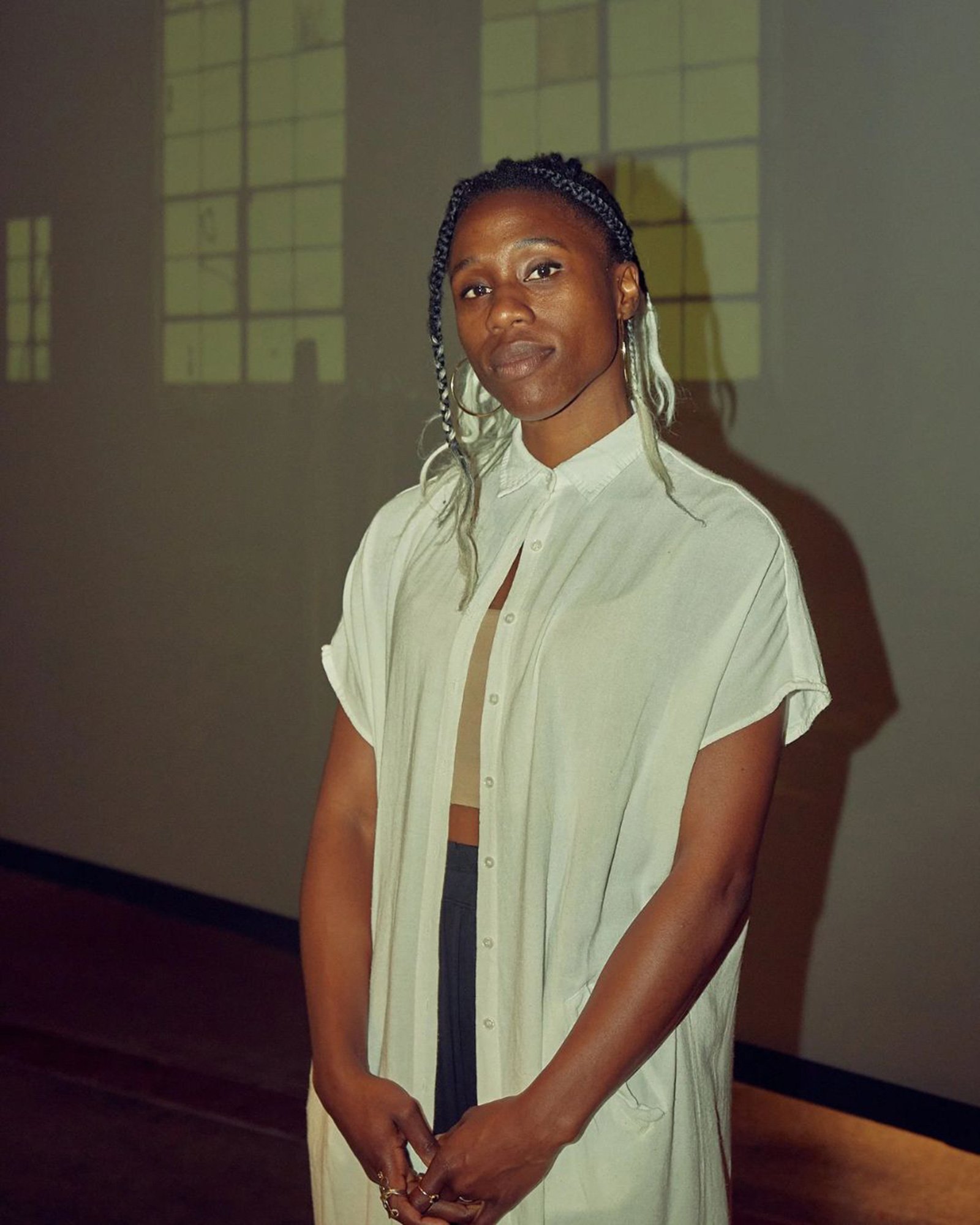
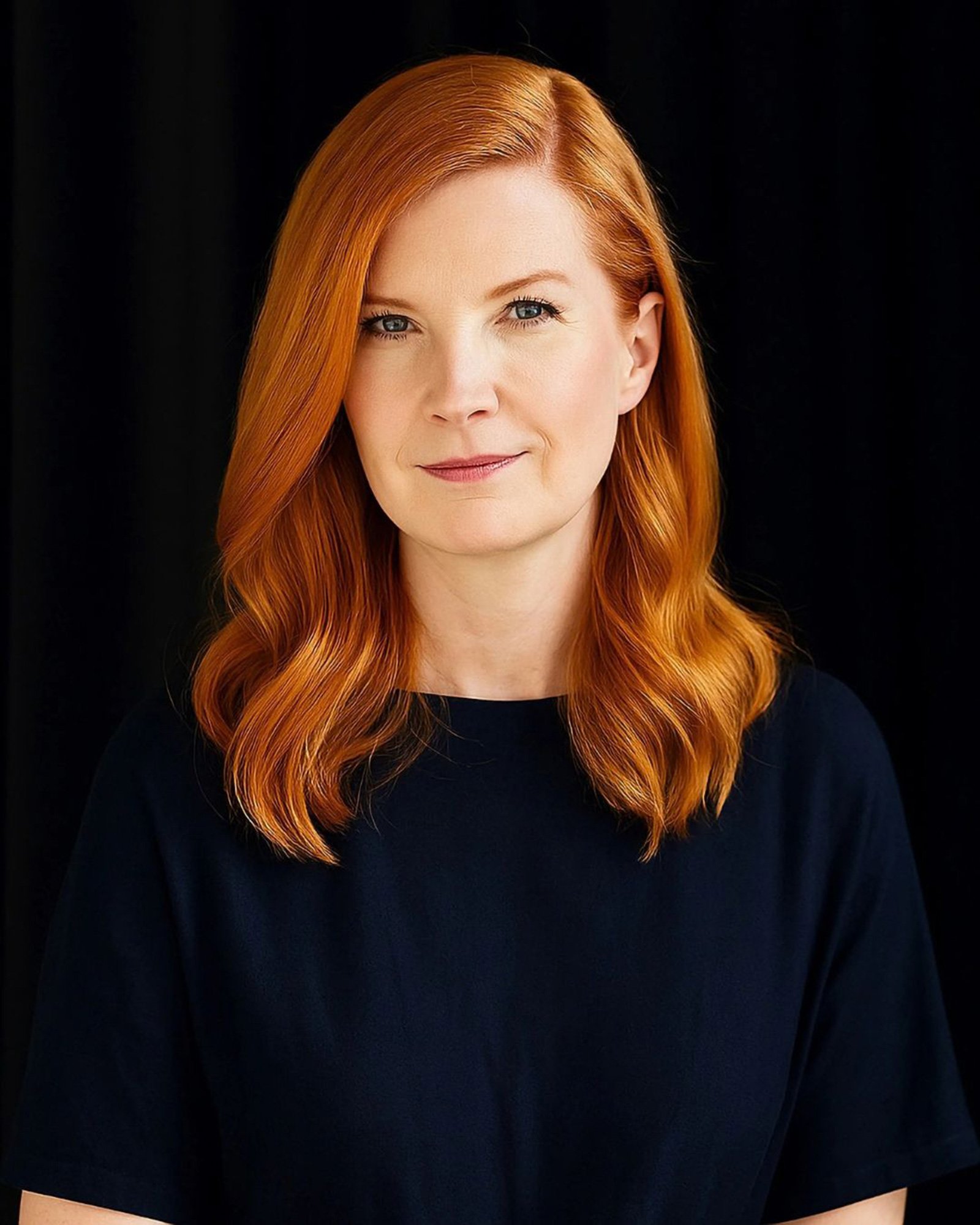
Mimi Onuoha. Courtesy of the artist
At the Vienna Secession exhibition venue, where Ground Truths was shown in “Soft Zeros” (2025-26), Onuoha gave that uncertainty a physical form. In the photographs everything you bury will come back up again (2025), hands work the soil around a sugar sack and a pair of wooden dice. From a still image, it is difficult to tell whether the hands are putting the objects into the earth or taking them out. In the adjacent installation No One Told Me (2025), printed barrier tape carries phrases people use to explain how something escaped their notice.
Here, a sentence like “No one told me” is locating the responsibility for knowing somewhere else.
The Legacy Futures category is thus home to a film in which historical knowledge has immediate practical consequences for the future. A record kept a century ago can influence where someone searches today and so can the decision to leave one unmade. Once those decisions enter a model through its training material, they acquire a new means of directing attention and can narrow the territory an AI model learns to consider. In that respect, the model is part of the history Onuoha is telling, and it gives the archive another opportunity to act.
Systems & Structures Award | Theo Triantafyllidis, Drift Lattice (2025)
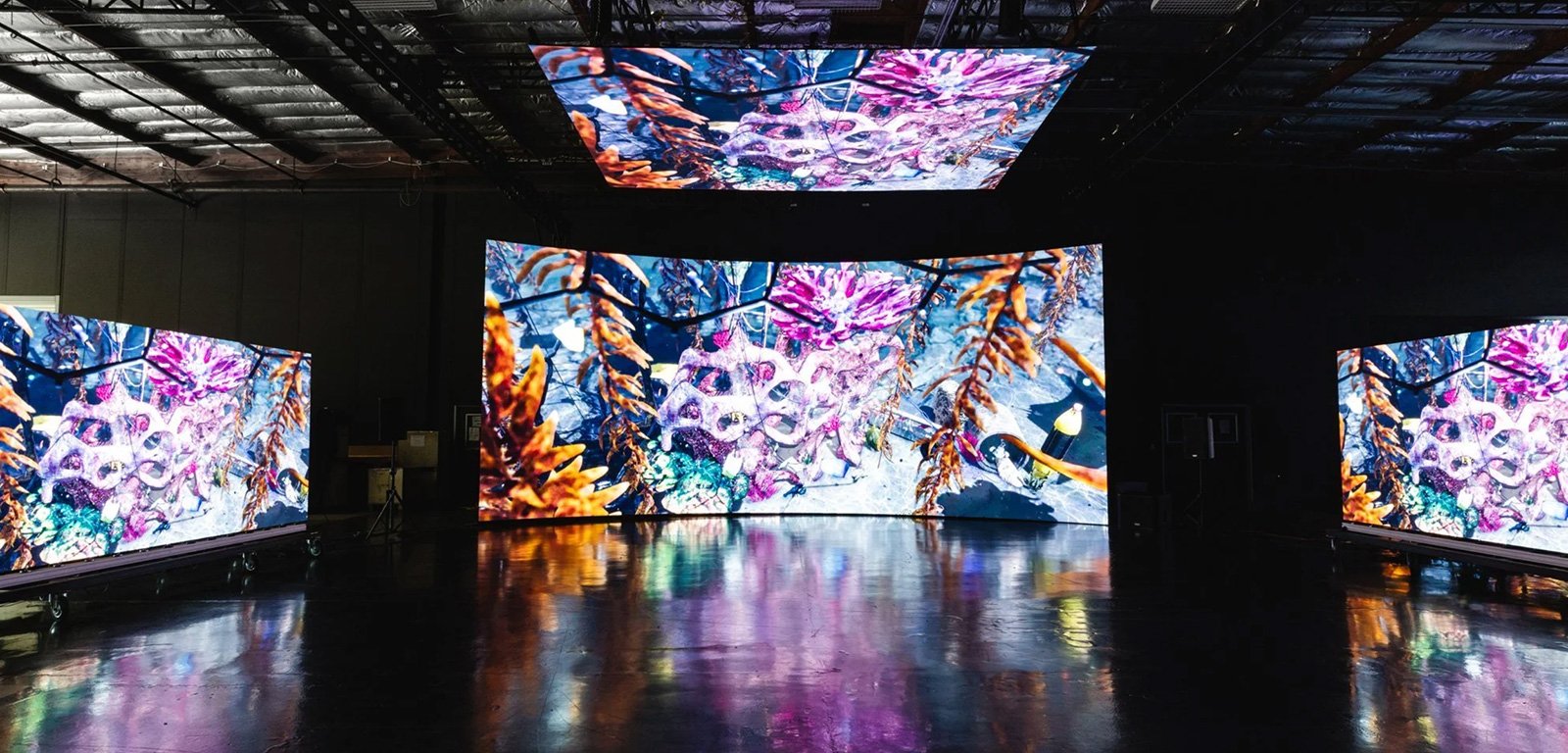
Live simulation with sound, presented across three 55-inch HD displays
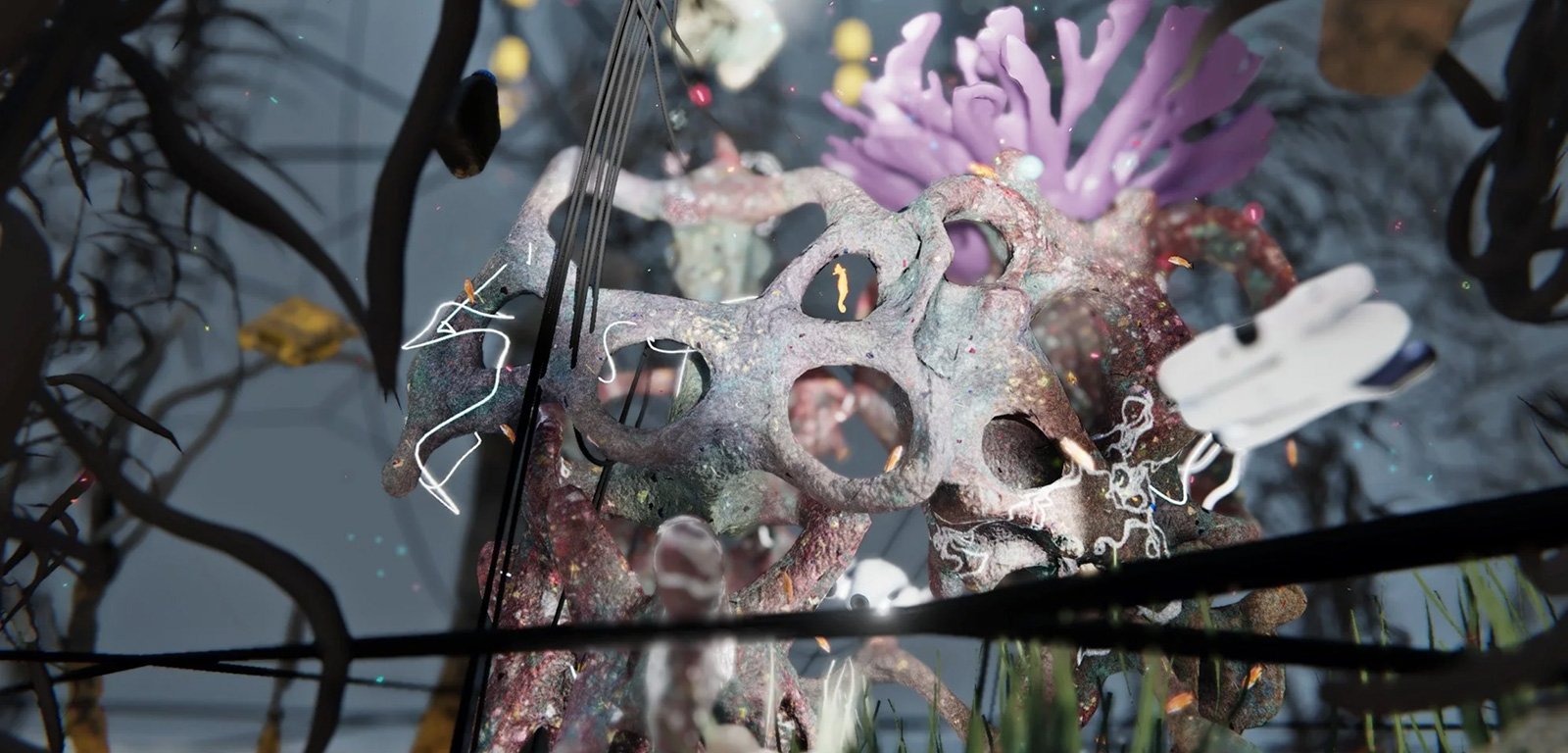
In Theo Triantafyllidis’s Drift Lattice, a cleanup drone collects plastic in a simulated ocean. This drone shares the water with an octopus learning to camouflage itself against an ever-changing environment that includes discarded objects. At the same time, crabs and fish move among strands of seaweed and diving birds enter the water from above. All of a sudden, old fishing nets and random pieces of plastic are caught up in the same currents. Then the water slows down again. The octopus continues to try to blend in with the surfaces of things people have thrown away.
Presented across three screens, with music by Diego Navarro and octopus behavior developed by Miles Peyton, Drift Lattice shows a swirling underwater ecosystem that runs in a game engine. A computer continually calculates how creatures and objects move in relation to one another, allowing the scene to develop through their encounters.
A viewer can follow several timescales: a fish can change direction in an instant, while the kelp grows so gradually that it takes a longer engagement to register how much it has altered the scene.
One of Triantafyllidis’s starting points for this project was the sociologist Holly Jean Buck’s discussion of kelp farming for carbon capture, a proposal that gives the growth of a living organism a job to do. Cultivating kelp for this purpose makes its growth part of an engineering plan, with expectations about what it should achieve and the work required to keep it productive. The drones carry a comparable expectation into the simulation, where their capacity to remove debris depends on what the surrounding water allows. A current can bring a net within reach or carry it away again, so even a machine designed for this particular task has to adjust to the conditions it encounters.
Before Drift Lattice, Triantafyllidis had explored similar rhythms in BugSim (Pheromone Spa) (2022), where a glass terrarium housed a simulated world of ants, bees and other insects. The enclosure gave viewers a boundary within which to follow the exchanges that sustained the habitat. In Drift Lattice, that edge has become more permeable, as live data from climate monitoring networks and ocean research programmes feeds into the simulation.
These measurements enter through rules written into the game engine, where the artist determines how changes recorded elsewhere can affect the world on screen.
James Bridle’s Ways of Being | Beyond Human Intelligence (2022), another of Triantafyllidis’s inspirations, offers a way of thinking about the different forms of intelligence represented in this ocean. The drone’s ability to carry out an instruction operates alongside the capacities through which animals negotiate their surroundings and keep themselves alive.
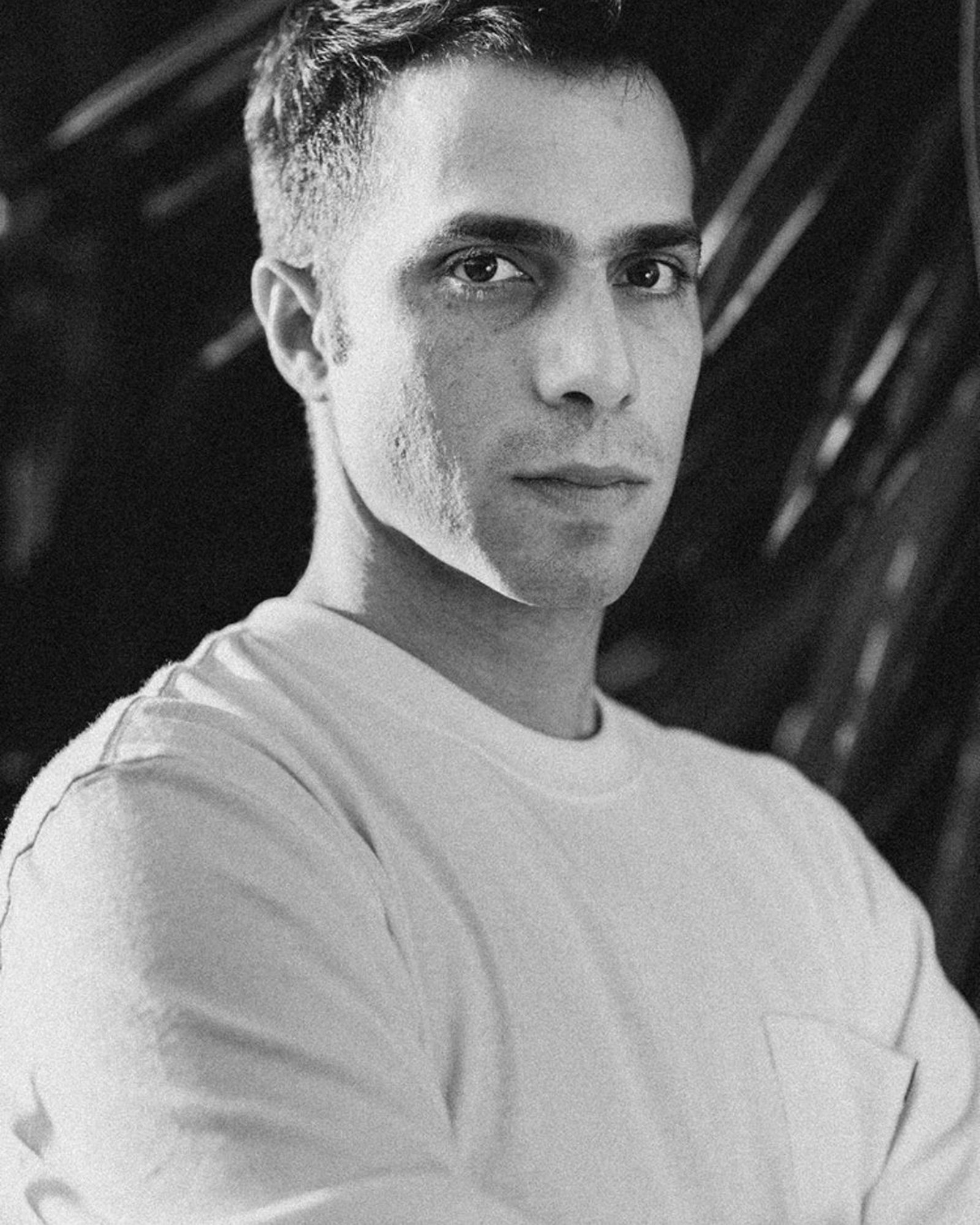
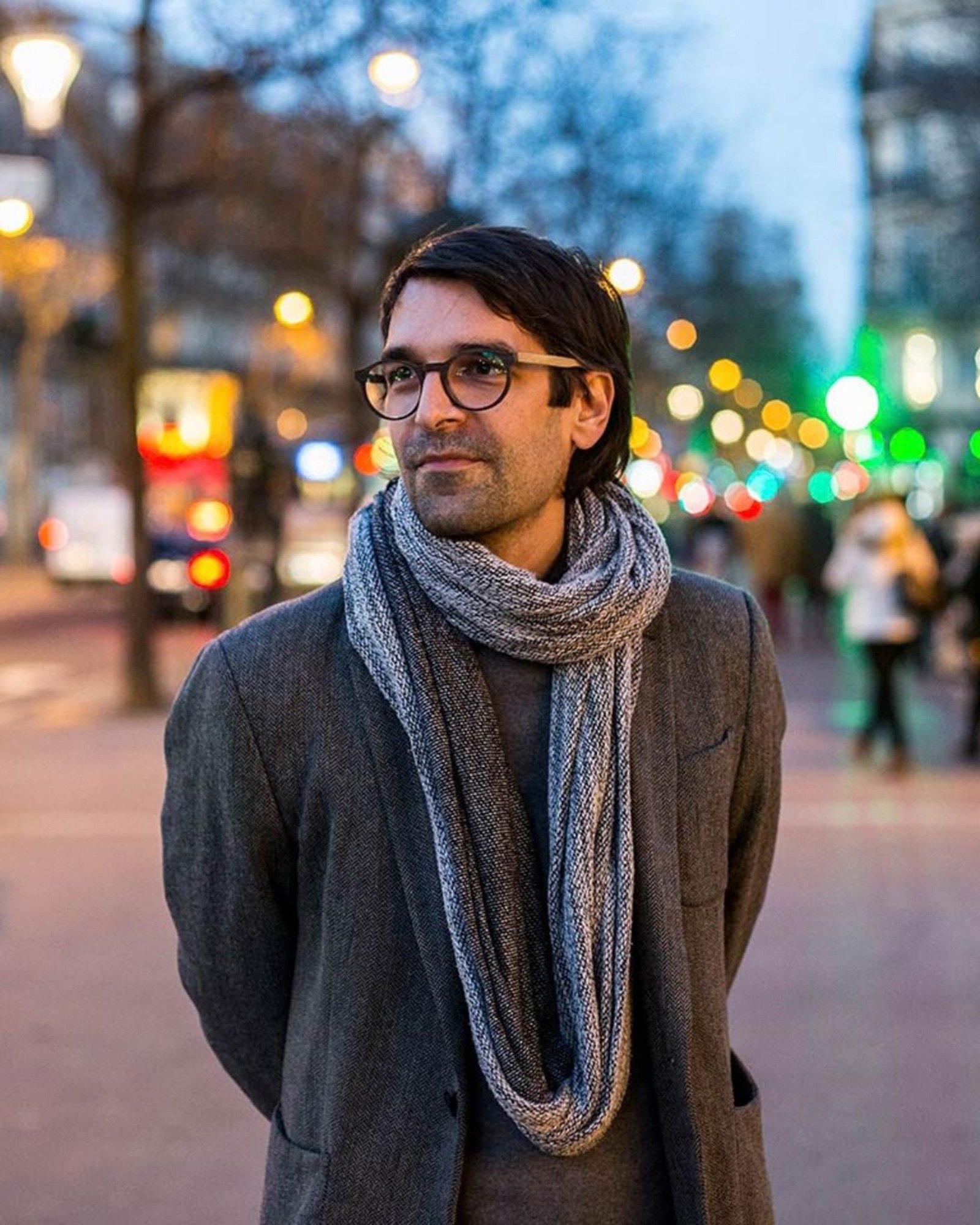
Theo Triantafyllidis. Courtesy of the artist
Human decisions are present in the machine’s assignment, the debris scattered through the water and the code through which these encounters unfold.
For the viewer, these relationships unfold in water whose movement can make even a piece of rubbish absorbing to watch. Triantafyllidis has spoken about the difficulty of presenting ecological damage without prescribing an emotional response or aestheticising catastrophe. A discarded net can catch the eye for the way it moves, then gradually become troubling as we follow what its presence requires of the creatures around it. Even the habitat’s continued activity becomes ambiguous. A world can remain busy with life as the conditions for living become more difficult.
The live simulation gives the viewer time to work through that ambiguity. Across the three screens, following one activity means allowing others to continue at the edges of the viewer’s attention; understanding the habitat takes repeated returns, through which individual encounters begin to reveal their consequences for the surrounding world. Repair, in this ocean, has to make room for all the other business of staying alive.
Experiential Innovation Award | Lauren Lee McCarthy, AUTO (2025)
Participatory performance and installation
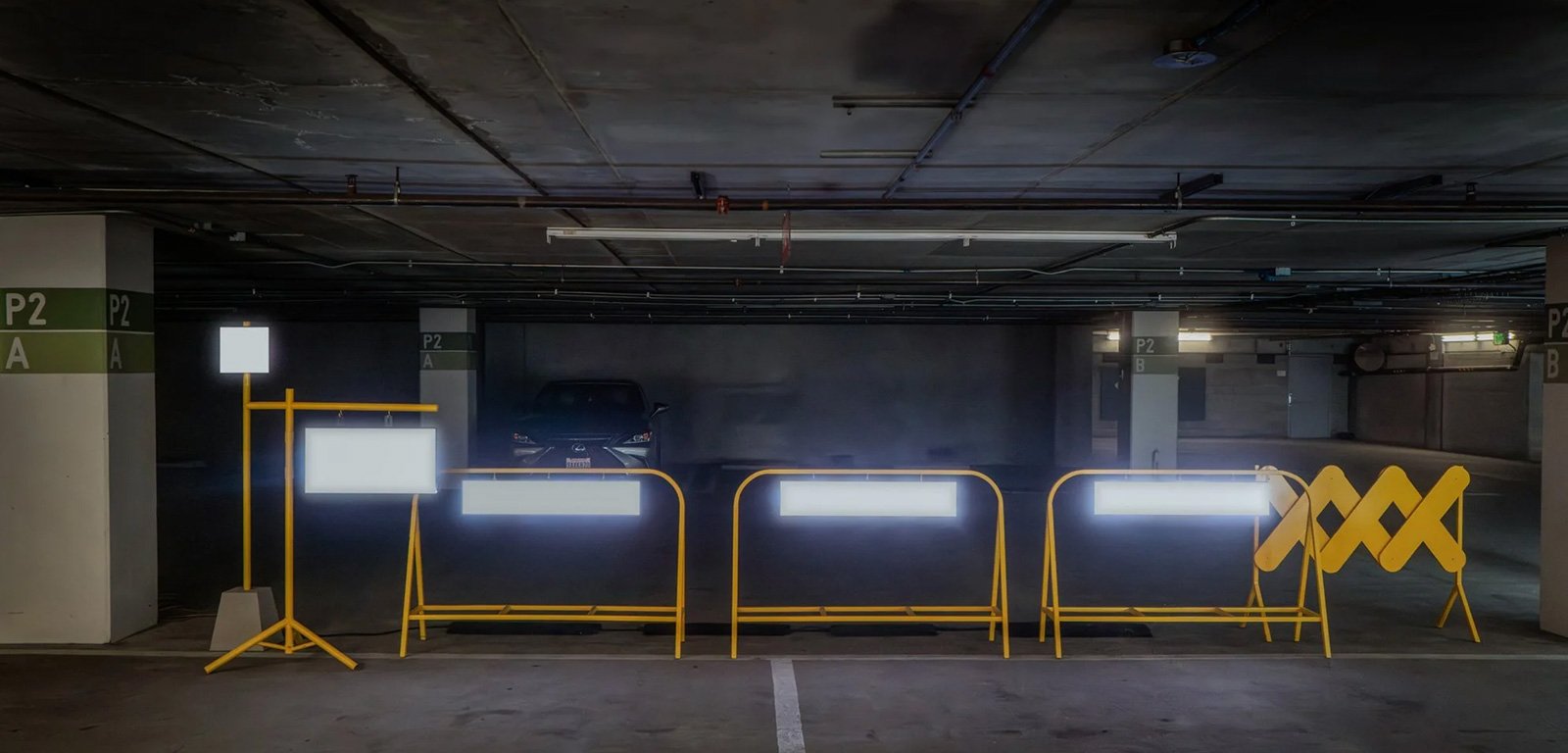
A yellow Swiss PostBus stood in Zürich’s Münsterhof square, waiting for passengers who had signed up for a 30-minute test ride. They watched a short onboarding video, followed taped lines across the square and boarded. Once inside, they heard tones and saw words appear on a screen, with instructions to sing them as they came up. What had they got into? A recognisable piece of public transport infrastructure, equipped to drive itself, had become a place to rehearse the feeling of going along with an automated system. This is Lauren Lee McCarthy’s AUTO.
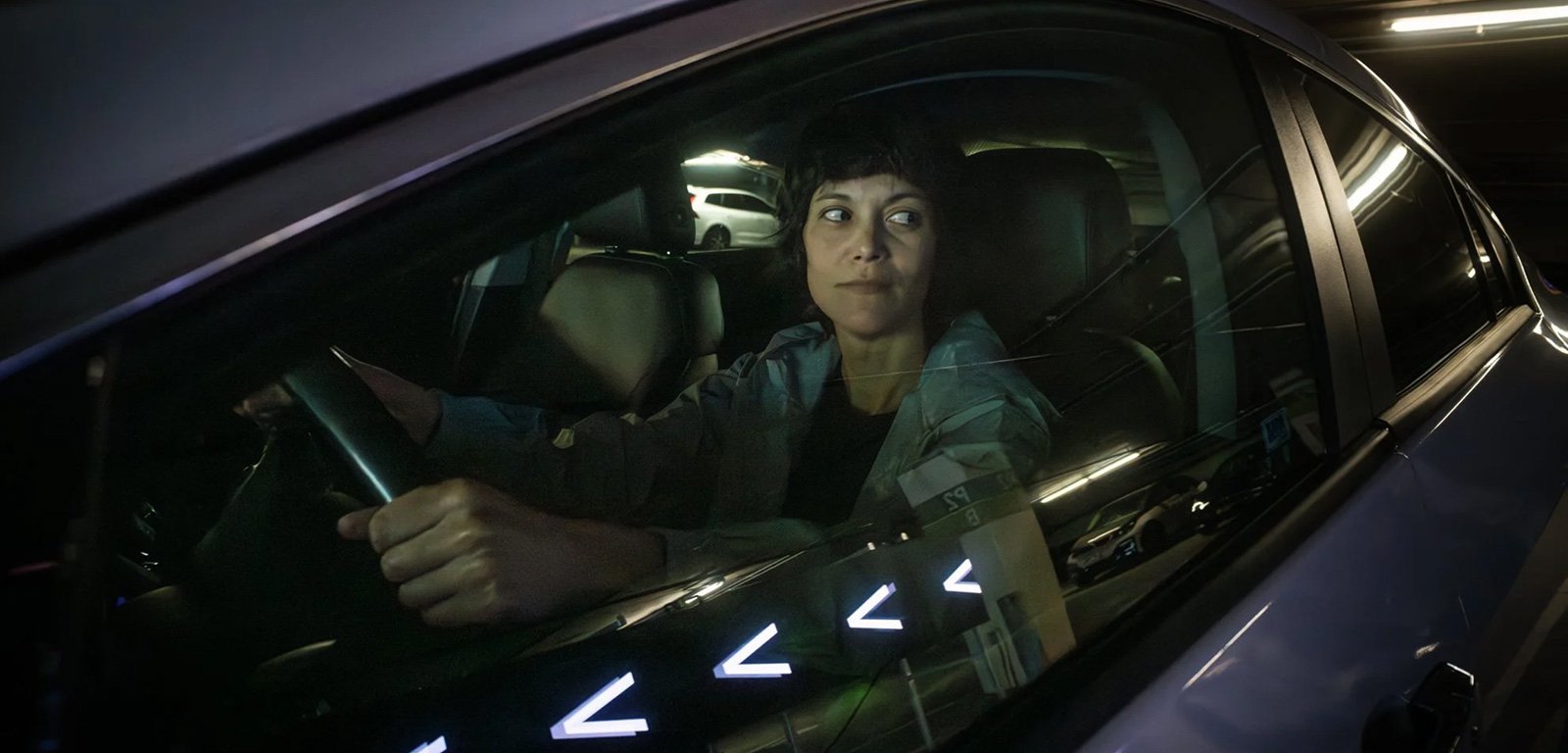
During the “ride”, singing supplies the experience with its sense of momentum. Words arrive with a rhythm already attached, and participants have to find their place in it while hearing the people around them do the same. This karaoke aspect makes the interval between receiving a line and giving it voice unusually short. That way, the focus of keeping time with others can carry someone into words they have barely had a chance to consider.
“Don’t think. Just follow” is one of AUTO’s invitations, and the ease of joining in gives that instruction a peculiar appeal. The result: passengers supply the voices through which the system comes into being, lending their own timing and enthusiasm to a performance whose next words they are still waiting to receive.
An earlier iteration of AUTO at Los Angeles County Museum of Art (LACMA) in July 2025 began with a performer playing an AI assistant, who asked visitors for a destination and taught them a tune before they descended by elevator to a parked car. Facing a sculpture of light tubes, they followed words and symbols supplied by illuminated signs, singing along to music from the car’s speakers. LACMA’s account records nervous laughter among the passengers, a sound that catches something important about McCarthy’s method. Laughing can acknowledge the strangeness of an instruction while making it easier to carry on with it, especially when the people beside you are also trying to work out what they have agreed to do.
That mixture of intimacy, service, surveillance and uncertain authority runs through McCarthy’s earlier work. In SOMEONE (2019), four homes in the United States were fitted with networked cameras, microphones and appliances that visitors at a New York gallery could access. When a resident called for assistance, someone in the gallery could take on the role of a domestic voice assistant, bringing a stranger’s attention and judgement into the home. Delegating a small task became bound up with a decision about access to someone’s life.
In AUTO, passengers give the system its collective voice and can hear the variations in timing and confidence through which an instruction becomes a shared performance. The human effort involved in making automation feel fluent becomes available to the people performing it.
McCarthy also opens the design of these encounters to collaboration. Each version is adapted through local participation, with community workshops addressing questions of AI, automation, environment and infrastructure. Successive test rides inform the development of later versions, so a passenger’s response can help shape what another group will eventually encounter. That person is also making immediate choices within an experience prepared ahead of their arrival. The project connects the freedom to join, hesitate or stop with the slower work of deciding what future participants will be invited to do. Its proposition extends to having a say in how the instructions are written, and whose expectations they serve.
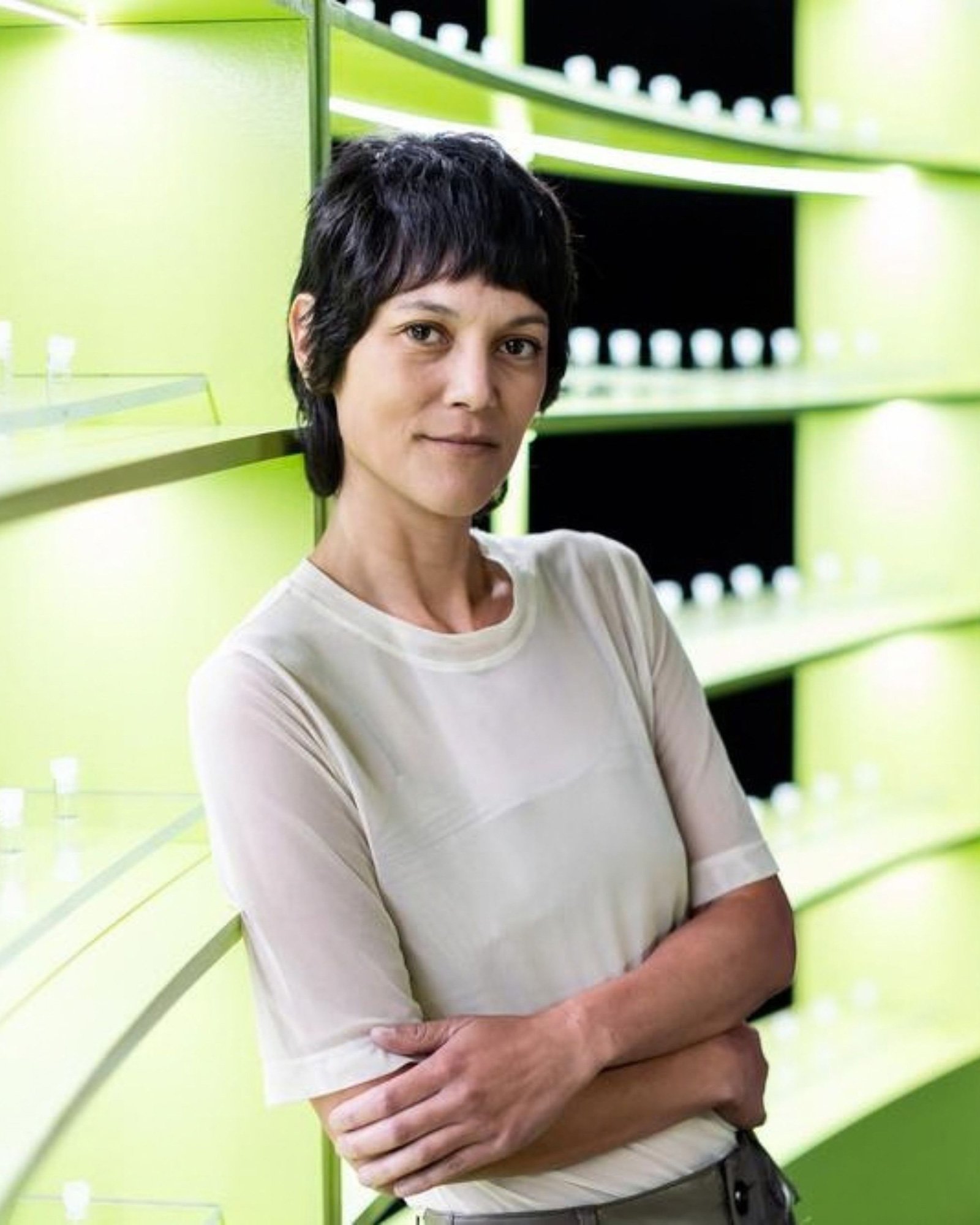
Lauren Lee McCarthy. Courtesy of the artist
In AUTO the material through which these questions are explored is a participant’s own voice. As passengers keep pace with the words on screen, the sound of the group can make a line written by someone else feel like something they have chosen together. Each new line renews the decision to continue, under conditions partly set by the prompt and partly by the people nearby. Importantly, the bus stays still long enough for its passengers to hear how an automated future might acquire a collective voice, and how much of that voice they are willing to supply.
“For me, my work AUTO is a way of navigating a moment shaped by high speed technological, social, and political change,” Lauren Lee McCarthy says. “It’s about the thrill and anxiety of letting go. Being out of control. Driverless. The feeling of moving at high speed toward the future with nobody in the driver's seat. And recognizing that our greatest hope is our collective imagination and action. That’s why receiving this award is so meaningful to me.”
“In a time of so much uncertainty, The Lumen Prize and the community that has come together around it, offers hope and inspiration for creating a future we actually want.” (Lauren Lee McCarthy)
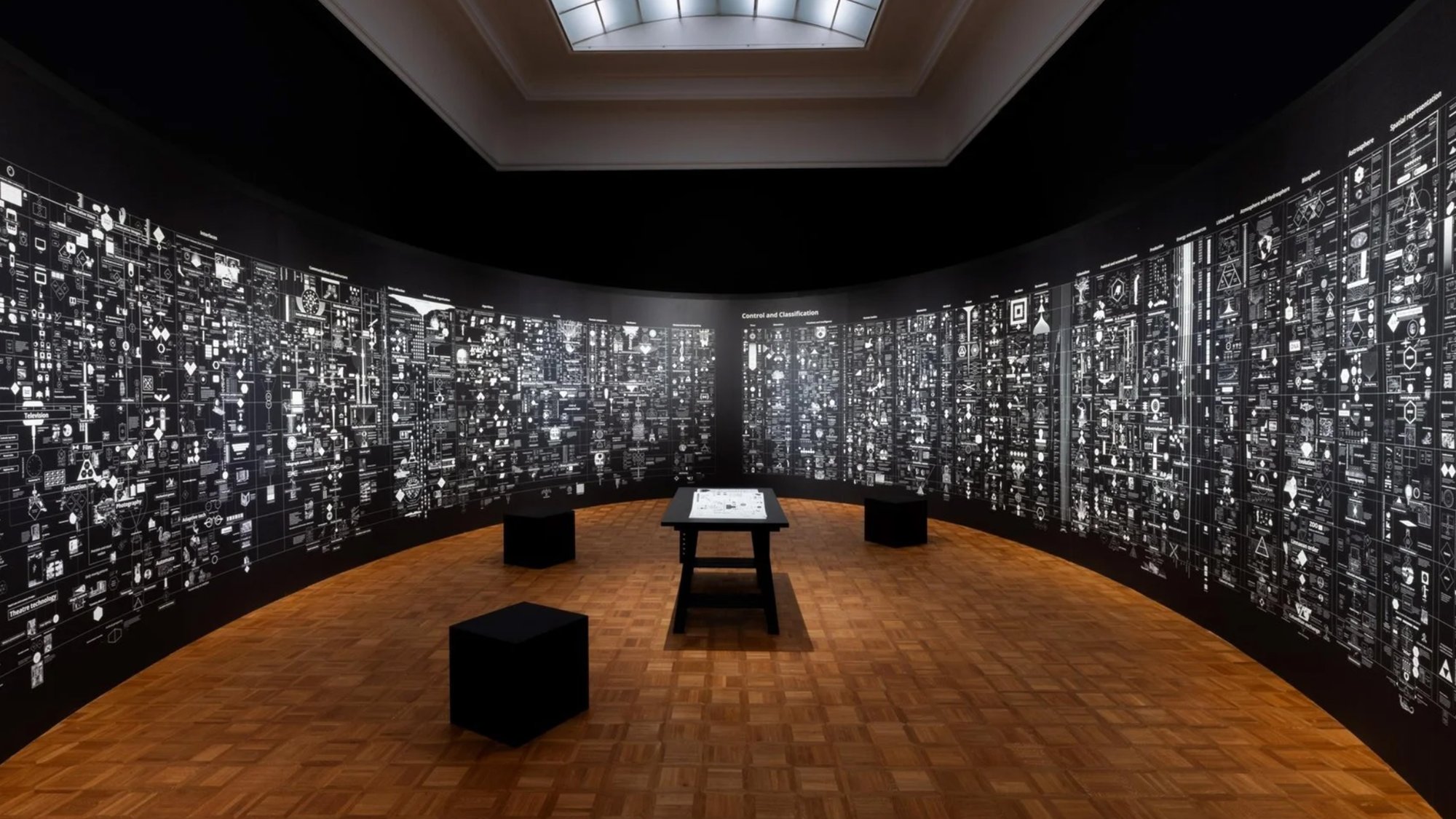
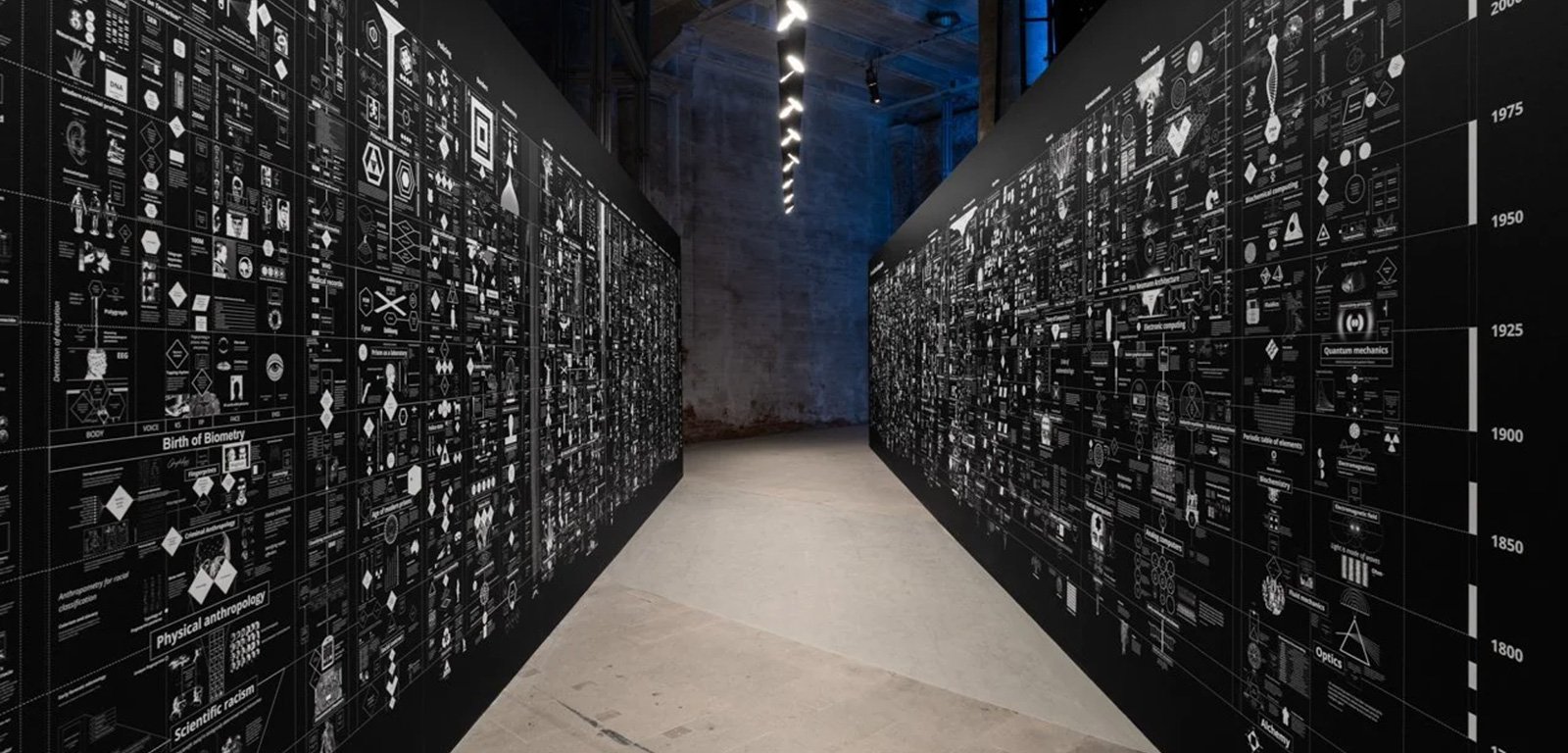
ForCalculating Empires (2023) Kate Crawford and Vladan Joler spent more than four years assembling thousands of drawings and texts into a diagram over 24 metres long and three metres high. Its two halves place five centuries of communication and computing alongside the history of how people have been classified and governed. Visitors can read the history of biometric identification alongside that of borders, for instance, and see how a measurement taken from someone’s body can inform a decision about where they are allowed to go. Contemporary AI takes its place within this longer history of collecting information and acting on it. Following those connections gives the question of how empire operates today a practical form. Who can gather information about whom, and what does that knowledge give them the power to do?
In the installation, visitors can step back to take in the sweep of the timelines, then move closer to trace a particular connection. The artists also provide books printed on translucent paper, so one timeline shows through another, and leave pencils for readers to add their own notes. The interactive map lets readers move between individual entries and whole centuries, with an audio guide offering another route through the work.
Kate Crawford. Courtesy of the artist
Vladan Joler. Courtesy of the artist
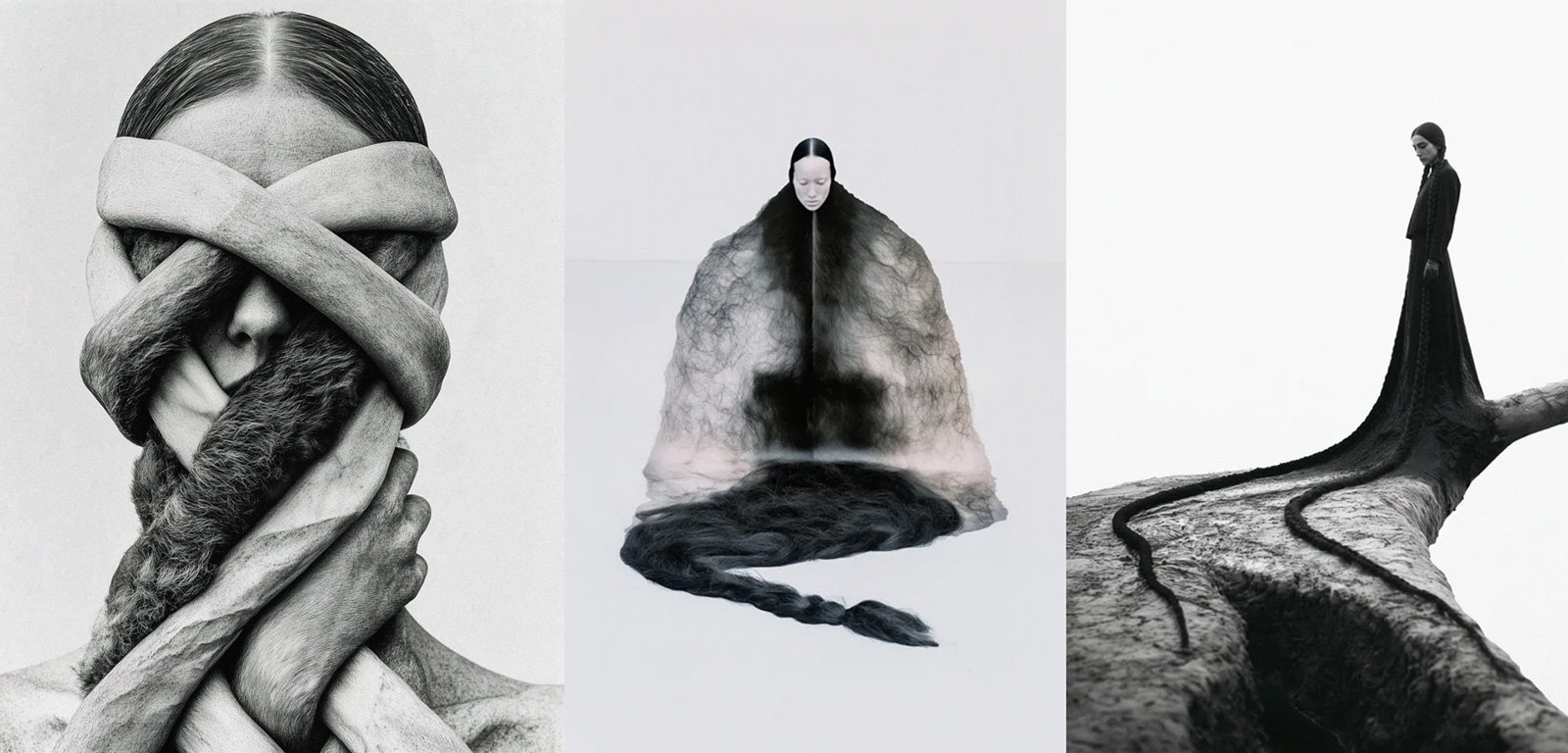
The overall Gold Award gave the jury a way to recognise that reach across categories. Shortlisted under the Systems & Structures category, the work also pursues the kind of historical inquiry that Legacy Futures invites, showing how earlier ways of organising power shape the technologies we use today.
“This year's winners ask us to think about what we remember and what we allow to disappear, who holds power, where we place our trust, and how we relate to one another and the natural world. That understanding matters now more than ever.” (Gillian Leitten, Executive Director, The Lumen Prize)
“I created this award to celebrate artists who use technology to bring those stories into view, and whose work expands our understanding of the world and of one another. Robin Kane’s work perfectly captures this sentiment with a visual impact that will take your breath away.” (Carla Rapoport, Founder, The Lumen Prize)
Kunstsilo hosted the ceremony in Kristiansand for the second consecutive year. Opened in May 2024 inside a converted 1935 grain silo on the waterfront, the museum houses the Tangen Collection of Nordic modernism, assembled by the Kristiansand-born collector Nicolai Tangen. Its holdings include substantial groups of works by artists such as Anna-Eva Bergman and Asger Jorn. Digital work has also been part of the museum’s programme since its opening. In S-Lab, a space dedicated to immersive productions and digital exhibitions, the museum’s team developed a reinterpretation of Reidar Aulie’s Tivoli (1935), for example.
Through Nordic Interface, Kunstsilo provides support for developing new work. Created in collaboration with Lumen and supported by Cultiva, the programme offers artists working with technology in the Nordic region mentorship and production support, with the opportunity to premiere a commission at the museum. Its inaugural artists are Entangled Others, the duo of Feileacan Kirkbride McCormick and Sofia Crespo, who received Lumen’s Nature & Climate Award in 2025. Their commission, Degrees of Interest, was developed for Kunstsilo’s Silohall and brings two neural networks to the same deep-sea footage, each attending to it differently. For the duo, recognition through the prize is followed by the resources to develop another work and a public setting in which to show it.
“At Kunstsilo, we believe digital art has an increasingly important role to play in shaping the future of contemporary art. Hosting The Awards Ceremony gives us a unique opportunity to bring together some of the most innovative voices in the field, while connecting our audiences with artistic practices from around the world. We are proud to be part of a platform that continues to challenge conventions, inspire new perspectives and push the boundaries of artistic expression.” (Maria Mediaas Jørstad, Director of Kunstsilo.)
Nina Knaack is a contemporary art historian, freelance writer and curator based in the Netherlands. She is a columnist for Tableau Magazine and teaches art history at ArtEZ University of the Arts. She also works with museums and cultural institutions on research, publications and exhibitions, and contributes to public programmes as a speaker and museum educator.