Art Week Tokyo (AWT) has become an increasingly popular destination in the art world calendar since it was opened in 2022 by its founders, Atsuko Ninagawa, the owner of the gallery Take Ninagawa, and the collector Kazunari Shirai, in the aftermath of the Covid-19 shutdown. AWT is celebrating its fifth iteration as a city-spanning event, run by Japan Contemporary Art Platform in collaboration with the art fair giant Art Basel, and with city and government backing. It covers 56 venues for gallery and institutional shows, many of which choose their dates of opening to coincide with the influx of international art-loving visitors during AWT.
There is a rich variety of art of the digital turn on offer across a city which has a deep tradition of exploring art’s relationship with technology dating back to the early 1950s. That tradition takes in the 1960s algorithmic computer graphics of Hiroshi Kawano and the Japanese collective Computer Technique Group (CTG); the video boom following the introduction of the Sony Portapak video camera in 1967 and Japan World Exposition, Osaka, 1970, after which Fujiko Nakaya, the noted creator of “fog sculptures”, emerged as a leading figure in Japanese video art; and the further inspiration offered to local video artists by “A Tribute to John Cage” (1978), Nam June Paik’s first solo exhibition in Japan, held in Galerie Watari, Tokyo. (Galerie Watari’s successor institution, Watari-um, the Watari Museum of Contemporary Art, is showing a retrospective of Paik’s work, “Nam June Paik: The 20th anniversary of his passing”.)
One of the standout features of the week for followers of art made with technology is the debut in 2026 of Tokyo Jazz Club, organised by two founders of the alternative art fair Basel Social Club, where art of the digital era is being shown by galleries from Japan, Germany, the US, and beyond.
Another is the Mori Art Museum’s survey exhibition of 30 years’ work of Mariko Mori, who has blazed a trail since the 1990s as a Japanese artist of international stature who integrates science and metaphysics into her art. The exhibition is a further marker of the museum’s focus on advanced technologies, which has included the 2025 presentation of Beeple’s Human One (2021-present), and a series of landmark themed shows covering robotics, AI and immersive experiences.
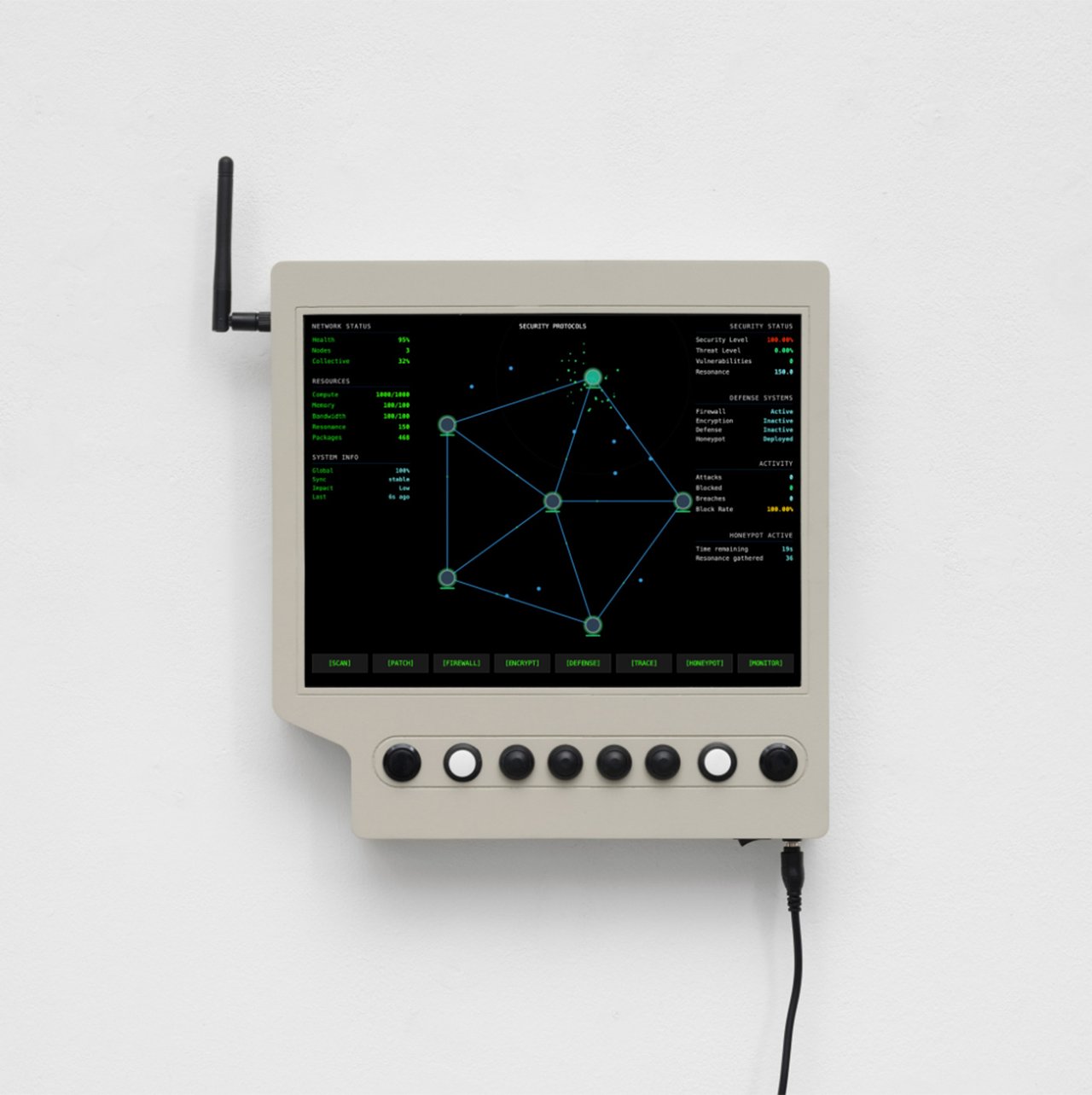
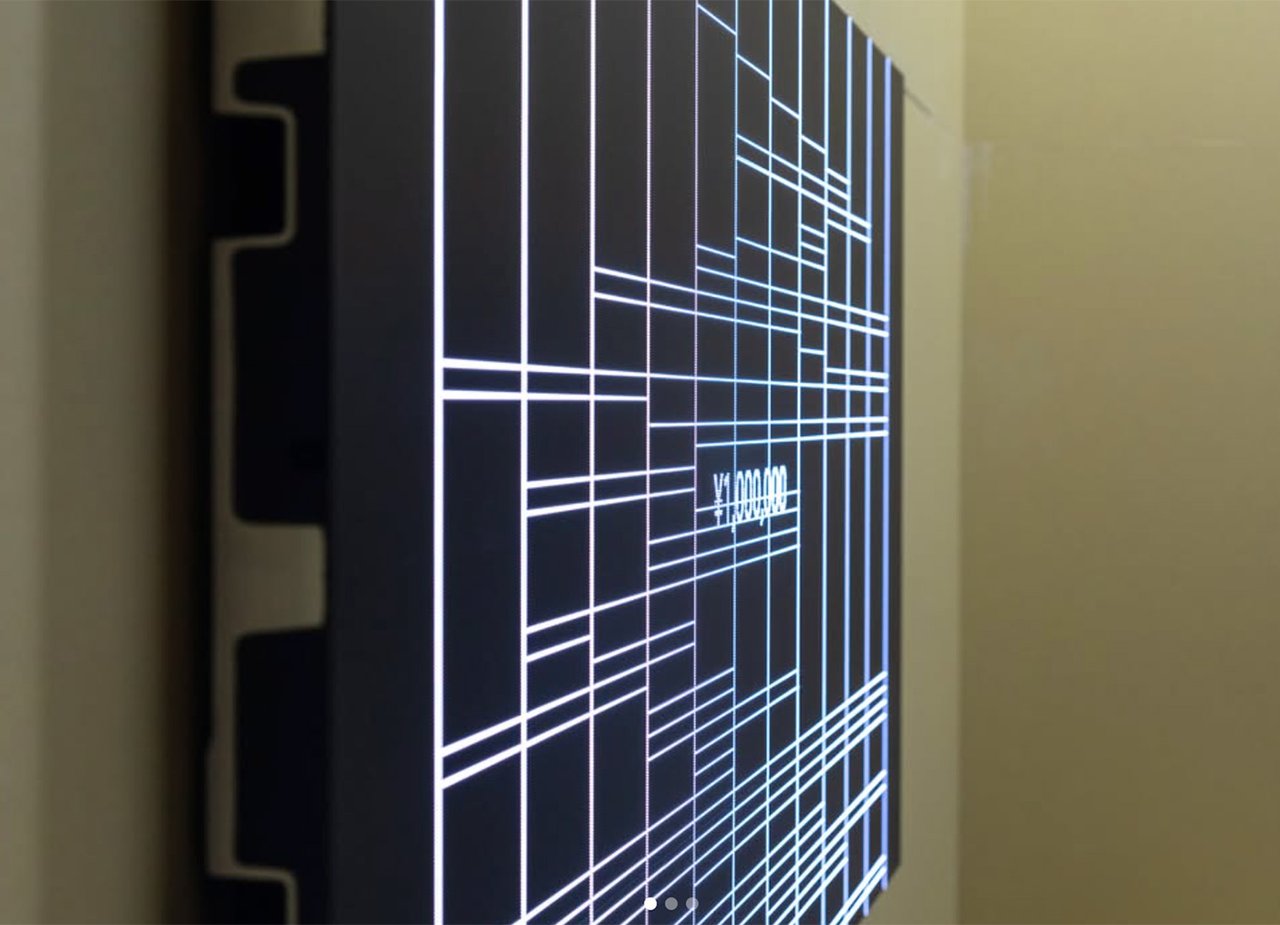
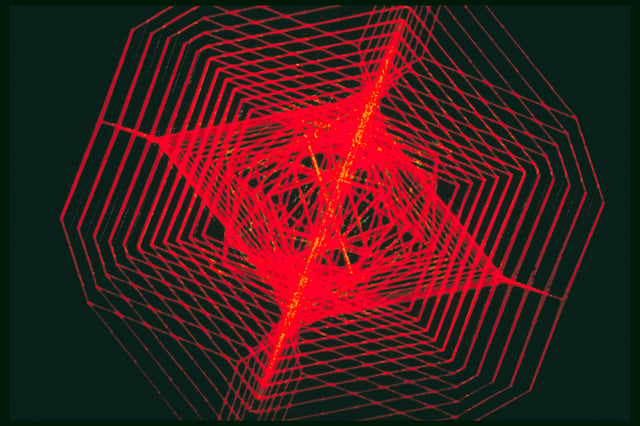
Jonas Lund, Network Maintenance #13, 2026. Courtesy of the artist and Office Impart
As well as being home to a raft of celebrated institutions, from the Mori to the Sumida Hokusai Museum, and the Tokyo National Museum, by way of the grand kunsthalle that is the National Art Center Tokyo — where Leonardo da Vinci’s experiments with technical innovation and refinement form part of a loan exhibition of treasures of the Renaissance from the Musée du Louvre (until December 13, 2026) — Tokyo is the venue for exhibitions, both temporary and permanent, that mark its art community’s contribution to the art of immersive spectacle.
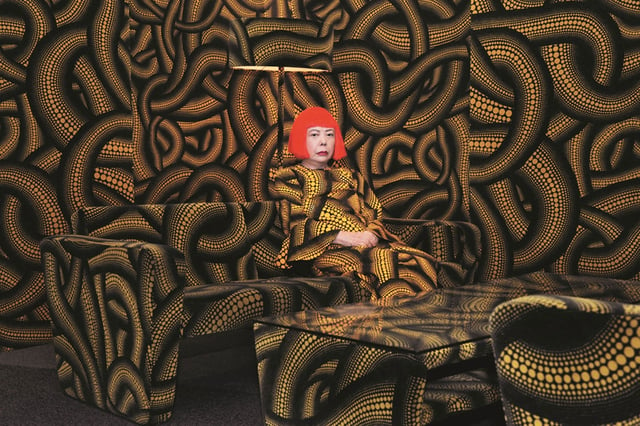
The Yayoi Kusama Museum shows the work of the widely admired creator of Infinity Mirror Rooms, spaces that have their natural successor in the 21st century in the grandly conceived and technically inventive immersive spaces created by the Tokyo-based collective teamLab over the past eight years, which are being set up around the globe, from Anaheim to Hamburg and Abu Dhabi.
AWT has developed a distinctive character in its first editions — building on the city’s strength in contemporary art galleries as well as permanent institutional collections — presented in an inclusive, distributed, manner, where art-week visitors are able to shuttle around the city on a free bus service, immersed in the city’s distinctive built and natural environments, in what is usually pleasing November light and benign late fall weather.
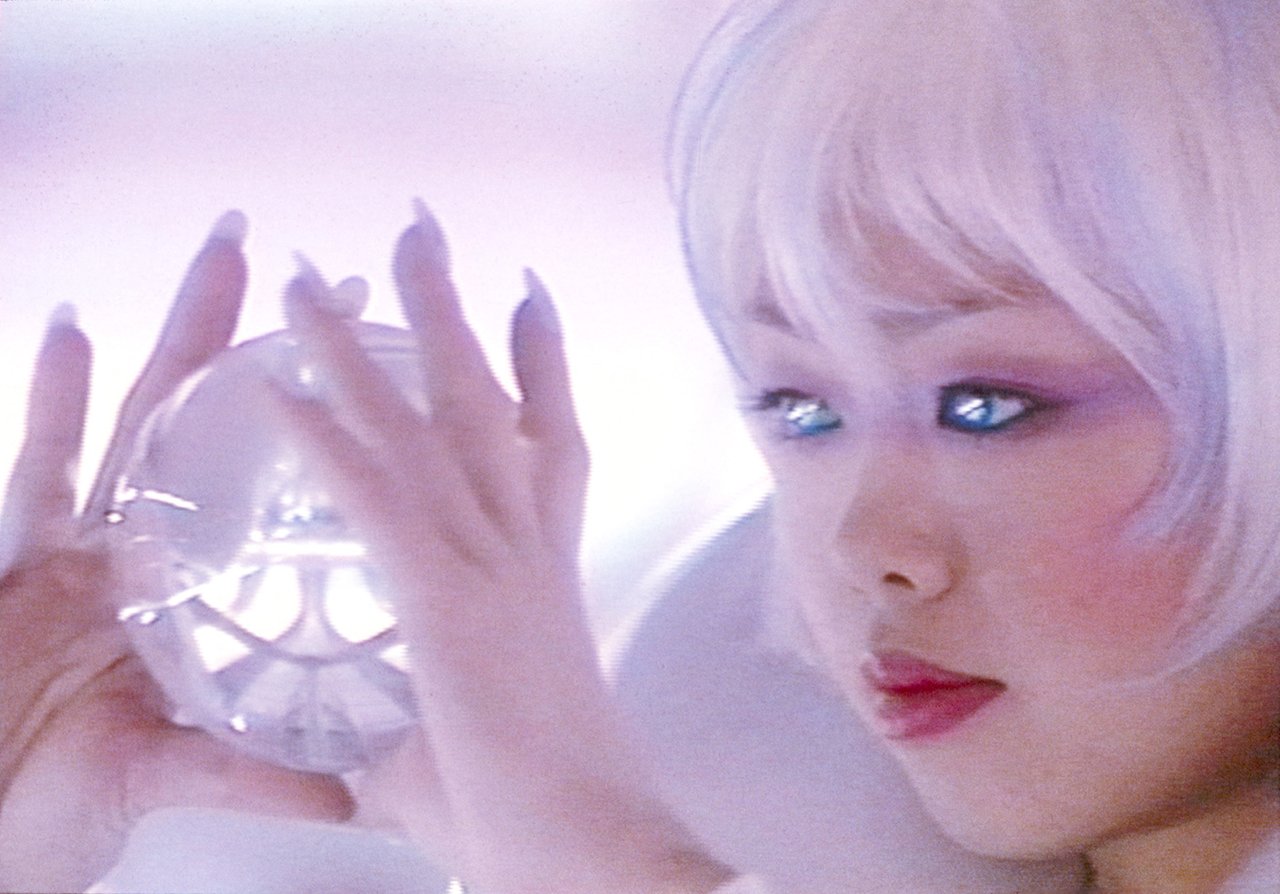
Mariko Mori, Miko no Inori, 1996. Courtesy of the artist and Mori Museum
Art Week Tokyo 2026 serves as a reminder of the range of parties — artists, curators, galleries, institutions, and government entities — that contribute to creating thriving art microcommunities, whether they are in Shenzhen or Sydney, Shanghai or Seoul. In what is an increasingly multipolar global art ecosystem, Tokyo has established a distinctive creative and curatorial presence of its own.
In the age of AI, and increasing governmental interest in its control and management, words from the manifesto of Computer Technique Group (CTG), written in 1966, are at once a reminder of Tokyo’s tradition in art and technology, and a message that resonates today:
“We will tame the computer’s appealing transcendental charm and restrain it from serving established power. This stance is the way to solve complicated problems in the machine society. We do not praise machine civilization, nor do we criticise it. By a strategic collaboration with artists, scientists and other creative people from a wide variety of backgrounds, we will deliberate carefully the relationships between human beings and machines, and how we should live in the computer age.”1
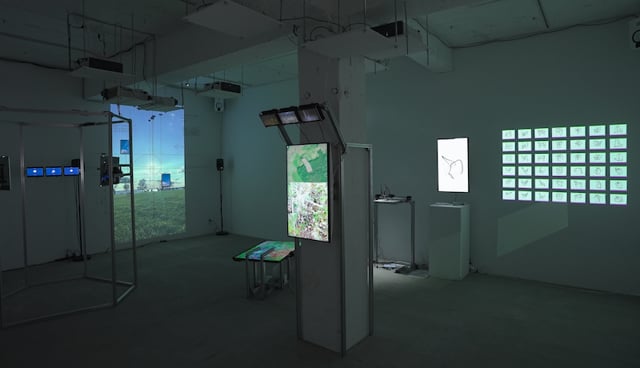
Interior view, Tokyo Jazz Club. Photography via instagram.com/nguyenwahedart
Tokyo Jazz Club, 3-11-15 Kanda-Nishikicho, Chiyoda-ku, Tokyo, November 1-8, 2026
The energy of Basel Social Club, an alternative fair that has run successfully for the past four years during Art Basel week in Switzerland, comes to Art Week Tokyo for the first time in 2026, in the shape of Tokyo Jazz Club, overseen by two co-founders of the Basel event, Robbie Okuda Fitzpatrick and Yael Salomonowitz. Art of the digital turn is being shown by a number of the 65 galleries, and five partner organisations, from Japan and overseas, who are taking part in the club. Each has a space on one of eight floors of a former capsule hotel, which have been set up to bring performance, food and music into the mix of experiencing art.
The Tokyo space NEORT ++, a curatorially brave gallery that has become the connective tissue of Tokyo’s art and technology scene, where recent exhibitions have included examinations of the ways technology is woven into natural systems, is showing the work of three artists: the experimental game designer Tomo Kihara, the multimedia artist Ryota Kuwakubo, and the pixel art collective Excalibur. The gallery also has a billboard collaboration with Arab Bank Switzerland (ABS), partners of Tokyo Jazz Club, who are showing Transaction Sculpture — Untitled (2018/2025), by 0xfff. Visitors to the ABS stand are able to activate the artist’s earliest Transaction Sculpture, an autonomous artwork built from smart contracts on the Ethereum blockchain, from the bank’s art collection. The first record generated on the stand is being shown on public billboards across Tokyo in collaboration with NEORT++ until November 8, 2026.
Installation view, Arab Bank Switzerland stand, Tokyo Jazz Club, with work 0xfff, Transaction Sculpture — Untitled (2018/2025). Courtesy of the artist and Arab Bank Switzerland
Office Impart of Berlin is showing Jonas Lund’s Network Maintenance, which gallery and artist previously presented in the Zero 10 section of Art Basel Hong Kong 2026. The work is made up of wall-mounted networked interfaces, which work as nodes in a connect system where, the artist said in a statement:
“Each owner’s engagement directly influences the vitality of the entire network … This transforms the traditional passive role of art ownership into active participation in a living system.” (Jonas Lund)
Nguyen Wahed, of London and New York, is showing work by Kim Asendorf,Mitchell F. Chan, Goki Muramoto, and Qubibi. The gallery showed the Tokyo-based Muramoto’s “Eyes Half Open” at its New York City space in June-July 2026. “Goki builds his own instruments and media to explore how we see,” the gallery said in an Instagram post, “working at the edges of vision, light, and perception, where looking becomes something closer to feeling. His pieces ask what it means to share a gaze, to hold an image in the dark, to sense light at the threshold of the eye.”
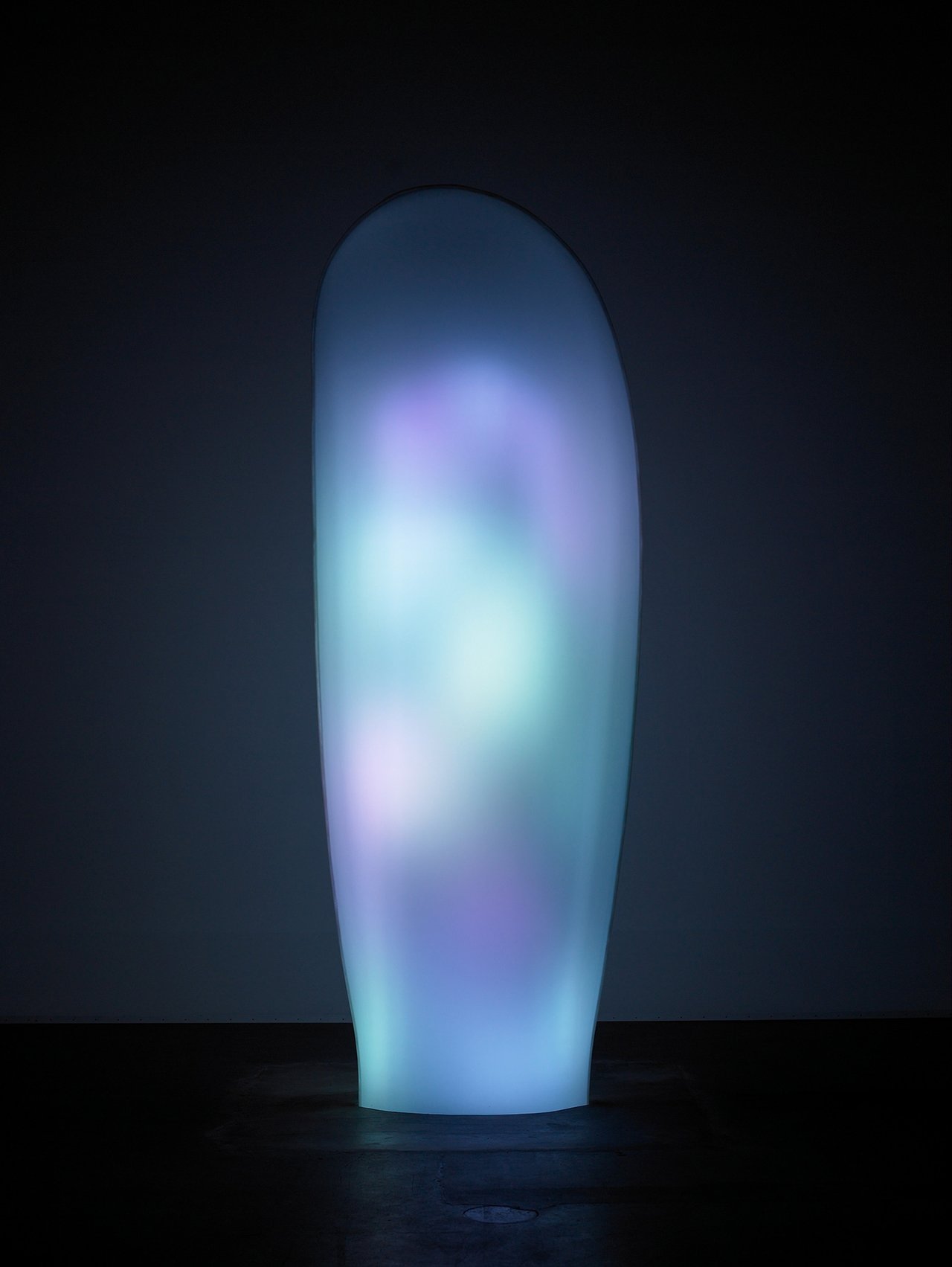
Mariko Mori, Tom Na H-iu, 2006. Glass and LED. Photography by Richard Learoyd. Courtesy Scai The Bathhouse, Tokyo
“Mariko Mori: All That Shines” The Mori Art Museum, Tokyo, until March 28, 2027
Mariko Mori’s pioneering work with immersive experiences, computer graphics, and brainwave analysis, dates back to the 1990s, and the reception of her “Cyborg” series of performance-based photography and video works. Her three decades of practice, working with light, and creating spiritually infused virtual realities, is celebrated in “Mariko Mori: All That Shines”, a substantial retrospective, organized in a collaboration between the Mori Art Museum and the Solomon R. Guggenheim Foundation, New York City, operator of the Guggenheim network of museums.
The show is co-curated by the Mori Art Museum’s director, Mami Kataoka, and Alexandra Munroe, senior curator at large at the Guggenheim, who was the organiser of a celebrated survey exhibition “Japanese Art after 1945: Scream Against the Sky” (1994) at the Yokohama Museum of Art. “All That Shines” celebrates the artist’s embrace of science and her work with developers of cutting-edge software. An example of that advanced sense of engagement is her creation of virtual spaces for the online Adobe Museum of Digital Media, in 2011, three years before the virtual reality boom triggered by Facebook’s purchase of the headset maker Oculus.
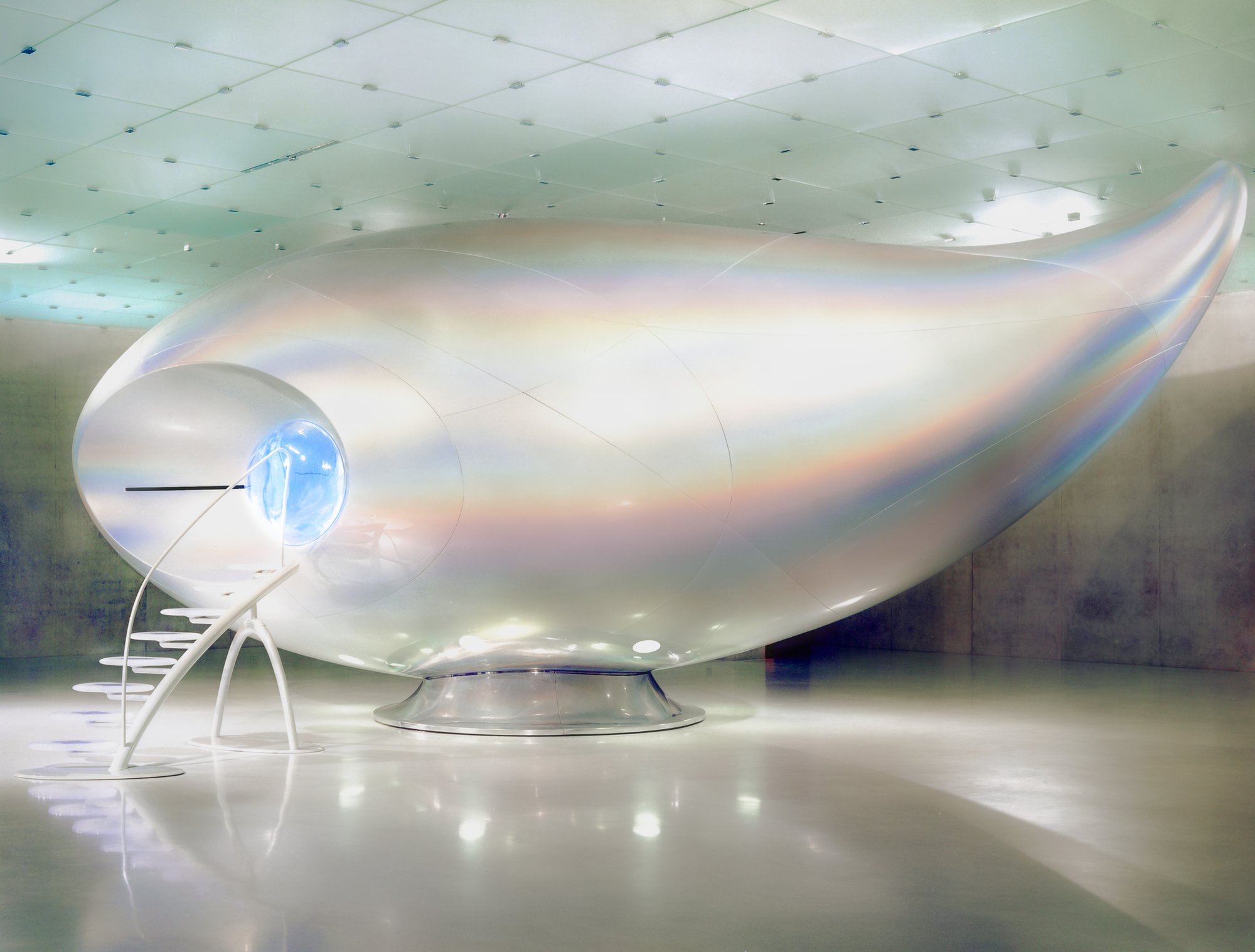
Work on show includes Mori’s bio-futuristic pod-like structure Wave UFO (1999-2002), considered to be the first artwork to make use of brainwave bio-feedback, where three attendees are able to enter and don electrode headsets that project images of their brainwaves. Another work, Tom Na H-iu (2006), makes neutrinos, emitted by supernova explosions, perceptible as flashes of light. An act that renders the neutrino, an invisible subatomic particle with virtually no mass, part of the dreamlike Mori universe, encompassing “All that Shines”.
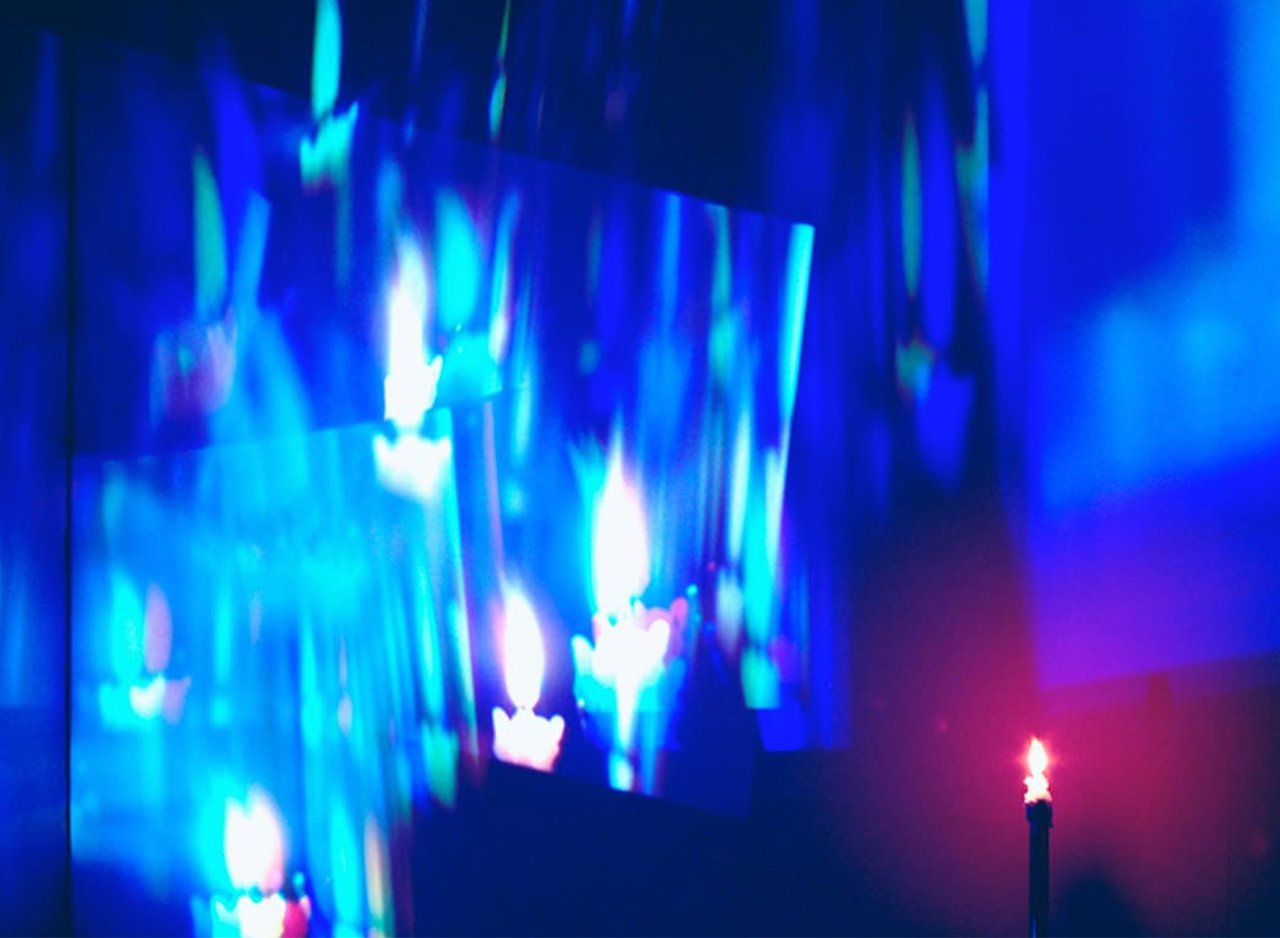
Nam June Paik, New Candle, 1993. Courtesy of Watari-um, the Watari Museum of Contemporary Art
“Nam June Paik: The 20th anniversary of his passing”, Watari-um, the Watari Museum of Contemporary Art, until November 23, 2026
Nam June Paik, the hugely influential South Korean pioneer of video art and of sculpture built from screens and recording devices, an artist who transformed technology as a form of critique, is also an inspiration today to artists looking to preserve early web art and the aesthetics and colors of cathode-ray tube (CRT) screens. This retrospective, mounted to mark the 20th anniversary of Paik’s death in 2006, draws on the holdings of the private Watari Museum of Contemporary Art, and commemorates the artist’s long association with the family of the museum’s founding director, Shizuko Watari, a champion of postwar Western art in Japan, who gave Paik his first solo show in Japan in 1978.
The exhibition, on three floors of the museum, focuses on two immersive works from 1993: New Candle, and Forest of Cage / Revelation of the Forest. The latter work, conceived specifically for the Watari-um building, consists of living trees, interlaced with TV monitors, in which works by Paik, including Time in Triangular (1993) and Robot K-567 (1994), are placed. The installation, the museum says in an exhibition statement, represents “the coexistence of nature and civilization, two seemingly opposing forces”, as well as the artist’s continuing influence on creators and audiences in the age of AI and smartphones.
teamLab Borderless: MORI Building DIGITAL ART MUSEUM, Azabudai Hills, Tokyo
teamLab Planets, 6-1-16 Toyosu, Koto-ku, Tokyo (until late 2027)
The artists’ collective teamLab was founded in Tokyo 25 years ago. It has immersive digital work in gallery exhibitions and museum collections, but its headline works today are the permanent spaces it has opened around the world in the last eight years. They are headlined by the 7,000 sq. m teamLab Borderless in Tokyo’s Azabudai Hills, unveiled in 2024 to replace the original Borderless opened in the Odaiba district of the city in 2018. The collective has megaspaces on a similar scale around the world, with one in Abu Dhabi that opened in April 2025 and another, in Hamburg, Germany, due to open before the end of 2026. The first US teamLab is due to open in Anaheim, in hailing distance of Disneyland, by 2030.
In Tokyo, visitors to teamLab Borderless, a permanent exhibition, can experience an unmapped sequence of spaces where the heightened digital content moves from “room” to “room” without barrier. There is also a café where projection-mapped flowers magically appear in front of customers as they sit down to enjoy their coffee and ice cream. At teamLab Planets, in the docklands of east Tokyo, on show until the end of 2027, the special immersive experience includes walking barefoot through shallow water and seeing virtual fish transform into plants.
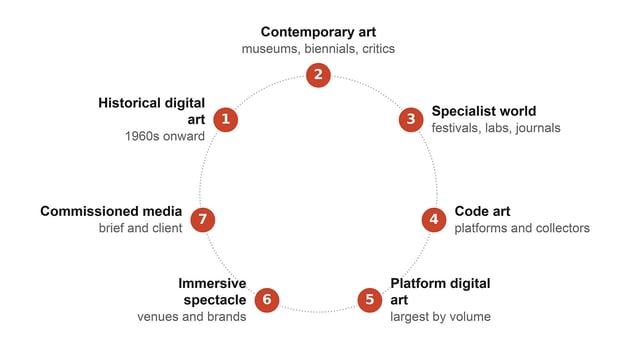
The teamLab experiences have been identified by the media theorist Lev Manovich in “Seven Worlds of Digital Art | A Visitor’s Guide”, published in Right Click Save in September 2026, as sitting in the category of “immersive spectacle”, where “the values are scale, sensory impact, and visitor numbers”. And by the curator Valentino Catricalà, in “New Art | An Idea Emerging From a Tech-Centered Society”, published in Right Click Save in July 2026, as" living between high art and spectacle, and beyond conventional exhibition experience”.
The teamLab spaces sit in a continuum that started with Yayoi Kusama’s mirror rooms in New York in 1965 and reached up to the opening of Refik Anadol’s Dataland museum of AI arts in downtown Los Angeles in June 2026, with a waystation marked by the group exhibition “Ecstasy: In and About Altered States” (2005-06), organized by Paul Schimmel, Chief Curator, The Museum of Contemporary Art, Los Angeles, and featuring artists including Olafur Eliasson, Pierre Huyghe, Takashi Murakami, and Pipilotti Rist.
The completion of that continuum in the teamLab spaces, in Tokyo and beyond, offers one of the most expansive visual backdrops for natively digital generations to locate themselves in the age of the smartphone and the selfie.
Louis Jebb is Managing Editor at Right Click Save
¹ Quoted in G Bell, “Touching the future: stories of systems, serendipity and grace” in Griffith Review, No. 71, February 2021, 251-262.