Turned Away, Then Collected | Rebecca Allen and Lynn Hershman Leeson
Rebecca Allen created her animations as lab research. Lynn Hershman Leeson invented critics so that women’s work would be reviewed. The digital art pioneers discuss the obstacles they faced in the early decades of their practices, and where today’s interest in early digital art is coming from, with Sabine Himmelsbach, director of HeK, Basel
“Before the Canon – Women, Technology, and the Early History of Digital Art”, the first session of the program “Correcting the Code”, was held on October 1, 2026, at Zurich University of the Arts (ZHdK). The program continues on December 4, 2026, at House of Electronic Arts (HeK), Basel, on the topic of manifestos. The writer and cultural theorist Sadie Plant, author of Zeros and Ones (1997), will be joined by the artist, coder and researcher Winnie Soon, Associate Professor at the Slade School of Fine Art, UCL, and co-author of Aesthetic Programming, who takes part online. The session will be moderated by Professor Dr Marie-France Rafael (ZHdK / IfCAR).
In 1972, the Berkeley Art Museum, at the University of California, Berkeley, gave the artist Lynn Hershman Leeson an exhibition, but closed it within 24 hours. Her wax figures came with sensors and the sound of breathing. The verdict, as she remembers it, was that “sound wasn’t art and media wasn’t art.” So she rented a room in the Dante Hotel, San Francisco, where visitors could collect a key at the front desk, at any hour, and see the work.
The institutions have since come around. Early digital and computer art has had an unusual run of retrospectives, acquisitions and market attention since 2021, the year of the NFT boom. Whose history it is buying is less clear.
Women such as Hershman Leeson and Rebecca Allen were turned away by museums, labs and critics for decades, and helped build digital art regardless.
The attention has finally arrived, but the record of their work remains thin: under-documented, under-collected and under-theorized. That gap is the premise of “Correcting the Code: Women, Gender, Technology and the Transformation of Digital Art,” a four-part program co-produced by Zurich University of the Arts (ZHdK) and HeK (House of Electronic Arts) Basel.
Its first chapter brought Hershman Leeson and Allen together with Sabine Himmelsbach, director since 2012 of HeK, a museum that collects the software and net-based work that most institutions avoid. Allen began animating on a computer as a student at the Rhode Island School of Design in 1974, then worked at MIT's Architecture Machine Group and the New York Institute of Technology’s Computer Graphics Lab. The conversation, which Jeni Fulton moderated at ZHdK with both artists joining by video call, has been edited and condensed, with follow-up questions sent by email.
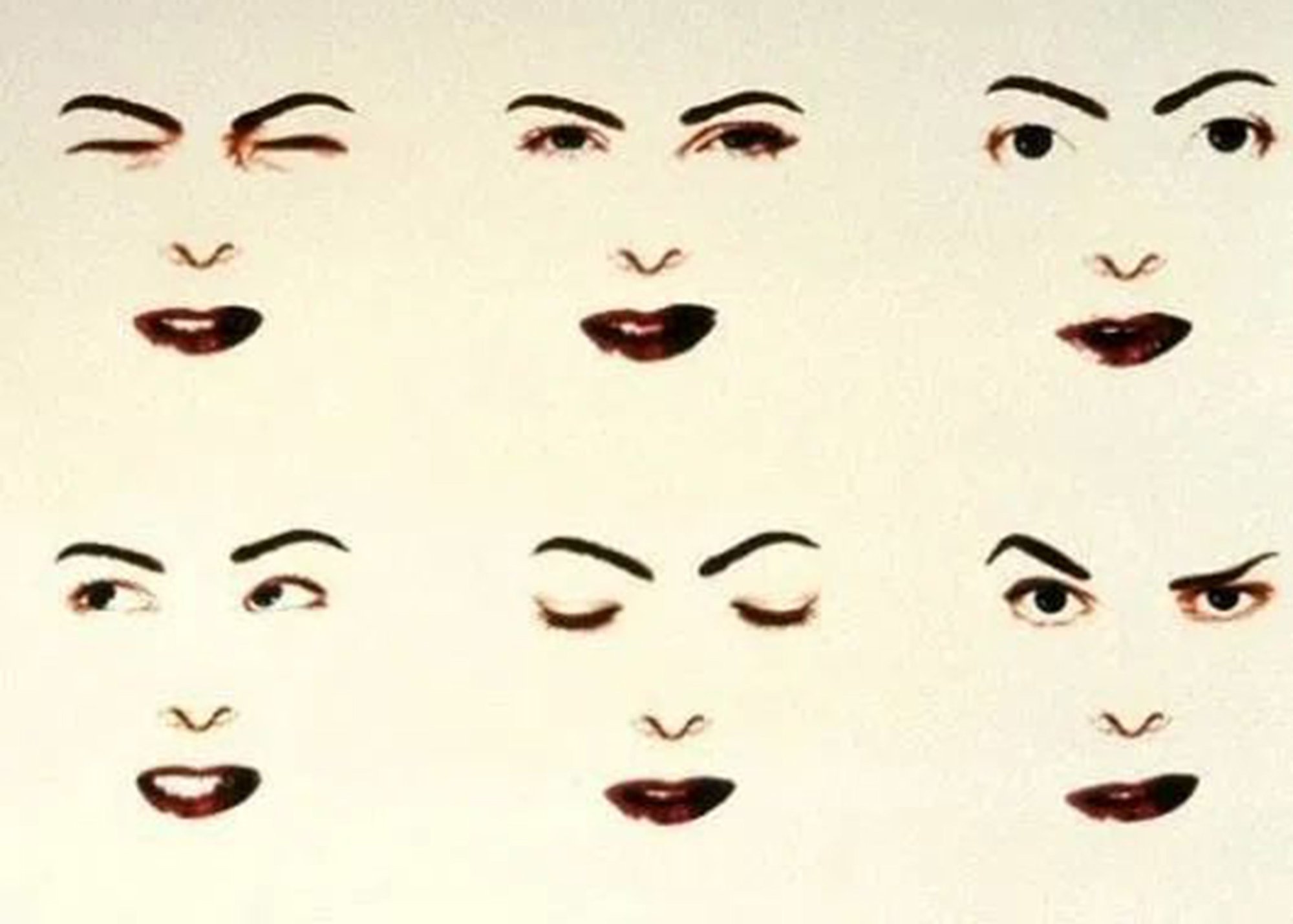
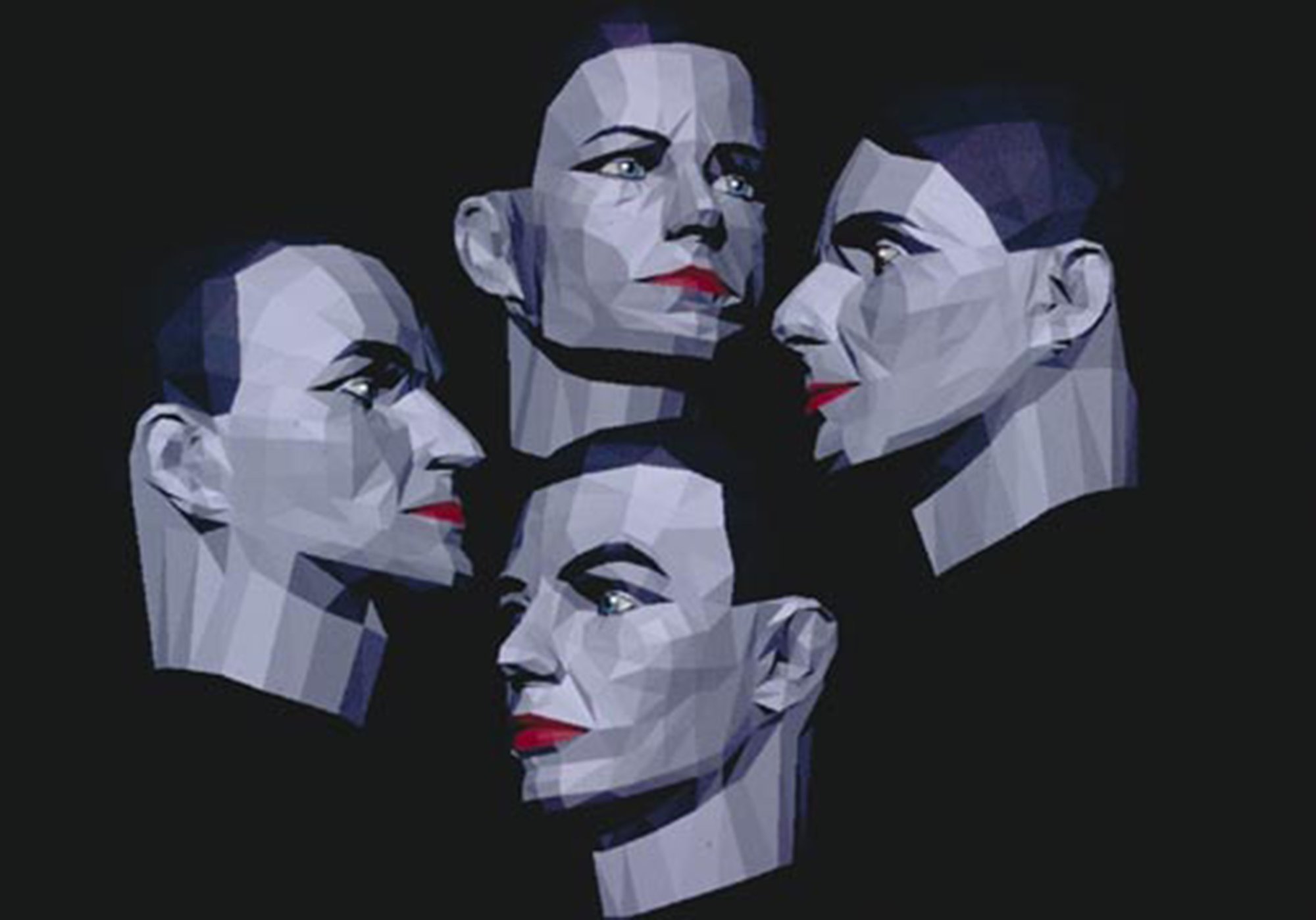
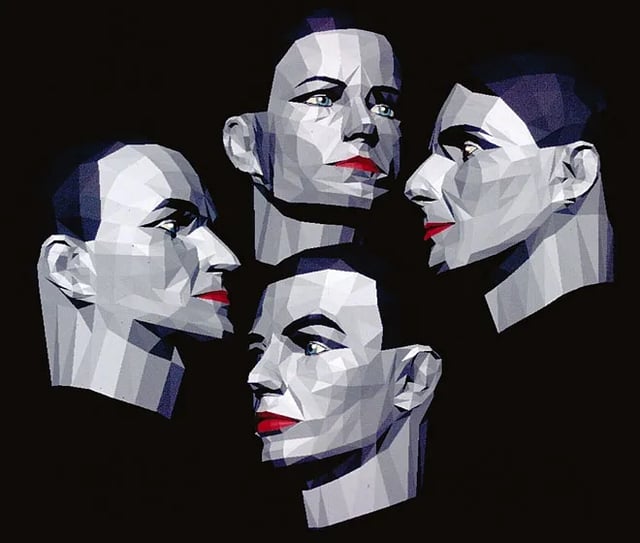
Rebecca Allen, Musique Non-Stop, 1986. Courtesy of the artist
Jeni Fulton: Before any museum collected this field, access came through labs, companies and individual engineers. How did you get in?
Rebecca Allen: Until somewhere in the 90s, artists didn't have studios with computers in them. I wanted to work with the state of the art as a tool. That meant I had to go to a research lab, and that's where I always feel I was infiltrating. I often feel I was more of a performance artist, just getting myself in there and trying to be useful to them, while still trying to create the kind of work I wanted to.
I could do a video and say: this is a demonstration of a certain technique for facial animation. That's how I had to explain all of my artwork, technically, in the lab.
Lynn Hershman Leeson: I think I just took the access. I found who had equipment and learned how to use it. There's no path there.
JF: Who paid for it?
RA: In the US, everything about computer graphics and animation was funded by the military, because all technology research at that time was funded by the military. I found it was much more open when the military was paying for it than when the commercial companies started funding it and deciding what you could and couldn't do with research. Almost all of the commissions I got came from Europe, where there was government funding for exploring art and technology.
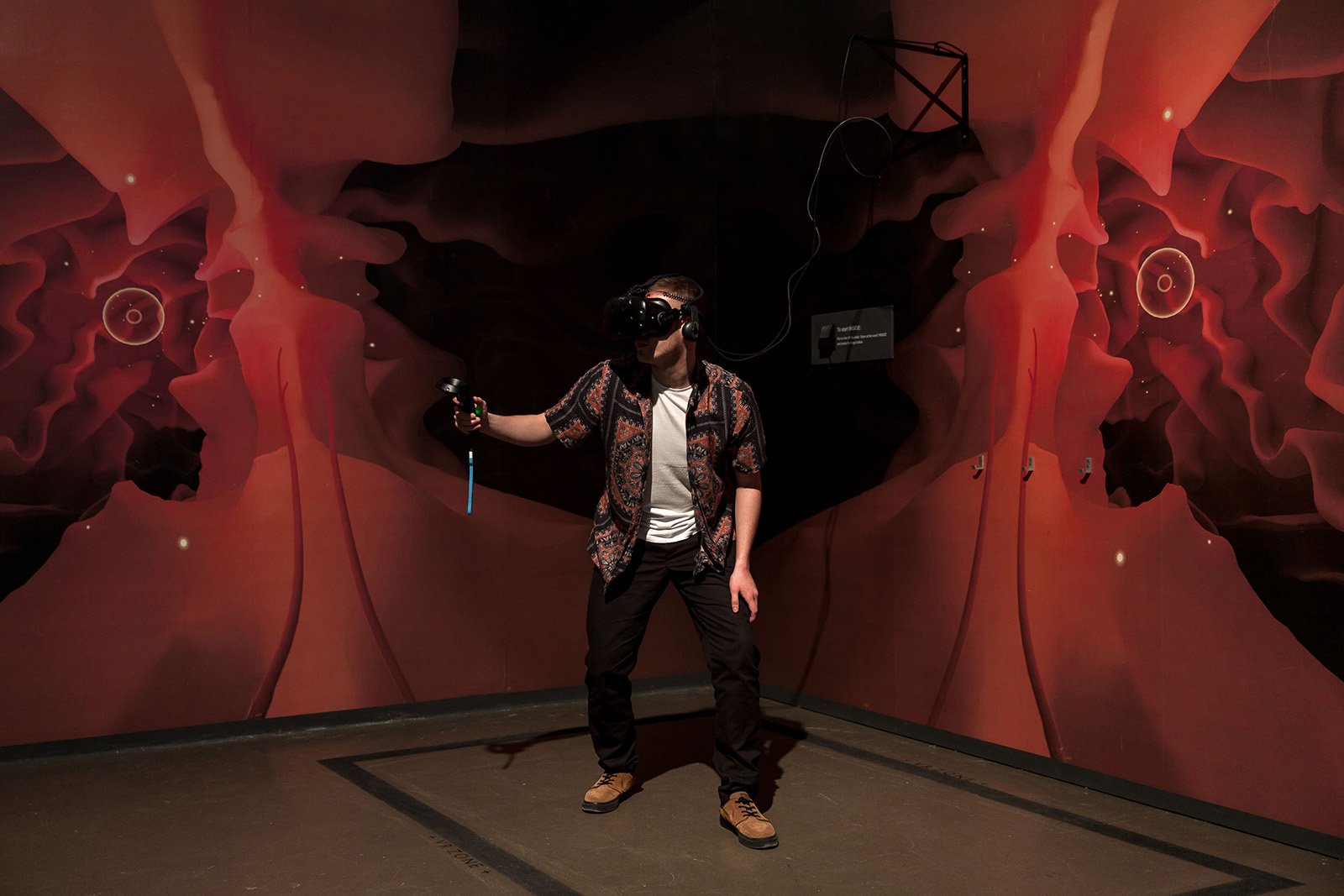
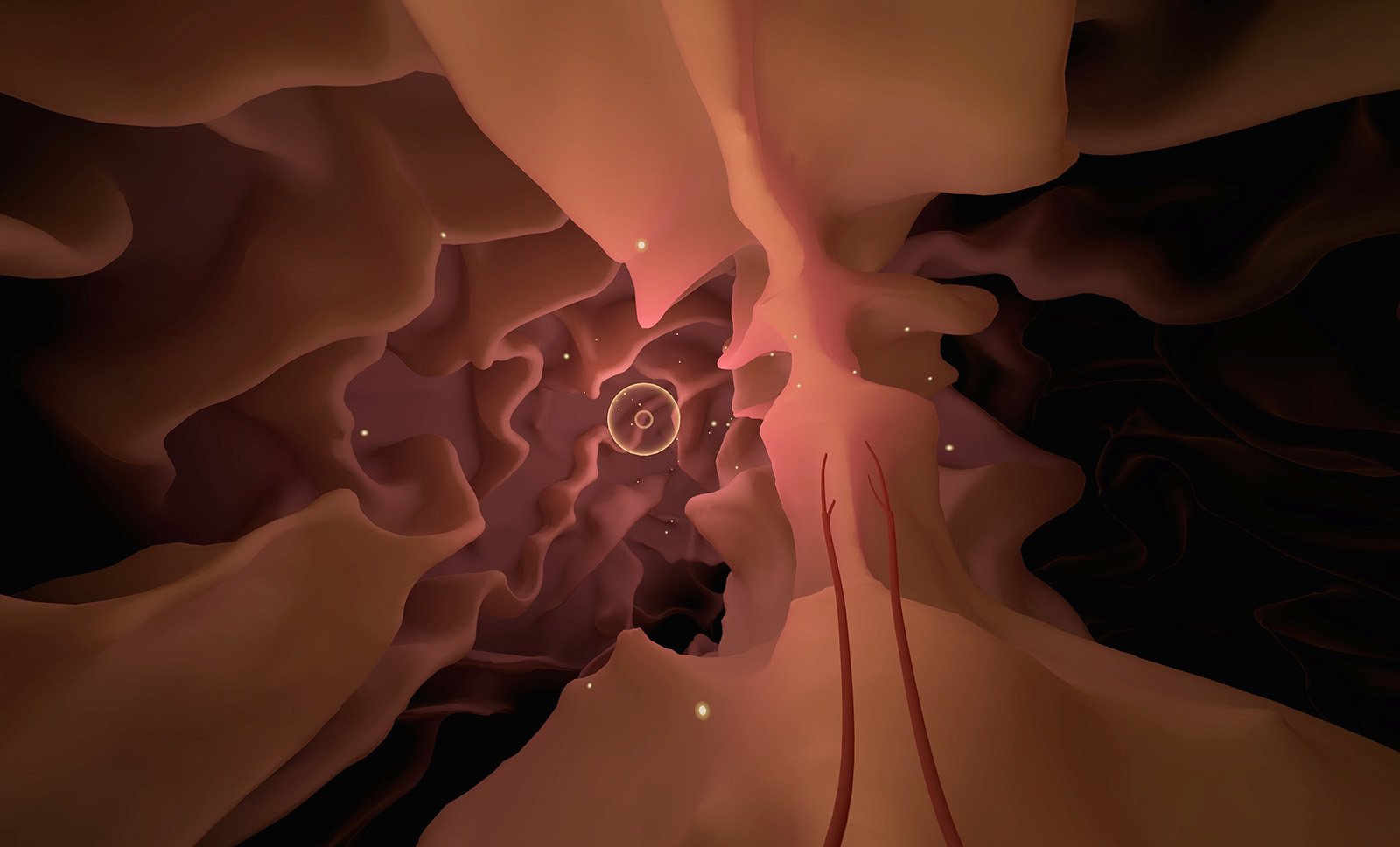
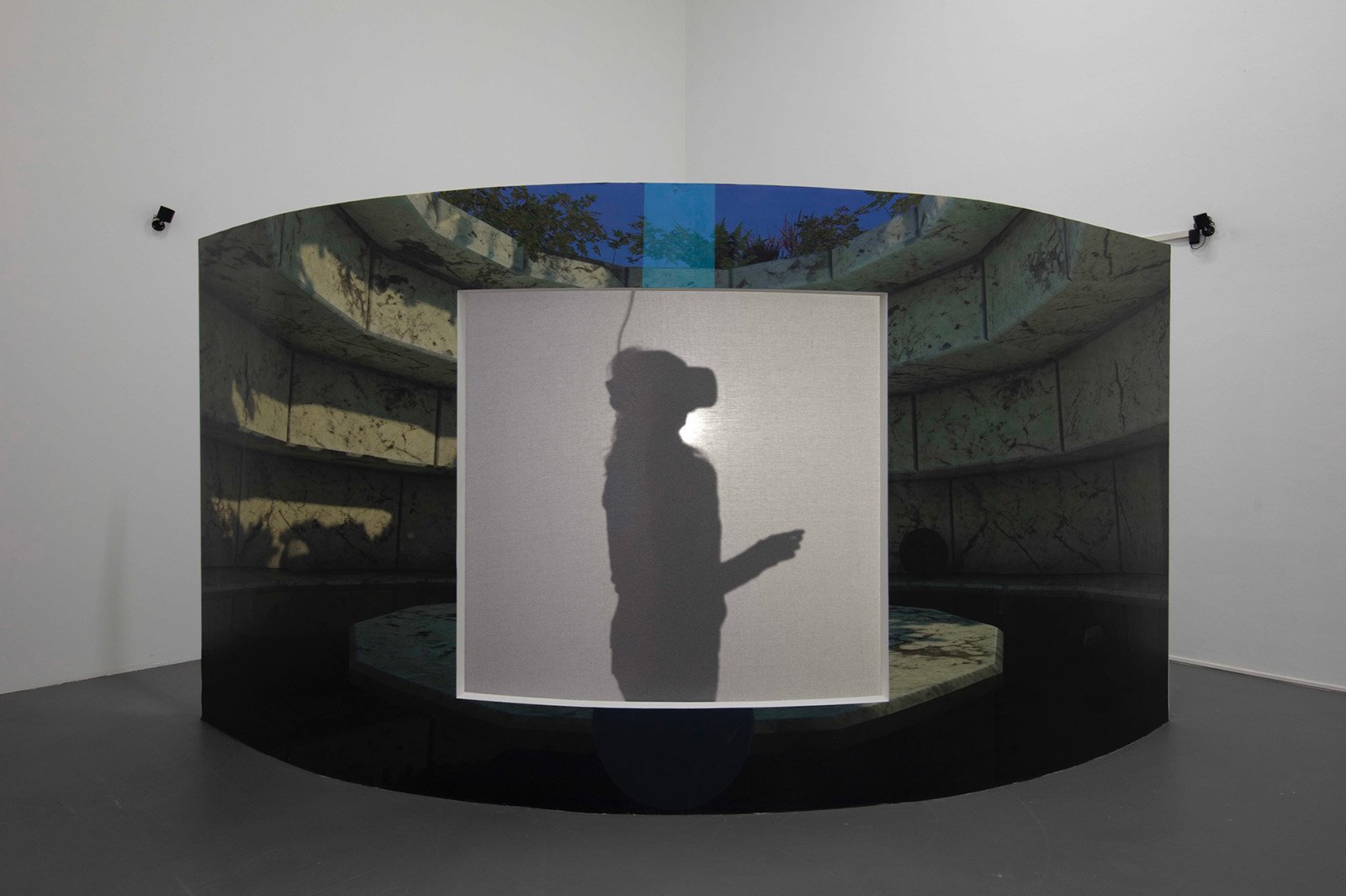
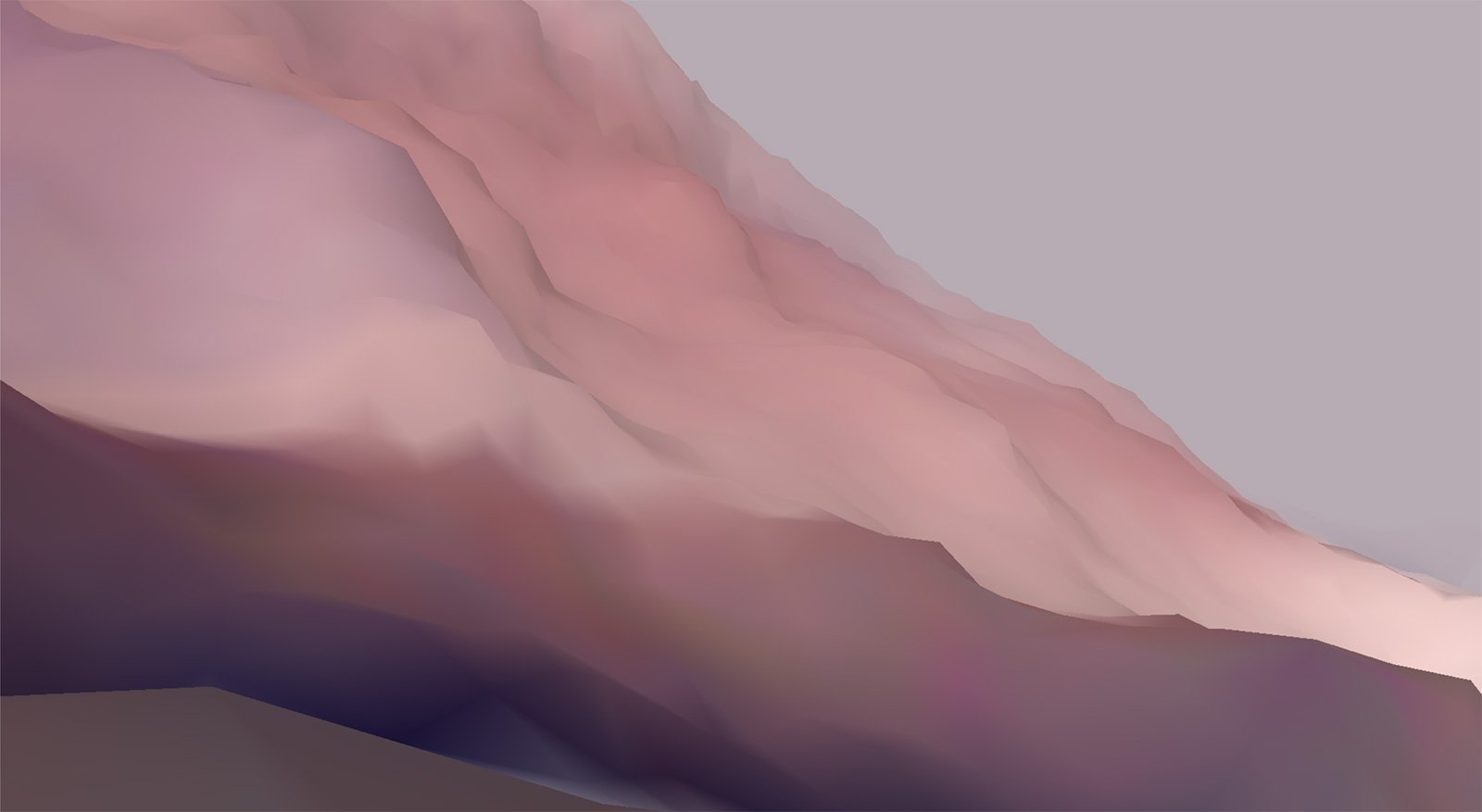
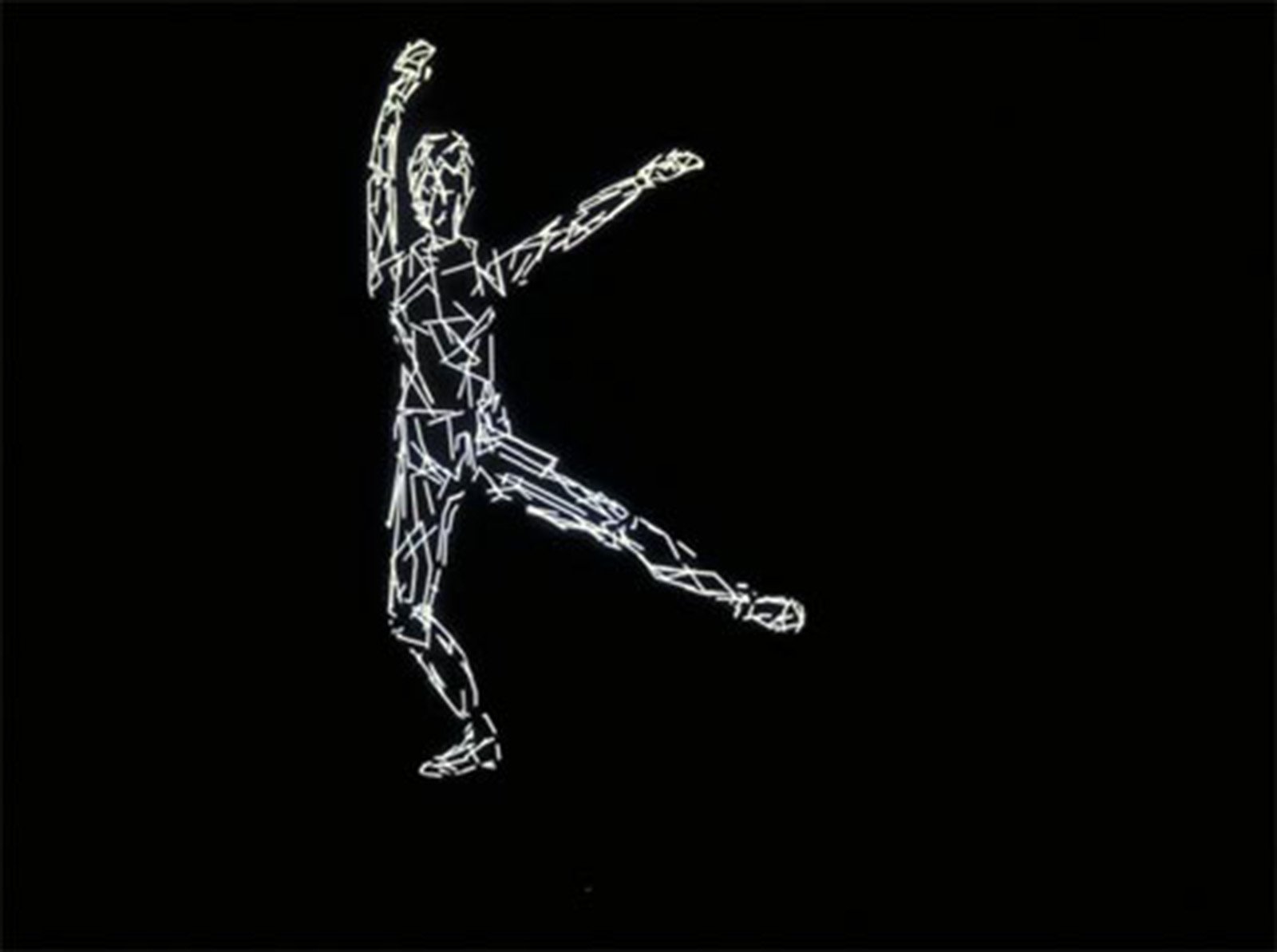
Rebecca Allen, INSIDE, 2016. Courtesy of the artist
Rebecca Allen, INSIDE, 2016. Courtesy of the artist
Rebecca Allen, Life Without Matter, 2018. Courtesy of the artist
JF: Rebecca, your first computer work, Girl Lifts Skirt (1974), turned an erotic animation into punch cards.
RA: As a young woman, it was dawning on me how the female body was really sexualized and objectified. Women in the US couldn’t get a credit card, unless it was co-signed by a man, until 1974. That's when I made Girl Lifts Skirt. [Since then,] it’s more low-key than being blatantly feminist in the work. I’m sure partly it was practical, getting the opportunities to work in these all-male labs; I just couldn’t keep piling feminist thinking on as the forefront of it. But every piece I’ve done is really consciously from a feminine perspective.
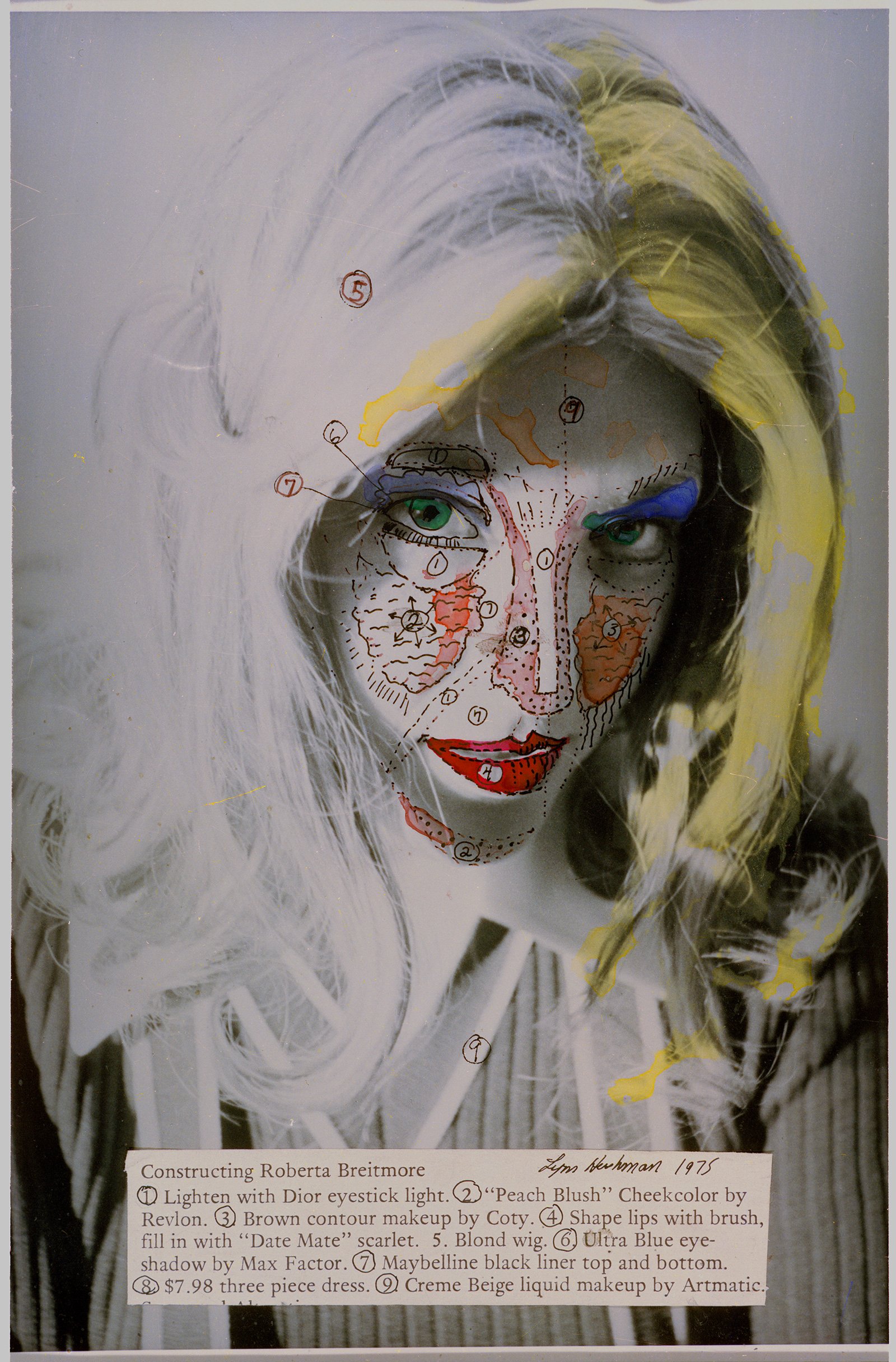
LHL: My avatar Roberta, even though she was fictional, existed in the real world, because she was able to go out and not only get a bank account, but get credit cards, whereas I couldn’t, because my credit was bad. Roberta had no credit, so people sent her the cards. At the time, people thought I was schizophrenic.
JF: Lynn, you also invented critics and wrote reviews of shows under different names. You wrote to me that it was “to get women’s work acknowledged and reviewed, not just my work, other women.”
LHL: Women were usually never reviewed, rarely shown, referred to as the wife of some male artist. So I created these critics that didn't exist. One of them was named Prudence Juris, the reverse of jurisprudence.
They would write about women’s work, just to get out the information that women artists existed and could be seen.
Many of my ideas were taken, without credit, my entire life.
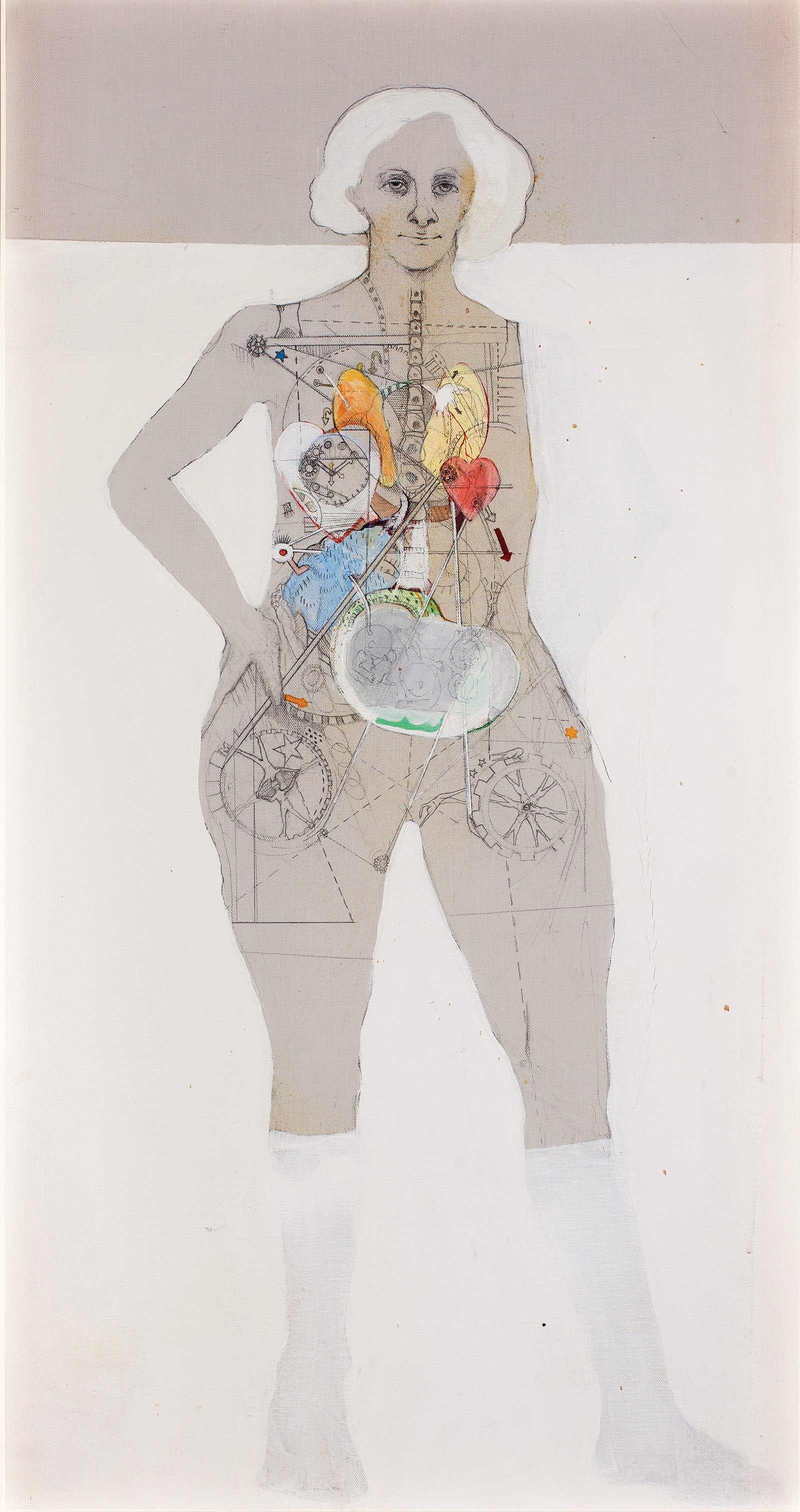
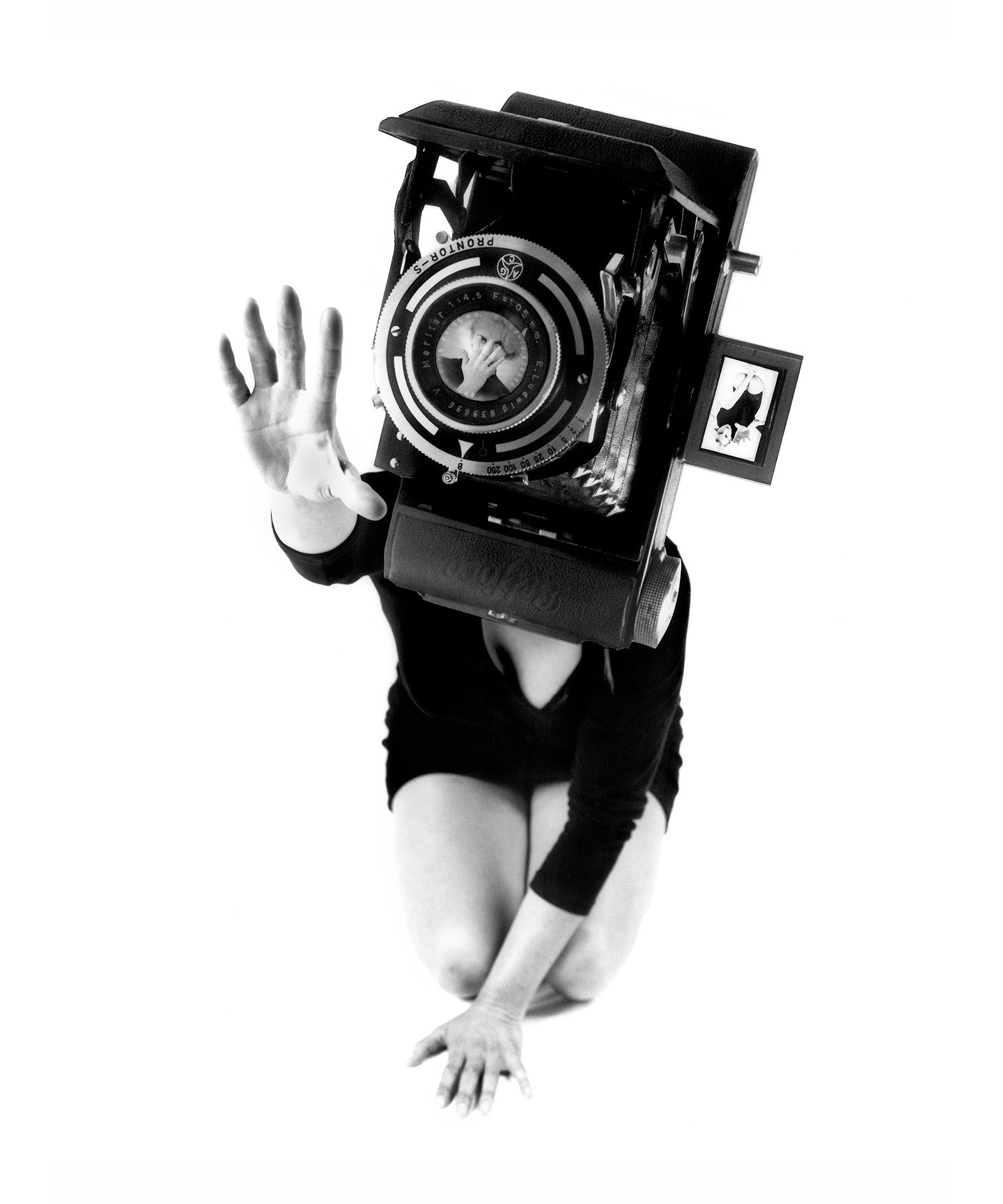
Lynn Hershman Leeson, X-Ray Woman, 1966. Courtesy of the artist
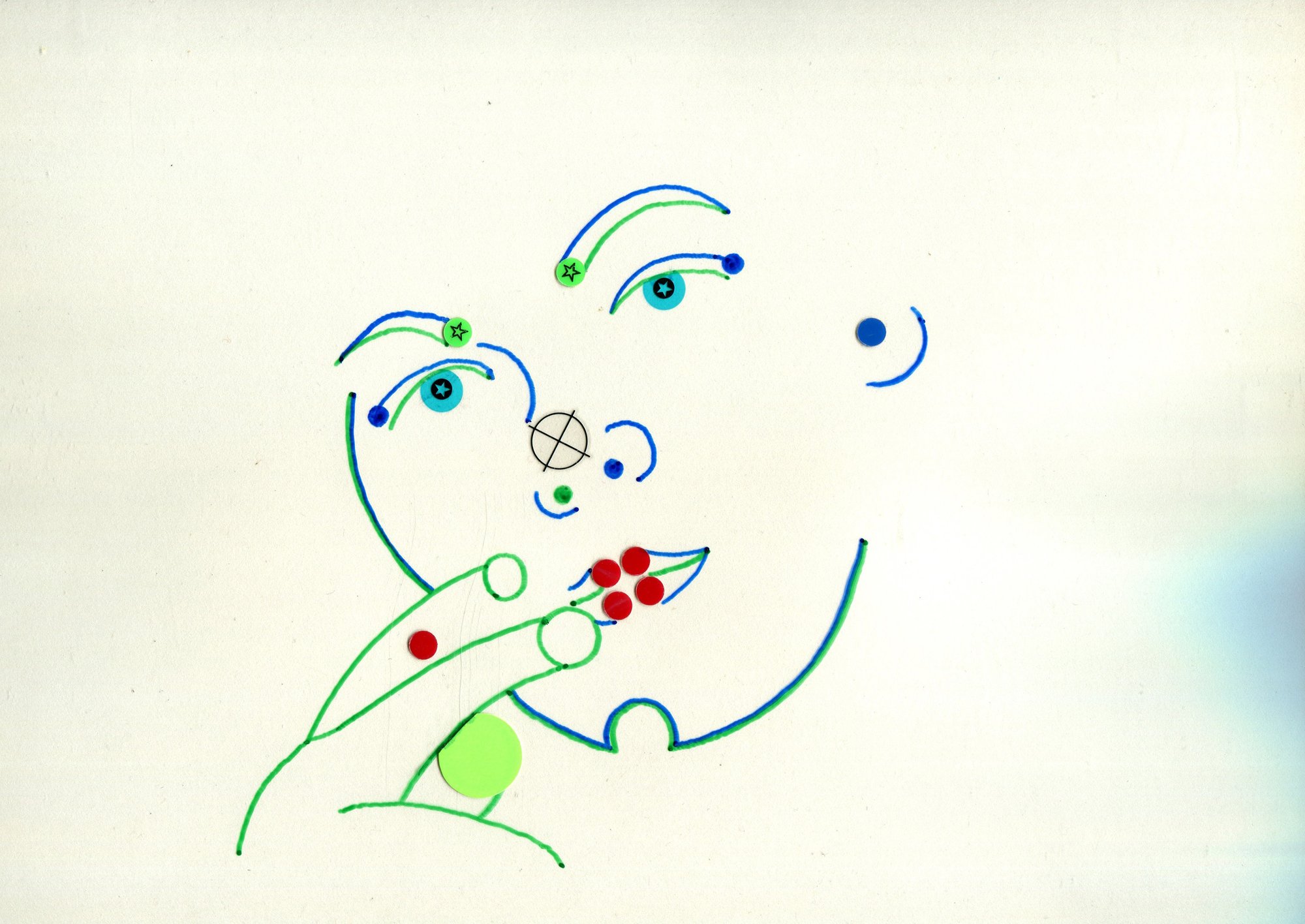
Lynn Hershman Leeson, Roberta’s Construction Chart #1, 1975. Courtesy of the artist
Lynn Hershman Leeson, Reach, 1986. Courtesy of the artist
JF: Which did the most to fix the history of early digital art: exhibitions, collections, writing or the market?
Sabine Himmelsbach: Exhibitions make artistic work visible, and then as a next step it’s the collections and the market that make the canon more durable.
RA: The art world was terrified of computers and wouldn't touch an artist who worked with computers.
SH: It’s also the complexity of the work at the time. Thinking of the 1980s and 1990s, museums were not equipped to handle that.
RA: They were, though. There weren’t even digital files; that was years later. You had to record the work onto video or film, and museums were equipped to show video or film. When you get into interactive work, that's a different thing. But I don’t make any excuse for the art world.
SH: I did not want to excuse anybody. That is probably the reason why the field split, why we had this trajectory of media art with its own institutions, with SIGGRAPH [conference on computer graphics], with very siloed institutions like ZKM [Center for Art and Media in Karlsruhe]. It feels like a tiny, very well-connected community, but we are always a bit to the side of the mainstream world.
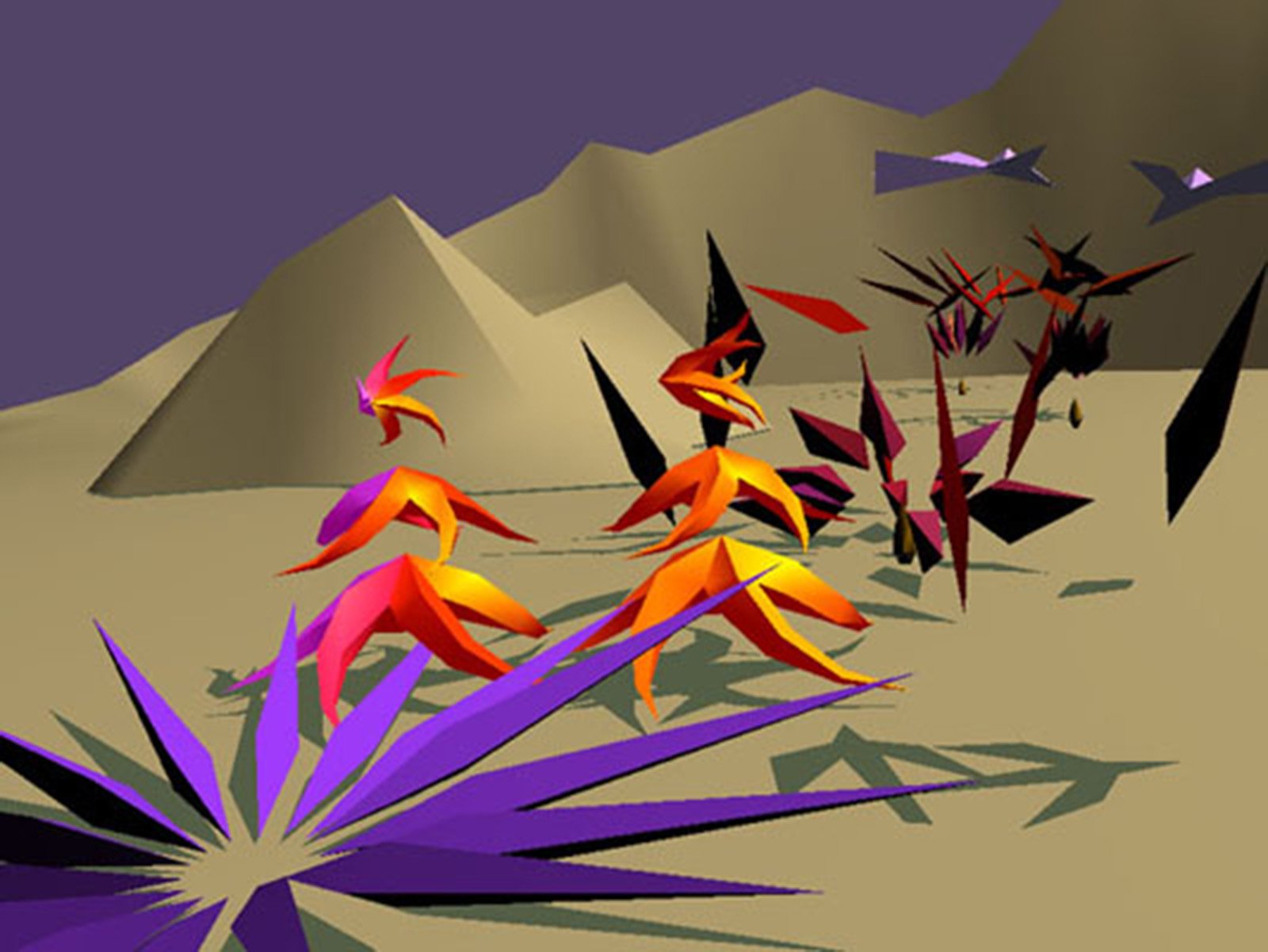
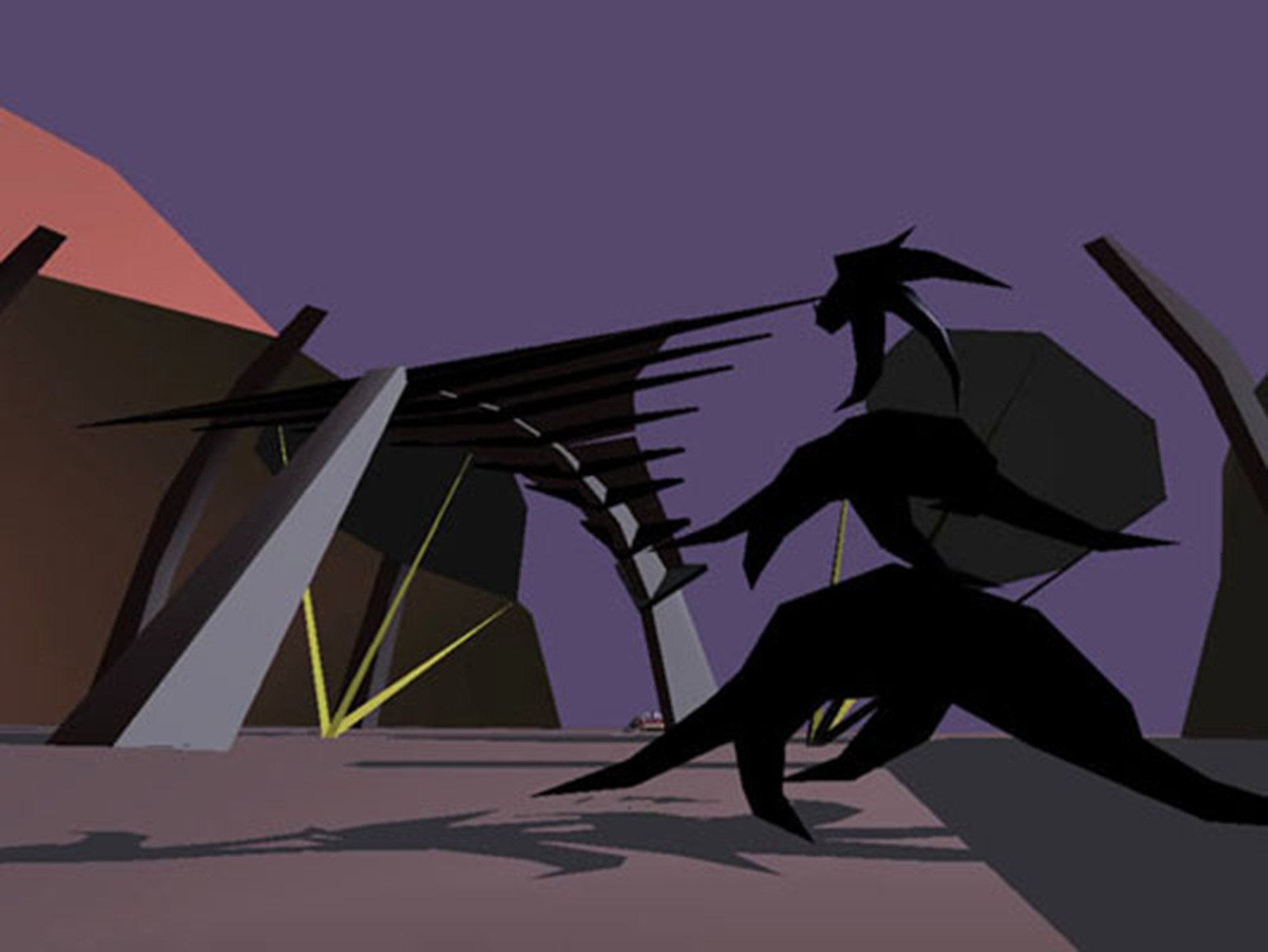
Rebecca Allen, The Bush Soul No 1 Outer World, 1997. Courtesy of the artist
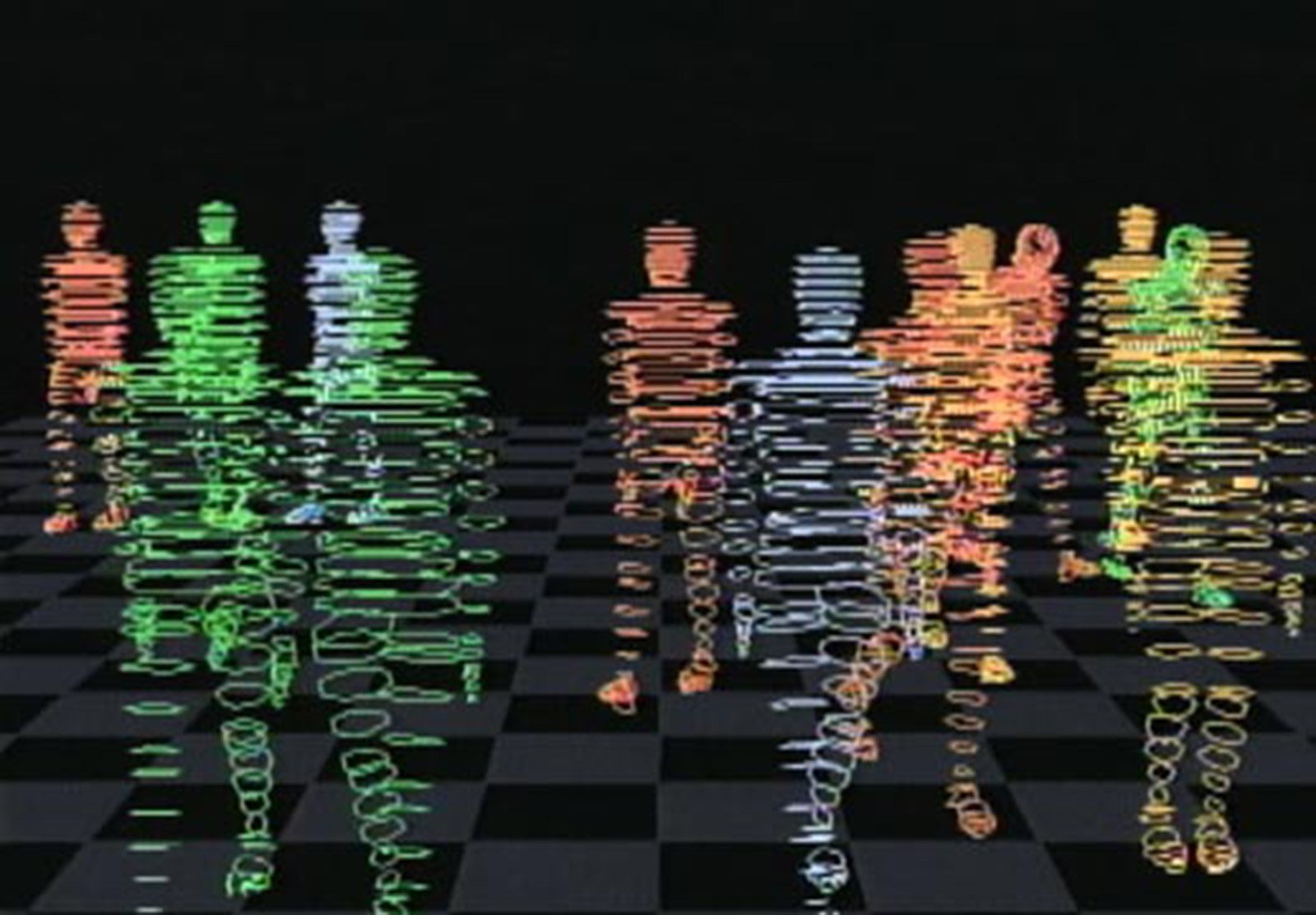
Rebecca Allen, Office Workers, 1992. Courtesy of the artist
Rebecca Allen, The Observer, 2019. Courtesy of the artist
JF: How do you show a net artwork from 1996 to an audience that has never heard the sound of a dial-up modem?
SH: In 2016, we did a show with Olia Lialina about My Boyfriend Came Back from the War (1996). We created a context where the audience could experience the work as if it was 1996.
We emulated the whole thing; we slowed down the internet on purpose, so that it was frustrating to click through, as it was in 1996. But that was the actual experience.
JF: And when the software is 40 years old, is the drawing or the printout part of the work?
SH: It might be a sketch, it might be the original code, it might be the [website] domain. One early work of net art we have exists in two formats: a migrated version running on new computer systems, and an emulated version that pretends to be the old software of the time. The work in itself is not fixed. For some pieces, the documentation might be the thing that survives.
JF: Agent Ruby, one of the first AI-based chatbots, is more than two decades old. Does she still work?
LHL: She still exists; you can go to agentruby.net and have conversations with her. I pay for Agent Ruby, she’s been updated and migrated several times. [The address now forwards to a page on SFMOMA’s servers; the museum co-funded the original work.]
Rebecca Allen, E Motion, 1975. Courtesy of the artist
Rebecca Allen, The Catherine Wheel, 1982. Courtesy of the artist
Rebecca Allen, The Bush Soul, 1997. Courtesy of the artist
JF: Is the current wave of interest in digital art reaching the right works, and will it hold?
SH: I’m not sure.
LHL: In the history, you can’t extract it, because it’s there and it’s too important.
RA: In 2021 was when the NFT craze was starting to pick up. NFTs and net art, I see them as connected. [After 2015,] I would try for commissions, but there was this term the art world would use: you had to be “digitally native” in order to do digital art. That was a code word for: you had to be young, meaning you’d never worked analog, you were born digital.
I remember 40 years ago, people saying: oh, it can’t be art, because someone just pushed a button and the computer did it. And I’d laugh: oh my God, it’s so hard to do this stuff, no way. But now you can push a button and the art can appear.
In an interview I did for CBS News in 1982 or 1983, I said that we have to have a more diverse group of people inventing this technology, in what I called defining the machine’s personality. I’m just deeply disappointed that that hasn’t gone forward.
To this day, AI has gone back to an almost totally male thing. All the heavy hitters in AI are male. So we never got past that point.
It’s not positive, sorry.
Lynn Hershman Leeson lives and works in San Francisco, California. Over the last five decades, she has been internationally acclaimed for her art and films, cited as one of the most influential media artists and widely recognized for her innovative work on the relationship between humans and technology, identity, surveillance, and the use of media as a tool of empowerment against censorship and political repression. She has made pioneering contributions to the fields of photography, video, film, performance, installation and interactive as well as net-based media art. Her six feature films: Strange Culture, Teknolust, Conceiving Ada, !Women Art Revolution: A Secret History, Tania Libre, and The Electronic Diaries are all in worldwide distribution and have screened at the Sundance Film Festival, Toronto Film Festival, and The Berlin International Film Festival, amongst others. She was awarded the Alfred P. Sloan Foundation Prize for Teknolust and !Women Art Revolution received the Grand Prize Festival of Films on Art. Hershman Leeson is a recipient of a SIGGRAPH Lifetime Achievement Award, Prix Ars Electronica Golden Nica, and a John Simon Guggenheim Memorial Foundation Fellowship. The ZKM Center for Art and Media mounted the first comprehensive retrospective of her work, titled “Civic Radar” in 2014 along with a substantial catalog. In 2017 she received a USA Artist Fellowship, the San Francisco Film Society’s “Persistence of Vision” Award and will receive the College Art Association’s Lifetime Achievement Award. In 2022, she was awarded a special mention from the Jury for her participation in the 59th International Art Exhibition of La Biennale di Venezia, The Milk of Dreams. In 2023, Pratt Institute of Art in New York awarded her with an Honorary Doctorate. Creative Capital awarded her with their Distinguished Artist Award and SFMOMA acquired the museum’s first NFT from Hershman Leeson in 2023. Work by Hershman Leeson is featured in the public collections of the Museum of Modern Art, New York; The San Francisco Museum of Modern Art; ZKM Center for Art and Media; the Los Angeles County Museum of Art; Tate Modern, London; The National Gallery of Canada, and the Walker Art Center in addition to many celebrated private collections. The artist is represented by Bridget Donahue Gallery, New York and Altman Siegel Gallery, San Francisco.
Rebecca Allen is an internationally recognized artist inspired by the aesthetics of motion, the study of perception and behavior, and the potential of advanced technology. From the mid-1970s, Allen was a rare female artist working in the early stages of computer art and digital technology. Her pioneering artwork, which spans over four decades and takes the form of experimental video, large-scale performances, live simulations, and virtual and augmented reality art installations, addresses the future of gender, identity, nature, and what it means to be human as technology redefines our sense of reality. With degrees from Rhode Island School of Design and Massachusetts Institute of Technology, Rebecca moves fluidly between her artist studio and research lab, using her research to inform her art. Allen was one of the first artists to utilize the computer as a tool to make art involving human motion simulation, AI/artificial life algorithms, and other generative techniques. Allen’s work is exhibited internationally and is part of the permanent collections of the Whitney Museum of American Art and the Museum of Modern Art, New York; The Centre Pompidou, Paris; Los Angeles County Museum of Art. Previous collaborators include Kraftwerk, Mark Mothersbaugh (Devo), Peter Gabriel, Carter Burwell, Twyla Tharp, and Nam June Paik.
Sabine Himmelsbach has been director of HeK (House of Electronic Arts) in Basel since 2012. After studying art history in Munich she worked for galleries in Munich and Vienna from 1993–1996 and later became project manager for exhibitions and conferences for the Steirischer Herbst Festival in Graz, Austria. In 1999 she became exhibition director at the ZKM | Center for Art and Media in Karlsruhe. From 2005–2011 she was the artistic director of the Edith-Russ-House for Media Art in Oldenburg, Germany. In 2011 she curated gateways. Art and Networked Culture for the Kumu Art Museum in Tallinn as part of the European Capital of Culture Tallinn 2011 program. Her exhibitions at HeK in Basel include Ryoji Ikeda (2014), Poetics and Politics of Data (2015), Rafael Lozano-Hemmer: Preabsence (2016), unREAL (2017), Lynn Hershman Leeson: Anti-Bodies, Eco-Visionaries (2018), Entangled Realities. Living with Artificial Intelligence (2019), Making FASHION Sense and Real Feelings. Emotion and Technology (2020). In 2022 she curated Earthbound – In Dialogue with Nature for the European Capital of Culture Esch-sur-Alzette in Luxembourg. As a writer and lecturer she is dedicated to topics related to media art and digital culture.
Jeni Fulton is a writer, editor, and academic working across contemporary art, the art market, and the evolution of digital art. She was the founding editor of Art Basel Magazine, and the curator of Digital Dialogues, Art Basel’s talks program dedicated to digital art. Prior to this, she was Editor-in-Chief of Sleek Magazine in Berlin, and contributed to Spike, Frieze, Apollo and many other arts publications. Based in Zurich, she teaches at the Zurich University of the Arts (ZHdK) and the University of Zurich.