·
Commentary#custom models #craftsmanship #training
On digestion, going slow and whether the custom AI model still matters
AV
aurèce vettier@aurecevettier4 months ago
The dominating discourse about AI — not only in art but also in the corporate world — still seems to be about its "generative" features: creating more images, using more tokens, more connectors, more compute, more scale.
I've always found myself drawn to the opposite direction: going inwards, and playing with the "digestive" capabilities of AI, going slow.
As an artist, I train a model on my own material — archives, childhood images, personal texts — and use it to digest an existence until something surfaces that I couldn't see before, but was indeed always there. This is what I call '“the light that is not seen”.
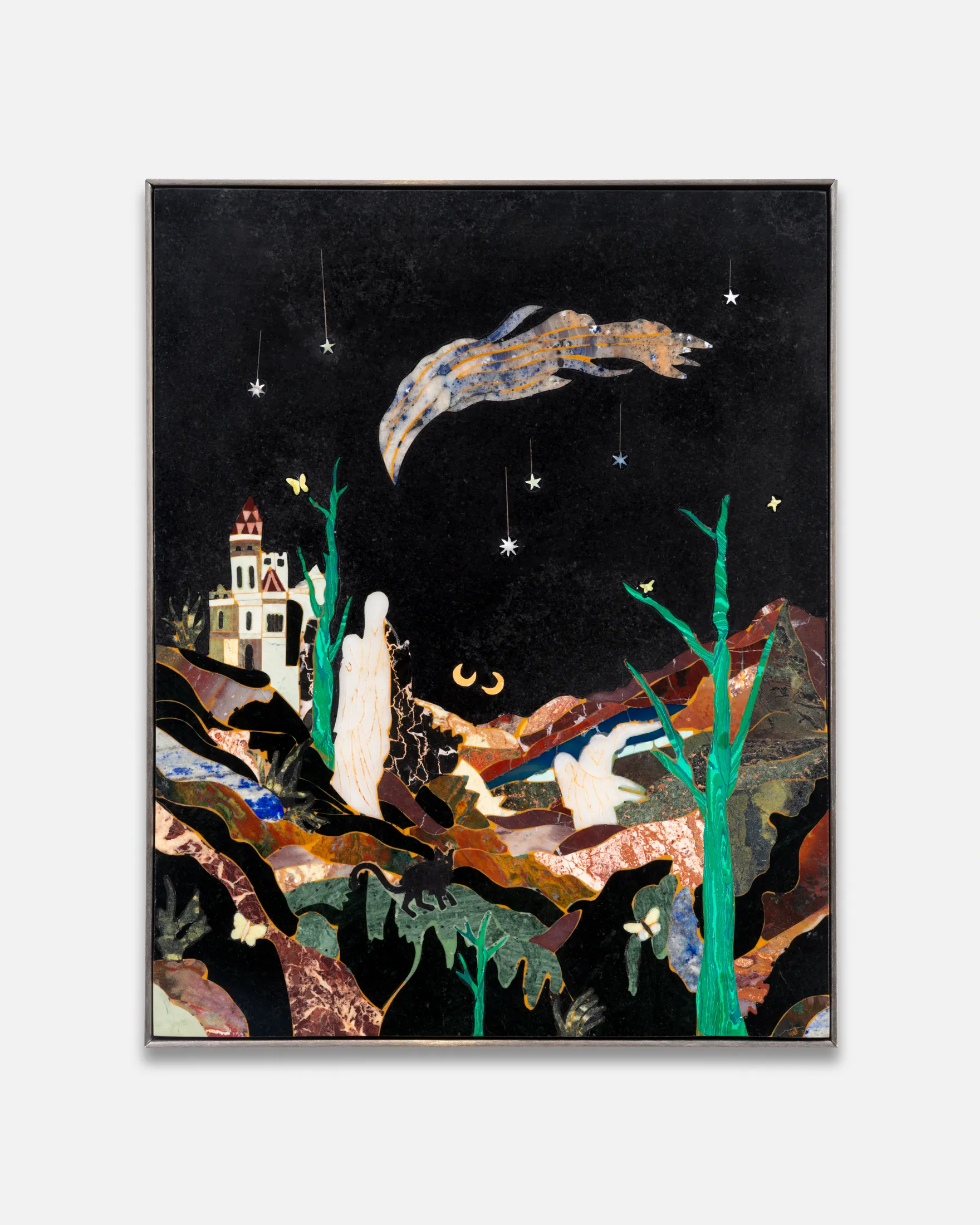
When I wake up, I describe my dream to my tailored text-to-image model; the machine offers image hypotheses in a breath, which can later be projected into virtually eternal mediums, such as pietra dura.
aurèce vettier
seraphim at the heart of an unlikely combination of spectacular atmospheric phenomena and synchronicities as the world enters into resonance
Hard stone marquetry (agate, amethyst, malachite, quartz, etc.) on black marble base. Mounted in custom-made steel frame.
35 cm x 28 cm
AV-2026-U-779
So I'm curious about your experience — as artists, curators, or simply enthusiasts:
Is AI more interesting to you as an engine of production, or as an organ of digestion — a way of seeing rather than a way of making more?
And does training your own AI model still matter, or does nobody really care anymore? Plenty of strong work now runs on off-the-shelf tools. I still train mine because it’s important for me to maintain a consistent visual ecosystem -and I enjoy doing this part- but maybe that's a conviction only I still hold.
Everything I’ve focused on since the start of this year is parsing though software and subscriptions within this current life. A deep consideration has grown in me for the processes of context held within a pixel’s weight. By inspecting the faucets of data and streams from their source, I can now amplify space for compare & contrast, building a focused delineation into a brighter je ne sais quoi. By developing harnesses (more than just for horses) I find there are endless tuned connections & directions that can be utilized to preserve and develop anew.
I like the harness metaphor, Gisel. Very true.